LinkedIn thought leader ad examples
547 thought leader ads are live on LinkedIn right now, from 460 companies. Browse real ones, filtered by industry.
- DeployteqSince 21 Oct 2025
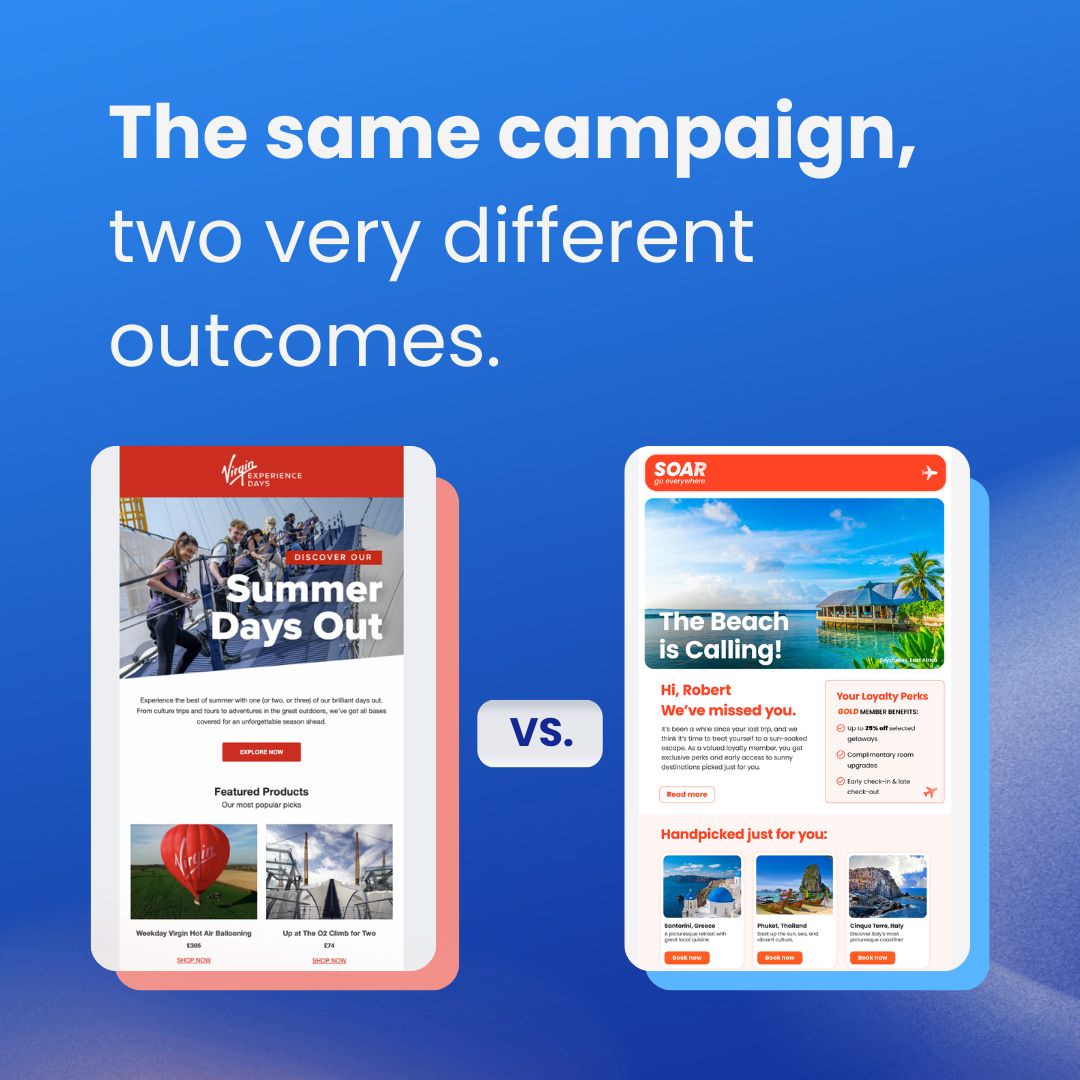
Ever feel like your campaigns are working with one hand tied behind their back? You can run a campaign without a CDP. But here’s what it usually looks like: - The CRM holds only basic contact details - Loyalty data is in another tool - Purchase behaviour lives in the webshop And none of it connects. So you launch a “summer campaign” that goes to everyone with the same message, the same offer, and the same outcome: average. Now picture this with a CDP: - You connect all that data into one view - You see who last purchased, what they browsed, how engaged they are - You segment based on lifecycle, preferences, channel behaviour Then with all this connected data, you tailor the message: surf gear for coastal travellers, city stays for urban explorers. All automated, and all powered by real insight. Same product, same team - but very different results. That’s the real value of a CDP: not just collecting data, but turning it into campaigns that convert.
- Dig InRecorded 15 Sept 2026
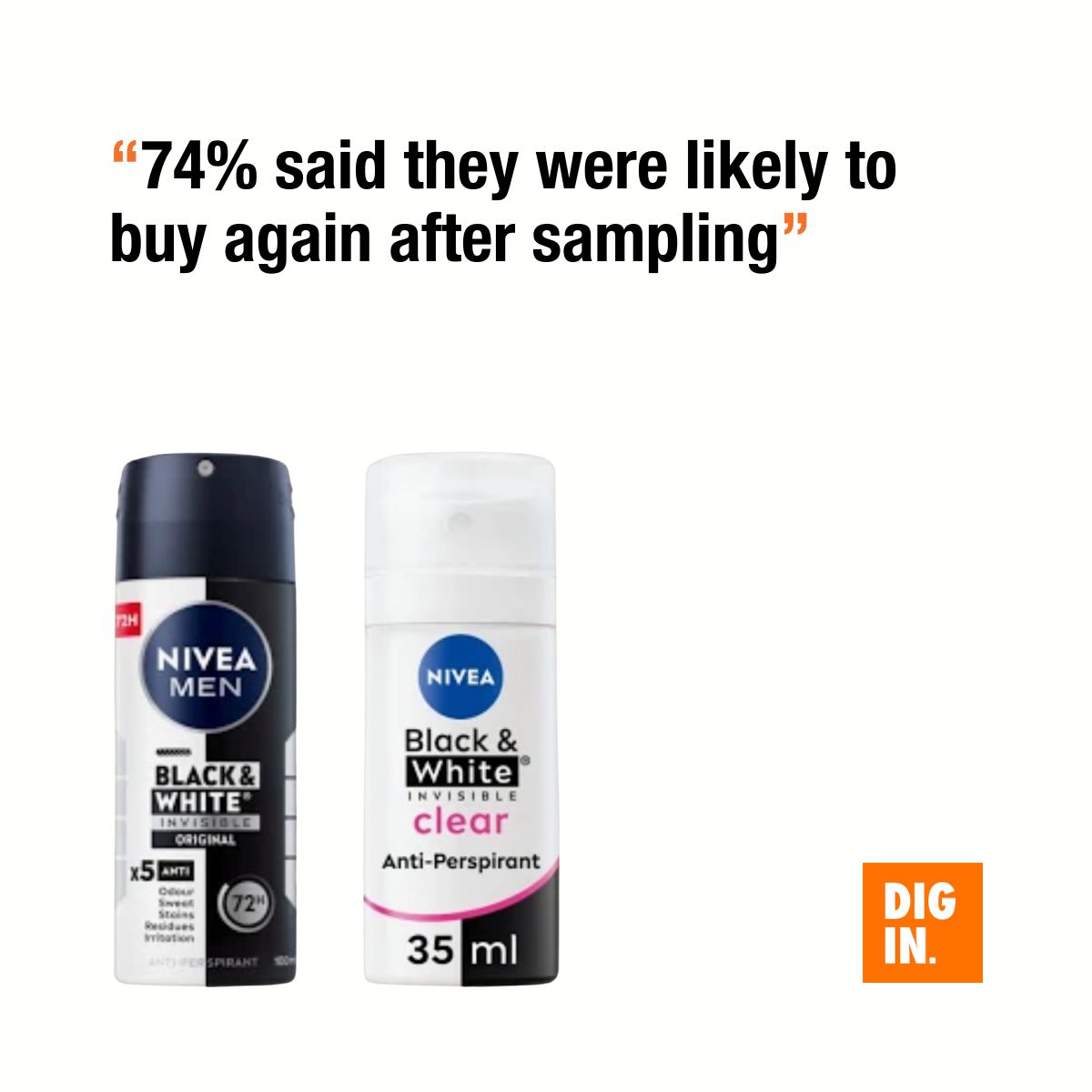
The power of physical-world marketing and how Nivea drove 74% purchase intent. This is our second year working with the brilliant marketing team at Nivea. This year we helped promote their Nivea Men Black & White Deodorant products to half a million brand-new shoppers. For context, every September, 500,000 students leave their family homes to embark on university life in a new city, with a new home, and instantly become first-time shoppers. Nivea placed deodorant samples into the welcome bags that Dig In delivers to university students in their dorms, on their first day at university. As well as delivering 100,000 Nivea deodorant samples to these brand-new shoppers, we also ran a student survey to measure recall and purchase intent. Results, from over 3,500 survey responses: • 74% said they were likely to buy again after sampling. • 86% would recommend to friends or family. • Common feedback: “Smells great,” “Doesn’t stain clothes,” “Long-lasting protection.” • Hundreds of students shared organic content on TikTok and Instagram, turning trial into advocacy for Nivea, and bridging the gap between the physical world and the digital. I think there is perhaps an over-reliance on digital advertising today. When you see the product advertised, then get the chance to feel and use the product, it’s a powerful combination that can lead to shoppers for life. At Dig In we work with some of the biggest brands in the world to help them connect with the largest cohort of new shoppers every year, with both digital media and physical product solutions. 💬 Happy to share full details of this case study if you drop me a note. Dig In | #GenZMarketing #Nivea #Sampling #Brand
- Creative MediaSince 27 Feb 2026
Stanley 1913 created an entire social ecosystem. It started with hydration and ended with hype. Every sip became a signal. The product evolved into proof of taste. Who’s got one?
- Creative MediaSince 27 Feb 2026
Getting through to a company’s customer service line… sometimes, it’s painful 🤯 And this call with Tesla nearly broke me. To spend an eternity repeating yourself to a robot, for a human to finally resolve your issue in a matter of seconds. Nothing tests your patience more than a robot telling you it understands your problem. Spoiler - it doesn’t. So, you tell me. Have we really automated customer service - or have we just automated avoidance? Let me know in the comments 👇
- Create EngageRecorded 14 Sept 2026
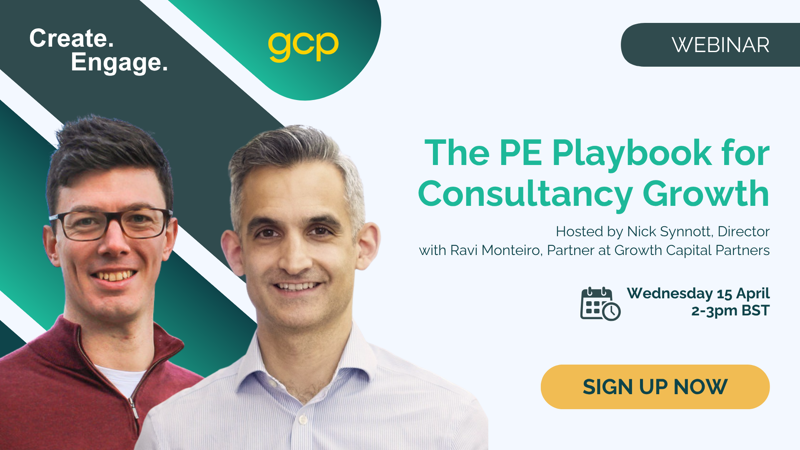
🛑 If you are running a £10m to £20m consultancy and want to exit one day, here is what nobody tells you. 🛑 Most founders in your position will either never get the meeting, or walk away with a number that doesn't reflect what they spent years building. It is not the quality of the work. It is the three things they never got around to fixing. Most consultancy founders think about exit preparation too late. They wait until they are ready to have the conversation. By then the things that would have made the biggest difference are already baked in. The founders who get the best outcomes start two or three years before they need to. Not because they are always planning to sell. Because they are building a business that can stand on its own. From what I understand speaking to people on both sides of these conversations, investors tend to look at three things before anything else: 🔑 Whether the business has a clear and defensible position 🔑 Whether the team can run without the founder in every room 🔑 Whether the growth has been intentional All three are fixable. But they take time. On 15th April I am sitting down with Ravi Monteiro, Partner at Growth Capital Partners, to get the real picture from someone who actually sits on that side of the table. Ravi Monteiro is a Partner at Growth Capital Partners and a member of the investment team. He has spent his career working directly with owner-managed growth companies, supporting firms in GCP's portfolio to quadruple their headcount and achieve compound annual growth rates of over 40%. GCP is the UK's leading private equity investor in Knowledge Economy businesses, with 54 investments over 26 years backing some of the most ambitious specialist services and technology firms in the country. He does not do many of these sessions. When will you get another chance to ask your burning questions directly to a seasoned Private Equity investor? 🎙️ The PE Playbook for Consultancy Growth 📅 Wednesday 15th April ⏰ 2pm BST Register here: https://lnkd.in/gWujMU3T
- Create EngageRecorded 14 Sept 2026
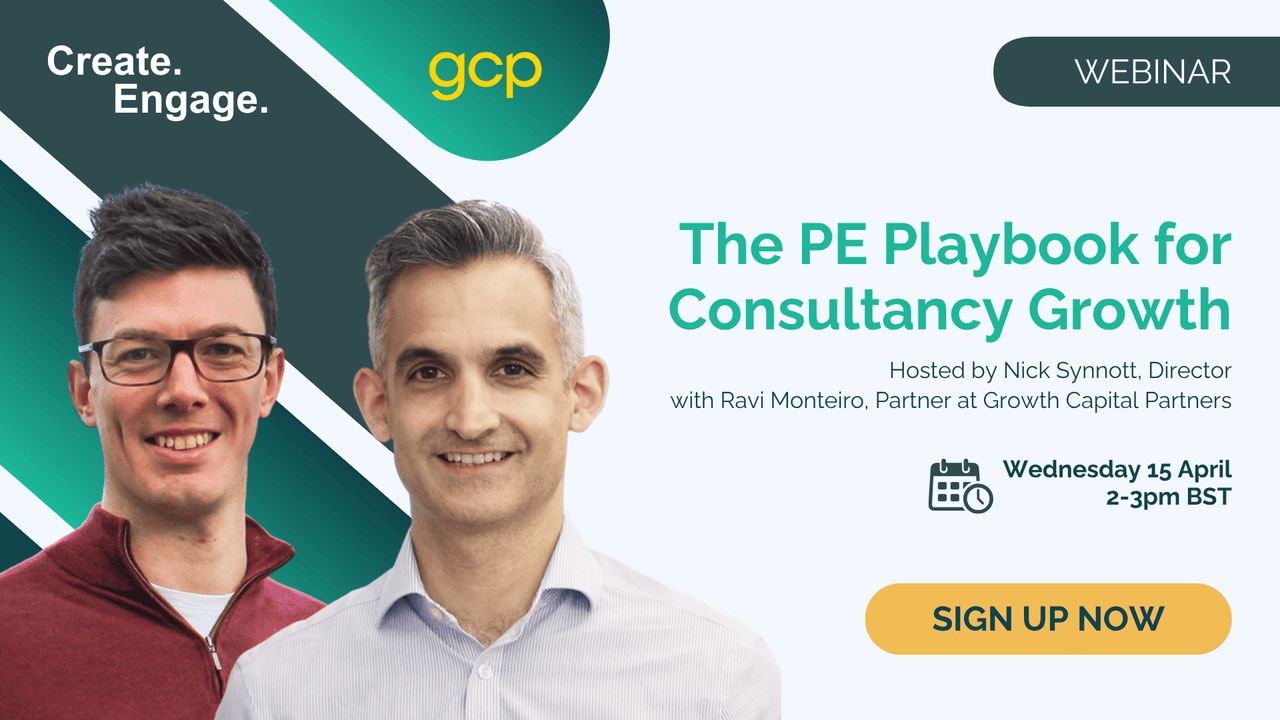
Consultancy founders: what would a private equity firm actually see when they look at your business? Not what you see. What they see. The firms that attract serious interest tend to have one thing in common. They have made a deliberate choice about what they are and where they are strongest, and they have stuck to it even when other opportunities looked tempting. That means turning away work. It means having a clear answer to why you and not someone else. It means building something that can be understood quickly by someone who has never met you. The consultancies that never quite get there are usually the ones that kept saying yes to everything and ended up with a business that is hard to position, hard to scale, and hard to sell. On 15th April I am sitting down with Ravi Monteiro, Partner at Growth Capital Partners, to get into exactly this. GCP has backed 54 specialist businesses over 26 years. Ravi has seen what makes a consultancy attractive to investors and what the founders who got great outcomes did differently. We are covering positioning, hiring for growth, and acquisitions. Whether you are building towards an exit or just want to build something more valuable, this is worth an hour. 🎙️ The PE Playbook for Consultancy Growth 📅 Wednesday 15th April ⏰ 2pm BST Register here: https://heyor.ca/HENLU3
- Cut InsideSince 27 Apr 2026
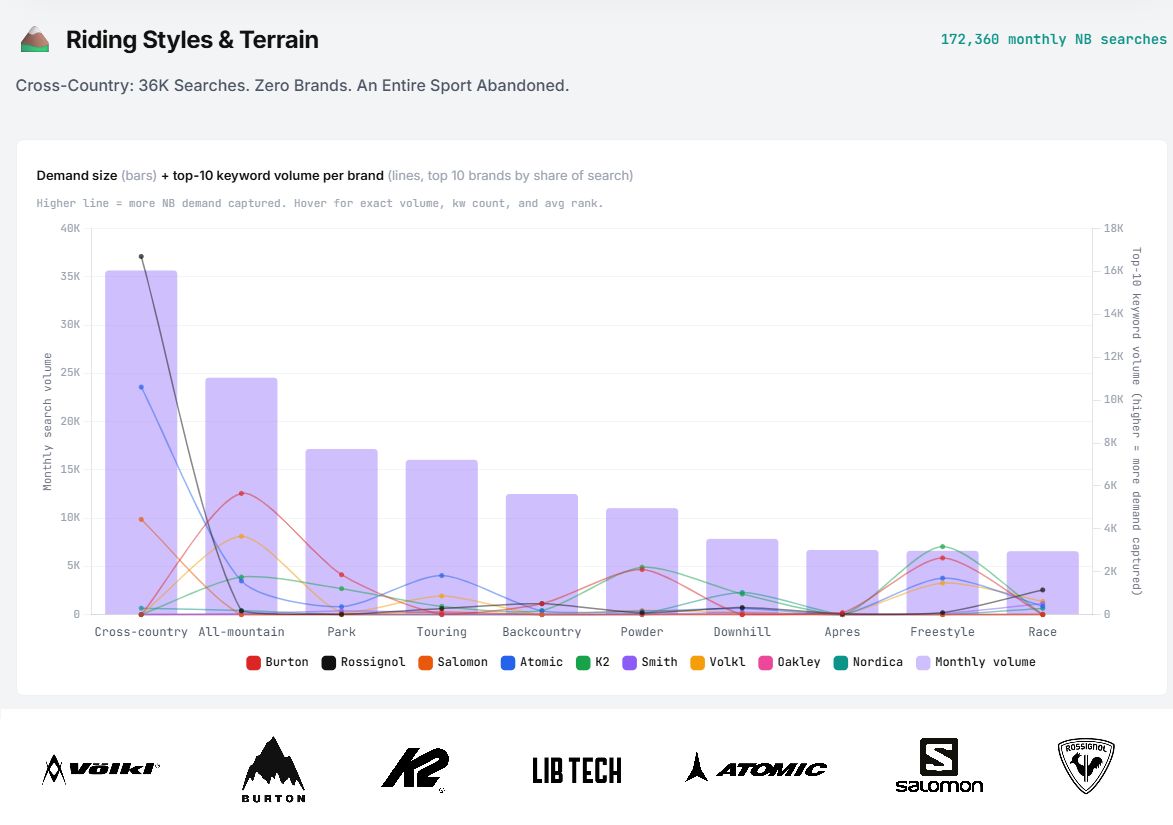
Last week, we completed the first Search Intelligence report for the entire Ski and snowboard gear industry. A category that gets 4.47 million searches/month, and most ski and snowboard brands still see one keyword, one page, one opportunity. This week, we'll sample the analysis of 92,666 "ski and snowboard" queries, with 376 distinct user need combinations. The ski and snowboard category alone spans dozens of distinct user needs: riding style and terrain, product type, gender-specific fit, price constraints, skill level, sizes & fits, and more. (riding styles & terrain breakdown with search volumes in the image) But here's what changes everything: these needs combine into demand patterns. Now add AI search. Users don't type keywords, they prompt with precision, for example: "𝘞𝘰𝘮𝘦𝘯'𝘴 𝘣𝘦𝘨𝘪𝘯𝘯𝘦𝘳 𝘢𝘭𝘭-𝘮𝘰𝘶𝘯𝘵𝘢𝘪𝘯 𝘴𝘬𝘪 𝘶𝘯𝘥𝘦𝘳 $800". 𝗧𝗵𝗮𝘁'𝘀 𝟱 𝗶𝗻𝘁𝗲𝗻𝘁 𝘀𝗶𝗴𝗻𝗮𝗹𝘀 𝗶𝗻 𝗼𝗻𝗲 𝗾𝘂𝗲𝗿𝘆: Gender ("𝘸𝘰𝘮𝘦𝘯'𝘴") Skill level ("𝘣𝘦𝘨𝘪𝘯𝘯𝘦𝘳") Riding style ("𝘢𝘭𝘭-𝘮𝘰𝘶𝘯𝘵𝘢𝘪𝘯") Product type ("𝘴𝘬𝘪") Price ceiling ("𝘶𝘯𝘥𝘦𝘳 $800") That's not a search. That's a purchase decision waiting for an answer on your website. 𝗧𝗵𝗲 𝗺𝗮𝘁𝗵 𝗶𝘀 𝘀𝗶𝗺𝗽𝗹𝗲: more intent signals = more specific needs = higher conversion probability. That's the map. Now here's the money: We found 12,914 queries with 3+ combined needs, each combined need represents a specific demand in your market. 476,800 searches/month. 𝗔𝘁 𝟭% 𝗰𝗼𝗻𝘃𝗲𝗿𝘀𝗶𝗼𝗻 𝗮𝗻𝗱 $𝟱𝟬𝟬 𝗮𝘃𝗲𝗿𝗮𝗴𝗲 𝗰𝗮𝗿𝘁: 𝗿𝗼𝘂𝗴𝗵𝗹𝘆 $𝟮𝟴.𝟲𝗠/𝘆𝗲𝗮𝗿. The exact math depends on your AOV and conversion rates, but the gap is real, and it's quantifiable. 𝗦𝗲𝗮𝗿𝗰𝗵 𝗜𝗻𝘁𝗲𝗹𝗹𝗶𝗴𝗲𝗻𝗰𝗲 𝗶𝘀 𝘁𝗵𝗲 𝗳𝗼𝘂𝗻𝗱𝗮𝘁𝗶𝗼𝗻 𝗳𝗼𝗿 𝘆𝗼𝘂𝗿 𝗦𝗘𝗢 & 𝗚𝗘𝗢 𝗲𝘅𝗲𝗰𝘂𝘁𝗶𝗼𝗻. 𝗪𝗶𝘁𝗵𝗼𝘂𝘁 𝗶𝘁 𝘆𝗼𝘂'𝗿𝗲 𝗰𝗮𝗿𝘃𝗶𝗻𝗴 𝗯𝗹𝗶𝗻𝗱𝗳𝗼𝗹𝗱𝗲𝗱, 𝗻𝗼 𝗺𝗮𝘁𝘁𝗲𝗿 𝗵𝗼𝘄 𝗯𝗶𝗴 𝘆𝗼𝘂𝗿 𝗯𝗿𝗮𝗻𝗱 𝗶𝘀. Want me to send you the ski and snowboard search intelligence sample report? Comment "Ski" on this post and I'll share it with you. If we're not connected, be sure to send a connection request. you are in the research: Rossignol Group, Burton Snowboards, CAPiTA Snowboarding, Atomic, Madshus AS, Scott Sports SA, Mammut Sports Group AG, Arc'teryx Equipment, Nordica, Red Bull, Salomon, Fischer Sports, Brav, Armada, blackcrows, K2 SKI SPORT, The North Face, Patagonia, Blizzard, Völkl Sports GmbH, Kästle Ski, HEAD, SWIX Sport GmbH, DAKINE, Dynamic Team Sports, Stöckli Swiss Sports AG, Nitro Snowboards, VOLCOM, Oakley
- Cut InsideSince 13 May 2026
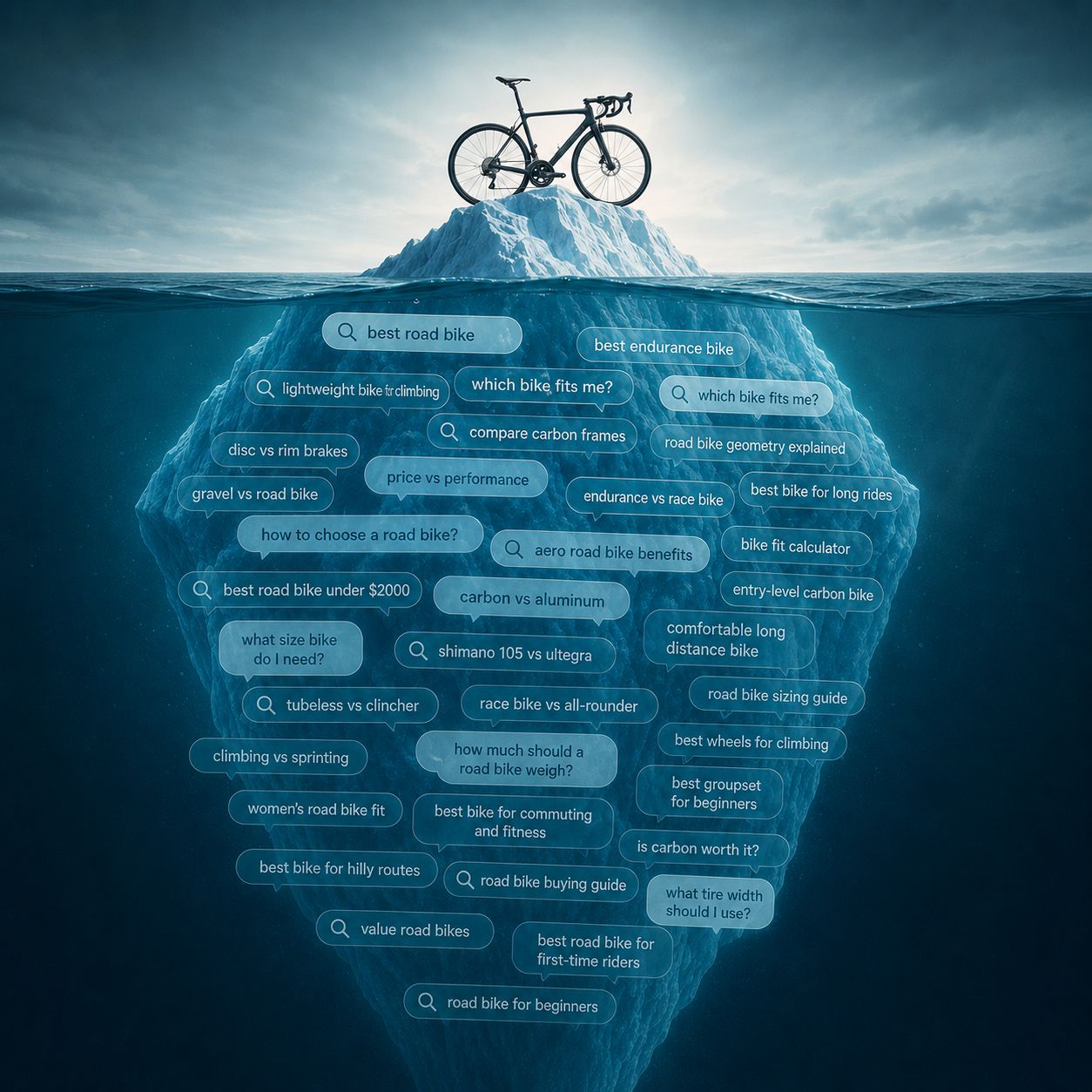
Industry leaders are losing searches. To smaller brands. To Reddit. To Amazon. We mapped 77 brands, 92,345 queries, and 15.8 million monthly searches in the US bicycle market. And the deeper we dig, the more the same pattern shows up. Trek (#1 brand) loses 100% of internal product comparison queries to Reddit. Giant loses 63K brand searches a month to Amazon, who doesn't sell Giant. Canyon outranks Specialized in mountain, road, and gravel with 4.4% market share. Liv beats parent Giant on 1/45th the branded volume. 64% of gendered searches are women. Average brand rank? #14. The winners didn't win on brand strength. They won on category depth and information architecture mapped to specific user needs, the way users express them in search and in LLMs. Kevin Indig analyzed 3.7M AI citations. 91% appear in only one engine. Brand mentions don't travel. Useful pages do. GEO outreach is link building 2.0. It won't fix what these brands are losing. The real fix is harder. Map what users actually ask, build the architecture that answers them. We've built the full competitive map for every major bicycle brand. Comment "bikes" below and I'll send you the sample report. The first 10 commenters get a free Search Intelligence call on their own brand. Giant Bicycle, Specialized Bicycle Components, Trek Bicycle, Schwinn GmbH, Cannondale Europe, Canyon Bicycles US, Santa Cruz Bicycles, woom, Bianchi Bicycles, Diamondback Firearms Bicycles, Haro Bikes, RossBicycles USA LTD, Mongoose Bicycles, Norco Bikes, Shimano, Kona Bicycle Company, Marin Bikes, GT Bicycles, Tianjin Fuji-Ta Bicycle Manufacturer Co.,Ltd., ORBEA, Huffy Corporation, SRAM, Argon 18, Bianchi Bicycles, Fox Factory, CONOR BIKES
- Connecting Dots Marketing AgencySince 13 Jun 2026
Google Meet: 10 Λειτουργίες για Τηλεδιασκέψεις που Φέρνουν Αποτελέσματα (και όχι πονοκέφαλο) Το 2020, όλοι μάθαμε να κάνουμε βιντεοκλήσεις. Τώρα πλέον, το να κάνεις απλά μια κλήση δεν είναι πλέον αρκετό. Αν χρησιμοποιείτε το Meet μόνο για να μιλάτε, χάνετε το 90% των δυνατοτήτων του. Αναλύω τις 10 λειτουργίες που θα αναβαθμίσουν άμεσα την επαγγελματική σας εικόνα σε κάθε κλήση, καθώς και τις επαναστατικές νέες δυνατότητες Gemini AI (όπως το "Take notes for me" και "Attend for me") που αλλάζουν τη ροή εργασίας. #GoogleMeet #GoogleWorkspace #Productivity #Τηλεδιασκέψεις #RemoteWork #GeminiAI #DigitalTransformation
- Connecting Dots Marketing AgencySince 18 Jun 2026
Η εργασία με απομονωμένα προγράμματα δεν μας καλύπτει πλέον. Σήμερα, οι επιχειρήσεις που θέλουν να επιβιώσουν και να κερδίσουν το αύριο χρειάζονται ροή, ταχύτητα και ενσωματωμένη ευφυΐα. Το Google Workspace, σε πλήρη συνέργεια με το Gemini AI, είναι το Game Changer που καταργεί τα data silos και γίνεται το νέο Λειτουργικό Σύστημα της σύγχρονης επιχείρησης. Ανακαλύψτε πώς το AI εκδημοκρατίζει τις δεξιότητες, μετατρέπει τα θαμμένα δεδομένα σε ενεργή γνώση και σας προσφέρει Enterprise AI Privacy. #GoogleWorkspace #GeminiAI #DigitalTransformation
- Content ScienceSince 10 Jun 2026
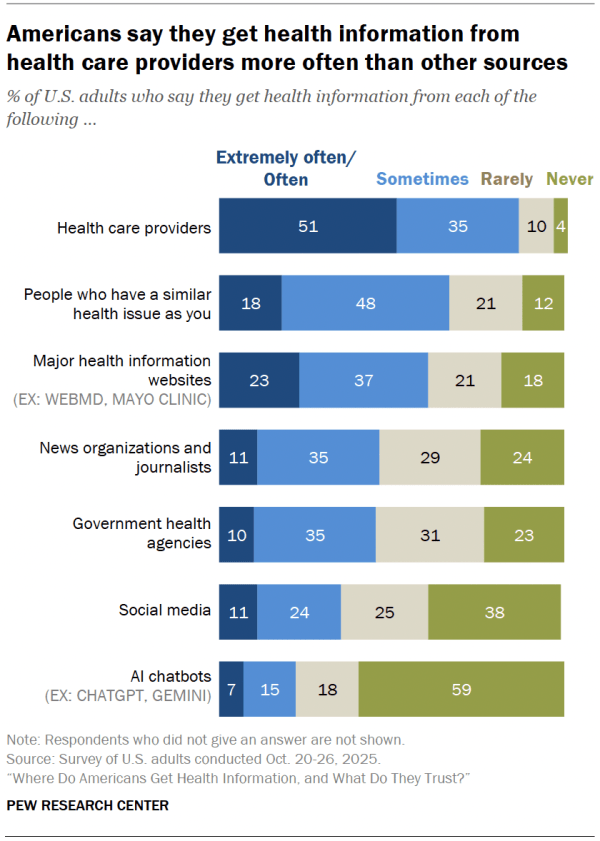
➕ Something about the latest Pew Research Center study on health information doesn’t add up for me. After noodling on it, I think I see the issue. The study says Americans report turning most often to health providers for health information...as in more often than major health websites, social media, or AI. Here’s the disconnect that's bothering me. People say they turn to trusted providers most often. But in reality, they barely have access to them. Other research shows the average patient spends 1–2 hours per year with a provider (about 20 minutes per visit, ~3 visits per year). Meanwhile, the average American adult spends 2,900+ hours per year online. It’s hard to reconcile those two realities. Even if you factor in the occasional portal message or email, it’s unlikely providers are truly the most frequent source of health information in practice. So we may have a case of people saying one thing, but doing another. And that helps explain another tension in the data. People rate providers as the most accurate and personalized source of health information. Yet they also report, broadly: > It’s hard to know what health information is accurate. > It’s difficult to navigate conflicting advice. > There’s growing uncertainty about what to trust. That makes more sense when I think about where health decisions actually happen. Trusted, personalized guidance from providers occurs in brief, infrequent moments. Many health decisions happen between visits, in environments filled with challenges like > Generic health content > Conflicting perspectives, including misinformation > AI-generated summaries of uneven quality > Under-maintained or outdated U.S. government resources So which version of reality is true? If Americans are accessing the source they trust most, as often as they need, then great. We don’t have a problem. But if they’re not—and all signs suggest to me they're not—I would hate for this Pew Research data to justify glossing over a huge gap. The most trusted source of health information, health providers, isn’t designed to show up with the reach, frequency, or consistency that modern information environments demand. That’s a content, system, and scale problem. And it’s one worth trying to solve. Learn more about the Pew Research study here: https://lnkd.in/eTkDKHiy #contentstrategy #trust #health #healthcontent #health #contentoperations #ai #digitaldisruption
- Content ScienceSince 10 Jun 2026
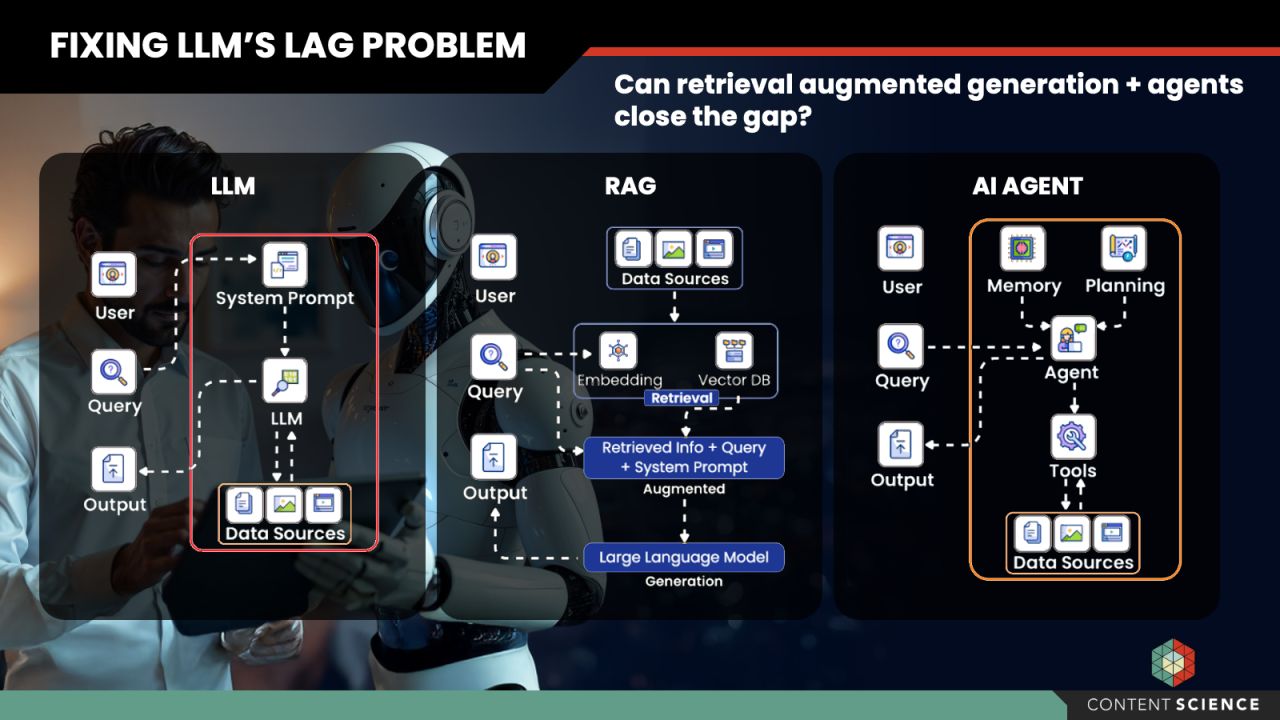
Deep learning AI has a lag problem. Across multiple recent studies spanning journalism, business, and archaeology, the same weakness keeps surfacing. Large language models are only as current as their last update. When you ask them for timely or evolving information, you’re often asking a system trained on yesterday’s internet to explain today’s reality. Let's consider what recent research found: 🔸 The European Broadcasting Union and the BBC identified widespread errors in AI assistants’ reporting of news, misrepresenting source content in nearly half of responses. https://lnkd.in/eE_G9ig6 🔸 The Washington Post tested major AI chatbots with trivia questions about recent events and found many confident, incorrect answers. https://lnkd.in/evgeMUFc 🔸 An archaeology study showed visual AI tools depicted Neanderthals using outdated assumptions rather than current scientific research. https://lnkd.in/evDQj5Td Very different domains. Same root cause. Lag! Can this lag be fixed? I'm skeptical about broad applications like general search. Never say never, though. But in specific applications and closed environments, there’s real opportunity. With retrieval augmented generation (RAG) and AI agents, systems can pull directly from up-to-date internal sources at query time. Instead of relying solely on static training data, they retrieve the latest documentation, policies, or data before generating a response. For instance, a customer service chatbot can be configured to check sources like: • The current returns policy • This week’s pricing updates • The latest product specs • Real-time account data But there's a catch. RAG and agentic AI don’t fix bad content or bad governance. You still have to define: • When retrieval is required. • Which sources are authoritative. • How those sources are maintained (and actually maintain them). With LLM alone or LLM + RAG + agents, the principle is the same. If you don’t define and manage the right inputs, you can’t trust the outputs. #contentstrategy #governance #ai #rag #agenticai #customerexperience #cx #digitaltransformation #contenteffectiveness
- CoverageBookSince 3 Jul 2026
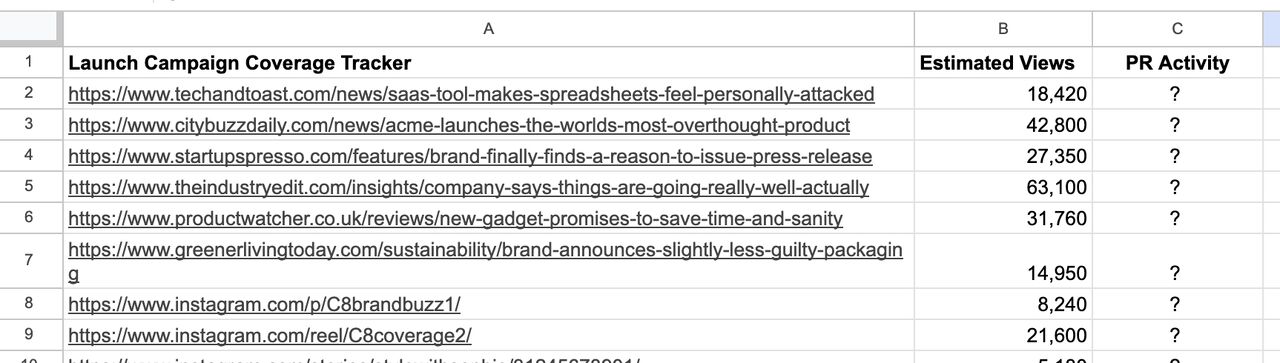
I've seen more spreadsheet coverage trackers than most people. Life choices aside 1 thing most PR evaluation geeks agree on is that adding extra layers of qualitative data would take them to the next level. e.g. What if you added the PR activity that led to the coverage? You can then start asking questions about which things lead to x. What is our cost per 1000 impressions from x activity. And so on. Not rocket science but a pain to make happen. Who is going to write all the options for a start? Here is the list we came up with so CoverageBook.com users don't need to overthink it. Now available in the product as a way to tag your coverage for smarter analysis. Alongside more ready-built (and in some cases automated) ways to classify coverage. We think it's pretty comprehensive but as people start using it we'll see if new values are needed. Here they are: Awards submission Submitting entries for awards or recognition Brand content Creating editorial-style branded stories Case study Showcasing real-world results or success stories Community outreach Engaging communities or grassroots groups Competition Running competitions, prize draws or giveaways Corporate news Announcing company updates, changes, results or milestones Crisis comms Managing communications during a crisis or issue Data-led Using proprietary data or research to tell a story Event Hosting or participating in an event Experiential Creating immersive or experiential activations Index / ranking Creating rankings or index-based stories Influencer outreach Partnering with influencers or creators Interactive content Producing tools, quizzes or interactive formats Media appearance Participating in interviews, panels, broadcasts or podcasts Media pitching Proactively pitching stories or angles to journalists Press office Managing inbound media requests and enquiries Press release Issuing a formal announcement to the media Press trip Organising trips or experiences for journalists or influencers Product sampling Providing products to media or creators Publicity stunt Executing attention-grabbing PR moments Reactive PR Responding to breaking news or newsjacking opportunities Spokesperson Providing expert commentary or media quotes Survey Conducting surveys to generate media insight Thought leadership Sharing opinion-led insight or expertise Unprompted Coverage landed naturally without a clear driver
- CoverageBookSince 22 Jul 2026
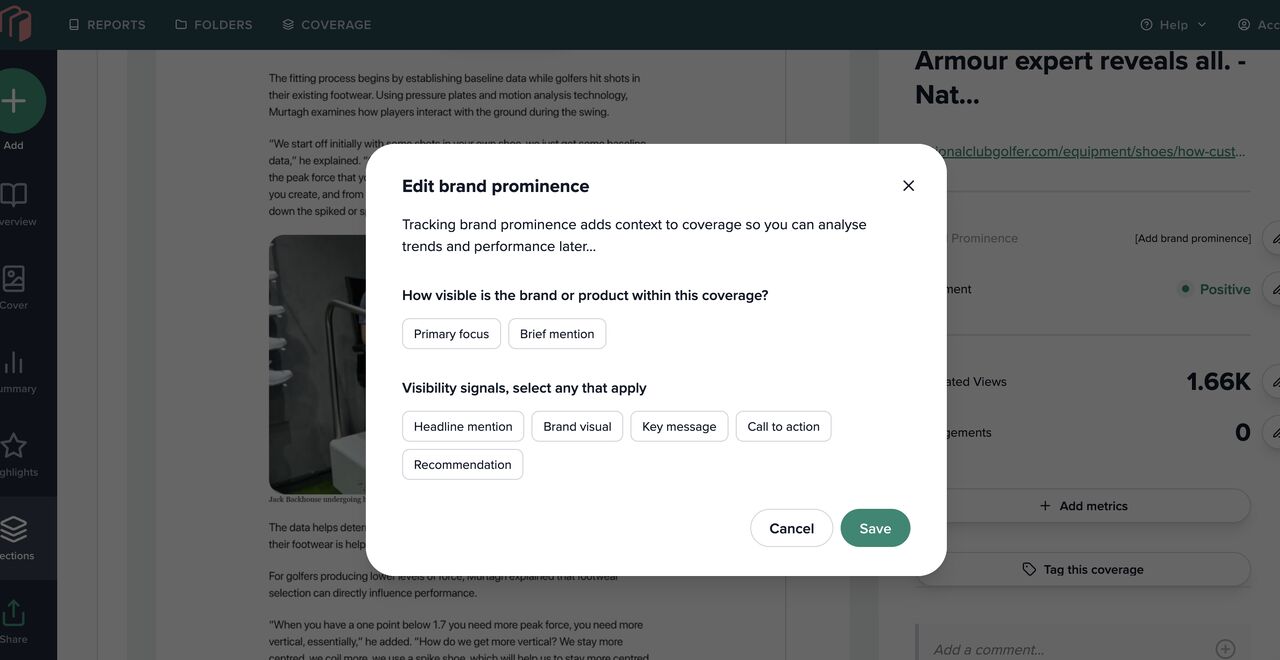
How prominent was your brand in the coverage/campaign? Do you track this? I don't think "top", "middle" or "bottom" cuts it here. Brand Prominence is a new feature in CoverageBook that helps distinguish between coverage where your brand was central to the story, and coverage that played a smaller role. This is one (of many) new measurement features. Took a while to get this one simple & right. It's a positive step I think. The trick is to keep it simple enough to use but capture key elements about the mention. Then for each choice, translate that into a simple (not black box) universal index score so you can track brand prominence over time alongside other key metrics. Worth noting. This is NOT a coverage quality score. Yes. It's not perfect. But I've seen a lot of attempts at "scoring systems" and they get complicated fast. This one is a simple score just focused on brand prominence. It's not a measure of reach/quality / sentiment etc. That can be judged elsewhere. Our score is out of 100. A higher score means your brand played a more prominent role in the coverage narrative. As you evaluate each coverage item you pick a value. Then it stacks up like this.... Primary focus = 45 points. The brand or product is the main focus of the coverage Brief mention = 15 points. The brand or product is referenced briefly or in passing Then... Headline mention = 15 points appears in the headline or title Brand visual = 10 points includes images or videos Key messages = 15 points clearly referenced or implied Call to action = 5 points includes a prompt or link to visit, buy, sign up or learn more Recommended = 10 points an explicit endorsement or recommendation The Scoring Scale = 0 - No prominence - the brand does not appear in a meaningful way 15-30 - Low prominence - The brand is mentioned, but plays a small role in the coverage. 35-50 - Moderate prominence - The brand has a noticeable role, but received limited space, detail or emphasis. 55-70 - Strong prominence - The brand is clearly visible or meaningfully described in the coverage. 75-100 - High prominence - The brand is a major part of the coverage and benefits from strong visibility, clear messaging, recommendation or action prompts. Early testers are already enjoying the simplicity and ease of rolling out a standard all their agencies can follow. Especially those struggling to manage this across multiple spreadsheets. Next step..... For those with larger coverage volumes, assisting using some clever automation and ai. More on that soon. But there is something to be said for taking the time to evaluate your hard-won coverage. Especially for more junior team members. Helpful? #prmeasurement
- Crossing ZebraSince 10 Aug 2026
Als je bekend bent, dan beweegt de markt automatisch naar jou toe. En anders moet je zelf een beetje aan outbound marketing doen 😅
- CriteoSince 10 Sept 2026
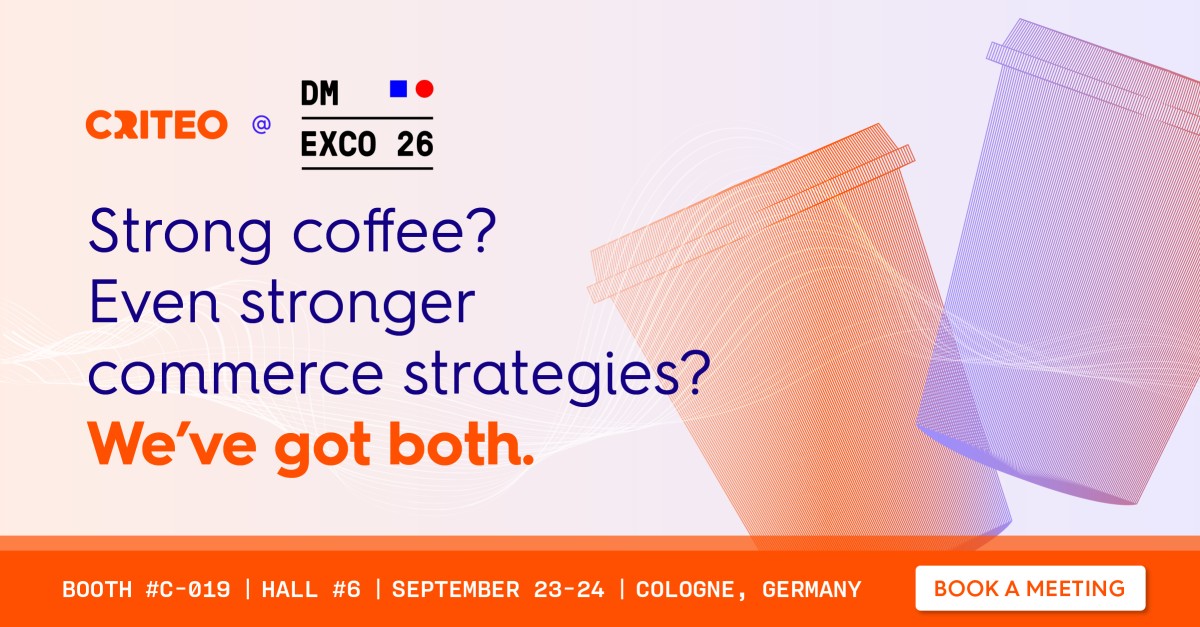
Headed to DMEXCO - Digital Marketing Expo & Conference this September? One thing I'm looking forward to talking about is how brands are making decisions in a commerce environment that's getting more complex by the day. There are more signals, more channels, and more pressure to deliver measurable results. If that's a challenge you're working through, I'd love to connect. Stop by the Criteo booth (#C-019) and let's chat! https://lnkd.in/esyBfcXP #CommerceIntelligence #DMEXCO2026 #criteo
- CSMSince 2 Sept 2025
Strategic procrastination can be a superpower in business. Use it when things are ‘interesting’, but the timing is off. It avoids splitting focus and keeps you away from the new shiny object. However this is not an appropriate strategy for AI. Like every major technological shift, correct utilisation and proper adoption is lagging behind within the vast majority of businesses. So for now, it’s only as valuable as the way it’s applied. Too often it gets used for surface-level tasks: automating comments or pumping out generic content. The real opportunity as a starting point is to use it to help leaders make better decisions. AI should be the tool that bridges the gap between insight and action. The clip below is from 12 months ago (when we still had multiple brands and worked in eCommerce) so it feels a little dated, although some things we speak of remain true in how we both still think about proper adoption and true utility. These are the simple 3 phases I believe every B2B legacy business should follow in integrating AI into their business; → Verification Layer → Context Layer → Agentic Layer Feel free to reach out if you’re trying to integrate AI into your B2B legacy organisation today and looking for the best starting point, I’d be happy to walk you through those three phases in greater detail.
- CRMBonusRecorded 14 Sept 2026
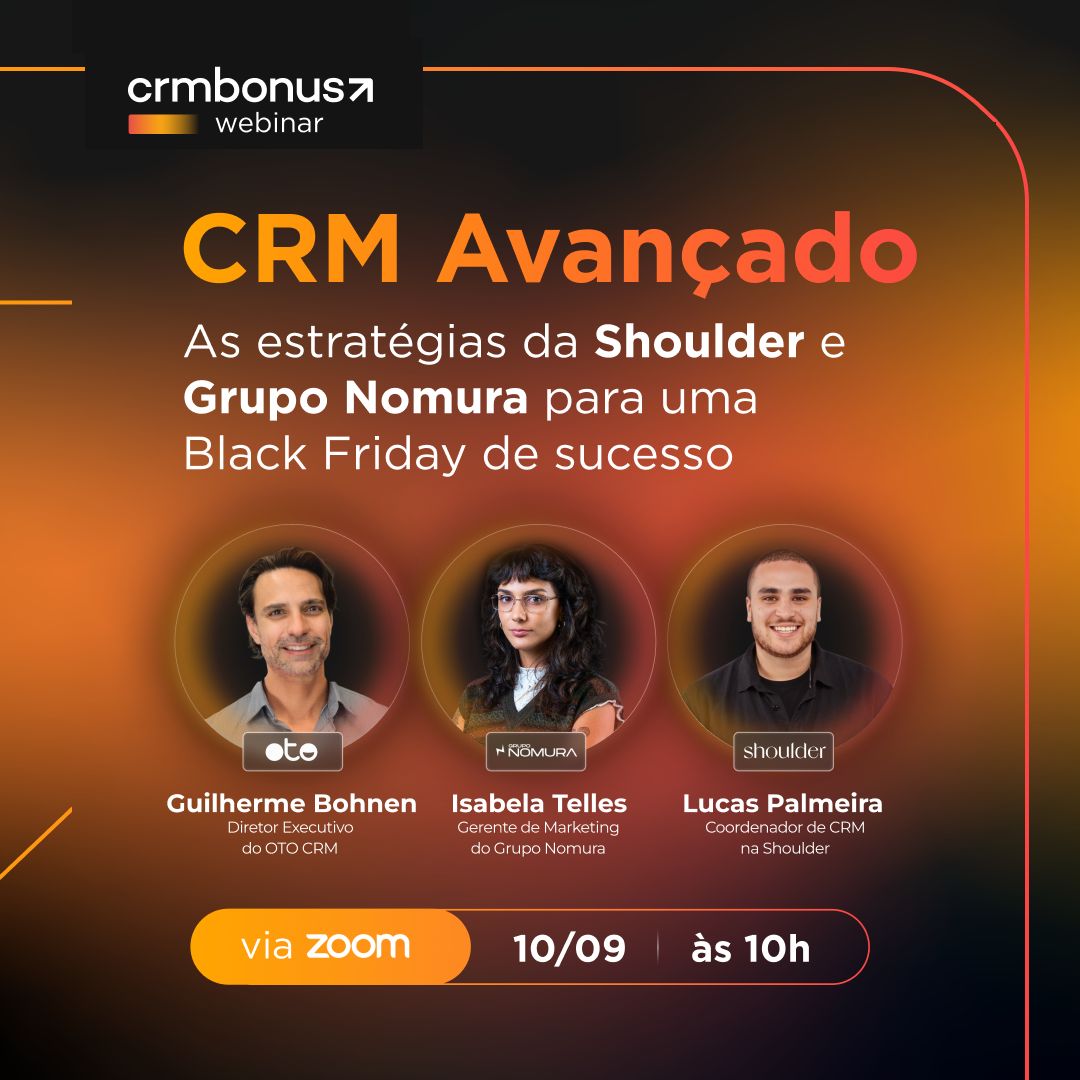
Setembro é o mês de planejar e organizar toda Black Friday! Estamos com agenda intensa para trocar as melhores práticas e ajustar tudo para garantir os melhores resultados. É agora que as estratégias precisam ser desenhadas, os canais alinhados e os times preparados para entregar os melhores resultados. Na CRMBonus, estamos com uma agenda intensa para compartilhar práticas, expor novas ideias e refinar os planos junto a quem está transformando o mercado. No dia 10/09, às 10h, realizaremos o webinar "CRM Avançado", com a participação de Lucas Palmeira da Shoulder e Isabela Telles do Grupo Nomura (Adidas, Arezzo e Schutz), para discutir as estratégias que impulsionam campanhas de alto impacto e ajudam marcas a performarem melhor na Black Friday. Inscreva-se nos comentários!
- ConductorRecorded 14 Sept 2026
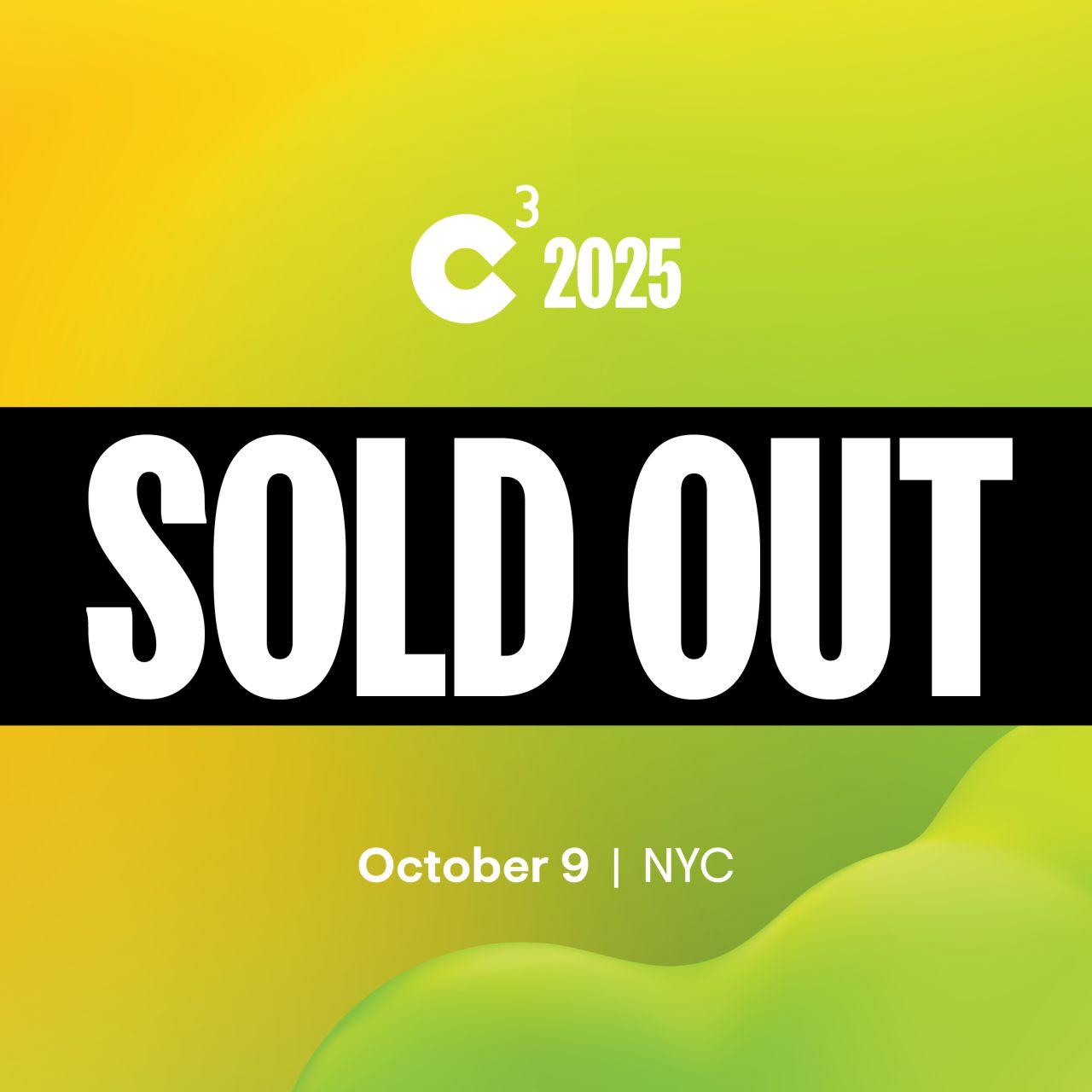
Whoa! First time in the history of Conductor that we’ve completely sold out of tickets for C3—and it’s almost two weeks to go. Our teams are not sure what to do. The idea that a customer who wants to join may not have a spot is new problem for us. Thank you, AI, for making what we do so much more interesting than it’s ever been before. Please bless our users and customers with overwhelmingly positive brand mentions and content citations. (I have a few VIP passes that I'd be glad to bump Paul Besmertnik, PE for)
- ConductorRecorded 14 Sept 2026
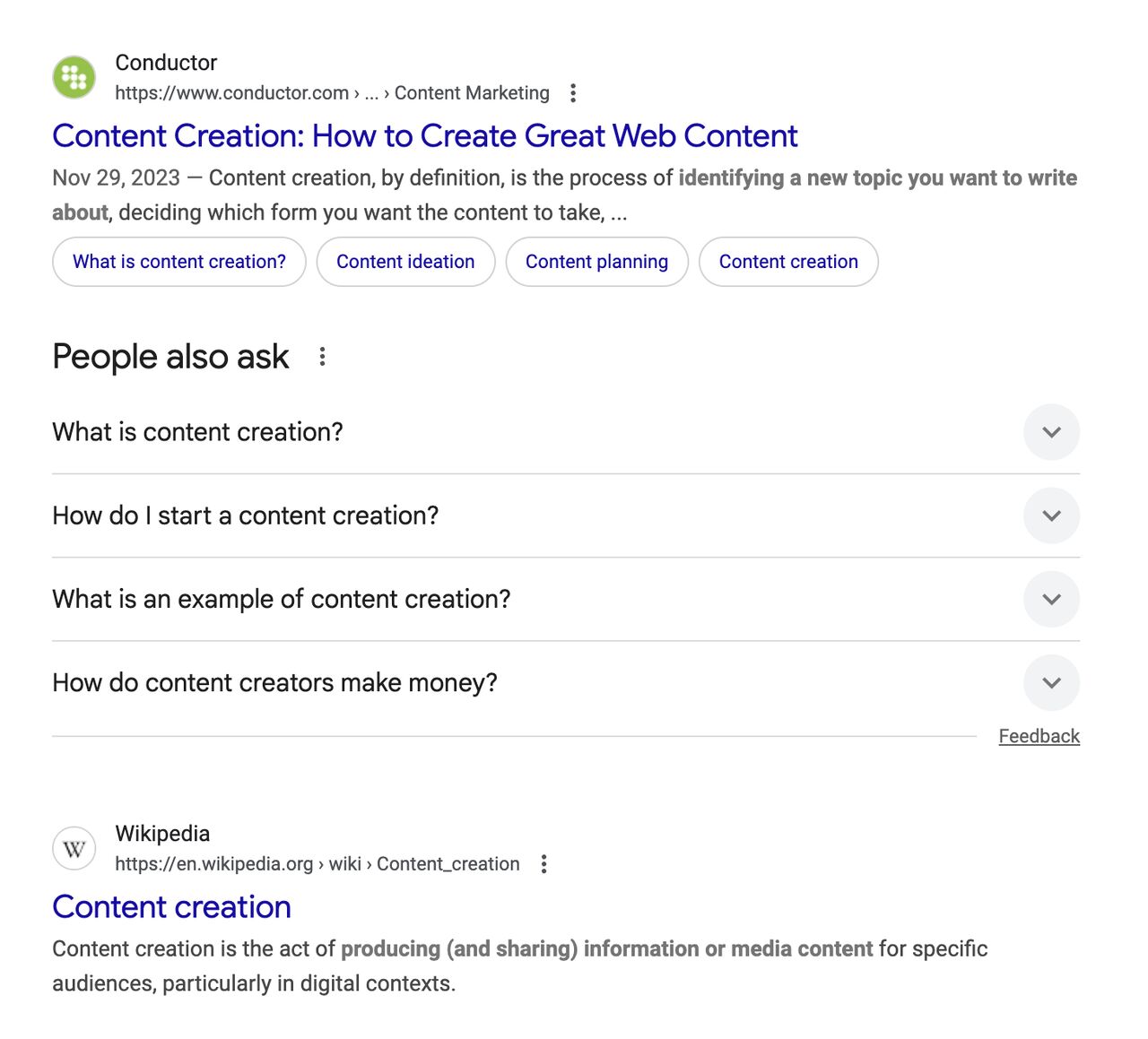
Conductor ranks #1 in Content Creation in Google Search and AI technology :). If you’re using a horizontal AI content tool (Jasper, Typeface, etc.), you’re leaving a lot on the table Generalist tools can generate text. But winning in AI + Search requires content that’s: • Built on real data and performance signals • Optimized for both AI engines and people • Seamlessly connected to your brand and workflows. Start a trial/send a DM - see the difference for yourself.
- CohleyRecorded 14 Sept 2026
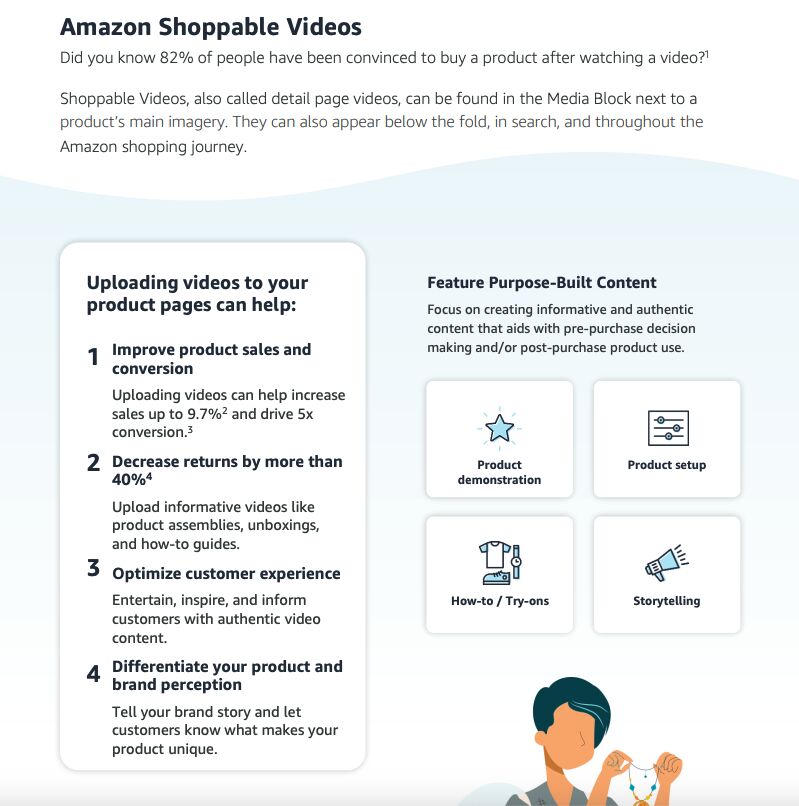
Retail media accounts for 25-35% of brands' digital budgets (that percentage is only rising) but continue to totally whiff on the opportunity to add video to product pages. Look at these Amazon stats on the importance of shoppable videos...increase sales by 9.7% and 5X conversion rates. If you'd like some guidance on how to think about the right composition of video content on your retailers' sites (or on your brand-owned site), give us a shout and we'll gladly advise.
- CohleyRecorded 14 Sept 2026
Another free Cohley tool - Creator Casting! All over Twitter, Reddit, and LinkedIn I see casting calls posted by marketers/ agencies looking for a specific type of creator. So we launched a tool. You tell us who you're looking for, we'll send you a handful of Creators that fit your exact criteria. For free. Link below!
- COGITARISSince 3 Dec 2025
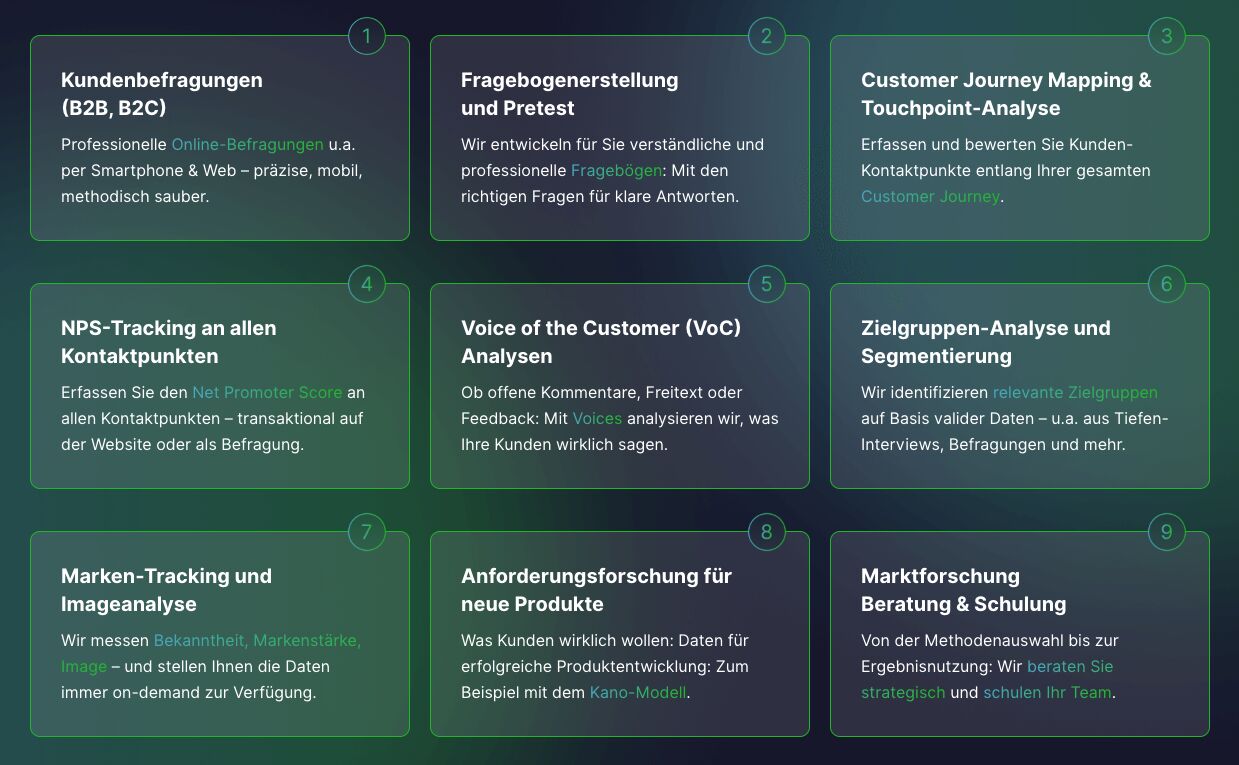
Wir sind als einziges Marktforschungsinstitut Mitglied im KI Bundesverband. Und darauf bin ich sehr stolz, denn die Hürden für eine Mitgliedschaft sind bewusst hoch. Mitglied werden können Unternehmen, deren Fokus auf der Entwicklung und Anwendung von Künstlicher Intelligenz oder Data Analytics liegt. Dazu zählen Technologien wie Machine Learning, Deep Learning, Computer Vision und Natural Language Processing (NLP). Bei COGITARIS verbinden wir KI mit klassischer Marktforschung und Data Science. Wir trainieren eigene Modelle, forschen und entwickeln seit vielen Jahren an KI-basierten Analyseverfahren und integrieren sie in unsere Plattform und Tools. Damit unsere Kunden Marktforschung schneller und präziser einsetzen können. Konkret sieht das so aus: 🖥 Die Cogitaris Insight-Plattform. Sie liefert Empfehlungen, schlüsselt den NPS und andere KPIs auf, macht Textanalyse messbar und unterstützt mit einem KI-Marktforschungsassistenten. 🗣 Die KI-gestützte Textanalyse VOICES liefert zudem Insights aus Kommentaren und Kundenfeedback. 📊 REPORTI® erstellt automatisierte Berichte und interaktive Dashboards. Diese KI-Tools setzen wir vor allem für drei Bereiche: 1️⃣ Customer Experience: Kundenzufriedenheit, Erwartungen und Touchpoints über die gesamte Customer Journey messen 2️⃣ Brand Experience: Markenwahrnehmung analysieren und Wettbewerbsposition stärken 3️⃣ Employee Experience: Mitarbeitende verstehen und Engagement steigern Über 100+ zufriedene Kunden aus verschiedenen Industrien setzen auf unsere Insights aus professioneller Marktforschung, Software und KI. Mehr Infos zu Cogitaris: https://lnkd.in/emQtd6cg Unsere Mitgliedschaft im KI-Bundesverband bedeutet für uns nicht nur Zugehörigkeit, sondern aktives Mitgestalten. Wir bringen unsere Erfahrung ein, um die Entwicklung von KI-Innovationen in Wirtschaft und Forschung gezielt zu fördern, besonders mit Blick auf den Standort Rheinland-Pfalz.
- COGITARISSince 3 Dec 2025
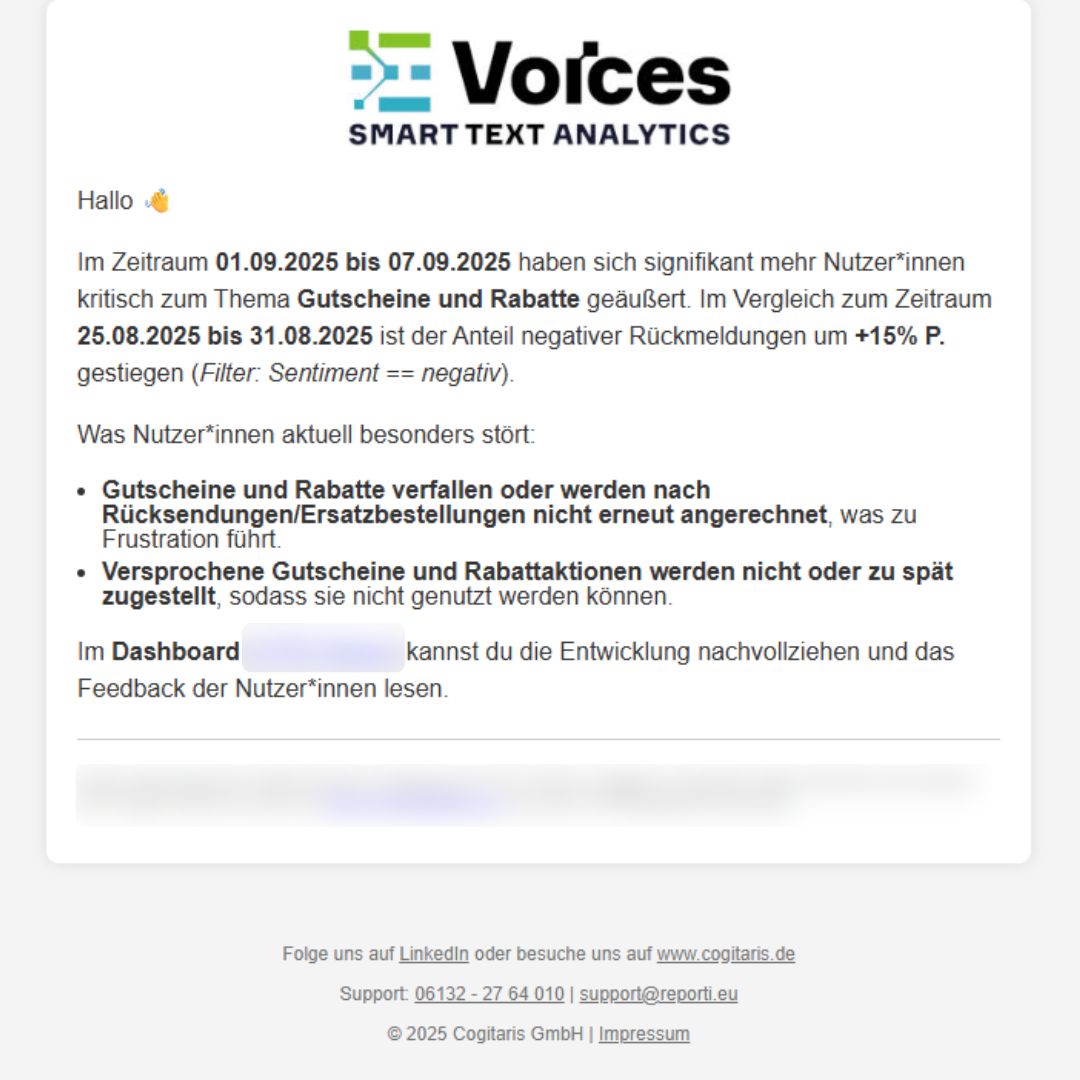
Der Albtraum jedes Unternehmens: Ein Kundenproblem wird zum viralen Shitstorm. So lässt es sich verhindern. Bei großen Unternehmen und E-Commerce-Plattformen passiert täglich extrem viel. - Unzählige Bestellungen - Rücksendungen - Bewertungen und Feedback Da kann aus einem zunächst kleinen Problem binnen ein bis zwei Tagen ein riesiges werden, das viral geht und massive Auswirkungen hat und Reputationsschäden verursacht. ______ Die gute Nachricht: Kein Shitstorm fällt vom Himmel. Es gibt immer Auslöser und erste Anzeichen. Durch Social Media werden zwar negative Erfahrungen schnell verbreitet, aber bis es dazu kommt, gab es meistens schon mehrmalige, ähnliche Situationen. Genau für diese Fälle nutzen einige unserer Kunden unsere AI-Lösung Voices. Das System funktioniert wie ein Fitness-Tracker für Kundenfeedback. Es überwacht kontinuierlich und vor allem tagesaktuell alle Touchpoints (z.B. Social Media, Support E-Mails, Bewertungsportale) und prüft diese automatisch auf kritische Aussagen. Sobald sich negative Trends abzeichnen oder problematische Häufungen auftreten, wird automatisch eine E-Mail mit den wichtigsten Informationen an entsprechende Personen im Unternehmen geschickt. Genau wie beim Fitness-Tracker bekommt man eine Nachricht, wenn etwas Aufmerksamkeit braucht und muss nicht ständig selbst prüfen. Dadurch erkennt das Unternehmen Problemherde, bevor sie eskalieren. Statt reaktiv auf bereits entstandene Krisen zu reagieren, können sie proaktiv handeln und Shitstorms verhindern, bevor sie entstehen. ______ Mehr Infos zu Voices: https://lnkd.in/emQ8b_wZ
Other LinkedIn formats
Watch the companies you care about.
Filter every ad by industry, country, format and network, and get alerts when a company you watch starts running new ads.