LinkedIn thought leader ad examples
183 thought leader ads are live on LinkedIn right now, from 155 companies. Browse real ones, filtered by industry.
- Boehringer IngelheimSince 28 Oct 2026
For HCPs in the UK and Ireland only. This post has been developed in collaboration with, and funded by, Boehringer Ingelheim. References available via the linked resource below. We wouldn't do a cardiovascular disease review without a blood pressure reading. So why do we do them without a uACR? Sometimes we come across data so stark that it makes you stop and think – how can we do better in our clinical practice? 66% of adults with recorded hypertension in England did not receive a uACR test in the last 12 months preceding December 2025 [Data extracted from CVDPrevent; accessed at: https://lnkd.in/di3xrbEy]. CKD isn't just a kidney problem, it is a cardiovascular problem! People with CKD are 6x more likely to experience a major cardiovascular event and are more likely to die from a heart attack or stroke than ever reaching end-stage renal disease (Based on Greater Manchester data) [Boehringer Ingelheim. Data on file. CRM 2-131025]. Albuminuria, measured by a urine ACR test, is an independent cardiovascular risk marker. Even modest rises can be associated with dramatically higher CV risk, including a 69% increased risk of CV disease [Xia et al, Int J Clin Exp Med 2015]. And it can signal damage to the structure of the kidneys way before eGFR has moved at all. The uACR test is simple. It's cheap and it requires little more than the right bottle to collect it in. When interpreted alongside clinical assessment, eGFR and other established cardiovascular risk factors, uACR identifies people with or at risk of kidney damage earlier, enables better risk stratification, and informs timely use of evidence-based therapies that can slow progression and reduce CV risk in accordance with current clinical guidance. Yet, despite all our guidelines recommending testing, the majority of patients with hypertension are being missed, meaning we can’t know for sure just how high their cardiovascular risk is… We can do better. uACR should be part of every cardiovascular review. 👇 Watch the video and click on the link below for more. And if this resonates, share it. Let's get the word out there and let’s get testing. https://lnkd.in/dc-pFrWg NP-GB-107940 v2 | October 2026
- Dawn HealthSince 28 Oct 2026
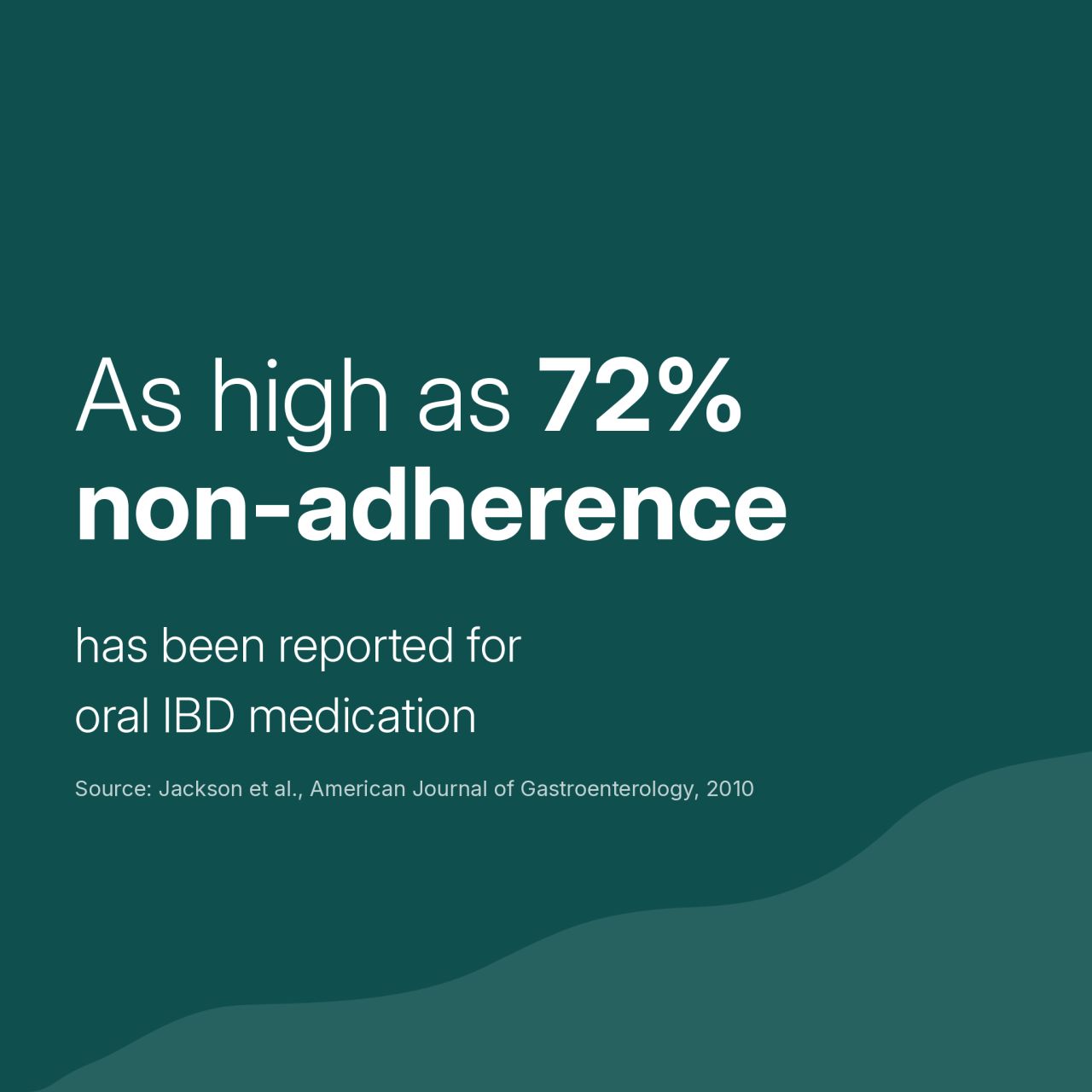
Ask ten people what causes an autoimmune flare. You will get ten different answers and most of them will be partly right. A flare behaves like a network. Poor sleep feeds fatigue, fatigue erodes adherence, missed doses fuel inflammation, and inflammation disrupts sleep. Mood sits in the loop too. About 1 in 3 people with inflammatory bowel disease (IBD) have anxiety symptoms, and in one cohort, anxiety in remission roughly doubled the risk of a later flare. Then add a delayed refill, a side effect, and the uncertainty of whether a symptom is worth a call to the doctor. The first weeks on a new therapy are the most fragile. The routine is not built yet and the benefit has not kicked in. This is where patient companions create value. They can be the one place where sleep, mood, doses, and refills meet between visits. Agentic AI can turn that view into action: noticing when sleep and mood drift together, checking in before a missed dose becomes a missed week, flagging a late refill, and bringing in a nurse when a symptom needs one. The value is already measurable. A 2025 Lancet Digital Health review linked digital tools to better adherence and fewer hospital visits, and patient programmes have more than doubled the odds of adherence and persistence. For pharma, the value compounds: stronger adherence and persistence, clinicians who see a trend line at the visit, and a way to see the whole system it has been asked to move for years.
- dsm-firmenich - Health, Nutrition & CareSince 28 Oct 2026
Two powders, poured the same way. One flows. One doesn’t. What’s the difference? This is one of my favorite demonstrations to share, because it proves that a smooth production run often starts at the formulation stage. The powder on the right uses our Advanced Powder Technology. We combine beadlet and granulation technologies, pre-formulated into the premix, with the right mineral product forms, so it’s easier to handle, dose, and process. The powder on the left shows why that’s important. Low or inconsistent flow can disrupt production and, in severe cases, block equipment completely. In the final product, it can mean lumps and uneven dosages. In my experience, flowability is easy to underestimate until it starts costing time on the line. This is exactly the kind of challenge we will be discussing during our webinar on November 16. We’ll talk through the six technology platforms behind Advanced Powder Technology, share real case studies, and look at what it all means for your business. If you work in formulation or production, I’d highly recommend tuning in: 🎤 Beyond Premix: Unlocking performance with Advanced Powder Technology 📅 November 16 | 16:00 CET 🔗 Register here: https://bit.ly/4zCQG9m #AdvancedPowderTechnology #Formulation #PremixSolutions
- Health Tech Hub CopenhagenSince 26 Oct 2026
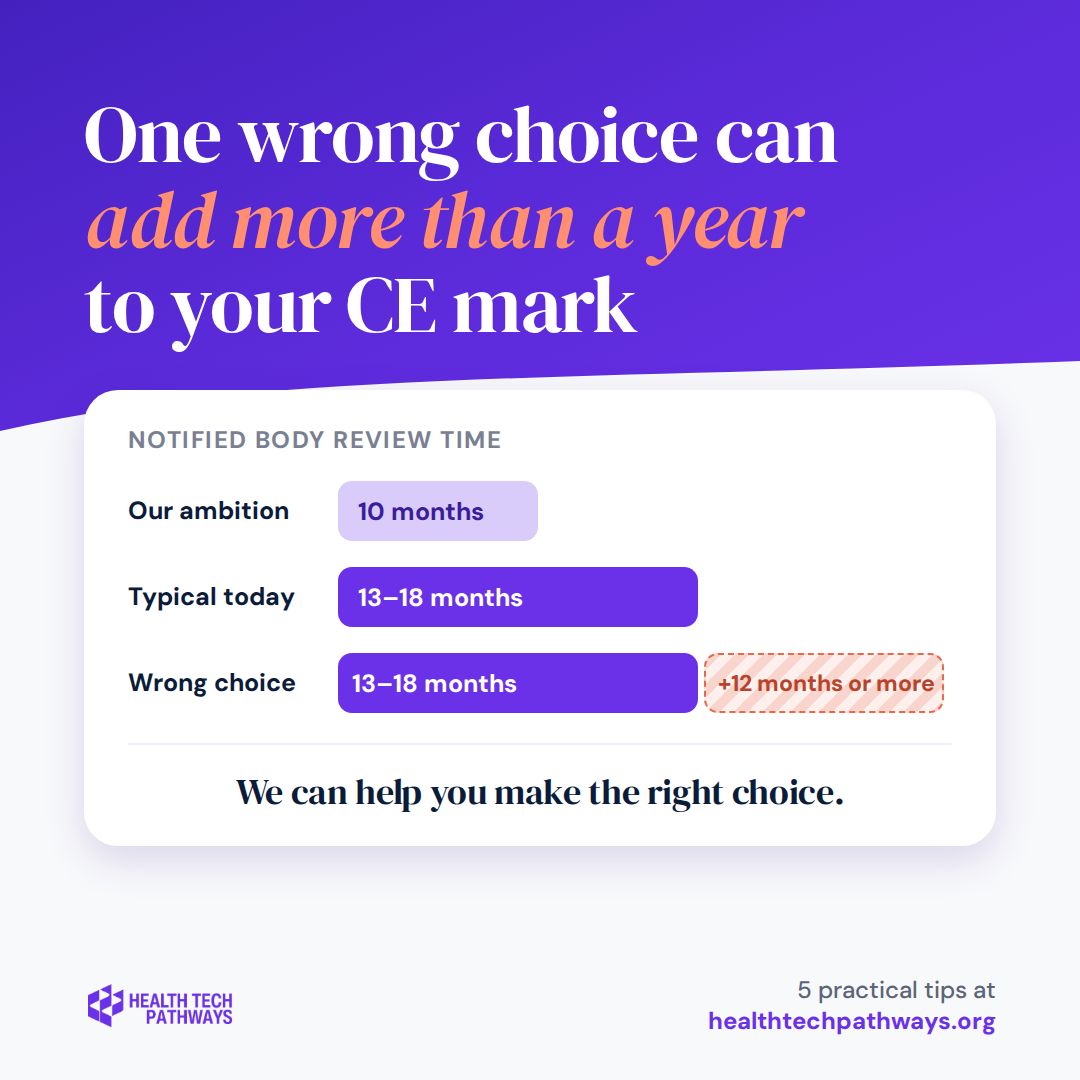
In health tech, one wrong decision can add more than a year to your timeline of your CE mark: choosing the wrong Notified Body. Review typically today takes 13–18 months, our ambition is to get it down to 10 months. I've seen founders close to tears because they had chosen the wrong notified body. One founder told us their Notified Body put their product in Class III. They switched, and the new one approved Class IIa, which was what they had aimed for. We want to stop that from happening. After working with over 130 start-ups/scale-ups, here's my advice: 1. Ask your network which Notified Bodies they used, and how it went. 2. Shortlist 2–3 that are authorised and experienced for your device type. 3. Meet all of them before you decide. Want help with the shortlist? Complete a free trial of Health Tech Pathways, and we'll help you find Notified Bodies that fit your device, free of charge. My 5 practical tips for choosing a Notified Body are here: https://lnkd.in/ecy3dsMS
- Hello PatientRecorded 29 Oct 2026
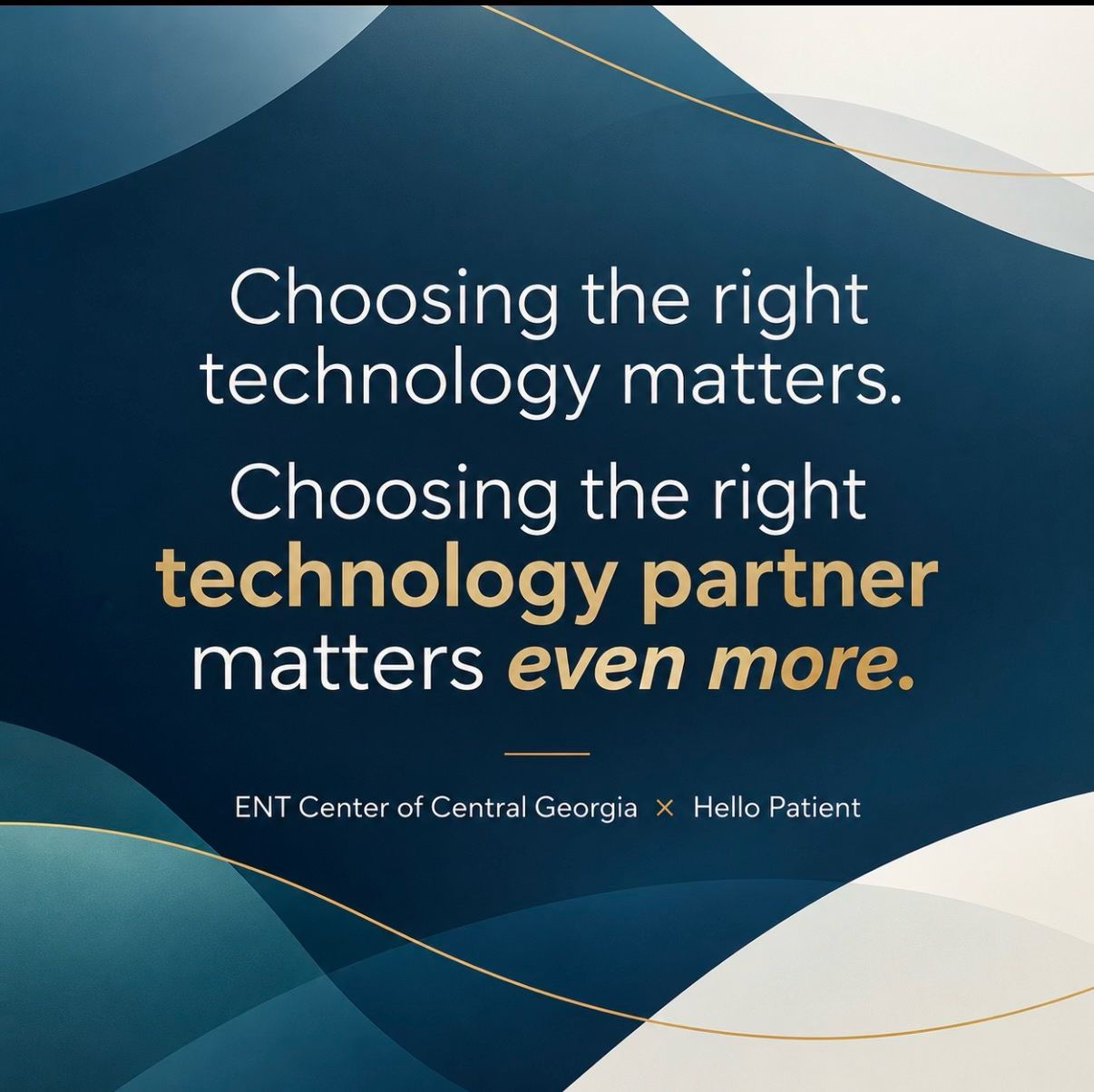
While choosing the right technology matters, choosing the right technology partner matters more. I have seen good products and companies struggle because implementation, communication, and ongoing issues management were handled as secondary concerns. Purchasing the technology can be the easiest part, although I caution against not doing due diligence. The real test comes when workflows meet reality, employees begin using the system, patients interact either it, and challenges inevitably arise. That is when you will realize whether you selected a vendor or a partner. The right partner: -listens before prescribing a solution -provides string project management and clear communication -understands your organization’s goals, workflows, and people -responds when something is not working as intended -treats challenges as shared problems to solve rather than issues to deflect We have shared that kind of partnership with Hello Patient. At The ENT Center of Central Georgia, we believe technology should empower our employees, not replace the human connection that is so important in healthcare. Hello Patient has allowed us to continue with innovation in how we manage patient communication and support our team. What has impressed me most is how seamless the implementation process has been. Their project management team has been exceptional! They have been responsive, knowledgeable, and genuinely invested in our success. As with any new technology, challenges arise, but their willingness to listen, collaborate, and resolve issues quickly has made all the difference. It's refreshing to work with a technology partner who understands that successful implementation is about more than the software itself. Technology will continue to change quickly and no platform will eliminate every challenge. The right partner doesn’t promise perfection. They remain present, responsive, and committed when the real work begins. That is what turns a technology purchase into meaningful operational progress. #healthcaretechnology #technologymatters #meaningfulpartnerships #healthcareleadership
- GreenTree Community Inclusion Programs Inc.Recorded 29 Oct 2026
We talk a lot about "person-centered care" in this sector, but what does it actually look like from a leadership perspective? This week at GreenTree Programs, our team sat down for a roundtable discussion on this exact topic. After years in this field, it is always refreshing to strip back the buzzwords and look at what it really takes to build a person-centered culture. We narrowed it down to three core principles: 1. It starts with how we treat our staff. You cannot expect a frontline worker to deliver deeply empathetic care if leadership treats them like just another file number. Person-centered care is a ripple effect, it starts with supporting your team exceptionally well so they actually have the emotional bandwidth to support others. 2. Policies must serve people, not just compliance. It is so easy for leadership to get bogged down in administrative paperwork. If a policy is just words on paper designed to make our reporting easier, it isn't serving its mission. We have to fiercely protect humanity from red tape. 3. Lead from the floor, not the desk. Decisions made in a boardroom rarely reflect the reality of the living room. I will be the first to admit I can be guilty of getting stuck behind my desk, but leadership must stay connected to the day-to-day moments. We have to walk in the shoes of our frontline staff to truly understand the perspective of the people we serve. I want to put the question out to my network: What does person-centered care look and feel like at your agency or place of work? What do best practices look like for your team? Let me know in the comments! 👇
- AstraZenecaSince 25 Oct 2026
ESMO begins in just a few days, and I’m looking forward to connecting with peers and seeing the latest advances in cancer care from across the R&D and medical community. Ahead of this year’s congress, David Fredrickson and I reflected on 10 years of progress in oncology. We discussed what has had the most impact on cancer care in the past decade and our predictions for the future. Watch until the end to hear our personal lessons learnt over this time! What do you think has been the biggest breakthrough in cancer care in the past decade? #ESMO26
- AstraZenecaSince 25 Oct 2026
The conversations in oncology today look very different than 10 years ago. Ahead of #ESMO26, Susan Galbraith and I sat down to reflect on a decade of innovation in cancer care – whats moved the needle most for patients, where we got it right, where we have to keep pushing, and what the next ten years could unlock. Stick around to the end to hear how we have changed along the way (but if you know Susan, her response won’t come as a surprise). Looking ahead, what do you think will be the biggest game-changer in cancer care that we'll look back on in 10 years?
- Attendo SuomiSince 23 Oct 2026
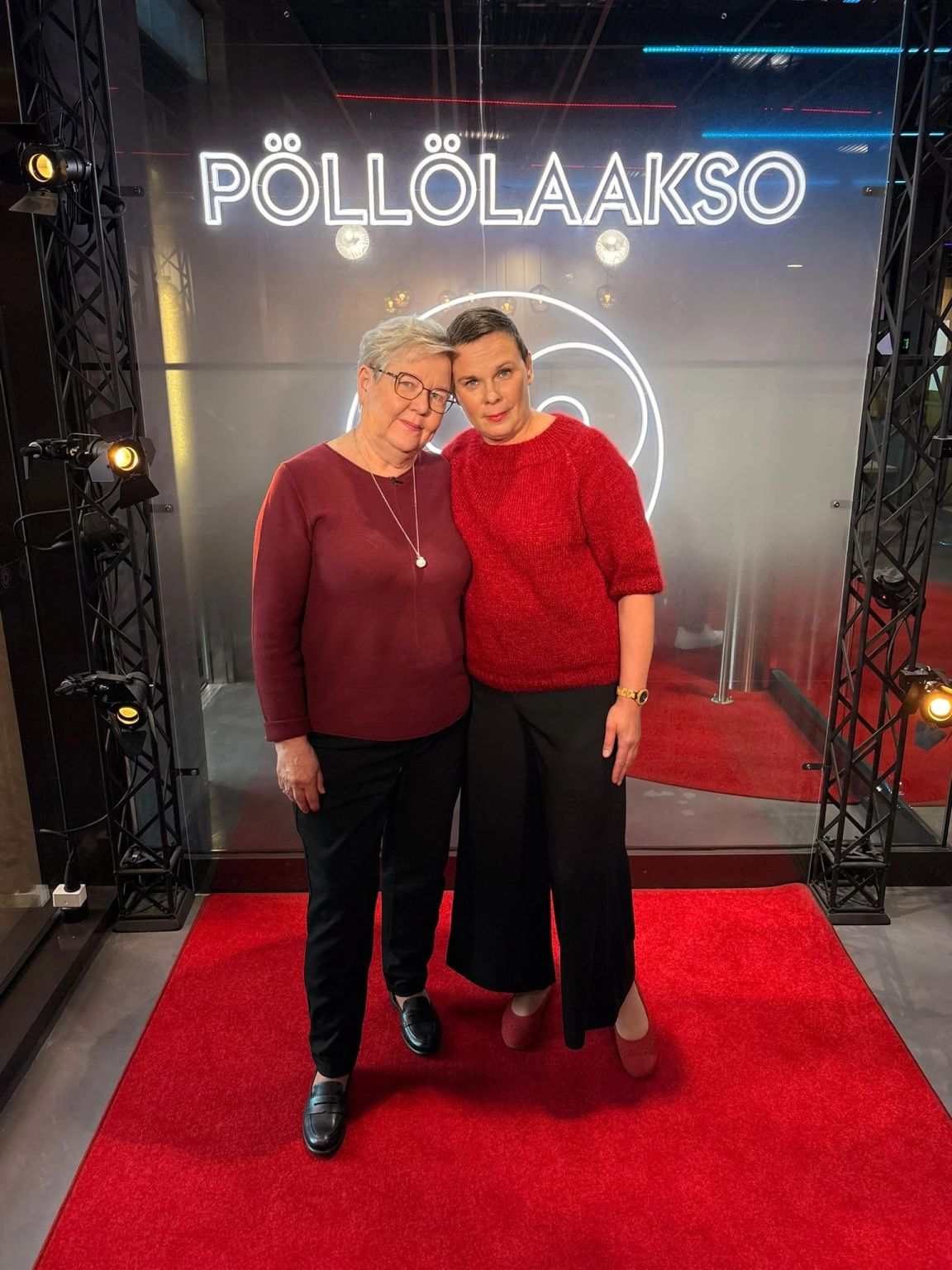
Luin eilen vanhusasiavaltuutetun raportin Kohti toimivampia sosiaali- ja terveyspalveluita iäkkäille - Kokonaiskuva ja ehdotuksia päätöksentekijöille. Raportissa oli todettu, että ikäihmisen matka palveluihin on kuoppainen. Raportissa on kuvattu muun muassa omaishoitajan haasteellista tilannetta case-esimerkillä. Kiitos Vanhusasiavaltuutettu valaisevasta raportista. Palasin lukukokemuksen jälkeen Pöllölaakson tunnelmiin. Olin Gunin kanssa kertomassa omaishoitajan arjesta. Gun omaishoitajuuden kokeneena ja minä sivusta seuranneena sote-ammattilaisena. Attendo Suomi kampanjassa Pitkä matka kotiin läheiset kertovat, että millaista on elää läheisen rinnalla kun hoivaan pääsy viivästyy. Matka kotiin on pitkä ja kuoppainen.
- BitsolRecorded 28 Oct 2026
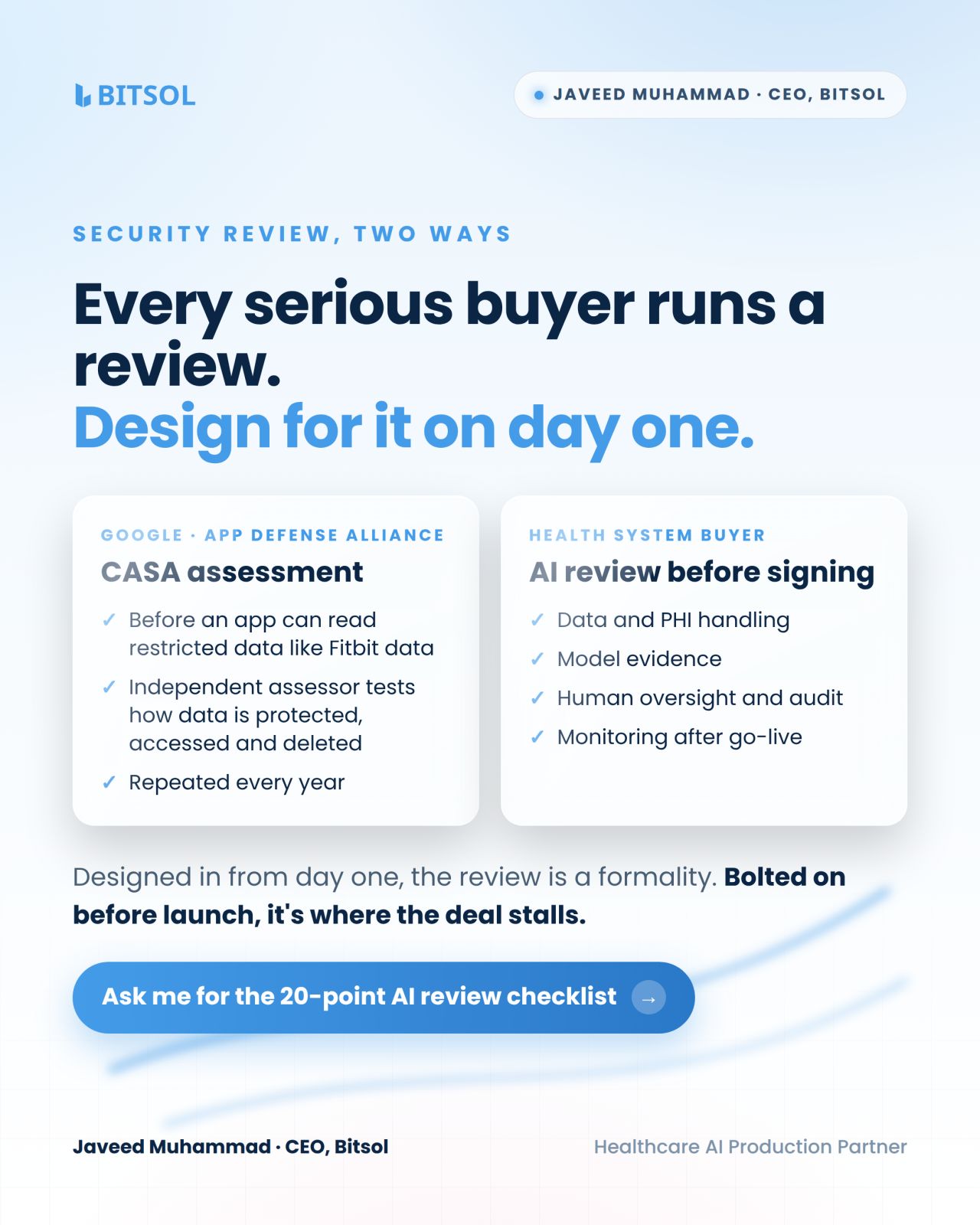
Before an app can read sensitive Google user data, like someone's Fitbit health data, Google makes it pass an independent security assessment. Every year. We recently went through this at Bitsol with a client's health app that brings together wearables, medical records and mood. The standard is CASA, from the App Defense Alliance. An outside assessor tests how the app protects, accesses and deletes user data. Pass and you get a Letter of Validation. Fail and the integration stays closed. Health systems now work the same way with AI vendors. Before they sign, they run a review: data and PHI handling, model evidence, human oversight and audit, and monitoring after go-live. The lesson is the same in both cases. If security and evidence are designed in from day one, the review is a formality. If they're bolted on before launch, the review is where the deal stalls. It's a big reason so many healthcare AI pilots never reach production. If you're preparing for a health system's AI review, we put together a 20-point checklist. Message me and I'll send it. #HealthcareAI #DigitalHealth #HealthIT #Femtech
- BenchlingSince 23 Oct 2026
Novel antibody formats are multiplying fast, but most data infrastructure hasn’t kept pace. Your years of antibody data end up unstructured, and AI models have nothing to learn from. At #PEGSEurope, I’ll show how we close the gap, giving antibody teams a shared, structured foundation to design, characterize, register, and learn from proteins, and what that means for the speed of your DBTL cycles. Join my session on Tuesday, Nov 17 at 12:15 PM and visit our booth #421! 🔗 View the session details: https://lnkd.in/eHWQY4nb
- GaldermaSince 22 Oct 2026
#ForInvestors This morning, we announced Galderma’s sales numbers for the first nine months of 2026, and I’m pleased to say they confirm the strength of our business momentum, and of our Integrated Dermatology Strategy. Net sales neared 4.8 billion USD, a record for the period and up 25.1% year-on-year at constant currency. This included a 13.2% increase in our Injectable Aesthetics business, a 16.2% rise in Dermatological Skincare, and a rise of 64.4% in Therapeutic Dermatology. Given these numbers and our confidence in the business, we have raised Galderma’s full-year 2026 net sales guidance to 22.5-23.5% year-on-year at constant currency and confirmed Core EBITDA margin of approximately 26% at constant currency. These results reflect, among other things, our success in keeping up the strong momentum of our novel biologic for atopic dermatitis and prurigo nodularis, whose net sales totaled 735 million USD in the first nine months of 2026, and of our new next-generation neuromodulator, now approved in 37 countries. We’ve also continued to deliver exciting innovations in both Cetaphil and Alastin, and I’m excited about the opportunities that the planned acquisition of ZO Skin Health will bring for the business, and for Galderma as a whole. A heartfelt thanks to everyone who is contributing to this performance and supporting our ambition to become an undisputed dermatology powerhouse. Read more: https://lnkd.in/eZhwDqqN #AdvancingDermatology #GaldermaGrowth
- Ocushield®Recorded 27 Oct 2026
She keeps workplaces safe for a living... And still put off getting her own eyes checked. Meet Tanisha Hyde, Environmental Health & Safety Consultant. 10 to 12 hours a day on screens. "Probably more..." 😅 Laptop and 2 monitors at home. Laptop and a monitor at client offices. Phone first thing in the morning, and last thing at night. We asked her why she'd put it off. "Work gets busy. Life gets busy." I hear this all the time. Not fear. Not cost. Just... busy. Then one day you notice your vision's changed And you realise it's been a while. That's a big part of why we built our Online Eye Screener. A few minutes, from your desk or sofa. It gives you an indication of how your vision is performing And whether it might be time to book in with an optometrist. It's not a replacement for that appointment. Just a nudge, for the busy ones. P.S. Tanisha, thank you for sitting down with us and being so open. You spend your days looking after everyone else's wellbeing at work... hope this is your nudge to look after your own too. 😊
- EssitySince 23 Oct 2026
Anyone who knows me knows I love technology. But what excites me most is what it can make possible for people. TENA SmartCare is a great example of how connected solutions can turn information into meaningful decision support, helping caregivers understand what care is needed and when, and ultimately supporting better care outcomes. That’s the kind of innovation I get excited about. Start with a real human need. Use technology to find a smarter way to meet it. Make a meaningful difference. That’s when innovation becomes more than an idea. It becomes better care.
- EssitySince 23 Oct 2026
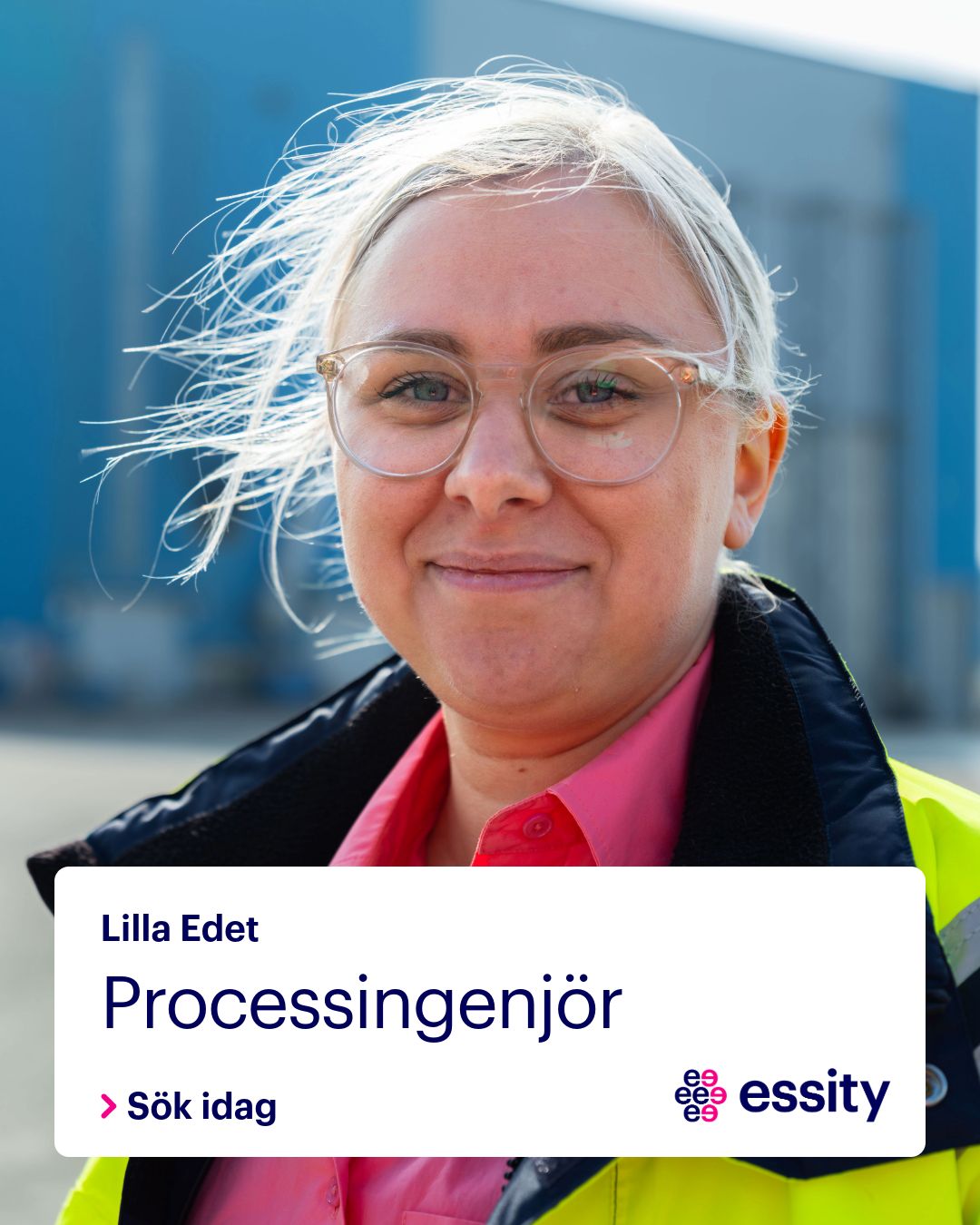
Vill du se resultatet av ditt arbete ute i produktionen och samtidigt använda din analytiska förmåga för att driva förbättringar? Som Processingenjör på Essity i Lilla Edet får du vara med och utveckla en av världens mest hållbara produktionsanläggningar tillsammans med kunniga och engagerade kollegor. ✅ Påverka produktionen på riktigt ✅ Arbeta nära experter och verksamheten ✅ Utvecklas i en global organisation med stora möjligheter Sista ansökningsdag: 9 november Läs mer om tjänsten och ansök här: https://lnkd.in/dzMX6W3W
- Institut PasteurSince 23 Oct 2026
Il y a 30 ans, Jamy Gourmaud 📺 transformait un dimanche après-midi pluvieux en un cours de science accéléré avec une pédagogie assez géniale. Il n'est certainement pas étranger à la passion qui est aujourd'hui la mienne de rassembler chercheurs et philanthropes dans un combat commun, celui des faits contre les opinions. Pour être défendue, la science doit d'abord être comprise. Pour être exécutée, elle doit ensuite être bien financée. Depuis 20 ans, le #Pasteurdon 🎁 aide à remplir ce double objectif. Comme Jamy, de nombreux journalistes travaillent d'abord sans relâche à faire de ce rendez-vous un grand temps fort médiatique sensibilisant le public sur l'importance de comprendre et défendre la science. Mais le Pasteurdon, c'est aussi un énorme élan de générosité garant d'une recherche libre, indépendante et ambitieuse. Atteindre ce double objectif demande de la détermination, du courage et parfois un petit regard derrière soi. Le 27 avril 2009, soit en pleine récession, Barack Obama 🇺🇸 rend hommage à Lincoln lors d'un discours emblématique à l'Académie des Sciences 🔭 . Il salue sa vision de l'avoir créée en pleine guerre civile, un signe d'optimisme et de foi dans le progrès scientifique. Il annonce alors un objectif historique : consacrer plus de 3 % du PIB à la recherche, dépassant le niveau atteint pendant la course à l'espace 🚀 . Aujourd'hui, si cet objectif est aussi celui de la France 🇫🇷 , il est loin d'être atteint. Mais chacune et chacun d'entre nous peut y contribuer à son échelle. En faisant un don sur https://pasteurdon.fr/ 👏 , vous aidez à rendre possible cette recherche qui nous concerne tous. En soutenant celles et ceux qui travaillent à protéger la vie, vous investissez dans celle de nos enfants. Soutenir la recherche 🔬 , ce n'est pas sorcier! Merci pour votre générosité. Institut Pasteur Yasmine Belkaid Henri Pitron Charlotte Léon-Pellissard Caroline Cutté Frédéric Grosjean Caroline Giboulet @Constance Derely Mathieu Fortoul Charlyne Burban
- Institut PasteurSince 25 Oct 2026
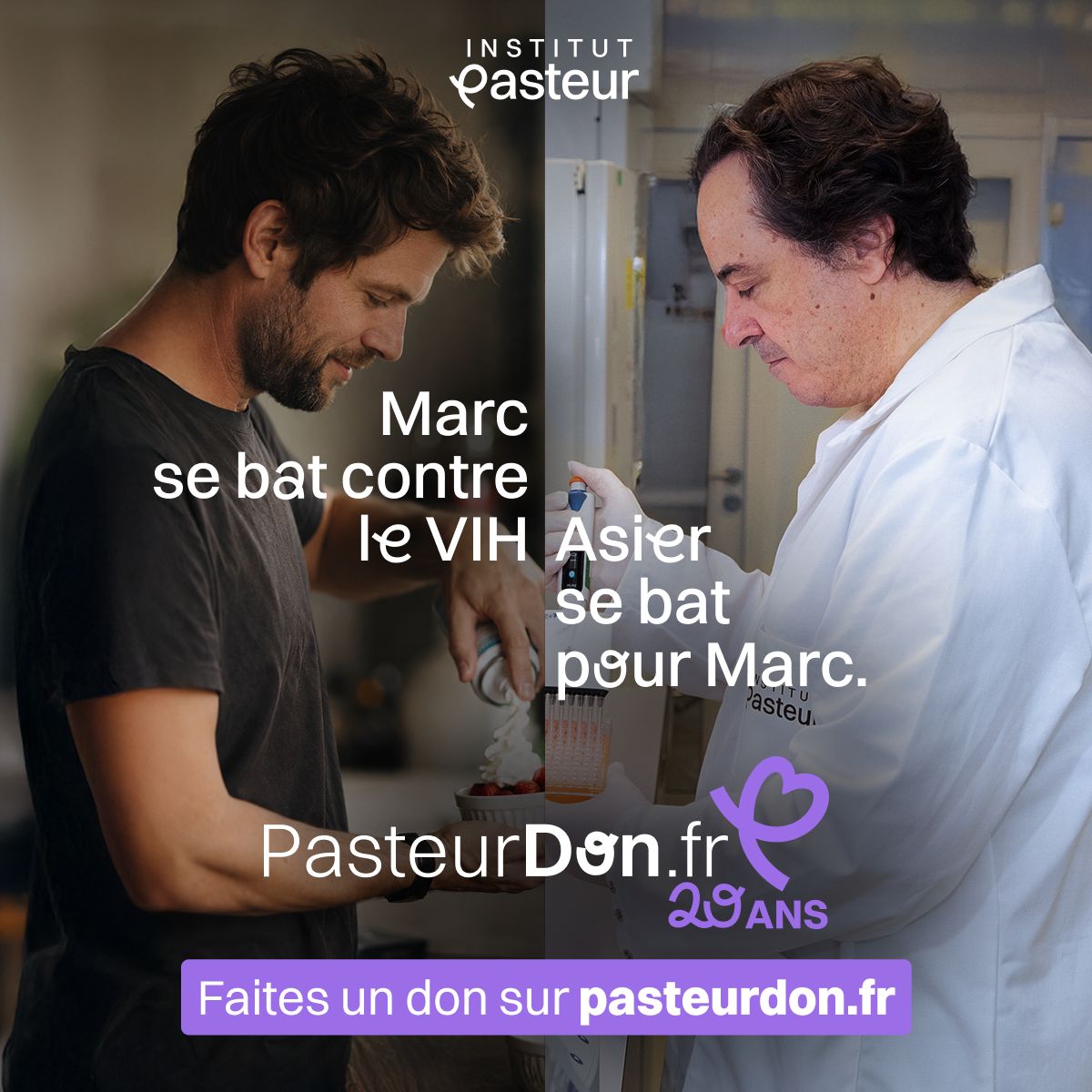
Certaines personnes contrôlent le VIH sans médicament. Depuis 20 ans, on essaie de comprendre comment. En 2003, j'arrive à l'Institut Pasteur pour étudier les mécanismes de résistance naturelle au VIH. Avec l'équipe, on s'oriente vite vers une question plus large : comment certaines personnes contrôlent-elles le virus ? On commence par étudier les contrôleurs naturels, ces personnes rares qui vivent avec le VIH sans jamais avoir eu besoin de traitement. Puis on découvre un autre phénomène : des personnes qui, après avoir arrêté leur traitement, continuent à contrôler le virus. C'est l'étude VISCONTI, et c'est elle qui donne naissance au concept de rémission du VIH. Cette découverte, on l'a construite ensemble : cliniciens, virologues, immunologistes, épidémiologistes, chercheurs en sciences humaines et sociales, et des personnes vivant avec le VIH, actrices de ces recherches. Depuis, nous avons décrit les premiers cas mondiaux de rémission prolongée, et mieux compris les mécanismes de ce contrôle. Ces connaissances dépassent le VIH : elles éclairent la réponse immunitaire face aux infections persistantes. Aujourd'hui, ces résultats nourrissent les premiers essais cliniques de rémission du VIH en France. Une étape importante, mais la recherche a besoin de temps et de moyens pour aller plus loin. Soutenir la recherche, c'est financer les outils, les analyses, les postes de jeunes chercheurs. Chaque don compte. 👉 https://lnkd.in/eZthW_Tn Vos dons protègent la recherche, la recherche protège la vie. #Pasteurdon Institut Pasteur Valerie Monceaux Maël Gourvès Luis Romero Martín Nicolas Bellini Louise Jeammet Juliette BALLIN Matilde Jacobson #RHIVIERA ANRS Maladies infectieuses émergentes
- Fresenius GroupSince 22 Oct 2026
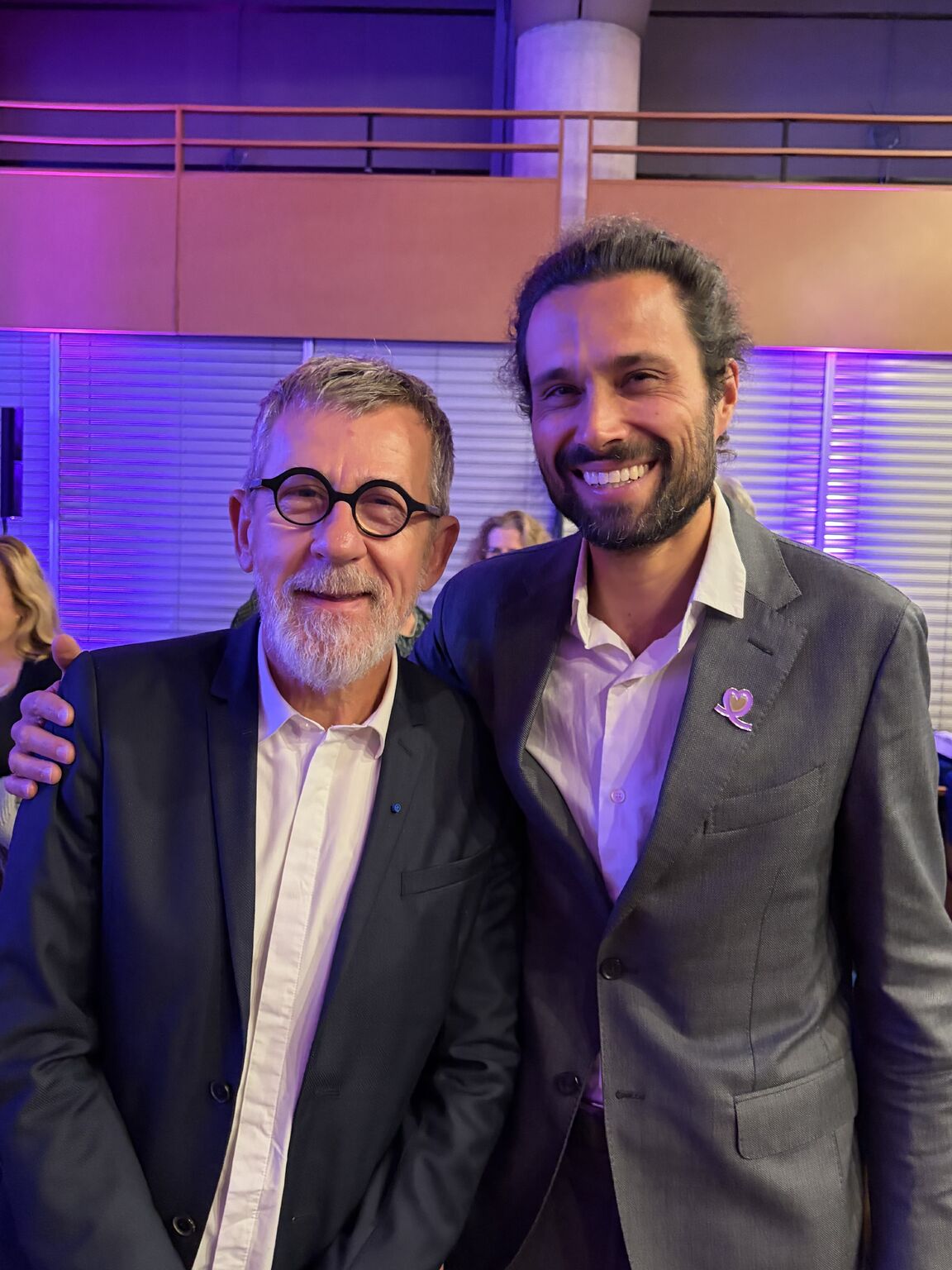
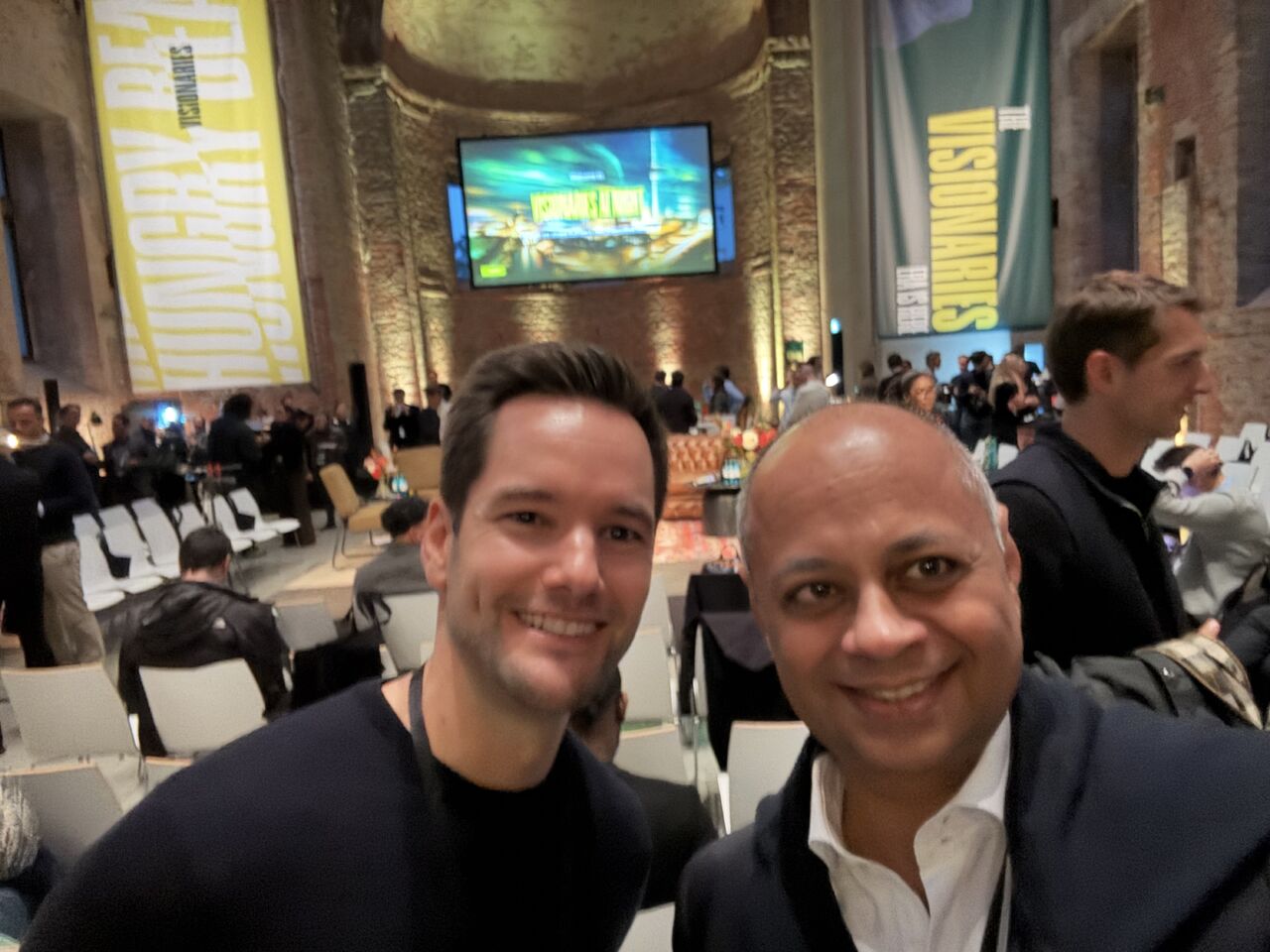
Great energy at the Visionaries event yesterday in Berlin! A vibrant community of founders and creators who don’t just talk about the future. They want to build it, shape it and make an impact. And yes, I may have pushed up the average age in the room a little. 😉 I very much like to immerse myself in this community from time to time. To listen. To learn. To stay close to the people creating what’s next. One message came through loud and clear: AI is here, change is exponential, and the future will not wait for us. There is a generation of entrepreneurs ready to step up and turn great ideas into real impact - real impact for Europe. Great to catch up with Christian Albrecht from Avelios Medical. We invested in Avelios because we believe in what they are building and that they will be successful.
- Fresenius GroupSince 22 Oct 2026
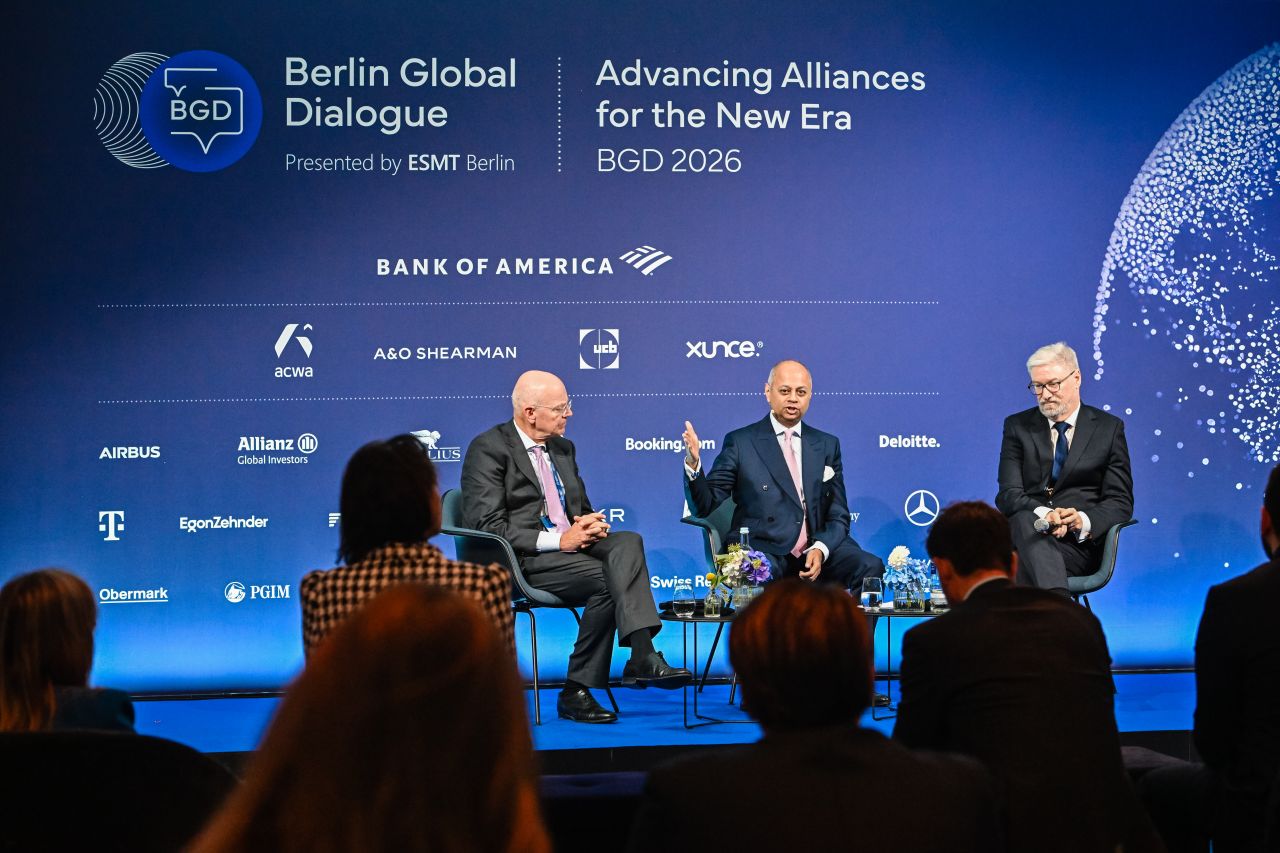
𝗦𝗮𝘆 𝘄𝗵𝗮𝘁 𝘄𝗲 𝗱𝗼. 𝗔𝗻𝗱 𝗱𝗼 𝘄𝗵𝗮𝘁 𝘄𝗲 𝘀𝗮𝘆. Trust is earned by delivering concrete results. This is what CEOs must do to attract investors and the same principle applies to Germany as an investment destination. Our Invest in Germany panel at Berlin Global Dialogue focused on precisely this challenge. Special thanks to Lars-Hendrik Röller and Germany’s “Chief Investment Officer,” Martin Blessing for a meaningful exchange today in Berlin. We are in the midst of a new world order that is much more transactional, shifting the strategic priorities of many countries from maximizing efficiency toward (re)building resilience and sovereignty. And we have to acknowledge an uncomfortable reality: other regions are currently better at turning strategic priorities into action. This new world order will test whether Germany and Europe can deliver better outcomes while staying true to our democratic values. For me, two words are key: speed and scale. We have many of the ingredients for success: great companies, outstanding science, talent and innovation. But too often, fragmentation keeps us from translating these strengths into large-scale industrial success. AI makes this even more urgent. Creating a true European single market and removing unnecessary barriers within Europe are essential to achieving both. At the same time, we need to think much more strategically about our dependencies. Strategic autonomy does not mean strategic autarky. It means understanding where the chokepoints are, where dependencies can become dangerous vulnerabilities, and where we need to build strong ecosystems of our own. Healthcare is a good example. We still look at it too often through the lens of cost. But healthcare is a strategic industry and should be treated as one. In the U.S. and China, this strategic importance is much more widely recognized. A resilient society needs reliable, high-quality care and secure access to critical medicines and active pharmaceutical ingredients. And the convergence of biology, AI and data is opening up enormous opportunities. We need to ensure that more of the next generation of healthcare innovation is developed, applied and scaled in Europe. Germany has enormous potential as an investment destination. Now we need to make the most of it. There is no time to lose. Or, to put it in tennis terms: we need to fight for every point and avoid unforced errors. Thank you, Lars-Hendrik and Martin, for a great discussion on a topic that could hardly be more relevant. #BGD2026 #FutureFresenius #FreseniusCommittedToLife
- Merck HealthcareSince 22 Oct 2026
Some of the most important challenges patients face never show up in a scan. I remember my first conversations with people living with rare tumors. We talked about pain, mobility, the ability to work and the uncertainty of living with a condition that few people truly understand. But something else stayed with me: For many patients, the hardest moments happen between appointments. When symptoms change, when side effects become difficult to manage or when they simply need an answer from someone who understands their condition. We have made extraordinary progress in developing medicines that can change the course of a disease. But bringing an innovative medicine to patients is only part of realizing its full potential. I believe the next frontier in healthcare is connecting innovation in medicines with innovation in how we deliver care, so that scientific progress translates into meaningful outcomes in patients' everyday lives; that requires a different kind of collaboration. Today, I'm proud to share our work with NVIDIA Healthcare , Microsoft for Healthcare and Dawn Health to explore a new model of AI-enabled, integrated patient support for people living with rare tumors. We are bringing together pharmaceutical and clinical expertise, advanced AI, cloud technology and digital health capabilities to work toward something fundamentally different. A model where patients can access reliable, personalized support when they need it. Where their needs can be better understood as they evolve. And where technology helps connect them with human expertise at the moments it matters most. Not AI replacing healthcare professionals, but helping them deliver more informed, timely and personalized support. No single industry can build this future alone. Pharmaceutical companies bring deep scientific and clinical expertise, an understanding of medicines and their real-world use. Technology companies bring capabilities that can help us rethink how support is delivered. Digital health partners turn those possibilities into experiences patients can use. The real opportunity lies in bringing these strengths together, responsibly, and translating them into meaningful patient value. We are still at the beginning, with important questions to answer and much to prove. But I keep coming back to those first patient conversations. Success should not only be about what we build or how advanced the technology becomes. It should ultimately be about whether patients can better manage their disease, navigate treatment and live their lives. Because the value of medical innovation is ultimately realized in the lives of the people it is meant to help. #HighTouchHighTech #AsOneForPatients
- Hello PatientRecorded 27 Oct 2026
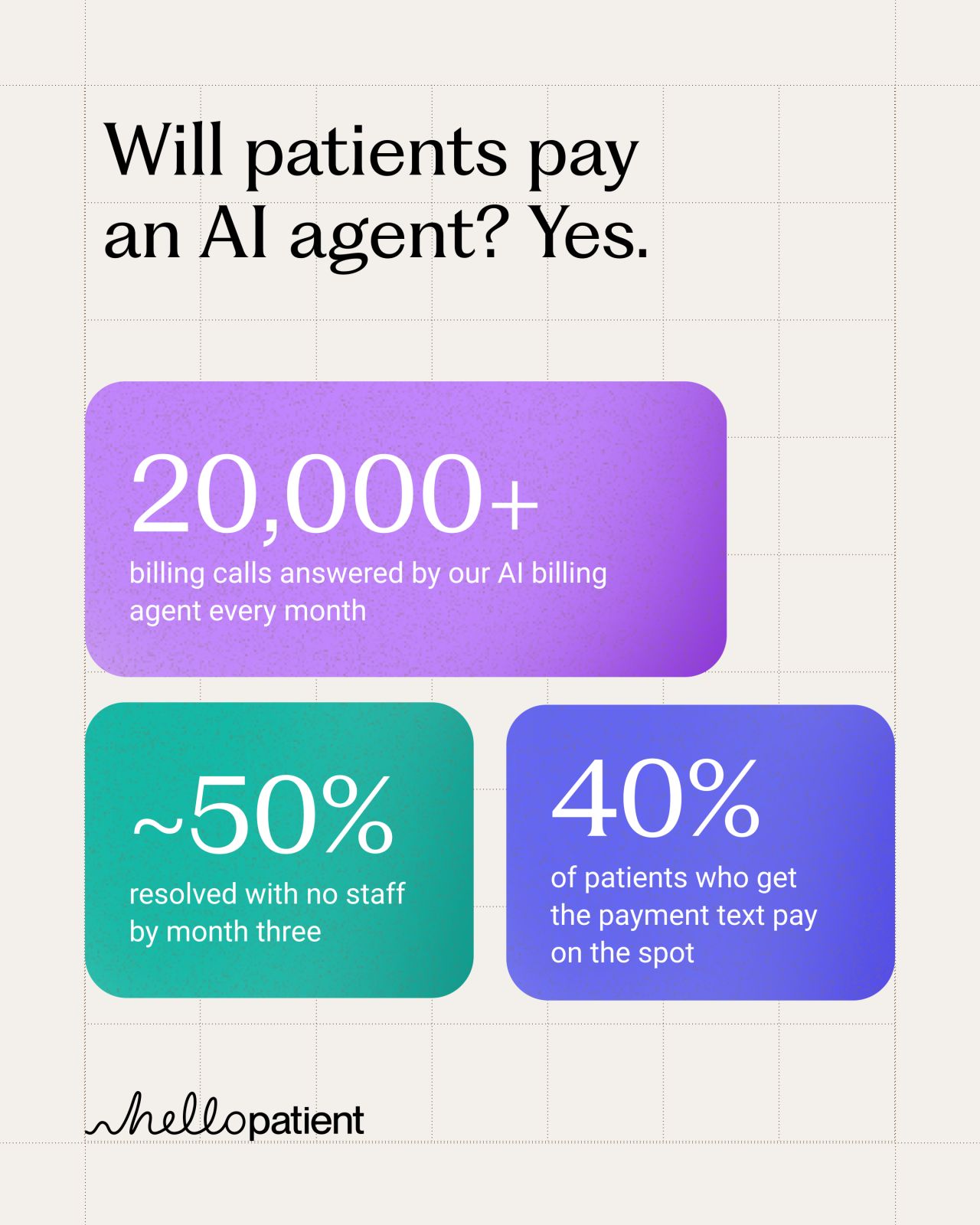
When our AI agent texts a patient a link to pay their bill, 40% pay on the spot. Most people in healthcare don’t believe that. The assumption is that billing is too sensitive for AI. Patients will want a human, get confused, and call back angrier. Piedmont Urgent Care gets 20,000+ billing calls a month. Our agent answers them, verifies the caller, pulls the bill, explains the charges and what insurance covered, and walks through payment options. By month three, almost half of those calls were resolved without a human. Escalation rules and easy pathways for patients are so important though. Disputes and anything outside the agent’s rules still go to the billing team, with the full conversation attached so nobody starts over. And the most surprising thing we learned? Most patients aren’t actively avoiding paying their bill. They just need someone to pick up and explain it. Once they get that, they pay. If you run a billing team, how many of your calls are really just “what is this charge?”
- SubsaltRecorded 27 Oct 2026
Finding the balance between taking care of patient data and moving quickly is really important. While ethical and privacy reviews are being done, cures and interventions are delayed. Worse, because there is so much anticipated waiting around, many projects never even start. Not everyone has the luxury of time. We have got to find more ways to move fast without breaking things. That is what we're doing at Subsalt. https://lnkd.in/dChYzjWn
- insitroSince 22 Oct 2026
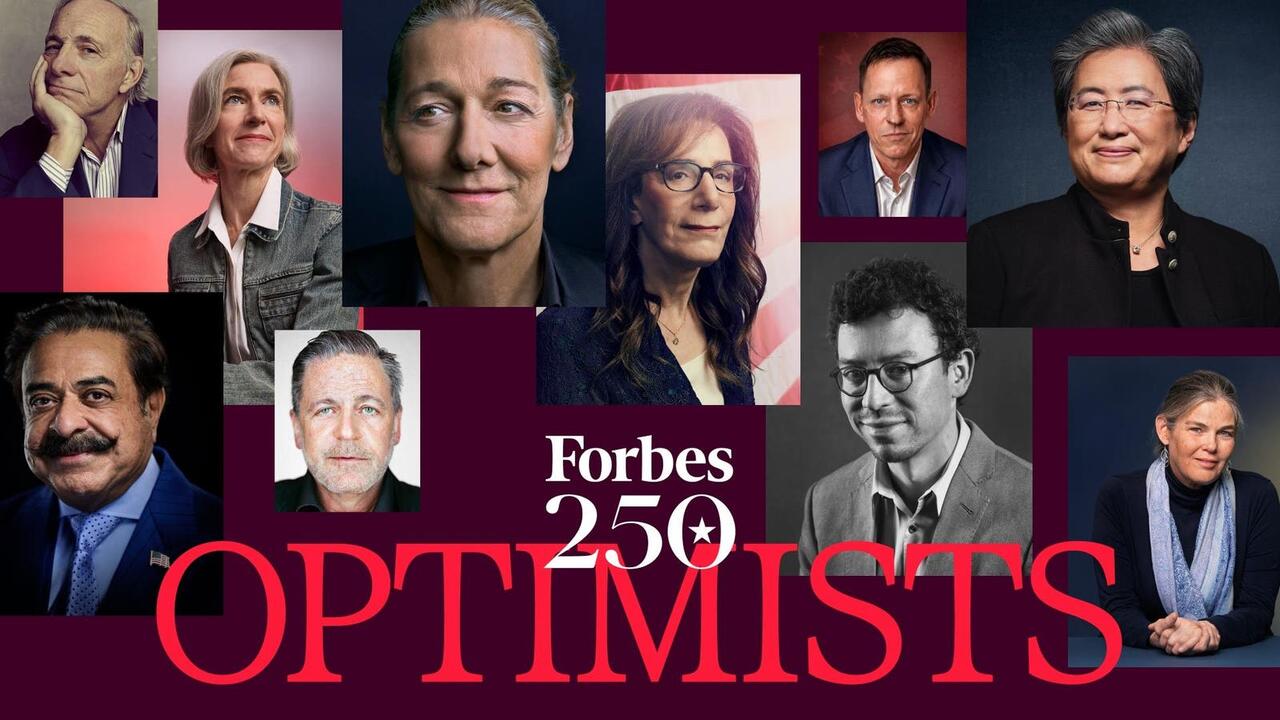
Forbes named me one of its 250 Greatest Living American Optimists this week, which prompted a useful question: what, exactly, am I optimistic about? Quite a lot. I’m optimistic about science because our ability to observe the world keeps improving. We can measure phenomena that were invisible to us a generation ago, run experiments at extraordinary scale, and replace intuition with evidence more quickly and precisely than before. I’m optimistic about AI because we are still early in discovering what it can do beyond the digital world. I am most excited about bringing computation and experimentation together to understand complex systems that today are largely illegible to both human and machine intelligence. Human biology is the example I care most about. Biology continually surprises us, and the only definitive experiment is the one performed in a human being. The information we need often does not exist until we build the experiments capable of revealing it. AI is very good at connecting dots, but it cannot connect dots that have never been measured, and measuring them is a lot of work. We now have the technology to collect better measurements, generate stronger causal evidence, and build more powerful models from both. That lets us retire weak hypotheses before they reach patients and choose interventions with more confidence. Over time, it can make drug discovery more predictable. The well of human biology is very, very deep. But we do not need to reach the bottom before we start delivering value to patients. I see reasons for optimism in the work immediately ahead of us too: our first programs at insitro moving toward the clinic in MASH, ALS and dry AMD; what we will learn with our new collaborators at AstraZeneca in MASH and cardiomyopathies; and what becomes possible when people from very different fields bring different ways of seeing to the same hard problem. There is plenty in the world that warrants concern. There is also more scientific capability and computational power available to us than at any point in history. It is an honor to be on this list alongside people who have spent their careers investing time, talent and conviction in possibilities that did not yet exist. I am most optimistic about changing the outcome for the patients who are waiting for all of us to get this right. https://lnkd.in/dqZwKPJq
- Merz AestheticsSince 23 Oct 2026
Something really special is happening in Paris next year. 🇫🇷 Ende Januar trifft sich in Paris wieder ein großer Teil unserer Branche zur IMCAS, einem der größten Kongresse für ästhetische Medizin weltweit. Für uns beginnt die Woche dieses Mal schon am 27. Januar 2027. Einen Tag vor der IMCAS bringen wir mit FUTURE FACES einige der Top Voices unserer Branche aus DACH in Paris zusammen. Und wenn man schon so viele kluge Köpfe beisammen haben, wollen wir natürlich auch über die Themen sprechen, die gerade wirklich relevant in der ästhetischen Medizin sind. State of the Art eben. Ich freue mich jetzt schon unglaublich auf FUTURE FACES. Ich verspreche Euch, das wird wirklich etwas Besonderes. 😊 Wir stecken gerade mitten in den Vorbereitungen. Einige Namen und Details muss ich noch für mich behalten, auch wenn mir das zugegeben etwas schwerfällt, aber mehr dazu ganz bald. 27. Januar 2027. FUTURE FACES in Paris. Save the date! 🇫🇷


Other LinkedIn formats
Watch the companies you care about.
Filter every ad by industry, country, format and network, and get alerts when a company you watch starts running new ads.