On air · 1 of 3 networks
insitro
- insitro.com
- Healthcare & Life Sciences
- US
- 256 employees
insitro’s ads on LinkedIn, Meta and Google, recorded by adsrunning. Browse the latest here for free. Sign up free to see all 332. Watch insitro with Starter to get each new one in your feed.
Watchlist with Starter · $49/mo
| Network | Status | Live ads | Nov 2025LinkedIn activity · 52 weeksOct 2026 | Checked | Next step |
|---|---|---|---|---|---|
| Running | 141 | Checked 29 Oct 2026 | See all 332 ads → | ||
| Meta | Not checked | — | |||
| None recorded | 0 | No ads found on the Google Ads Transparency Center | Checked 1 Oct 2026 | Collect them with the API → |
insitro has 141 live LinkedIn ads. We recorded no Google ads on 1 Oct 2026.
Latest ads
- LINKEDIN · IMAGESince 22 Oct 2026
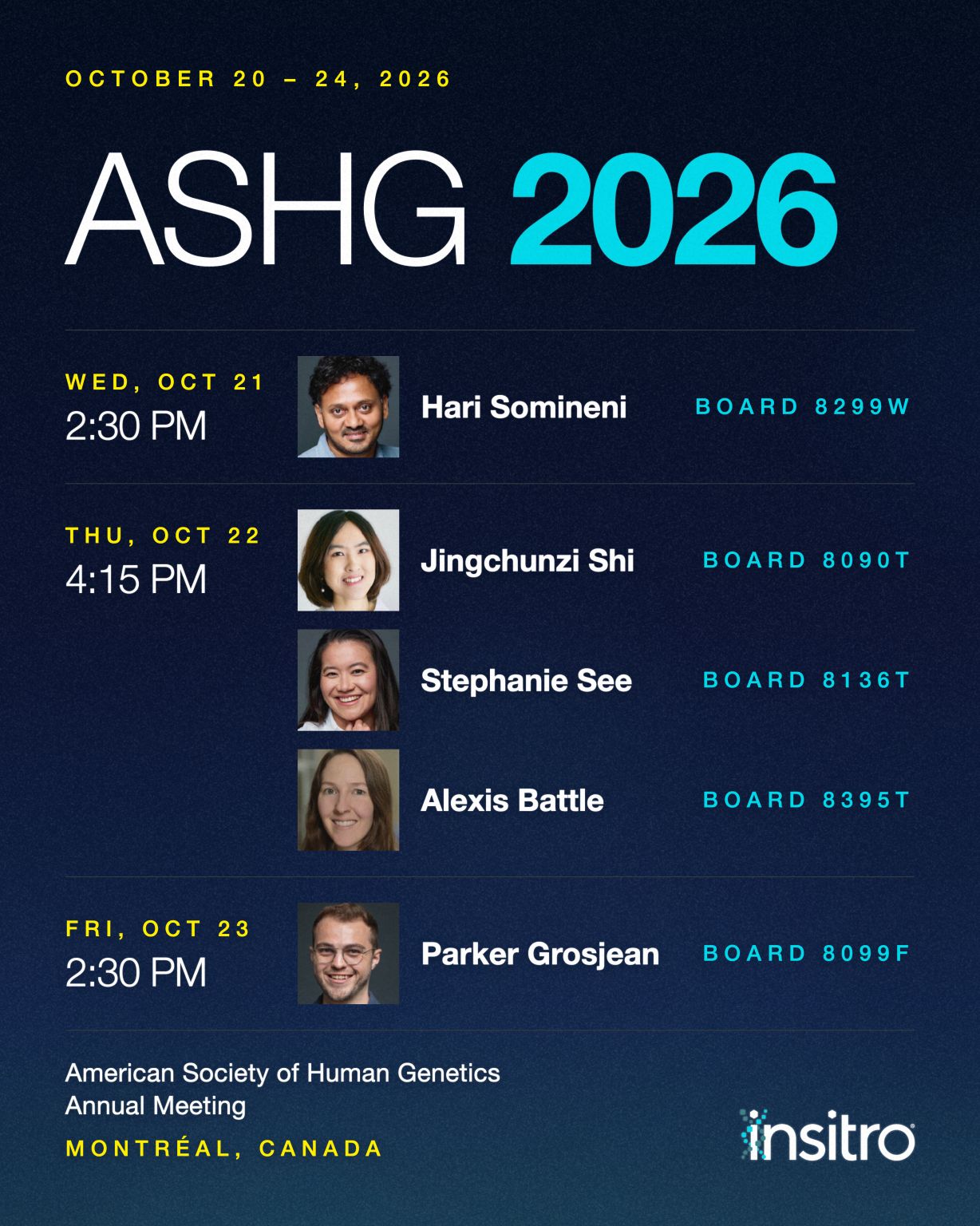
At #ASHG2026, insitrocytes will present research posters exploring how AI, human genetics, and experimental biology can deepen our understanding of disease and inform therapeutic discovery. Join our team at the American Society of Human Genetics Annual Meeting in Montréal, October 20 to 24: 🔬October 21 | Poster Session I: 2:30 – 4:30 PM → Hari Somineni, Staff Data Scientist: Using multimodal imputation to uncover the genetic architecture of regional fat distribution beyond BMI 🔬October 22 | Poster Session II: 4:15 – 6:15 PM → Jingchunzi Shi, Staff Data Scientist: Applying machine learning to MRI data to enable genetic discovery of human brown adipose tissue → Stephanie See, Associate Director: Combining optical screening and single-cell transcriptomics to identify potential therapeutic intervention points in ALS → Alexis Battle, Distinguished Machine Learning Scientist: Using genetics-guided phenotype imputation to strengthen genetic discovery in age-related macular degeneration without increasing sample size 🔬October 23 | Poster Session III: 2:30 – 4:30 PM → Parker Grosjean, Senior Machine Learning Scientist: Applying AI to retinal imaging data to improve genetic discovery in age-related macular degeneration We look forward to connecting with the human genetics community at #ASHG2026. #HumanGenetics #AI #DrugDiscovery
- LINKEDIN · IMAGESince 22 Oct 2026
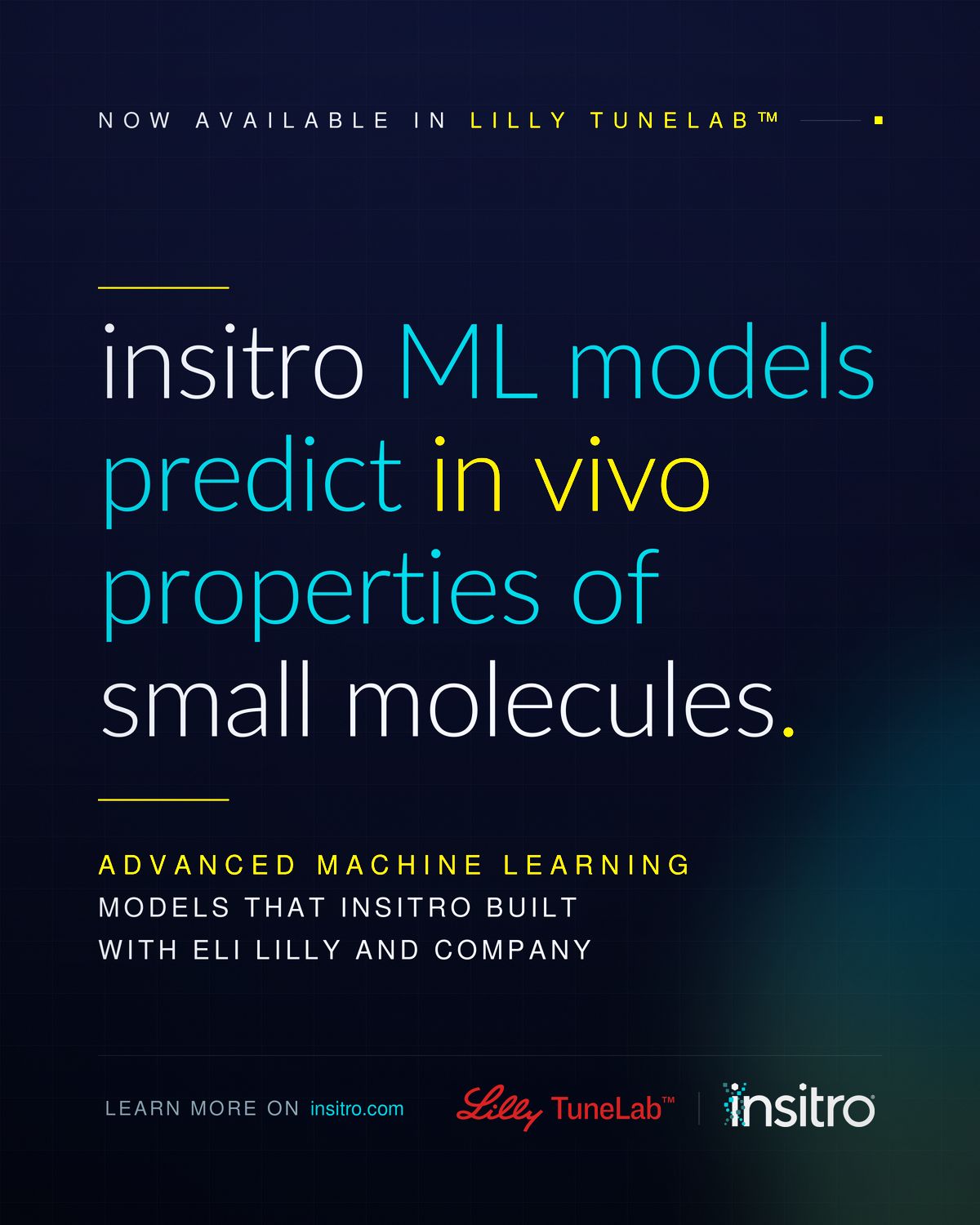
insitro is proud to announce that biotech companies in the Lilly TuneLab™ network can now deploy advanced machine learning models built by insitro with Eli Lilly and Company (Lilly) to predict in vitro and, critically, in vivo properties of small molecules — representing collective progress advancing the field of AI drug discovery on behalf of patients. We're discussing the news live at SF Tech Week today, where Mary Rozenman, PhD, insitro CFO and CBO, joins Aliza Apple, PhD, Vice President of Catalyze360 AI/ML and Global Head of Lilly TuneLab, at the a16z Bio + Health & Lilly TuneLab biotech breakfast. In advance of the discussion, Mary explained, “We built insitro to make biology an AI problem, with scaled data and models at the frontier. Our in-house data scaling helps us predict which biology we should target to impact disease in vivo. Today’s announcement with Lilly takes the next step. Now we’re predicting how a molecule will behave in vivo so we can make better decisions earlier in R&D by trading upfront compute for downstream conviction. We are thrilled to ship these models on TuneLab to enable this way of working across their ecosystem.” Trained on multi-species preclinical data that Lilly generated over decades of research from hundreds of thousands of unique molecules, the models offer a powerful alternative to today’s industry standard method of extrapolation from in vitro assays, providing an enterprise-grade capability traditionally available only to organizations with the scale to generate such data volumes themselves. The models will be updated as the dataset continues to expand. "The question of a molecule's in vivo behavior has been an empirical question, answered experimentally, slowly, one compound at a time. These models make it a computational question first," said Daphne Koller, PhD, founder and CEO of insitro. The in vivo PK models are a critical component of our TherML™ platform for small molecule discovery, alongside machine learning and physics-based in silico screening, affinity models powered by proprietary DNA-encoded libraries, and an active-learning medicinal chemistry engine. → Read our official announcement: https://lnkd.in/gzdTa8UF → Learn more about how the models work: https://lnkd.in/gGmVmvRi #SFTechWeek #AI #ML #LillyTuneLab #drugdiscovery
- LINKEDIN · IMAGESince 22 Oct 2026
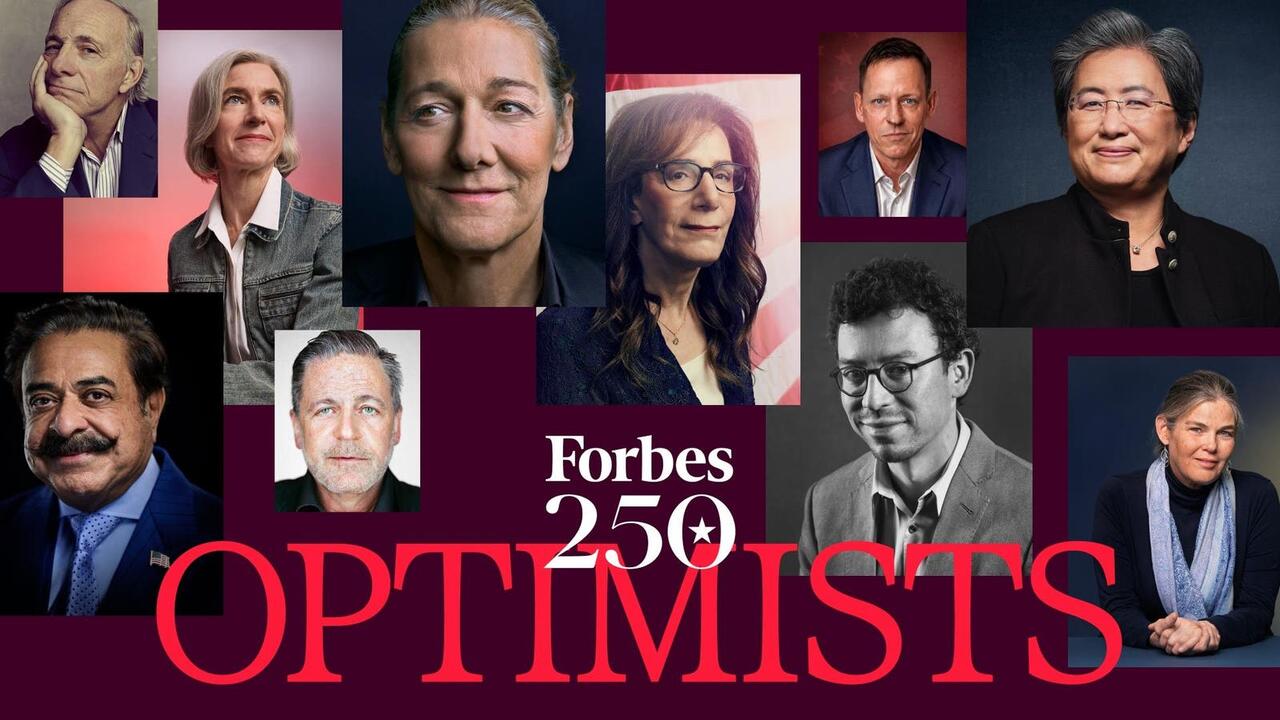
Forbes named me one of its 250 Greatest Living American Optimists this week, which prompted a useful question: what, exactly, am I optimistic about? Quite a lot. I’m optimistic about science because our ability to observe the world keeps improving. We can measure phenomena that were invisible to us a generation ago, run experiments at extraordinary scale, and replace intuition with evidence more quickly and precisely than before. I’m optimistic about AI because we are still early in discovering what it can do beyond the digital world. I am most excited about bringing computation and experimentation together to understand complex systems that today are largely illegible to both human and machine intelligence. Human biology is the example I care most about. Biology continually surprises us, and the only definitive experiment is the one performed in a human being. The information we need often does not exist until we build the experiments capable of revealing it. AI is very good at connecting dots, but it cannot connect dots that have never been measured, and measuring them is a lot of work. We now have the technology to collect better measurements, generate stronger causal evidence, and build more powerful models from both. That lets us retire weak hypotheses before they reach patients and choose interventions with more confidence. Over time, it can make drug discovery more predictable. The well of human biology is very, very deep. But we do not need to reach the bottom before we start delivering value to patients. I see reasons for optimism in the work immediately ahead of us too: our first programs at insitro moving toward the clinic in MASH, ALS and dry AMD; what we will learn with our new collaborators at AstraZeneca in MASH and cardiomyopathies; and what becomes possible when people from very different fields bring different ways of seeing to the same hard problem. There is plenty in the world that warrants concern. There is also more scientific capability and computational power available to us than at any point in history. It is an honor to be on this list alongside people who have spent their careers investing time, talent and conviction in possibilities that did not yet exist. I am most optimistic about changing the outcome for the patients who are waiting for all of us to get this right. https://lnkd.in/dqZwKPJq
- LINKEDIN · VIDEOSince 20 Oct 2026
Today, insitro announced a strategic collaboration with AstraZeneca for the AI-enabled discovery of novel therapeutics for metabolic dysfunction-associated steatohepatitis (MASH) and cardiomyopathies. insitro will receive $40 million upfront and is eligible for up to approximately $1.46 billion in potential, discovery, development and commercial milestones, plus tiered royalties. Both diseases are defined by the problem the collaboration is built to address. In each case, a single diagnostic label spans patients whose underlying biology differs. The heterogeneity across these diseases has made them difficult to treat, and the condition under which insitro’s machine learning capabilities on human data is most useful. Under the agreement, insitro will identify causal disease biology in both indications and advance AstraZeneca-nominated targets from discovery through to development candidate; AstraZeneca will lead clinical development, regulatory work, and commercialization. “Partnering with AstraZeneca allows us to pair our deep biological precision with their deep pharmaceutical expertise and scale with potential for accelerated advancement of novel programs through development and to patients.” — Daphne Koller, founder and CEO of insitro Sharon Barr, Executive Vice President and Head of BioPharmaceuticals R&D, AstraZeneca: “Partnering with insitro, we are using AI to identify the biological drivers of disease to support the rapid discovery of high-quality novel molecules, advancing our ambition to deliver the next generation of medicines to patients faster.” Read the announcement: https://lnkd.in/gvjg4nm8 More on our approach to causal biology: https://lnkd.in/ggp8C3ex #AIDrugDiscovery #MASH #Cardiomyopathies
- LINKEDIN · IMAGESince 9 Oct 2026
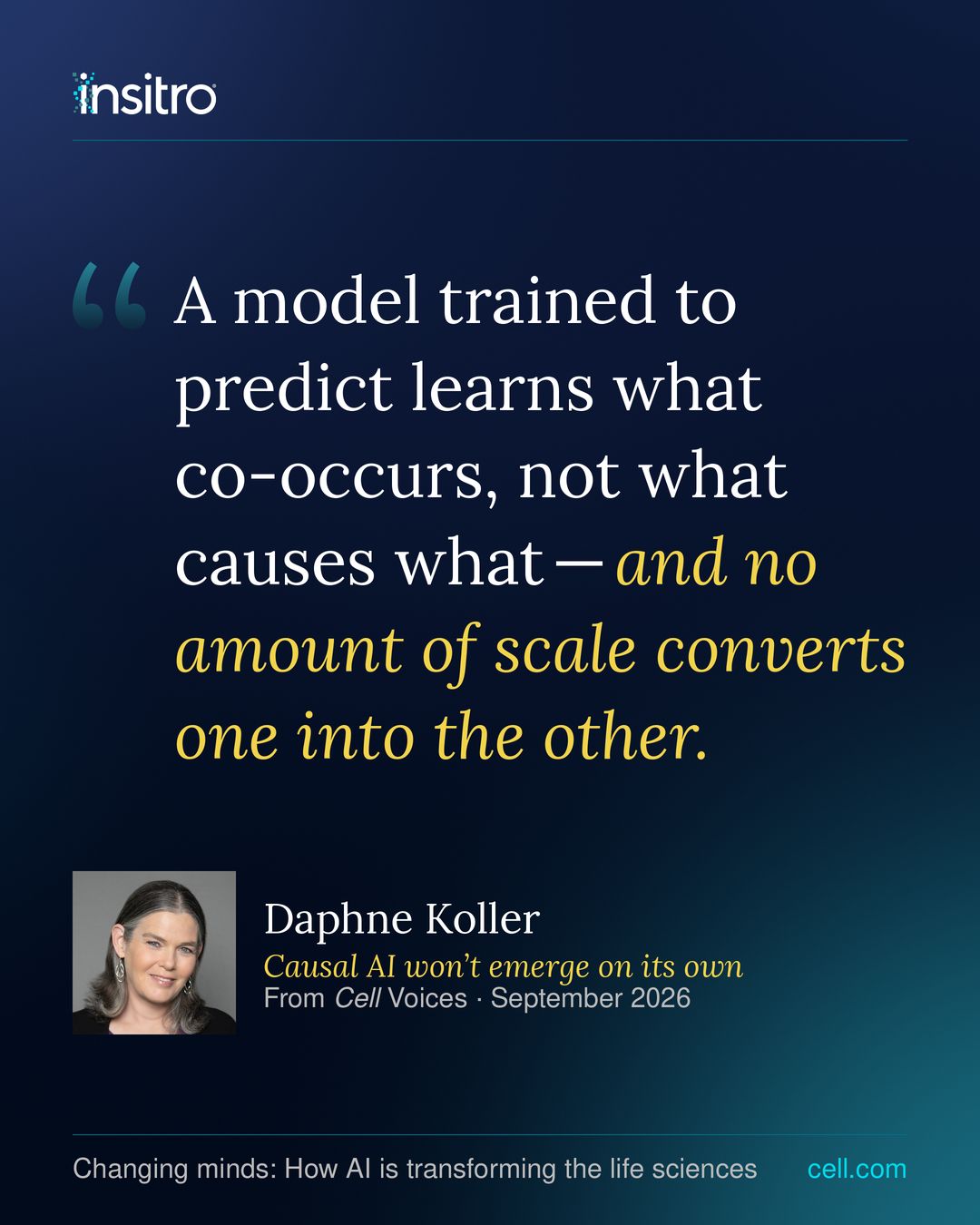
In the latest issue of Cell, insitro founder and CEO Daphne Koller joins researchers from across the life sciences in sharing perspectives on how AI is transforming biomedical research — and what it will take to turn today's advances into deeper biological understanding. In her contribution, "Causal AI won't emerge on its own," Daphne argues that the challenge ahead is not scaling AI models, but generating the right data to teach them cause and effect in human biology. Gaining this insight depends on dual pillars of proof: naturally occurring randomized trials via genetic diversity within broad patient populations, alongside genome-scale perturbation experiments. Isolated, neither provides a complete picture. Combined, they empower our platform to bridge observation with biological cause, addressing the essential question in therapeutic development: what occurs when we intervene on this specific target? By producing this data at massive scale, insitro powers the Virtual Human™ – a genetically anchored AI engine that reveals how disease begins, progresses, and can be resolved; and our TherML™ platform, which designs medicines against the causal drivers it identifies. Every disease we interrogate makes the model smarter, compounding our lead as the corpus grows. "The goal was never a virtual cell. It is a causal model of a multi-scale human." 📖 Read the full essay in Cell: https://lnkd.in/gMetMntU 🔎 More from Daphne on causal AI in Deep Phenotype, insitro's official Substack publication: → “Drug Discovery Has No Magic Wands” - https://lnkd.in/dGK8DBeq → “Mapping Causal Human Biology” - https://lnkd.in/gkWwXQeW #AI #DrugDiscovery #CausalBiology
- LINKEDIN · IMAGESince 9 Oct 2026
For those of us who have been in the biopharmaceutical industry for a long time, the experience of working on "me too" or "me better" drug discovery programs is commonplace, and the privilege of working on novel targets supported by powerful causal biology, such as osteoprotegrin, sclerostin and PCSK9, is quite quite rare. 38 targets now have more than 50 programs against each of them, while the number of novel targets advanced per year fell from roughly 100 in 2015 to about 30 in 2024. For 8 years insitro has been working to reverse this trend. Please read about our journey in the first of a multi-part series "Deep Phenotype: Scaled Biology, Deep Causality": https://lnkd.in/gRyMFA2y #AI #ML
6 of 332 adsSign up to see every insitro ad, filter by format and date, and get alerts on new ones.
See all 332 adsWatch the companies you care about.
Filter every ad by industry, country, format and network, and get alerts when a company you watch starts running new ads.