LinkedIn thought leader ad examples
150 thought leader ads are live on LinkedIn right now, from 180 companies. Browse real ones, filtered by industry.
- AirSaasSince 27 Oct 2026
Ce jour-là, la directrice générale pose une autre question. « Qu'est-ce que l'IA a changé dans ton équipe depuis un an ? » « On a Copilot pour tout le monde. Ça marche bien, les gens l'utilisent. » « D'accord. Et qu'est-ce qui a disparu ? »
- AircallSince 27 Oct 2026
Wir wollten uns überzeugen, ob Aircall wirklich so cool ist, wie die hier immer auf LinkedIn tun... Und wat soll ich euch sagen? Nachdem die uns mit Süßigkeiten bestochen haben, sind wir nun der Überzeugung, dass Aircall wirklich krass ist. Wenn ihr euch selber mal Aircalll angucken wollt, oder checken wollt warum der Lennart zum Best SDR bei den Sales Awards 2026 nominiert wurde, dann bucht euch doch mal ein Meeting mit ihm --> https://lnkd.in/dFgN-tKP Besonders cool, fand ich auch Lennarts Story mit seinem KI-Assistenten - was denkt ihr? Werden wir bald alle durch KI-Agenten ersetzt? Schreibt mal eure Meinung in die Kommentare, bin seeeeehr gespannt!!
- CronofySince 28 Oct 2026
That 1 on 1 is already in the calendar
- ClientifySince 27 Oct 2026
¿Te gustaria agendar muuuuuuchas más reuniones cuando vayas a un evento? ¿Te gustaría agendar además reuniones sin ir al evento con gente que SI va al evento? ¿Te gustaría hacer eso con muy poco esfuerzo? En este vídeo te cuento cómo hacerlo sin salir de tu CRM!!! Clientify
- BackdropSince 28 Oct 2026
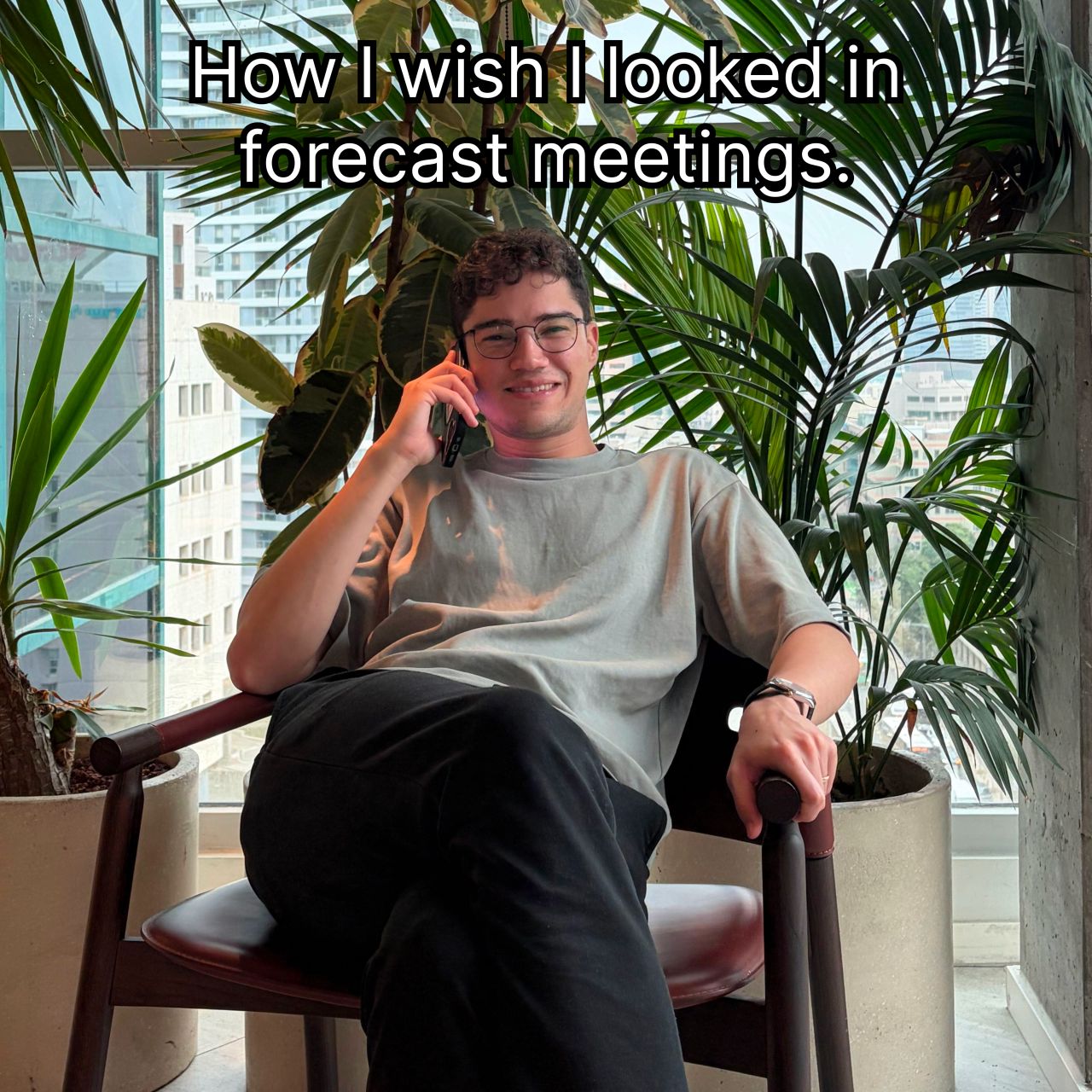
I remember my first forecast meeting. It's a horrible meeting. It's stressful. Nobody wants to explain why they failed to close the deal they promised to. Why they are not meeting quota. No other profession has this type of meeting. not marketing. not product. not engineering. Trust me I've been to all the other meetings. None come close. I also remember the top seller in that meeting. He was already at 200% of quota mid-quarter. He logged in with his camera off. He was the first to speak and he left the meeting after he finished talking (idk where, maybe he went golfing…). That's the life of being a seller. It's a rollercoaster. You're either at the top and answer to no one, or at the bottom, scared of losing your job. That was the moment I thought there must be a better way. Backdrop is the outcome of that moment. Try it -> https://lnkd.in/dukegyRm
- FernRecorded 30 Oct 2026
Talk about being AI 💊'd . We spent $20K on a fleet of AI agents and merged over 900 PRs to move Fern Docs from Next.js to Astro with zero regressions. I learned a LOT from this. AI Agents are REALLY good now but need a very strong hand to direct them. End-to-end tests are critical for building a software factory like this, and let us merge large AI generated PRs with a lot more confidence. And trying things out is so cheap, its better to try out multiple well-instrumented approaches and throw them away than try and have theoretical debates. Hot take: reading the code the agent generates is basically not worth it most of the time. You want proof of functionality with tests, videos, etc. For customers, I'm happy to say that now every Fern site is now prebuilt as static pages: - Mobile Lighthouse scores went from an average of 60 to 98 🚀 - Pages are 2–4x smaller, and almost 10x less Javascript parsing - Pages are ALWAYS fast, even right after a publish. They respond in 0.45s down from 2.7s - Local dev: cold start went from 43.6s to 26.4s, and memory usage cut in HALF Read more here: https://lnkd.in/gdds8tqH
- FABRITYSince 28 Oct 2026
Klient chce wybrać produkt, wypełnić formularz albo rozpocząć zgłoszenie szkody. I właśnie na takich etapach problemy z dostępnością cyfrową przestają być technicznym detalem. W FABRITY Digital sprawdziliśmy wybrane strony i początki ścieżek w serwisach 10 ubezpieczycieli w Polsce. W każdej z badanych firm potwierdziliśmy problem z nazwą, rolą lub stanem kontrolki. W 7 pojawiły się problemy ze strukturą lub powiązaniami etykiet, a w 5 z kontrastem tekstu. To nie jest pełny audyt zgodności tych serwisów. To przegląd wybranych elementów, który pokazuje jednak, jak konkretne bariery mogą wpływać na wykonanie podstawowego zadania przez użytkownika. W raporcie zebraliśmy wspólne problemy i kierunki ich poprawy, bez rankingu i wskazywania firm. Skomentuj „RAPORT”, a podeślę Ci PDF. Więcej o naszym podejściu do WCAG przeczytasz na stronie https://lnkd.in/dgVCiRU5 #dostepnosccyfrowa #wcag #ubezpieczenia #ux #fabritydigital
- CamundaSince 28 Oct 2026
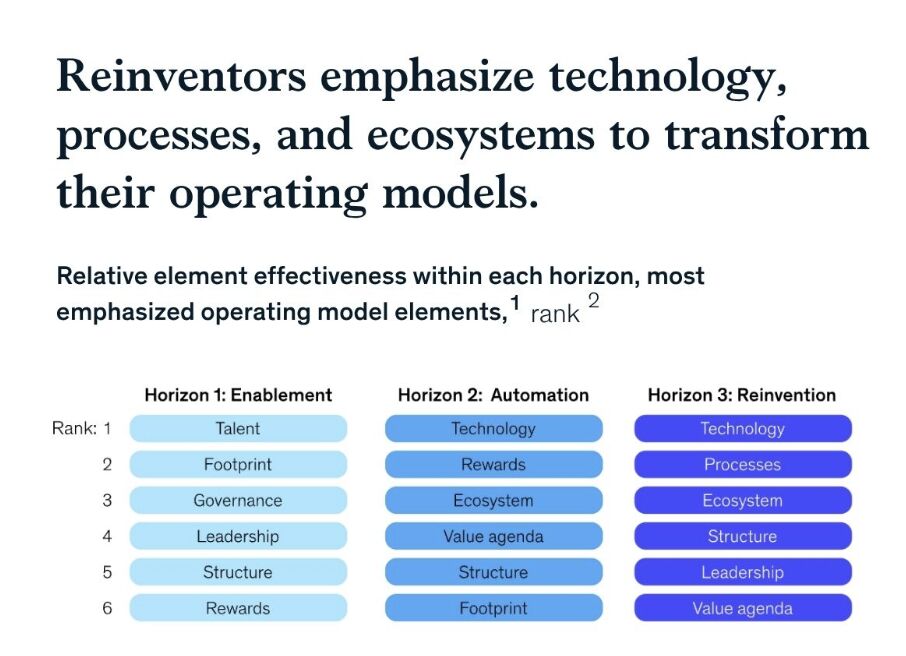
McKinsey & Company published a very useful AI study. The key finding is in a single chart. ⠀ They surveyed 701 executives and sorted companies by how they use AI. ⠀ - Enablers: Give employees AI tools (57%) - Automators: Use AI to automate existing workflows (30%) - Reinventors: Redesign how the work gets done (13%) ⠀ Then they ranked which parts of the operating model each group is strongest at. For reinventors, processes rank second, right after technology. For the other groups, processes don’t make the top six. ⠀ And the value follows. In McKinsey earlier research using the same three groups, 13% of enablers reported meaningful enterprise value from AI. Automators, 24%. Reinventors, 48%. ⠀ So the groups that automate the workflows they already have report 24% against 13% for enablers. The groups that redesign them report 48%. That is a correlation, not proof of cause. ⠀ Automators are where most companies I talk to are right now. And it makes sense. Their processes were designed for a world before AI. Automating a legacy process gives you a faster legacy process, not a different one. ⠀ What reinventors do differently, according to McKinsey, is redesign end-to-end domains instead of chasing disconnected use cases. And they standardize, so it’s clear where each decision sits and where human judgment or oversight is required. That second point gets more important, not less, as agents take on more of the work. ⠀ I like this example of an AI customer service agent. Yes, the choice of model matters, but the bigger differentiator is how well the agent is integrated into the workflow and connected to company data. Pick whichever model works best. The process around it decides whether it creates value. ⠀ One caveat we’re saying out loud. The reinventor group is 53 companies, so I would not treat the exact numbers as gospel. But the direction matches our own research. 78% of the 1,000 process leaders we surveyed told us they need to fundamentally redesign their processes rather than layer AI on top. ⠀ Someone has to run the redesigned process across people, systems and agents, with approvals and human handover built in. That software is what we build at @Camunda. ⠀ CIOs, which of your AI projects are automating a process nobody has rethought? ⠀ You can access the McKinsey report here: https://lnkd.in/d7mWgmVX
- CatioRecorded 30 Oct 2026
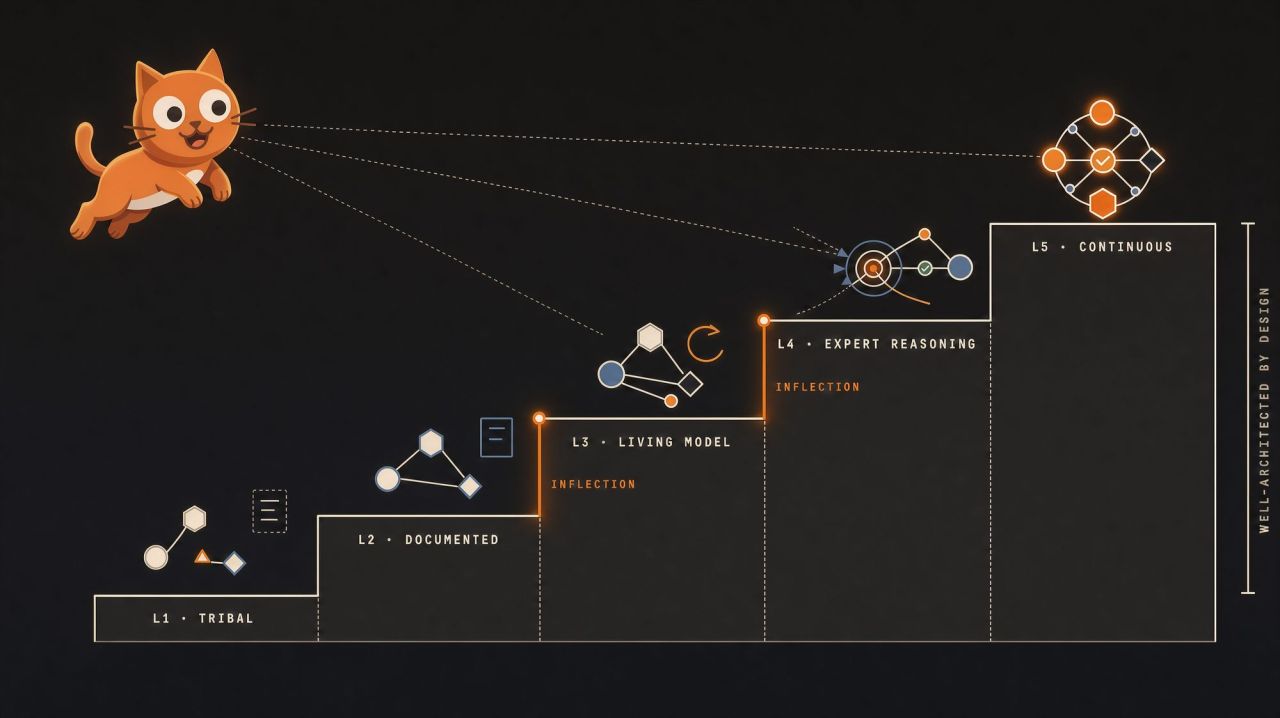
Spec Driven Development and Agentic Migrations and Modernizations have been front-and-center topics for Catio over the past few weeks. We’ve heard them presented to us as the key outcomes and initiatives major enterprises are pursuing. We’ve presented them as the outcomes we’ve built Catio to fulfill, over the past few years. And we keep getting asked, understandably: how do you differentiate against Claude in delivering these? Can’t we simply stand up a harness and pursue them on our own? The truth is that Claude is an extremely powerful foundation model (as are several others), and the opportunities in harnesses, tool use, and reusable skills are driving exceptional results for many teams. What’s much, much further from the truth is that Spec Driven Development or an Agentic Migration and Modernization can be achieved by simply standing up a Claude harness. And the metrics really matter. Each of these 𝗰𝗮𝗻 𝗯𝗲 a major outcome, whether measured in dollars informed (8-9 figures for a multi-billion dollar enterprise) or in value created (even larger, once you count new feature-enabled revenue and market competitiveness). Each one comes down to calls: many small ones every day with Spec Driven Development, occasional large ones with Agentic Modernization and Migration. Whether those calls are well-informed or ill-informed, fast or slowed by endless re-work, is what separates 𝗮𝗰𝘁𝘂𝗮𝗹𝗹𝘆 𝗹𝗮𝗻𝗱𝗶𝗻𝗴 these outcomes from simply 𝗵𝗼𝗽𝗶𝗻𝗴 𝘁𝗼 𝗱𝗼 𝘀𝗼, 𝗯𝘂𝘁 𝗳𝗮𝗹𝗹𝗶𝗻𝗴 𝗺𝗮𝘁𝗲𝗿𝗶𝗮𝗹𝗹𝘆 𝘀𝗵𝗼𝗿𝘁. Catio’s platform spawns an entire organization of agentic architecture teams for every call: reasoning over massive tech estates and business and operating context of multi-billion dollar companies through our Architecture Knowledge Base, using AI purpose-built for the highest-expertise architecture calls, on a system built to carry each call to its outcome. Our consulting and SI partners join to carry out the management and implementation through cut-over. And the major enterprises we’re honored to call our customers get to the well-informed, fast 8-9+ figure outcomes they envisioned in the first place. Our platform is absolutely powered by Anthropic's Claude, the landscape of frontier models, and their lower-cost alternatives. But it’s also absolutely beyond “can’t I just do this with Claude?” The details really matter when you’re looking to land these types of calls. The details, written out, in the first comment 👇
- BoomerangSince 27 Oct 2026
It's every American's favorite time of the year! Everyone gets an extra hour of sleep this Sunday. Daylight saving time change is sneaking up on us while we are all focused on Halloween! But I hope you're ready for a week of chaos. As any parent of a young kid knows, that "extra hour" is a complete fantasy. It's really just a 6:00 AM jolt from a child whose internal clock doesn't care about the new time. It's the official start of the week-long crankiness for the entire family. It’s not just the parents of young kids who will be suffering. Anyone without the flexibility to sleep in will be missing a precious hour of sleep a day next week. The transition typically takes up to a week or more. And that disruption doesn't stay at home. It follows us right into the office, and this "fall back" brings its own set of serious problems. First, there's a serious safety risk. That jarring shift to darkness during the 5 PM commute is dangerous. One study found that pedestrians are nearly 3 times more likely to be struck and killed by cars in the dusk hours immediately following the fall time change. A Carnegie Mellon study found the risk-per-mile for pedestrians jumps by 186% in November. I want you to be extra defensive when you're walking or driving home next week. Second, there's the mental health risk. That abrupt loss of evening light is a known, documented trigger for mood disorders. A large-scale Danish study found an 11% increase in hospital visits for depression that begins immediately after the fall transition to standard time. This is the same mechanism that triggers Seasonal Affective Disorder (SAD) for so many. My guess is it disproportionately affects night owls. The sudden shortage of daylight disrupts our circadian rhythm. For team leaders, your team isn’t going to be at the top of their game next week. They will be accumulating some sleep debt. Try to not schedule meetings too early and let everyone adjust to new time! If you want to be extreme about it, just cancel the in-office days for hybrid people.* To make the transition easier, we have to start shifting our internal clocks. Here's how: 🚧 Start the Shift Now. Don't wait for Sunday. Starting tonight, try to go to bed and wake up 15-20 minutes later each day. This also applies to mealtimes. 🌅 Get Morning Light. On Sunday and especially Monday, get outside in the sunlight as soon as you can. Morning light is the most powerful signal to reset your body's clock for the new day. 🦉 Stay up later this Friday & Saturday nights and try to sleep in the next morning. Any other tips you found that worked for DST change? Please share! * Imagine you might just be accidentally saving lives from reducing traffic for one week! ** Who am I kidding? It’s Halloween! You are going to stay up with kids hyped up on sugar anyway. P.S. The American Academy of Sleep Medicine has called for the ending of this biannual mess, citing all these public health risks. I'm with them.
- AblySince 27 Oct 2026
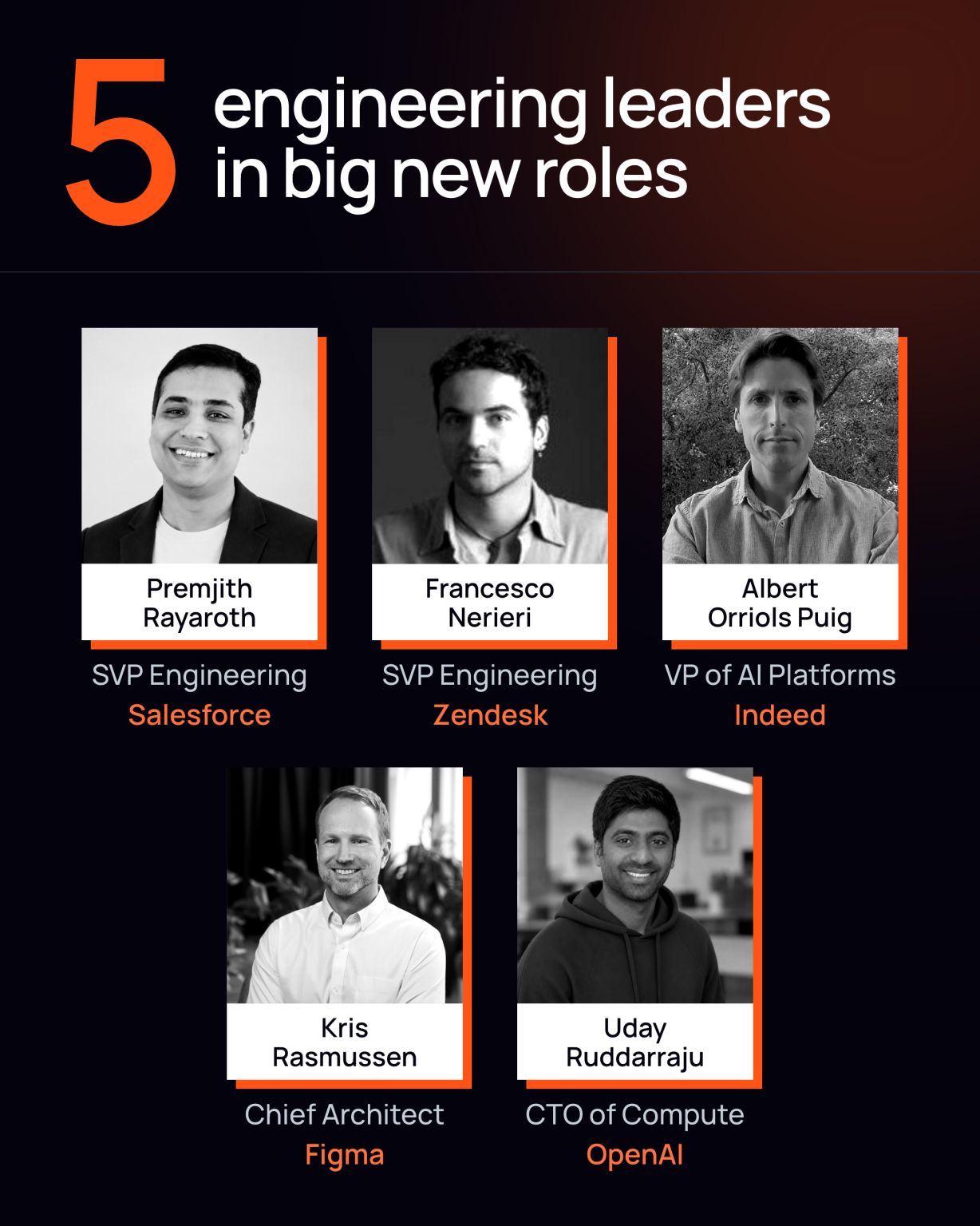
Five engineering leaders who’ve stepped into big new roles this year, in their own words. I can’t wait to see what they build. Premjith Rayaroth is now SVP Engineering at Salesforce. At Guidewire, his focus was on “making the platform itself smarter,” and it’s exciting to think about that ambition at Salesforce’s scale. Francesco Nerieri leads engineering at Zendesk as SVP Engineering. Recommending a role there, he called Zendesk a “rare mix of incredible scope and impressive team and leaders.” That combination is where great engineering happens. Albert Orriols Puig is building Indeed's AI platform as VP of AI Platforms. His invitation to the people joining him: “build AI that actually matters at a scale that counts.” That’s a team worth watching. Kris Rasmussen moved from CTO to Chief Architect at Figma because, in his words, he’s been “itching to get closer to the work.” That’s the kind of move engineers love to see. Uday Ruddarraju leads compute engineering at OpenAI as CTO of Compute. He calls it “one of the hardest engineering and infrastructure challenges the world takes on.” Difficult problems in very good hands. Five ambitious remits, five people who clearly love the work. I’ll be following every one of them.
- Red HatSince 26 Oct 2026
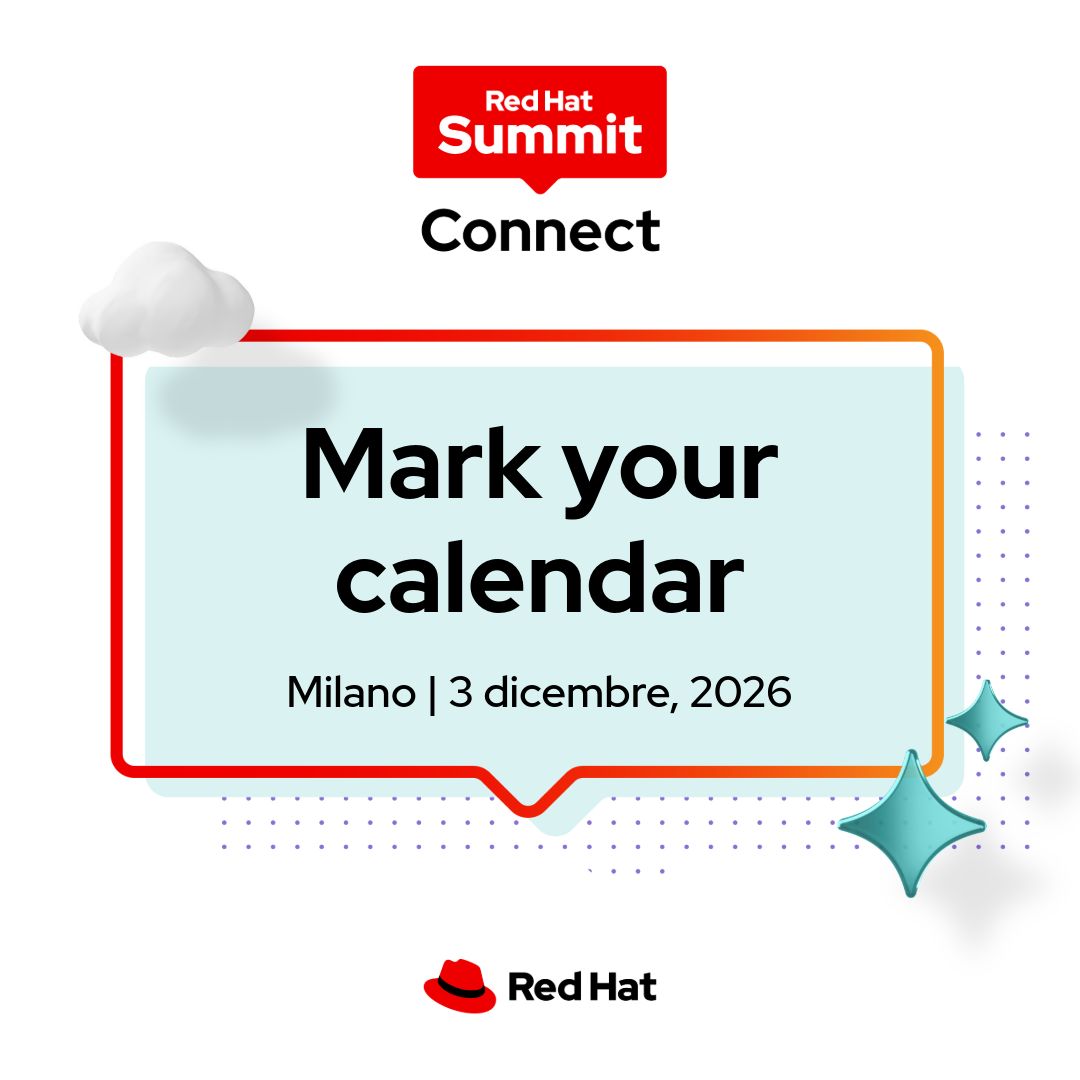
Chi tiene il timone, quando l'IA dice "ci penso io"? Ne parlo nel nuovo post sul blog, qui: https://lnkd.in/d7keWQfb Ci vediamo il 3 dicembre a Milano al Red Hat Summit Connect (Allianz MiCo, ingresso gratuito previa registrazione qui https://red.ht/4eewbrn) #RHSummit #OpenSource #RedHat #IA Marco Caimi Danilo Maggi Stefania Caldana Fabio Grassini Giampiero D. Cannavo, MBA Michele Banfo Pasquale Rongone Alessandro Sestini Giorgio Galli Franco Varano Luca Bigotta Daniele Zonca Giulia Naponiello Matteo Mortari Matteo Combi Matteo Grimaldi Francesco Rossi Gianni Salinetti Marco Betti Valentino Uberti Paolo Zampieri Gianluigi Barbarano Natale Vinto Giovanni Pirola Nicola Bertoli Edoardo Vacchi Johan Robinson Rinaldo Bergamini Alessandro Monguzzi Fabio Di Vita
- MicrosoftSince 26 Oct 2026
Europe does not need to choose between local strength and global technology. My conversation with Koen Deryckere, CEO of Cegeka was a good example. They are not only helping customers navigate AI, cybersecurity and sovereignty, they are putting that transformation into practice inside their own organization too. I think that matters. The strongest partnerships are built on both sides bringing something distinct: global technology and scale, combined with local expertise, trust and the ability to turn technology into outcomes for customers. Across Europe, this is becoming increasingly important. Sovereignty, security and competitiveness are often treated as separate debates. In practice, they are deeply connected. The companies that navigate that connection well will help define what Europe’s next phase of digital growth looks like. You can watch my conversation with Koen here: https://lnkd.in/eazR8abZ Marijke Schroos Julien Groues
- SanitySince 26 Oct 2026
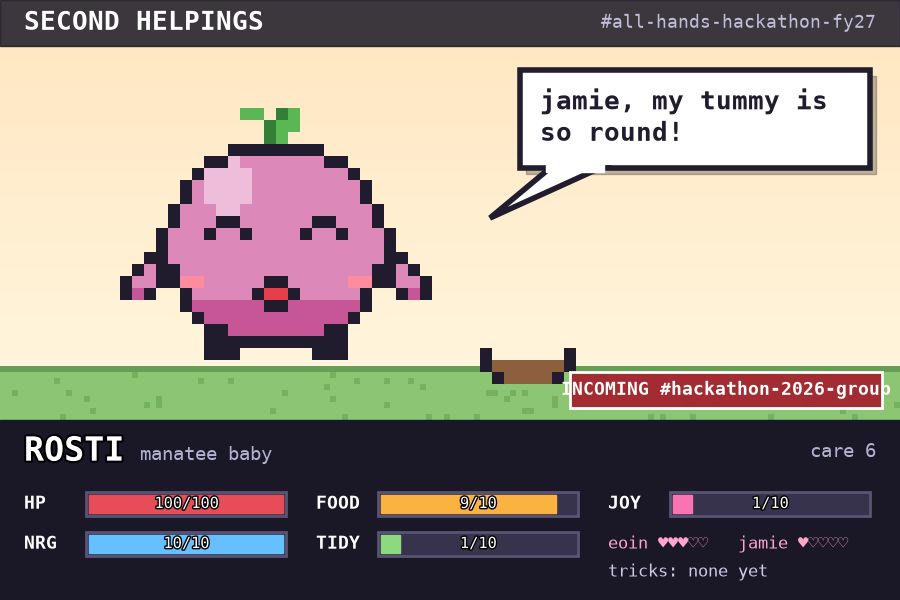
I got to build a sandbox for our company’s AI agents to run around with scissors in. Over 300 of my colleagues built their own agents at our all-hands hackathon in Portugal. All the agents live behind @s in Slack. You ask it something, and it figures out which agent should pick it up. No need to remember who does what, and no need to deal with infra, Slack apps, webhooks or tokens every time you want to make a new one We had people building everything from Tamagotchis named after me, which would randomly turn up in Slack to tell everyone I was hungry and ask for food and pets, to more useful agents. One of them even found the root cause of an incident we managed to set off during the hackathon 🫠 @s has been a fun one to build, and because it’s just for m̵e̵, I mean us, I could live on the bleeding edge of frameworks and tech. Even got to use TypeSafe AI Jev for routing! Nowadays I work on Sanity Context, so a lot of this was also getting to use what our team has been building. Seeing teammates put their docs and knowledge into Knowledge Bases, then spin up agents for things they do over and over, has been really cool. And with Context Insights, we have observability into how those conversations actually went. My favourite thing about it is the collaborative aspect: being able to have a convo with your colleagues, and then just calling for your little helper to pick up where you left off. if your agent is missing a tool, you can just ask it to build one and open a PR. Or just ask it to tweak its own b̵r̵a̵i̵n̵ instructions. We wrote about how it works here: https://lnkd.in/e3M2iymU
- MicrosoftSince 27 Oct 2026
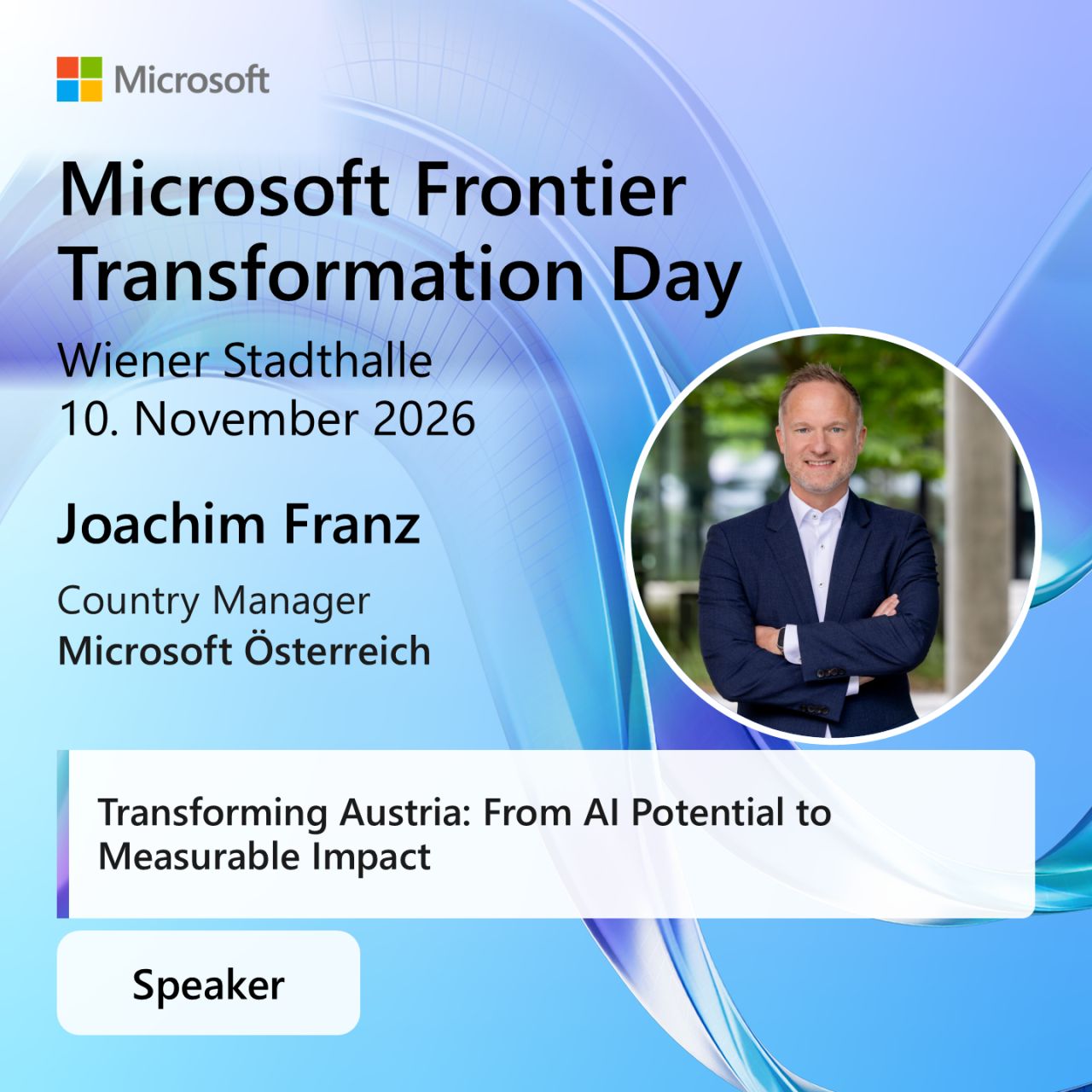
In meinen ersten Wochen als Country Manager von Microsoft Österreich begegnet mir in vielen Gesprächen eine Frage immer wieder: Wie übersetzen wir das Potenzial von KI in konkrete Ergebnisse für Unternehmen? Am 10. November wollen wir diese Diskussion beim Microsoft Frontier Transformation Day in Wien weiterführen. Gemeinsam mit Kunden, Partnern und Führungskräften aus der österreichischen Wirtschaft geht es darum, wie KI und intelligente Agenten bereits heute Arbeit, Prozesse und Geschäftsmodelle verändern und was Unternehmen daraus für ihre eigene Transformation lernen können. Denn Wettbewerbsfähigkeit entsteht nicht durch Technologie allein. Entscheidend ist, wie wir sie verantwortungsvoll einsetzen und in konkreten Mehrwert übersetzen. Ich freue mich auf den Austausch und viele neue Perspektiven. 👉 Link zur Anmeldung in den Kommentaren.
- GraviteeSince 26 Oct 2026
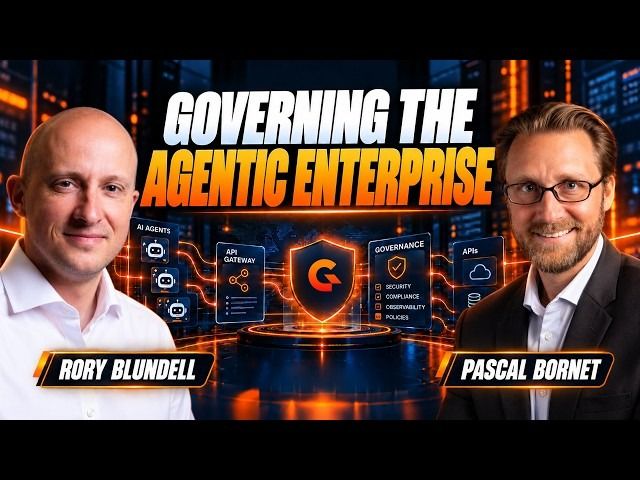
Only 7% of organisations have a named person responsible for the AI agents running in their business. I joined Pascal Bornet on his podcast, to talk about the dangers of responsibility without accountability and how we close that gap. Watch the conversation: https://lnkd.in/eBsfs22E
- GraviteeSince 27 Oct 2026
Just because I have permission to do something, should an AI agent acting on my behalf have that same authority? That's a question I explored with John Gren on the latest episode of Trusted2Act. John has spent his career in identity and access management (IAM), and he pointed out something interesting. We've gotten pretty good at identity and authentication. But authorization? That's where we've struggled, even before AI agents came along. Think about it. If I have permission to delete a GitHub repository, does that mean my AI agent should too? Of course not. But how do we enforce that distinction? John shared some great examples of evaluating both the human's identity and the agent's identity before allowing an action.I challenged him on one thing, though. We cant possibly write a policy for every decision an autonomous agent might make. That's where the conversation got really interesting. John introduced the idea of guardian agents that monitor actions and bring humans into decisions when needed. This is exactly the kind of thinking we need as we figure out how to manage and build trust in our digital workforce through accountability. Give the episode a listen, and I'd love to hear your thoughts. Trusted2Act, available wherever you listen to podcasts.
- OutreachSince 27 Oct 2026
How do you maximize the value of your organization’s investment in agentic AI? It starts with trust. Josh Harmon, Pushpay’s GTM Strategy Leader, shared an important insight in a conversation with GeekWire: People won’t hand over their highest-stakes work to AI until they trust it. Instead of leading with automation, Pushpay led with trust. They positioned AI as a coach in every rep’s pocket, rather than a “big brother” watching over their shoulder. They listened to feedback, refined the experience, and built credibility over time. Trust drives adoption. Adoption drives value. Trust isn’t a feature you ship. It’s something you earn, interaction by interaction, just as you would with any new teammate. And as trust grows, so does the scope of work people are willing to delegate to AI agents. That’s when the real value of agentic AI begins to compound. At Outreach were proud to be part of Pushpay’s journey and to earn that trust every day. The leaders who understand this sequence, earn trust first, then expand autonomy, will be the ones who unlock the greatest value from agentic AI. Proud to see Pushpay leading by example.
- NotionSince 27 Oct 2026
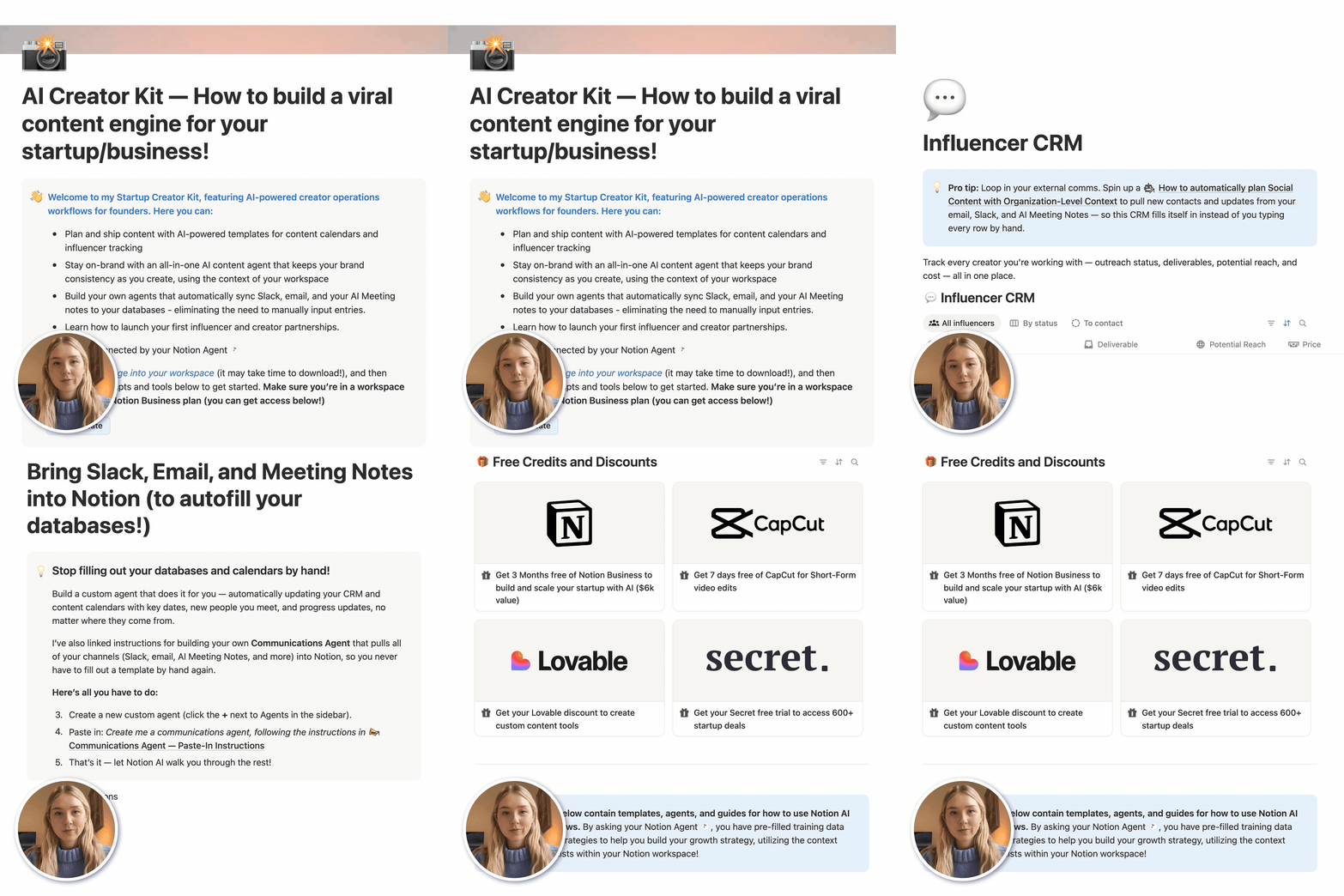
Etsy is hiring someone to run its creator program, with a base salary up to $267K. Blizzard Entertainment is hiring creator program managers for Warcraft and Overwatch, and Google Labs wants an influencer marketing manager. Big brands are building whole teams just to work with creators. If you're at a startup, that team is probably you and a spreadsheet. So this one's for you. I partnered with Notion to share their free AI Creator Kit, which sets up a small creator program in one workspace: → An Influencer CRM that tracks each creator's deliverable, reach, price and status → A social media calendar that links to it → An agent that fills both in from Slack, email and your meeting notes → A content planning agent that turns your brand pillars into outlines and a calendar → 3 months of Notion Business free (both agents run on Business), plus CapCut, Lovable and Secret offers If you're working with creators for the first time, I'd start with the CRM so every deal lives in one place. You can grab the free kit here: https://lnkd.in/eqDzjxvq #NotionPartner
- AirSaasSince 25 Oct 2026
Entendu la semaine dernière. « Nous, on a Copilot dans toute la boîte. Ça nous va, ça marche bien. » Ok et concrètement, qu'est-ce qui a changé dans ta boîte ? Parce que si, après six mois, l'IA ne vous a pas rendu au moins une journée par semaine, à vous personnellement, en tant que dirigeant, alors vous n'avez pas encore changé votre façon de travailler. Vous avez juste fait du saupoudrage. Et si le dirigeant ne change pas sa façon de travailler, l'organisation ne changera pas la sienne. Écrire ses mails plus vite, résumer ses réunions, reformuler ses slides : c'est utile. Mais c'est digitaliser l'existant. L'IA ne sert pas à faire plus vite les mêmes processus. Elle sert à les casser. Le reporting qu'on compile à la main. La réunion de coordination qui n'existe que parce que personne n'a la bonne information. La validation en trois étapes. Et ça pose une question que peu de comités osent poser. Tant que le système au milieu ne devient pas plus efficace, à quoi ça sert d'ajouter des gens ? Dans quelques mois, recruter dans une équipe de vingt ou trente personnes pourrait devenir l'exception. Je ne crois pas à l'accompagnement au changement de toute l'entreprise pour cette révolution.. Je crois que quelques personnes qui, avec l'IA, vont changer d'échelle. Et qui entraîneront les autres en montrant ce qui devient possible. Samedi, dans Il était une fois un CODIR : recruter, ou rendre le système plus efficace ?
- BackdropRecorded 28 Oct 2026
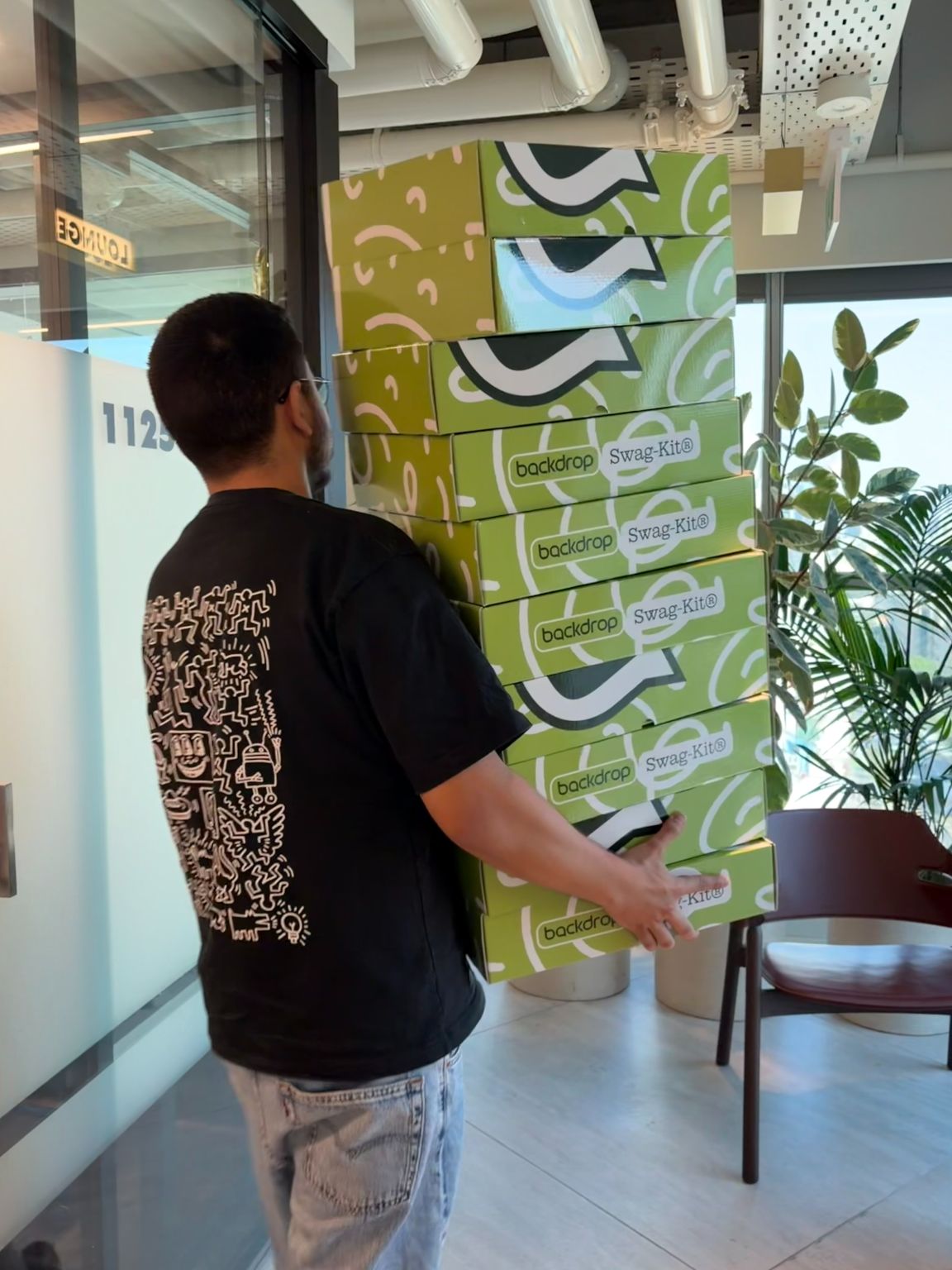
How do you lose a customer? You forget to cherish them. Not on our watch. Backdrop Swag-Kits are packed and shipping out this week to the teams who choose us every day. They let Backdrop into their most important calls. We make sure that trust pays off, deal after deal. Hoodies don’t drive retention. Good products do. But a thank you never hurts. Try Backdrop here → https://lnkd.in/eAZBEQfR
- AircallSince 26 Oct 2026
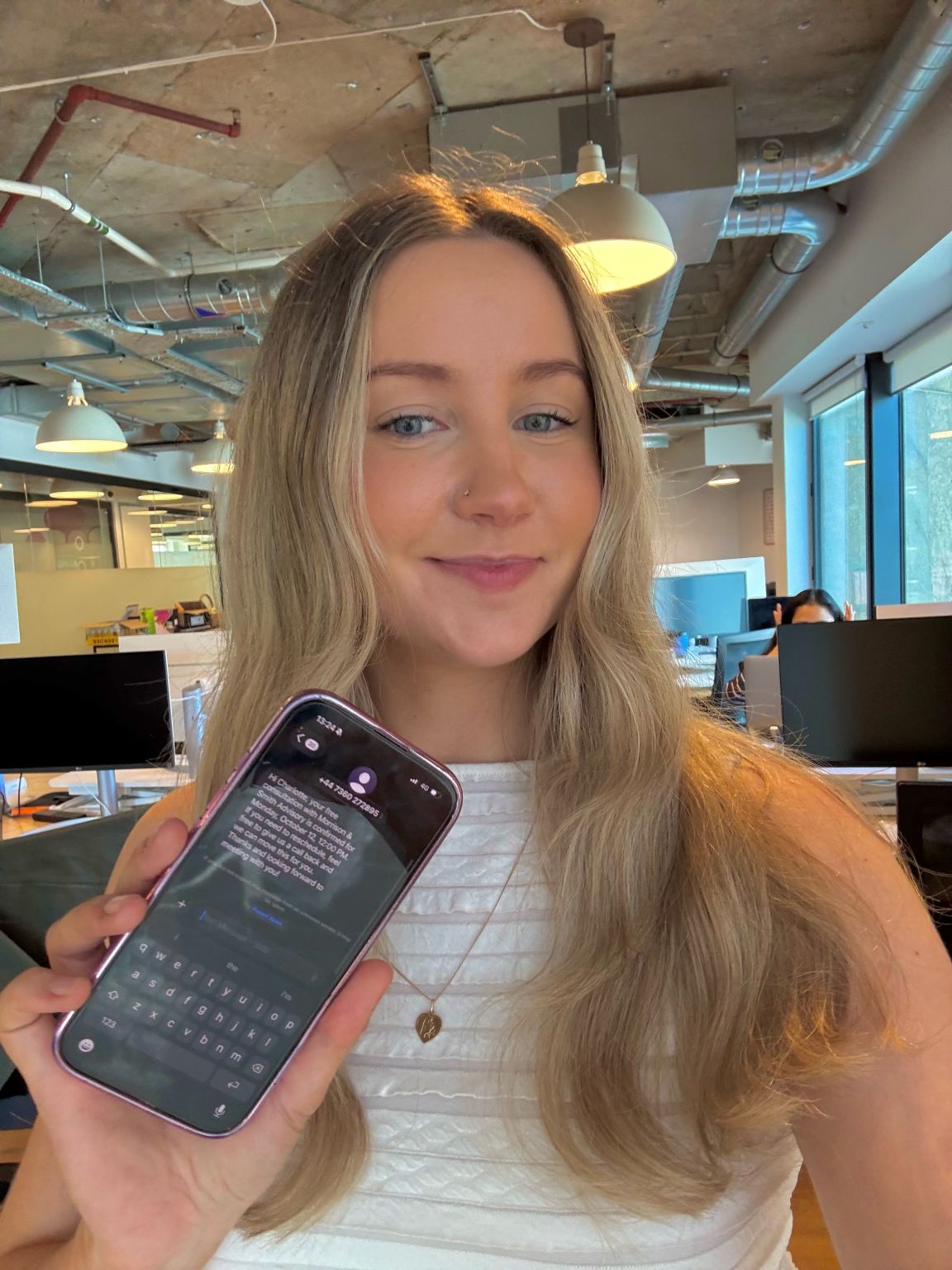
I got a teeeeext!! Did you know that Aircall’s AI agents can actually book meetings then and there when you’re on a call? Here’s me showing you the confirmation text that I got sent after I was playing around with one of our test agents and “booked” in a consultation. For your business, that could mean completely automating your inbound bookings and appointments. If a client or customer rings after hours, when phone lines are busy or sends an SMS, that message often sits in a queue or they get stuck navigating a robotic phone tree. Press one, press two, blah blah blah… Aircall’s AI Voice and Messaging Agents handle the entire scheduling process autonomously. Some use cases to give you an idea: Healthcare & Wellness: “I need to reschedule my consultation on Thursday.” The AI verifies the patient's identity, pulls up their appointment, offers open slots based on real-time practitioner availability and updates the system instantly. Property & Field Services: “My heating has broken, can someone come out tomorrow?” The AI collects the property address, confirms the problem details, checks technician availability and logs the service dispatch ticket before your team opens their inbox. That means you’ve got an always-on virtual receptionist when your team aren’t able to answer. Where could you see this coming in useful?
- ArdoqSince 23 Oct 2026
Four major programs. One national estate. Doors that still have to open every single day. That’s the British Museum right now On Wednesday 28 October, Leigh Joslin, Knowledge Manager at the British Museum, joins me for a Jumpstart session on how a lean team keeps all of it mapped, owned, and change-ready in Ardoq. What we’ll cover: 🛠️ Real-world EA in a lean team, straight from Leigh 🗺️ A live model walkthrough, from the shared landing page to a single application and everything connected to it 🙋🏻♂️Open Q&A on resourcing, governance, and life after go-live 11:00 EDT | 15:00 GMT | 16:00 CET. Online. Register in the comments below Ardoq #BritishMuseum #EnterpriseArchitecture
- CloudsmithSince 24 Oct 2026
LiteLLM has suffered another dangerous breach (https://lnkd.in/eBCim6Bx) that allowed attackers to publish a malicious version to PyPI. This one does really bad stuff, like credential theft and remote code execution tools. If you use Cloudsmith and you use our cooldown (https://lnkd.in/en9kaJhj) and malicious package policies (https://lnkd.in/ep5-rabp), you’re safe - we blocked the bad package from getting to your developers, AI agents, and build pipelines. We wrote up a detailed blog explaining this attack (https://lnkd.in/euWG-w45), which is scary because LiteLLM is really popular on PyPI and Docker Hub (23 million downloads a week).






Other LinkedIn formats
Watch the companies you care about.
Filter every ad by industry, country, format and network, and get alerts when a company you watch starts running new ads.