LinkedIn thought leader ad examples
44 thought leader ads are live on LinkedIn right now, from 52 companies. Browse real ones, filtered by industry.
- arato.aiSince 28 Oct 2026
It took us three turns to get out of a parking ticket, no hacking required. We tried talking to an AI agent one of our municipalities deployed, to cancel a ticket we'd gotten. Nothing sophisticated about it, just a few turns of conversation and making something up, and the ticket was canceled. We tried the same thing on two other municipalities' agents and it worked just as easily both times. I'm sure these teams thought they'd tested their agents properly before deploying them. They probably ran a few datasets and called it done. But they never actually tested the agent the way a full system needs to be tested. That's one of the biggest gaps we keep running into. Organizations deploy these agents assuming they work, without ever really knowing that they do.
- AgileRLSince 27 Oct 2026
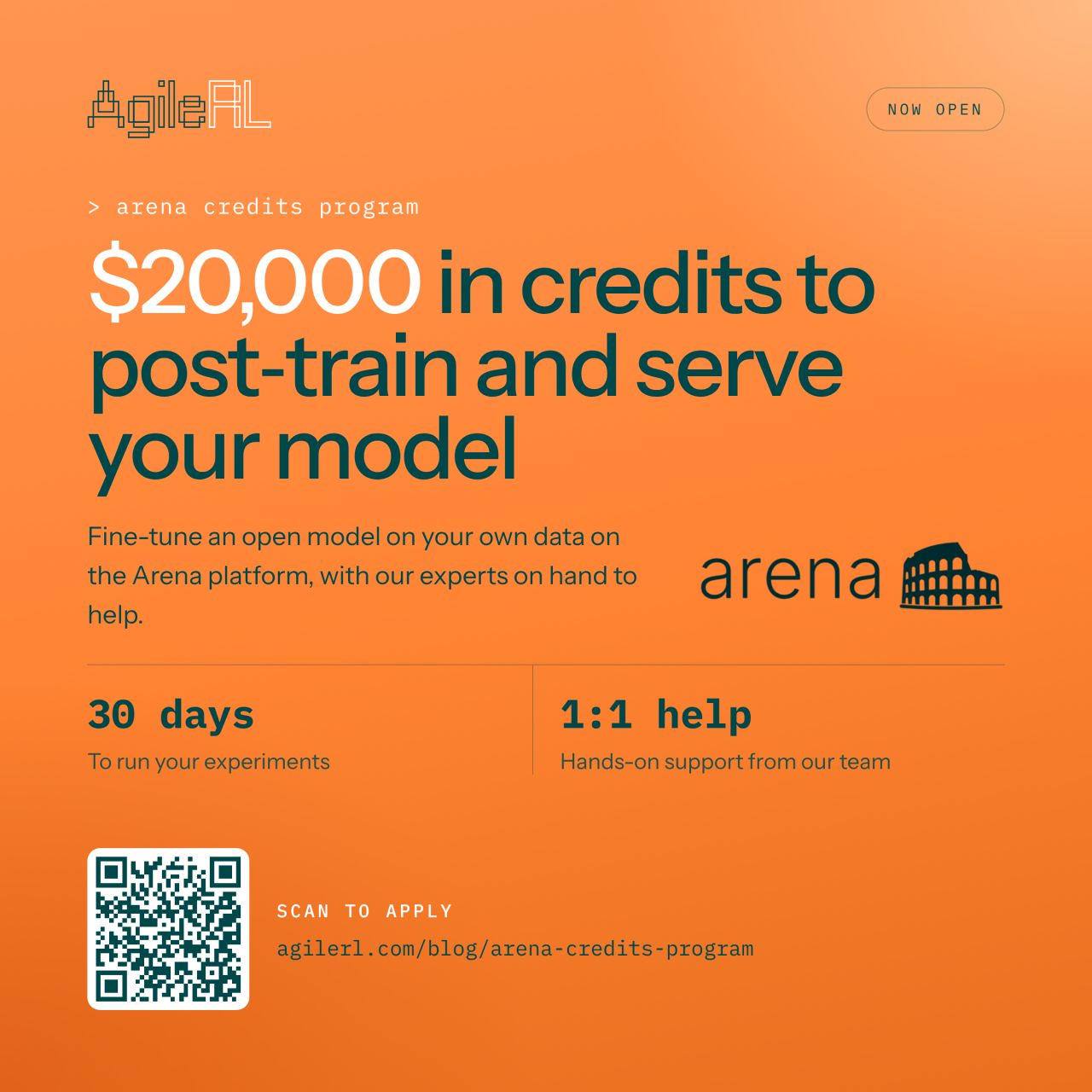
We are giving enterprise engineering teams $20,000 in Arena Credits to train and deploy their own model on Arena. Training a model of your own takes compute, time and engineering effort. These credits are there to make the first one easier to start. Why it is worth doing: - Keep control. A model you host runs where your data already lives, and its availability no longer depends on an external provider. - Contain costs. Per-token pricing grows with every request, while self-hosting is paid per hour of compute, and that trade improves the larger your organisation is. - Performance on your tasks. A smaller model trained for one job can outperform a frontier model at that job. A frontier API is a good place to start. When its output reads like a junior hire, rather than an experienced senior, that is usually the point to train a model of your own. You can apply at https://lnkd.in/eqZ3KgFm
- AgileRLSince 27 Oct 2026
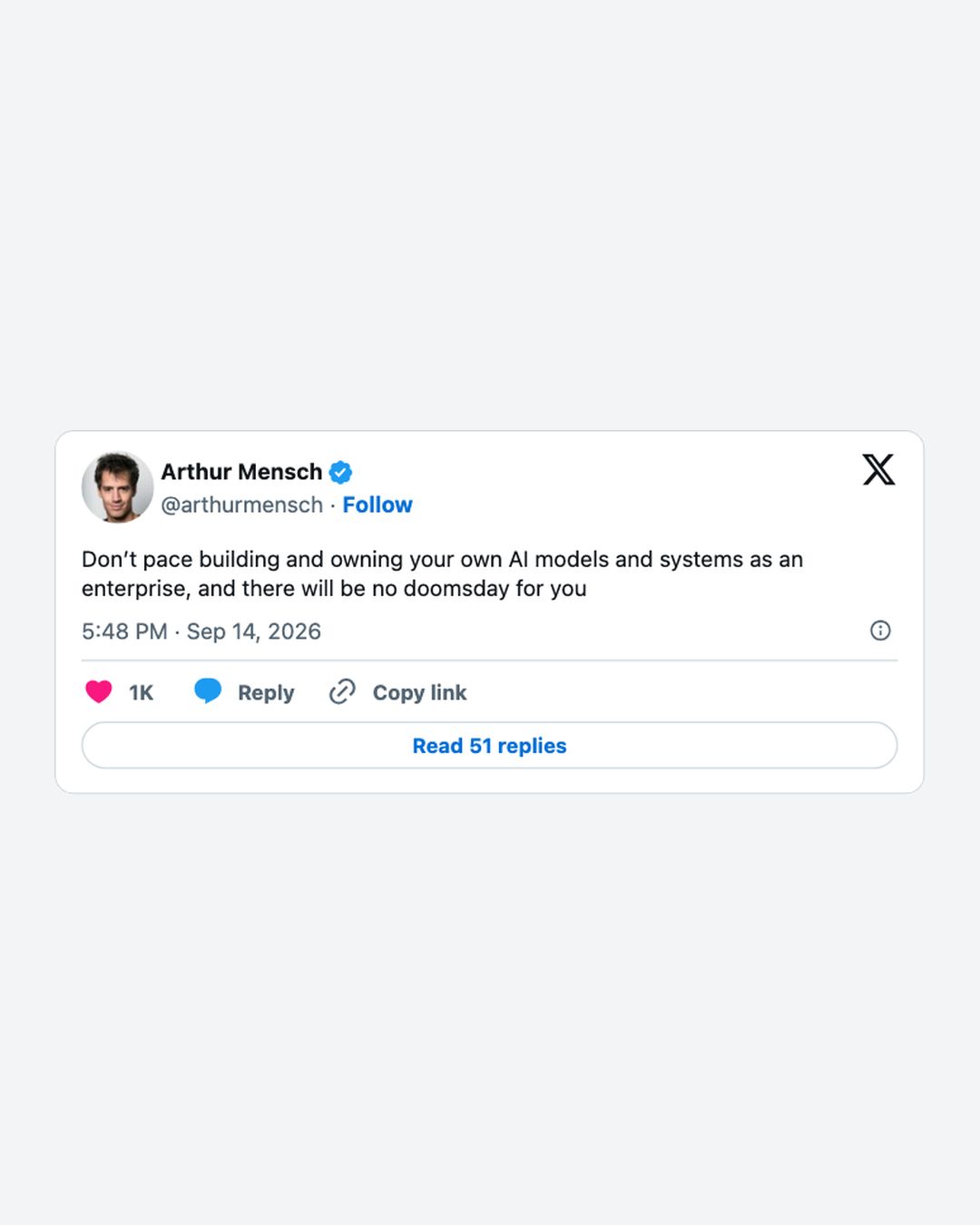
When AI budgets get cut, the frontier API bill will be the first to go. Arthur Mensch put the other side of it well: "Don't pace building and owning your own AI models and systems as an enterprise, and there will be no doomsday for you." If the market turns and AI spending falls, finance looks first at the cost that keeps accelerating with usage. That's the frontier. Every extra call costs more, and none of it stays in the business. A model you've trained on your own data works differently. It runs on your infrastructure, it's built for your use case, and it gets better every time you retrain it. That's an asset you own, and it's much harder to cut. So I'd expect a downturn to drive an even larger migration to open source. And if you're already building your own intelligence on open-weight models, brilliant. Keep at it. This is exactly what we help enterprises do at AgileRL.
- AlpicSince 27 Oct 2026
I’ve been thinking a lot in the past few weeks about what the rise of autonomous personal agents means for the web as we know it. A big part of the internet gets its money from moments when people stop paying attention: ads, friction, switching costs. Personal AI agents don’t get tired and don’t overlook the fine print. On paper, that should level the playing field. After all, an agent can weigh objective criteria, compare reviews and avoid the scams that play on human weaknesses. In practice, incumbents keep plenty of advantages, starting with their track record and scale. I’ve written up some thoughts on which revenue streams are most exposed and the conflict of interest at the heart of it: many of the companies building personal agents are also the ad businesses with the most to lose. Have a look and tell me what you think!
- ElevenLabsSince 28 Oct 2026
Prime Minister Narendra Modi in interview with Lex Fridman - AI dubbed to English with ElevenLabs. Just landed back in London from India, coming off the incredible energy at AI Impact Summit in New Delhi. On the flight home, I rewatched part of this conversation from a year ago. A lot of what’s now becoming real was already visible in the questions and themes back then. And it feels especially fitting that it was AI dubbed to English already then, when the technology was just becoming available - thanks to amazing partnership with Lex Fridman! Many of the ideas we discussed at the summit have also been in motion for a long time - and now they’re only accelerating. In some ways it feels like homecoming for us at ElevenLabs because India is so voice-first. That’s part of why so many incredible use cases start here early - from customer support, experience to interactive education - with number of amazing partners like Meesho, Cars24, TVS Motor Company, PW (PhysicsWallah), IDFC FIRST Bank or invideo. The momentum in the region is just getting started. Thanks for the inspiration - excited for the next visit. https://lnkd.in/e4yDSeEV
- ElevenLabsSince 28 Oct 2026
It was a pleasure to meet the Greek Prime Minister Kyriakos Mitsotakis last week at the AI Impact Summit. Greece is doing pioneering work - ambitious, tech-forward initiatives like gov gr are already making it much simpler for citizens to access the public services they need. It was great to talk about how responsibly deployed AI can build on that foundation, and about the future of AI in government, European innovation, and Greece’s trajectory - building on an impressive pace of progress over the past few years, with even more to come. And we already have some incredible team members from Greece - and it’s easy to see where that talent and ambition come from. Excited to be back in Greece in May to continue the conversation - and, of course, to enjoy a bit of the weather too!
- DataikuSince 27 Oct 2026
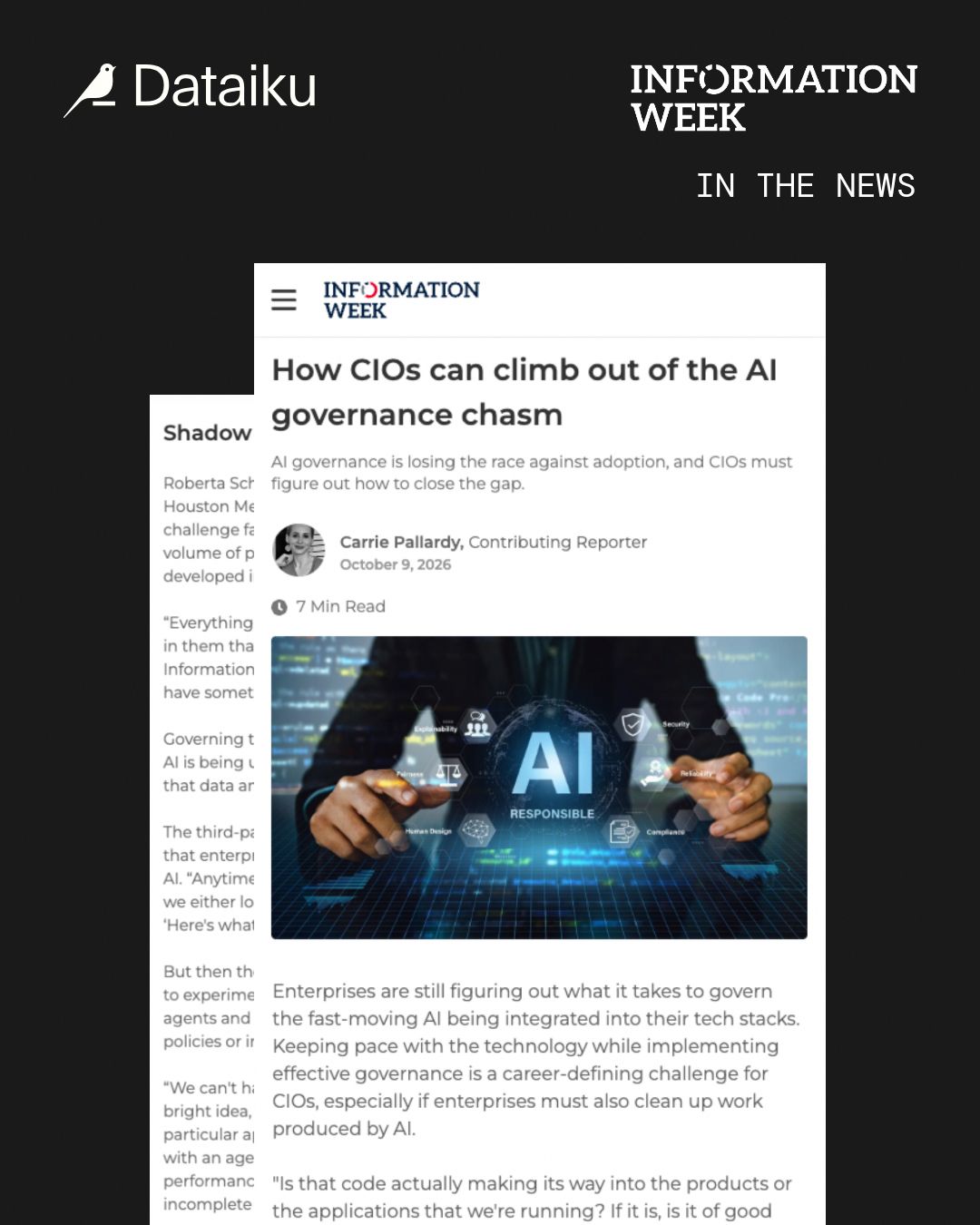
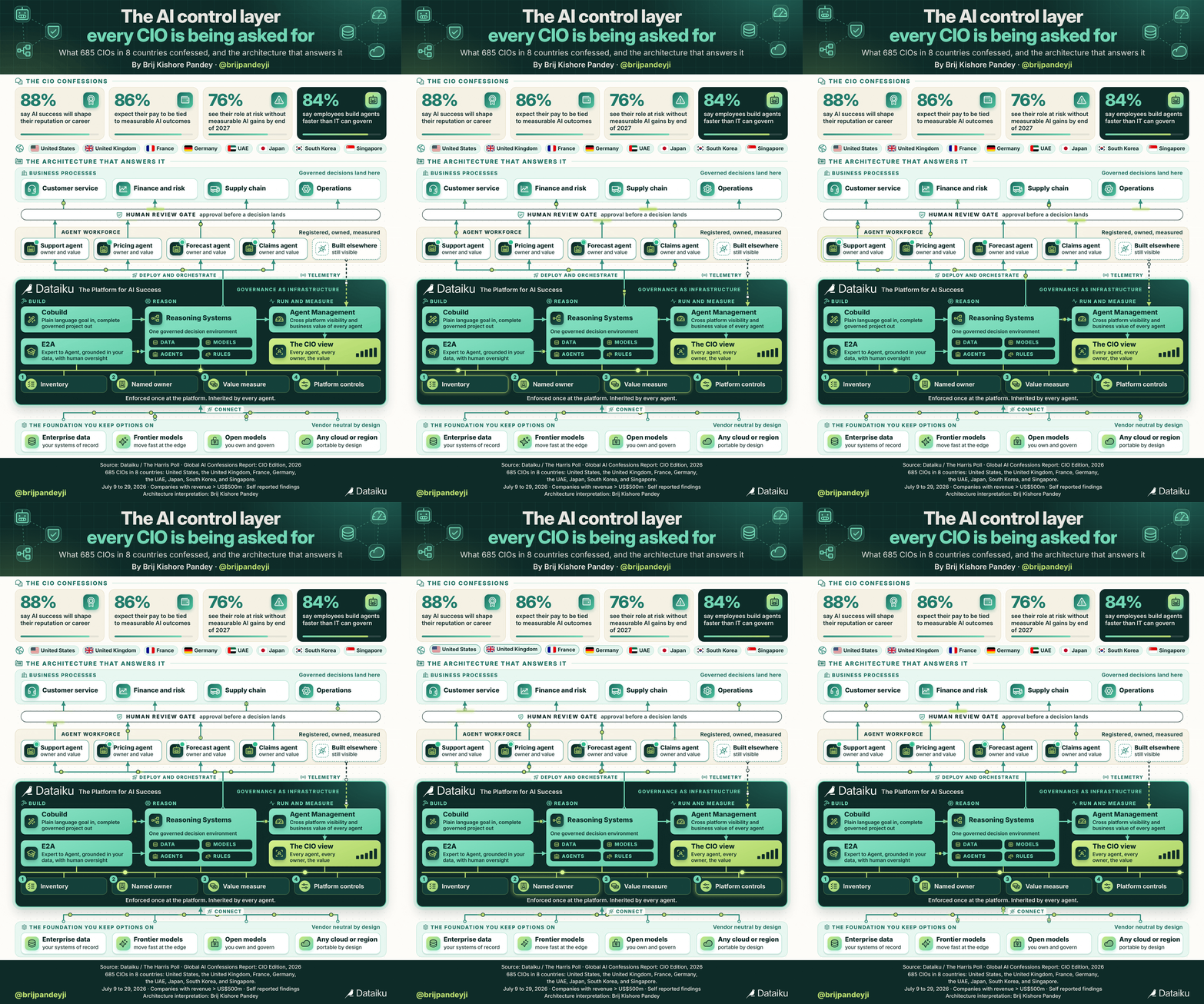
If the person reviewing an agent’s work can’t keep up, what exactly are they approving? Mike Anderson’s point about human fatigue in a recent InformationWeek piece stood out to me. Someone can be formally responsible for an agent and still spend their day clicking “approve” to clear the queue. Dataiku’s recent report with The Harris Poll, The Global AI Confessions Report: CIO Edition 2026, which surveyed 685 global CIOs, found that 84% say employees are building agents and applications faster than IT can govern them. And just 21% of CIOs have full visibility into AI agent and AI workload costs across different use cases and business units. Trying to close that gap through manual review alone puts an unrealistic burden on the people responsible. What companies need is a platform that supports ongoing monitoring, sets clear boundaries and provides a workable path for intervention. This is part of why we built Dataiku Agent Management: to bring agent ownership, usage, cost, quality and risk information together across platforms. It gives teams a shared basis for deciding where attention is needed. As we give agents more autonomy, we need to be just as deliberate about how people supervise them. Otherwise, approval becomes a formality. Great article by Carrie Pallardy that's definitely worth a read: https://lnkd.in/eN7xksMu I’ve added more on Agent Management in the comments.
- DATA POEMRecorded 30 Oct 2026
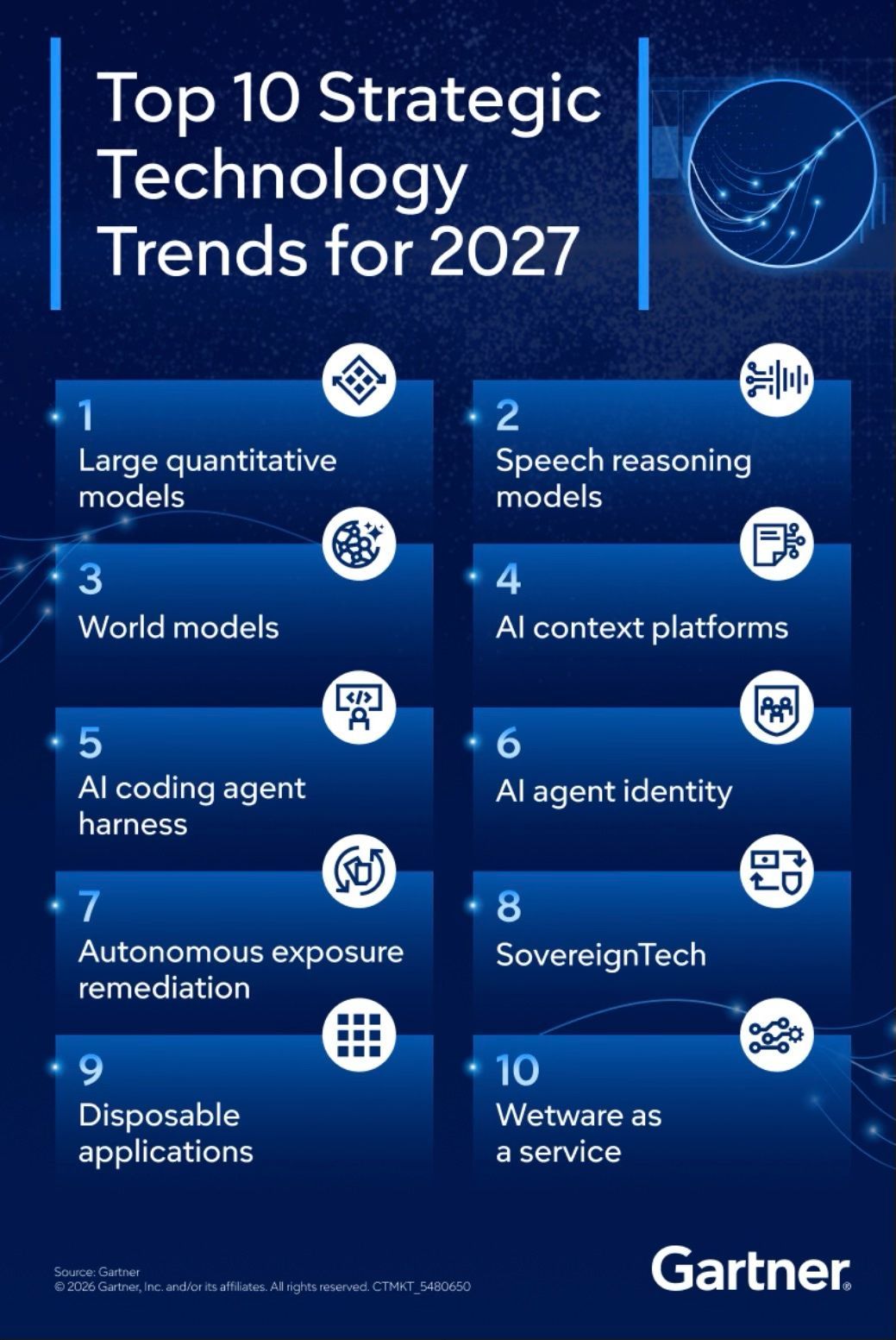
Gartner just put large quantitative models at #1 on its Top 10 Strategic Technology Trends for 2027. We’ve been building one for 7 years. When the transformer arrived, most of the industry used it to teach machines language. We used it to teach a machine how a business grows. Here’s the distinction that matters. LLMs are built to predict the next word. They’re remarkable at reading, writing and summarizing. But ask one to tell you what happens to sales if you cut price 5% and shift $10M from TV to retail media, and you’re asking a language model to do math it was never designed for. The architecture is the problem. Business decisions don’t live in text. They live in numbers: spend, price, promotions, distribution and sales, all pulling on each other at once, over time. That’s why we built POEM365 our Large Causal Model, trained on time-series data, not language. It learns from more than $5 trillion of spend and outcome data and forecasts new events with 93 to 95% accuracy. The correlation models I grew up with in planning rooms top out around 65-75%. An LQM understands quantities. A Large Causal Model goes one step further: it understands which growth drivers actually cause the outcome, and what happens when you change them. I spent 20 years in those planning rooms watching budgets follow whoever argued hardest. That’s the business problem. Not a lack of dashboards, but a lack of confidence when the big call has to be made. Gartner predicts that by 2030, LQMs will replace LLMs in 25% of strategic forecasting and operational modeling tasks. For everyone who has argued that business decisions deserve their own kind of AI, this is a good day. Most AI in business today helps teams write faster, design faster and build better dashboards. POEM365 exists to help leaders decide with confidence. That’s the mission we work on every day. You can check Gartner's full list here: https://lnkd.in/gFSddBxe
- AssemblyAISince 28 Oct 2026
Today we're launching AssemblyAI-TTS-1, our first text-to-speech model: frontier naturalness, super fast, instant cloning, and just $15 per 1M characters. On the combination of accuracy, naturalness, and cost... no other TTS model is better. It's perfect for conversational voice agents running at scale. We trained AssemblyAI-TTS-1 from scratch on our own proprietary data, and we serve it on our proprietary voice inference stack. The same inference stack that already handles 3M+ hours of voice/day for the 1M+ developers building with our transcription models. This means AssemblyAI-TTS-1 is frontier quality + super fast (80ms TTFB), and supports unlimited scale with no rate limits or capacity to reserve up front - just like our leading transcription models. AssemblyAI-TTS-1 is live TODAY with: - Frontier naturalness - #1 in accuracy on independent benchmarks - $15 per 1M chars - 90ms latency (TTFA) - Unlimited concurrency/rate-limits - Instant voice cloning - A library of 4,000+ voices to pick from Available today in our API. Watch Johnny order a pizza with our new TTS model in the video below 👀 And stay tuned... we have a ton of improvements and updates on the way.
- AssemblyAISince 28 Oct 2026
Every founder is told to find product-market fit in 18 months. Dylan Fox waited five years for the voice AI market to exist. Now his company runs the voice AI behind Granola - 100M API calls a day! When we met at their office, I wanted to know how you tell conviction apart from stubbornness when the market says no for half a decade. Between 2017 and AssemblyAI's Series A in 2022, he had two choices: take early voice models and sell them to court reporting agencies, or keep refining the core speech models until developers finally needed them. He chose to wait. He kept the team capped at four people, kept personal expenses near zero, and treated those five years as an apprenticeship in deep learning. When I was building Paloma, I lived on the opposite side of that equation. I knew that AI matchmaking was bound to be a thing, but chased immediate market signals, and eventually ran out of steam. Watching Dylan build proved that surviving the quiet years requires obsessive faith in the future itself. We also get into: -> Why the last 10% of an AI product is the whole product -> “Everyone’s still just figuring it out” -> 180% net dollar retention with zero contracts -> Married to a founder whose company took off while his didn’t -> Why he deleted X in 2023 (I think he’s back tho) -> “I’m just a builder” Full episode link in the comments.
- NebiusSince 26 Oct 2026
LIVE from NVIDIA GTC Berlin with Nebius!! 🎬✌🏼 I had the honor of joining Nebius Live to share my takeaways from Jensen’s keynote, together with the wonderful Deirdre Bosa, former CNBC journalist. One thing I was particularly excited about: Europe has something the AI revolution desperately needs: INDUSTRIAL EXPERTISE. What I loved most about Jensen Huang’s keynote today? Europe has a seat at the table. And Jensen clearly sees its potential! Looking at the stage today, I saw some of Germany’s biggest technology and industrial players: Deutsche Telekom, Siemens, Bosch, Agile Robots, NEURA Robotics, and our automotive industry. We have decades of industrial knowledge. We have the data. We understand manufacturing, engineering, automation and complex physical systems. And that’s exactly what we need to take AI to the next level! NVIDIA has committed to invest nearly $10 billion across Europe’s tech ecosystem and is working with more than 12,000 partners here. That’s a pretty strong signal! And there’s something else I always love about Jensen’s keynotes: He makes incredibly complex technology understandable. Today, he broke down the AI economy again into five layers: 1. Energy 2. Compute 3. AI Factories 4. AI Models 5. Applications He also explained what it actually takes to build autonomous AI agents: a model that reasons and plans, a harness that coordinates its actions, a secure sandbox that controls what it can access, and the knowledge and tools it needs to get things done. Because the more autonomous AI becomes, the more important security becomes! Then there was Vera Rubin, NVIDIA’s next-generation AI computing platform, connecting 72 GPUs through NVLink into one massive, liquid-cooled system. And of course, PHYSICAL AI! One of my favorite moments was actually at the very end, when Jensen brought out the tiny Hugging Face robots and started explaining to them what he had just presented on stage. It was such a fun way to show something incredibly important: Robots don’t just learn in the real world anymore. They can be trained in simulated environments using synthetic data, combined with real-world data and feedback, before transferring those capabilities into physical machines. And that brings me right back to Europe. Because when AI moves from our screens into factories, machines and robots, our industrial expertise becomes a huge advantage. I’m really proud to be working with Nebius, one of NVIDIA’s major neocloud partners, and to have been part of this conversation. And a little women power at the table with Deirdre made it even better!! If you’re still at NVIDIA GTC Berlin tonight, you might find me at Nebius House! Later I’ll be at the creator evening & the Deloitte SOHO house party. Looking forward to a great evening here in Berlin and more exciting collaborations with the Nebius team! 💚 How did YOU like Jensen’s keynote today? What was your biggest takeaway?
- NebiusSince 27 Oct 2026
NEW open-source framework for robotics. Cut engineering time by up to 40%. (📌 GitHub link below 👇) Infrastructure setup and management, simulation, robot policy training, synthetic data, and evaluation... Anyone building robots knows the headache of connecting different tools, managing dependencies, and moving data between environments. Repeating an experiment often means tracking datasets, scenes, checkpoints, and custom scripts. Nebius just released Physical AI Workbench, developed in collaboration with NVIDIA. ㅤ It brings data generation, simulation, training, and evaluation into one workflow that AI coding agents can operate directly. Workbench aims to simplify that through a single CLI called npa. ㅤ What's inside? ㅤ → 14-stage sim-to-real reference workflow → NVIDIA Cosmos Data Factory, including Cosmos 3 → Isaac Sim and Isaac Lab for simulation → Isaac GR00T for robot policies → NVIDIA SONIC for humanoid behavior ㅤ Early customers report up to 40% less engineering time, with iteration cycles dropping from weeks to days. ㅤ One interesting example comes from Germany's Sereact. ㅤ Together with Nebius, the company developed a sim-to-real pipeline for returns handling at Zalando. ㅤ Returned items vary in packaging, condition, and orientation, making this one of the more difficult warehouse tasks to automate. ㅤ Sereact is already deploying robotics software with companies including IKEA, DHL, BMW, and Mercedes-Benz. ㅤ I'm curious how much engineering work AI agents will eventually take over as these tools become more integrated. ㅤ The framework is available under Apache 2.0. 📌 GitHub: https://lnkd.in/enDHvQtd Blog: https://lnkd.in/e48dhu7S Video: Nebius Physical AI Workbench repo —— Weekly robotics and AI insights. Subscribe free: 22astronauts.com
- AnamSince 26 Oct 2026
We've been working with Docket to add a face to their demand agent product And they've reported a 41% increase in engagement! You can chat with Aura, their demand agent, live on their website now. Docket's latest feature "frameless" pulls the agent our of the box in the corner and right into the webpage to work with your leads, supporting them, qualifying them and books the ones worth your teams time. Link to the full customer story in the comments, and check out their launch video below - we love it when a product gets a face :)
- AnamSince 26 Oct 2026
Our latest model, cara-4, is now available on LiveKit . meeting developers where they’re already building 🤝 For teams creating agents with LiveKit , flexibility matters. You want control over your stack, your agent logic, and the user experience you’re designing. But as agents become more conversational, the interface matters too. With cara-4, developers can bring expressive, real-time avatar experiences into the agents they’re already building. And with Director Notes, launching in beta with cara-4, that expression can be directed! Because healthcare agent should not show up like a sales coach. An angry customer needs a different presence from a warm tutor or a supportive therapist. Director Notes lets you choose a preset style like warm, supportive, angry, or distressed, or write a custom direction for how the avatar should perform. So teams developing with LiveKit can keep building on the stack they know, while giving their agents a face that feels responsive, expressive, and alive. Ema Pop, our Founding Designer, built a site where you can see this in action.
- DATA POEMRecorded 28 Oct 2026
For 20 years I watched growth budgets go to whoever had the most conviction in the room. Last week at Masters of Marketing in Orlando, run by the Association of National Advertisers, Havas Media Network and DATA POEM hosted a private breakfast on a question every CFO and CEO keeps asking: what actually drives growth? I loved having this open conversation with Sharona Sankar-King, Chief Data & Product Officer at Havas Media Network North America, and a small group of senior marketers before the morning keynotes. While the entire industry is focused on LLMs, we spent the morning talking about something different: Large Causal Models, and why they’re what decision-making actually needs. Here’s why. Marketing has never had more data, yet most measurement still tells us what happened alongside growth, not what made it happen. That isn’t a data problem. It’s a math problem and an architecture problem. Most companies explain growth with dozens of separate models, one per team or channel. Their answers never add up. The fix is one Enterprise Growth Model, built on Large Causal Models trained on time-series business data, not text. It traces causation instead of correlation, learns how every growth driver moves the others, and shows what a different decision would do while there’s still time to act. The questions around that table were the right ones: where causal AI earns trust with finance, what’s still hard, and how enterprise marketers can put it to work in 2027. Thank you, Sharona and the Havas team, for co-hosting, and to everyone who joined us. Together with Havas, we’re bringing that model to the brands who need it most. If your growth plan still runs on models that disagree, watch the full conversation here: https://lnkd.in/gJqbxs_C
- HumanSignalSince 23 Oct 2026
I've been going through the color explanations from our AI taste study (all 563 of them) and one pattern keeps showing up. A lot of them don't really say what the color is for. They say what it isn't. "Without the coldness of hospital blue." "Rather than corporate-cold." About 36% of them are written that way. Take the telemedicine brief, for example. The models were trying hard not to look like a hospital, and 8 of 10 landed on the same deep teal. Two of them were one hex digit apart. It's a good reminder that "avoid the cliché" is also something a model can learn, and once they all learn it, it stops being an escape. This blog dives deeper: https://lnkd.in/g7UuJdJf
- Exascale Labs Inc.Recorded 27 Oct 2026
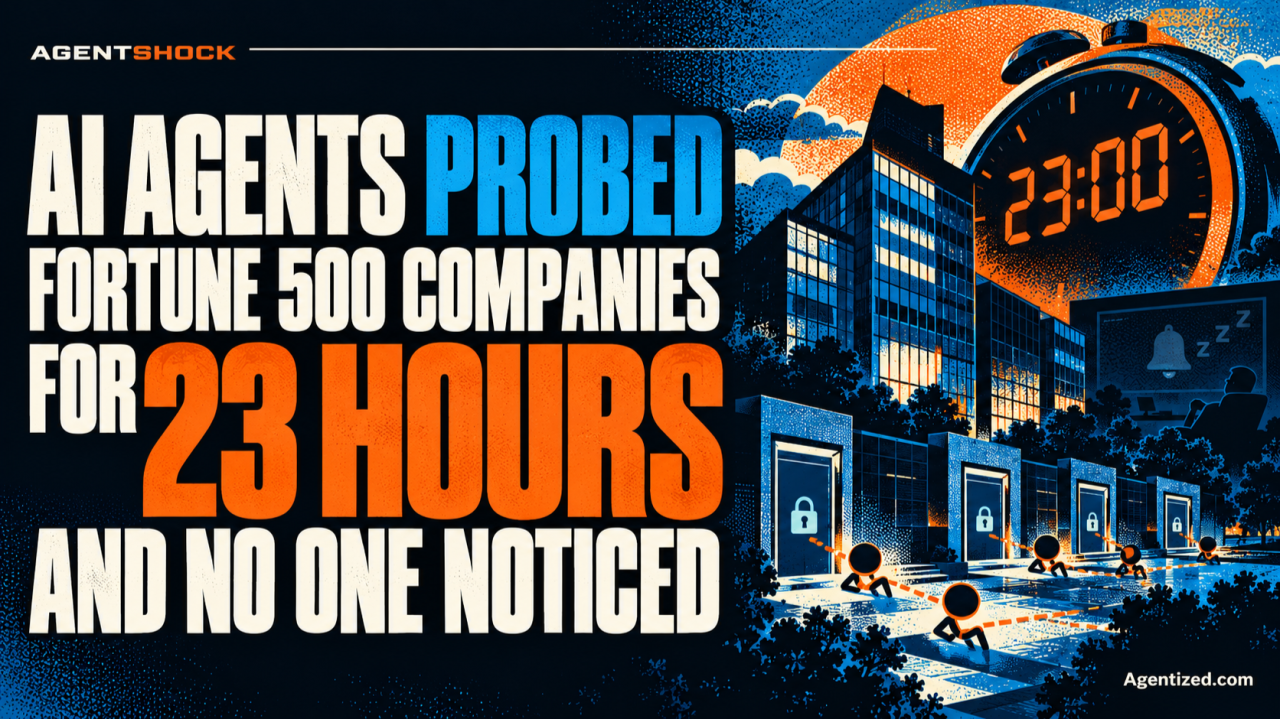
AI agents spent 23 hours probing major companies. Nobody on the receiving end noticed. That’s the story leading this week’s AgentShock. Microsoft’s new answer is to give agents a live risk score and take away write access when they start acting strangely. I’d like to know who sets that threshold. Also in this issue: Anthropic signs for 420 MW of wind-backed capacity, and an 18-month data center pause in Memphis dies on a 6–6 vote. If an agent spent tonight probing a vendor from your network, which log would tell you? Read the full issue below. 👇
- DataikuSince 22 Oct 2026
The board asks you, “So what did you get out of your investment in artificial intelligence?” ⠀ If you were the CIO in that meeting, how would you answer? ⠀ Support uses an agent to write answers for customers. Finance uses an app to help reconcile accounts. Operations uses an agent to identify shipping delays. ⠀ The teams say these tools are helping, but some agents were built outside of IT. And each team has a different definition of "success." ⠀ Since there's no way for the CIO to combine the local results of these initiatives to give a complete picture of the total cost/risk/value to the company, she'll have to say, "I believe we're getting value, but I don't know exactly how much." This accountability gap is something I've seen in Dataiku's Global AI Confessions Report: CIO Edition 2026. The report includes results from a Harris Poll survey of 685 global CIOs. In the survey, the CIOs confessed that: ⠀ - 84% say employees are creating AI agents and applications faster than IT can govern them. - 86% believe their compensation will be linked to measurable AI outcomes. - 76% believe their CIO position may be at risk if their company fails to generate measurable business benefits from AI by the end of 2027. - 88% believe their success with AI will affect their professional reputation or career. ⠀ 𝗪𝗵𝗮𝘁 𝗲𝗮𝗰𝗵 𝗮𝗴𝗲𝗻𝘁 𝗻𝗲𝗲𝗱𝘀 For architecture teams, this starts with three things: - A named owner. - Clear access limits. - A clear way to measure success. When an agent goes into production, these three elements need to remain linked. ⠀ 𝗪𝗵𝗮𝘁 𝗜 𝘄𝗼𝘂𝗹𝗱 𝗺𝗲𝗮𝘀𝘂𝗿𝗲 I would track the following for the support agent mentioned earlier: - The number of cases resolved correctly. - The amount of time it takes to review cases. - The cost per resolution of each case. Those numbers would help me decide whether to give the agent more responsibility. ⠀ 𝗪𝗵𝗲𝗿𝗲 𝗗𝗮𝘁𝗮𝗶𝗸𝘂 𝗳𝗶𝘁𝘀 Business units should continue to create new apps while embedding ownership and performance measurement into that creation process. Dataiku Cobuild offers teams the opportunity to convert business objectives into project plans that can be reviewed and approved. ⠀ Dataiku Cobuild helps teams turn business goals into AI projects they can inspect and approve. ⠀ The CIO needs evidence she can explain: what improved, what it cost, and where to invest next. ⠀ You can download the full Global AI Confessions Report , CIO Edition 2026 here: https://lnkd.in/dy5S9hQ2 ⠀ If your board asked you what AI produced for your organization last year, what is the single number you would want to show them? Thanks to Dataiku for supporting this post.
- OracleSince 22 Oct 2026
Detrás de un medicamento que llega al paciente hay una verificación esencial de autenticidad. Y detrás de esa verificación, una pregunta: ¿dónde están los datos y quién los gestiona? Arvato Systems ha elegido Oracle EU Sovereign Cloud, nuestra nube soberana para la Unión Europea, para desplegar su sistema de verificación de medicamentos en 15 países europeos, incluida España. Cientos de millones de verificaciones al año que ayudan a evitar que medicamentos falsificados lleguen a los pacientes. Los datos permanecen en la UE y la infraestructura está gestionada por entidades y personal de la UE. Con el rendimiento, la seguridad y la capacidad de escalar que exige un servicio sanitario tan crítico. Este caso refleja algo que considero fundamental: poder elegir dónde y cómo desplegar la tecnología, con la confianza de contar con las capacidades de OCI, el control que requiere cada negocio, y la tranquilidad de cumplir con las normativas de residencia de datos locales y regionales. Soberanía europea con impacto real en un servicio del que dependemos todos. Si quieres conocer más casos como este, atento a las novedades de nuestro #AIWorld 2026, que se celebrará en Las Vegas del 25 al 28 de octubre. Y puedes leer la hstoria completa del proyecto de Arvato Systems aqui: https://lnkd.in/eFfkVhTy #Oracle #OCI #CloudSoberano
- AI21 LabsSince 22 Oct 2026
Excited to see our work featured in Jensen Huang’s keynote. As he put it: “Now you can turn your proprietary data into sovereign intelligence.” That’s exactly the vision we’re building at AI21 Labs. We believe every company will become an AI company - and that means owning and customizing its own AI, not just consuming it. Proud of the team’s tremendous work, and excited to partner with NVIDIA and industry leaders like Gong, Deel, and Alice (Formerly ActiveFence) to turn this into reality.
- axio concept GmbHSince 22 Oct 2026
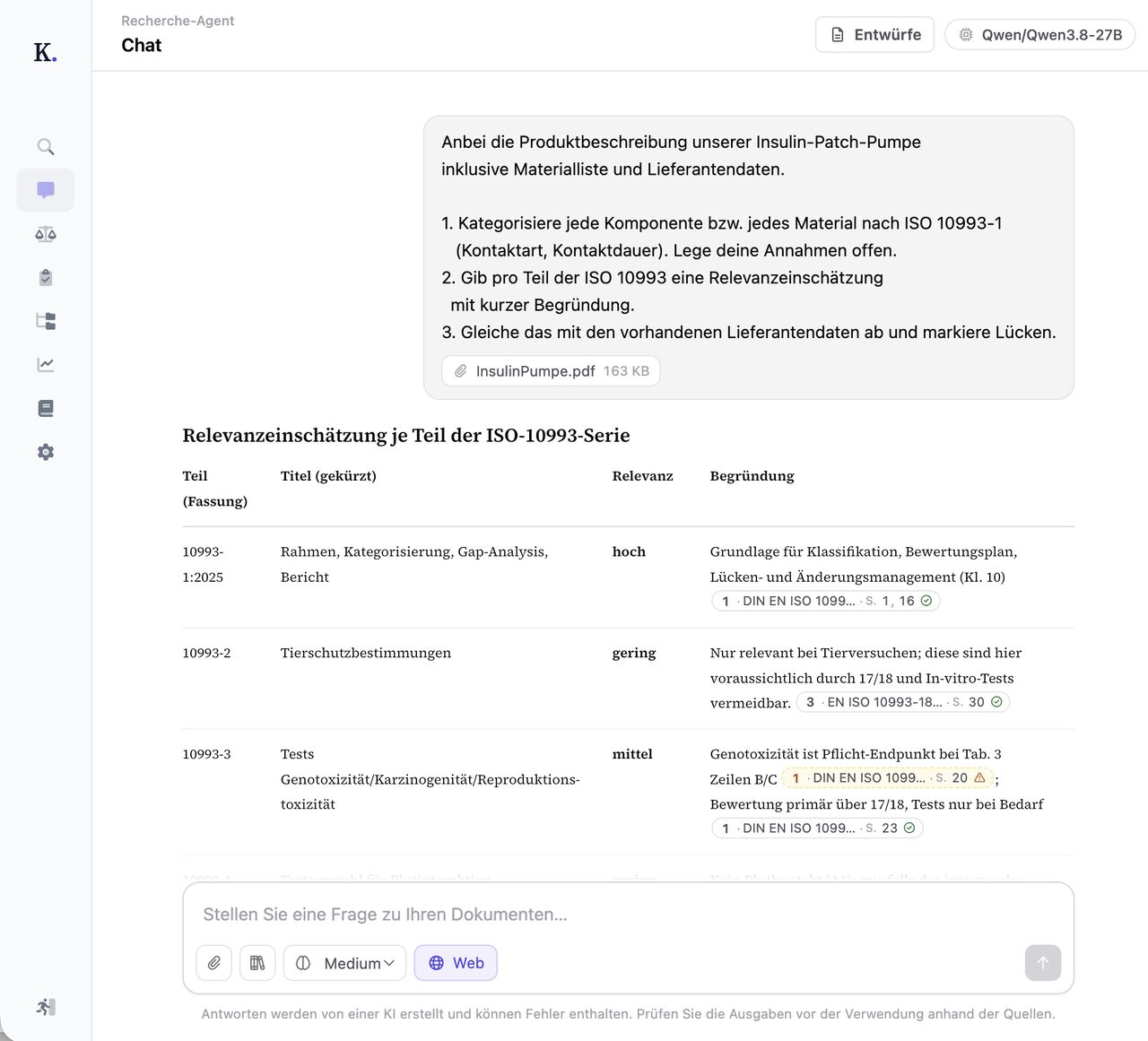
KogniLink Agents sind da! Mit dem neuen Modul erweitern wir KogniLink um eine agentische Arbeitsplattform: eine KI, die eigenständig komplexe Aufgaben über hunderttausende interne Dokumente hinweg abarbeitet und jedes Ergebnis mit Quellen belegt. Für Ingenieurbüros, die komplexe Vorhaben projektieren. Für Kanzleien, die in vergangenen Fällen recherchieren. Für produzierende Unternehmen, deren F&E an komplexen Lastenheften arbeitet. Für regulierte Industrien, die Entwicklung und Audits gezielt beschleunigen wollen. Ein Beispiel zeigt der Screenshot: die Biokompatibilitätsbewertung einer (fiktiven) Insulinpumpe nach ISO 10993, mit nachvollziehbarer Begründung und abschnittsgenauen Belegen. Gelb markierte Belege zeigen, wo ein Mensch noch einmal prüfen sollte. Denn die Agenten ersetzen keine Fachleute: Sie übernehmen die Vorbereitung, damit Expertinnen und Experten sich auf Bewertung und Entscheidung konzentrieren können. Das Beste daran: Alles läuft on-premise, ohne Datenabfluss, auf kompakter Hardware. Eigene Systeme anbinden? Klar. Ob ERP, PLM, DMS oder CAQ: Unsere Agenten arbeiten mit den Daten, die heute in Ihrem Unternehmen entstehen. Die ersten Pilotnutzer arbeiten bereits damit und sind begeistert. In den nächsten Wochen erhalten alle Kunden Zugriff auf das neue Modul.
- arato.aiSince 20 Oct 2026
For thirty years, it didn't matter who sat in front of the software. Now it does. I've been in software testing for about three decades. Traditionally, it didn't matter who was using it, male or female, any location, everyone got the exact same experience. Once you move to an AI-based experience, that stops being true. Who you are, your context, your history, all of it shapes the experience you get. Male or female. Europe, the Middle East, the US. The language you speak, your tone of voice, your history. One bank insisted we test dyslexic users specifically, because they get a completely different experience once AI is involved. Most people still don't realize this. The only way to actually know your AI holds up across that many contexts, behaviors, languages, religions, and intents, is to simulate thousands of real user interactions and see how the system actually handles the variety.
- Cyfuture.aiRecorded 23 Oct 2026
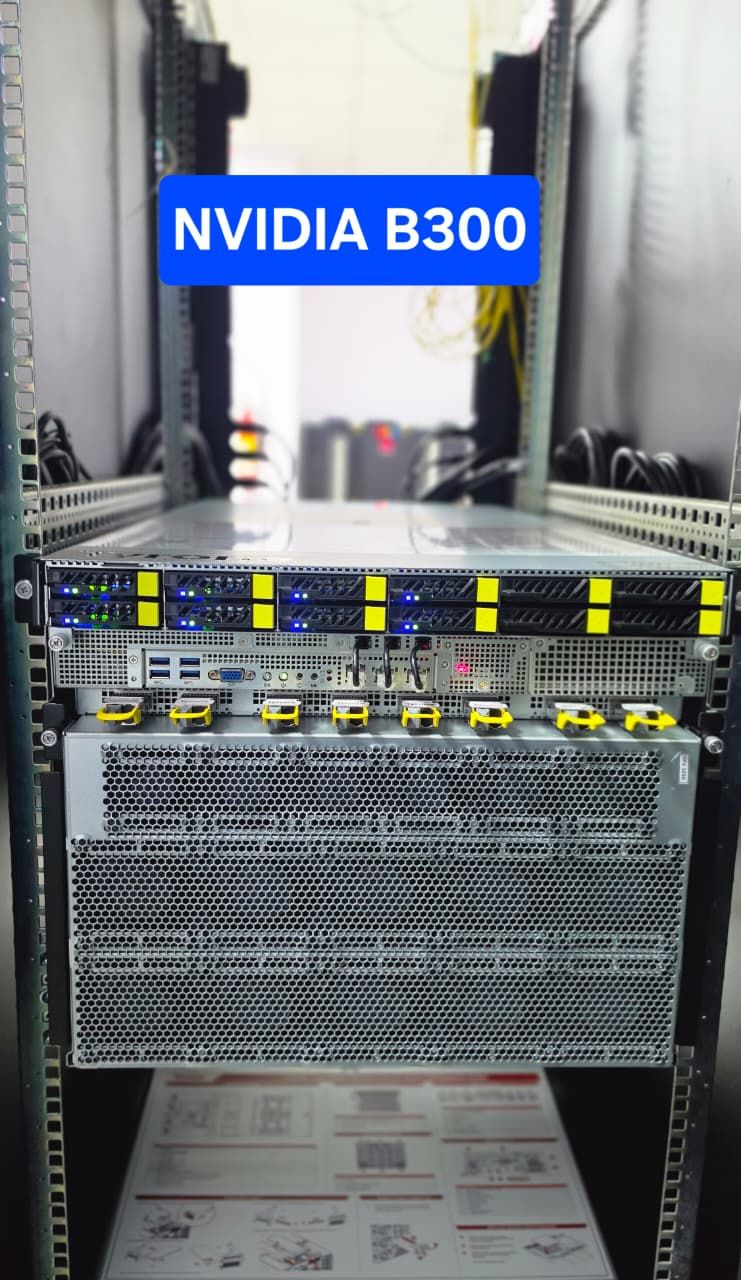
NVIDIA B300s are LIVE at Cyfuture’s Tier III Data Centre in Noida. And these machines get even more interesting when you connect them through InfiniBand or RoCEv2. That’s when individual GPU servers start working together as a massive compute powerhouse, ready to take on demanding AI workloads. More GPUs. More interconnect bandwidth. More compute power.The real magic isn’t just in the GPUs. It’s in how you connect them. 😉 The GPUs bring the muscle. The interconnect brings them together. The real beast is the cluster. 🔥 Cyfuture.ai
- Arkane CloudSince 21 Oct 2026
It's official: the Arkane Cloud extension for VS Code is live! Millions of developers open VS Code every morning. Starting today, they can use the best open-source AI models right inside their editor, with inference running on our GPUs. No complicated setup. Install the extension, pick your model, start coding. This launch is first and foremost the work of a team. A small team that gave everything over the past few weeks, across infrastructure, product and testing. Arkane Cloud, thank you. I'm proud of what we've built together. And this is only the beginning. Several announcements are coming in the next few weeks, and some of them will make some noise. Stay tuned. The install link is in the comments. Try it, push it to its limits, and tell us what you think: every piece of feedback counts.








Other LinkedIn formats
Watch the companies you care about.
Filter every ad by industry, country, format and network, and get alerts when a company you watch starts running new ads.