On air · 1 of 3 networks
AgileRL
- agilerl.com
- AI
- GB
- 11 employees
AgileRL’s ads on LinkedIn, Meta and Google, recorded by adsrunning. Browse the latest here for free. Sign up free to see all 90. Watch AgileRL with Starter to get each new one in your feed.
Watchlist with Starter · $49/mo
| Network | Status | Live ads | Nov 2025LinkedIn activity · 52 weeksOct 2026 | Checked | Next step |
|---|---|---|---|---|---|
| Running | 1 | Checked 30 Oct 2026 | See all 90 ads → | ||
| Meta | Not checked | — | |||
| Not checked | — |
AgileRL has 1 live LinkedIn ad.
Latest ads
- LINKEDIN · IMAGESince 27 Oct 2026
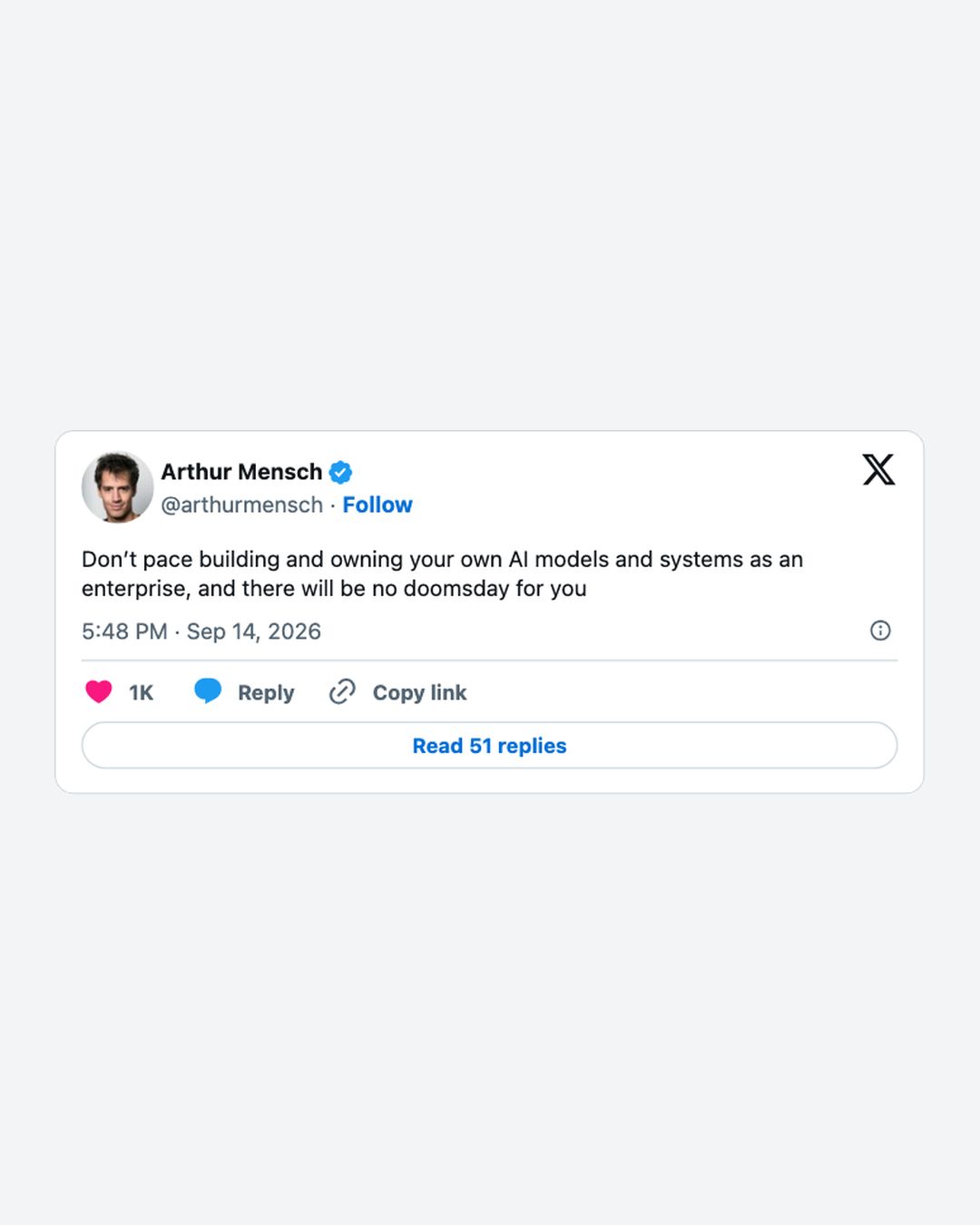
When AI budgets get cut, the frontier API bill will be the first to go. Arthur Mensch put the other side of it well: "Don't pace building and owning your own AI models and systems as an enterprise, and there will be no doomsday for you." If the market turns and AI spending falls, finance looks first at the cost that keeps accelerating with usage. That's the frontier. Every extra call costs more, and none of it stays in the business. A model you've trained on your own data works differently. It runs on your infrastructure, it's built for your use case, and it gets better every time you retrain it. That's an asset you own, and it's much harder to cut. So I'd expect a downturn to drive an even larger migration to open source. And if you're already building your own intelligence on open-weight models, brilliant. Keep at it. This is exactly what we help enterprises do at AgileRL.
- LINKEDIN · IMAGESince 27 Oct 2026
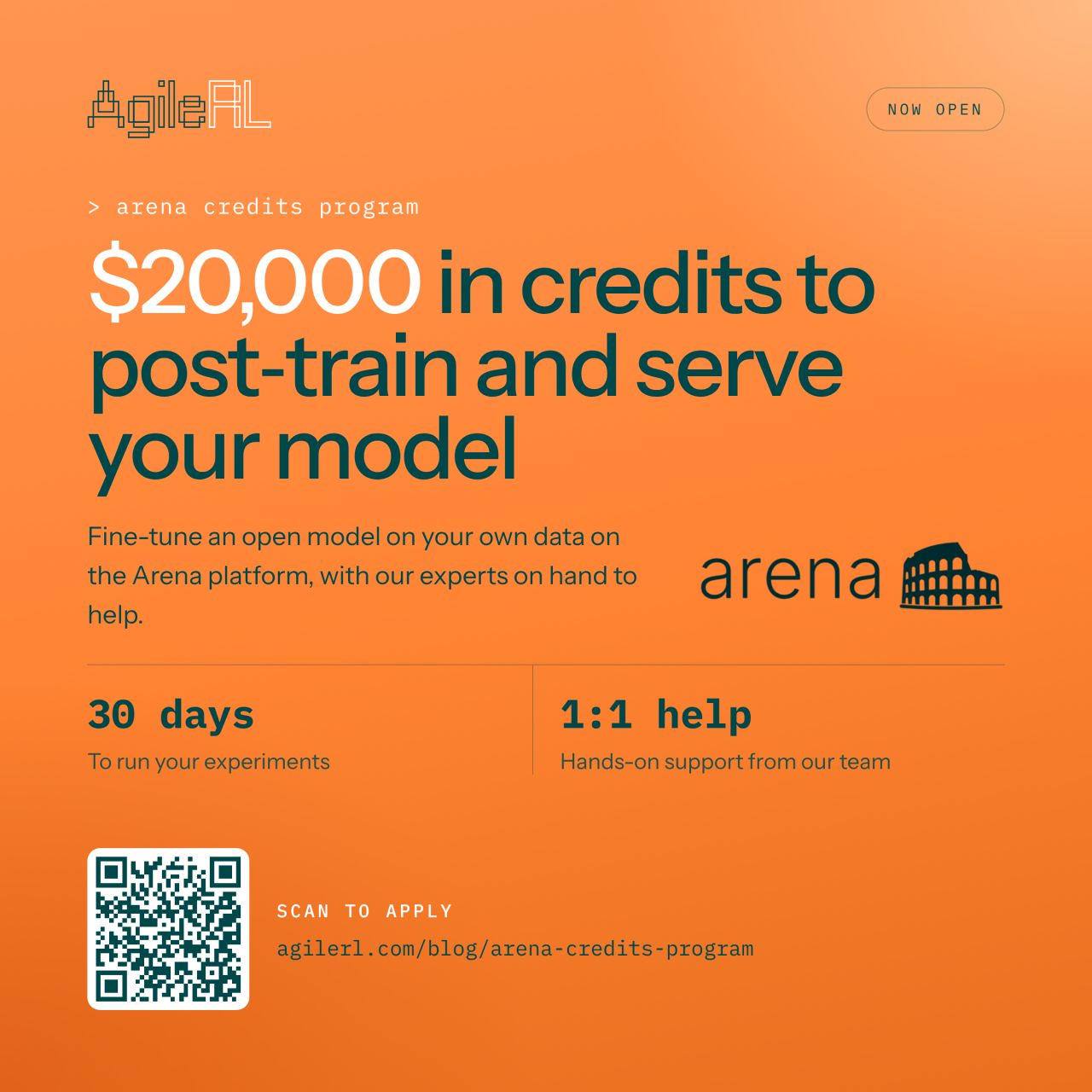
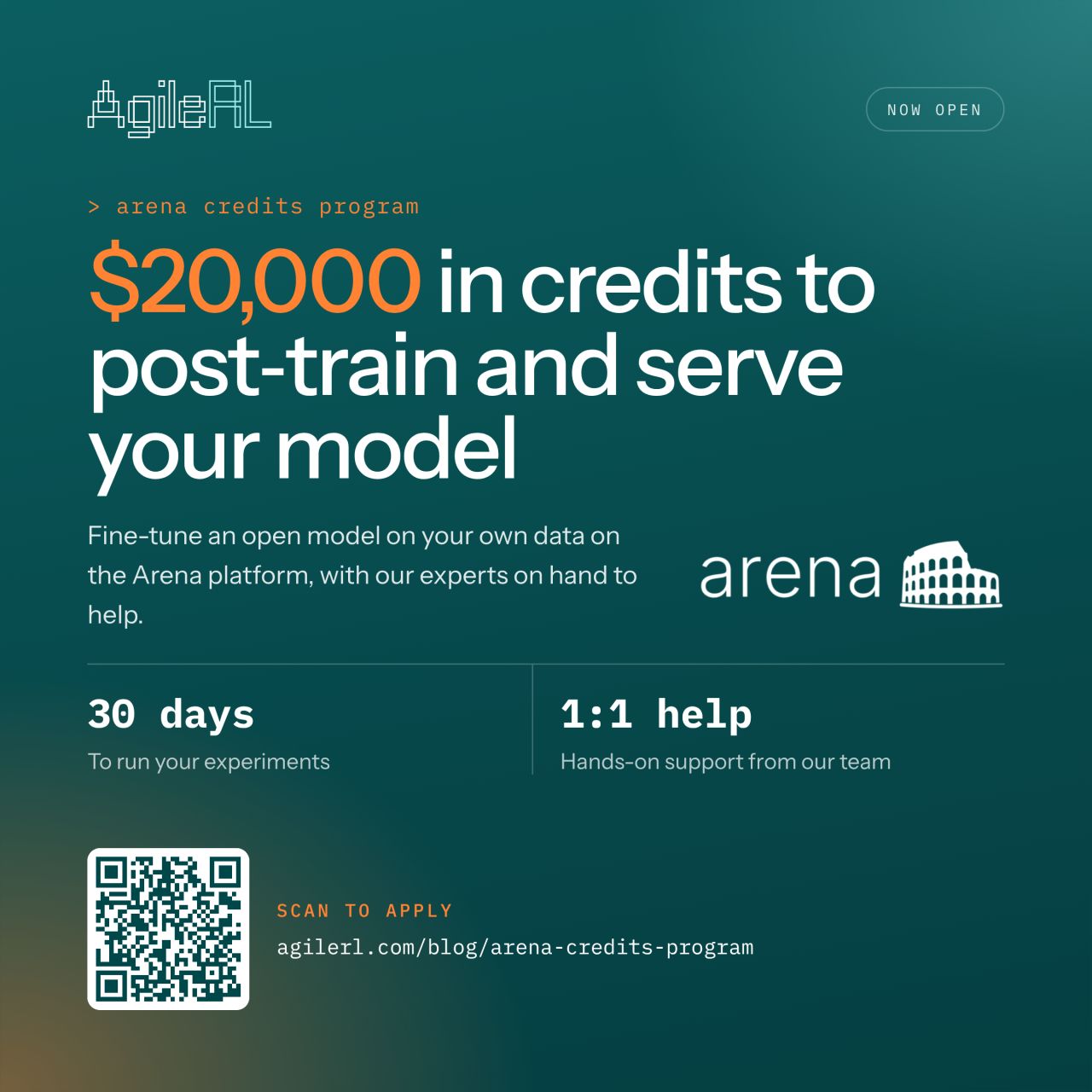
We are giving enterprise engineering teams $20,000 in Arena Credits to train and deploy their own model on Arena. Training a model of your own takes compute, time and engineering effort. These credits are there to make the first one easier to start. Why it is worth doing: - Keep control. A model you host runs where your data already lives, and its availability no longer depends on an external provider. - Contain costs. Per-token pricing grows with every request, while self-hosting is paid per hour of compute, and that trade improves the larger your organisation is. - Performance on your tasks. A smaller model trained for one job can outperform a frontier model at that job. A frontier API is a good place to start. When its output reads like a junior hire, rather than an experienced senior, that is usually the point to train a model of your own. You can apply at https://lnkd.in/eqZ3KgFm
- LINKEDIN · IMAGESince 26 Oct 2026
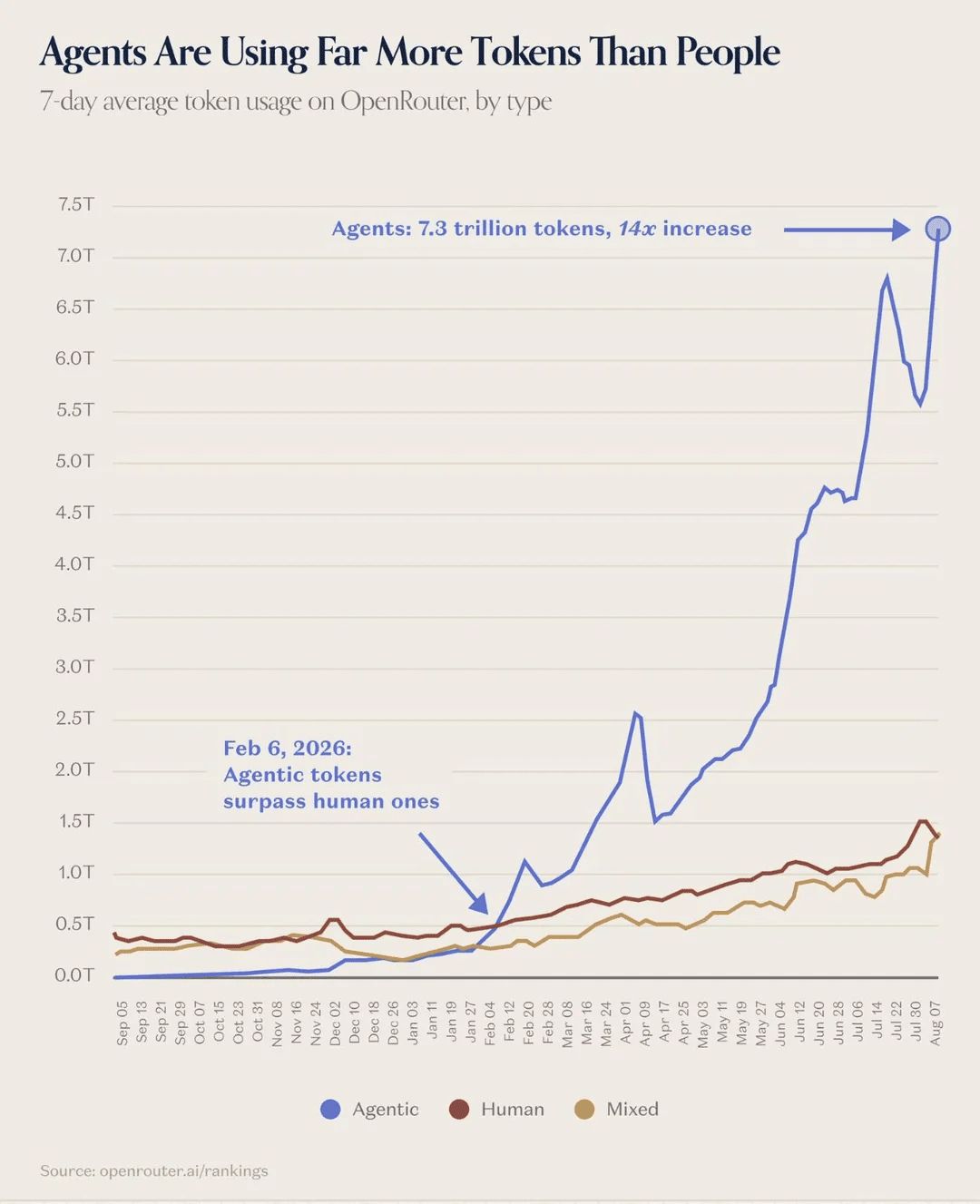
If you lead AI at a bank or an insurer and you're planning to go agent-first, the model underneath it deserves a close look. Here is why: Runaway agents in a business can do great harm to a company's fiscal position whilst using a frontier model. With a frontier API, cost scales with usage, so as your usage grows, your token cost grows in a linear fashion, and you're always at the mercy of the provider if they change their token price. Open-weight, fine-tuned models on a company's own infrastructure allow them to really take advantage of an agent-first implementation. The initial cost is a little bit higher, but after that you pay for the hardware you run, so the more your agents do, the cheaper each unit gets. That only pays off if your agents are doing work that matters, which is why I would start where the data is richest. For banks and insurers, that's the repetitive work a few people do by hand, where you already hold years of previous outcomes. - Settling claims, where you know the value claimed, the correct value and what the policy covers. - Customer-service escalations. - A coding agent trained on your own codebase, so no third-party tool touches where your secrets live. Pick one of those, let the agent help the people doing it first, and over time let it do the work while they oversee it. This is exactly what we help enterprises do at AgileRL: fine-tune open models on their task and run them on their own infrastructure, so the cost of going agent-first stays predictable. Happy to chat if you're working through this.
- LINKEDIN · IMAGESince 25 Oct 2026
We're giving engineering teams at enterprises $20,000 to train and deploy their own model on Arena. One grant per company, with our experts on hand at no extra cost, so the first experiments don't have to wait for budget approval. If your ML team has a task it wants a specialised model for, apply here and we'll get back to you within a week: https://lnkd.in/eMDCYpfV
- LINKEDIN · IMAGESince 22 Oct 2026
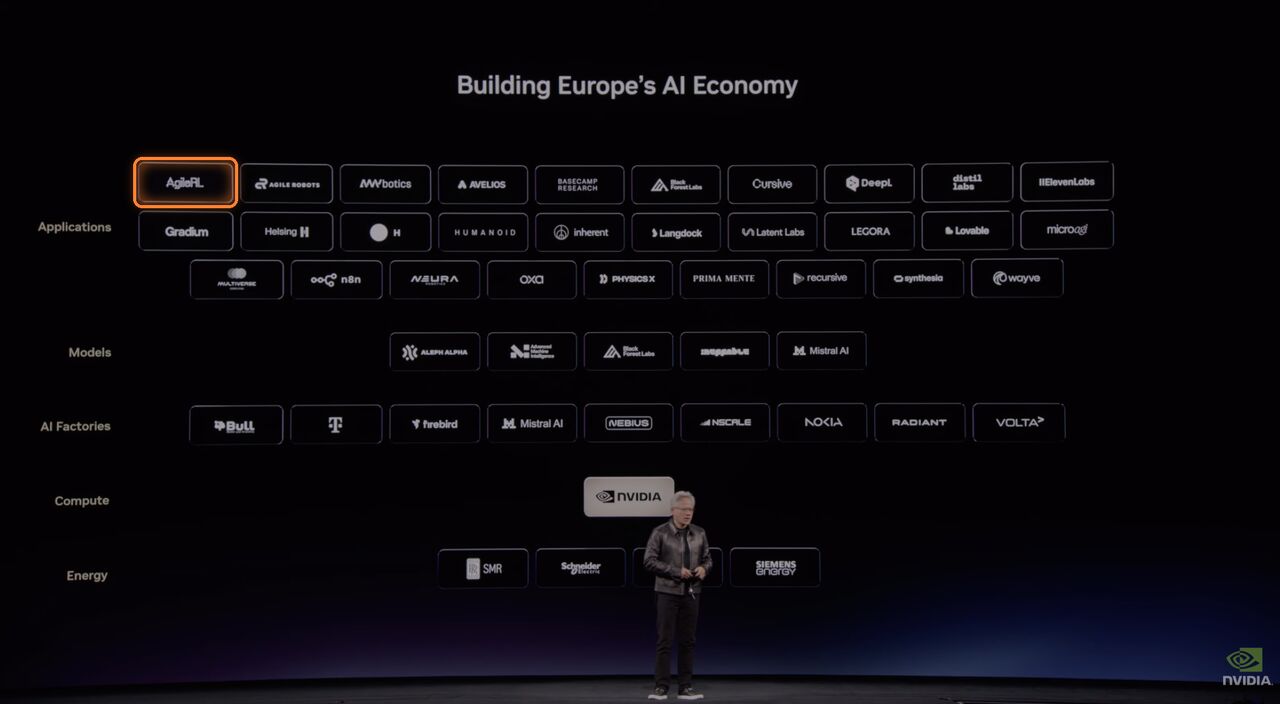
Today, AgileRL was featured on Jensen Huang's "Building Europe's AI Economy" slide at the NVIDIA GTC keynote! It is wonderful to be featured, and I’m proud of the work our amazing team has done so far. For teams deciding how to train and own their models, this is worth a closer look. The slide set out the companies building Europe's AI economy row by row, from applications and models, through AI factories and compute to energy. We sit in the Applications row, alongside companies such as DeepL, ElevenLabs and Wayve. AgileRL is NVIDIA's post-training partner. Our post-training platform, Arena, lets you train specialised agents for specific use cases that can match or outperform frontier APIs. We support NVIDIA's Nemotron models, and we've published two results with them that show what's possible. The first came in August. We trained Nemotron Lightning 3.5 to solve customer support queries. On 2,728 held-out messages, it went from 71.1% correct out of the box to 99.2%, against Claude Sonnet 5's 90.3%. The second case-study trained Nemotron 3.5 Super VL, which NVIDIA released on 15 October. We trained it on Arena for web-browsing tasks, and it went from 30.7% out of the box to 90.2% on 114 unseen VisualWebArena tasks. For reference, Claude Opus 5.5 scored 63.2% on the same tasks. Both results point the same way. On your own task, an open-weight model trained for it can outperform the closed API models you call today, and the weights stay with you. You also benefit from increased security, data sovereignty, and significantly cheaper inference. If you want to learn more, send me a DM.
- LINKEDIN · IMAGESince 22 Oct 2026
NVIDIA released Nemotron 3.5 Super VL today. As NVIDIA's post-training ecosystem partner, AgileRL got early access, and I'm proud of what it shows for any enterprise deciding whether to rent a frontier model or train its own. We trained it to use a web browser, reading what's on screen and clicking through an online shop, a classifieds site, a forum, and Wikipedia. On 114 tasks it had never seen, it went from: - 30.7% before training - to 90.2% after training - ahead of Claude Opus 5.5 at 63.2% That increase in accuracy came from training on the task itself, and for teams in regulated industries like banking and insurance, that's the part worth paying attention to. Your claims process, your admin tools, and the way your team handles a case aren't in any model's pretraining data, so a prompt can describe them, but training is what actually puts them into the model. Owning the model also changes who's in control. When an agent reads screenshots of your internal systems, a model you train and host yourself means those screenshots never leave your network, and you're no longer relying on a provider to keep the model available and behaving the same way between releases. And an agent like this reads a screenshot on every turn, often for many turns per task, so per-token pricing compounds faster than most teams budget for, whereas a model you host is a fixed cost on hardware you own. Nemotron 3.5 Super VL is on Arena from day 0, so if you have a task you'd want an agent for, send me a message and we'll train and deploy it with you, on your infrastructure, with the weights yours to keep. How we trained it, and the full results, are on our blog:
6 of 90 adsSign up to see every AgileRL ad, filter by format and date, and get alerts on new ones.
See all 90 adsWatch the companies you care about.
Filter every ad by industry, country, format and network, and get alerts when a company you watch starts running new ads.