On air · 1 of 3 networks
Content Science
- content-science.com
- Marketing & Advertising
- US
- 7 employees
Content Science’s ads on LinkedIn, Meta and Google, recorded by adsrunning. Browse the latest here for free. Sign up free to see all 78. Watch Content Science with Starter to get each new one in your feed.
Watchlist with Starter · $49/mo
| Network | Status | Live ads | Nov 2025LinkedIn activity · 52 weeksOct 2026 | Checked | Next step |
|---|---|---|---|---|---|
| Running | 24 | Checked 30 Oct 2026 | See all 78 ads → | ||
| Meta | Not checked | — | |||
| None recorded | 0 | No ads found on the Google Ads Transparency Center | Checked 26 Oct 2026 | Collect them with the API → |
Content Science has 24 live LinkedIn ads. We recorded no Google ads on 26 Oct 2026.
Latest ads
- LINKEDIN · IMAGESince 27 Aug 2026
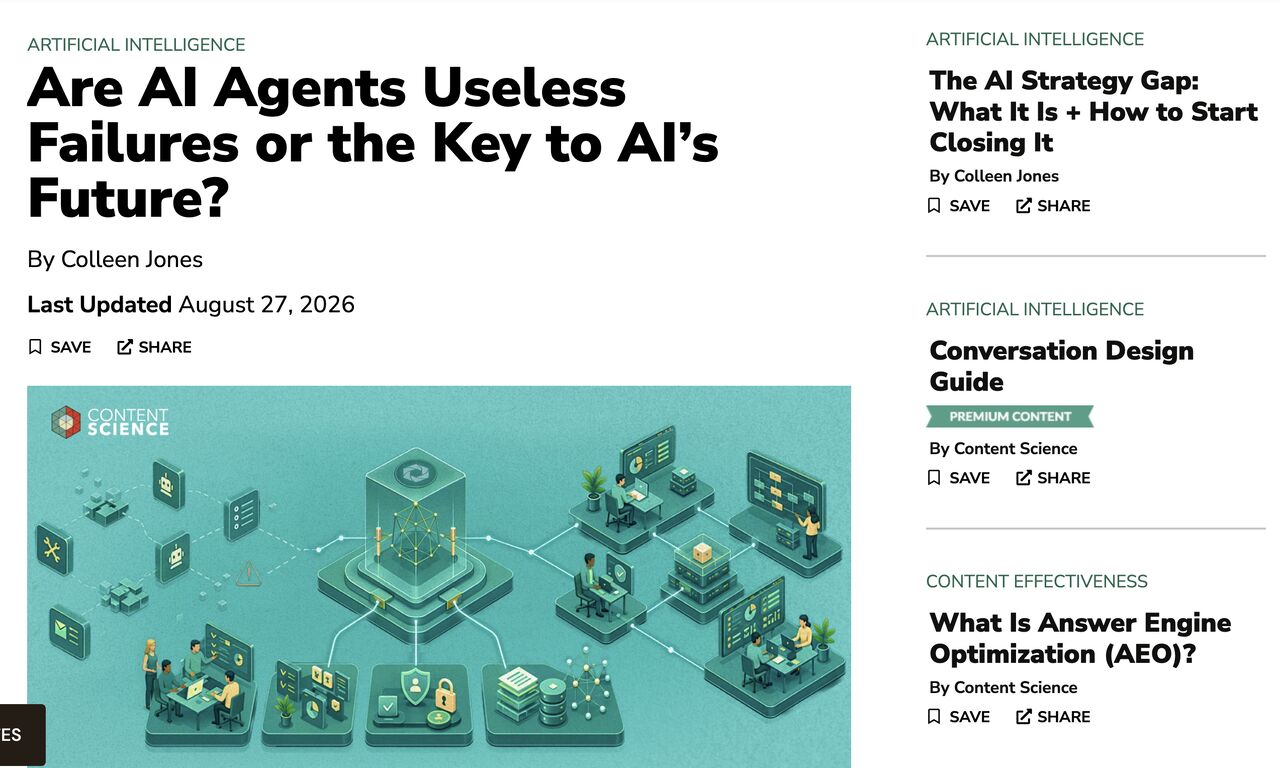
Are AI agents failures or the future of AI technology? In our latest Content Science Review article, Colleen Jones argues that the answer right now is both. For agents to deliver on their promise, three things need to change: → Agents need to focus on organizations, not individuals, and useful work for those organizations. → Agents need to be easier to set up, tailor, and govern. → Agents need connection to to deep organizational knowledge and expertise (i.e. content). The most powerful agent is the one that knows what to do, why it matters, and what “good” looks like. As AI becomes more capable, your organization's content (your research, processes, data, standards, and expertise) becomes increasingly important AI infrastructure. 🔸 Check out the full article here: https://lnkd.in/enAYJN7p #contentstrategy #knowledge #ai #agenticai #agents #digitaltransformation
- LINKEDIN · IMAGESince 21 Jul 2026
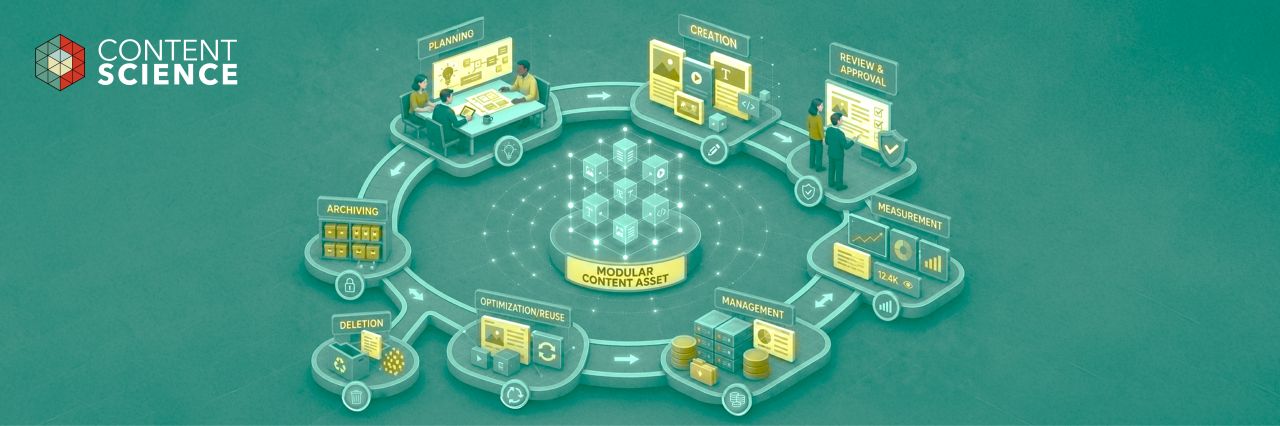
Every piece of content has a lifecycle. Does your organization design and manage it intentionally? Many organizations treat publishing as the finish line. In reality, that's when the longest phase in the lifecycle begins. Content must be maintained, measured, governed, reused, and updated or retired. And in the age of automation and AI, managing that lifecycle is becoming a competitive advantage. In our latest article on Content Science Review, we explore: • What a content lifecycle is • Why different content types require different lifecycles • How the content lifecycle relates to content strategy, content operations, workflow, content modeling, content management, and more Whether you're modernizing your content operations or preparing for AI at scale, understanding the content lifecycle is foundational. Read the article: https://lnkd.in/eJyiydxF #ContentStrategy #ContentOperations #ContentLifecycle #ContentGovernance #StructuredContent #ContentEngineering #ai
- LINKEDIN · IMAGESince 15 Jun 2026
Your AI knows words and images and videos. Does it know content? Does it understand content quality, governance, analysis, strategy, operations, and systems? Or how to create effective content that achieves business goals? Most major AI models don't. That's why we built ContentIQ. ContentIQ combines 15 years of Content Science research, data, frameworks, and methods to help individuals or teams scale better content decisions, content creation, and content outcomes. Join us for a live webinar introducing ContentIQ and see how it can work for individuals or enterprises to: • Scale proven content expertise across teams of humans and agents • Apply Content Science's methodologies through AI • Incorporate organizational knowledge and best practices • Use any major AI model without model lock-in • Deliver more consistent, effective content at scale We'll also demonstrate key capabilities, explore real-world use cases, and answer your questions live. Have a challenge or use case you'd like us to address? Submit it when you register, and we'll incorporate as many as we can into the session! Register now: https://lnkd.in/euwbgFmw #ContentStrategy #ContentOperations #ContentDesign #AI #GenerativeAI #ContentMarketing #Marketing #Product #CX #UX
- LINKEDIN · IMAGESince 10 Jun 2026
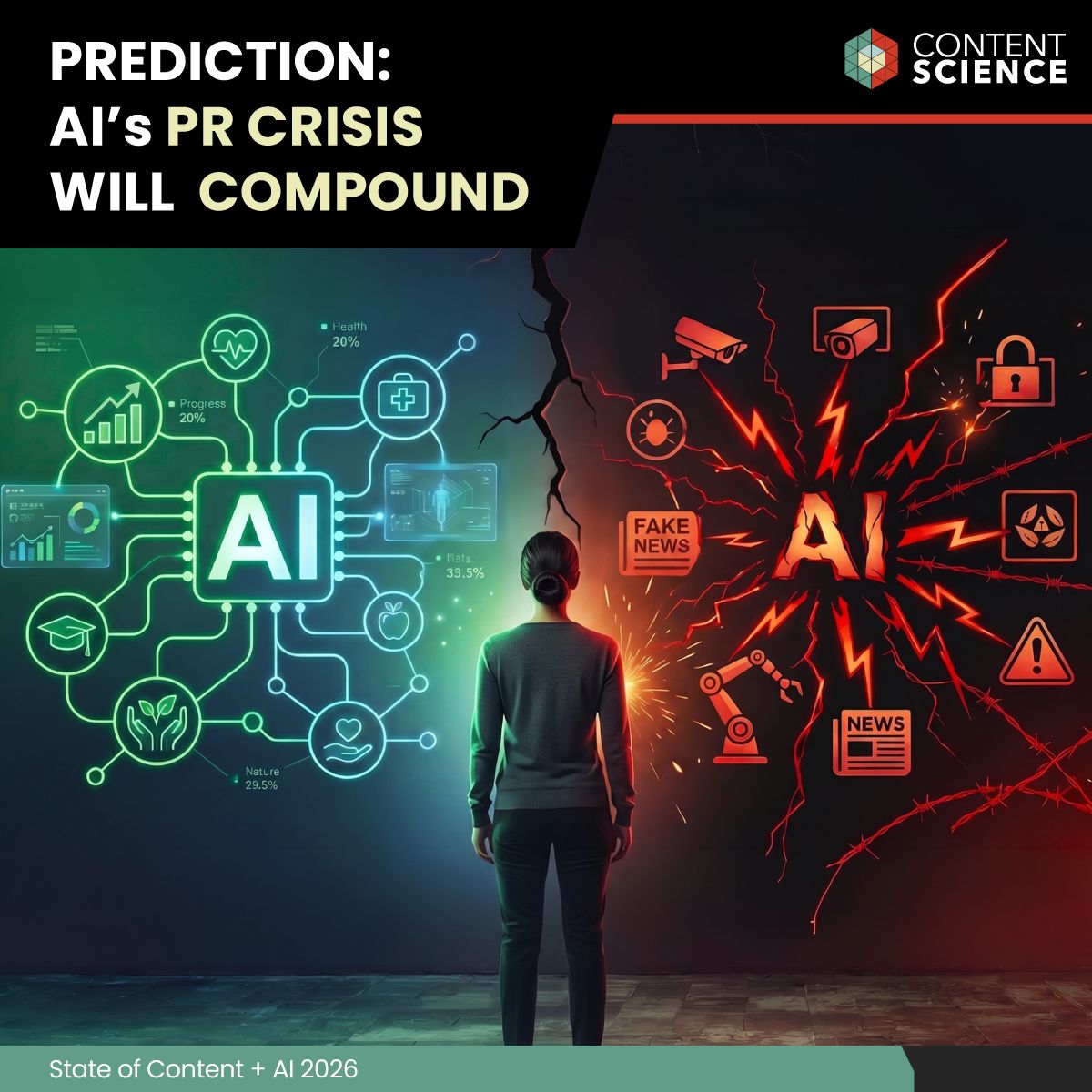
In January, the Content Science team and I predicted that AI's PR crisis would intensify in 2026. Five months later, we're watching it unfold in real time. Across the U.S., the backlash against AI is hard to ignore: 🔹 Florida became the first state to sue OpenAI and Sam Altman for not disclosing risks. 🔹 Companies report they're still not seeing the value they expected from AI, complicating Anthropic's IPO. 🔹 Communities across the country are pushing back against AI data centers, raising concerns about energy consumption as well as local impacts on air quality and more. (That last one hits close to home as I have family living near the slew of sites planned for Virginia.) In our State of Content + AI 2026 webinar and report, I said that AI's PR crisis would compound and pointed to several warning signs: • Half of Americans were more concerned than excited about AI becoming part of daily life and growing weary of AI slop. • Many failures, from hallucinations of inaccurate health information to biased hiring algorithms, became high profile. • AI was exacerbating the world's top risks such as misinformation, polarization, cybersecurity, and environmental impacts. • Most enterprises were struggling to realize value from AI, as highlighted in research from MIT, Content Science, and others. Today's headlines reflect those concerns and more. I don't believe this is fundamentally a PR problem, so a PR crisis response alone won't solve it. The solution lies in better decisions and actions across business, technology, and government. A sample of what I want to see: 🔸 More business and industry leaders make AI decisions based on strategy rather than fear. They also give transparency to employees and customers regarding when, why, and how they're using AI. 🔸 Leaders of major AI models and platforms take greater responsibility for failed enterprise outcomes instead of claiming capability overhang. 🔸 More in-house technology leaders insist that strengthening governance, workflow, quality controls, and human oversight accelerates responsible scaling of AI. 🔸 More government leaders develop and implement forward-thinking policies that protect people while supporting responsible innovation. I still believe AI has exciting potential to free us from past limitations so we transform industries, scale worthy busineses and organizations, and improve everyday life. I'm not against AI. But I also believe that with great freedom comes great responsibility. The question now is whether more leaders will have the courage to take responsibility for AI. The growing backlash across the U.S. indicates that many people want to see exactly that. State of Content + AI 2026 report: https://lnkd.in/etuDrsFe Sign up for the next State of Content + AI webinar: https://lnkd.in/eM2gNuHT (See the comments for a roundup of media reports on the backlash.) #AIbacklash #AI #digitaldisruption #governance #responsibility #leadership #pr #datacenters
- LINKEDIN · IMAGESince 10 Jun 2026
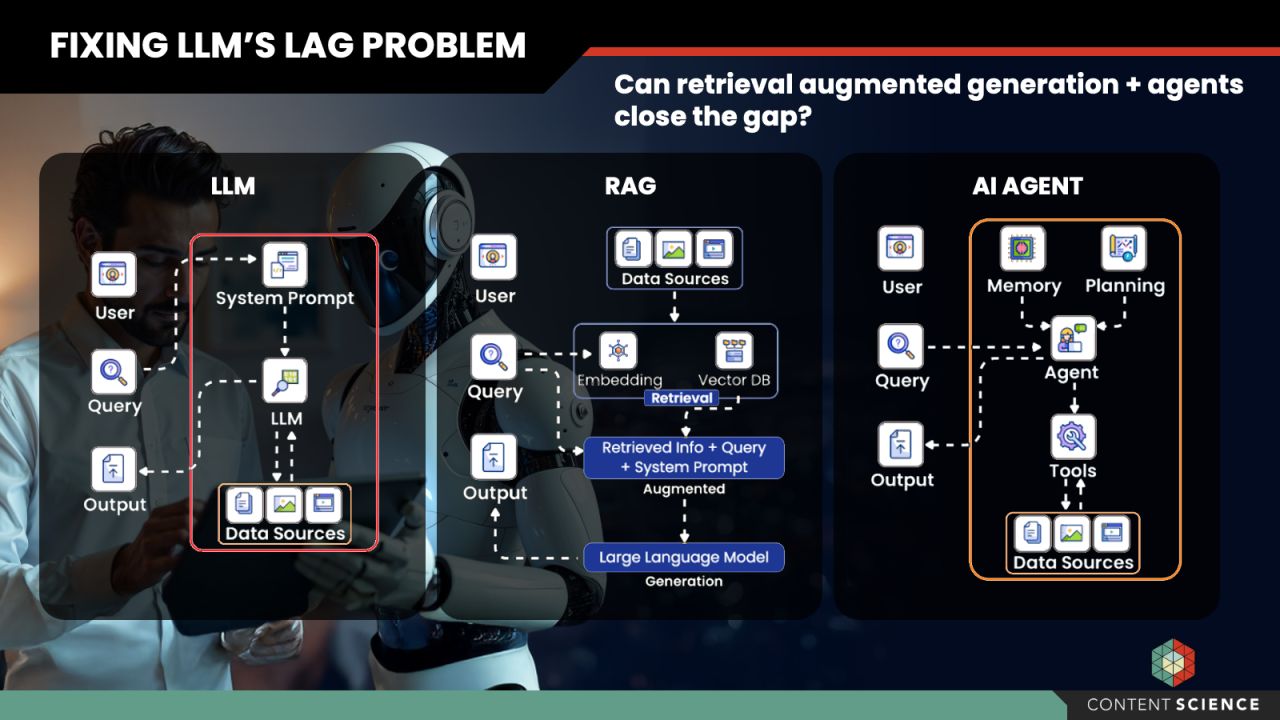
Deep learning AI has a lag problem. Across multiple recent studies spanning journalism, business, and archaeology, the same weakness keeps surfacing. Large language models are only as current as their last update. When you ask them for timely or evolving information, you’re often asking a system trained on yesterday’s internet to explain today’s reality. Let's consider what recent research found: 🔸 The European Broadcasting Union and the BBC identified widespread errors in AI assistants’ reporting of news, misrepresenting source content in nearly half of responses. https://lnkd.in/eE_G9ig6 🔸 The Washington Post tested major AI chatbots with trivia questions about recent events and found many confident, incorrect answers. https://lnkd.in/evgeMUFc 🔸 An archaeology study showed visual AI tools depicted Neanderthals using outdated assumptions rather than current scientific research. https://lnkd.in/evDQj5Td Very different domains. Same root cause. Lag! Can this lag be fixed? I'm skeptical about broad applications like general search. Never say never, though. But in specific applications and closed environments, there’s real opportunity. With retrieval augmented generation (RAG) and AI agents, systems can pull directly from up-to-date internal sources at query time. Instead of relying solely on static training data, they retrieve the latest documentation, policies, or data before generating a response. For instance, a customer service chatbot can be configured to check sources like: • The current returns policy • This week’s pricing updates • The latest product specs • Real-time account data But there's a catch. RAG and agentic AI don’t fix bad content or bad governance. You still have to define: • When retrieval is required. • Which sources are authoritative. • How those sources are maintained (and actually maintain them). With LLM alone or LLM + RAG + agents, the principle is the same. If you don’t define and manage the right inputs, you can’t trust the outputs. #contentstrategy #governance #ai #rag #agenticai #customerexperience #cx #digitaltransformation #contenteffectiveness
- LINKEDIN · IMAGESince 10 Jun 2026
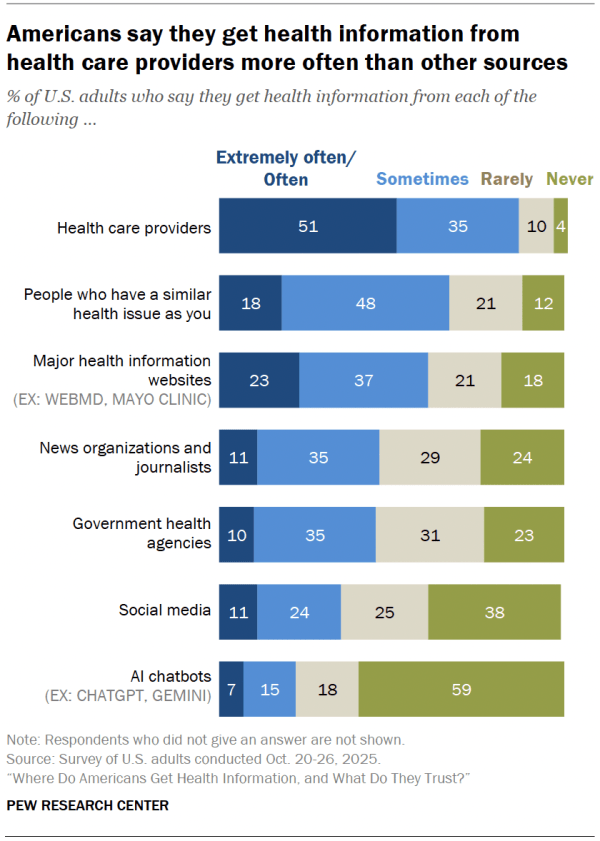
➕ Something about the latest Pew Research Center study on health information doesn’t add up for me. After noodling on it, I think I see the issue. The study says Americans report turning most often to health providers for health information...as in more often than major health websites, social media, or AI. Here’s the disconnect that's bothering me. People say they turn to trusted providers most often. But in reality, they barely have access to them. Other research shows the average patient spends 1–2 hours per year with a provider (about 20 minutes per visit, ~3 visits per year). Meanwhile, the average American adult spends 2,900+ hours per year online. It’s hard to reconcile those two realities. Even if you factor in the occasional portal message or email, it’s unlikely providers are truly the most frequent source of health information in practice. So we may have a case of people saying one thing, but doing another. And that helps explain another tension in the data. People rate providers as the most accurate and personalized source of health information. Yet they also report, broadly: > It’s hard to know what health information is accurate. > It’s difficult to navigate conflicting advice. > There’s growing uncertainty about what to trust. That makes more sense when I think about where health decisions actually happen. Trusted, personalized guidance from providers occurs in brief, infrequent moments. Many health decisions happen between visits, in environments filled with challenges like > Generic health content > Conflicting perspectives, including misinformation > AI-generated summaries of uneven quality > Under-maintained or outdated U.S. government resources So which version of reality is true? If Americans are accessing the source they trust most, as often as they need, then great. We don’t have a problem. But if they’re not—and all signs suggest to me they're not—I would hate for this Pew Research data to justify glossing over a huge gap. The most trusted source of health information, health providers, isn’t designed to show up with the reach, frequency, or consistency that modern information environments demand. That’s a content, system, and scale problem. And it’s one worth trying to solve. Learn more about the Pew Research study here: https://lnkd.in/eTkDKHiy #contentstrategy #trust #health #healthcontent #health #contentoperations #ai #digitaldisruption

6 of 78 adsSign up to see every Content Science ad, filter by format and date, and get alerts on new ones.
See all 78 adsWatch the companies you care about.
Filter every ad by industry, country, format and network, and get alerts when a company you watch starts running new ads.