LinkedIn thought leader ad examples
144 thought leader ads are live on LinkedIn right now, from 180 companies. Browse real ones, filtered by industry.
- ValemarkRecorded 13 Sept 2026
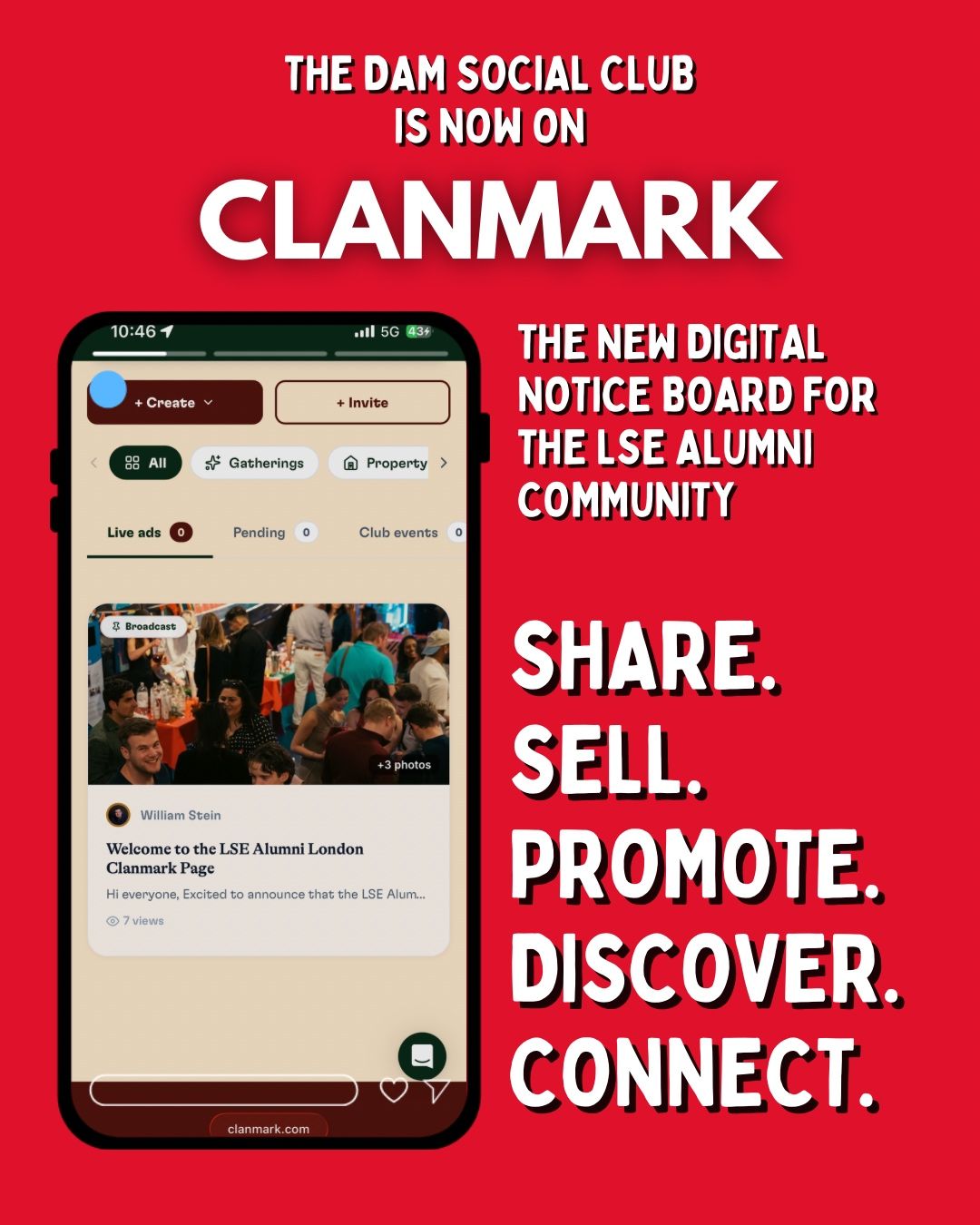
One of the toughest things about building a community is having to say no to people. People often reach out to The Dam Social Club wanting to share something with the LSE Alumni community. Whether it be someone moving out of London and passing on furniture, launching a book, starting a run club, selling concert tickets, every time, I'd turn them down. I've always been protective of our channels. Our Instagram (4.6k), LinkedIn (3k+), WhatsApp (800+), and mailing list (600+) grew fast because we guarded them from spam and oversharing. The second you open that door, a community starts feeling like noise. But that protection meant genuine asks got rejected too, opportunities the community would've genuinely wanted to hear about. Finally, we found a solution 🎉 The Dam Social Club now has a space on Clanmark, where LSE alumni can sell, share, promote, and discover things within the community, without flooding anyone's inbox or group chat. We're just getting started, so if you've got something to share or want to see whats happening withn the community, make sure to join. The Dam Social Club, where LSE alumni connect 🤝 https://lnkd.in/ejQ2JhsD
- Champ AIRecorded 13 Sept 2026
Digital health marketplaces have changed what access to care can look like. They help patients find the right clinician and allow providers to reach people far beyond a local practice. Behind that experience is an operations team moving every provider through credentialing and payer enrollment. Part of the timeline belongs to the payer. Once Cigna receives an application packet, its credentialing process typically takes 45 to 60 days. A provider organization cannot control that review. But it can control how quickly a complete packet is submitted, whether a correction sits unanswered, how consistently status is checked, and whether an effective date reaches scheduling and billing. Champ can help digital health marketplaces automate this manual operational work behind credentialing & enrollment. When these marketplaces expand across states and payers, Champ keeps enrollment cases moving across the systems already in place. I wrote about the avoidable delay and manual work that create the hidden tax on provider growth. https://lnkd.in/gsTYb-fW
- Cloud HumansRecorded 13 Sept 2026
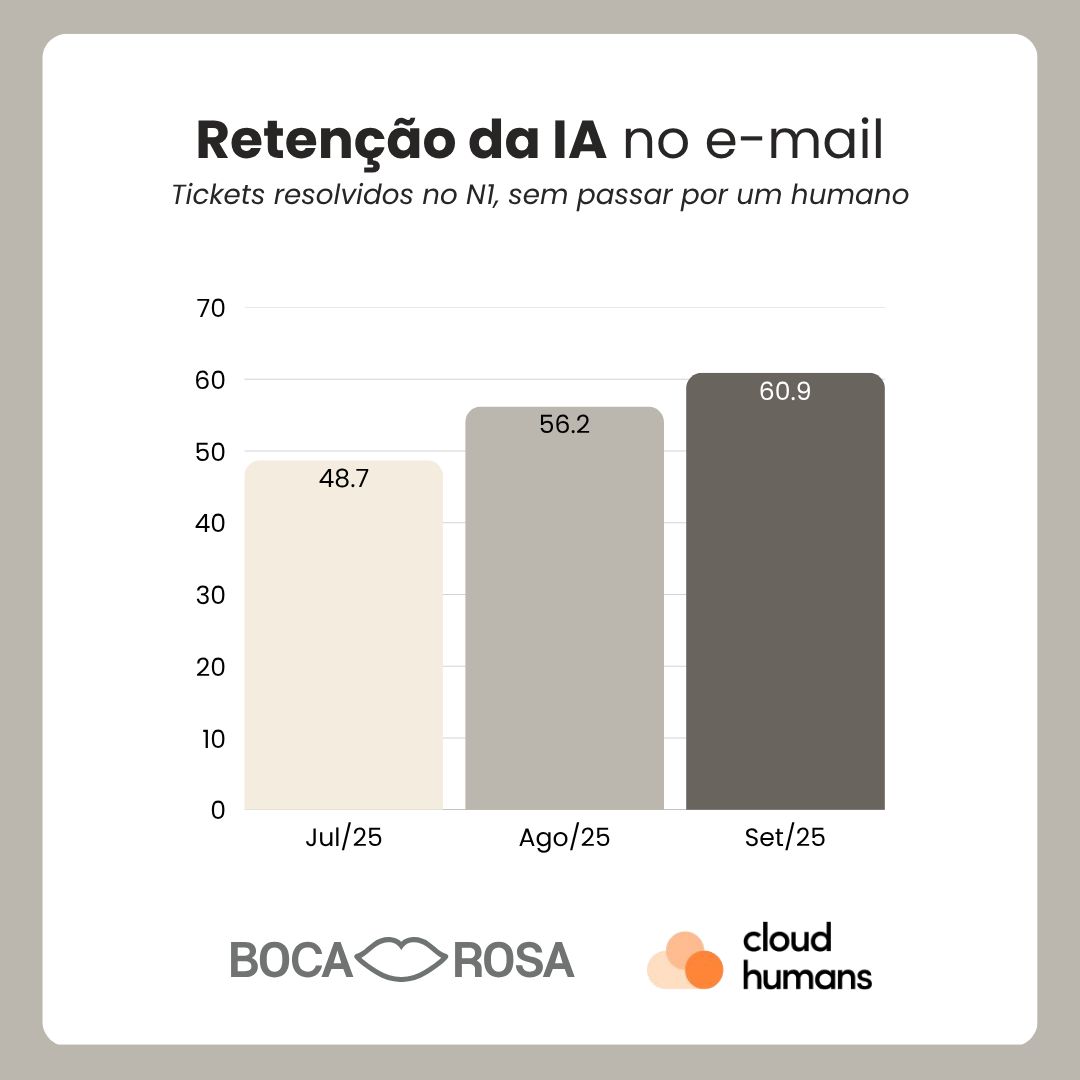
IA que substitui pessoas é um GRANDE MITO. O que transforma mesmo uma operação é a IA que devolve o tempo. Para que o time humano cuide do que realmente importa: o cliente. Quando entrei na Boca Rosa Company, o cenário era outro. - NPS em 32 - Reclame Aqui no vermelho - 25h pra concluir um atendimento A virada começou com uma decisão simples, mas difícil: pausar tudo. Corrigir o que precisava ser corrigido. E reconstruir o atendimento com base em dados reais. A IA entrou nessa nova fase não como “robô que responde”, mas como extensão da marca: com o mesmo tom leve, divertido e humano que o público já espera da Bianca Andrade Hoje, a IA cuida de mais de 50% dos atendimentos, com CSAT médio de 84,3% (pra uma IA isso é MUITO BOM). Trabalho GIGANTE da Anna Clara com a nossa ROSA (nosso apelido carinhoso para nossa IA kk) E o mais importante: o time humano voltou a fazer CX de verdade. Encantar, ouvir, gerar insight, e influenciar produto e operação. A lição? CX não é sobre apagar incêndio. É sobre construir uma estrutura que aguente o crescimento. E ainda assim mantenha alma, empatia e propósito. Essa transformação foi construída junto com o time da Cloud Humans, que nos ajudou a transformar a IA em uma verdadeira extensão da marca Boca Rosa. Contei mais sobre os bastidores e aprendizados dessa jornada em um papo com eles. Vale assistir: https://lnkd.in/dQJsfx96
- Cloud HumansRecorded 13 Sept 2026
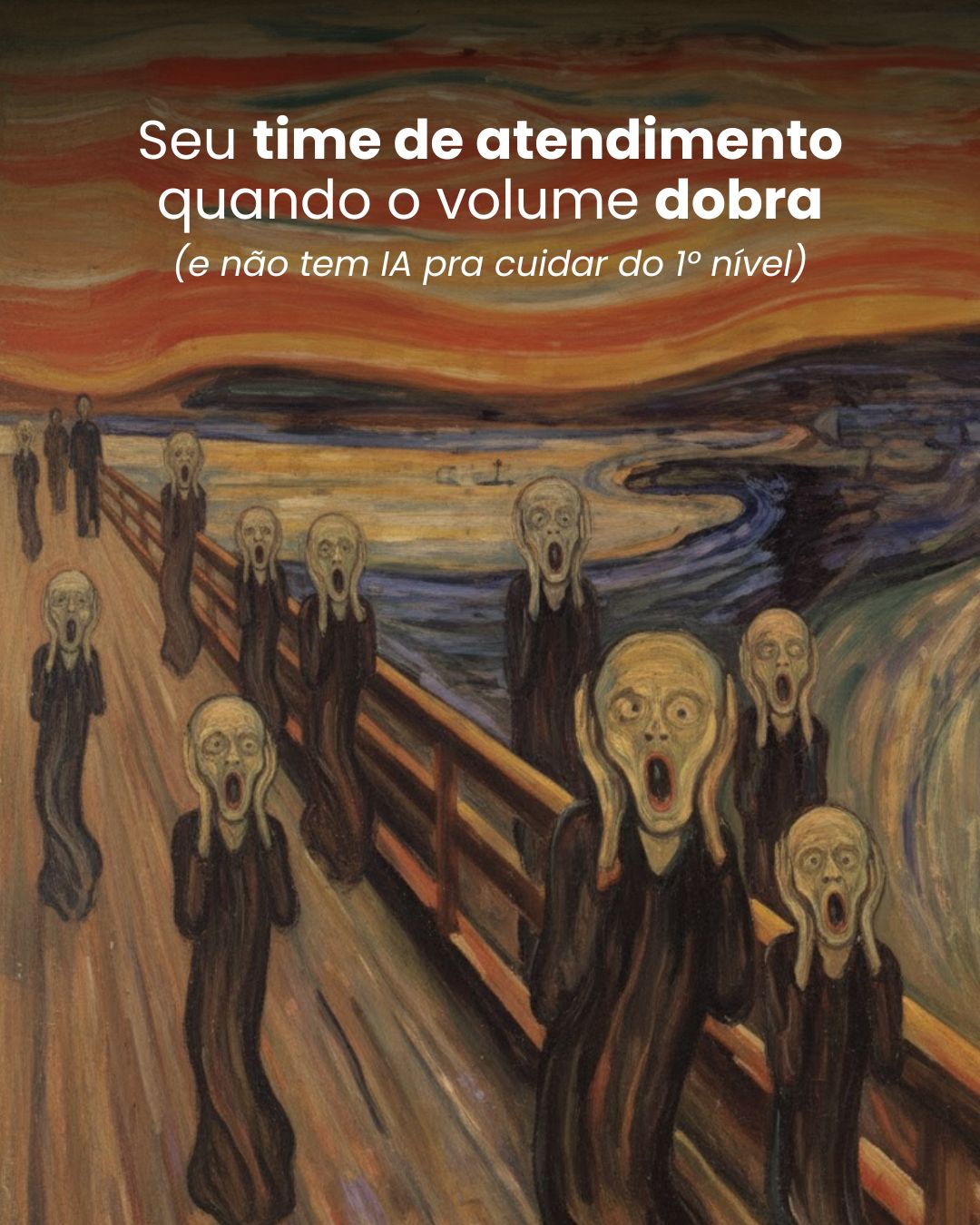
O PIOR jeito de começar 2026 em uma operação de atendimento: Entrar no ano sem saber quanto do seu volume total já poderia ser respondido e RESOLVIDO com uma IA generativa. Nas últimas semanas, em praticamente toda call com lideranças de CX/CS, ouvi alguma variação de: “Meu time tá em modo bombeiro” “Se o volume crescer mais um pouco, eu vou ter que abrir vaga.” "abri vaga" “Eu sei que dá pra automatizar, mas não é a hora ainda" "abri vaga" "Meu atendimento é muito diferente, não da pra automatizar" "abri vaga" "abri vaga" "abri vaga" "abri vaga" Decidir automatizar virou uma questão quase que moral. Quando deveria ser uma decisão CIENTÍFICA. Tem casos que são muito óbvios que dá para automatizar e VÁRIOS OUTROS que não vale a pena! Por isso a gente criou o ‘Diagnóstico de Potencial’ aqui na Cloud Humans. Uma análise imparcial que determina se sua operação é automatizável (e quais temas NÃO SÃO). Pra fechar o ano, abrimos um número bem limitado de vagas pra rodar esse diagnóstico ainda em 2025. Se você pegar uma dessas vagas, a gente vai: - Analisar seus dados reais de atendimento dos últimos meses - Mapear os principais motivos de contato e pontos de atrito - Estimar quanto do volume dá pra automatizar com um agente de IA - Traduzir isso em impacto de custo, tempo de time e experiência - Sugerir um plano em fases de implementação (se fizer sentido avançar) Se o diagnóstico não mostrar um potencial relevante, eu mesmo vou te falar pra não mexer com IA pro atendimento agora. 👉 Se quiser que a gente calcule o número da sua operação antes de 2026 começar, SEM COMPROMISSO, comenta “diagnóstico” ou me chama no inbox que eu te explico os próximos passos.
- ChatbaseRecorded 13 Sept 2026
I miss doing these video updates for Chatbase. This is our first update in the great lock in of q4. New onboarding flow. From 1 link to an AI agent, trained on your site, with your logo, brand colors, and a custom prompt in less than a minute.
- Callers.aiSince 30 Jul 2026
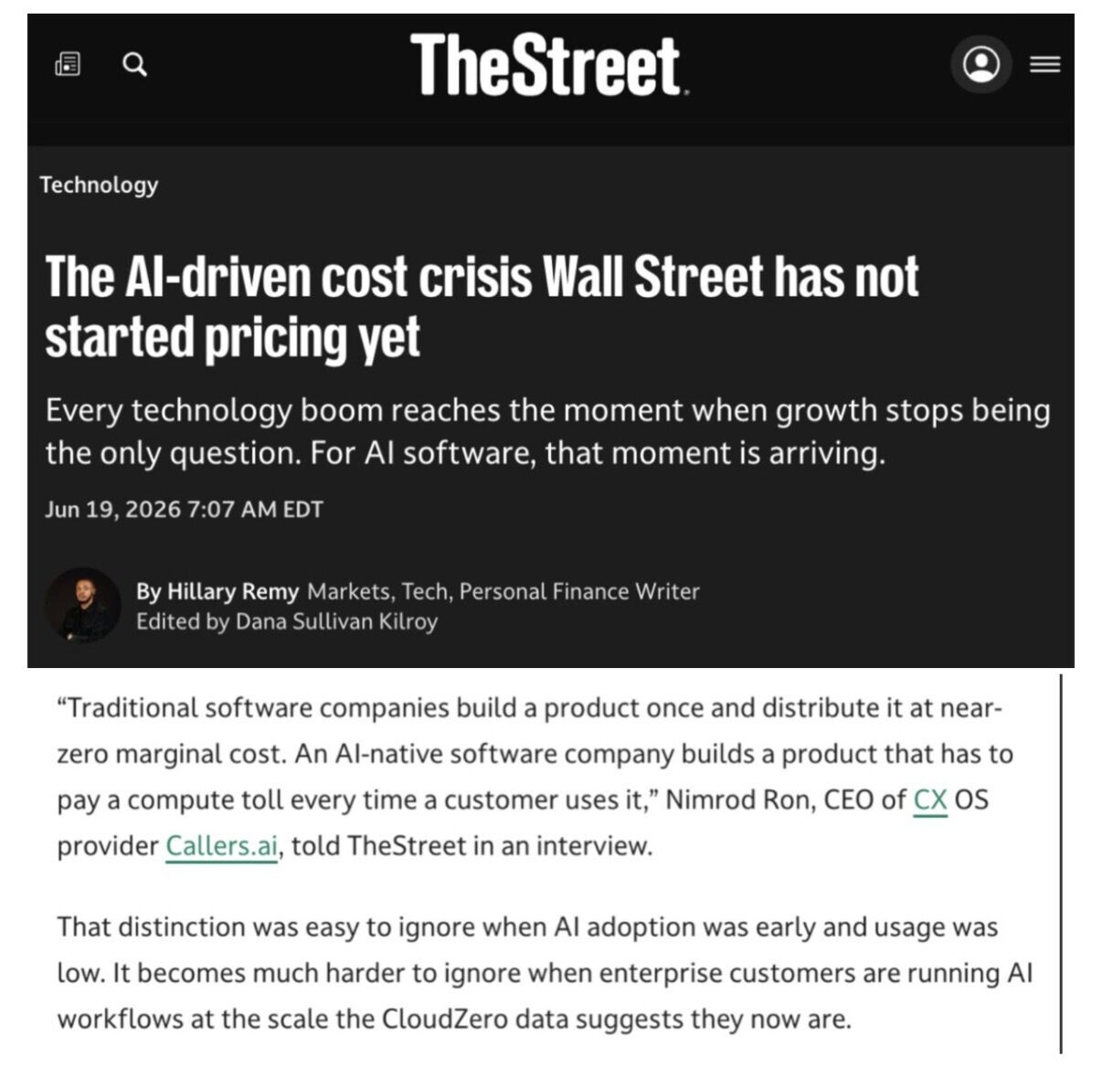
I think we'll spend the next few years talking about what AI costs instead of what it does. Traditional software gets cheaper as it scales. AI doesn't. Every conversation, every action, and every decision has a real cost behind it. That's why I believe the next generation of great AI companies won't be defined only by the quality of their models, or only by ARR growth and net retention. They'll also be defined by the quality of their infrastructure and the unit economics behind it. I think those will become some of the biggest competitive advantages over the next few years. I shared some of my thoughts on this in a recent interview with TheStreet (thank you Hillary Remy). It's a shift that I don't think the market is fully pricing in yet.
- Callers.aiSince 30 Jul 2026
People usually see the product, and I'm happy that sometimes they can also see the people behind it. Here's a small glimpse of the Callers.ai team at CCW Las Vegas. Hundreds of conversations, countless demos, and a lot of learning over a few days.
- CaliboSince 11 Sept 2025
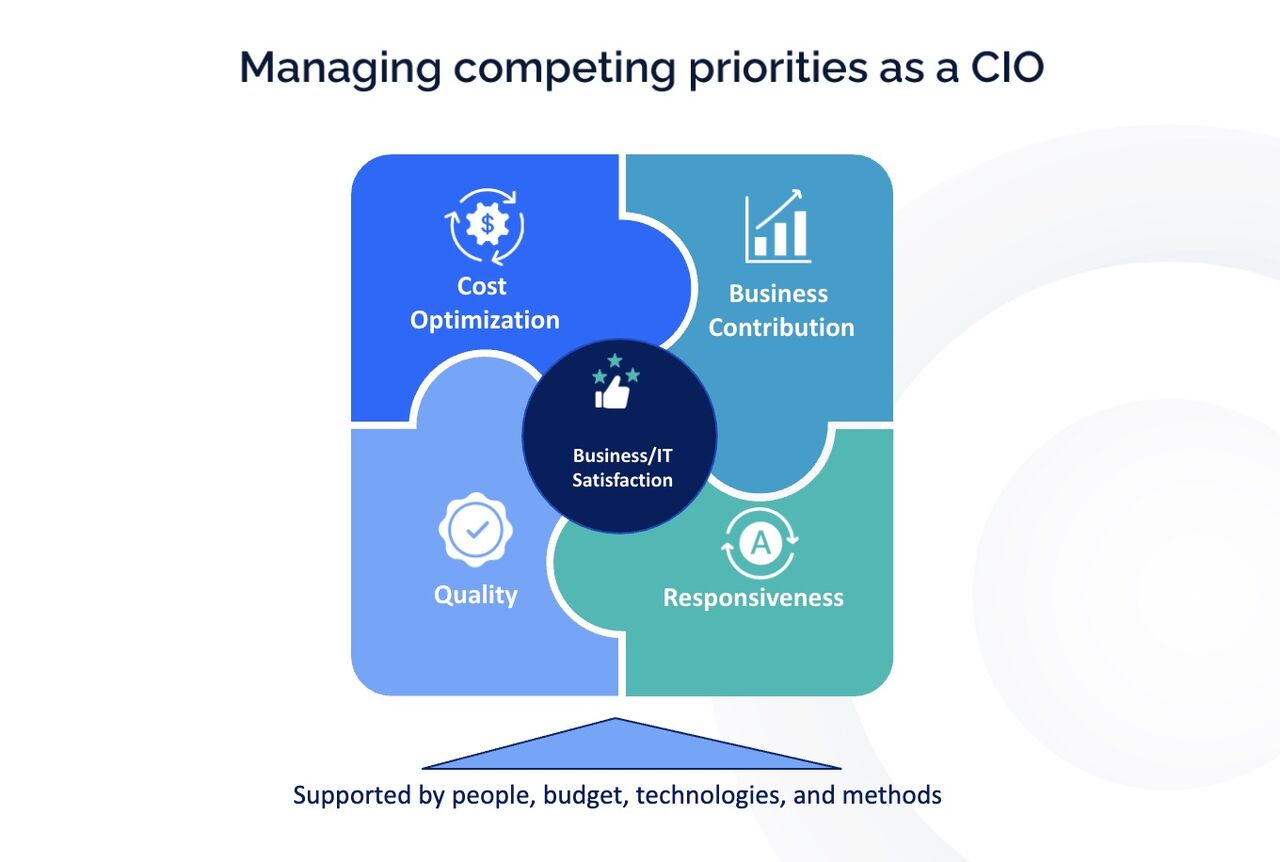
I was struggling to communicate the impossible job of IT leadership to business executives. A mentor of mine - a former CIO - introduced me to a framework that changed how I approached exec meetings. We talked about business pulling us in every direction, something that constantly frustrated me. IT Leadership knows the conflict - Business constantly demands to: → Be more innovative → Be more agile → Be more secure → and reduce costs by 10%. He went to a whiteboard and said: "Let me show you how I used to explain my responsibility to the C-suite." He drew 4 quadrants and a circle in the middle, and I want to share this framework with my network of IT-Leaders: 𝗧𝗵𝗲 5 𝗰𝗼𝗺𝗽𝗲𝘁𝗶𝗻𝗴 𝗮𝗿𝗲𝗮𝘀 𝗲𝘃𝗲𝗿𝘆 𝗜𝗧 𝗹𝗲𝗮𝗱𝗲𝗿 𝗺𝗮𝗻𝗮𝗴𝗲𝘀: 👉 𝗨𝗽𝗽𝗲𝗿 𝗹𝗲𝗳𝘁: 𝗖𝗼𝘀𝘁 𝗼𝗽𝘁𝗶𝗺𝗶𝘇𝗮𝘁𝗶𝗼𝗻 - Managing budgets from $10M to $10B. CFO expects you to deliver every year. 👉 𝗟𝗼𝘄𝗲𝗿 𝗹𝗲𝗳𝘁: 𝗤𝘂𝗮𝗹𝗶𝘁𝘆 - Keep applications, infrastructure, email running. Security and compliance. Business expects "warm water when you turn on the shower." 👉 𝗨𝗽𝗽𝗲𝗿 𝗿𝗶𝗴𝗵𝘁: 𝗕𝘂𝘀𝗶𝗻𝗲𝘀𝘀 𝗰𝗼𝗻𝘁𝗿𝗶𝗯𝘂𝘁𝗶𝗼𝗻 - Drive innovation, replace legacy systems, support new capabilities around cloud, data, AI. 👉 𝗟𝗼𝘄𝗲𝗿 𝗿𝗶𝗴𝗵𝘁: 𝗥𝗲𝘀𝗽𝗼𝗻𝘀𝗶𝘃𝗲𝗻𝗲𝘀𝘀 - Handle M&A integrations, company pivots, market changes. COVID hits? You need to support remote work ASAP. 👉 𝗖𝗲𝗻𝘁𝗲𝗿 𝗰𝗶𝗿𝗰𝗹𝗲: 𝗦𝗮𝘁𝗶𝘀𝗳𝗮𝗰𝘁𝗶𝗼𝗻 - Business happiness with IT support AND your IT team's satisfaction with their work. Here's the problem: These compete with each other. You want us to reduce costs but improve operations? You want innovation while cutting budgets? You want agility but operational stability? I started using this framework in senior management conversations: "You're asking us to be more innovative, more agile, more secure, and reduce costs. Which quadrant is the priority? If you pull me toward innovation, I'll need more budget. If you want cost cuts, innovation capacity decreases." This framework forces business leaders to have real conversations about trade-offs instead of demanding everything simultaneously. Repost this to your IT-Network, if this is helpful!
- CaliboSince 11 Sept 2025
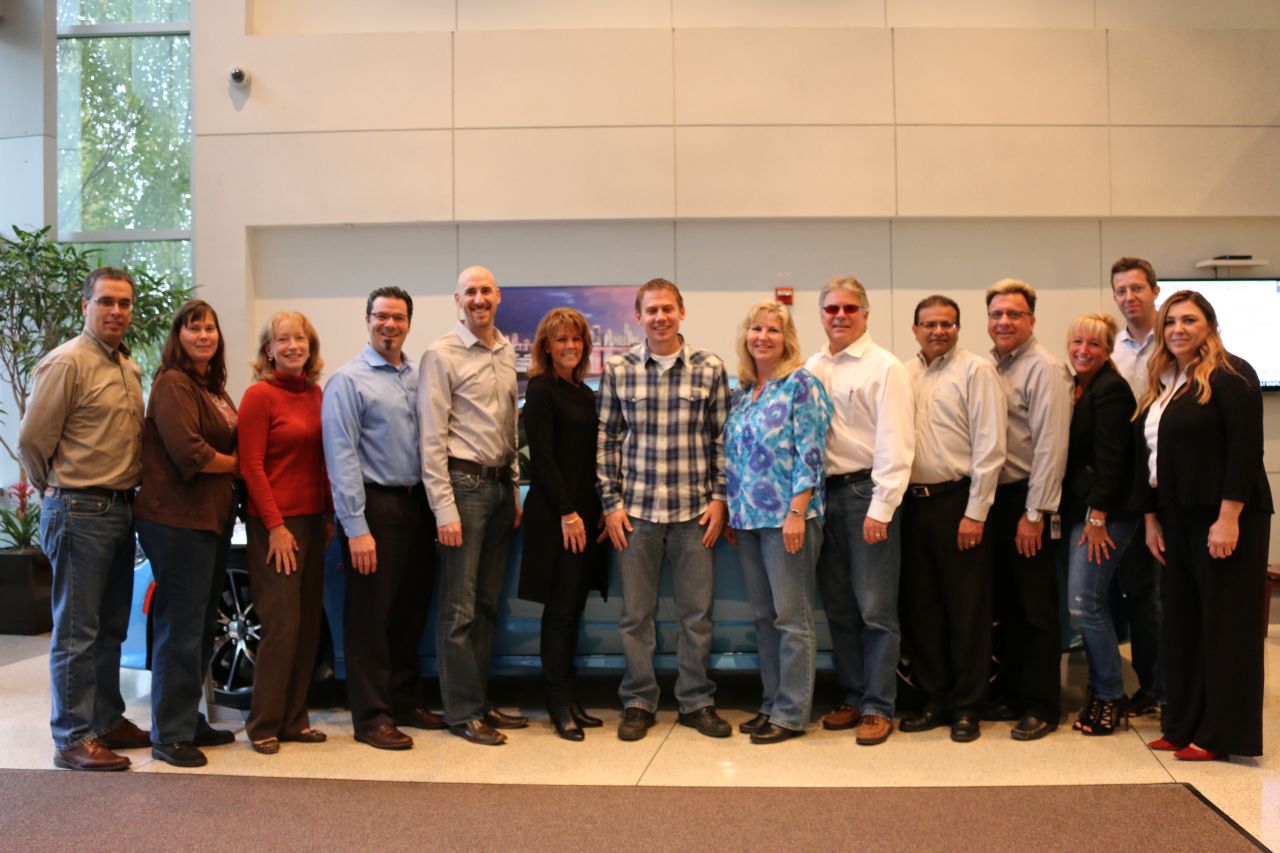
My CIO day: 8:00 AM: Steering committee meeting on reducing IT costs by 10% 9:00 AM: Project escalation - critical initiative is 6 months behind 9:30 AM: Vendor escalation - issues with high priority services 10:30 AM: Budget approval meeting for Q2 initiatives 11:30 AM: Alignment meeting before CEO presentation 12:00 AM: One-on-ones with team leads about resource constraints 12:30 PM: Eating at my desk to take a quick look at emails . ..8 more meetings later... 11:00 PM: Finally catching up on emails after the kids went to sleep I was a "meeting machine." 10-15 meetings every day. I drank so much caffeine I got headaches and had to quit. But here's what I realized years later: I knew exactly where every dollar was spent. I could tell you our budget down to the line item. But I had no clue what my developers actually did all day. The manual processes eating their time. The approval workflows killing their momentum. The complexity of needing 10-15 different technologies just to build one product. While I was in back-to-back strategic meetings, my team was drowning in friction I couldn't see. The nature of the CIO role creates this gap. You're pulled into the big picture while losing touch with ground-level reality. 💭Interestingly enough, I am now diving back into that complexity firsthand at Calibo. We’re building a platform to orchestrate, automate and democratize the entire digital creation process and I have to dive into every pain point, from individual contributor to executive, giving me insights I could not gain before. Fellow IT-Leaders: How do you stay connected to what your teams actually face? Share your strategies in the comments! P.S. the picture is going back to my Fiat Chrysler days (Oct 2015) showing my Leadership team at the time.... almost 10 years ago!
- CatioRecorded 12 Sept 2026
“This is the most coveted tool for my team right now.” 🚀 Thrilled to announce Archie (Beta)—our conversational architecture copilot—now live in the Catio console. Most AI tools are transformative in their generative power. But they stop at generic answers, solving problems that fit neatly in a prompt. Technology teams face something harder—the need for: • The depth of a brain surgeon to navigate complex systems • The context of an entire enterprise across tech domains, dependencies, and designs • The stakes of leadership, where ROI isn’t measured in lines of code but in how effectively teams channel effort into the right architectures This is why customers describe Archie as indispensable. It’s not a chatbot—it’s architectural expertise embedded into daily workflows, guiding: • Faster modernization • Mission-critical visibility • Strategic roadmapping • Democratized expertise across the entire development org This is more than a product launch. It’s the next chapter in our mission at Catio: making architecture a true strategic lever across the entire organization. Full release linked in the comments. Demos open now - DM me or book a demo. #ArchitectureCopilot #EnterpriseAI #TechStrategy #GenAI
- CatioRecorded 12 Sept 2026
Today we’re introducing #Archie: an AI copilot designed specifically for architecture. Why does this matter? Because architecture is not just another Q&A domain. It’s multi-dimensional, interconnected, and deeply tied to business outcomes. Archie combines natural-language Q&A, embedded multi-agent expertise, and proactive optimization to provide context-aware, architecture-native guidance. This isn’t “AI for engineers” in the abstract. It’s a practical step toward real-time, architecture-specific decision support. Watch the video, read the full product release in the comment below, and schedule a demo with the team!
- ButtonShiftRecorded 12 Sept 2026
Announcement Everyone!!! Kudos to Rashmi M, Co-Founder of ButtonShift on winning the Digital Women Awards at India’s most prestigious platforms celebrating exceptional women leaders and digital innovators - SheThePeople.TV. This was Presented by IDFC FIRST Bank, and hosted in partnership with the Government of Telangana, and supported by the Government of India’s AI Impact Mission, the Digital Women Awards & Summit 2025 saw a vibrant celebration of women-led innovation and leadership. https://lnkd.in/g7m8fJ4P
- ButtonShiftRecorded 12 Sept 2026
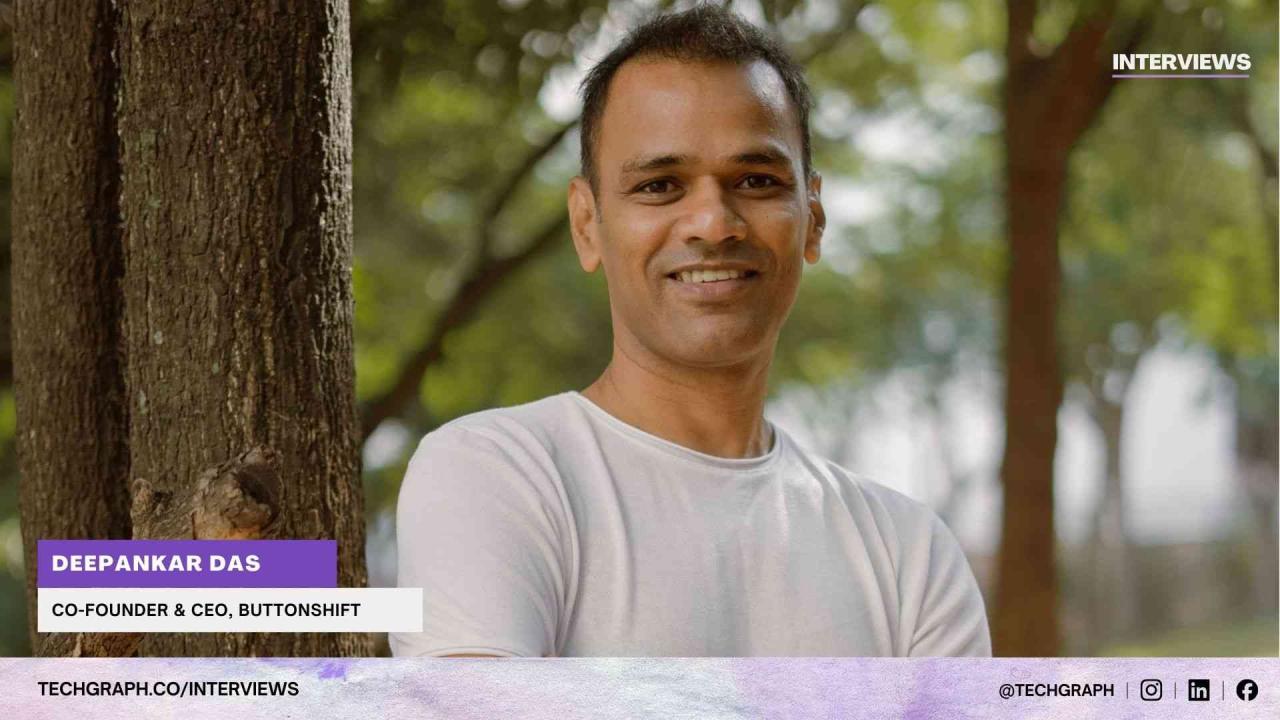
My interview with TechGraph on Visual Workflow Intelligence is now live! We discuss how ButtonShift unifies fragmented creative, marketing, and product systems using the principle of 'Consolidation' without 'Replacement'. The ultimate goal? Moving beyond bottleneck detection to building self-correcting, adaptive workflows. Check it out! 👇 https://lnkd.in/gQiMC8fq #CreativeOps #WorkflowAutomation #VisualIntelligence #ButtonShift #MarTech
- BlueDolphinSince 22 May 2026
💙 We just released my favourite BlueDolphin feature so far. AI is impressive. Until you ask it something that actually requires proprietary context about your organization. It doesn’t know your processes, your applications, your data, or your decisions. So the answers stay generic. We just changed that and I recorded a quick video to show it, because I couldn’t wait to share it. We built AI Navigator inside BlueDolphin, working directly on your architecture. The purpose is not just to answer simple, generic questions like “how many applications do I have” or “what are my three most expensive applications.” It can answer those, but that’s not where it gets interesting. You can also get thet from a simple report. What makes AI navigator unique is that it reasons with you on the topics that actually matter. The kind of questions that normally take days of analysis, alignment, and interpretation. It brings Enterprise Architecture straight to the strategic table. You can ask things like: “Where should we deploy AI agents for real impact?” “Which projects are violating our principles?” “How do we reach EU data sovereignty by 2030?” And it answers based on how your organization is actually built. Not on generic theory, and not on assumptions that don’t apply to your situation. It is grounded in your reality. This is a pretty fundamental shift. Architecture is no longer just about documenting and analyzing after the fact, often in a language no one outside the architecture community really understands. It becomes a live, ongoing conversation that the business can actually participate in. And to some extent, this is where we start delivering on the promise architecture has always had: guiding transformation while ensuring the organization remains coherent and robust. If you’re curious, you can try it for free on BlueDolphin.io. Have fun!
- BloomfilterSince 16 Feb 2026
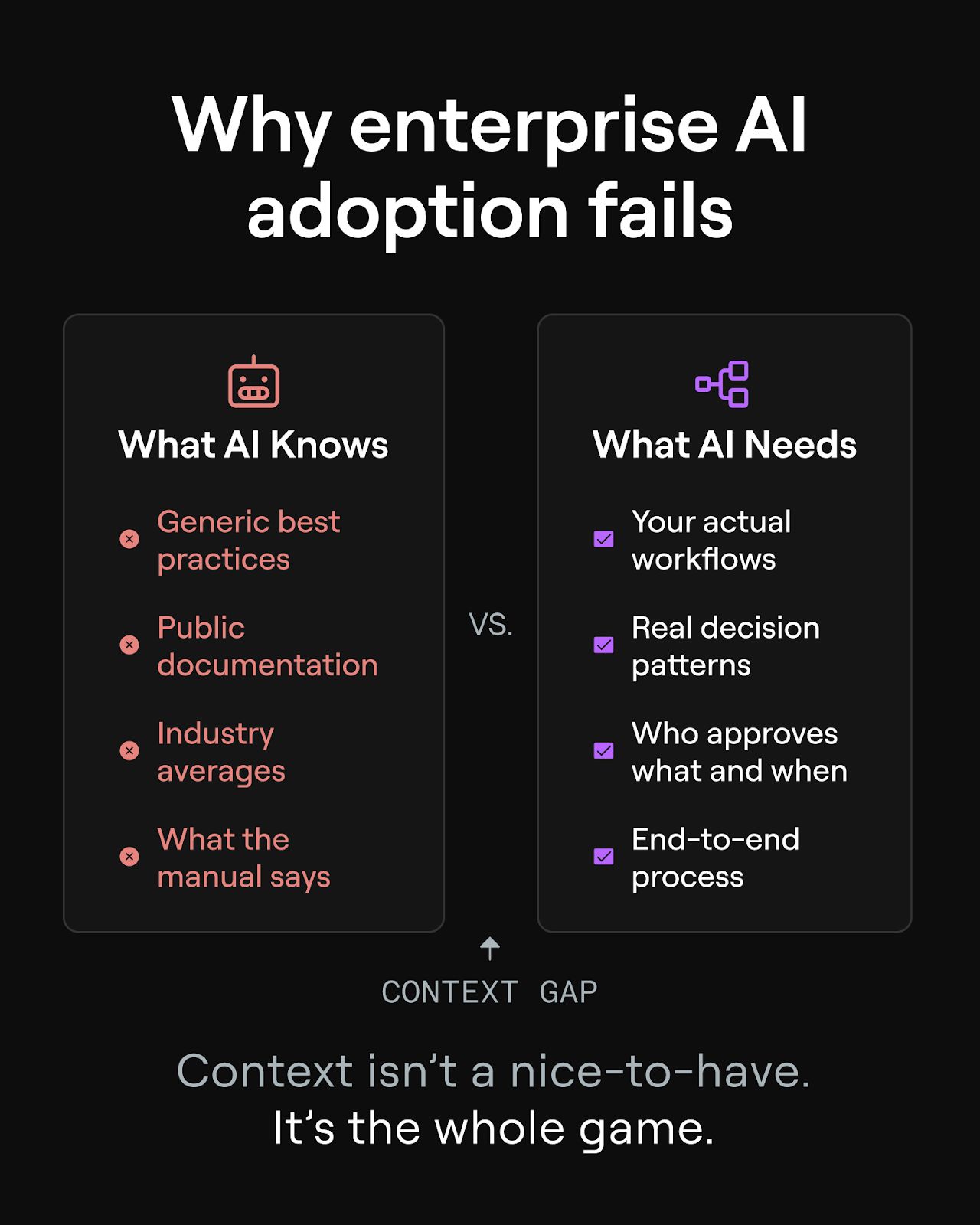
Your AI agent doesn't need more capability. It needs context. I keep seeing the same pattern: Enterprise buys shiny AI tool. Deploys to engineering team. Engineers try it for a week. Engineers quietly stop using it. Leadership wonders why adoption failed. Here's what nobody admits: The AI doesn't know how your company actually works. It doesn't know that approval requests go to Sarah first, then the committee, but only on Tuesdays. It doesn't know that "urgent" from the VP means 48 hours, but "urgent" from the PM means 2 weeks. It doesn't know that the official process and the actual process are completely different things. So when the AI suggests something, it sounds helpful but feels useless. Because it's optimizing for a process that only exists in documentation. This is the process context gap. AI models are trained on public data. Billions of tokens from the internet. They know generic best practices. They don't know YOUR practices. The hard truth: → Public AI = commodity (everyone has it) → AI + your proprietary process data = competitive advantage (only you have it) Companies that figure this out early will train agents on their actual workflows. Their real decision patterns. Their genuine process data. Companies that don't will keep wondering why their AI investments don't stick. Context isn't a nice-to-have. It's the whole game. #ProcessIntelligence #EnterpriseAI #AI #Bloomfilter
- BloomfilterSince 16 Feb 2026
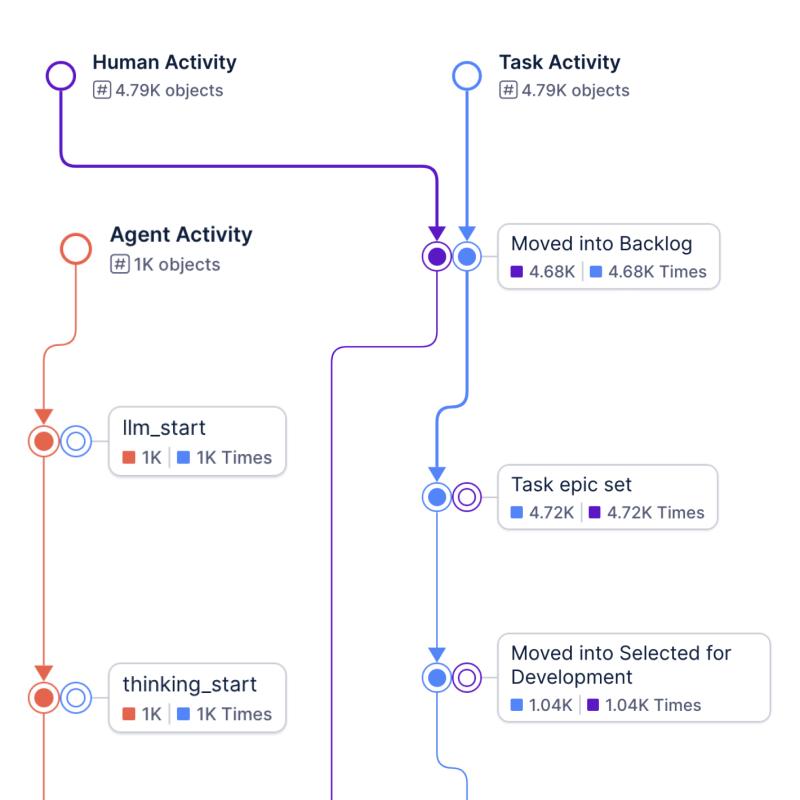
The first time the world has ever seen a process graph that unifies human and agentic activities. Announced today at #celosphere by Bloomfilter. https://lnkd.in/gAR8-Rtz
- BlitzySince 4 Jun 2026
Reverse engineering legacy systems just happened 5x faster. Vitality Chief Technology & Information Officer Kris Tokarzewski was on CXOTalk discussing exactly how Blitzy delivered deterministic output and reverse engineered their legacy systems. This conversation highlights the significance of reverse engineering and determinism compared to probabilistic output for regulated industries. Link to the full episode in the comments.
- BlitzySince 4 Jun 2026
Guardrails are a critical component of input specifications. We built Blitzy with this in mind. Blitzy’s input covers more than project objectives and tech specs. The platform’s prompts also account for security considerations and an organization’s specific guidelines. Validation then happens throughout the development process. This level of detail directly reflects the rigor required for enterprise engineering. GNP Seguros CIO & Head of Transformation Enrique Ibarra sat down on CXOTalk to discuss: - Results achieved: Increased 5-10x engineering velocity and 80-95% task completion - Adding security, governance and architectural guardrails inside prompts - How Mexico’s largest insurance company used Blitzy across four distinct use cases Full conversation linked in comments.
- BlueDolphinSince 1 Jul 2026
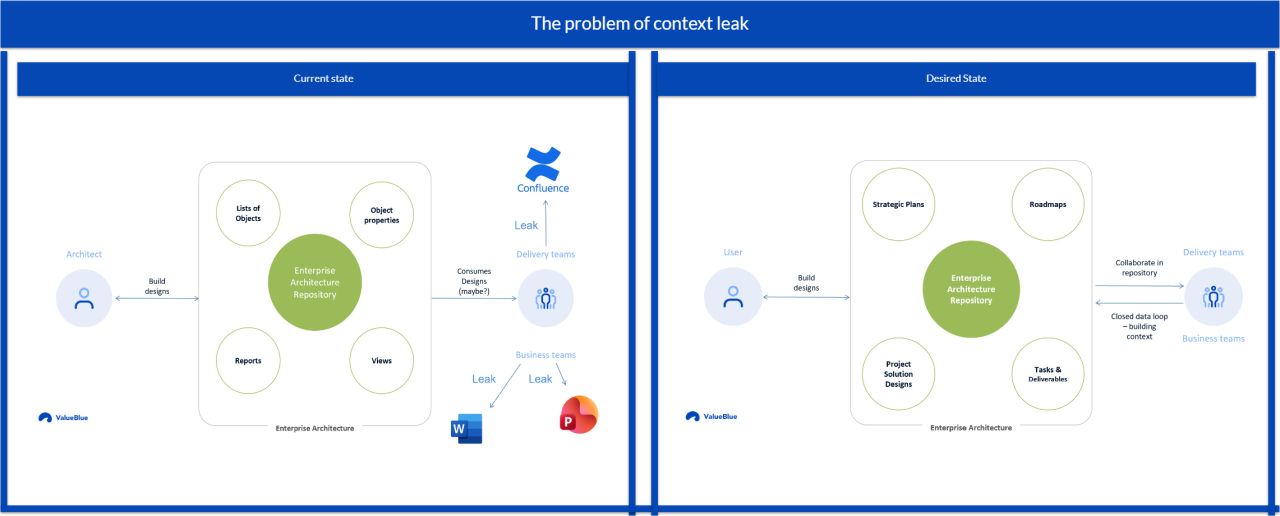
If your architecture leaves the repository, autonomy will too. We are full-on entering the agentic age. Unlike previous waves of innovation, agentic AI is not an assistant layered on top of work. It is a decision maker that acts inside your operating model. And acting properly requires context. Most organizations have moved from assistants to deploying several stand-alone agents. Very few have matured into multi agent systems, let alone autonomous ecosystems that manage entire domains. The limiting factor is not model quality. It is enterprise context. Here is the breaking point I see repeatedly: context leak. Even with a formal EA repository in place, strategy lives in Word documents, solution designs in PowerPoint, roadmaps in separate tools. Screenshots get copied. Diagrams get exported. Decisions get documented outside the system of record and rarely find their way back. Each time that happens, the architectural model drifts. Humans compensate with experience and hallway conversations. Agents cannot. They require structured, machine readable governance and continuously updated context across their full lifecycle, from design to runtime behavior and ongoing evolution. Multi agent collaboration only works when agents share a dynamic architectural backbone that reflects reality, not last quarter’s slide deck. If we are serious about scaling autonomy, we need a single shared repository where business and delivery collaborate on architecture directly, not around it. Not just for human alignment, but because agents depend on digital context. They cannot ask a colleague what changed. If you are serious about moving beyond PoC's with agents and building enterprise ready agents, minimizing context leak is crucial. Starting today. Make your repository the living source of truth. Want to dive deeper? Read the e-book, link is below. Curious what you think, let me know in the comments! #EnterpriseArchitecture #AgenticAI #Governance #OperatingModel #ContextEngineering
- VoidrRecorded 11 Sept 2026
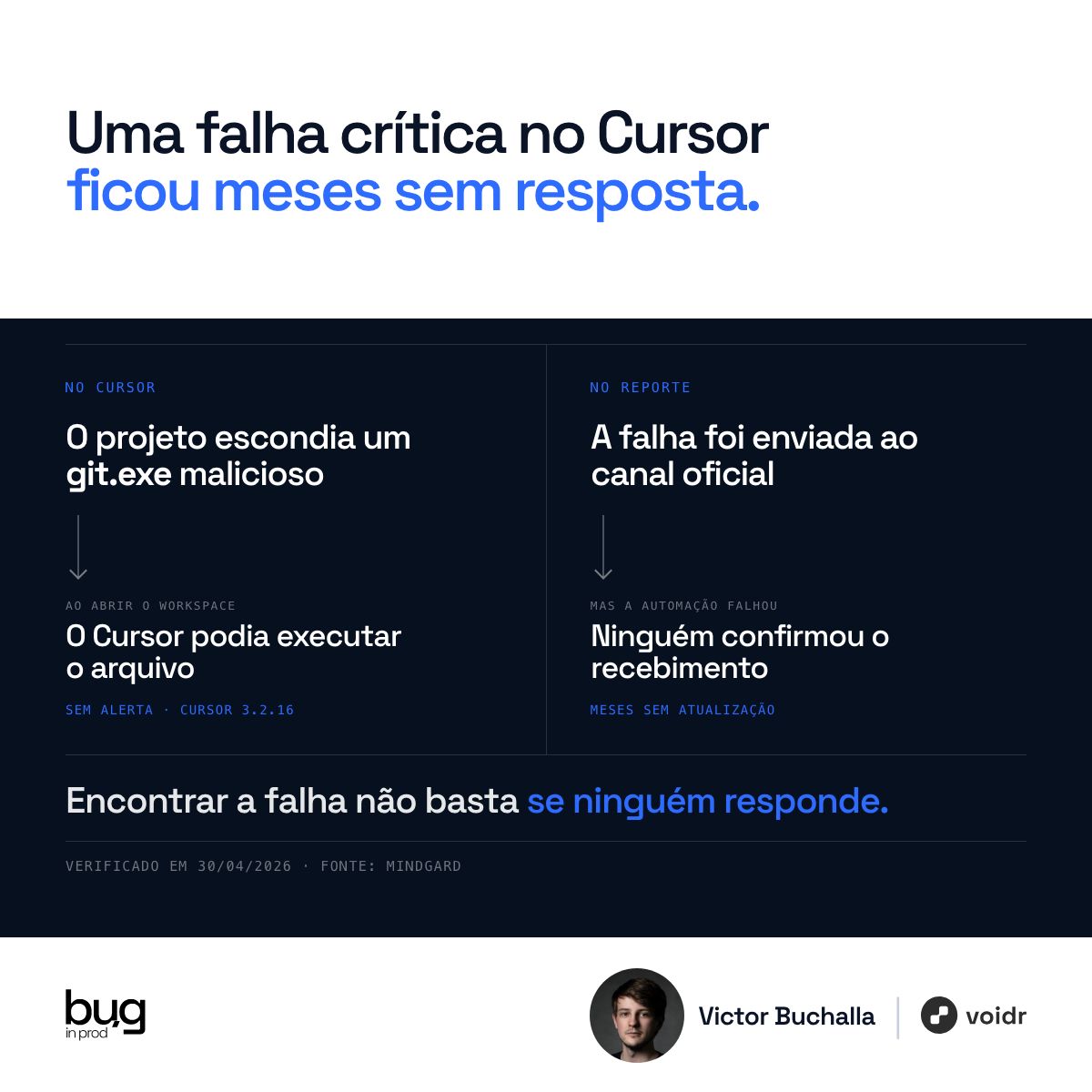
uma falha crítica no cursor ficou meses sem resposta. no windows, um projeto podia trazer um git.exe malicioso na raiz. ao abrir o workspace, o cursor podia executá-lo sem alerta. a @mindgard confirmou o problema no cursor 3.2.16 em 30 de abril de 2026. o bug era grave, mas o que veio depois também importa. a mindgard diz que avisou o cursor em 15 de dezembro de 2025. semanas depois, o ciso reconheceu que uma automação não enviou o convite do hackerone. o aviso foi reenviado, fechado como “informative”, contestado, reaberto e reproduzido. depois vieram meses sem atualização. as fontes não deixam claro o estado atual da correção. esse não é só um caso de segurança. é um problema real que se perdeu antes de virar mudança de engenharia. um problema real precisa chegar a engenharia com versão, entrada, comportamento e impacto. depois da correção, essa evidência deveria virar teste de regressão. sem esse ciclo, o time pode fechar o ticket sem melhorar o sistema. a falha some da fila, mas o aprendizado também. o mínimo é preservar a evidência, reproduzir o problema, validar a correção e proteger o próximo pr. encontrar a falha é só o começo. o valor está em devolver esse aprendizado para a próxima mudança. quando um problema real chega ao seu time, ele vira contexto para o próximo pr ou morre no ticket? #qualidadedesoftware #resilienciadesoftware #buginprod
- VoidrRecorded 11 Sept 2026
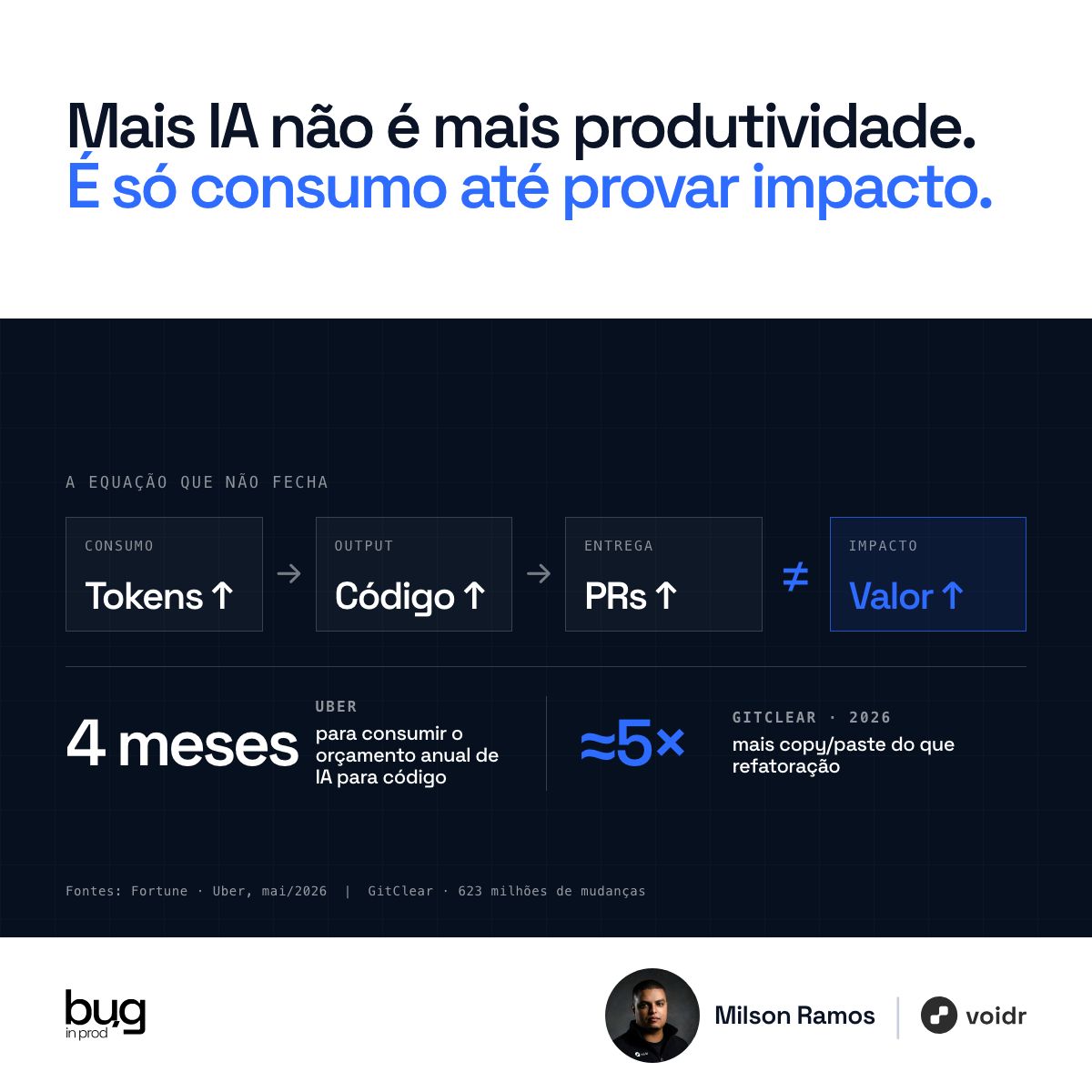
𝗔 𝗨𝗯𝗲𝗿 𝗰𝗼𝗻𝘀𝘂𝗺𝗶𝘂 𝗼 𝗼𝗿𝗰̧𝗮𝗺𝗲𝗻𝘁𝗼 𝗮𝗻𝘂𝗮𝗹 𝗱𝗲 𝗜𝗔 𝗽𝗮𝗿𝗮 𝗰𝗼́𝗱𝗶𝗴𝗼 𝗲𝗺 𝗮𝗽𝗲𝗻𝗮𝘀 𝟰 𝗺𝗲𝘀𝗲𝘀. O problema não foi gastar demais. 𝗙𝗼𝗶 𝗻𝗮̃𝗼 𝗰𝗼𝗻𝘀𝗲𝗴𝘂𝗶𝗿 𝗽𝗿𝗼𝘃𝗮𝗿 𝗼 𝗾𝘂𝗲 𝗲𝘀𝘀𝗲 𝗴𝗮𝘀𝘁𝗼 𝗽𝗿𝗼𝗱𝘂𝘇𝗶𝘂. A empresa incentivou a adoção com um ranking interno baseado no uso das ferramentas. → Agentes autônomos já produzem cerca de 10% do código commitado. → O consumo de Claude Code explodiu. → Mas ainda é difícil ligar esse aumento a mais funcionalidades úteis para os clientes. Isso resume boa parte da conversa sobre produtividade com IA: 𝗘𝘀𝘁𝗮𝗺𝗼𝘀 𝗺𝗲𝗱𝗶𝗻𝗱𝗼 𝘂𝘀𝗼, 𝗻𝗮̃𝗼 𝗶𝗺𝗽𝗮𝗰𝘁𝗼. Mais tokens ↓ Mais código ↓ Mais PRs ↳ 𝗡𝗮̃𝗼 𝗻𝗲𝗰𝗲𝘀𝘀𝗮𝗿𝗶𝗮𝗺𝗲𝗻𝘁𝗲 𝗺𝗮𝗶𝘀 𝘃𝗮𝗹𝗼𝗿. Tudo isso aparece no dashboard. O custo da mudança aparece meses depois. É quando alguém encontra quatro versões da mesma lógica e precisa descobrir qual delas pode ser alterada sem quebrar as outras. O relatório 𝘛𝘩𝘦 𝘔𝘢𝘪𝘯𝘵𝘢𝘪𝘯𝘢𝘣𝘪𝘭𝘪𝘵𝘺 𝘎𝘢𝘱, da GitClear, analisou 623 milhões de mudanças. 𝗘𝗺 𝟮𝟬𝟮𝟮: → Refatorar era 2x mais comum do que duplicar código. 𝗘𝗺 𝟮𝟬𝟮𝟲: → Duplicar se tornou quase 5x mais comum do que refatorar. → Copy/paste: 9,4% → 15,7% → Refatoração: 21% → 3,8% Isso não prova que “código humano é bom” e “código de IA é ruim”. 𝗣𝗿𝗼𝘃𝗮 𝗮𝗹𝗴𝗼 𝗺𝗮𝗶𝘀 𝗱𝗲𝘀𝗰𝗼𝗻𝗳𝗼𝗿𝘁𝗮́𝘃𝗲𝗹: Nossos incentivos premiam quem fecha o ticket e punem quem para para entender o sistema. Com IA, essa distorção ganhou escala. → O PR gerado em minutos aparece como produtividade. → Os dias de arqueologia necessários para modificá-lo depois aparecem como lentidão do time. 𝗖𝗼́𝗱𝗶𝗴𝗼 𝗳𝗶𝗰𝗼𝘂 𝗯𝗮𝗿𝗮𝘁𝗼. 𝗘𝗻𝘁𝗲𝗻𝗱𝗲𝗿 𝗺𝘂𝗱𝗮𝗻𝗰̧𝗮 𝗳𝗶𝗰𝗼𝘂 𝗰𝗮𝗿𝗼. Por isso, a nova régua de produtividade não pode ser quanto código entrou. Precisa ser: → Quanta mudança o sistema consegue absorver → Sem perder compreensão → Sem perder confiabilidade → Sem perder a capacidade de voltar atrás Se você não consegue ligar: 𝗧𝗼𝗸𝗲𝗻𝘀 → 𝗳𝗲𝗮𝘁𝘂𝗿𝗲𝘀 𝘂́𝘁𝗲𝗶𝘀 → 𝘀𝗶𝘀𝘁𝗲𝗺𝗮 𝗰𝗼𝗺𝗽𝗿𝗲𝗲𝗻𝘀𝗶́𝘃𝗲𝗹 Você não escalou engenharia. 𝗩𝗼𝗰𝗲̂ 𝘀𝗼́ 𝗲𝘀𝗰𝗮𝗹𝗼𝘂 𝗴𝗲𝗿𝗮𝗰̧𝗮̃𝗼 𝗱𝗲 𝗰𝗼́𝗱𝗶𝗴𝗼. Seu time está usando IA para aumentar a capacidade de mudança ou apenas a quantidade de código? #EngenhariaDeSoftware #BugInProd #DeveloperProductivity
- BubbleSince 24 Jul 2026
This one will be stratospheric for the Bubble community: logic branching, For and While loops in your apps. The team still needs some time to get this ready to ship but here's a clip from today's demo livestream
- BubbleSince 21 Aug 2026
I have zero regrets about passing on the traditional VC-backed path. I’ve seen the math, and I’m not interested in a probability curve that relies on luck to survive. I’m not trying to build a rocket that might explode on the pad; I’m building a reliable engine that grinds out wins every single day. And that's why I'm a fan of Bubble. The game is simple. You take a dollar, you turn it into two, and you do it again. You make smart moves, you allocate capital with a cool head, and you let time do the heavy lifting. If you can keep the machine running, using tools like Bubble to iterate and scale, and stay focused on the mechanics of growth, it’s actually hard to mess it up. I’m playing for a billion dollars over the next forty years, not a lucky break in the next three. I’d rather bet on a boring, inevitable compounding machine than a flashy, high-risk toss of the dice. Speed, consistency, and a relentless focus on the output, that’s how you actually get there.
- BlueriqSince 28 Aug 2026
Proces first, niet pakket first. Wat ik vaak terugzie bij traditionele softwareleveranciers is dat ze denken vanuit het pakket. Eerst het systeem, dan het proces erin persen. Wij beginnen bij de gebruiker. Hoe loopt dit proces? Welke data is nodig? Wat is de volgende stap? Dat levert een ander soort software op. Klanten geven het ook terug. "Dit ziet er anders uit." Dat is precies de bedoeling. #Blueriq

Other LinkedIn formats
Watch the companies you care about.
Filter every ad by industry, country, format and network, and get alerts when a company you watch starts running new ads.