LinkedIn thought leader ad examples
130 thought leader ads are live on LinkedIn right now, from 137 companies. Browse real ones, filtered by industry.
- CakewalkSince 13 Oct 2026
This is huge and completely new in Identity: Time-based access - combined with AI agents that action the provisioning. Today, we're introducing for all Cakewalk customers: Time-Based Access Control (TBAC) 💥 Give your human identities access to the apps & agents they need - but time box it. And the true beauty is: Once a time-based access has been approved, our AI provisioning agents go and auto provision the seat. No costly SCIM/API cost for enterprise auto provisioning plans. A time-based access expired? Our agents go and auto remove the access. Think of: - An eng needs a privileged permission level in GitHub, but only for 2 weeks - A freelancer needs access to your Claude workspace, but only for a 1-month project - Your CEO wants to review marketing data, but you want to remove them from your CRM asap after the job is done This is entirely new in the IAM market. And a huge driver of efficiency and security (true least privilege) For early access, DM me "TBAC"
- CakewalkSince 13 Oct 2026
We just launched: Access Management for your AI agents. This is why.
- BugHuntRecorded 8 Oct 2026
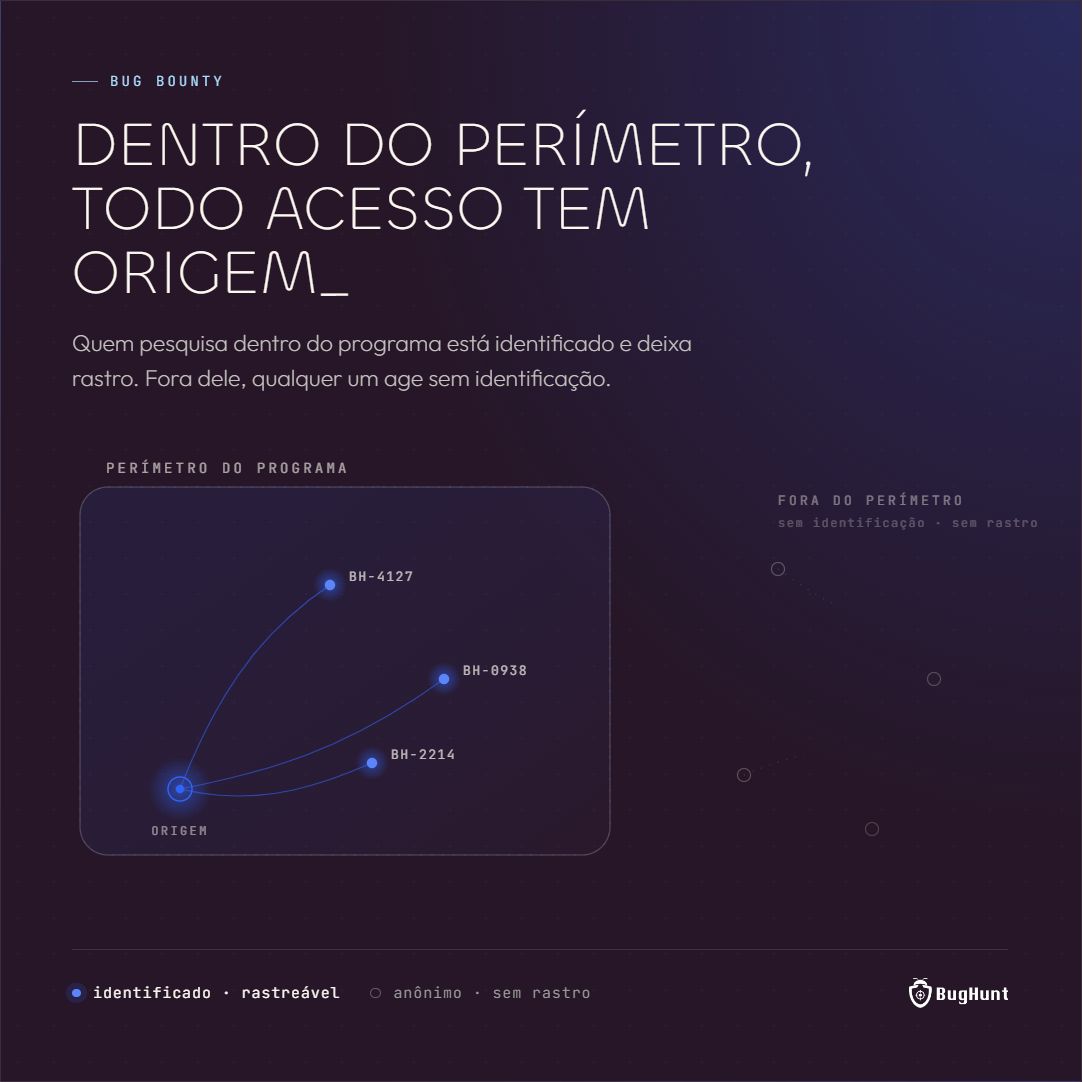
Uma das primeiras perguntas que aparece quando o programa de bug bounty chega no jurídico é se ele cria um novo risco para a empresa. A resposta técnica é não. Qualquer sistema com ativos expostos na internet já está sujeito a tentativas de teste por terceiros, com ou sem autorização. Isso acontece independentemente de haver um programa de bug bounty. O que o programa muda é o controle sobre esse processo. Vulnerabilidades que antes poderiam chegar sem identificação, sem regras e sem um canal definido passam a ser reportadas por pesquisadores identificados, seguindo a política, o escopo e os limites estipulados pela própria empresa. Sob a ótica da LGPD, um programa de identificação de vulnerabilidades pode fazer parte do conjunto de medidas técnicas e administrativas adotadas pela empresa para proteger seus dados e sistemas. Ou seja: o programa não cria a exposição. Ele estabelece regras, identifica quem participa e cria um canal para que vulnerabilidades sejam reportadas e tratadas de forma organizada.
- BugHuntRecorded 8 Oct 2026
O que impede um pesquisador de explorar o que encontrou em vez de reportar? A resposta começa pelo perfil de quem participa de um programa de bug bounty. Quem participa do programa está identificado na plataforma, aceita previamente termos de conduta e precisa seguir as regras definidas por cada empresa. Isso muda bastante a dinâmica. O pesquisador constrói uma reputação ao longo do tempo, e sua participação em novos programas depende de agir dentro das regras e reportar corretamente as vulnerabilidades encontradas. É um modelo em que os incentivos apontam na direção certa. Isso não significa que um programa elimina completamente o risco de alguém agir de forma maliciosa. Significa que, diferente de um cenário sem programa, existe identidade, regras de atuação, histórico de participação e consequências para quem ultrapassa os limites estabelecidos. Sem um programa, uma vulnerabilidade pode ser descoberta por alguém que a empresa não conhece, sem escopo definido, regras de atuação ou um canal formal para o reporte. Dentro de um programa de bug bounty, o cenário é diferente. O pesquisador sabe exatamente o que pode testar, quais são os limites e como deve reportar o que encontrou. Para o jurídico, esse é um ponto importante: não é apenas uma questão de autorização para testar. É também sobre criar regras, identificar quem participa e estabelecer um canal formal para lidar com vulnerabilidades. É isso que transforma uma interação que já poderia acontecer de maneira desestruturada em um processo com mais controle e previsibilidade.
- CryptomathicSince 23 Sept 2026
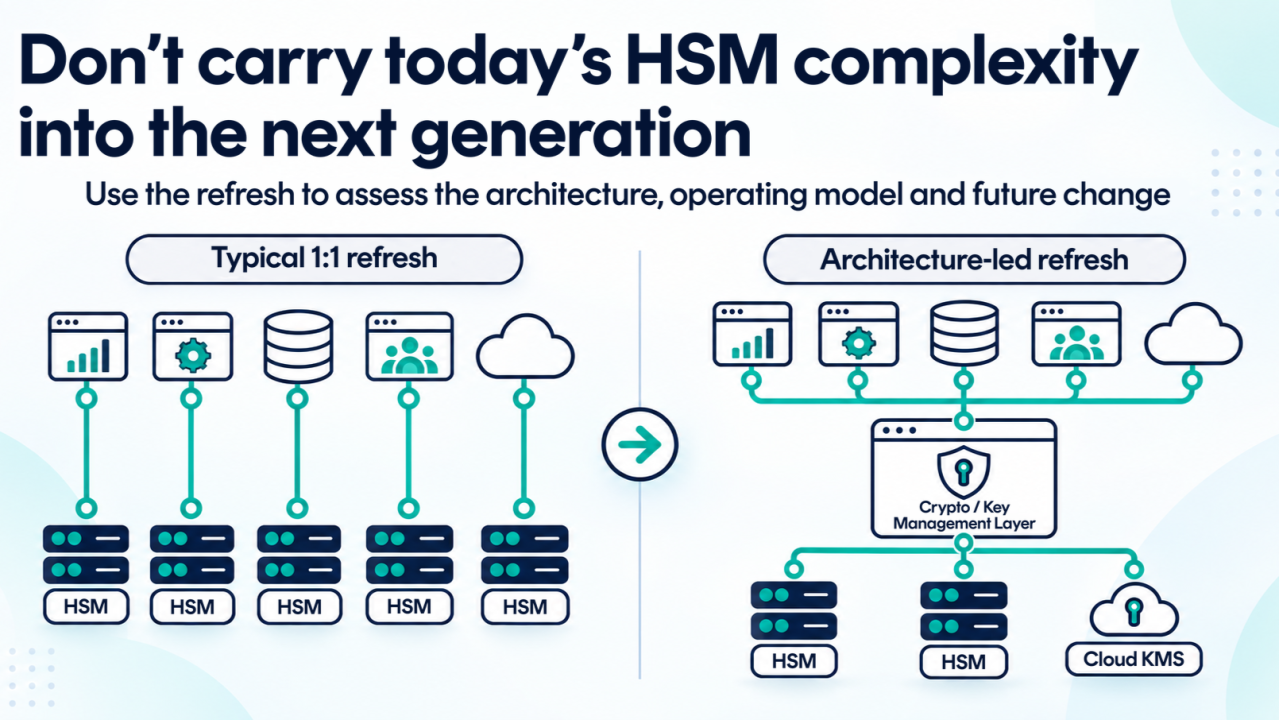
An HSM refresh is usually treated as a hardware decision. But before replacing the current estate 1:1, it is worth asking a broader question: How much of the current cryptographic architecture should we actually carry into the next generation? For banks with complex hardware security module estates, the refresh can be an opportunity to review infrastructure, integration patterns and the operating model around cryptographic services, not just the next appliance. I wrote a short article on what I think is worth assessing before the replacement plan is fixed, and where a shared cryptographic control layer should fit into that discussion. #Cryptography #HSM #KeyManagement #BankingSecurity #CryptoAgility
- CyberVadisSince 24 Sept 2026
Il y a quatre ans, j'ai reçu un mail d'extorsion. Mon nom, mon adresse, le prénom de mon fils, et une référence à un vin rouge que je n'avais jamais mentionné nulle part en ligne. Ce jour-là, j'ai eu peur, vraiment. Puis j'ai compris : ce n'était pas moi qui avais été piratée. C'était probablement un petit fournisseur (le vigneron) à qui j'avais fait confiance, quelque part dans ma vie personnelle. Ce qui m'avait marquée à l'époque, c'est le temps que ça avait dû prendre à quelqu'un pour assembler ces détails et construire un message aussi ciblé. Aujourd'hui, ce travail de profilage, une IA générative le fait en quelques minutes, à partir de n'importe quelle fuite de données chez n'importe lequel de nos fournisseurs. On vient de le confirmer dans une étude réalisée par Thibault Lapédagne, créateur de la méthodologie d'évaluation CyberVadis et Alain Bouillé, Délégué Général du CESIN : la plupart des entreprises n'ont aujourd'hui ni clause contractuelle sur l'usage de l'IA chez leurs fournisseurs, ni visibilité sur ce qui se passe au rang d'après. Je le vis à double titre. Comme professionnelle du risque tiers, ça change l'échelle du problème. Comme personne qui a reçu ce genre de mail, ça me rappelle que derrière chaque fournisseur mal maîtrisé, il y a un individu réel qui encaisse les conséquences. Chez vous, l'IA côté fournisseurs, c'est déjà un sujet qu'on adresse ou un angle mort qu'on n'a pas encore ouvert ? Commentez Etude et je vous l'envoie.
- Dragos, Inc.Since 26 Sept 2026
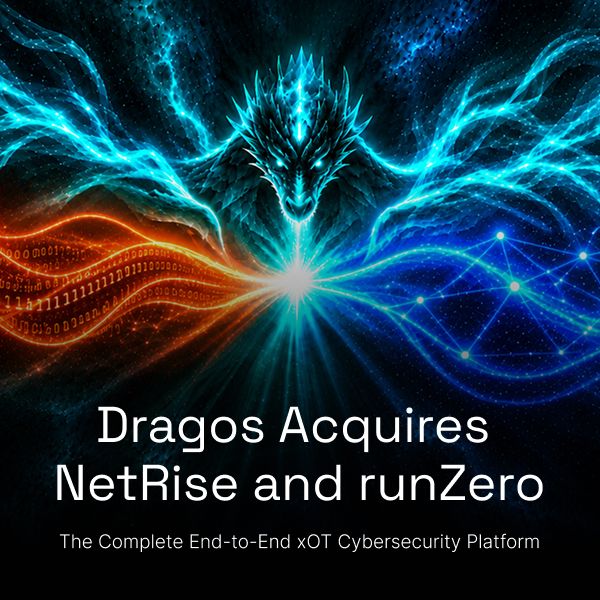
Ten years ago we started Dragos, Inc. with one mission: safeguard civilization by protecting the operational technology that runs our world and is critical to our local communities. Today marks a major milestone. The Accenture majority investment in Dragos has cleared government approvals and is now official. Which means Dragos can and has now officially acquired NetRise and runZero! With our previous acquisitions of Network Perception and Phosphorus Cybersecurity Inc. we're building the industry's first end-to-end xOT Cybersecurity platform, from the software supply chain and connected devices to the operational core. In addition to my role as CEO I've also been elevated to the role of Chairman of the Board of Directors. The new investment has also brought significant job growth to include over 100 positions opened over the past few months and hundreds more in the future; mostly focused in R&D as well as investments across Dragos. Our commitment is to make sure the Dragos Platform doesn't just meet where you are in your journey today but is where you will need to be in the future as we navigate a growingly complex world. I'm grateful to welcome HD Moore Thomas Pace Michael Scott and their teams to Dragos. What you've built extends our mission in exactly the way defenders need. I share more on what all this means, and link to our upcoming webinar with me on the topic, in my recent blog. Read more at: https://lnkd.in/eUJssa-u
- CloberSince 14 Sept 2026
El otro día, un amigo me preguntó si un Red Team es como en las pelis. Le dije que sí y que no. Te cuento. #RedTeam #Ciberseguridad #OffensiveSecurity
- CCRCSince 15 Sept 2026
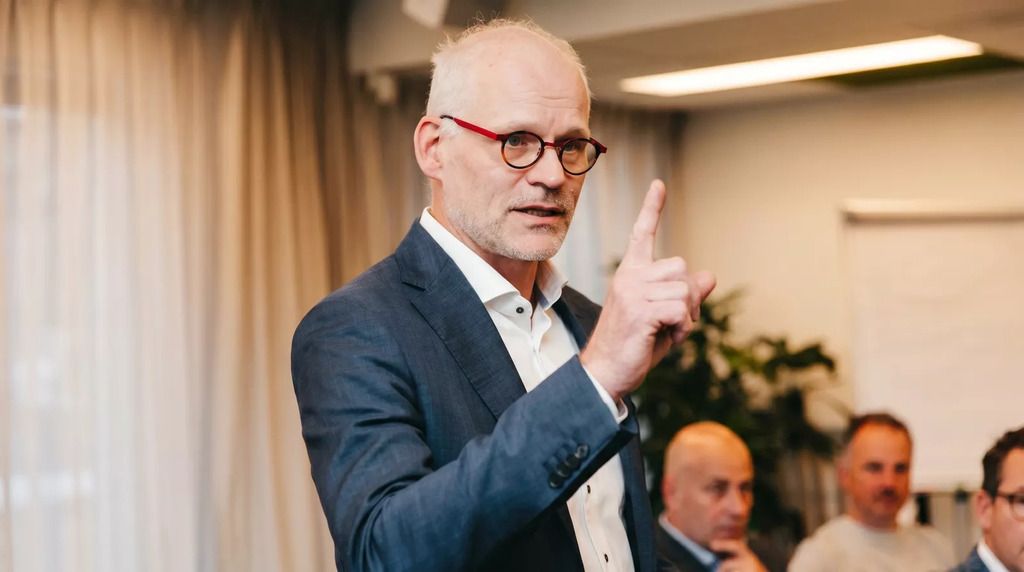
Hou je crisisteam klein, maar zorg dat communicatie vanaf minuut één aan tafel zit. Het klinkt als een detail. Maar mijn ervaring is dat het één van de belangrijkste succesfactoren is tijdens een crisis. Na honderden crisisoefeningen in verschillende sectoren zie ik telkens hetzelfde patroon. Zodra de druk toeneemt, groeit het crisisteam vanzelf. Er schuiven steeds meer mensen aan, omdat iedereen iets belangrijks wil inbrengen. Logisch. Maar niet verstandig. 👉 Een crisisteam is er niet om ieder inhoudelijk probleem op te lossen. Een crisisteam is er om besluiten te nemen. Daarom geloof ik in een klein, slagvaardig crisisteam. De inhoud organiseer je eromheen. Laat experts onderzoeken, analyseren en scenario's uitwerken. Maar houd de groep die de knopen doorhakt zo compact mogelijk. Er is echter één uitzondering: communicatie. Die moet vanaf het eerste moment aan tafel zitten. Nog te vaak zie ik dat communicatie pas wordt aangehaakt als er een persbericht, e-mail of klantupdate moet worden geschreven. Daarmee maak je de communicatieprofessional uitvoerder, terwijl die juist een strategische rol heeft. 💡 Een goede communicatieadviseur denkt niet alleen na over *wat* je communiceert, maar vooral over *wanneer*, *naar wie* en *welke impact* een boodschap heeft op klanten, medewerkers, leveranciers en de buitenwereld. Dat perspectief wil je niet pas achteraf toevoegen. Mijn stelling is daarom simpel: houd je crisisteam klein. Maar zorg dat communicatie vanaf minuut één een vaste stoel aan tafel heeft. Hoe is dat binnen jouw organisatie geregeld? Schuift communicatie direct aan bij een crisis, of pas wanneer de eerste boodschap de deur uit moet?
- CCRCSince 15 Sept 2026
Bij de Rabobank zag ik hoe een uitstekend voorbereide crisisorganisatie ineens onzeker werd zodra het woord *cyber* viel. Die reactie bleek achteraf volledig onterecht. Toen ik destijds betrokken was bij cybercrisisoefeningen, merkte ik iets opvallends. De bestaande crisisorganisatie was uitstekend voorbereid op "klassieke" crises. Maar een cybercrisis? Dan veranderde de sfeer. Ineens leek alles anders: complexer, technischer, "iets voor de IT-afdeling". Terwijl de werkelijkheid veel eenvoudiger bleek. 👉 Een cybercrisis is op strategisch en tactisch niveau helemaal niet zo anders dan iedere andere crisis. Sterker nog: cybercrisismanagement is veel minder bijzonder dan we vaak denken. Natuurlijk heeft een cyberincident zijn eigen kenmerken. Maar de vragen waar een crisisteam mee worstelt, zijn heel vergelijkbaar met andere typen incidenten. ▪️Wat is er aan de hand? ▪️Welke impact heeft dit op onze organisatie? ▪️Wie informeren we? ▪️Welke keuzes moeten we nú maken? ▪️Hoe houden we de regie? Bij de Rabobank hebben we daarom niet een compleet nieuwe crisisorganisatie gebouwd. We hebben de bestaande crisisorganisatie geholpen om cyber beter te begrijpen. De reactie toen dat eenmaal gerealiseerd was: "Het valt eigenlijk best mee." Dat klinkt misschien wat ongenuanceerd, maar er zit een belangrijke les in. 👉 Veel organisaties denken dat ze voor cyber helemaal opnieuw moeten beginnen. Mijn ervaring is juist dat de basis er vaak al is. Je hoeft die basis alleen uit te breiden met de specifieke dilemma's die een cybercrisis met zich meebrengt. Dat inzicht is uiteindelijk ook één van de belangrijkste redenen geweest om CCRC op te richten. We willen organisaties laten ervaren dat de stap naar cyberweerbaarheid vaak veel kleiner is dan ze vooraf denken. Ik ben benieuwd hoe dat binnen jouw organisatie is. Wordt een cybercrisis nog gezien als iets fundamenteel anders dan een "gewone" crisis? Of zijn die twee werelden inmiddels samengebracht?
- Endor LabsSince 25 Sept 2026
I promised an end-of-week #Bali #offsite recap, so here we go. Tl;dr - 💯 worth the investment. 1. We came as colleagues across 8 countries, but left as 1 team: After my last post, lots of folks asked me how we could afford to take the whole team offline for a week. My answer: 1 week together makes the other 51 far more productive. We locked in clarity on the roadmap, team breakouts settled key technical decisions in hours instead of weeks of Slack threads, communication friction dropped, and trust got built face to face. Most importantly everyone left the offsite motivated to keep winning. 2. The Hackathon We periodically host Hackathons, but this was the shortest compared to our typical 2 day Hackathons. In 3 hours, empowered with any and all AI tools, teams built: • UI telemetry and feature flagging in-house, eliminating the need for a SaaS tool. • Creative new ways to prioritize a vulnerability backlog by real business and application impact. • A new dimension to how we attribute SCA reachability across private packages. Every project had one focus: making our customers' lives easier as they scale. Here's the recap 🎥
- DataDomeSince 29 Sept 2026
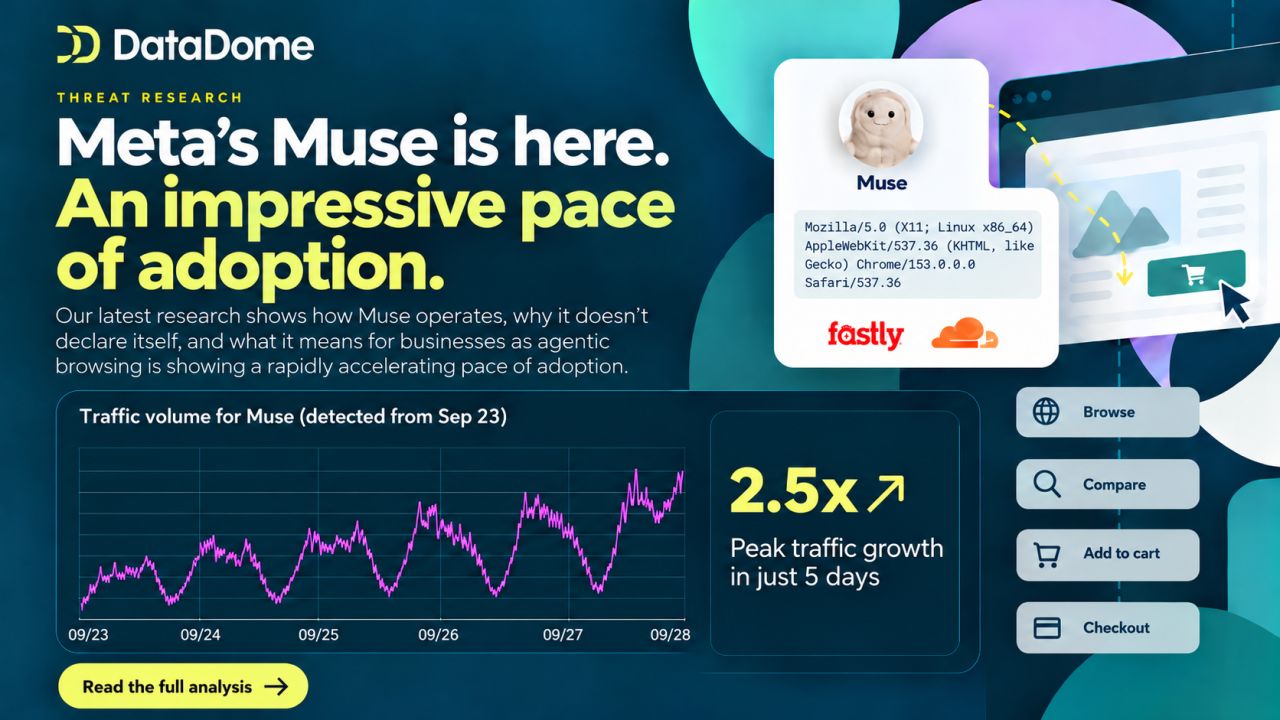
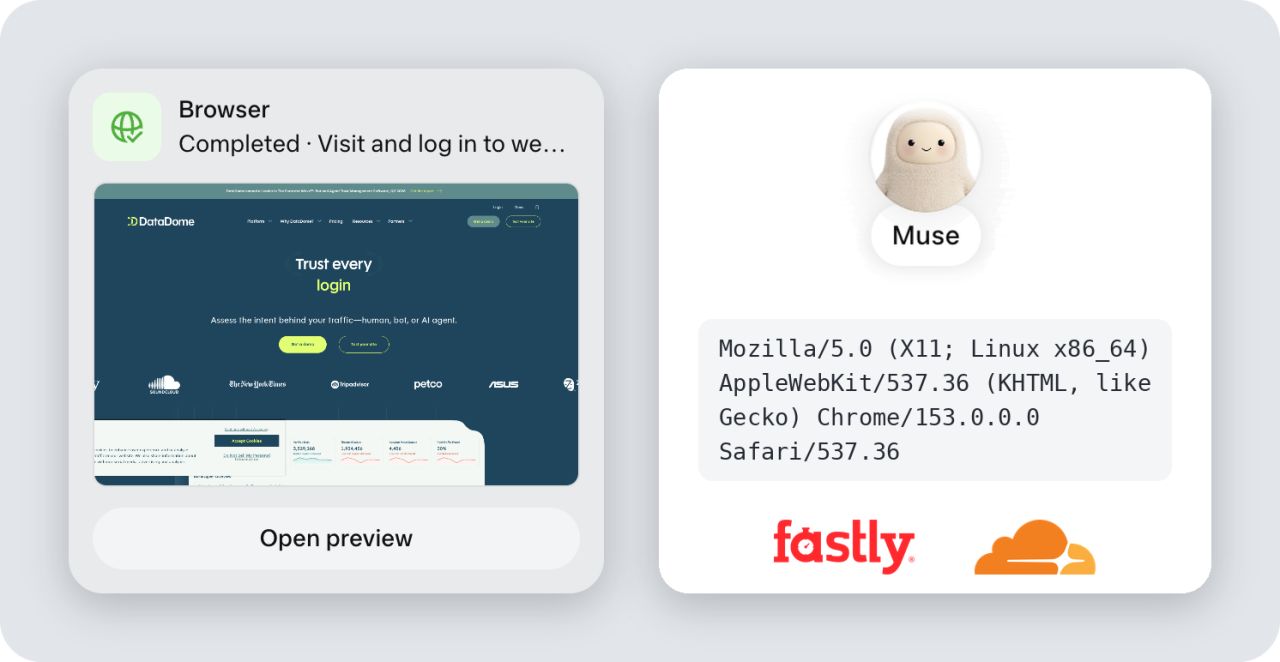
The agentic web is moving fast, and Meta’s Muse is one of the clearest signals yet. Our Threat Research team has been identifying Muse by analyzing complex client-side signals from the browser itself. Across live sessions, the environmental overlap is striking, revealing a highly consistent sandboxed setup behind traffic that otherwise looks like ordinary Chrome. And the growth is already significant: since September 23, peak Muse traffic across our network has increased about 2.5x. What makes Muse especially interesting is that it does not declare itself. There is no dedicated User-Agent, published IP range, or signed identity signal. But even identifying the agent is only part of the challenge. The real question is intent. A legitimate agent completing a checkout and a fleet of agents scraping a catalog can look very similar. Our latest Threat Research breaks down what Muse means for the agentic web: 👉 https://lnkd.in/gjgdiY56
- CryptomathicSince 29 Sept 2026
Before you replace your HSM estate one-for-one, ask whether you want to carry the same architecture into the next generation. A like-for-like replacement may be right. But before the plan is fixed, I’d ask three questions. 1. What genuinely needs dedicated HSM infrastructure? 2. Which cryptographic services could be shared? 3. And how much application work will the next hardware change require? Some separation is essential for resilience, isolation or performance. That needs to stay. The opportunity is to identify duplication and repeated integration work that could be reduced through shared cryptographic services. That’s the comparison I’d make before committing to the next hardware investment. I’ve written an article on what to assess, and where CK360 could fit. You’ll find it alongside this video in the comments.
- InfoGuard AGSince 29 Sept 2026
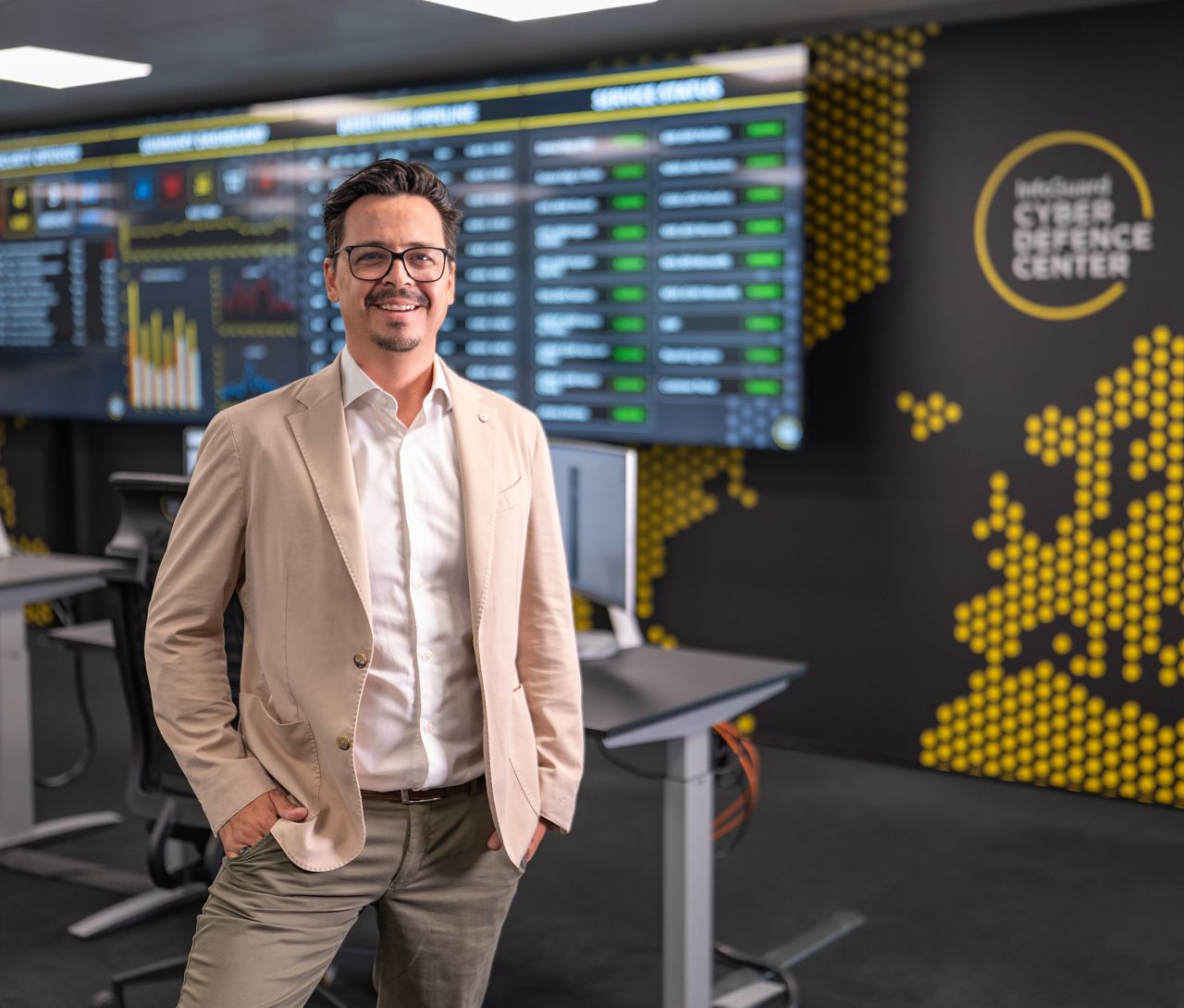
🤖 𝐊𝐈 𝐢𝐦 𝐒𝐎𝐂 𝐢𝐬𝐭 𝐳𝐰𝐢𝐧𝐠𝐞𝐧𝐝 𝐧𝐨𝐭𝐰𝐞𝐧𝐝𝐢𝐠. Doch wer bestimmt die Spielregeln? Ihre Bedeutung für die Cyberabwehr ist essenziell, um im Wettlauf gegen die Angreifer zu bestehen. Denn mit der zunehmenden Geschwindigkeit und Komplexität von Cyberangriffen wird KI zu einem entscheidenden Faktor für eine wirksame Cyber Defence. 𝐃𝐨𝐜𝐡 𝐞𝐢𝐧 𝐒𝐎𝐂-𝐏𝐫𝐨𝐯𝐢𝐝𝐞𝐫 𝐤𝐚𝐧𝐧 𝐊𝐈 𝐧𝐢𝐜𝐡𝐭 𝐞𝐢𝐧𝐟𝐚𝐜𝐡 𝐧𝐚𝐜𝐡 𝐁𝐞𝐥𝐢𝐞𝐛𝐞𝐧 𝐢𝐦𝐩𝐥𝐞𝐦𝐞𝐧𝐭𝐢𝐞𝐫𝐞𝐧. Im SOC ist die Security-Telemetrie sehr umfassend und durch EDR-basiertes Tooling erhält die KI Zugriff auf sensible Daten. Die Telemetrie liefert tiefe Einblicke in Identitäten, Berechtigungen, Schwachstellen, Systeme und potenzielle Angriffswege. Wer diese Daten für KI-gestützte Analysen nutzt, muss Datenhoheit, Zugriffsrechte und Nachvollziehbarkeit konsequent regeln. Und Kunden die Wahlmöglichkeiten bieten, die zu ihren Sicherheits- und Compliance-Anforderungen passen. Für mich bedeutet «𝐀𝐈 𝐛𝐲 𝐃𝐞𝐬𝐢𝐠𝐧», diese Kontrolle von Beginn an im Betriebsmodell zu verankern. Für CIO und CISOs stellen sich damit ganz konkrete Fragen: ➡️ Welche Daten verarbeitet die KI? ➡️ Wo werden sie verarbeitet? ➡️ Wer kann darauf zugreifen? ➡️ Welche Entscheidungen darf sie vorbereiten oder automatisieren? ➡️ Und wo braucht es zwingend menschliches Urteilsvermögen? Genau deshalb investieren wir bei der InfoGuard AG in eine dedizierte KI-Infrastruktur im eigenen Betrieb. Damit ermöglichen wir kontrollierte Datenflüsse und KI-gestützte Security Services, die sich am Schutzbedarf der jeweiligen Organisation ausrichten. Die LLM-Datenverarbeitung kann je nach Anforderung des Kunden in der EU, in der Schweiz oder auf dedizierter InfoGuard-Hardware in der Schweiz erfolgen. 𝐊𝐈 𝐯𝐞𝐫𝐚𝐫𝐛𝐞𝐢𝐭𝐞𝐭 𝐃𝐚𝐭𝐞𝐧. 𝐌𝐞𝐧𝐬𝐜𝐡𝐞𝐧 𝐯𝐞𝐫𝐚𝐧𝐭𝐰𝐨𝐫𝐭𝐞𝐧 𝐄𝐧𝐭𝐬𝐜𝐡𝐞𝐢𝐝𝐮𝐧𝐠𝐞𝐧. Genau darin liegt für mich der Kern von Human-AI-Teaming. KI korreliert, priorisiert und verdichtet. Erfahrene SOC- und CSIRT-Fachpersonen bringen den Geschäfts- und Bedrohungskontext ein, treffen kritische Entscheide und steuern im Ernstfall die Response. In unseren 24/7 durchgehend personell besetzten Cyber Defence Centern verbinden wir dieses Prinzip mit Managed Detection & Response (MDR) und Managed Risk Exposure (MRE). So entsteht eine Cyberabwehr, die laufende Bedrohungen erkennt, relevante Angriffsflächen sichtbar macht, Risiken gezielt priorisiert und diese frühzeitig reduziert. Das SOC der Zukunft wird nicht autonom entscheiden. 𝐎𝐡𝐧𝐞 𝐊𝐈 𝐰𝐢𝐫𝐝 𝐞𝐬 𝐣𝐞𝐝𝐨𝐜𝐡 𝐳𝐮 𝐥𝐚𝐧𝐠𝐬𝐚𝐦 𝐬𝐞𝐢𝐧. Mehr zu unserem Ansatz für moderne Cyber Defence mit 24/7 SOC, MDR, MRE, KI und Datensouveränität findet ihr im Link im Kommentar. 👇
- DataDomeSince 2 Oct 2026
Meta's Muse personal agent is bringing Agentic Browsing to the masses and it's worth highlighting why that matters. Agentic browsing is an AI that doesn't just read the web for you, it uses it for you. It opens a real browser, keeps cookies and a logged-in session from one step to the next, clicks through multi-step flows, fills in forms and checks out. For the past year, a lot of the conversation about how AI agents would access websites focused on MCP and other structured ways for sites to hand content to agents on their own terms. Muse's adoption and future developments puts this into perspective. In our latest research, we looked at how Muse actually shows up in web traffic. To a website, every Muse session looks like a plain Chrome browser on Linux. It doesn't identify itself through Web Bot Auth, nor does it come from officially documented IP ranges. This is not (and won't be the last) cloud browser running in a VM. Yet, the challenges remain the same to properly profile it without blocking it by accident. And once you do, the bigger question becomes understanding its intent so website owners can decide whether they want to allow it or not.
- EasySecure InternationalSince 2 Oct 2026
"De hoofdaannemer wordt verantwoordelijk gesteld." Dat is in één zin het hele vraagstuk op de bouwplaats. Want die verantwoordelijkheid houdt niet op bij je eigen mensen. Er lopen onderaannemers rond, en onder die onderaannemers hangen er weer anderen. Iedereen moet de juiste documentatie hebben. Iedereen moet op de hoogte zijn van de veiligheidsregels. En jij moet kunnen aantonen dat het klopt. In deze aflevering van Innovating Access & Identity spreek ik met Joep Jansen van Heras Mobile Fencing & Security over precies dat punt. Hoe zorg je dat iemand al compliant is voordat hij een voet op de bouwplaats zet? Niet met stapels mappen in de bouwkeet, maar met documentatie die vooraf is verzameld, geverifieerd en gekoppeld aan de toegang. Joep legt ook de lastigste schakel bloot: de mens zelf. Systemen kun je automatiseren, maar iemand moet zijn eigen VCA of ID alsnog aanleveren. Daar zit de echte uitdaging.
- EasyDMARCSince 2 Oct 2026
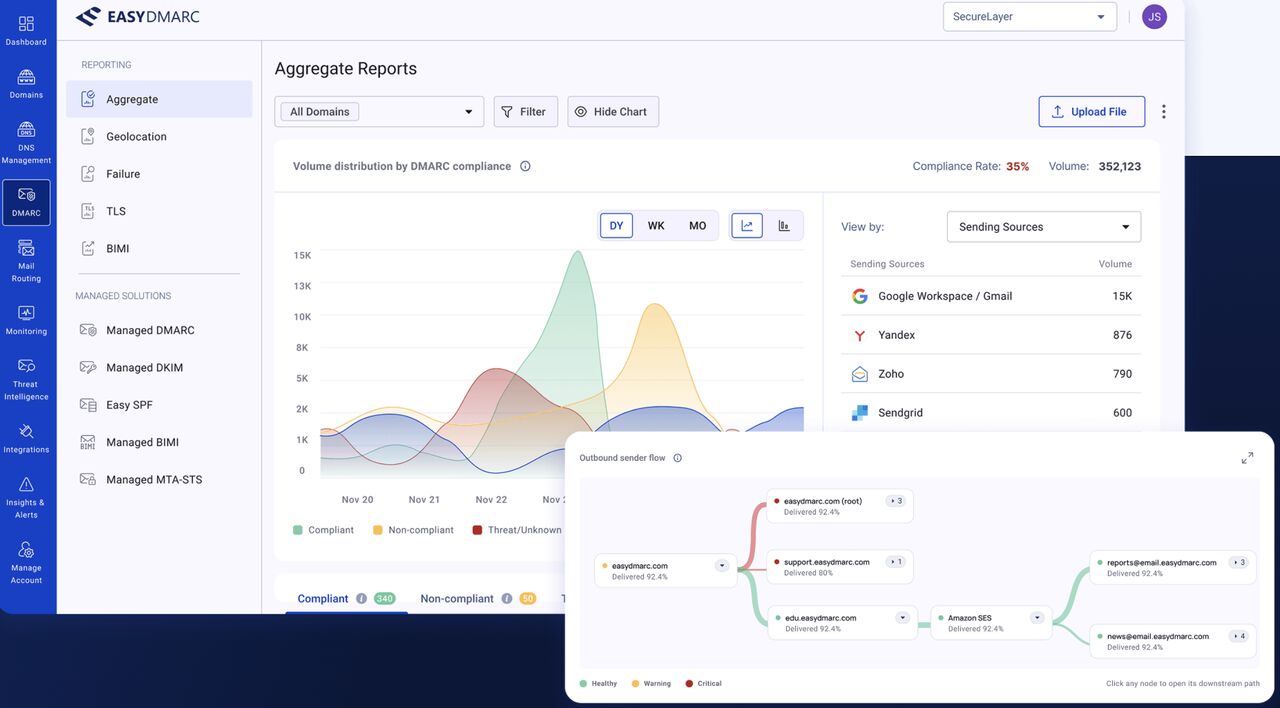
Authentication was never going to be enough on its own. For years, that has been my argument. It’s also why we built EasyDMARC beyond authentication. Passing authentication matters. But it doesn’t answer every question: Is your domain healthy? Do you know every service sending on your behalf? What threats should your team be investigating? These aren’t separate conversations. They’re part of the same one: Email Trust. That’s the idea behind the EasyDMARC Email Trust Platform. Domain/DNS Health, Authentication, Sender Insights, Threat Intelligence. Four modules, operating together not four tools you have to stitch together. Authentication is a foundation. It shouldn’t be the finish line. Explore the platform: www.easydmarc.com/platform
- EasySecure InternationalSince 2 Oct 2026
Ik mag 24/7 naar binnen. Maar als ik er opeens om twee uur 's nachts ben, wil ik dat weten. In de basis is toegangscontrole eenvoudig: wie mag waar wanneer naar binnen, wie is er nu aanwezig, hoe lang heeft iemand gewerkt. Zo makkelijk en geautomatiseerd mogelijk, dat is wat klanten van ons verwachten. De waarde van AI zit niet in die standaard, maar in de uitzonderingen. Een werkdag van negen uur waar normaal vijf staat. Toegang tot een locatie in Groningen waar je nooit komt. Het mag allemaal, maar het moet ergens uitspringen. Op een privacyvriendelijke manier, waarbij de klant zelf bepaalt wat ermee gebeurt. Alles wat via de standaard loopt, hoeft geen aandacht. De afwijking wel. Louis Meijer van YourSoft Bedrijfssoftware herkende het direct: precies daar zit voor transportbedrijven de trigger.
- FiligranSince 2 Oct 2026
The open-source project existed years before the company did. We had a community before we had customers, and it's still the reason any of this works. On October 15 in Paris, we're getting that community into a room for the first time. THREAD is our first conference: 17 external speakers, starting with Supervisory Special Agent Byron Graham of the FBI, alongside security leaders from Thales, Accenture, Hermès and Centrica. What's on the table: - Agentic AI in security operations: what works today, what doesn't yet. - Unified exposure management: going from a list of vulnerabilities to what actually matters. - Closing the loop between intelligence, validation and response. No vendor keynotes, no sales pitches. Practitioners talking to a room doing the same job. Every registration is reviewed one by one, so the room stays small enough for that to work. If you've been part of this community from the start, or since last week, I'd love to see you there. Reserve your seat: https://lnkd.in/eGemzwaE #PullTheThread
- CR GroupSince 5 Oct 2026
Trust is one of society’s most fundamental assets. It takes years, sometimes generations – to build between individuals, families, teams, nations. And very little to break. When a soldier in the field sends an encrypted message, when a government agency shares classified data across a network, when a command post coordinates across allied forces, the technology carrying that information has to be trusted completely. Not assumed to be secure. Certified to be secure. That certification is hard to accomplish. It takes years of technical development, rigorous national and NATO approval processes, and a track record of operating in environments where failure isn’t an option. Tutus Data and Sentyron has been doing exactly this in Sweden and in the Netherlands for more than 30 years. “Tech for trust” is what you get when that depth of expertise is used to create and build products and solutions for these use cases. It’s not a positioning statement. It describes what we actually deliver.
- Human RisksSince 6 Oct 2026
My first job as head of security was at a company that had just lost €8 million in a single night. In August 2008, robbers drove a wheel loader straight through the wall of Dansk Værdihåndtering. They'd set fire to eleven stolen garbage trucks to block the roads, scattered spike strips on the motorway, and disappeared. It's still the largest robbery in Danish history. I came in afterwards, and the brief was simple → This must never happen again. That turned out to be a long list of unglamorous work. New routines for the drivers, down to stickers on the dashboard reminding them what to do and in what order. A new Danish security standard on its way that we had to meet. There were periods where the only thing that mattered was getting through the next few weeks without incident. One of the things we did was ring the building with shipping containers filled with soil, borrowed straight from how we built camps in the military. Heavy enough that nothing was driving through them. None of it was sophisticated. It was mostly about doing a lot of ordinary things properly and consistently.
- IncogniaSince 6 Oct 2026
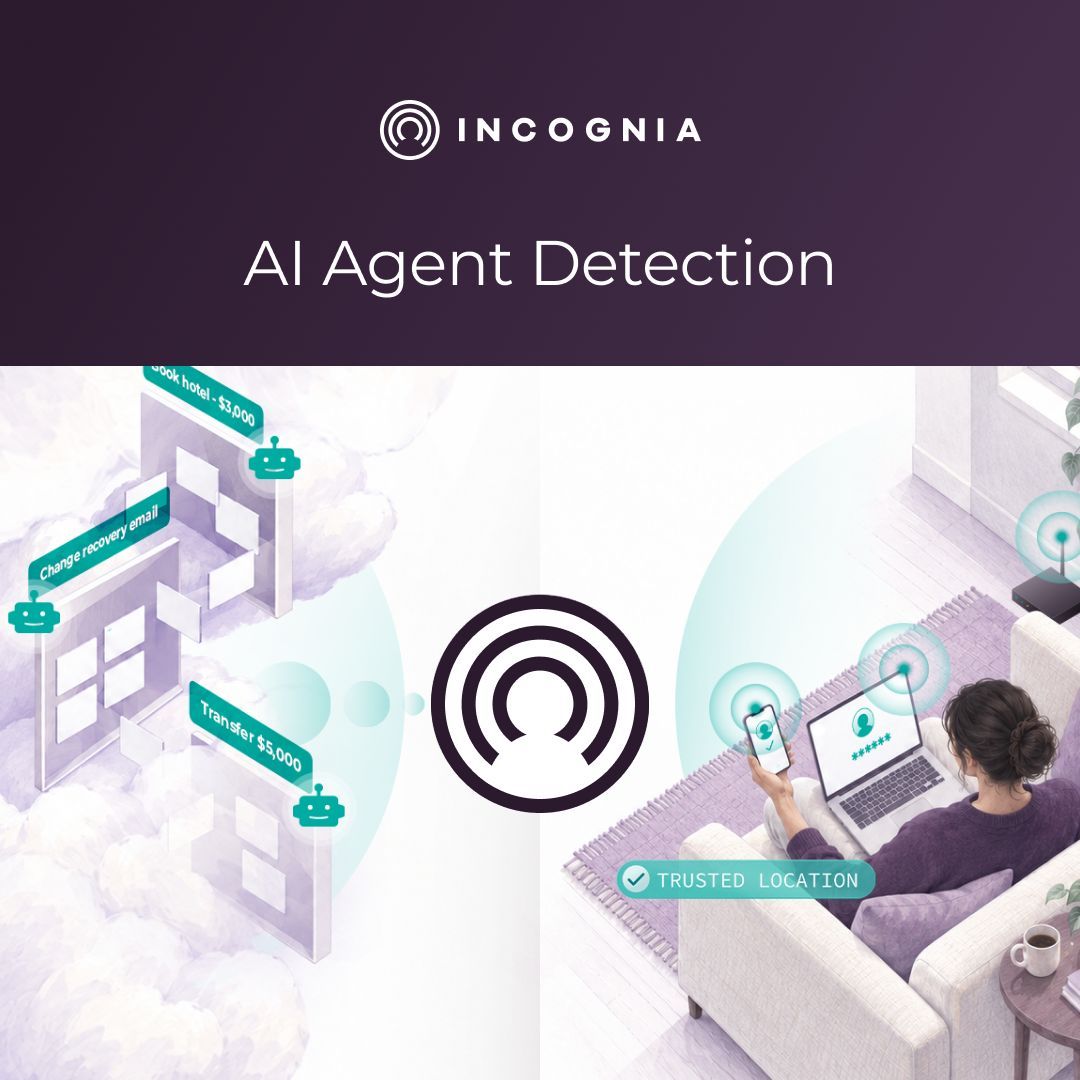
Quando um agente de IA executa uma ação, existem três perguntas diferentes: É um agente? Qual agente está fazendo a requisição? O usuário realmente autorizou aquela ação? Detecção de automação ajuda a responder a primeira. Autenticação criptográfica do agente ajuda na segunda. Mas nenhuma das duas, sozinha, comprova a intenção do usuário. Esse é o problema que a Incognia agora passa a solucionar em fluxos de Agentic AI. Imagine um agente solicitando a alteração dos dados de recuperação de uma conta bancária. O request pode estar corretamente assinado e vir de um agente legítimo. Ainda assim, isso não significa que o cliente autorizou aquela mudança. Confiar no agente e confiar na ação são problemas diferentes. Para ações de maior risco, a proposta da Incognia é trazer o humano de volta ao fluxo e combinar sua confirmação com sinais do mundo real: continuidade entre dispositivo e conta, localização precisa e conhecida, integridade do device, detecção de RATs e inteligência de risco da rede. Isso também evita o extremo oposto que é desafiar toda ação executada por IA. O nível de verificação também pode variar conforme a ação e o contexto disponível. Consultar um saldo e alterar credenciais de recuperação não deveriam necessariamente ter o mesmo tratamento. Conforme agentes começam a executar mais ações em nome dos usuários, será necessária uma evolução nas estratégias de fraude. A pergunta deixa de ser apenas “é um humano ou um bot?”. Passa a ser "quando a IA estiver agindo em nome de alguém, como garantir que o usuário continue no controle?"
- EasyDMARCSince 6 Oct 2026
Most platforms in our space are a login page over four separate products. That was the trap we refused to build into. If crucial modules of your email security are not governed in one place, you do not have a platform. You have a bundle. And a bundle still leaves you correlating incidents by hand at 2am. The whole point of the Email Trust Platform is the connective layer underneath the four modules. One problem, traced across all of them, in one view. See what connected actually means: www.easydmarc.com/platform #EasyDMARC #EmailSecurity #EmailTrust #EmailInfrastructure
- IncogniaSince 6 Oct 2026
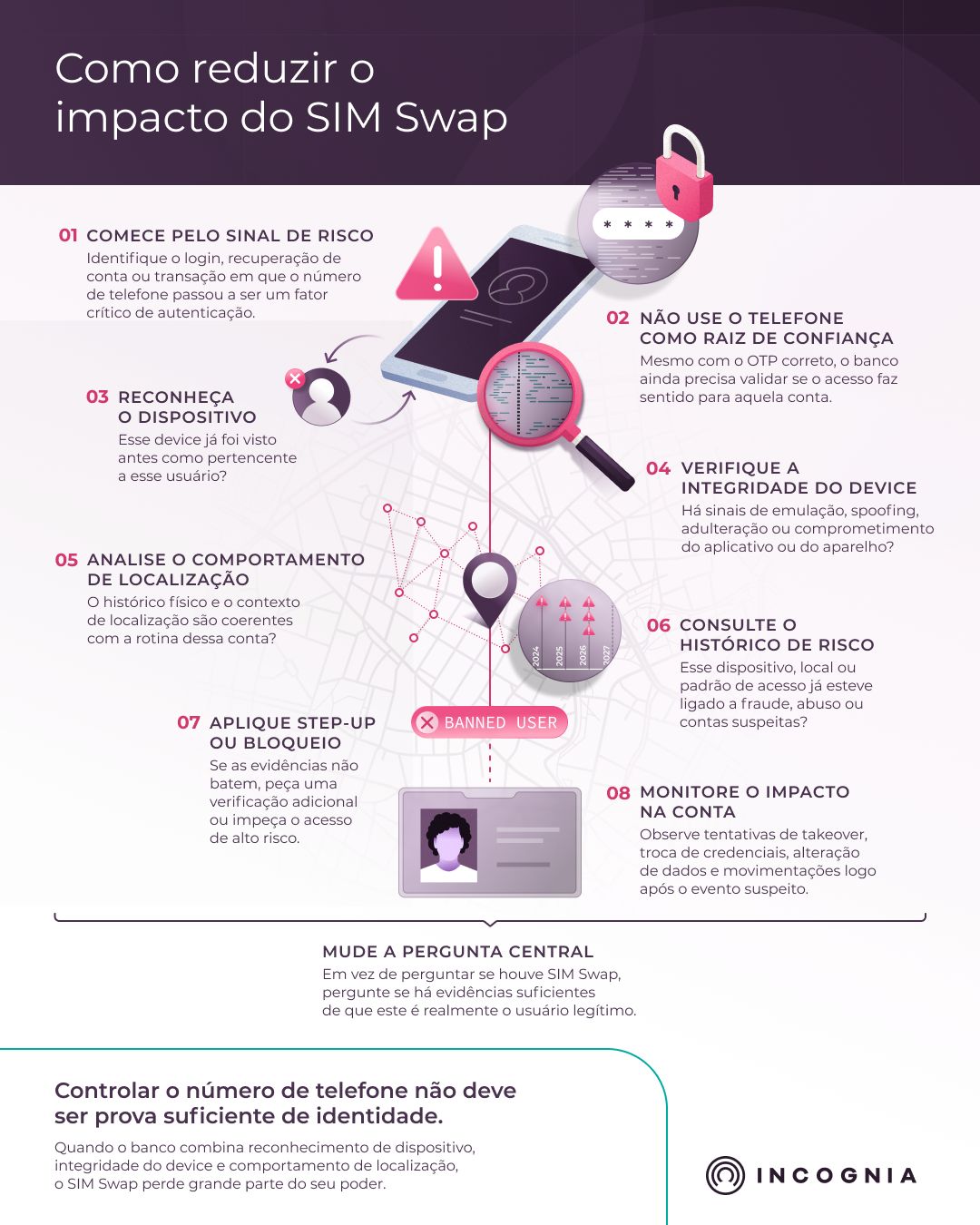
Muitos bancos ainda nos procuram com o desafio de resolver SIM Swap. E quero fazer uma afirmação direta: a Incognia já resolveu esse problema para seus clientes sem precisar validar o número de telefone ou consultar informações da operadora. Porque o objetivo do fraudador ao executar um SIM Swap não é trocar o chip da vítima. É assumir uma conta. A troca do SIM é apenas o mecanismo usado para interceptar SMS, receber OTPs e superar uma camada de autenticação que trata o controle do número de telefone como evidência de identidade. Mas imagine que, mesmo com o OTP correto, o banco ainda consiga responder duas perguntas: Esse é um dispositivo que eu reconheço como pertencente a esse usuário? E o comportamento desse dispositivo no mundo físico, considerando seu histórico de localização, é consistente com essa conta? Se a resposta for não, pouco importa que o fraudador tenha assumido o número, recebido o SMS e digitado o código corretamente. O acesso continua sendo de alto risco. É por isso que vejo SIM Swap menos como um problema que exige uma solução específica e mais como uma consequência de uma arquitetura de autenticação excessivamente dependente do telefone. A Incognia combina reconhecimento persistente de dispositivo, integridade do device e comportamento de localização para avaliar se aquele acesso faz sentido para aquela conta. Isso muda a pergunta. Em vez de: “Esse número acabou de sofrer um SIM Swap?” Passamos a perguntar: “Tenho evidências suficientes de que este é realmente o usuário legítimo acessando a conta?” Essa diferença é importante porque evita transformar cada nova modalidade de ataque em mais uma ferramenta específica adicionada ao stack de fraude. O banco pode continuar utilizando dados de telefone para outras finalidades e até manter soluções de validação de SIM quando houver um caso de uso específico para isso. Mas, para mitigar account takeover decorrente de SIM Swap, o telefone não precisa ser a raiz de confiança. Na prática, o SIM Swap não desaparece como técnica de fraude. Ele perde grande parte do seu poder quando controlar o número de telefone deixa de ser suficiente para se passar pelo usuário.





Other LinkedIn formats
Watch the companies you care about.
Filter every ad by industry, country, format and network, and get alerts when a company you watch starts running new ads.