LinkedIn thought leader ad examples
112 thought leader ads are live on LinkedIn right now, from 201 companies. Browse real ones, filtered by industry.
- Acoustic Control Systems - ACS GroupSince 30 Jul 2026
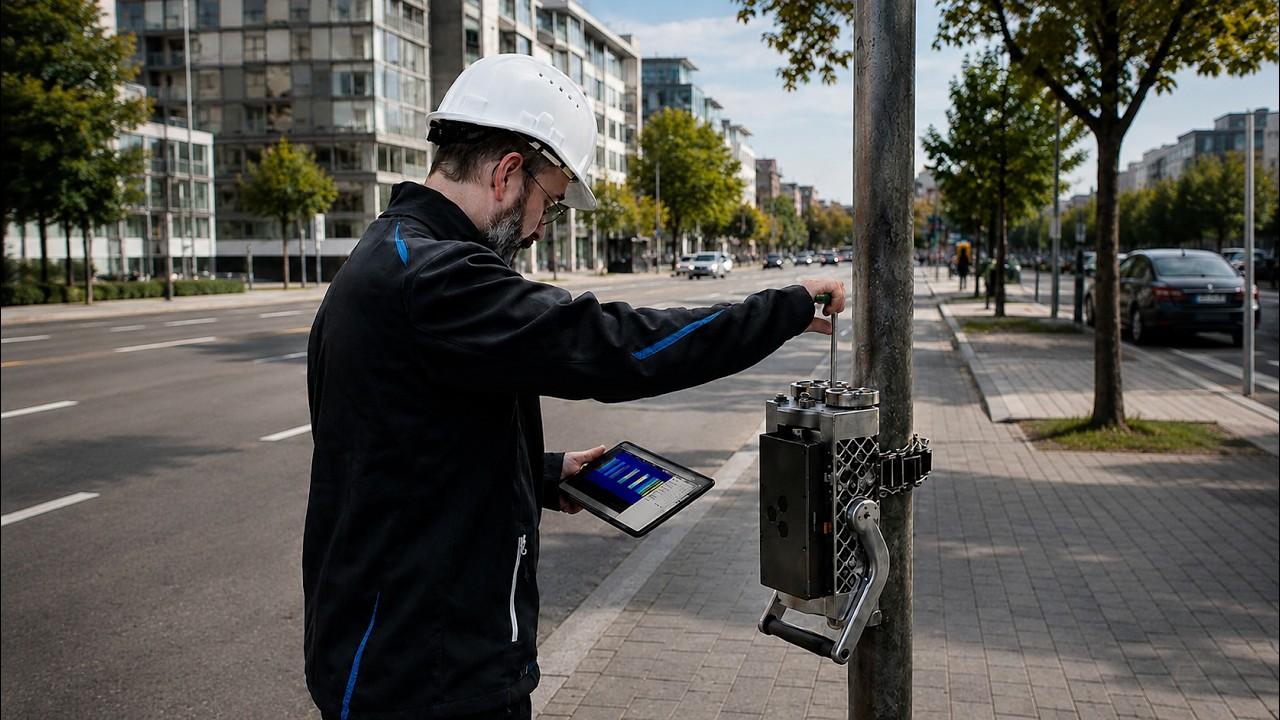
A steel lighting column usually fails where nobody can see it, at and just below the ground line. Moisture, soil and road salt attack the base while the visible part of the pole still looks perfectly sound. By the time the damage shows above ground the section can already be seriously weakened, and for a highways agency or a municipality with thousands of columns that is a genuine safety liability. In ultrasonic terms a buried pole base is simply a cylindrical metal pipe, so it is the same inspection job as process piping. The A1050 Ranger fits around the column above grade, runs a 360° guided-wave scan in SH0 mode at 50 kHz, and locates corrosion at and below the ground line without any excavation. It covers diameters from 70 to 380 mm. Because it rates how severe each finding is, you can decide which poles to excavate and confirm first instead of digging up the whole stock. It will not size the wall for you, but it does tell you where to spend your effort. If pole and column safety sits with you or someone on your team, pass this along. It finds the corrosion at the base before a column comes down. Here is the Ranger overview: https://lnkd.in/eAvkEBbe
- Acoustic Control Systems - ACS GroupSince 13 Aug 2026
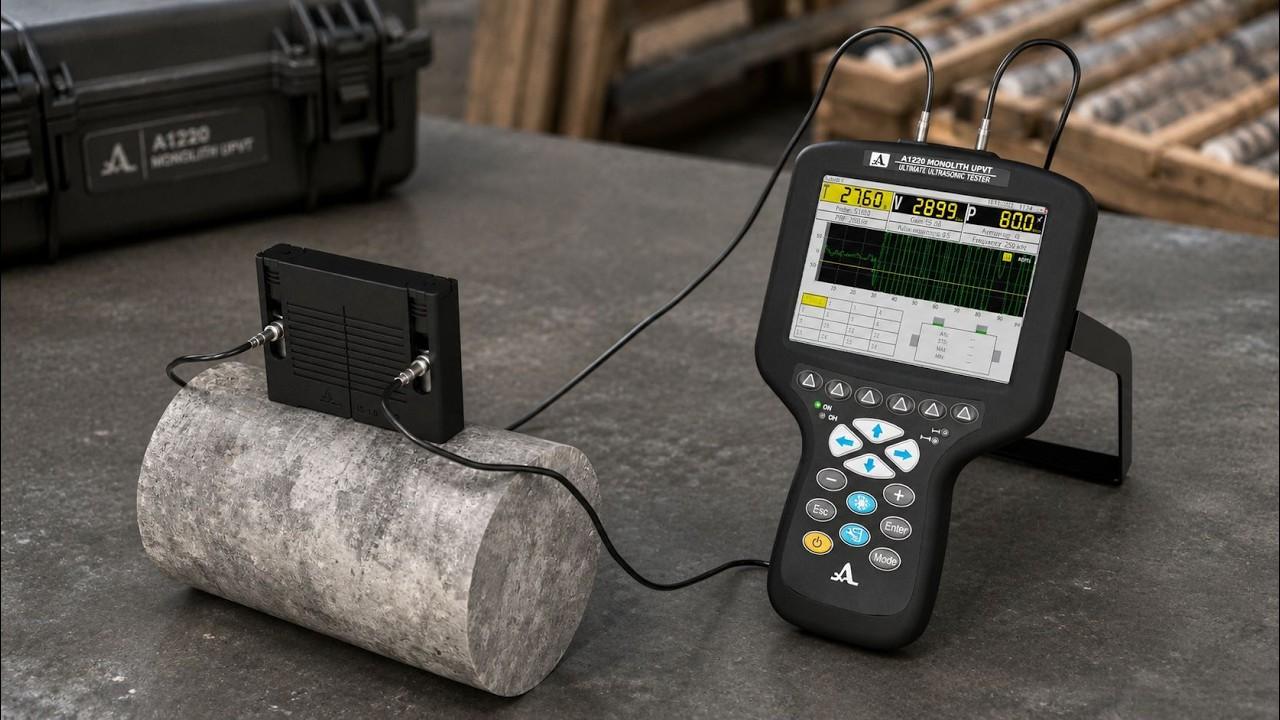
Anyone who has run ultrasonic pulse velocity on concrete knows the couplant routine. You apply gel at every point, press the transducer, take the reading, wipe it off and move on. On rough, dry or vertical surfaces it is slow, and the coupling is never quite consistent. The A1220 Monolith UPVT works with dry-point-contact transducers that read straight off the surface with no gel at all. On rough or vertical concrete the contact is repeatable and the setup at each point is quicker, and for a crew taking hundreds of readings in a day that time saving is real. Here is an overview: https://lnkd.in/exvfZfas If you still prefer a standard couplant method, the same instrument also drives standard piezo transducers, so you can run dry contact for speed and switch to the method you already trust whenever a job calls for it. Anyone who takes readings all day will feel the difference, so send it to a colleague who would want to know.
- AcroMatRecorded 30 Sept 2026
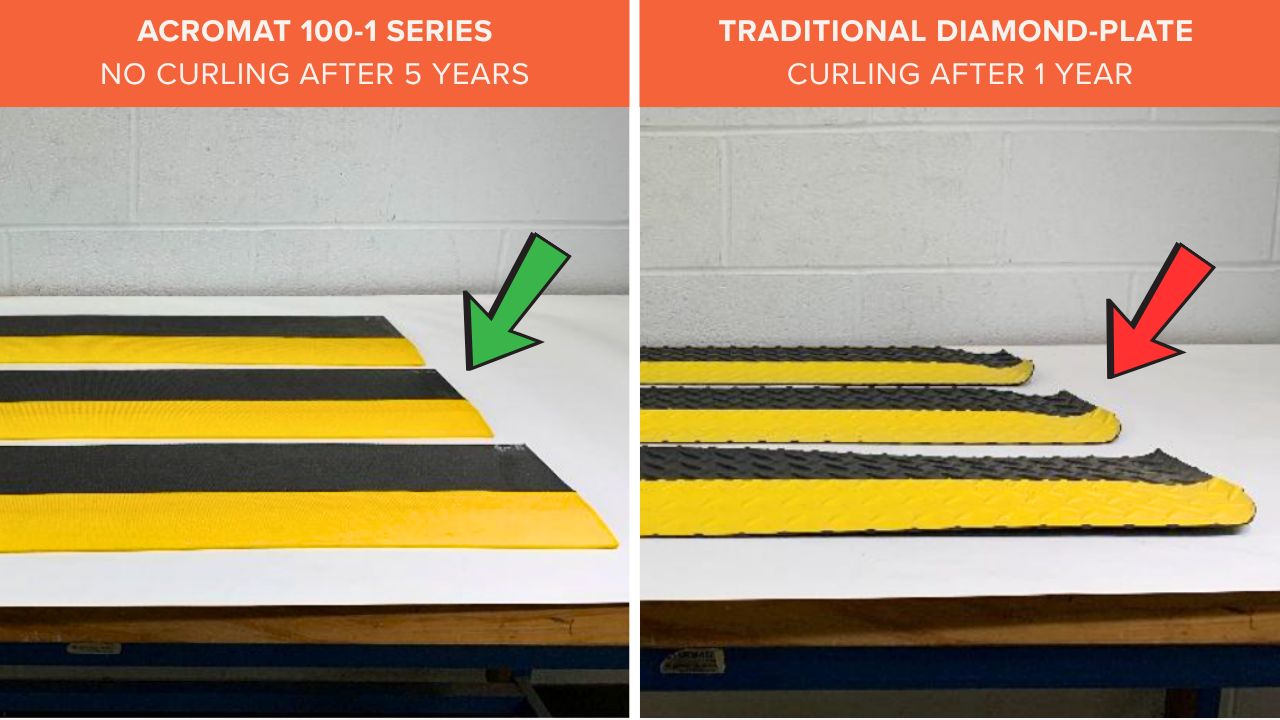
New independent testing certifies AcroMat's Lifetime Warranty promise that our anti-fatigue mats will *never* curl along the borders. Nothing compromises safety faster than curling ergo mats. ➡️Why is curling a hazard? The slightest lift turns what's supposed to be a strategic ergonomic solution into a slip, trip and fall hazard. It forces fast-moving workers to hesitate and focus on their feet. It forces you to keep spending. It's ugly and a bad look. ➡️Why did we undergo independent testing? We've long promised our mats will never curl, and we back this up with a lifetime full-replacement warranty. But understandably, our prospects and customers want unbiased information. This summer, we partnered with CSA Group to back up our claims with independent, third-party research and data. To simulate 5 years of heavy industrial aging, CSA Group placed our mats and some others in a controlled environmental chamber at 80°C and 80% relative humidity – replicating heat, chemical & moisture exposure. At intervals representing 1, 2, 4, and 5 years, the mats were visually inspected for edge curling – a dangerous trip hazard. ➡️What did the results say? CSA Group’s findings were decisive: 1. The AcroMats showed zero signs of edge curling at any internal. After 5 years of aging, the borders remained as flush as the day they were made. 2. A commonly use diamond-plate mat design – an extruded PVC foam mat with a vinyl diamond-plate surface and waterfall edge – began curling before the simulated 1-year mark and worsened over time. Directly from CSA Group's final report: "The AcroMat Series 100-1 samples did not exhibit any edge curling at any point during the accelerated aging protocol. Competitor sample exhibited edge curling beginning at the simulated 1-year interval and continued to degrade over time." ➡️How can you prevent curling? Curling is unbelievably common in the matting industry. But just because it's "always been that way" doesn't mean you have to keep accepting it. Start here: ->Put a free full-sized sample mat to the test. ->Look for clear warranty performance protections. ->Verify promises with independent third-party data. ->Ask your provider how their mats are designed to prevent curling. Find a complete breakdown of CSA Group's report, why it's critical to stop accepting curling in your facility, and visuals linked in the comments!👇 #workplacesafety #leanmanufacturing
- AcroMatRecorded 30 Sept 2026
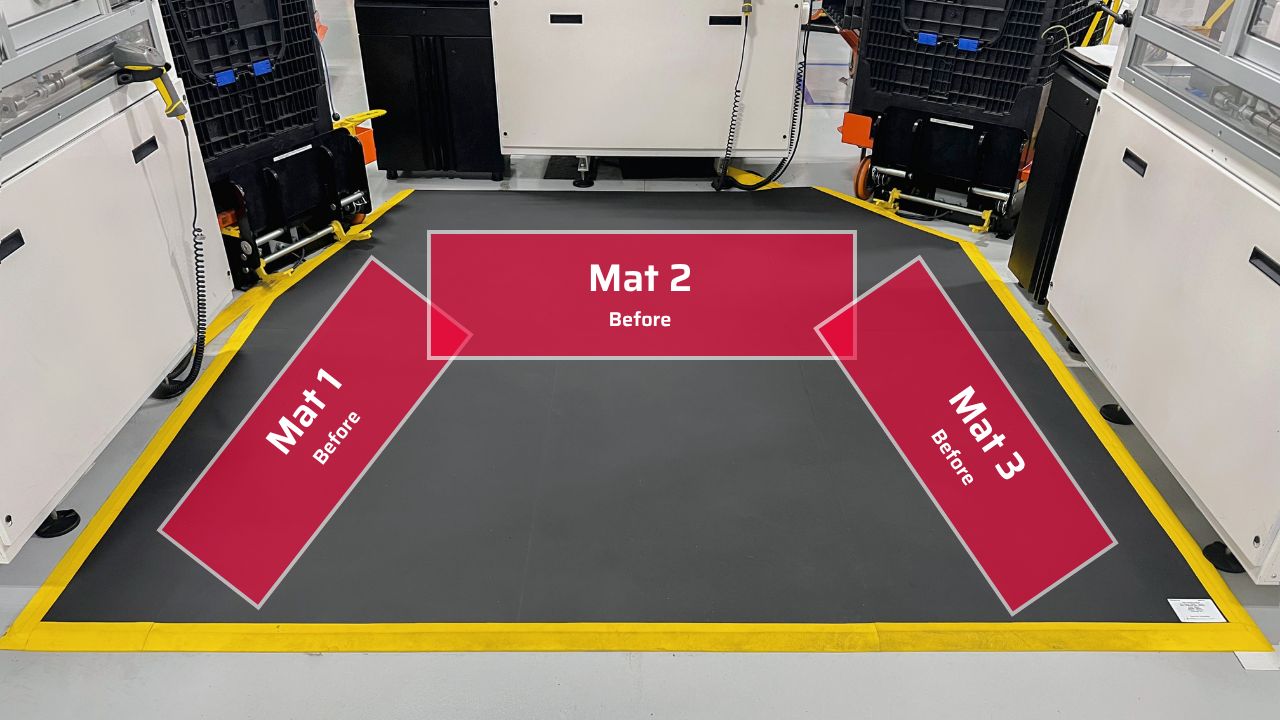
There's a reason custom anti-fatigue mats are moving from convenience to core safety requirement: Slip, trip, and fall injury costs have risen by 84%. This according to Liberty Mutual Insurance's 2025 Workplace Safety Index. ➡️Key findings from the new report: -> Overexertion and slips, trips, and falls (STFs) account for 40% of all workplace injuries ($27+ billion in yearly costs). -> STF injury costs have "skyrocketed" by 84% compared to 2024. -> STF injuries cost businesses over $10.5 billion a year, $4.6 billion more than in 2024. ➡️How are companies responding? The companies we work with at AcroMat, like the turbocharger manufacturer below(👇), are focusing on prevention by doing away with the outdated approach of piecing together multiple rectangular mats -- including the trip hazards caused by gaps, on/off stepping, and mats easily sliding around. Instead, they're opting for custom mats seamlessly designed to fit: ✅Glove-like fit prevents sliding risks ✅Complete coverage, no on/off stepping ✅Consistent surface, cushion, and traction ✅Guaranteed to never curl, preventing a dangerous trip hazard ➡️Anti-fatigue mats still a hard sell And yet, companies still fall back on the "buy a truckload of box-store mats and piece them together" approach because it's quick and cost efficient. But when you factor in the risk and rising costs of STF injuries, not to mention the drain on productivity and morale, is it really? #workplacesafety #continuousimprovement
- Solving OySince 22 Sept 2026
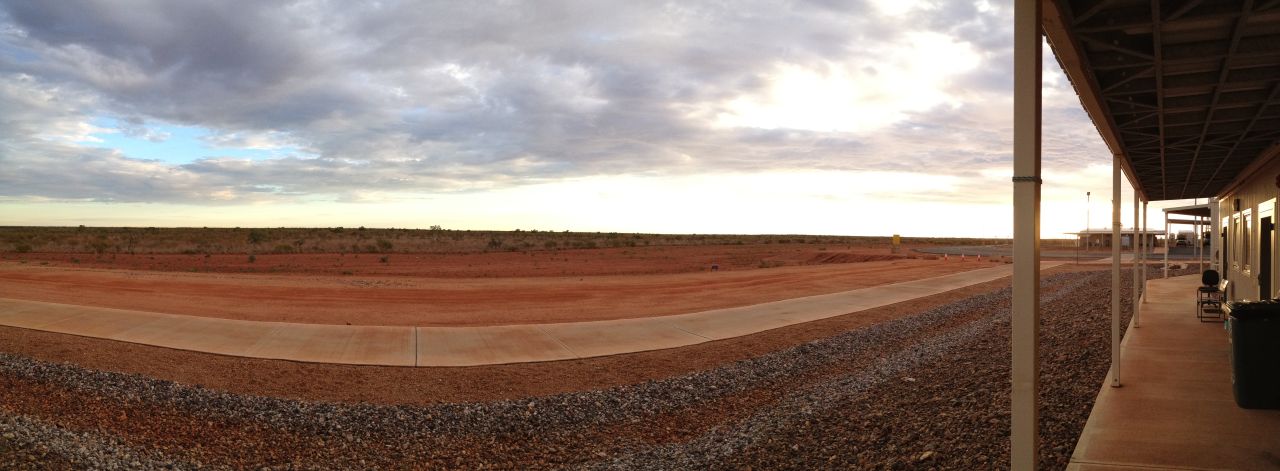
The real test starts in production. I’ve worked with AGV systems operating in very different environments. From cold storage at –20°C to a project in the Australian desert where temperatures exceeded +50°C. Those are extremes, but they make an important point. An AGV may perform perfectly during testing. The real test starts when it enters daily production. Temperature affects components and batteries. Dust and dirt affect sensors. People and forklift traffic affect routes and safety requirements. Production peaks affect capacity and charging strategies. And over time, the conditions may change. Understanding the real operating environment early in an AGV project is essential. We are not talking only about load, speed and capacity requirements, but also about the conditions the equipment will face every day. It may sound obvious, but in my experience, some of the most obvious conditions are also the easiest to overlook. Having seen AGVs operate in all kinds of environments, one thing is clear: reliable operation starts with understanding the conditions an AGV can face throughout its working life. What environmental conditions do you need to consider in your production?
- Solving OySince 22 Sept 2026
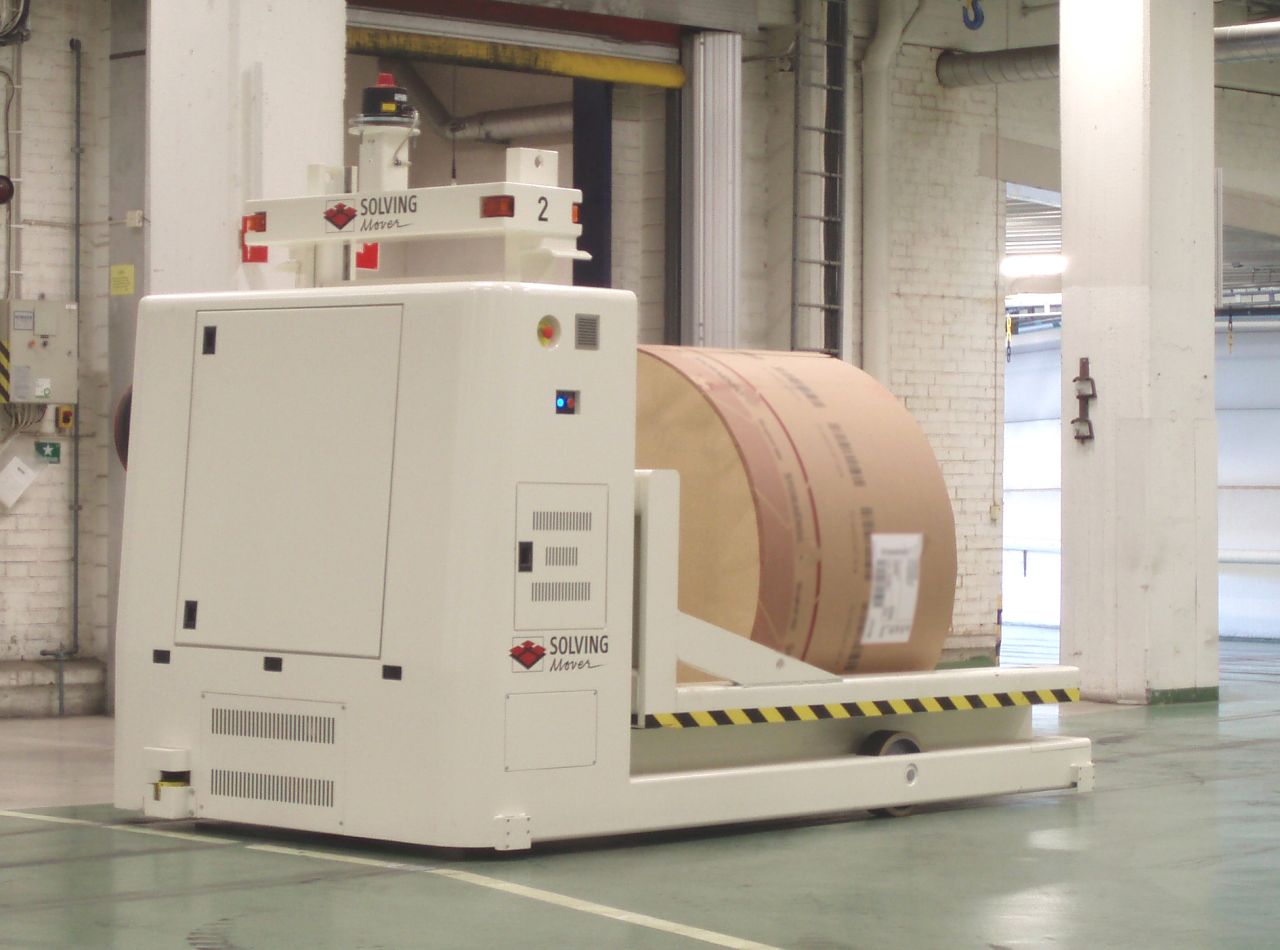
How future-proof can an AGV system really be? I recently visited a customer in the paper industry where the AGV system has been running for more than 30 years. Considering the demanding environment, the system was in remarkably good condition. Over the years, it has been maintained, upgraded, and adapted as the operation has evolved. The reason for my visit was that the customer is now expanding production and plans to add more AGVs to the system. That got me thinking about how we measure the success of an automation investment. When implementing an AGV system, we naturally focus on today's requirements. But the real value is often measured decades later. Production changes. Technology evolves. Business priorities shift. No one can predict exactly what an operation will need 20 or 30 years from now. Thirty years after installation, this system is still creating value and supporting the customer's next phase of growth. To me, true future-proofing is not about predicting the future. It's about building enough flexibility to stay relevant when the future changes. How do you define long-term value in automation investments?
- Assent (formerly IPOINT)Since 23 Apr 2026
One of the things I find fascinating about what's happening in compliance and sustainability right now is how far apart these two worlds still sit in most companies. The compliance team has PhDs in chemistry, sitting in a lab coat next to the manufacturing line. The sustainability team sits with the CFO because they need to report to auditors and banks. Completely different floors, different org charts, different realities. And yet they're working off the same foundation. The same material data, the same supplier information, the same product-level details. They just don't know it because they've never talked to each other. Two years ago at our big annual event, we gave a keynote about compliance and sustainability converging. Some people in the audience genuinely thought it was blasphemy. "We don't talk to our compliance counterparts." That was the actual reaction. But companies started with these spent-based, relatively cheap approaches to hit their reporting requirements. Now they're realizing that's not enough. Regulations are scaling every year. OEMs are asking suppliers not just for material compliance data through IMDS but also for product carbon footprints. And to provide your PCF, you actually need to understand the carbon footprint of every material in your product. A steering wheel alone has thousands of parts. Most companies still run this manually or across separate systems. And separate solutions can work at small scale, one product, one PCF in Excel. But as soon as you try to scale that, it breaks. You end up with two versions of reality. Every time a material changes or a new regulation hits, teams scramble to reconcile everything by hand. You lose speed, clarity and control. What we believe at IPOINT is that there should be one shared data core, one governance logic and many outputs. Whether it's IMDS, Catena-X, CSRD reporting or internal KPIs, it all comes from the same source. The data sustainability managers desperately need already exists on the compliance side. It's already formatted, already checked, already there. But because these teams sit so far apart organizationally, they simply don't know it. Showing companies that connection and making it usable is a big part of what we do.
- Assent (formerly IPOINT)Since 23 Apr 2026
One of the biggest problems in manufacturing right now is that compliance and sustainability live in completely separate worlds inside most companies. Different teams use different data, with different reporting exercises and tools. And the moment something changes on one side, the other side is immediately out of sync. Every material you choose, every supplier you work with, every process you run creates an environmental impact, a regulatory impact, and ultimately a business impact. The question is whether you can actually see it and steer it. Most companies can't. A lot of tools out there tell you to do it top down, spend-based, with rough estimates. You get a number, sure. But it's a theoretical number. It gives you a sense of your impact but doesn't let you manage your impact. Big difference. With IPOINT's impact intelligence, that means you put compliance and sustainability on one shared data foundation. Material data, supply chain data, process information, all connected by one logic. From that core, you generate whatever the world asks for: product carbon footprints, imds professional GmbH & Co KG submissions, digital product passports, CSRD reporting. You're not scrambling to assemble these things from scratch every time. Once you understand where exactly your impact comes from at the material and substance level, you can actually go manage it, source differently, choose different materials and shift geographies to change energy consumption or transportation impacts. You move from proving impact after the fact to actively shaping it. A simple way to think about it: 1. Connect material-level data across compliance and sustainability 2. Build one shared foundation instead of parallel reporting silos 3. Generate any required output from that single source of truth 4. Use the model to identify where impact actually lives 5. Make sourcing and design decisions that change the outcome That's what real impact intelligence looks like, and iPoint is building exactly that. If you're in manufacturing and tired of stitching together disconnected reports, I'd highly recommend taking a closer look at what Impact Intelligence can do for you.
- INTEC ROTORSSince 8 Jul 2026
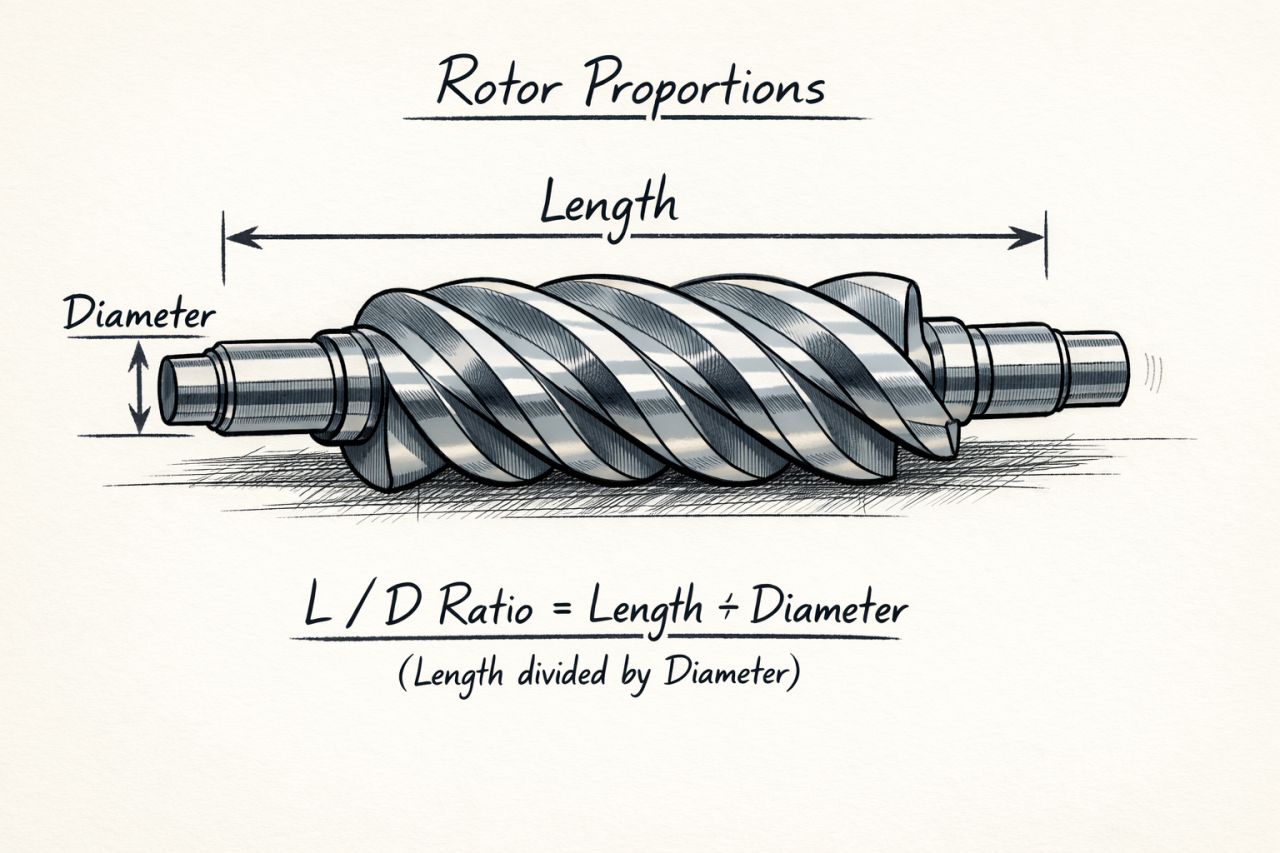
Let me inaugurate a new series: Rotor geometry for newbies - ep. 1. A slightly irreverent title, but I want to come back to the basics, or rather, from the first thing that is never really “basic” at all: Rotor proportions. When we say rotor proportions, we are mainly talking about three things: > Length > Diameter > L/D ratio And from these, a lot of other consequences follow. 🔹 Length A longer rotor gives more axial space for compression. That can help make pressure build-up smoother, but it also makes the rotor more prone to deflection under load. 🔹 Diameter Diameter affects the size of the compression chamber and the swept volume. In simple terms, it has a big impact on capacity, but it also changes tip speed and mechanical loading. 🔹 L/D ratio (length-to-diameter ratio) - A high L/D ratio usually means a more slender rotor, which may support the compression process better, but can be less stiff. - A lower L/D ratio usually means a stiffer rotor, but with different geometric and layout constraints. And from these proportions, we can already get a first idea of how the machine will behave. They influence how much gas can be handled, how the compression develops along the rotor, and how the overall layout needs to be designed. They are the starting point for understanding capacity and general performance.
- Inuatek A/SSince 25 Aug 2026
Your machines are operating across customers, sites, and countries. But when something changes, who knows first - your service team or your customer? For many machine builders, the answer is still the customer. In this short video, Olivia shows how Inuatek DCC gives OEM service teams a single, cloud-based overview of their installed machine base. When a machine signal crosses a defined limit, the service team can quickly identify the affected machine, see which customer operates it, and investigate the data surrounding the event. That changes the customer conversation from: “What happened?” to: “We can see what’s happening. Here’s what we recommend as the next step.” For the customer, that can mean faster support and fewer interruptions. For the OEM, it creates a foundation for faster diagnostics, stronger service agreements, and scalable, cloud-based after-sales services. Watch the video to see how it works in less than 2 minutes 👇 #MachineBuilders #DigitalServices #IndustrialIoT #OEM #AfterSales
- Inuatek A/SSince 25 Aug 2026
Machines running across customers 🧑🤝🧑, sites 🏭 and countries 🌍. One OEM service team. 𝗪𝗵𝗼 𝘀𝗲𝗲𝘀 𝗮𝗻 𝗶𝘀𝘀𝘂𝗲 𝗳𝗶𝗿𝘀𝘁 - 𝘁𝗵𝗲 𝗢𝗘𝗠 𝗼𝗿 𝘁𝗵𝗲 𝗰𝘂𝘀𝘁𝗼𝗺𝗲𝗿? Well.. In my experience, it is most often the customer. Only then does the technician begin reactive troubleshooting. Typically through a remote-access solution, if the customer’s security policies allow remote access at all. But by then, it may already be too late. The machine is standing idle, and production has been affected. The machine may have all the bells and whistles: sensors, alarms and plenty of operational data. If the relevant information had reached the OEM sooner, the service team might have identified the developing issue early enough to avoid the stop; or at least arrived at the customer conversation much better prepared. It may not always eliminate a site visit. But in some cases, it could even remove the need for a remote-access session that potentially conflicts with the customer’s security policies. 𝗦𝗼 𝘆𝗲𝘀,- 𝗰𝗼𝗻𝗻𝗲𝗰𝘁𝗲𝗱 𝗺𝗮𝗰𝗵𝗶𝗻𝗲𝘀 𝘀𝗵𝗼𝘂𝗹𝗱 𝗰𝗵𝗮𝗻𝗴𝗲 𝘁𝗵𝗮𝘁. In this short video, Olivia shows what that change could look like when the OEM gets visibility before the customer calls. Because the objective is not simply to collect more machine data or build another dashboard. It is to help the OEM deliver more value throughout the machine’s lifetime -AND turn that value into a scalable service business. #MachineBuilders #IndustrialIoT #AfterSalesService
- INTERNORM Kunststofftechnik GmbHSince 13 Aug 2026
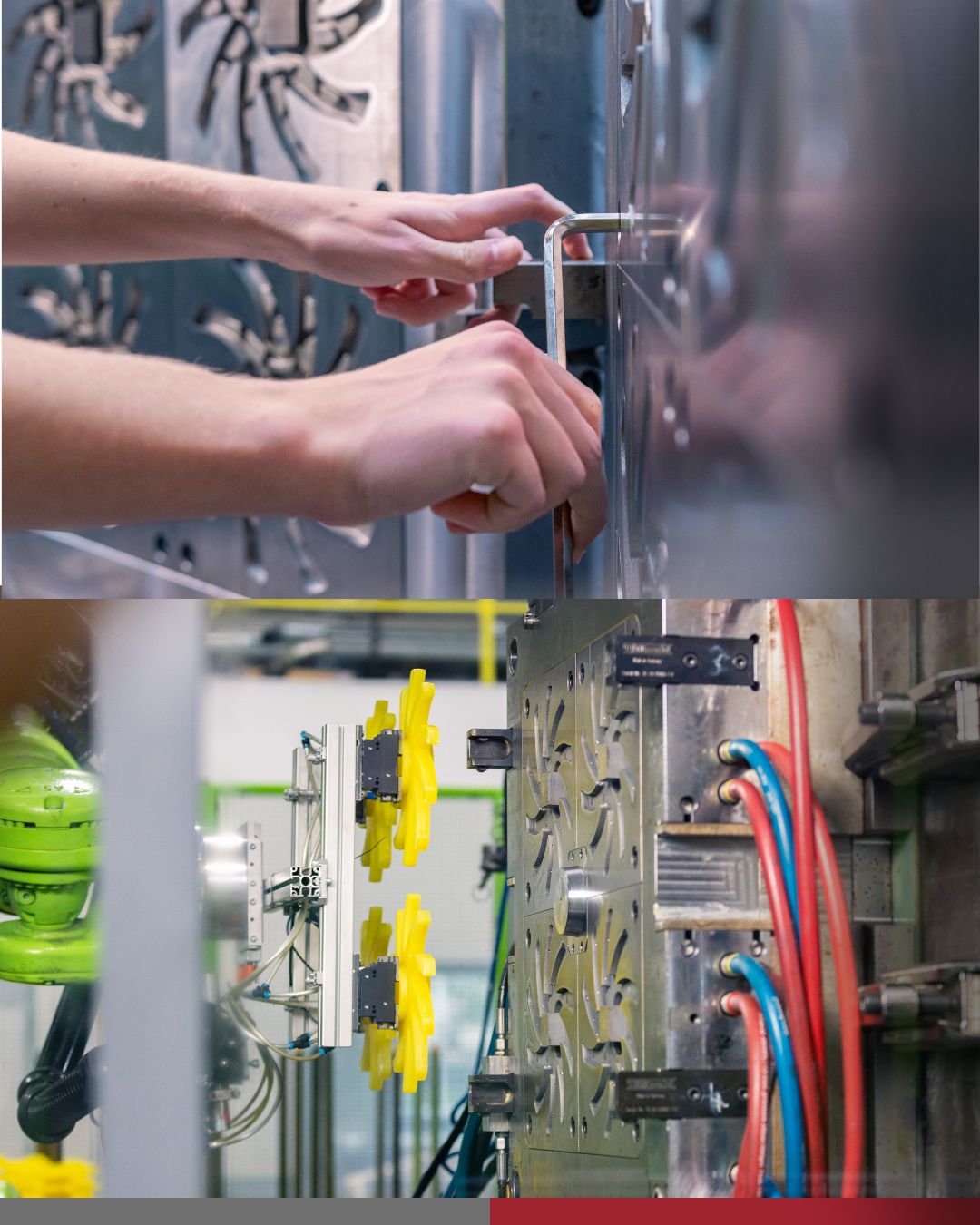
Warum jede Werkzeugverlagerung mit einer ehrlichen technischen Analyse beginnen sollte In der Praxis erlebe ich immer wieder, dass bei Werkzeugverlagerungen vor allem auf Geschwindigkeit geschaut wird. Das ist verständlich, gerade dann wenn Lieferketten unter Druck stehen. Was dabei oft unterschätzt wird: Ein Spritzgusswerkzeug lässt sich nicht einfach „umziehen“. Denn jedes Werkzeug ist eng mit seiner bisherigen Produktionsumgebung verknüpft, mit der Maschine, den Prozessparametern und der Historie aus vielen Jahren Fertigung. Deshalb beginnt für mich jede Werkzeugverlagerung mit einer ganz zentralen Frage: 👉 Ist das Werkzeug unter den neuen Bedingungen überhaupt stabil und reproduzierbar betreibbar? Um das zu beantworten, gehen wir sehr strukturiert in die technische Bewertung. Wir schauen uns nicht nur das Werkzeug an, sondern immer das gesamte Zusammenspiel aus Werkzeug, Maschine und Prozess: Wie viel Schließkraft wird tatsächlich benötigt? Passt das Werkzeug zur verfügbaren Maschinentechnik? Wie ist der Zustand von Heißkanal- und Temperiersystemen? Gibt es Verschleiß, der im aktuellen Betrieb vielleicht noch kompensiert wurde, aber beim Neustart zum Problem wird? Auch Themen wie Gewicht, Handling oder die Verfügbarkeit von Ersatzteilen spielen eine größere Rolle, als man zunächst denkt. Sie stehen vor einem Lieferantenwechsel oder möchten ein Werkzeug verlagern? Melden Sie sich einfach bei mir. Mehr zur Werkzeugverlagerung bei INTERNORM: https://lnkd.in/eyuDNyWW #Werkzeugverlagerung #Spritzguss #Kunststofftechnik #Produktion #Lieferkette #Produktmanagement #Spritzgusswerkzeug
- FOG Tank® (Hyginix LLC)Recorded 23 Sept 2026
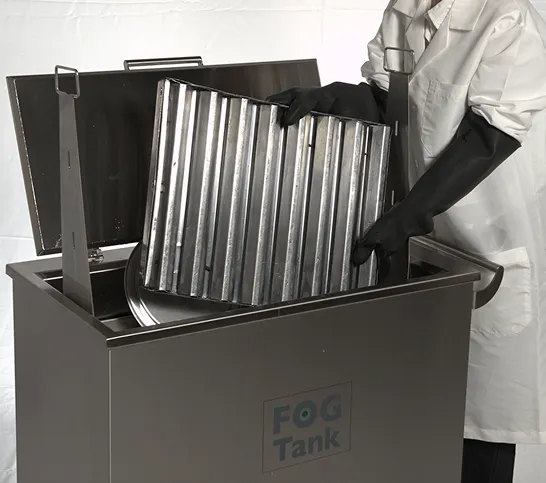
A kitchen manager once showed me the chemical burns on his hands. They were from using a caustic, high-pH degreaser to break down build up. Whenever I remember his hands, I ask myself, “Why are harsh chemical degreasers still standard in so many commercial kitchens?” These chemicals are hard on skin, hard on equipment finishes, and they add one more thing to manage under HACCP and workplace safety requirements. I wish I could have introduced him to FOG Tank sooner. Instead of just “grinning and bearing it” (his words), he could have had… ➡️ A non-toxic, non-caustic cleaning powder ➡️ A stainless steel and aluminum-safe system ➡️ A noticeable increase in staff satisfaction …with just one kitchen upgrade, and he would still meet the sanitation standards commercial kitchens are held to. Culinary schools, hospitals, and hotel kitchens use it for exactly this reason. You simply fill the tank, add powder, load, close, and walk away. No more scrubbing 👉 https://bit.ly/4hzRbvp. A heated soak tank takes the risk off the table entirely. So coming back to my initial question: when we have the tools that make kitchens safer for the team in them, why are harsh chemicals still the standard?
- IGS | Integrated Global ServicesSince 19 Aug 2026
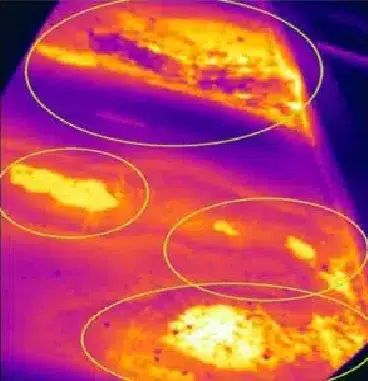
The 'safe' response to a hot spot is often the one most likely to crack your heater. A hot spot shows up on a fired heater. The reflex is almost automatic: shut it down, or "ride it out" to the next turnaround. Here's the uncomfortable part — both of those "safe" choices can be the riskiest thing you do. Shut down in a hurry, and you rarely get the controlled cool-down ramp. Pull the temperature too fast, and you thermally shock the refractory and tubes: fresh cracks, spalling, mechanical fatigue on welds and supports. You went in to fix one hot spot and came out with three. "Ride it out" isn't free either. That hot spot doesn't wait politely for your schedule — the shell keeps oxidizing and creeping, anchors let go, refractory drops away in a cascade, and the tubes and downstream equipment inherit the risk. Best case: a much bigger repair at the turnaround. Worst case: a tube or shell lets go first, and now the shutdown is unplanned. The option most people don't consider: repair it hot, on-stream, while the unit stays at steady state — no cool-down, no restart, no thermal shock at all. I'm genuinely curious where the room lands on this: → When is shutting down still the right call? → Has anyone been burned by a "temporary" fix that outlasted the equipment? → Or by a rushed cooldown that caused more damage than the original problem? Not looking for the textbook answer. Looking for what actually happened in your plant. #FiredHeaters #Refining #Reliability #Turnaround #Maintenance #ProcessSafety #Petrochemical
- IGS | Integrated Global ServicesSince 25 Aug 2026
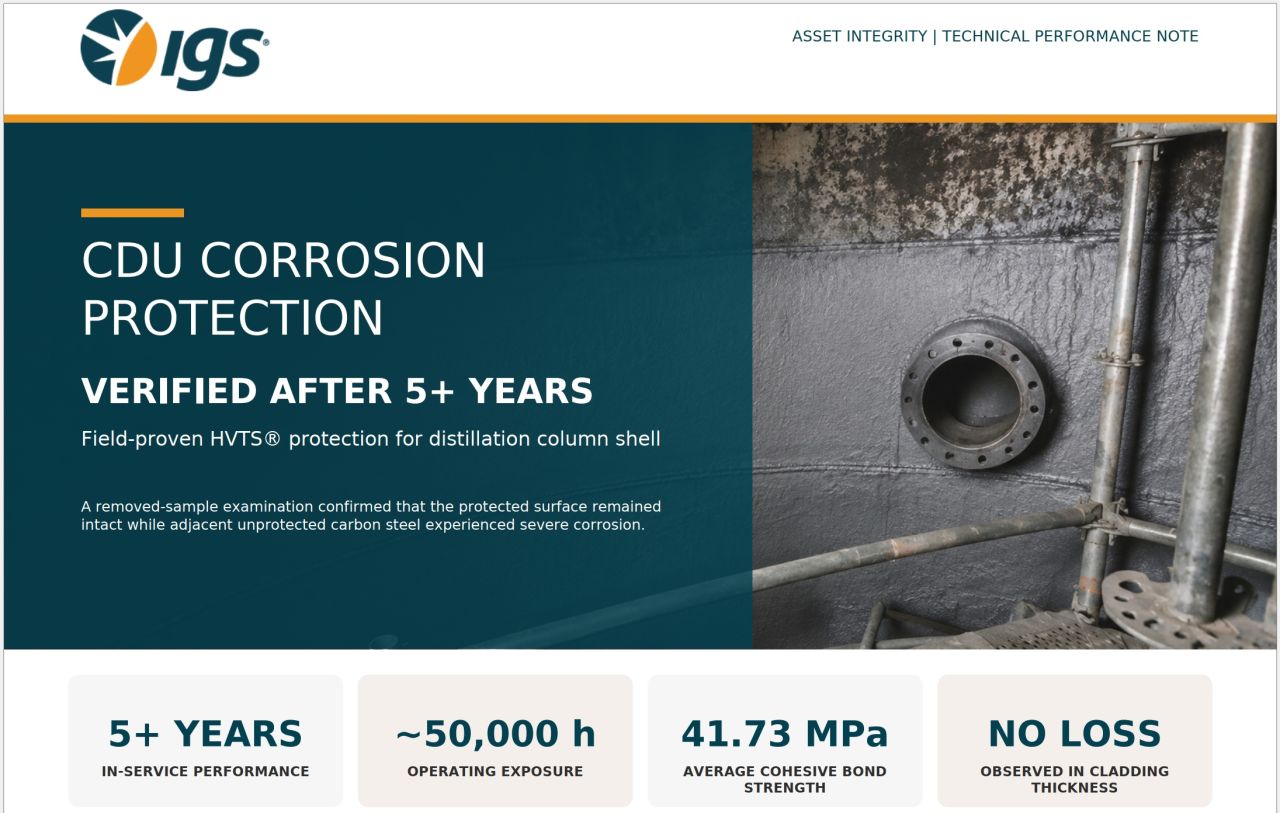
HVTS cladding works—and this time we had the rare opportunity to prove it through destructive testing: After more than five years and approximately 50,000 operating hours inside a crude distillation column, removed samples were subjected to detailed laboratory examination. The results confirmed a dense, continuous HVTS barrier with retained nominal thickness and no observed corrosion of the protected substrate—while adjacent unprotected carbon steel showed significant metal loss and deep pitting. This is not theoretical performance. It is direct evidence from actual refinery service! With European refinery outages already taking shape for the next 24 months, distillation columns, amine absorbers/regenerators and crude-unit desalters remain important targets for early integrity planning and IGS is currently preparing the next jobs: Depending on inspection findings, HVTS will be used alone as a corrosion barrier or combined with weld overlay where local metal restoration is required. Planning an upcoming outage? Contact us and let’s evaluate the most effective strategy before the scope is frozen.
- IMISince 31 Jul 2026
Another strong first half at IMI - a big thank you to every colleague around the world who made these results possible. Every single sector contributed to growth which demonstrates the consistent execution of our One IMI operating model. The strength of our first half performance gives us confidence in our outlook for 2026. We remain on track to deliver our sixth consecutive year of mid-single digit organic revenue growth. Read the full press release here: https://lnkd.in/eqN-8NxP
- IMISince 31 Jul 2026
I'm pleased to share our first half results today. We delivered another strong performance, with 5% organic revenue growth and 8% organic adjusted operating profit growth. Thank you to all our people across IMI for their hard work and contribution to these results. We returned over £300m to shareholders during the first half and are pleased to declare a 10% increase in the interim dividend. We’re on track to deliver our sixth consecutive year of mid-single-digit organic revenue growth and continue to expect adjusted earnings per share of between 136 and 142 pence for the full year. Please see a link to our results: https://lnkd.in/eXQQBC73
- INTEC ROTORSSince 16 Sept 2026
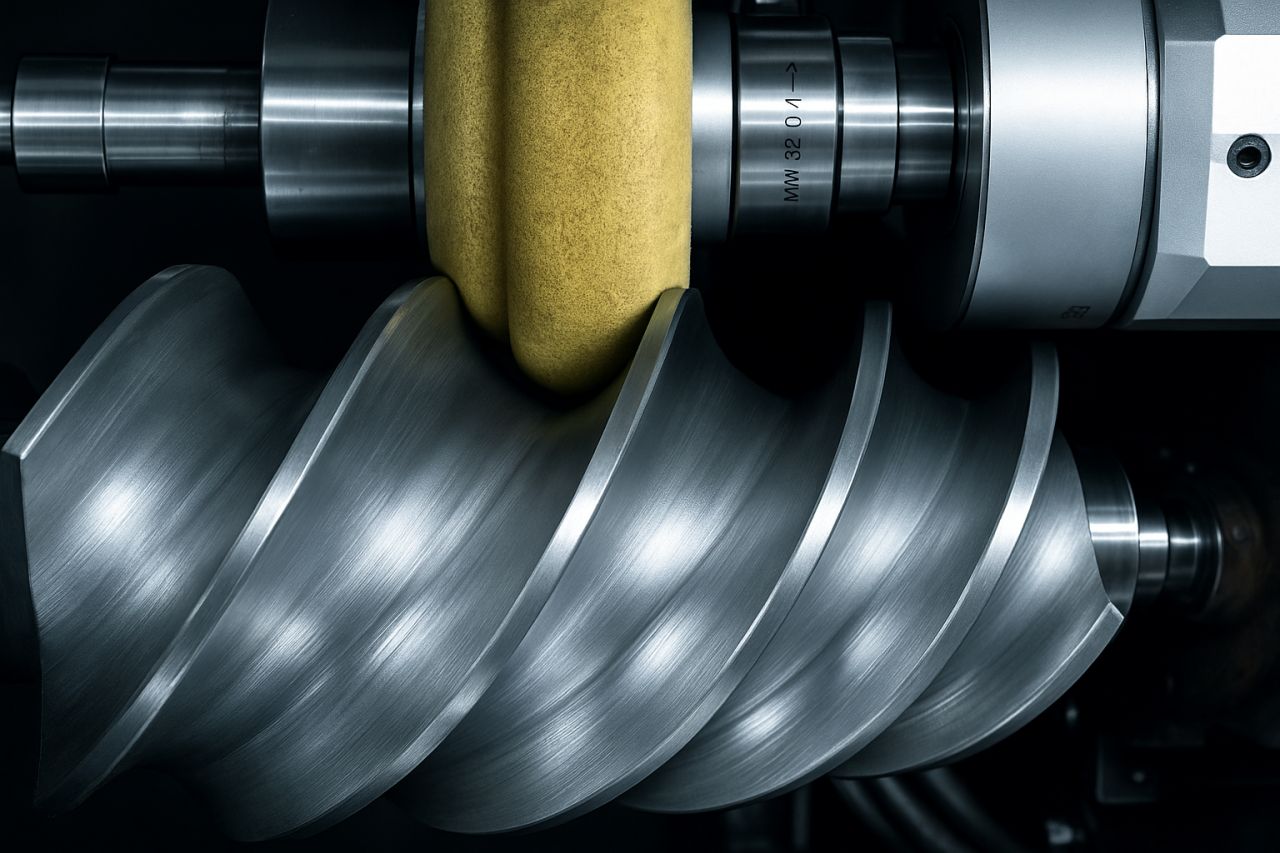
One thousandth of a millimetre sounds harmless. Like something you’d ignore. Until your twin-screw airend starts vibrating like a washing machine on spin cycle. Bearings run hot, energy bills spike — and suddenly, your finance team knows your name a little too well. That’s why we obsess over the profile. We grind. We measure. We blue-check. We measure again. All to keep those flanks hugging the CAD curve your engineer drew, as close as physics (and reality) allow. 0.000 mm? Dreamland. ±3 µm? That’s more bearable. But sometimes the CAD isn’t as precise as expected. Bad math, stacked tolerances, thermal expansion nobody accounted for (oops). So we go full detective: Rev 1, 1-bis, 2… whatever it takes until that screw rotor hums like it should.
- HoveSince 16 Sept 2026
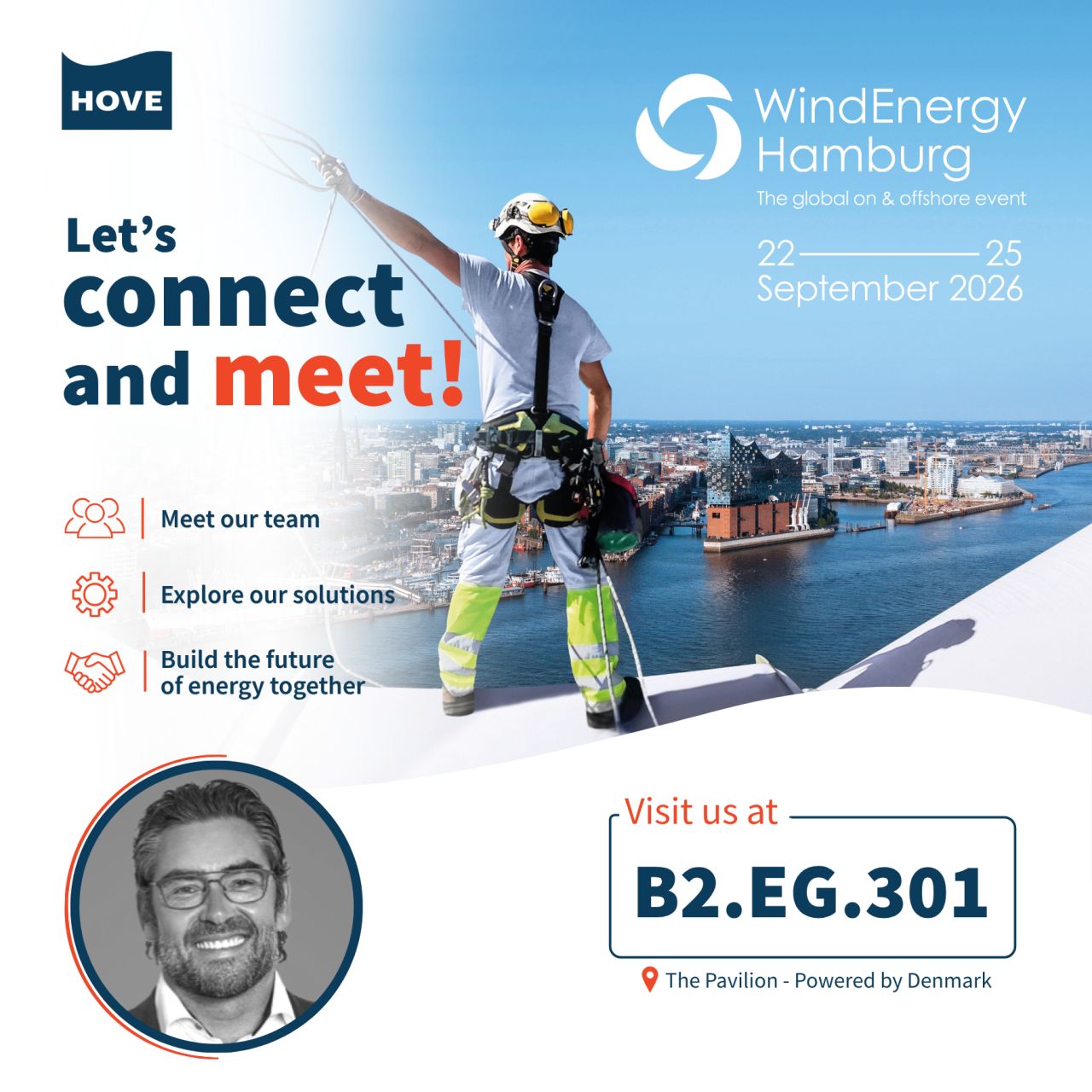
Let’s connect and meet! I’m happy to be heading to WindEnergy Hamburg 2026 with the Hove team. If you’re attending, come by and say hello. It’s a great opportunity to catch up, meet new people from across the industry and have a good conversation about lubrication, reliability and the future of wind energy. 📍 B2.EG.301 | The Pavilion – Powered by Denmark 📅 22–25 September 2026 See you in Hamburg!
- INDURASince 24 Aug 2026
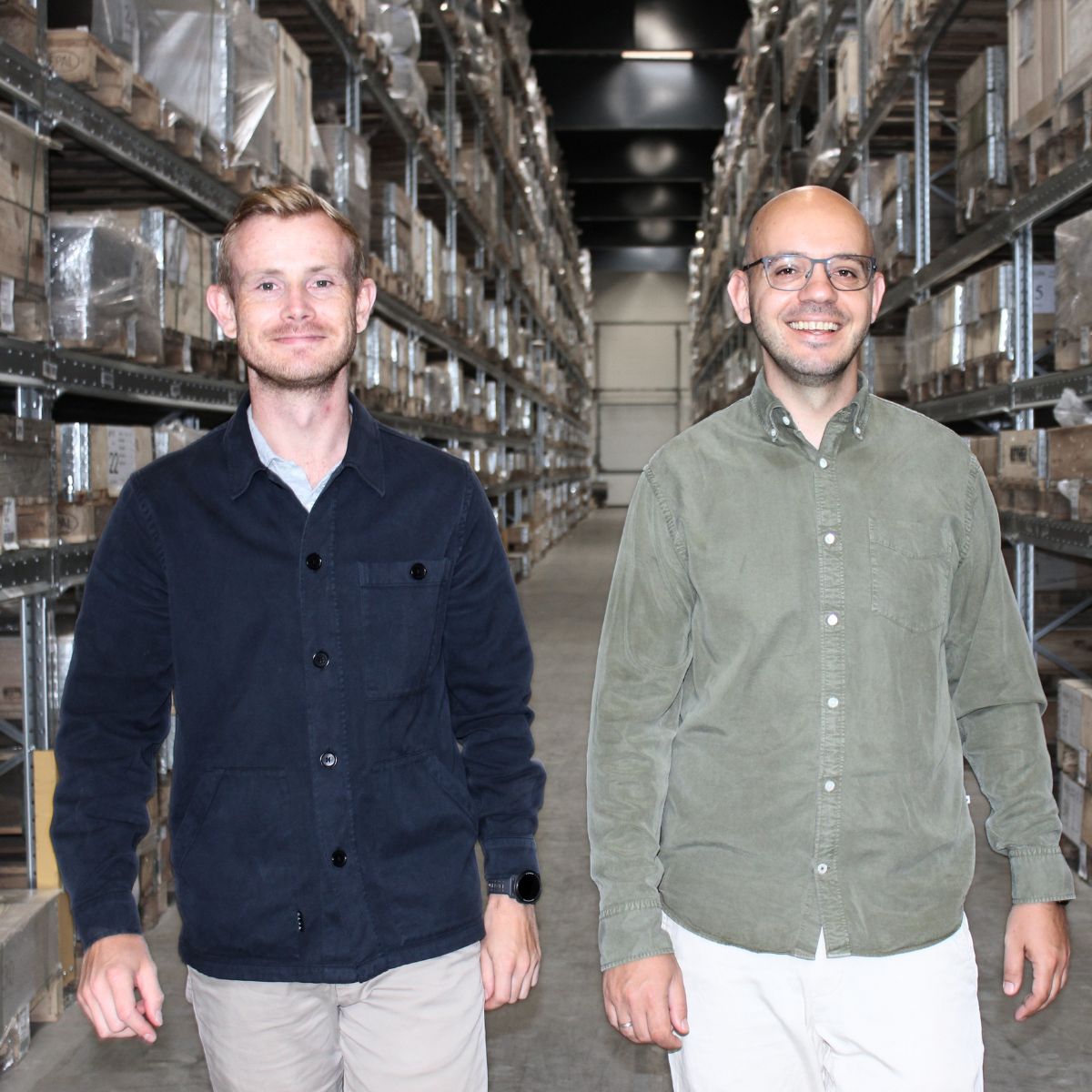
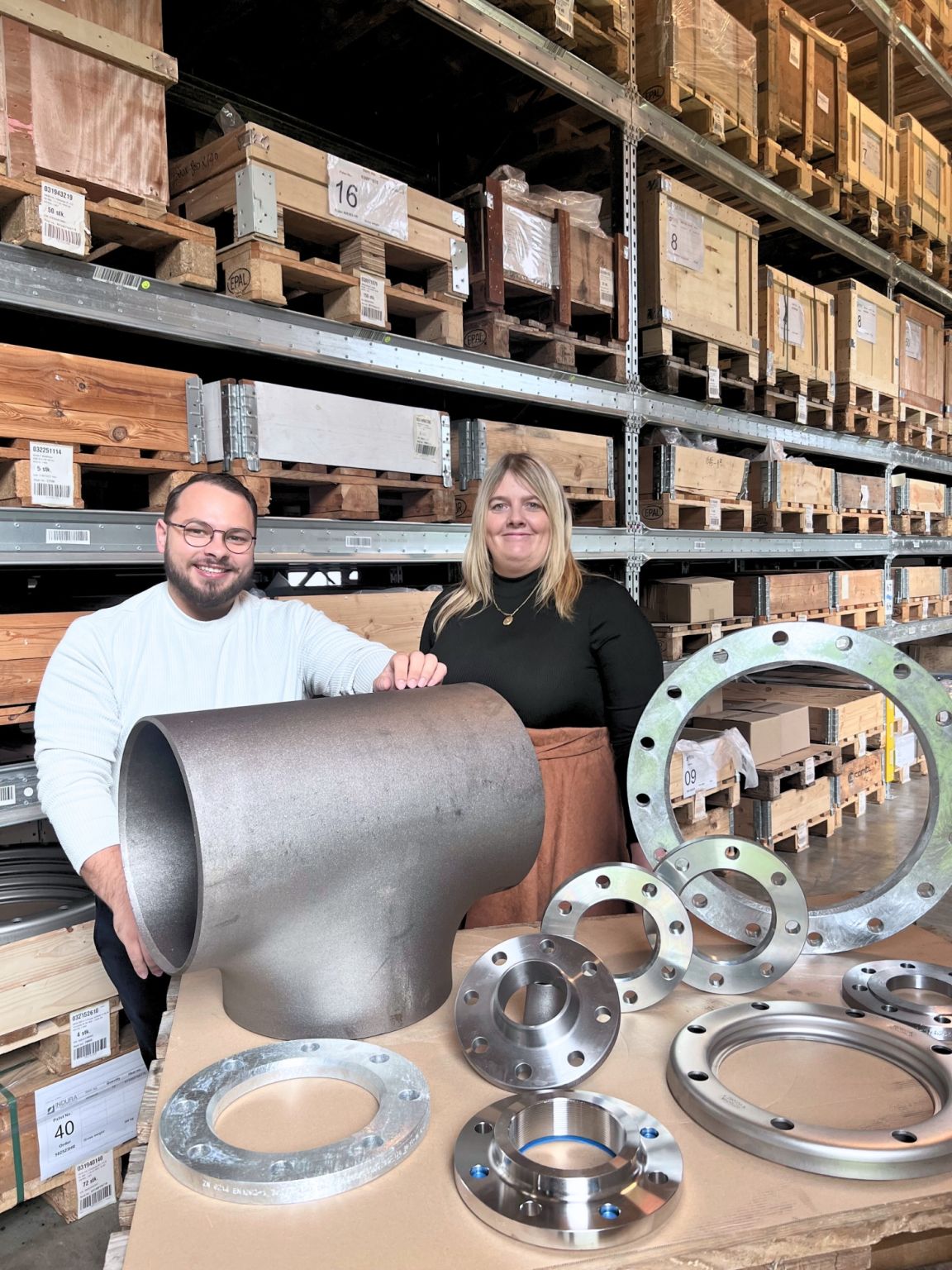
A couple of years ago I left INDURA. Now I'm back, and honestly, it feels like coming home. I spent 12 years here before, so I know the products, the business and, more than anything, the customers and partners I worked with across Europe. Picking those conversations back up as Area Sales Manager Europe is the part I've looked forward to most. I'm not the only new face either. Earlier this year we also welcomed Kasper Dybdahl as Sales Manager for the Nordics. Between us we've got Europe and the Nordics covered better than ever. What we care about hasn't changed: finding the right solution for the job in front of you, delivering it in a quality we'll stand behind, and being easy to get hold of when it matters. Hard-to-source items included. So if you've got a project coming up, or you just want a better setup on your regular deliveries, reach out. Always happy to talk. Jasmin Dervić, Area Sales Manager Europe [email protected] / +45 27 15 95 50
- IPG AutomotiveSince 17 Sept 2026
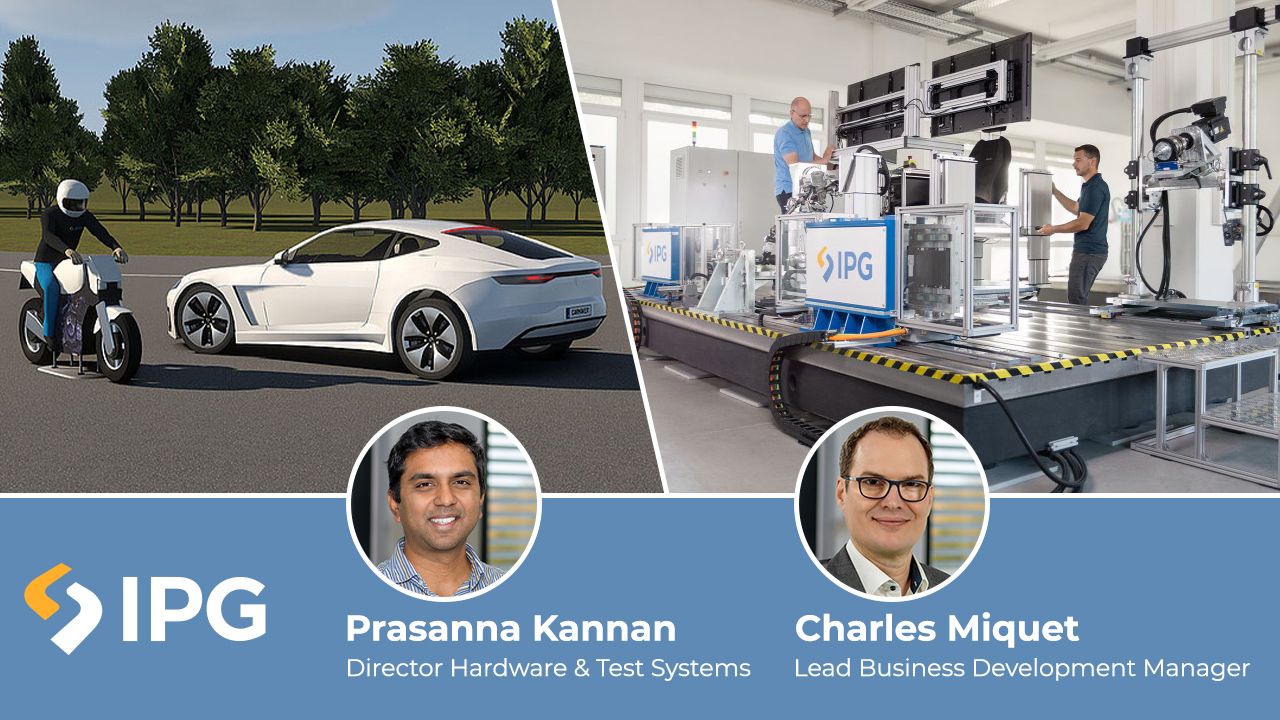
If you’re working in ADAS/AD testing, Euro NCAP 2026 crash avoidance is likely on your radar. As testing complexity continues to grow, physical validation alone is often no longer enough to keep pace. At the same time, teams need simulation environments that reflect real vehicle behavior as closely as possible without waiting for full vehicle availability. Together with Charles Miquet, we’ll demonstrate how production software can be validated on brake and steering benches with camera and radar injection and a vehicle digital twin, enabling NCAP testing with repeatable and traceable results. Register here: https://lnkd.in/e2WytED8 #NCAP2026 #ADAS #Validation #VehicleTesting
- INEASince 21 Sept 2026
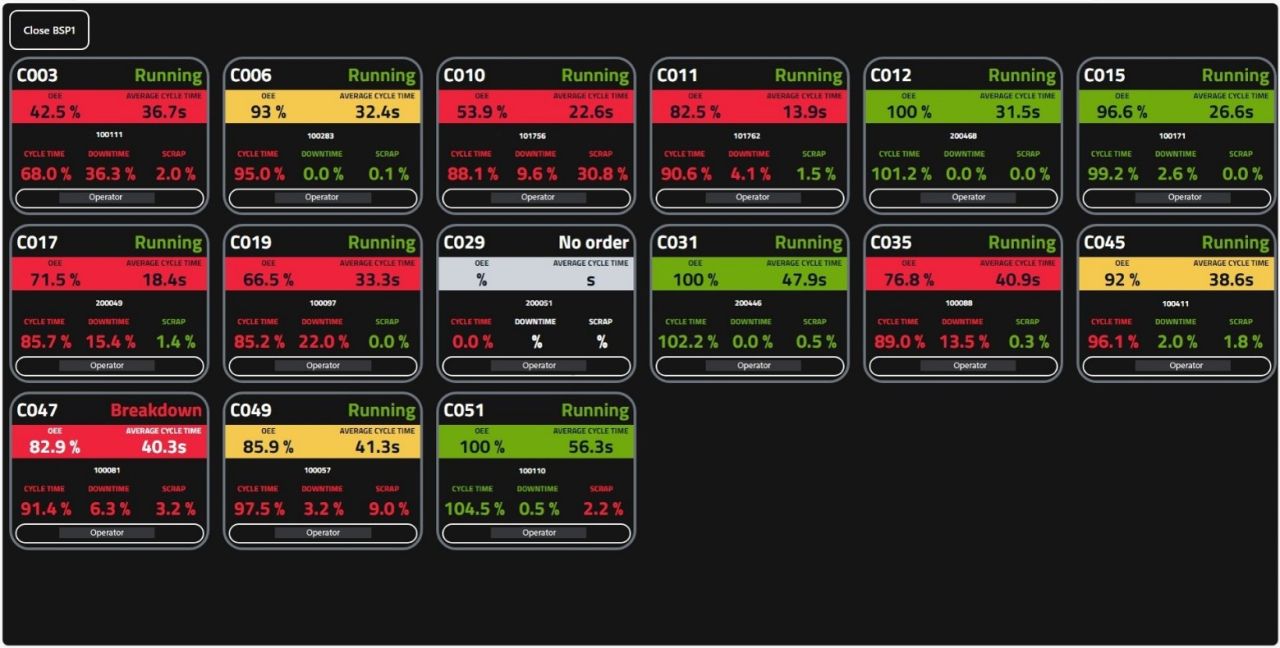
I talk a lot about having the “right” manufacturing data, but what does that look like in practice? Take something as common as downtime on an injection moulding machine (this is an actual example): The injection machine stops. Almost instantly, the event is automatically recorded in the MES. Right away, the operator can classify the reason for interruption in a simple production interface. The stoppage is immediately visible to production, while its start and end times are stored for later analysis. Beautiful. And the same data doesn’t stop being useful once the machine starts running again. It's stored and can later feed into OEE calculations, downtime analysis, and recurring problem detection. That’s the difference between simply recording a signal and having useful manufacturing data. Knowing just that something stopped isn't even remotely as valuable as having the right information, with enough context, available quickly enough for someone to act on it — and keeping it available for later analysis. What I often see is that companies already have people who know exactly which data they need for optimisation, reporting, or analysis. The missing piece is often the automatic path between where that data is created and where it can actually be used. The lesson is simple: 𝗞𝗻𝗼𝘄 𝘄𝗵𝗶𝗰𝗵 𝗱𝗮𝘁𝗮 𝗺𝗮𝘁𝘁𝗲𝗿𝘀, 𝘁𝗵𝗲𝗻 𝗺𝗮𝗸𝗲 𝘀𝘂𝗿𝗲 𝗶𝘁 𝗳𝗹𝗼𝘄𝘀 𝗮𝘂𝘁𝗼𝗺𝗮𝘁𝗶𝗰𝗮𝗹𝗹𝘆, 𝗰𝗼𝗻𝘀𝗶𝘀𝘁𝗲𝗻𝘁𝗹𝘆, 𝗮𝗻𝗱 𝗾𝘂𝗶𝗰𝗸𝗹𝘆 𝗲𝗻𝗼𝘂𝗴𝗵 𝘁𝗼 𝗯𝗲 𝗮𝗯𝗹𝗲 𝘁𝗼 𝗮𝗰𝘁 𝗼𝗻 𝗶𝘁. What's the one piece of data in your operation that everyone agrees matters, but still doesn't flow automatically? 👉 This practical guide and self-assessment scorecard is focused exactly on this: how to recognise whether your manufacturing data is actually ready to support decisions. 𝗙𝗿𝗼𝗺 𝗗𝗮𝘁𝗮 𝗦𝗰𝗮𝗿𝗰𝗲 𝘁𝗼 𝗗𝗲𝗰𝗶𝘀𝗶𝗼𝗻-𝗥𝗲𝗮𝗱𝘆: https://lnkd.in/euk_wGBp
- INEASince 21 Sept 2026
A while ago, I visited a manufacturer where the production data literally walked across the factory floor with the product. 𝗢𝗻 𝗮 𝗽𝗶𝗲𝗰𝗲 𝗼𝗳 𝗽𝗮𝗽𝗲𝗿. 𝗪𝗶𝘁𝗵 𝗵𝗮𝗻𝗱𝘄𝗿𝗶𝘁𝘁𝗲𝗻 𝗻𝗼𝘁𝗲𝘀. The work order itself was created in the ERP, but once it entered production, the paper stuck on the product became the main messenger. If the paper got lost, damaged, covered up, or someone simply forgot to write something down, that part's production history disappeared with it. Even when the product came out the other side, completed, its information was never transferred back into its digital form. This is a perfect example of what data scarcity looks like. The manufacturing data is there, it's being recorded, but often in an unusable form, on a local display, in a spreadsheet, or living in someone's head. Isolated from the systems and people that would actually benefit from it. Usable, reliable data is the foundation of any advanced manufacturing application. Before investing in a shiny new production system, it's worth thinking about how data already flows through the factory. 𝗬𝗼𝘂 𝗮𝗿𝗲 𝗻𝗼𝘁 𝗿𝗲𝗮𝗱𝘆 𝗳𝗼𝗿 𝗮 𝘀𝗺𝗮𝗿𝘁 𝘁𝗿𝗮𝗻𝘀𝗳𝗼𝗿𝗺𝗮𝘁𝗶𝗼𝗻 𝗶𝗳 𝘆𝗼𝘂𝗿 𝗱𝗮𝘁𝗮 𝘀𝘁𝗶𝗹𝗹 𝘁𝗿𝗮𝘃𝗲𝗹𝘀 𝗼𝗻 𝗮 𝗽𝗶𝗲𝗰𝗲 𝗼𝗳 𝗽𝗮𝗽𝗲𝗿. We recently put together a practical guide and self-assessment scorecard around this exact problem: How to recognise manufacturing data blind spots and move from data scarce to decision-ready. _________________________________ 👉 From Data Scarce to Decision-Ready: https://lnkd.in/euk_wGBp
- INDURASince 17 Oct 2025
Jako sprzedawca często widzę, że wiele hurtowników poświęca niepotrzebnie dużo czasu na efektywne włączenie towarów do przepływu magazynowego. A jeszcze więcej czasu na rozmowy z dostawcami z Dalekiego Wschodu. W INDURA mamy ponad 35 lat doświadczenia w usprawnianiu przepływu. Dzięki szerokiej i bogatej ofercie produktów możemy dostarczać szybko, precyzyjnie i w formacie, który idealnie pasuje do Twojego łańcuchu dostaw. Zajmujemy się całym procesem – od produkcji i dokumentacji po wymagania takie jak CBAM i EPR. Jesteśmy elastyczni, gdy plany dostaw lub potrzeby ulegają zmianie w trakcie realizacji. Poświęć mi 10 minut na omówienie swojej obecnej konfiguracji, jeśli chcesz mieć dostawcę, który rozumie Twoją codzienność i minimalizuje kłopoty i czas oczekiwania w Twojej firmie.

Other LinkedIn formats
Watch the companies you care about.
Filter every ad by industry, country, format and network, and get alerts when a company you watch starts running new ads.