On air · 1 of 3 networks
Acoustic Control Systems - ACS Group
- acs-international.com
- Industry & Manufacturing
- DE
- 6 employees
Acoustic Control Systems - ACS Group’s ads on LinkedIn, Meta and Google, recorded by adsrunning. Browse the latest here for free. Sign up free to see all 62. Watch Acoustic Control Systems - ACS Group with Starter to get each new one in your feed.
Watchlist with Starter · $49/mo
| Network | Status | Live ads | Nov 2025LinkedIn activity · 52 weeksOct 2026 | Checked | Next step |
|---|---|---|---|---|---|
| None recorded | 0 | Checked 29 Oct 2026 | See all 62 ads → | ||
| Meta | Not checked | — | |||
| Running | 29 | Ads on the Google Ads Transparency Center | Checked 29 Oct 2026 | Collect them with the API → |
Acoustic Control Systems - ACS Group has no live LinkedIn ads. We recorded 29 Google ads on 29 Oct 2026.
Latest ads
- LINKEDIN · IMAGESince 13 Aug 2026
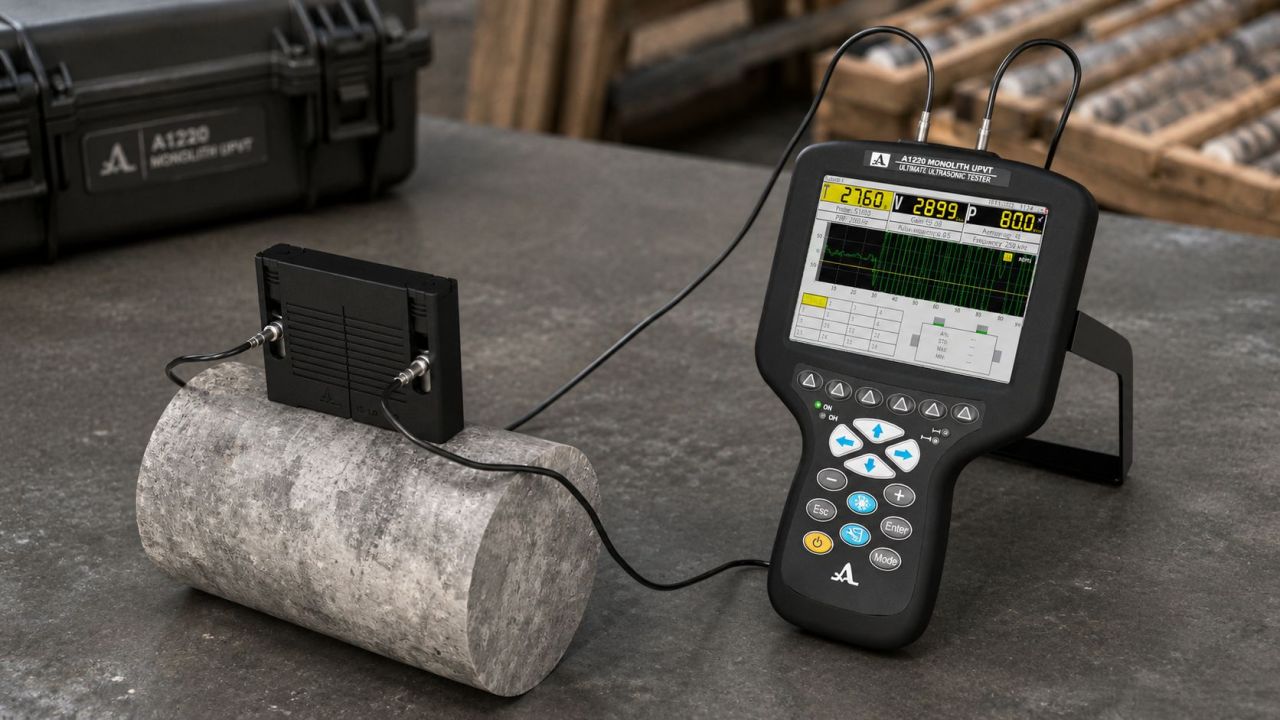
Ultrasonic velocity is a fast, non-destructive input to rock characterisation. On a rock core you can measure P-wave and S-wave velocity and use the results to support estimates of unconfined compressive strength and elastic modulus, alongside your standard laboratory tests. Most velocity setups in rock-mechanics labs are large, fixed and built around couplant. The A1220 Monolith UPVT is portable, uses dry-point-contact transducers and measures on the cylindrical surface of the core without any preparation. It also takes swappable transducers from 20 kHz to 250 KHz, so you can match the frequency to the rock type and the sample size. I want to be straight about one limit. Velocity is a sound input to strength and characterisation, but it is not a dependable predictor of drillability or penetration rate, where the published evidence is genuinely mixed. Treat it as one measurement among several, not as a drillability oracle. Request your technical sheet covering the rock application, the transducer range and the standards involved. Comment the word ROCK below and I will send it over.
- LINKEDIN · IMAGESince 13 Aug 2026
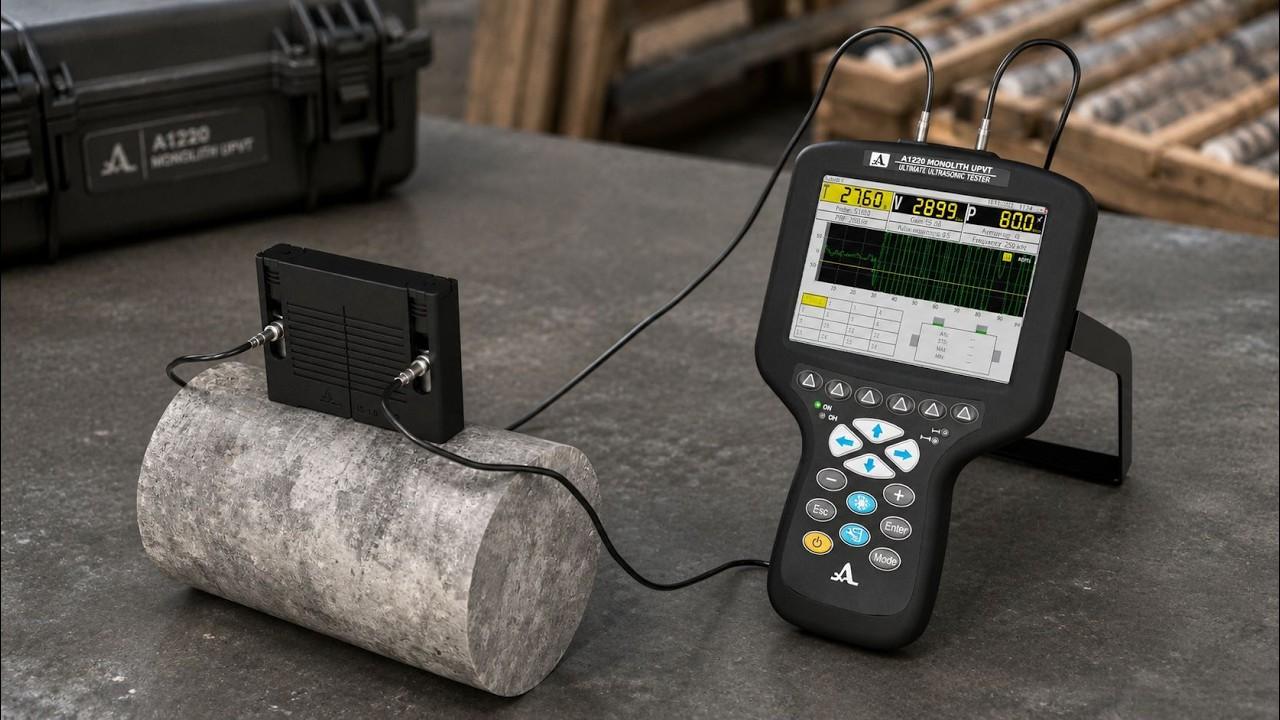
Measuring pulse velocity on a drilled core normally starts with preparing the core. You grind both ends flat and parallel so the transducers couple properly, which is slow work, and on a short core you can grind away the very material you wanted to test. The A1220 Monolith UPVT measures velocity on the cylindrical surface of the core instead. With 250kHz dry-point-contact transducers you read straight off the curved side, with no end grinding and no couplant, on samples down to 50 by 50 by 50 mm. For a materials testing lab this means you can characterise a core in minutes and check it before crush testing, without consuming or damaging the sample. The same method works on concrete cores and on rock cores. This is the capability I am most proud of in the instrument, because it is genuinely hard to do on the common pulse-velocity meters. The measurement setup and the full details are on the product page: https://lnkd.in/eKwj5QFW
- LINKEDIN · IMAGESince 13 Aug 2026
Anyone who has run ultrasonic pulse velocity on concrete knows the couplant routine. You apply gel at every point, press the transducer, take the reading, wipe it off and move on. On rough, dry or vertical surfaces it is slow, and the coupling is never quite consistent. The A1220 Monolith UPVT works with dry-point-contact transducers that read straight off the surface with no gel at all. On rough or vertical concrete the contact is repeatable and the setup at each point is quicker, and for a crew taking hundreds of readings in a day that time saving is real. Here is an overview: https://lnkd.in/exvfZfas If you still prefer a standard couplant method, the same instrument also drives standard piezo transducers, so you can run dry contact for speed and switch to the method you already trust whenever a job calls for it. Anyone who takes readings all day will feel the difference, so send it to a colleague who would want to know.
- LINKEDIN · IMAGESince 30 Jul 2026
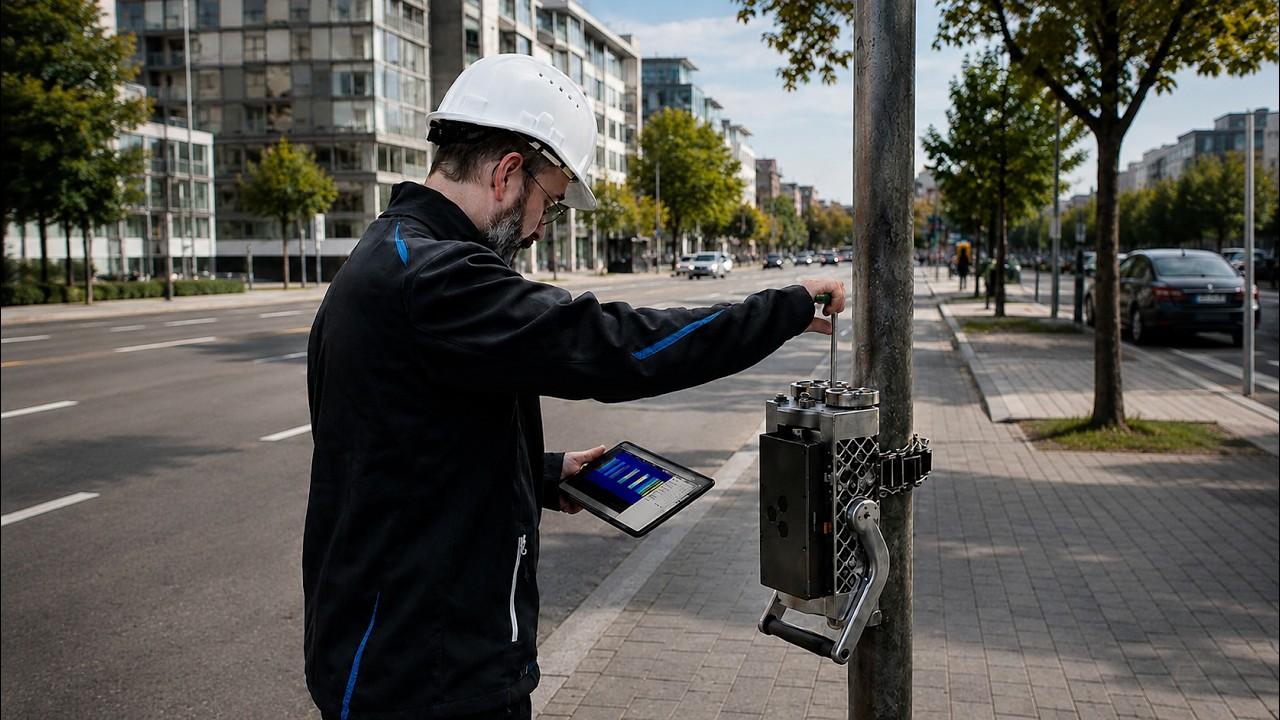
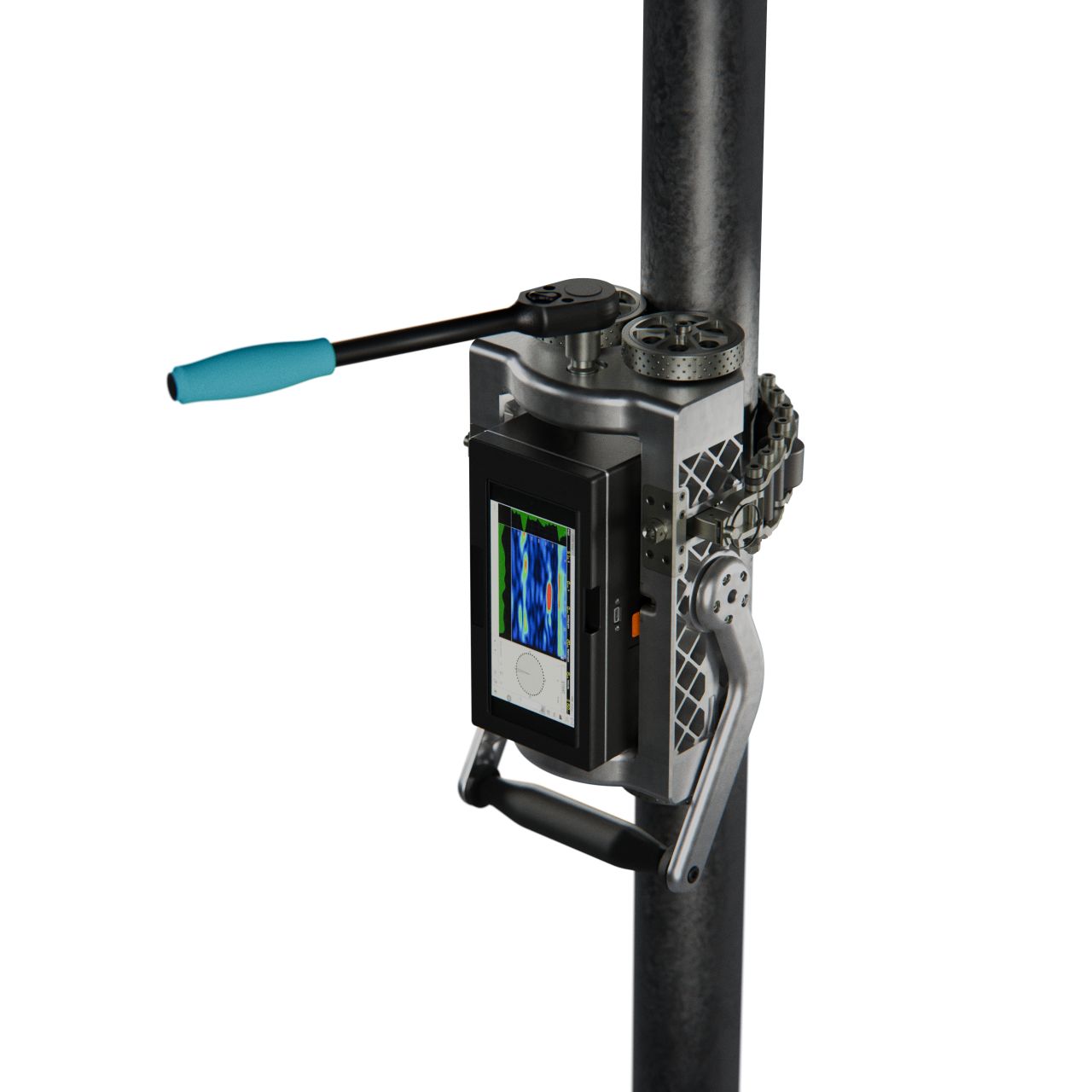
A steel lighting column usually fails where nobody can see it, at and just below the ground line. Moisture, soil and road salt attack the base while the visible part of the pole still looks perfectly sound. By the time the damage shows above ground the section can already be seriously weakened, and for a highways agency or a municipality with thousands of columns that is a genuine safety liability. In ultrasonic terms a buried pole base is simply a cylindrical metal pipe, so it is the same inspection job as process piping. The A1050 Ranger fits around the column above grade, runs a 360° guided-wave scan in SH0 mode at 50 kHz, and locates corrosion at and below the ground line without any excavation. It covers diameters from 70 to 380 mm. Because it rates how severe each finding is, you can decide which poles to excavate and confirm first instead of digging up the whole stock. It will not size the wall for you, but it does tell you where to spend your effort. If pole and column safety sits with you or someone on your team, pass this along. It finds the corrosion at the base before a column comes down. Here is the Ranger overview: https://lnkd.in/eAvkEBbe
- LINKEDIN · IMAGESince 30 Jul 2026
Corrosion under pipe supports causes a large share of leaks in process piping, and it sits in one of the hardest places to inspect. It builds at the contact point between the pipe and its support, where water and dirt collect and stay. Inspecting it the conventional way usually means lifting the pipe off its support, so you add scaffolding, permits and downtime before you even take a reading. The A1050 Ranger reaches that spot without lifting the pipe. You fit it around the pipe next to the support and it runs a 360° circumferential scan with dry-point-contact transducers and no couplant. The resulting B-scan shows where corrosion has concentrated around and under the support. It handles corrosion under insulation in the same way, on lines you would otherwise have to strip just to look. The scanner covers cylindrical steel from 70 to 380 mm in diameter. It locates the corroded zones and leaves the sizing to your high-resolution UT afterwards. Request your one-page technical sheet on the scan modes, the diameter range and typical pipe applications. Comment the word RANGER below and I will send it across.
- LINKEDIN · IMAGESince 30 Jul 2026
For years the guided-wave industry competed on a single number, the distance you could screen from one position. I have seen vendors claim 20 metres. One claimed 100. At those distances the resolution is far too low to read wall thickness, and a lot of inspection teams found that out the hard way, which is exactly why confidence in the method dropped. We built the A1050 Ranger around the opposite idea. Its working range is about 3 metres, and we state that on purpose. You fit it around a pipe or a pole, it runs a 360° circumferential scan, and the B-scan shows you where corrosion sits and roughly how bad it is. The real value is reaching the spots you cannot inspect any other way, such as under pipe supports, under insulation, or below a pole's ground line. The Ranger will not give you remaining wall thickness, and I will not pretend otherwise. It points you to the corroded area, and you confirm and size that area afterwards with classical high-resolution UT. The two methods work together rather than one replacing the other. Check it out on the product page: https://lnkd.in/eNF_qi5F If you run corrosion inspections, send this to a colleague who has been burned by long-range promises before.
6 of 62 adsSign up to see every Acoustic Control Systems - ACS Group ad, filter by format and date, and get alerts on new ones.
See all 62 adsWatch the companies you care about.
Filter every ad by industry, country, format and network, and get alerts when a company you watch starts running new ads.