LinkedIn thought leader ad examples
4 thought leader ads are live on LinkedIn right now, from 8,903 companies. Browse real ones, filtered by industry.
- Victus SalesSince 28 Oct 2026
Een korte preview van onze nieuwe podcast 'Groei is geen toeval'. Eerlijke gesprekken over ondernemen. Wat werkt, wat niet werkt en wat we onderweg leren. Elke 2 weken een nieuwe aflevering van ongeveer 20 minuten. Ideaal voor tijdens een autorit. Nu online: 🎙️ E0: Van 40 lunches naar 5 bedrijven 🎙️ E1: Je hebt geen salesprobleem Benieuwd? Beluister de afleveringen via: Spotify: https://lnkd.in/eaPCvbQg YouTube: https://lnkd.in/esXGArsh
- BazaarvoiceSince 27 Oct 2026
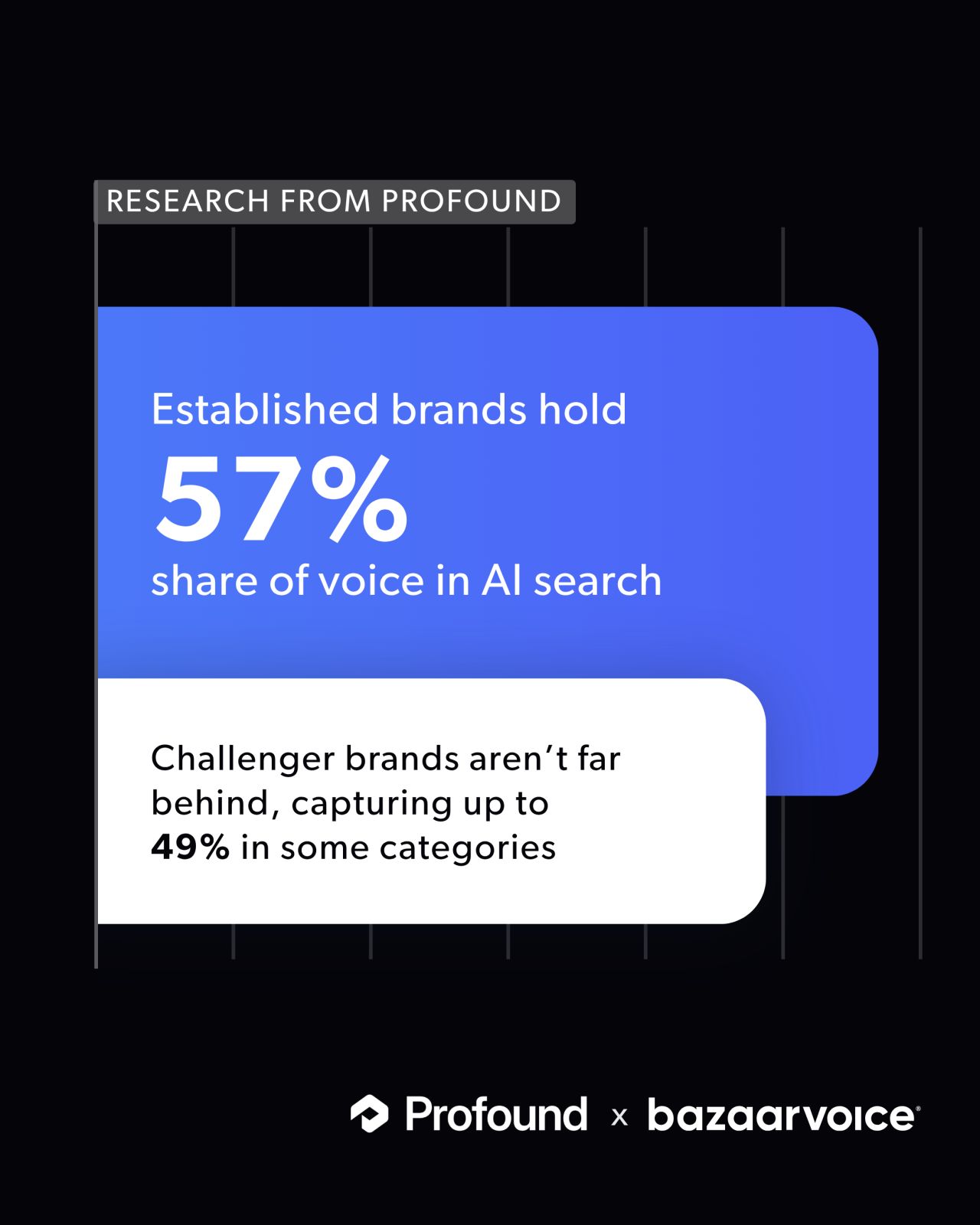
AI shopping is leveling the playing field for product discovery across brand types. New research shows what it actually takes to stay ahead: → Bazaarvoice found 44% of consumers expect to see a mix of established, challenger, and private-label brands when asking AI tools for product recommendations → Research from Profound found established brands hold an average of 57% share of voice in AI search, versus up to 49% for challengers But here’s the key: → Even though 77% of consumers are open to AI-recommended private-label products, 34% will hesitate if there aren't enough reviews (Bazaarvoice) AI shopping is creating new risks and opportunities for every brand type. That’s where Bazaarvoice’s partnership with Profound comes in. Together, we're giving established, challenger, and private-label brands deep visibility into how AI engines cite and recommend their products, so they can compete effectively and efficiently on the AI shelf. ✨ Explore the partnership details here: https://my.ugc.bz/Y5vVQC #bazaarvoice
- Fagerberg A/SSince 27 Oct 2026
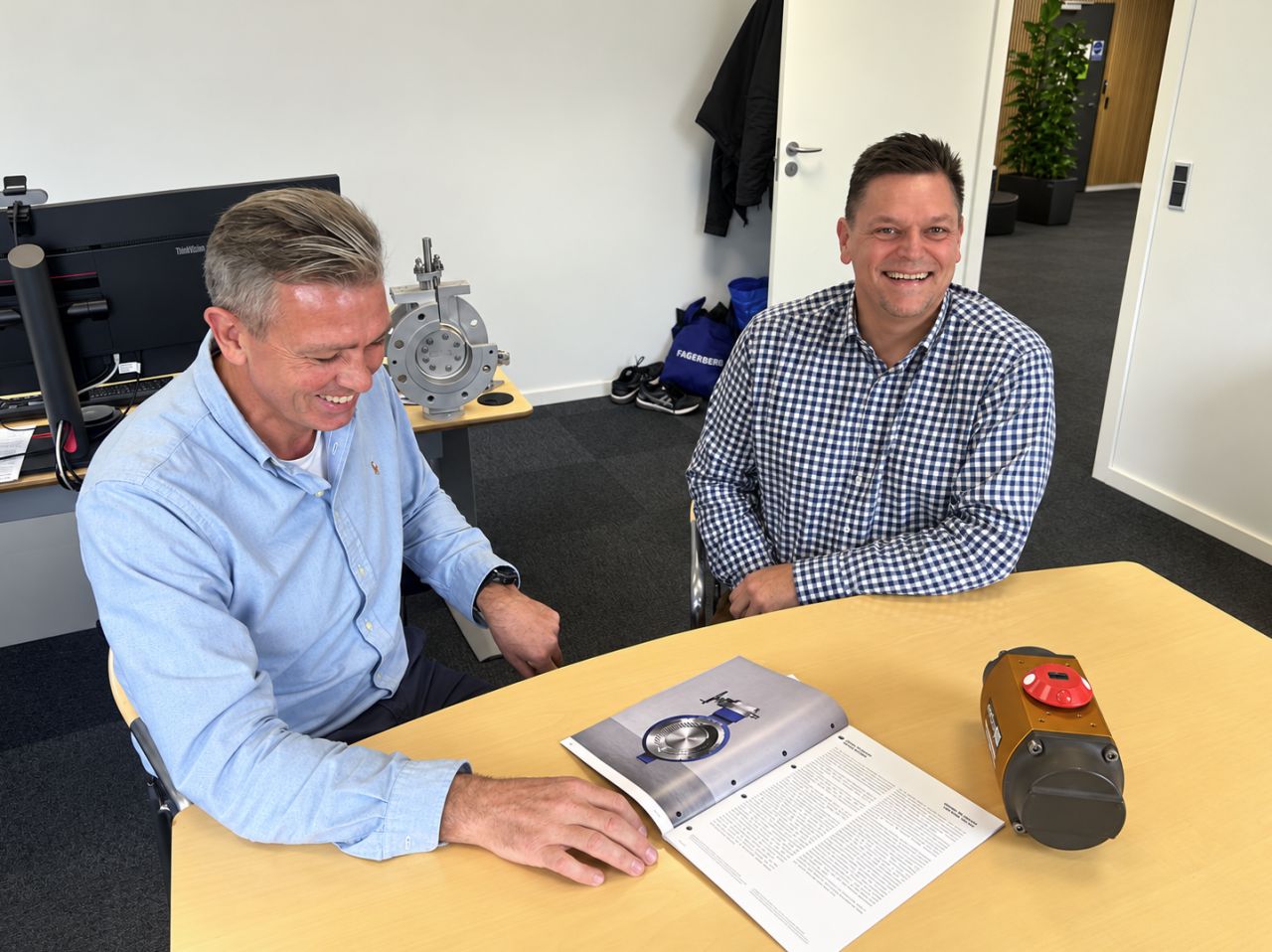
Så er Nicolai og jeg ved at være klar til Dansk Fjernvarmes Landsmøde! 🔥 I en tid, hvor meget klares over mail, telefon og Teams, er det nu rart at mødes ansigt til ansigt. Få en snak, udveksle erfaringer og høre lidt om, hvad der sker rundt omkring i den danske fjernvarmebranche. Jeg glæder mig til at møde en masse nye og velkendte ansigter på Fagerberg A/S stand i Aalborg den 29.-30. oktober. I år får vi desuden også selskab af vores leverandør Zwick Armaturen GmbH Vi tager deres tripleexcentriske butterflyventil med, og der bliver rig mulighed for en faglig snak om ventilløsninger til fjernvarmen. Kig endelig forbi os på stand S76+77 - vi glæder os til at se jer! 😊
- CSEMSince 27 Oct 2026
𝗔 𝗽𝗮𝘁𝗶𝗲𝗻𝘁 𝘄𝗶𝗹𝗹 𝗲𝘃𝗲𝗻𝘁𝘂𝗮𝗹𝗹𝘆 𝗹𝗲𝗮𝘃𝗲 𝘁𝗵𝗲𝗶𝗿 𝗽𝗵𝗼𝗻𝗲 𝗶𝗻 𝗮𝗻𝗼𝘁𝗵𝗲𝗿 𝗿𝗼𝗼𝗺. 𝗧𝗵𝗲 𝗺𝗲𝗱𝗶𝗰𝗮𝗹 𝘄𝗲𝗮𝗿𝗮𝗯𝗹𝗲 𝗻𝗲𝗲𝗱𝘀 𝗮 𝗽𝗹𝗮𝗻 𝗳𝗼𝗿 𝘁𝗵𝗮𝘁. Can it continue monitoring? Which measurements will it retain? When the connection returns, can the system reconstruct the sequence without losing the original timestamps? These are ordinary situations with consequences for how the care team interprets the data. I explore them in this article, including why reliable remote monitoring depends on what happens during a disconnection: https://lnkd.in/e35hqSxV #RemotePatientMonitoring #MedicalWearables #ConnectedHealth #DigitalHealth #Medtech Fabian Braun Christopher M. Mathieu Lemay Damien Ferrario Gürkan YILMAZ João Jorge Adriano Giovannini Jens Krauss Martin Proença Alia Lemkaddem
- CSEMSince 27 Oct 2026
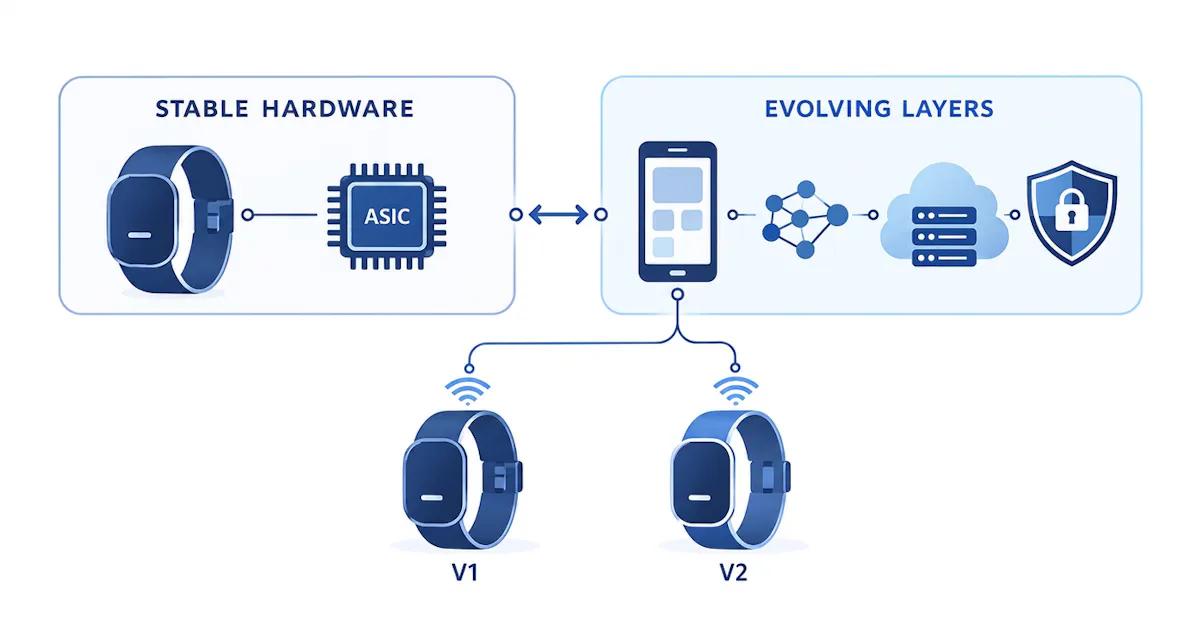
"We can change it later” deserves a closer look before a medical-device function goes into silicon. A sensing interface may be well understood. A classification algorithm may still evolve as the team collects more representative physiological data. I’d be cautious about treating both as equally ready for fixed hardware. The architecture needs to deliver useful efficiency today while leaving room for foreseeable changes and the verification work those changes may require. I explore that balance in this article on connected medical devices: https://lnkd.in/d_bpJgmJ #CustomASIC #MedicalDevice #EmbeddedAI #UltraLowPower #AI CSEM Bahaa R. Stephane Emery Paulo Augusto D. Dragan Manic Gabriel K. Nadim Maamari Pascal Nussbaum Josef Hayoz Mathieu Lemay Jens Krauss
- ElisaSince 27 Oct 2026
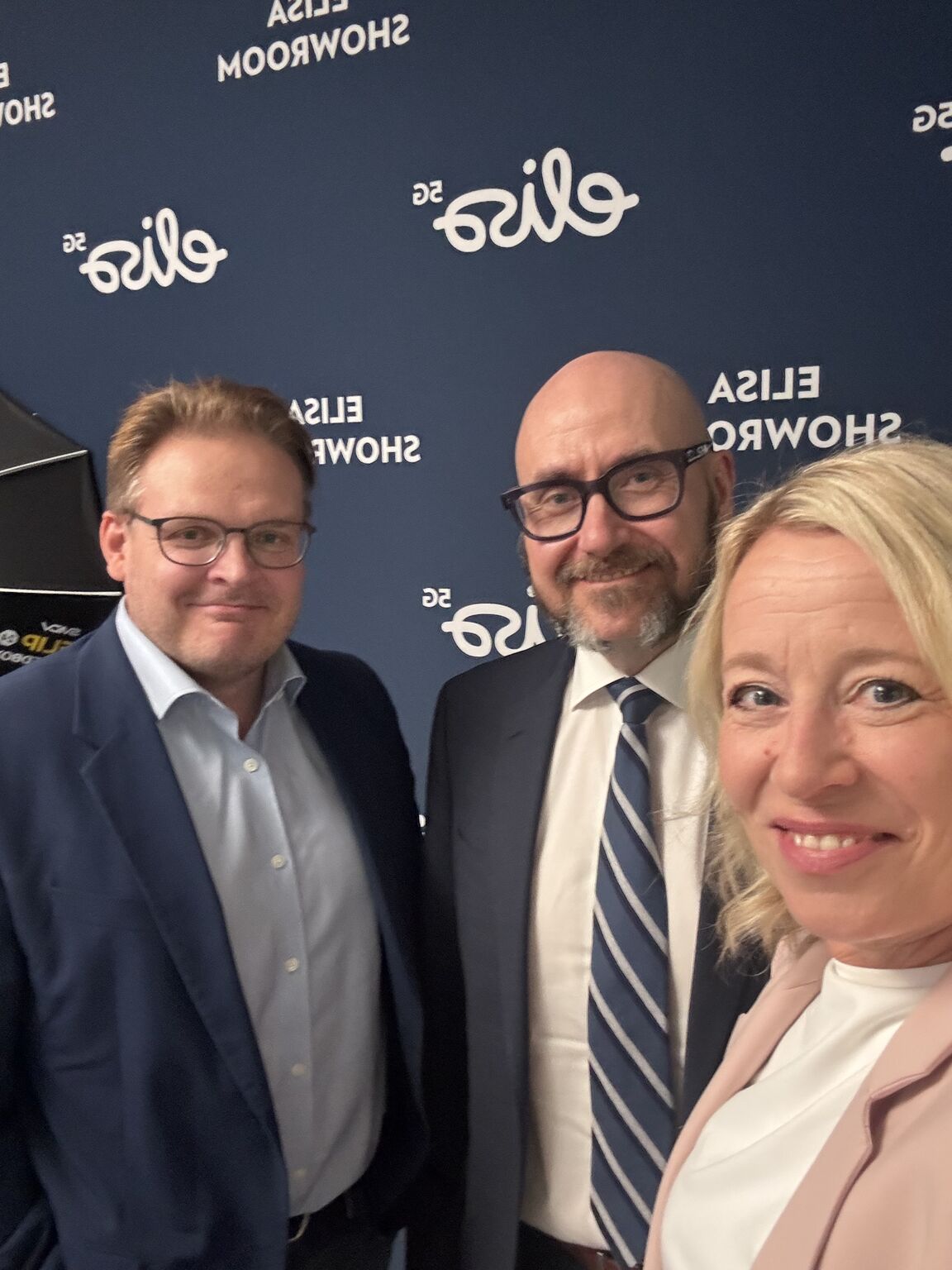
Viiden vuoden megahanke, jonka hyödyt nähdään vasta maalissa, sopii yhä huonommin tähän maailmaan, joka muuttuu ympärillä huimaa vauhtia. Uusimmassa Elisan Digipulssissa keskustelimme Valtiovarainministeriön Jarkko Levasman ja Oma Häme - Kanta-Hämeen hyvinvointialueen Toni Suihkon IT-investointien johtamisesta ja priorisoinnista tässä hektisessä ajassa. Yksi selkeä teema oli uudistusten pilkkominen selkeisiin, helpommin johdettavissa oleviin osiin. 💡Kun ensimmäisiä hyötyjä saadaan nopeammin, niitä voidaan myös mitata, oppeja hyödyntää seuraavissa vaiheissa ja ihmiset saadaan näin helpommin mukaan muutokseen. 💡Tämä ei tarkoita kunnianhimon pienentämistä vaan päinvastoin. Pienemmillä konkreettisilla askelilla voidaan saavuttaa isompi muutos varmemmin kuin yhdellä megahankkeella. Julkishallinnon tiukassa taloustilanteessa tämä on todella ajankohtaista. Rohkeutta ja uudistumista tarvitaan ehdottomasti, mutta jokaisen investoinnin tulee tukea arjen todellista tarvetta ja osoittaa aitoja hyötyjä yhä nopeammin. Kiitos erinomaisesta ja ajatuksia herättävästä keskustelusta! Täältä löydät Digipulssin jaksot: https://lnkd.in/drVSMKvz
- FORDEFISince 27 Oct 2026
Ask any CASP in Europe if they have a business continuity plan for their custody setup, and they'll say yes. Ask them what actually happens to client assets the day their wallet provider goes offline, and you get a much longer pause. That pause is now a regulatory problem. Under MiCA Article 68(7), CASPs need a business continuity policy, including ICT response and recovery plans under DORA. Those plans have to either keep services running through an outage or get them back up in a timely way. And with the MiCA transition period over, "we're working on it" no longer cuts it. Here are the 3 scenarios I'd want any continuity plan to answer: 1/ 𝐘𝐨𝐮𝐫 𝐜𝐮𝐬𝐭𝐨𝐝𝐲 𝐩𝐫𝐨𝐯𝐢𝐝𝐞𝐫 𝐠𝐨𝐞𝐬 𝐝𝐨𝐰𝐧. An outage, a breach, an infrastructure failure. Withdrawals stop, and your clients still expect access to their funds. 2/ 𝐘𝐨𝐮𝐫 𝐩𝐫𝐨𝐯𝐢𝐝𝐞𝐫 𝐜𝐮𝐭𝐬 𝐨𝐟𝐟 𝐬𝐞𝐫𝐯𝐢𝐜𝐞 𝐨𝐫 𝐞𝐱𝐢𝐭𝐬 𝐚 𝐦𝐚𝐫𝐤𝐞𝐭. Commercial dispute, sanctions exposure, a strategy change on their side. Your operations are now tied to someone else's roadmap. 3/ 𝐀 𝐫𝐞𝐠𝐮𝐥𝐚𝐭𝐨𝐫 𝐚𝐬𝐤𝐬 𝐲𝐨𝐮 𝐭𝐨 𝐩𝐫𝐨𝐯𝐞 𝐢𝐭 𝐰𝐨𝐫𝐤𝐬. A PDF describing your recovery process isn't proof. A plan that has never been run isn't really a plan. __ In most setups, the honest answer to all three is: "we'd scramble." That's the gap the 𝐒𝐭𝐚𝐧𝐝𝐛𝐲 𝐖𝐚𝐥𝐥𝐞𝐭 closes. It's the failover solution FORDEFI built with Station70. HOW IT WORKS: 1/ 𝐑𝐞𝐚𝐝𝐲 𝐛𝐞𝐟𝐨𝐫𝐞 𝐭𝐡𝐞 𝐢𝐧𝐜𝐢𝐝𝐞𝐧𝐭: A Fordefi workspace is set up in advance, with your policies and address books already in place. It sits with a different provider from your primary wallet, so you don't have a single point of failure. 2/ 𝐊𝐞𝐲𝐬 𝐦𝐨𝐯𝐞, 𝐭𝐡𝐞𝐲 𝐚𝐫𝐞 𝐧𝐞𝐯𝐞𝐫 𝐫𝐞𝐛𝐮𝐢𝐥𝐭: When recovery is triggered, Station70's SWAT process migrates the MPC key shares securely. The private key is never fully reconstructed, so you keep MPC's security even mid-crisis. 3/ 𝐃𝐨𝐫𝐦𝐚𝐧𝐭 𝐮𝐧𝐭𝐢𝐥 𝐲𝐨𝐮 𝐧𝐞𝐞𝐝 𝐢𝐭: The standby wallet stays inactive day to day. When it's needed, you move to a controlled environment you've already set up, not one you're building under pressure. WHY THIS IS SO VALUABLE: Your 𝐜𝐨𝐧𝐭𝐢𝐧𝐮𝐢𝐭𝐲 plan stops being a document and becomes infrastructure. Your 𝐫𝐞𝐜𝐨𝐯𝐞𝐫𝐲 is pre-built, with governance and controls already in place. And when your regulator asks how you protect client assets if your provider fails, you can give them an answer you've actually tested. P.S. If you're a CASP working through MiCA continuity requirements, you can get a personalised walkthrough of the Fordefi Standby Wallet here → https://lnkd.in/exv3aahW Or DM me in the comments.
- Bentley SystemsSince 27 Oct 2026
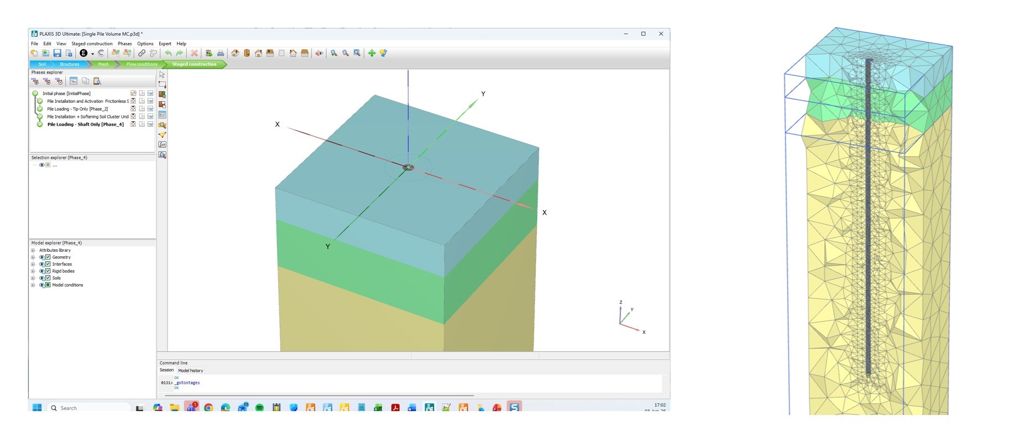
Numerical pile modelling does not stop at selecting between volume piles and embedded beam piles. Calibration plays an important role in aligning the numerical response with pile load test data or reference load-displacement curves. This Thursday, Dr. Richard Witasse will focus on pile modelling and calibration in PLAXIS 3D, moving from an overview of the two modelling approaches into practical calibration workflows. The session will explore: 💠 Back-analysis using field pile load test data or established reference approaches 💠 Calibration of skin friction and end-bearing mobilization 💠 Influence of soil constitutive behaviour on pile stiffness 💠 Approaches for incorporating pile installation effects 📅 Thursday, 29 October 2026 | 3:00 PM CET Modeling and Calibrating Piles in PLAXIS 3D: From Numerical Approaches to Load Test Calibration Register here 👉 https://bentley.info/ut8dd 📌 For those following the full webinar series: the session with Dr. Ronald Brinkgreve, “Constitutive Clay Modeling: Theory, Calibration, and Engineering Practice”, has moved to 19 November 2026 at 3:00 PM CET.
- arcads AIRecorded 30 Oct 2026
Your winning ad is dying from fatigue. I found an ADS MACHINE that turns it into 100+ fresh variations 🤯 It’s an AI ad studio that writes, casts and produces video + static ads in one place. Your entire BFCM ad production can now run from one AI tool. I set it up in one afternoon. 200+ ad creatives produced for our ecom clients. 1,000+ AI actors to choose from. 0 studio shoots booked. Here’s what changed. I no longer coordinate creators, editors and re-shoots across 5 different tools. Everything runs in one place. Now I can use it to: → Turn a script into a video in minutes → Pick any AI actor, or create our own → Set the emotion of each line → Test 10 hooks on the same offer → Generate static ads in the same flow → Launch hundreds of variations in one click I write the script and choose what to test. The machine handles the production. For ecom brands heading into Black Friday, the impact is simple: → No more waiting on creator deliveries → Lower cost per creative → Winning ads found before CPMs spike → More time on offers and inventory Perfect for DTC brands and agencies that need a winner, and 10 more like it. Want me to send you this ad machine? Let me know and I will send it to you...
- DeichmannSince 27 Oct 2026
Ich finde, Werbung darf ruhig ein bisschen weniger so tun, als würde sie die Welt retten. 🙄 (Hat sie nicht gesagt?) Natürlich lösen Schuhe nicht plötzlich alle Probleme. Aber mit einem cuten Fit und bequemen Boots lässt sich so manches Alltagsdrama direkt ein bisschen besser aushalten, oder? 💅 Genau mit diesem Gedanken sind wir an unsere Deichmann Cozy Boots Kampagne rangegangen: kleine „Fühl ich“-Momente aus dem Alltag, eine gute Portion Humor und ganz viele extrem nice Cozies. https://lnkd.in/e34YMAps https://lnkd.in/epWC5guR Was ich an der Kampagne besonders mag, ist die Mischung aus cinematischem Storytelling und Social-First-Denken. Gemeinsam mit HEY NA!, Patata Agency & Terry Ellmer als Regisseurin haben wir einen Look geschaffen, der auf dem großen Screen genauso funktioniert wie im Feed. Mit mariattma.jadie, lunarabea, aisha.vibes und linellaboo sind außerdem vier Creatorinnen dabei, die ihren eigenen Humor, Style und ihre Persönlichkeit mitbringen. (Hatte kurz ein paar Fangirl-Moments. ✨) Genau die Mischung, die ich mir für die Kampagne gewünscht habe. Von Instagram und TikTok über YouTube und Shorts bis hin zu Connected TV ist einiges zusammengekommen. (Über 100 Assets, ihr wisst selbst, was das bedeutet.. 🤯) Naja, jetzt ist unser „Baby“ live und ich bin ganz gespannt, was ihr so dazu sagt. Die nächsten 4 Wochen werden cozyyyy. An dieser Stelle ein riesengroßes Dankeschön an Kiara & Michelle! Ohne euch, wäre ich mindestens 5x mehr Crashout gegangen & alles hätte 100x weniger Spaß gemacht. 🥹 Danke Matthias dafür, dass du uns immer so vertraust! Danke an das Social Team, für euren Support all the time! An Team Hey Na, Patata & Terry und ALLE die Part of it waren. <3 // Björn Mager Marco Pumptow Christl Joe Alarcon Julien Kelch Anna Krenkel #DEICHMANN #DEICHMANNStories #cozyboots
- FORDEFISince 27 Oct 2026
Wallet infrastructure for on-chain finance is due for an upgrade. DeFi has become more sophisticated, yet despite this, institutional wallets remained unchanged. Today, legacy institutional wallets lack the specific risk controls required for the complex and sophisticated reality of modern DeFi, leaving teams frustrated and funds vulnerable to a multitude of 𝐭𝐡𝐫𝐞𝐚𝐭𝐬 and 𝐠𝐨𝐯𝐞𝐫𝐧𝐚𝐧𝐜𝐞 𝐞𝐱𝐩𝐥𝐨𝐢𝐭𝐬. Capital deployment is also still being obstructed due to these same legacy institutional wallets not supporting access to protocols on different or new blockchains. These are problems that modern, upgraded institutional wallet infrastructure can solve. That’s why we build FORDEFI (now part of Paxos) - 𝐚 𝐬𝐞𝐥𝐟-𝐜𝐮𝐬𝐭𝐨𝐝𝐲 𝐌𝐏𝐂 𝐰𝐚𝐥𝐥𝐞𝐭 𝐩𝐮𝐫𝐩𝐨𝐬𝐞-𝐛𝐮𝐢𝐥𝐭 𝐟𝐨𝐫 𝐦𝐨𝐝𝐞𝐫𝐧 𝐃𝐞𝐅𝐢. Fordefi enables teams to secure, govern and grow their on-chain finance operations across 90+ chains, all from one platform. 300+ institutions and DeFi-natives use Fordefi - asset managers, trading firms, protocols, payments and banks/fintechs - including the likes of Pantera Capital, Keyrock, Solv, Midas, infiniFi, and the list is growing. Want to learn how Fordefi can significantly improve the security and governance of your onchain finance operations? Schedule a personalized demo with our team → https://lnkd.in/eJu6YbvH
- PIX Robotics LATAMSince 28 Oct 2026
My first automation project lost money. I've done many projects since, and I'd love to brag that I learned my lesson and never screwed up like that again, but that wouldn't be true. That first one was in 2010. My partners and I had just started a software company, Improve Group, we were twenty-five and very smart, and a big auto parts company asked us to automate its purchasing. Hundreds of thousands of part numbers, God knows how many suppliers, a monitor the size of a TV on every desk, which I'd never seen before, and not one person who could tell you where a particular part was. You know what a twenty-five-year-old sees in that? A beautiful problem. We wrote a clever algorithm, estimated two months, sold three to be safe, and felt very grown-up. It took more than a year, and the funny part is that the algorithm was ready on time and worked. The year went into everything else. The warehouse manager had his own part numbering, which matched the shelves, and wasn't going to give it up. Purchasing had theirs, which matched the invoices, and wanted the report to look like their ten-year-old spreadsheet. The deputy director approved things on Tuesday and the director overruled him on Thursday. None of it looked like a problem: a week here, two there, one more field, one more meeting with someone who'd missed the previous one. We had estimated how long the code would take. Back then none of us thought to estimate how long it would take everyone to agree. What I took from that year wasn't the loss, it was the client. He's usually a tired man who has been drowning in this mess for years, and what he wants, if you listen past the requirements, is one button: press it and it all goes away. I think that's the most honest brief there is. He lives in two modes. In the first he doesn't believe you: what do you know about my business, we've had people like you before. That lasts until the first thing works. Then he flips and wants everything automated, including what was living perfectly well in a paper notebook. For the first time in years something got easier, and he wants more of it. In his place, so would I. Today I hear the same wish, from people with much nicer monitors. Only the name on the button has changed: it was a system, then an app, then a robot, and now it's AI, plug it in and it does everything by itself. I'm no different. I spend half my day talking to an AI. But the trick, as far as I can tell, was never in the technology. Our clever algorithm, those two proud months, is an evening's work with AI now. The warehouse manager still has his numbering, purchasing still has its spreadsheet, and everyone still has to agree on what the button does. Technology has come a long way. Understanding how people think, why they actually come to work and what drives them has not. Writing the code takes an evening now. Getting everyone to agree still takes a year. I should know. I've sold three months more times than I'd like to admit.
- HupsSince 28 Oct 2026
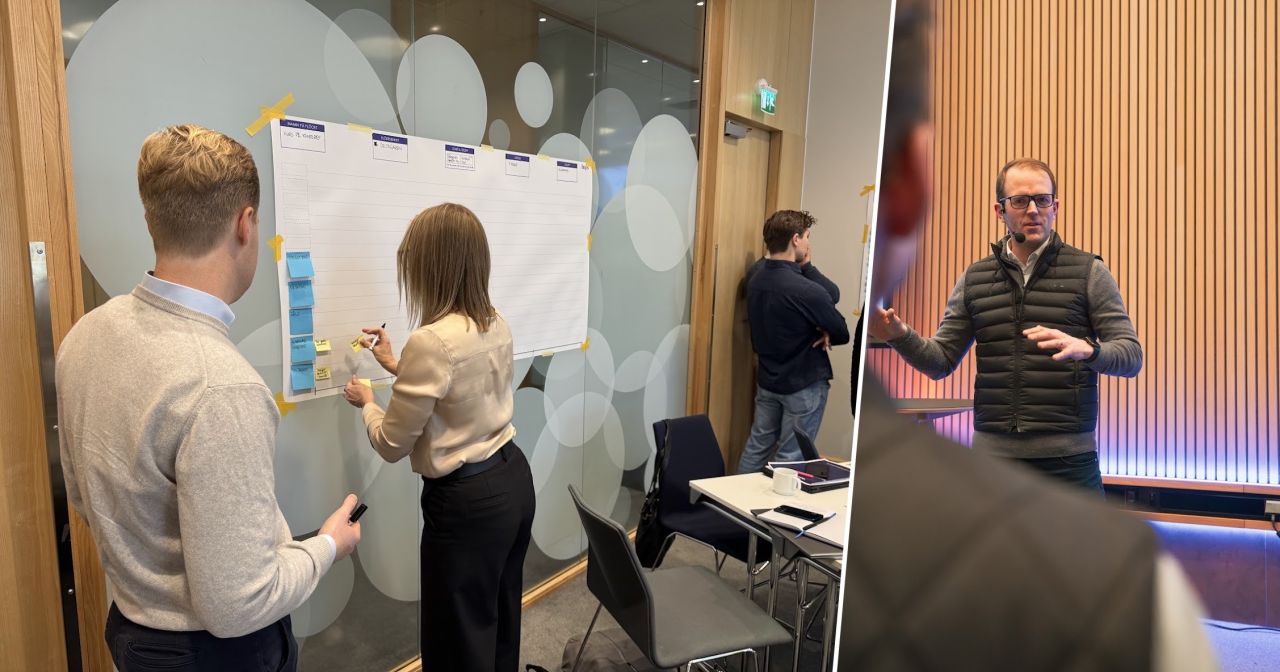
Inspiration has an expiry date. In my experience, it's a few days at most. Last week I led separate flipped classroom workshops with two management teams at a partnership client, both working with their primary end-to-end flow. The setup is simple: Participants complete relevant training beforehand, so our time together is spent working on their own flow instead of listening to me. The energy in the room changes completely when people spot the problems themselves, engage across department lines, and by the end there's a wall full of improvement ideas. But the teams that actually succeed have three things in common. Remember this: First, they take the preparation seriously and make sure the right people are going to be in the room. The workshop itself is maybe a third of the work. Second, they start working on the results the very next day. Not in a month when everyone has "found the time", but the next morning, while the ideas still feel like their own. Someone owns each one, the next step is clear, and everyone can see whether it's moving. Third, they ensure there's already a simple way to manage the change in their end-to-end flow once the workshop is over. If that's in place before you start, the follow-up becomes the natural next step instead of a new project nobody has time for. Without that, the post-its stay on the wall, and two weeks later the workshop is remembered as "that great day". That's really what managing a transformation comes down to for me. A workshop can change how people see their flow, but changing how they actually work together needs a few steps already laid out, so the transition happens while the energy from the room is still there. If you've got a wall of post-its from last year's workshop still hanging somewhere, you know exactly what I mean. Speed is the key here people - make sure you've set up to actually handle the improvements identified! Follow for more → Hups AB #hups #webuildpeople #silokiller #solvingtheefficiencyparadox #flowefficiency
- CondorRecorded 30 Oct 2026
“Tons of data and absolutely no information.” That's how an executive overseeing more than $1 billion in annual clinical trial spend described his financial systems to me last week. His forecasts may be built to the penny, but they're still wrong by millions. One study slipped nearly 6 months. The spend forecast barely moved. Another returned $15 million in unused budget. Meanwhile, a different program had been sitting on hold since September waiting for funding. The money existed. The visibility didn't. And this isn't an isolated story. I'm hearing versions of it in nearly every room I'm in. We've built an industry that can track clinical trial spending down to the decimal, but can't reliably tell us what a trial will actually cost, when the money will be spent, or where capital could be redeployed. The consequences go far beyond financial inefficiency. A promising therapy doesn't have to fail scientifically to never reach a patient. It can stall because finance and clinical operations are working from two different realities. It can lose funding because a forecast that hasn't kept pace says the budget isn't there. AI is accelerating drug discovery. But discovering more therapies doesn't mean more therapies reach patients. The next bottleneck isn't scientific discovery alone. It's the ability to turn promising science into funded, executable clinical programs. That requires clinical and financial operations working from the same reality. That's what we're building at Condor.
- HupsSince 28 Oct 2026
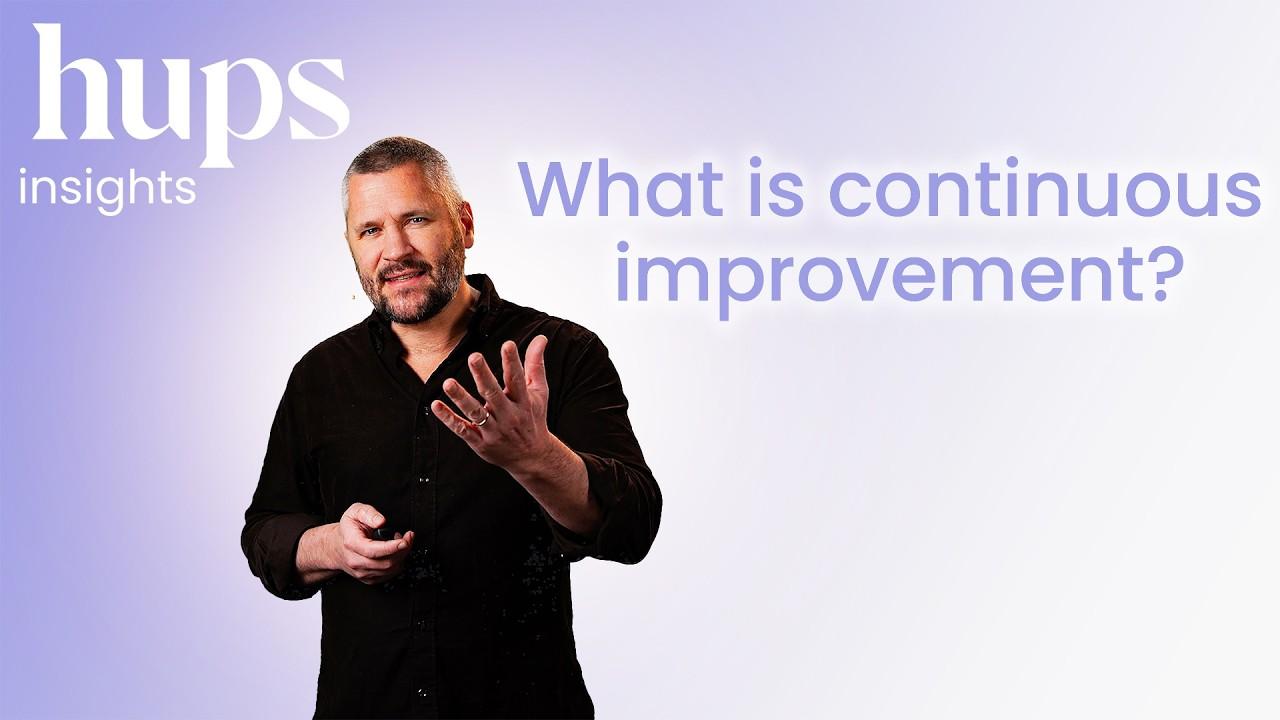
HUPS INSIGHTS # 1 - What is continuous improvement? One reflection that stands out after +20 years in lean and operational excellence is that at the heart of this field is a powerful learning cycle: We hear a story from someone—or experience something ourselves in an organization. We reflect on it, try to understand its essence, and give it structure. Then we share it forward. From there, it continues to evolve. Someone else takes it, interprets it in their own context, improves it—and passes it on again. Over time, these stories grow, deepen, and become more meaningful. This Sharing is Caring cycle is, in my view, one of the most important drivers of progress—and ultimately how we build better organizations—and a better world—together. That’s why we are now launching Hups Insights. Here, we will share some of the most insightful stories and perspectives within Lean, Operational Excellence, customer orientation, and Continuous Improvement. At its core, it’s about one thing: how we create truly productive and profitable organizations—by continuously learning and improving. First out is a simple but fundamental question: What is Continuous Improvement? In this first insight, I share a story I’ve probably told more than 500 times. It has been a constant source of inspiration for me. I first heard it from Jeffrey Liker, author of The Toyota Way, and my understanding deepened through Professor Fujimoto, whom I had the privilege to study under at the University of Tokyo for two years. This is, of course, my own interpretation—but one I hope resonates. If it does, make it your own version—and pay it forward. A big thank you to both Jeffrey Liker and Professor Fujimoto for inspiring me to understand what Continuous Improvement truly is. Here is the video: https://lnkd.in/dzXfuGsm #hups #lean #operationalexcellence #continuousimprovement #kaizen #tps #toyota
- Vector Global LogisticsRecorded 30 Oct 2026
Most conversations about modern supply chains start and end with visibility: real-time tracking, cleaner dashboards, line-of-sight across every lane. That matters. But after two decades in this industry, I’ve learned that knowing where a problem is doesn’t solve it. Visibility tells you something’s wrong. Resilience is what you do next. Too many logistics leaders treat the two as the same thing. In my latest piece for Inc. Magazine, I look at why tracking data is now table stakes, and what separates the companies that just monitor disruption from the ones that act on it.
- Vector Global LogisticsRecorded 30 Oct 2026
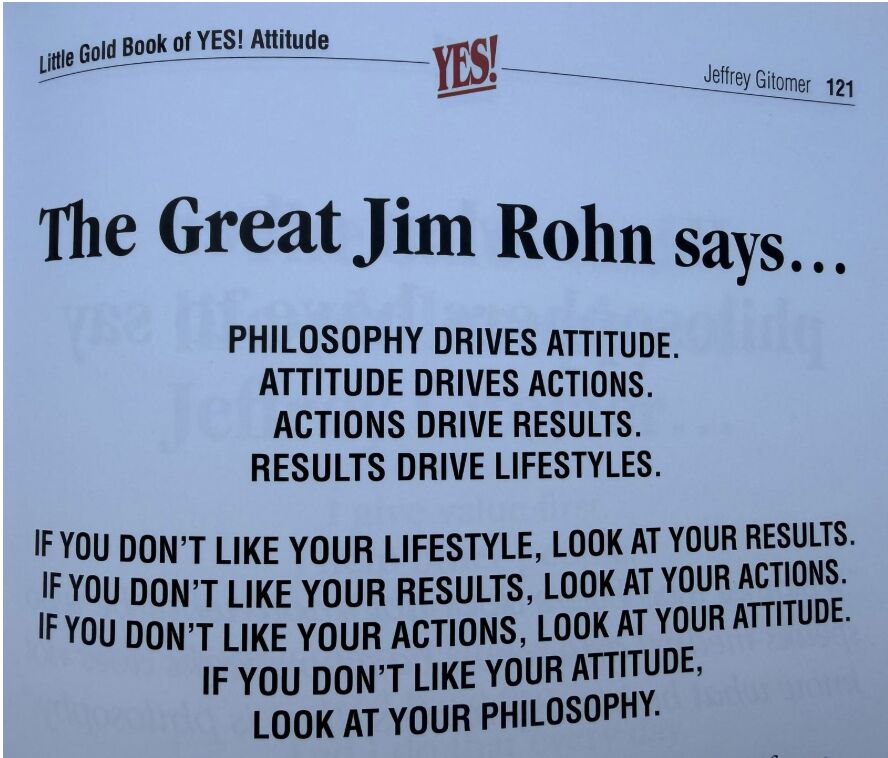
I was cleaning my room recently and found an old book that belonged to my dad, Little Gold Book of YES! Attitude by Jeffrey Gitomer. I started flipping through it and came across this page. It brought back memories of him, but I also thought the message was worth sharing. Philosophy drives attitude. Attitude drives actions. Actions drive results. Results drive lifestyles. So simple, but so true. We spend a lot of time in business talking about results, strategy, numbers and goals. But much of it starts much earlier, with how we think, how we show up, and the small choices we make every day. Sometimes, even something as simple as leading with a smile can change the tone of a conversation or a difficult day. A nice little reminder from my dad’s bookshelf. Happy Friday, everyone. Have a great weekend.
- Axis CommunicationsSince 27 Oct 2026
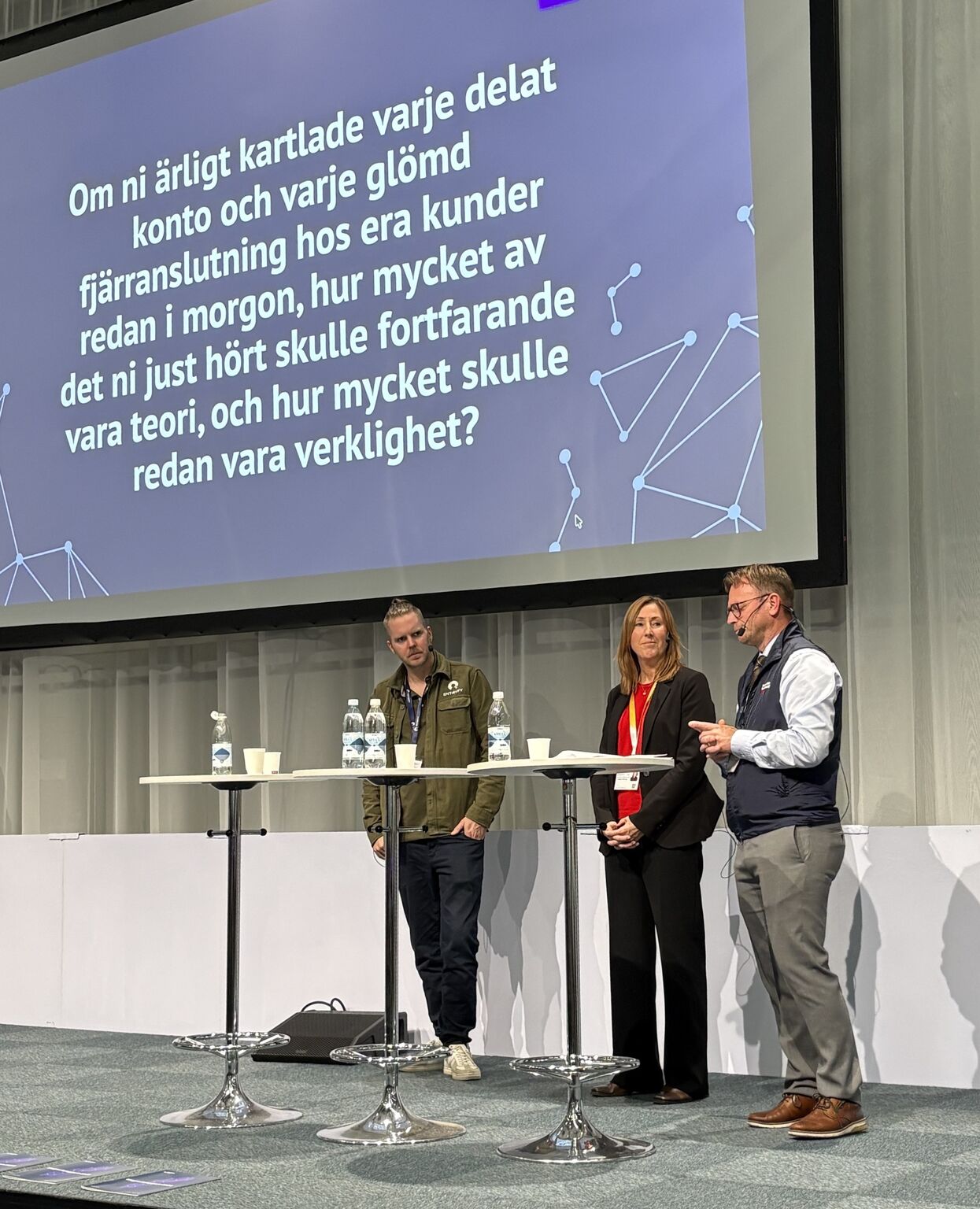
As physical security systems become increasingly connected, who is responsible for cybersecurity? This was a key theme of the panel discussion I had the pleasure of taking part in at the Skydd security trade show in Stockholm on October 22. Together with fellow industry professionals, Joel Sahlen and Robert Stenlund, we explored how cyber risks can be managed and how responsibilities should be shared among manufacturers, system integrators and customers. Cameras, intercoms and access control are increasingly connected and integrated, raising cybersecurity risks. Cyber threats target networks, software, user accounts and integrations, making it essential to consider the security of the entire connected ecosystem. With the EU Cyber Resilience Act (CRA) placing greater emphasis on manufacturers’ cybersecurity responsibilities, this is becoming an increasingly important topic for the industry. We as manufacturers need to go beyond our traditional responsibilities. Building secure products is essential, but we should also make it easier for customers to secure and manage them throughout their lifecycle. For example, making device logs easier to integrate into existing IT security monitoring systems and supporting defense in depth through measures such as virtual patching, which can help protect systems during the time between patch availability and deployment. For more on virtual patching, see link in the first comment. Security is a shared responsibility. Manufacturers, system integrators and customers need to collaborate, understand their respective roles and work together to strengthen security across the entire ecosystem. What do you see as the biggest challenges in securing connected security systems, and how is your organization addressing them?
- WithCoverageRecorded 30 Oct 2026
Scaling Oats Overnight to a $200M+ CPG brand is complex. We have two facilities, 600+ employees, and a business that gets more complex every year. As we scaled, risk management quickly became a priority. We needed a partner who could understand our business and scale with us. WithCoverage saved us 40% on our insurance rates in the first 90 days and rebuilt our worker safety programs around how we actually operate. Their team of insurance experts and attorneys act as an extension of our team giving me back hours I can reinvest into our business. Congrats to Max Brenner, Joseph Lattin, Myles Hilliard and the WithCoverage team on supporting 1000+ clients! I appreciate what you’re doing for the CPG industry and I’m glad I got to share a bit about our partnership.
- AstronomerSince 27 Oct 2026
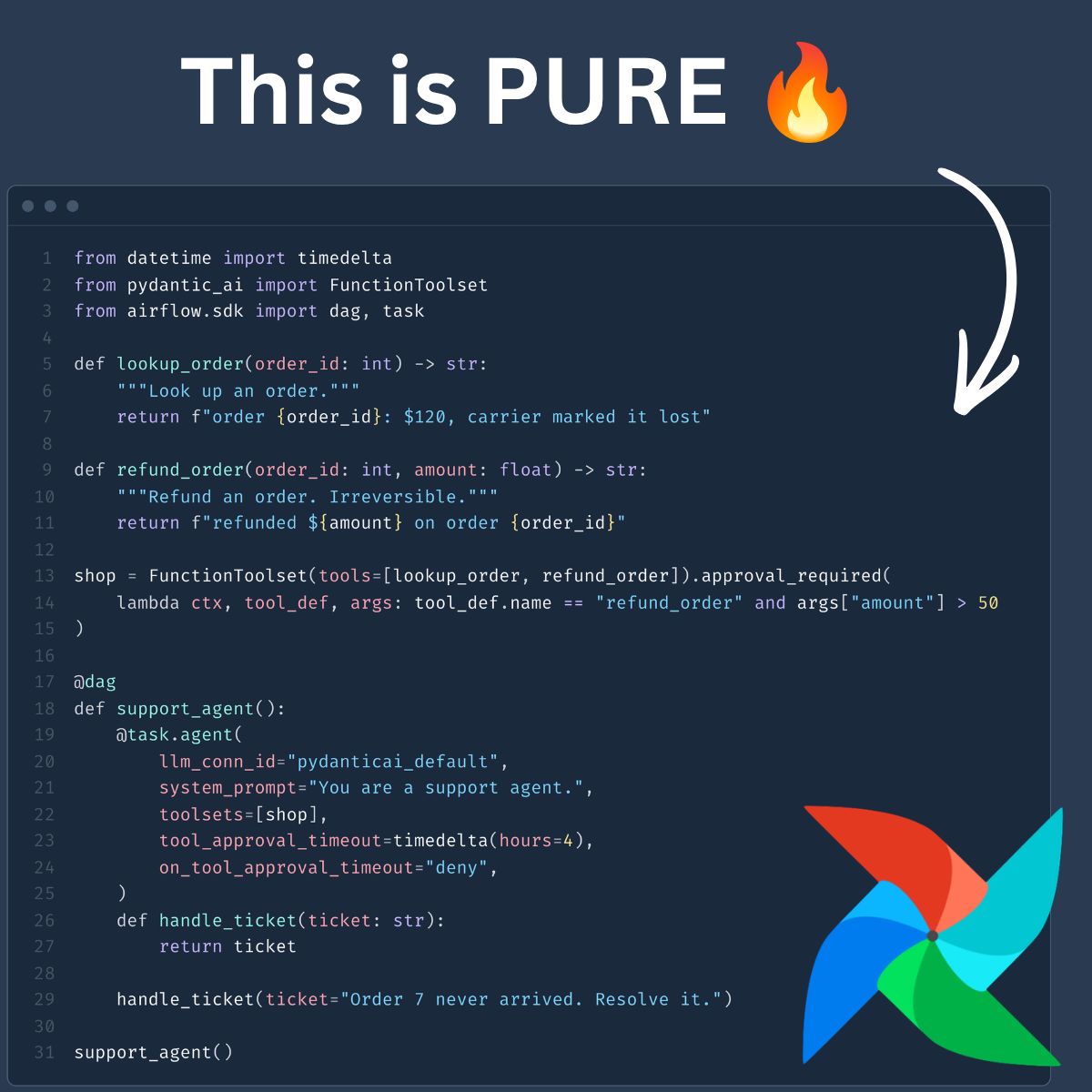
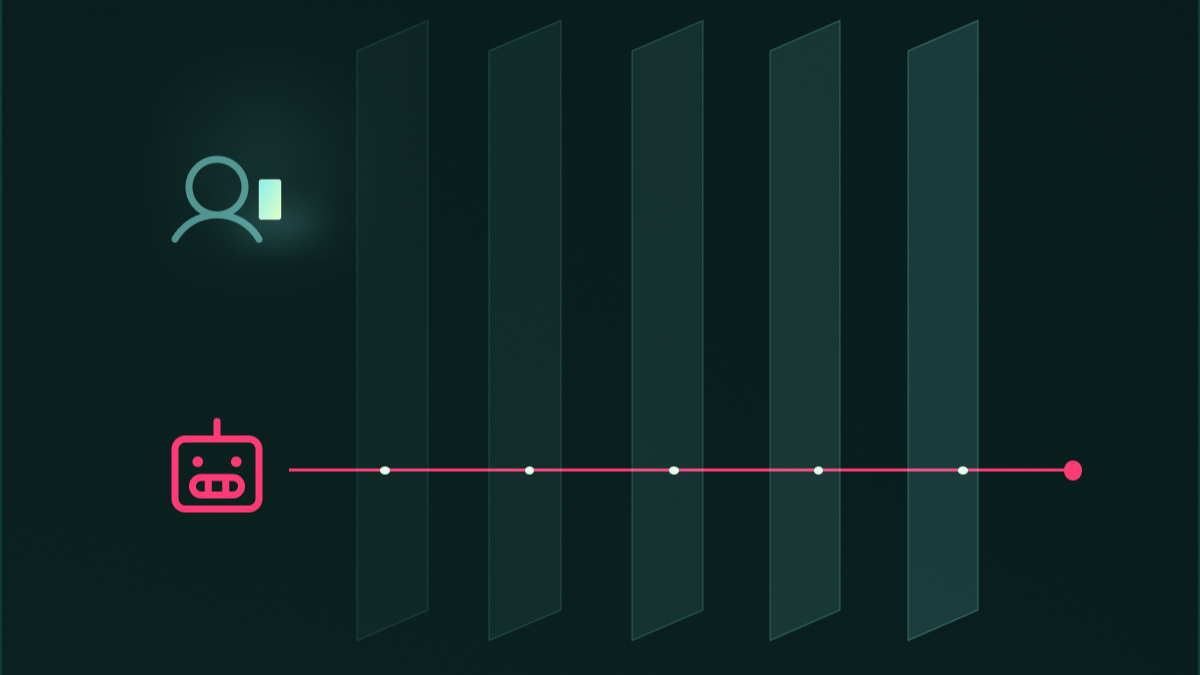
Your agent calls many different tools, BUT some are dangerous! Now you can review a given tool call before any disaster 👇 Airflow just introduced tool-call approvals 🤗 Works on @task.agent and AgentOperator available in Airflow 3.3+. How does it work? Simple: ✅ toolset.approval_required(func) on any toolset, SQLToolset and MCPToolset included ✅ Tool(refund_order, requires_approval=True) inside a FunctionToolset for a single function Let's say we have a refund_order tool. The function gets the tool name and the arguments, and requires human review for refunds over $50 in one line. What happens at the call: 1️⃣ The task pauses in awaiting_input 💡 No worker slot held, like a deferred task 2️⃣ The request shows up on Required Actions 💡 Tool name and arguments, secrets masked Then you: 3️⃣ Approve 💡 The call runs, the agent carries on 4️⃣ Reject 💡 The task doesnt fail. The agent is told your reason and carries on without the call You can specify tool_approval_timeout to define the wait. On timeout, you get fail or deny, and you can even set tool_approval_assigned_users to who can decide 😎 Now you can finally better control your agent! Try it, you gonna love it Enjoy ❤️ P.S: Like and share to help your teammates #airflow #apacheairflow #dataengineer #dataengineering
- AlpicSince 27 Oct 2026
I’ve been thinking a lot in the past few weeks about what the rise of autonomous personal agents means for the web as we know it. A big part of the internet gets its money from moments when people stop paying attention: ads, friction, switching costs. Personal AI agents don’t get tired and don’t overlook the fine print. On paper, that should level the playing field. After all, an agent can weigh objective criteria, compare reviews and avoid the scams that play on human weaknesses. In practice, incumbents keep plenty of advantages, starting with their track record and scale. I’ve written up some thoughts on which revenue streams are most exposed and the conflict of interest at the heart of it: many of the companies building personal agents are also the ad businesses with the most to lose. Have a look and tell me what you think!
- CondorRecorded 30 Oct 2026
Our best product roadmap decisions start as a frustrated comment on a customer call. For example, a clinical finance leader told me she had no way to check a payments vendors monthly total against what her sites actually did. Investigator grants represent up to half of per-trial cost, and too many teams were stuck choosing between taking the vendors word for it, or reconciling thousands of lines by hand in spreadsheets. That's why Im excited to introduce AI-powered investigator grants intelligence.Customers can upload vendor payment data, and Condor reconciles it against the contracts and trial data already in the platform. Condor automatically surfaces overbilling and pricing discrepancies, missing and unmatched payments, and site and vendor billing patterns. Because payment history is now connected to trial performance, those patterns also feed Condors forecasting, giving finance and clinical operations teams projected spend grounded in how vendors actually bill rather than in invoices alone. That's how we operate at Condor: listen closely, build what removes the most manual work, and ship it fast. September's Clinical Finance AI Agent. Now this. Thank you to every customer who pushed us here! See the link to the blog post in the comments.
- ConfigitSince 28 Oct 2026
❗Save the date for this interesting topic❗ I'm looking forward to hear Henrik Hulgaard and Daniel Joseph Barry discussing #pricing of configurable products in this upcoming webinar. #CPQ systems play an important role in pricing configurable products. But they don't always solve the underlying challenge of keeping pricing and #configuration aligned. 📅 November 18, 2026 🕒 15:00 CET | 09:00 ET ↘️ Register here: https://okt.to/HnW2rG
- BrightflagSince 28 Oct 2026
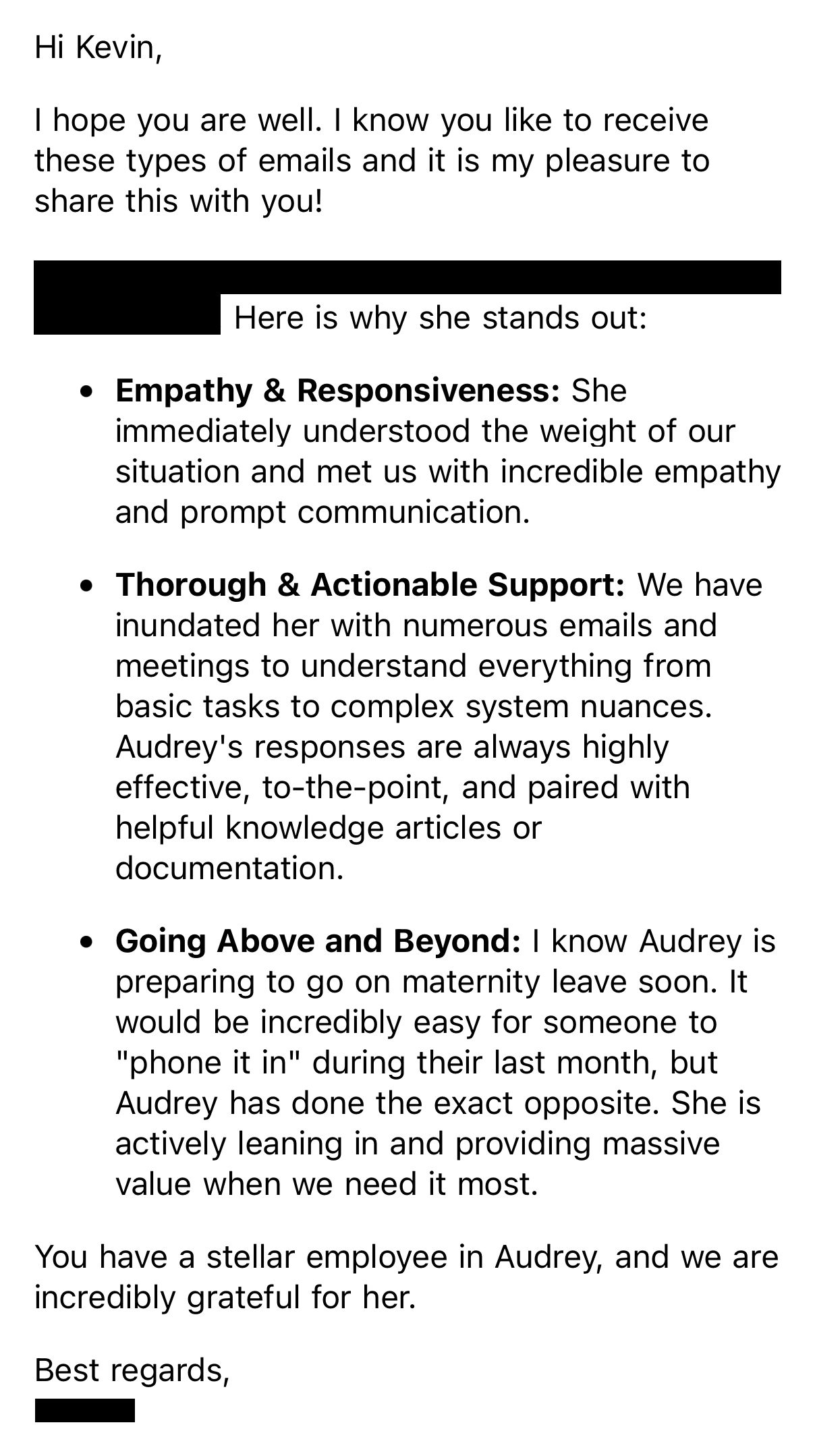
Yes, I do like to receive these types of emails! Something unexpectedly bad happened to this customer (unrelated to Brightflag). Audrey Apgar, their customer success manager, stepped up to help, as she always does and as we always do. It doesn't matter how good your software is (and I think ours is pretty good); things go wrong. Within your org, with the software you bought, with whatever. That's when you need support the most. I'm incredibly proud to lead the dedicated Brightflag team. They think long term. They make every day count. They win and lose together. And they're relentless about prioritizing customer success. #legalops #legaltech







Other LinkedIn formats
Watch the companies you care about.
Filter every ad by industry, country, format and network, and get alerts when a company you watch starts running new ads.