Not on air · 2 of 3 networks checked
Hups
- hups.com
- Software Development
- SE
- 20 employees
Hups’s ads on LinkedIn, Meta and Google, recorded by adsrunning. Browse the latest here for free. Sign up free to see all 77. Watch Hups with Starter to get each new one in your feed.
Watchlist with Starter · $49/mo
| Network | Status | Live ads | Nov 2025LinkedIn activity · 52 weeksNov 2026 | Checked | Next step |
|---|---|---|---|---|---|
| None recorded | 0 | Checked 30 Oct 2026 | See all 77 ads → | ||
| Meta | Not checked | — | |||
| Recently | 2 | Ads on the Google Ads Transparency Center | Checked 16 Oct 2026 | Collect them with the API → |
Hups has no live LinkedIn ads. We recorded 2 Google ads on 16 Oct 2026.
Latest ads
- LINKEDIN · IMAGESince 29 Oct 2026
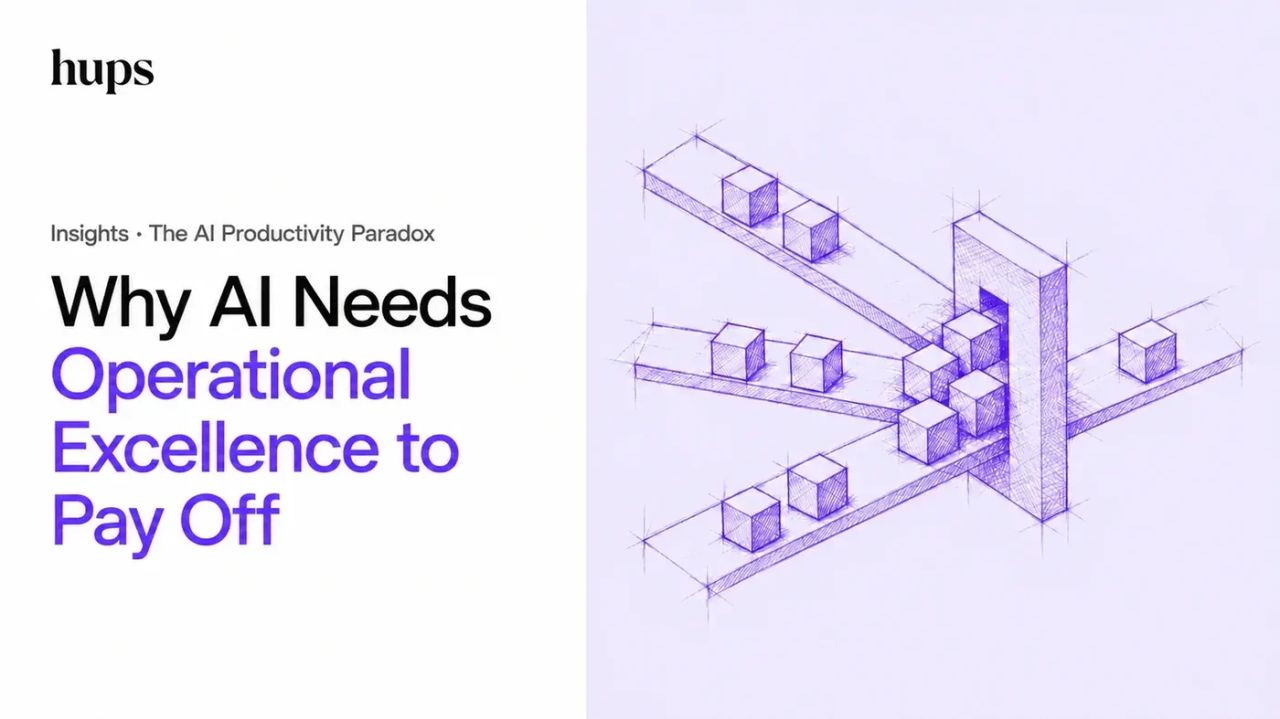
Blog post: The AI productivity paradox A recent opinion piece in Dagens Industri (Swedish Financial times) by Joel Sunnehall and Mikael Cato recently put words to a concern we share. Their argument was that AI changes the organisation of work, responsibilities and decisions. Buying licences and helping individuals work faster can look like transformation while the company’s ways of working remain unchanged. In their view, the CEO must therefore own the change, and the board must hold the CEO accountable for it. We have seen the same challenge with operational excellence. Leadership wants a better company but delegates the transformation to individual functions. Each manager improves their own area. The reports look better, yet the customer may still be waiting for the same result. We recognise this pattern in our own company, Hups. Our 17 employees work across different functions. We have said that we want to be AI-native, and we feel we have come a long way. AI has improved our functional productivity. But lately, we have started asking ourselves a different question: how can we use AI to improve Hups as a whole? How can it help us become more customer-focused, more effective and more efficient from our customers’ perspective? Those are the questions behind this article. Our argument is that the largest opportunity often lies in the flow connecting our functions. We need clear end-to-end flows built around what customers actually need, with AI helping us improve the complete result. AI and customer focus belong together on every executive team’s agenda. That requires leadership to start with the flow. Read the full article regarding The AI productivity paradox in the comments!
- LINKEDIN · IMAGESince 28 Oct 2026
I’m both proud and incredibly happy to welcome Martin Skold to Hups AB as Executive Chairman of the Board! Martin brings a unique combination of deep research expertise and extensive experience working closely with industry. Having him join Hups means a great deal to me personally. With Martin on board, we are expanding our offering to include modularisation, an area that I believe goes naturally hand in hand with operational excellence. How we design our products shapes everything that follows. By creating shared building blocks that can be combined in different ways, we can meet diverse customer needs, reuse solutions and reduce unnecessary complexity. This creates better conditions for flow in both product development and production. We believe every company has something valuable to learn from modularisation. To me, the connection is clear: if we want to improve flow across our operations, we also need to understand how our products enable or hinder that flow. Welcome, Martin! I’m really looking forward to what we will achieve together. 🚀⭐️ Read more about Martin and his new role at Hups: https://lnkd.in/d6KZHHmu
- LINKEDIN · IMAGESince 28 Oct 2026
At a business breakfast in Örebro this morning, I had a few minutes to explain what I do. The description was fine. At Hups AB we help organizations, often in industry, break down silos and make their flows work. Through their own managers and leaders. But that wasn't what landed. What landed was when I said I used to do it the other way. I remember a time sitting down with a senior technician to go through the whole process for a high-volume calibration instrument. He walked me through it. I mapped it out, with cycle times and key observations. I analyzed it and proposed improvements, and we implemented several. It worked while I was there. It didn't when I left. That's the thing about expert-led change. The understanding, and with it the ownership, leaves with the expert. The improvement only stays if the people who do the work own it. So here's a question: The last time you brought in help from outside, what stayed when they left? The result? Or the ability to do it again? #OperationalExcellence #Leadership
- LINKEDIN · IMAGESince 28 Oct 2026
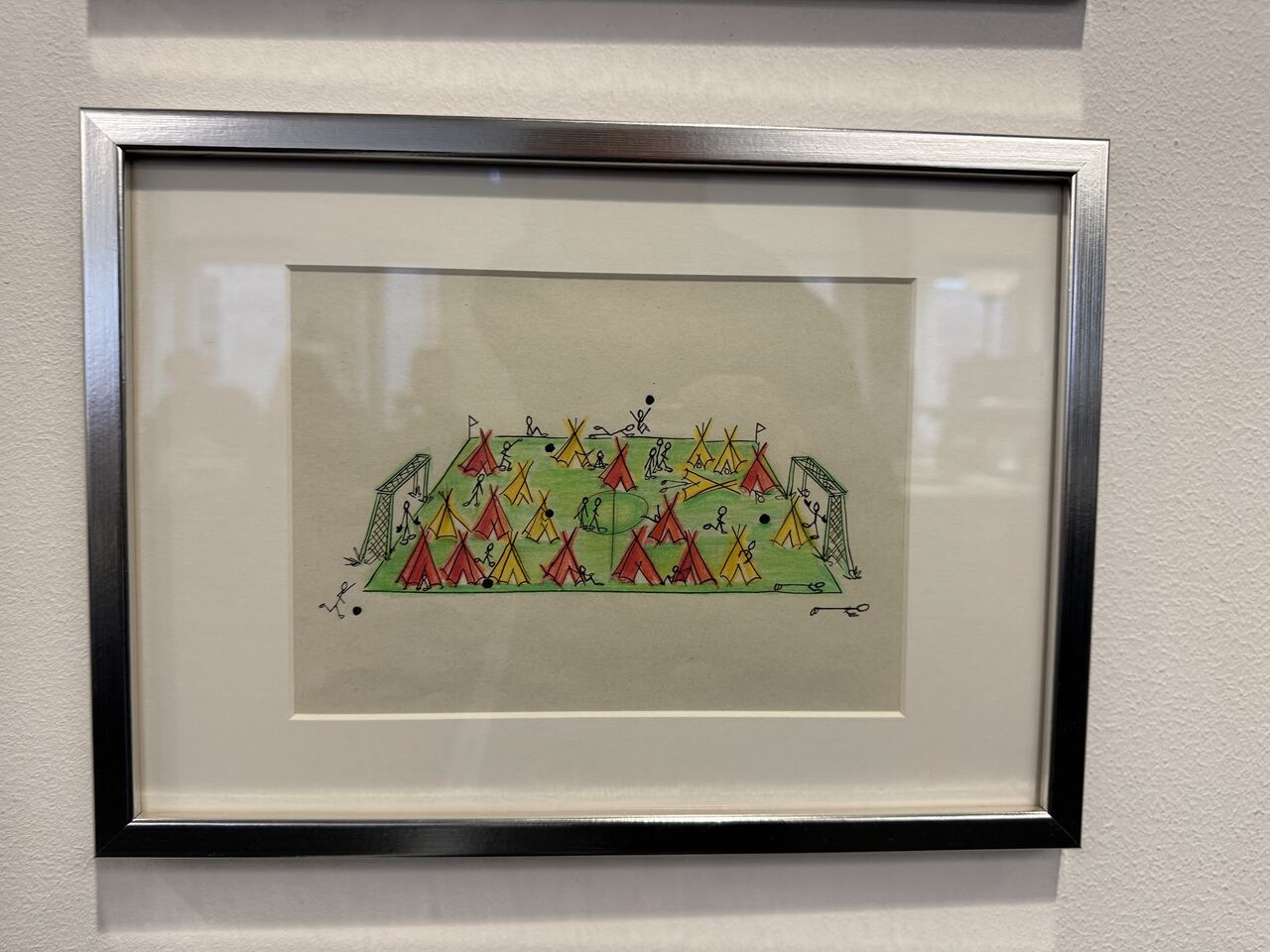
One picture to rule them all – and an epic problem to help solve On our office wall hangs this picture — the iconic football pitch metaphor from Niklas Modig and Pär Åhlström’s book This is Lean. It’s a daily thorn in our side, reminding us why so many organisations struggle to work in a truly flow-oriented way. Too often, organisations slowly evolve into something that resembles small tents scattered across a football pitch. Each tent has its own KPIs, goals, and version of reality. The problem? No one sees the full picture. So we optimise our tents — but forget the reality of the game we’re in. Through training and workshops with the Hups TMS, I’ve seen what happens when teams start lifting the tent walls — or tearing down the tents altogether. When they begin to see across functions, share insights, and solve problems together. That’s when collective change starts to happen — and it’s powerful to witness. It reminds me that real transformation doesn’t come from training a few select people, but from engaging everyone. When learning is built on thoughtful, professional pedagogy — clear, relevant, and accessible — it creates alignment, energy, and progress across the whole organisation. Want to learn more about how to optimize your end-to-end flows? Check us out here https://lnkd.in/dB6f8XJA #hups #humansupskilling #humanupscaling #thisislean #solvingtheefficiencyparadox
- LINKEDIN · IMAGESince 28 Oct 2026
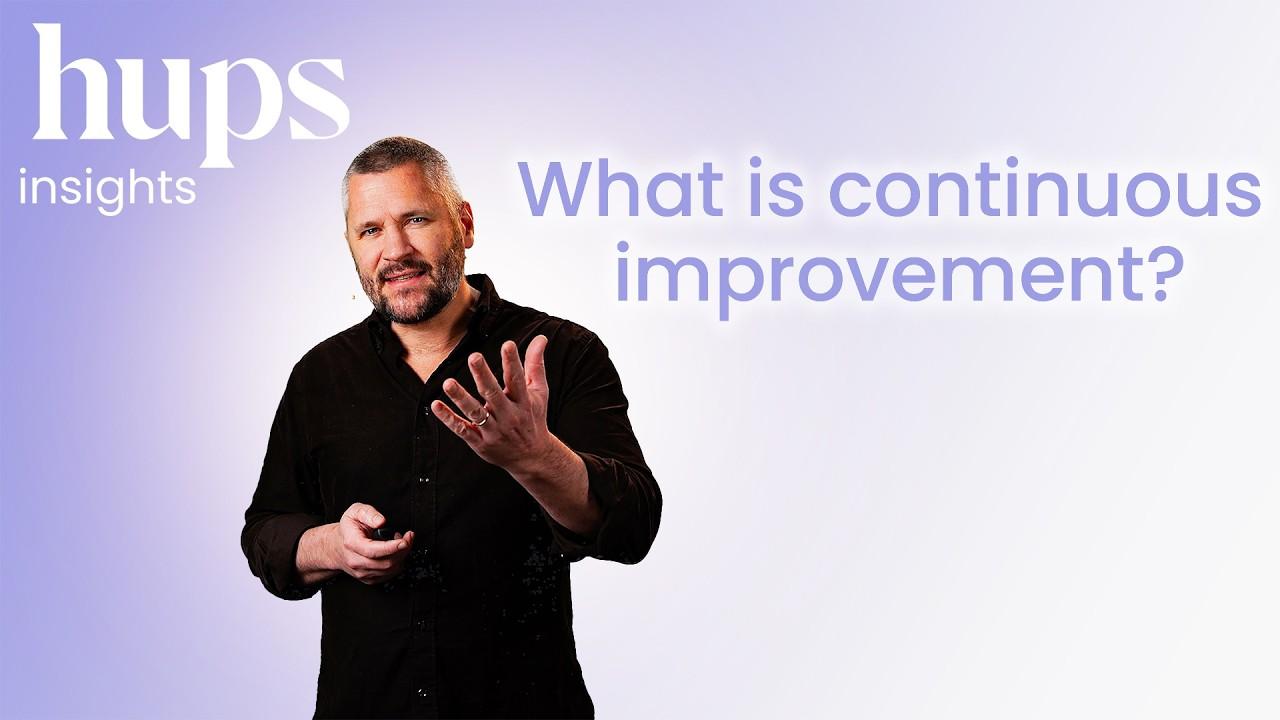
HUPS INSIGHTS # 1 - What is continuous improvement? One reflection that stands out after +20 years in lean and operational excellence is that at the heart of this field is a powerful learning cycle: We hear a story from someone—or experience something ourselves in an organization. We reflect on it, try to understand its essence, and give it structure. Then we share it forward. From there, it continues to evolve. Someone else takes it, interprets it in their own context, improves it—and passes it on again. Over time, these stories grow, deepen, and become more meaningful. This Sharing is Caring cycle is, in my view, one of the most important drivers of progress—and ultimately how we build better organizations—and a better world—together. That’s why we are now launching Hups Insights. Here, we will share some of the most insightful stories and perspectives within Lean, Operational Excellence, customer orientation, and Continuous Improvement. At its core, it’s about one thing: how we create truly productive and profitable organizations—by continuously learning and improving. First out is a simple but fundamental question: What is Continuous Improvement? In this first insight, I share a story I’ve probably told more than 500 times. It has been a constant source of inspiration for me. I first heard it from Jeffrey Liker, author of The Toyota Way, and my understanding deepened through Professor Fujimoto, whom I had the privilege to study under at the University of Tokyo for two years. This is, of course, my own interpretation—but one I hope resonates. If it does, make it your own version—and pay it forward. A big thank you to both Jeffrey Liker and Professor Fujimoto for inspiring me to understand what Continuous Improvement truly is. Here is the video: https://lnkd.in/dzXfuGsm #hups #lean #operationalexcellence #continuousimprovement #kaizen #tps #toyota
- LINKEDIN · IMAGESince 28 Oct 2026
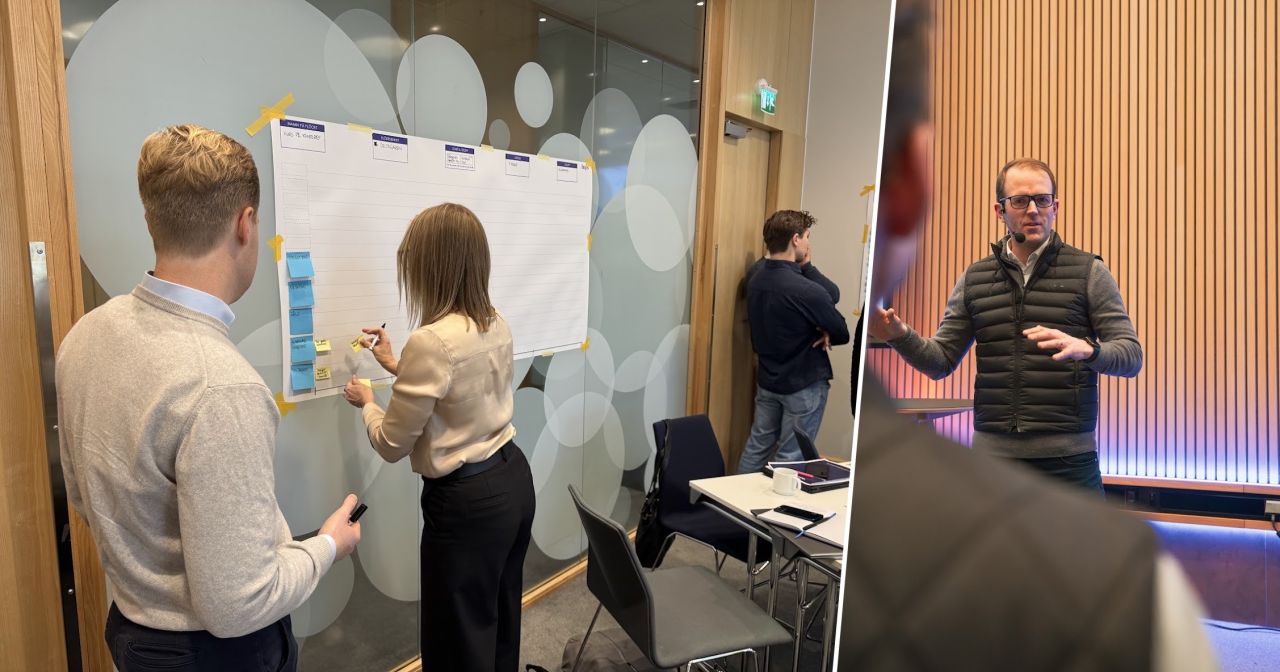
Inspiration has an expiry date. In my experience, it's a few days at most. Last week I led separate flipped classroom workshops with two management teams at a partnership client, both working with their primary end-to-end flow. The setup is simple: Participants complete relevant training beforehand, so our time together is spent working on their own flow instead of listening to me. The energy in the room changes completely when people spot the problems themselves, engage across department lines, and by the end there's a wall full of improvement ideas. But the teams that actually succeed have three things in common. Remember this: First, they take the preparation seriously and make sure the right people are going to be in the room. The workshop itself is maybe a third of the work. Second, they start working on the results the very next day. Not in a month when everyone has "found the time", but the next morning, while the ideas still feel like their own. Someone owns each one, the next step is clear, and everyone can see whether it's moving. Third, they ensure there's already a simple way to manage the change in their end-to-end flow once the workshop is over. If that's in place before you start, the follow-up becomes the natural next step instead of a new project nobody has time for. Without that, the post-its stay on the wall, and two weeks later the workshop is remembered as "that great day". That's really what managing a transformation comes down to for me. A workshop can change how people see their flow, but changing how they actually work together needs a few steps already laid out, so the transition happens while the energy from the room is still there. If you've got a wall of post-its from last year's workshop still hanging somewhere, you know exactly what I mean. Speed is the key here people - make sure you've set up to actually handle the improvements identified! Follow for more → Hups AB #hups #webuildpeople #silokiller #solvingtheefficiencyparadox #flowefficiency
6 of 77 adsSign up to see every Hups ad, filter by format and date, and get alerts on new ones.
See all 77 adsWatch the companies you care about.
Filter every ad by industry, country, format and network, and get alerts when a company you watch starts running new ads.