LinkedIn thought leader ad examples
403 thought leader ads are live on LinkedIn right now, from 336 companies. Browse real ones, filtered by industry.
- DunaSince 12 Oct 2026
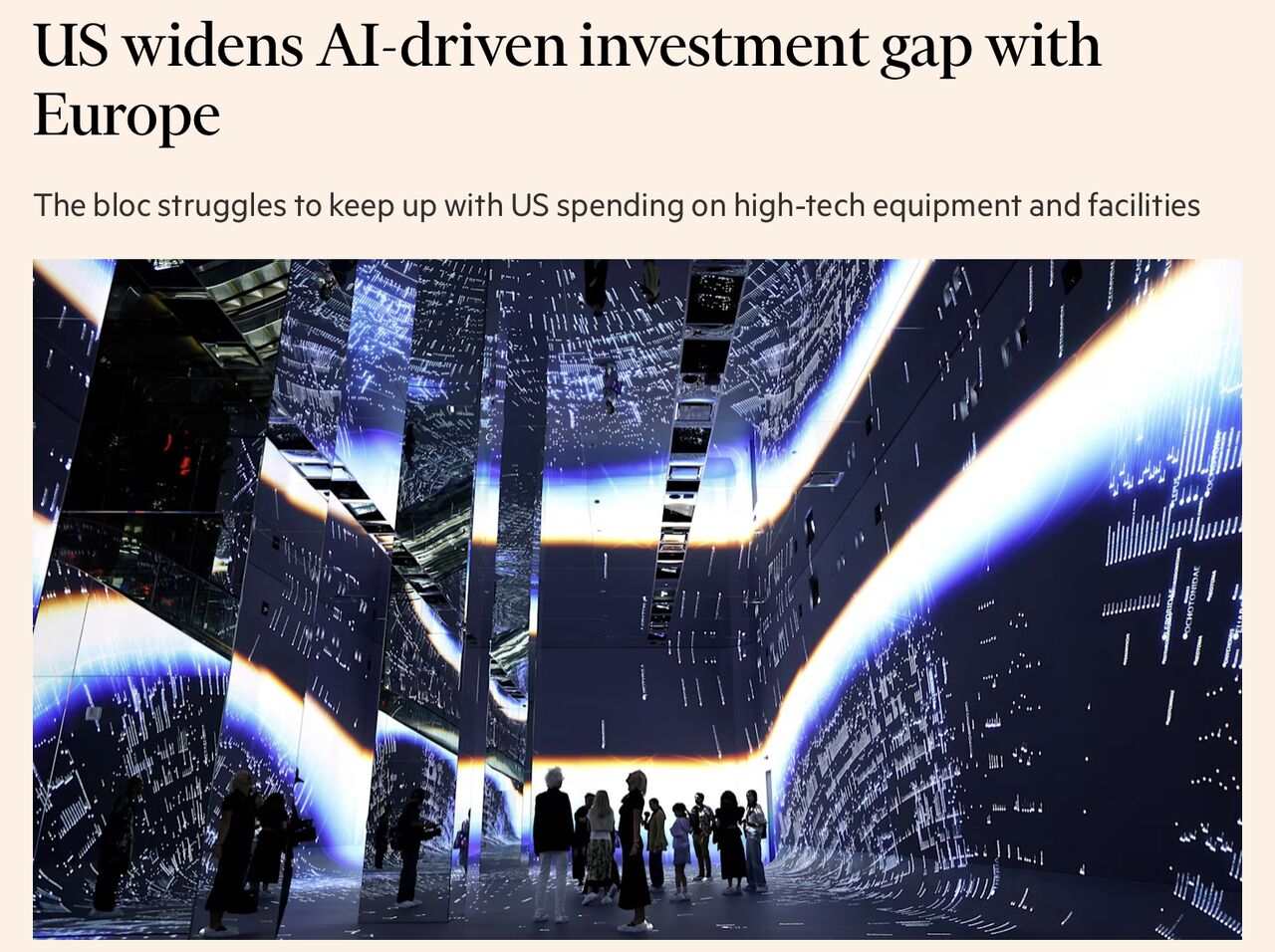
Europe has an elegant AI strategy: save the money, invest it in America, then complain America owns the technology. (1) The FT published a stark chart last week: business investment is expected to grow 40% in the US and 12% in the EU since 2001. Big Tech alone will spend $725bn this year. (2) Meanwhile, Dutch pension funds hold €293bn in American companies versus €97bn in European ones (DNB). We are funding the sovereignty loss we complain about. (3) The US even out-invests us in our own companies. US investors supplied 42% of VC funding into EU AI companies over the past decade. European investors: 33%. Sure, the US is spending like 5,000 drunken sailors after 9 months at sea. And we’ll see what happens once the bubble bursts. But we can't complain about who owns our future when we're not funding it ourselves. 🇪🇺
- DunaSince 12 Oct 2026
We increased First-Time-Right onboarding for seQura by 38%, from 50% to 88% 🚀 The technology that makes this possible is our Policy Engine, which evaluates all compliance policies on (at least) every page load. When policies are evaluated in real time, we always know what information is missing without ping-ponging between case reviewers and the onboardee. Everybody in business onboarding knows these ping-pong cause massive drop-offs, we prevent as many as we can. Read our case-study: https://lnkd.in/ekhytMk6, or read about our policy engine: https://lnkd.in/e_RjpnYw
- FundraislySince 7 Oct 2026
𝗪𝗵𝗮𝘁 𝗵𝗮𝗽𝗽𝗲𝗻𝘀 𝗶𝗻 𝘁𝗵𝗲 𝟵𝟬 𝗱𝗮𝘆𝘀 𝗮𝗳𝘁𝗲𝗿 𝗮 𝗳𝗼𝘂𝗻𝗱𝗲𝗿 𝗵𝗮𝗻𝗱𝘀 𝘂𝘀 𝘁𝗵𝗲𝗶𝗿 𝗼𝘂𝘁𝗿𝗲𝗮𝗰𝗵. You pay a one-time setup fee, then a fixed price for each qualified meeting. Book a 30-minute call and we'll show you how we'd get you 10–50 qualified investor meetings in 90 days. https://lnkd.in/edDrQxxk
- FundraislySince 7 Oct 2026
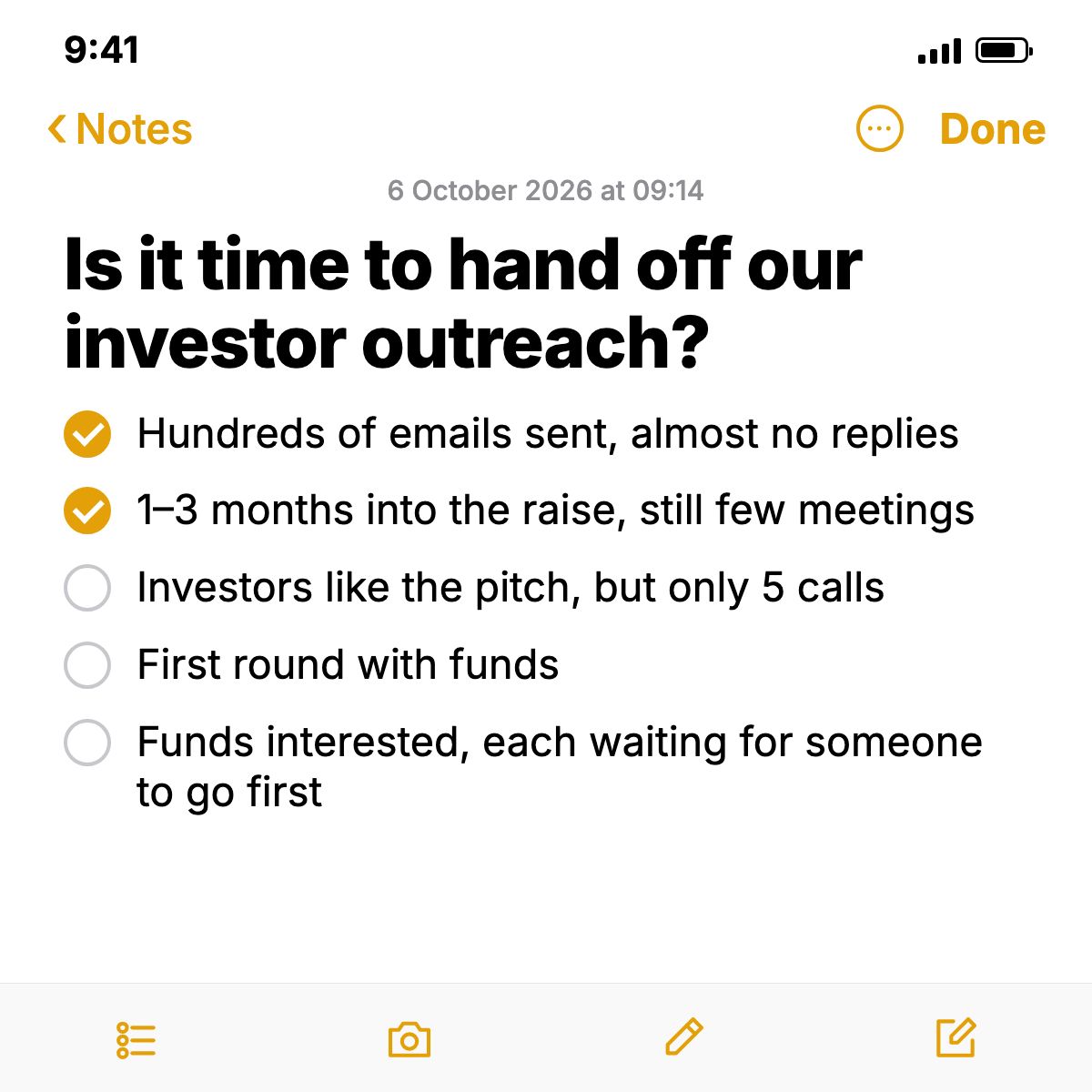
𝗧𝗵𝗲 𝗯𝗲𝘀𝘁 𝘁𝗶𝗺𝗲 𝘁𝗼 𝗵𝗮𝗻𝗱 𝗼𝗳𝗳 𝗶𝗻𝘃𝗲𝘀𝘁𝗼𝗿 𝗼𝘂𝘁𝗿𝗲𝗮𝗰𝗵 𝗶𝘀 𝗶𝗻 𝘁𝗵𝗲 𝗳𝗶𝗿𝘀𝘁 𝘁𝗵𝗿𝗲𝗲 𝗺𝗼𝗻𝘁𝗵𝘀 𝗼𝗳 𝘆𝗼𝘂𝗿 𝗿𝗼𝘂𝗻𝗱. After that, funds start asking why nobody has come in. Five signs it's time: 𝟭. 𝗬𝗼𝘂'𝘃𝗲 𝘀𝗲𝗻𝘁 𝗵𝘂𝗻𝗱𝗿𝗲𝗱𝘀 𝗼𝗳 𝗲𝗺𝗮𝗶𝗹𝘀 𝘁𝗼 𝗳𝘂𝗻𝗱𝘀 𝗮𝗻𝗱 𝗴𝗼𝘁 𝗮𝗹𝗺𝗼𝘀𝘁 𝗻𝗼 𝗿𝗲𝗽𝗹𝗶𝗲𝘀. Replies get lost in the list, the recipients, deliverability and follow-ups. In a 2026 campaign where we got those right, 7,500 emails brought 970 replies and 40–60 calls. 𝟮. 𝗬𝗼𝘂'𝘃𝗲 𝗯𝗲𝗲𝗻 𝗿𝗮𝗶𝘀𝗶𝗻𝗴 𝗳𝗼𝗿 𝗼𝗻𝗲 𝘁𝗼 𝘁𝗵𝗿𝗲𝗲 𝗺𝗼𝗻𝘁𝗵𝘀, 𝗮𝗻𝗱 𝘆𝗼𝘂 𝘀𝘁𝗶𝗹𝗹 𝗱𝗼𝗻'𝘁 𝗵𝗮𝘃𝗲 𝗺𝗮𝗻𝘆 𝗺𝗲𝗲𝘁𝗶𝗻𝗴𝘀. Without momentum the round drags on, and investors read a round open for more than six months as a red flag. 𝟯. 𝗜𝗻𝘃𝗲𝘀𝘁𝗼𝗿𝘀 𝗹𝗶𝗸𝗲 𝘆𝗼𝘂𝗿 𝗽𝗶𝘁𝗰𝗵, 𝗯𝘂𝘁 𝘆𝗼𝘂'𝘃𝗲 𝗼𝗻𝗹𝘆 𝗵𝗮𝗱 𝗳𝗶𝘃𝗲 𝗰𝗮𝗹𝗹𝘀. It takes about 10 first meetings to get one fund in, and with five you may run out of runway first. 𝟰. 𝗬𝗼𝘂'𝘃𝗲 𝗿𝗮𝗶𝘀𝗲𝗱 𝗳𝗿𝗼𝗺 𝗮𝗻𝗴𝗲𝗹𝘀 𝗯𝗲𝗳𝗼𝗿𝗲, 𝗮𝗻𝗱 𝘁𝗵𝗶𝘀 𝗶𝘀 𝘆𝗼𝘂𝗿 𝗳𝗶𝗿𝘀𝘁 𝘁𝗶𝗺𝗲 𝗽𝗶𝘁𝗰𝗵𝗶𝗻𝗴 𝗳𝘂𝗻𝗱𝘀. I was an associate at a $600M fund, so we check your deck and email before they go out. One basic mistake can cost you the meeting. 𝟱. 𝗔 𝗳𝗲𝘄 𝗳𝘂𝗻𝗱𝘀 𝗮𝗿𝗲 𝗶𝗻𝘁𝗲𝗿𝗲𝘀𝘁𝗲𝗱, 𝗮𝗻𝗱 𝗲𝗮𝗰𝗵 𝗼𝗻𝗲 𝗶𝘀 𝘄𝗮𝗶𝘁𝗶𝗻𝗴 𝗳𝗼𝗿 𝘀𝗼𝗺𝗲𝗼𝗻𝗲 𝗲𝗹𝘀𝗲 𝘁𝗼 𝗰𝗼𝗺𝗺𝗶𝘁 𝗳𝗶𝗿𝘀𝘁. Without competition for the round, interest cools between meetings. It's too early if your product isn't in users' hands yet. 𝗥𝗲𝗰𝗼𝗴𝗻𝗶𝘀𝗲 𝘁𝘄𝗼 𝗼𝗿 𝗺𝗼𝗿𝗲? Hand your outreach to us: we'll pick the funds, write in your name and book 10–50 qualified investor meetings in 90 days. 𝗕𝗼𝗼𝗸 𝟑𝟎 𝗺𝗶𝗻𝘂𝘁𝗲𝘀 𝗮𝗻𝗱 𝗜'𝗹𝗹 𝘁𝗲𝗹𝗹 𝘆𝗼𝘂 𝗵𝗼𝗻𝗲𝘀𝘁𝗹𝘆 𝘄𝗵𝗲𝘁𝗵𝗲𝗿 𝗶𝘁'𝘀 𝘁𝗶𝗺𝗲. https://lnkd.in/ez-Ur34U
- StewardSince 8 Oct 2026
Say 👋 to automated Request For Information! Love this new feature from the team! We know how hard it is to keep up with the pressure of an onboarding process, which is holding up a new client close. Most firms use emails, clunky and unconnected AML systems or good old excel to keep up with the manic nature of logging what is missing to complete an KYC process. No more waiting - the moment an application has been ingested into Steward using our AI Agents, the system auto-generates a Request For Information - pulling out individual data points (per related party) into one email. You can review, amend or delete data requests and send out with a click of a button. 👉 Want to learn more, check out Steward's capabilities here: https://lnkd.in/e6JaJPXN
- Castellum.AIRecorded 11 Oct 2026
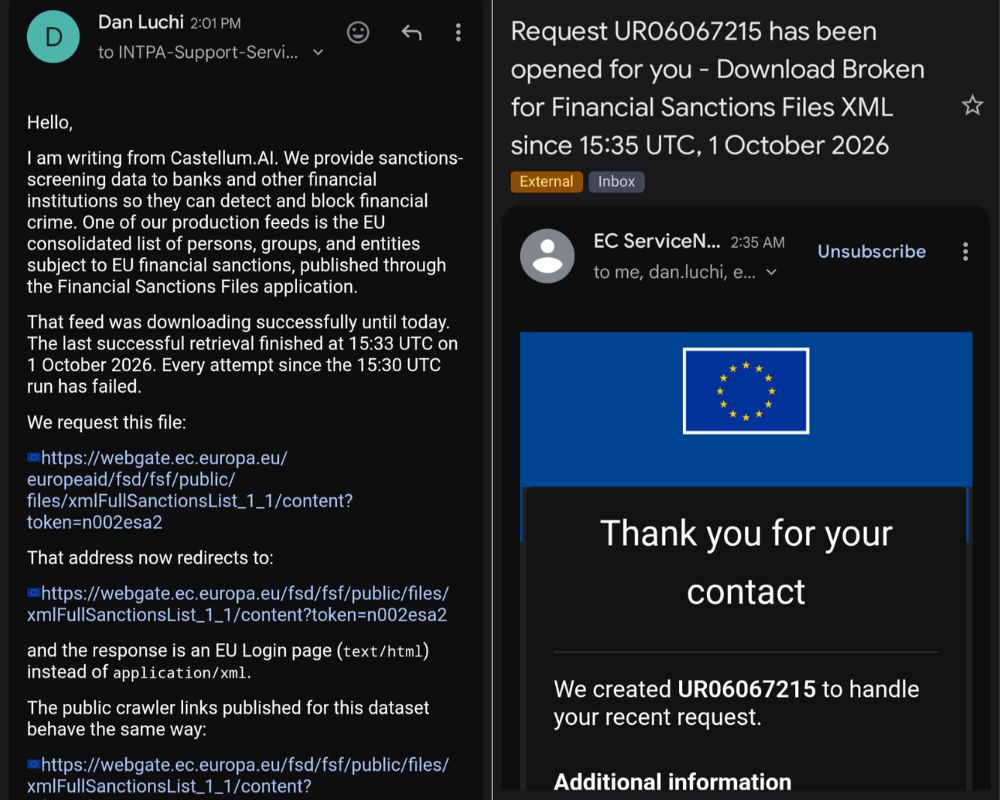
Brussels, we have a problem. The EU's consolidated sanctions list went dark yesterday 🌑 At 11:35 am on Thursday, October 1st, we had a problem. The Financial Sanctions Files (IYKYK) went dark when Europe webgate, the server that hosts EU sanctions, went down. Our monitors flagged the failure and searched for a workaround. The root cause? Permissions errors redirected the once open data feed to a login wall… Our team (hat tip to Dan Luchi) notified the EU the same afternoon. Of course all this happens after hours in Europe. An automated response received back, but no resolution. At 6:40 am the feed was restored and our system automatically processed the latest update. A gap closed before most would even have noticed. This isn’t the first time the EU’s sanctions program disappears, and it’s part of a broader pattern of discrepancies. EU designations take effect when they're published in the Official Journal. The consolidated list catches up days later, sometimes weeks later. Between outages and lag, the consolidated list can't be your only source. Make sure your sanctions data partner: 1. Updates in real time, with monitoring on the sources themselves. Official sources go down too. Without monitoring on the pipeline, a stale file looks the same as a current one, and screening keeps running against it. 2. Knows the difference between the Official Journal and the consolidated list, and monitors the Journal in real time. Miss a designation announced in the Journal and you're looking at potential false negatives and violations. 3. Flags data issues directly with the issuing authority. When a source breaks, someone has to tell the people who run it. That's how it gets fixed for every institution screening against it. In a world of real-time payments, a list that's hours or days behind is a live exposure gap. Learn more: https://lnkd.in/e7GECxuD
- BitsoRecorded 11 Oct 2026
Entre enero y agosto de 2026, el 14.7% de las remesas de Estados Unidos a México reportadas por Banxico pasó por la infraestructura de Bitso Business, nuestra división para empresas. Alrededor de uno de cada siete dólares. Detrás de esa cifra hay personas que trabajan en Estados Unidos y envían parte de lo que ganan a sus familias en México, con la confianza de que ese dinero va a llegar a tiempo para pagar la renta, la comida o la escuela. Participar en un flujo de esta magnitud también implica una enorme responsabilidad. Las remesas representan alrededor del 3.5% del PIB de México y son parte fundamental de la economía de millones de familias. Alcanzar esta escala aumenta nuestra responsabilidad: cuidar la confianza de quienes dependen de esta infraestructura, trabajar de la mano con las autoridades y seguir impulsando reglas claras que permitan que México y Estados Unidos aprovechen mejor estas nuevas tecnologías. Mucho de esto es posible gracias al trabajo diario del equipo de Bitso y a la confianza de los clientes que utilizan nuestra infraestructura. Seguimos construyendo. https://lnkd.in/g36gkTZh
- APGSince 8 Oct 2026
Europe's energy supply has been tested once again this year as the war between the US and Iran created new uncertainty in global energy markets, only a few years after the disruption caused by Russia's invasion of Ukraine. Having experienced both crises at APG from an investment perspective and seeing the big impact on commodity markets, I find it interesting to see which lessons were learned, which new vulnerabilities have emerged, and what this could mean for investors going forward. In this interview, I share my views on Europe's energy resilience, the key lessons from recent geopolitical events, and the potential implications for pension fund investment portfolios in the months ahead. 📖 Read the interview here: https://lnkd.in/eRE2VJuk #EnergyMarkets #Geopolitics #Investing #APG
- ExpenseInSince 8 Oct 2026
For a long time, we've helped customers get expenses through submission and approval quickly. But paying people back still meant leaving the platform: another system, another bank process, another record to match up later. For finance, that's extra work. For the employee, it's more waiting. Now finance can pay approved expenses without leaving ExpenseIn: → Create a payment run and choose what to pay → Review the details before any money leaves → Run Confirmation of Payee checks to flag bank detail mismatches → Pay from one central pot Every reimbursement stays tied to its original expense and approval, so the record is complete from start to finish. Claim → approval → payment. One connected journey. A lot of work has gone into this one, and I'm really proud of what the team has built. Huge credit to everyone involved 🎉🚀.
- ExpenseInSince 8 Oct 2026
Anyone who’s run a finance team knows approving an expense isn’t the end of the process. You still have to pay people back! That's why I love our new feature, ExpenseIn Reimbursements. It means approved expenses can now move seamlessly through to payment in ExpenseIn, with the finance team still in control of what gets paid and when. What this means for me is: Less admin, lower reimbursement costs, and less time waiting to get people paid. Great to see this one live. 👏 https://lnkd.in/eddgZwnB
- HighPathRecorded 11 Oct 2026
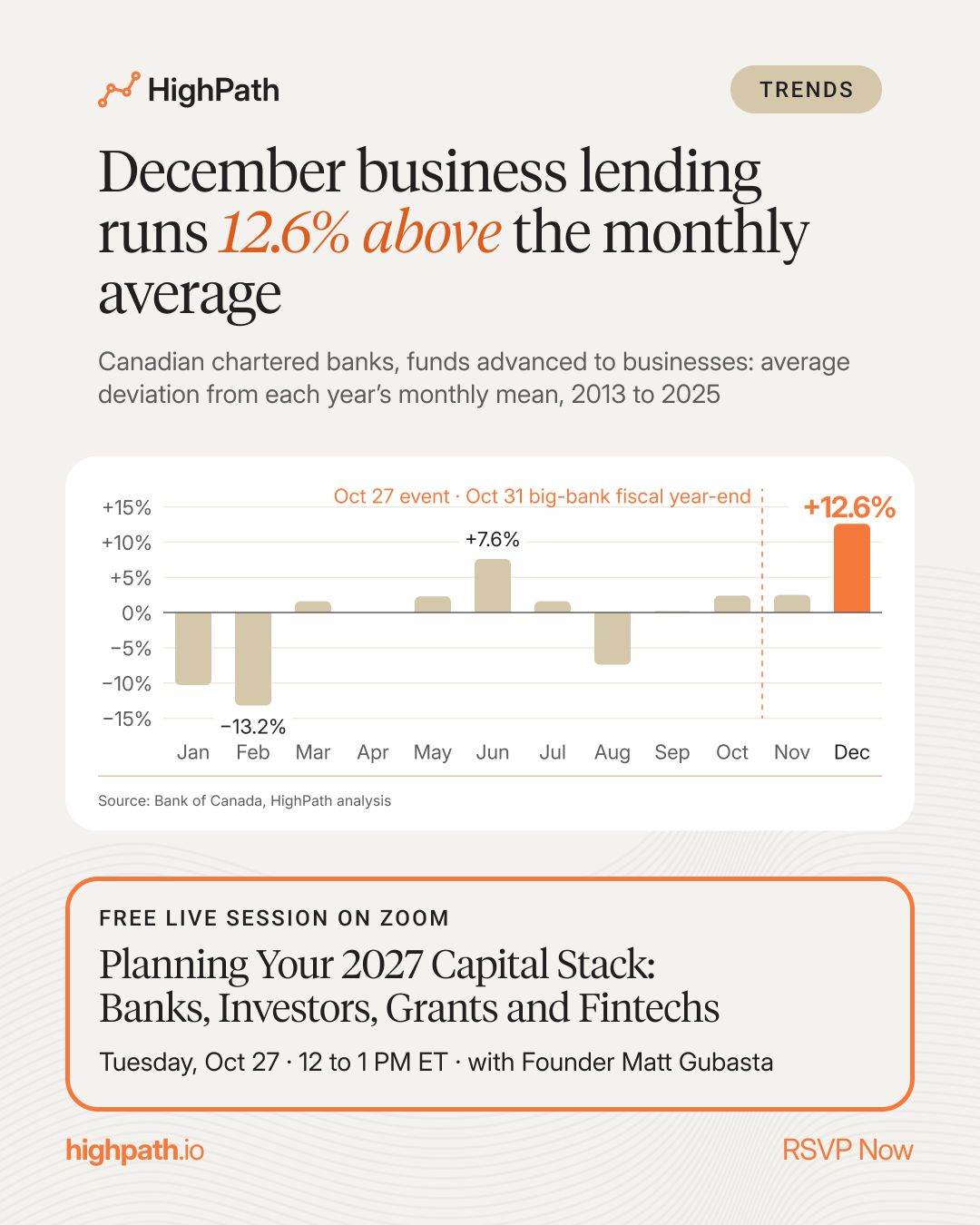
If you're planning to borrow in the next six months, your bank's calendar matters more than you think. Last week I wrote that December lending starts with conversations happening now. The natural next question: what does that first conversation look like, and what do you bring to it? On Tuesday, October 27, I'm hosting a free 60-minute session with HighPath, "Planning Your 2027 Capital Stack: Banks, Investors, Grants and Fintechs." Start 2027 in a stronger position to hit your goals. Get tactical advice on lining up every funder that fits your business, starting with your bank this Fall. We'll cover: → When banks lend, and why the October 31 fiscal year-end matters → How to build a relationship with a banker before you need the money → What to bring to a first lender meeting → Where investors, grants and fintech lenders fit around bank financing → How to see which programs and lenders you qualify for Bring your questions. I'll answer as many as I can live. Tuesday, October 27, 12:00 PM ET, on Zoom. Register here 👉 luma.com/ocbwrl6x
- ZotaSince 4 Oct 2026
Come talk payments with us at Booth PB5-55, Level 5, at TOKEN2049 #Singapore! A new market means new opportunities, but also different payment habits, preferred local methods, and customer expectations. Zota has spent more than a decade building payment infrastructure across some of the most complex and fast-growing markets. If you looking to reach users beyond traditional card payments, explore new growth opportunities, or navigate local payment ecosystems, come say hi! And you can also book a meeting with our team: https://lnkd.in/dJAe58wQ See you there!
- ZotaSince 6 Oct 2026
Your next market is already paying. The question is, can you reach it? That’s one of the conversations I’m looking forward to having at TOKEN2049 Singapore, where I’ll be joining the Zota team at Booth PB5-55, Level 5. Payment habits can change significantly from one market to the next. For businesses looking to expand, understanding how people prefer to pay locally can make all the difference. If entering new markets is on your roadmap, come say hi. Explore our virtual booth and book a meeting: https://lnkd.in/dtEBX4XU See you in Singapore!
- Ágora InvestimentosRecorded 10 Oct 2026
Hoje damos mais um passo importante na evolução da experiência de investimentos dos nossos clientes. Lançamos o novo aplicativo da Ágora, uma plataforma desenvolvida para atender às necessidades de quem busca conteúdo de qualidade e autonomia na hora de investir. A nova experiência traz uma jornada de renda variável totalmente renovada, com ferramentas avançadas para negociação, acompanhamento de mercado, gráficos e análises que apoiam a tomada de decisão. Essa entrega reflete nosso compromisso constante de simplificar o acesso ao mercado financeiro e oferecer soluções cada vez mais completas para os investidores. Meu agradecimento a todos os times que participaram dessa construção. Grandes entregas são resultado da combinação entre talento, colaboração e foco no cliente. Convido você a conhecer essa novidade e dar o próximo passo na sua jornada de investimentos
- Ágora InvestimentosRecorded 10 Oct 2026
Muito orgulho em compartilhar o lançamento do novo app da Ágora Investimentos. Com uma seção exclusiva dedicada à renda variável e trading, ele é o único aplicativo no mercado a integrar essas ferramentas em uma só plataforma, trazendo uma nova experiência para operar na Bolsa. A nova plataforma reúne funcionalidades como as operações diretamente pelo gráfico; o Raio X, que permite uma análise mais aprofundada dos ativos; e o Mapa de Mercado, que ajuda a identificar oportunidades em tempo real. Um lançamento que acompanha uma evolução na forma de investir e, principalmente, simplifica toda a jornada do investidor. É também um trabalho que traduz a forma como estamos construindo o Wealth aqui no Bradesco: tecnologia, produtos, conteúdo e marketing trabalhando de maneira integrada, cada um com sua especialidade, mas olhando para o mesmo cliente. Quanto mais conectadas estiverem nossas capacidades, mais simples, consistente e completa pode ser a experiência que entregamos a ele. Parabéns, Rui Marques e time Ágora!
- NumeralSince 7 Oct 2026
$100M wow... Congrats Numeral! Numeral is the default right choice for any brand, whether it’s those early days or if you're looking to make the switch (we just switched another one of our brands to Numeral). The service is great, but I think the bigger reason Numeral has grown so quickly is that the team actually understands ecommerce. Amazing work, Sam Ross! Very cool to have been such an early and repeat customer. And glad to see that 3,500+ customers later, you guys are still getting better and better. Yes, this post is sponsored. But we’ve been paying them for years. :)
- NumeralSince 7 Oct 2026
Sam Ross just raised $100M for Numeral Love that Bala was one of Numeral’s first customers… 3,500+ customers later, the company has raised $157M. It’s just wow. For sales tax! They cover all things sales tax, so I don’t have to worry about it Let’s go Numeral! Congrats on your Series C 🩵 Proud to be a Numeral partner #ad since the early days. If you are thinking about making the switch, you should! Let me know if you’d like an intro to the team. or check them out at numeral.com
- MossSince 7 Oct 2026
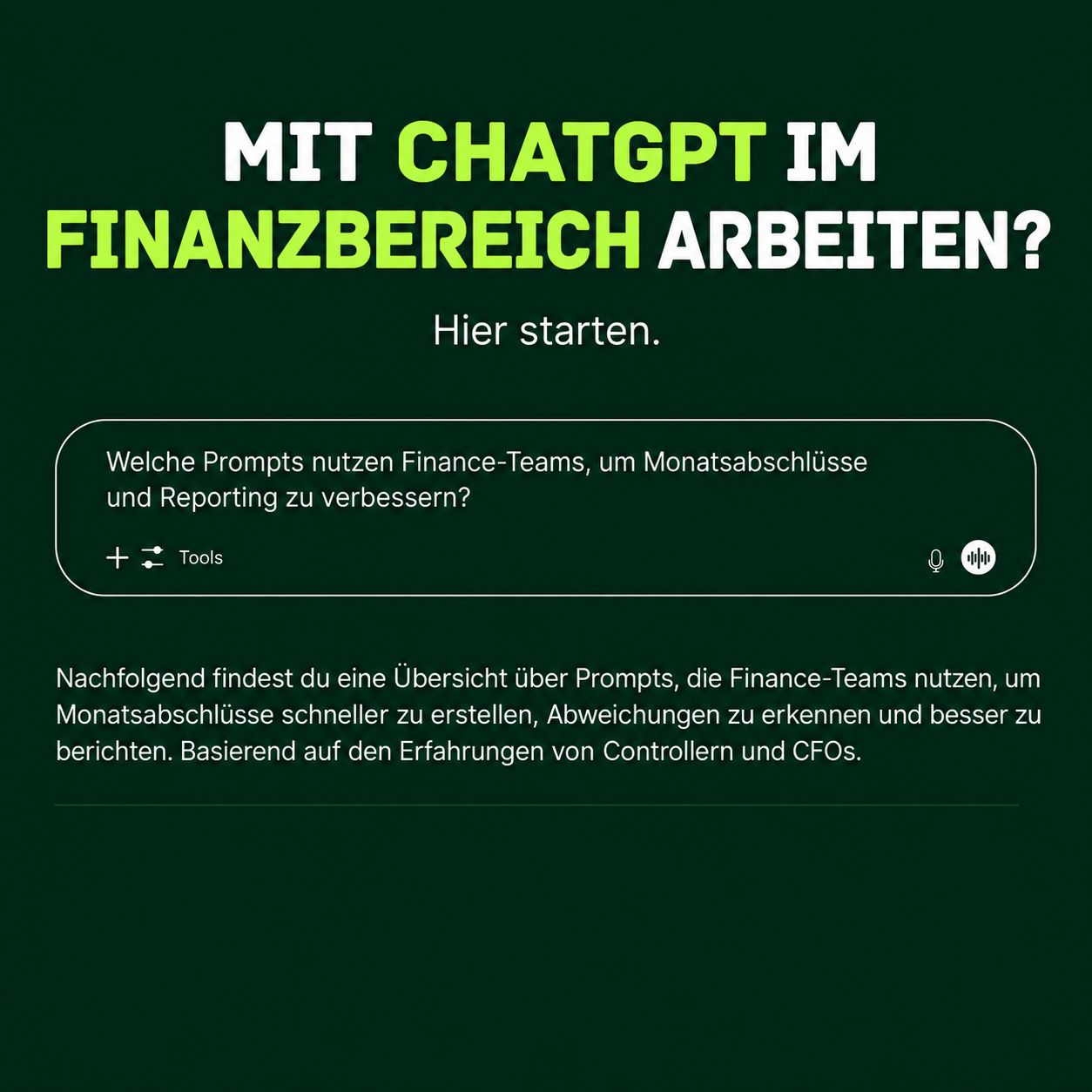
Möchten Sie Ihren Monatsabschluss mithilfe von KI beschleunigen? Ich habe ein kostenloses Toolkit für Finanzfachleute entwickelt, die ChatGPT gezielt einsetzen möchten, um effizienter zu arbeiten, manuelle Aufgaben zu reduzieren und einen besseren Überblick über ihre Zahlen zu gewinnen. ✅ Weniger manuelle Arbeit ✅ Einen schnelleren Monatsabschluss ✅ Relevante Erkenntnisse, bevor das Management danach fragt Sie möchten das Toolkit kostenlos erhalten? Kommentieren Sie einfach mit „Toolkit“ oder schicken Sie mir eine DM. Und ich schicke Ihnen das Toolkit!
- Castellum.AIRecorded 9 Oct 2026
“AI agent” has become a catch-all term. More than 70 companies market some type of “AI agents for AML/KYC.” When we looked closer, 80% of them aren’t selling AI agents at all. Some offer chatbots or AI that summarize cases. Many are AI wrappers plugged into existing software. If you need agents for alert review, you’re faced with dozens of solutions to sort through. Most market maps don’t make this easier. They put screening, transaction monitoring, fraud, case management and onboarding vendors on the same page. You can see how large (and overwhelming) the market is, but not which products are built to solve the problem you actually have. So we built one focused on agentic screening and alert resolution. The map compares vendors on two dimensions: agentic screening capabilities and governance and reliability. We assessed each vendor across eight criteria, such as: - Does the agent follow an institution’s policies and risk thresholds? - Can the institution test and validate its performance and trace its decisions? - How much of the workflow can it handle, from initial alert review through deeper investigation and enhanced due diligence? - We also looked at the risk data and screening technology behind the agent's decisions: who controls them, how current the data is and where third parties are involved. Castellum.AI was evaluated using the same criteria and placed in the Trusted quadrant. But no single placement tells the whole story. A vendor may be strong on sanctions alerts and offer less for adverse media or ongoing customer screening. The more useful question is which vendor can do the work your institution needs done. Yes, usual caveats apply. This map is based on the publicly available details on each vendor's agent. Use the map to narrow your shortlist and ask better questions. Link to the market map in the comments.
- BokuSince 9 Jul 2026
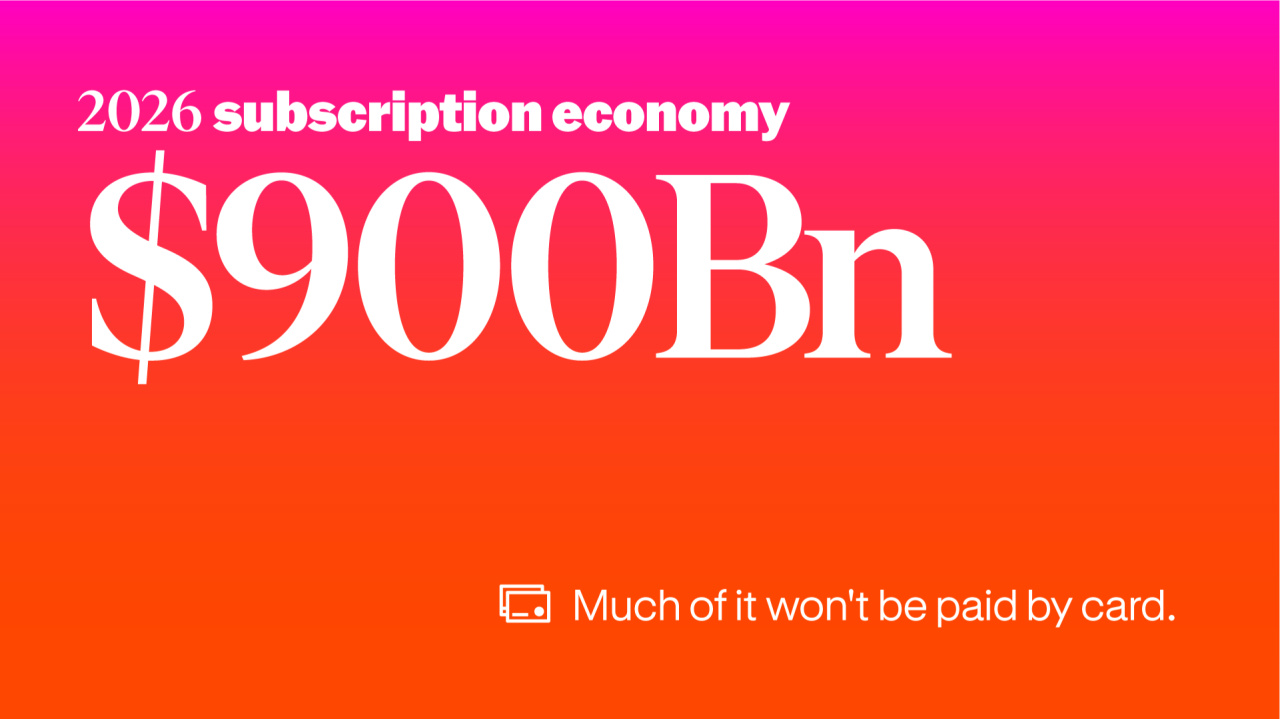
The subscription economy is heading towards $900 billion this year. The app stores built the infrastructure that made digital subscriptions possible – but they were designed for a card-first world. Today's growth opportunity lies in Southeast Asia, Latin America and the Middle East, where digital wallets, real-time payment schemes and carrier billing are the common ways to pay. With recent global regulatory shifts, subscription businesses now have more commercial space to build direct payment relationships with subscribers than ever before. It's a real opportunity. But it comes with complexity. Moving beyond app store billing means taking on the compliance, local payment coverage, and recurring billing logic the app stores absorb on merchants' behalf. I wrote a piece on what this infrastructure actually takes:
- BNP Paribas Personal FinanceSince 22 Sept 2026
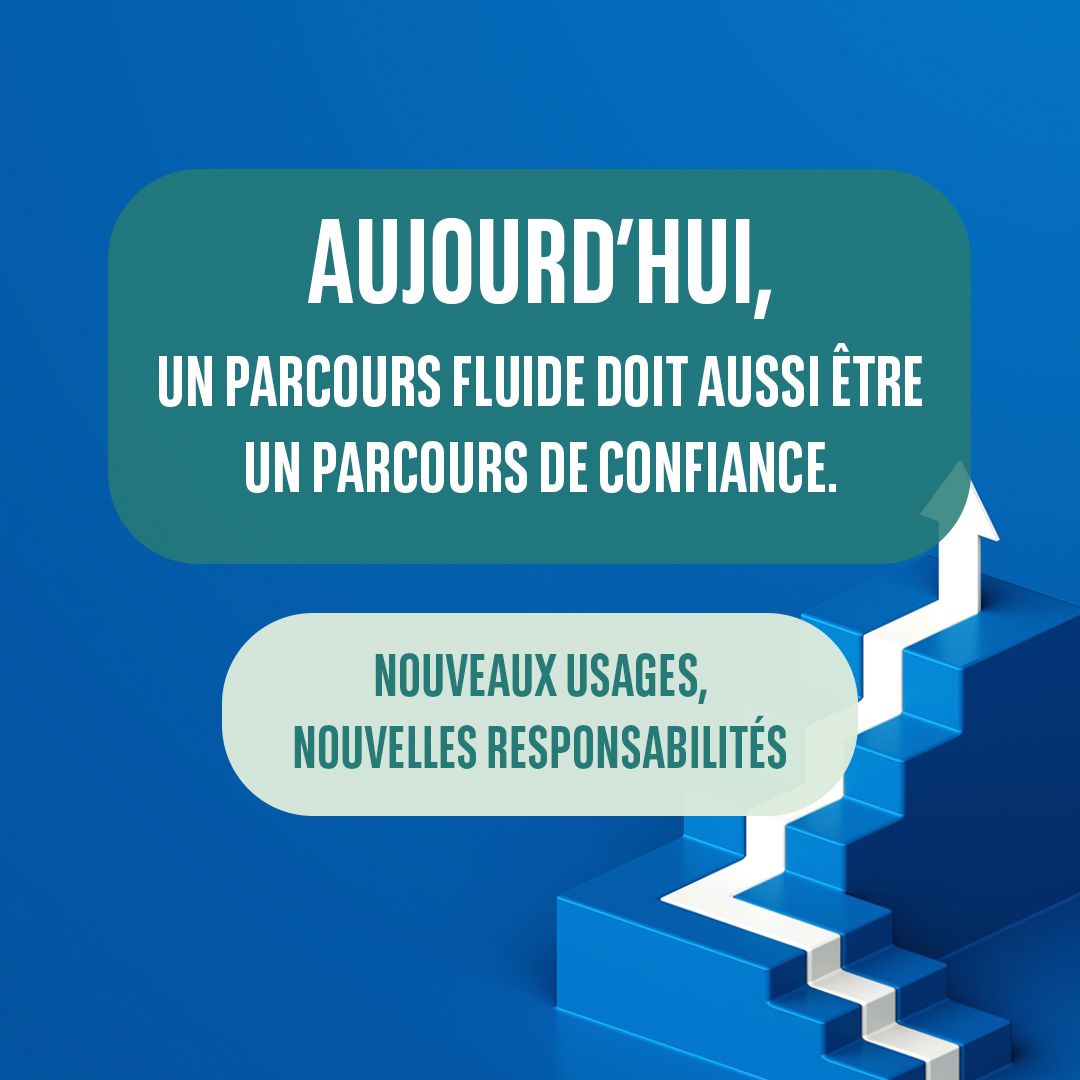
🔎 Un parcours digital peut être simple, rapide et performant. 𝗦’𝗶𝗹 𝗻𝗲 𝗿𝗮𝘀𝘀𝘂𝗿𝗲 𝗽𝗮𝘀 𝗹𝗲 𝗰𝗹𝗶𝗲𝗻𝘁, 𝗰𝗲𝗹𝗮 𝗻𝗲 𝘀𝘂𝗳𝗳𝗶𝘁 𝗽𝗮𝘀. La fraude évolue. Elle ne repose plus uniquement sur des failles technologiques. Elle exploite de plus en plus les comportements humains : faux conseiller, faux courtier, usurpation d’identité ou sentiment d’urgence créé pour pousser une personne à agir contre ses propres intérêts. Cette évolution révèle aussi une transformation plus profonde du marché du crédit à la consommation. Les usages deviennent plus digitaux, plus rapides et se font davantage à distance. Ils répondent aux nouvelles attentes des consommateurs, mais nous obligent également à repenser la manière dont nous concevons et sécurisons leurs parcours. 🛡️ Pour moi, un bon parcours n’est pas seulement celui qui permet d’aller vite. 𝗖’𝗲𝘀𝘁 𝗰𝗲𝗹𝘂𝗶 𝗱𝗮𝗻𝘀 𝗹𝗲𝗾𝘂𝗲𝗹 𝗹𝗲 𝗰𝗹𝗶𝗲𝗻𝘁 𝘀𝗮𝗶𝘁 𝗮̀ 𝗾𝘂𝗶 𝗶𝗹 𝘀’𝗮𝗱𝗿𝗲𝘀𝘀𝗲, 𝗰𝗼𝗺𝗽𝗿𝗲𝗻𝗱 𝗰𝗲 𝗾𝘂’𝗼𝗻 𝗹𝘂𝗶 𝗱𝗲𝗺𝗮𝗻𝗱𝗲 𝗲𝘁 𝗱𝗶𝘀𝗽𝗼𝘀𝗲 𝗱𝗲𝘀 𝗯𝗼𝗻𝘀 𝗿𝗲𝗽𝗲̀𝗿𝗲𝘀 𝗽𝗼𝘂𝗿 𝗮𝗴𝗶𝗿. La technologie et les dispositifs de prévention sont essentiels, mais ils ne peuvent pas tout résoudre seuls. L’information et l’accompagnement humain restent indispensables face à des techniques de manipulation de plus en plus difficiles à identifier. La réponse ne peut donc être que collective. Établissements financiers, plateformes numériques, opérateurs télécoms, associations de consommateurs et pouvoirs publics : chacun détient une partie de la solution. Nous devons conjuguer nos expertises et mieux partager les informations utiles. Les évolutions engagées en France et en Europe vont dans ce sens, avec un objectif commun : continuer à développer des parcours fluides tout en renforçant la protection des consommateurs. Chez BNP Paribas Personal Finance, nous prenons toute notre part à cette mobilisation, notamment aux côtés de l’ASF - Association française des Sociétés Financières, dans le dialogue avec les pouvoirs publics et les acteurs de notre secteur. L’enjeu est de construire des réponses efficaces, équilibrées et adaptées aux réalités du terrain. ⭐️ Un crédit responsable ne se limite pas à une solution adaptée à la situation et au projet du client. 𝗜𝗹 𝗱𝗼𝗶𝘁 𝗮𝘂𝘀𝘀𝗶 𝘀’𝗶𝗻𝘀𝗰𝗿𝗶𝗿𝗲 𝗱𝗮𝗻𝘀 𝘂𝗻 𝗲𝗻𝘃𝗶𝗿𝗼𝗻𝗻𝗲𝗺𝗲𝗻𝘁 𝗰𝗹𝗮𝗶𝗿, 𝗮𝗰𝗰𝗲𝘀𝘀𝗶𝗯𝗹𝗲 𝗲𝘁 𝗽𝗿𝗼𝘁𝗲𝗰𝘁𝗲𝘂𝗿. Car au bout du parcours, il n’y a pas seulement un dossier ou une transaction. 𝗜𝗹 𝘆 𝗮 𝘂𝗻𝗲 𝗽𝗲𝗿𝘀𝗼𝗻𝗻𝗲 𝗲𝘁 𝘂𝗻 𝗽𝗿𝗼𝗷𝗲𝘁 𝗾𝘂𝗲 𝗻𝗼𝘂𝘀 𝗱𝗲𝘃𝗼𝗻𝘀 𝗮𝗰𝗰𝗼𝗺𝗽𝗮𝗴𝗻𝗲𝗿 𝗮𝘃𝗲𝗰 𝗮𝘁𝘁𝗲𝗻𝘁𝗶𝗼𝗻.
- CMG FinancialRecorded 8 Oct 2026
Freddie Mac made it official this morning. We're first on their new Income Calculator API, with AI we built ourselves. First lender, first fintech, first anybody. Then we put it on a clock. Two underwriters. Same two files. One took 1 hour and 28 minutes. The other finished in 11. The files: a self employed borrower with three companies, a W2, rental properties, and partnership returns, plus a second borrower with variable income. That mix is the point of the new API. It handles self employment, salaried, variable, all of it. Both clocks run side by side in the video. We call it Omni Income. Our product, engineering, and labs teams built the whole thing in house. AI does the document extraction. AI helped us write the platform. It's live for LOs as of today in our AI Hub, alongside a growing set of Claude, Gemini, and GPT tools. We don't pick one model. We match the right frontier model to the job. Big shout out to Andrew, Hershon, and the engineering team at CMG Financial. So I sat down with Bezi Mousai, 14 years at CMG and the guy on the 11 minute clock, to hear what it's actually like to use. Not the demo version. The real version. The part that stuck with me wasn't the speed. When I asked what this actually changes for him, he didn't lead with throughput. He said, "This tool is going to take me to where I will be able to balance my life a little bit better, to be honest with you." That's the whole point. We made an AI-first bet on building our own tools because the people doing the hardest work in this industry shouldn't have to wait for a vendor to decide their problem is worth solving. And then there's the commercial. Big thank you to Bezi and JoJo, who ran the other clock and was a very good sport about it, for starring in it. Stay past the interview and watch the final minute. Turns out they have real range on top of the underwriting. Putting this together, I heard some horror stories. Files that ate an entire afternoon. Files that took days. If you're an LO, processor, underwriter, or anyone who calculates income for a living, 1 hour and 28 minutes needs to be a thing of the past.
- SphereSince 21 Sept 2026
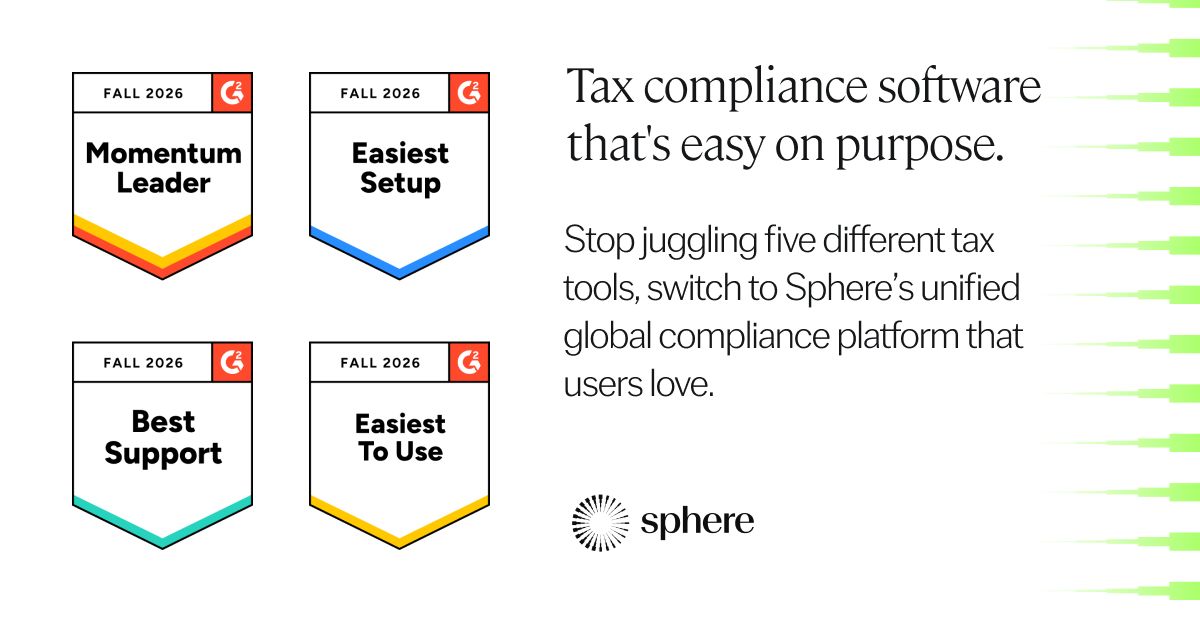
Tax teams don't need one more system to babysit. They need a partner who shows up when the deadline is real and the stakes are higher than just another support ticket. This G2 Fall 2026 season, our customers made that case for us. Four badges: Momentum Leader, Easiest Setup, Best Support, and Easiest To Use. Thank you to every customer who took the time to share their experience.
- CardboardSince 22 Sept 2026
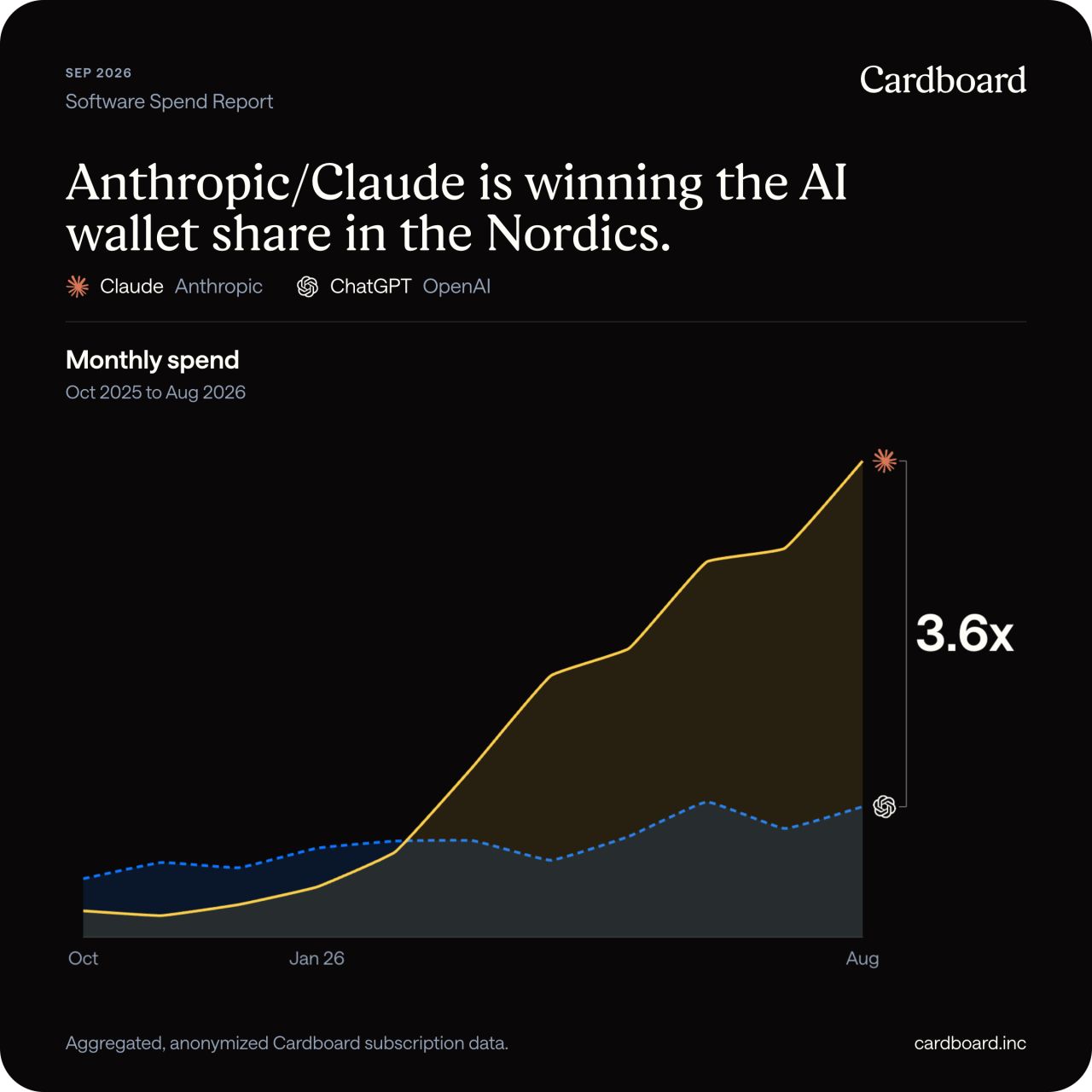
Just as many companies now pay for Claude as for ChatGPT. But Anthropic collects 3.6x the revenue. At Cardboard we see what companies actually pay for their software, across everything the two sell: ChatGPT, Claude, APIs and tools. Over the last 12 months: - A year ago, roughly 4x more organizations paid OpenAI than Anthropic - Today the organization counts are nearly equal - Total monthly spend on Anthropic passed OpenAI in March, and the gap has widened every month since Equal adoption. Wildly unequal monetization. The payment data suggests why. OpenAI gets paid mostly in seats: per-employee ChatGPT plans, steady and predictable, ceiling set by headcount. Anthropic gets paid increasingly in usage: API, coding tools, heavier tiers. The bill grows when the work grows. This is one market seen from one vantage point, and payments can't tell us about satisfaction or intent. But the monetization gap itself is unambiguous. Does this match what you're seeing? If you have visibility into AI spend in your own company or customer base, I'm curious whether the same split shows up: broad but shallow on one side, narrower but much deeper on the other. Aggregated, anonymized Cardboard subscription data. Chart below. Check out Cardboard here: https://cardboard.inc/





Other LinkedIn formats
Watch the companies you care about.
Filter every ad by industry, country, format and network, and get alerts when a company you watch starts running new ads.