LinkedIn thought leader ad examples
35 thought leader ads are live on LinkedIn right now, from 52 companies. Browse real ones, filtered by industry.
- ElevenLabsSince 28 Oct 2026
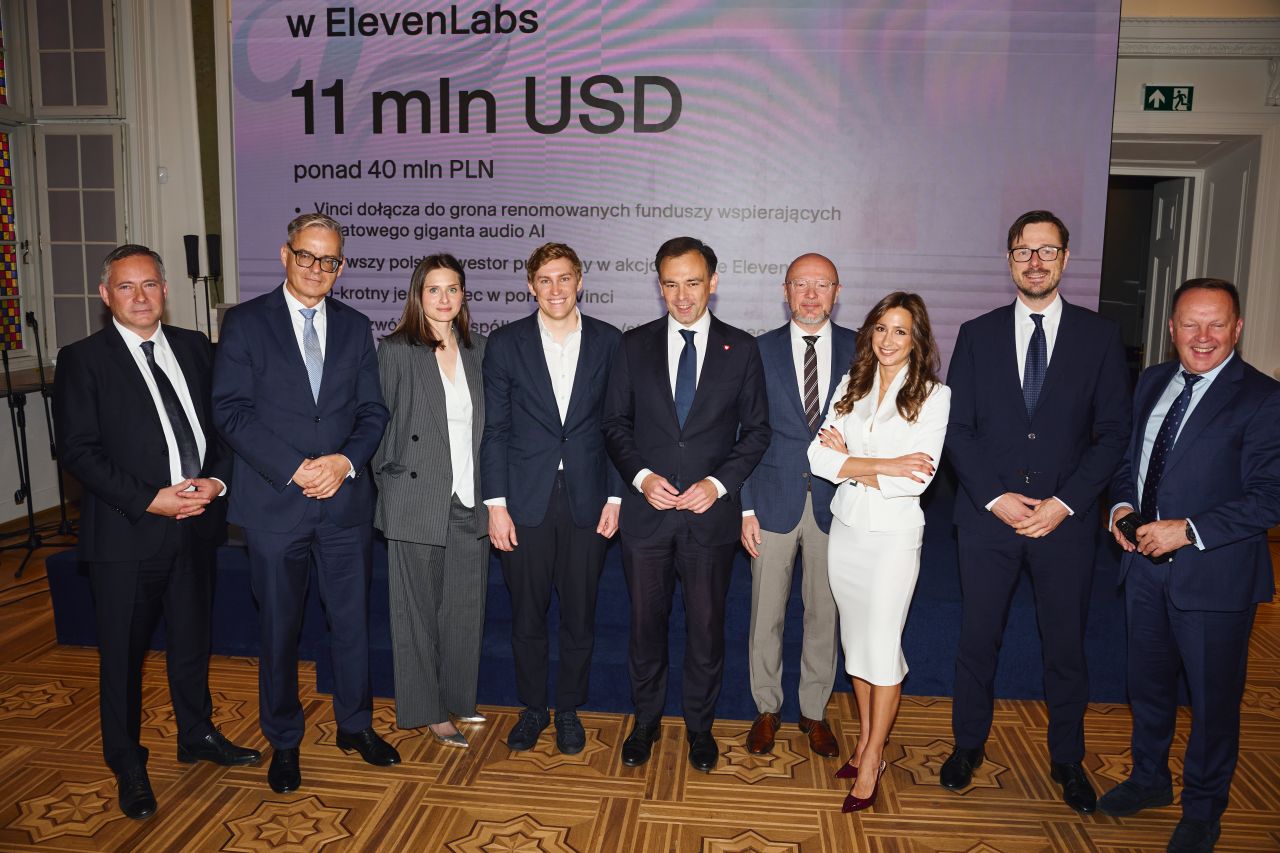
The Polish state is taking a stake in ElevenLabs. Through Vinci, part of the BGK Group, the Government of Poland is joining our latest round investors Sequoia, Andreessen Horowitz, ICONIQ and others as one of our backers. The teams at BGK and Vinci are great. More so than capital, they bring expertise and are phenomenal partners as we continue building this ecosystem. Together, we will help power AI Lab Poland: a new joint undertaking bringing together technology, science, talent and investment to support the next generation of AI innovation in Poland. We are already honoured to work with established partners such as Centrum e-Zdrowia, LOT Polish Airlines, InPost, Uniwersytet Warszawski and the iconic Piotr Fronczewski. Across all of them, one thing stands out: the ambition to build global technology from the start, lead with innovation and show what is possible from here. Piotr Dabkowski and I met in high school in Warsaw. Building on top of incredible foundations set by the generations that came before us, we had the privilege to study abroad, learn from many of the best people around the world and build a company with global impact from the start - from Europe. We now have an incredible talent network in Warsaw, London and across many capitals in the region and we’re committed to strengthening it even further in the years to come. We believe Europe has the potential to lead on technology and applied AI. Recently, we hosted the ElevenLabs Summit in Warsaw, and it felt like a homecoming - with such an incredible scene brewing here. With the Polish state now investing in ElevenLabs, we are proud to keep strengthening the connections between Poland, Europe and the global technology ecosystem. Thank you to Minister Andrzej Domański, to the teams at BGK and Vinci who believed in this, and to everyone who helped make it happen.
- AssemblyAISince 28 Oct 2026
Productivity at AssemblyAI has taken a hit recently... We've been having WAY too much fun testing our new Text-to-Speech model 👀 Experimenting with different voices, cloning each other, and making the model say increasingly ridiculous things. Good news: today we're launching AssemblyAI-TTS-1, so now everyone else can get distracted too 🚀 And while we've been having fun, the team has built something pretty incredible: 🎙️ Natural, expressive, human-like speech 🎯 Leading accuracy on independent benchmarks ⚡ <100ms time to first audio 🗣️ Instant voice cloning and 4,000+ voices ♾️ Unlimited concurrency, no minimum commitments 💰 Just $15 per million characters We've spent years helping developers build agents that can hear and understand their users. Now we're helping those agents speak back. Go have some fun with it. Promise it'll be worth it 👇 https://lnkd.in/ghNAX93i
- NebiusSince 27 Oct 2026
JUST IN: Nebius just launched Physical AI Workbench, an open-source framework built in collaboration with NVIDIA that gives robotics teams one place to run the entire physical AI development cycle. Data generation. Simulation. Training. Evaluation. All connected. All agent-operable. The problem it solves is real. Building physical AI means stitching together tools that each have their own dependencies, data formats and infrastructure requirements. Moving outputs between stages takes custom scripts. Repeating an experiment requires careful tracking of every scene, dataset and checkpoint. When one tool changes, the whole pipeline breaks. Workbench replaces all of that with a single CLI — npa — that a coding agent can operate directly. The results customers are already reporting: → Up to 40% reduction in engineering time → Iteration cycles cut from weeks to days → 14-stage sim-to-real reference workflow, from task definition to a checkpoint ready for hardware testing The NVIDIA integration is deep. Workbench now includes NVIDIA Cosmos Data Factory built on Cosmos 3, runs on Isaac Sim and Isaac Lab for simulation, Isaac GR00T for robot policy models, and NVIDIA SONIC for humanoid behavior. The first real-world proof point is with Sereact, the German AI robotics company already deployed with Zalando, IKEA, BMW, DHL and Mercedes-Benz. Together they built a sim-to-real pipeline for returns handling at Zalando, one of the hardest warehouse processes to automate given the variability of returned items. Available now on GitHub under Apache 2.0. The infrastructure layer of physical AI is being built in Europe. 🇪🇺📊 Learn more here: https://lnkd.in/d4XgSjFN ~~ ♻️ Join the weekly robotics newsletter, and never miss any news → ziegler.substack.com
- NebiusSince 27 Oct 2026
Black Forrest Labs x NEBIUS: The European Computing & AI Powerhouse!! 🌲🖤 [Anzeige] Meet Black Forest Labs × Nebius! At NVIDIA GTC Berlin, I met Stephen, Developer Advocate at Black Forest Labs, one of Germany’s most exciting AI startups! And there’s a pretty interesting collaboration behind this picture! Black Forest Labs develops cutting-edge generative AI models, including the FLUX family for visual and Physical AI. But building these models requires ENORMOUS computing power! That’s where Nebius comes in! ☑️ GERMAN AI MODELS: Black Forest Labs develops frontier visual intelligence models. ☑️ NVIDIA BLACKWELL GPUs: Black Forest Labs used Nebius’s NVIDIA B200 infrastructure for research behind Self-Flow, a training method foundational to FLUX 3. ☑️ EUROPEAN AI INFRASTRUCTURE: Nebius provides the computing infrastructure needed to develop and scale AI models! Besides all the AI applications we build, Europe needs more companies building the models & infrastructure behind it. And I LOVE seeing these companies doing this by working together!! 🖤 P.S. Stephen, it was great meeting you! Maybe I’ll take you all on a little trip to the German BLACK FOREST soon to explore Black Forest Labs behind the scenes! 🌲 #Nebius #BlackForestLabs #NVIDIA #AI
- AgileRLSince 25 Oct 2026
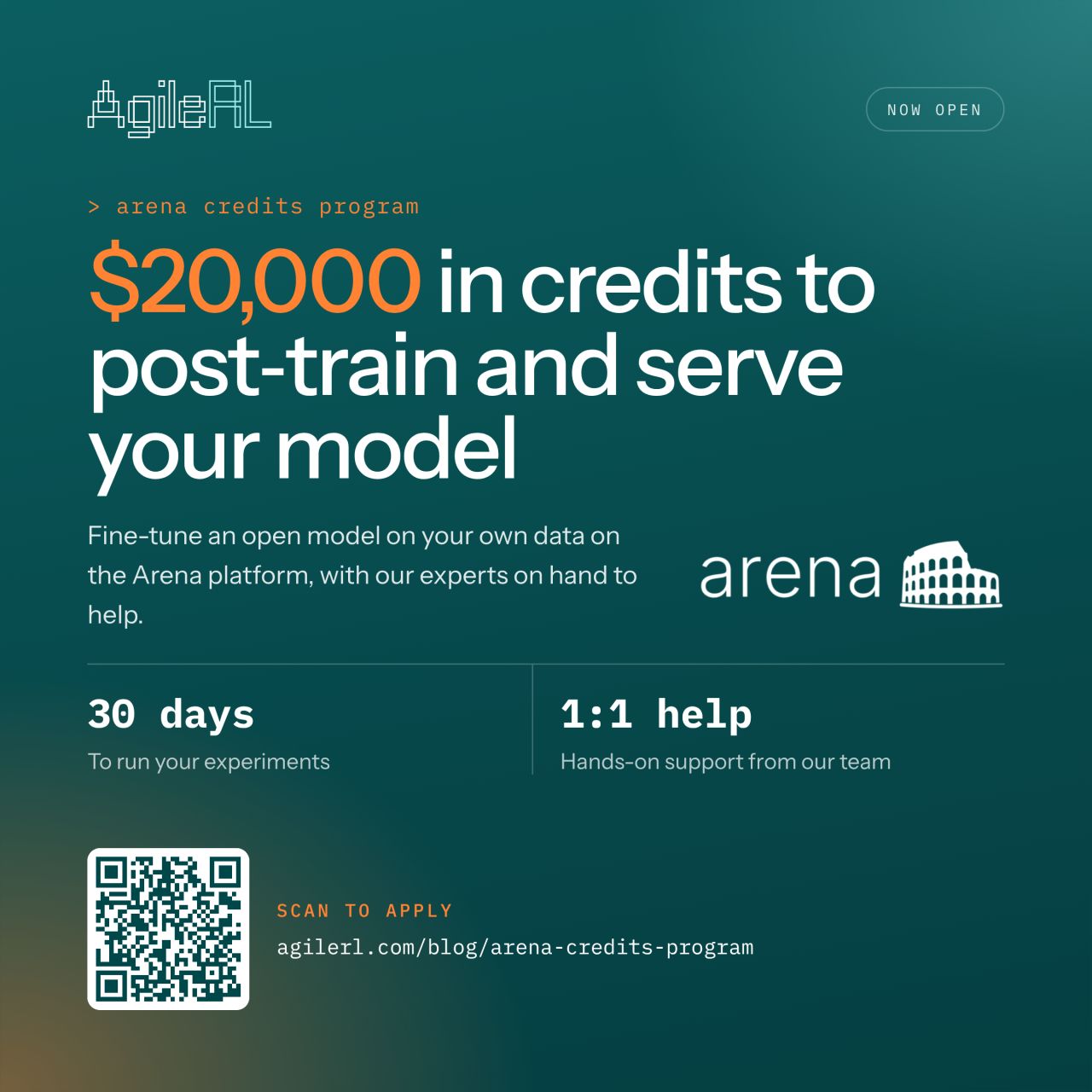
We're giving engineering teams at enterprises $20,000 to train and deploy their own model on Arena. One grant per company, with our experts on hand at no extra cost, so the first experiments don't have to wait for budget approval. If your ML team has a task it wants a specialised model for, apply here and we'll get back to you within a week: https://lnkd.in/eMDCYpfV
- AgileRLSince 26 Oct 2026
If you lead AI at a bank or an insurer and you're planning to go agent-first, the model underneath it deserves a close look. Here is why: Runaway agents in a business can do great harm to a company's fiscal position whilst using a frontier model. With a frontier API, cost scales with usage, so as your usage grows, your token cost grows in a linear fashion, and you're always at the mercy of the provider if they change their token price. Open-weight, fine-tuned models on a company's own infrastructure allow them to really take advantage of an agent-first implementation. The initial cost is a little bit higher, but after that you pay for the hardware you run, so the more your agents do, the cheaper each unit gets. That only pays off if your agents are doing work that matters, which is why I would start where the data is richest. For banks and insurers, that's the repetitive work a few people do by hand, where you already hold years of previous outcomes. - Settling claims, where you know the value claimed, the correct value and what the policy covers. - Customer-service escalations. - A coding agent trained on your own codebase, so no third-party tool touches where your secrets live. Pick one of those, let the agent help the people doing it first, and over time let it do the work while they oversee it. This is exactly what we help enterprises do at AgileRL: fine-tune open models on their task and run them on their own infrastructure, so the cost of going agent-first stays predictable. Happy to chat if you're working through this.
- AnamSince 26 Oct 2026
We just shipped a small update that carries a lot of weight in making conversations with Anam avatars feel more natural. When we think about conversations that just 𝘤𝘭𝘪𝘤𝘬, it’s not one big thing. It’s a collection of small behaviors that you barely notice until they’re missing. One of those happens when someone needs a moment to think. Ask someone something they don’t know off the top of their head, and they won’t just go silent, they'll ask you to give them a second or will follow with “let me check that” while they figure it out. Those tiny responses keep you in the conversation. Now Anam avatars can do the same while they’re waiting on a tool call, knowledge base, or API - responding naturally in the moment rather than leaving a gap of silence, staring into the abyss. And you can decide what those responses sound like for your avatar. Check out the demo video, and find a link to all our latest product updates in the comments.
- AnamSince 26 Oct 2026
I added two of our avatars to a video call today. They joined as teammates, listened to the conversation, responded in real time, and had access to everything about Anam through Claude Code. Why does this matter? Think about every business that runs on live conversation - sales calls, customer onboarding, language tutoring, coaching, employee training. Right now those all need a human on the other end. That is expensive, hard to scale, and restricted by time zones. Not to mention limited by what one person can know versus an agent. An AI avatar that can join a video call changes the math. - Coaching at 3am without burning out staff - A technical expert in every sales demo - 1-on-1 onboarding for every customer And the user on the other end isn't staring at a chatbot window. They're in a video call with a face that looks at them, reacts to what they say, and speaks back naturally. A face that represents your brand. Localised to each user. True personalisation at machine scale. That's a very different experience from a chatbot or a voice agent. Our customers report that adding a face to their agents has increased engagement by 44%. We're building this at Anam. The avatar engine handles speech recognition, reasoning, voice synthesis, and face generation in real time. Recall.ai handles getting the avatar into the call. It works with Google Workspace Meet, Zoom, and Teams today. Once Claude Code had access to the Anam MCP server, it took one line and 10 seconds to have both avatars join the call.
- AssemblyAISince 26 Oct 2026
Picking the right LLM for a Voice AI pipeline is hard. Today we're launching Voice Standard Bench to rank 50+ of the best LLMs on real voice tasks, and making all of them available in AssemblyAI's LLM Gateway. Most Voice AI products run an LLM on messy, multi-speaker transcripts: - Voice Agents responding to human speech - Summarizing a meeting, sales call, or support call - Pulling names, dates and numbers out of a multi-speaker conversation - Fixing transcription errors - Cleaning up dictation Voice Standard Bench tests every model on the input these products actually send an LLM: lengthy conversational transcripts with multiple speakers, raw speech-to-text output with filler words, false starts and the occasional misheard word. Each model is scored on transcripts from a 30-second voicemail to a 60-minute meeting. Here's a glimpse of what we found: - The top-scoring model costs 55-65x more per hour of audio than a model within two quality points of it. - That gap narrows to about 5x on hour-long transcripts, where bigger models start to pull ahead on quality. - Open models we host on our own infrastructure are the fastest on short audio. On a 30-second transcript, gemma-4-31b answers in under a second at a quality score of 93. Learn more here: https://lnkd.in/gS_FsV3W Try 50+ models in our Playground: https://lnkd.in/g-kG2diJ
- DATA POEMRecorded 28 Oct 2026
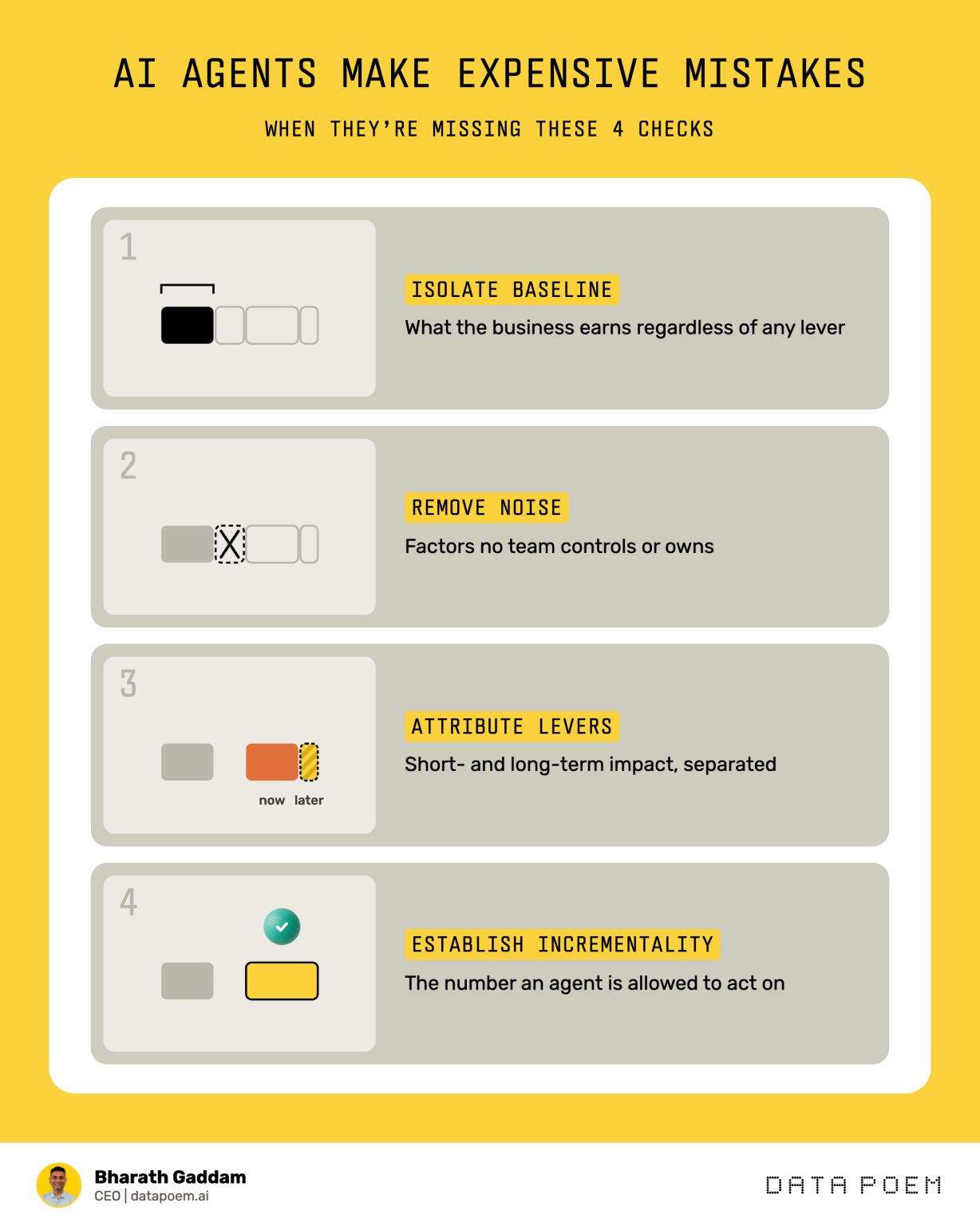
Your AI agent will give you a confident reason for every dollar it moves. The reason is fiction. Ask it why it shifted spend out of brand media and into promotions, and it answers with total conviction. It just can't tell a good-sounding answer from a true one. That's the gap Tapati Bandopadhyay, PhD of Third Eye Advisory names in her new paper, "Beyond the Trust Wall: How Causal Reasoning Embeds AI TRiSM Into Autonomous Enterprise Action." She calls it fast to act, slow to explain. An agent reallocates a marketing budget at 2 a.m., and no one sits with it while it decides. The systems that take action are maturing faster than the systems that can explain the action. Her case makes the cost visible. Promotions looked like the biggest lever at 14.5% of new customers, with brand media at 10.6%. An agent running on standard prediction would have moved the budget into promotions. FOUNT found the other 7.1% of brand media was quietly generating months later, money last-click measurement simply could not see. She turns that into a test every agent should pass: explain the outcome "the way a controller explains a variance." Isolate the baseline. Remove the noise. Attribute each lever, now and later. What's left is the only number an agent is allowed to act on. A causal chain gives a guardian agent a checkable claim to test, so you can ask whether an agent "has earned the right to act on it" before the money moves. Tapati, thank you. The idea that every decision should come with its cause attached is the one DATA POEM was built on, and you've given it a sharp frame. Read the full paper here: https://lnkd.in/gA_ZqF4R #DecisionAI #CausalAI #EnterpriseAI #AIROI
- DataikuSince 23 Oct 2026
The countdown is on for the Dataiku Summit London! Here's what I'm looking forward to most: Vodafone's AI Opportunity: Paul Blair reveals how rapid prototyping uncovered a single IT testing use case projected to save £8 million. Scaling GenAI at Aviva: Shantanu Deo and Chris Butler explore how AI agents are transforming internal auditors into data analysts. Platform Migration at L&G: Sara Budd shares practical lessons on driving user adoption and managing change when moving to Dataiku. Beyond the tech, it’s going to be a great space for high-level industry conversations and sharing market insights on how companies are truly scaling AI today. If you're in London, it would be great to see you there! Register via link here: https://lnkd.in/egMYjTF2
- DataikuSince 23 Oct 2026
My keynote at Dataiku Succeed came down to one point: Vibe coding is becoming the next generation of Excel workbooks. Fast. Useful. Hard to inspect. The answer isn’t stopping business teams from building. It’s giving them a governed way to build under IT oversight. At Succeed, we expanded Cobuild to support that: • Dataiku Headless: Build and manage Dataiku projects from tools like Claude Code, Codex, and Cursor - coming soon. • Agent Management: Discover, monitor, and improve agents across the enterprise, wherever they were built - available now. More people building is inevitable. The real question is whether they’re building in a system you can trust. More on what we shared at Succeed: https://lnkd.in/eprXtXXN #DataikuSucceed26
- arato.aiSince 15 Oct 2026
"You told me it works." That's what the CIO of one of the largest banks in Spain said to his own head of AI, an hour before they pulled their agent off the website. Here's what happened. We ran a simulation on their AI agent, live on their site, without being asked. We emailed them: we found these things, do you want to talk? They got on a call. The head of AI said the issues were probably old, everything works now. We told them we'd run the simulation the night before. The CIO stopped the conversation. Looked at his own AI lead. "You told me it works. How can they find all these issues when you promised me it works? I can't believe the team promised me this thing's working and it's not." An hour later, the agent was gone. This is what we keep seeing. Teams assume it works. Someone said it would. It got tested, technically. It's not ready for production. They assume 90%. It's running under 40%. If you want to know your agent works, you have to actually test it. Simulate it, thoroughly.
- Cyfuture.aiRecorded 16 Oct 2026
I’ll be attending 𝗔𝗜 𝗚𝗹𝗼𝗯𝗮𝗹 𝗘𝘅𝗽𝗼 𝟮𝟬𝟮𝟲 𝗶𝗻 𝗧𝗼𝗸𝘆𝗼, 𝗝𝗮𝗽𝗮𝗻, from November 4–6. As AI adoption grows, the conversation is moving beyond models to the infrastructure required to run them at scale. At Cyfuture.ai, we’re focused on making that infrastructure accessible through Bare Metal GPU infrastructure, AI as a Service, and high-performance compute for AI workloads. Alongside compute, reliable data centre infrastructure, networking, power and cooling are becoming equally important to delivering performance at scale. I’m looking forward to meeting AI companies, enterprises, technology partners and infrastructure leaders in Tokyo to discuss how we can build and scale AI workloads more effectively. If you’re attending, let’s connect and exchange perspectives on the future of AI infrastructure. 📍 𝗔𝗜 𝗚𝗹𝗼𝗯𝗮𝗹 𝗘𝘅𝗽𝗼 𝟮𝟬𝟮𝟲 | 𝗠𝗮𝗸𝘂𝗵𝗮𝗿𝗶 𝗠𝗲𝘀𝘀𝗲 𝗜𝗻𝘁𝗲𝗿𝗻𝗮𝘁𝗶𝗼𝗻𝗮𝗹 𝗖𝗼𝗻𝘃𝗲𝗻𝘁𝗶𝗼𝗻 𝗖𝗼𝗺𝗽𝗹𝗲𝘅, 𝗝𝗮𝗽𝗮𝗻 📅 𝗡𝗼𝘃𝗲𝗺𝗯𝗲𝗿 𝟰–𝟲, 𝟮𝟬𝟮𝟲\ 📌 𝗕𝗼𝗼𝘁𝗵 𝗡𝗼. 𝟭𝟭 𝘚𝘦𝘦 𝘺𝘰𝘶 𝘪𝘯 𝘛𝘰𝘬𝘺𝘰! #AIGlobalExpo2026 #CyfutureAI #GPUInfrastructure #BareMetalGPU #AIasAService #DataCenters Cyfuture
- GalteaSince 13 Oct 2026
Watch everything in production without blowing your budget. Today we’re launching Always-on Monitoring 2.0 at Galtea. Continuous evaluation of your production traffic, with sampling, credit caps, and content filters built in from day one, so you're never choosing between watching everything and staying within budget. Sessions close automatically. Regressions surface in minutes, not in customer complaints. And most importantly, connecting production evals to your pre-production tests is what turns monitoring into a system that actually improves over time. The requirement regulated industries have is proof that a deployed AI system still behaves as intended, month after month. This is the last piece to close the loop for online and offline evals. Available at https://platform.galtea.ai
- GalteaSince 13 Oct 2026
Some weeks ago, I was on the phone with customer support at one of the biggest delivery services in the world, and the call was carried out entirely by a voice agent. Two things stood out: How good voice agents are getting by the day, and how bad they can still be with human interactions (this one failed with a very simple query). I think voice agents should be evaluated more carefully. A wrong answer from a voice agent in a bank or insurance call center doesn't feel like a bug, but more like a person who told them something wrong. The implications for the brand (and the costs attached to it) are something that big companies cannot overlook. To solve this, today we launch something big in Galtea: you can now run voice simulations against AI agents that answer the phone. Voice simulations are available today in every plan. Running a voice agent in a bank or insurance call center? Test it before it talks to a customer: https://lnkd.in/eCn_gwBY
- Druid AISince 13 Oct 2026
🚀 The hardest part of AI isn’t the technology. It’s getting started. After years building DRUID’s product and working with teams across the US, I’ve learned one thing: everyone wants AI, but not everyone knows where to begin.💡 My advice? Start with one use case. Define success. Build from there. That’s exactly what Symbiosis 5 is about: real use cases, real experiences, real impact. 📍 October 20th | London Link in the comments 👇 #Symbiosis5 #AgenticAI #AIAgents
- Inworld AISince 13 Oct 2026
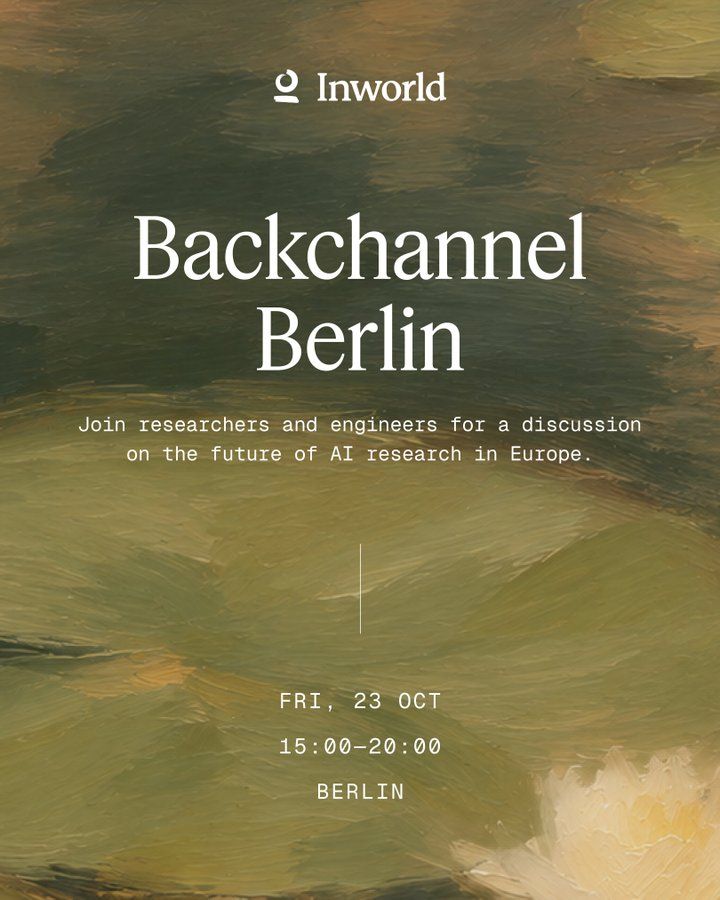
Inworld is expanding in Europe. We are building out a Berlin office and now have regional deployments that allow for high performance and compliance at scale. To celebrate this expansion we're hosting Backchannel Berlin, an event for top researchers and engineers in Berlin and across Europe. Join us on Friday, October 23rd: https://lnkd.in/gpKCYWjq
- ApodexRecorded 15 Oct 2026
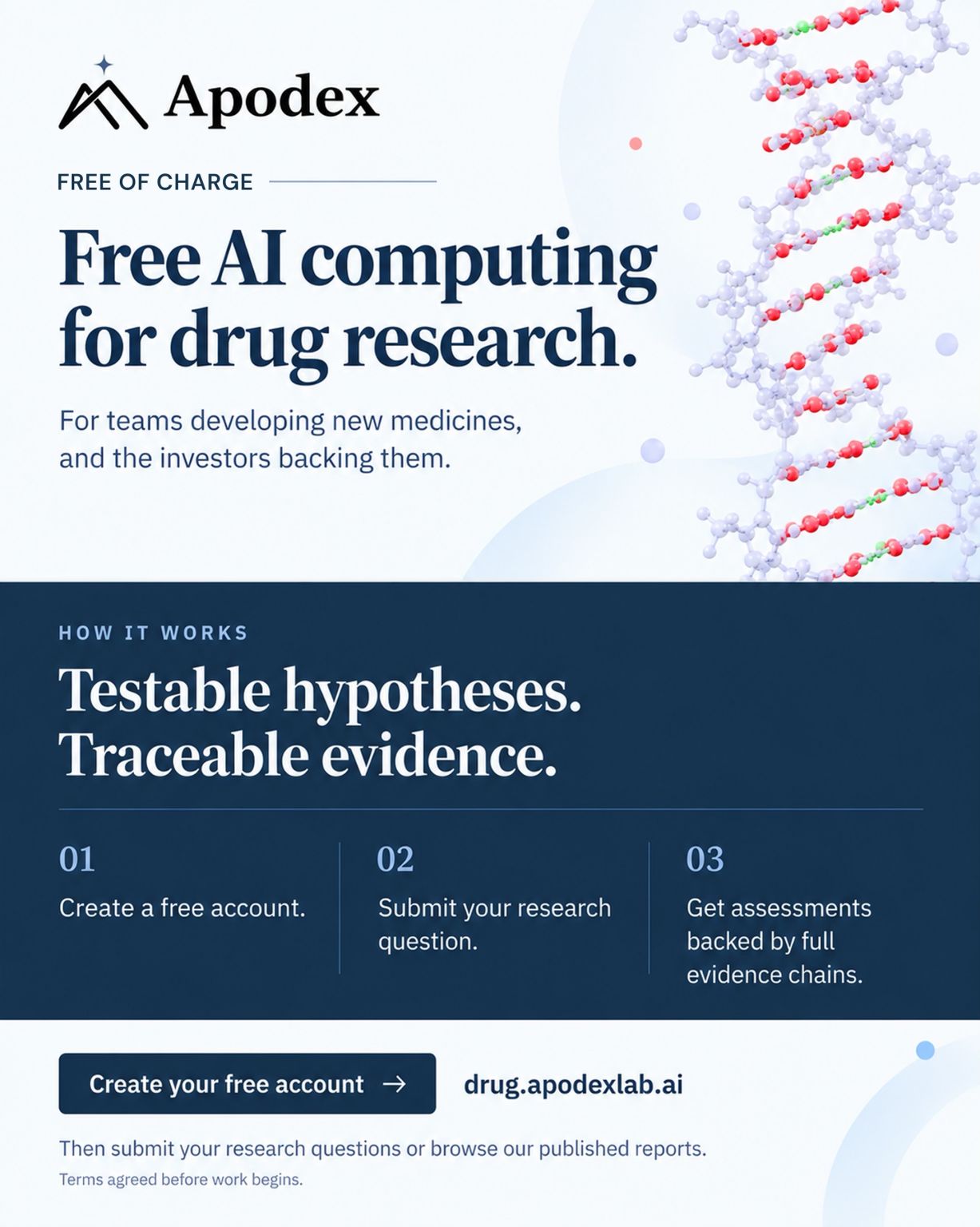
We’re Making Advanced AI Drug Research Free for Everyone At Apodex, our goal is to build Discoverative AI—AI that can help humanity discover things we do not yet know, not just generate answers from what we already know. I believe this is one of the most valuable things AI can do for humanity. And drug research is one of the best places to start. Few things matter more than finding better ways to prevent and treat diseases. There are thousands of small biotech companies and research teams working on important medical problems. Many have good ideas but do not have enough AI experts, computing resources, or research tools to explore them. I don’t think a good scientific idea should have to wait for a big budget. That is why we decided to make a growing set of Apodex’s AI drug research tools available for free. One thing I want to emphasize: we are offering much more than free computing. At Apodex, we have a team of scientists and AI researchers who are constantly improving our models, algorithms, and research tools. We are starting with clinical trial forecasting, drug repurposing, drug interactions, and safety assessment. But this is just the beginning. What matters even more is what you need that we have not built yet. We want to listen and develop new tools and algorithms based on real research needs. Some may become free tools for everyone, while others may require deeper collaboration. Our goal is to make useful AI research capabilities available to more people, while continuing to build better ones. So please don’t just come to Apodex to use what we have built for free. Come and tell us what we should build next. https://drug.apodexlab.ai/ #AIforScience #DrugDiscovery #Apodex
- Druid AISince 12 Oct 2026
Symbiosis 5 is almost here and I hope you'll join us. I still remember when Druid AI was at the beginning, just a few people in an apartment, with a platform that was in its early days. On October 20th, our customers and partners take the stage to show what they've built with it. This one is for the people who trusted it, and made it real. London or online. Looking forward to it! #Symbiosis5 #AgenticAI
- Featherless AISince 8 Oct 2026
Its a new era, AI intelligence is too cheap to meter. We figured out how to replace opus to <$0.1/M tokens at scale; GLM 5.2 @ 1,482 tok/s with just 4xMi325x. 3x cheaper then B300's, 10x cheaper then Opus, All with dedicated AMD GPU's, all at Featherless AI Find out how we did it here: https://lnkd.in/gJjXZbVx
- Domino Data LabSince 9 Oct 2026
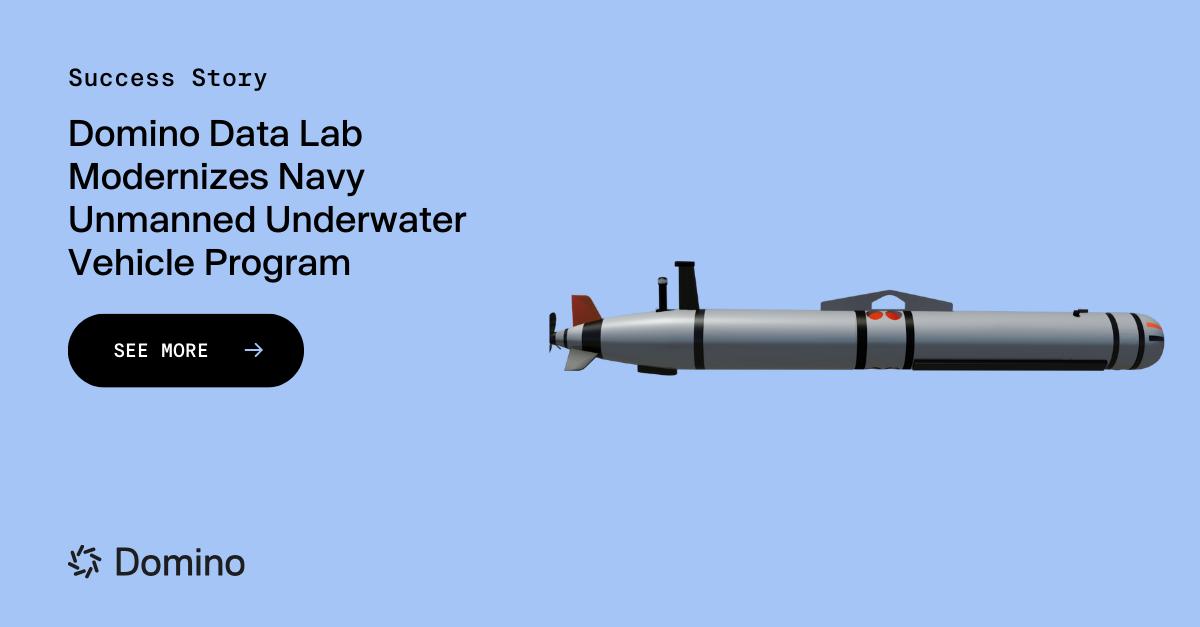
When Department of the Navy CTO Justin Fanelli spoke with TechCrunch recently, he made it clear, applied AI is the Navy's top technology priority. In that same interview, he noted that Domino Data Lab is now running the Navy's machine learning pipeline. That mention is a great honor, but it also highlights a deeper challenge across defense agencies. It doesn’t matter how fast AI evolves if federal acquisition pathways can’t keep up. Traditional acquisition can take long enough that the technology, requirements, or mission needs change before a contract is awarded. The core issue is that government procurement often can’t keep pace with commercial AI development. That’s why the Navy's new National Security Prototype to Production Consortium is such an important step forward. By using Other Transaction Authority, the consortium allows program offices to move working prototypes into production without forcing them to launch a brand new competition at every stage. Equally important, members commit to strict composability standards so software plugs cleanly into existing systems instead of sitting in an isolated silo. I have seen firsthand why this works. On Project AMMO, the Navy brought in Domino as the software integration layer across multiple vendors. By separating software updates from hardware cycles, deployment times dropped from six months down to six days. The consortium scales that concept across the entire Department of the Navy. I am proud that Domino is an inaugural member. For Navy program offices looking to move applied AI into the field today, the framework to make it happen is officially in place. Project AMMO case study: https://lnkd.in/ewiTpCvf
- DeeploySince 16 Sept 2026
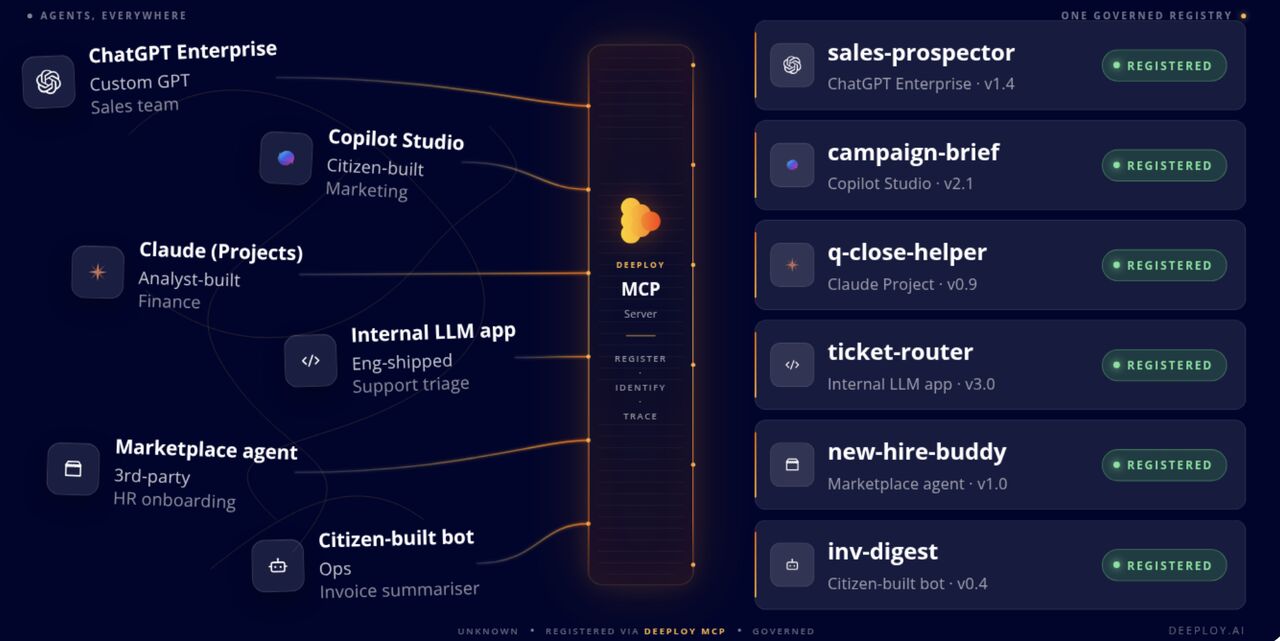
At some point in the last 12 months, someone in your organisation will have built an AI agent and shipped it without telling anyone working on AI governance. And let’s be honest. It’s probably more than one person. And probably more than once. It’s not that they would have done this maliciously. They were moving fast, solving a real problem, and maybe the onboarding process wasn't designed with agents in mind. But that agent is now running in production, touching data, influencing decisions, and it exists nowhere in your registry. Which means nobody knows what it's doing. Nobody knows what data it's touching, what it's telling customers, or whether the prompt it was built on still makes sense six months later. You find out something went wrong in the worst way (namely after it has already happened). The difference between a registered agent and an unregistered one is whether you had any chance of monitoring and catching these issues first. So how do you get visibility and control over things you can’t see? That’s why we’ve just launched the Deeploy MCP Server, designed to help organisations solve this growing problem. The idea is straightforward: connecting to Deeploy becomes part of how an agent runs, not a separate step somebody has to remember. The moment it connects, it's registered, identified, and traced. Every session, every interaction, centralised in one place alongside the rest of your AI portfolio. Whether that's a model your platform team spent months deploying, or something someone built last Tuesday. Link to the full announcement in the comments. 👇 #AIgovernance #AgenticAI #ResponsibleAI #AIAct
- DeeploySince 16 Sept 2026
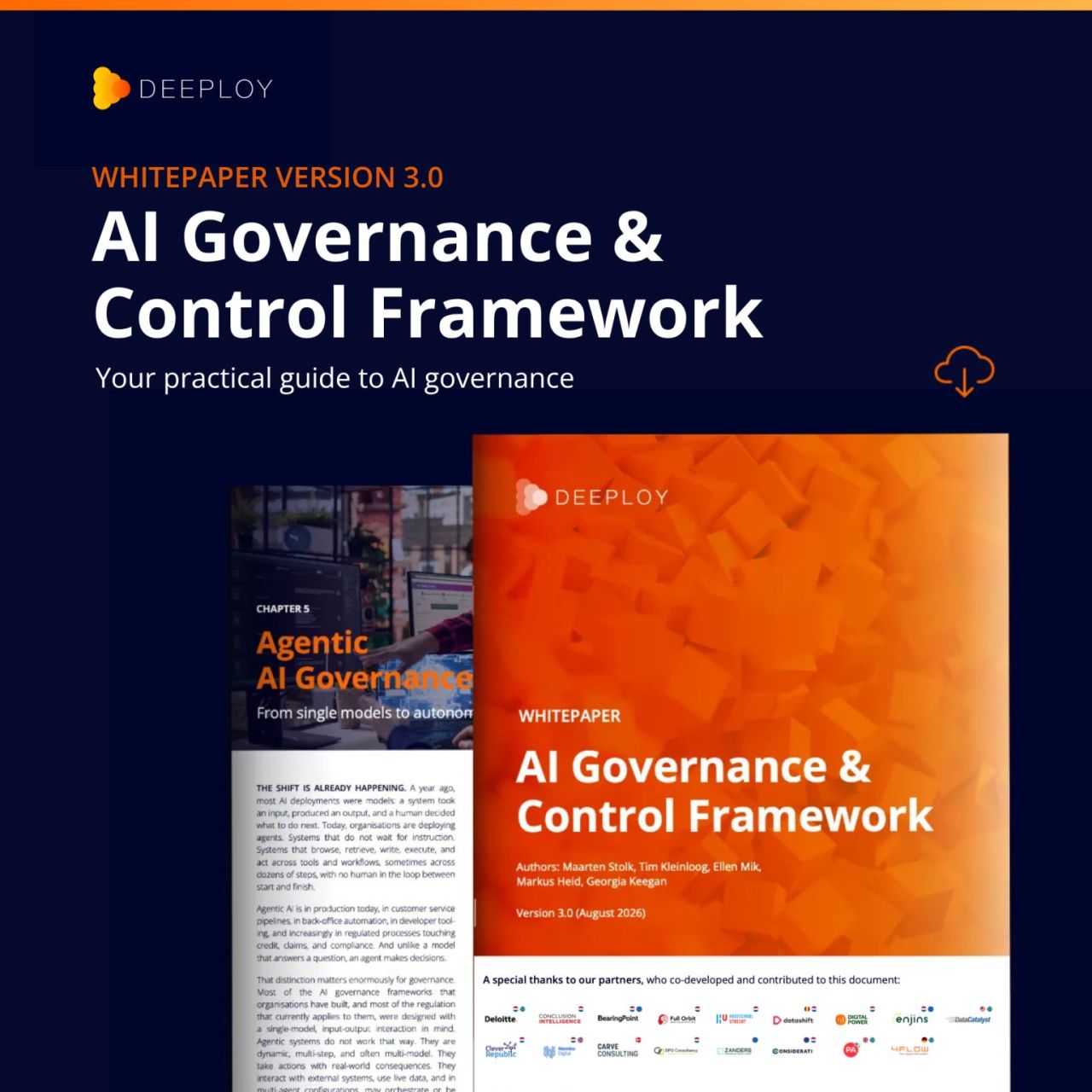
A year ago, we shared our experiences and learnings in our first 𝐰𝐡𝐢𝐭𝐞𝐩𝐚𝐩𝐞𝐫 𝐨𝐧 𝐀𝐈 𝐆𝐨𝐯𝐞𝐫𝐧𝐚𝐧𝐜𝐞, given a practical guideline to implement AI Governance. A first set of partners joined us, and shared their experiences with us. A lot can happen in 1 year. And when I say a lot, I mean A LOT. Many of our customers embraced Agentic AI, deploying 100s or 1000s of agents (and hence use cases) to production. AI which you need to govern, you need to monitor, you need to control. But also systems that change daily, and are super hard to control in practice. Governing agentic AI requires automated discovery, automation and enforcement of controls. We all learned quickly, and are proud to share our 𝐭𝐡𝐢𝐫𝐝 𝐞𝐝𝐢𝐭𝐢𝐨𝐧 𝐰𝐢𝐭𝐡 𝐚 𝐝𝐞𝐝𝐢𝐜𝐚𝐭𝐞𝐝 𝐜𝐡𝐚𝐩𝐭𝐞𝐫 𝐨𝐧 𝐆𝐨𝐯𝐞𝐫𝐧𝐚𝐧𝐜𝐞 𝐨𝐟 𝐀𝐠𝐞𝐧𝐭𝐢𝐜 𝐀𝐈. Curious to hear your thoughts! Feel free to reach out to me, always happy to share learnings and discuss challenges! Thanks again to our partner network, happy to do this together, sharing a strong voice on implementing AI responsibly! Want to be part of our network? Don't hesitate, reach out to Maria Saldias Olsen Deloitte, BearingPoint, Conclusion Intelligence , Full Orbit, HU University of Applied Sciences Utrecht (Hogeschool Utrecht), Datashift, Clever Republic, Nemko Digital, Carve Consulting, PA Consulting, DPO Consultancy, Zanders, Digital Power, Considerati, Enjins, DataCatalyst, and 4flow. Among the contributors: Bas Overtoom, Seppe Housen, Henning von Hauen, Koen Balm, Friso Spinhoven, Jeroen Tegelaar, Aura Orval, Floris de Lange, Ton Wagemans, Stefan Leijnen, Anita Boerema, Sharad Patel, Pepijn van der Laan, Jelmer Pieters, Emine Bilsin, Chris Lemmens, Bart Maassen, Dr. Laura Gellert, Scott Rompala, Chris Roters Kolja Verhage Sjoerd Kampen and others! Link: https://lnkd.in/eCxNjSQc



Other LinkedIn formats
Watch the companies you care about.
Filter every ad by industry, country, format and network, and get alerts when a company you watch starts running new ads.