On air · 1 of 3 networks
Deeploy
- deeploy.ai
- AI
- NL
- 19 employees
Deeploy’s ads on LinkedIn, Meta and Google, recorded by adsrunning. Browse the latest here for free. Sign up free to see all 130. Watch Deeploy with Starter to get each new one in your feed.
Watchlist with Starter · $49/mo
| Network | Status | Live ads | Nov 2025LinkedIn activity · 52 weeksOct 2026 | Checked | Next step |
|---|---|---|---|---|---|
| None recorded | 0 | Checked 30 Oct 2026 | See all 130 ads → | ||
| Meta | Not checked | — | |||
| Running | 11 | Ads on the Google Ads Transparency Center | Checked 26 Oct 2026 | Collect them with the API → |
Deeploy has no live LinkedIn ads. We recorded 11 Google ads on 26 Oct 2026.
Latest ads
- LINKEDIN · IMAGESince 17 Sept 2026
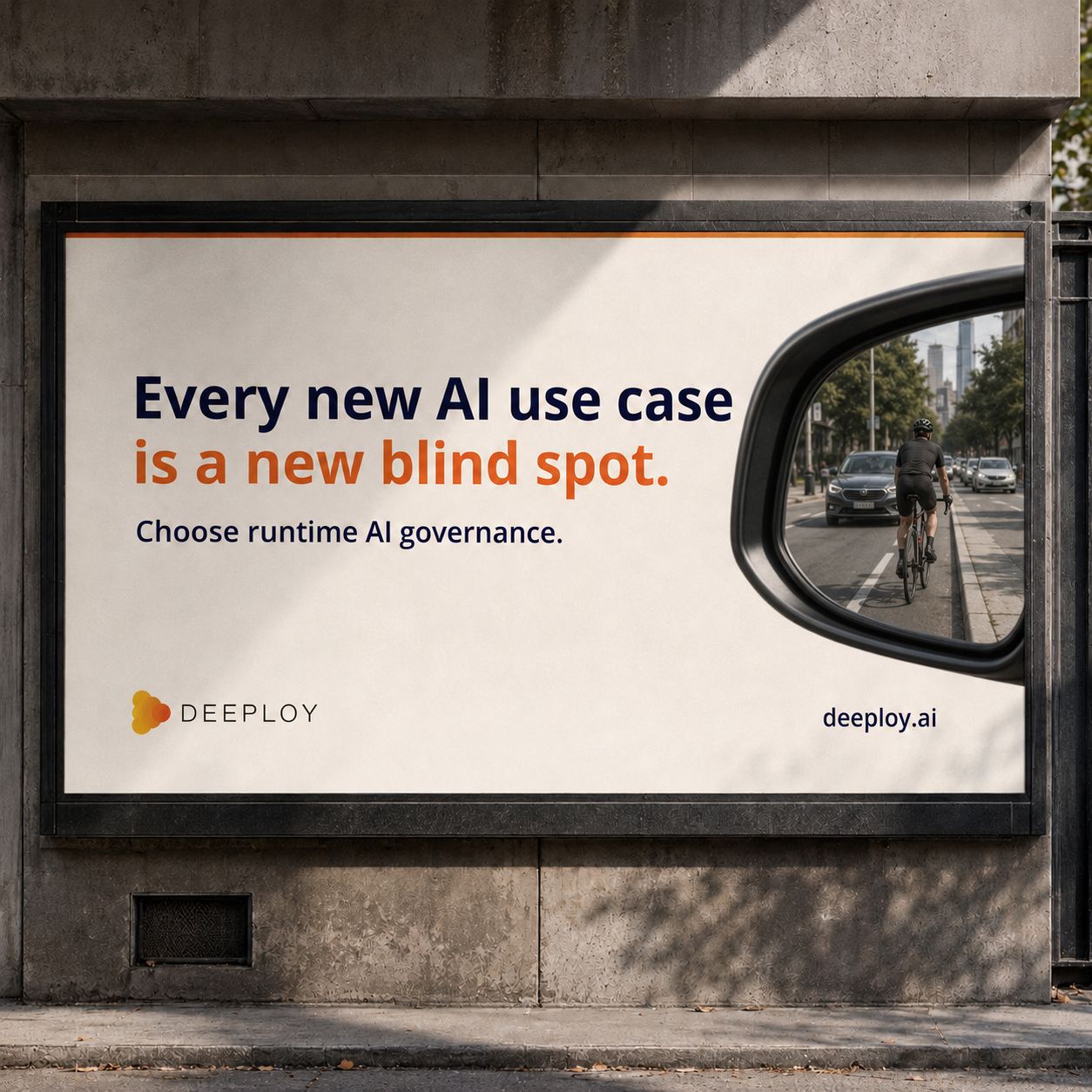
Every new AI use case adds a blind spot: another model, another owner, another set of obligations nobody is monitoring. Runtime AI governance puts the controls where your models actually run.
- LINKEDIN · IMAGESince 17 Sept 2026
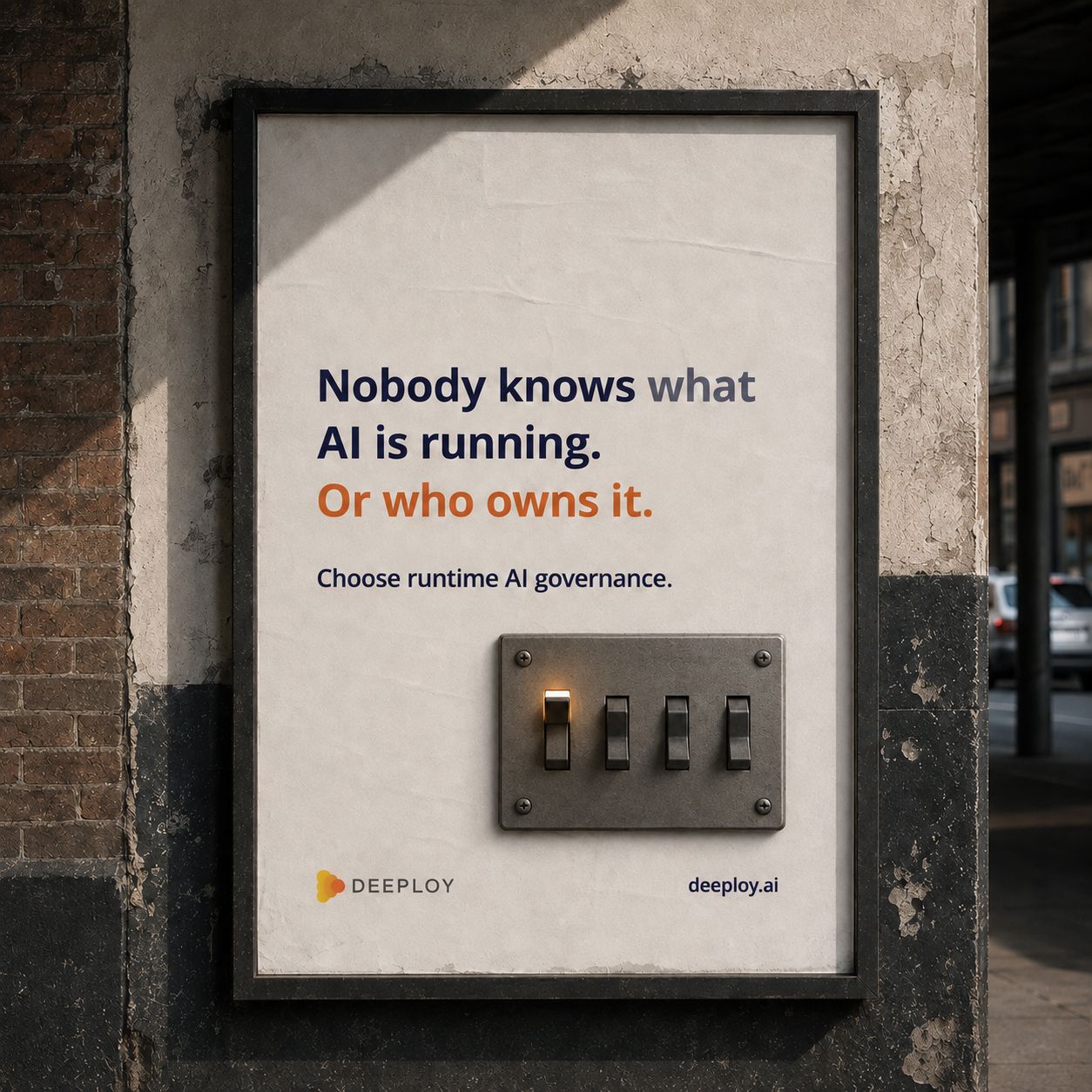
Ask who owns the AI running in your organisation and you get three answers, or none. Deeploy registers every model and agent, assigns an owner and keeps the controls in one place.
- LINKEDIN · IMAGESince 17 Sept 2026
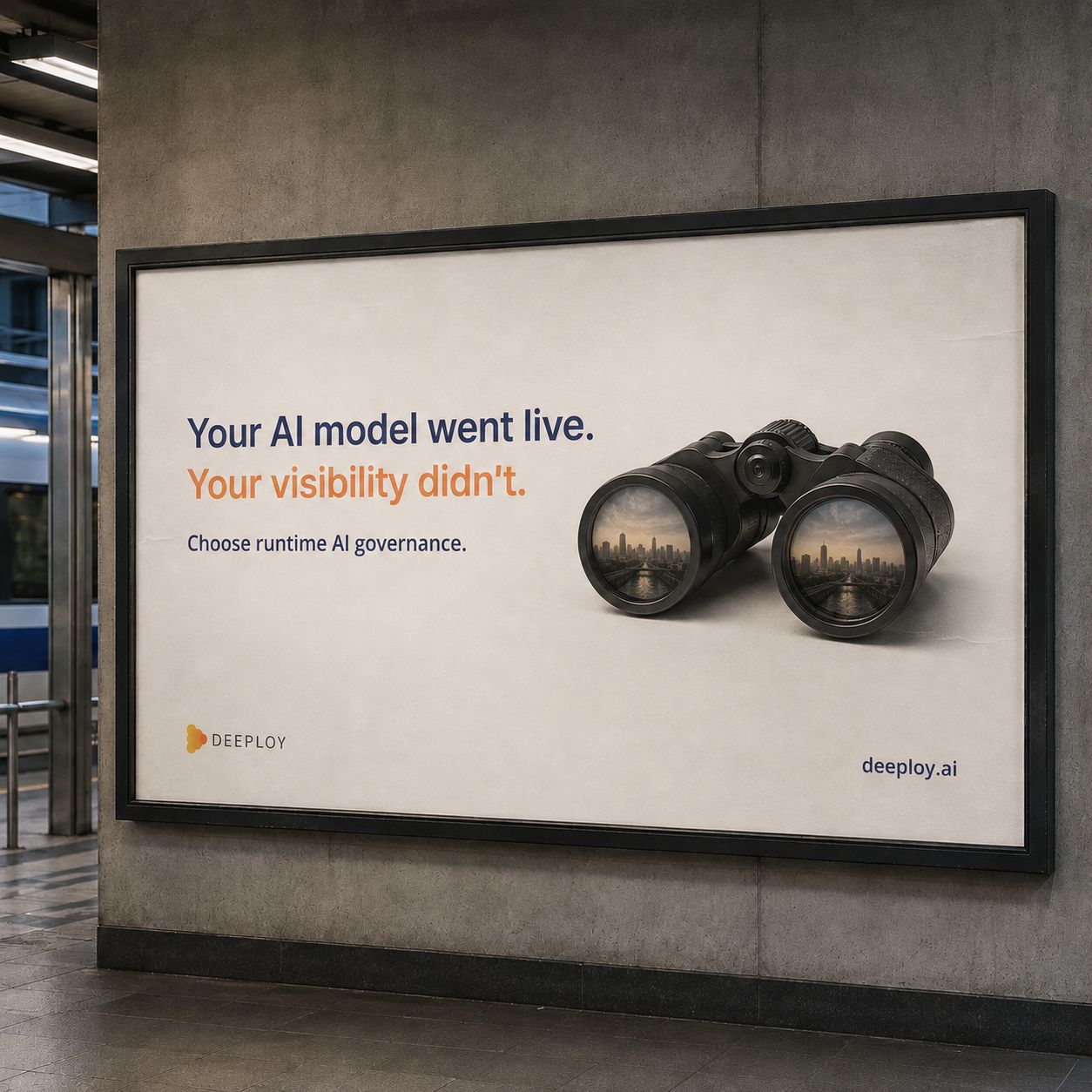
Going live is where oversight usually stops. Deeploy monitors your models and agents in production, with controls, evidence and audit trails that hold up under the EU AI Act.
- LINKEDIN · IMAGESince 16 Sept 2026
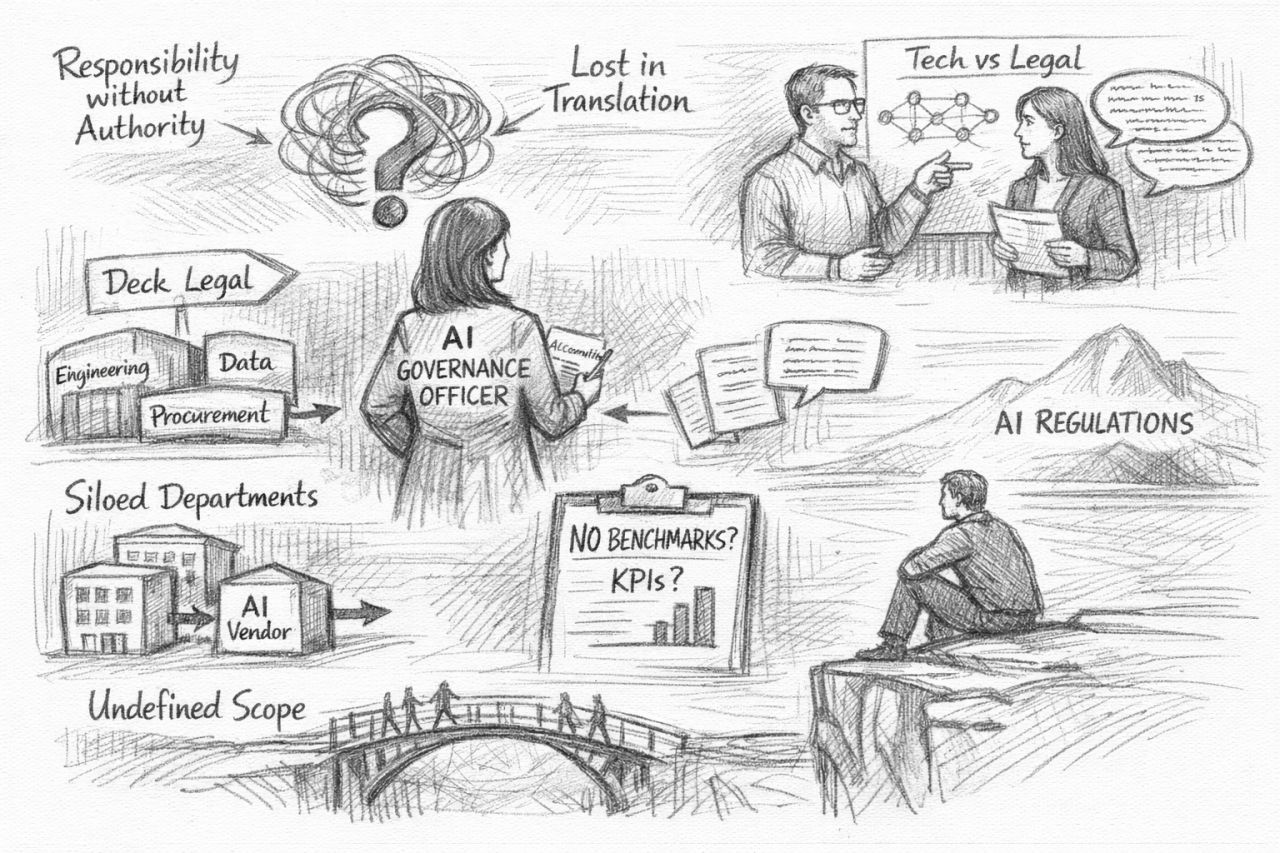
A while back, I wrote about the emergence of the 𝗖𝗵𝗶𝗲𝗳 𝗔𝗜 𝗢𝗳𝗳𝗶𝗰𝗲𝗿 and the open questions that come with being the first to fill a role that doesn't have a playbook yet. We're now seeing the exact same pattern play out one level deeper: the rise of the AI Governance Officer and AI Compliance Officer. With the EU AI Act and other regulatory frameworks entering enforcement and regulations tightening across industries, organizations are scrambling to hire people who can "own" AI governance. And just like with the CAIO, the role sounds obvious in theory, but gets complicated fast in practice. Here's what I keep hearing from people stepping into these roles: 𝗬𝗼𝘂 𝗶𝗻𝗵𝗲𝗿𝗶𝘁 𝗿𝗲𝘀𝗽𝗼𝗻𝘀𝗶𝗯𝗶𝗹𝗶𝘁𝘆 𝘄𝗶𝘁𝗵𝗼𝘂𝘁 𝗮𝘂𝘁𝗵𝗼𝗿𝗶𝘁𝘆. You're accountable for AI risk, but the models are built by engineering teams, the data is owned by another department, and procurement just signed an AI vendor without looping you in. Sound familiar? 𝗡𝗼𝗯𝗼𝗱𝘆 𝘀𝗽𝗲𝗮𝗸𝘀 𝘆𝗼𝘂𝗿 𝗹𝗮𝗻𝗴𝘂𝗮𝗴𝗲. I recently wrote about this exact challenge. Governance and compliance professionals talk about proportionality, accountability, and legitimate interest. Engineers talk about model drift, feature stores, and inference pipelines. Both are describing the same system but the translation layer between them is often missing entirely. 𝗧𝗵𝗲 𝘀𝗰𝗼𝗽𝗲 𝗶𝘀 𝘂𝗻𝗱𝗲𝗳𝗶𝗻𝗲𝗱. Does AI governance cover only high-risk systems? What about that internal chatbot someone spun up over the weekend? Do you own the policy, the process, or the tooling? Where does your mandate end and the DPO's or CTO's begin? 𝗧𝗵𝗲𝗿𝗲'𝘀 𝗻𝗼 𝗯𝗲𝗻𝗰𝗵𝗺𝗮𝗿𝗸. How do you measure success in AI governance? Fewer incidents? Faster compliance cycles? Board confidence? The KPIs don't exist yet, which makes it hard to prove value, secure budget, and build a team. These are the same structural questions I raised about the CAIO: differentiation, scope, performance, and organizational dynamics, just applied to a role that sits even more at the intersection of legal, technical, and operational domains. If you're an AI Governance Officer, AI Compliance Officer, or the person who just got "AI risk" added to your job description, I'd love to hear from you. What's working? What's broken? What do you wish your organization understood? P.S. If you're stepping into an AI Governance or Compliance role, Deeploy gives you the infrastructure to back up your mandate: model-level controls, audit trails, and governance evidence your whole organization can work with. Learn more at https://lnkd.in/e_an5nCg
- LINKEDIN · IMAGESince 16 Sept 2026
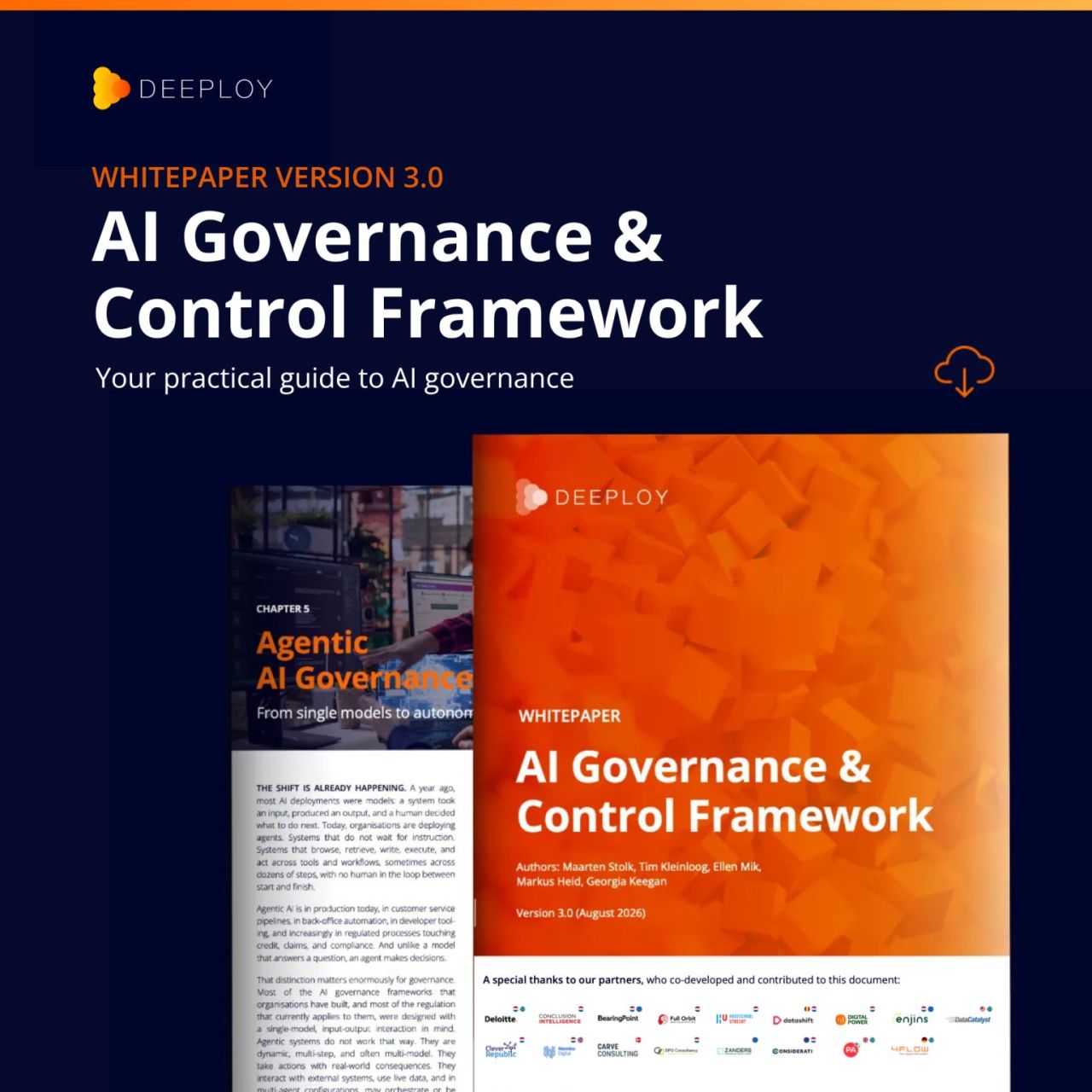
A year ago, we shared our experiences and learnings in our first 𝐰𝐡𝐢𝐭𝐞𝐩𝐚𝐩𝐞𝐫 𝐨𝐧 𝐀𝐈 𝐆𝐨𝐯𝐞𝐫𝐧𝐚𝐧𝐜𝐞, given a practical guideline to implement AI Governance. A first set of partners joined us, and shared their experiences with us. A lot can happen in 1 year. And when I say a lot, I mean A LOT. Many of our customers embraced Agentic AI, deploying 100s or 1000s of agents (and hence use cases) to production. AI which you need to govern, you need to monitor, you need to control. But also systems that change daily, and are super hard to control in practice. Governing agentic AI requires automated discovery, automation and enforcement of controls. We all learned quickly, and are proud to share our 𝐭𝐡𝐢𝐫𝐝 𝐞𝐝𝐢𝐭𝐢𝐨𝐧 𝐰𝐢𝐭𝐡 𝐚 𝐝𝐞𝐝𝐢𝐜𝐚𝐭𝐞𝐝 𝐜𝐡𝐚𝐩𝐭𝐞𝐫 𝐨𝐧 𝐆𝐨𝐯𝐞𝐫𝐧𝐚𝐧𝐜𝐞 𝐨𝐟 𝐀𝐠𝐞𝐧𝐭𝐢𝐜 𝐀𝐈. Curious to hear your thoughts! Feel free to reach out to me, always happy to share learnings and discuss challenges! Thanks again to our partner network, happy to do this together, sharing a strong voice on implementing AI responsibly! Want to be part of our network? Don't hesitate, reach out to Maria Saldias Olsen Deloitte, BearingPoint, Conclusion Intelligence , Full Orbit, HU University of Applied Sciences Utrecht (Hogeschool Utrecht), Datashift, Clever Republic, Nemko Digital, Carve Consulting, PA Consulting, DPO Consultancy, Zanders, Digital Power, Considerati, Enjins, DataCatalyst, and 4flow. Among the contributors: Bas Overtoom, Seppe Housen, Henning von Hauen, Koen Balm, Friso Spinhoven, Jeroen Tegelaar, Aura Orval, Floris de Lange, Ton Wagemans, Stefan Leijnen, Anita Boerema, Sharad Patel, Pepijn van der Laan, Jelmer Pieters, Emine Bilsin, Chris Lemmens, Bart Maassen, Dr. Laura Gellert, Scott Rompala, Chris Roters Kolja Verhage Sjoerd Kampen and others! Link: https://lnkd.in/eCxNjSQc
- LINKEDIN · IMAGESince 16 Sept 2026
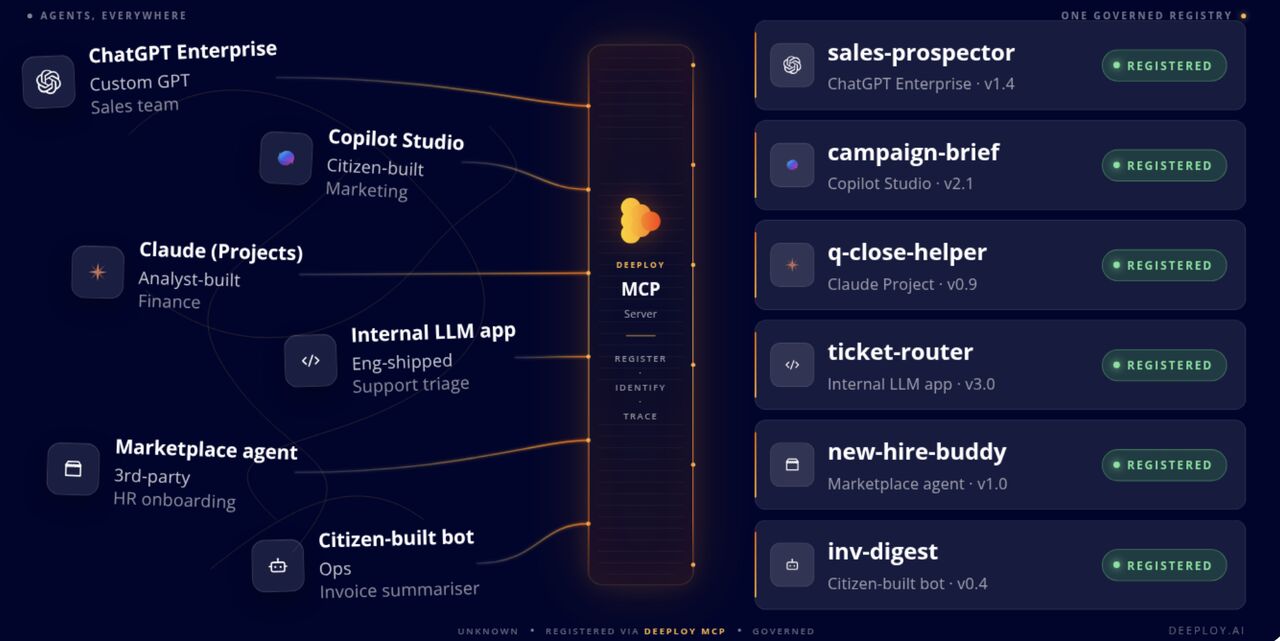
At some point in the last 12 months, someone in your organisation will have built an AI agent and shipped it without telling anyone working on AI governance. And let’s be honest. It’s probably more than one person. And probably more than once. It’s not that they would have done this maliciously. They were moving fast, solving a real problem, and maybe the onboarding process wasn't designed with agents in mind. But that agent is now running in production, touching data, influencing decisions, and it exists nowhere in your registry. Which means nobody knows what it's doing. Nobody knows what data it's touching, what it's telling customers, or whether the prompt it was built on still makes sense six months later. You find out something went wrong in the worst way (namely after it has already happened). The difference between a registered agent and an unregistered one is whether you had any chance of monitoring and catching these issues first. So how do you get visibility and control over things you can’t see? That’s why we’ve just launched the Deeploy MCP Server, designed to help organisations solve this growing problem. The idea is straightforward: connecting to Deeploy becomes part of how an agent runs, not a separate step somebody has to remember. The moment it connects, it's registered, identified, and traced. Every session, every interaction, centralised in one place alongside the rest of your AI portfolio. Whether that's a model your platform team spent months deploying, or something someone built last Tuesday. Link to the full announcement in the comments. 👇 #AIgovernance #AgenticAI #ResponsibleAI #AIAct
6 of 130 adsSign up to see every Deeploy ad, filter by format and date, and get alerts on new ones.
See all 130 adsWatch the companies you care about.
Filter every ad by industry, country, format and network, and get alerts when a company you watch starts running new ads.