LinkedIn thought leader ad examples
144 thought leader ads are live on LinkedIn right now, from 180 companies. Browse real ones, filtered by industry.
- GammaRecorded 20 Sept 2026
CEO: Can we do some marketing on Sph- Gamma Marketing Team: Done.
- FigafSince 28 May 2026
How to Govern your SAP TPM data. Understanding whether you have created the correct structure for your B2B migrations can be highly complicated. There are many small elements that make it difficult to scale what you are up to. We have explored what a governance application would look like. That could give you this overview. You can see more at https://lnkd.in/ezXsAamX
- FigrSince 17 Jun 2026
Figr Launch Week 🚀 Day 4: The Design System Agent We asked Figr to design a new feature for Uber. The output looks like Uber built it. All we did was open Uber's Figma file. Figr's new agent read every component, every token and mapped usage pattern by itself. The entire design system was documented for AI. Then it designed from that understanding. Spacing, components, visual language, all followed by default. Figr builds a living design system you can chat with, ask questions, and design from. You can do the same with your product. Import from Figma. OR You can EVEN CAPTURE your live app with our Chrome extension. Your design system doesn't need to be perfect for AI to follow it. It needs to be understood. Try Figr AI → figr.design
- FigrSince 14 Jun 2026
The more I look at how teams actually design products, the less I believe AI design should live inside a chat. So we rebuilt Figr Canvas. Product work is not linear. It’s messy and spatial. You keep the current product open. You bring in old screens. You add competitor references. You mark one small part of a flow and say, “this is the issue.” You compare two directions side by side. You reuse context from last week. A PM adds a note. A designer pushes back. Keep multiple directions open. That is hard to do in a chat box. Chat is good for thinking out loud. Design needs a surface. Figr Canvas is our attempt to make AI design feel less like asking a bot, and more like working with your team on the same wall. It gives teams one place to lay down product context, annotate what matters, compare directions, keep versions, and let the AI work from the same shared workspace. try it today at figr[dot]design
- FlexRuleSince 25 Oct 2025
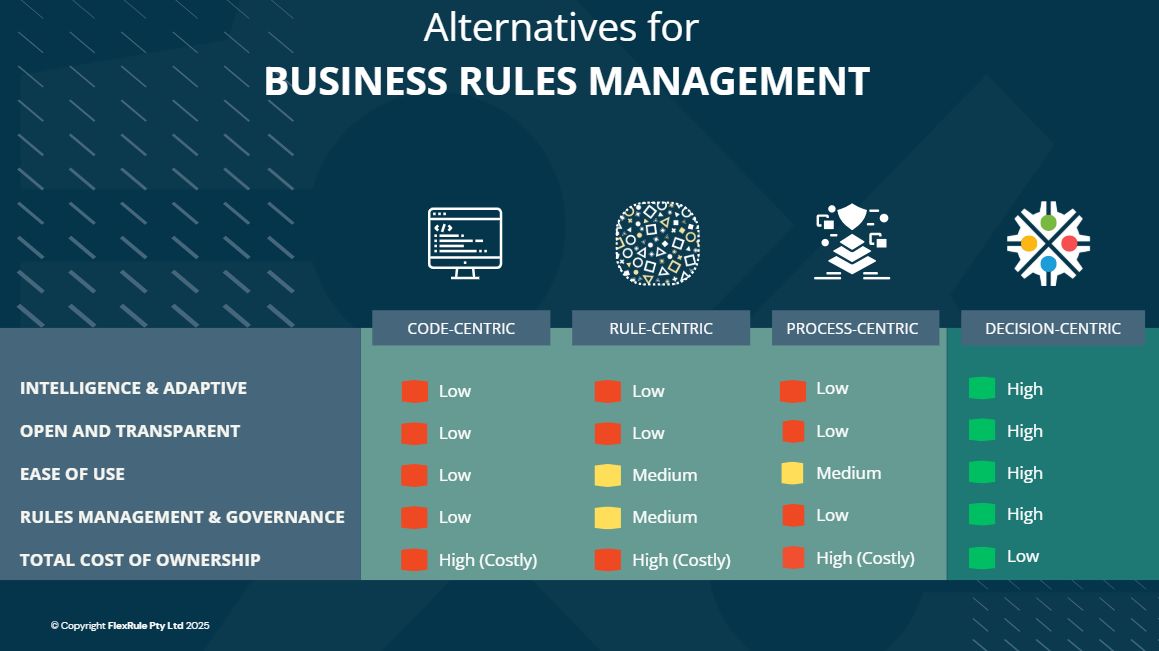
❌Yesterday’s rule engines were static, code-driven, IT-dependent, isolated, and disconnected from AI/ML. ✨ Tomorrow’s decision-making is adaptive, explainable, open, and continuously improving. Are you ready for the shift? Traditional approaches are either too rigid, too costly, or lack governance and has very limited transparency and explainability. This becomes even more problematic when integrating #AI and #MachineLearning, as these approaches are not adaptive are all very statics based on predefined steps, orders and rules. Most companies fall into one of these categories: 🔴 Code-Centric – Expensive, lacks transparency, and requires IT for every change. Business teams are left waiting for IT to implement updates, slowing down innovation. 🟡 Rule-Centric – Better usability but still weak in governance and scalability. Rules exist in silos, making it difficult to understand context, ensure consistency across the organization. 🟡 Process-Centric – Helps with rule execution but is costly and lacks flexibility. Processes drive automation, but every rule change require process redesign, test, and redeployment. 🚩 The biggest limitation? ⭕Requires programming language expertise for any calculation, conversion, data operation and etc. ⭕None of these approaches integrate AI and Machine Learning as a cohesive model in decision-making. They remain static and reactive, unable to learn, adapt, or optimize in real time. The Solution? The Decision-Centric Approach® The Decision-Centric Approach® transforms the way organizations design, manage, and execute business rules: ✔ Intelligence & Adaptability – Seamless integrated #AI decisioning, allowing to build and leverage #ML #LLMs #PredictiveAnalytics ✔ Standard rules and decision language – No need to write codes in JAVA or .Net for integration, calculation, conversion, data operation etc. ✔ Open & Transparent – No black-box logic, clear governance, and full visibility into decision-making. ✔ Ease of Use – Business users can define & modify rules with minimal IT intervention, improving agility. ✔ Strong Governance – Standardized rule execution ensures compliance, traceability, and consistency. ✔ Lower Cost – Reduces maintenance, eliminates inefficiencies, and accelerates time-to-value. As the pace of change accelerates, businesses can no longer afford slow, IT-heavy rule management. Decision-Centric approaches empower organizations to be proactive, adaptive, and efficient. 🚀 It’s not just about rules; It's about organizations future proof capability in decision-making. It’s about making quick, accurate, consistent and transparent business decisions at scale. ➡️Learn how to choose the right business rules engine https://lnkd.in/gR58A48u - Follow the "Uncle of DI" if you're looking for unfiltered insights into #DecisionIntelligence, #AI, and #DecisionAutomation. Hit the 🔔 on my profile to get notified about my daily posts.
- FABRITYSince 25 Aug 2026
Większość aplikacji bankowych oferuje dziś bardzo podobny zestaw podstawowych usług. O przewadze coraz częściej decyduje nie samo konto, ale doświadczenie, które bank buduje wokół niego. Dlatego rośnie znaczenie Value Added Services (VAS) - usług dodatkowych, które pomagają klientom załatwiać codzienne sprawy bez opuszczania aplikacji. Bilety komunikacji miejskiej, opłaty parkingowe, ubezpieczenia, zarządzanie subskrypcjami czy usługi związane z cyberbezpieczeństwem to tylko niektóre przykłady. Kluczowe pytanie nie brzmi jednak: „Jakie usługi możemy dodać?”, ale: „Jakie problemy klienta chcemy rozwiązać?”. Największą wartość tworzą rozwiązania, które są naturalnie powiązane z finansami, bezpieczeństwem i codziennymi potrzebami użytkowników. To właśnie one zwiększają zaangażowanie, budują lojalność i sprawiają, że aplikacja bankowa staje się czymś więcej niż narzędziem do wykonywania przelewów. W artykule na blogu FABRITY Digital pokazujemy, jak projektować usługi VAS, aby wspierały cele biznesowe banku, a nie tylko zwiększały liczbę funkcji w aplikacji. https://lnkd.in/dEh2-QGH #bankowosc #banking #customerexperience #digitalbanking #fintech #ai #personalizacja #ux #digitaltransformation #financialservices
- FABRITYSince 25 Aug 2026
Najdroższa platforma internetowa nie zawsze jest tą, której utrzymanie kosztuje najwięcej. Czasem większym kosztem są kampanie uruchamiane z opóźnieniem, pomysły odrzucane ze względu na ograniczenia systemu i procesy sprzedażowe dopasowane do technologii zamiast do potrzeb klientów. To właśnie wtedy platforma przestaje być zapleczem biznesu, a zaczyna wyznaczać granice jego rozwoju. Sygnały są zwykle bardzo konkretne: - każda niewielka zmiana wymaga osobnego projektu, - marketing czeka na dostępność zespołu IT, - aktualizacje bezpieczeństwa wiążą się z ryzykiem awarii, - wejście na nowy rynek oznacza budowę kolejnego serwisu niemal od zera, - integracje działają tylko wtedy, gdy nic w otoczeniu systemu się nie zmienia. W FABRITY Digital nie oceniamy platformy wyłącznie na podstawie jej wieku czy zastosowanej technologii. Sprawdzamy przede wszystkim, jak jej ograniczenia wpływają na sprzedaż, marketing, obsługę klienta, bezpieczeństwo i tempo wdrażania zmian. Dopiero taka analiza pozwala odpowiedzieć, czy potrzebna jest pełna zmiana platformy, modernizacja architektury czy uporządkowanie wybranych obszarów. W najnowszym artykule opisujemy 10 sygnałów, które warto potraktować jako punkt wyjścia do takiej oceny: https://lnkd.in/dP4UYAv9 #digitalexperience #replatforming #cms #webdevelopment #digitaltransformation #fabritydigital
- Facets.cloudRecorded 18 Sept 2026
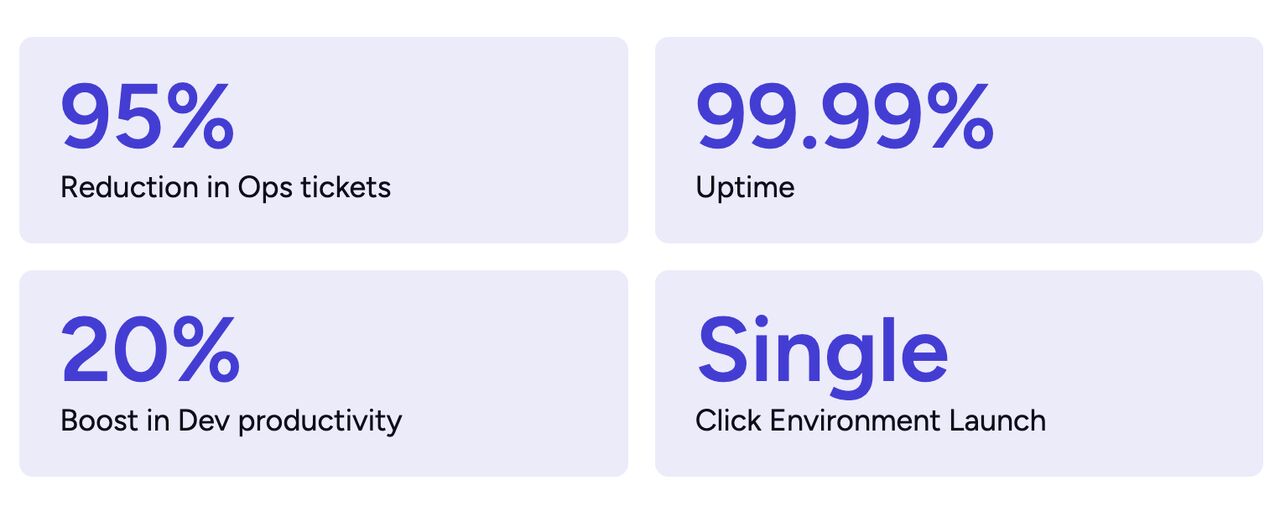
"Our infrastructure is more visible, standardised, and accessible.” — Piyush Kumar, CTO, Capillary Technologies Capillary’s lean Ops squad faced mounting tickets compounded by new environment launches. After moving to Facets.cloud, they flipped the script and unlocked true infrastructure scaling: • 𝟵𝟱% 𝗳𝗲𝘄𝗲𝗿 𝗢𝗽𝘀 𝘁𝗶𝗰𝗸𝗲𝘁𝘀- hundreds of unattended releases every month. • 𝟮𝟬% 𝗷𝘂𝗺𝗽 𝗶𝗻 𝗱𝗲𝘃𝗲𝗹𝗼𝗽𝗲𝗿 𝗽𝗿𝗼𝗱𝘂𝗰𝘁𝗶𝘃𝗶𝘁𝘆 - 30-40 hours saved per scrum team, every sprint. • 𝟵𝟵.𝟵𝟵% 𝘂𝗽𝘁𝗶𝗺𝗲, backed by a single control plane for every environment. • Single-click environment launches in the US, China, Asia & Middle East. How they did it: 🔹 Standardised, declarative workflows that every team can read. No more “automation silos.” 🔹 Dev-friendly self-service guarded by a six-member SRE/DevTools team. 🔹 One dashboard for logs, cost, and metrics—issues are spotted before Slack even pings. With “𝗘𝗻𝘃𝗶𝗿𝗼𝗻𝗺𝗲𝗻𝘁-𝗮𝘀-𝗮-𝗰𝗼𝗺𝗺𝗼𝗱𝗶𝘁𝘆”, Capillary turned a scaling headache into a competitive advantage and freed engineers to focus on features, not firefighting. Link to the case study in comments.
- EOX Tecnologia - Solução omnichannel em vendas e atendimento para indústrias e distribuidores B2BRecorded 17 Sept 2026
O seu funil também é assim? As etapas estão lá no sistema. Mas na prática o lead avança quando o vendedor "sente" que está pronto. Não tem critério objetivo de passagem. Não se mede taxa de conversão entre qualificação e proposta. Não se sabe onde está perdendo. Se você não sabe qual etapa do funil trava mais, qualquer ajuste vira chute. No B2B, o comprador já fez de 60 a 70% da jornada antes de falar com vendas. A cadência de contato precisa ser multicanal. Personalizada e com follow-ups no timing certo Senão a abordagem chega quando a decisão já foi tomada. Organizei um checklist para melhorar seu processo comercial. O seu funil está estruturado de verdade ou é só uma lista de etapas? Dá uma olhada, é grátis, comenta "Checklist" que envio o link.
- EOX Tecnologia - Solução omnichannel em vendas e atendimento para indústrias e distribuidores B2BRecorded 17 Sept 2026
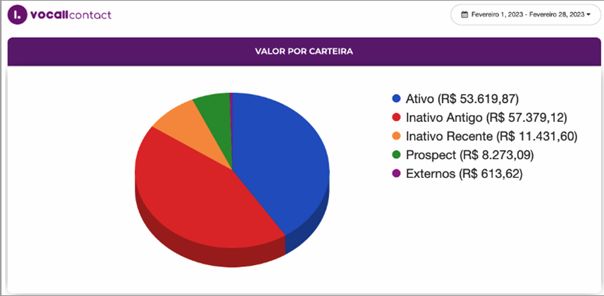
Você sabe quantos clientes pararam de comprar esse mês? Não quantos entraram. Quantos saíram? No dashboard do VocallContact, existem 4 métricas de saúde da carteira. A mais ignorada é a Inativação. Muito gestor comemora cliente novo "fechamos mais 10 contas esse mês!" mas não percebe que 12 pararam de comprar e mais 8 diminuíram os pedidos. Cliente que para de comprar não avisa. Só não responde mais. E quando o vendedor percebe, já era. A inativação silenciosa funciona assim: Cliente comprava a cada 60 dias. No 90º dia, ainda não pediu. O vendedor está ocupado correndo atrás de novos clientes. Ninguém percebeu. 30 dias sem contato. 60, 90. O cliente esfria. A concorrência aquece. Uma hora ele encontra outro fornecedor. E o gestor só descobre quando o faturamento cai. E aí é tarde para reagir. Aqui na Eox Tecnologia®, a Inativação está no dashboard ao lado da meta. O gestor vê em tempo real. Você sabe quem está há mais tempo sem comprar? Consegue entrar em contato antes que o cliente desista? A régua de indicadores mostra o desvio enquanto há tempo. Todo mês você perde clientes. A pergunta é: você descobre antes ou depois?
- Elements - ITSM Apps for Jira and ConfluenceSince 26 Nov 2025
How mature is your IT service management? In 45 seconds, I explain the first three levels of the XLA maturity framework: Level 0: no experience measurement, IT runs blind Level 1: reactive, only CSAT at ticket closure Level 2: proactive, linking experience to productivity Level 3 : integrated experience focus, part of daily operations Most organizations find themselves between Level 1 and 2. The real question is: how do you move forward, step by step? 📽 This clip below is an excerpt from my ACE session with The Adaptavist Group. 👉 In the blog article, we detail how each stage looks in Jira Service Management with practical use cases. The blogpost : https://lnkd.in/e3tzEJ-F #ITSM
- Easy AgileSince 31 Oct 2025
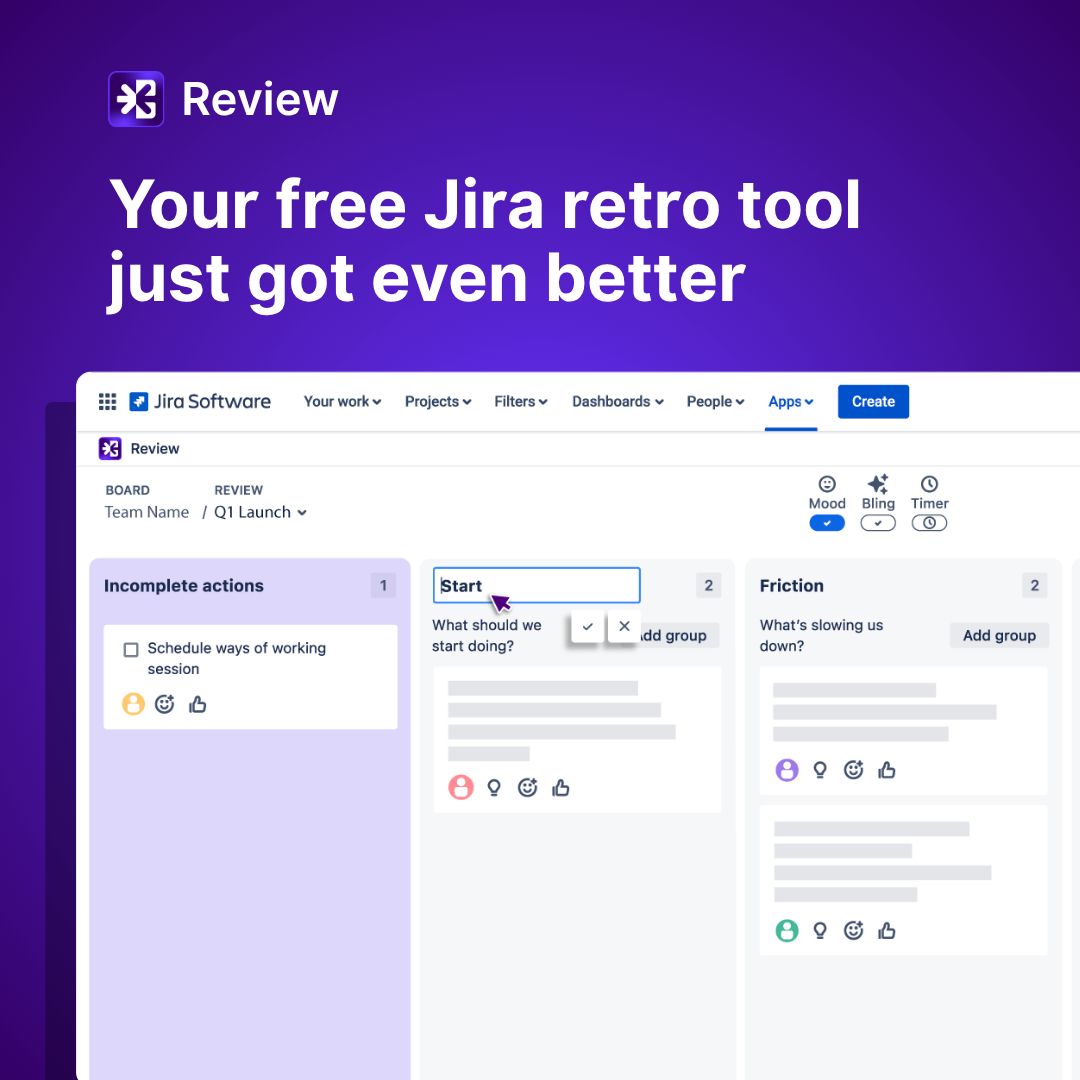
Thank you to everyone for the genuinely awesome response to Review by Easy Agile this last week. There has been so much enthusiasm we have now opened the app up to all project types in Jira!! 🎉 Marketing teams, ops crews, finance, legal, executive teams, anyone working in Jira, not just software teams, Review is for you and is now available in your natural habit of business project types. You no longer need to operate in an ill fitting software project to drive improvement and positive change in any aspect of your work. For anyone who missed it, Review is our new, free app that helps teams run retros, reviews, and debriefs in Jira, in the context of your work. ✅ Anonymous input ✅ Built-in templates ✅ Mood checks ✅ Actions that get tracked Grab Review from the Atlassian Marketplace if you haven't already: https://lnkd.in/g6qZHYkD (also linked in the comments)
- DTT Digital Agency | Custom software, apps & AISince 6 Jul 2026
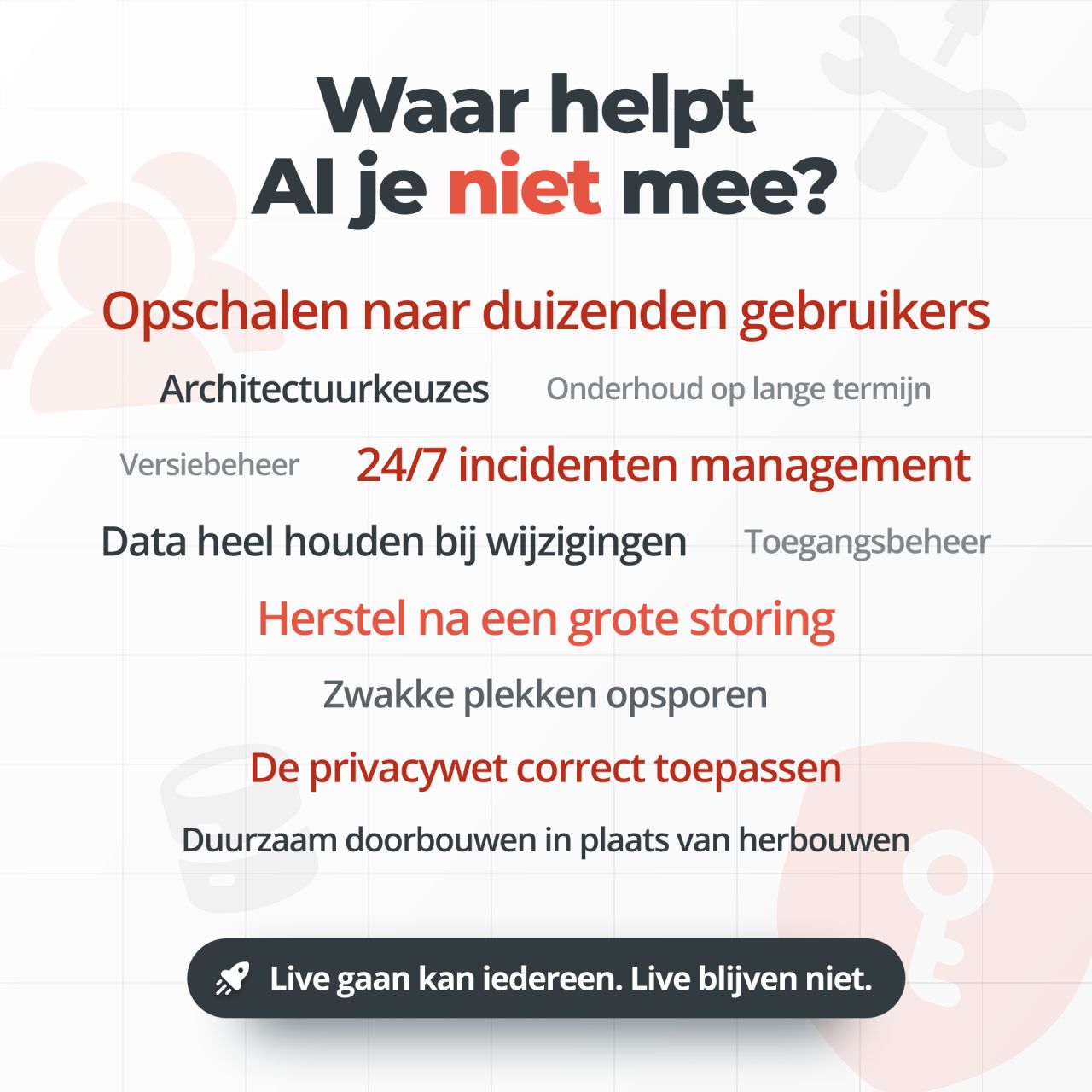
𝗠𝗲𝘁 𝗔𝗜 𝘀𝘁𝗼𝗻𝗱 𝗷𝗲 𝗽𝗿𝗼𝗱𝘂𝗰𝘁 𝗶𝗻 𝗿𝗲𝗰𝗼𝗿𝗱𝘁𝗶𝗷𝗱 𝗹𝗶𝘃𝗲. 𝗔𝗹𝗹𝗲𝘀 𝗹𝗲𝗲𝗸 𝗽𝗲𝗿𝗳𝗲𝗰𝘁. 𝗘𝗲𝗻 𝗽𝗮𝗮𝗿 𝘄𝗲𝗸𝗲𝗻 𝗹𝗮𝘁𝗲𝗿 𝗺𝗼𝗲𝘁 𝗵𝗲𝘁 𝘄𝗲𝗲𝗿 𝗼𝗳𝗳𝗹𝗶𝗻𝗲. 𝗪𝗮𝘁 𝗴𝗶𝗻𝗴 𝗵𝗶𝗲𝗿 𝗺𝗶𝘀? De voordelen van AI in softwareontwikkeling zijn enorm: je gaat sneller live voor minder budget. Die voordelen pak je ook bij ons maximaal mee. In 2026 kan een nieuw idee inderdaad al binnen zes weken live. Voorheen haast ondenkbaar. Met één voorwaarde: dat het ook 𝗴𝗼𝗲𝗱 live gaat. 𝗪𝗮𝘁 𝗯𝗲𝘁𝗲𝗸𝗲𝗻𝘁 𝗴𝗼𝗲𝗱 𝗹𝗶𝘃𝗲 𝗴𝗮𝗮𝗻? - dat het systeem overeind blijft bij duizenden gebruikers, - dat je functies kunt bijbouwen zonder te herbouwen, - dat je database heel blijft als je iets wijzigt, - dat veiligheid, privacy en AVG aantoonbaar kloppen, - dat er een ervaren team klaarstaat als iets misgaat, 24/7. Een digitale oplossing is veel meer dan een set functies. Functies bouwen, daar is AI sterk in. Maar de echte risico's liggen zelden in die functies. Ze liggen in alles eromheen. En juist daar biedt AI weinig ondersteuning. 𝗪𝗮𝗻𝘁 𝗲𝗲𝗻 𝗴𝗼𝗲𝗱 𝗽𝗿𝗼𝗱𝘂𝗰𝘁 𝗯𝗼𝘂𝘄𝗲𝗻 𝗶𝘀 𝗺𝗲𝗲𝗿 𝗱𝗮𝗻 𝗰𝗼𝗱𝗲 𝗴𝗲𝗻𝗲𝗿𝗲𝗿𝗲𝗻. Met ruim 15 jaar ervaring weten we precies wat daarvoor nodig is: ontwerpen, bouwen, live zetten én live houden. We bouwen met de snelheid van AI en met de zorgvuldigheid die een product nodig heeft om je bedrijf op te draaien. Zou jij live gaan met een product waarvan geen mens de code kent? #Softwareontwikkeling #AIstrategie #Maatwerksoftware https://lnkd.in/eHz3Wy9C
- Dstny Global ServicesSince 10 Jul 2026
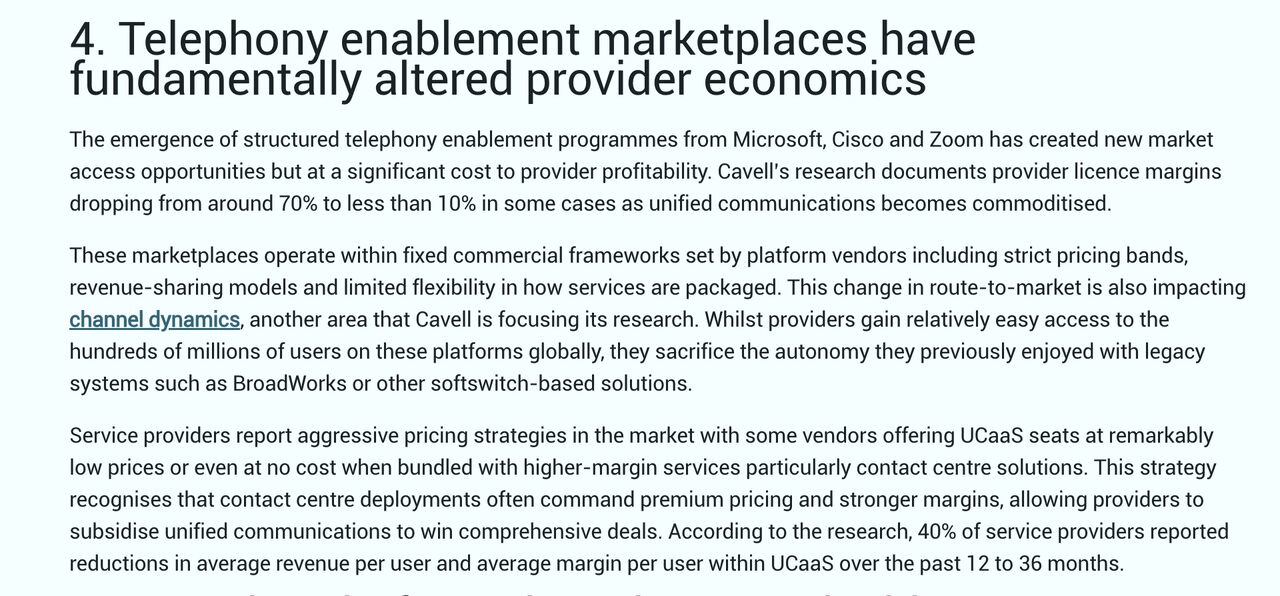
Provider licence margins around UC connectivity have dropped from around 70% to under 10% in some cases, according to Cavell Group research published in November 2025, and 40% of service providers reported a decline in both ARPU and margin over the past 12 to 36 months. For most of the last decade, the connectivity seat was your margin engine: sell the line, collect the licence revenue, grow the base. The problem is that the connection has now become the cost of entry. The providers holding ground have moved to bundled AI, analytics, and compliance services on top of the seat rather than competing on the seat itself. That shift is structural rather than cyclical, and the providers who recognise it as structural are building a different kind of offer, one where the seat is the starting point and the intelligence layer above it is where the billing conversation goes next. Providers entering Teams voice as a connectivity-only play are watching the same margin trajectory repeat, while those bundling call intelligence and compliance on top of the voice seat are writing a different story. The seat margin keeps shrinking while the intelligence layer margin holds.
- DTT Digital Agency | Custom software, apps & AISince 24 Jul 2026
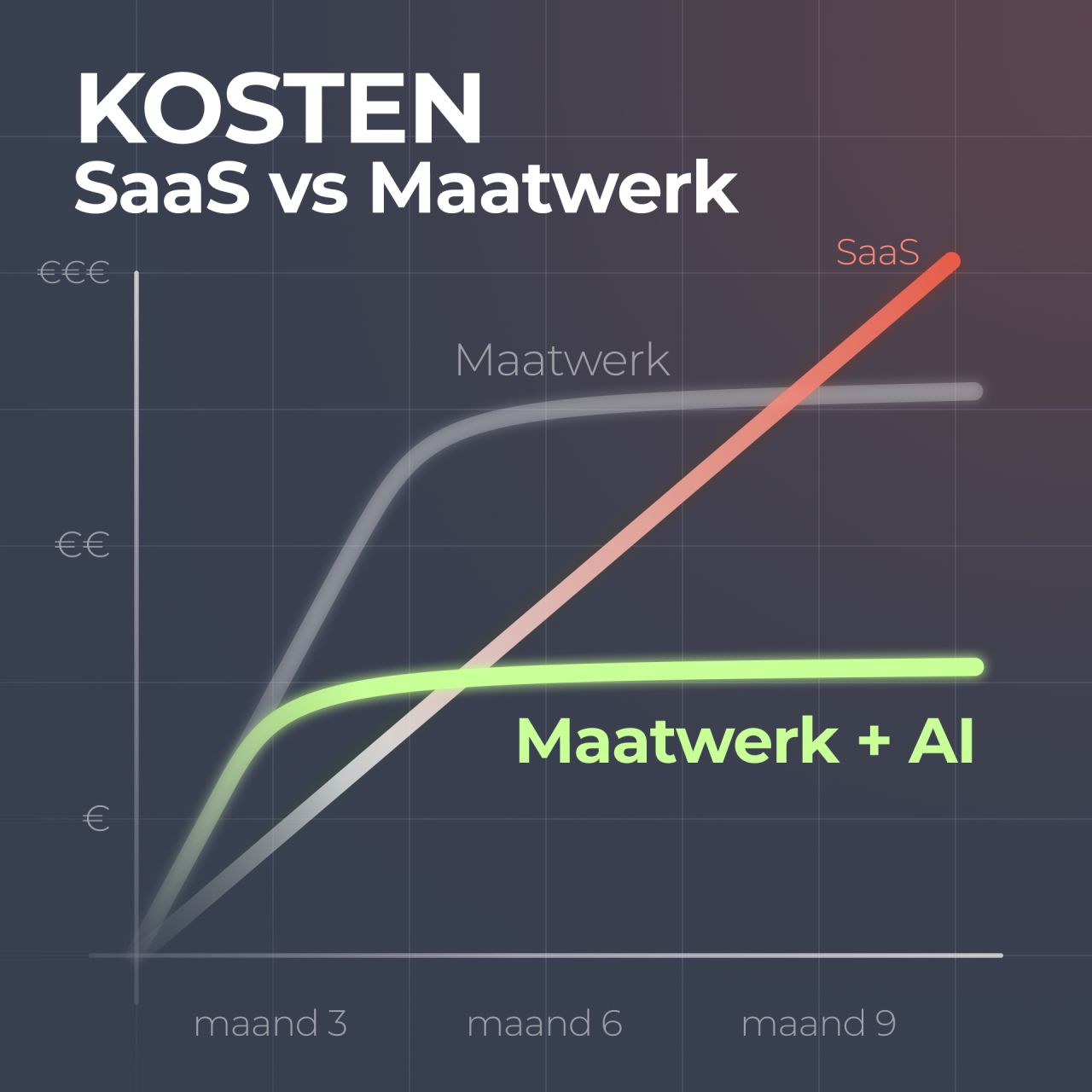
𝗪𝗮𝗻𝗻𝗲𝗲𝗿 𝘄𝗼𝗿𝗱𝘁 𝘀𝗼𝗳𝘁𝘄𝗮𝗿𝗲 𝗵𝘂𝗿𝗲𝗻 (𝗦𝗮𝗮𝗦) 𝗱𝘂𝘂𝗿𝗱𝗲𝗿 𝗱𝗮𝗻 𝘇𝗲𝗹𝗳 𝗯𝗼𝘂𝘄𝗲𝗻 (𝗺𝗮𝗮𝘁𝘄𝗲𝗿𝗸)? Met de nieuwste AI-ontwikkelingen wordt de stap naar zelf bouwen steeds kleiner. Tot voor kort was SaaS vaak een gepaste keuze om mee te beginnen. Je gaat snel van start, tegen transparante kosten. En ook al lopen die kosten op en doet de software niet altijd precies wat jij nodig hebt, vaak woog dat nog steeds op tegen zelf bouwen. Maar tegenwoordig kan een maatwerkoplossing al met zes weken lanceren. Geen zes maanden. Dat verandert de afweging volledig. 💡Zo zijn de voordelen van maatwerk software voor steeds meer ondernemers bereikbaar: - …je bedrijfskritische software is volledig in eigen bezit en beheer, - …je investeert in je bedrijf in plaats van een maandelijkse (oplopende) kostenpost zonder eigendom of inspraak, - …software die altijd precies doet wat jij nodig hebt, in de startfase én de groeifase van je onderneming. Wij maken het vaak mee. Startups, bedrijven en zelfstandigen die succesvol zijn geworden. 𝗗𝗲 𝗦𝗮𝗮𝗦 𝗱𝗶𝗲 𝗵𝗲𝗻 𝗲𝗲𝗿𝘀𝘁 𝘃𝗹𝗶𝗲𝗴𝗲𝗻𝗱 𝗹𝗶𝗲𝘁 𝘀𝘁𝗮𝗿𝘁𝗲𝗻, 𝗶𝘀 𝗶𝗻𝗺𝗶𝗱𝗱𝗲𝗹𝘀 𝗲𝗲𝗻 𝗮𝗻𝗸𝗲𝗿; op dat moment lopen de licentiekosten op, ontbreken kritische functies en stelt de support weinig voor. Op dat moment zijn de voordelen van maatwerk kristalhelder. En met AI is starten met maatwerk laagdrempeliger dan ooit. Zou jij in 2026 starten met SaaS? We denken graag mee: https://lnkd.in/e77-wi5C
- Easy8Since 9 Sept 2026
The project management stack for 2026 isn't about which AI tool you pick. The real question for this year is not which AI tool to use. It is how AI gets context on your work, and on whose terms (security). 🟨 Specialised software tools added to your PM stack cannot actually see your project. Because your backlog, your capacity, and your history live in disconnected systems. 🟨 And most companies don't run one PM tool. They run several, plus a handful of add-ons from the marketplace and integrations around them. We'll be covering this topic in our next webinar on 17 September at 2 pm, where we'll be presenting live use cases on how to plan, track and complete work in the AI era. Join us here: https://lnkd.in/dDGxRY5r
- DockRecorded 16 Sept 2026
Dock now lets you manage the entire customer lifecycle all in one place with Connected Workspaces. With our new Connected Workspaces feature, you can combine your sales deal room with your customer onboarding plan and client portal to keep everything in one place for your customer. This makes it super easy to create a smooth handoff process from Sales to Success for both your team and your customer - the entire relationship history is all available in one link. So now you can: • Share the business case, run a sales pilot, and close deals in your sales room • Transition that into a customer success plan for onboarding • Transition that into a client portal for business reviews and winning renewals We’ve been testing these at Dock ourselves for a few months now, and we can already feel a huge impact on our sales/success handoff — it’s such a better experience for our team and our customers. Check out the video for a quick demo.
- DockRecorded 16 Sept 2026
Dock AI is here! With the new Dock AI widget, you can take your client call transcripts and generate business cases, executive summaries, success plans, and more in a matter of seconds. Here’s how it works: You finish a great client call, but now you need to write up a business case for your champion — and you don’t have time to put it together. Dock AI can generate that content from your call transcript in just a few clicks. 👉 Choose what you want to create: a business case, success plan, proof of concept project, etc. 👉 Select your source: start from a call transcript, document, or Gong recording 👉 Generate it with AI 👉 Refine, edit, and add it directly to your client’s Dock workspace The best part is that it’s all built into the Dock workspace. So your business case will immediately live alongside your product info, case studies, price quote, and anything else you share with customers. And this isn’t just for sales teams — customer success can use this post-sale too. - We’re really excited about this. We’ve been really patient about adding AI features to Dock. We didn’t want to add AI for the sake of AI. But what we’ve consistently heard from customers is that you’d love more ways to quickly populate your Dock workspaces with personalized follow-up content. And AI is the perfect use case for that. This is just the start of AI in Dock. We’ll continue to build some AI magic into the product throughout the year that makes it easy to work with your customers. Can’t wait to share more updates soon!
- DreamFactoryRecorded 16 Sept 2026
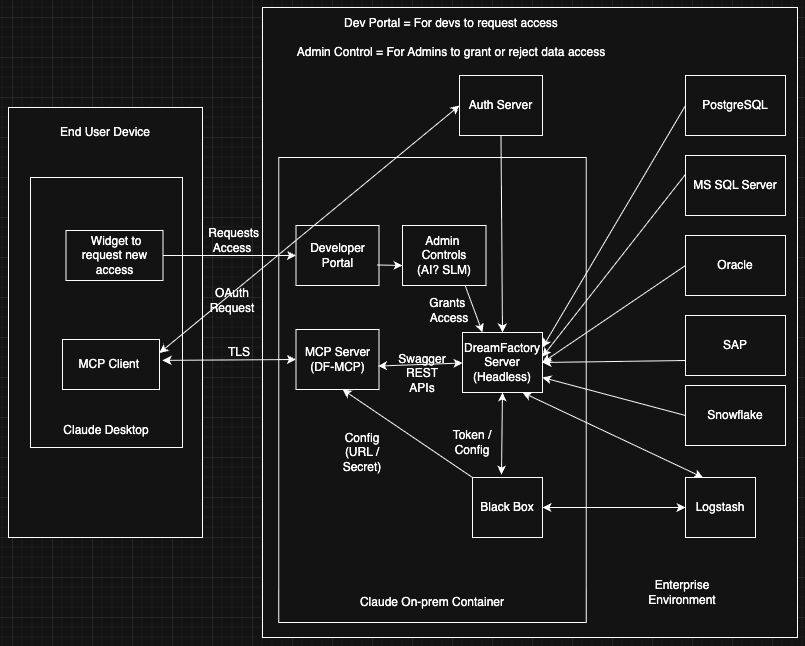
It was great meeting with the Anthropic team this week for a deep dive! We white‑boarded the architecture below to show how Claude AI Desktop and DreamFactory create a zero‑trust data gateway for regulated enterprises. 1️⃣ On‑prem container hosts both the MCP server and a headless DreamFactory instance. 2️⃣ Developer Portal lets devs request access; Admin Controls (or a local SLM) approve or reject. 3️⃣ DreamFactory publishes a single, Swagger‑documented endpoint per governed dataset; MCP exposes that to Claude. 4️⃣ Token custody can be local (Stripe‑style) or delegated—same code path, different trust model. Why it matters: risk‑averse enterprises keep their secrets behind existing firewalls, yet still enjoy GPT‑grade reasoning on desktop or mobile. Open question for Claude’s product and GTM teams: Would a dedicated “data‑gateway” category in the extension directory help buyers discover solutions like this? #AIArchitecture #ZeroTrust #MCP #Snowflake #SAP #ClaudeDesktop
- DreamFactoryRecorded 16 Sept 2026
Why does AI-generated middleware work perfectly in development but collapse in production? The answer lies in what these models were trained on. AI coding assistants learned from public GitHub repositories... predominantly Rails and Django CRUD applications. These training examples share common characteristics: single-tenant architecture, simple database connections, development-scale load. Your enterprise middleware requires: - Dynamic service configuration (rare in training data) - Multi-tenant isolation with security boundaries - Intelligent connection pooling across multiple databases - Runtime API generation from database schemas - Enterprise compliance (HIPAA, SOC 2, GDPR) AI tools don't "understand" these architectural patterns: they weren't in the training data. They generate code that passes initial tests, then often fails, unpredictably, under production load. METR's study: 19% slower delivery when using AI tools on complex backend systems. Stack Overflow 2025: Only 29% of developers trust AI code accuracy. DreamFactory isn't generating code. We're providing a battle-tested, configuration-driven platform proven across 5,000+ production instances. Schema changes? Automatic API updates. Security rules? Configuration, not code. Multi-tenant isolation? Built into the platform. For platform engineers dealing with AI-generated middleware challenges: This is a solvable problem. Learn more at: https://lnkd.in/gp_7gn3g
- Dharma.Since 19 Mar 2026
Onlangs was ik bij IBM 🚀 Interessant om te zien hoe ze tegen de ontwikkeling van oa. AI kijken, op welke manier ze daar mee omgaan en de bijdrages die ze doen aan OpenSource project(en) zoals Docling Elke organisatie moet meebewegen, 'Change is the Game' zoals Evita Stoop dat mooi zei 😊 Ow en ik stond bij een Quantum computer 🤓 ! Thanks Laurens van den Brand and Michel de Ru for the invite and host!
- Dharma.Since 3 Jun 2026
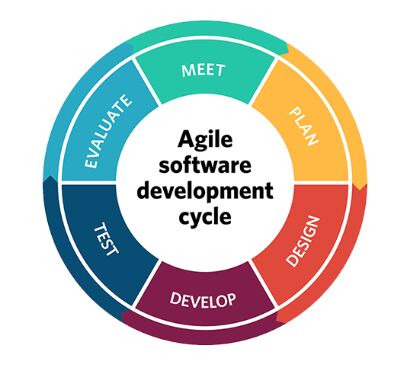
Een (digitaal) product is nooit af. Logisch toch? Als je het mij vraagt wel, maar toch wordt daar soms anders tegen aan gekeken. Software wordt ontworpen, gebouwd, getest en opgeleverd. Het moment van de eerste go-live is eigenlijk het startpunt van de circle. Echte gebruikers, echte data, echte inzichten. Dát is waar je van leert en op kan doorontwikkelen en verbeteren. Dus met hetzelfde team dat heeft ontworpen en gebouwd gaan we itereren, beheren en verbeteren. Geen overdracht, geen verlies van kennis. Volle kracht vooruit. Want opleveren is niet het einde. Het is het begin van een never-ending cycle ✌️
- DevZeroSince 17 Feb 2026
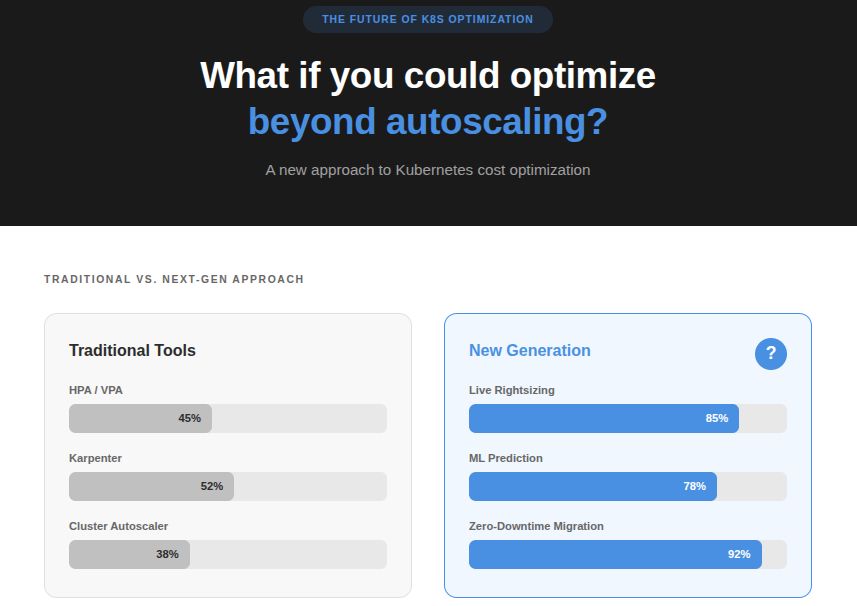
73% of your Kubernetes budget is paying for resources you'll never use. Here's why: Kubernetes forces you to declare resource requests BEFORE your pods run. CPU: "I might need 2 cores" Memory: "I might need 8GB" Keyword: MIGHT. So you overprovision. Because underprovisioning = OOM or CPU throttling. The result? Every pod runs with a "safety buffer." And that buffer costs you 6 figures. Let me show you the math: Average K8s cluster resource utilization: 27% For a $200K/month K8s bill: → $146K is waste → $54K is actual usage "Just use autoscalers": you're thinking HPA scales replicas. VPA restarts pods to adjust resources. Cluster autoscaler adds nodes. But here's what they DON'T do: Adjust resources on RUNNING pods without restarts. Every pod restart = 30-180 seconds of: → Lost cache → Dropped connections → Cold starts → Degraded performance For AI/ML workloads, that means model weights reloading, inference queues backing up, and angry customers. The industry has accepted this as "normal." It's not. There's a better architecture: Live rightsizing. Instead of guessing what pods need upfront...Learn what they ACTUALLY use over time. Instead of restarting pods to adjust resources... Resize the pods in-place. Instead of reactive scaling...Use ML to predict resource needs 6 hours ahead. The technology exists: - CRIU (Checkpoint/Restore) for zero-downtime migration - In-place resource modification without pod restarts - XGBoost models that predict usage patterns Most teams don't know this is possible. They're stuck in the "set requests/limits and pray" paradigm, paying the 73% tax. Here's what changes when you stop overpaying: Real example - 180-node EKS cluster: → Before: $340K/month, 31% utilization → After: $118K/month, 76% utilization → Savings: $222K/month ($2.66M annually) Same workloads. Same performance. Zero downtime. Kubernetes doesn't have a cost problem. It has a utilization problem. And utilization is solvable. This is what DevZero enabled us to do. The shift from reactive to predictive optimization changed everything. Try out DevZero yourself: https://lnkd.in/dGW4hv_T
- DevZeroSince 13 Mar 2026
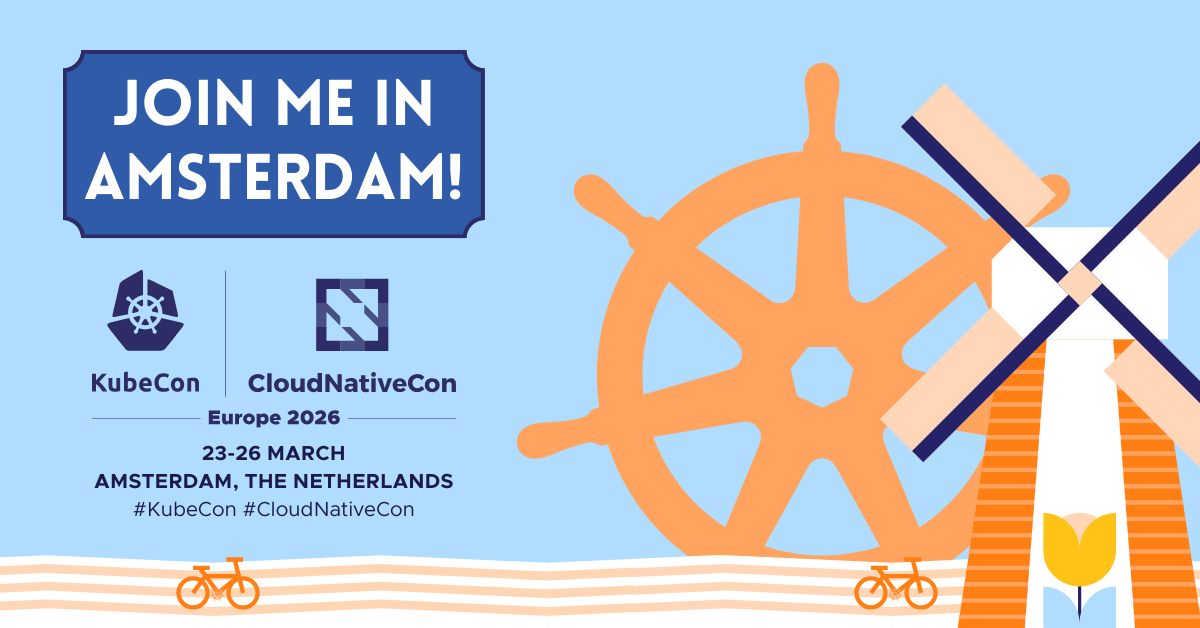
I’ll be at KubeCon + CloudNativeCon Europe 2026 next week. I spend most of my time looking at Kubernetes clusters, and one pattern shows up again and again: workloads are heavily over-provisioned compared to what they actually use. That usually means a lot of idle compute. We can show you how we’re helping teams reduce Kubernetes costs by around 30% and help you do the same, or we pay €10k.* If you’re interested in how teams are actually fixing this in production environments, feel free to book some time: https://lnkd.in/eQ-VMSis Always enjoy talking with other infra teams at KubeCon. *Conditions apply.



Other LinkedIn formats
Watch the companies you care about.
Filter every ad by industry, country, format and network, and get alerts when a company you watch starts running new ads.