LinkedIn thought leader ad examples
52 thought leader ads are live on LinkedIn right now, from 93 companies. Browse real ones, filtered by industry.
- IntellertsSince 21 Sept 2026
For over a decade we've watched AI initiatives stall on "the data." Duplicate records, conflicting dashboards, metrics that never reconcile. Leaders call it poor data quality. More often it's the technical residue of a business disagreement nobody ever resolved, and we watch the organisation slowly paint itself into a corner. Ask five departments in the same company "who is an active customer?" and you'll get five answers. Each one correct, yet probably different. Traditional reporting could absorb years of ambiguity, because teams quietly worked around each other's definitions, or found more subtle, unspoken ways to stay aligned. AI tends to consume every domain entirely, with little of that between-the-lines nuance. So every unresolved question about ownership and truth becomes operational overnight. That's a problem if you're trying to implement AI or optimise your data stack. And a tricky one to climb out of, if I may add. AI projects usually don't have a data problem. They have an alignment problem. The evidence is hard to ignore: → MIT: 95% of enterprise GenAI pilots produced no measurable P&L impact → McKinsey: only 37% of firms attribute any EBIT to AI, flat year on year → Gartner expects 60% of AI projects without AI-ready data to be abandoned The organisations pulling ahead aren't buying better models. They're redesigning how work gets done, and agreeing on what the business actually believes to be true before the first line of code. Or at least getting as close to it as they can. Skip that step and you build something we've started calling AI debt. The first project survives. The second gets harder. The fourth becomes impossible to trust. Eventually you spend more effort validating outputs than generating value from them. Sound familiar? So here's a test worth running before your next AI project. Put four things in front of your team: 1. the problem you're solving 2. what success looks like 3. the data it depends on 4. who owns the truth Then see if the four answers actually match. If they do, you're further ahead than most. If they don't, you've got a bit of a mountain to climb, and that's the part we find most interesting. Always glad to compare notes with anyone carrying this kind of mandate. Full article here on our article page: https://lnkd.in/eiA4Hv77 #AITransformation #DataStrategy #AILeadership
- IdMax TechnologyRecorded 23 Sept 2026
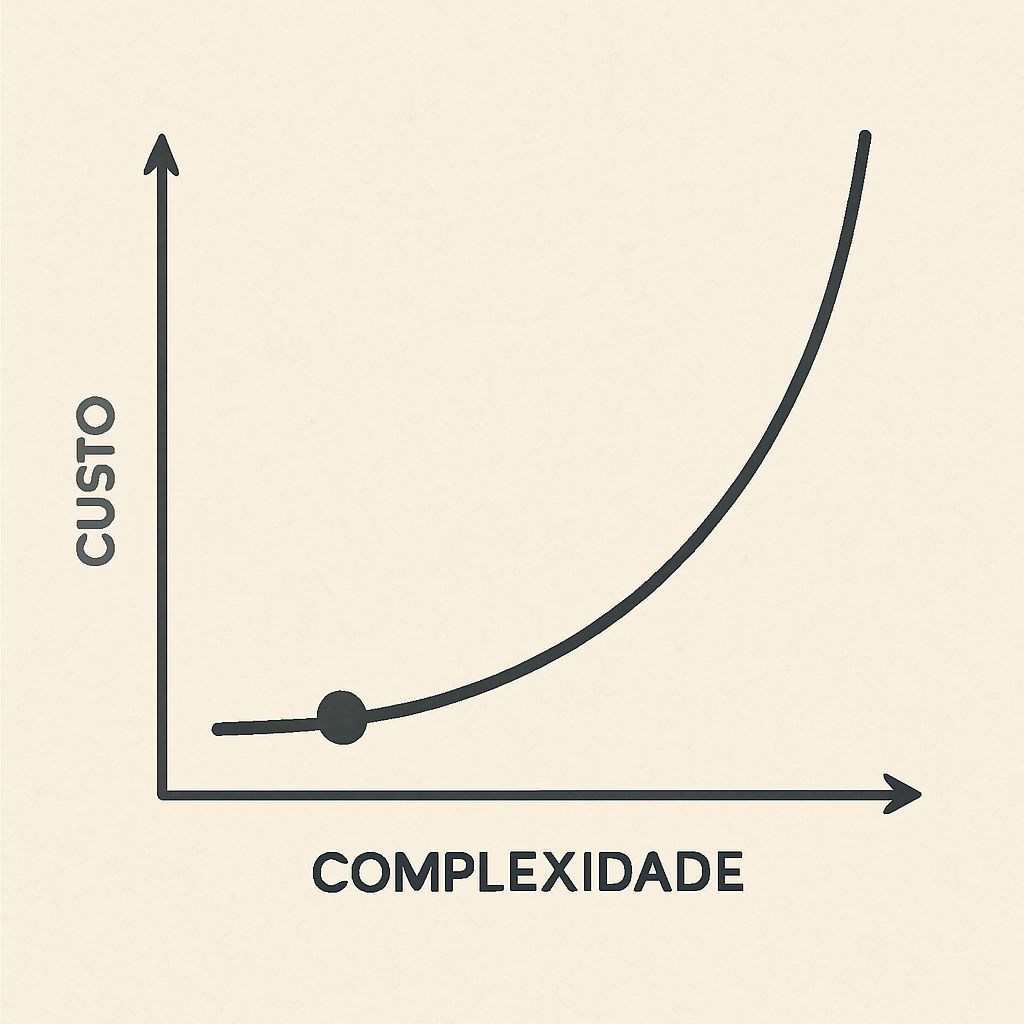
Preciosismo: Um item que pode custar caro ao seu Compliance! Tudo começa com uma ideia simples, eficaz e acessível. Um projeto de $ 1,00 que resolveria o problema da análise de listas restritivas. Ao validá-la com seus pares, surge a sugestão de um pequeno aprimoramento: um "simples plus", que por $ 1,20 também abarcaria mídias negativas. Seu superior direto propõe ir além: por $ 1,50, incluir a análise de conflitos de interesse. Parece razoável. Na apresentação para a liderança ampliada, o projeto evolui para um “simples, plus, e integrado via API” — agora turbinado, resolvendo três problemas de uma vez e abastecendo o ERP com dados estratégicos. Três vezes mais eficaz que a proposta original. Mas aí vem a realidade: o orçamento disponível não comporta os $ 5,00 da solução integrada. Resultado? O projeto é engavetado, aguardando o próximo ciclo orçamentário. Enquanto isso, o problema original — aquele que custaria apenas $ 1,00 para ser resolvido — permanece ali, intacto, aguardando 2026. Evite que o preciosismo paralise melhorias simples e eficazes para seu Compliance! Procure a IdMax para que, juntos, possamos alinhar um cronograma de melhorias realista, eficiente e dentro do possível, sem esperar o próximo ciclo! Clique e saiba mais: https://lnkd.in/dbrX2UEs
- Integration FoxRecorded 23 Sept 2026
How quickly do you think you could get your key systems talking? Days, weeks, months? Most people assume integration projects take months. Ours don’t. Our Integration Fox Blueprint integrations exist because we’ve done them many times before. They’re based on proven architecture that’s already been tested, tuned, and delivered across multiple businesses. That means you can be up and running in days - not months - with all the flexibility to customise to your own data and rules. They’re quick to deploy, accurate, and secure. And because we manage them, you don’t need an engineer on standby to keep them working. Why not use what already works?
- Integration FoxRecorded 23 Sept 2026
🚀 We’re excited to share our latest case study with our customer Mullane Plumbing on how they have streamlined their finance & field ops with Integration Fox! Mullane Plumbing transformed their operations by integrating Simpro Software with MYOB Acumatica and as a result we have - ✅ Automated sync of 27M+ records ✅ Real-time accuracy across finance & field ✅ Huge time savings & reduced risk As Mullane’s IT Manager, Brooke Humphries, shared: “Integration Fox has removed the need for manual, time consuming data entry, improving efficiency and eliminating the possibility of human error.” Check out the full case study 🔗 link in comments 👇 #Integration #Automation #Simpro #Acumatica #DigitalTransformation Acumatica MYOB #acumatica #myob
- IdMax TechnologyRecorded 23 Sept 2026
Já passou da hora de você automatizar sua análise de compliance. Sei que pode ser difícil abrir mão da análise humana de um dossiê completo para decidir se a Empresa A ou a Pessoa B deve ou não ter relacionamento com o seu negócio. Mas a realidade é que o processo não é escalável e vai manter você preso/a, no máximo, 10 a 20 análises por semana (isso sendo otimista e considerando sua atenção aos detalhes). E quando eu falo de automação, não me refiro a sistemas genéricos como os tradicionais “scores”, que oferecem uma pontuação sem justificar os motivos. Aqui na IdMax, utilizando as ferramentas da Neoway, conseguimos fornecer não apenas os motivos de uma recusa, mas também adaptar as regras às políticas internas da sua empresa. Há inúmeras razões para investir nessa automação, mas destaco três que encontramos com frequência entre nossos clientes: 1. Adaptação às Regulações Estamos no Brasil… Ou seja, todo ano surgem novas exigências a serem analisadas. Depois de interpretar uma regulação, é muito mais eficiente aplicar a automação para difundir esse conhecimento do que explicar, analista por analista, suas implicações. 2. Auditoria Preditiva Com a automação, você pode rodar análises de compliance quantas vezes quiser (e precisar). Em vez de revisar seus fornecedores apenas uma vez ao ano, passe a monitorá-los continuamente. 3. Integração com Sistemas Se a regra já está automatizada, não faz sentido inserir os resultados manualmente no seu sistema. Conecte uma API e deixe o processo rodar de forma integrada! Essas não são mais vantagens competitivas, é questão de sobrevivência... Já passou da hora! Vamos conversar? https://lnkd.in/dbrX2UEs
- Harbr DataSince 8 May 2026
I’ve been a regular visitor to the UK’s iconic galleries and museums for many years, but I never imagined I'd be helping them work out what AI means for the data assets they hold. So I’m proud to share that Harbr Data was selected as the platform behind the UK's Creative Content Exchange (CCE). Backed by the UK Government, with teams from the Natural History Museum, UK Research and Innovation, and Department for Culture, Media and Sport, the CCE is a first-of-its-kind way for cultural institutions to share content under clear terms, and with strict controls. By packaging their assets (video, audio, image, and text) as governed, AI-ready data products, the country's icons can: Set the terms on how their content is used See exactly who is using what, through auditable sharing Open new revenue paths to support their work The CCE beta is now live, with a full public release coming next week. It's a real milestone for Harbr Data in powering external data sharing at national scale, with consistent governance for humans and AI alike. Huge thanks to the partners and participants who have made this possible. If your organisation is thinking about how to make content available for humans and AI under strong governance, I'd be happy to talk.
- Grain | Dataspecialisten voor webwinkelsSince 5 Feb 2026
Hoe goed stuur jij je biedingsalgoritme aan? Test jezelf op 6 meest voorkomende fouten. https://lnkd.in/enxK_H49
- Grain | Dataspecialisten voor webwinkelsSince 13 Feb 2026
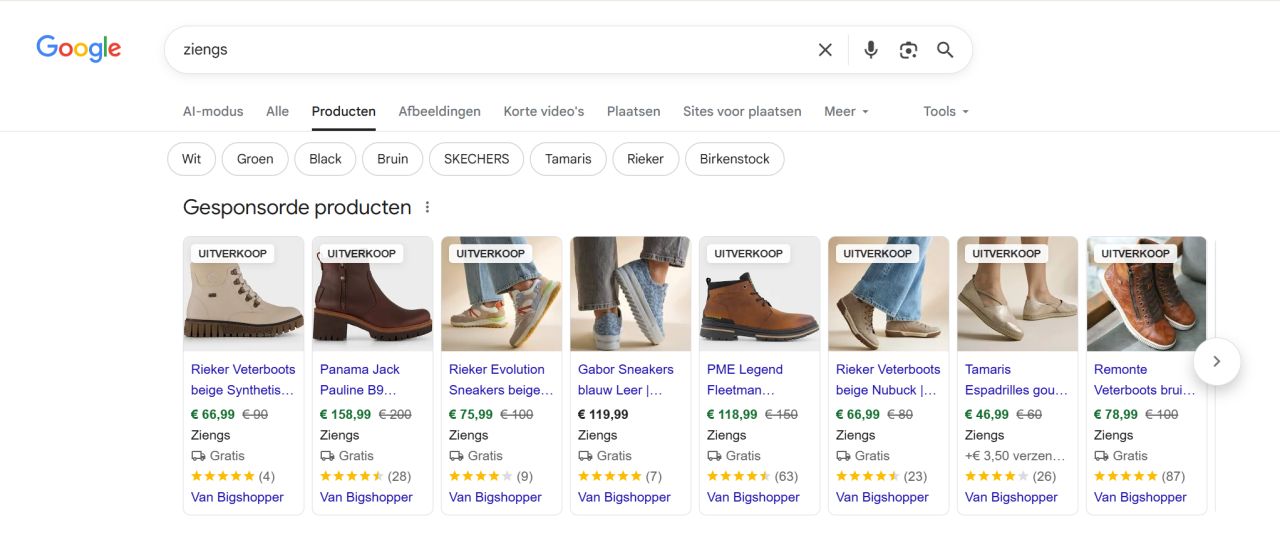
Pas jij blind Producthero labelizers toe? Grote kans dat je Heroes geen Heroes zijn. En dat die producten onterecht extra budget krijgen. Maar er is een oplossing. Je eigen non-branded labelizer. Dat verhoogt je rendement op Shopping. Flink. Het is een mooie vondst van Rob Terstall. Hoe je het opzet. Daarover straks meer. (Of scroll direct door) Laten we eerst kijken naar het probleem. Zoek maar eens op je eigen merk in Google. Welke producten zie je? Vaak is het een willekeurige selectie. Het interessante is dat die producten gemiddeld vaker aangeklikt worden én een hogere omzet toegeschreven krijgen. Dat komt omdat iemand niet zozeer dat product zoekt, maar meer iets bij jou wil kopen. Het resultaat is dat die producten briljant lijken, terwijl ze eigenlijk gemiddeld zijn. 𝗠𝗮𝗮𝗿 𝗮𝗹𝘀 𝗷𝗲 𝗴𝗲𝗯𝗿𝘂𝗶𝗸 𝗺𝗮𝗮𝗸𝘁 𝘃𝗮𝗻 𝗹𝗮𝗯𝗲𝗹𝗶𝘇𝗲𝗿𝘀, 𝗱𝗮𝗻 𝘄𝗼𝗿𝗱𝗲𝗻 𝗱𝗶𝘁 𝘄𝗲𝗹 𝗷𝗲 𝗛𝗲𝗿𝗼𝗲𝘀. En daardoor krijgen ze onterecht meer budget. Zonde. Ik zie dit helaas vaker gebeuren. Standaardoplossingen die zonder plan geïmplementeerd worden. Lekker goedkoop. En snel. Maar wat zijn de (onzichtbare) gevolgen? • Minder rendabel budget aan middelmatige producten. • Gemiste omzet bij échte knallers. • Zeg jij het maar. Het gemak van standaardoplossingen zorgt ervoor dat ik deze vraag vaak krijg: Waarom kost een implementatie bij jullie tussen de € 5.000 en € 15.000? Ik kan toch gewoon op "Publiceren" klikken? Precies om het probleem uit deze post te voorkomen. Wij implementeren geen standaardoplossing voor een piek in sales op de korte termijn. Wij kiezen niet voor de data die het makkelijkst te verkrijgen is, maar voor 𝗱𝗮𝘁𝗮 𝗱𝗶𝗲 𝗷𝗼𝘂 𝗲𝗲𝗻 𝘀𝗹𝗶𝗺 𝗰𝗼𝗻𝗰𝘂𝗿𝗿𝗲𝗻𝘁𝗶𝗲𝘃𝗼𝗼𝗿𝗱𝗲𝗲𝗹 𝗼𝗽𝗹𝗲𝘃𝗲𝗿𝘁. Niet alleen nu. Maar ook de komende jaren. Je hebt in mijn ogen twee opties: 1. Laat AI werken op middelmatige data die ongeveer klopt. 2. Of kies voor haarscherpe data die AI alle kansen binnen jouw webwinkel laat benutten. 𝗦𝘁𝗮𝗽𝗽𝗲𝗻𝗽𝗹𝗮𝗻 𝘃𝗼𝗼𝗿 𝗱𝗲 𝘀𝗽𝗲𝗰𝗶𝗮𝗹𝗶𝘀𝘁: Zo bouw je je eigen non-branded labelizer. 1. Voeg product id en ad id's toe aan je landingspagina met een tracking template. 2. Verrijk je webdata met deze id's, zodat je bestellingen kan koppelen aan je campagnes en producten. 3. Bereken nu de ROAS per product id en classificeer je producten in bijvoorbeeld BigQuery of Google Sheets. Sluit bij de berekening je branded campagnes uit. 4. Verrijk je Channable feed met je classificatie. 𝗩𝗼𝗼𝗿 𝗱𝗲 𝗽𝗿𝗼'𝘀: 5. Importeer margecijfers en andere relevante cijfers. 6. Maak je berekening van stap 3 nauwkeuriger om de werkelijke waarde zo goed mogelijk te evenaren. Heb je vragen over deze setup? Laat het mij of Rob Terstall weten.
- GreybeamRecorded 21 Sept 2026
If you’re still serving analytics directly from Snowflake, you’re burning money. We just released a playbook with Scott Vickers, CTO at Headset, who serves embedded analytics to 2500+ users. Here are 3 things he did to drastically reduce Snowflake costs while keeping performance fast and reliable: 1. Switched from Airbyte to Estuary. 2. Custom dbt macro for warehouse sizing. 3. Used Greybeam to serve analytics via DuckDB (saving 83%). Normally, moving workloads to a different engine means rewrites, migrations, and months of pain. Scott avoided all of it. Greybeam handles routing and translation automatically, he got the efficiency of DuckDB without having to rewrite SQL, rebuild his semantic layer, or move data. We documented the full blueprint below. 👇
- FullEnrichSince 7 Feb 2026
L’international, c’est pas un rêve LinkedIn. C’est un champ de mines. France, UK, Espagne, Allemagne, US. Même combat. Même bordel. Des outils partout. Des contrats à la pelle. Des datas bancales. Des équipes qui râlent. Et toi au milieu. Au départ, tu voulais closer à l’étranger. À l’arrivée, tu passes tes journées à réparer un process bancal. La vérité est simple. Plus tu ajoutes des briques, plus ça s’effondre. Trop d’outils. Trop de frictions. Avec FullEnrich, Un seul outil. Une seule source. De la data propre. Tu cliques. Tu récupères la bonne info. Tu avances. Quand ton process glisse sans résistance, tes résultats font pareil. Scaler, c’est pas empiler. C’est enlever ce qui casse tout. Encore sceptique ? Prends 200 crédits et teste par toi-même 👉 https://lnkd.in/eEYyqnGx — Post en collaboration dans le cadre de contrat ambassadeur, et parce que pour moi ce sont les meilleurs. Point.
- FullEnrichSince 12 Mar 2026
J'ai pas de liste. C'est l'excuse préférée des sales qui prospectent pas. La vérité : ils savent juste pas en créer une. Ils attendent que le marketing leur serve sur un plateau. Et quand ça arrive pas ils restent les bras croisés. Dans 80% des boîtes y'a ni ops ni growth ni listes toutes prêtes. Donc soit tu pleures. Soit tu apprends à pêcher. FullEnrich vient de sortir une fonctionnalité qui te permet de construire ta liste en 3 clics. Tu filtres tes critères. Tu vois les décideurs. Tu enrichis en un clic. Mail, téléphone, données vérifiées. Fini les excuses de gamin. Tu construis ta liste. Tu enrichis. Tu appelles. Un bon sales attend pas qu'on lui donne une liste. Il sait la faire lui-même. Clique pas sur ce lien si tu veux pas 200 crédits pour tester : https://lnkd.in/eEYyqnGx — Post en collaboration avec Fullenrich. Le meilleur outil pour enrichir sa data.
- Eppo by DatadogSince 14 May 2025
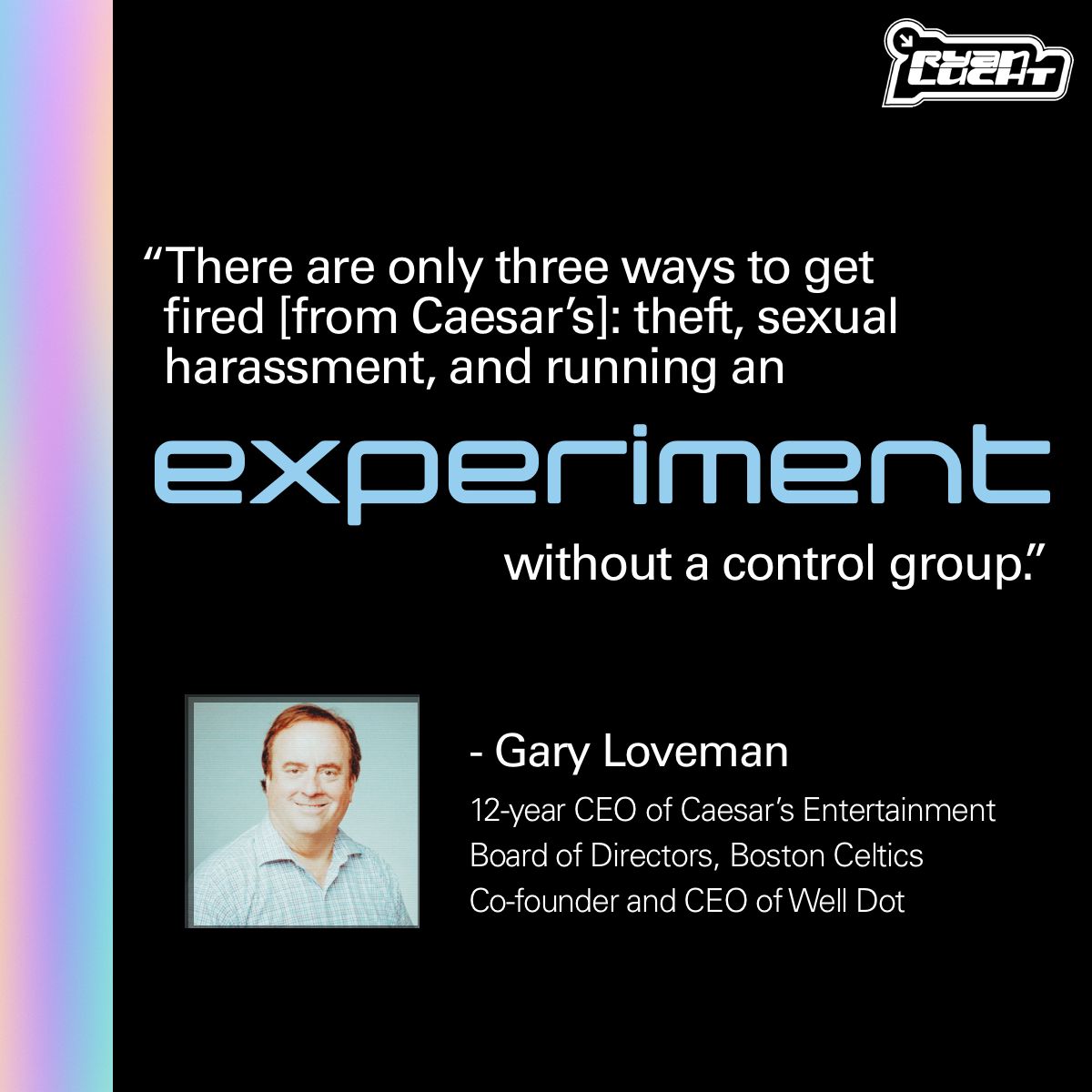
This is the story of a 38-year-old business school professor who outbounded his way to become the COO of a $2B company, became CEO 5 years later, then grew it more than 4x during his tenure. Gary Loveman is a PhD economist and was teaching at Harvard Business School in the 90s when he saw an interesting potential test case in Harrah's Entertainment for his ideas on how to identify high-value customers and ensure their loyalty. So he sent a letter to then-Harrah's CEO Phil Satre with some recommendations for the company. A few months later, he found himself with an offer to become Harrah's COO. He wanted to use data and scientific thinking to find the company's biggest levers for growth, so he set out launching the grandaddy of modern Vegas reward schemes: Harrah's "Total Gold" loyalty program. With the reams of customer data that "Total Gold" collected, Loveman and team realized that slots-heavy "AEPs" (for "avid experienced players") were the biggest profit center for Harrah's, not the stereotypical "high roller" many casinos were focused on at that time. Armed with that insight, Harrah's ran "hundreds of tests to see which incentives induced people to stay at the company’s hotels and to what degree. The results revealed that some, such as retail-store discounts, didn’t affect hotel bookings and could be eliminated. Moreover, if the money spent on them was reallocated to effective incentives, such as deeper room discounts, Harrah’s could boost both responsiveness and profits." By 2004, annual revenues were up to $4.6B (from $2B in 1998) and Loveman won his first of four consecutive "Best CEO in Gaming" awards. In 2005, the foundation Loveman had built on experimentation and data-driven strategy paved the way for their single largest expansion: acquiring Caesar's Entertainment for a whopping $10.4B. His instructions to the team? "There are only three ways to get fired here: theft, sexual harassment, and running an experiment without a control group." I first came across Gary's story in Stefan Thomke's "Experimentation Works", which I've been revisiting lately as it approaches it's fifth anniversary. You can ready Thomke and Loveman's co-authored article in HBR "Act Like a Scientist" - where the quotation about "hundreds of tests" comes from - here: https://lnkd.in/e2PU6P_G The pullquote in my image below is from an interview that Michael Schrage conducted with Loveman in 2011: https://lnkd.in/eckR5KtE
- Eppo by DatadogSince 14 May 2025
OUTPERFORM is coming! 250+ pages in print of the best insights on experimentation from 25+ expert authors, published by Eppo. Issues ship Summer 2025. Request a free copy here: https://lnkd.in/epyd3fS2 -Experimentation war stories from inside companies who run tens of thousands of experiments a year -In-depth guides on topics like scaling centers of excellence, running office hours, or how gaming companies leverage experimentation while developing new games -Editorial hot takes on statistics and Bayesian priors and NHST too spicy for LinkedIn -Interviews with data leaders, sports statisticians, AI researchers, and many more
- FraymSince 28 Jul 2026
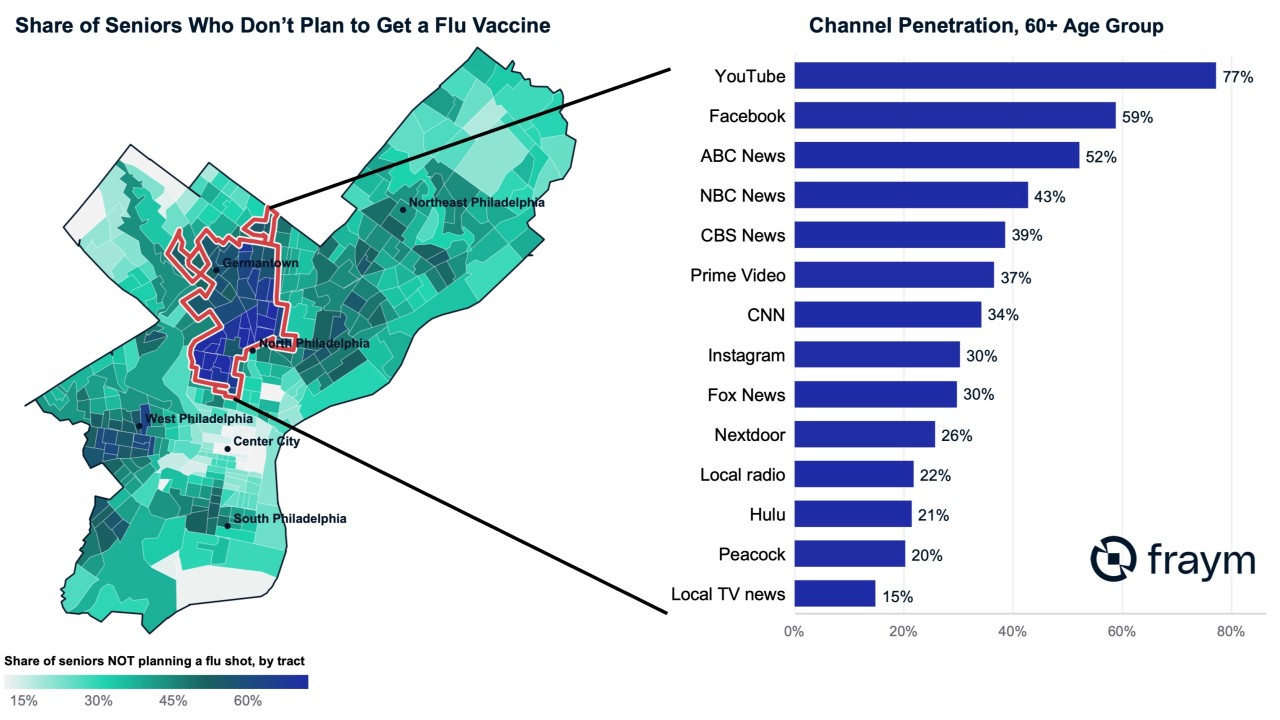
29M seniors plan to skip the flu shot. Why traditional data steers vaccine campaigns in the wrong direction. #HealthcareMarketing #VaccineMarketing #PrecisionMarketing #LifeSciences #PublicHealth #PopulationHealth
- Forage AIRecorded 19 Sept 2026
Is this the start of AI data wars? The Spirit Airlines story has been making the rounds for a while, but for those who don't yet know, Google bid $10 million for Spirit Airlines' internal data- a bankrupt airline's data. Another AI startup, Micro1, has topped it with a $12.5 million late bid. Mercor was already involved with a $7.5 million bid. What are they actually bidding for? 100 million emails, 500 million Teams messages, 30 million lines of production code, and deep records covering pricing, operations, and audits. All de-identified. This deal is shaping the future of the data industry in so many ways! 1) This isn't "content" in the traditional sense. They want to see how companies run. Three years ago, no one would have even called this training data. The big AI labs have already scraped the public web. Now they're hunting for the raw, messy reality of how a real company operates day to day. 2) Almost every mid-sized company is sitting on a similar data mine. What set Spirit apart was how it was packaged: de-identified, offered as one lot, something a buyer could actually walk away with. That's rarer than it sounds and quite valuable. I can see more AI labs going down this route - finding deeper, hidden, more valuable data that gives insights traditional web data cannot. In some ways, it's already happening. 3) We finally have a benchmark. Executives have spent years talking up the value of internal data without a number to back it up. Now there is: $10 million for an entire airline's operating history, with a competing bid of $12.5 million. This will also encourage people to look at data through a different lens. 4) A court-appointed ombudsman will oversee the de-identification before it gets the data. The flight attendants' union, AFA-CWA, has objected anyway, arguing the deal's privacy protections were built for passengers, not employees, and demanding flight attendant data be excluded entirely. This one is being watched closely, because it could set the precedent for how companies sell internal data to AI firms, and for what actually counts as adequate de-identification. The story isn't over yet. Court hearings are still pending; bankruptcy debtors are resisting Micro1's bid. However, the underlying point this deal reinforces is that if you want your models or AI products to pull ahead, you have to go deeper and source the hidden data others don't have access to. That doesn't mean you need to bid millions on a bankrupt company's servers; it means knowing exactly what you need and going after the long-tail 20% of data that's hard to get. https://lnkd.in/dcHbA_jC
- FraymSince 1 Sept 2026
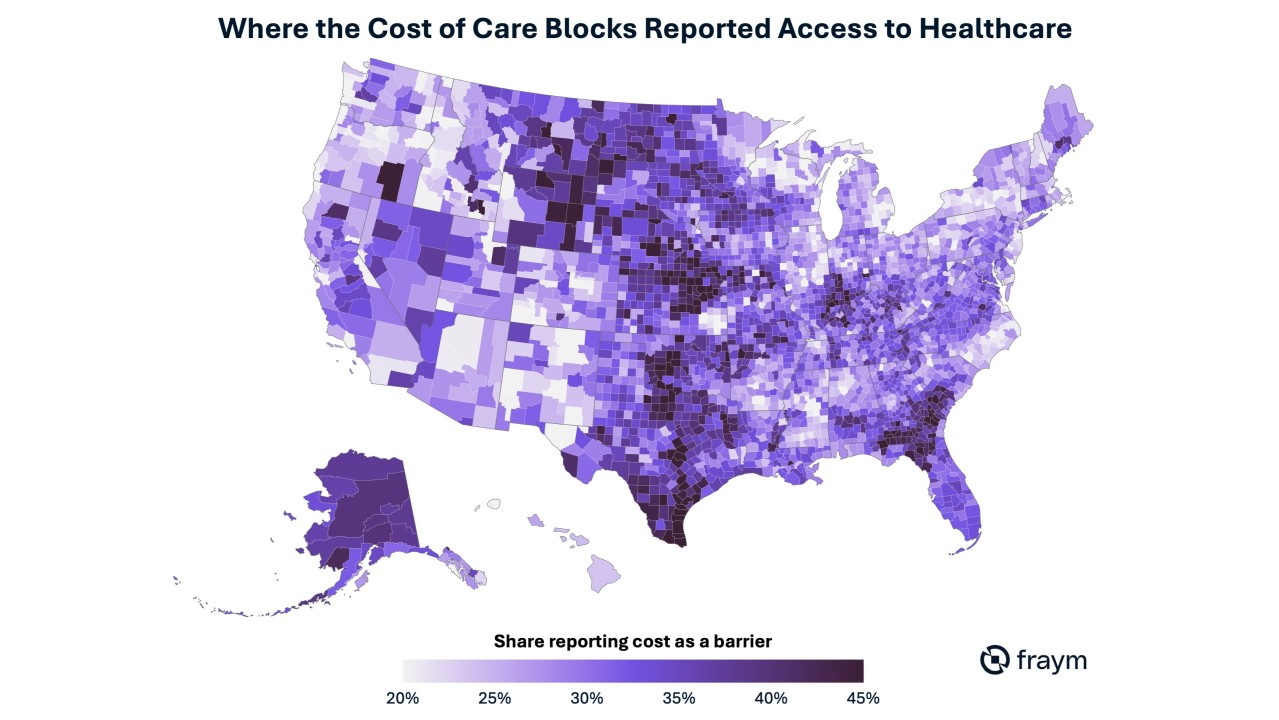
98% of US counties worry about healthcare costs, but actual care barriers vary wildly. New hyper-local data reveals where the cost pain hits hardest. #Healthcare #HealthPolicy #HealthcareCosts #DataAnalytics #PublicHealth
- FoodDataLab (by Doubledata)Recorded 19 Sept 2026
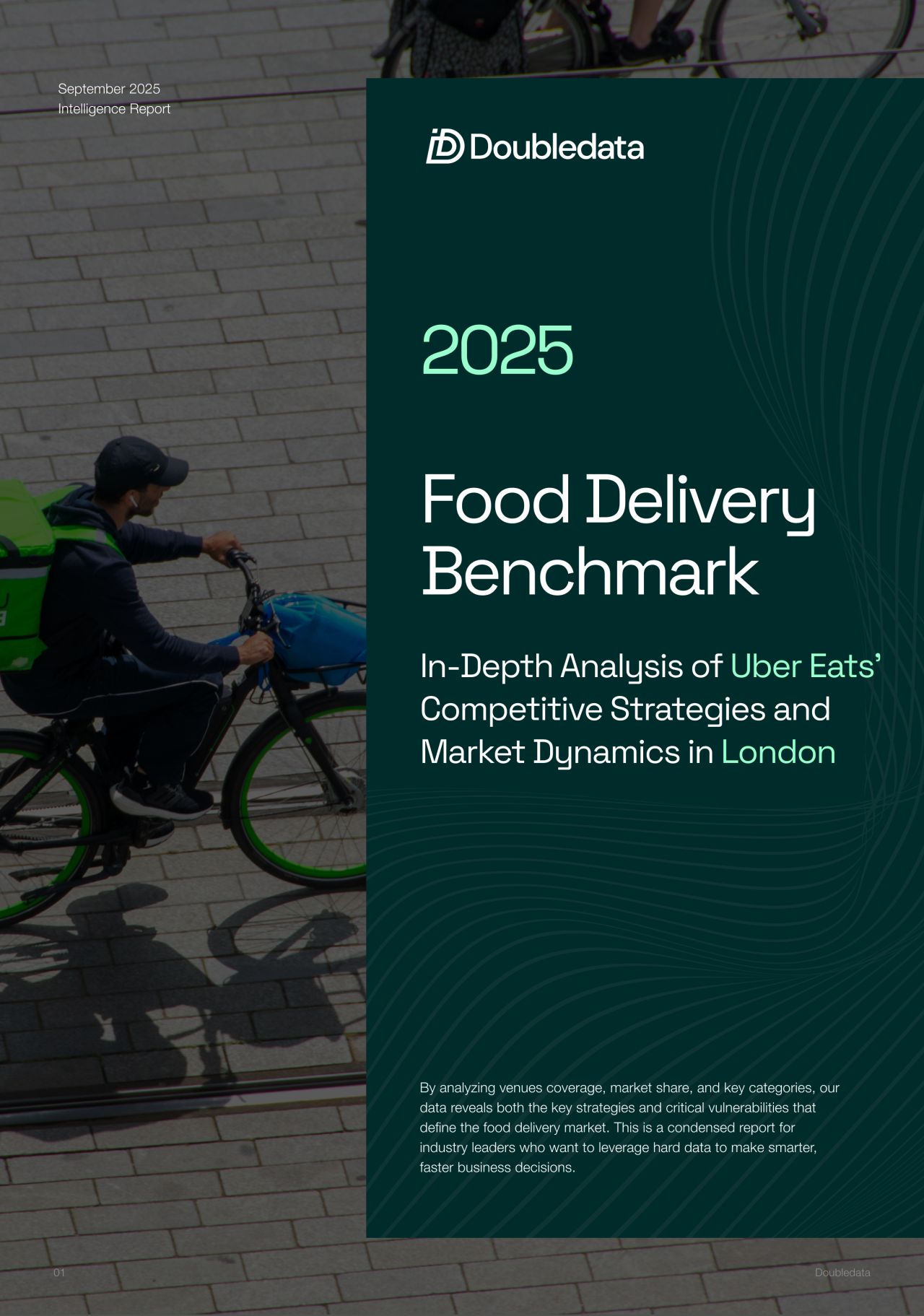
When I speak with leaders in food delivery, one theme always comes up: decisions are being made with incomplete or biased data. London is one of the most competitive food delivery markets in the world. Yet until now, no reliable benchmark was available to the industry. Reports like these are usually locked behind paywalls or kept for internal use only. At DoubleData, we specialise in the food delivery sector. Our team scrapes and matches millions of data points every month with 99.9% accuracy, helping executives make faster and smarter decisions. That is why we created the Food Delivery Benchmark Report: Uber Eats in London (2025) and made it freely available. Based on 691 restaurants across three key zones (E1, SE1, CR0), it reveals: ✅ Why quality, not quantity, drives customer loyalty ✅ Where London’s biggest “quality deserts” are hiding ✅ How promotions and logistics shape competitive advantage 👉 Download the report here: https://lnkd.in/ged8cnKd This is the first open benchmark of its kind in food delivery. And it will not stop with London. We are building benchmarks for major markets around the world because reliable, high-quality data should not be a privilege reserved for a few. Over the next weeks, I will share the most eye-opening insights from London right here. Stay tuned.
- FoodDataLab (by Doubledata)Since 26 Sept 2025
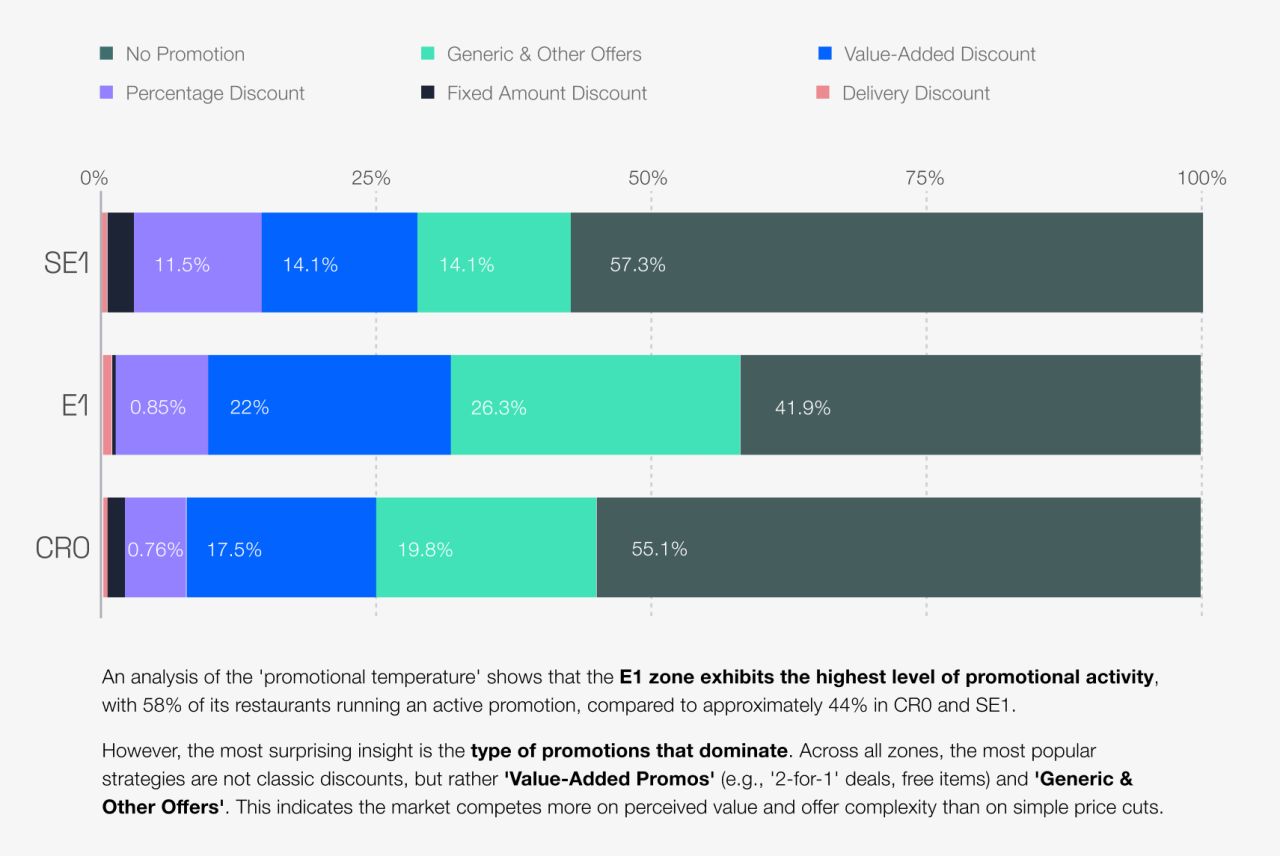
Across the UK, intense competition is forcing platforms into a promotional race-to-the-bottom. But are endless percentage discounts what customers really want? Our 2025 benchmark, analysing promotions on the Uber Eats platform in London, suggests the market is being misread. The battle for the customer is being won on creative value, not just on price. The data from Uber Eats reveals: ✅ Across all key London zones, the most dominant promotional strategies are not classic discounts. ✅ Instead, ‘Value-Added Promos’ (e.g., 'Buy 1, Get 1 Free', free items) and other complex, value-driven offers are the tactics that truly resonate with customers. This is a critical insight for any marketing leader. It proves you can compete more intelligently without simply destroying your margins. The strategic question must shift from "what discount can we offer?" to "what unique value can we provide?". Your platform tools and partner conversations must reflect this reality. We break down the complete 'Promotional DNA' of Uber Eats in London in our free report. 👉 Download the 2025 Food Delivery Benchmark here: https://lnkd.in/ged8cnKd
- EXPLORESince 14 Jan 2026
Les Agents IA sont déjà une réalité opérationnelle dans l’immobilier. 📅 Rendez-vous le 27 janvier, lors du webinar EXPLORE - Expert en data intelligence, co-animé avec Gregory Kolesnikoff et Caroline Guezo. Exemples concrets à l’appui, vous constaterez que les Agents IA permettent de gagner un temps précieux au quotidien et d’augmenter votre efficacité de façon significative. ✔️ automatisation des tâches chronophages ✔️ messages contextualisés grâce aux data EXPLORE ✔️ décisions territoriales éclairées ➡️ Inscription : https://hubs.ly/Q03-chjQ0
- EXPLORESince 11 Feb 2026
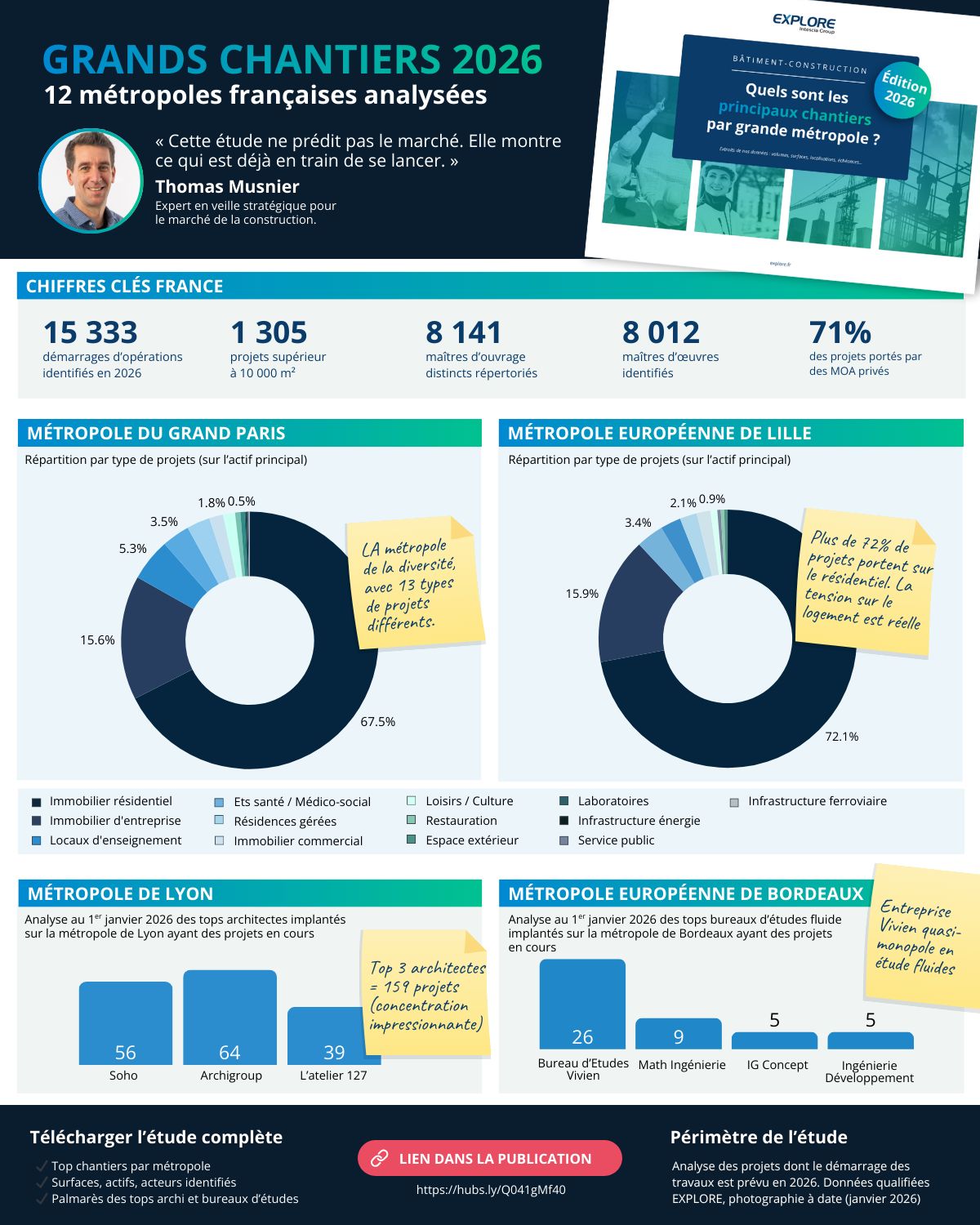
L'analyse annuelle EXPLORE - Intescia Group des principaux chantiers des métropoles françaises est terminée. Une qualification précise des projets par les équipes : 12 métropoles passées au crible, 60 projets d'ampleur détaillés, un palmarès d'acteurs valorisés (architectes, BE fluide, BE structure) Ce que je retiens : ✅ Paris reste unique : la seule métropole avec une diversité de projets extraordinaires ! Résidentiel, bureaux, santé, logistique, infrastructures ferroviaires, data centers... les autres villes se "limitent" à 8-10 typologies. ✅ Le neuf recule, la réhab' s'impose : 60% des plus grands chantiers intègrent de la rénovation. ✅ Nouveauté 2026, on ajoute en plus des tops acteurs par métropole : • Lyon, on retrouve sur le podium des architectes : SOHO ARCHITECTURE, ARCHIGROUP, L'Atelier 127 • Nantes, parmi les tops BE Fluide : ISOCRATE - Bureau d'Études Techniques, SoLab Ingénierie & Environnement, NRGYS • Bordeaux, parmi les tops BE Structure : + intersections +, CESMA, Bureau d'études OCis Et vous, sur quel territoire êtes-vous actifs ? Qui sont vos concurrents/partenaires locaux ? 📥 Téléchargement : https://hubs.ly/Q041gMf40
- FelderaRecorded 18 Sept 2026
🚨 SQL Compatibility Nightmare? You’re Not Alone. Did you know that after nearly 40 years, every major database still speaks its own SQL dialect? From how NULLs are sorted to even the semantics of basic operations like "+", migrating or federating queries is a minefield. For data teams, this means: ** Painful migrations and vendor lock-in ** Hours wasted rewriting SQL for each system ** Surprises when "compatible" queries break or give the wrong result At Feldera, we faced this head-on. Instead of picking a side, we built on Apache Calcite, a flexible, open-source SQL engine. This way, we can: ** Support arbitrarily complex SQL ** Rapidly add features and extensions customers actually need (think: ASOF joins, Lateral Column Aliases, recursive queries) ** Deliver sub-second, incremental analytics with minimal code changes 💡 We are seeing data engineering teams port hundreds of thousands of lines of Spark SQL to Feldera, cutting down time-to-insight from hours to seconds, even for pipelines with hundreds of joins. What’s the weirdest SQL dialect portability issue you’ve run into? Let me know below. https://lnkd.in/g7pVres2 If you want to see true incremental SQL in action, join us on Slack or book a demo to learn more! #SQL #DataEngineering #RealTimeAnalytics #Feldera
- FelderaRecorded 18 Sept 2026
🤫 The Dirty Secret of Incremental View Maintenance: You Still Need Batch 🏆 Incremental View Maintenance sounds like the Holy Grail: update your complex analytics instantly as data streams in. 🛑 The problem? It breaks down the moment you leave the demo stage: every real system needs to backfill massive amounts of historical data before handling real-time updates, and most #IVM engines choke when asked to do it. That’s why an IVM engine has to be a batch engine first! 🛠️ Efficient backfill is one of the biggest hurdles in building a production-ready IVM engine. Over the past few months, we’ve been working on a solution, and we’re about to announce it. 💡 In the meantime, I wrote a blog that explains what exactly makes backfill tricky. Using a simple example, I show why even a powerful IVM system like Feldera requires special care to make backfill efficient: https://lnkd.in/gbHNJWT4.
- EmbraceSince 10 Jul 2026
I've been on a bit of a LinkedIn fast recently, but I've been brought back to tell you about our next #OTel panel where we discuss the status quo for projects that cater to end user client apps. Join Jared Freeze, Martin Kuba, Jason Plumb and me on July 22nd as we talk mobile, browser, sem conv, etc. Sign up here: https://shorturl.at/XDflC
- EmbraceSince 11 Jul 2026
Client-side OpenTelemetry finally caught its wave. 🏄 While nobody was looking, the OTel community poured serious investment into frontend: new semantic conventions for crashes, instrumentations built specifically for the browser runtime, and first-class support for Kotlin and Kotlin Multiplatform. Turns out mobile and web developers deserve telemetry too. Who knew. On July 22, I'm joining three people who actually build this stuff to get honest about where client-side OTel stands: - What's production-ready today (more than you might think) - What we're actively building right now - What's on the horizon Come for the roadmap, stay for four developers politely disagreeing about semantic conventions in real time. No wetsuit required. 📍 Register: https://shorturl.at/NAkDz 🗓️ Date: Wednesday, July 22 at at 10AM PT ⭐ Panelists: Hanson Ho: Android architect at Embrace, OTel Android approver, OTel Kotlin approver Martin Kuba: Staff software engineer at Grafana Labs, OTel JavaScript SDK approver and OTel Browser SDK maintainer Jason Plumb: Principal software engineer at Splunk, OTel Android maintainer, OTel Java maintainer, OTel Kotlin maintainer Jared Freeze: Software engineer at Embrace, OTel Browser SDK maintainer #OpenTelemetry #OTel #CNCF #Observability #MobileObservability #BrowserObservability









Other LinkedIn formats
Watch the companies you care about.
Filter every ad by industry, country, format and network, and get alerts when a company you watch starts running new ads.