LinkedIn thought leader ad examples
144 thought leader ads are live on LinkedIn right now, from 180 companies. Browse real ones, filtered by industry.
- QuoRecorded 21 Sept 2026
I have to admit it: I'm a little obsessed with our newest feature in Quo. With our MCP beta, you can now ask questions about your Quo data in plain English, and let ChatGPT or Claude handle the rest. The Model Context Protocol (MCP) server is a secure bridge between your Quo account and Claude or ChatGPT. So you can ask: • "What are the top 10 reasons why prospects do not buy?" • "What is the most common question customers ask?" • "What do our customers love most about our product?" And your AI assistant searches your actual call transcripts, text messages, and conversation history to give you answers based on your real data. But it goes beyond data analysis. You can also send texts, push bulk messages, and create new contacts, all from the same chat. And my favorite part: You can have it up and running in < 3 minutes. I demonstrate this with Claude in the video below, but the ChatGPT setup is very similar. I can't wait to see all the ways Quo customers put this integration to work 🙂 ps - To learn more (or set it up for yourself), visit: https://lnkd.in/gzQwncVV
- FullviewSince 21 Feb 2026
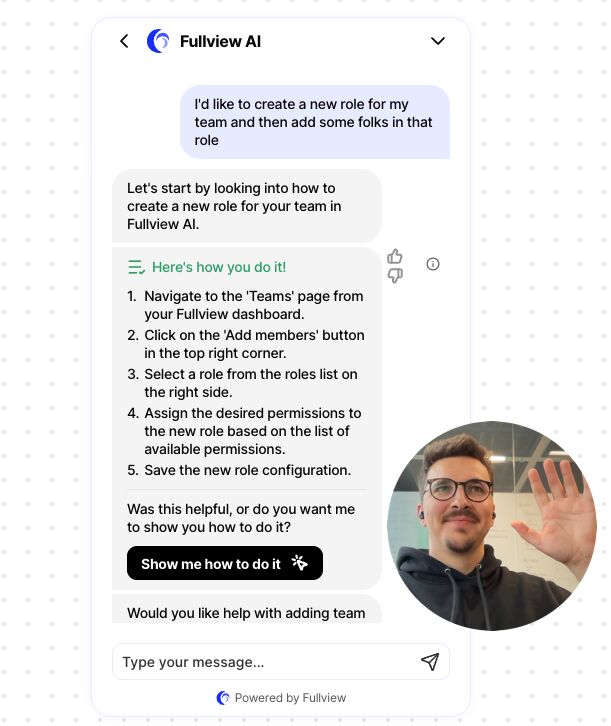
Just witnessed our AI crush Zendesk. Zendesk advertises 30% AI resolution rate as a win. I think that's the floor. Most chatbots plateau at 20-30% because they only read your help center. They don't know who the customer is, what they have access to, what they've already tried in your product. And they spit out way too much text. No human agent would help someone without knowing the context behind the problem first. Why is that acceptable from AI? Context is the unlock for higher resolution rates.
- FullviewSince 21 Feb 2026
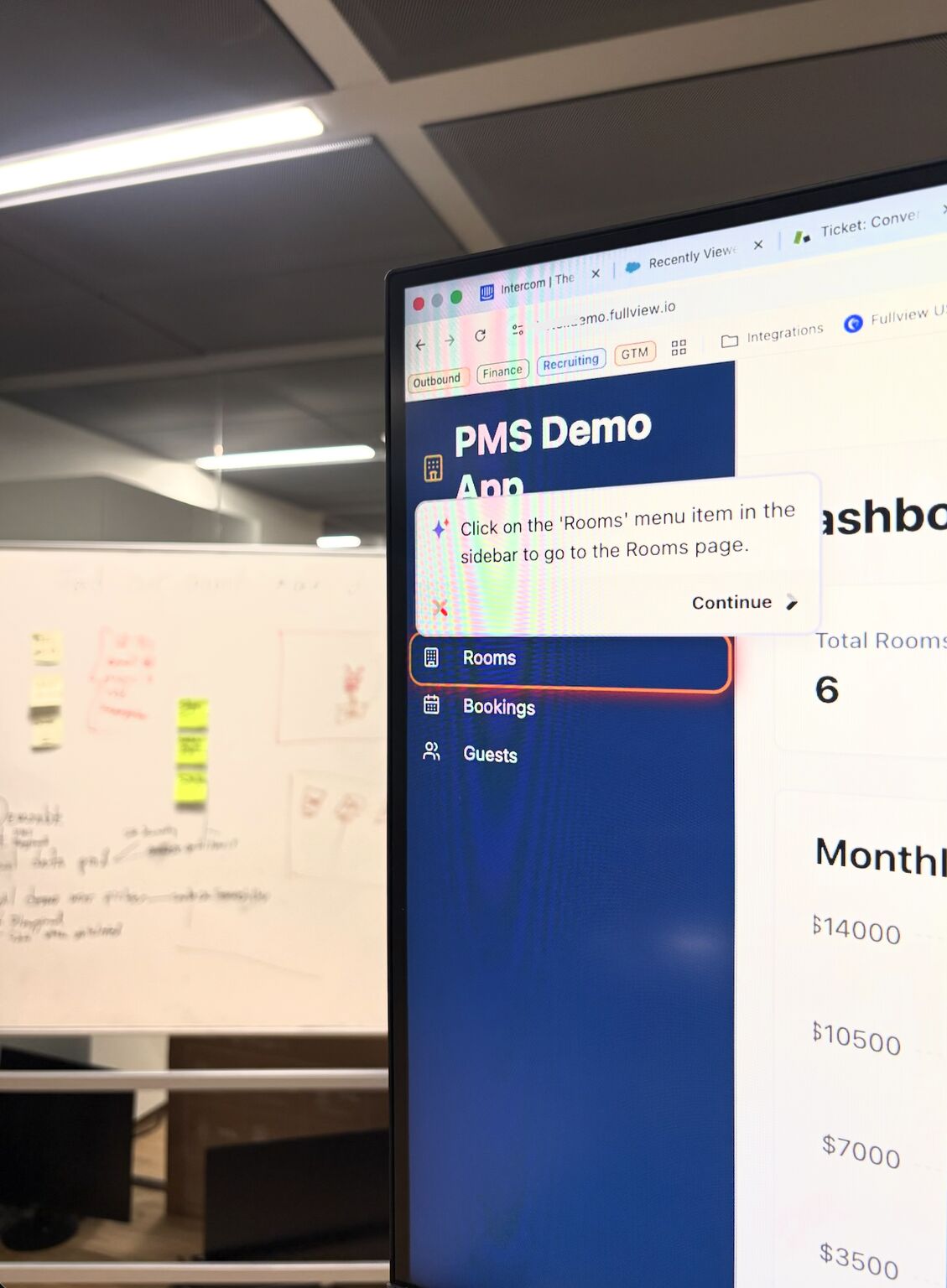
Our awesome team just shipped brand new conversational capabilities 🚀 Customer service can be messy - frustrated customers, vague requests, 3 different requests in one message.The goal of this update is to handle that reality. It identifies and breaks down multiple distinct questions within a single message and then addresses each one sequentially. When a user is vague or offers low-context, the agent doesn't guess. It uses active clarification, asking specific questions to narrow down the request. This mimics a human's judgment, ensuring the agent has the necessary information before attempting a solution. Finally, we ensure the customer journey is complete. The agent suggests immediate follow-up actions and guides the user toward a complete solution, not just fragments of one. This approach gets the user off the support channel faster and more satisfied. And of course the conversational mode is paired with the on-screen visual assistance, turning every support interaction turn into a “wait… that was awesome” moment. Try it out.
- GuruSince 19 Aug 2026
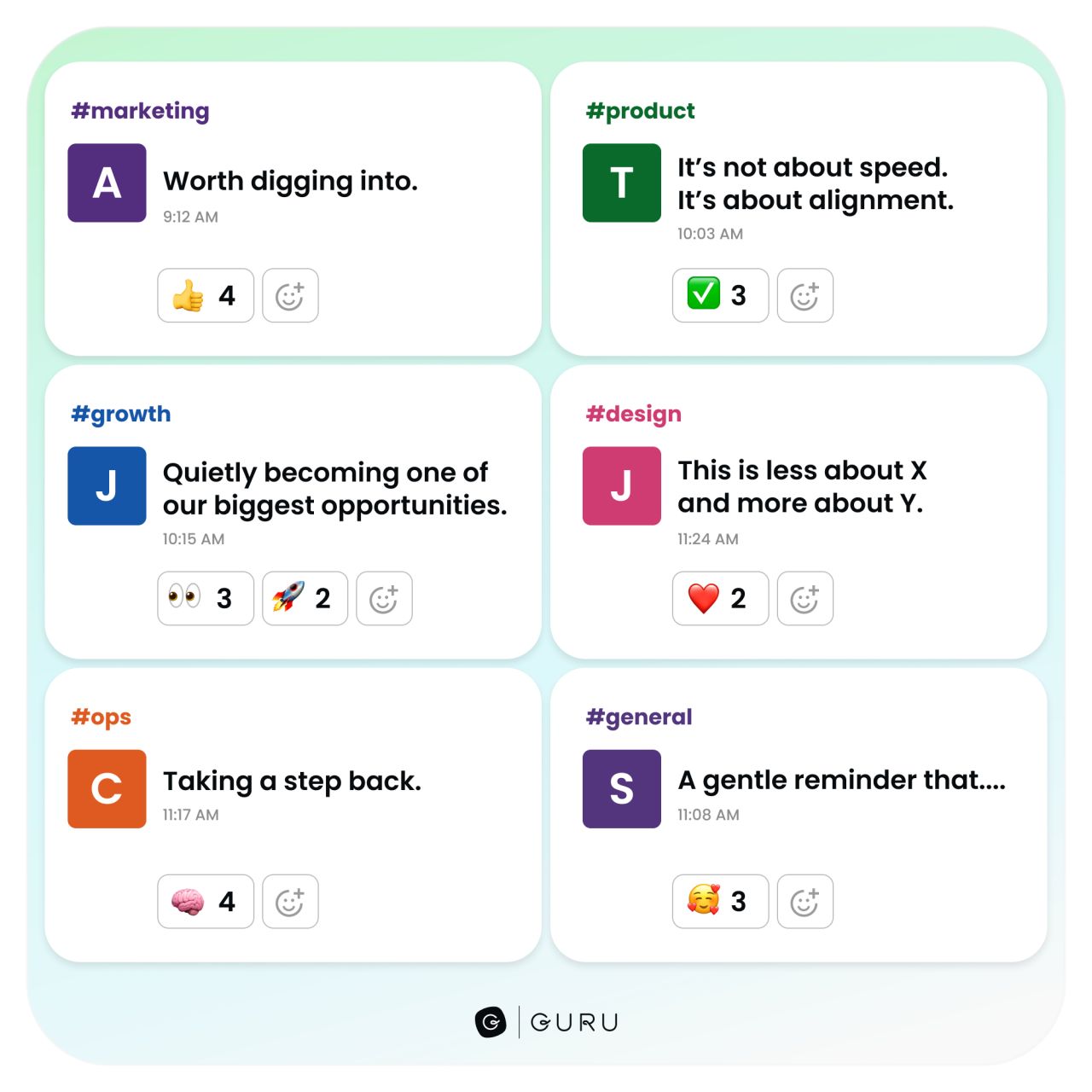
We have a new rule at Guru. No one on the team is allowed to send a message without first asking, “Would I say this out loud in a room?” Writing has gotten exponentially faster with AI, and that's not a bad thing. It just means your time gets spent differently now. Less time typing words out, more time actually organizing your thoughts before hitting send. The issue is what keeps coming back. "It's not X, it's Y." "Worth digging into." "Quietly becoming a problem." You read the messages back, and it sounds like they were written on another planet. With the new rule, our team is still welcome to use AI to write the first draft of anything. But before it goes out, the expectation is that they read every line and make sure they can defend every claim. Otherwise, there's a good chance something makes it into a message that the sender doesn't actually stand behind. Not a lie exactly. Just a claim they never checked or a point they’d walk back the second someone pushed on it. If you wouldn’t say it out loud, rewrite it until it sounds like you again. That's one of our new golden rules.
- GuruSince 21 Aug 2026
Today we're making Guru exponentially easier to buy for the 1000s of enterprises already running on AWS. Guru is now live on Marketplace. Many of the enterprises we work with already run their infrastructure on AWS. And more often than not, the person bringing Guru in also owns that Amazon relationship. Up until now, they still had to cut through layers of red tape to get Guru through the door - a security review, a new contract, and a budget conversation. The whole process could take months to complete. Buying Guru through Marketplace changes that: → Guru shows up on the AWS bill they already reconcile instead of a new vendor to track → Our Marketplace listing already answers most of what a security review would ask → It draws from AWS spend a company already committed to, so there's no new budget to request Our customers have been asking for this for a while now. Lemonade is one of the AWS customers already running on Guru, and they're a good example of what this looks like in practice: 90% weekly adoption, a 100% trust score across more than 5,000 Cards, and verified answer accuracy at 93% and still climbing. If your team already buys through AWS, search Guru in the Marketplace directly, or loop in your AWS account team to scope it out. Full details on the partnership here: https://lnkd.in/eeawaaD5
- GammaRecorded 20 Sept 2026
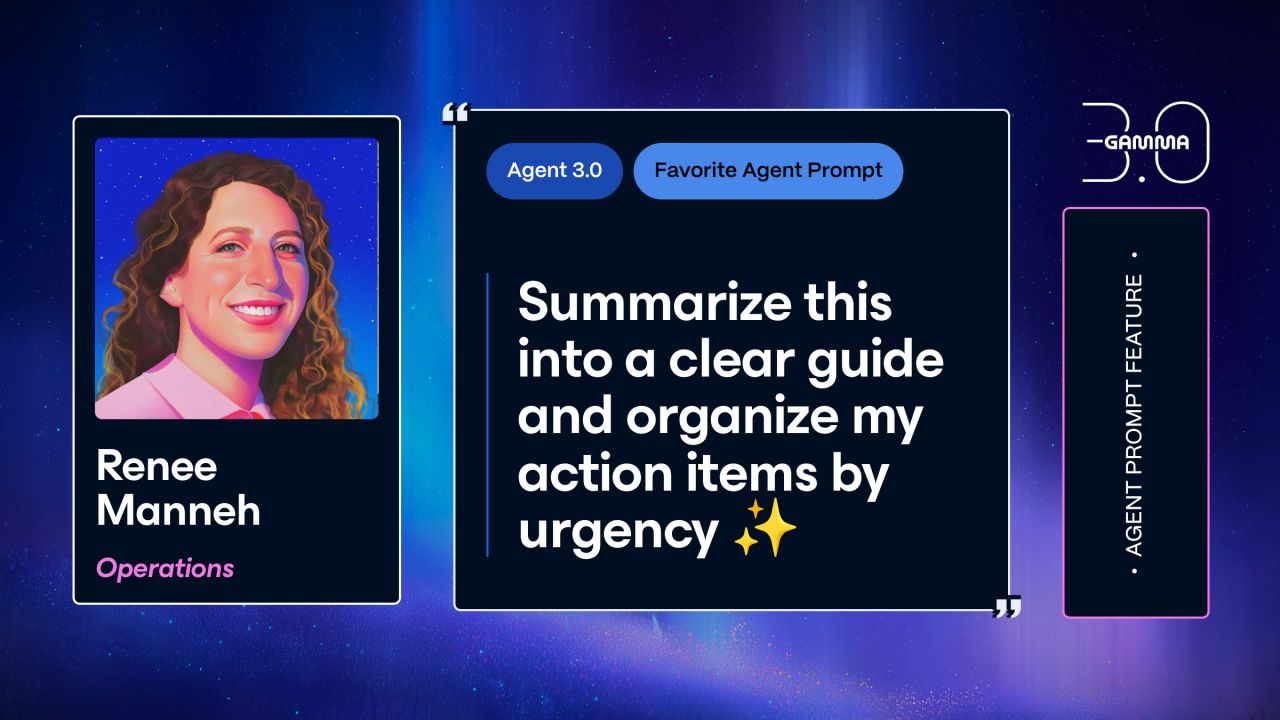
In operations, I juggle a lot of hats — from processes and metrics to putting out the occasional fire. But one of the most meaningful parts of my role is making documentation actually work for people. Documentation can be both a blessing and a burden. Too often, it can be dense, scattered, or outdated — and instead of helping, it can leave people feeling lost. My role is to pull clarity out of that chaos: turning long write-ups into clear, quick-reference guides, shaping meeting notes into checklists, and curating what’s essential so the team can focus on the work that matters. At Gamma, we recently released a new feature, Gamma Agent, which helps users easily transform sprawling documentation into concise, actionable guides. It’s like being handed a compass when the map looks overwhelming — clear, usable, and tailored to your needs. And it can do so much more! The result? Less time searching, more time doing. To me, that’s the core of ops — making the complex simple, the useful accessible, and the team ready to thrive 🚀
- GammaRecorded 20 Sept 2026
We're wrapping up this year on the biggest screen we could imagine. Gamma is on Sphere in Las Vegas.
- FlexRuleSince 12 Jan 2026
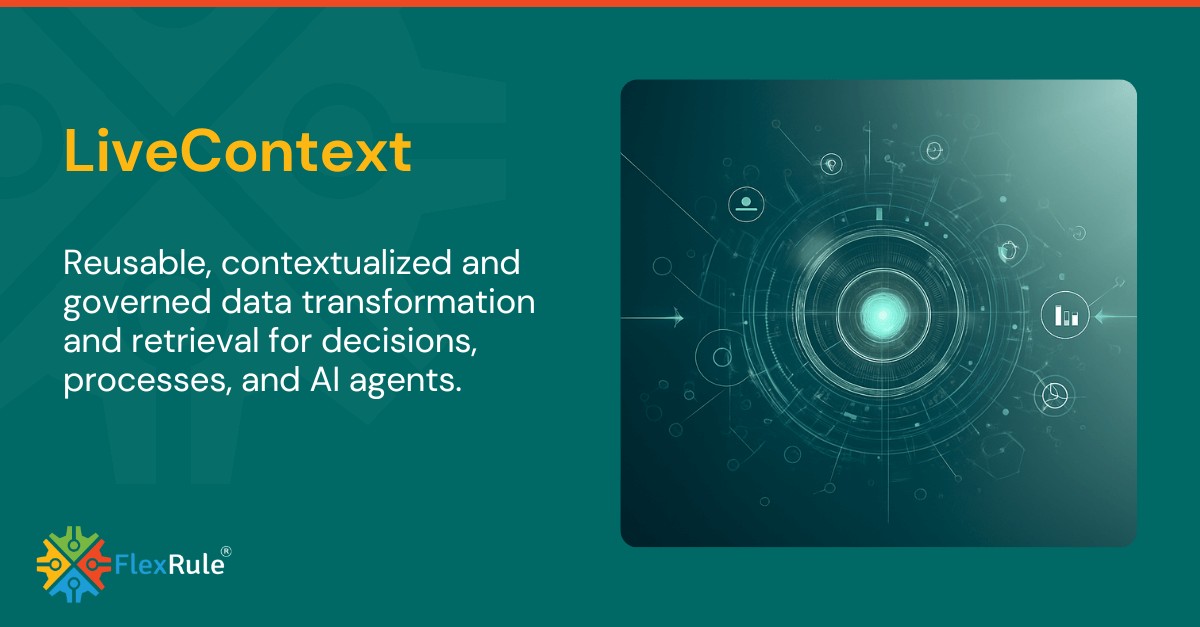
🛑STOP allowing AI Agents to access operational data directly. The multi‑agent workflows need to access data. But will you let AI agents based on LLMs generate queries against your customer database? Think twice. Will all of your staff query every database or all data in your enterprise, why should AI agents? Sure, you need to automate decisions. ...Therefore, AI Agents should be able to access data. But you need to put guardrails and governance in place. How? Use ✨LiveContext. 💡It enables: * Accessing multiple data sources * Navigable and hierarchical context * Controlled, governed and safe data access * Optimized for inter-connected tables and joins * Single view of data for decision-making scenarios 💣 Add strong retrieval, monitoring, guardrails and orchestration for multi‑agent workflows. Read more at https://lnkd.in/gTFVaFnn 👇 - Follow the "Uncle of DI" if you're looking for unfiltered insights into #DecisionIntelligence, #AI, and #DecisionAutomation. Hit the 🔔 on my profile to get notified about my daily posts.
- FlexRuleSince 24 Jan 2026
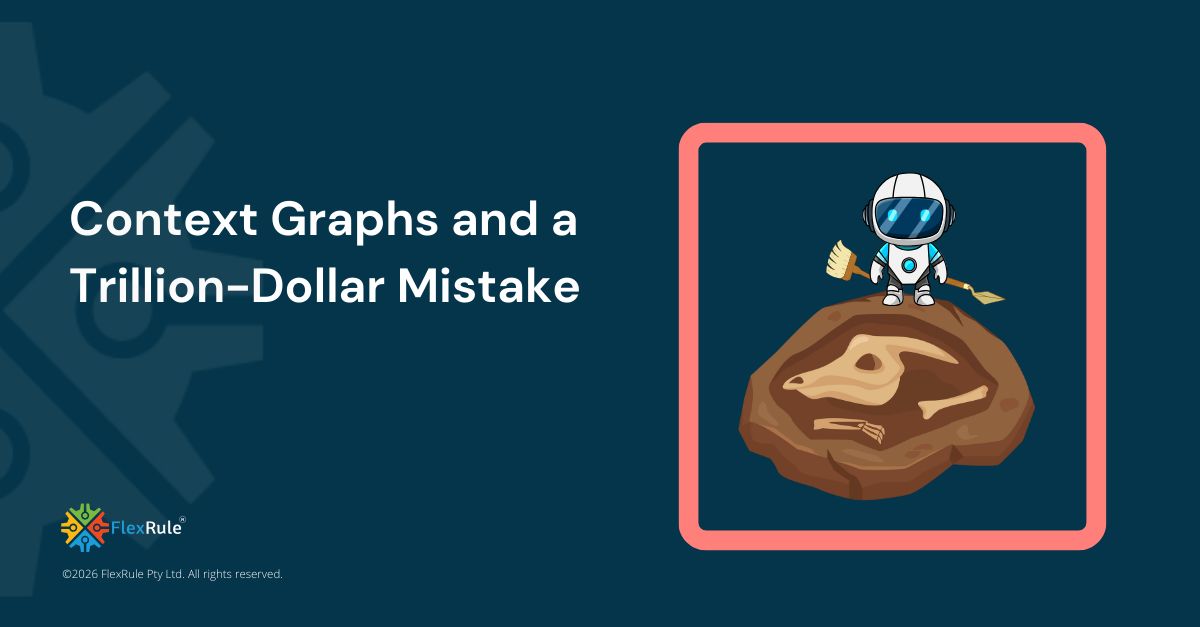
⛔ Stop decision archaeology and start decision intelligence. A Trillion-Dollar mistake with Context Graph. If your AI agent needs to dig through old logs, messages, traces, and approvals just to figure out what to do then you've already lost it. That's not context. That's guesswork. Real decision systems don't guess. They're built. 💡 Here's how it works: • DMN defines the what and rationale of a decision, the how - the intent, the logic, the rules. • CDM defines when and whether a decision should happen - stage, escalation, causal condition. • LiveContext defines what data is relevant - scoped, structured, and decision-ready and specific. The trace comes after execution. Not before. It's not input. It's evidence. Context Graphs flip this upside down. They say: "Don't model anything. Just let the agent read the past and figure it out." That's not architecture. That's decision archaeology. And in the enterprise, it doesn't scale. It doesn't explain. And it doesn't fly in front of regulators. 💥I call it decision archaeology a Trillion-Dollar Mistake. Read more at https://lnkd.in/gR3C39Z4 #ContextGraph #DecisionTrace - Follow the "Uncle of DI" if you're looking for unfiltered insights into #DecisionIntelligence, #AI, and #DecisionAutomation. Hit the 🔔 on my profile to get notified about my daily posts.
- FigafSince 5 May 2026
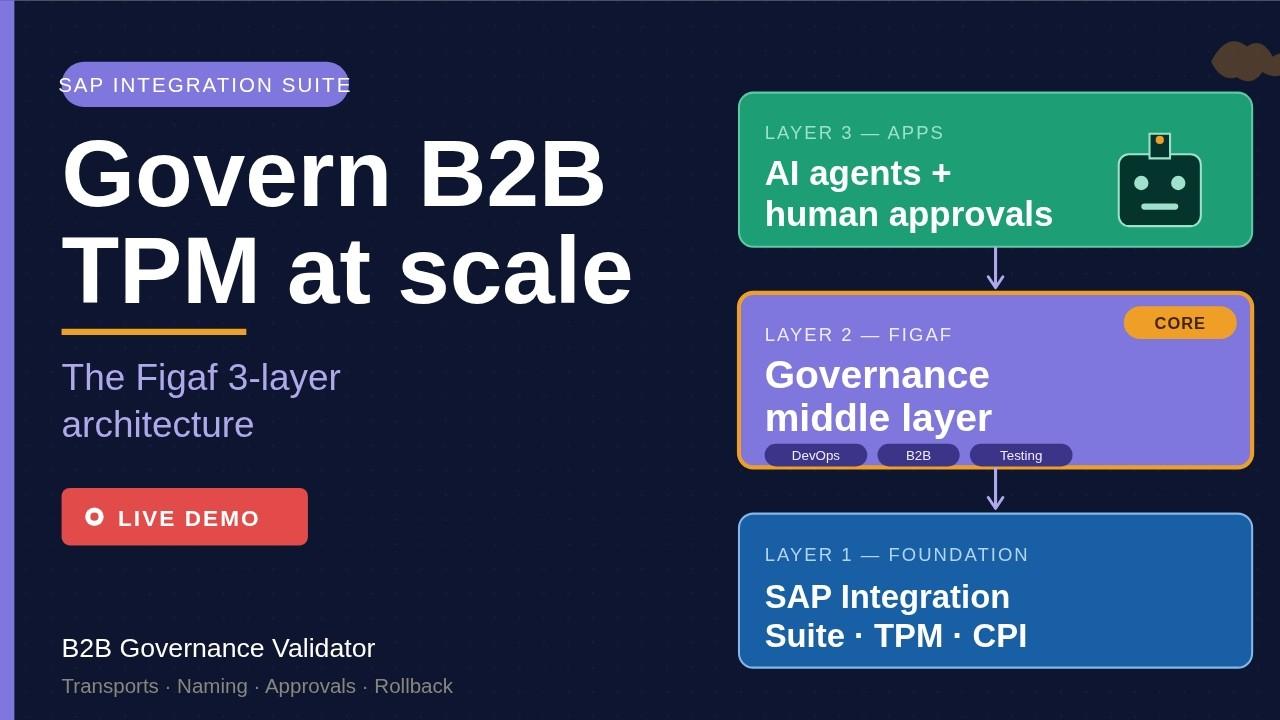
Governance is a word that sometimes seems to mean everything and then again nothing. So I want to show how and why it is key to your B2B implementation, not just talk about it. In this walkthrough, you will see how Figaf can govern the SAP Integration Suite B2B in a 3-layer architecture, how governance rules are applied, and a live demo of the first PoC of a B2B Governance Validator app in action. What's in the video: ▸ The 3-layer model — SAP Integration Suite as the runtime foundation, Figaf as the governance and DevOps middle layer, and a new app layer where AI agents handle the operational toil and humans approve only what matters. ▸ How customer-specific rules are utilized and enforced across every app and every AI agent. One rule set, every environment. ▸ Real governance applied to a running app: agreement and MIG / MAG naming, deprecated-status checks, EDI metadata alignment, partner whitelisting. Why is this needed? The blunt version for IT leaders: SAP doesn't yet provide a consolidated transport for all Integration Suite B2B objects (MIG, MAG, TPM) with system-purpose alignment/tranlation. Figaf does — across tenants, with approvals, rollback, and a full audit trail. While applying and enforcing governance. 🎬 Watch the video: https://lnkd.in/esiWtZy7 Quick question: what's the single biggest governance gap you're feeling on Integration Suite TPM right now? Naming spagetti? Transports wild west? Partner onboarding via slow train? Or something else?
- FigafSince 28 May 2026
A simpler way to work with Groovy in SAP Cloud Integration is to use the Figaf Bot. And yes, AI does not always just magically give the right result. When creating a demo, you could have used a super prompt to generate the result you want in just one step. I could probably have run a few more experiments on the prompt and gotten better results. But the whole idea is that you can continue to develop and achieve better results with it. If you check the result, it looks somewhat okay to start; it gives the correct result. But the code could be simplified, making it easier to maintain. But it does give a new way to work. And XSLT can be handled in the same way. What is your experience with AI groovy script development?
- ForstaSince 17 Mar 2026
What if researchers could focus on high-value insights while agents handle the heavy lifting? Now they can. That thinking is behind our new AI agents in Research HX. These purpose-built agents support researchers across the lifecycle, speed up setup, accelerate analysis and reporting by as much as 50%. Speed itself matters. What matters even more is what that speed gives back to researchers: time to focus on interpretation, context, and the data that move decisions forward. AI can accelerate the mechanics of research, but insight still depends on human judgment. The goal is not automation for its own sake. It’s giving researchers intelligent assistants that remove friction while keeping people firmly in the loop. When technology handles the heavy lifting, researchers can focus on understanding the people behind the data. And that’s where the most valuable insights have always lived. Learn more about how market research agents in Research HX are helping researchers spend less time on process and more time on insight: https://lnkd.in/dacGy937
- FigrSince 13 Jun 2026
Figr Launch Week 🚀 Day 2: Context Pod + Connectors. Today we're launching Context Pod. One place where Figr learns everything about your product. Drop in screen recordings, PRDs, user interviews, analytics, images. Figr doesn't just store them. It parses every input deeply. Screen recordings get analyzed frame by frame, every click, every narration, every flow understood. And with Connectors, your context flows in automatically. Notion, Atlassian, Mixpanel, Amplitude, Google Workspace, Granola, Miro, and more. No copy-pasting between tools. There's a major difference. Most AI tools pull data for a single query and forget it. Figr builds a context graph that compounds. Every new input makes it smarter about your product. Your product context lives in 10 different tools. Notion docs here, Mixpanel analytics there, Figma files somewhere else, user interviews in a Google Drive folder you forgot about. So when you ask Figr to solve a complex UX problem, it's not guessing. It's working from your analytics, your user interviews, your actual product flows. All connected. Your product knowledge was scattered. Now it compounds. Try Figr AI → figr.design Tomorrow, Day 3. We're just getting started.
- FigrSince 16 Jun 2026
We asked 50 PMs what slows them down most. Next week is Figr Launch Week 🚀 5 days. 5 features. Each one built to collapse the gap between what you design and what gets shipped. We've been heads down for months. Your product context, finally connected and mapped. A Canvas where AI and humans think together, spatially. Design System deeply understood by AI. And much much more.. Product Managers, this one's for you! Starts Monday. Don't miss it...
- FlosumSince 15 Jun 2026
Agentforce World Tour London is around the corner, and I’m genuinely looking forward to the conversations we’ll be having on 18 June. There is a real shift happening inside the Salesforce ecosystem. For years, Salesforce teams were primarily managing changes made by people. Now, agents can read, reason, create, update, and delete records at machine speed. That creates enormous opportunity. But it also introduces a new operational reality. A faulty instruction is no longer one bad edit. It could become thousands of changes before anyone spots the problem. And when record relationships are affected, recovery is not simply about restoring individual rows. It is about rebuilding the structure that makes the data useful. Guardrails matter. But guardrails and recovery solve different problems. At Agentforce World Tour London, we’ll be talking about what it takes to protect your Salesforce investment as Agentforce scales across the enterprise. If this is a conversation your team is having, come and meet us on 18 June. Reserve a time here: https://lnkd.in/e-TMSYPQ Worth setting up time now rather than trying to find each other on a busy event floor. See you in London. explore.flosum.com Flosum at Agentforce World Tour London 2026 | Salesforce DevOps & Backup Meet Flosum at Agentforce World Tour London on 18 June 2026 at ExCeL London. See how enterprise Salesforce teams protect, govern, and accelerate their Salesforce investment.
- folkSince 19 Jul 2026
folk MCP is live! Turn your CRM into a full sales engine. The use cases are infinite — some interesting ones that come to mind: - Draft email follow-ups based on your last interactions/notes with leads and create them in Gmail - Run weekly pipeline reviews and share them on Slack - Get a recap of the context of a relationship with a given account in Claude - Find similarities in the lost-deal reasons across all your lost deals It literally combines the power of Claude/ChatGPT with the depth of information living in folk Can't wait to see what you end up building. Just comment below and I'll give you access.
- FlagsmithSince 24 Jun 2026
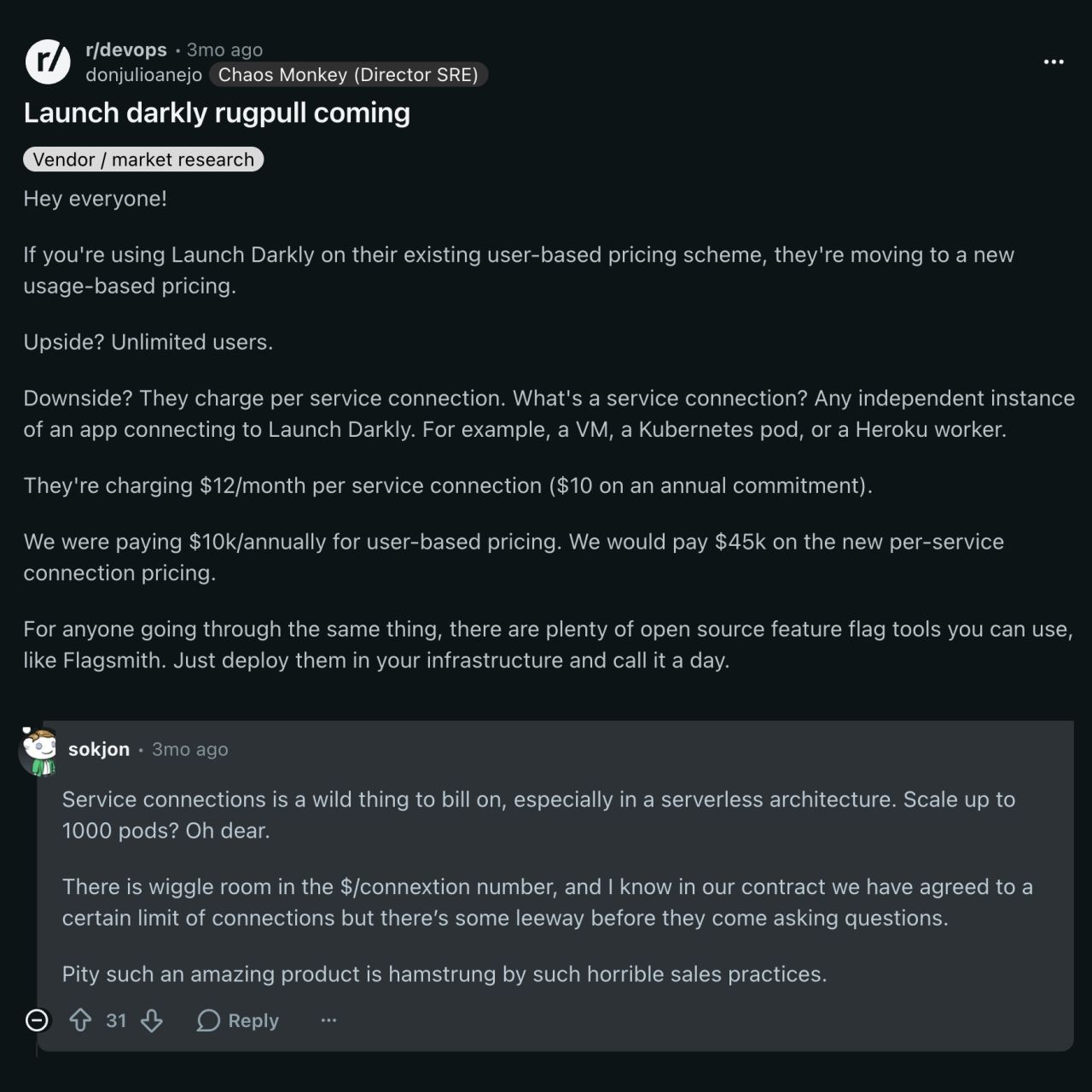
We have to talk about LaunchDarkly’s new pricing model. TLDR: It’s unfair, unpredictable and it penalizes resilient software architecture. LD is switching to usage-based pricing, which means you no longer pay per user, but per “service connection.” The new model will result in a significant billing hike for many customers, but there’s an even bigger issue. The pricing is now completely decoupled from the value of feature flags. That’s a problem. Two LD customers serving the same MAUs, evaluating the same flags, and getting the same value out of LD can get vastly different bills, purely because of how their software is architected. More connections = bigger invoice. You could try keeping the connection count down, but that means consolidating into fewer, larger instances. The outcome then is a larger blast radius and reduced fault isolation. Which is… exactly the problem that feature flags should be solving. To avoid ballooning your invoice, you have to optimize your architecture for your LD bill. Not for resilience. It goes against all engineering and feature flag best practices. You shouldn’t stand for it. Migrating is a hassle, but if you’re considering it: implement OpenFeature. It makes it easier to swap providers and avoid vendor lock-in. And if you’re looking for a LaunchDarkly alternative with a reliable pricing model, check out Flagsmith. The price is right, the product is even better: https://lnkd.in/d9tEJVYE
- FlowmeetsSince 4 Sept 2026
Alla säljchefer jag pratar med säger samma sak: ”Våra säljare är grymma, de behöver bara mer tid.” Det är fel. Mer tid löser ingenting om du inte vet vad som faktiskt händer i dina möten. De flesta B2B-bolag styr fortfarande sin försäljning på gissningar. Säljaren kliver ur ett samtal och säger ”det kändes bra”. Säljchefen nickar, hoppas på det bästa och lägger till affären i prognosen. Sen undrar alla varför så många deals bara rinner ut i sanden… Här är varför det är en fälla: För det första utgår du från vad säljaren tror hände, inte vad kunden faktiskt sa. För det andra letar du efter felen alldeles för sent. Att analysera ett förlorat case tre månader i efterhand hjälper ingen idag. För det tredje bygger du hela din tillväxt på magkänsla istället för data. När vi byggde Flowmeets gjorde vi tvärtom. Vi valde att helt strunta i vad folk tror hände i mötet. Istället låter vi tekniken lyssna på vad som faktiskt sägs. Vilka frågor ställdes? Vad svarade kunden? När dök köpsignalerna upp? När du slutar gissa ser du mönstren direkt. Du ser vilka säljare som behöver stöd, vilka invändningar som fäller er och vad som faktiskt stänger affären. Det handlar inte om att övervaka sina säljare. Det handlar om att ge dem rätt förutsättningar att lyckas. Litar du fortfarande på säljarens ”magkänsla” i dina prognoser, eller har ni börjat mäta vad som faktiskt händer? https://lnkd.in/d5bKe_kh
- FramerSince 11 Sept 2026
I think I just retired one of the most repetitive parts of my workflow with Framer Agents. Last week, I was working on a content-heavy website that needed multiple CMS collections, references, and reusable components. Normally, that means creating fields one by one, defining conditions, and ensuring everything is connected correctly across the site. While not particularly difficult work, it’s repetitive and can easily take up chunks of time in my workflow. Then, Framer Agents launched in the middle of the project. Instead of manually building the CMS structure, I prompted the Agent to handle the implementation. A few moments later, the collections, fields, and relationships were built directly in the canvas. The biggest outcome was that it created a valuable shift in how I spent my attention. Instead of building the system, I was reviewing it. A few prompts later, I saved hours of additional setup work and spent that time on the parts of the design I enjoy the most. Framer Agents are changing the game. Give them a try and build something beautiful! #framerpartner
- FramerSince 11 Sept 2026
If you’re a designer who uses MP4s/Lotties for UI animation, try this instead 👇 𝗯𝘂𝗶𝗹𝗱 𝘁𝗵𝗲 𝗮𝗻𝗶𝗺𝗮𝘁𝗶𝗼𝗻 𝗶𝗻 𝗰𝗼𝗱𝗲. I know. If you’re like me, your immediate thought is: “I’m a designer. I don’t know how to code complex UI animations.” Neither did I. Here’s the workflow I use now with Framer Agents: 1. Sketch out the interaction you want. 2. Open Framer Agent. 3. Describe what should happen (use sketches or Figma files as reference). 4. Let it build the animation in code. 5. Test it. 6. Tell it what feels wrong. 7. Repeat. On Plain's site, this has completely changed how I approach product animations. Instead of having to manually edit a video every time something changes, I can build the interaction into the page within a single prompt. Not only that but it's saving my team and I sooo much more money and time: Smaller files. Faster editing. More creativity. Save this for the next time you’re about to export another 40MB MP4 👀 #framerpartner
- ExtendifySince 12 Dec 2025
We are incredibly proud of the remarkable list of hosting providers around the world we get to partner with to deliver world class AI WordPress experiences. Thanks to everyone who contributed to this: Christian Jaeger, Christopher Ghazarian, Michelle Yap, Ryan Gray, Juan Carlos Celaya Dibout, Carlos Armada, Daniel Överfjord, Andrew Merriam, Sven Bleibel, Michiko Miyazaki (GMO Internet Group, Inc.), Wahid Aziz, Victoria Savina, Soeren von Varchmin, Mattias Kaneteg, Marcus Krämer, Robledo Ribeiro, Joost Pisters, Michael Osterloh, Ben Gabler, Dominic T., and Panos Kesisis
- FABRITYSince 25 Aug 2026
W pewnym momencie rozwoju organizacji problemem przestaje być CMS, ale to, że treści, dane i komunikacja działają w kilku różnych światach. Strona internetowa, aplikacja, portal klienta, e-commerce, mailing czy CRM - każdy z tych elementów funkcjonuje osobno, a utrzymanie spójnej komunikacji staje się coraz trudniejsze. Właśnie wtedy warto spojrzeć szerzej niż na sam system CMS. Digital Experience Platform (DXP) łączy zarządzanie treścią z danymi klienta, personalizacją, analityką, marketing automation i integracjami, tworząc jedno środowisko wspierające cyfrowe doświadczenia klientów. W najnowszym artykule na blogu FABRITY Digital pokazujemy, czym jest DXP, kiedy klasyczny CMS przestaje wystarczać i jak przygotować organizację do wdrożenia takiej platformy. https://lnkd.in/dejdJv-t Jeśli zastanawiacie się, czy obecny ekosystem digital wspiera rozwój Waszego biznesu, czy zaczyna go ograniczać, warto zacząć właśnie od tego pytania - a nie od wyboru kolejnego narzędzia. #dxp #cms #customerexperience #digitaltransformation #martech #fabritydigital
- FABRITYSince 25 Aug 2026
Przez lata personalizacja w bankowości oznaczała przede wszystkim lepiej dopasowaną ofertę. Dziś to już za mało. Prawdziwa hiperpersonalizacja zaczyna się od danych. Nie chodzi o to, ile informacji bank posiada o kliencie, ale czy potrafi wykorzystać je we właściwym momencie, aby pomóc podjąć lepszą decyzję, a nie tylko sprzedać kolejny produkt. Na blogu FABRITY Digital pokazujemy, dlaczego fundamentem hiperpersonalizacji są spójne dane, analiza w czasie rzeczywistym i odpowiedzialne wykorzystanie AI. Poruszamy również kwestie zaufania, bezpieczeństwa oraz wyzwań związanych z budową osobistych asystentów finansowych. Artykuł znajdziecie tutaj: https://lnkd.in/di6xUYYZ Jestem ciekawa Waszej opinii. Czy przewagę konkurencyjną w bankowości najbliższych lat zbudują modele AI, czy jednak organizacje, które najlepiej uporządkują i wykorzystają swoje dane? #banking #ai #genai #fintech #customerexperience #digitaltransformation #fabritydigital
- Facets.cloudSince 1 Nov 2025
🚨 Introducing the World’s First AI Platform Engineer by Facets.cloud. Not a copilot. Not another chatbot. Not another AI SRE. An AI that understands intent, architects systems, and deploys infrastructure end-to-end. Watch how Facets Intelligence turns 5 days of DevOps into 60 minutes of orchestration magic. From requirements to a fully working cloud environment Embrace the future. Book a founder-led demo with Facets. Link in Comment


Other LinkedIn formats
Watch the companies you care about.
Filter every ad by industry, country, format and network, and get alerts when a company you watch starts running new ads.