LinkedIn thought leader ad examples
540 thought leader ads are live on LinkedIn right now, from 459 companies. Browse real ones, filtered by industry.
- StreetTalkRecorded 22 Oct 2026
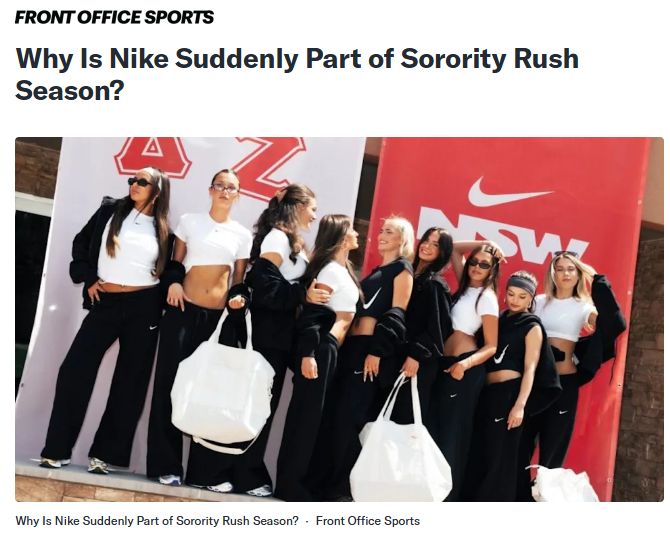
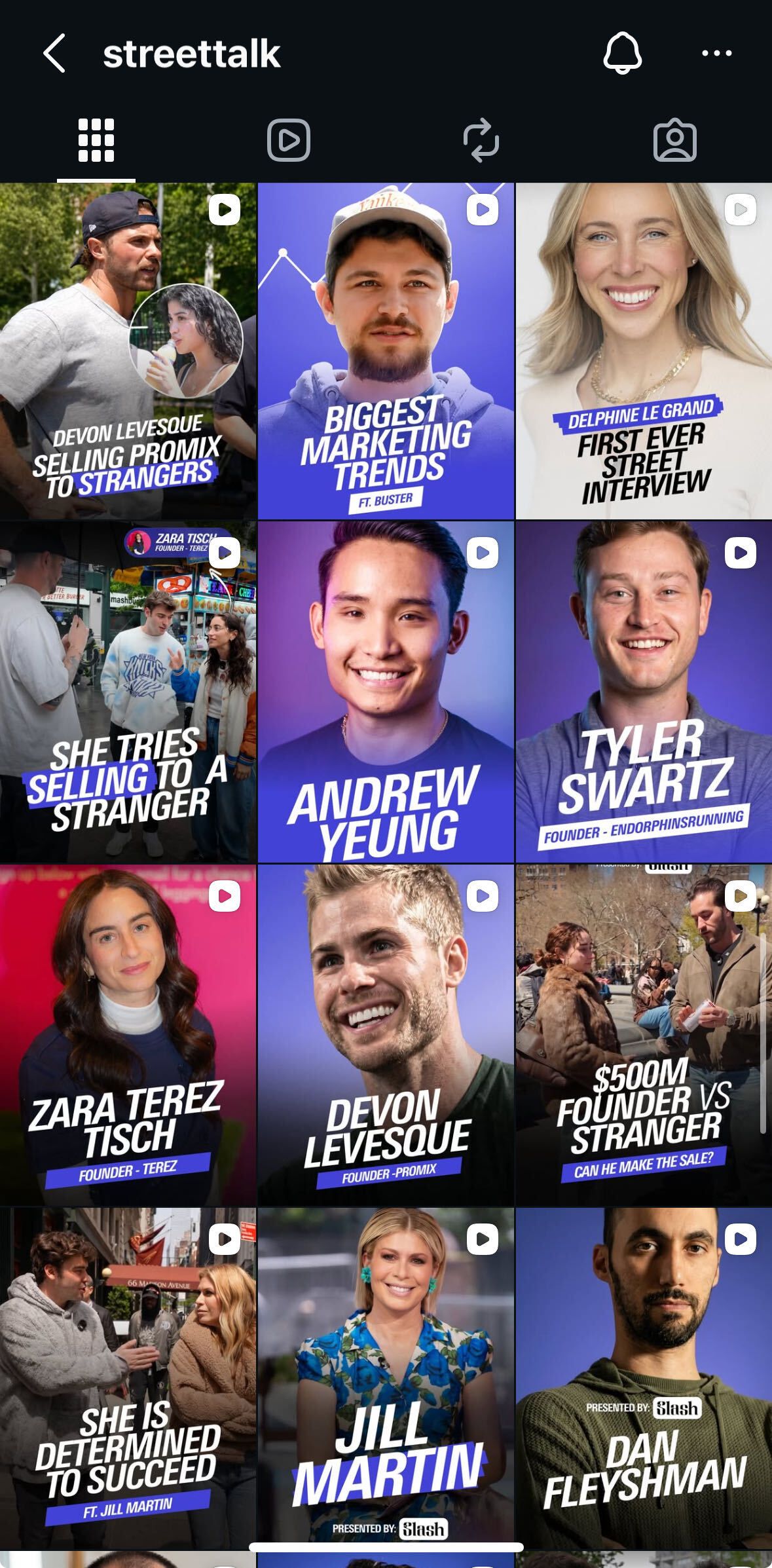
I’ve noticed the people who get ahead aren’t smarter. They’re just willing to look stupid for 6 months. When I was 23, I shuttered my business and six-figure income to accept a $36,000 entry-level salary and equity to work at Tinuiti (fka Elite SEM). 17 years later, I was still there and that $1M company grew over 200x. When ChatGPT launched, I pushed our Head of Innovation to launch a GEO/AEO offering before any other agency. Agencies were staying away because the impact of efforts was not yet easily measurable. I knew the best marketing is often not easily measured. We launched and capitalized on the first mover advantage. Roughly a year later, every agency offers this service. Less than a year ago, I left my role as Chief Commercial Officer at Tinuiti to partner with two entrepreneurs in their 20s creating street interview ads in the park. Many trusted advisors of mine couldn't grasp the value I saw. We've since grown 7x. Recently, a friend of mine left his corporate finance job and launched a viral content business doing sorority and fraternity activations. His family and friends didn’t understand the move. A few months later, he’s getting national news coverage for a viral sorority rush tour he led for Nike. If everyone else sees it too, you’re already late. The uncomfortable part isn’t choosing, it’s moving when the evidence is still thin.
- StreetTalkRecorded 22 Oct 2026
We're investing $500k/yr in our own organic social presence, and we're only a 7-figure agency. 9-figure agencies wouldn't approve half that budget. Quick breakdown of what we're spending and why it's only going to INCREASE. -Producers: $100k+ -Two Editors: $35k+ each -Videographer: $40k+ -Clipping agency: $60k -Dedicated time from our Head of Brand & PR -Dedicated time from Josh, Co-founder (exec salary) as host Many agencies don't invest 5% of revenue into sales & marketing overall. We're investing more than 5% of revenue into ONE play. Why? Because we know with conviction attention is the new currency, and we're not risk-averse. We also understand some of the most effective marketing is hard to measure, so we're comfortable with the uncomfortable. We're extremely confident in our strategy: 1. Give founders a platform to build trust with their audiences that feels more raw and authentic than a podcast or a scripted founder spot. 2. Show the vulnerability and humility of the person behind the world's most famous brands by getting them to street interview real people about their products. 3. Cross-post / cross-promote to attract other founders. 4. Grow top of funnel awareness for StreetTalk. In only 2 months since launching StreetTalk The Founder Series, we've had a lineup of guests that most B2B podcasts would drool over and DMs from founders of $1B+ brands who want to come on the show. We're already averaging one inbound sales call booked per day from brands interested in working with us that discovered us through this organic series. The math is actually simple. With a conservative 10% Win Rate on those 30 booked calls per month, we'll average 3 new clients/month. $100k LTV per client x 3 clients / $40k investment per month = 7.5 LTV:CAC ratio With that ratio, most subscription/retainer-based businesses would spend to the moon, which is why we're more likely to invest further vs. pull back. All we need to do is close a couple of clients per month, and just like that, we're marketing geniuses.
- AdManage.aiSince 19 Oct 2026
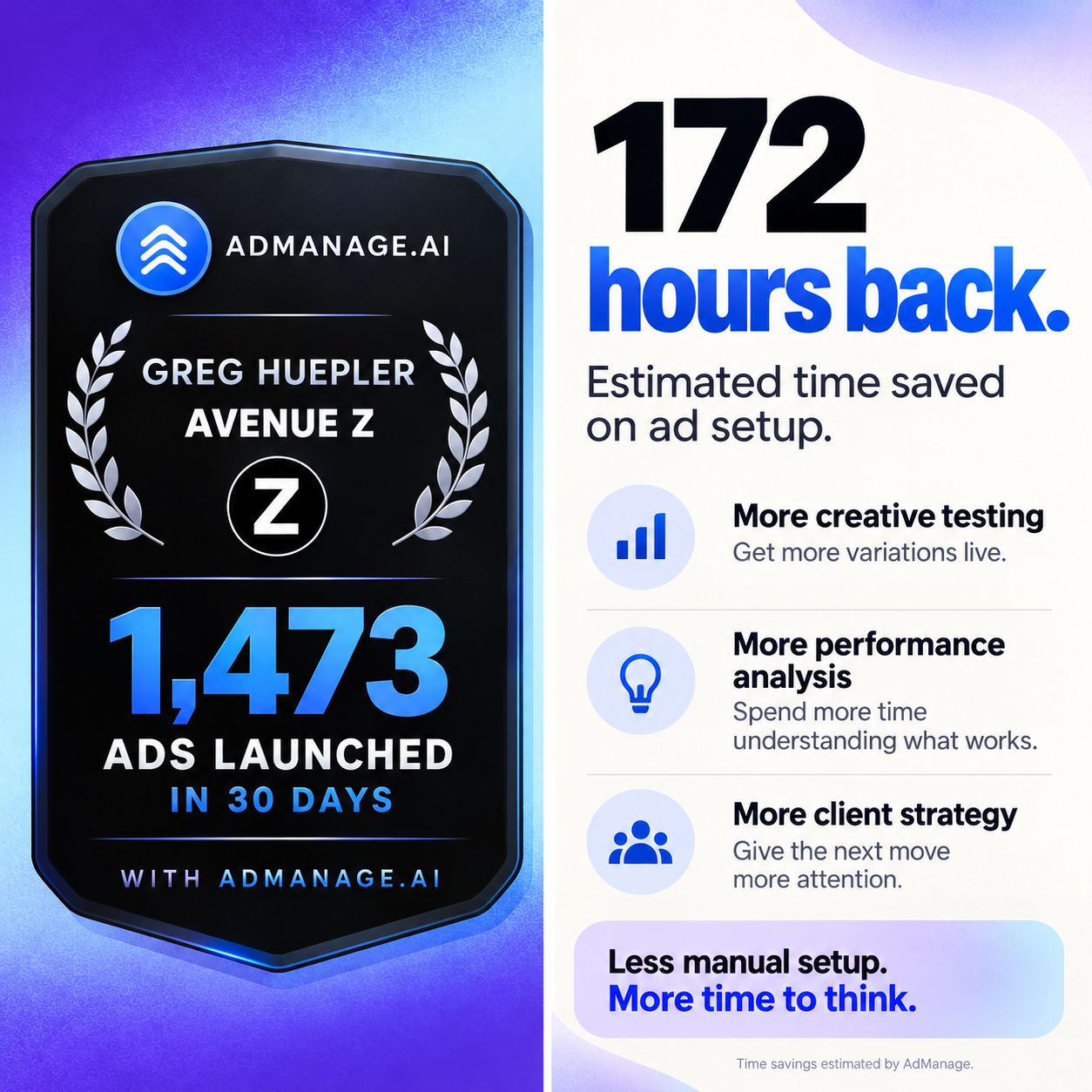
1,473 ads launched in 30 days. An estimated 172 hours saved on manual setup. AdManage.ai has become a huge part of how I get ads live at Avenue Z. When you’re launching at this volume, building ads one by one eats into your day. Being able to launch in bulk makes a massive difference. Less repetitive setup. More time to test creative, dig into performance and plan the next move for clients. It’s one of those tools that makes you wonder why you spent so long doing it manually. If you’re spending too much time manually launching ads, give AdManage.ai a look
- AdManage.aiSince 19 Oct 2026
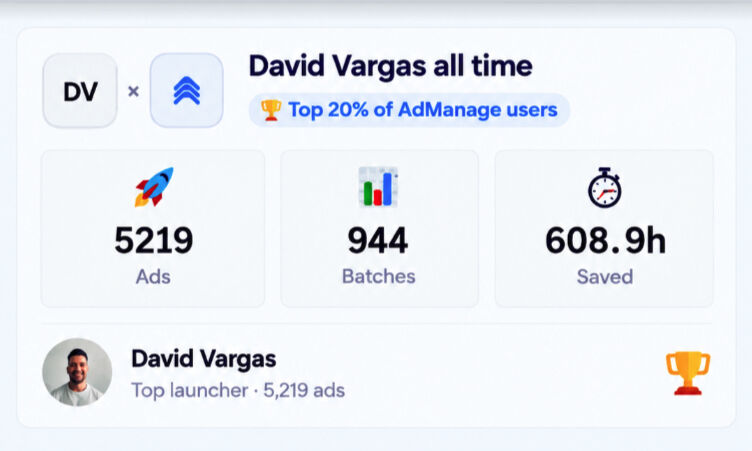
I’m a team of one 🤠 No assistant. No junior to hand the uploads to. If an ad goes live for one of my clients, I built it and launched it myself. The reason is clear: If I'm in control of every single detail, I'm confident that the service I deliver will be good. That’s why this number matters so much to me: 609 HOURS ⏱️ That’s how much time AdManage.ai has saved me since I started using it last November. It works out to roughly 13 hours a week, or 15 full working weeks in under a year and as you can imagine, that’s been a game changer for my solopreneurship. Here’s what I did with that time: 👉 5,219 ads launched 👉 944 batches When you work alone, time is the one thing you can’t buy more of. Every hour spent duplicating ad sets and renaming files is an hour stolen from strategy, creative production and valuable communication. So getting 13 of those hours back every week has completely changed the quality and number of checks I do on my accounts. AdManage also tells me this puts me in the top 20% of users on the platform, which is not bad for a one-man show 😏 So this is just an appreciation post: they built a great product, and they also gave me a discount code (in case someone wants to stop disabling AI enhancements in Meta manually👀).
- Dapper - the demand agencySince 19 Oct 2026
When I started running Dapper's performance marketing channels I had one vision in mind: Keep it simple and focus on the 'boring' fundamentals. This is what that looks like per channel: 1/ LinkedIn Ads = Maximizing ICP reach & frequency to get noticed by in-market buyers and get remembered by out-market buyers. Mindshare = Marketshare. 2/ Google Ads = Maximizing impressions share for relevant non-brand high-intent category / solution oriented keywords. 3/ ChatGPT Ads = No proven playbook yet, so we maximize test & learn velocity. we launched two weeks ago and so far: 5 leads and a lot of learnings. What I stopped doing: → Launching new campaigns every month to show activity → Optimizing for metrics that look good in a report but don’t build pipeline → Changing strategy every quarter because results didn’t show up in week three There's still a lot of opportunity to grow and it's boring but it definitely works, just the fundamentals done well and consistently. What’s the most ‘boring’ thing in your marketing that’s doing the heavy lifting?
- Dapper - the demand agencySince 19 Oct 2026
Marketers are feeling a lot of AI anxiety right now. There’s a whole industry that benefits from that anxiety. When you’re afraid of falling behind, every new AI tool feels urgent, and every AI consultant sounds like the answer. Two important things to know: 1. 𝗧𝗵𝗮𝘁 𝗻𝗲𝘄 𝘀𝗵𝗶𝗻𝘆 𝘁𝗼𝗼𝗹 𝘄𝗼𝗻'𝘁 𝘀𝗼𝗹𝘃𝗲 𝘆𝗼𝘂𝗿 𝗽𝗿𝗼𝗯𝗹𝗲𝗺𝘀. AI keeps developing: what’s new and shiny today will be outdated next month. You need a system to discover and implement, not one tool. 2. 𝗡𝗼 𝗲𝘅𝘁𝗲𝗿𝗻𝗮𝗹 𝗔𝗜 𝗰𝗼𝗻𝘀𝘂𝗹𝘁𝗮𝗻𝘁 𝗰𝗮𝗻 𝘀𝗼𝗹𝘃𝗲 𝗮𝗹𝗹 𝘆𝗼𝘂𝗿 𝗽𝗿𝗼𝗯𝗹𝗲𝗺𝘀. The people in your business who understand your process best (without AI) need to be involved in making it better/faster/autonomous with AI. This is how we’ve structured it at Dapper. We have five teams: Strategy, Content, Performance, Creative and Operations. On each team, we picked one person who knows that team’s processes well and is curious. This person became the “AI Pioneer Lead” for their team. The AI Pioneer leads get dedicated time every week to review every process in their area and figure out how AI can make it better, faster, or fully autonomous. Two technical AI experts support them from outside the teams and help build whatever needs building. Together they learn, test, and implement new solutions, and then train the rest of the team to use them. Hope this post saves some marketers a few consultancy costs ;)
- Beilmann MarketingSince 16 Oct 2026
Liebe D2C Brands, wenn ihr in Q4 nicht nur bei Meta aufs Gas drücken wollt, startet JETZT mit YouTube Ads. Denn YouTube ist nicht nur ein weiterer Kanal im Google Kosmos. Es ist ein Push Kanal, der eure gesamte Marketing Performance anheben kann. Mehr qualifizierter Traffic landet im Online Shop. Durch die gesteigerte Brand Awareness performen plötzlich auch die Pull Kampagnen besser. Und euer Umsatzvolumen wächst nicht nur direkt, sondern durch den Lift aller Kanäle. Okay, so weit so gut - aber warum genau JETZT starten? YouTube Ads brauchen 6-8 Wochen Anlaufzeit, bevor profitabel skaliert werden kann. Wer erst im November anfängt, Learnings zu sammeln, kommt zu spät zur Party. Unser Plan für den September sieht deshalb so aus: → YouTube Ads für alle entsprechenden Kunden implementieren → Schon jetzt Funnel Filling betreiben → Um dann in Q4 nicht nur Demand Capture zu machen → Sondern aktiv alle Kampagnen hochzupushen mit YouTube Ads (neben Meta) Viele Brands, die diesen Plan mit uns letztes Jahr verfolgt haben, hatten ihr stärkstes Q4 ever. Deshalb bin ich auch für dieses Jahr wieder mehr als zuversichtlich. Wie sieht euer Plan für Q4 aus?
- Beilmann MarketingSince 16 Oct 2026
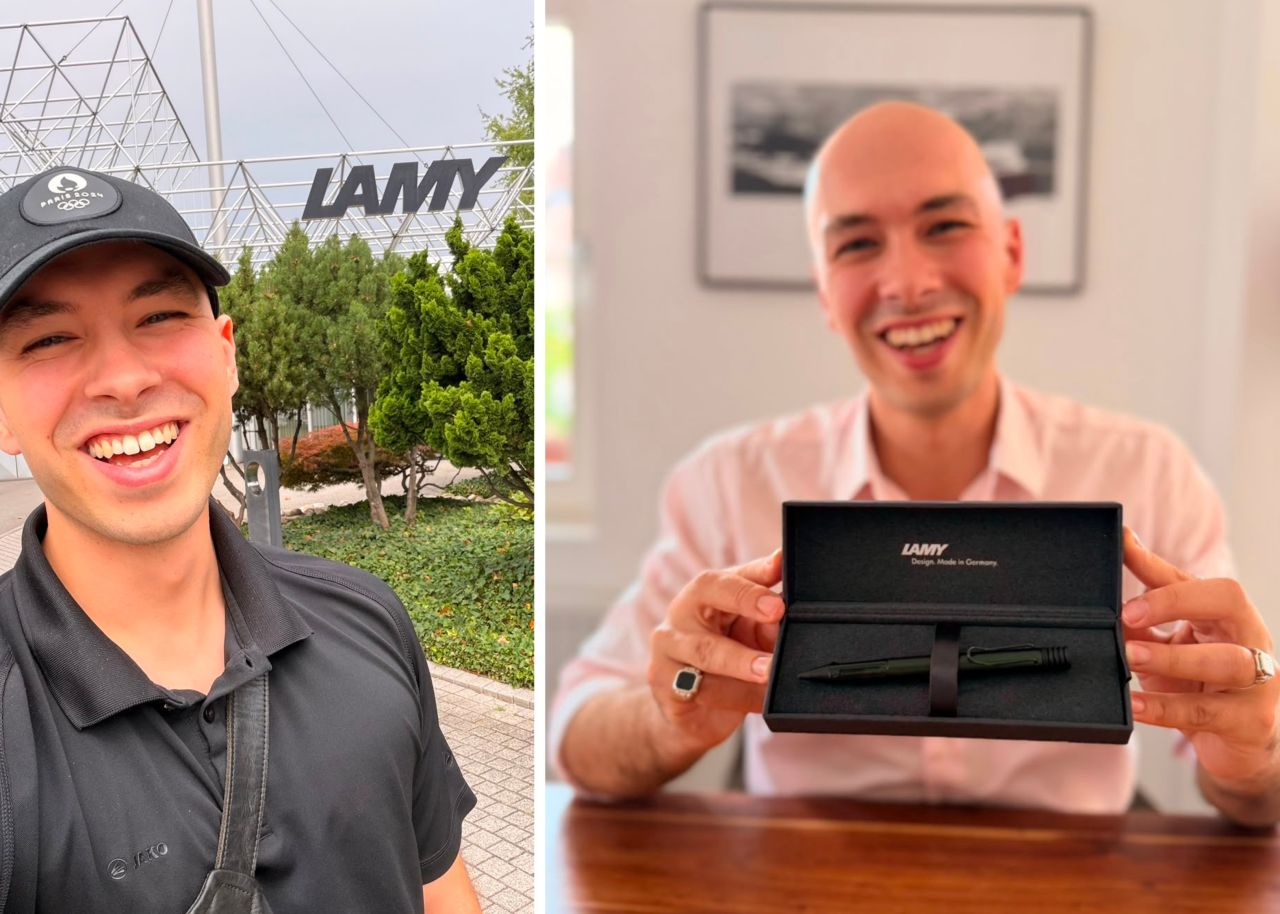
Big News: LAMY ist jetzt unser Kunde. 🖋️ Diesen Namen auf unserer Kundenliste zu sehen ist einfach verrückt. Wir alle haben mit ihren Stiften schreiben gelernt. Für viele von uns war es der erste Füller in der Grundschule. Einfach wahnsinnig viele Erinnerungen hängen da dran! Und genau diese Marke vertraut uns jetzt bei Google Ads. Mit LAMY haben wir eine Ausgangssituation, wovon die meisten Brands nur träumen können: Wir haben eine breite Masse, die die Marke längst kennt und liebt. Das Vertrauen in sie ist über Jahrzehnte gewachsen und sitzt tief. Und genau da liegt der Hebel. Unser Job ist nicht, LAMY neu zu erklären. Sondern die große, bestehende Fanbase wieder an die Marke und ihre Produkte heranzuführen und neu für sie zu begeistern. Der erste Schritt dafür war es, die generische Sichtbarkeit von LAMY im Paid Bereich zu erhöhen. Als Nächstes gehen wir mit Demand Gen und YouTube in den Mid und Upper Funnel, um die Awareness und Markenpräsenz zu steigern und so am Ende natürlich auch den Umsatz zu treiben. Für mich ist es echt toll zu sehen, dass auch solche großen, traditionsreichen Marken sich trauen, auf eine spezialisierte Google Ads Agentur wie uns zu setzen und den Schritt in den Mid und Upper Funnel zu wagen. Darauf bin ich verdammt stolz. Großes Kompliment an Alena auf unserer Seite und natürlich danke für euer Vertrauen Mark Brasseur, Myriam Bohr, Sascha Nitsche und das gesamte LAMY Team! Wir haben richtig Bock! 💪
- digit.ly GmbHSince 17 Oct 2026
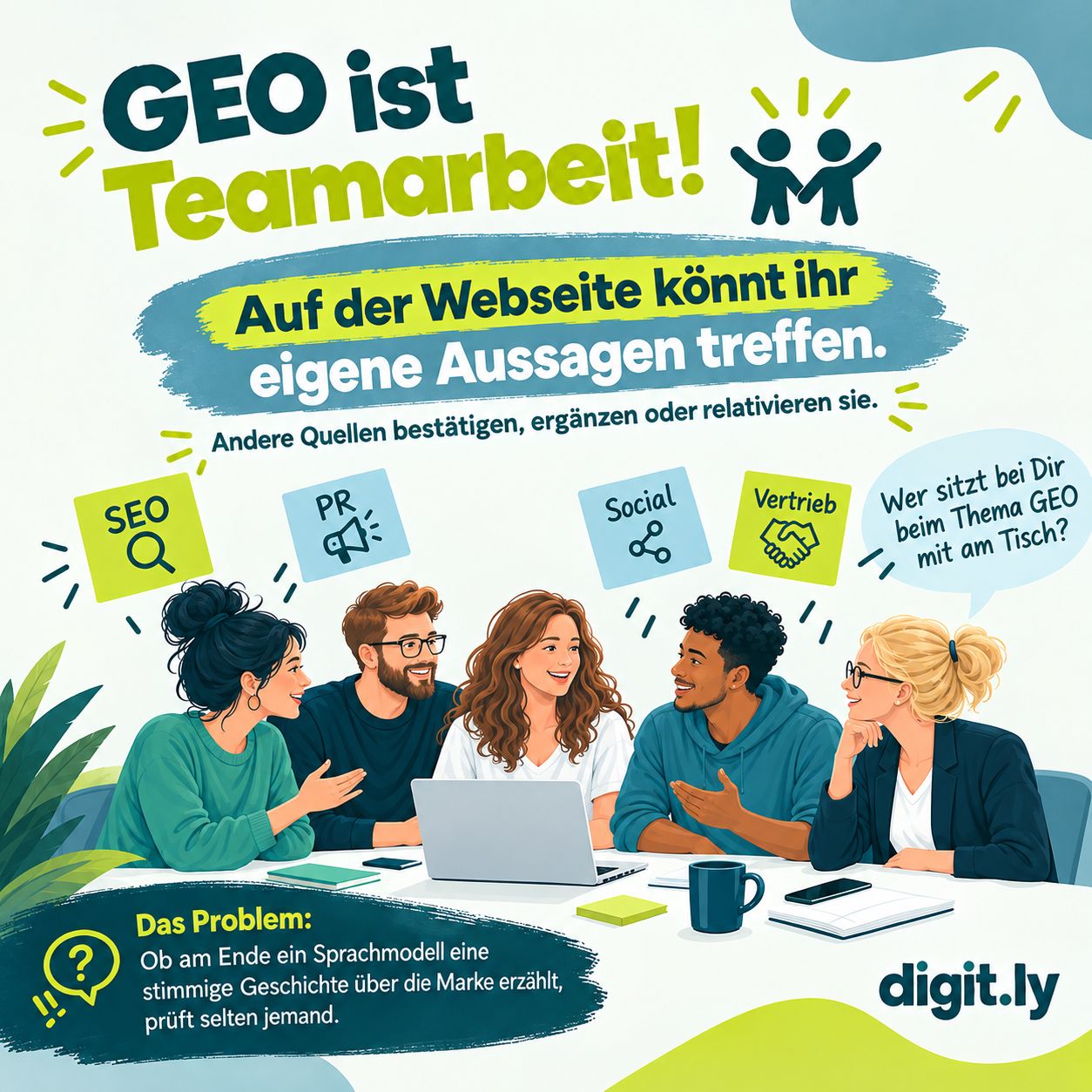
GEO ist Teamarbeit! 👯 Rund ein Drittel der Quellen, die ChatGPT, Perplexity und Google AI Overviews zitieren, stammt nicht von Unternehmenswebsites. Das zeigt eine Auswertung von blinq mit rund 250.000 KI-Antworten aus dem ersten Halbjahr 2026. 66,2 Prozent der Zitate kamen aus Corporate Content. Der Rest aus Fachpresse, Bewertungsportalen und Plattformen wie YouTube, Reddit und LinkedIn. Unabhängig davon, ob es mittlerweile neuere Studien mit etwas anderen Zahlen gibt, sie kommen immer zu ähnlichen Ergebnissen: Auf der Webseite könnt ihr eigene Aussagen treffen. Andere Quellen bestätigen, ergänzen oder relativieren sie. Für mich folgt daraus ➡️ GEO ist keine Aufgabe für ein einzelnes Team. SEO, PR, Social, Vertrieb ... alle müssen zusammenarbeiten. Das Problem: Ob am Ende ein Sprachmodell eine stimmige Geschichte über die Marke erzählt, prüft selten jemand. Wer sitzt bei dir in der Firma für GEO zusammen? Und wer hat die Verantwortung? #seo #geo #digitalesichtbarkeit #branding
- digit.ly GmbHSince 17 Oct 2026
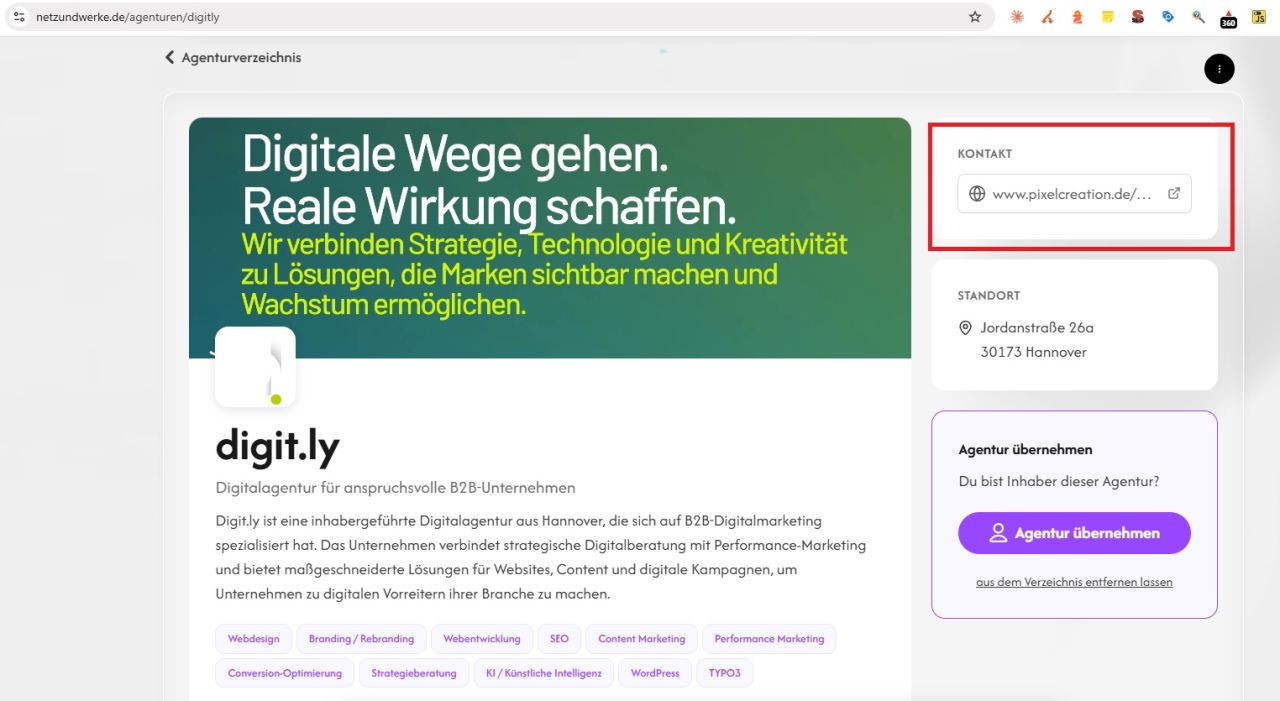
Was berichten LLMs eigentlich über deine Firma? Ich teste das regelmäßig für digit.ly GmbH und unsere Kund:innen und teilweise bin ich von den Antworten überrascht. Da wir gerade unsere Webseite überarbeiten, ist das für uns umso spannender. Branchenportale & Co haben natürlich so auch noch alte Infos über uns, wie das Beispiel-Bild gut zeigt. Also: hier müssen wir ran! Das spannende: Perplexity und Gemini haben bei denselben Fragen andere Quellen gezogen. Es gibt nicht die eine KI. Jedes System zitiert anders. So bekommst du aber einen guten Überblick, welche Drittquellen im Fokus stehen. Den Check kannst du in 20 Minuten selbst machen. Ohne Tool und ohne Budget. 👉 Stell in ChatGPT, Perplexity und Google dieselben Fragen: 1. „Was macht [Firma]?“ 2. „Welche Anbieter für [eure Leistung] gibt es in [Region oder Branche]?“ 3. „Welche Erfahrungen gibt es mit [Firma]?“ 4. „[Firma] oder [Wettbewerber]: Wer passt besser für [Anwendungsfall]?“ 👉 Notier dir zu jeder Antwort die zitierten Quellen und markier, was falsch oder veraltet ist. 👉 Dann sortieren: Welche Quellen kannst du selbst ändern? Wo brauchst du PR, HR oder den Vertrieb? Danach weißt du, wo du anfangen musst. Und du hast Screenshots, die du intern zeigen kannst. Ganz oft rüttelt das wach, wenn es um das Thema Budget geht! Mich würde interessieren: Welche Quelle hat dich beim ersten Check am meisten überrascht?
- backlink.nlSince 16 Oct 2026
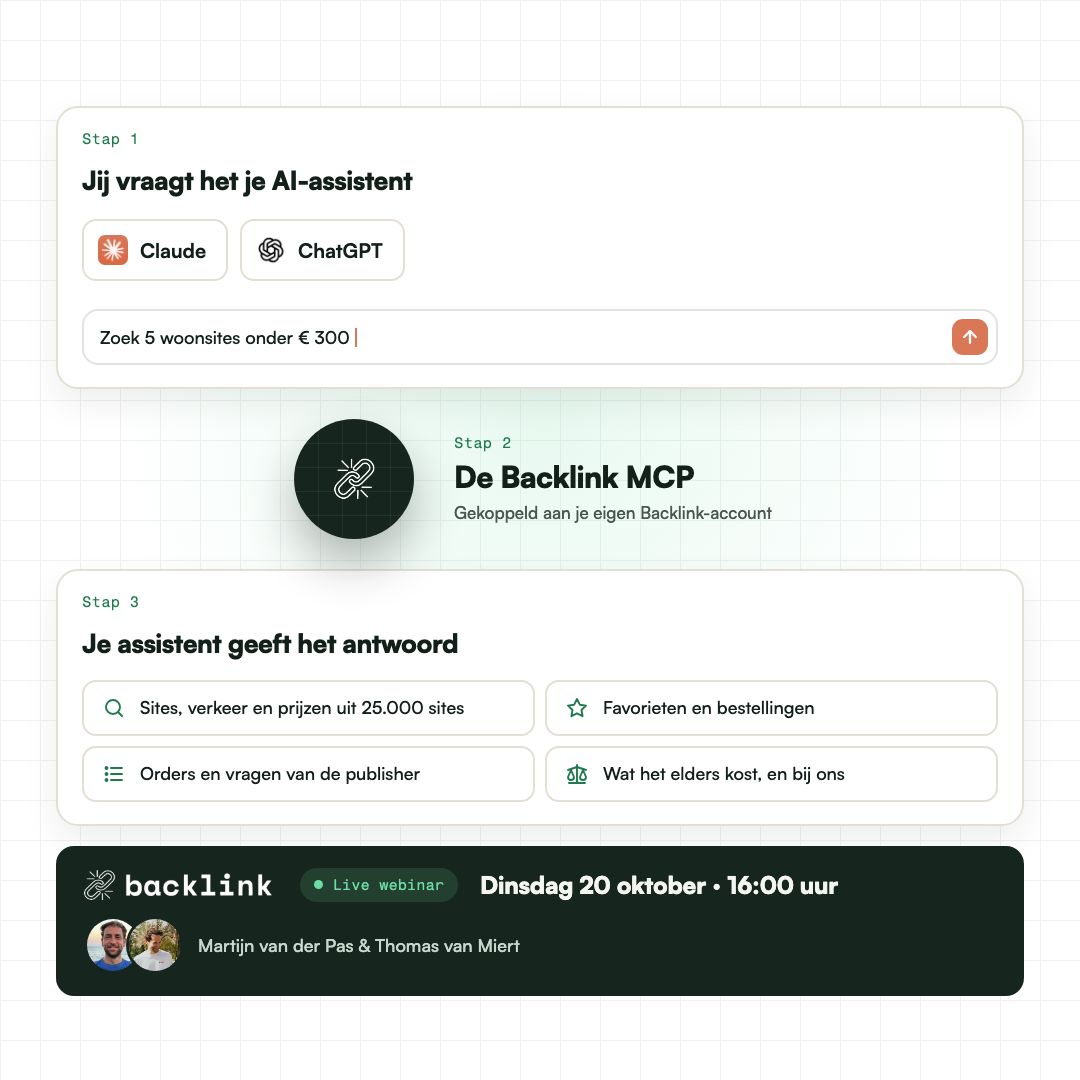
5 jaar bouwen we al aan het meest kwalitatieve aanbod backlinks en brand mentions van de Benelux. Volgende week laten we AI dit aanbod helemaal doorspitten. Dat gaan we doen met: de Backlink MCP Je installeert dit tooltje in Claude of ChatGPT en vanaf dan krijg je alleen sites te zien die super relevant zijn voor jouw bedrijf. Volgende week dinsdag laten Martijn van der Pas en ik dat live zien. Dit ga je leren: 1) hoe je de meest relevante sites voor je bedrijf vindt in ons aanbod van 25.000 sites 2) hoe je vanuit de chat op het platform werkt: favorieten toevoegen of direct een plaatsing bestellen 3) hoe je ziet wat je nu elders betaalt en wat diezelfde plaatsing bij ons je kan besparen Ben jij erbij? Aanmeld link staat in de comments
- BroadsignSince 17 Oct 2026
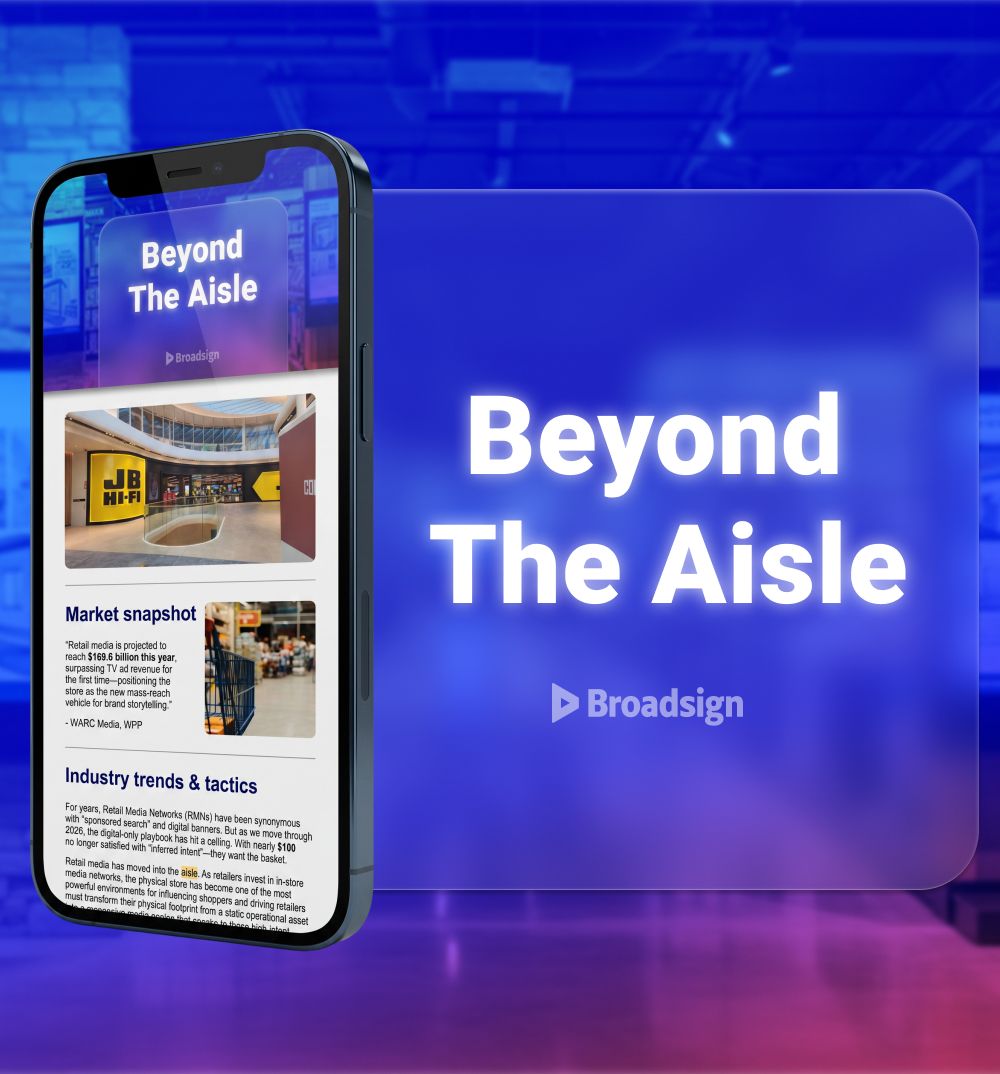
3 things no one tells you about scaling in-store retail media: 1. Traffic impressions: Millions of foot visitors don't matter if you can't verify who was actually in front of the screen when the ad played. 2. Static loops waste money: If your screens display the exact same 5-ad loop during peak 5 PM traffic as they do at 8 AM on a Tuesday, you're leaving yield on the table. 3. The tech stack is the bottleneck: Most networks aren't held back by ad sales—they're held back by legacy software that can't handle dynamic, digital-style ad serving. In-store media is moving fast and the playbooks are still being written in real time. If you want to stay on top of what’s actually happening in the in-store space—without the corporate fluff or recycled press releases—that’s exactly what you’ll get with my newsletter, Beyond the Aisle. Every issue delivers sharp operator takeaways, tech breakdowns, and practical insights on building high-performing physical media networks. Get the next drop in your inbox here: 👉 https://lnkd.in/gHQSGtDx
- ConveoSince 17 Oct 2026
A lot of our customers love us for the peace of mind that comes with knowing that over 300 years of combined research experience is embedded into our platform. Here's one of the ways we infuse that expertise in our platform. 👇 A hackathon. We flew in our researchers from NYC, SF and Antwerp to build alongside our engineers in London. One big sprint to build a ton of improvement and new features. Every idea started rooted in our researchers helping our customers deliver research impact. Two days and ten new features later, our engineers got another mini MBA in research. Our researchers are more aware of the possibilities and limits of our technology. So who won the hackathon? If you're asking me - I'd say all of our customers ;)
- eLuminate MarketingRecorded 20 Oct 2026
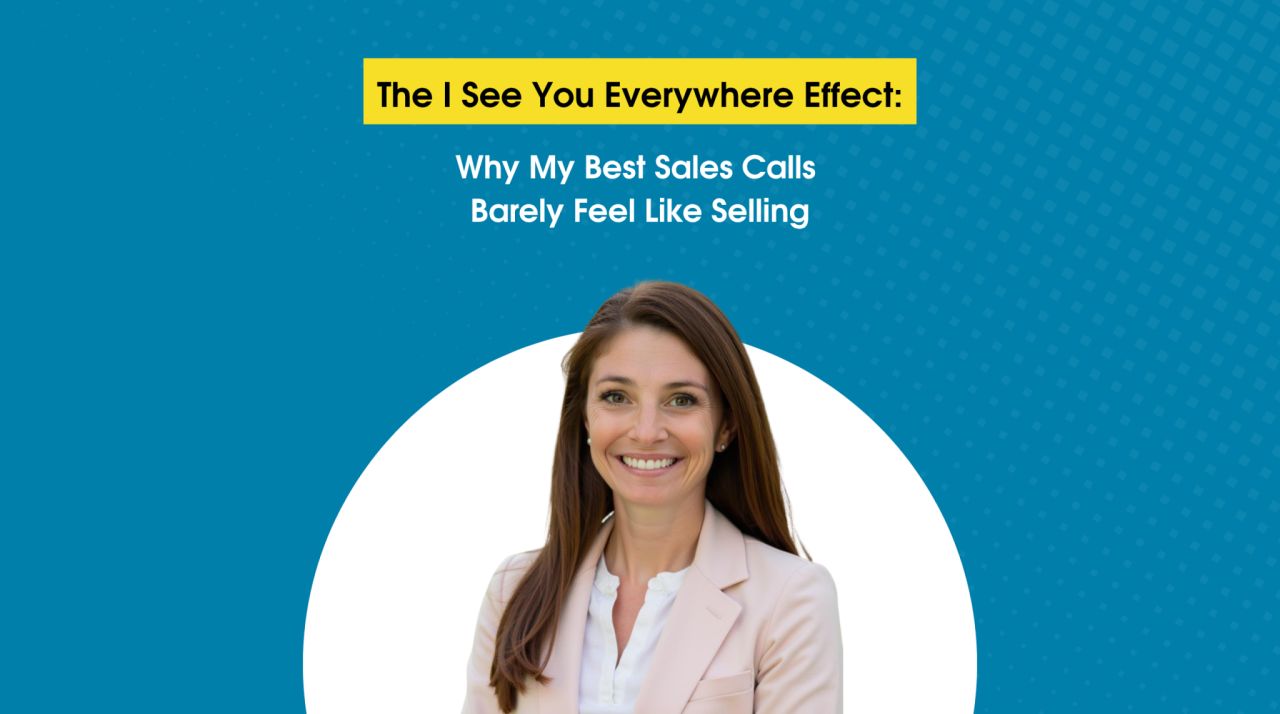
When someone gets referred to you, they haven't decided anything yet. They've been handed a name to look up. And they do look it up. They check your LinkedIn, read your reviews, maybe ask ChatGPT about your firm, and compare you to a couple of others. Gartner found buyers spend only about 17% of their buying time talking to vendors. Most of the rest is research they do on their own. So two firms can get the same referral and have two very different first calls. The one with an up-to-date profile, recent posts and real reviews gets a prospect who's already warmed up and half sold. The one whose profile hasnt been touched since 2019 still gets the call, but the prospect isnt impressed yet, so that one conversation has to do all the selling. How have your sales calls been lately? Are prospects showing up warmed up, or cold?
- BroadsignSince 17 Oct 2026
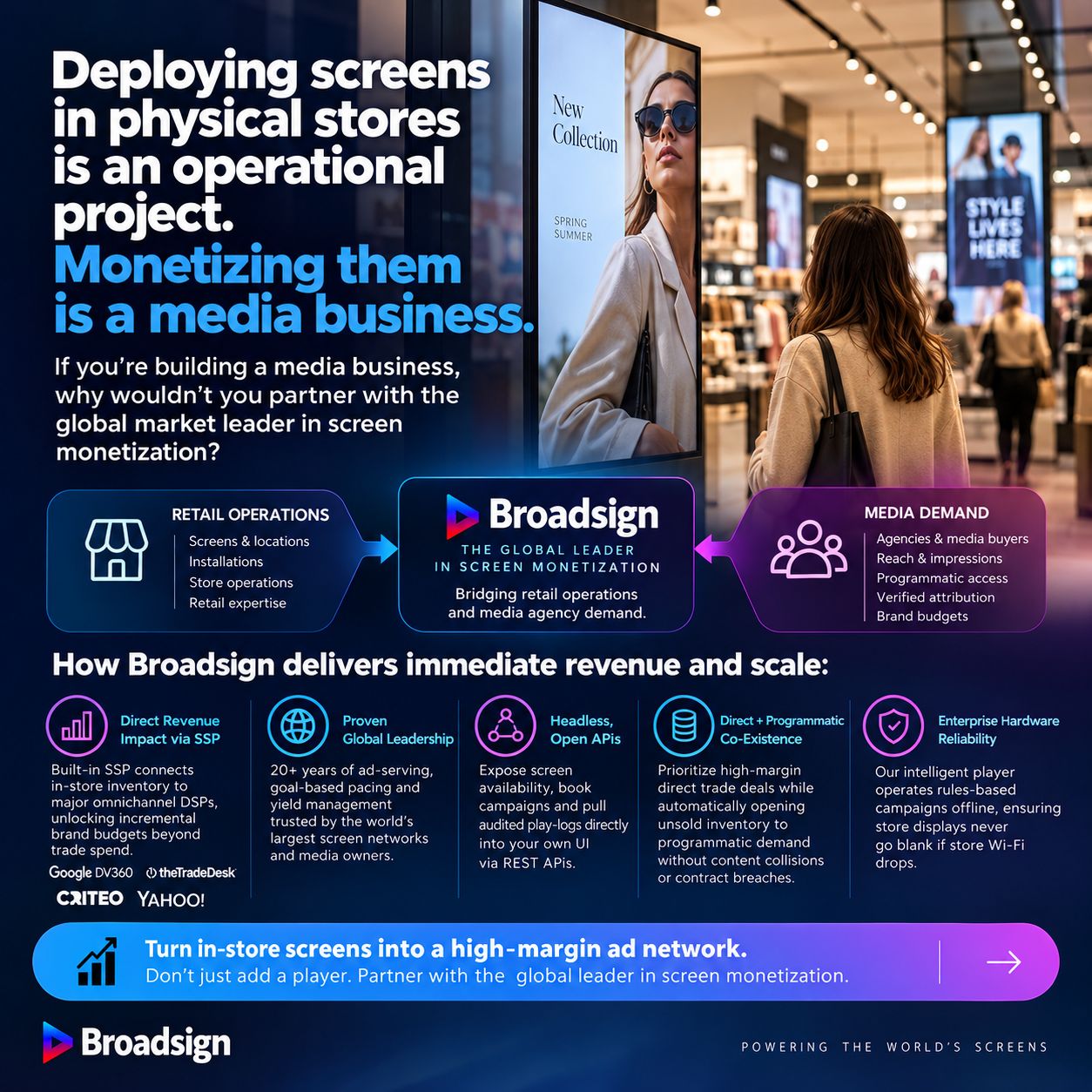
Deploying screens in physical stores is an operational project. Monetizing them is a media business. And if you’re building a media business, why wouldn't you partner with the global market leader in screen monetization? While screen rollouts are accelerating, many retail media networks and tech platforms hit a wall when it comes to generating real ad revenue. The reason is simple: a lack of media industry fluency. Commerce platforms and store operators know retail, but they often lack deep familiarity with the media buying landscape—from agency politics and legacy buying rails to standardized attribution, viewability, and programmatic workflows. Media agencies don't buy aisles or screen locations—they buy reach, impressions, target frequency, and programmatic access. If in-store inventory isn't packaged in the exact language media buyers plan in, it simply gets left off the media plan. This is why ecosystem partnerships are critical: Instead of trying to build complex ad servers and DSP connections from scratch, leading commerce, OMS, and retail platforms are plugging into Broadsign. How Broadsign delivers immediate revenue and scale: 👉 Direct Revenue Impact via SSP: We don't just schedule content; our built-in Supply-Side Platform (SSP) connects physical store inventory directly to major omnichannel DSPs (Google DV360, The Trade Desk, Criteo, Yahoo). This unlocks incremental brand budgets beyond traditional trade co-op spend. 👉 Proven Global Leadership: We built the ad-serving, goal-based pacing, and yield management infrastructure that the world's largest screen networks and media owners already trust. 👉 Headless, Open APIs: Broadsign acts as the headless execution layer under the hood. Partners expose screen availability, book campaigns, and pull audited play-logs directly into their own UI via APIs. 👉 Direct + Programmatic Co-Existence: Our yield engine prioritizes high-margin direct deals while opening inventory to high value programmatic demand without content collisions or contract breaches. 👉 Mission-Critical Operational Reliability: Physical retail demands uptime. Broadsign provides rock-solid, enterprise-grade stability with redundant offline playback architectures—ensuring your store displays never go dark, lag, or fail even during network outages or Wi-Fi drops. If you want to turn in-store screens into a high-margin ad network, don't just add a player. Partner with the global leader in screen monetization. How is your solution bridging the gap between store ops and media agency budgets? #RetailMedia #InStoreMedia #AdTech #DOOH #Omnichannel #RetailTech #Programmatic #Broadsign #Placeexchange
- GraphiteSince 17 Oct 2026
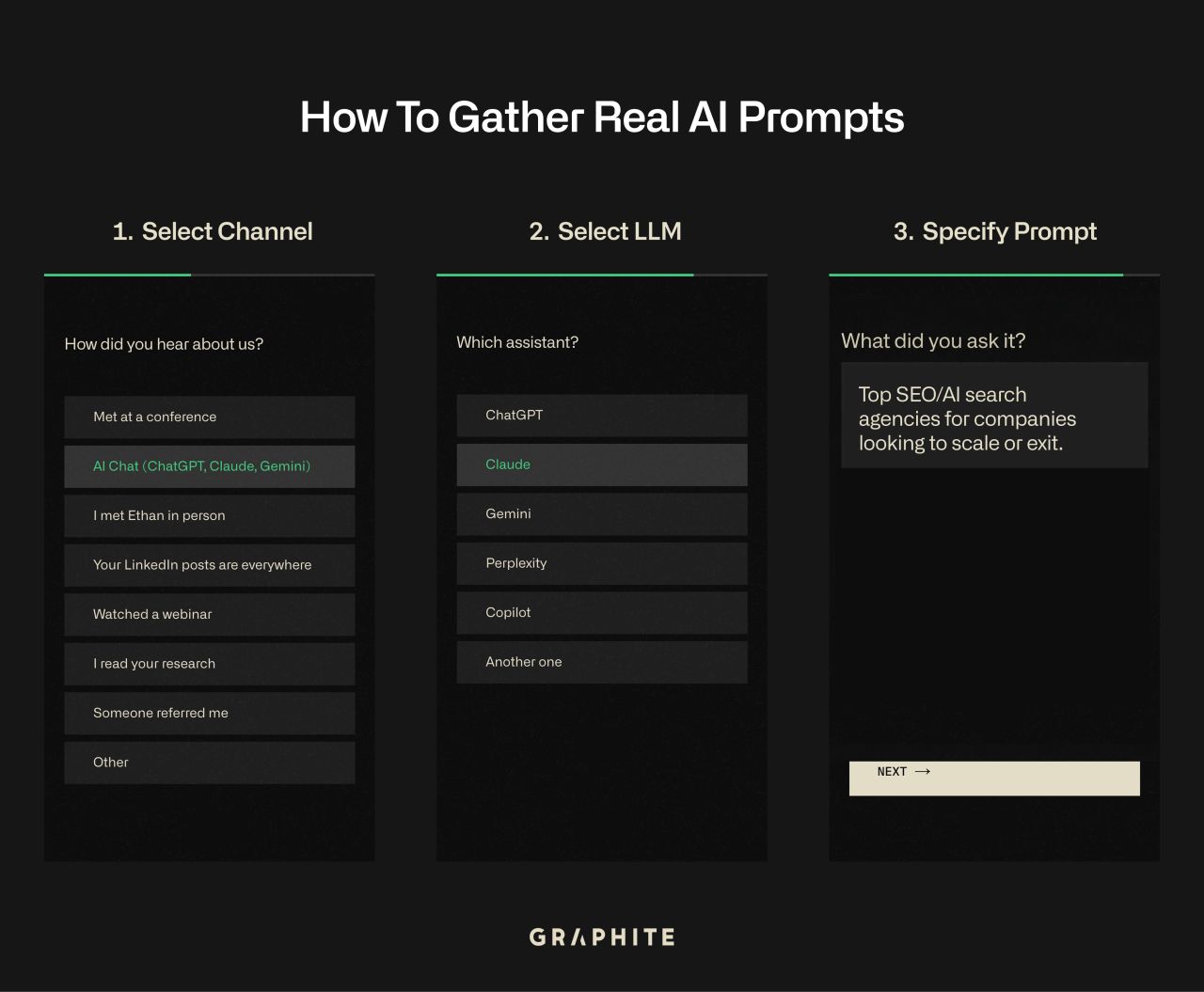
How To Gather Real AI Prompts * There is much focus on how to optimize brands for particular prompts in AI. However, most people guess what prompts they should optimize for. This can call the entire strategy into question. * Outside of Similarweb, in our opinion, there are no reliable data sources that show users' real prompts. Existing tools are guessing based on dubious underlying data. * We propose a way to gather real user prompts in AI at scale for free. * Guide: https://lnkd.in/epTWRPDh How Did You Hear About Us? * Attribution in AI is also hard. One solution is to ask users to self-report the channel primarily responsible for their conversion. This is often done by asking “How Did You Hear About Us?” * Self-reporting can also be extended to gather more information, namely, real user prompts. What Prompt Did You Use? We built a new conversion funnel at Graphite that asks the following questions. 1. How Did You Hear About Us? (channel) 2. What LLM Did You Use (product) 3. What prompt did you enter (prompt) This now tells you not only whether a user entered via AI, but also which LLM they used and the prompt they entered. Results * We now see 30 % of inbound leads come from AI. 52% came from ChatGPT and 40% from Claude. * We receive 10x more referral traffic from ChatGPT than Claude, while the % of leads that self-report Claude is almost as high as ChatGPT. This suggests conversions via Claude are particularly underreported using last-touch, far more than ChatGPT. * AI leads tend to be less qualified than other channels like referrals. * Only 21% of leads that self-report as coming from AI appear as referral traffic from AI. The rest came from search (49%) and direct (30%).
- Content Minds GmbHSince 17 Oct 2026
Ich suche aktuell einen Geschäftsführer, für den ich kostenlos das Profil für mehr Kundenanfragen optimiere. Bonus: Sei bei der Vergabe live dabei und erhalte Zugang zu meiner “LinkedIn Profil Masterclass” Jetzt eintragen & Termin prüfen: https://lnkd.in/eUFVJU5p
- handz | marketing • CMO as a serviceRecorded 19 Oct 2026
Quando comecei a pensar na handz | marketing • CMO as a service, uma coisa me chamava muito a atenção. Eu vinha de uma experiência de muitos anos em uma grande empresa, onde marketing participava das discussões de negócio, ajudava a definir caminhos e tinha profissionais experientes conduzindo essas decisões. Mas existe um universo enorme de empresas com desafios tão relevantes quanto e que poderiam se beneficiar muito desse olhar. Foi daí que nasceu uma das ideias que deram origem à handz: como fazer essa experiência circular de uma forma diferente? Não se tratava de reproduzir dentro de cada empresa a estrutura de uma grande companhia. Era pensar em um modelo capaz de aportar senioridade onde ela pudesse fazer diferença, trabalhando junto com o empresário, com o time e com os parceiros que já estavam ali. Quase 16 anos depois, ainda acho que existe muito espaço fértil para isso. Na sua empresa, quem hoje ocupa esse lugar de pensar o marketing junto com o negócio?
- Grow Up DigitalSince 15 Oct 2026
Half oktober, midden in de het belangrijkste kwartaal van het jaar. Toch beginnen de meeste bedrijven alweer na te denken over 2027. Dat betekent jaarplannen, budgetten en prognoses maken! Niet het meest makkelijke werk en vaak ook een beetje koffiedik kijken. Dat ervaren wij natuurlijk ook. Aangezien wij dit voor meerdere klanten grotendeels invullen dachten we dat het nuttig zou zijn hier een Webinar over te geven. Daarnaast laten we je zien welke handige AI oplossing wij hebben ontwikkeld om een jaar prognose een stuk sneller te kunnen maken! Dus wil jij concrete handvatten voor het maken van een jaarplan 2027 inclusief budget en omzet prognose? Daarnaast krijgen al onze deelnemers gratis toegang tot onze AI prognose tool! Dan zou ik me inschrijven via de link in de eerste comment. Marco Koghee 📈 en ik lopen je op 3 november in 30 minuten door onze jaarplan aanpak heen!
- HoliniSince 15 Oct 2026
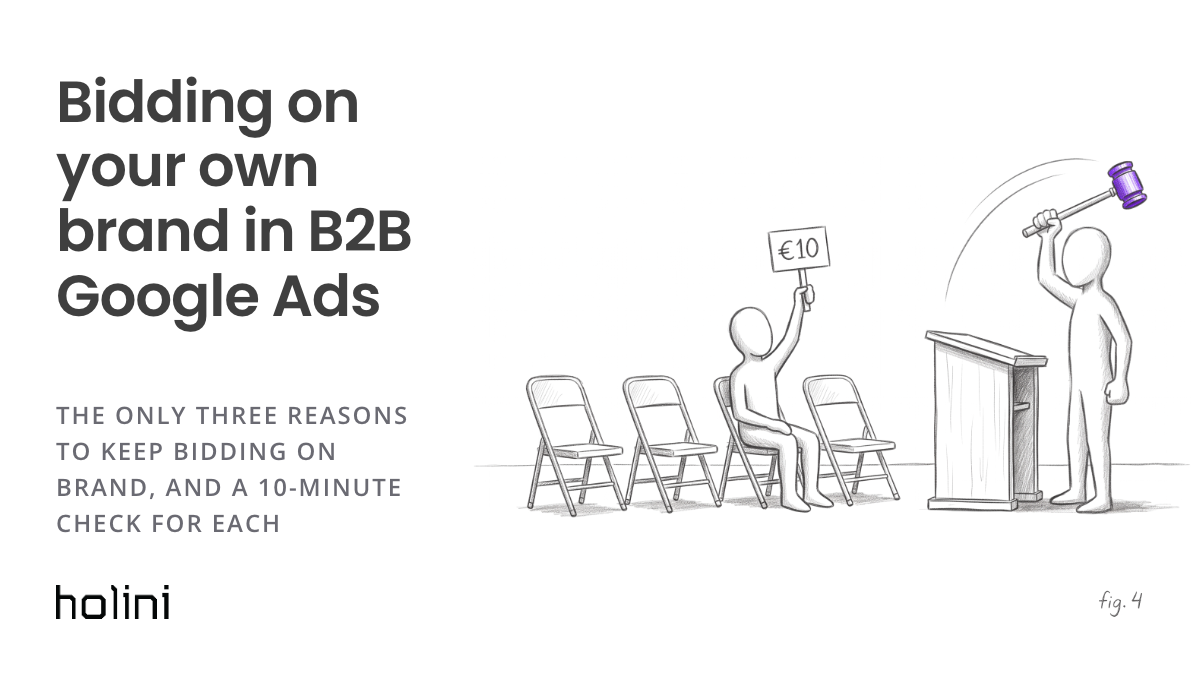
€60,000 a year on a Google Ads brand campaign, defending against nobody. I see this pattern in most B2B accounts we audit at Holini. Whether to bid on your own brand is the one Google Ads argument every marketing owner has had at some point, and I have never heard a decision rule that holds up. Here is the one I use, and it takes 10 minutes, most of them in auction insights. There are only three reasons to pay for a click on your own name. A competitor with a stronger offer sits on your brand terms at a high impression share. Your generic campaigns are too thin on conversions to feed Google's automated bidding, so brand is the cheapest way to get conversion data into the account. Or your name is also a common word, and Google serves the word before it serves you. None of the three applies in most accounts I open, and brand still takes 20-40% of the spend, at €5-10 a click. The article below walks through the check and the thresholds I use, two real accounts and what to do with the money once nobody is left to defend against.
- HoliniSince 15 Oct 2026
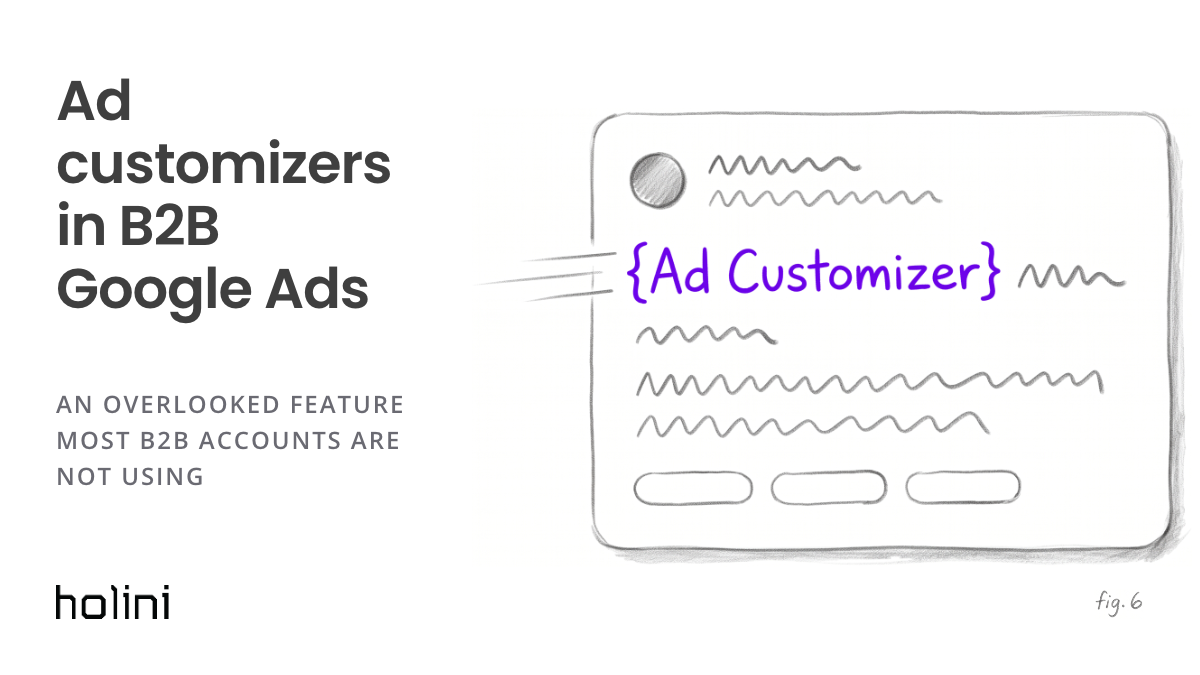
I rarely see ad customizers used in B2B accounts, and they can have a considerable impact on your CAC. In B2B, search volumes are often much smaller than in B2C and CPCs can be expensive. Even a five- or six-figure monthly budget can leave ad groups thin in data. Thin data means you should consolidate. Google's own account-structure guide says to move single-keyword ad groups into themed ad groups. Google also states that the more you split up traffic, the more you restrict Smart Bidding from finding the most conversions at your target. Consolidating often clashes with relevance, though. You now have a lot of keywords in one ad group, without a headline written for each of them. Keyword insertion, a common fix, repeats the keyword as it is written in your account, and that is not always the headline you want. An ad customizer lets you write the headline for each keyword yourself, inside one consolidated ad group. That headline can also say who the product is for. Before they click, that headline can filter out searchers who will never buy. If your CAC has gotten out of control, this might help you lower it and move the savings into new growth experiments or channels. The article covers where to use ad customizers first, the setup in four steps and the limits worth knowing.
- HarmoRecorded 18 Oct 2026
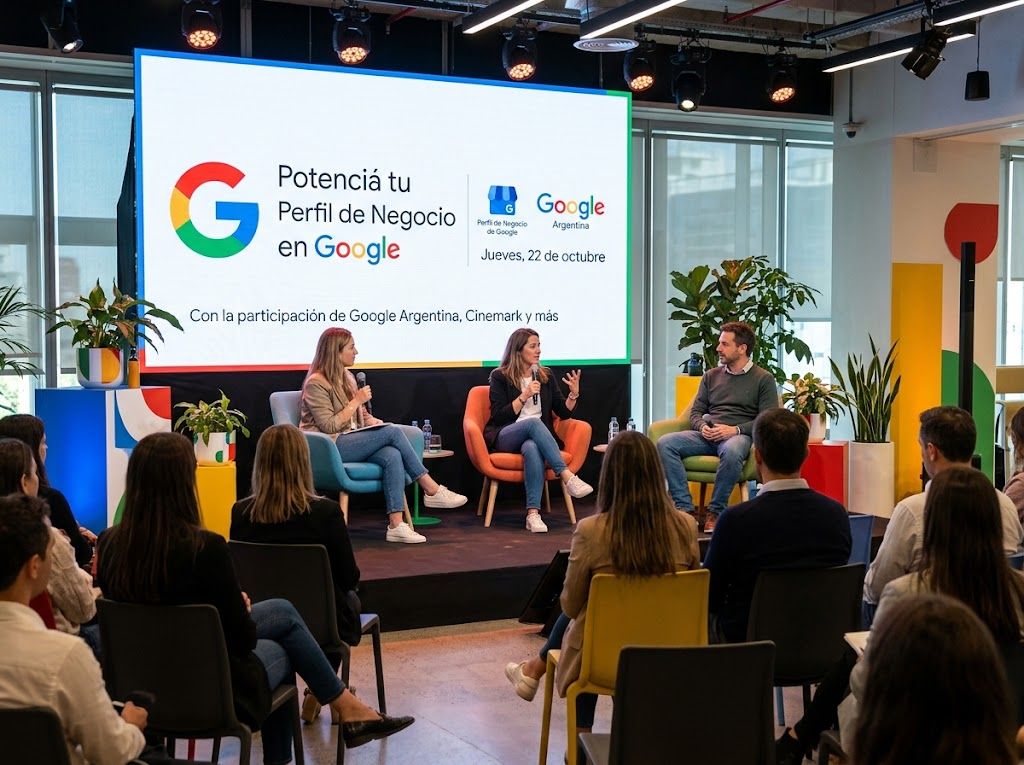
Tu cliente no llega a tu local por casualidad: compara, juzga y decide antes de entrar. Por eso me alegra mucho contarles que el jueves 22 de octubre voy a estar en las oficinas de Google Argentina en el evento Potenciá tu Perfil de Negocio en Google, un encuentro presencial para marcas que buscan llevar más clientes a sus locales físicos. La agenda: • Novedades del Perfil de Negocio en Google, junto al equipo de Google Argentina. • Estudios de impacto del Perfil de Negocio en el customer journey, que voy a estar presentando yo :) • Un panel sobre estrategias de presencia digital junto a Maria Sol P. de Cinemark, con la moderación de Connie Niebuhr de Google. Desde 2017 repito que la mejor publicidad es el propio cliente. Hoy ese cliente te encuentra, te compara y te elige en tu Perfil de Negocio en Google mucho antes de cruzar la puerta. Quien domina ese camino, vende más. Gracias a Connie y Eitan Blanche por la invitación y por darme el placer de construir este encuentro con ustedes. Jueves 22 de octubre, de 9:30 a 11:30, en las oficinas de Google Argentina. El link de inscripción está en los comentarios. #PerfilDeNegocio #Google #GoogleArgentina #GoogleMaps #Retail #PresenciaDigital #Reputacion #VozDelCliente #ExperienciaDelCliente #DriveToStore #Marketing #BuenosAires #Harmo
- GLADTOBESince 16 Oct 2026
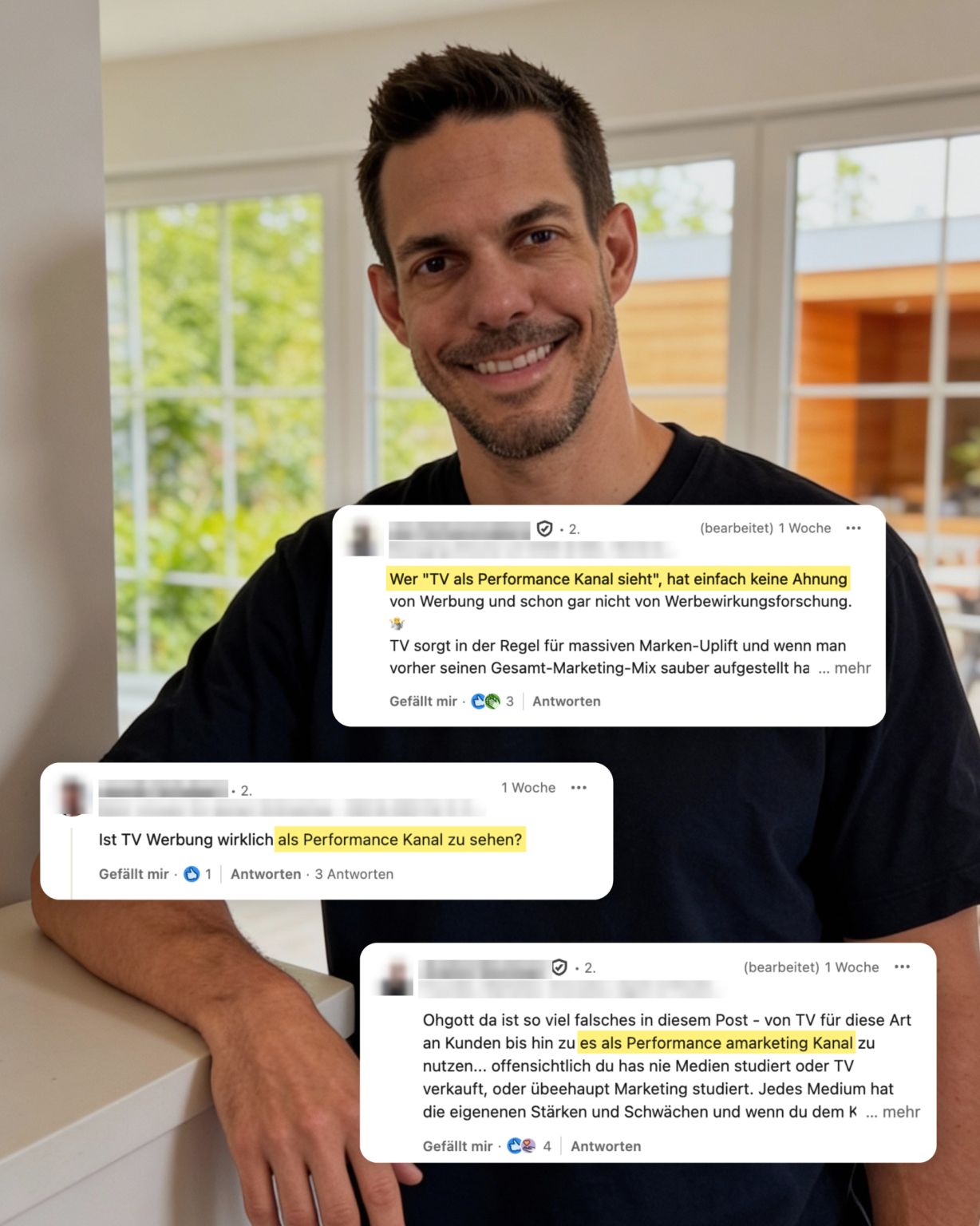
"TV ist kein Performance-Kanal." Steht ständig unter meinen Posts. Ist aber Quatsch. Die Argumente sind seit 10 Jahren dieselben: - TV bringt Brand-Uplift, mehr nicht - Performance entsteht nur, wenn andere Kanäle den Uplift abgreifen - Direkt messen kann man da gar nichts - Wer das anders sieht, hat nie Medien studiert Bei dieser Logik bin ich ehrlich gesagt raus. Klar ist: TV ist und bleibt einer der stärksten Branding-Kanäle, die es gibt. Wer Markenbekanntheit aufbauen will, kommt um TV nur schwer herum. Daran gibt es nichts zu rütteln. Aber man kann TV eben auch als Performance-Kanal betreiben. Muss man nicht. Aber man kann. Wir messen TV-Spots seit Jahren pixelbasiert. Auf Sekundenebene. Im 3- bis 5-Minuten-Fenster nach Ausstrahlung sehen wir Direct Visits, App-Installs und Sales aus dem Spot. SNOCKS arbeitet seit Juli 2023 mit uns. In 2 Jahren haben wir 5 Mrd. TV-Impressions profitabel ausgesteuert. Die Kampagnen laufen seit dem allerersten Flight mit einem ROAS über 1. Taxfix, Peek & Cloppenburg, Metaflow und viele weitere Brands fahren ebenfalls seit Jahren profitable TV-Kampagnen mit uns. Wir liefern wöchentliche Reports mit CAC, ROAS und Response Rate. Genauso wie Meta. Genauso wie Google. Genauso wie jeder andere Performance-Kanal. Und das Schöne daran: Wer TV auf Performance trimmt, bekommt den Brand-Uplift als Sideeffect noch obendrauf. Aber die Behauptung, man könne mit TV keine Performance erzielen, ist einfach falsch. Wenn TV bei dir nicht performt, liegt es wahrscheinlich am Setup. Nicht am Medium.
- GLADTOBESince 16 Oct 2026
Wir haben 37.000 € für den "besten" Werbe Slot beim Finale von Germany's Next Top Model ausgegeben. Für einen Kunden haben wir hier einen First Position Spot gebucht. Das ist der allererste Spot im Werbeblock. Die Idee: Maximale Aufmerksamkeit, maximale Präsenz. Aber das Ergebnis war total ernüchternd: 1️⃣ Cost per Response (Website Visit): 112,05 € Das sind +69% im Vergleich zum normalen Senderschnitt! 2️⃣ Direct Response: 0,0011 % Das sind –11% Abweichung. Keine einzige KPI würde den Aufpreis rechtfertigen. Dasselbe haben wir auf anderen Premium Formaten bei Kabel1 und Pro7 getestet. Mit ähnlichen Zahlen. TV bleibt für unseren Kunden ein starker Kanal. Aber solche teuren Slots im Werbeblock sind fast nie ein Performance Upgrade. Daher meine Empfehlung: Finger weg. Zumindest wenn man TV als Performance Kanal sieht. Mit diesem Budget kann man lieber mehr Spots oder andere Sender testen. War eure Marke schon mal im TV?


Other LinkedIn formats
Watch the companies you care about.
Filter every ad by industry, country, format and network, and get alerts when a company you watch starts running new ads.