LinkedIn thought leader ad examples
536 thought leader ads are live on LinkedIn right now, from 459 companies. Browse real ones, filtered by industry.
- heyB2BRecorded 22 Sept 2026
50 von 1000 Schweizer Unternehmen könnten heute Kunde von deinem Unternehmen werden. Die Frage ist: Wie findest du heraus, welche 50 es sind? Es gibt eine Untersuchung, die zeigt: 5 % deiner Zielgruppe sind gerade „In-Market“ – sie haben Bedarf. 95 % sind „Out-Market“ – kein Budget, kein Projekt, kein akuter Schmerz. Heisst: Von 1000 Firmen sind 50 bereit zu kaufen. Aber welche? Die findest du nur, wenn du mit allen sprichst. Nicht um zu verkaufen. Sondern um zu erkennen. → Wer reagiert? → Wer stellt Rückfragen? → Wer will mehr wissen? Egal ob über Marketing oder Vertrieb: Der erste Job ist ein klarer Filter. Der zweite ein gutes Gespräch. Und mach dir eines bewusst: Je schneller du 95 Nein's bekommst, desto schneller findest du die 5 Ja's. ;-) Wie gross ist eure Zielgruppe in der Schweiz?
- heyB2BRecorded 22 Sept 2026
Du siehst diesen Post nicht zufällig. Denn du stehst auf folgender Liste... Sie besteht aus rund 5'000 IT- und Tech-Unternehmen und ca 33'000 Personen, die für uns relevant sind - wir nennen sie intern Goldliste. Hier - auf dieser Plattform - kann man eine solche Liste hochladen und nur an diese Unternemen den Content ausstrahlen. Und ja – dein Unternehmen gehört dazu. Wir investieren 30 bis 50 Franken pro Tag, um Inhalte an genau diese Zielgruppe auszuspielen. Warum? Je länger man etwas anschaut, desto mehr Watchtime wird zu diesem Post registriert. Watchtime ist das wichtigste Signal, das eine Plattform uns geben kann. Nein. Nicht Likes und auch nicht Kommentare. Weil Entscheider interagieren selten auf diese Weise. Aber, wenn jemand ein Video länger schaut, dann ist mindestens ein Grundinteresse am Thema vorhanden, stimmt's? Oder man hört mir einfach so gern zu - auch cool ;-) Was kann man mit Watchtime-Informationen jetzt konkret tun? Man kann alle Unternehmen und Personen auf der Liste sichtbar machen die mehr Interesse hatten als andere. Und wenn sie sich nicht selbst direkt über unsere Website melden... ;-) heisst es jetzt: - Telefon in die Hand nehmen und anrufen - eine persönliche Nachricht auf LinkedIn verfassen - ein wertschätzendes e-Mail aufsetzen ... und nachfragen, was genau für die Person spannend war. Und vielleicht... nur vielleicht, ergibt sich daraus eine menschliche und vor allem persönliche Basis für eine neue Zusammenarbeit. Fühlst du dich jetzt beobachtet? ;-) PS. Ja, genau diese Strategie wenden wir auch bei unseren Kunden aus der IT- und Techbranche für ihre Zielgruppe an. Interessiert das ganze 1:1 anzuschauen? https://lnkd.in/ettzeCk4
- Healthcare SuccessRecorded 22 Sept 2026
Marked by disruptors and innovations like telehealth, advancing technologies, and evolving consumer expectations, the healthcare industry has become more competitive than ever. That’s why your value proposition is crucial for attracting new patients and ensuring long-term loyalty. Here are seven ways a solid value proposition can propel your organization forward amid mounting competition for consumer attention. https://lnkd.in/g-BSgbjr
- Healthcare SuccessRecorded 22 Sept 2026
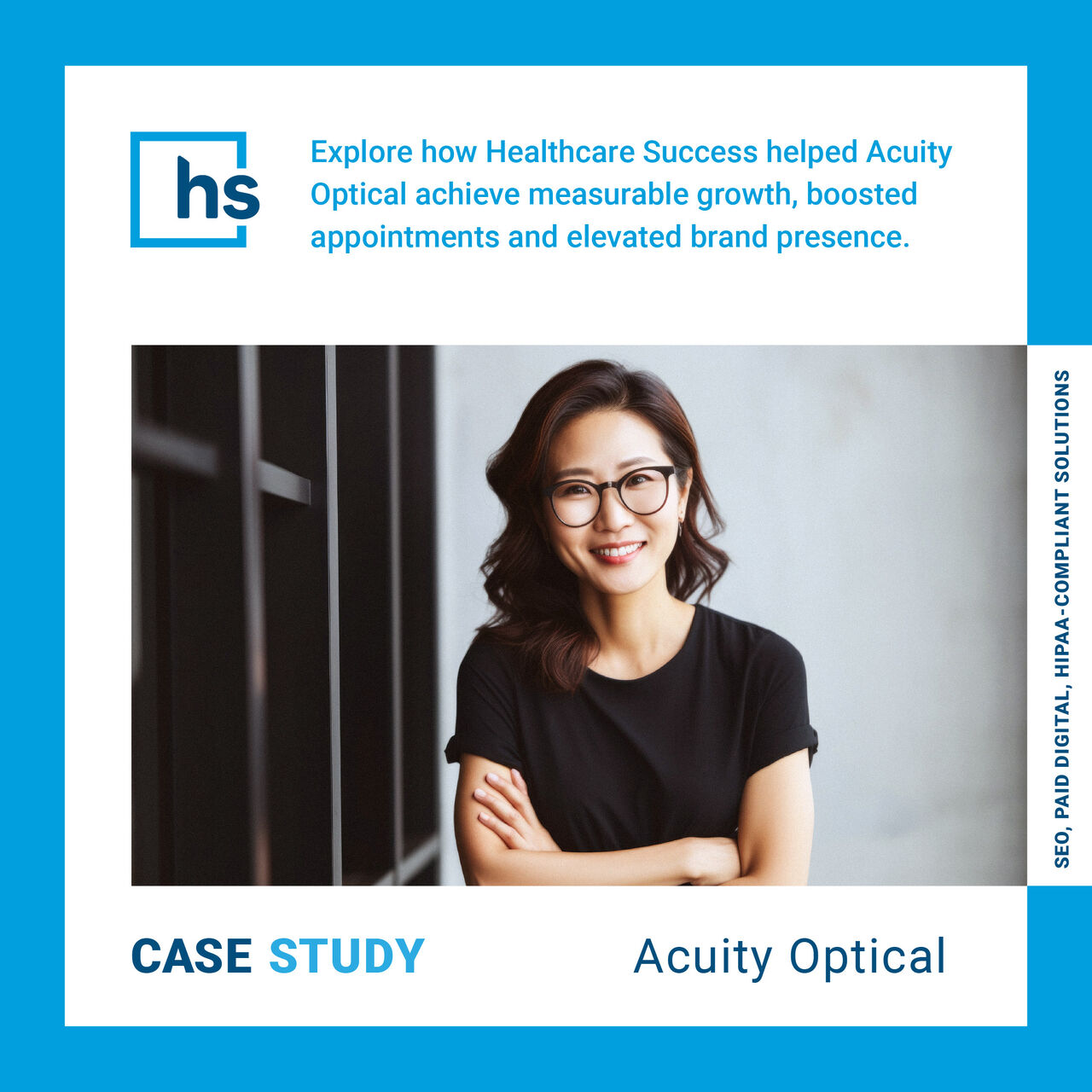
How do you achieve measurable growth in a competitive optical market? In our latest case study, see how Acuity Optical achieved: • 14:1 ROI based on patient lifetime value • 20% increase in appointments within 3 months (159 new patients) • 26.9% paid search conversion rate—well above the 4.63% national average • 20% decrease in cost per conversion and just 55¢ CPC • $189 cost per new patient, outperforming national eye exam benchmarks Our integrated creative strategy, SEO, and paid digital campaigns helped Acuity Optical grow daily appointments and strengthen its brand against national retailers. Read the full case study now 👇 https://lnkd.in/dKV4-Ecx #HealthcareMarketing #CaseStudy #DigitalMarketing #PaidSearch
- HERE&NOWRecorded 22 Sept 2026
It’s becoming harder to justify gating content, and doesn’t reflect how B2B buyers behave. I 100% get the temptation. You put all this effort into producing valuable content - so it’s fair to expect data in exchange for information. But it also runs directly against why you should be creating B2B content in the first place. To: • Demonstrate expertise • Show your authority on a topic • Provide value long before a sale is considered Ultimately - all the above points come down to building trust. Which is the #1 deciding factor in getting a B2B sale over the line. B2B buying can be slow and risk heavy, and you need to build trust long before someone is directly ready to reach out for a new business conversation. I always come back to the idea of an ‘unfair value exchange’ - as a business trying to win business, you should always be giving away more than you’re trying to get back. Asking for something upfront before you’ve been able to show your value or start to build trust runs in contrast to this idea. There’s also the practical issue of AEO / SEO optimisation. It’s news to no one that the search landscape has changed massively - traditional & LLM tools won't spend as much (or any) time crawling your 30 page PDF, over a web page which has been optimised for that purpose. Which means all the content you invested time, money and effort into is effectively invisible/lost. You lose the upside of any reach and discovery that would’ve come from your content piece, along with the compounding effect that content delivers. The best content strategies (and what I recommend for my clients) is to do the opposite. Give more than you take. Reduce any and all friction. Let buyers self-educate, on their terms. If your content is valuable, people will come back They’ll remember you helped. Forms don’t build trust. Useful, generous content does. So a firm recommendation from me to whack a ‘sign up to our newsletter’ CTA on your site where it makes sense to ask for an email and stop gating your juiciest content pieces in 2026 😅
- GleaninSince 28 May 2026
👋 Who will I see next week at #ACTIVATE? So excited to be speaking this year!! Free to register: https://lnkd.in/eXiVHp3y
- GleaninSince 29 May 2026
The marketing event for event marketers is back on June 3rd! ACTIVATE returns and I'll be on stage sharing new insights. Who's coming? #ACTIVATE Free to register: https://lnkd.in/edJR9hvQ
- Gorm x EnvisionSince 3 Jun 2026
De fleste virksomheder har ikke et marketingproblem. De har et kedelighedsproblem 🥱. De kommunikerer pænt. Professionelt. Korrekt. Og bliver ignoreret 🫷. For i et marked, hvor alle råber højere og producerer mere indhold end nogensinde før, er det ikke nok at være synlig. Du skal være interessant 🥰. Alt for mange marketingafdelinger er blevet optaget af at optimere klik, leads og dashboards. Men de glemmer det vigtigste spørgsmål: Får vi mennesker til at mærke noget? ❤️ For det er følelser, der skaber opmærksomhed. Følelser, der skaber relationer. Og følelser, der skaber vækst. Derfor har vi inviteret Dennis Vesterbæk Hampe, Director of Global Marketing hos Hydrema, til et morgenmøde om emotionel kommunikation. Vi skal tale om, hvorfor de virksomheder, der tør være mere menneskelige, mere modige og mindre generiske, ofte er dem, der vinder kundernes opmærksomhed – og loyalitet. Hvis du tror, at B2B-marketing skal være kedeligt for at være professionelt, så er dette morgenmøde måske lige præcis til dig. Jeg kommer 🤸🎸. 📍 Aarhus 📅 17. juni https://lnkd.in/e8ySvTuZ 📍 København 📅 23. juni https://lnkd.in/eUYMiScj
- Grow and ConvertSince 2 Apr 2026
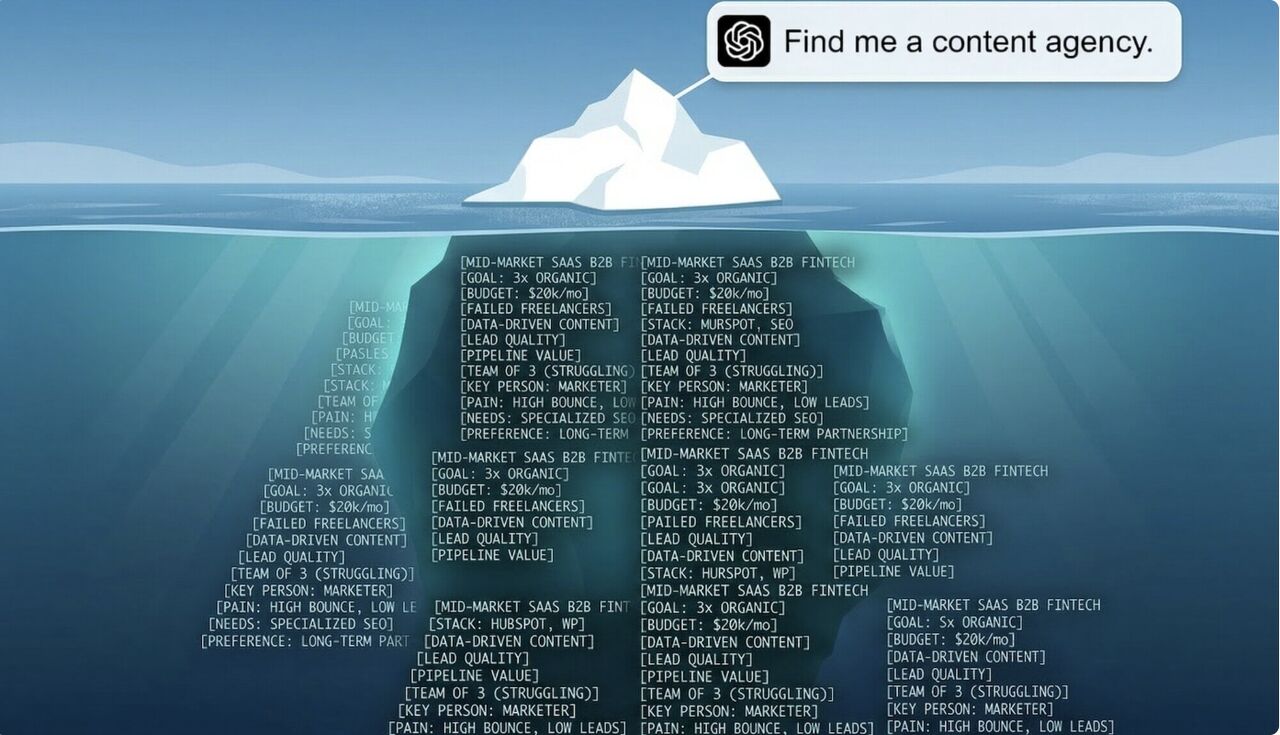
I feel like no one is talking about this: you actually can't track the real prompts your customers are typing into ChatGPT... ...because the chats are so heavily personalized, and have so much context and history between the user and the LLM that even if you're tracking the EXACT prompt a real user types into ChatGPT, when a real user actually asks it, ChatGPT will give them a COMPLETELY different response than what you, or your AI visibility tool get. I tested this. One of our (Grow and Convert's) clients said she found us on ChatGPT. We aksed her to send the chat. She asked for "SEO companies" like this: ----- "What are some SEO companies in your opinion who have driven massive results with endless leads for people in our kind of space?" ----- I typed her exact prompt into ChatGPT in an incognito browser. I even helped it by defining "our kind of space". For her, ChatGPT recommended us first. For me, it recommended us not at all. We were literally nowhere to be found. Totally. Different. Response. That exact prompt looks like 0% visibility for us. In reality it recommended us as the #1 option to a real, awesome lead, who is now a great paying client. These AI tracking tools aren't telling you this! Some, like Profound are even saying "we know what users are typing into chatGPT" but the reality is the user is getting a totally different answer for that prompt than you are (or Profound is). This is happening to every brand and they don't know it yet. So we're naming this phenomenon today: Invisible Prompts. This reality, in our opinion changes your AI search / AEO / GEO strategy. It doesn't make sense to build a content strategy focused on trying to "rank" for a specific prompt. And it definitely doesn't make sense to worry about the "position" you're ranking. (We're cited #1!) That's old school SEO thinking you're trying to use for GEO. But GEO doesn't work like that. You need a strategy and a way of measuring that adapts to this reality. We think we have a reasonable and evidence backed approach to this, but are still learning. I wrote an article on this on the blog, including sharing screenshots of that little test I did and outlining our current solution and approach that respects this fact. Link in the comments below. Curious about other people's experience with this.
- MerchyntRecorded 21 Sept 2026
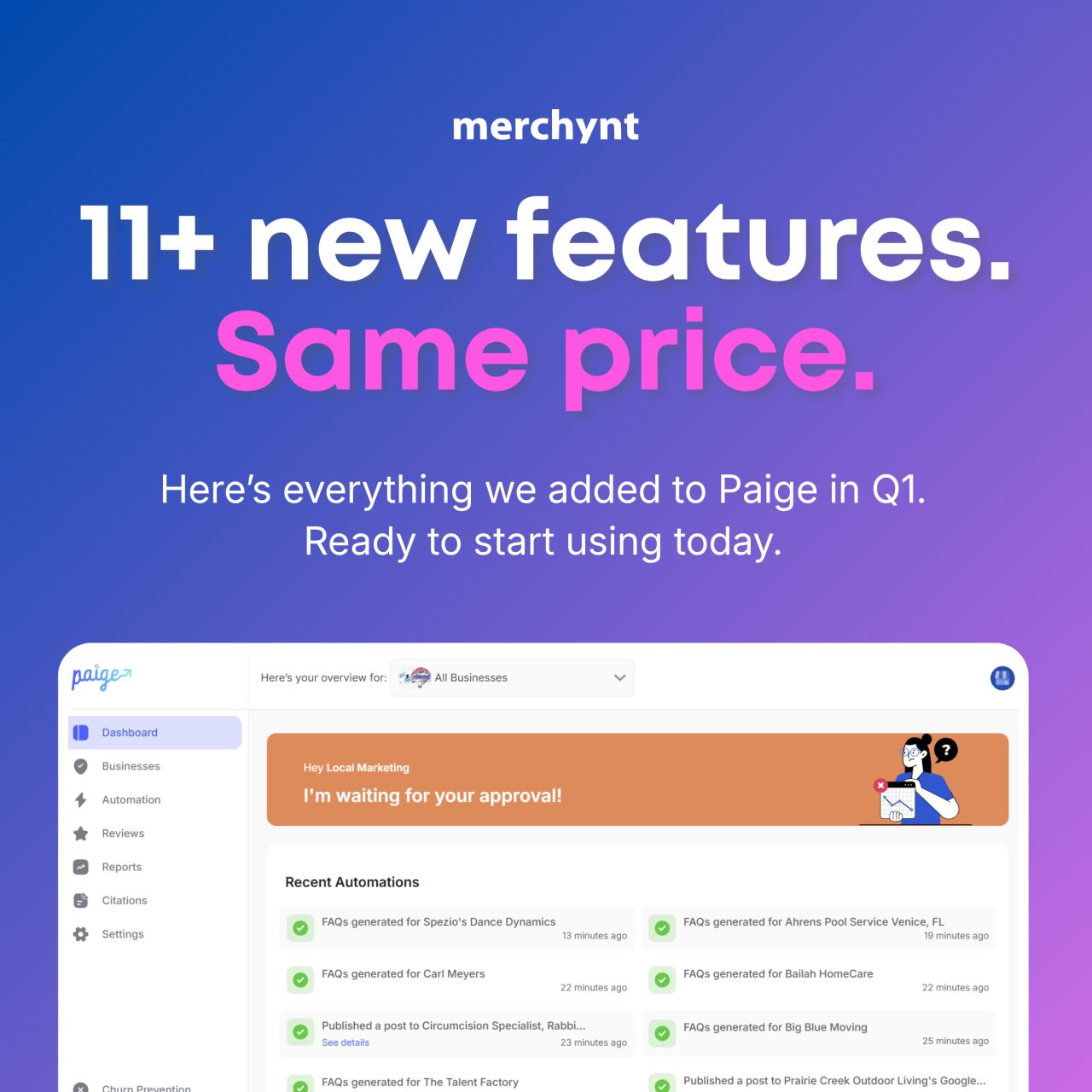
Most SaaS companies ship a big feature and immediately raise prices. We just shipped 11 features in a single quarter and kept our price exactly the same. I want to explain why, because this is an intentional choice that’s dramatically different from how most software companies approach product development. When we built Paige, the whole point was to give marketing agencies a local SEO tool that actually does the work instead of just reporting on it. Profile posts, review management, keyword optimization, image and video creation, schema markup, AI optimization. Everything handled for you. Available at a price that’s affordable. Each quarter, we listen to what our customers are asking for and we go build it. In the last 90 days alone, we’ve developed and launched: • Bulk review requests via CSV upload and SMS • A full Website & AI SEO tab with schema markup generation • Custom image generation with premium AI models • Improved post formatting and business-hours-only publishing • A churn prevention dashboard to help agencies retain more clients • On-demand reports and better post controls • A new user role for safely onboarding other team members That's 11 new features and dozens of smaller enhancements and bug fixes shipped in just three months. We could have tied some of these to usage-based pricing. Or we could have launched a new "Pro" plan and hid the best stuff behind a premium paywall. Plenty of companies do that and it's a perfectly valid strategy. But that would go against one of the strongest opinions I have about running a company: The customers who stick with you long term are the ones who feel like their subscription gets even more valuable every single year. The product keeps getting better and they don’t have to pay more just to keep using it. Those are the people who tell other business owners about you. They become your strongest marketers and best performing salespeople. And that matters more to me than trying to squeeze an extra $20/month out of our existing customer base. So we’ll keep building more and charging the same amount for it. Probably not forever, but for the foreseeable future. The value will continue to compound over time, both for our customers and for our company. 11 features. Numerous bug fixes. Same affordable price. That's the update for Q1-2026. Can’t wait to see where we’re at by the end of Q2!
- Group 8ARecorded 21 Sept 2026
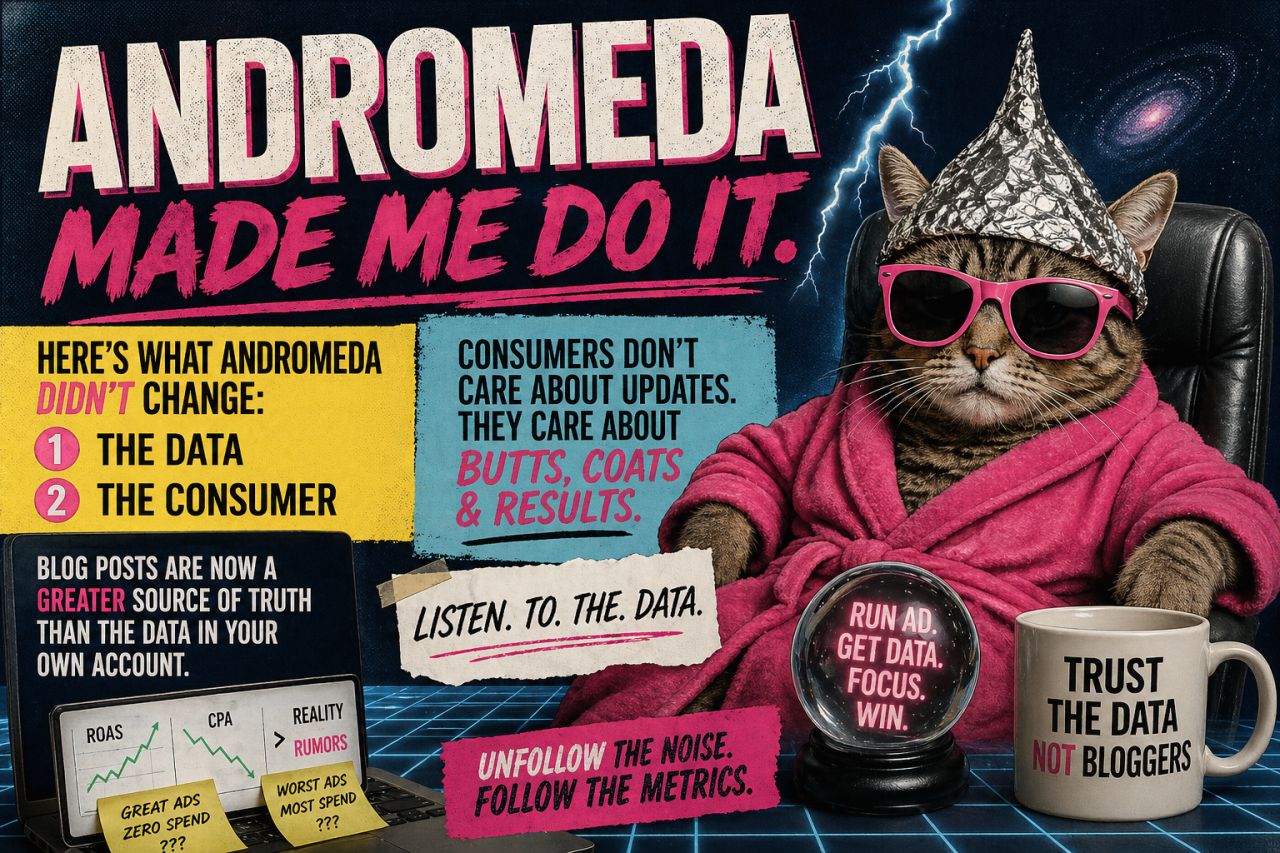
Unpopular opinion: most agencies would be performing 10–20% better today if they'd never heard of Meta's Andromeda update. The data didn't change. The consumer didn't change. Your customer still wants jeans that make them look good, gear that actually works and a coat that doesn't make them look like a marshmallow. Show them the right product, priced right, on a good page, they buy. That's the whole game. The audits we've run lately are wild. Great ROAS ads getting near-zero spend. Underperforming ads soaking up the budget. Why? Because someone optimized for what a blogger says the algorithm "wants" instead of optimizing for what your account is actually telling you. Listen to the data. That's it. Book a Call: http://bit.ly/49goJd3
- Group 8ARecorded 21 Sept 2026
What do snakes and your Meta ad account have in common? The most dangerous part is not what you can see. It’s what you’ve gotten comfortable not seeing. Picture this: for the last month, there has been a nest of venomous snakes under your bed. Not one snake. A nest. Huge, angry, and close enough that every night, when you turned off the lights and put your head on the pillow, you were only a few feet away from something that could ruin your life. And you slept fine. That’s the part that makes it terrifying. Nothing felt wrong. The room looked normal. The bed felt safe. You had no reason to question it. Then your wedding ring slips off the nightstand, hits the floor, and rolls under the bed. You grab your phone, turn on the flashlight, and lean down expecting to see dust, a sock, maybe an old receipt. Instead, you see eyes staring back at you. The realization that they were there last night, and the night before that, and every night before that. Now here’s the real question: How well are you sleeping in that bed tonight? That is what our new Meta audit feels like. Most brands are not ignoring obvious problems. They’re ignoring hidden ones. Revenue is coming in, ROAS looks acceptable, the reports sound confident, and the dashboard has enough green on it to keep everyone calm. From the top, everything looks good enough. But when you finally look underneath, you may find a very different story. We're seeing some wild stuff. 60% of ads never spent $200. Your biggest spenders are NOT your best performing. Your best performing, are off or spending small. Your ROAS could easily be 30% higher today. You've been told you need more creatives, you need better creatives, but now we're going to show you that you had them, you did that, and your agency just ignored the winners. The worst part is not that these problems exist. The worst part is that they can sit there for years while everyone feels reasonably good about the account. That’s why we built our new AI Meta audit. It’s the flashlight under the bed. You may not choose us, but some things you can’t unsee. And you need to see this.
- Convert.comSince 8 Jun 2026
We just gave Claude the ability to launch A/B tests end to end. No designer. No developer. One prompt. Convert.com's MCP is how. Connect it to Claude once and a test goes from a hypothesis in your head to a live experiment in minutes. Things one prompt now does: ↳ Launch a PDP hero test in 1 prompt ↳ Audit account health ↳ Pull this week's test results ↳ Write the post-mortem on a losing test ↳ Build the 90-day roadmap What's in the playbook: ↳ 6 launch templates (PDP, cart, ATC, pricing, free-shipping bar, sticky mobile CTA) ↳ 6 ops prompts (account health, velocity, experiment status, post-test analysis, guard-metric watch, weekly winner tracker) ↳ The full setup (Locations, Shopify Revenue goal, project context paste) ↳ The Mon/Wed/Fri rhythm that chains the 12 into a system 𝗜𝗳 𝘆𝗼𝘂 𝗿𝘂𝗻 𝗔/𝗕 𝘁𝗲𝘀𝘁𝘀 𝗼𝗻 𝗦𝗵𝗼𝗽𝗶𝗳𝘆 𝗮𝗻𝗱 𝘄𝗮𝗻𝘁 𝘁𝗵𝗲 𝗲𝘅𝗮𝗰𝘁 𝗽𝗹𝗮𝘆𝗯𝗼𝗼𝗸: Like this post Comment "CONVERT" And I'll DM it.
- Convert.comSince 25 Jun 2026
When choosing the right A/B testing tool, the demo call is crucial. Because during that call, your job is not to be impressed. Your job is to decide what is best for your organization, your colleagues, and yourself. Recently, I created a video series on choosing the right A/B testing tool. This video covers one of the most important parts of the process: the demo call. A few things I always recommend: 🔹 Share your requirements and technical information before the call 🔹 Bring a developer to the call (also for internal support) 🔹 Focus on your real workflows, not ideal scenarios 🔹 Pay attention to limitations and trade-offs 🔹 Think about how easy the tool will be for others to use every day The best demo is not the one that impresses you most. It's the one that helps you make the best decision. The other videos in the series can be found here: https://lnkd.in/eZX2VeCc --- 🤩 More experimentation tips or questions? 🤝 I help organizations embed experimentation for better decision-making. ✉️ Or join 2,000+ subscribers to my CRO Tips newsletter.
- Gorm x EnvisionSince 3 Jun 2026
Hvis du tror, at B2B-marketing skal være kedeligt for at være professionelt, så er dette morgenmøde måske lige præcis til dig. Jeg kommer 🤸🎸. 📍 Aarhus 📅 17. juni https://lnkd.in/e8ySvTuZ 📍 København 📅 23. juni https://lnkd.in/eUYMiScj
- PositiveSince 23 Jun 2026
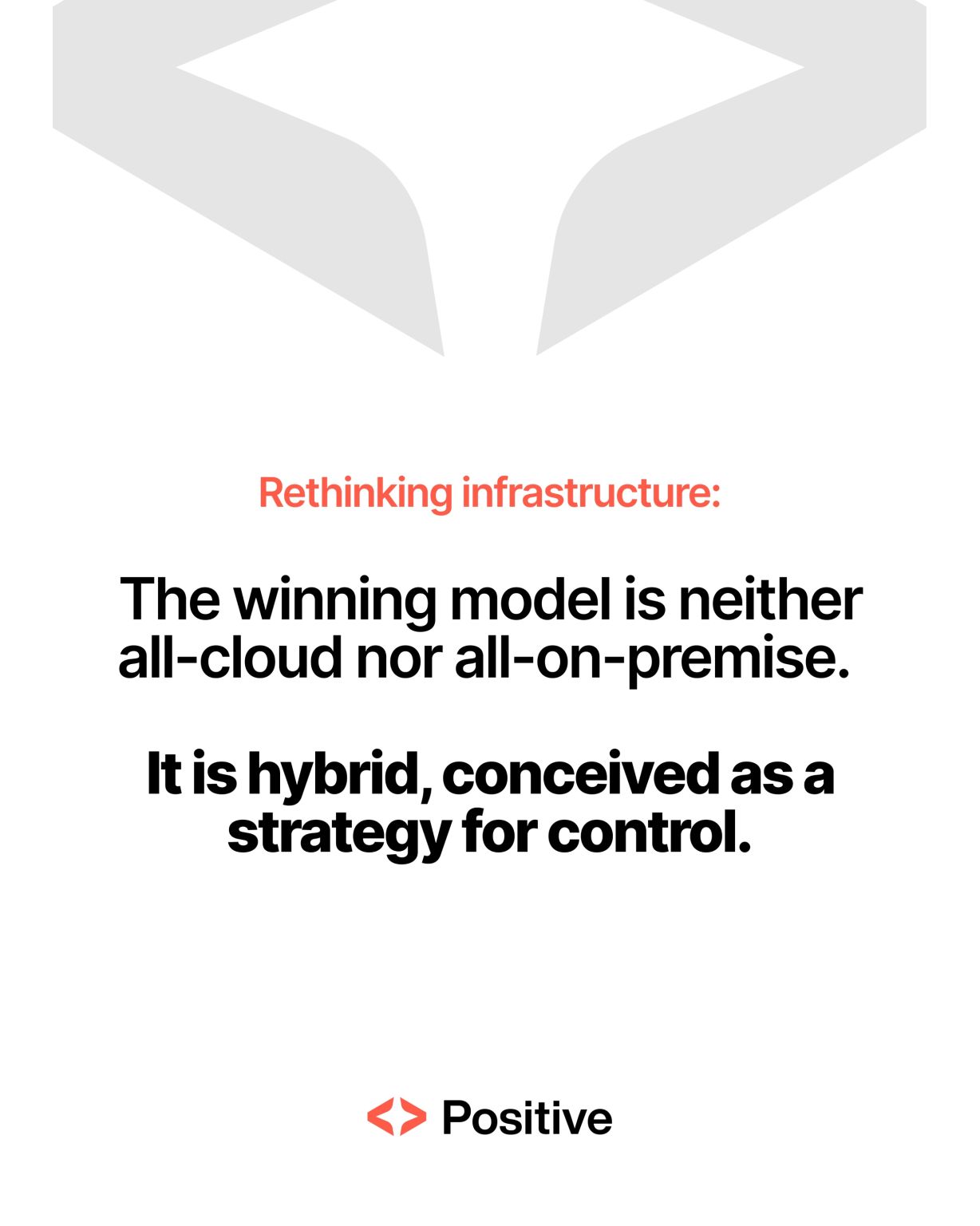
Cloud or on-premise? In 2026, that's the wrong question. The real one: which workloads need to stay under your control — and at what point does dependency become a risk? At Positive, we've been thinking about hybrid infrastructure not as a fallback, but as a deliberate strategy. Our CTO Thomas Thelliez put it into words. Read the full article → https://lnkd.in/giz9E_by #DigitalSovereignty #HybridInfrastructure #ThoughtLeadership
- PositiveSince 23 Jun 2026
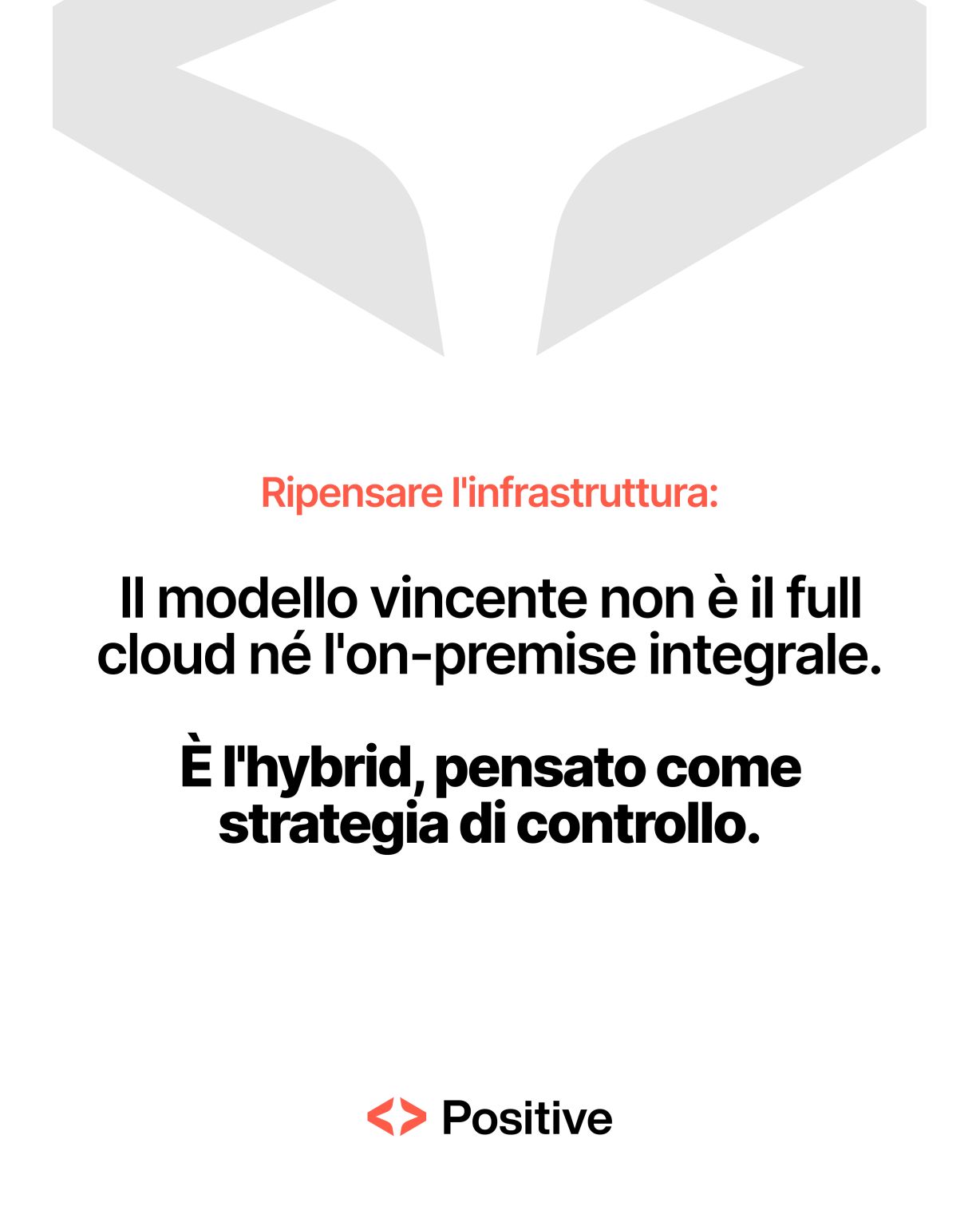
Cloud o on-premise? Nel 2026, è la domanda sbagliata. Quella giusta: quali workload devono restare sotto controllo — e oltre quale soglia la dipendenza diventa un rischio? In Positive, abbiamo scelto da tempo un modello ibrido — non come compromesso, ma come strategia. Il nostro CTO Thomas Thelliez spiega il perché. Leggi l'articolo completo → https://lnkd.in/eYk42fR8 #SovranitàDigitale #InfrastrutturaIbrida #ThoughtLeadership
- Grid & PixelRecorded 21 Sept 2026
𝗬𝗼𝘂𝗿 𝘄𝗵𝗼𝗹𝗲 Klaviyo 𝗰𝘆𝗰𝗹𝗲.. ✨ 𝗔𝘂𝘁𝗼𝗺𝗮𝘁𝗲𝗱 ✨
- Grid & PixelRecorded 21 Sept 2026
Didn’t expect founders to be this candid about email revenue
- Growth TodaySince 24 Aug 2026
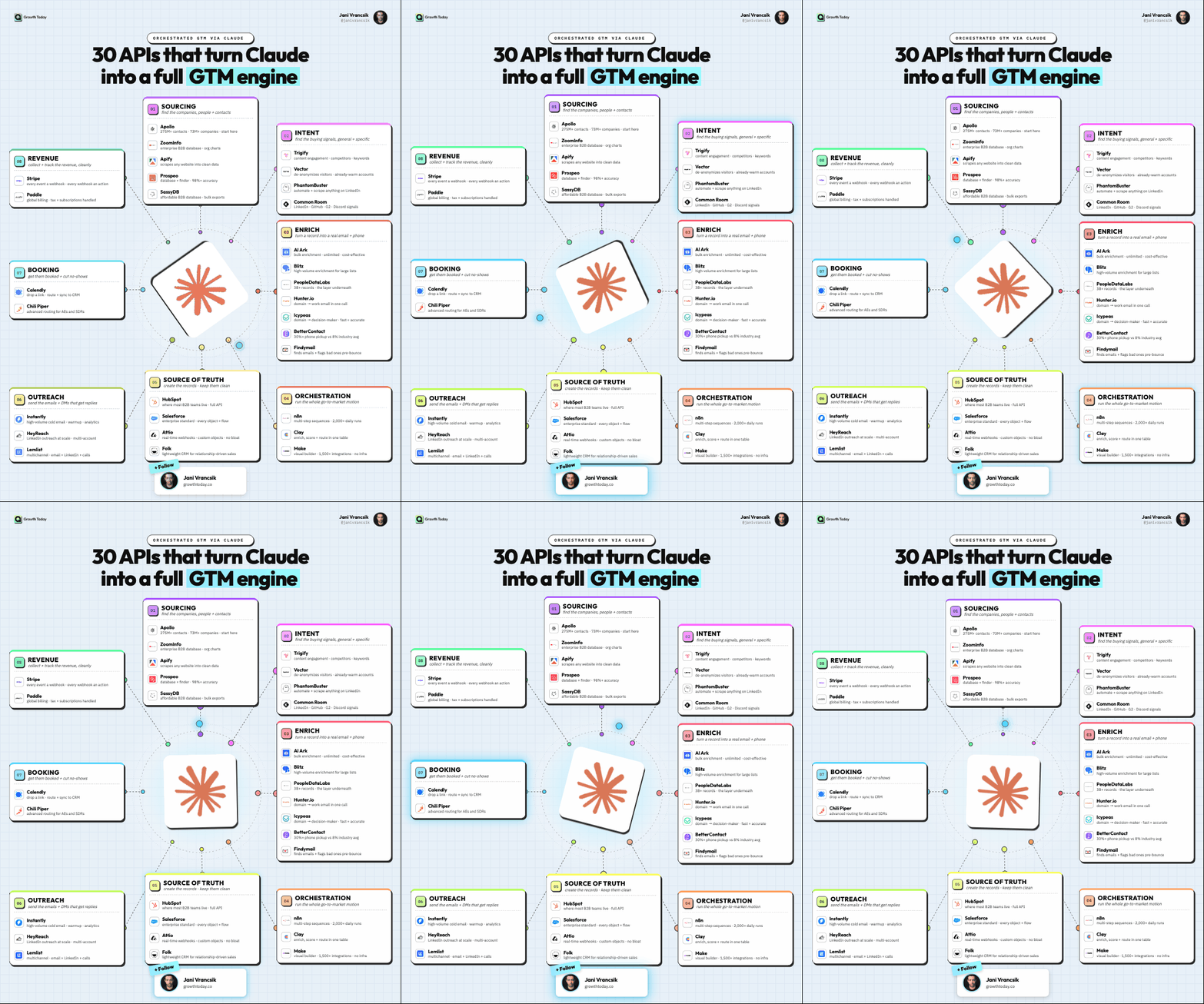
Most revenue teams run 10+ tools that never share data. Someone ends up being the integration layer by hand. Here are the 30 APIs that turn Claude Code into a full GTM engine: 30 APIs that fix that. Here is the full stack, layer by layer. Intent layer ↳ Apify: scrapes any site into clean, structured data ↳ Trigify.io : tracks who engages with competitor posts and your own content ↳ PhantomBuster: automates anything on LinkedIn, literally anything ↳ Vector: deanonymizes your website and visitors. Warmer than any cold list. ↳ Common Room: GTM signals from LinkedIn, GitHub, G2, Discord in one place Enrichment layer ↳ Apollo: 275M+ contacts, 73M+ companies. Most lists start here. ↳ Prospeo: 98%+ email accuracy, 200M+ database ↳ BetterContact: : 30%+ phone pickup rate ↳ Icypeas: domain to decision-maker in one call ↳ AI Ark : bulk enrichment, unlimited, cheap ↳ Findymail: finds emails and kills the bad ones before they bounce ↳ PeopleDataLabs: what most enrichment tools are built on top of ↳ Blitz: high-volume enrichment for big lists Orchestration layer ↳ N8n: multi-step workflows, triggers, branches, loops. $384/month for 2,000+ daily runs. ↳ Clay : enriches, scores, routes, leads. The GTM engineer's home base. ↳ Make: 1,500+ integrations, visual, no infra Source of truth ↳ HubSpot:Most B2B teams live here. Full API. ↳ Salesforce: enterprise standard ↳ Attio : built for this stack. Real-time webhooks, custom objects. ↳ Folk: lightweight, fast, flexible Outreach layer ↳ Instantly: programmatic cold email ↳ Lemlist: multichannel, email, and LinkedIn ↳ HeyReach: LinkedIn outreach at scale ↳ EmailBison: inbox rotation and deliverability ↳ EmailGuard: blacklist monitoring, pauses burnt inboxes Booking layer ↳ Calendly: link, route, sync. Done. ↳ Chili Piper : advanced routing for AEs Billing layer ↳ Stripe: Every payment is a webhook. Every webhook is an action. ↳ Paddle: billing and tax globally None of these tools works alone. Connect them to replace most of what your team does manually. Which one would you connect first? P.S. Hit the bell on my profile. Follow for more insights.
- Growth TodaySince 24 Aug 2026
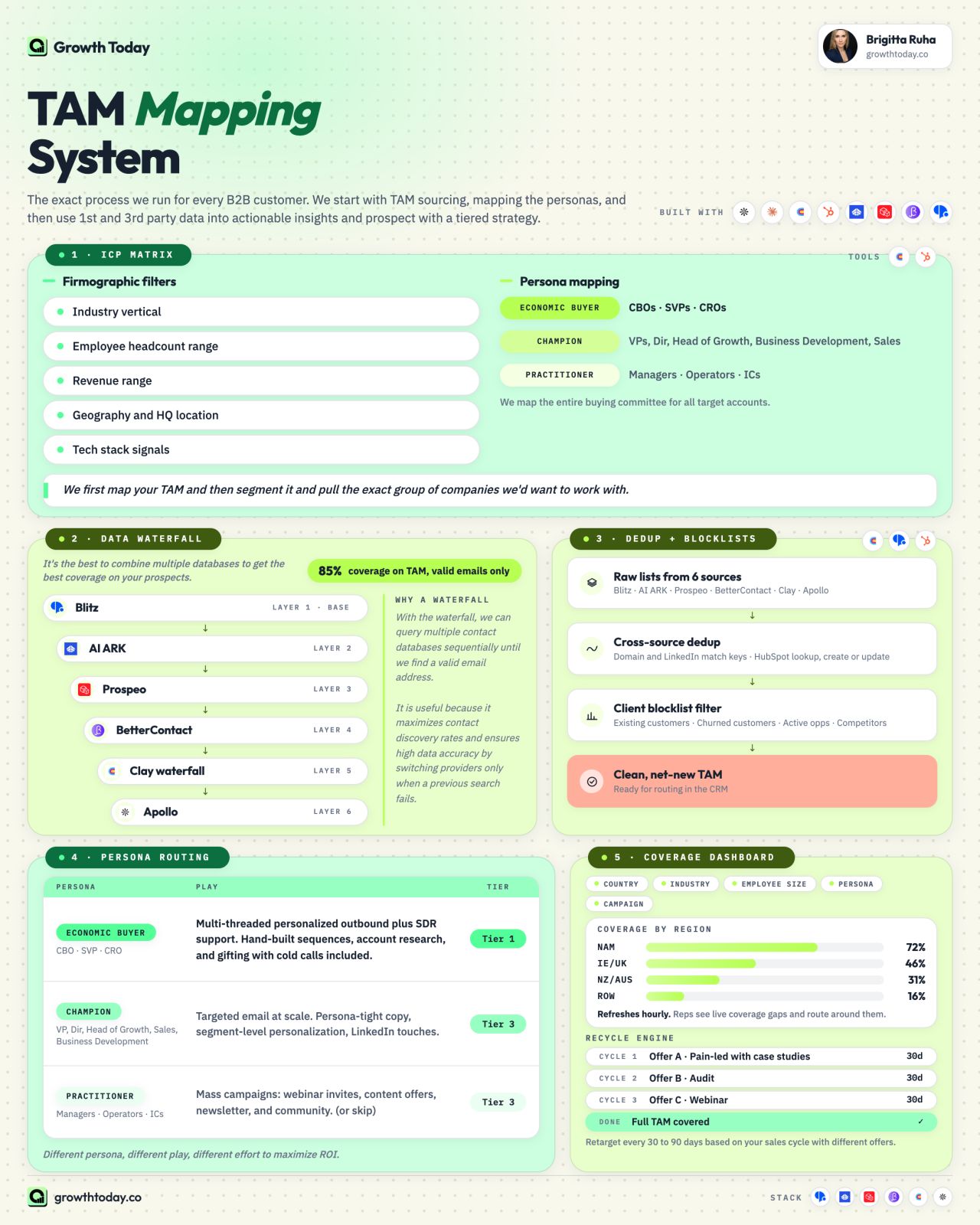
This is the exact process we use to build a TAM list for every B2B client we work with. Here's how the 5-step system works ↓ 55 days ago, a client came to us with a 12,000-account TAM list. 4,200 of them were duplicates. They had been running outbound on this list for months: High send volume. Low reply rates. The problem was never the copy alone But the lack of foundation... Most teams start with a contact list. We start with market logic. Here is the 5-stage TAM mapping system we built before we touch a single sequence: Stage 1: Build the ICP matrix ↳ Industry, headcount, geo, revenue band ↳ Tech stack signals ↳ Trigger events and exclusion rules We define who belongs in TAM before we pull a single account. If the criteria are vague, the list will be too. Stage 2: Pull from multiple data sources ↳ Blitz and AI ARK for broad account volume ↳ Prospeo and BetterContact for contact enrichment ↳ Clay for orchestration ↳ Apollo for gap filling One source is never enough. Different tools cover different parts of the market. Stage 3: Deduplicate and apply blocklists in HubSpot ↳ Clean for domain, company name, parent vs child company, and dead accounts ↳ Remove existing customers, recently closed-lost, and current open deals Crispy TAM > big TAM. (every time) Stage 4: Tag persona coverage by account ↳ Economic buyer, champion, user, technical reviewer ↳ This shows where we have coverage and where we are missing it Stage 5: Review + QA ↳ Total accounts in TAM ↳ Accounts with at least one valid contact ↳ Accounts with full persona coverage ↳ Coverage by segment and region ↳ Missing data rate A TAM is not a spreadsheet you build once. It is a live system. Only accounts with fit, coverage, and clean data move into sequences. This is how we keep reply rates healthy. Do you know your current TAM coverage rate right now? 👀
- ConvertFlowSince 27 Aug 2026
Still sending email traffic to your store? We're finding linking emails to message-matched landing pages generate as much as 41% higher AOV than emails to the standard store experience. If your emails are delivering, why aren't they delivering sales? Your email can do everything right and still lose the sale after the click. You have a strong offer, compelling creative, and a clear CTA. Shoppers click, ready to learn more… Then they land on a generic collection page of your store with 20+ products, competing links, and no obvious next step. And guess what? All the momentum created by the email just disappeared. This is one of the most costly post-click mistakes we see e-commerce brands make. The email presents a specific product, bundle, or promotion, but instead of continuing that same narrative, the landing page forces shoppers to start the decision-making process all over again. In other words, it breaks their buying pattern. You’re asking them to connect the dots when your post-click funnel should’ve already done it for them. Winning brands take a different approach. They send email traffic to dedicated landing pages that match… - The offer in the email - The product or bundle being promoted - The messaging angle that earned the click - The next decision the shopper needs to make Hexclad does this with landing pages dedicated to its cookware bundles. Qure Skincare builds focus pages around its holiday offers. Chilipad used a message-match holiday landing page to generate a 41% higher AOV than its standard store experience (full case study in comments). So what’s the lesson for email marketers? Your email strategy shouldn’t end when someone clicks; the click is where the next stage of the sale begins. In this video, I’ll show you why sending email traffic to generic product and collection pages can kill momentum and what high-growth brands do instead.
- ConvertFlowSince 27 Aug 2026
NEW: Scheduler Element For ConvertFlow Funnels With ConvertFlow's scheduler element, now you can add the link to your booking platform's calendar widget and drive bookings right from your ConvertFlow funnels. – Native support for Calendly, Cal(dot)com, HubSpot, GoHighLevel, ChiliPiper, Acuity Scheduling, SavvyCal, OnceHub and more (don't see yours? let us know!) - Contact fields pre-filled by ConvertFlow – Track bookings in your funnel reports – Manage redirects and run automations upon booking – Conditionally display the right calendar links to qualified leads using logic Full update in the comments:
- GO DO GOODRecorded 21 Sept 2026
Every nonprofit campaign feels urgent when it launches. But the truth is, most campaigns don’t fail because of a lack of effort. They fail because of a lack of planning. Three weeks before a big push, things start to unravel. The email sequence is not finished. The donation page has not been tested. Social graphics are still in draft. And suddenly, your team is sprinting instead of executing. Sound familiar? The organizations that consistently hit their fundraising and engagement goals are not the ones with the biggest budgets. They are the ones who planned the route before they ever left the driveway. In this article, I break down 8 practical strategies to help you: ✔ Get crystal clear on what success actually looks like ✔ Build a campaign plan your whole team can execute with confidence ✔ Avoid last-minute chaos that burns out your team ✔ Turn your storytelling into real donor action ✔ Use data during the campaign, not just after Because great campaigns are not built on hustle. They are built on clarity, structure, and intentional execution. If your next campaign matters, and it does, this is worth the read. 👉 Read the full guide and plan your next campaign the right way





Other LinkedIn formats
Watch the companies you care about.
Filter every ad by industry, country, format and network, and get alerts when a company you watch starts running new ads.