LinkedIn thought leader ad examples
52 thought leader ads are live on LinkedIn right now, from 93 companies. Browse real ones, filtered by industry.
- Integration FoxRecorded 23 Sept 2026
🔗 Sales teams thrive on clarity, speed, and customer insight. That’s why we built our Blueprint Integration between MYOB Acumatica Acumatica and HubSpot — to connect finance, operations, and sales like never before. At Integration Fox, we’ve designed this integration to remove silos, reduce manual effort, and give your teams access to the right data at the right time. Here’s what our MYOB Acumatica ↔ HubSpot integration enables: ✅ Real-time access to customer purchase history inside HubSpot ✅ Sync key contact and company records between systems ✅ Seamless visibility of pipeline vs. revenue data ✅ Stronger handovers from sales to operations ✅ Faster quote-to-cash workflows ✅ Less double handling, more automation 💡 The result? Sales teams sell smarter. Finance stays informed. Operations execute faster. Whether you’re a business looking to connect your CRM with your ERP, or an implementation agency helping clients scale — this integration is built to support scalable, repeatable success. 👉 Learn more about our Sales Blueprint here: https://lnkd.in/gJ62Whwa #IntegrationFox #HubSpot #MYOBAcumatica #SalesEnablement #BlueprintIntegration #iPaaS #ERPIntegration #CRMAutomation #TechStack #SalesProductivity #DigitalTransformation
- Integration FoxRecorded 23 Sept 2026
💡 Why settle for one platform doing “okay” at everything, when you can have best-in-class tools working together? That’s exactly what Integration Fox our Blueprint Simpro Software integrations deliver: ✨ Simpro Software + HubSpot → Sync quotes straight into your HubSpot deal pipeline and watch sales move faster. ✨ Simpro Software + MYOB Acumatica / Acumatica → Real-time visibility between finance and operations (no more messy double handling). The magic happens when you integrate. Suddenly your tech stack stops being “just a bunch of tools” and starts acting like one super-powerful platform. 🚀 For customers, it means efficiency and accuracy. For agency partners, it means giving clients a killer edge without reinventing the wheel. Integration Fox = less admin, more flow. 🦊 #Simpro #HubSpot #Acumatica #Integration #DigitalTransformat MYOB #hubspot #integrations #integrate
- Grain | Dataspecialisten voor webwinkelsSince 13 Feb 2026
Hoe bepaal jij het rendement van een campagne? Grote kans dat je het verkeerd doet. Je kijkt nu naar omzet of misschien zelfs al brutowinst. Maar dat is niet genoeg. • Kickbacks. • Inkoopschalen. • Of voorraad die uit de mode gaat. Factoren die cruciaal zijn voor jouw succes. Zo ook in het voorbeeld van deze post. Bij verkoop van 1.000 Hoge Hakken krijg je € 10.000 kickback. Dat zou betekenen dat de Hoge Hak ineens meer oplevert dan de Leipe Laars. 𝗕𝗲𝗻𝘂𝘁 𝗷𝗶𝗷 𝗱𝗲𝘇𝗲 𝗳𝗮𝗰𝘁𝗼𝗿𝗲𝗻 𝗮𝗹 𝗶𝗻 𝗷𝗼𝘂𝘄 𝗰𝗮𝗺𝗽𝗮𝗴𝗻𝗲𝘀? Dat kun je doen door je conversiewaarde slim in te zetten. Je gaat stap voor stap van omzet naar werkelijke bedrijfswaarde. Lees hier hoe dat werkt: https://lnkd.in/enC7EYUV.
- Grain | Dataspecialisten voor webwinkelsSince 15 Feb 2026
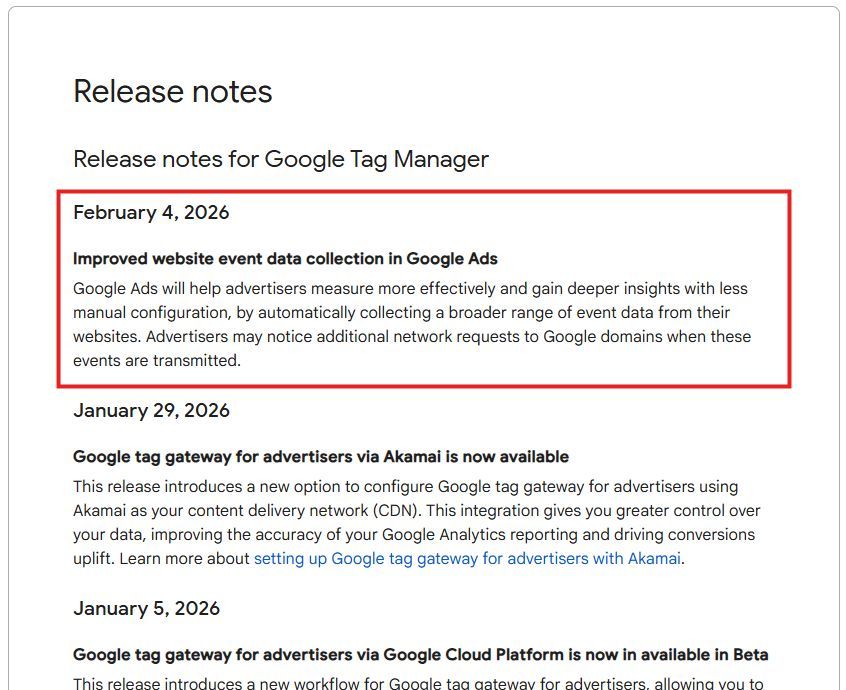
Genoeg is genoeg. De Google Tag hoort in 2026 in de prullenbak. De enige reden om de Google Tag nog te gebruiken is remarketing. Maar je remarketing doelgroepen zijn al zwaar beperkt door tracking blockers en toestemming. Wat is nog echt de meerwaarde van je remarketingpixel? En weegt die meerwaarde nog op tegen de privacyrisico's die dit soort onzichtbare updates veroorzaken?
- Eppo by DatadogSince 14 May 2025
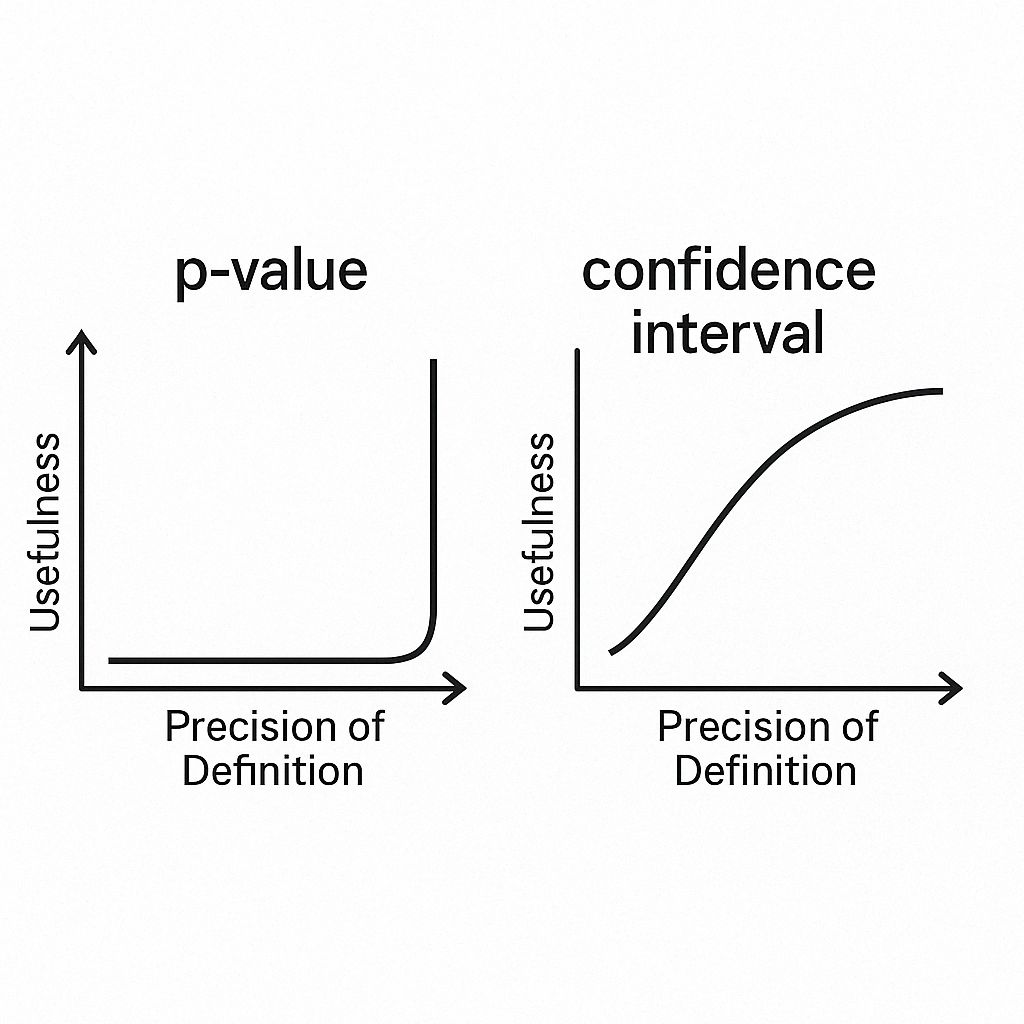
We don't show p-values on the main experiment results screen in Eppo. (They're ever-so-slightly hidden in a more advanced "statistical details" tab) The "problem" with p-values, insofar as most businesses have plenty of non-statisticians running experiments, is that they have a very nuanced and precise definition. Academic researchers get the definition wrong all the time. (There are several quite embarrassing studies demonstrating this) And once you are even a little bit incorrect in your definition, assessing the p-value itself is a totally useless exercise at best. Sometimes it's downright harmful. If you want to evaluate which statistical concepts are worth explaining to your coworkers, imagine drawing a "precision-usefulness curve" for each - as Giorgio Martini once suggested to me. I.E., how much usefulness does this [concept/statistic] lose once your definition is no longer 100% correct? The p-value has a quite unforgiving one, in my experience. Confidence intervals, on the other hand, seem far kinder. Yes, they also have a nuanced definition that very few get right. (although they are maybe one step easier since we don't have to explain them being conditioned on the null) But even with a naive interpretation (usually a probablistic one that sounds more like a Bayesian credible interval - e.g. "there is a 95% chance the true value is in this range"), stakeholders can still walk away with reasonable intuition about what their experiment results suggest. Even a simple three-word intuition like "range of uncertainty" or "the experiment's precision" will likely guide sound decision-making. I've been taken with this as a simple little "precision-usefulness" mental model ever since Giorgio mentioned it - a good consideration for folks who care about making experimentation more accessible to teams throughout our orgs. (graphs are illustrative/made up by ChatGPT and not necessarily my exact opinions 😆)
- Eppo by DatadogSince 14 May 2025
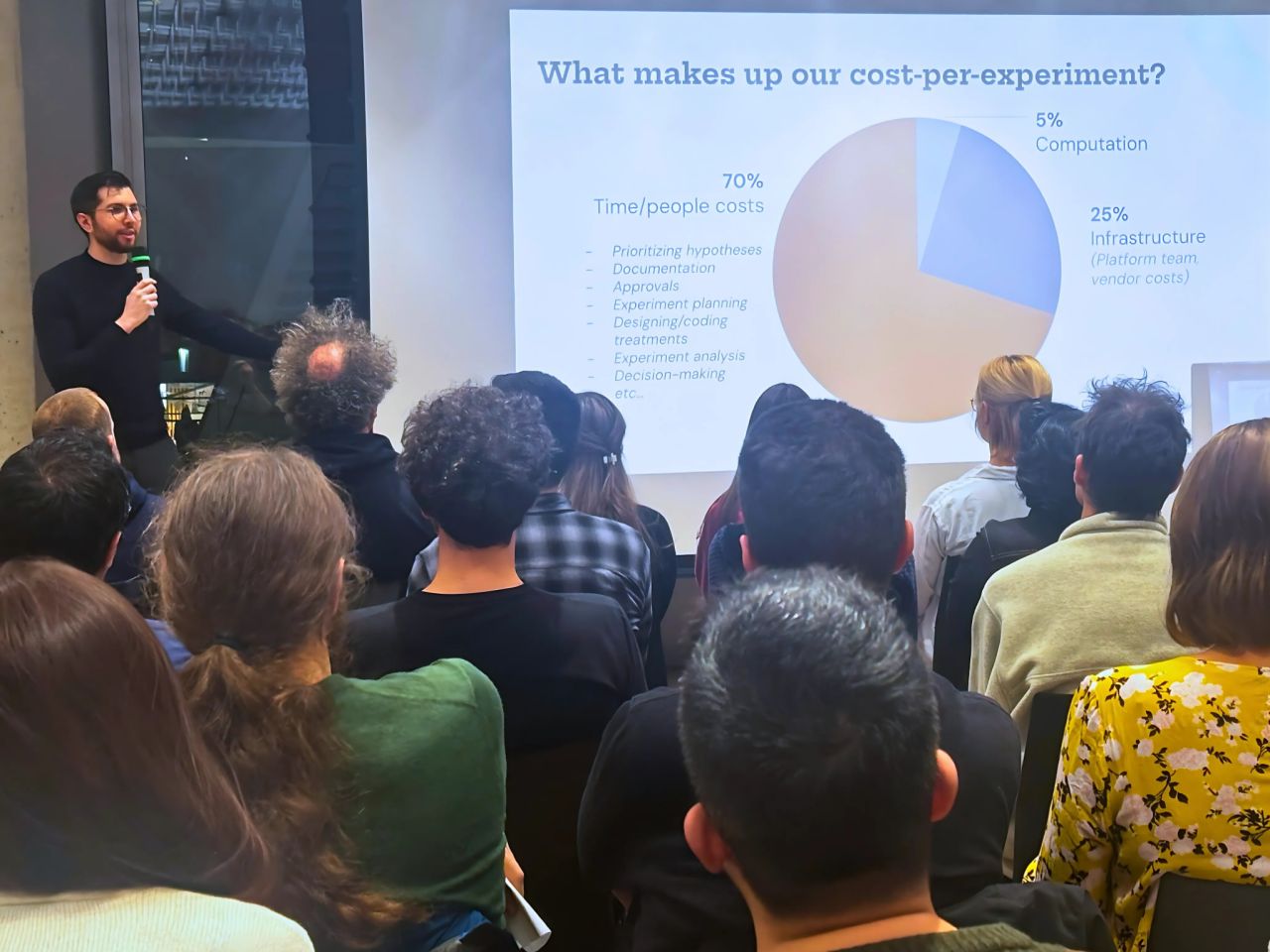
Had a fantastic time last night speaking at the Berlin Experimentation Meetup - well over 100 experimentation pros joined us (several flew in from all around Europe!) and packed the room. A few highlights from my talk: 💡 Presented a framework that distills the job of an experimentation leader into 3 main objectives 💡 Made the case for platforms and processes that enable self-service for the end users in our orgs 💡 Shared about a dozen ideas from Eppo and beyond on how to accomplish this by giving users empowerment, guidance, and time back As I said multiple times over the course of the day, I'm not sure that there's a US city where we could get 130 registrants for an experimentation meetup, especially with only light promotion. There's a very real energy and enthusiasm for experimentation here in Berlin and I appreciate everyone in that room for helping lead the charge! It was such a pleasure getting to meet so many of you. Many thanks to Marcel Toben and Patrick Gunia, PhD for the invite and for what you've organized here, and to Nils Stotz on the photo credit and helping host me yesterday. ⏩ Want to hear some hot takes and practical ideas on scaling your experimentation program at your next event? I think this talk is crazy ready for an encore... DM me and let's make it happen :)
- FullEnrichSince 3 Dec 2025
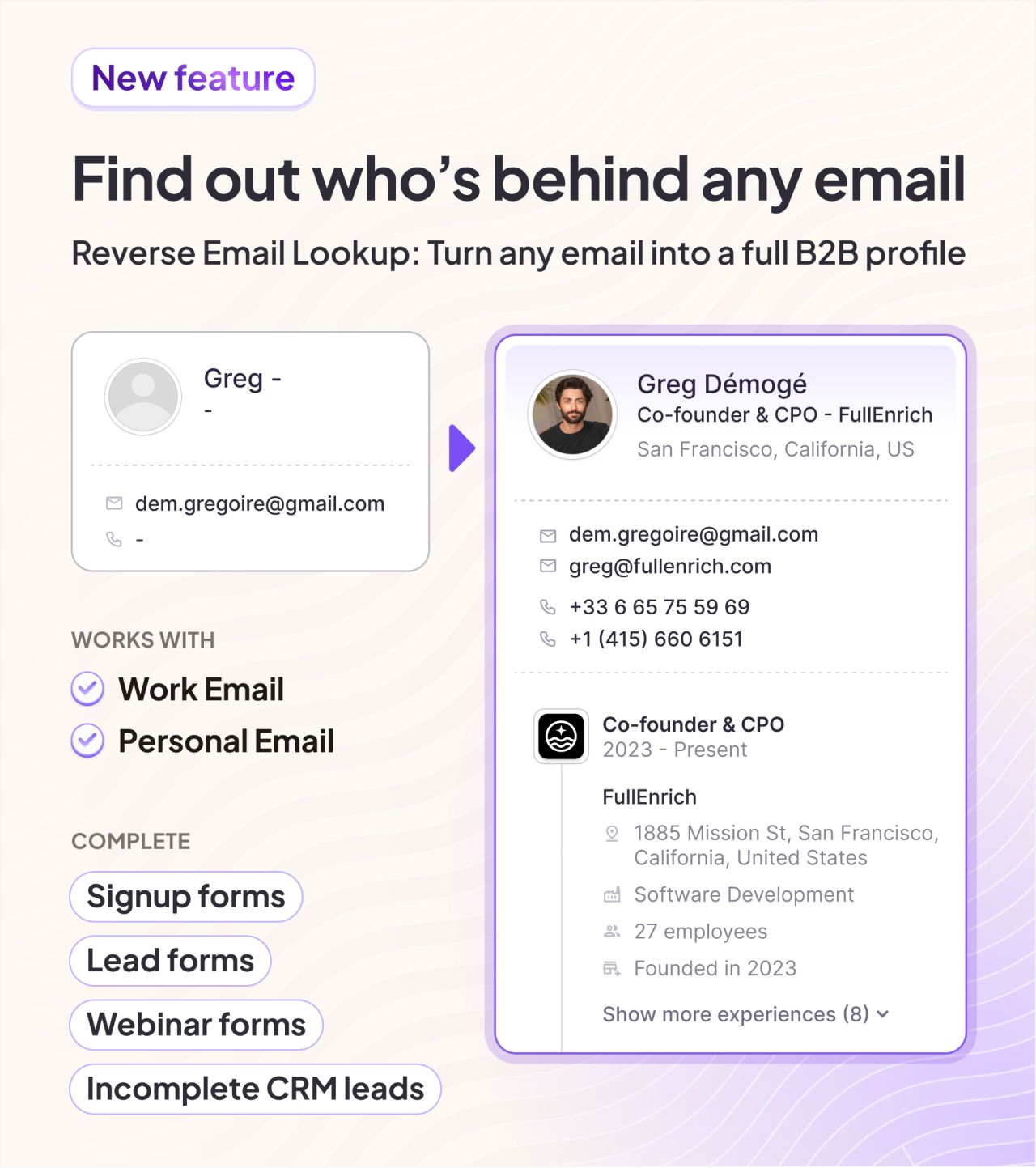
New feature: Reverse Email Lookup. Drop any email. Get the full B2B profile behind it: → Name → Job title → Location → Firmographics Everything you need to qualify a lead. Works with both: Work emails. Personal emails. Same waterfall approach. Same verification layer. 10+ data providers for the highest possible coverage. Use cases: → Enrich signups → Complete ad forms → Identify webinar attendees → Qualify gated content leads → Clean incomplete CRM records → Reveal who's behind GitHub signups (for devtool companies) One email in. Full profile out. Standardized data across your entire stack. WHY WE BUILT IT? We have +10 000 sign-ups every month. But we were leaving millions on the table. Why? We couldn't identify who was behind those emails. Sales missed gold buried in the noise. Marketing sent one-size-fits-all nurturing. CS walked past expansion opportunities sitting right there. Sure, we tested other platforms. Best we got: 40% match rate on work emails. 20% on personal emails. Worse, Sometimes the data was plain wrong. People had changed jobs 6 months ago. Still showing the old company. So we built it for ourselves first. Now, we use it on every signup. Results from early pilots (11 companies): 65-80% reveal rate on personal emails. 90-98% on work emails. If you're a PLG company; run marketing campaigns; or have incomplete CRM data; this is for you. Available now for all FullEnrich users. Credits used only on a successful match. https://lnkd.in/e8UwAkwr
- FelderaRecorded 18 Sept 2026
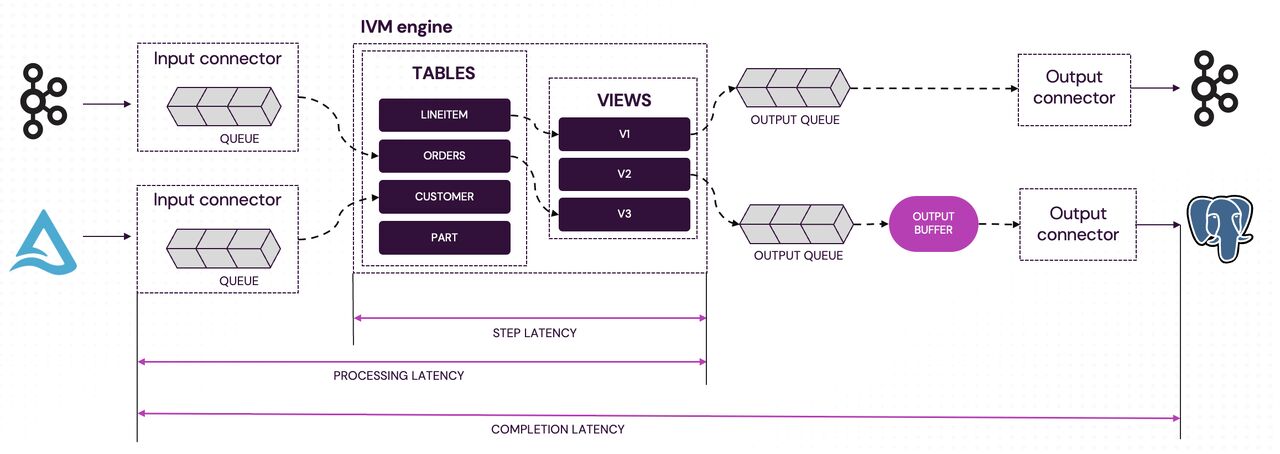
🧪 If You Cannot Measure It, It Doesn’t Exist! That’s why we built Feldera’s new latency measurement framework. It gives you precise visibility into: ✅ End-to-end pipeline latency ✅ Internal processing latency of our incremental query engine With this new API, you can see how Feldera reduces your time-to-insight from hours to seconds in your Grafana dashboard. 👉 Dive into the details: https://lnkd.in/gw8HRVYm
- FelderaRecorded 18 Sept 2026
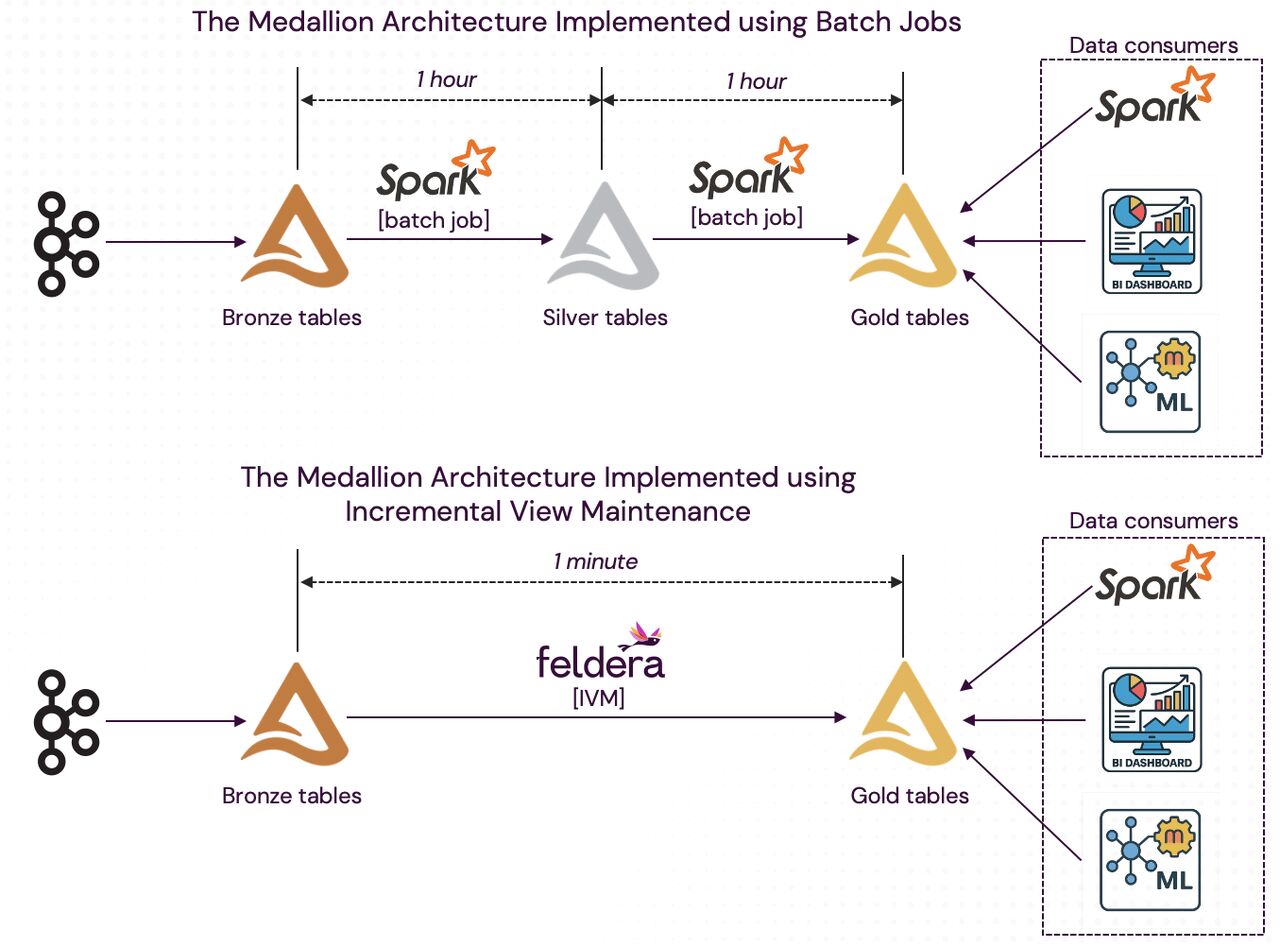
🥉🥈🥇 Toward Real-Time Medallion Architecture One of the biggest advantages of open table formats like Delta Lake and Apache Iceberg is that you can query the same data with multiple engines. No vendor lock-in, just pick the best tool for each job. Case in point: We’re working with a customer who built their Medallion architecture using Apache Spark and Delta Lake. But as their business evolved, so did user expectations—especially around latency. Spark’s batch processing couldn’t keep up with the demand for fresh insights. The solution? We replaced periodic Spark jobs with the Feldera Incremental View Maintenance (IVM) engine. Feldera picks up changes to lower-tier tables and updates higher-tier tables in real-time, reducing the end-to-end latency of the pipeline from hours to minutes. Prior to open table formats, in the world of legacy databases, such a migration would require completely re-architecting the entire data stack in order to use a new query engine. But thanks to the use of Delta Lake, the transition was completely seamless to the rest of the company: ✅ The data hasn't moved and can be read using Spark, Trino, etc., just like before the migration. ✅ Same ingestion pipeline from Kafka to the Bronze layer. ✅ Existing BI dashboards reading the Gold layer stayed untouched—only now they show near-real-time data! Want to see how it works? Join Gerd Zellweger's webinar on replacing batch analytics with Feldera: https://lnkd.in/eFDqXb5Q
- EXPLORESince 9 Dec 2025
Vous avez votre entrée pour le SIMI et vous savez que l’IA fera partie des leviers clés pour soutenir votre développement en 2026 ? C'est exactement le sujet prioritaire pour les équipes EXPLORE ! Et on a deux rendez-vous à vous proposer : pendant trois jours sur le stand M60 et le 11 décembre à 10h lors de notre conférence. 📍 Rendez-vous n°1 • Stand M60 | 9, 10 et 11 décembre • Venez échanger avec nos équipes et découvrir comment l’IA s’intègre concrètement dans vos démarches commerciales. 📅 Rendez-vous n°2 • Conférence | 11 décembre | 10h – 10h30 | Agora Future City Lab • « Agent IA : la nouvelle arme pour transformer la commercialisation immobilière et la connaissance des territoires » 🎤 Gregory Kolesnikoff et Kevin M. y présenteront un cas d’usage très concret montrant comment la combinaison data + IA améliore l’efficacité commerciale et opérationnelle. #SIMI2025 #Immobilier #IA
- EmbraceSince 10 Jul 2026
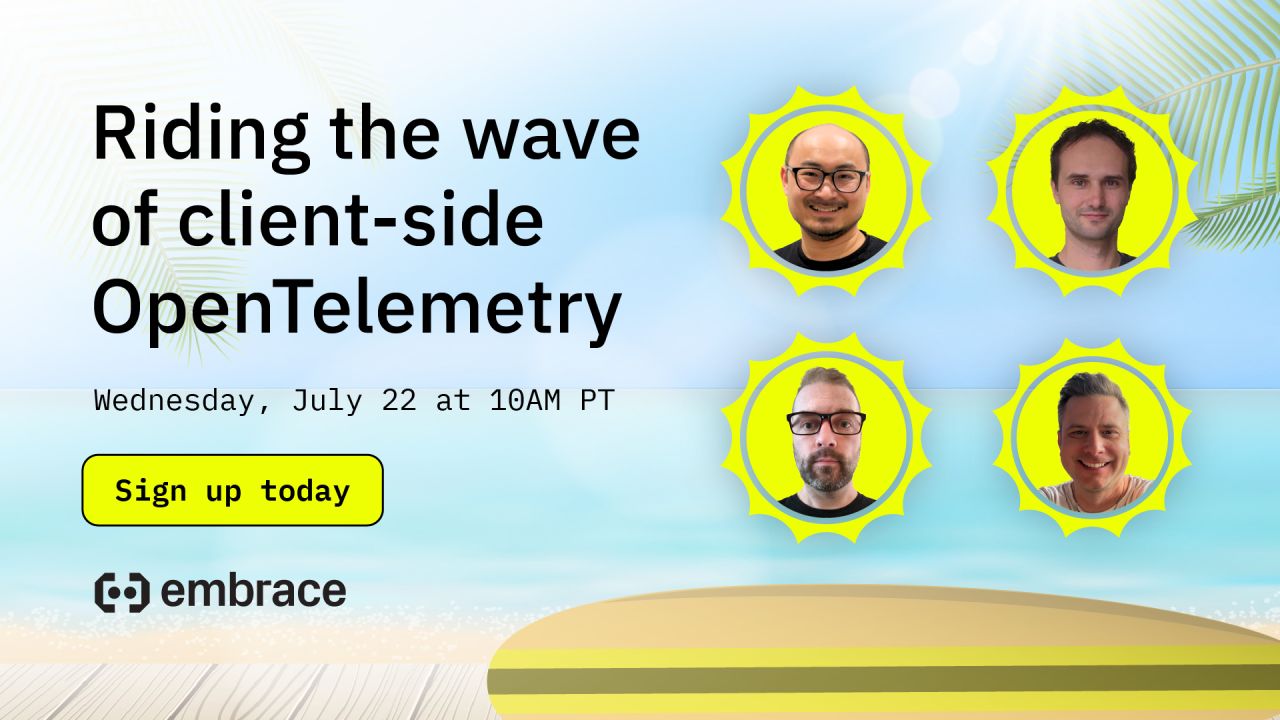
Summertime makes me think of a few things: relaxing on the beach, catching some sweet waves, and client-side OpenTelemetry. What, just me? We're excited to host another fun panel discussion with key members of the Android, Kotlin, and Browser SIGs to cover the current state of OTel support for mobile and web. If your engineering team is investing heavily in OpenTelemetry and you want to bring that same standard into your frontend observability practices, then this panel is for you. Signup link: https://shorturl.at/NAkDz Date: Wednesday, July 22 at 10AM PT Our awesome panelists: Hanson Ho: Android architect at Embrace, OTel Android approver, OTel Kotlin approver Martin Kuba: Staff software engineer at Grafana Labs, OTel JavaScript SDK approver and OTel Browser SDK maintainer Jason Plumb: Senior software engineer at Splunk, OTel Android maintainer, OTel Java maintainer, OTel Kotlin maintainer Jared Freeze: Senior software engineer at Embrace, OTel Browser SDK maintainer We'd love to answer any questions you have about mobile and web support in OTel as well. Feel free to send them in when you sign up or share them in the comments below! #OpenTelemetry #OTel #CNCF #Observability #MobileObservability #BrowserObservability
- EmbraceSince 14 Jul 2026
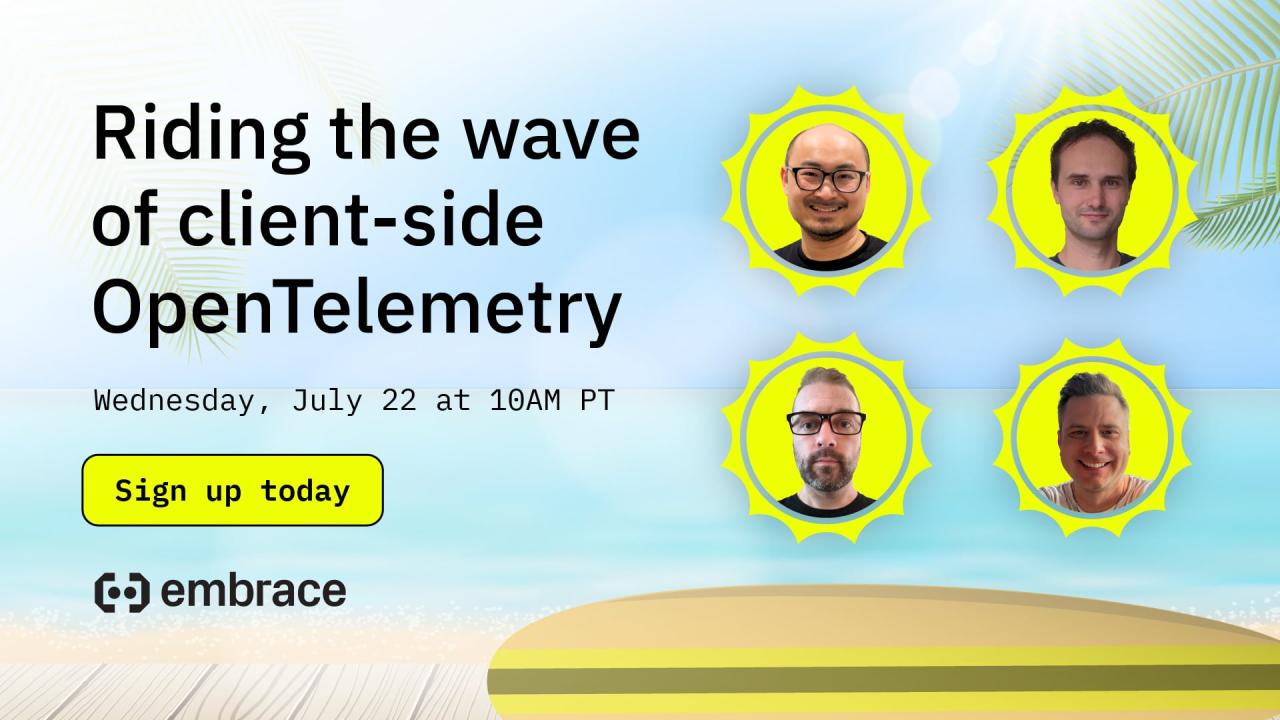
I'll be joining a panel discussion on July 22 about the current state of client-side OpenTelemetry. Over the past year, the OpenTelemetry community has made significant progress in browser and mobile observability - from new semantic conventions and browser instrumentation to improvements in Android and Kotlin support. We'll discuss what's production-ready today, what challenges we're still working through, and where client-side OpenTelemetry is headed next. If you're interested in bringing OpenTelemetry to browser and mobile applications, I think you'll find the discussion useful. Sign-up link: https://shorturl.at/XDflC 🗓️ Date: Wednesday, July 22 at at 10AM PT Panelists: Hanson Ho: Android architect at Embrace, OTel Android approver, OTel Kotlin approver Martin Kuba: Staff software engineer at Grafana Labs, OTel JavaScript SDK approver and OTel Browser SDK maintainer Jason Plumb: Principal software engineer at Splunk, OTel Android maintainer, OTel Java maintainer, OTel Kotlin maintainer Jared Freeze: Senior software engineer at Embrace, OTel Browser SDK maintainer #OpenTelemetry #OTel #CNCF #Observability #MobileObservability #BrowserObservability
- Edge DeltaRecorded 17 Sept 2026
This Wednesday @ 5pm in Seattle at Edge Delta HQ! For everyone from vibe coders to professional engineers, this will be a free and fun session to quickly vibe code a game, deploy it to AWS, and get AI Teammates to tell you how it's working. You'll have technical help to get fully setup with: AI IDE Kiro by Amazon Web Services (AWS) Elastic Kubernetes Service (EKS) AI Teammates by Edge Delta We'll have food and drinks and lots of resources walking around and getting you unstuck (because hungry means bad vibes, and stuck means bad vibes, and there will be no bad vibes). I'll see you there, but registration closes soon - https://luma.com/u6sxpqwm Yujian Tang Fatih Yildiz Matthew Miller Matt Meier Sarah Kricheff Ragghav S Serge Shevchenko 🚀 Crystal Shao Clayton Novotney #seattle #ai
- Edge DeltaRecorded 17 Sept 2026
🌎 Everyone’s talking about model quality, LLM performance, and fine-tuning. Recently I've used GitHub, Cursor, OpenAI Codex, Vercel v0, Replit, and a few others, but here’s the hard truth: 80% of AI outcomes are determined before you ever touch a model. (I made up this statistic but it sounded about correct). The real bottleneck? Getting the right data in the right format, with the right context. Raw logs, fragmented telemetry, missing signals, schema drift, undefined semantics… these aren't minor nuisances. They completely derail downstream systems. If you're serious about AI, your priority shouldn’t just be "AI readiness" but also telemetry pipelines that reliably accomplish normalization and real-time structuring at the source. Edge Delta does this without shortcuts. No black boxes and you get to see all your data and which formats it's being sent to best enable AI initiatives. Great #AI starts with great data plumbing.
- EllévtiRecorded 17 Sept 2026
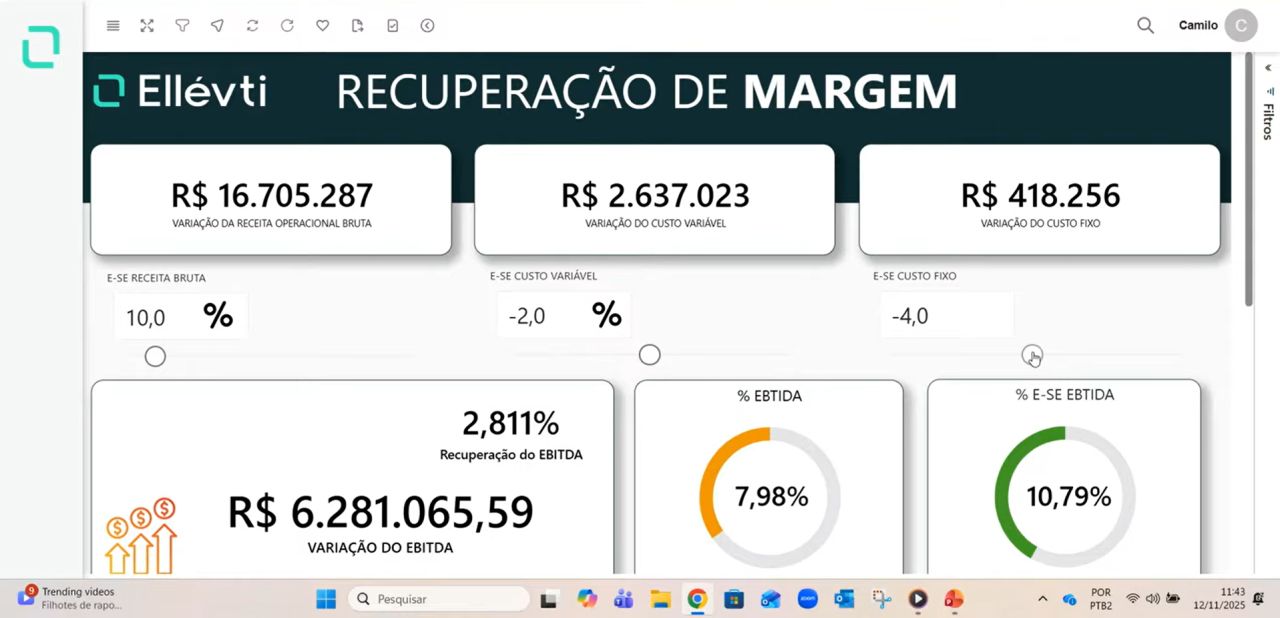
Quanto seu varejo precisa vender a mais? Quanto ele precisa comprar mais barato? Quanto de despesa ele precisa cortar? ➡ E mais do que isso, qual será o resultado dessas ações na sua receita e no seu EBITDA? A imagem mostra, exatamente, a tela de Recuperação de Margem dentro do BI Ellévti. No varejo, aumentar em 1% suas vendas pode ter um grande impacto em seu lucro. Por isso, saber em qual ponteiro mexer para ter, de fato, resultados é essencial. Essa foi apenas uma das telas que mostramos no webinar sobre Inteligência de Dados no Varejo, que fizemos no dia 12/11. Além dela, também nos aprofundamos no "Petscan" do varejo alimentício, telas essenciais para gestores do segmento. Clique e saiba mais: https://lnkd.in/dj7584DP Obs: os dados utilizados na imagem são fictícios, usados para simulação em versão demo da plataforma.
- DittoSince 15 Jan 2026
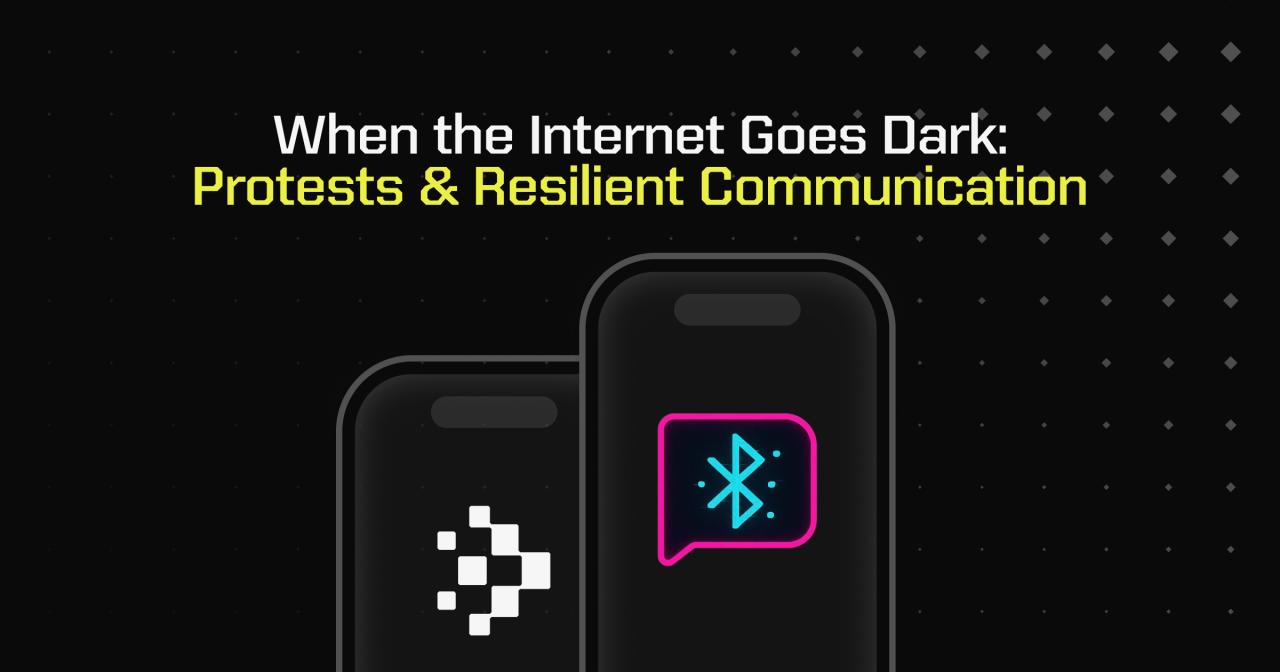
Two very different stories about connectivity today. Two reminders of the same fundamental truth. Right now, nearly a million Verizon customers are reporting outages—phones stuck in SOS mode, unable to make calls or access data. Emergency services in DC and NYC issued alerts. Business operations disrupted. Critical communications severed. Meanwhile, Iran's government has imposed a near-total internet blackout for the sixth day running as protests intensify. What began as economic demonstrations has escalated into the country's deadliest unrest in decades—and authorities cut off the entire nation's ability to communicate, share information, or document what's happening. One is an infrastructure failure. The other is intentional suppression. But for the people experiencing them, the impact is the same: the inability to communicate during critical moments. We've seen this pattern repeat throughout 2025—in Nepal, Uganda, Indonesia. When connectivity disappears—whether from government shutdown or system failure—people desperately need alternatives that work. I was drafting a blog post about the protest movements of 2025, what they taught us about resilient communication architecture, and why those lessons matter for enterprise operations with remote workforces, intermittent connectivity, or infrastructure vulnerabilities. Today's events are like the icing on the cake. Read my blog post -> https://lnkd.in/ezvPwR9E The protesters who downloaded Dorsey's Bitchat weren't making a political statement about technology. They were making a pragmatic decision about operational continuity. Maybe it's time enterprise technology did the same? #EnterpriseArchitecture #Resilience #OfflineFirst #DigitalBlackoutIran #Iran #VerizonOutage #TechReliance #DigitalResilience #StayConnected
- DremioSince 16 May 2026
60% of agentic analytics projects will fail by 2028. Gartner predicts this not because agents can't reach the data, but because they have no shared context for what it means. I feel this one in my own work. Ask an agent to pull Q1 pipeline and it assumes January when our fiscal year starts February 1. Ask about website conversion rate and you'll get sessions-to-form-fills, not the funnel we actually track. ACV, TCV, ARR: three different numbers, three different stories, and an agent with no business context will pick one randomly without flagging it. Those definitions and metrics live in people's heads, in Slack threads, in onboarding docs that are out of date. Your agent can't find them because they work with what's right in front of them. And if they aren't provided context, they just guess, leaving you with answers you can't trust. The whole point of using AI isn't to report numbers, it's to tell you what to do next. And if you can't trust the basics, you're not going to stake a decision on it. The organizations getting it right aren't the ones with the biggest AI budgets. They're the ones who built the foundation first, and a semantic layer is a critical component of that. Dremio was named a Representative Vendor in the 2026 Gartner Market Guide for Agentic Analytics. We wrote up what the recognition means and what it's telling data leaders about where this market is headed. https://bit.ly/4wx4B0g
- DittoSince 30 Oct 2025
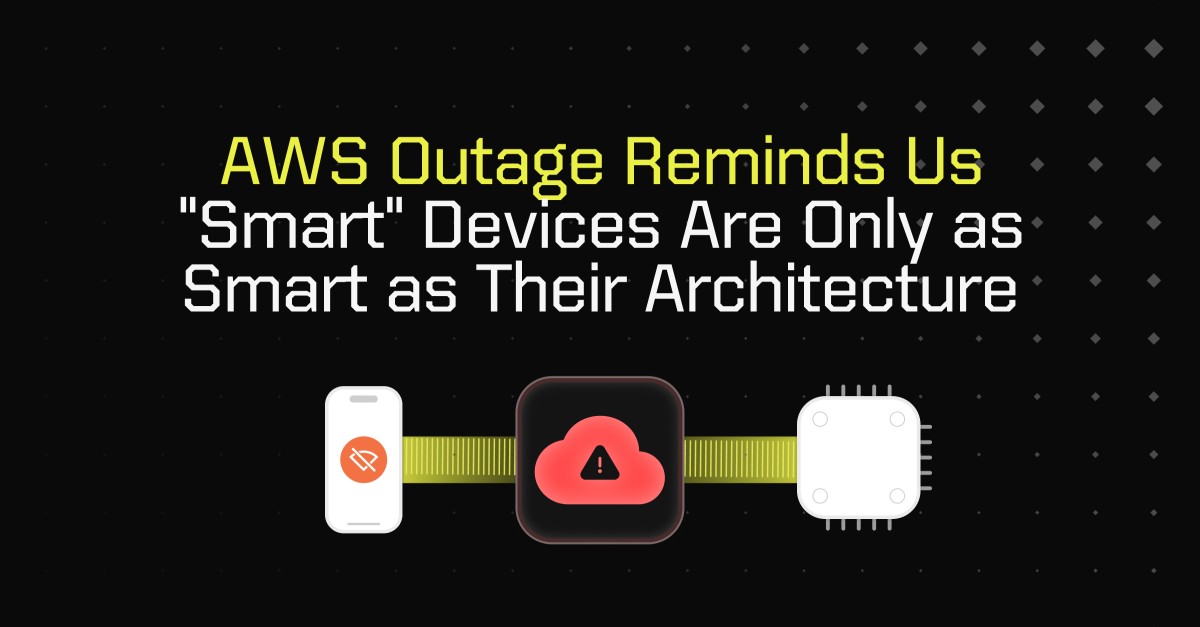
I admit I had a snarky laugh when I first heard about the AWS outage last week. But for a lot of businesses and their customers, there was nothing funny about it. Eight Sleep smart beds locked their settings when AWS failed. Some users roasted all night, others froze. The CEO apologized and promised to add "outage mode" with local control, but consumer consensus was already decided: “Why wasn’t your product shipped with an outage mode?” But it wasn’t just consumer products. 🍞Toast POS failed for 19 hours. 🍔McDonald's logged 7,000 outage reports during breakfast rush alone. 📝 Staff grabbed pens and paper like it was 1995. This isn't new and it will continue to happen as long as companies treat offline as an afterthought, instead of the default. So why hasn't architecture changed? Building cloud-first is easier. One codebase. Centralized updates. Complete control. But mobile and edge devices are growing rapidly in numbers and in importance. It’s no longer acceptable for a single regional outage to brick an entire product, especially when a business is reliant on that product to drive revenue and operations. The problem isn't cloud reliability. The cloud will always have outages. For many products, we're still building cloud-first when we should be building offline-first. At Ditto, we make offline-first the default, not an afterthought. Devices work locally by default and sync to the cloud when beneficial. This isn’t some future state. We already know how to build resilient systems. Many product teams today are facing a critical choice: band-aid my product or build something new, the right way, from the ground up. How many more outages before we stop building products that break when the cloud fails? https://lnkd.in/eki5WTrt #EdgeComputing #ProductDevelopment #Resilience
- DataFlintSince 17 May 2026
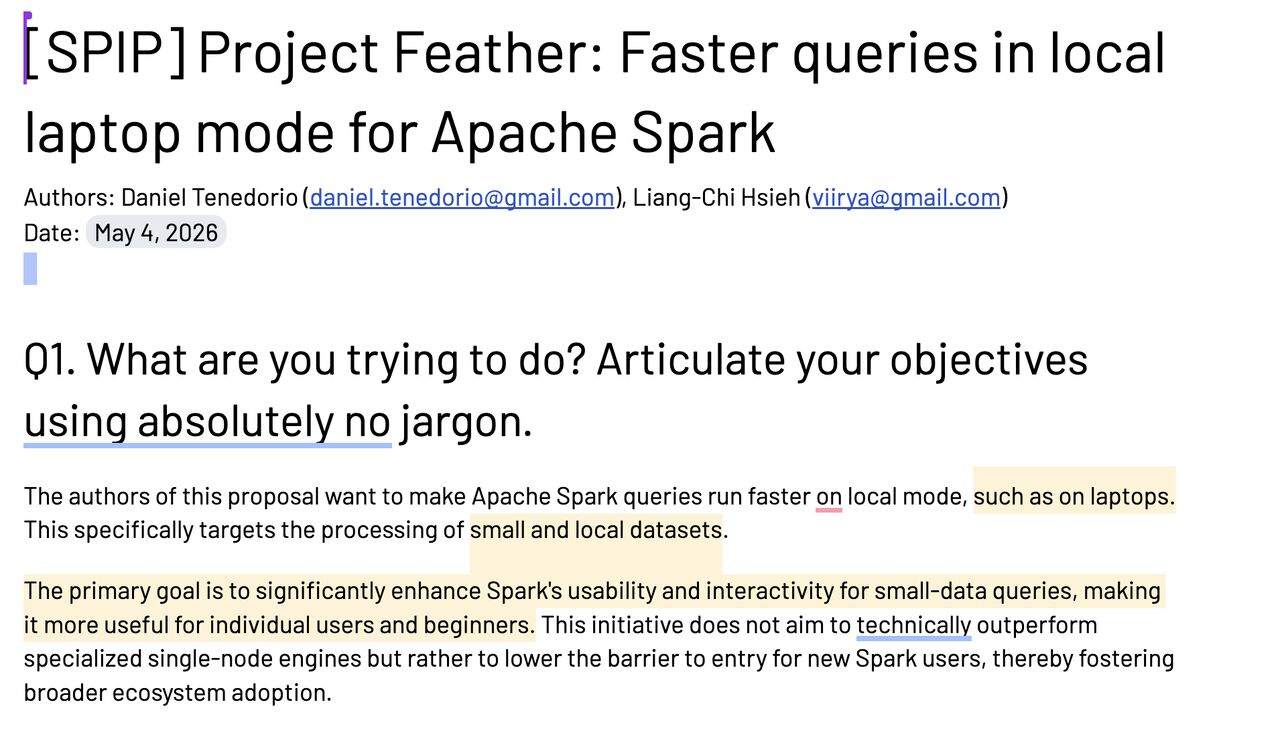
Your Apache Spark unit tests take 3 seconds each. Not because the logic is complex. Because Spark thinks it's on a cluster. A new SPIP (Spark project improvement proposal) called Project Feather targets this. Shout out to Daniel Tenedorio and Liang-Chi Hsieh. Every local test pays for distributed overhead you're not using. Shuffle writes to disk. Serialization between stages. Multi-partition planning for data that fits in memory ten times over. Three fixes: ✅ Smarter partitioning that skips unnecessary shuffles. Prototype: 330ms → 150ms. ✅ Arrow-based df.cache for faster iteration and smaller footprint. ✅ Shuffle-free local execution: in-memory channels, no disk, no serialization. This isn't about beating pandas. It's about making the Spark dev loop fast. 📖 Full SPIP: https://lnkd.in/e5rx_Yds #ApacheSpark #DataEngineering #OpenSource
- DataPeepsSince 6 Aug 2026
📢 Vores undersøgelser viser, at folk i langt højere grad vil arbejde i stedet for at holde fri... For hvis man har god data, så arbejder det altså for én - og ikke omvendt. Men det bestemmer man jo heldigvis selv 😅
- DataPeepsSince 6 Aug 2026
📽️ DataPeeps startede med idéen om, at selv små budgetter skal kunne give adgang til gode data. Før i tiden skulle man være en kæmpestor virksomhed med millionbudgetter og et dedikeret data-team, der kunne sidde og indhente og ajourføre data. Dén tid er heldigvis forbi! 😮💨 For du skal ikke gøre forskel på det, Jonas!
- DatacovesRecorded 15 Sept 2026
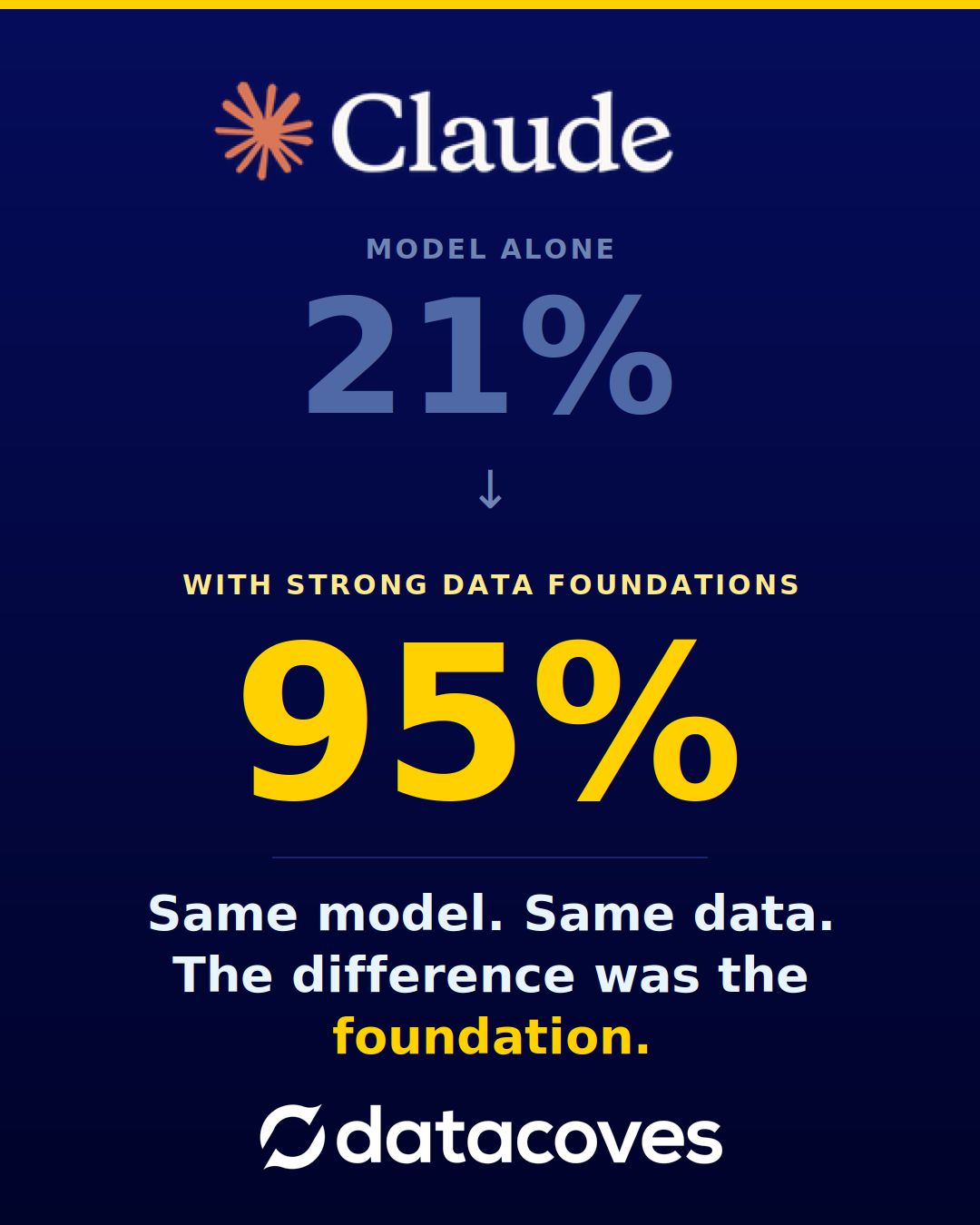
Anthropic automates 95% of their internal business analytics with Claude, at around 95% accuracy. The number that matters more is buried in the writeup. Strip out the skills and reference docs they built on top of their data, and accuracy dropped to 21%. Same model. Same warehouse. The difference was the work to establish a solid foundation. Their team even tried handing the agent thousands of prior queries, every question already answered correctly. Accuracy barely moved. The right answer was usually right there. The agent read it and still got the question wrong. The bottleneck was structure, whether "revenue for product X" resolves to one governed table or forty. This is what we've told Datacoves customers since day one. A solid foundation matters. If something is simple for a human, it will also be simple for AI. Ownership, modeling, testing, documentation, automated governance, none of this changes. AI doesn't make that boring work optional, It raises the cost of skipping it. The friction I see constantly: teams chase a quick win, pick dbt + Snowflake, point an LLM at the warehouse, ship the demo that looks like magic. The dream lasts right up until someone forwards a confidently wrong number. Do the foundation work first. Everything downstream gets simpler and more accurate. I've linked posts in the comments where we've been making this case for years.
- DashmoteSince 15 Aug 2026
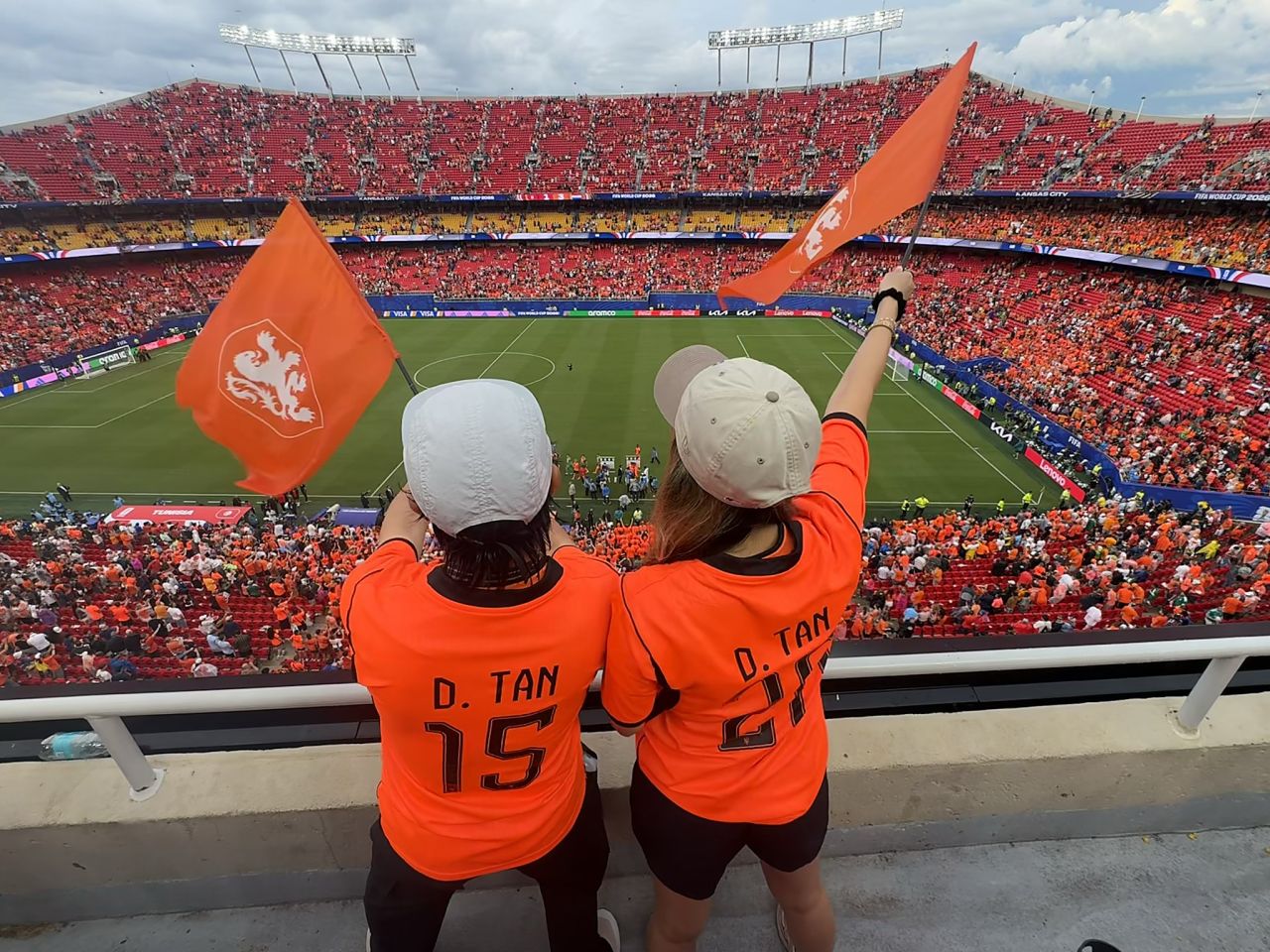
From zero to 88,236 fans and a third of a million map views in 40 days. Shipped over a weekend, zero ad spend. And that is only the part we could count. Stefan and I built Watch Party Radar for a problem we kept running into ourselves. As Dutch fans living abroad, we wanted to watch the World Cup in a full room with other Oranje fans, and finding a bar that was actually showing the match meant going door to door or trusting Google's guesses. We already had the data at Dashmote, so we pointed it at the problem. Watch Party Radar read millions of social posts and venue websites to map which venues were genuinely showing the games, and whether that was all matches, just specific ones, or nights tied to a particular team. By the time the final kicked off, it covered 25,111 venues across 352 cities in 57 countries. On the day of the final alone, the map was viewed 70,194 times. Why "only the part we could count": our maps also ran inside the articles and newsletters of 41+ outlets across 9 countries, where we can't see a single reader. And nobody watches a World Cup match alone. One lookup usually meant a whole table of fans found their spot. Beyond the numbers, the messages from users were the best part: "Nothing, you guys are lifesavers and the pride of builders community." "This is such a good website! We're in Barcelona for a girls trip wanting to watch the England match tonight - ty!" "Just want to say this site is dope and you guys are legends for making it <3" The tournament wrapped up a week and a half ago, but the map kept going: we're nearing the 100k mark. We're already working on what comes next for Watch Party Radar. Stay tuned! P.S. My personal favorite message came from a fan at an Oranje match in Los Angeles: "Oh no! I am at a bar watching NL and they don't have Heineken. (lol)"
- DashmoteSince 15 Aug 2026
AI is changing every job. Groundbreaking, I know. But field sales is an interesting case. Because the job was never supposed to be at a desk. Field reps are hired to be out in the world. Visiting venues, building relationships, knowing their territory better than anyone else in the room. Instead, Salesforce research shows reps spend less than 30% of their time actually selling. The rest goes to admin, CRM updates, and territory research. So the job is one thing. The day is another. That's the problem AI should be solving in field sales. Not automating the pitch or replacing the rep, but clearing everything off their plate that was never the point in the first place. Ironically, that's how AI makes field sales more human.



Other LinkedIn formats
Watch the companies you care about.
Filter every ad by industry, country, format and network, and get alerts when a company you watch starts running new ads.