LinkedIn thought leader ad examples
36 thought leader ads are live on LinkedIn right now, from 52 companies. Browse real ones, filtered by industry.
- Gradient ZeroSince 4 Sept 2026
Healthcare has a Shadow AI problem, and most people running IT already know it. When clinicians can't get to an approved AI tool, a lot of them just open ChatGPT on their phone instead. Not to break the rules, but because they've got a discharge summary to write and twelve minutes to do it. Banning AI doesn't kill the demand, it just moves the demand somewhere you can't see it - off the network, onto personal devices, out of any audit log. Now you've got patient data sitting in a consumer chatbot and no idea it happened. That's the actual risk. Not that clinicians want AI, but that they're using it in the one place you have zero governance. So the fix isn't a stricter policy or another training module telling people to stop. It's giving them a secure tool that's good enough that they don't go looking for the consumer one. If the approved option is slower or clunkier than ChatGPT, people will keep using ChatGPT. Every time. Curious how others are handling this. Are you trying to lock it down, or building a version of AI your staff will actually choose to use?
- Gradient ZeroSince 4 Sept 2026
I used ChatGPT to research my new heart condition. And no, I didn't fire my doctor. It started recently while I was training for a marathon. Like many patients, I wanted to understand the underlying mechanics of my symptoms before my appointment. So I turned to an LLM. Not to replace medical advice (the actual diagnosis and treatment plan obviously came from my cardiologist). Instead, I used it to translate dense medical terminology, understand the physiology, and prepare a highly specific list of questions. But from my experience, when used as an educational layer, these tools don't replace clinical expertise. They help patients become health-literate, informed partners in their own care before they even walk into the consultation room. To the clinicians and healthcare innovators in my network: how are you navigating this shift? Are you finding that AI-informed patients lead to more productive, nuanced consultations, or is it creating new friction in the clinic?
- CAMB.AISince 6 May 2026
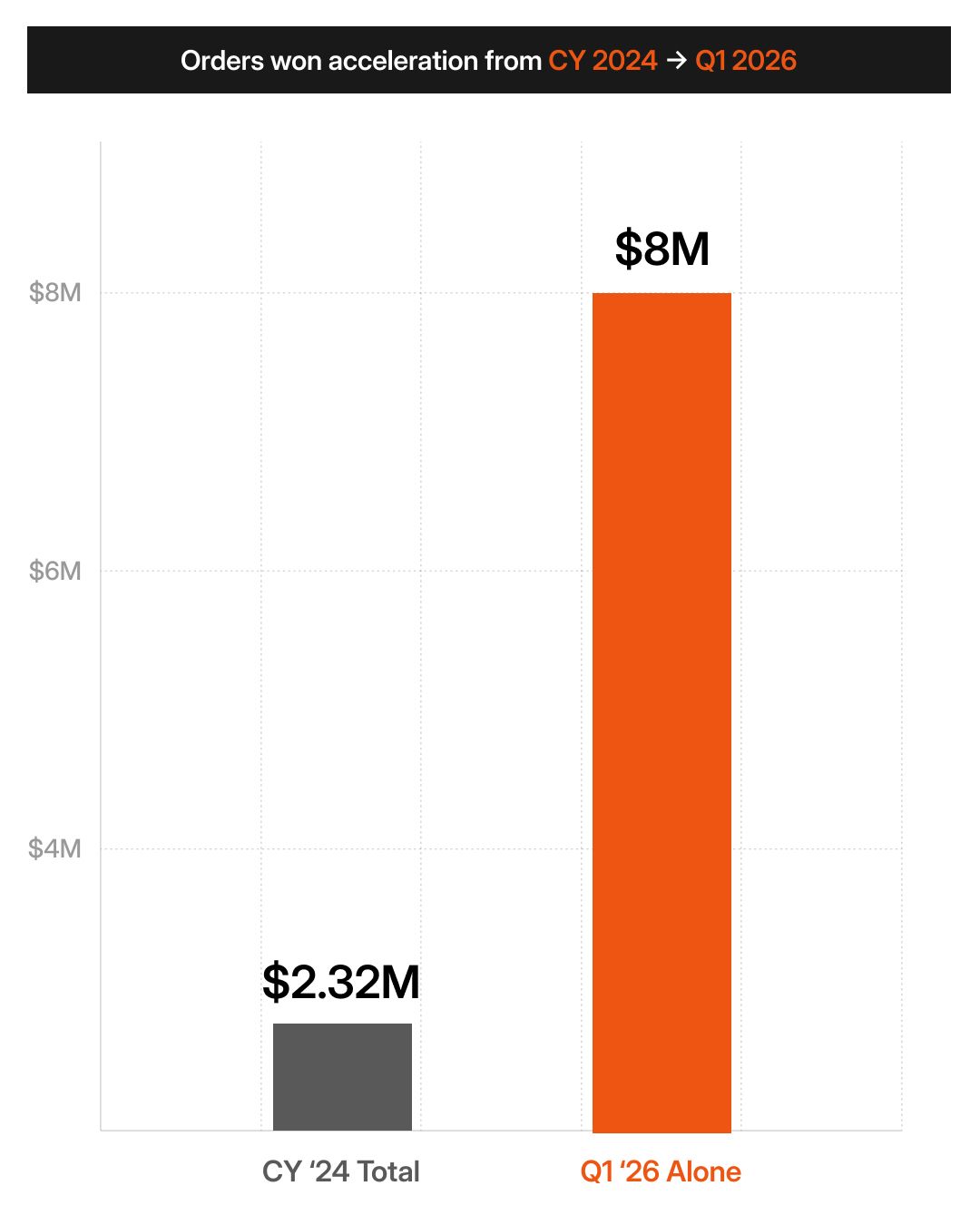
$2.32M in all of CY ’24 → $8M orders booked in Q1 ’26 alone. Q2, already on fire. The market is no longer asking whether AI-driven localization works. It is asking how fast it can be deployed, at scale. But, localization wasn't going to reach internet-scale by improving the workflow. Many tried to shoehorn AI into it and “make the workflow efficient”. Nah. We learnt that the workflow ITSELF had to disappear. That is exactly what CAMB.AI pioneered. Broadcast-grade speech localization that runs by itself. Live. At scale. Anywhere. We proved it first in live sports, where there are no second chances. Crowd noise. Slang. Emotion. Multiple speakers. Large sports brands on the line. Millions watching, in real-time. Couldn’t make this sh*t up. One feed. Every language. New markets. New revenue. Not cheaper localization. But a larger internet, for everyone. Now the same infrastructure is moving across sports, media, news, entertainment, enterprise, cloud, on-prem, and edge. Faster and faster every day. We’re hiring exceptional Enterprise Sales talent across sports, media, and entertainment. Comment GOCAMB and we’ll send you our thesis on how content and knowledge reach 8Bn people, at internet scale. As always, keep the mamba moving.
- CAMB.AISince 18 Jun 2026
The internet was built for English speakers. Today, Vodafone and CAMB.AI took one more step towards fixing that. CAMB.AI, with VOIS and Tomorrow Street, has brought real-time multilingual AI into Vodafone contact centers across Europe. A customer speaks in the language they are most comfortable with. An agent responds in the language they know best. Live speech-to-speech translation, with tone, intent and nuance preserved, powered by MARS8. Here's what's under the hood: - Support for 150+ languages. - Sub 1 second latency. Always. - Preserves tone and emotion. - Handles interruptions. Handles crosstalk. - Plug and play. The challenge in real-time S2ST isn't optimizing TTS from 350ms to 150ms; it's managing the latency of physics when two humans are actually in conversation with an AI interpreter in between. Not one direction, but a live loop. Human → AI → Human, back and forth. Now, it just works. We’re also excited to announce the opening of our European HQ in Luxembourg as we expand across the wider European market! The next internet cannot be just in English. It has to be for 8Bn people. Huge thank you to Gary Adey, Sara Robles Moreno, Kanika Aggarwal, the VOIS team, Tomorrow Street, Vodafone, and the CAMB team for making this real. Job’s not done. As always, Mamba mentality 🐍
- BlaxelSince 30 Jul 2026
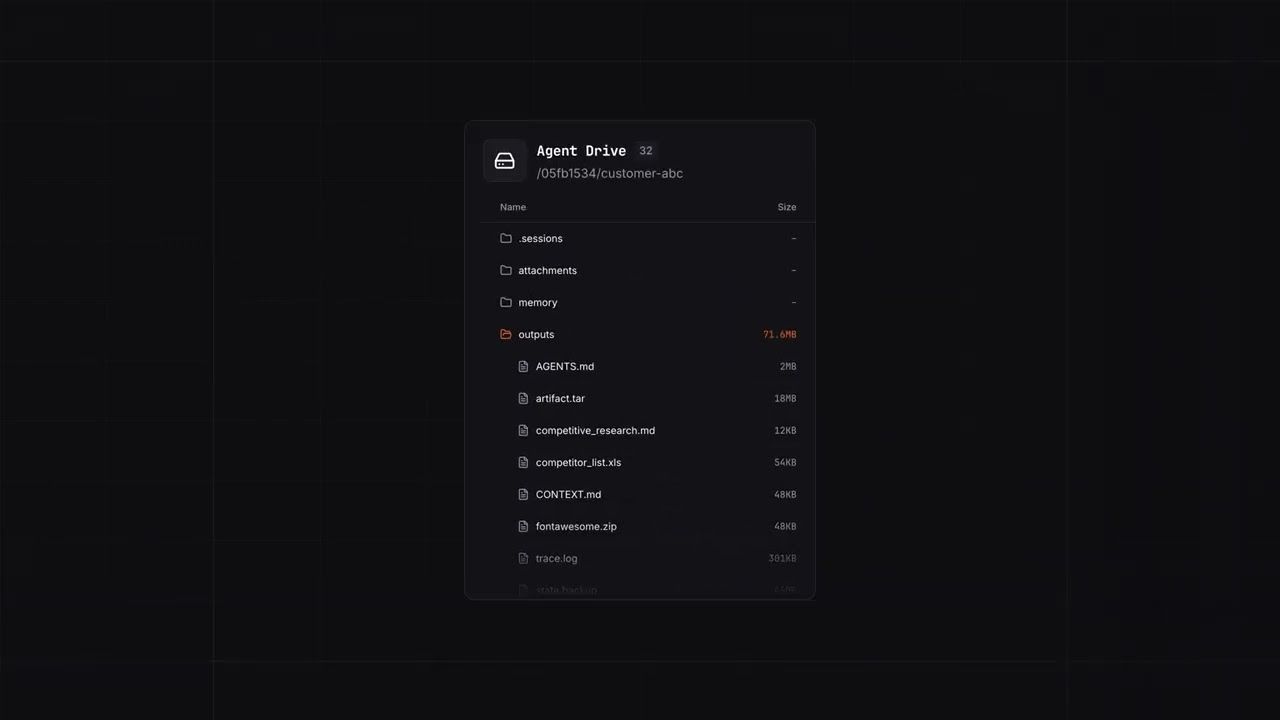
We just shipped the product we're most excited about since we launched Blaxel: Agent Drive. tl;dr: It’s a shared filesystem for AI agents. Mount it to multiple sandboxes at the same time, with concurrent read-write access. Write a file in one sandbox, read it from another. For agents, it becomes a shared memory layer that lives outside any individual sandbox. https://lnkd.in/eAUTf7Ms Here’s why we built it. Over the past year, we’ve worked with hundreds of teams running agents in production. The pattern keeps showing up. Once the harness and sandbox are solved, the next bottleneck is sharing context across runs. Teams end up building custom S3 or GCS export-and-import pipelines. Or they accept that every agent session starts from scratch. That means redundant token usage, slower resolution times, and engineering time spent on plumbing instead of product. Agent Drive removes that handoff layer. Agents share a filesystem the way teams share a Google Drive folder, except it is purpose-built for agentic workloads: - Small-to-medium files - High concurrency - Frequent reads and writes across multiple sandboxes Agent Drive is in private preview. If you are building multi-agent systems or agentic workflows that need shared context, I’d love to hear what your agents need to share. Docs: https://lnkd.in/eA_sa6d6
- Arabic.AIRecorded 8 Sept 2026
هل قد جربت تستخدم ChatGPT وقلت لنفسك… “الكلام حلو، بس أحسه مو دقيق… أو حتى مو له علاقة بالسؤال؟” 😅 ترا مو بس إنت! أغلب نماذج الذكاء الاصطناعي العالمية متدربة على بيانات إنجليزية ومصادر غربية، فإذا سألتها شي عن منطقتنا، ثقافتنا، أو لهجتنا العربية — ما تفهمك. تخمن. وهنا تبدأ تطلع أرقام غلط، معلومات قديمة، أو إجابات كذا… ما تشبهنا أبد. وهنا يجي دورنا في Arabic.ai 🇸🇦✨ إحنا نبني ذكاء اصطناعي “عربي بالأصل”، مدرَّب على لغتنا ولهجاتنا وقطاعاتنا. ما نترجم التقنية… نُوطنها. لكي تخدم السعودية، الخليج، والعالم العربي. النموذج الكبير عندنا (LLM) متدرّب على بيانات عربية حقيقية — من قطاعات مثل البنوك، والجهات الحكومية، والتجزئة، والخدمات اللوجستية، وأكثر. وفي Arabic.ai إحنا نطوّر منظومة كاملة من الوكلاء الذكيين (AI Agents) — لكل مجال: البنوك، المخاطر، الامتثال، الترجمة، القانون، وخدمة العملاء. كل وكيل يتكلم عربي، يفهم اللهجات، ويتوافق مع قوانين البيانات ، ويتكامل بسهولة مع أنظمة الشركات الداخلية. ولأن الثقة والأمان شي أساسي، كل اللي نسويه مبني على سيادة البيانات، الشفافية، وخيارات on-premise للجهات اللي ما تقدر تخاطر وتطلع بياناتها برا المملكة. فالمرة الجاية إذا أحد قال: “الذكاء الاصطناعي ما يفهم عربي…” قل له ببساطة: جرب Arabic.ai 💡 إحنا نثبت كل يوم إن منطقتنا تستحق تقنية تتكلم لغتنا — مو بس بالحروف، بالعقل. 💭 ✨ Arabic.ai — Where Arabic Meets Intelligence. Arabic.AI
- Arabic.AIRecorded 8 Sept 2026
From Accuracy to ROI: When AI Starts Making Real Business Sense Every company wants to “do AI,” but few ask the real question: At what point does AI actually start creating value worth investing in? That point is what I like to call your Minimum Viable Accuracy — the level of accuracy your AI model needs to reach before it makes economic sense to deploy it. Below that threshold, it’s an experiment. Above it, it becomes an engine of measurable ROI. When accuracy improves: - You reduce uncertainty in decision-making - You optimize operations and cut waste - You predict risk instead of reacting to it - You turn better information into better margins AI isn’t just about algorithms — it’s about knowing when prediction quality starts driving profit. The lesson? Don’t just build AI models. Build models that pay off. Arabic.ai Arabic.AI
- AI21 LabsSince 23 Aug 2026
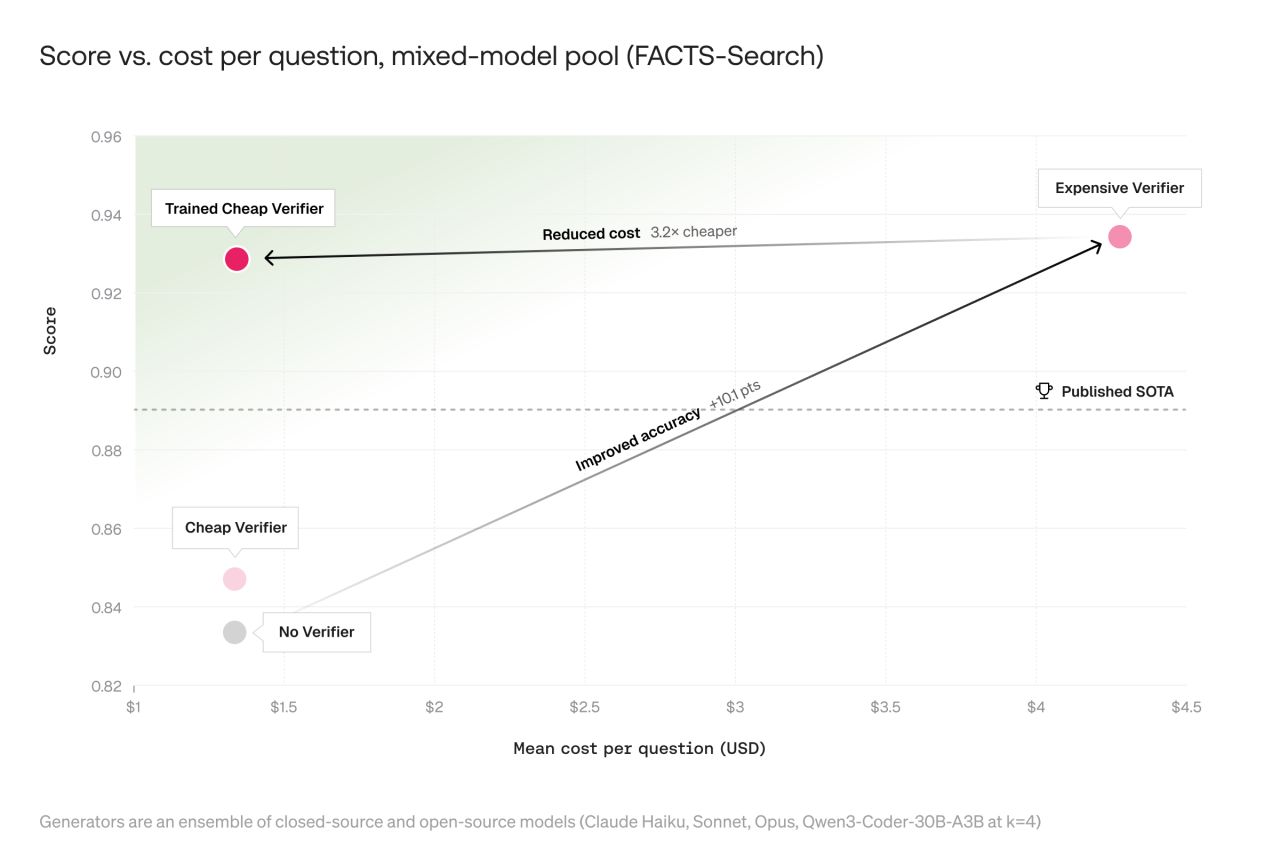
Adding a verifier elevates every agentic AI system - but frontier verifiers are expensive. The good news: you can train a dedicated verifier and serve it at a fraction of the cost. In agentic search, the right answer is usually already in the pool. The system just doesn’t pick it. Majority voting can’t fix that. It simply ratifies whatever the crowd already believes, even when the crowd is wrong. What works: an independent verifier that re-researches every candidate and vetoes the bad ones. Only the survivors get voted on. On Google DeepMind’s FACTS-Search: • Frontier verifier: 83.3 → 93.4 (past published SOTA of 89.4) • Our trained 8B verifier: 92.9 at 3.2× lower cost It also generalizes to a new benchmark and search tool it never saw during training. This is the kind of result I like most - not just throwing a bigger model at the problem, but finding a better way to decide which answer to trust. Great work by Guy Freund, Eran Goldstein, Niv Granot & Yuval Belfer. Full post + training details → https://lnkd.in/gqgUJsfx
- adaptionRecorded 3 Sept 2026
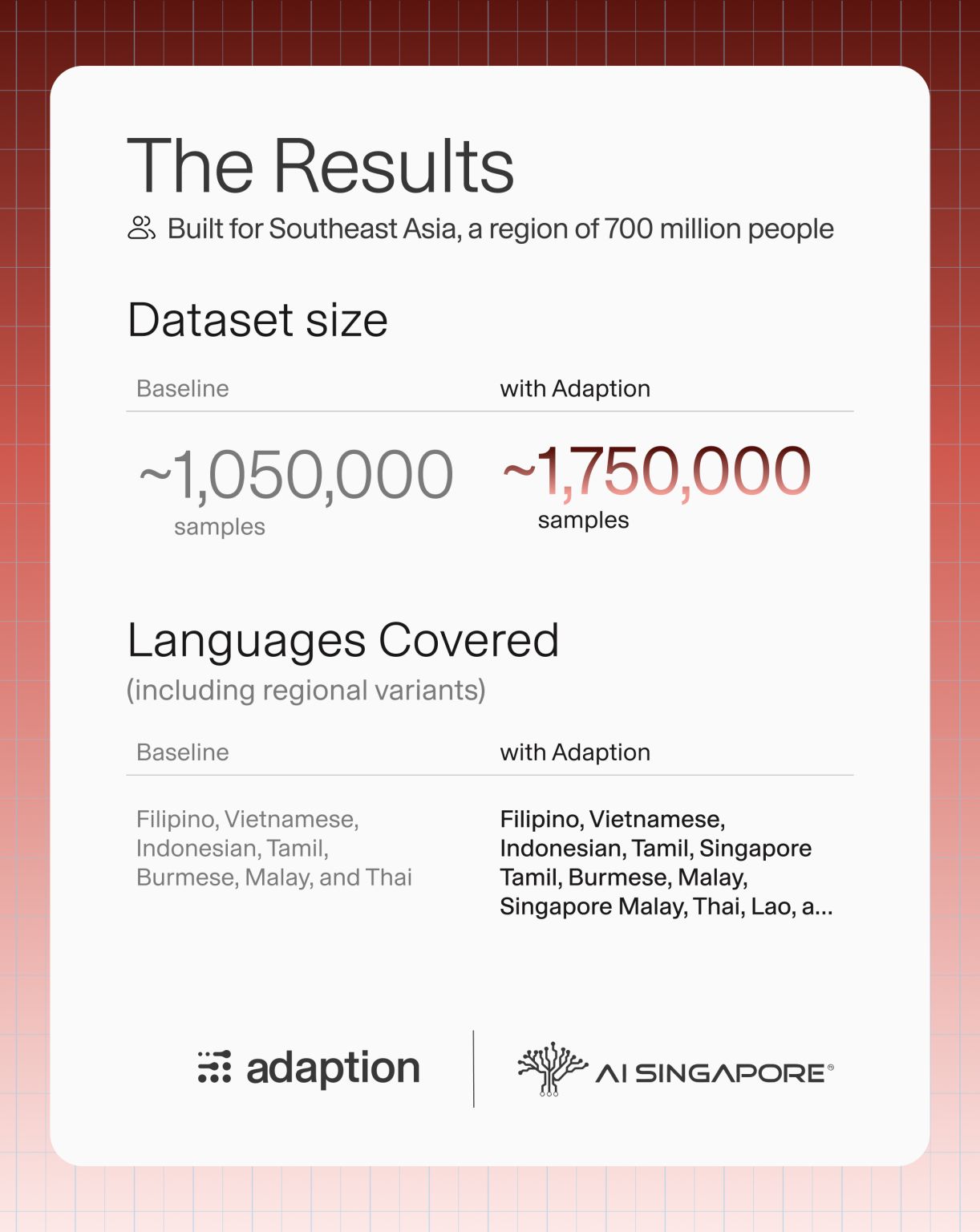
Southeast Asia is home to 700 million people and over a thousand languages. Most frontier models were trained on English-first data. We’ve been working with AI Singapore to close that gap for their SEA-LION models. More data, more language coverage, better quality. Proud of what this team and AI Singapore's team built together.
- Agent.aiRecorded 3 Sept 2026
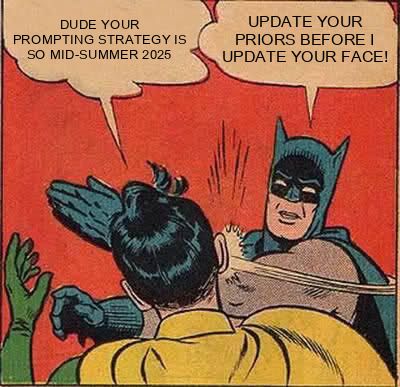
Ethan Mollick -- Laura Fitton and I love your posts on the "evolution" of prompting. Given how fast "best practices" evolve are you "collecting" your insights on your blog or elsewhere?
- Agent.aiRecorded 3 Sept 2026
The next decade of work won’t be won by those who know the most — but by those who ask the most. We’re entering an era where curiosity is the new competitive advantage. The best leaders, salespeople, and operators won’t be defined by their technical depth, but by their ability to learn fast, experiment boldly, and bring others along. AI isn’t here to replace you — it’s here to reward your curiosity. Those who lean in, ask “what if?”, and explore new tools will unlock new ways to create value. Agent.ai just published this idea in more depth here: 👉 “The Future of Work Belongs to the Curious, Not the Technical.” https://lnkd.in/e2_EEetz Apple inspired us to think different. Agent.ai exists to stay curious. Stay curious, my friends — and start with a question. #AI #FutureOfWork #Curiosity #AgentAI
- 2021.AISince 6 Jan 2026
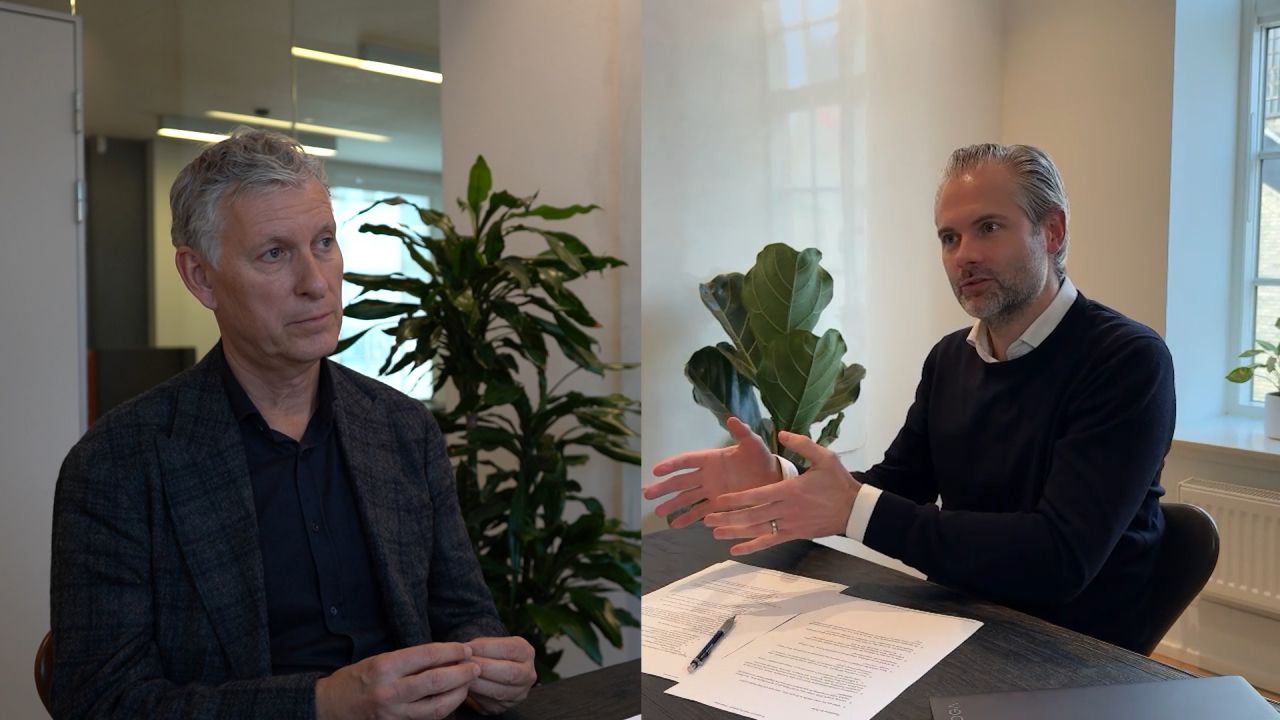
AI: Implement or Employ? NVIDIA CEO Jensen Huang recently said IT will become the HR for AI agents. I agree with this analogy, but in my experience, it goes far beyond IT. LLM-based chat-agents are already becoming part of the workforce, engaging with customers and making decisions on behalf of companies. I discussed this with Peter Sondergaard and it raises the question: 💡 If AI agents are part of the workforce, what does it take to manage them? Success with AI requires us to look beyond implementation—We have to look at AI as if we employ it, defining its role, responsibilities, mandate and ensuring the AI agents are aligned with our company strategy. Just like human employees, AI agents need leadership. ✔️ Who sets their boundaries and measures performance? ✔️ How do we ensure they operate responsibly? ✔️ What new leadership tools are required in an AI-driven workforce? The shift is happening. Are we ready to lead AI, not just deploy it? Watch the full AI Watch here https://lnkd.in/g4StUzCm #AI #AILeadership #GenAI #AIGovernance
- 2021.AISince 6 Jan 2026
🚨 𝗪𝗲’𝘃𝗲 𝗦𝗲𝗲𝗻 𝗧𝗵𝗶𝘀 𝗕𝗲𝗳𝗼𝗿𝗲. 𝗪𝗲 𝗜𝗴𝗻𝗼𝗿𝗲𝗱 𝗜𝘁 𝗧𝗵𝗲𝗻. 𝗪𝗶𝗹𝗹 𝗪𝗲 𝗜𝗴𝗻𝗼𝗿𝗲 𝗜𝘁 𝗔𝗴𝗮𝗶𝗻? Some decades ago, companies rushed to adopt best-of-breed ERP systems—each one a specialist tool, often from different vendors, tailored to solve a specific business need. 𝗪𝗵𝗮𝘁 𝗳𝗼𝗹𝗹𝗼𝘄𝗲𝗱 𝘄𝗮𝘀 𝗶𝗻𝘁𝗲𝗴𝗿𝗮𝘁𝗶𝗼𝗻 𝗵𝗲𝗹𝗹. Disconnected systems. Data silos. Fragmented workflows. Shadow IT. A lack of unified oversight. And above all: a massive governance gap. Few organizations had the structures in place to manage the complexity—and the cost of trying to regain control was steep. Fast forward to today: 𝗪𝗲'𝗿𝗲 𝗻𝗼𝘄 𝘄𝗶𝘁𝗻𝗲𝘀𝘀𝗶𝗻𝗴 𝗮 𝘀𝗶𝗺𝗶𝗹𝗮𝗿 𝗽𝗮𝘁𝘁𝗲𝗿𝗻 𝗲𝗺𝗲𝗿𝗴𝗲 𝘄𝗶𝘁𝗵 𝗚𝗲𝗻𝗲𝗿𝗮𝘁𝗶𝘃𝗲 𝗔𝗜 𝗮𝗻𝗱 𝗮𝘂𝘁𝗼𝗻𝗼𝗺𝗼𝘂𝘀 𝗮𝗴𝗲𝗻𝘁𝘀. Organizations are enthusiastically deploying AI models and agents across departments and functions. One for content. One for customer support. Another for analysis. Yet another to summarize meetings. Each doing their own thing. Each evolving in its own way. 𝗕𝘂𝘁 𝘄𝗵𝗲𝗿𝗲’𝘀 𝘁𝗵𝗲 𝗴𝗼𝘃𝗲𝗿𝗻𝗮𝗻𝗰𝗲? • Where are the controls? • The audit trails? • The coordination between autonomous systems? • The accountability if something goes wrong? Just like with ERP, the signs are already there: • Agents acting unpredictably • AI decisions that no one can fully explain • Overlapping tools with no ownership • Business leaders unsure who’s responsible for what And yet—very few are seriously addressing the governance layer. If this gap remains unaddressed, the costs will be immense. So will the risks. We’ve been here before. 𝗪𝗲 𝗸𝗻𝗼𝘄 𝗵𝗼𝘄 𝘁𝗵𝗶𝘀 𝘀𝘁𝗼𝗿𝘆 𝗲𝗻𝗱𝘀 𝘄𝗵𝗲𝗻 𝗰𝗼𝗻𝘁𝗿𝗼𝗹 𝗶𝘀 𝗮𝗻 𝗮𝗳𝘁𝗲𝗿𝘁𝗵𝗼𝘂𝗴𝗵𝘁. The question is: will we make the same mistake again? #AI #Governance #GenAI #EnterpriseTechnology #DigitalRisk #TechLeadership #LessonsFromThePast

Other LinkedIn formats
Watch the companies you care about.
Filter every ad by industry, country, format and network, and get alerts when a company you watch starts running new ads.