LinkedIn image ad examples
318 image ads are live on LinkedIn right now, from 192 companies. Browse real ones, filtered by industry.
- AgileRLSince 27 Oct 2026
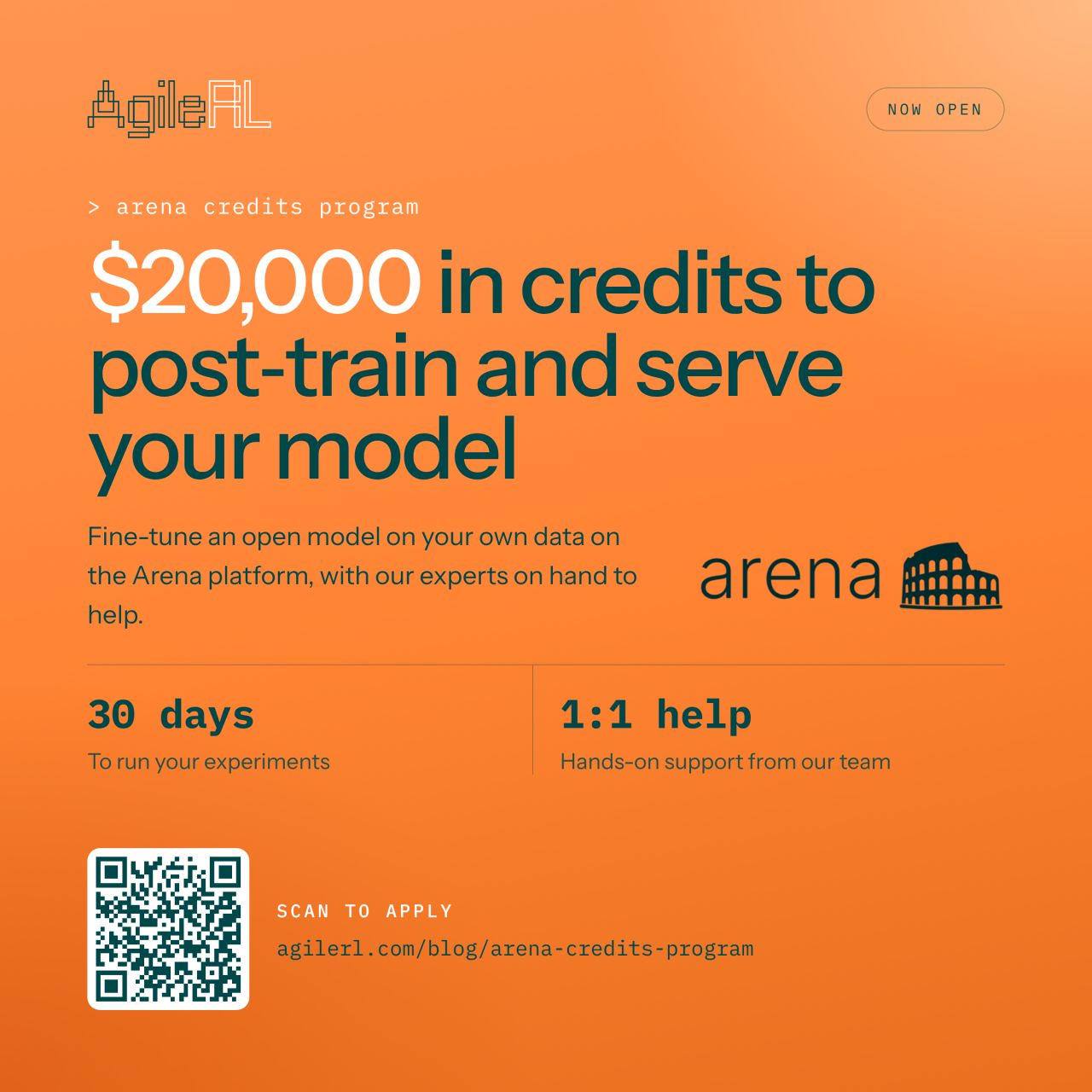
We are giving enterprise engineering teams $20,000 in Arena Credits to train and deploy their own model on Arena. Training a model of your own takes compute, time and engineering effort. These credits are there to make the first one easier to start. Why it is worth doing: - Keep control. A model you host runs where your data already lives, and its availability no longer depends on an external provider. - Contain costs. Per-token pricing grows with every request, while self-hosting is paid per hour of compute, and that trade improves the larger your organisation is. - Performance on your tasks. A smaller model trained for one job can outperform a frontier model at that job. A frontier API is a good place to start. When its output reads like a junior hire, rather than an experienced senior, that is usually the point to train a model of your own. You can apply at https://lnkd.in/eqZ3KgFm
- AgileRLSince 27 Oct 2026
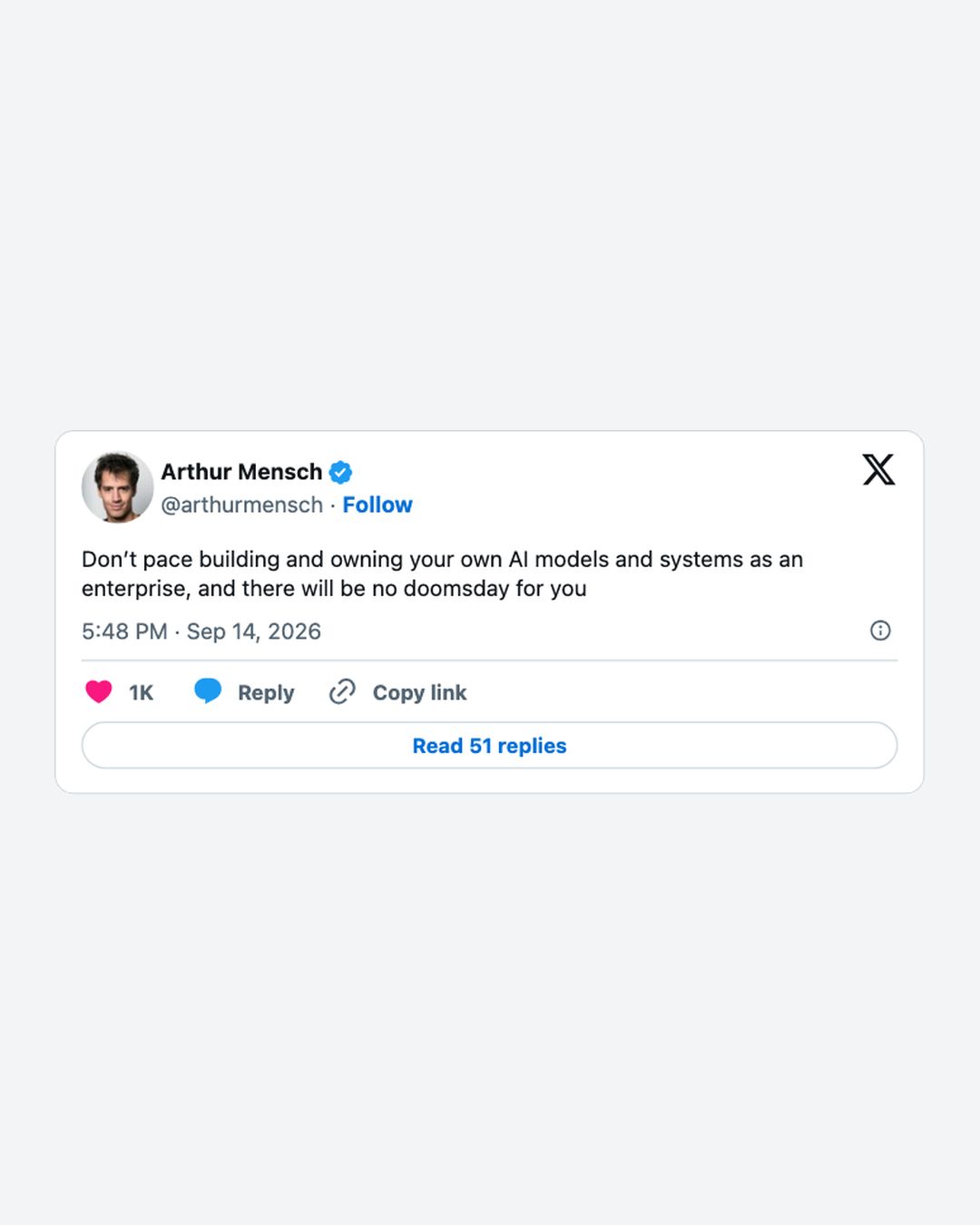
When AI budgets get cut, the frontier API bill will be the first to go. Arthur Mensch put the other side of it well: "Don't pace building and owning your own AI models and systems as an enterprise, and there will be no doomsday for you." If the market turns and AI spending falls, finance looks first at the cost that keeps accelerating with usage. That's the frontier. Every extra call costs more, and none of it stays in the business. A model you've trained on your own data works differently. It runs on your infrastructure, it's built for your use case, and it gets better every time you retrain it. That's an asset you own, and it's much harder to cut. So I'd expect a downturn to drive an even larger migration to open source. And if you're already building your own intelligence on open-weight models, brilliant. Keep at it. This is exactly what we help enterprises do at AgileRL.
- Codvo.aiSince 27 Oct 2026
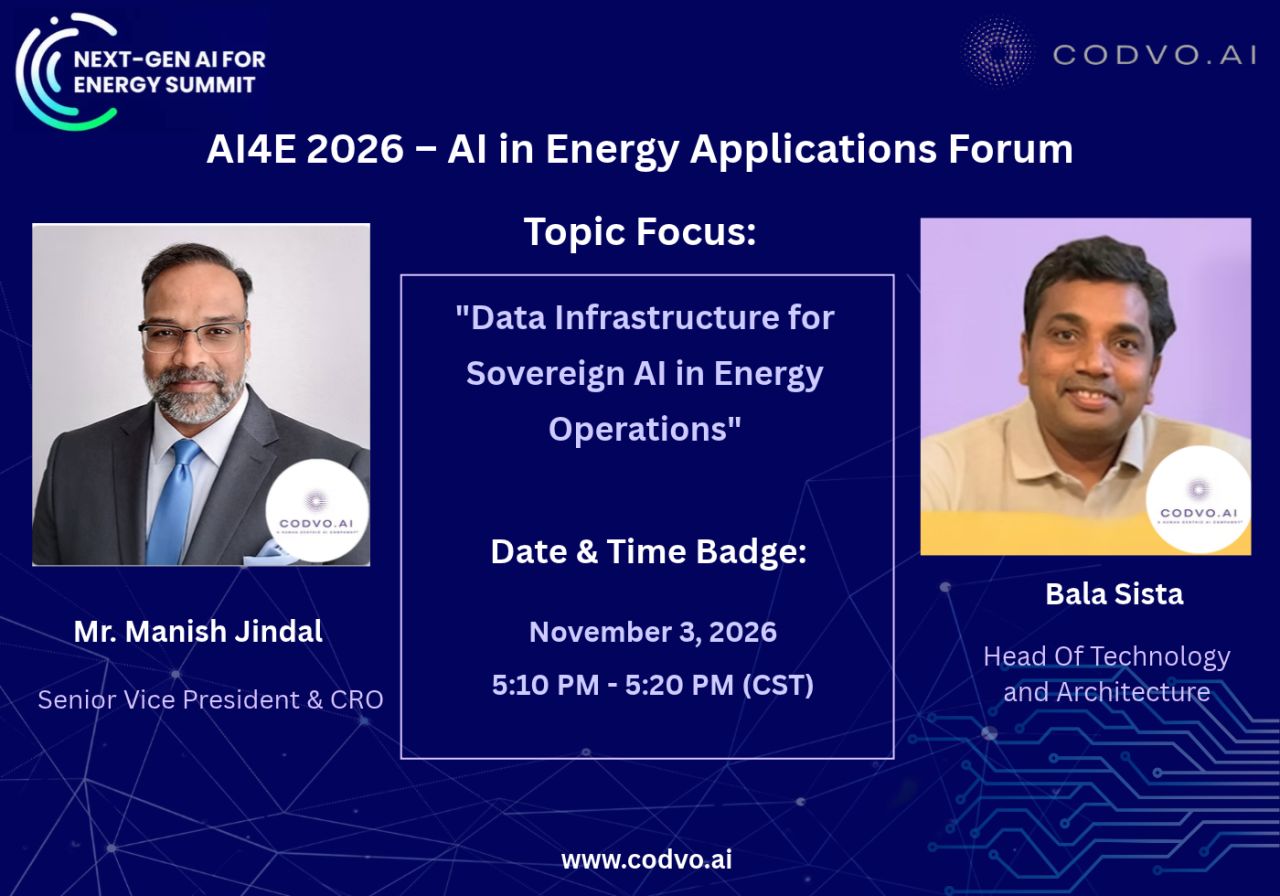
Building the foundation for sovereign AI in energy. How can energy companies turn AI investments into measurable business value while maintaining control over their data and intelligence? At the Next-Gen AI for Energy Summit 2026 (AI4E2026) in Houston, Manish Jindal, Senior Vice President & CRO, and Bala Sista, Head of Technology and Architecture at Codvo.ai, will join for a joint speaking session on: “Data Infrastructure for Sovereign AI in Energy Operations” 📅 November 3, 2026 🕔 5:10 PM – 5:20 PM CST 📍 Houston, Texas, USA The session will explore how energy organizations can build the data foundations needed to move AI beyond experimentation and into real-world operations—with measurable ROI, stronger decision-making, and control over their data and AI infrastructure. Key themes include: 🔹 Sovereign AI: Keeping enterprise data and intelligence under organizational control. 🔹 AI-ready data infrastructure: Connecting fragmented data across complex energy operations. 🔹 Technology with ROI: Translating AI investments into operational efficiency and measurable business outcomes. At Codvo.ai, we believe successful enterprise AI requires more than powerful models. It takes trusted data, the right infrastructure, and a clear path from innovation to business impact. Your intelligence. Your advantage. Book your Delegate passes now. #AI4E2026 #NextGenAI #EnergyAI #SovereignAI #DataInfrastructure #EnterpriseAI #CodvoAI Amit Verma Manish Jindal Bala Sista INDRANIL PAUL Sumeet Sadhu Codvo.ai #oilandgas OilandGas.World Arpita Chatterjee Lakshya Singh Deepak Kulkarni VISHAL JHA
- BasetenSince 27 Oct 2026
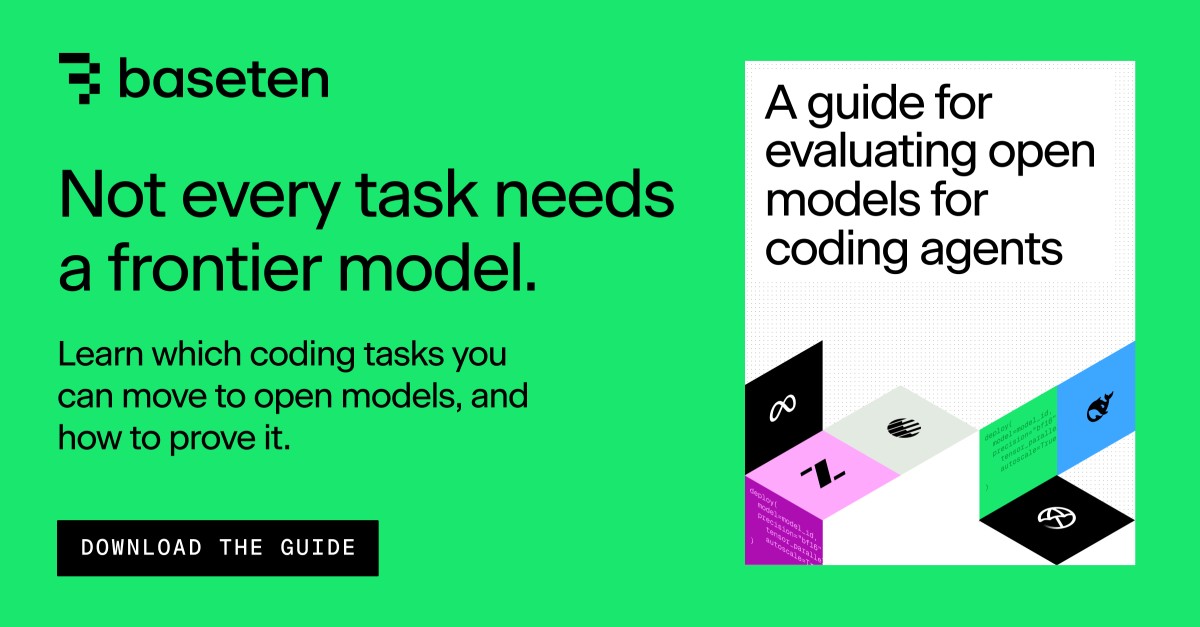
Generic benchmarks can’t tell you how an open model will do on your repos. Our guide to evaluating open models for coding agents shows you how to run a pilot on your own workloads, without changing your harness. Download now.
- Arcade.devSince 28 Oct 2026
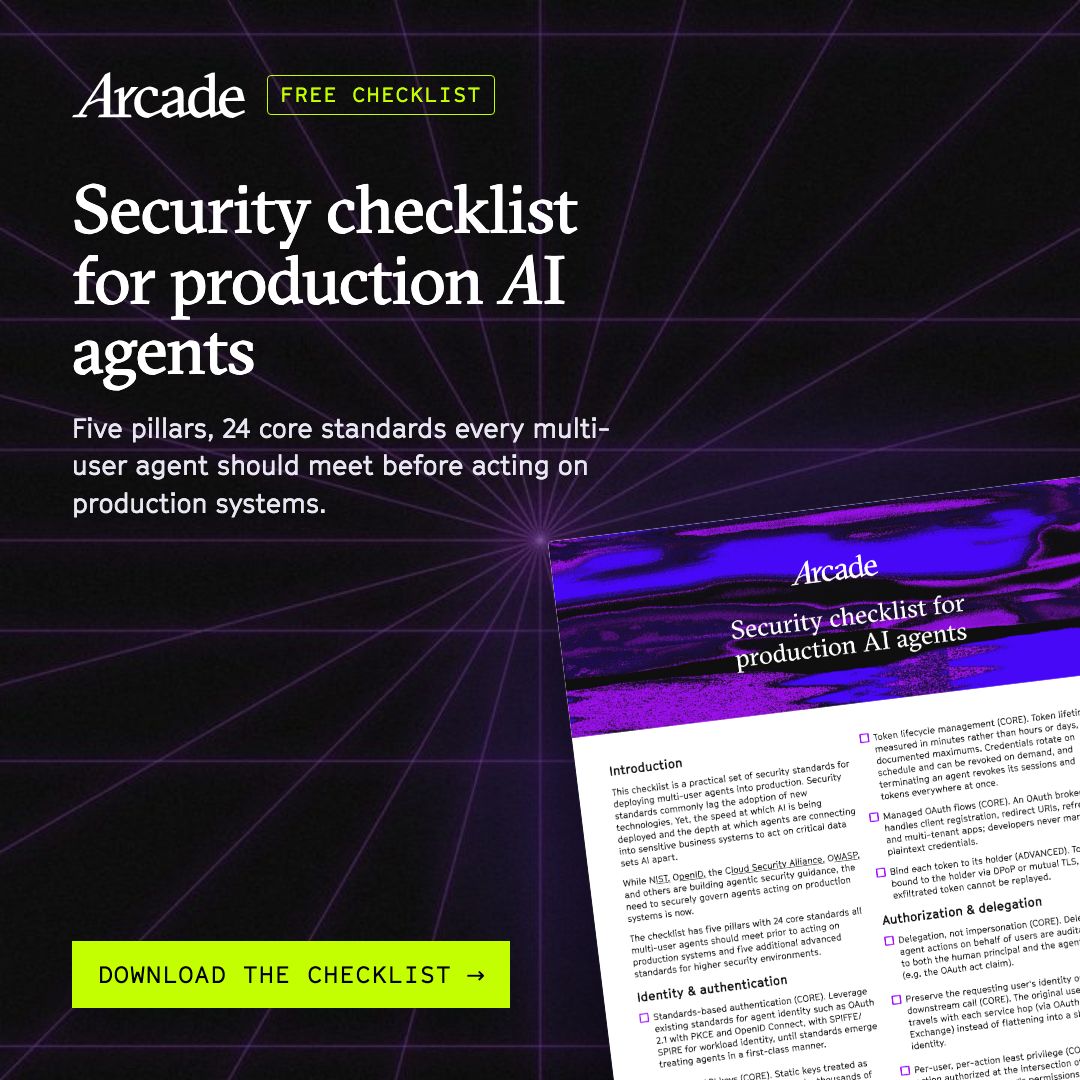
AI agents are starting to act on production systems faster than security standards can keep up. Our free checklist covers five pillars and 24 core standards every multi-user agent should meet before acting on production systems, plus 5 advanced standards for higher-security environments.
- BasetenSince 27 Oct 2026
Your code is sensitive. Baseten runs open models in Codex with zero data retention for prompts. Your security team will thank you.
- ElevenLabsSince 28 Oct 2026
Prime Minister Narendra Modi in interview with Lex Fridman - AI dubbed to English with ElevenLabs. Just landed back in London from India, coming off the incredible energy at AI Impact Summit in New Delhi. On the flight home, I rewatched part of this conversation from a year ago. A lot of what’s now becoming real was already visible in the questions and themes back then. And it feels especially fitting that it was AI dubbed to English already then, when the technology was just becoming available - thanks to amazing partnership with Lex Fridman! Many of the ideas we discussed at the summit have also been in motion for a long time - and now they’re only accelerating. In some ways it feels like homecoming for us at ElevenLabs because India is so voice-first. That’s part of why so many incredible use cases start here early - from customer support, experience to interactive education - with number of amazing partners like Meesho, Cars24, TVS Motor Company, PW (PhysicsWallah), IDFC FIRST Bank or invideo. The momentum in the region is just getting started. Thanks for the inspiration - excited for the next visit. https://lnkd.in/e4yDSeEV
- ElevenLabsSince 28 Oct 2026
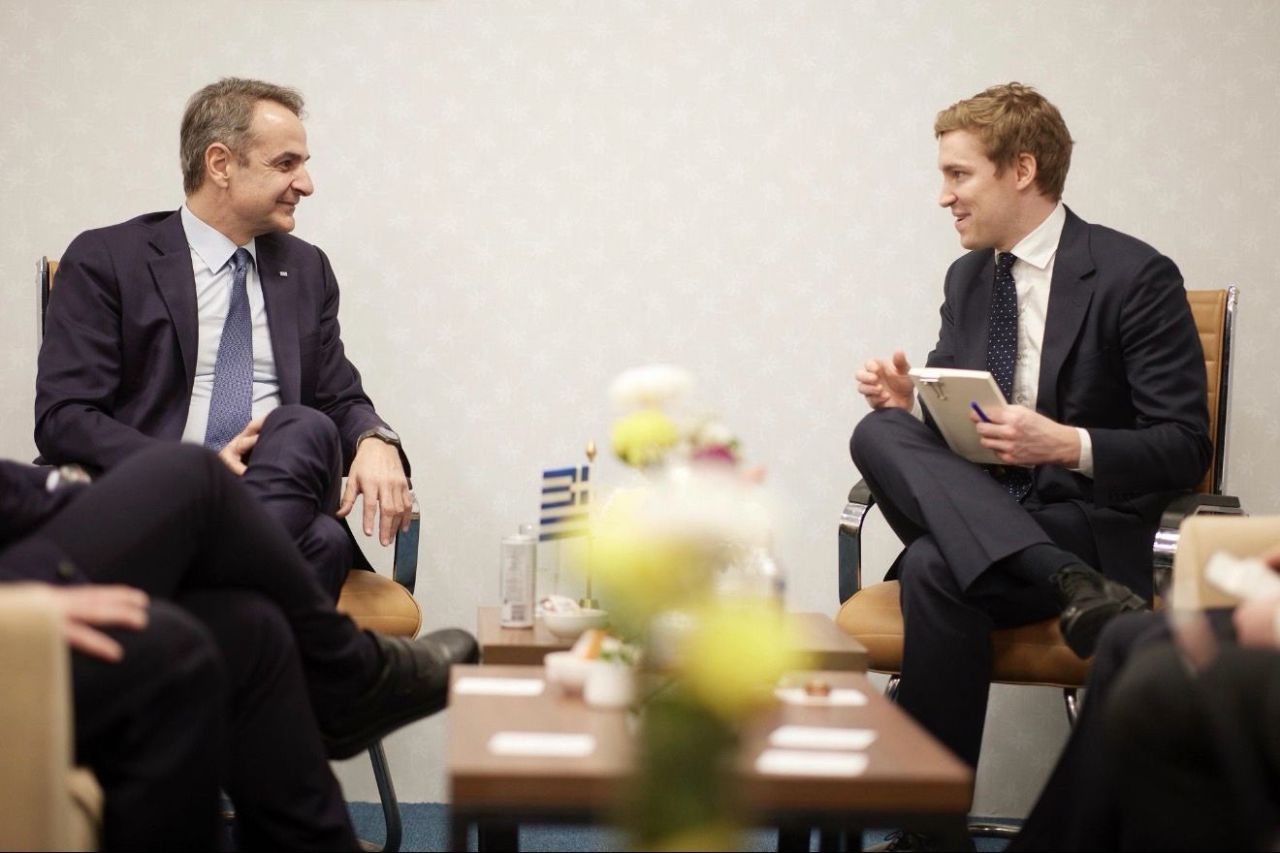
It was a pleasure to meet the Greek Prime Minister Kyriakos Mitsotakis last week at the AI Impact Summit. Greece is doing pioneering work - ambitious, tech-forward initiatives like gov gr are already making it much simpler for citizens to access the public services they need. It was great to talk about how responsibly deployed AI can build on that foundation, and about the future of AI in government, European innovation, and Greece’s trajectory - building on an impressive pace of progress over the past few years, with even more to come. And we already have some incredible team members from Greece - and it’s easy to see where that talent and ambition come from. Excited to be back in Greece in May to continue the conversation - and, of course, to enjoy a bit of the weather too!
- DataikuSince 27 Oct 2026
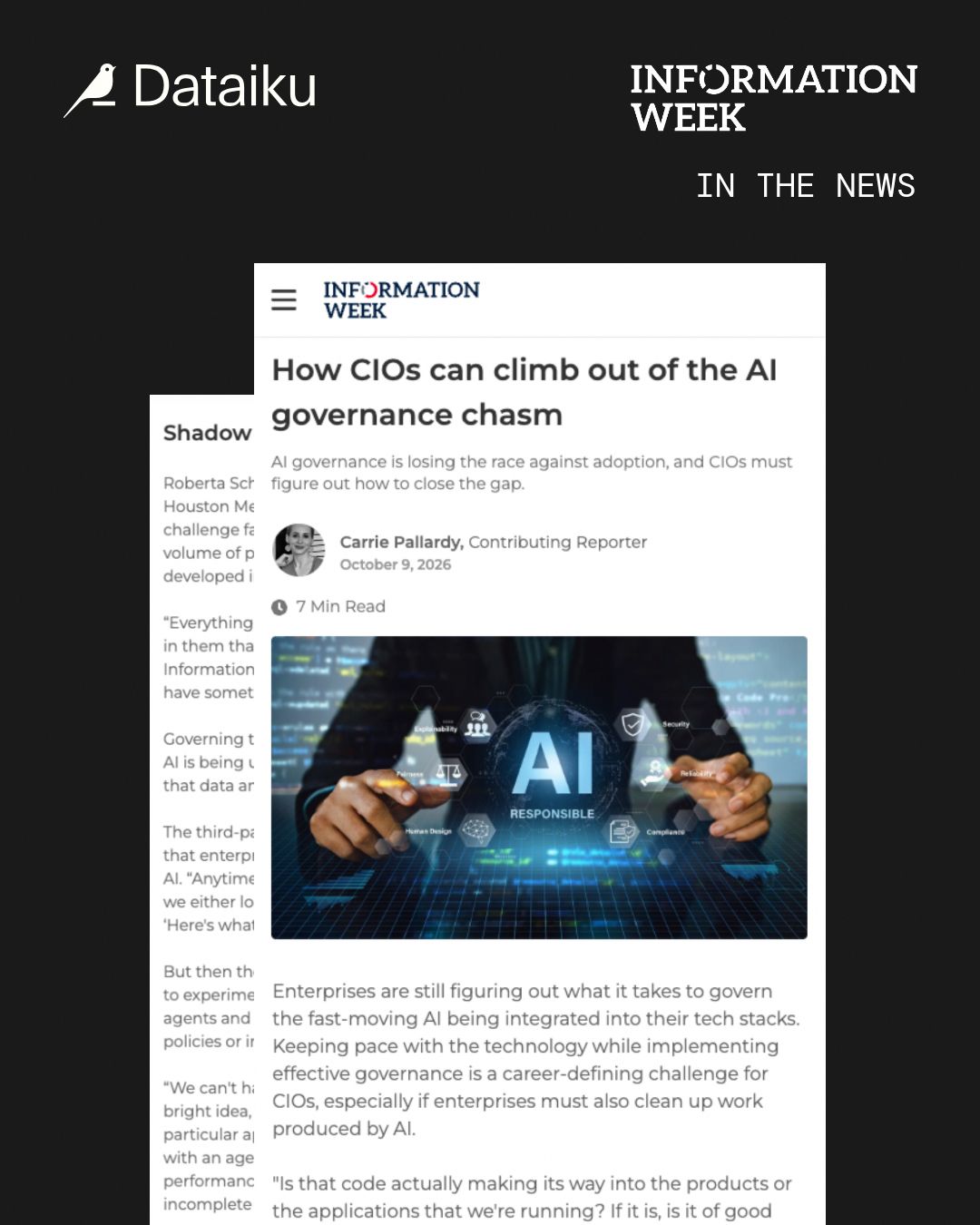
If the person reviewing an agent’s work can’t keep up, what exactly are they approving? Mike Anderson’s point about human fatigue in a recent InformationWeek piece stood out to me. Someone can be formally responsible for an agent and still spend their day clicking “approve” to clear the queue. Dataiku’s recent report with The Harris Poll, The Global AI Confessions Report: CIO Edition 2026, which surveyed 685 global CIOs, found that 84% say employees are building agents and applications faster than IT can govern them. And just 21% of CIOs have full visibility into AI agent and AI workload costs across different use cases and business units. Trying to close that gap through manual review alone puts an unrealistic burden on the people responsible. What companies need is a platform that supports ongoing monitoring, sets clear boundaries and provides a workable path for intervention. This is part of why we built Dataiku Agent Management: to bring agent ownership, usage, cost, quality and risk information together across platforms. It gives teams a shared basis for deciding where attention is needed. As we give agents more autonomy, we need to be just as deliberate about how people supervise them. Otherwise, approval becomes a formality. Great article by Carrie Pallardy that's definitely worth a read: https://lnkd.in/eN7xksMu I’ve added more on Agent Management in the comments.
- Fireworks AISince 27 Oct 2026
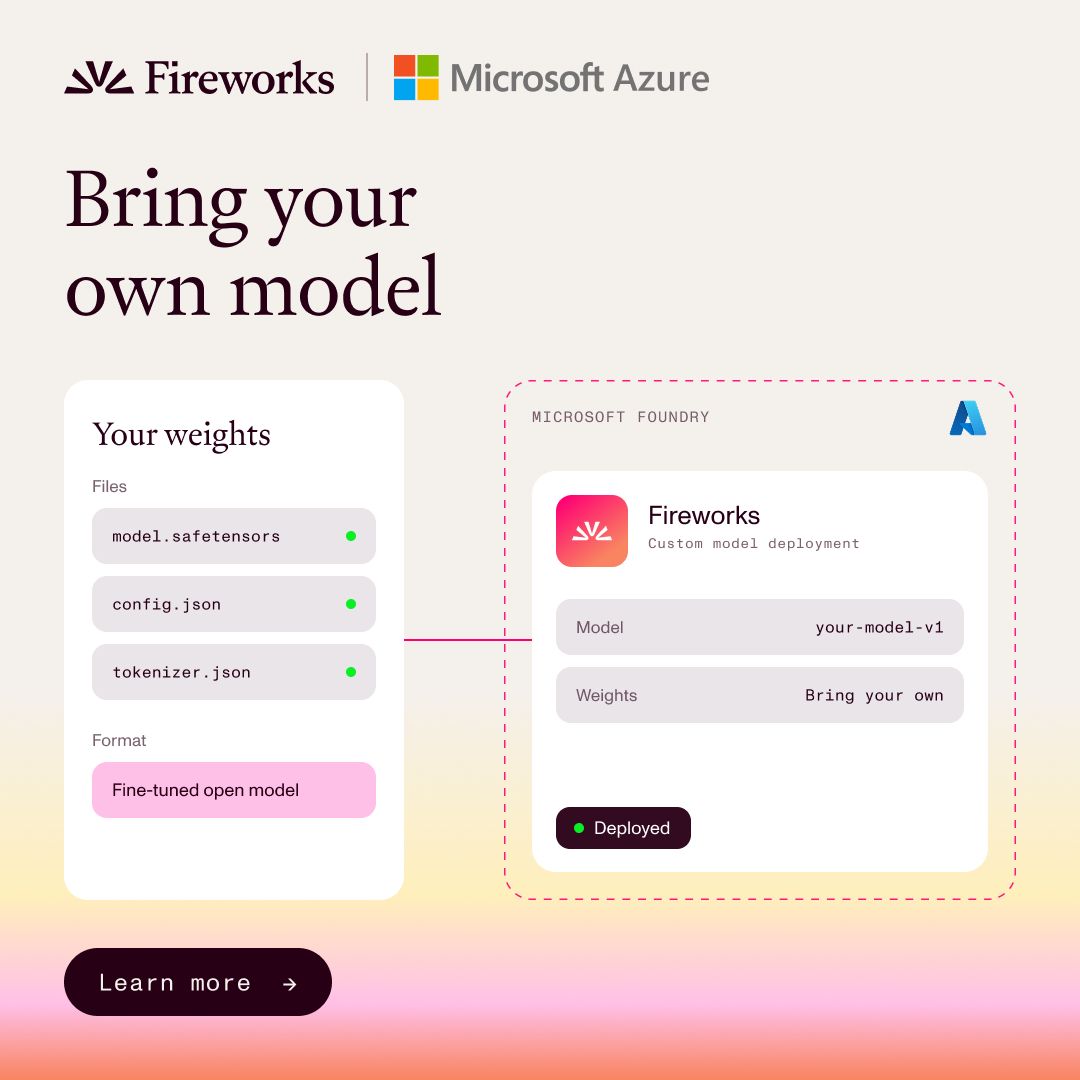
When you build on someone else’s closed model, you’re training their advantage, not yours. With Fireworks in Microsoft Foundry, you deploy open models or bring your own weights. You keep control of the model, the data and the intelligence you build, inside your own Azure tenant. Billed through your existing Azure account.
- DATA POEMRecorded 30 Oct 2026
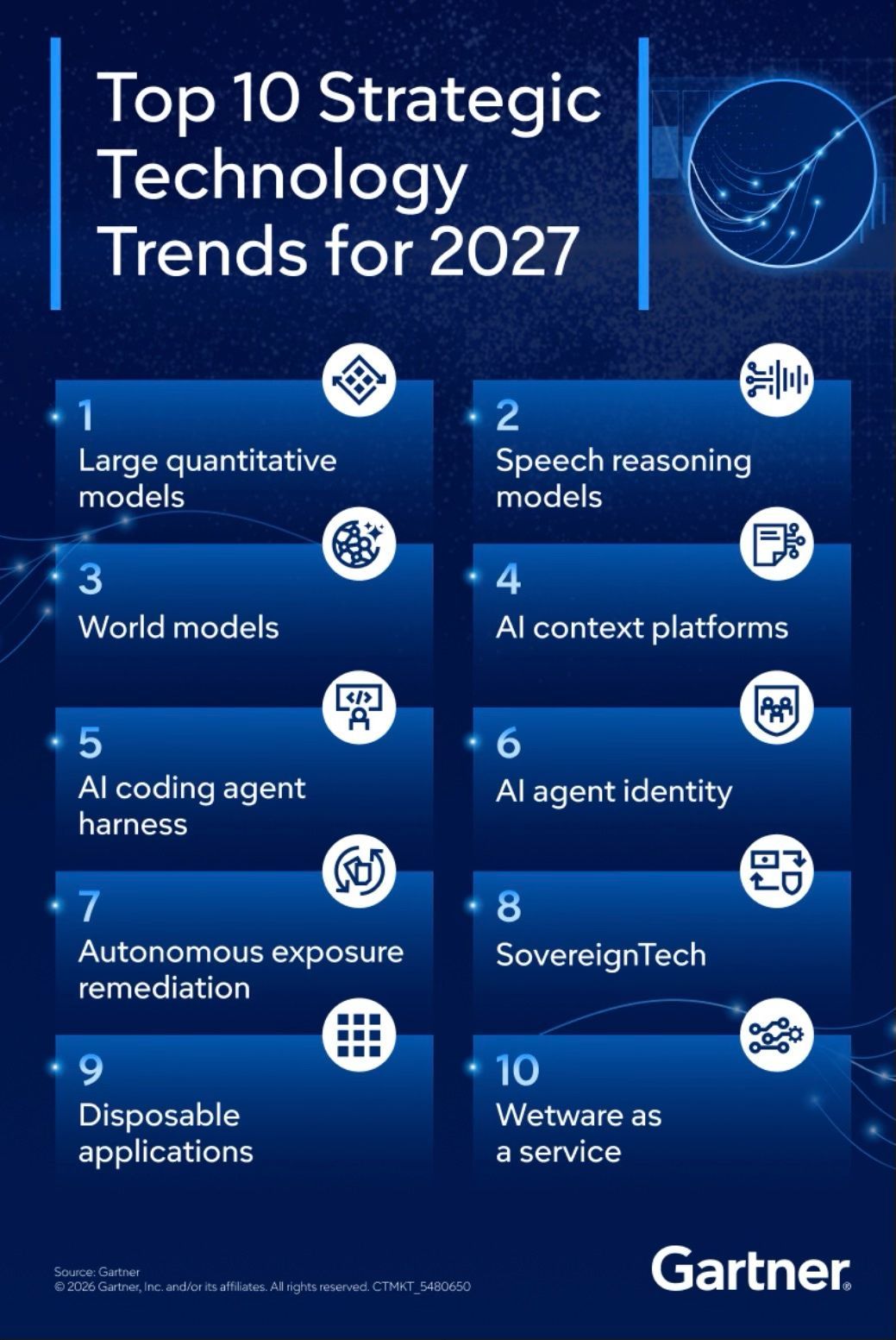
Gartner just put large quantitative models at #1 on its Top 10 Strategic Technology Trends for 2027. We’ve been building one for 7 years. When the transformer arrived, most of the industry used it to teach machines language. We used it to teach a machine how a business grows. Here’s the distinction that matters. LLMs are built to predict the next word. They’re remarkable at reading, writing and summarizing. But ask one to tell you what happens to sales if you cut price 5% and shift $10M from TV to retail media, and you’re asking a language model to do math it was never designed for. The architecture is the problem. Business decisions don’t live in text. They live in numbers: spend, price, promotions, distribution and sales, all pulling on each other at once, over time. That’s why we built POEM365 our Large Causal Model, trained on time-series data, not language. It learns from more than $5 trillion of spend and outcome data and forecasts new events with 93 to 95% accuracy. The correlation models I grew up with in planning rooms top out around 65-75%. An LQM understands quantities. A Large Causal Model goes one step further: it understands which growth drivers actually cause the outcome, and what happens when you change them. I spent 20 years in those planning rooms watching budgets follow whoever argued hardest. That’s the business problem. Not a lack of dashboards, but a lack of confidence when the big call has to be made. Gartner predicts that by 2030, LQMs will replace LLMs in 25% of strategic forecasting and operational modeling tasks. For everyone who has argued that business decisions deserve their own kind of AI, this is a good day. Most AI in business today helps teams write faster, design faster and build better dashboards. POEM365 exists to help leaders decide with confidence. That’s the mission we work on every day. You can check Gartner's full list here: https://lnkd.in/gFSddBxe
- Fireworks AISince 27 Oct 2026
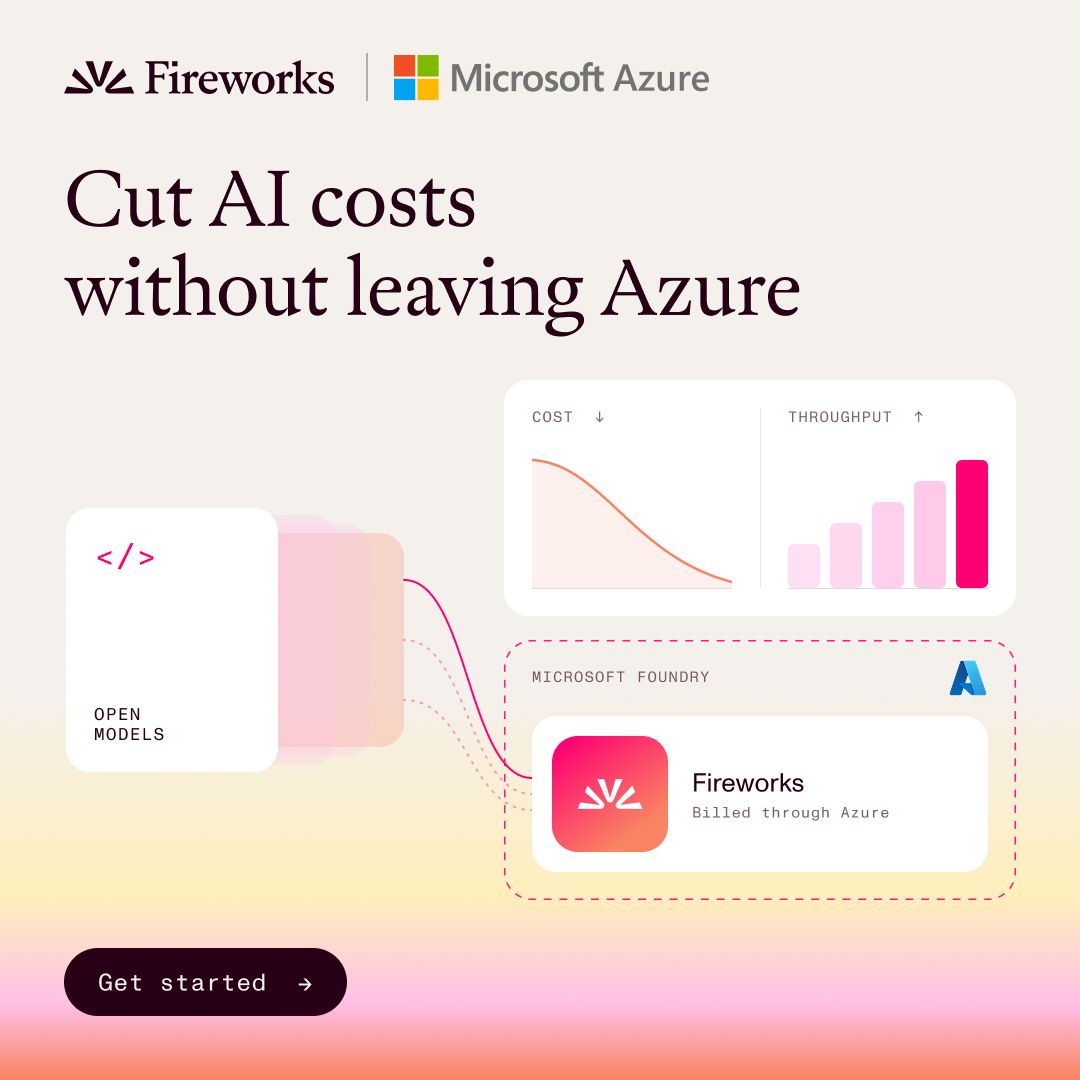
Frontier-quality results don’t need frontier-model prices. Fireworks brings fast, cost-efficient open-model inference to Microsoft Foundry. Run open or custom models for less per token, and put that spend toward your existing Azure commitment. Billed through your existing Azure account and MACC-eligible.
- DeepgramSince 28 Oct 2026
Flux TTS reads the full conversational thread instead of generating every line in isolation.
- AssemblyAISince 28 Oct 2026
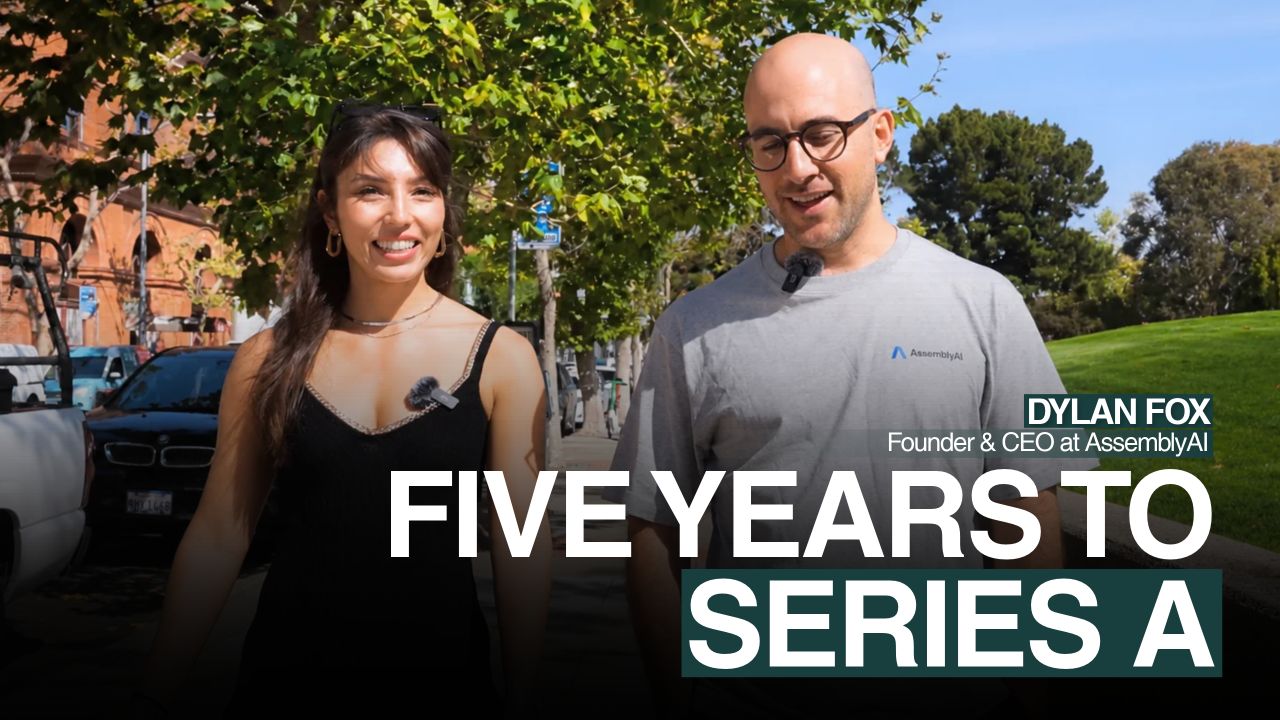
Every founder is told to find product-market fit in 18 months. Dylan Fox waited five years for the voice AI market to exist. Now his company runs the voice AI behind Granola - 100M API calls a day! When we met at their office, I wanted to know how you tell conviction apart from stubbornness when the market says no for half a decade. Between 2017 and AssemblyAI's Series A in 2022, he had two choices: take early voice models and sell them to court reporting agencies, or keep refining the core speech models until developers finally needed them. He chose to wait. He kept the team capped at four people, kept personal expenses near zero, and treated those five years as an apprenticeship in deep learning. When I was building Paloma, I lived on the opposite side of that equation. I knew that AI matchmaking was bound to be a thing, but chased immediate market signals, and eventually ran out of steam. Watching Dylan build proved that surviving the quiet years requires obsessive faith in the future itself. We also get into: -> Why the last 10% of an AI product is the whole product -> “Everyone’s still just figuring it out” -> 180% net dollar retention with zero contracts -> Married to a founder whose company took off while his didn’t -> Why he deleted X in 2023 (I think he’s back tho) -> “I’m just a builder” Full episode link in the comments.
- NebiusSince 26 Oct 2026
You already wire LLMs into apps. The Nebius Agentic AI Builder exam tests the harder parts: fine-tuning vs RAG, rate limits, cost per task. 60 minutes online, Credly badge valid 3 years. Early-bird pricing until December 31.
- NebiusSince 26 Oct 2026
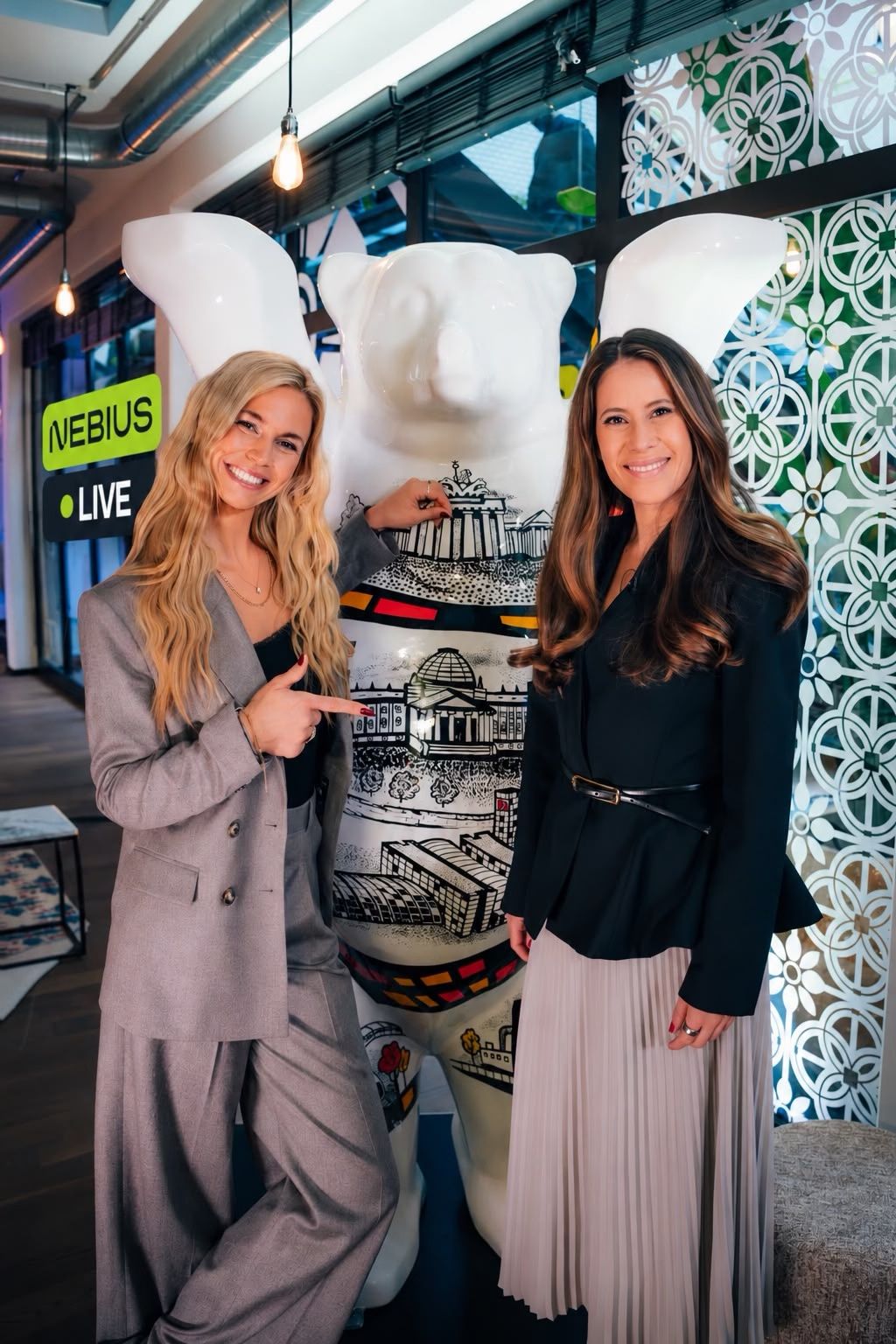
LIVE from NVIDIA GTC Berlin with Nebius!! 🎬✌🏼 I had the honor of joining Nebius Live to share my takeaways from Jensen’s keynote, together with the wonderful Deirdre Bosa, former CNBC journalist. One thing I was particularly excited about: Europe has something the AI revolution desperately needs: INDUSTRIAL EXPERTISE. What I loved most about Jensen Huang’s keynote today? Europe has a seat at the table. And Jensen clearly sees its potential! Looking at the stage today, I saw some of Germany’s biggest technology and industrial players: Deutsche Telekom, Siemens, Bosch, Agile Robots, NEURA Robotics, and our automotive industry. We have decades of industrial knowledge. We have the data. We understand manufacturing, engineering, automation and complex physical systems. And that’s exactly what we need to take AI to the next level! NVIDIA has committed to invest nearly $10 billion across Europe’s tech ecosystem and is working with more than 12,000 partners here. That’s a pretty strong signal! And there’s something else I always love about Jensen’s keynotes: He makes incredibly complex technology understandable. Today, he broke down the AI economy again into five layers: 1. Energy 2. Compute 3. AI Factories 4. AI Models 5. Applications He also explained what it actually takes to build autonomous AI agents: a model that reasons and plans, a harness that coordinates its actions, a secure sandbox that controls what it can access, and the knowledge and tools it needs to get things done. Because the more autonomous AI becomes, the more important security becomes! Then there was Vera Rubin, NVIDIA’s next-generation AI computing platform, connecting 72 GPUs through NVLink into one massive, liquid-cooled system. And of course, PHYSICAL AI! One of my favorite moments was actually at the very end, when Jensen brought out the tiny Hugging Face robots and started explaining to them what he had just presented on stage. It was such a fun way to show something incredibly important: Robots don’t just learn in the real world anymore. They can be trained in simulated environments using synthetic data, combined with real-world data and feedback, before transferring those capabilities into physical machines. And that brings me right back to Europe. Because when AI moves from our screens into factories, machines and robots, our industrial expertise becomes a huge advantage. I’m really proud to be working with Nebius, one of NVIDIA’s major neocloud partners, and to have been part of this conversation. And a little women power at the table with Deirdre made it even better!! If you’re still at NVIDIA GTC Berlin tonight, you might find me at Nebius House! Later I’ll be at the creator evening & the Deloitte SOHO house party. Looking forward to a great evening here in Berlin and more exciting collaborations with the Nebius team! 💚 How did YOU like Jensen’s keynote today? What was your biggest takeaway?
- WRITERSince 26 Oct 2026
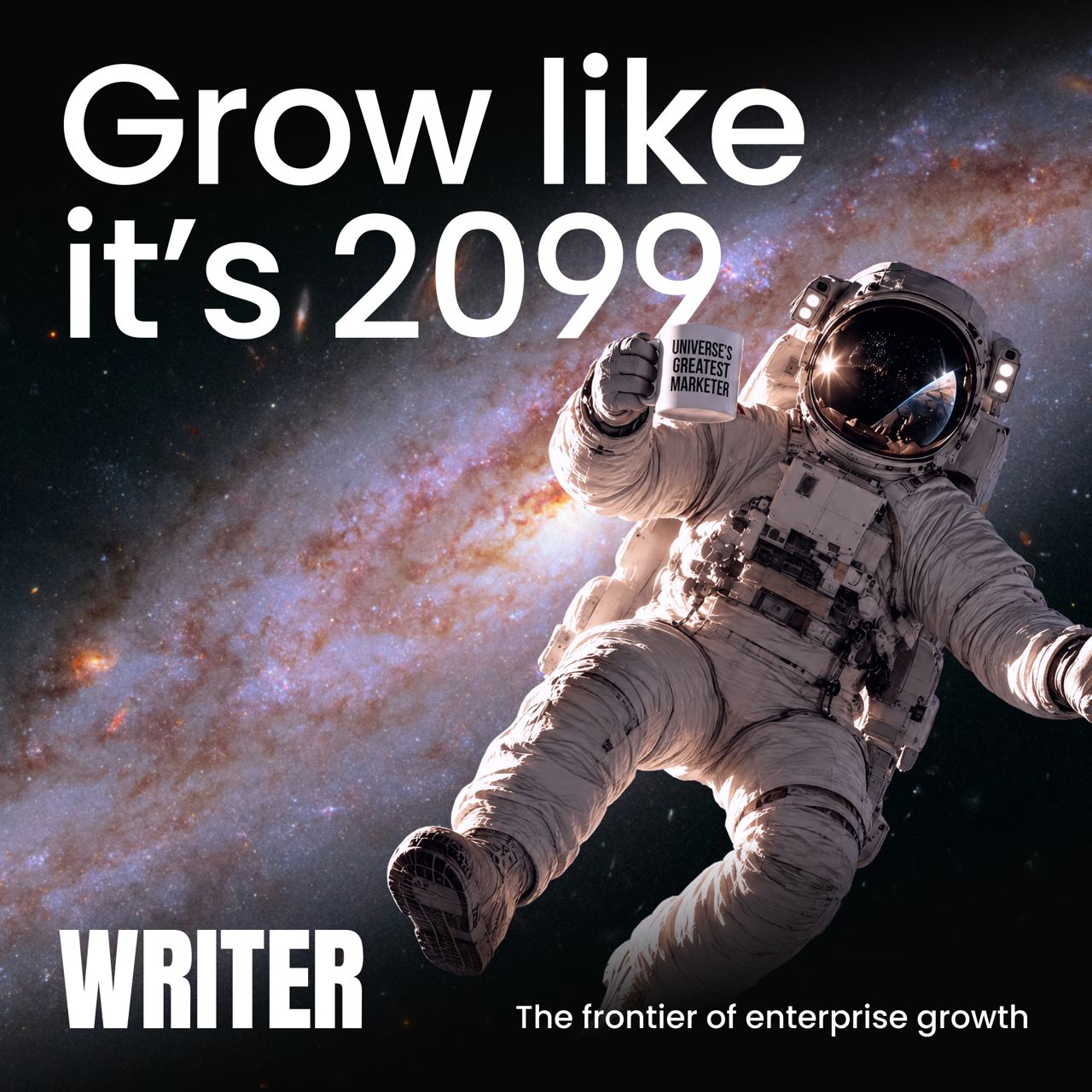
The frontier of AI isn't a better model. It's a better business. WRITER puts on-brand agents to work across your buyer journey, acting on real-time signals to grow revenue faster.
- WRITERSince 26 Oct 2026
AI labs chase benchmarks. Your board chases revenue. WRITER delivers agents built for marketing and revenue teams. The only AI metric that counts has a dollar sign.
- AI VerseSince 26 Oct 2026
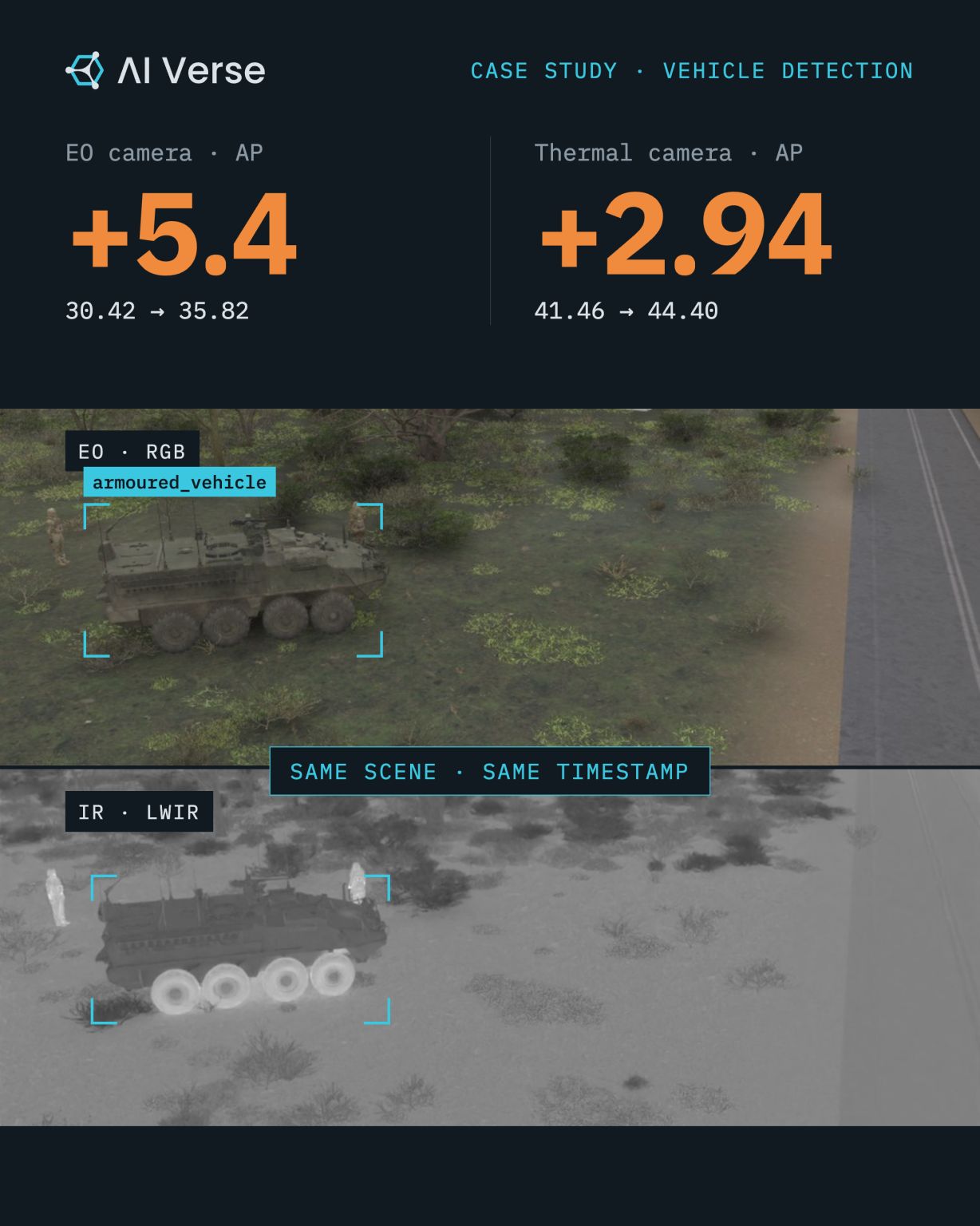
+5.4 AP on EO. +2.94 AP on thermal. A leading German drone manufacturer added 30,000 AI Verse synthetic images to its own training data. Its vehicle detector improved on both cameras. The EO gain beat the +3 mAP benchmark from our last project with them, on a camera we had never built for. Small, far-away targets gained the most: +7.97 AP and +11.27 recall. Read more in our article, link in the comments ⬇️
- CometSince 26 Oct 2026
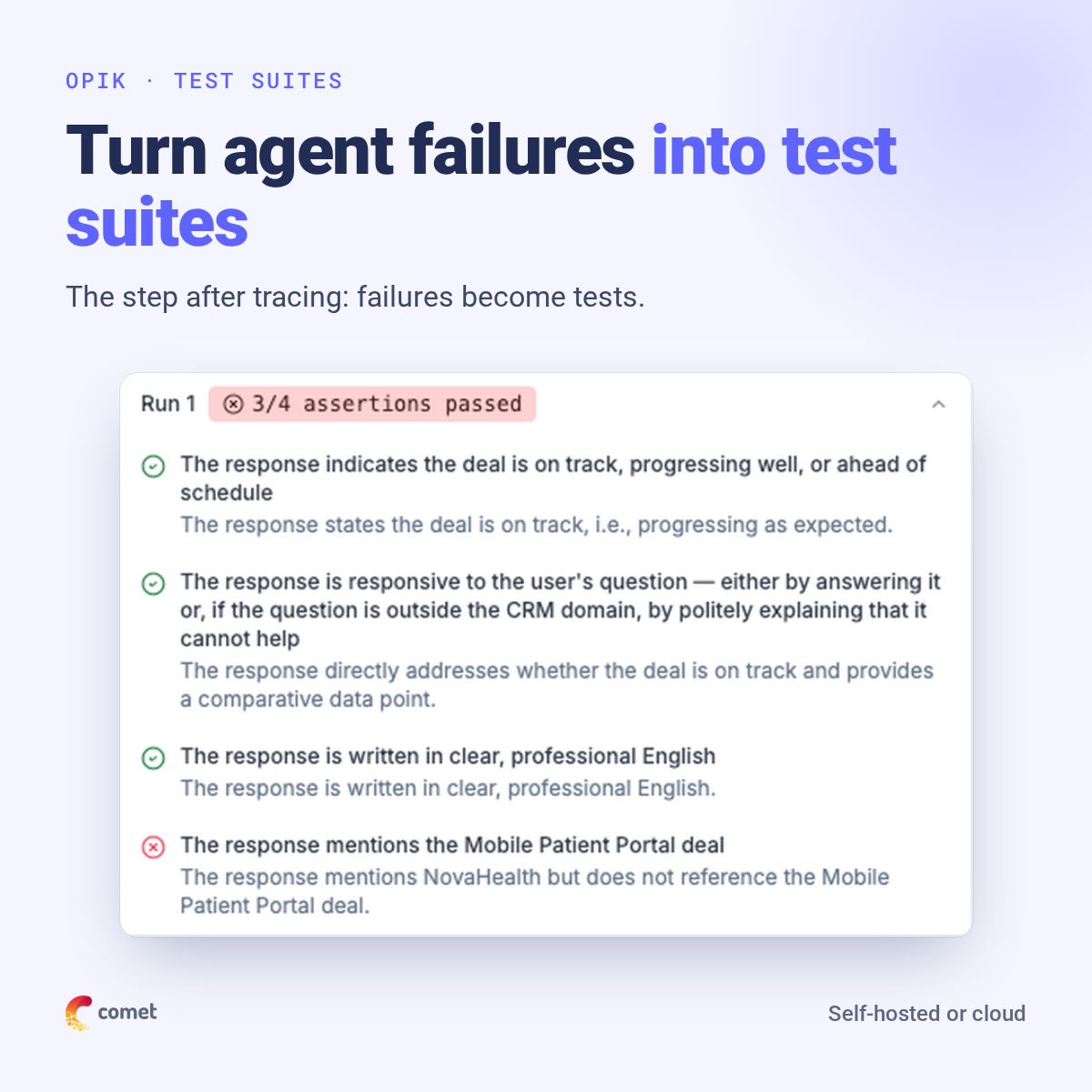
Tracing shows what went wrong. Opik turns those failures into pass/fail test suites and reruns them on every prompt or tool change.
- CometSince 26 Oct 2026
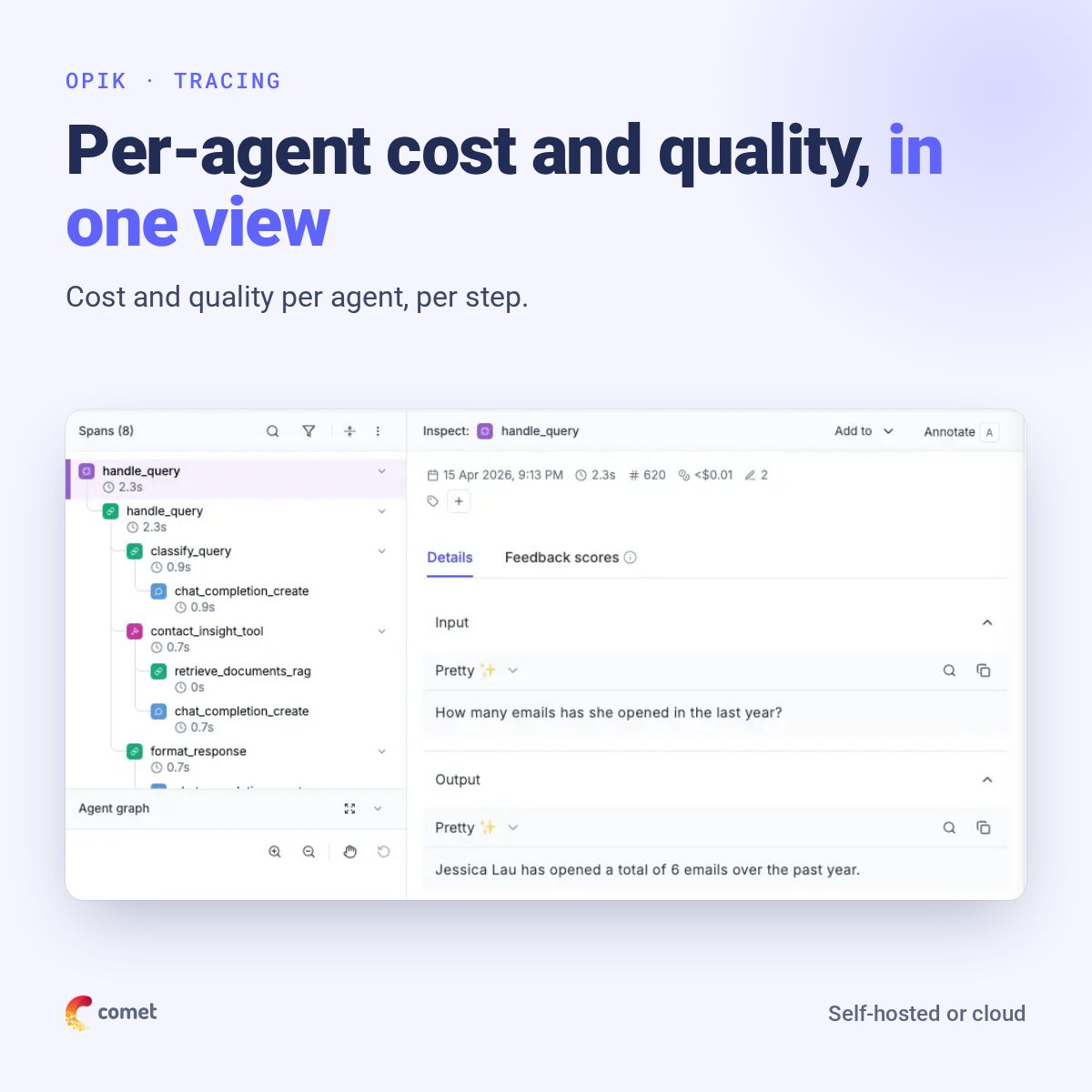
See token cost and eval scores for each agent and each step, on Amazon Bedrock or any other provider.
- AssemblyAISince 26 Oct 2026
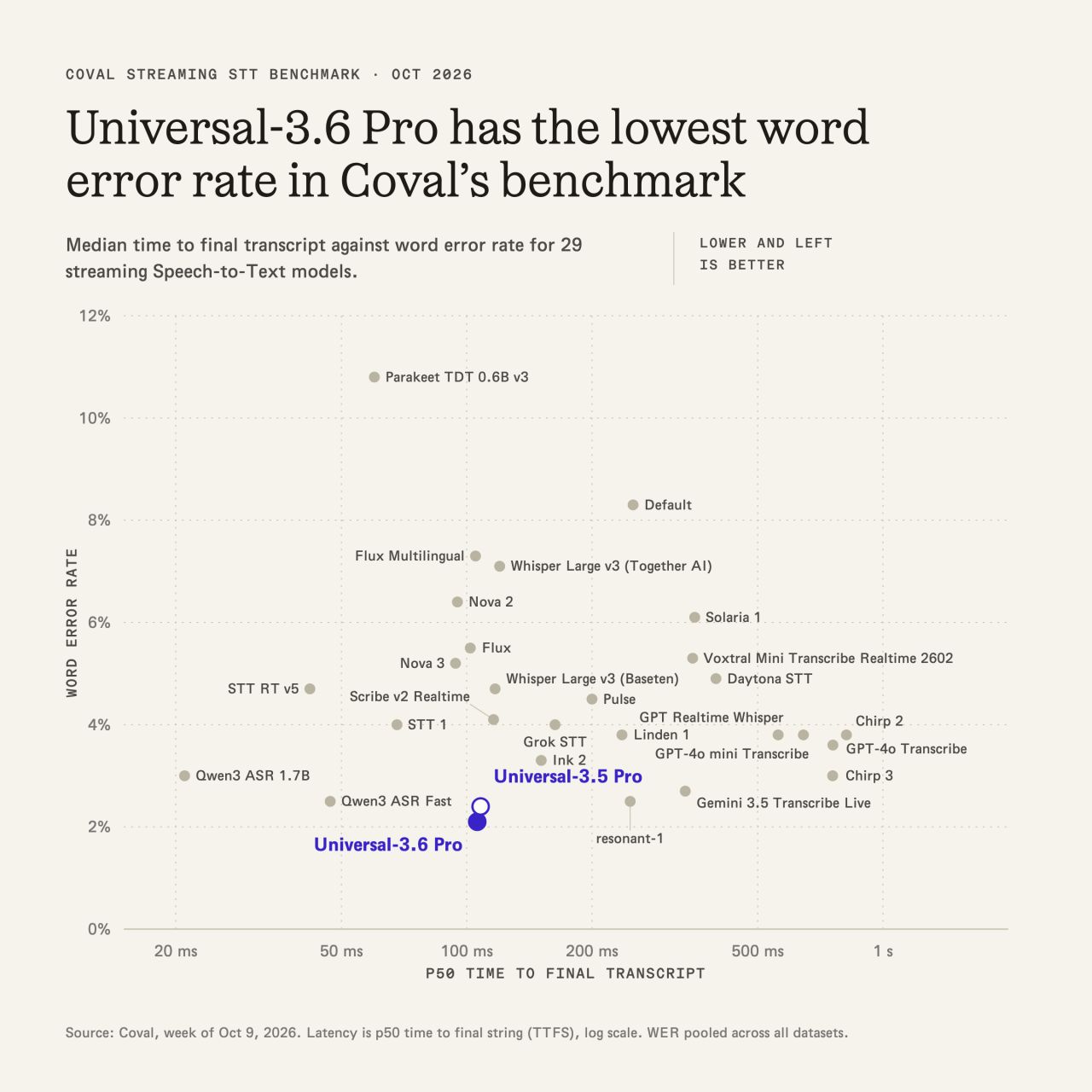
Coval 's weekly benchmark update is out, and Universal-3.6 Pro has the lowest word error rate of every streaming Speech-to-Text model they track. This week also showed a big drop in latency. Coval measured median time to final transcript falling by about a third on both of our streaming models: • Universal-3.6 Pro: ~153 ms → ~106 ms • Universal-3.5 Pro: ~156 ms → ~108 ms For a voice agent, those two numbers decide what the caller hears. A lower error rate means the agent gets names, numbers and order IDs right the first time. A faster final transcript means it can start responding sooner. Thanks to the Coval team for running these benchmarks in public every week.
- DATA POEMRecorded 28 Oct 2026
For 20 years I watched growth budgets go to whoever had the most conviction in the room. Last week at Masters of Marketing in Orlando, run by the Association of National Advertisers, Havas Media Network and DATA POEM hosted a private breakfast on a question every CFO and CEO keeps asking: what actually drives growth? I loved having this open conversation with Sharona Sankar-King, Chief Data & Product Officer at Havas Media Network North America, and a small group of senior marketers before the morning keynotes. While the entire industry is focused on LLMs, we spent the morning talking about something different: Large Causal Models, and why they’re what decision-making actually needs. Here’s why. Marketing has never had more data, yet most measurement still tells us what happened alongside growth, not what made it happen. That isn’t a data problem. It’s a math problem and an architecture problem. Most companies explain growth with dozens of separate models, one per team or channel. Their answers never add up. The fix is one Enterprise Growth Model, built on Large Causal Models trained on time-series business data, not text. It traces causation instead of correlation, learns how every growth driver moves the others, and shows what a different decision would do while there’s still time to act. The questions around that table were the right ones: where causal AI earns trust with finance, what’s still hard, and how enterprise marketers can put it to work in 2027. Thank you, Sharona and the Havas team, for co-hosting, and to everyone who joined us. Together with Havas, we’re bringing that model to the brands who need it most. If your growth plan still runs on models that disagree, watch the full conversation here: https://lnkd.in/gJqbxs_C


Other LinkedIn formats
Watch the companies you care about.
Filter every ad by industry, country, format and network, and get alerts when a company you watch starts running new ads.