LinkedIn image ad examples
523 image ads are live on LinkedIn right now, from 406 companies. Browse real ones, filtered by industry.
- Cofinity-XSince 16 Sept 2026
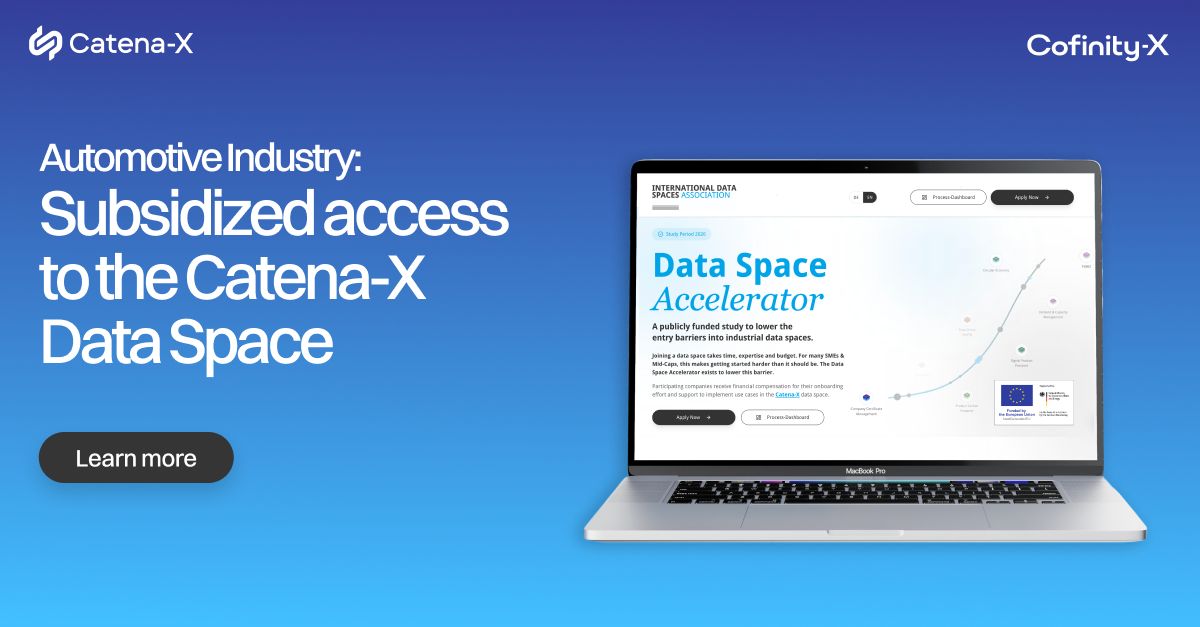
🌐 Catena-X promotes sovereign data exchange throughout the entire automotive industry value chain, from the smallest raw material supplier to the largest original equipment manufacturer (OEM). However, getting started can seem complex, especially for smaller companies. The Data Space Accelerator, a publicly funded study, lowers these barriers to entry. Participating companies receive financial compensation for their first steps in the data space. Depending on the selected use case, companies can receive a lump sum of €15,000 or €30,000 to cover all the initial costs required to launch productive data exchange in Catena-X. 🏛️ The “Data Space Accelerator” is a project funded with 23 million euros by the German Federal Ministry for Economic Affairs and Energy. The project will run exclusively in 2026. Eligible use cases include certificate management, product carbon footprint, digital battery pass, and more. Learn more and apply 🔗 https://lnkd.in/eRz6K2rv
- Cofinity-XSince 16 Sept 2026
Are you thinking about joining Catena-X? Up to €30,000 in funding is now available for this purpose. Many companies in the automotive industry face the same challenge: sharing data with business partners securely, efficiently, and in a standardized way. Catena-X lays the foundation for secure data exchange along the value chain. Companies decide for themselves which data to share with which partners, while retaining control over their information at all times. In 2026, a government-funded study will support companies in getting started: 💶 €15,000 or €30,000 in funding, depending on the use case ✅ Support with initial setup and implementation costs ✅ Particularly interesting for companies looking to implement their first Catena-X use cases Possible areas of application include Product Carbon Footprint (PCF), certificate management, capacity management, and the Digital Battery Passport. 🏛️ The Data Space Accelerator is funded by the Federal Ministry for Economic Affairs and Energy and has a total funding volume of 23 million euros. Funding is available exclusively in 2026. If you’re planning to get started with Catena-X, now is a good time to take the next step. 🔗 Learn more and apply: https://lnkd.in/eRz6K2rv
- ImmutaSince 22 Sept 2026
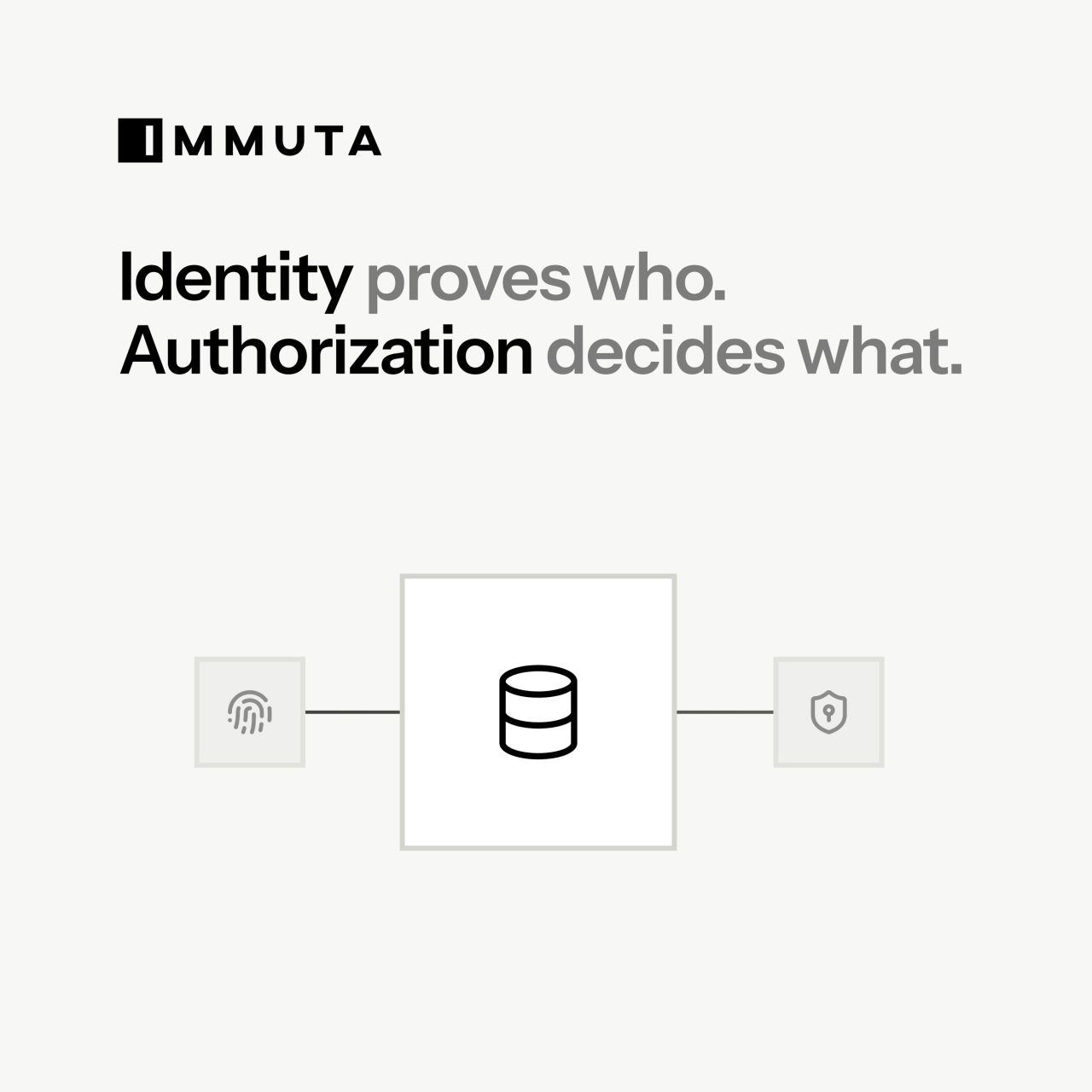
OpenAI and Anthropic have mapped out safer agents. The next step is deciding what each agent can access. That’s the Data Authorization Layer.
- Coupler.ioSince 22 Sept 2026
Coupler.io gets every ad account into BigQuery in the time it takes to make coffee. Connect the accounts, pick the columns, set the refresh. Done ✅ Google, Meta, TikTok, LinkedIn — joined into one table, on the schedule you set. No SQL. Start free — 7 days, no card.
- FuusorSince 23 Sept 2026
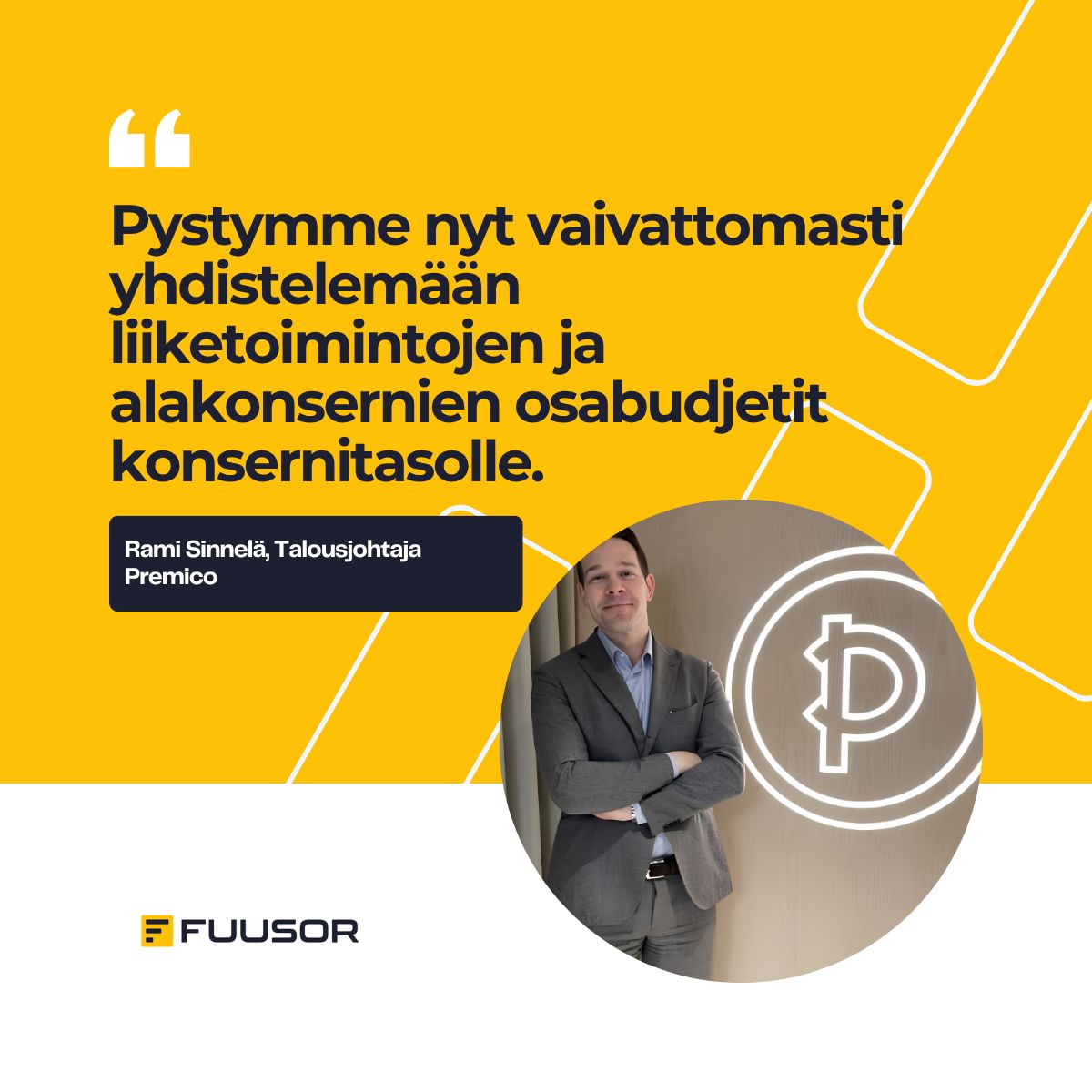
Fuusor on rakennettu kattamaan vaativankin talousraportoinnin tarpeet. Fuusor kerää, yhdistelee ja jalostaa liiketoimintatiedon eri lähteistä yhdelle alustalle – täysin automatisoidusti ja haluamassasi muodossa. Tietoa pystytään myös rajaamaan automaattisesti eri käyttäjien ja tarpeiden mukaan. Visuaalinen palvelu kiteyttää datamassan selkeiksi näkymiksi, raporteiksi ja mittareiksi, joiden avulla pystyt tekemään parempia päätöksiä ja oivalluksia. Tutustu ja varaa demo!
- FuusorSince 23 Sept 2026
Fuusor on rakennettu kattamaan vaativankin talousraportoinnin tarpeet. Fuusor kerää, yhdistelee ja jalostaa liiketoimintatiedon eri lähteistä yhdelle alustalle – täysin automatisoidusti ja haluamassasi muodossa. Tietoa pystytään myös rajaamaan automaattisesti eri käyttäjien ja tarpeiden mukaan. Visuaalinen palvelu kiteyttää datamassan selkeiksi näkymiksi, raporteiksi ja mittareiksi, joiden avulla pystyt tekemään parempia päätöksiä ja oivalluksia. Tutustu ja varaa maksuton demo jo tänään!
- ImmutaSince 23 Sept 2026
Today, Immuta becomes the Data Authorization Platform, the authorization layer for enterprise data. This is more than a new category or a new website. It reflects a fundamental shift in how people access data. I believe that by next year, the predominant way employees interact with enterprise data will be through AI harnesses. People will no longer search for a dataset, submit a request, wait for access, and then write a query. They will simply ask a question and an agent will determine what data it needs, where that data lives, and how to retrieve it. One question may generate hundreds of queries. Agents will delegate to sub-agents. And they will use whatever path is available to complete the task. They do not care whether the answer lives in a warehouse, a lakehouse, a dashboard, a SaaS application, an internal API, or a real-time data feed. They care about getting the answer. That changes the speed, scale, and risk of data access, and it changes the role Immuta must play. Historically, Immuta has been centered on policy enforcement inside the data layer: authoring policy centrally and applying it through the native controls of platforms such as Snowflake, Databricks, Teradata, Starburst, BigQuery, and others. That remains essential. But in the agentic enterprise, we must also become the policy decision point for data. For a dashboard, API, SaaS application, or data feed, the system holding the data may remain the enforcement point. But before returning anything, it should be able to ask Immuta: May this human or agent, acting for this person and for this purpose, access this resource right now? Immuta makes the determination. The application enforces the answer. That distinction is critical. Agents will use every door available to them, so enterprises need one policy model capable of governing access at every door—not just at the warehouse boundary. This is the beginning of Era Three for Immuta: agentic governance. We are bringing together policy enforcement, request workflows, agentic data access, declared intent, Universal Access Controls, and compliance evidence into one authorization layer across the enterprise data estate. Every request for data needs permission. Now there are millions. Read more about why we are making this shift and what we are building: https://lnkd.in/eify7Hs4 Open your data to AI. Not to everyone. #DataAuthorization #AgenticAI #DataSecurity #DataGovernance
- EMARKSince 24 Sept 2026
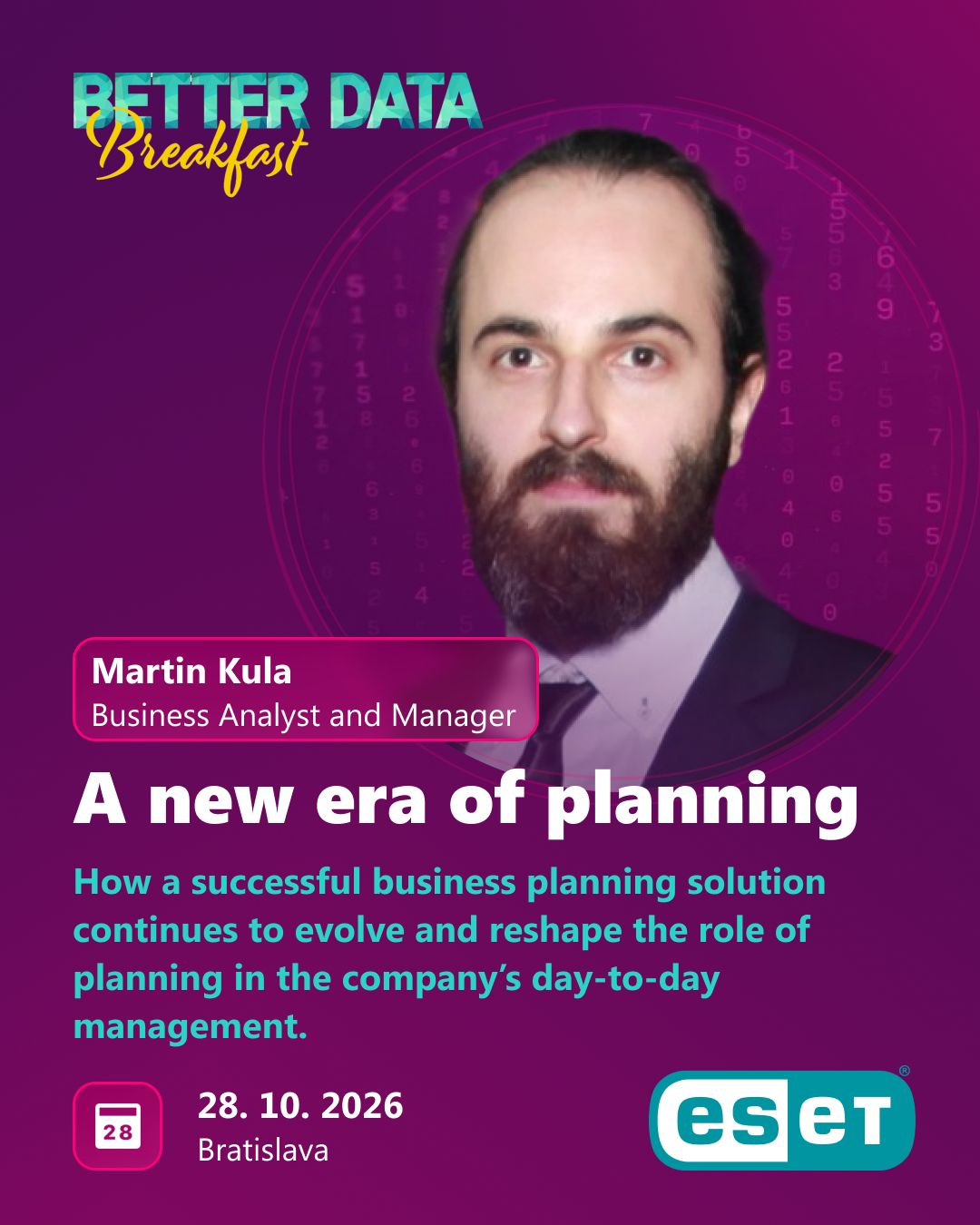
At ESET, a proven Business Planning solution is entering its next phase. As the company’s needs evolve, so does not only the solution itself, but also the role planning plays in everyday management and decision-making. At Better Data Breakfast, Martin Kula will share the story of planning at ESET, which the company has been developing together with EMARK for approximately ten years. He will show what the existing solution has delivered, why ESET Slovensko decided to take it further, and what the new generation of planning means in practice. All of this without generic theory, based on the concrete experience of a company that has more than ten years of successful Business Planning development behind it and is now taking its value even further. If you are interested in how planning can evolve together with a company and further strengthen its role in management, this session is worth seeing live. 𝐁𝐞𝐭𝐭𝐞𝐫 𝐃𝐚𝐭𝐚 𝐁𝐫𝐞𝐚𝐤𝐟𝐚𝐬𝐭 28 October 2026 | Jurkovičova tepláreň, Bratislava | 8:15–12:00 Participation is free of charge, with limited capacity. 👉 Reserve your spot: https://lnkd.in/d7uCZWBW
- ICISSince 28 Sept 2026
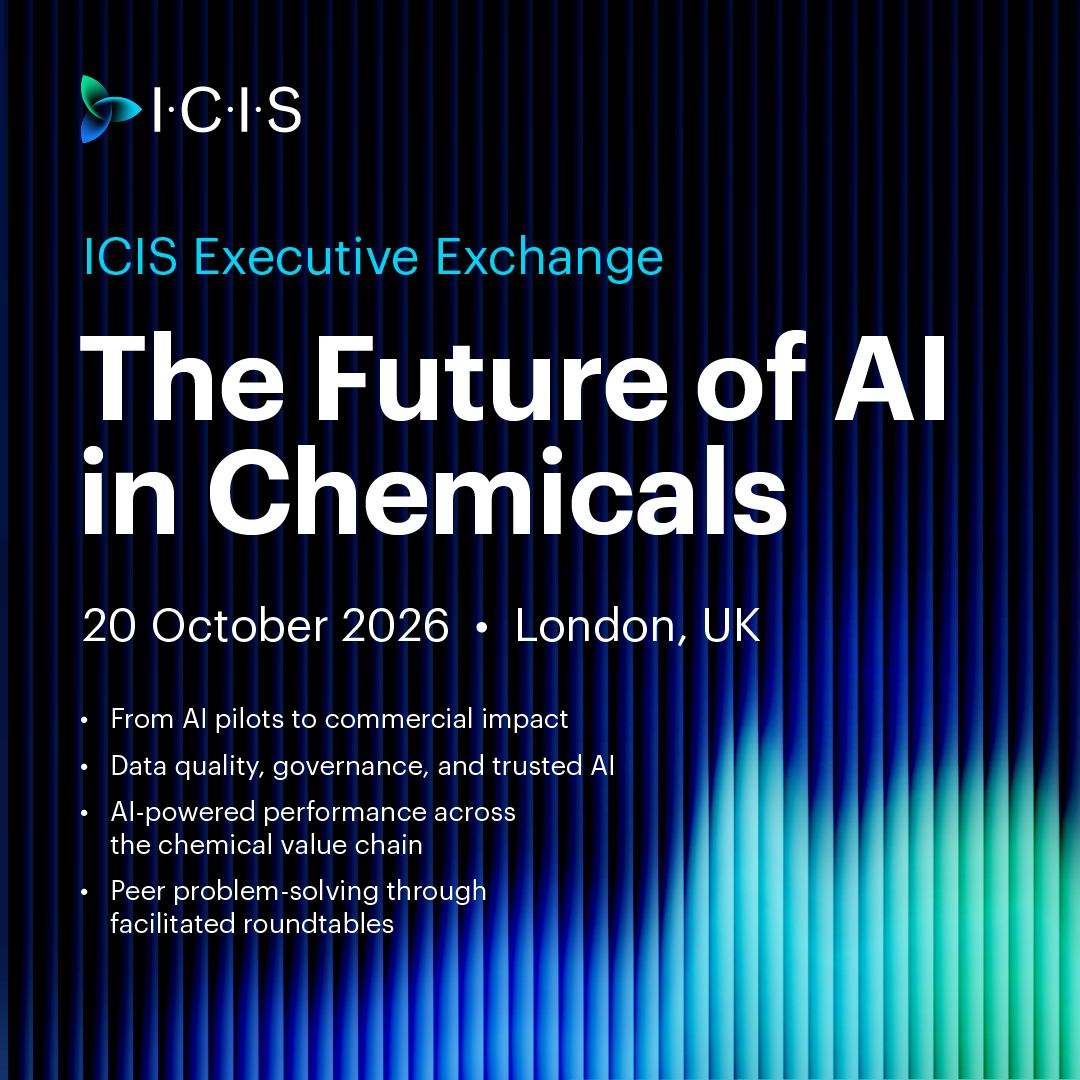
Discover where AI can deliver real value and how to scale it effectively. The ICIS Executive Exchange: The Future of AI in Chemicals is an exclusive forum designed for senior decision-makers looking to explore AI's role in commercial performance, operational efficiency, data strategy, and business transformation. Engage in confidential discussions, hear real-world perspectives, and gain practical insight into the opportunities and challenges shaping AI adoption across the chemicals sector.
- InterSystems DACHSince 25 Sept 2026
Erfahren Sie anhand eines Kundenbeispiels, wie moderne Integration Prozesse beschleunigt und die IT finanziell entlastet. Mit einer Datenplattform.
- C&FSince 14 Sept 2026
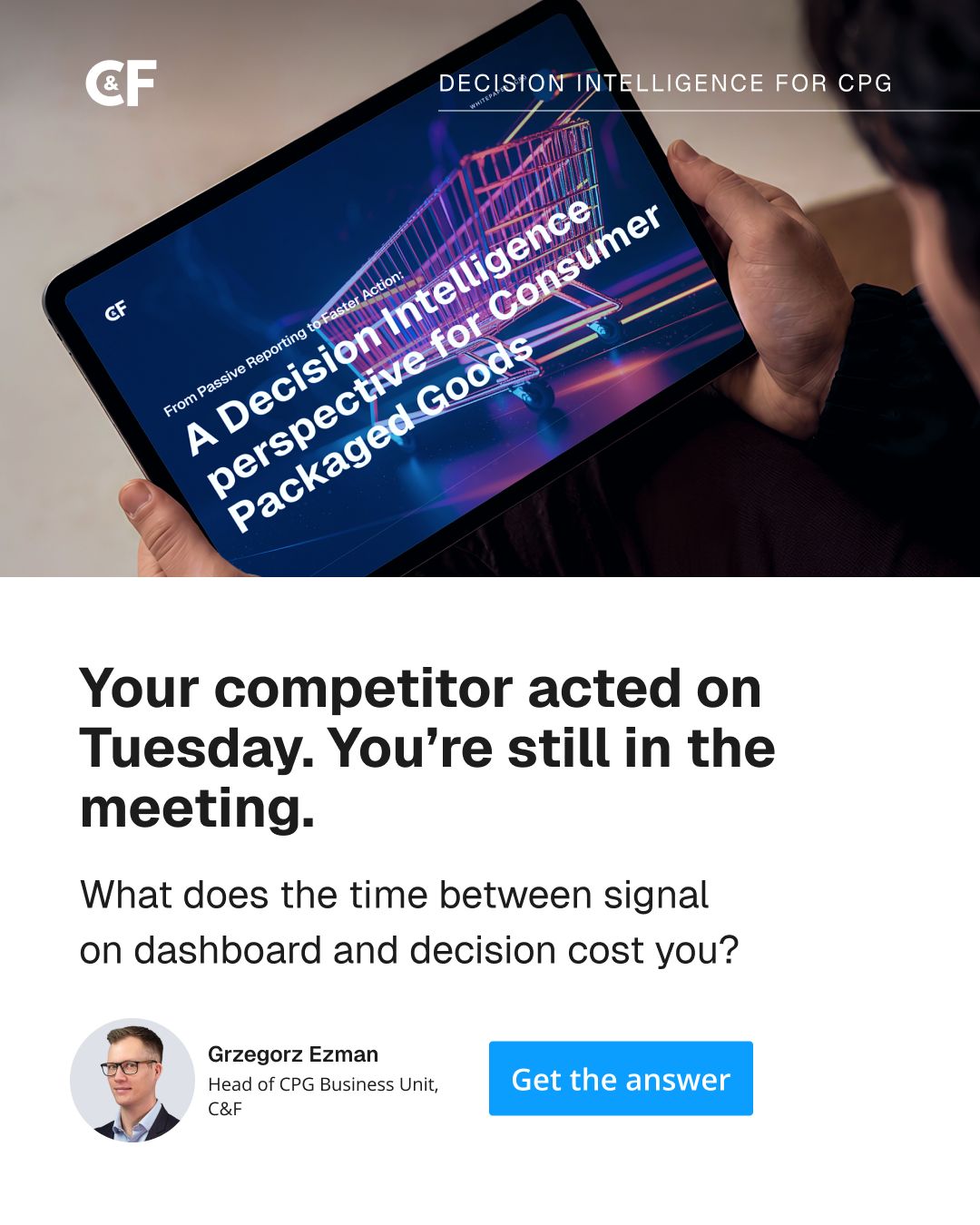
One of the first things I would look at in a CPG Decision Intelligence initiative is a simple decision inventory: what decisions are made repeatedly, who owns them, what data supports them, and what is the business impact of getting them wrong. In CPG, many of these decisions sit around pricing, promotions and short-term supply. But before getting excited about AI or recommendations, the basics need to work: governed data, consistent KPI definitions across functions, and enough traceability to understand how a recommendation was produced and why. For me, this is where the real value of Decision Intelligence starts. Not with another dashboard, but with reducing the time between a signal, a decision and an action. In our new white paper, we look at how to approach this step by step, what to assess first, and where Decision Intelligence can start creating value in CPG: https://lnkd.in/dkYNNRFr
- Better StackSince 17 Sept 2026
At a fraction of your current costs
- Better StackSince 17 Sept 2026
We're hiring software engineers.
- DepositPhotosSince 16 Sept 2026
How to create e-commerce product images with AI — without a photoshoot? 📸 Creating new product visuals for every campaign can quickly become a bottleneck. With the Depositphotos AI Assistant, you can start with one product photo and turn it into different visuals for your e-commerce content. Need a clean catalog image? A lifestyle scene? A new seasonal setting? Or a different format for an ad? Just describe what you need. The AI Assistant can create AI product images, change the lighting or composition, remove unwanted objects, expand the canvas, and create new AI-generated product images from your existing visual. And you can keep refining the result in the same conversation instead of starting from scratch. That’s where AI content creation becomes practical for e-commerce — from AI visual merchandising and product catalog optimization to performance marketing creatives. One product photo → multiple visuals → less repetitive production 🚀 Want to learn how to use AI in ecommerce? We break down the workflow and show more examples in our new guide 👇
- ComintelliSince 16 Sept 2026
When market intelligence stays within individual teams and regions, valuable insights get lost. Oerlikon faced that challenge. Its Market Intelligence team created a centralized approach that makes intelligence easier to share, search, and analyze across the organization. See how Oerlikon is transforming market intelligence with Comintelli's Intelligence2day®. Join us as we talk to Christine Francis, Head of Market Intelligence, Oerlikon. Register here: https://lnkd.in/eXwsrGPQ
- ConduktorSince 17 Sept 2026
You are running a central service for Apache Kafka? Or you are planning to create one within your company? Then this event is for you! We are bringing together Kafka Teams in Munich - onsite and virtually! So make sure you don't miss this key event on October 20 and register now!
- ConduktorSince 17 Sept 2026
You are running a central service for Apache Kafka? Or you are planning to create one within your company? Then this event is for you! We are bringing together Kafka Teams in Frankfurt - onsite and virtually! So make sure you don't miss this key event on October 22 and register now!
- ICISSince 28 Sept 2026
Where is AI creating measurable value across the chemicals industry today? For many leadership teams, the conversation has moved beyond experimentation. The focus is now on identifying practical use cases, building trust in AI-driven decisions, establishing the right governance, and delivering tangible business outcomes at scale. The ICIS Executive Exchange: The Future of AI in Chemicals brings together senior executives to discuss how AI is being applied across the chemicals value chain, where opportunities are emerging, and what it takes to turn ambition into commercial impact. Join an exclusive group of industry leaders for confidential discussions, peer perspectives, and practical insight into the future of AI in chemicals.
- InfodeskSince 30 Sept 2026
Quality intelligence in life sciences is going through a major shift! Earlier this week I shared a article relating to our thoughts surrounding this above statement. As several of you asked for a Post Summary here you go. Historically, most quality intelligence programs were heavily focused on inspection readiness, enforcement monitoring, and reactive compliance activities. Important work, of course. But that definition is starting to feel too narrow for the complexity organizations are managing today. What’s emerging instead is a broader view of quality intelligence as a strategic operational capability, one that connects regulatory signals directly to risk management, governance, and enterprise decision-making. And I think that evolution matters. Because regulatory change only creates value when organizations can actually operationalize it. Not just monitor it. At a recent industry discussion with leaders including UCB, one theme came up repeatedly: The organizations building mature quality intelligence programs are moving beyond surveillance toward full lifecycle management of regulatory change. That includes: ➡️ Monitoring signals ➡️ Assessing impact ➡️ Assigning ownership ➡️ Coordinating implementation ➡️ Tracking decisions and outcomes In other words, intelligence is becoming tightly connected to execution. A few other observations stood out: • Quality intelligence and regulatory intelligence are increasingly converging, even if they still serve different operational purposes. • Governance and cross-functional coordination are becoming critical differentiators. • AI is helping reduce noise and accelerate monitoring, but human expertise remains central for interpretation and risk assessment. • Many organizations are still operating with surprisingly lean teams, which makes structured workflows and strong SME networks even more important. One point I found especially relevant: The biggest risk often isn’t the signal itself. It’s the organizational handoff failures that happen afterward. Missed ownership. Delayed assessments. Lack of accountability. Disconnected workflows. That’s where strong intelligence activation processes become essential. We explored this evolution in more detail here, including key takeaways from leaders actively building modern quality intelligence programs: https://hubs.li/Q04yjx7B0 Curious how others are seeing this evolve inside their organizations. Is quality intelligence still primarily reactive and inspection-focused? Or is it becoming more integrated into strategic decision-making and operational governance? #QualityIntelligence #RegulatoryIntelligence #LifeSciences #Compliance #AI #Pharma #QualityAssurance
- InfodeskSince 29 Sept 2026
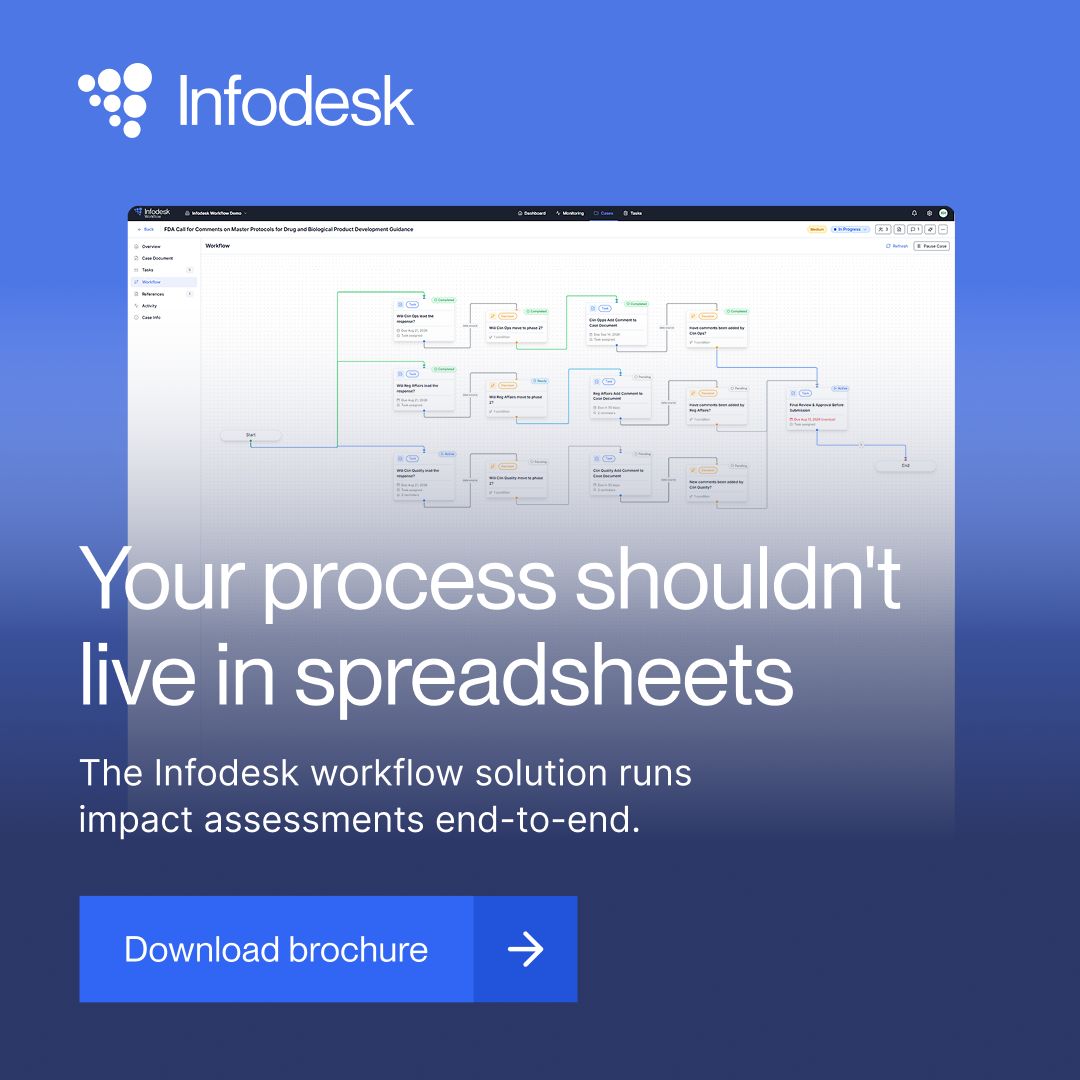
Infodesk keeps you ahead of regulatory change. But if your impact assessments still run on spreadsheets, email, and shared folders, our Workflow Solution is the piece that connects the two. It runs the whole process in one place, from the first regulatory update to a closed outcome. Here's what that adds to what you have: A visual workflow for every case, editable by drag and drop to match how your team works Automation at each stage, with AI agents moving cases along under controls you set Monitoring, triage, cases, and tasks connected in one continuous flow An audit trail that builds itself, with every decision linked back to the intelligence that prompted it The updates you already track in Infodesk feed the process directly, so nothing gets missed between the first update and a closed case. See how the Workflow Solution pulls the whole process together.
- GoodData.AISince 30 Sept 2026
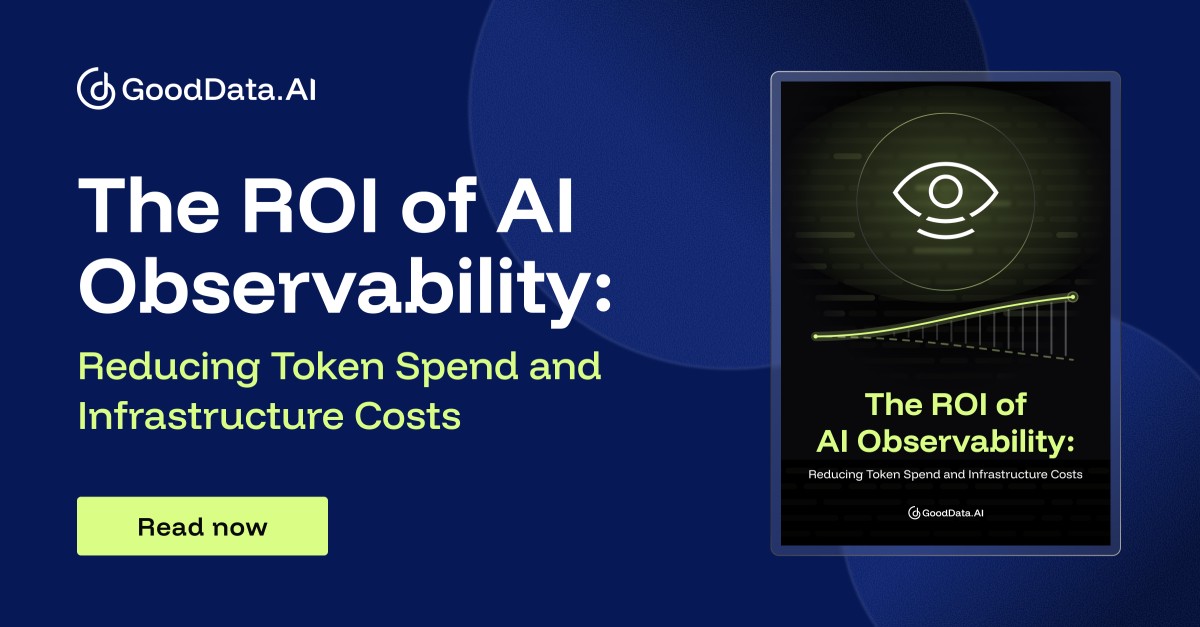
📊 Agentic tasks consume 5 to 30x more tokens than a standard chatbot exchange. And that's just one of the numbers behind rising AI costs: 🔹 Inference accounts for 80 to 90% of an AI system's lifetime cost 🔹 Nearly half of organizations name inference cost as the biggest blocker to scaling their AI products In this whitepaper, discover how AI observability makes token spend visible and controllable. You'll learn the six drivers that quietly inflate token bills, five levers to cut costs without sacrificing output quality, and an ROI model you can adapt to your own numbers. Most teams can reduce AI spend by 30 to 50% once they can finally measure it.
- BissantzSince 2 Oct 2026
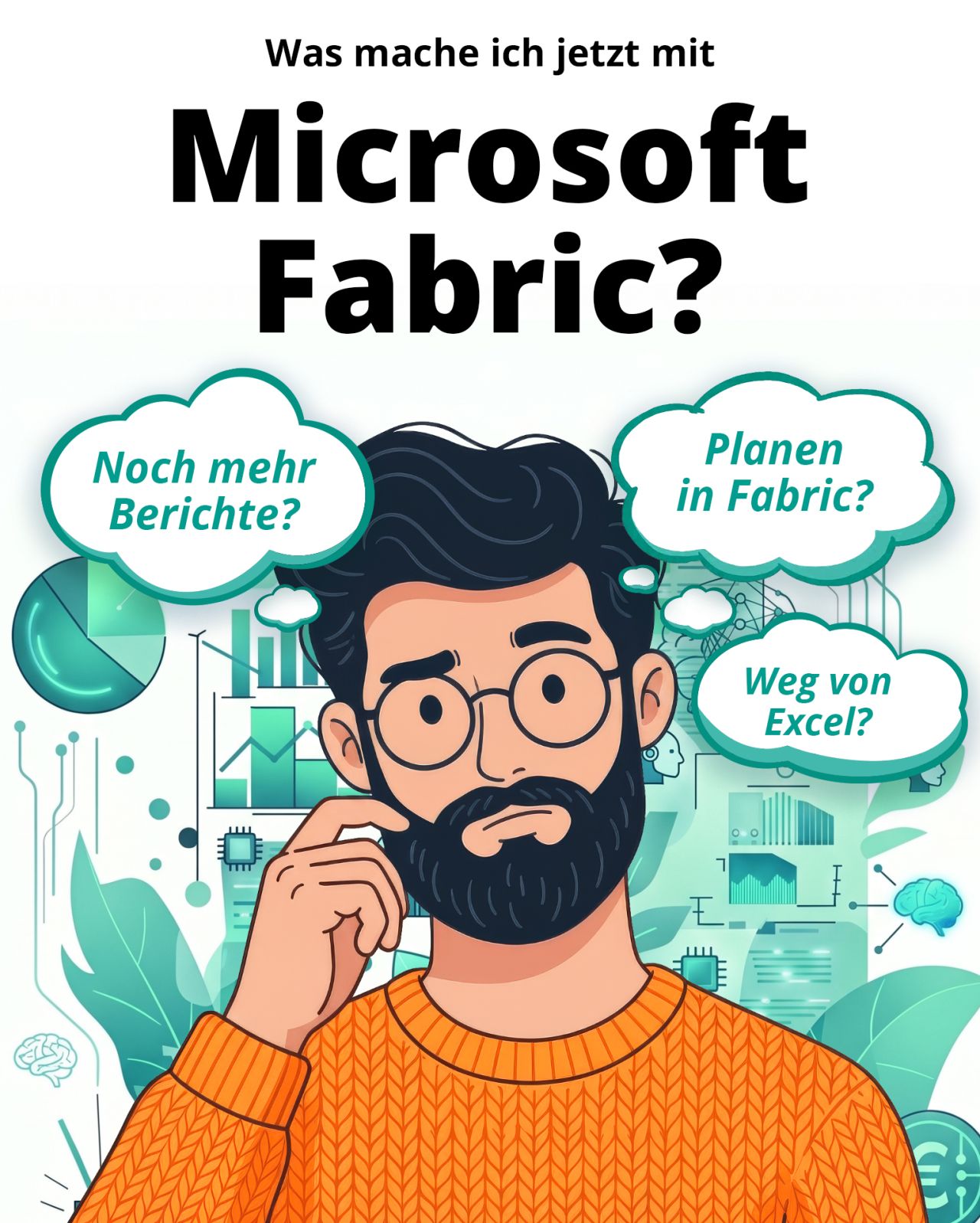
Planen in Fabric? Geht, und zwar direkt dort, wo Ihre Ist-Daten liegen. Jahreswert eingeben, auf Monate verteilen, rollierenden Forecast aufbauen, ohne Hin- und Herkopieren. Der Leitfaden zeigt, wie.
- BissantzSince 2 Oct 2026
Weg von Excel? Dort liegen Planwerte oft verstreut, die Herkunft ist unklar, der Status schwer erkennbar. In Fabric wird jede Änderung festgehalten: wer, wann, was vorher galt. Der Leitfaden zeigt, wie Planung ohne Excel-Nebenrechnung funktioniert.
- CollibraSince 1 Oct 2026
Cisco, Intuit, Workday, and ServiceNow are all building versions of the same thing: a control layer for AI agents. And they're building it in from the start. But for most enterprises, the bigger risk isn't an agent going rogue. It's an agent doing exactly what was asked, confidently, on data and context nobody governed. The agent isn't going rogue. It's guessing, and it has no way to know it's guessing. Our latest research with The Harris Poll found that more than half of data and AI decision-makers spend significant staff hours manually reviewing and correcting agent output before it goes live. That's the hallucination tax. And it grows with every agent you put in production. Monitoring isn't enough. Enterprises need visibility into what agents are doing, governed context for the decisions they're making, and controls that can be enforced at runtime. https://lnkd.in/egddh4KA










Other LinkedIn formats
Watch the companies you care about.
Filter every ad by industry, country, format and network, and get alerts when a company you watch starts running new ads.