B2B ad examples
471 B2B ads are live on LinkedIn right now, from 210 companies. Browse real ones, filtered by industry.
- arato.aiSince 28 Oct 2026
It took us three turns to get out of a parking ticket, no hacking required. We tried talking to an AI agent one of our municipalities deployed, to cancel a ticket we'd gotten. Nothing sophisticated about it, just a few turns of conversation and making something up, and the ticket was canceled. We tried the same thing on two other municipalities' agents and it worked just as easily both times. I'm sure these teams thought they'd tested their agents properly before deploying them. They probably ran a few datasets and called it done. But they never actually tested the agent the way a full system needs to be tested. That's one of the biggest gaps we keep running into. Organizations deploy these agents assuming they work, without ever really knowing that they do.
- ElizaRecorded 30 Oct 2026
Fundamental to our culture is putting the human at the center of AI. Meet the people behind Eliza and hear what drives our work and brings this team together. #LifeAtEliza
- AgileRLSince 27 Oct 2026
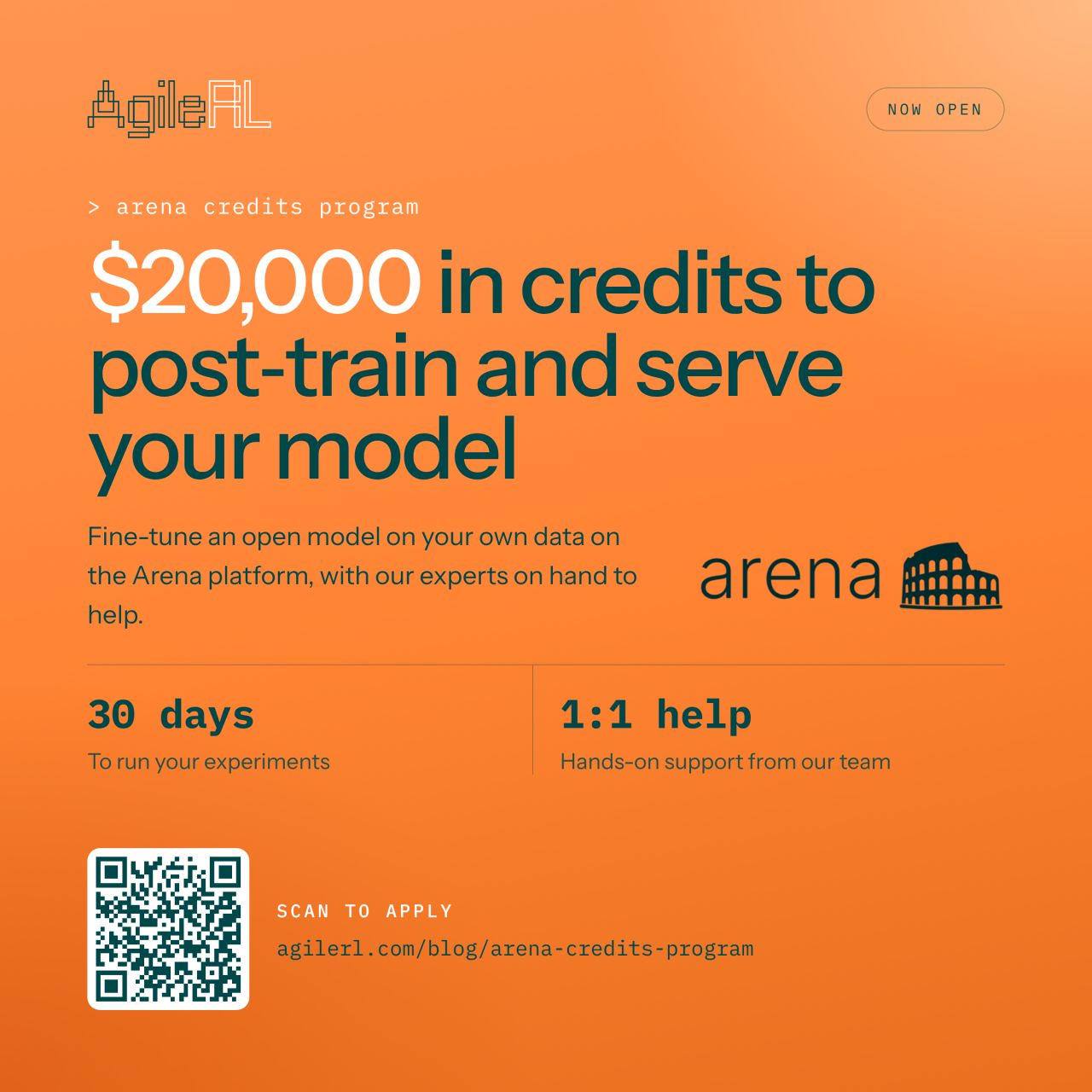
We are giving enterprise engineering teams $20,000 in Arena Credits to train and deploy their own model on Arena. Training a model of your own takes compute, time and engineering effort. These credits are there to make the first one easier to start. Why it is worth doing: - Keep control. A model you host runs where your data already lives, and its availability no longer depends on an external provider. - Contain costs. Per-token pricing grows with every request, while self-hosting is paid per hour of compute, and that trade improves the larger your organisation is. - Performance on your tasks. A smaller model trained for one job can outperform a frontier model at that job. A frontier API is a good place to start. When its output reads like a junior hire, rather than an experienced senior, that is usually the point to train a model of your own. You can apply at https://lnkd.in/eqZ3KgFm
- AgileRLSince 27 Oct 2026
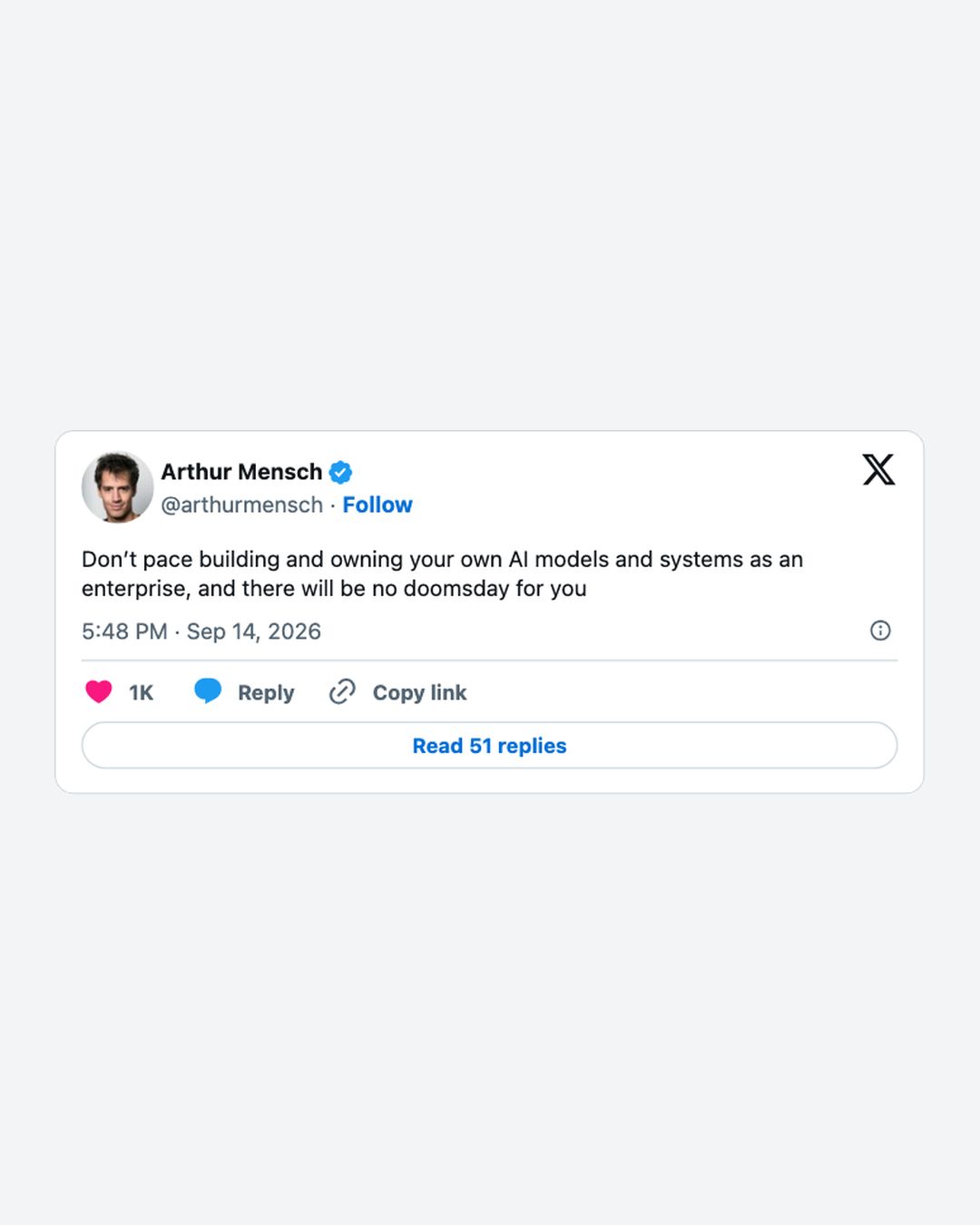
When AI budgets get cut, the frontier API bill will be the first to go. Arthur Mensch put the other side of it well: "Don't pace building and owning your own AI models and systems as an enterprise, and there will be no doomsday for you." If the market turns and AI spending falls, finance looks first at the cost that keeps accelerating with usage. That's the frontier. Every extra call costs more, and none of it stays in the business. A model you've trained on your own data works differently. It runs on your infrastructure, it's built for your use case, and it gets better every time you retrain it. That's an asset you own, and it's much harder to cut. So I'd expect a downturn to drive an even larger migration to open source. And if you're already building your own intelligence on open-weight models, brilliant. Keep at it. This is exactly what we help enterprises do at AgileRL.
- deepsense.aiSince 27 Oct 2026
A clinical trial protocol can look promising on paper. But how well does it hold up against real-world enrollment conditions and competing studies? Before a trial moves forward, teams need to know whether evidence supports their assumptions. Our Clinical Trial Protocol & Feasibility Intelligence Demo shows how a single protocol synopsis can become a structured, evidence-backed review covering: 🔵 Protocol design, 🔵 Enrollment feasibility, 🔵 Trial timelines, 🔵Amendment risks, 🔵Competitive landscape. The workflow brings these findings into one report, supported by clinical trial registry data, with the option to explore the evidence further through an interactive Q&A. For clinical development and trial operations teams, this creates a more structured way to challenge protocol assumptions before they become costly operational issues. See how the workflow works in our demo: https://lnkd.in/de8KXuH6/?utm_campaign=%255Breach%255DMaincampaign&utm_source=linkedin&utm_medium=paid&utm_id=1206493984&hsa_acc=508184568&hsa_cam=1206493984&hsa_grp=884963314&hsa_ad=1617274074&hsa_net=linkedin&hsa_ver=3 #ClinicalTrials #Pharma #PharmaML #LifeSciences
- Codvo.aiSince 27 Oct 2026
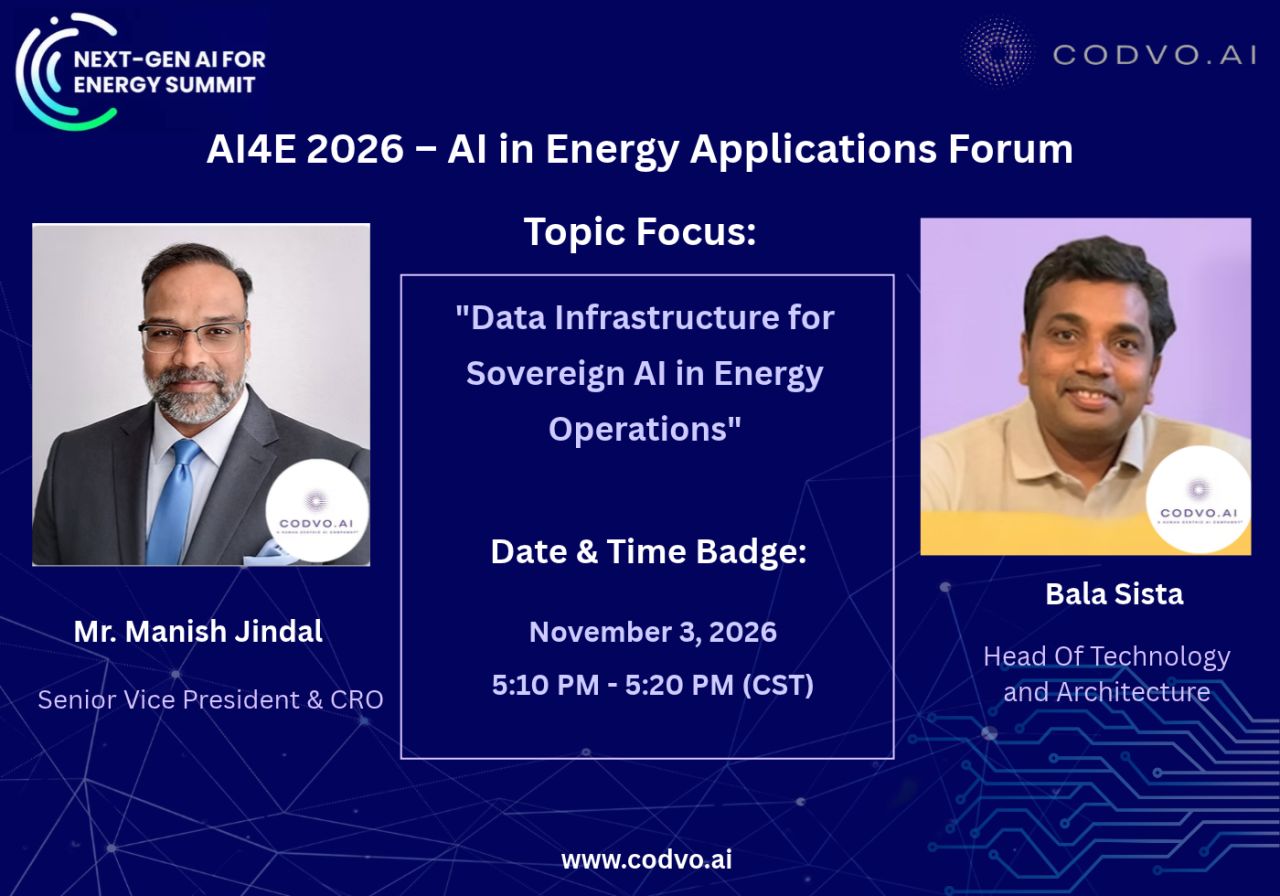
Building the foundation for sovereign AI in energy. How can energy companies turn AI investments into measurable business value while maintaining control over their data and intelligence? At the Next-Gen AI for Energy Summit 2026 (AI4E2026) in Houston, Manish Jindal, Senior Vice President & CRO, and Bala Sista, Head of Technology and Architecture at Codvo.ai, will join for a joint speaking session on: “Data Infrastructure for Sovereign AI in Energy Operations” 📅 November 3, 2026 🕔 5:10 PM – 5:20 PM CST 📍 Houston, Texas, USA The session will explore how energy organizations can build the data foundations needed to move AI beyond experimentation and into real-world operations—with measurable ROI, stronger decision-making, and control over their data and AI infrastructure. Key themes include: 🔹 Sovereign AI: Keeping enterprise data and intelligence under organizational control. 🔹 AI-ready data infrastructure: Connecting fragmented data across complex energy operations. 🔹 Technology with ROI: Translating AI investments into operational efficiency and measurable business outcomes. At Codvo.ai, we believe successful enterprise AI requires more than powerful models. It takes trusted data, the right infrastructure, and a clear path from innovation to business impact. Your intelligence. Your advantage. Book your Delegate passes now. #AI4E2026 #NextGenAI #EnergyAI #SovereignAI #DataInfrastructure #EnterpriseAI #CodvoAI Amit Verma Manish Jindal Bala Sista INDRANIL PAUL Sumeet Sadhu Codvo.ai #oilandgas OilandGas.World Arpita Chatterjee Lakshya Singh Deepak Kulkarni VISHAL JHA
- AlpicSince 27 Oct 2026
I’ve been thinking a lot in the past few weeks about what the rise of autonomous personal agents means for the web as we know it. A big part of the internet gets its money from moments when people stop paying attention: ads, friction, switching costs. Personal AI agents don’t get tired and don’t overlook the fine print. On paper, that should level the playing field. After all, an agent can weigh objective criteria, compare reviews and avoid the scams that play on human weaknesses. In practice, incumbents keep plenty of advantages, starting with their track record and scale. I’ve written up some thoughts on which revenue streams are most exposed and the conflict of interest at the heart of it: many of the companies building personal agents are also the ad businesses with the most to lose. Have a look and tell me what you think!
- BasetenSince 27 Oct 2026
Generic benchmarks can’t tell you how an open model will do on your repos. Our guide to evaluating open models for coding agents shows you how to run a pilot on your own workloads, without changing your harness. Download now.
- Arcade.devSince 28 Oct 2026
AI agents are starting to act on production systems faster than security standards can keep up. Our free checklist covers five pillars and 24 core standards every multi-user agent should meet before acting on production systems, plus 5 advanced standards for higher-security environments.
- BasetenSince 27 Oct 2026
Your code is sensitive. Baseten runs open models in Codex with zero data retention for prompts. Your security team will thank you.
- ElevenLabsSince 28 Oct 2026
Prime Minister Narendra Modi in interview with Lex Fridman - AI dubbed to English with ElevenLabs. Just landed back in London from India, coming off the incredible energy at AI Impact Summit in New Delhi. On the flight home, I rewatched part of this conversation from a year ago. A lot of what’s now becoming real was already visible in the questions and themes back then. And it feels especially fitting that it was AI dubbed to English already then, when the technology was just becoming available - thanks to amazing partnership with Lex Fridman! Many of the ideas we discussed at the summit have also been in motion for a long time - and now they’re only accelerating. In some ways it feels like homecoming for us at ElevenLabs because India is so voice-first. That’s part of why so many incredible use cases start here early - from customer support, experience to interactive education - with number of amazing partners like Meesho, Cars24, TVS Motor Company, PW (PhysicsWallah), IDFC FIRST Bank or invideo. The momentum in the region is just getting started. Thanks for the inspiration - excited for the next visit. https://lnkd.in/e4yDSeEV
- ElevenLabsSince 28 Oct 2026
Teachers often apply for jobs in the evenings — when support teams aren’t available. Zen Educate built a voice AI agent that guides users through onboarding, answers questions, and hands off to humans when needed. Customers describe the experience as natural and helpful. Watch how they built it.
- ComfyUISince 27 Oct 2026
ComfyUI provides full control over every stage of the pipeline. Swap models, lock seeds, and apply masks. Share workflows with team members while maintaining consistency.
- ComfyUISince 27 Oct 2026
With ComfyUI, you plug the workflow into your pipeline once, and every round of feedback becomes a revision in minutes across every shot, not a rebuild. Deliver more versions and faster turnarounds
- Bitdeer AIRecorded 30 Oct 2026
Follow our journey powering AI workloads around the world.
- Bitdeer AIRecorded 30 Oct 2026
Agentic AI requires infrastructure that refuses to bottleneck your breakthroughs. That’s why Bitdeer AI is proud to announce we've deployed more NVIDIA HGX B300 to support our Bitdeer AI Model Studio, powering our token factory. 🚀 Backed by our direct-to-expert support, Bitdeer AI gives you the infrastructure to run your most complex AI workloads with the performance and scale they demand. ⚡️ Build without limits. 🏭
- DataikuSince 27 Oct 2026
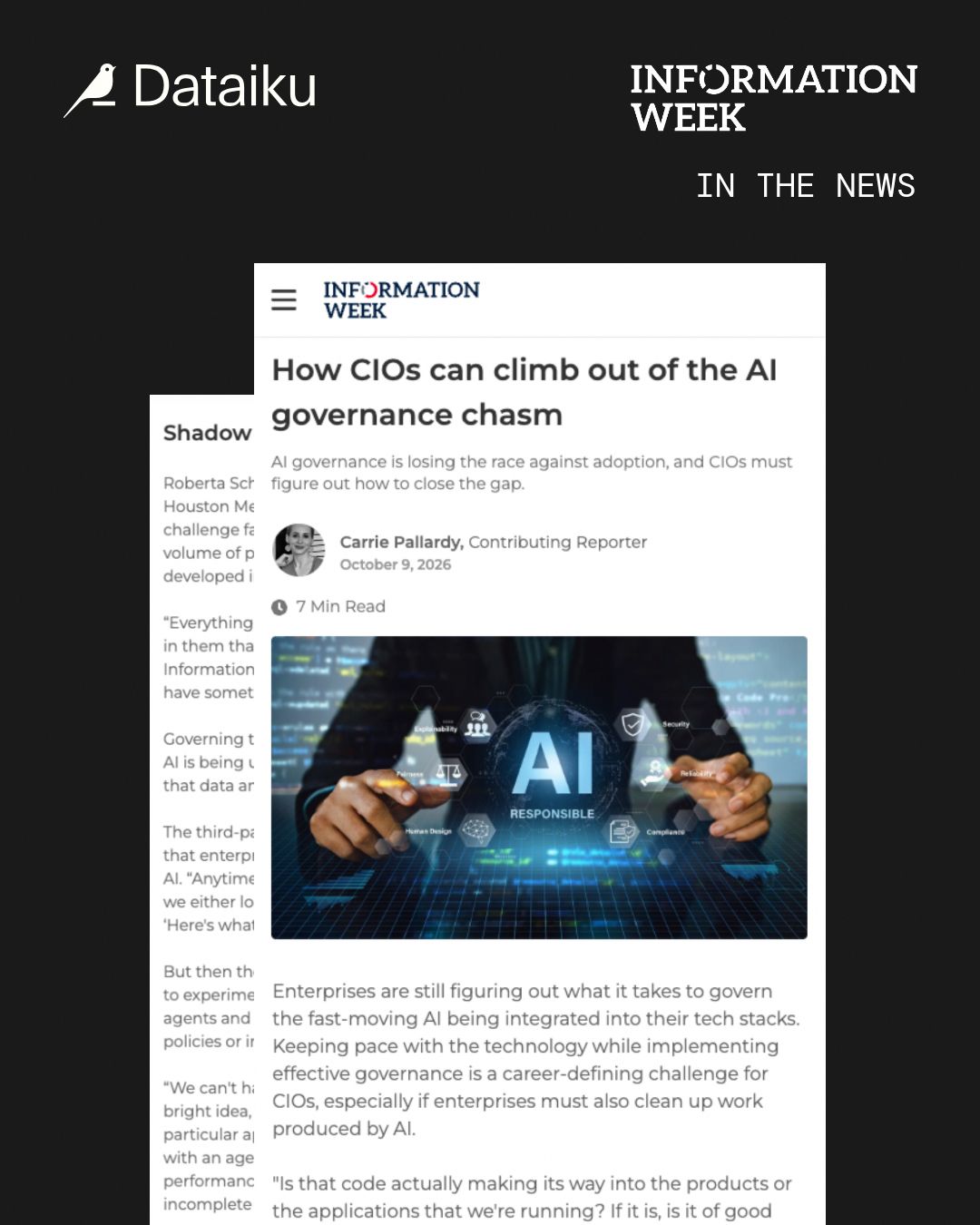
If the person reviewing an agent’s work can’t keep up, what exactly are they approving? Mike Anderson’s point about human fatigue in a recent InformationWeek piece stood out to me. Someone can be formally responsible for an agent and still spend their day clicking “approve” to clear the queue. Dataiku’s recent report with The Harris Poll, The Global AI Confessions Report: CIO Edition 2026, which surveyed 685 global CIOs, found that 84% say employees are building agents and applications faster than IT can govern them. And just 21% of CIOs have full visibility into AI agent and AI workload costs across different use cases and business units. Trying to close that gap through manual review alone puts an unrealistic burden on the people responsible. What companies need is a platform that supports ongoing monitoring, sets clear boundaries and provides a workable path for intervention. This is part of why we built Dataiku Agent Management: to bring agent ownership, usage, cost, quality and risk information together across platforms. It gives teams a shared basis for deciding where attention is needed. As we give agents more autonomy, we need to be just as deliberate about how people supervise them. Otherwise, approval becomes a formality. Great article by Carrie Pallardy that's definitely worth a read: https://lnkd.in/eN7xksMu I’ve added more on Agent Management in the comments.
- Fireworks AISince 27 Oct 2026
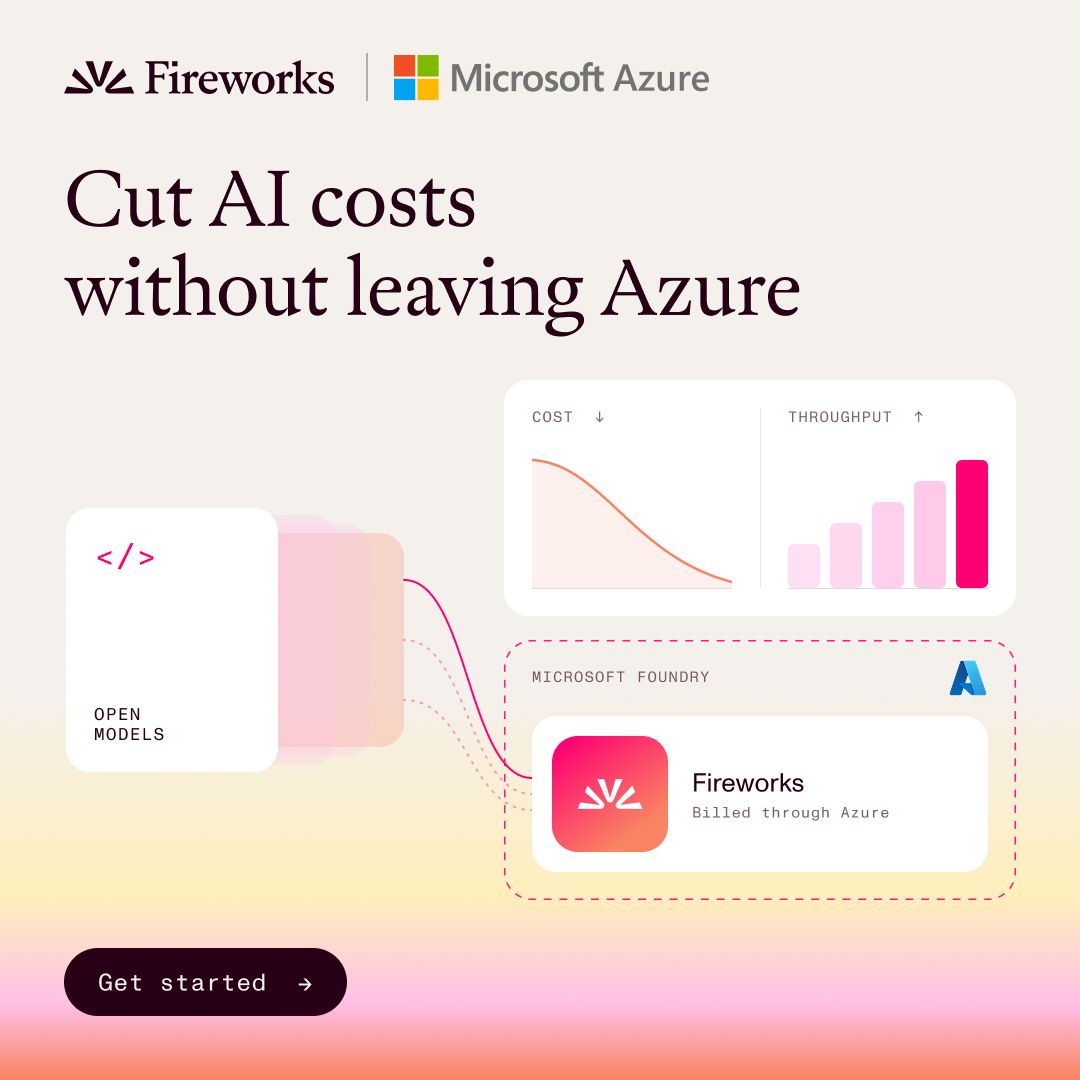
When you build on someone else’s closed model, you’re training their advantage, not yours. With Fireworks in Microsoft Foundry, you deploy open models or bring your own weights. You keep control of the model, the data and the intelligence you build, inside your own Azure tenant. Billed through your existing Azure account.
- Fireworks AISince 27 Oct 2026
Join Lin Qiao and Jensen Huang virtually for a live keynote on building your own frontier. Explore how leading companies are training specialized models, optimizing AI spend, and achieving frontier quality at lower costs. Register to watch the keynote live and unlock on-demand sessions featuring speakers from Microsoft, Meta, Notion, Cognition, and more.
- DATA POEMRecorded 30 Oct 2026
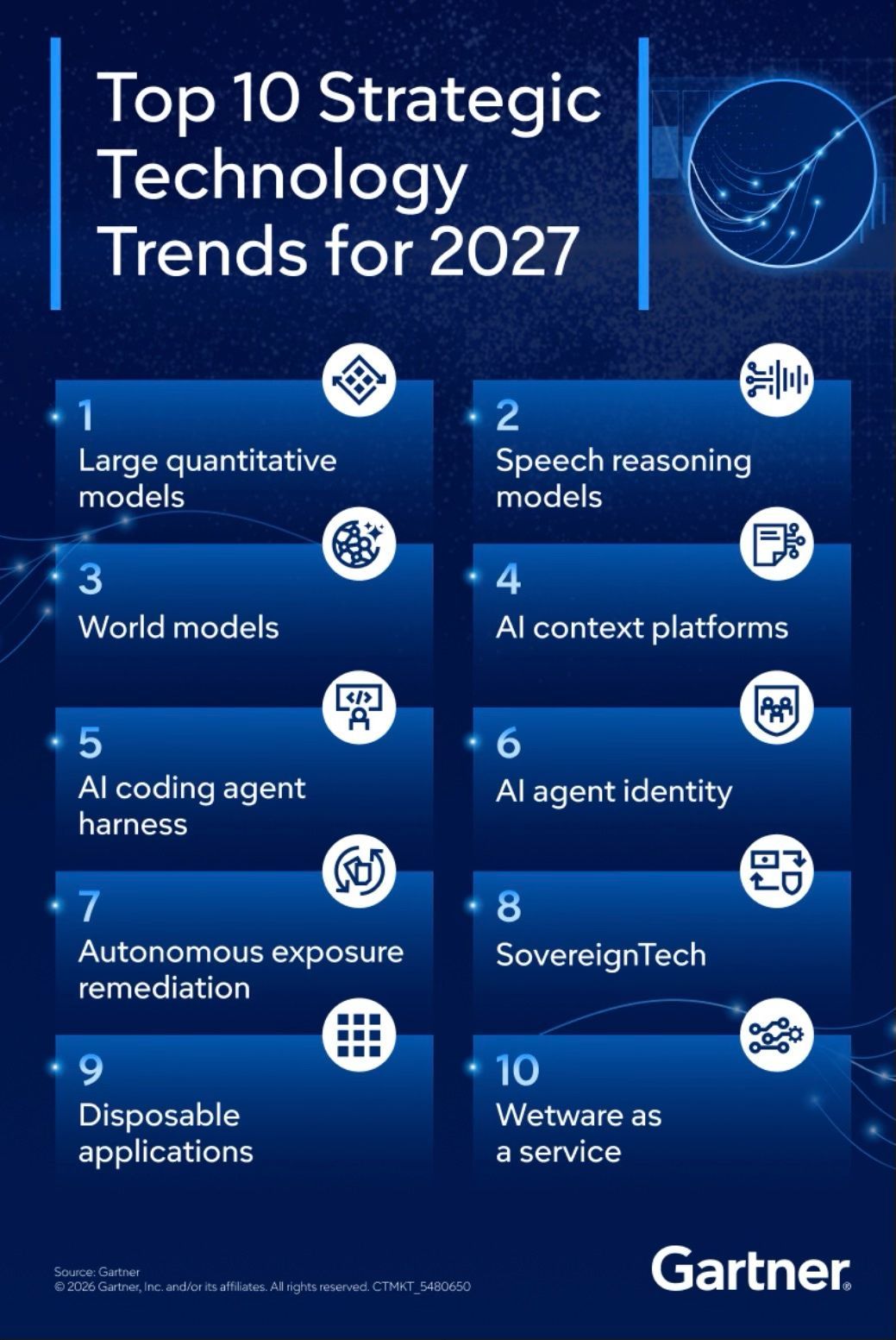
Gartner just put large quantitative models at #1 on its Top 10 Strategic Technology Trends for 2027. We’ve been building one for 7 years. When the transformer arrived, most of the industry used it to teach machines language. We used it to teach a machine how a business grows. Here’s the distinction that matters. LLMs are built to predict the next word. They’re remarkable at reading, writing and summarizing. But ask one to tell you what happens to sales if you cut price 5% and shift $10M from TV to retail media, and you’re asking a language model to do math it was never designed for. The architecture is the problem. Business decisions don’t live in text. They live in numbers: spend, price, promotions, distribution and sales, all pulling on each other at once, over time. That’s why we built POEM365 our Large Causal Model, trained on time-series data, not language. It learns from more than $5 trillion of spend and outcome data and forecasts new events with 93 to 95% accuracy. The correlation models I grew up with in planning rooms top out around 65-75%. An LQM understands quantities. A Large Causal Model goes one step further: it understands which growth drivers actually cause the outcome, and what happens when you change them. I spent 20 years in those planning rooms watching budgets follow whoever argued hardest. That’s the business problem. Not a lack of dashboards, but a lack of confidence when the big call has to be made. Gartner predicts that by 2030, LQMs will replace LLMs in 25% of strategic forecasting and operational modeling tasks. For everyone who has argued that business decisions deserve their own kind of AI, this is a good day. Most AI in business today helps teams write faster, design faster and build better dashboards. POEM365 exists to help leaders decide with confidence. That’s the mission we work on every day. You can check Gartner's full list here: https://lnkd.in/gFSddBxe
- DeepgramSince 28 Oct 2026
Flux TTS reads the full conversational thread instead of generating every line in isolation.
- AssemblyAISince 28 Oct 2026
Today we're launching AssemblyAI-TTS-1, our first text-to-speech model: frontier naturalness, super fast, instant cloning, and just $15 per 1M characters. On the combination of accuracy, naturalness, and cost... no other TTS model is better. It's perfect for conversational voice agents running at scale. We trained AssemblyAI-TTS-1 from scratch on our own proprietary data, and we serve it on our proprietary voice inference stack. The same inference stack that already handles 3M+ hours of voice/day for the 1M+ developers building with our transcription models. This means AssemblyAI-TTS-1 is frontier quality + super fast (80ms TTFB), and supports unlimited scale with no rate limits or capacity to reserve up front - just like our leading transcription models. AssemblyAI-TTS-1 is live TODAY with: - Frontier naturalness - #1 in accuracy on independent benchmarks - $15 per 1M chars - 90ms latency (TTFA) - Unlimited concurrency/rate-limits - Instant voice cloning - A library of 4,000+ voices to pick from Available today in our API. Watch Johnny order a pizza with our new TTS model in the video below 👀 And stay tuned... we have a ton of improvements and updates on the way.
- AssemblyAISince 28 Oct 2026
Every founder is told to find product-market fit in 18 months. Dylan Fox waited five years for the voice AI market to exist. Now his company runs the voice AI behind Granola - 100M API calls a day! When we met at their office, I wanted to know how you tell conviction apart from stubbornness when the market says no for half a decade. Between 2017 and AssemblyAI's Series A in 2022, he had two choices: take early voice models and sell them to court reporting agencies, or keep refining the core speech models until developers finally needed them. He chose to wait. He kept the team capped at four people, kept personal expenses near zero, and treated those five years as an apprenticeship in deep learning. When I was building Paloma, I lived on the opposite side of that equation. I knew that AI matchmaking was bound to be a thing, but chased immediate market signals, and eventually ran out of steam. Watching Dylan build proved that surviving the quiet years requires obsessive faith in the future itself. We also get into: -> Why the last 10% of an AI product is the whole product -> “Everyone’s still just figuring it out” -> 180% net dollar retention with zero contracts -> Married to a founder whose company took off while his didn’t -> Why he deleted X in 2023 (I think he’s back tho) -> “I’m just a builder” Full episode link in the comments.


Other LinkedIn formats
Watch the companies you care about.
Filter every ad by industry, country, format and network, and get alerts when a company you watch starts running new ads.