B2B ad examples
714 B2B ads are live on LinkedIn right now, from 428 companies. Browse real ones, filtered by industry.
- DynataSince 22 Oct 2026
Explore approaches to measuring brand lift across platforms, comparing campaign performance, and uncovering insights that help guide media strategy, even behind walled gardens.
- DynataSince 22 Oct 2026
Explore ways to track shifts in brand awareness, favorability, and purchase intent across platforms, even when walled gardens limit access to advertising exposure data.
- CouchbaseSince 22 Oct 2026
Stop paying to resend the full conversation history every turn. Couchbase Agent Memory recalls the relevant context instead, cutting token costs without giving up accuracy.
- CouchbaseSince 22 Oct 2026
Your next agent should cost less than your last one. Couchbase builds memory, live context, governed access, and traceability into one data platform, so no agent needs its own custom stack.
- Network Observability by BroadcomSince 22 Oct 2026
Voyence NCM is here to stay—and evolving. . See how we’re revitalizing it as a core part of our Network Observability platform.
- Network Observability by BroadcomSince 22 Oct 2026
Broadcom is giving Voyence NCM a bigger role. Explore our product roadmap to stronger visibility, control, and network resilience.
- Altinity, Inc.Since 22 Oct 2026
OSA Con 2026 is coming up on November 2nd at the AWS Builder Loft in San Francisco. Matt Topol from Columnar will be doing a talk on Arrow Database Connectivity or ADBC for short. https://lnkd.in/gv2hqd8U If you work on data and don't yet know the Apache Arrow project, you absolutely need to attend this talk. Arrow is replacing 4 decades of incompatible, slow TCP/IP client protocols with a shared protocol for moving columnar data fast. The word "revolution" is pretty overused in tech but it's deserved here. #apache #arrow #opensource #analytics #databases #aws
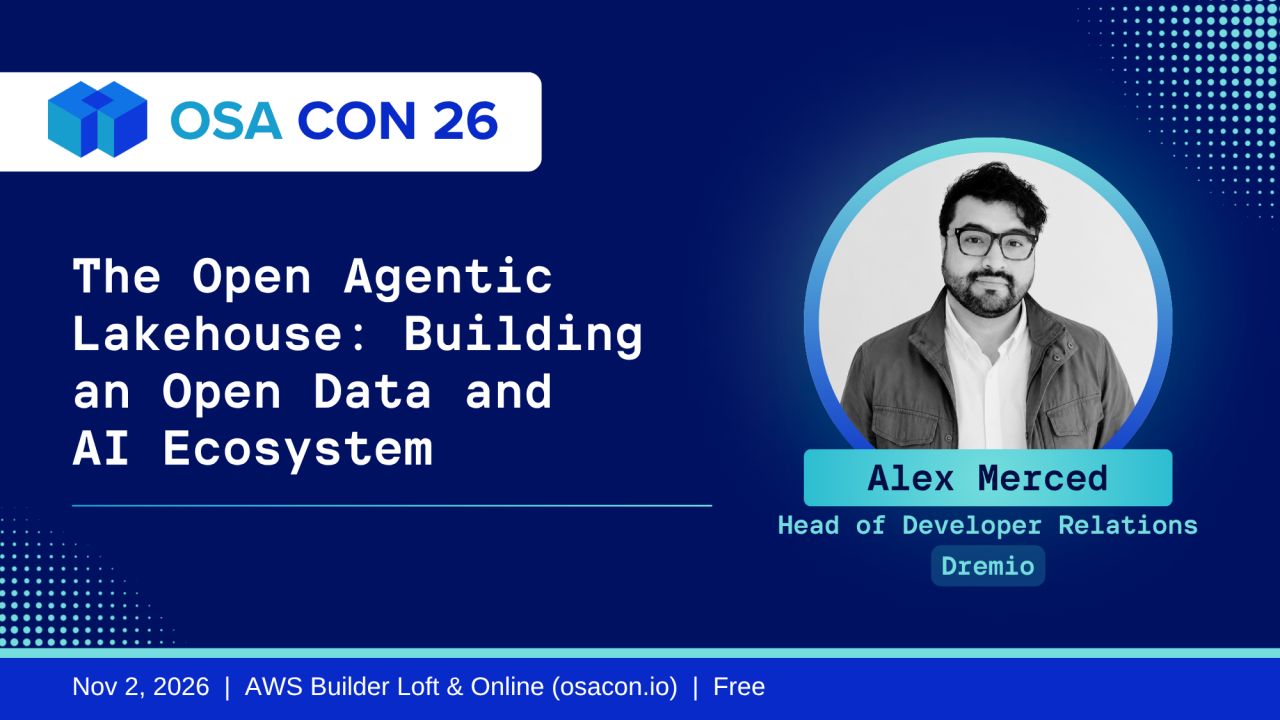
- Altinity, Inc.Since 22 Oct 2026
It's a pleasure to welcome Alex Merced from Dremio as an OSA Con 2026 speaker on November 2 in San Francisco. Alex will be introducing the "Open Agentic Lakehouse." https://lnkd.in/g-359vDS. It's in-person! Alex is the most eloquent speaker on data lake technologies I know. His talks offer an excellent overview of data lake architecture and the open source projects that make up the foundation. This year's presentation describes emerging open protocols to integrate AI agents with data lakes. It's must viewing for anyone building modern analytic systems. #opensource #agentic #lakehouse #apache #iceberg #ossie #polaris
- 51Degrees - Fast, Accurate Device Detection & IP IntelligenceSince 21 Oct 2026
Human Confidence tells you, in one word and in real time, how sure you can be that a person is viewing the page.
- 51Degrees - Fast, Accurate Device Detection & IP IntelligenceSince 21 Oct 2026
Human Confidence tells you, in one word and in real time, how sure you can be that a person is viewing the page.
- Better StackSince 22 Oct 2026
We're hiring network engineers
- AstronomerSince 22 Oct 2026
You’re deep in legacy data, broken pipelines, and surprise schema changes. Now there’s Jev, new open source models, and Airflow Dags with loops??? If you’re feeling overwhelmed, you’re not alone. Join data engineers Tamara and Volker on November 18 for an honest conversation about what’s worth your attention and what you can safely ignore. Here’s what to expect: → Two data engineers trying to decipher the current trends → Where your role is headed (it’s not all bad!) → Resources and code to take home
- AlteryxSince 22 Oct 2026
For HSBC teams, confidence in reporting starts with traceable data and clear business logic. Replace manual data workarounds with repeatable, governed Alteryx workflows. Make reporting easier to review and build a more reliable foundation for AI.
- AlteryxSince 22 Oct 2026
HSBC teams: monthly reporting shouldn’t depend on a reminder. Automate recurring data preparation with Alteryx, so you spend less time repeating tasks and more time on analysis. Build trusted data for reporting today and AI tomorrow.
- AnavsanSince 22 Oct 2026
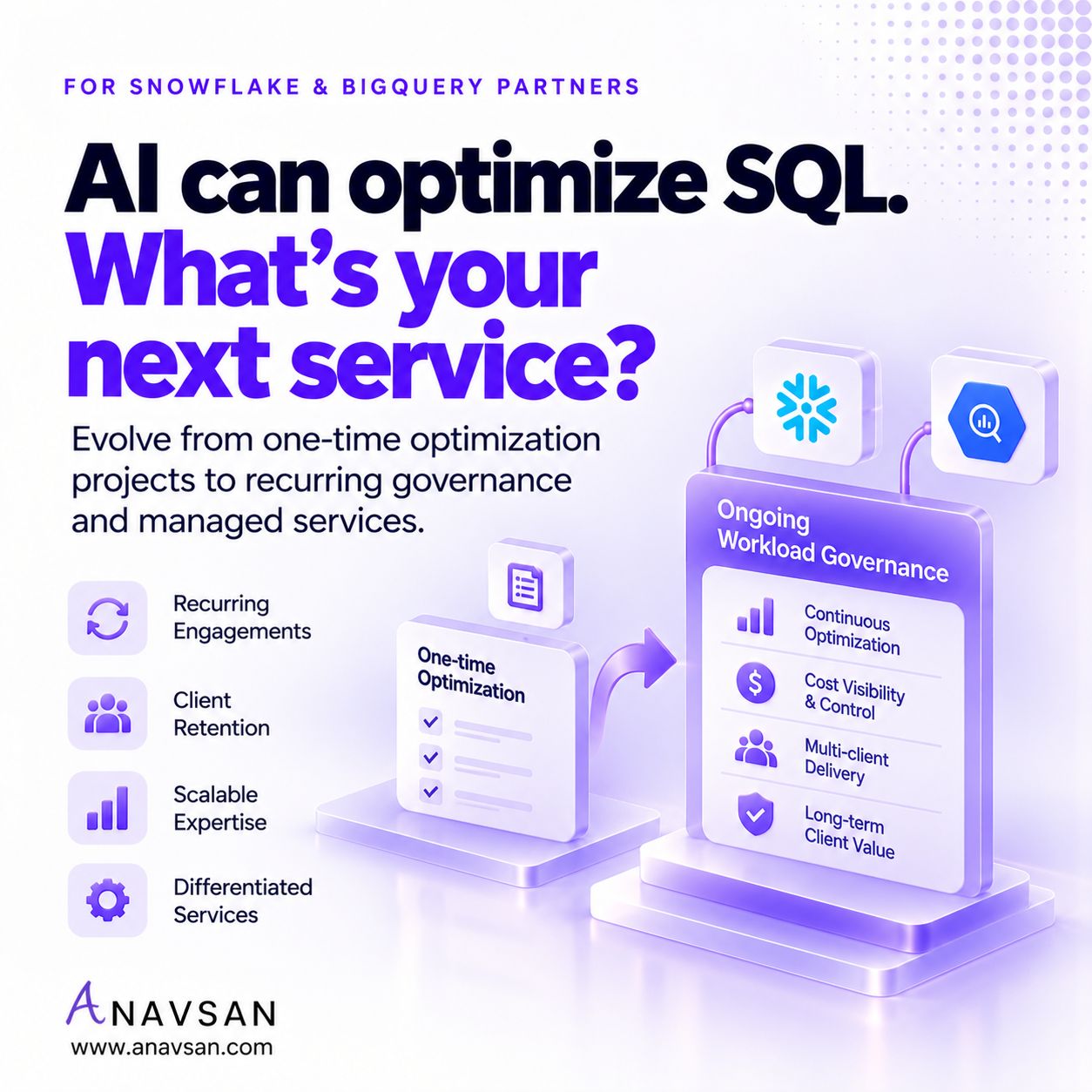
When AI handles more SQL tuning, what happens to traditional consulting engagements? The opportunity is shifting toward continuous optimization, workload intelligence, and recurring governance. Follow Anavsan for perspectives on the future of Snowflake and BigQuery services.
- AnavsanSince 22 Oct 2026
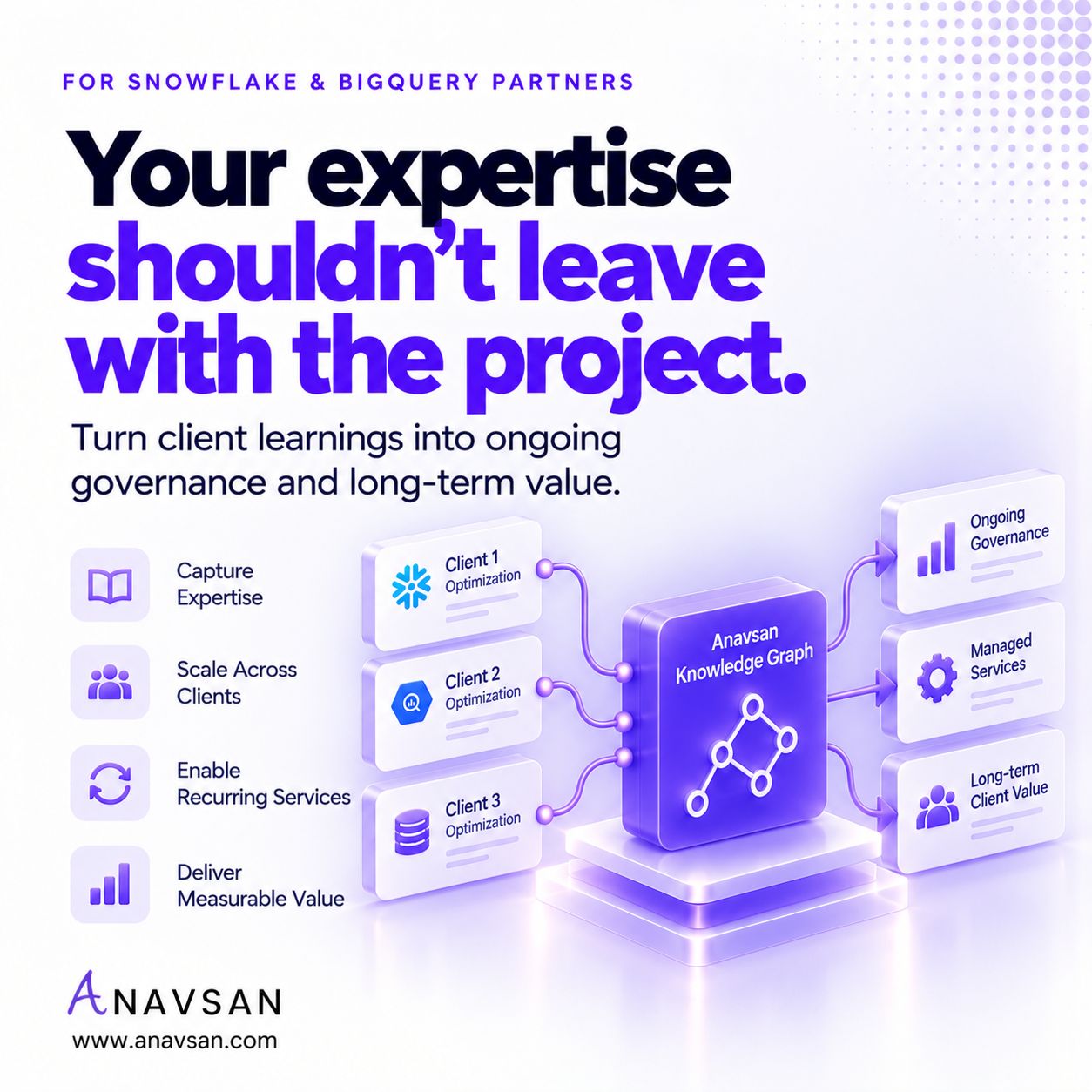
Your consultants build valuable optimization knowledge with every client engagement. What if that expertise could support ongoing governance instead of leaving when the project ends? Follow Anavsan for insights on knowledge-driven optimization, managed services, and scalable cloud data practices.
- SnowflakeSince 22 Oct 2026
Hi Canva finance team, explore AI for variance analysis, forecasting and financial workflows. Learn from the leaders doing it: Snowflake CFO Brian Robins and DoorDash CAO Gordon Lee on putting AI to work in finance. Join Snowflake Expedition. Free and virtual, 4–6 November. Register now →
- GoldrightSince 21 Oct 2026
Vorher: zwei getrennte Systeme und aufwändiges Reporting. Nachher: ein Single Point of Truth und Reporting auf Knopfdruck. Der Erfahrungsbericht der Raiffeisen-Landesbank Steiermark zeigt, wie der Legal Entity Manager von Goldright das Beteiligungsmanagement verändert hat – hin zu konsistenten, prüfsicheren Stammdaten für Compliance, Meldewesen und Vorstand.
- north.io GmbHSince 20 Oct 2026
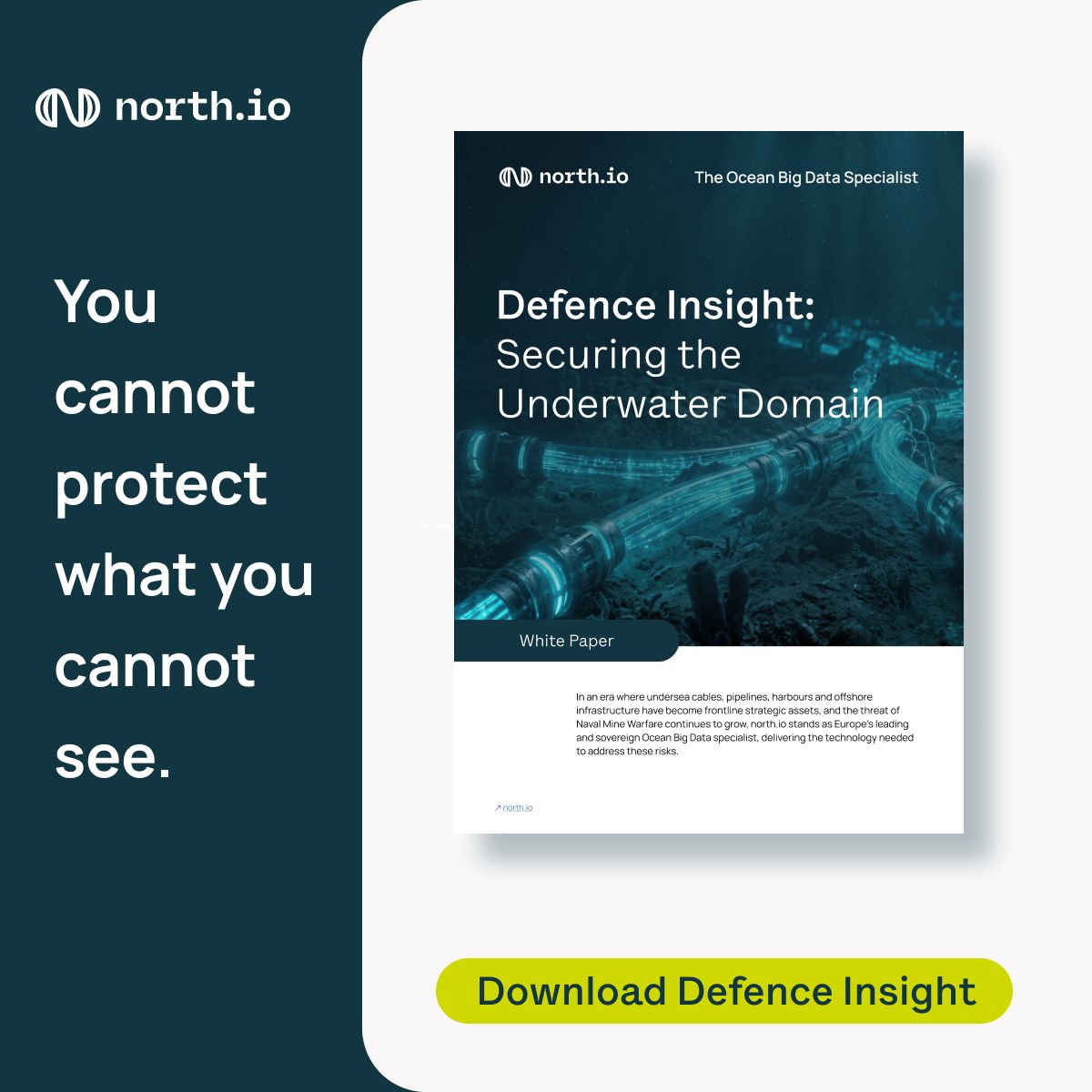
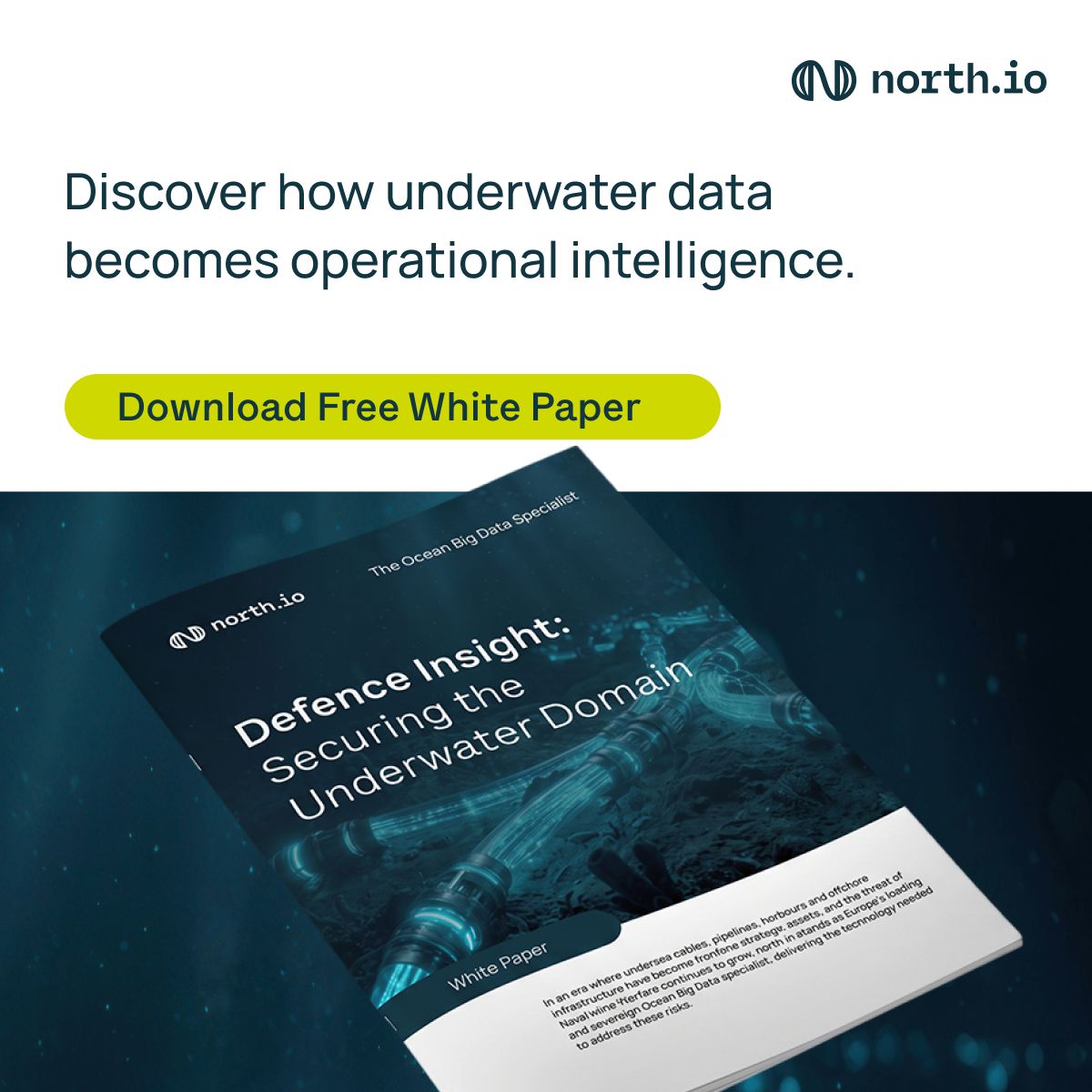
Monitor critical routes continuously instead of through periodic survey missions. Our Defence Insight white paper shows how automated change detection on the seabed flags new or shifted objects, from the Baltic Sea to other strategic areas.
- north.io GmbHSince 20 Oct 2026
What used to take days or weeks of data evaluation now takes minutes. Our Defence Insight white paper shows how the Naval Ocean Data Warehouse (NODW) turns terabytes of raw sonar and sensor data into a common operational picture.
- HG InsightsSince 20 Oct 2026
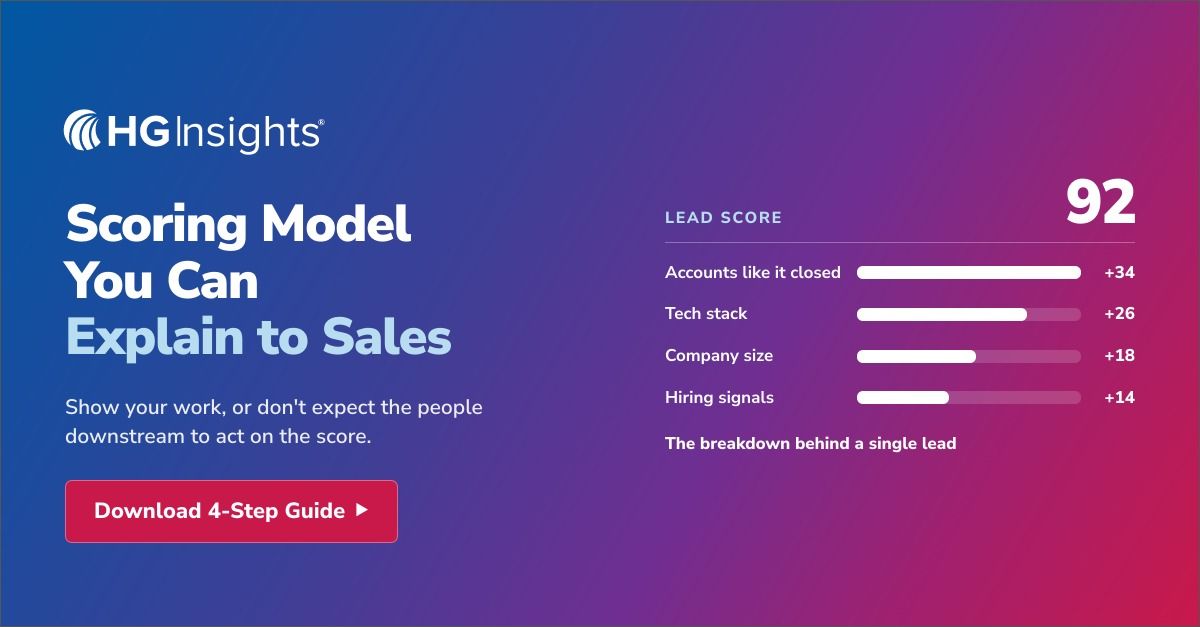
Sales asked why that lead scored 92. Could you answer? Our free 4-step guide shows Marketing Ops how to build scoring you can defend.
- HG InsightsSince 20 Oct 2026
About 85% of MQLs never become SQLs. The fix isn't a smarter black box. It's scoring you can explain. Get the free 4-step guide.
- ClarityQ Agentic Data AnalysisSince 20 Oct 2026
Your context layer was correct on the day you built it. That much is most likely true, but here is what likely happened since: -> An engineer renames a column in your most used table. The layer still points at the old name. -> Finance changes how a subscription tier is bucketed. The metric definition is now silently wrong. -> A new SKU category launches. Every "by category" breakdown is missing it. None of these are edge cases, they are Tuesday morning cases. A context layer is as far from "one-off" effort as it can get. It's a living system with a maintenance surface, which means at minimum: 1. Schema drift detection. When the warehouse changes underneath, the affected definitions are flagged, not discovered by a wrong answer. 2. Change-aware analyses. If you rerun an analysis from last month and the context it depended on has changed since, you should see an alert, not a different number with no explanation. 3. Version history on every definition. Who changed what, when, and what did the previous version say. Rolling back a metric definition should be as easy as rolling back a commit. 4. Sync with whatever semantic or context layer already exists. Most companies already have some of the knowledge in tools like dbt, Tableau, or alike. And on top, a smart harness with an efficiency layer that tells the agent where exactly to dig in the context, to avoid draining the tokens. The uncomfortable truth: even the most sophisticated agent needs constant care - someone, or something, or both, monitoring and testing the context continuously.
- ClarityQ Agentic Data AnalysisSince 20 Oct 2026
Everyone talks about how the context layer drives accuracy. Almost nobody talks about what it costs to use one. In our opinion, retrieval efficiency - how the agent finds what it needs in the layer - deserves the same attention as the context itself. The tokens spent on a question are set by how much the agent has to read before it finds the right definitions. Take "what was ARPU by region last quarter, excluding internal test accounts". Everything needed is in the layer. The cost depends entirely on how the agent gets to it. With naive retrieval, the agent is like a new employee on day one - smart, but with no one to ask, so it reads everything to answer anything: 1. Finds four revenue-related definitions. Reads all four to decide which is the source of truth. 2. Reads the dimension definitions to learn how region is represented, and whether country, geo or market is the live one. 3. Looks for the test-account rule. It is in the layer, but filed under "internal traffic exclusion", so the search misses it and the agent reads on. 4. Generates, hits an error on a column name it read fifty turns ago and no longer has in context. Re-reads, regenerates. Every step is paid for. The answer may well be correct, but it costs many times what it needed to, takes longer, and gets less reliable as the window fills with material the question never needed. This is why, in our view, retrieval is not a layer you bolt on. It is part of the harness - the tools the agent works through. How it searches. What it uses. When to search again, when to stop, and what to do when nothing is good enough. Done right, the agent receives, before generating anything: - The single source-of-truth definition, not four candidates - The valid dimensions and their real column names - The business rules in scope, even those stored under a different name - The relevant skills: proven ways to answer this, including the SQL All this searching and filtering runs as plain code, outside the model. Code is cheap. Model calls are not, so the less the model reads, the less the question costs. Three more things that keep the cost down: -> Work with the models' cache. Prompt caching rewards stable, well-ordered context. Making the repeating parts hit the cache is a real cost lever, and easy to get wrong. -> Turn research into context. When a metric is not in the layer, the agent researches it from scratch. If people keep asking, that research and the warehouse queries behind it repeat. The agent should notice and propose adding the metric to the layer. -> Promote repetition out of the agent. If "weekly retention by cohort" is asked every Monday, it should stop being an agent query. The agent can notice the pattern and propose a dashboard, same for repetitive reports. The savings depend on schema size and question complexity, but the gap between naive and efficient retrieval is real money. It is the difference between a tool everyone can use freely and one the company has to restrict.











Other LinkedIn formats
Watch the companies you care about.
Filter every ad by industry, country, format and network, and get alerts when a company you watch starts running new ads.