B2B ad examples
478 B2B ads are live on LinkedIn right now, from 210 companies. Browse real ones, filtered by industry.
- DisarrayRecorded 16 Sept 2026
It's always energizing when one of our founders helps move an industry conversation forward. This week, TechCrunch's Russell Brandom dug into one of the most-hyped (and least-understood) ideas in AI right now: recursive self-improvement (RSI), the point at which AI systems can meaningfully improve themselves. For the piece, he turned to Doris Xin, Co-Founder & CEO of .406 portfolio company Disarray. Doris doesn't see #RSI the way most of the field does. The common view treats it as a problem of intelligence, that once models get smart enough, they'll start improving themselves. Her argument is that the intelligence is largely here already, and what's missing is the infrastructure to put it to work: "Given infinite compute and infinite time horizon, we are already there. I want to make an argument that this is not a creative endeavor, really. It's just a lot of meat-and-potatoes engineering." It's a characteristically clear-eyed take from someone who builds rather than speculates. She demonstrated the value of infrastructure to activate the current model intelligence in her recent 24-hour run, where on a single A100, Disarray's MLE agent earned 28 Kaggle medals, with nine top-10 finishes and a #1 ranking ahead of every human team. Congratulations to Doris and the team on the well-deserved recognition. You can read the full article below. https://lnkd.in/eEt3fVk2 Moustafa AbdelBaky, Kevin C. Wang
- DisarrayRecorded 16 Sept 2026
In a TechCrunch article on RSI, I was quoted saying “[RSI] is not a creative endeavor.” What makes me say this? To oversimplify, RSI is about finding configurations that lead to AI improvement from a vast, uncertain space. With infinite resources, you can sample randomly until something works. Without infinite resources, progress depends on testing high-quality hypotheses. That is where “creativity” comes in. A creative breakthrough often means sampling from a subspace no one had thought to search before. AI can test far more hypotheses than humans, but it can’t generate good, novel hypotheses effectively if it doesn’t understand the entire search space and can’t leverage existing knowledge to prune the space for efficiency. The "meat and potatoes engineering" I was referring to is about building specific mechanisms to overcome these limitations: A context graph tells an agent what has already been tried, which evidence is trustworthy, which assumptions are stale, and where adjacent opportunities may exist. A harness keeps the search process coherent over time, so the agent does not lose state, repeat failed work, overtrust its own judgment, or keep pursuing a bad trajectory. These are the hard engineering challenges we need to solve to meaningfully move towards RSI today. The full TechCrunch article by Russell Brandom offers diverse perspectives on the topic from luminaries in the field and a sharp synthesis: https://lnkd.in/gWy6qqas
- DKubeRecorded 16 Sept 2026
DKube turns 500-page loan files into structured data in minutes.
- DKubeRecorded 16 Sept 2026
DKube reconciles mortgage documents in minutes at 99.6% accuracy — fully in your private environment.
- DomynSince 8 Sept 2026
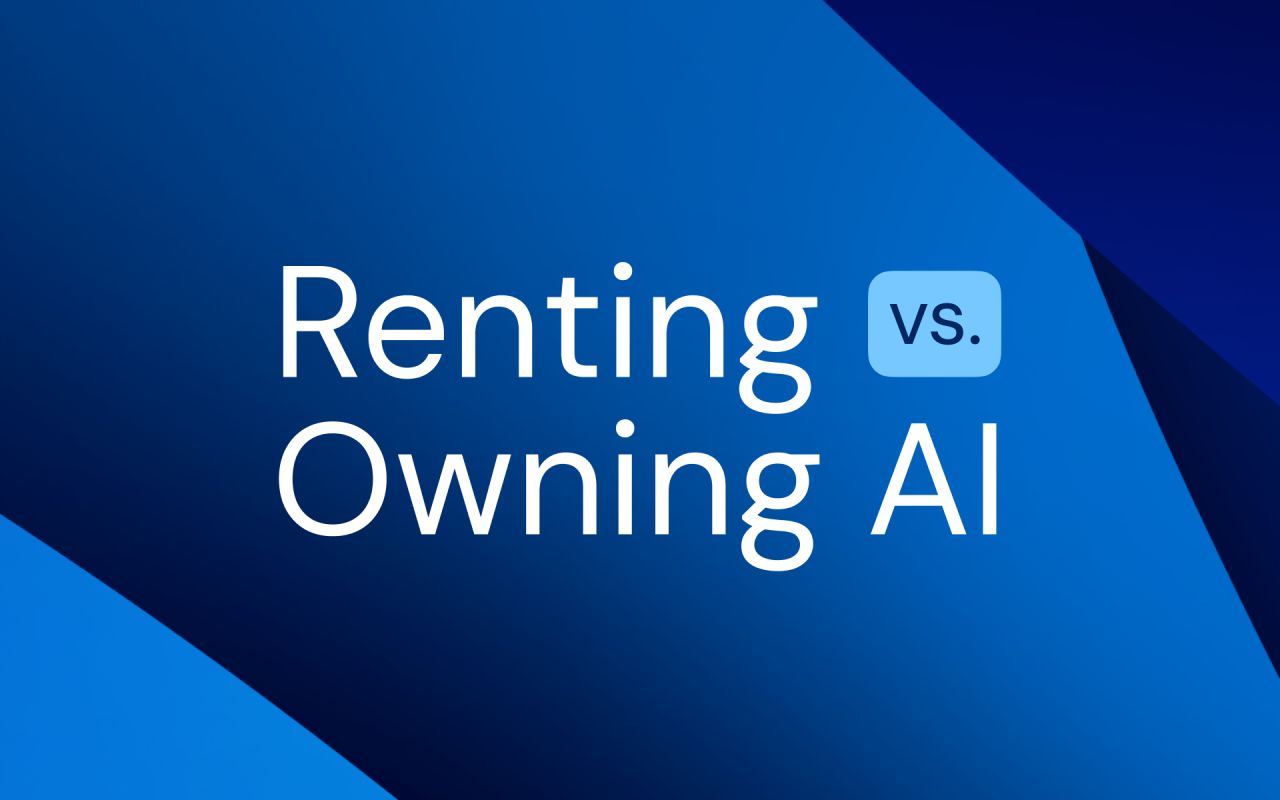
Renting AI is fast. But when intelligence sits inside decisioning, compliance, and customer-facing workflows, speed stops being enough — and dependency becomes a liability. Ownership means controlling the codebase, the model weights, the training data, and the outputs. Miss one, and the system is never fully yours. In our latest article, we break down what "renting" AI actually costs — and what full ownership looks like in practice. 👉 Read it here: https://lnkd.in/ein9gBRS
- Dyna.AiRecorded 16 Sept 2026
Get the latest jobs and industry news
- DDNSince 24 Apr 2026
Good infrastructure gets noticed. Great infrastructure makes the list. DDN has been named to the 2026 CRN AI 100 List in the AI Infrastructure and Edge Computing category! We are proud to be recognized alongside other innovators shaping the future of AI and even prouder to support the partners bringing enterprise AI to life.
- DDNSince 5 May 2026
AI infrastructure isn’t just hard — it’s the #1 drag on performance and ROI. The 2026 State of AI Infrastructure Report reveals how winning teams simplify, unify, and accelerate their AI foundation.
- DeepdubSince 17 Jun 2026
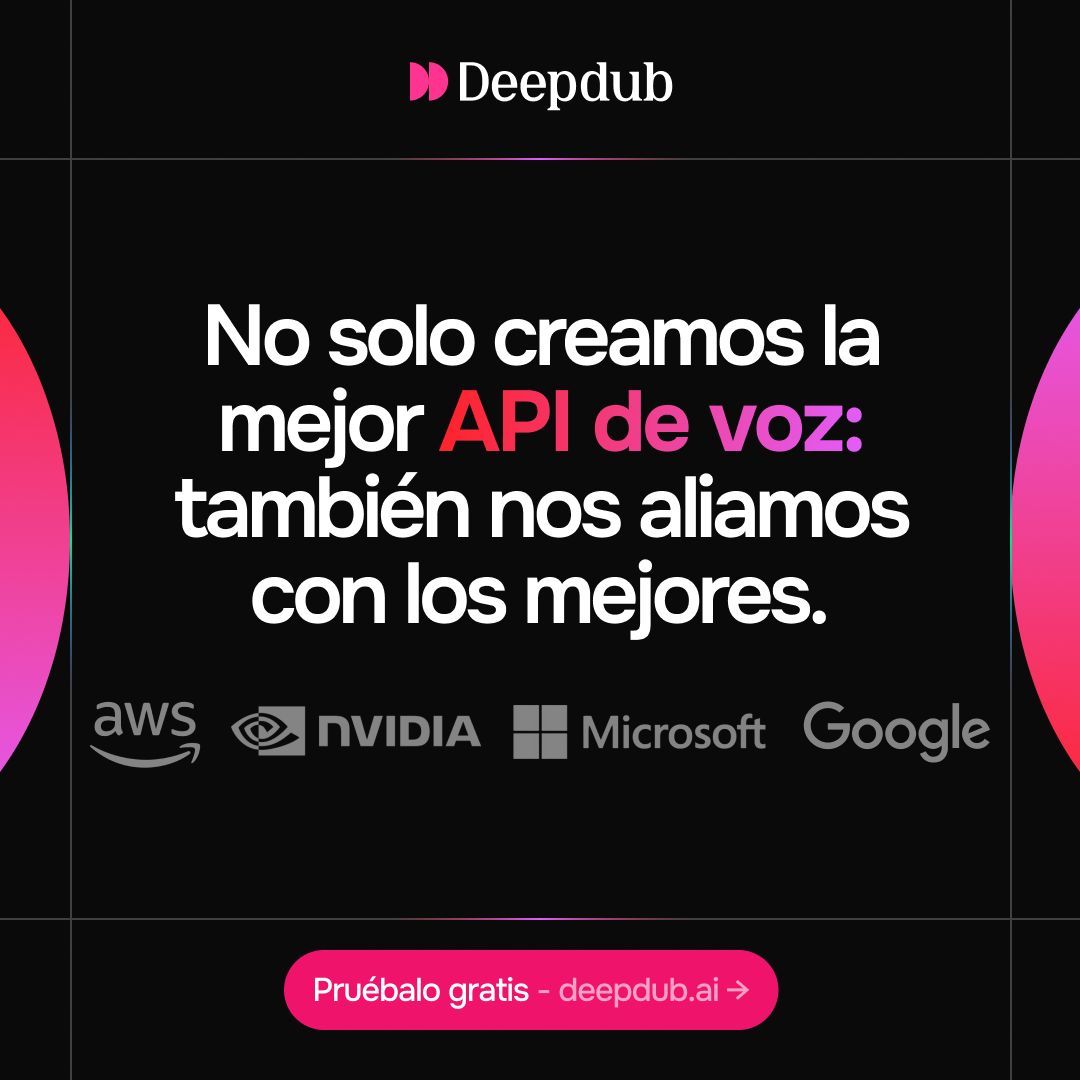
Cada día sin Deepdub es un día con llamadas que podrían sonar mejor, costar menos y vender más. Deepdub hace lo que otros prometen: 📞Voces indistinguibles de una persona real. 📞Latencia de 125 ms, imperceptible para el usuario. → Escalabilidad ilimitada sin perder calidad. 📞Cumplimiento SOC 2 y GDPR para el sector financiero europeo. No es casualidad que Google, NVIDIA, AWS y Microsoft hayan elegido a Deepdub como socio estratégico de voz con IA.
- DatologyAISince 28 May 2026
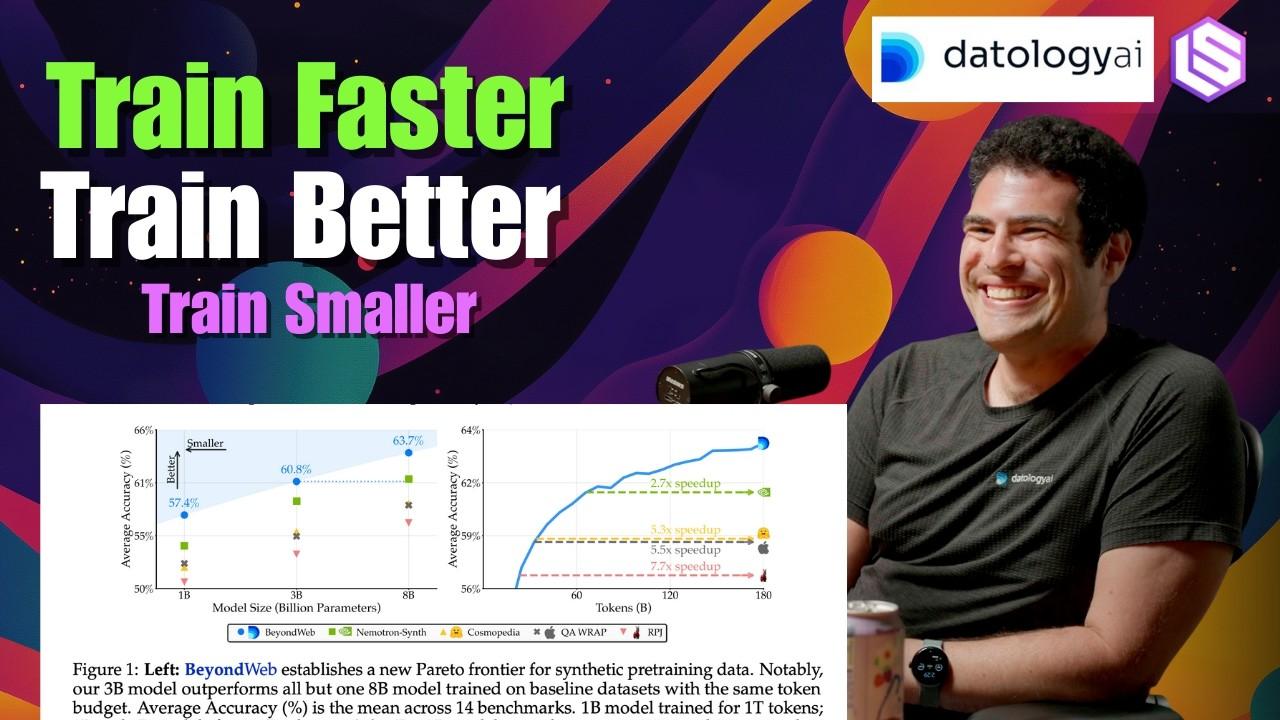
Rethinking the Future of AI: It’s All About the Data Hear Ari Morcos, CEO of DatologyAI, on the Latent Space podcast to discuss the importance of data in the current industry. Ari describes how “models are what they eat”—and that careful curation: filtering, rebalancing, sequencing, and generating synthetic data is the key to training smaller models to better performance, all with less compute. His own journey, from focusing on model architectures to realizing the outsized impact of data quality, highlights how curation breaks through the diminishing returns of naive scaling. At DatologyAI, the mission is clear: automate this complex process to make world-class curated data accessible to everyone, ushering in a new era where data efficiency, not brute force scale, drives AI progress. Interested in joining our team and solving the world’s most interesting data problems? Apply here: https://lnkd.in/gz-unQ48 Watch the podcast here: https://lnkd.in/gK6c_dRu
- DeutschlandGPTSince 3 Jul 2026
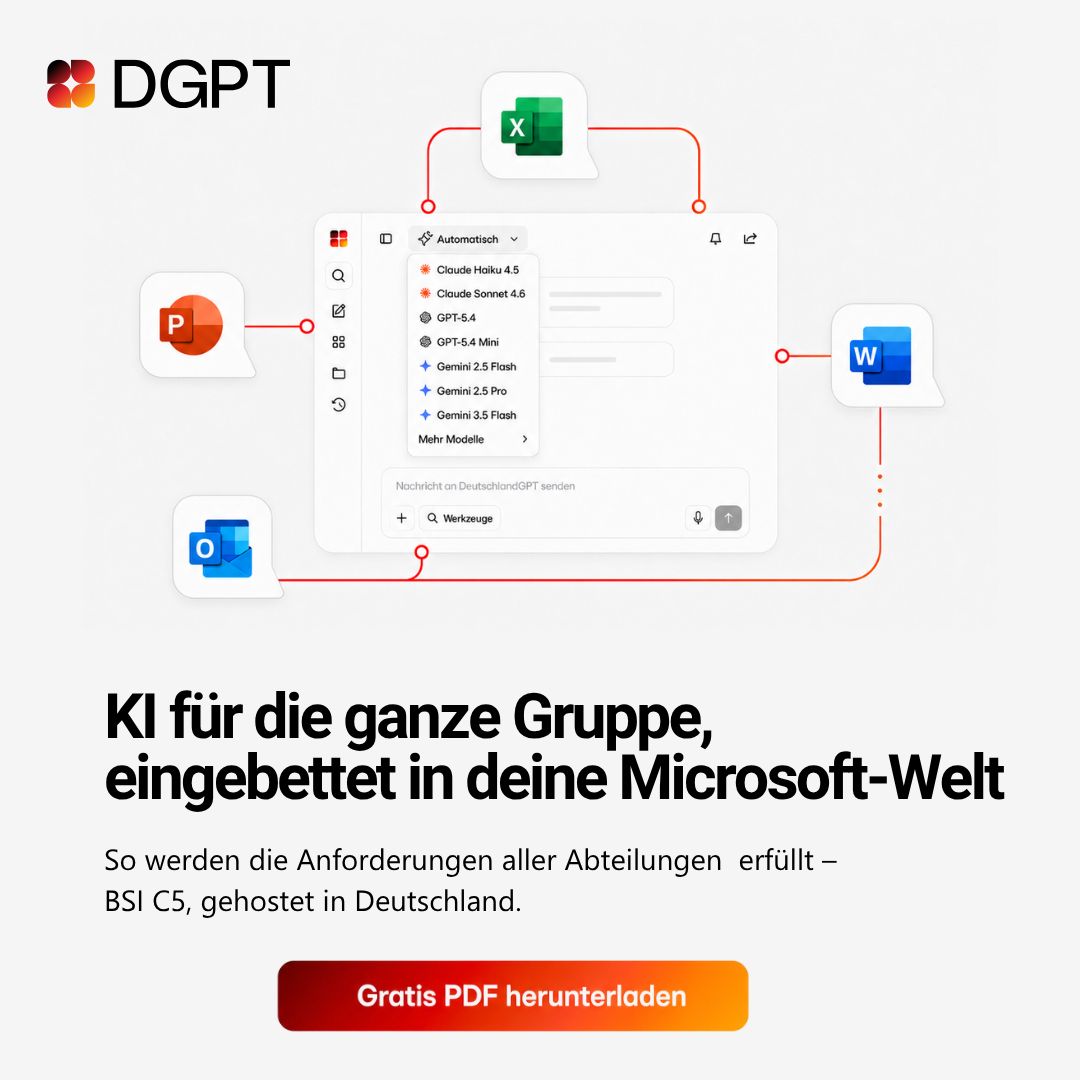
Wissen Sie, wie viele KI-Tools in Ihrer Unternehmensgruppe gerade parallel laufen? In der einen Tochtergesellschaft nutzt das Marketing ChatGPT, in der anderen testet die IT ein eigenes Tool, eine dritte hat alles verboten. Niemand hat den vollen Überblick. Firmenwissen, Kundendaten und Vertragsentwürfe landen dabei auf Servern, die niemand zentral freigegeben hat. Solange jede Gesellschaft ihr eigenes Ding macht, wächst das Datenschutzrisiko mit jeder neuen Anmeldung. Das passiert nicht irgendwann. Das passiert täglich. In deutschen Unternehmensgruppen jeder Größe. DeutschlandGPT bündelt über 34 führende Sprachmodelle in einer Plattform, gehostet in Deutschland, ISO 27001 und BSI C5 zertifiziert. Die kostenlose PDF gibt Ihnen die Orientierung, um Schatten-KI zu beenden: ✔ Welches der über 34 Modelle sich für welche Aufgabe eignet, inklusive Auswahlhilfe ✔ Wie Sie alle Tochtergesellschaften auf einen sicheren Standard bringen ✔ Wie KI direkt im Microsoft Stack läuft, neben Copilot ✔ Was Datenhoheit konkret heißt, von BSI C5 bis Zero-Data-Retention Jetzt kostenlose PDF herunterladen.
- DeutschlandGPTSince 3 Jul 2026
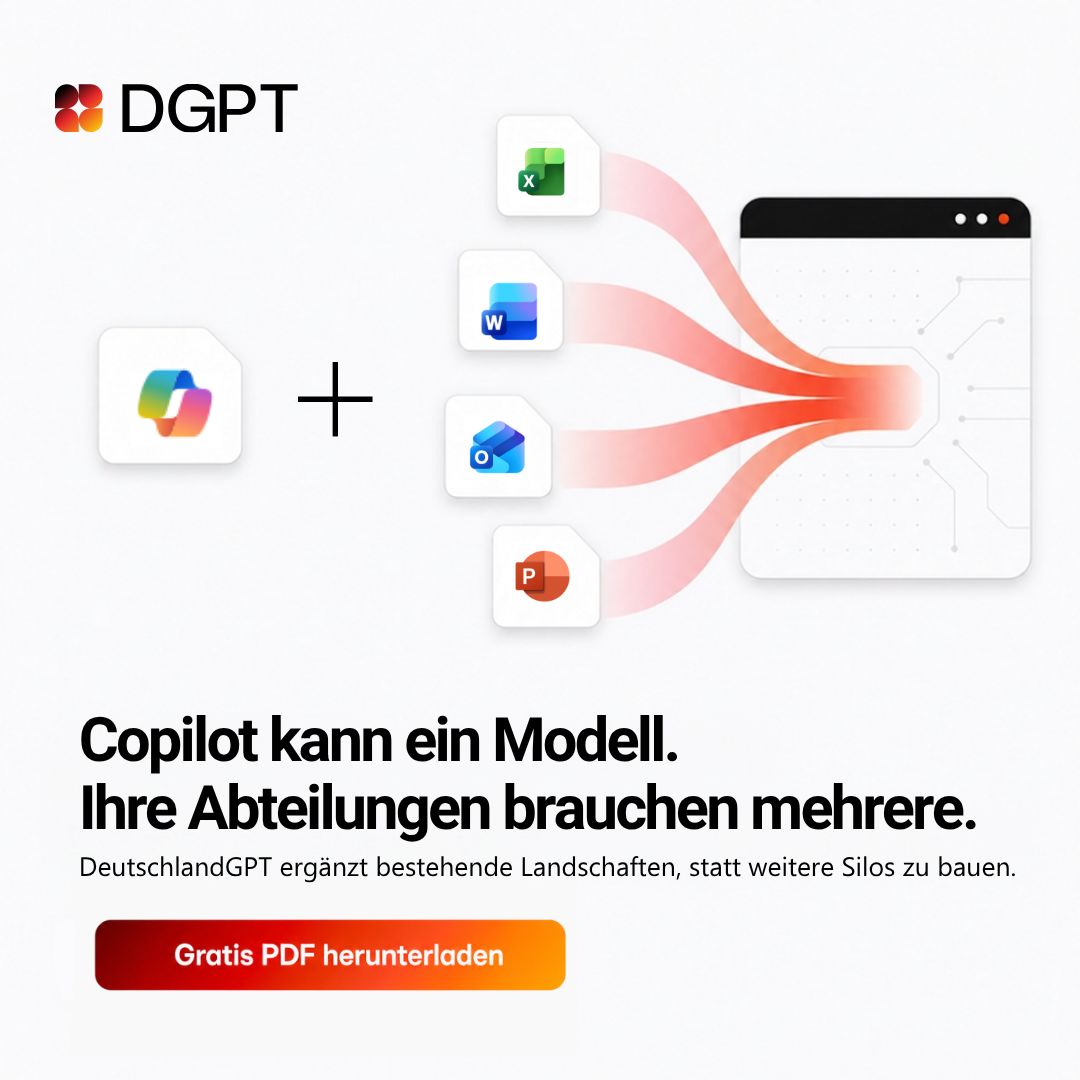
Mehrere führende Sprachmodelle in einem Tool, gehostet in Deutschland, direkt in Ihren Office-Programmen. Holdinggesellschaften wollen KI für alle Abteilungen einführen, ohne die bestehende Microsoft-Umgebung anzufassen. Sie brauchen ein Tool, das alle nutzen, und Daten, die das Land nicht verlassen. Genau dafür ist DeutschlandGPT gebaut. Wer hier zu lange wartet, sammelt weiter Einzellösungen ein, die später teuer zusammengeführt werden müssen. Das passiert nicht irgendwann. Das passiert täglich. In deutschen Unternehmensgruppen jeder Größe. Über 34 Sprachmodelle in einer Plattform, direkt als Add-In in Ihren Office-Programmen, gehostet in Deutschland. Die kostenlose PDF gibt Ihnen die Orientierung dafür: ✔ Welches der über 34 Modelle sich für welche Aufgabe eignet, inklusive Auswahlhilfe ✔ Wie KI direkt im Microsoft Stack integriert wird ✔ Warum BSI C5 und Zero-Data-Retention den Unterschied zu US-Tools machen ✔ Der ehrliche Vergleich zu einer reinen Microsoft-Umgebung Jetzt kostenlose PDF herunterladen.
- didaSince 8 Jun 2026
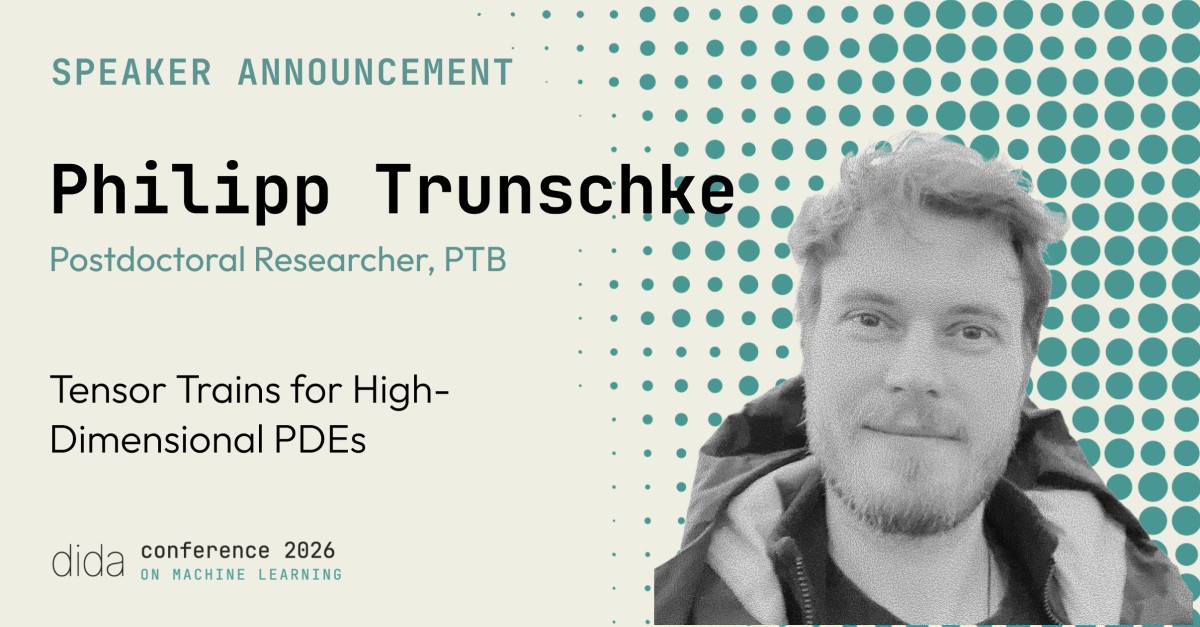
𝗦𝗽𝗲𝗮𝗸𝗲𝗿 𝗔𝗻𝗻𝗼𝘂𝗻𝗰𝗲𝗺𝗲𝗻𝘁: 𝗣𝗵𝗶𝗹𝗶𝗽𝗽 𝗧𝗿𝘂𝗻𝘀𝗰𝗵𝗸𝗲, 𝗣𝗧𝗕 We're excited to have Philipp Trunschke Ph.D., Postdoctoral Researcher at Physikalisch-Technische Bundesanstalt, PTB, speak at this year's dida conference! His talk "Tensor Trains for High-Dimensional PDEs" addresses a recurring pain point in applied scientific computing: many industrial PDE models become computationally challenging once parameters, uncertainty, or multiscale resolution enter the picture. Philipp will introduce tensor trains as a low-rank representation for PDE solutions, coefficients, and operators, offering a structured alternative to physics-informed neural networks. He will sketch the tensor train format and the basic numerical toolbox, highlight where these methods can pay off in practice, and contrast them with neural networks. 📅 June 19, 2026 · 09:00–18:00 CET 📍 frizzforum, Friedrichstraße 23, Berlin-Kreuzberg Philipp is one of many excellent speakers, the full lineup and registration are at 👉 https://dida.do/conference Spots are limited, so early registration is recommended. #MachineLearning #ScientificComputing #TensorTrains #PDEs #AppliedAI #didaconference
- didaSince 10 Jun 2026
𝗦𝗽𝗲𝗮𝗸𝗲𝗿 𝗔𝗻𝗻𝗼𝘂𝗻𝗰𝗲𝗺𝗲𝗻𝘁: 𝗠𝗼𝗿𝗶𝘁𝘇 𝗛𝗲𝘂𝗯𝗲𝗿𝗴𝗲𝗿 & 𝗖𝗵𝗿𝗶𝘀𝘁𝗶𝗮𝗻 𝗞𝗻𝗲𝗯𝗲𝗹 The need for digital sovereignty and the conscious integration of technological innovations, especially Artificial Intelligence, is widely recognized today. But while the "why" has been thoroughly analyzed, the "how" remains the decisive open question for the European technology sector. As an AI company that has operated independently in this field for eight years, we want to provide a space for concrete answers. At the upcoming 4th dida conference, we are hosting a breakfast session focused on the topic of 𝗗𝗶𝗴𝗶𝘁𝗮𝗹 𝗜𝗻𝗱𝗲𝗽𝗲𝗻𝗱𝗲𝗻𝗰𝗲, using AI as a primary example. The discussion will be initiated by opening impulses from: * Dr. Moritz Heuberger, Member of the German Bundestag (Committee for Digitalization and State Modernization), who holds a PhD in public administration digitalization and is a former project manager at the Federal Ministry of the Interior (BMI). * Dr. Christian Knebel, founder and former CEO of the e-government company publicplan GmbH, now an independent consultant for open-source solutions in the German administration. We are excited to host this event and very much look forward to a constructive discussion with our guests. 📅 June 19, 2026 | Frizzforum Berlin 📩 This breakfast is invite-only. However, if you are an expert in digitalization and would like to join the conversation, please check in with Bela Baganz. You can reach out via LinkedIn or email at [email protected] Dr. Moritz Heuberger Fotocredit: Nils Leon Brauer
- digiLabRecorded 15 Sept 2026
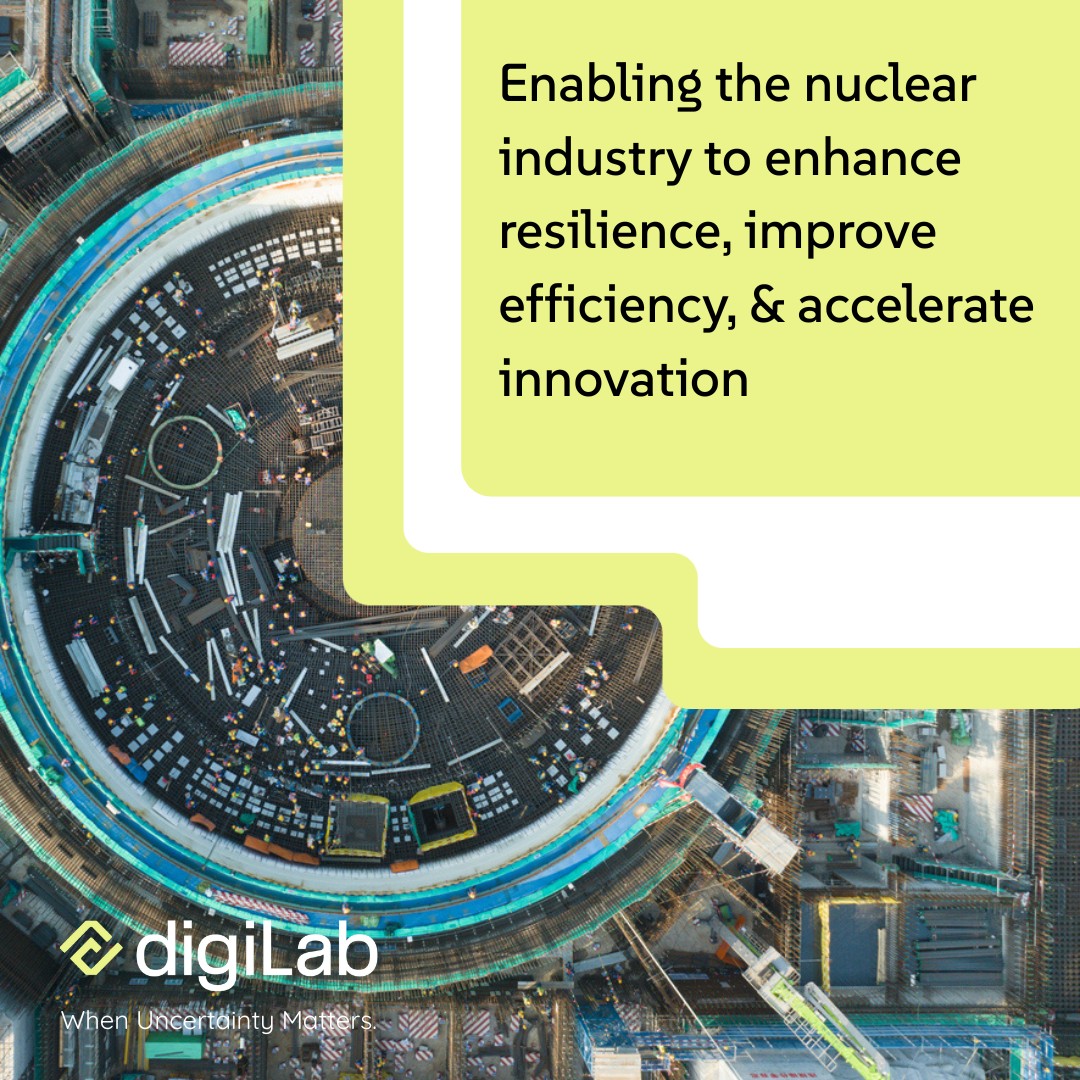
In nuclear engineering, managing uncertainty is essential to making safe, confident decisions. At digiLab, we use uncertainty quantification and advanced machine learning to help engineers optimise complex systems with greater confidence. Whether you’re responsible for nuclear material research, simulation & reactor design or monitoring & control systems to improve safety, our trusted AI platform, the Uncertainty Engine, supports confident and more informed decision-making even when data is complex, sparse or incomplete. Book a demo call today to explore how we can help you strengthen your nuclear innovation and operations.
- digiLabRecorded 15 Sept 2026
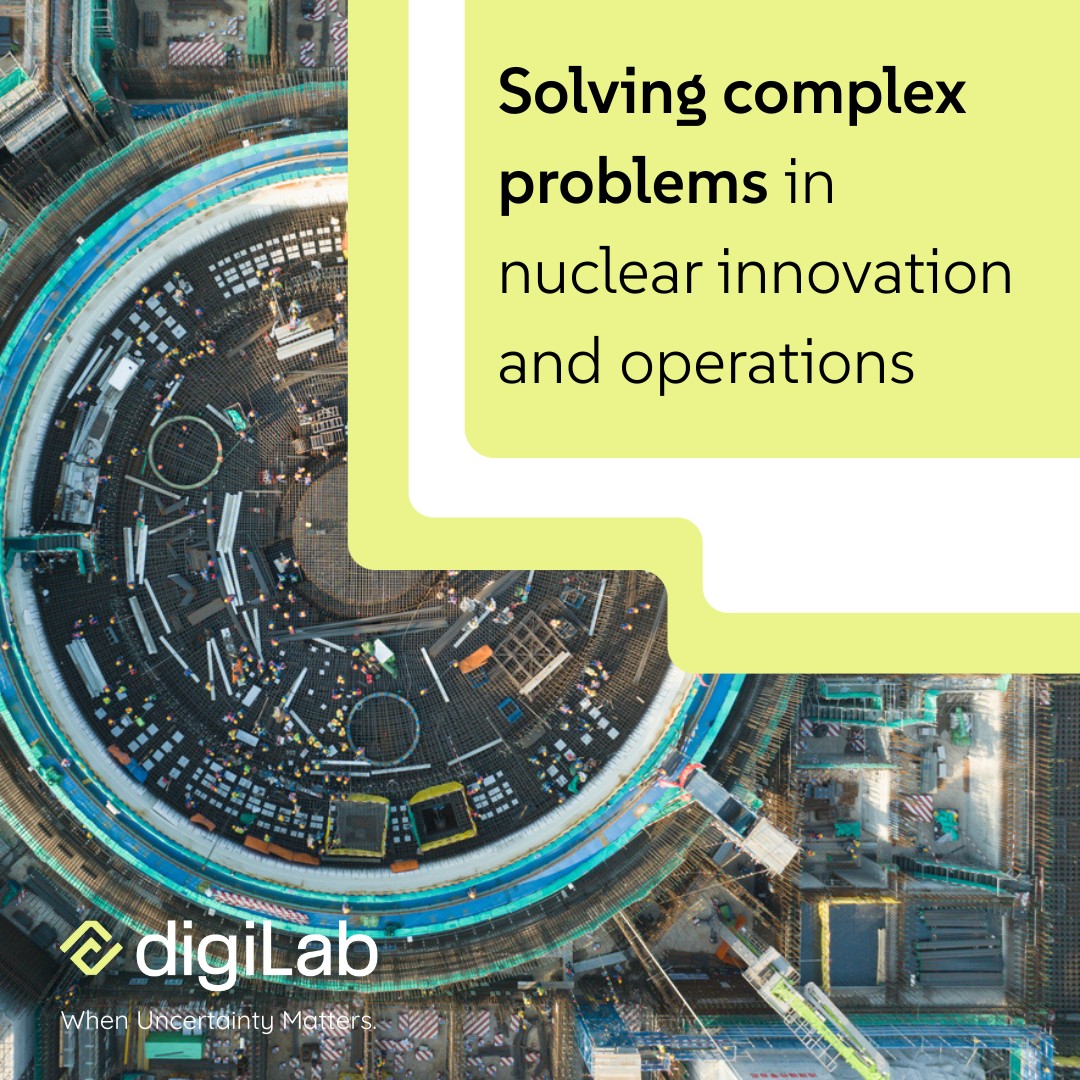
In nuclear innovation and operations, every decision counts. Our trustworthy and explainable AI platform, The Uncertainty Engine, supported by our team of AI and nuclear engineering specialists, uses pioneering machine learning and uncertainty quantification to enable you to solve complex problems and deliver greater value through more informed and confident decisions, even when the stakes are at their highest. Discover how we can help you accelerate innovation and reduce risk where it matters most.
- DataRobotSince 17 Jul 2026
Manufacturing planning cycles can't keep up with the supply chain anymore. Tariffs shift overnight. Suppliers go dark. Equipment fails between maintenance windows. Most AI tools surface the problem in a dashboard and wait for a planner to act on it. Agentic AI closes the loop — sensing, planning, and acting in real time, inside the systems your team already runs.
- DataRobotSince 18 Jul 2026
Co-engineered with NVIDIA. Validated on the Dell AI Factory. Endorsed by SAP. Deployable in the cloud, on-premise, hybrid, or air-gapped. DataRobot is the agent workforce platform purpose-built for manufacturing — running on the infrastructure you've already invested in, integrating with the systems your team already uses, and operating with the governance your audit teams require.
- DeepdubSince 18 Jun 2026
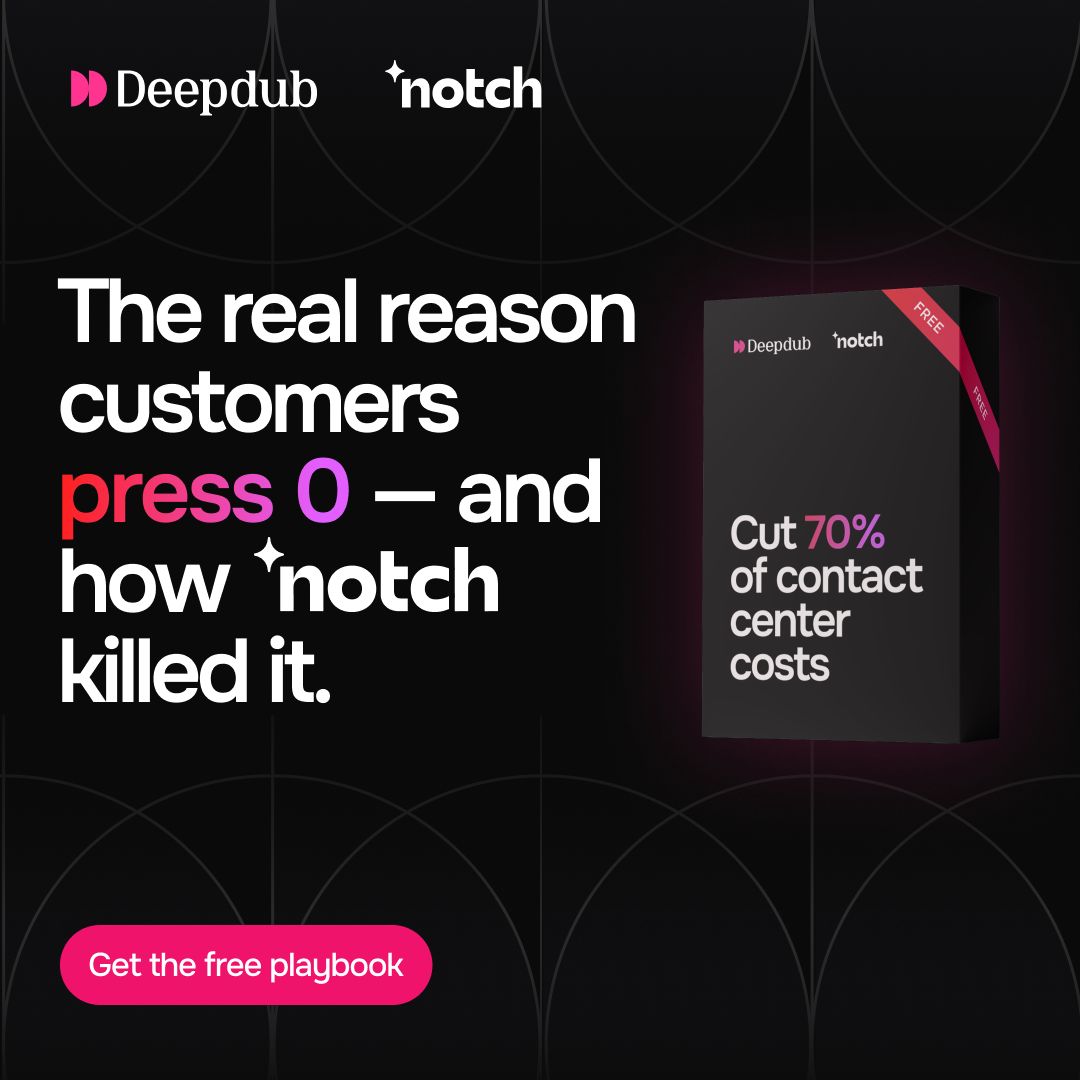
"We replaced 70% of our agents. Customers never noticed." That's not a product claim. That's a measured outcome from Notch — an AI agent platform serving global enterprise clients across industries. The fix wasn't a new AI model. It was the voice layer. ~125ms response time. 80 emotion styles. 100+ languages, all native. If your voice automation isn't containing calls — this playbook shows you exactly why, and what the solution looks like in production. 👇 Free. One click. Yours.
- DatologyAISince 25 Jun 2026
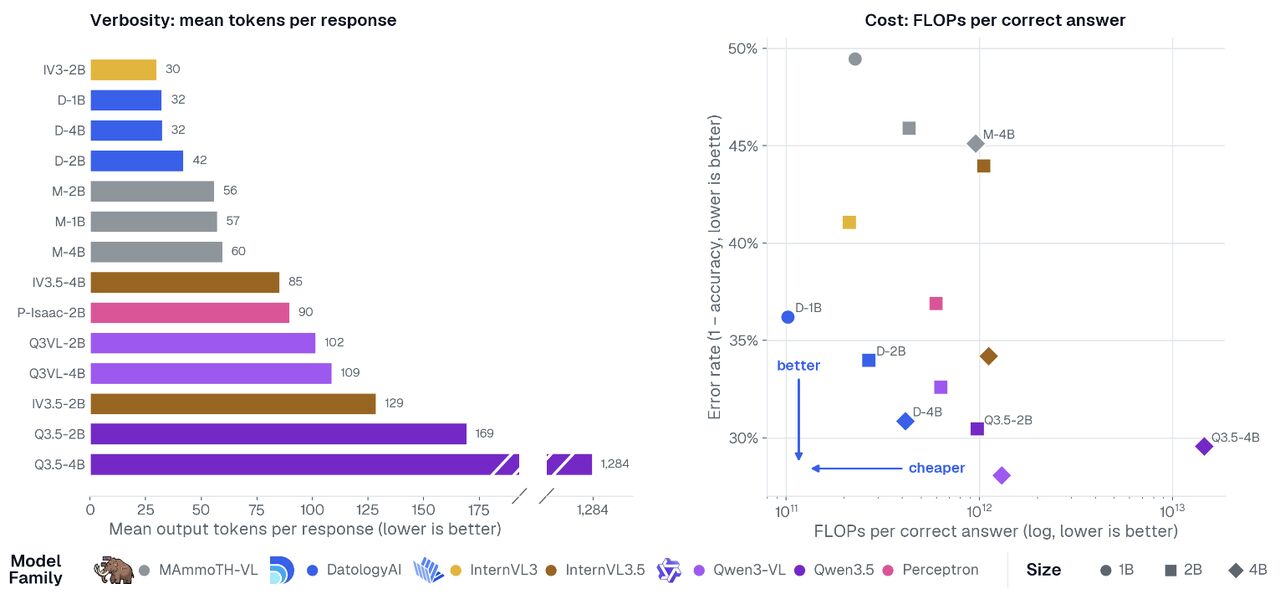
𝗛𝗼𝘄 𝘁𝗼 𝗴𝗲𝘁 𝘁𝗵𝗲 𝗰𝗼𝗿𝗿𝗲𝗰𝘁 𝗮𝗻𝘀𝘄𝗲𝗿 𝗳𝗼𝗿 𝟯𝟱𝘅 𝗹𝗲𝘀𝘀 𝗶𝗻𝗳𝗲𝗿𝗲𝗻𝗰𝗲 𝗰𝗼𝗺𝗽𝘂𝘁𝗲. Most of the work on making models cheaper to run is really about making the model smaller, like distillation, quantization, pruning, and speculative decoding. They all work, and they're all chasing the same number: the cost of a single token. But the token cost is only half the bill. The other half is how many tokens the model burns to get to an answer, and almost nobody optimizes that. We tend to treat answer length as just how a model responds, not as something you can change. It turns out you can change the response, and it makes a huge difference. Our new paper, Brevity is the Soul of Inference Efficiency, shows that length comes from the data a model is trained on, so you can curate for it. Feed it pretraining data curated for brevity and correctness, and your model will learn to answer in far fewer tokens. Here's what that looks like on a 4B vision-language model: The model reaches a correct answer with 35× less compute than a same-size, same-task baseline and stays within ~1 pp of that baseline's accuracy. The whole gap is about length. Our model answers in about 30 tokens; the baseline takes around 1,284. Self-hosted, that's roughly $1.34 versus $47 per million correct answers. And no, shorter doesn't mean worse. When you match the output length, the curated model comes out +17.55pp more accurate. You don't pay with quality by having a shorter answer. So it's not just cost per token we should be looking at. The number you were not paying attention to that is blowing up your bill is the cost per correct answer, and you can do something about it.
- Cyfuture.aiRecorded 15 Sept 2026
AI workloads are moving beyond Hopper. Is your infrastructure ready? NVIDIA B300, powered by Blackwell Ultra, is now available at Cyfuture.ai! Built for next-generation AI training, fine-tuning, inference, AI agents, and enterprise-scale workloads, B300 delivers the compute, memory, and efficiency needed to scale what’s next. Get access to dedicated B300 clusters, high-performance networking, secure data centers, and enterprise-grade scalability with Cyfuture.ai. Limited capacity is available. Reserve your NVIDIA B300 infrastructure today. #NVIDIAB300 #BlackwellUltra #AIInfrastructure #GenerativeAI #AICompute #NVIDIA #CyfutureAI #AI #LLM #AIInference #MachineLearning
- CyberhillRecorded 15 Sept 2026
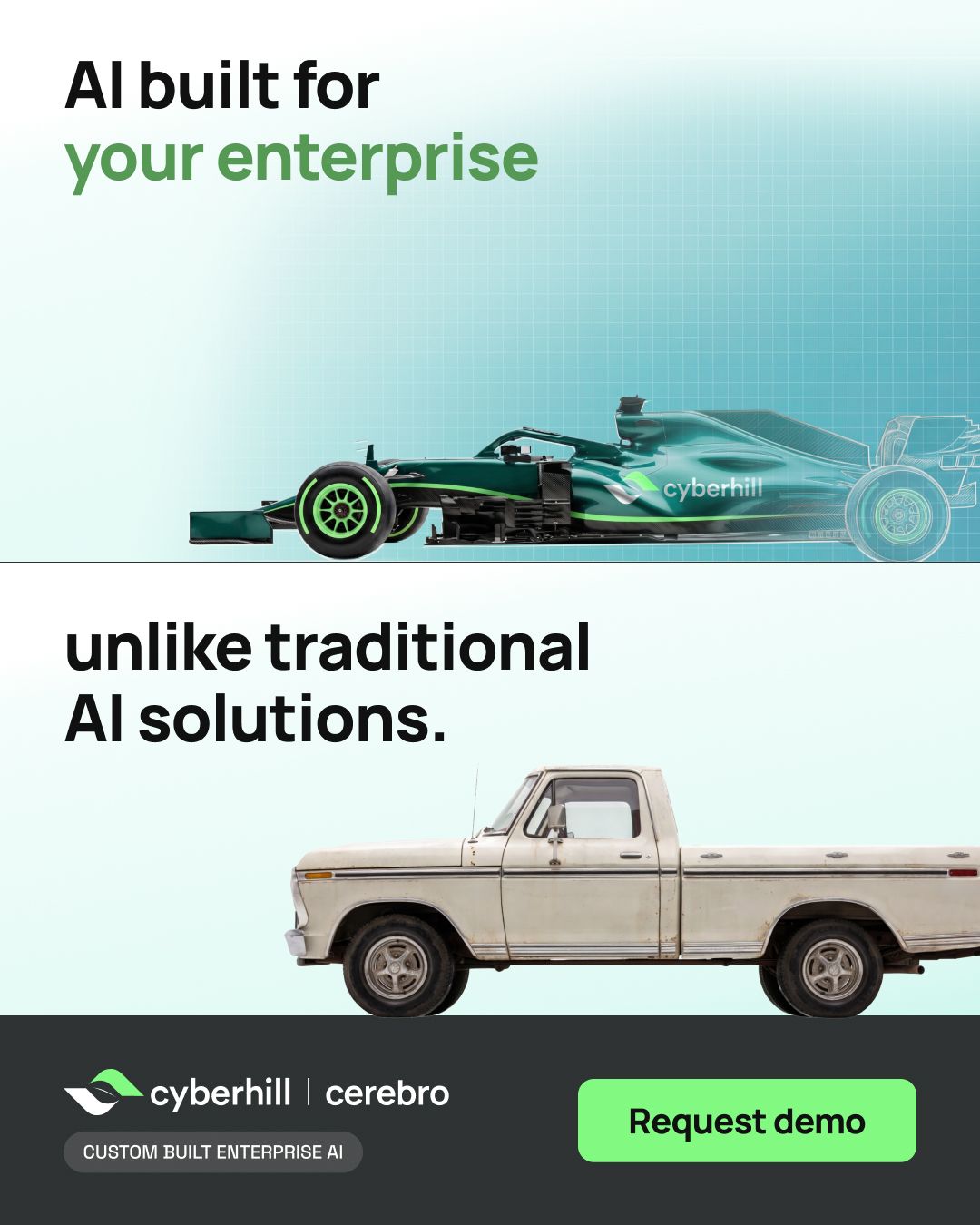
Most enterprise AI platforms are one-size-fits-all and slow to deploy. Cerebro is different: custom-built, live in days, and designed for how your business operates.
- d-MatrixRecorded 15 Sept 2026
AI inference chips built for scale and speed
- d-MatrixRecorded 15 Sept 2026
AI inference compute that's faster and more efficient






Other LinkedIn formats
Watch the companies you care about.
Filter every ad by industry, country, format and network, and get alerts when a company you watch starts running new ads.