Not on air · 2 of 3 networks checked

World Forest ID ads
- worldforestid.org
- Environmental Services
- US
- 18 employees
World Forest ID’s ads on LinkedIn, Meta and Google, recorded by adsrunning. Browse the latest here for free. Sign up free to see all 25. Watch World Forest ID on any plan to get each new one in your feed.
Watchlist included in every plan
What World Forest ID runs
- Single image · LinkedIn
- 2
- Carousel · LinkedIn
- 4
| Network | Status | Live ads | Nov 2025LinkedIn activity · 52 weeksNov 2026 | Checked | Next step |
|---|---|---|---|---|---|
| None recorded | 0 | Checked 8 Nov 2026 | See all 25 ads → | ||
| Meta | Not checked | — | |||
| None recorded | 0 | No ads found on the Google Ads Transparency Center | Checked 15 Oct 2026 | Collect them with the API → |
World Forest ID has no live LinkedIn ads. We recorded no Google ads on 15 Oct 2026.
Latest ads
- LINKEDIN · CAROUSELSince 23 Apr 2026
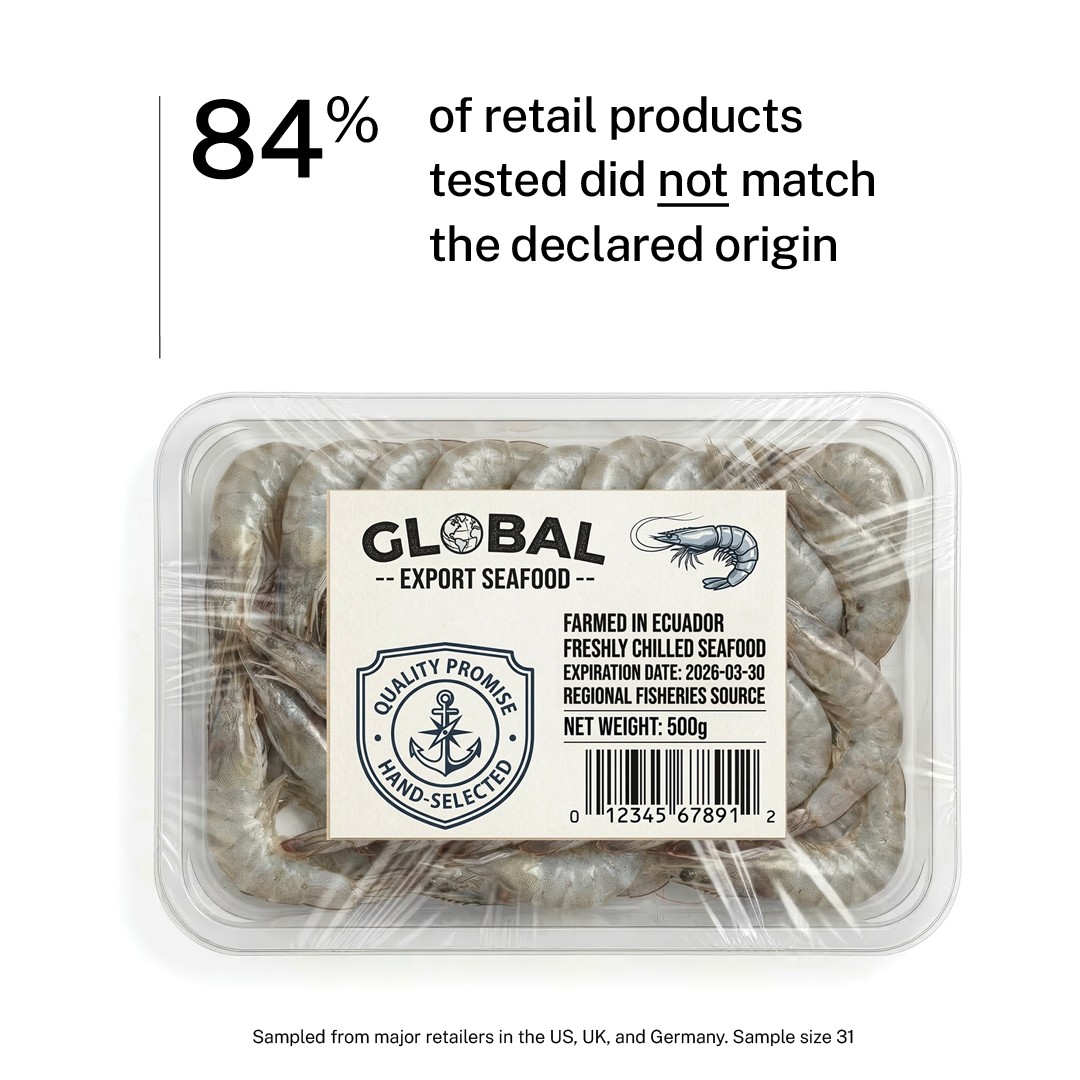
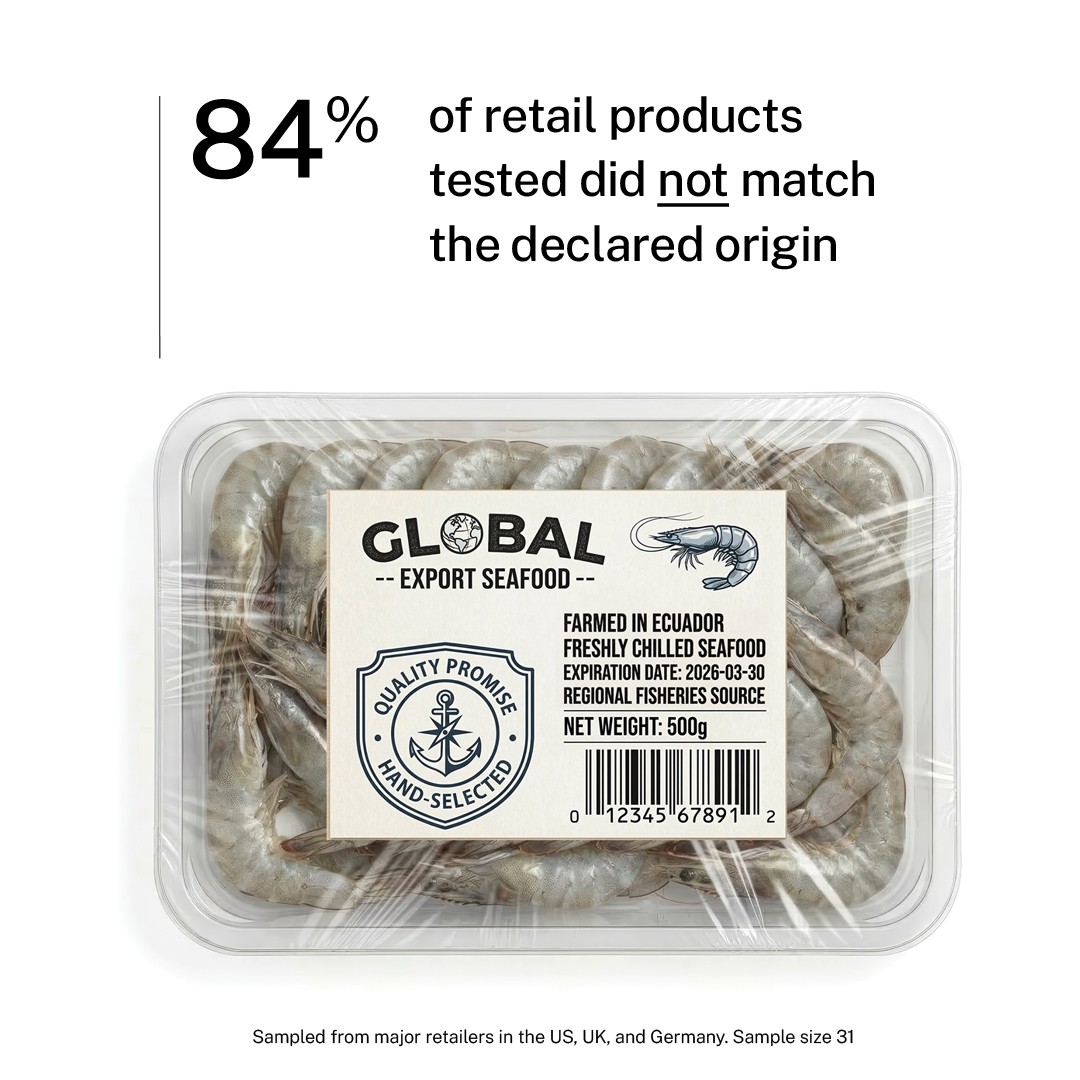
Managing supply chain risk starts with knowing where products come from. New research shows a major gap between label and reality in farmed shrimp.
- LINKEDIN · CAROUSELSince 23 Apr 2026
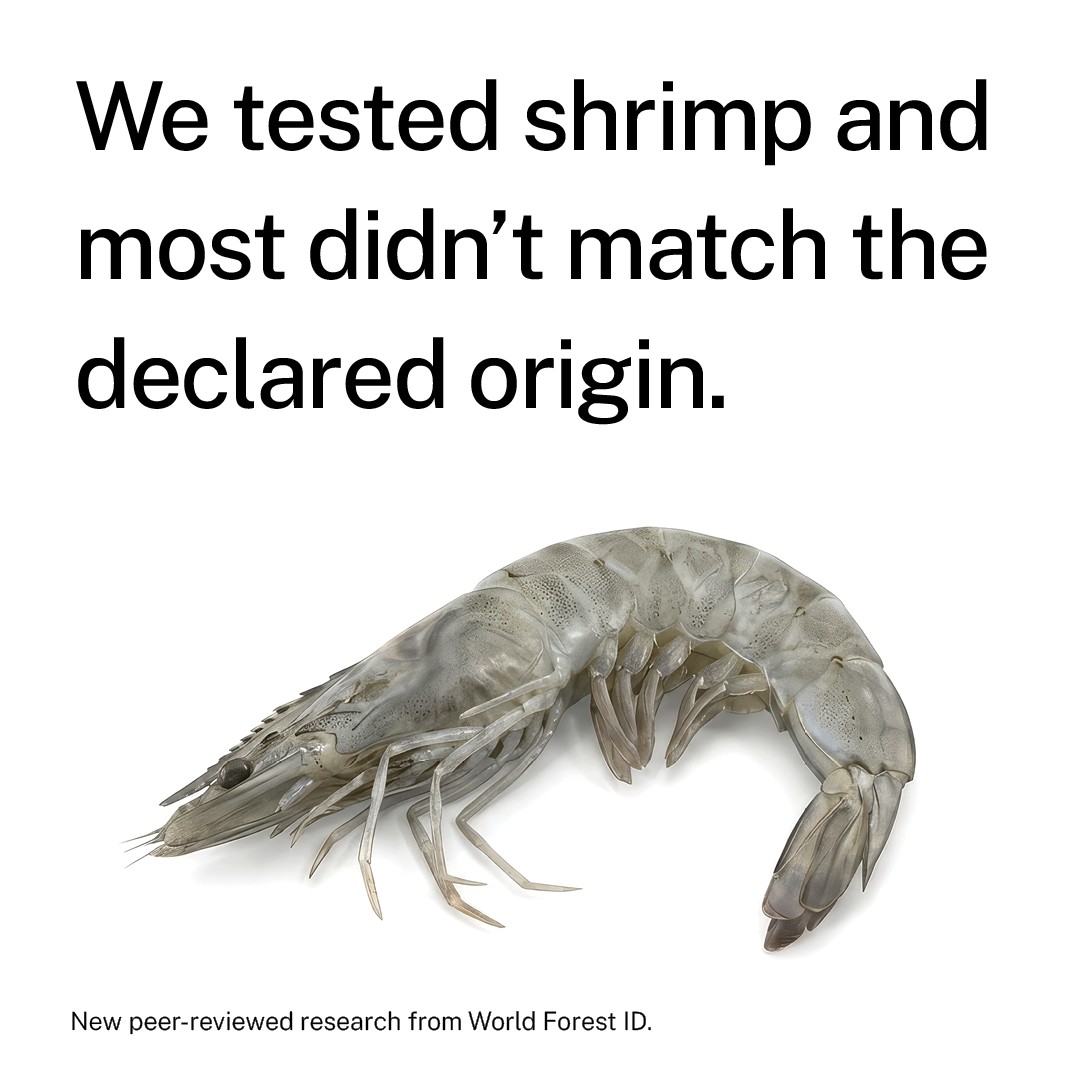
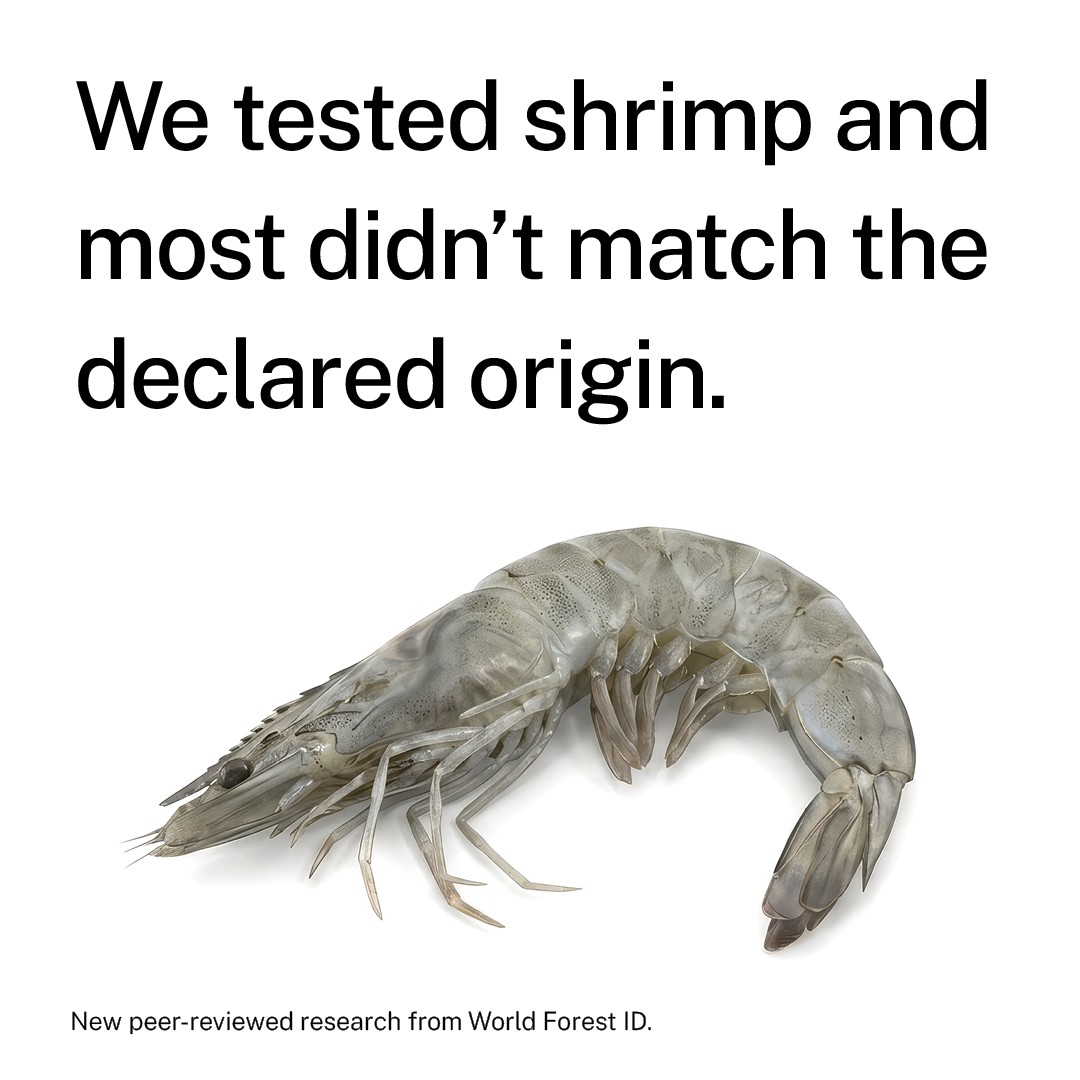
Shrimp labels aren’t telling the full story. Our research shows origin can be scientifically verified, helping rebuild trust in supply chains.
- LINKEDIN · CAROUSELSince 23 Apr 2026
Managing supply chain risk starts with knowing where products come from. New research shows a major gap between label and reality in farmed shrimp.
- LINKEDIN · CAROUSELSince 23 Apr 2026
Shrimp labels aren’t telling the full story. Our research shows origin can be scientifically verified, helping rebuild trust in supply chains.
- LINKEDIN · IMAGESince 22 Apr 2026
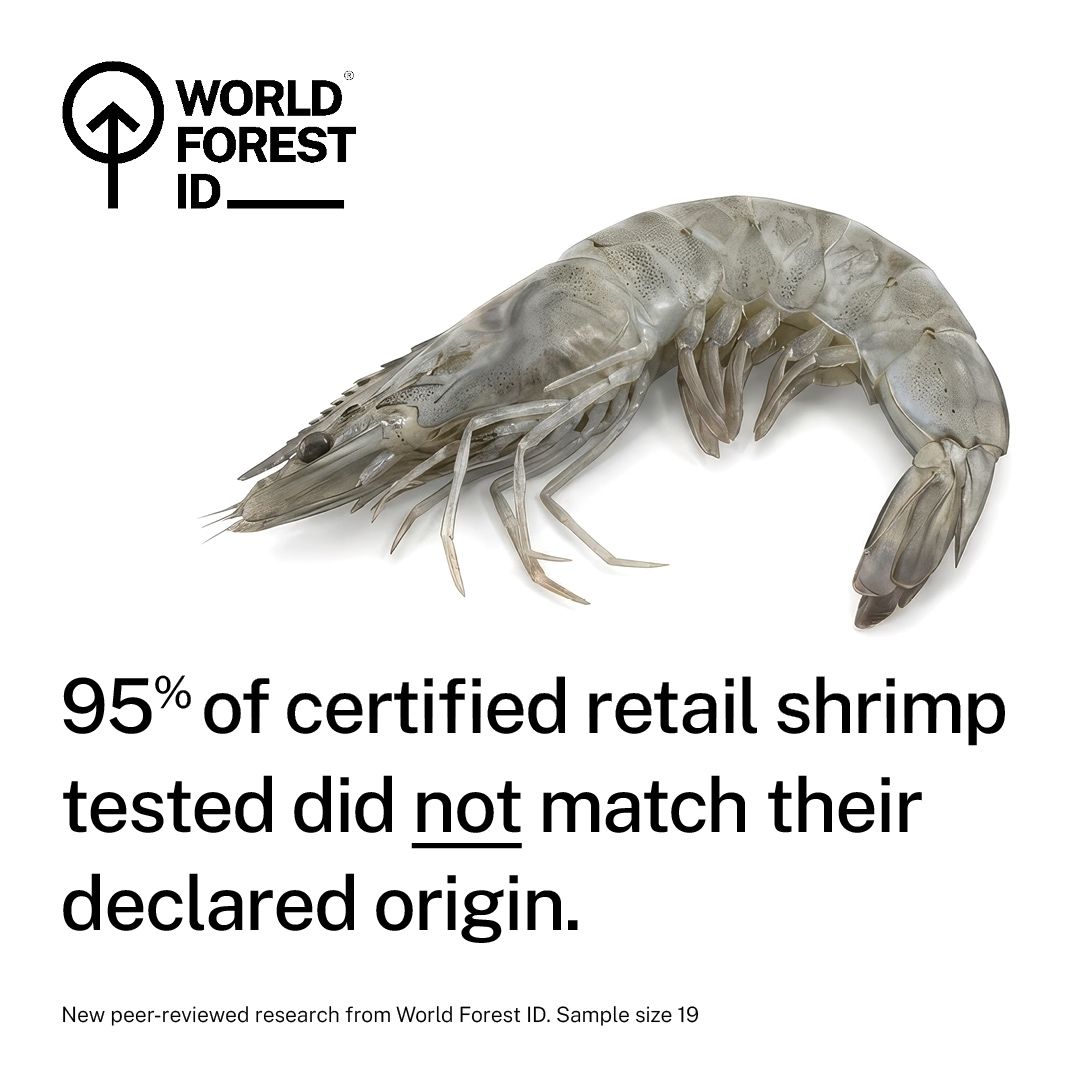
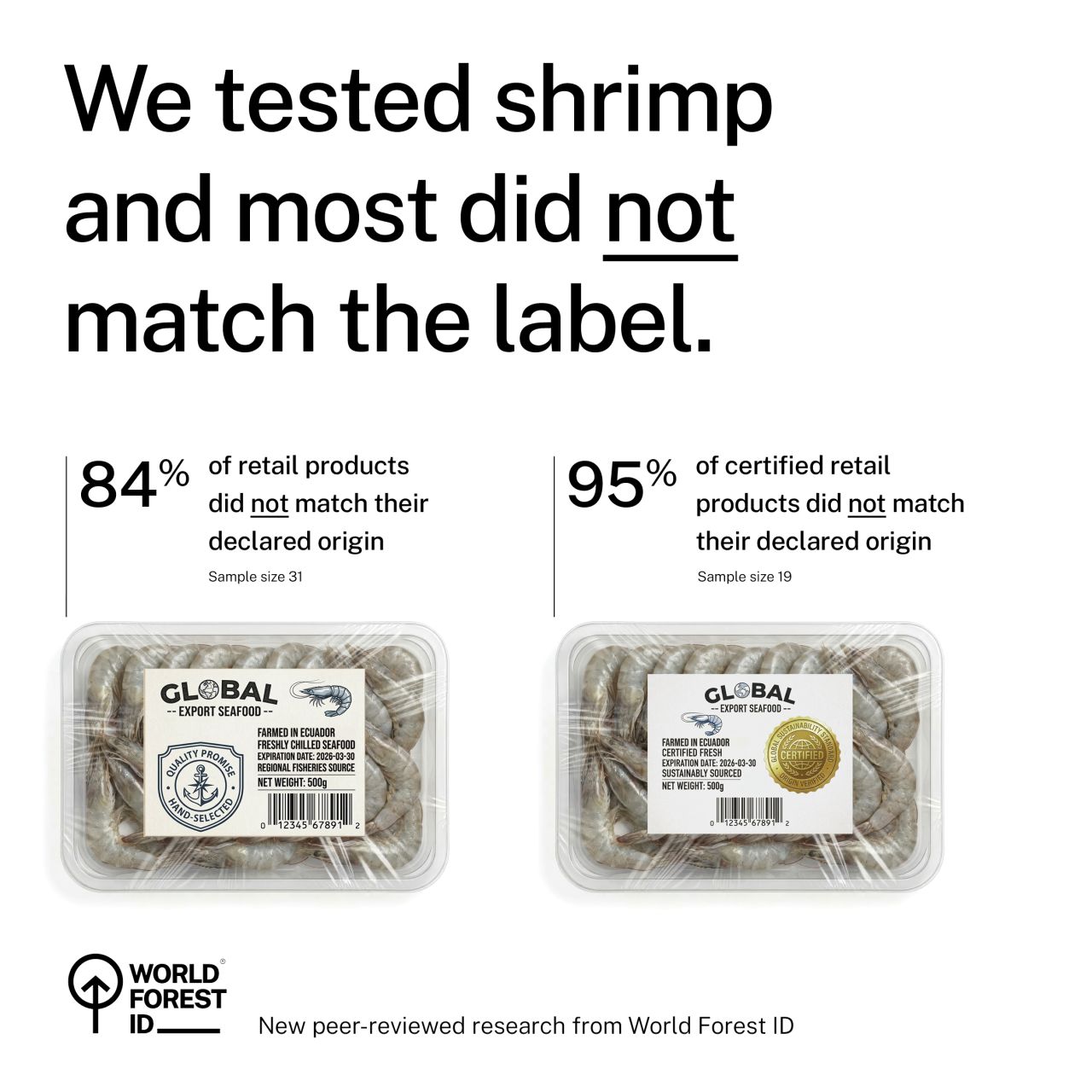
World Forest ID has released new peer‑reviewed research that should give investors, companies and regulators pause. Using chemical and isotopic analysis, scientists tested the origin claims of farmed shrimp sold in European and US supermarkets. Only 16% matched their declared country of origin. Among certified products, the figure dropped to 5%. Why does this matter for finance? Shrimp is a ~$70bn global market. Like many high‑risk commodities, it sits within long, opaque supply chains where documentation and certification are often treated as proxies for integrity. Investors increasingly rely on those signals when assessing deforestation risk, human rights exposure and supply‑chain resilience. This research shows the limits of that approach. The science itself is robust: when tested against shrimp of known origin, the method achieved 99.5% accuracy, even after commercial processing. The is a systemic gap. Markets are relying on assurance mechanisms that are not yet designed to detect or deter mislabelling at scale. This is not an argument against certification. It is an argument for raising the bar. If certification schemes are to underpin credible investment decisions, they need to be backed by independent, science‑based verification and better aligned with regulatory enforcement. Without that, the assumption that “certified equals responsible” becomes a risk in itself. The findings also reinforce a broader governance point: the reference datasets that make scientific traceability possible must be stewarded transparently and independently, as a public good, not controlled by the commercial systems they are meant to scrutinise. Trust is foundational to sustainable finance. This report shows that trust needs verification. Jade Saunders Cicely Podmore Victor Deklerck #WFIDShrimpReport #SeafoodTraceability
- LINKEDIN · IMAGESince 21 Apr 2026
We tested retail shrimp using chemical fingerprinting and the results were striking. 84% of products did not match their declared country of origin. For certified products, that figure rose to 95%. This is the exact kind of problem science can solve. Our research over the past three years shows that shrimp origin can be verified, with a high degree of accuracy, using a combination of stable isotope ratio and multi-element profiling. This gives retailers the opportunity to move beyond paper-based traceability to systems grounded in evidence. You can read the full paper here: https://lnkd.in/dkEFsDEg Very proud to have authored this alongside: Robert Davis, PhD, Alfredo Rodriguez Zunino, Somporn Khongtanakrittakorn, Sabine Hofem, Janek Jungkeit, Alex Leyton, M. Osorto-Nuñez, Cicely Podmore, Lydia Prior, Dr Charlotte C. Smith, A. Bradley Soule, Jakub Truszkowski, Laura Van Arsdel, Sophia Wahl, Patrick Wood, Markus Boner, Jade Saunders. And with thanks to the supports of this research, the Gordon and Betty Moore Foundation #WFIDShrimpReport #SeafoodTraceability #SEG26
6 of 25 adsSign up to see every World Forest ID ad, filter by format and date, and get alerts on new ones.
See all 25 adsQuestions about World Forest ID’s ads
Is World Forest ID running LinkedIn ads?
We recorded no live LinkedIn ads for World Forest ID on 8 Nov 2026.
How many LinkedIn ads has World Forest ID run?
LinkedIn’s ad library lists 25 ads for World Forest ID. We recorded 25 LinkedIn ads for World Forest ID, first recorded on 3 Oct 2026 and last recorded on 3 Oct 2026.
Does World Forest ID run Google ads?
We recorded no Google ads for the domain worldforestid.org on 15 Oct 2026.
Which ad formats does World Forest ID use?
The 6 LinkedIn ads on this page include 2 image ads and 4 carousel ads.
Watch the companies you care about.
Filter every ad by industry, country, format and network, and get alerts when a company you watch starts running new ads.