0 new LinkedIn ads in 30 days · 2 of 3 networks checked

UXDA | Strategic UX for Banks and Financial Institutions ads
- theuxda.com
- Design Services
- LV
- 24 employees
UXDA | Strategic UX for Banks and Financial Institutions’s ads on LinkedIn, Meta and Google, recorded by adsrunning. Browse the latest here for free. Sign up free to browse our full recording. Watch UXDA | Strategic UX for Banks and Financial Institutions on any plan to get each new one in your feed.
Watchlist included in every plan
What UXDA | Strategic UX for Banks and Financial Institutions runs
- Single image · LinkedIn
- 5
- Video · LinkedIn
- 1
| Network | Status | Last 30 days | Total ads found | Ad activity | Checked | Next step |
|---|---|---|---|---|---|---|
| None recorded | 0 | 80+ | 11/11/2026 | View ads → | ||
| Meta | Not checked | — | — | View ads → | ||
| None recorded | — | — | 10/16/2026 | View ads → |
UXDA | Strategic UX for Banks and Financial Institutions has no new LinkedIn ads in the last 30 days. We recorded no Google ads on 16 Oct 2026.
Latest ads
- LINKEDIN · IMAGESince 9 Jun 2026
Most banks don’t have a UX problem. They have a systems problem. Every few years, the same cycle repeats: a bank commissions another redesign, launches a new app, celebrates the go-live and then watches digital adoption, trust and customer satisfaction underperform again. So the next redesign begins. But what if the app was never the real problem? In digital banking, UX is not just screens, flows or a design system in Figma. It is the accumulated coherence of every product, channel, team decision, interaction pattern, brand signal, compliance constraint and customer expectation over time. And in most banks, that coherence is being drained daily by: - disconnected teams - fragmented governance - short-term vendor engagements - local decisions that look rational but create systemic chaos at scale This is why redesigns keep failing. Not because designers are weak. Not because technology teams are slow. Not because customers are difficult. But because the institution is optimized for delivery, not coherence. The real cost is not bad UX. It is ungoverned UX: duplicated work, inconsistent journeys, weak adoption, lower trust, higher support dependency, fragmented onboarding and endless redesign cycles. For mid-sized financial institutions, this cost can reach nine figures annually. And most boards don’t even see it. At UXDA, we believe the next competitive advantage in banking will not come from another app redesign. It will come from Financial UX Governance — the ability to manage digital experience as a strategic institutional asset, with the same seriousness as risk, technology architecture and brand. Because the banks that win will not have just prettier interfaces. They will have better systems. Systems whose coherence compounds. Systems whose trust deepens. Systems competitors cannot easily replicate. 👉🏼 Read the full article here: https://lnkd.in/dzcy6JSa #FinancialUX #UXGovernance #DigitalBanking #BankingInnovation #FinTech #CustomerExperience #DigitalTransformation #BankingUX #ExperienceDesign #FinancialServices #UXStrategy #UXDA
- LINKEDIN · VIDEOSince 9 Jun 2026
For 20 years, financial institutions could win with "good enough." Good enough onboarding, UX, digital products, customer experience. That era is ending. Because AI is about to make "good enough" available to everyone. And when AI gives every financial institution access to the same usability, the same flows, and the same execution layer... What exactly remains as a competitive advantage? At UXDA, we believe the next battle in financial services will not be fought through features, interfaces, or AI tools. It will be fought through an institution's ability to define, govern, and evolve experiences competitors cannot easily replicate. Because AI can generate interfaces. But it cannot govern the experience systems that create trust, preference, and long-term competitive advantage. The future advantage of financial institutions will not come from better apps. It will come from the ability to define, govern, and evolve experiences that remain distinctive over time. Because when everyone can build a good digital product, advantage comes from creating something customers can recognize, trust, and prefer. #UXDA #DigitalBanking #FinancialUX #CustomerExperience
- LINKEDIN · IMAGESince 28 May 2026
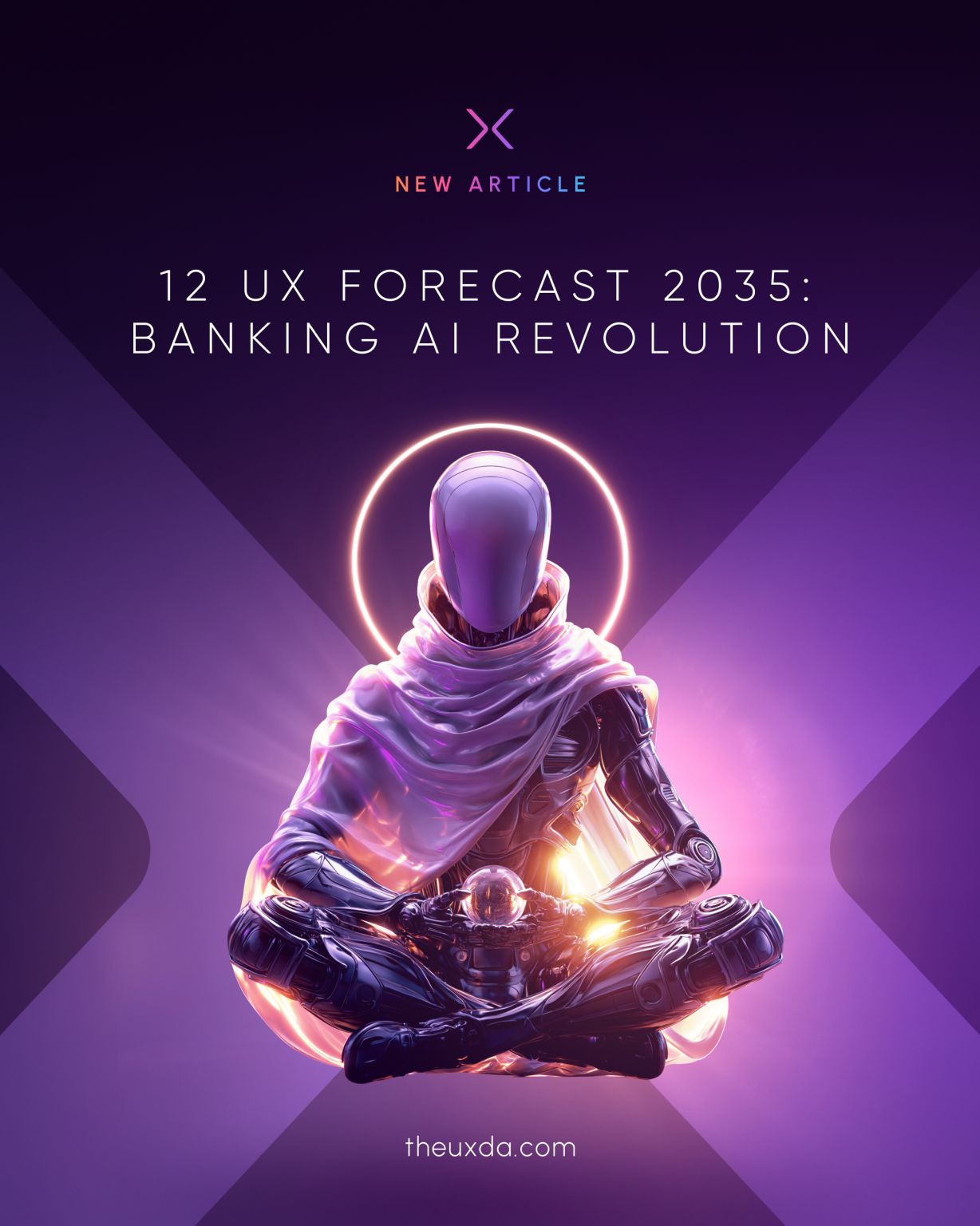
What if the future of banking UX is no longer about what everyone is doing now? For the last decade at UXDA, we have been obsessed with one question: how does technology change the way humans relate to their money? When we started, UX design in banking was often treated as decoration — a “modern” interface layered on top of outdated systems. We challenged that. Across 300+ case studies and research papers, we argued that financial UX is not only about screens. It is the systemic architecture of trust, behavior, decision-making and emotional relationships with money. Almost everything we predicted in the previous decade has become mainstream today. Many ideas that 10 years ago sounded strange are now shaping the industry: - AI-powered financial assistance. - Banking ecosystems and super apps. - Embedded finance. - Experience-first transformation. - Purpose-driven banking. - Emotional banking. - Trust as the real digital currency. - UX moving from interface polish to strategic business infrastructure. But the next decade will be far more radical. By 2035, financial UX may no longer revolve around apps, dashboards or onboarding flows. Financial experiences will become autonomous, predictive, invisible and deeply embedded into everyday behavior. The biggest question will no longer be: “Is this app easy to use?” It will be: “Do I trust this system to act on my behalf?” In our new predictions article, UXDA forecasts 12 radical shifts coming to financial UX by 2035 — from agentic AI and programmable money to predictive finance, privacy as a premium experience, adaptive financial products and the ultimate battle between control and convenience. The future winners will not be the banks with the best AI. These will be institutions that are already beginning to design experiences of trustworthy relationships between humans, AI and digital money itself. Because AI can optimize decisions, but it cannot decide what is worth optimizing. 👉🏼 Check out 12 UXDA's predictions for the future of financial UX by 2035: https://lnkd.in/dVRaeqeN #UXDA #DigitalBanking #FinancialUX #BankingUX #FutureOfBanking #AIinBanking #AutonomousFinance #EmbeddedFinance #ExperienceDesign #DigitalTransformation
- LINKEDIN · IMAGESince 12 May 2026
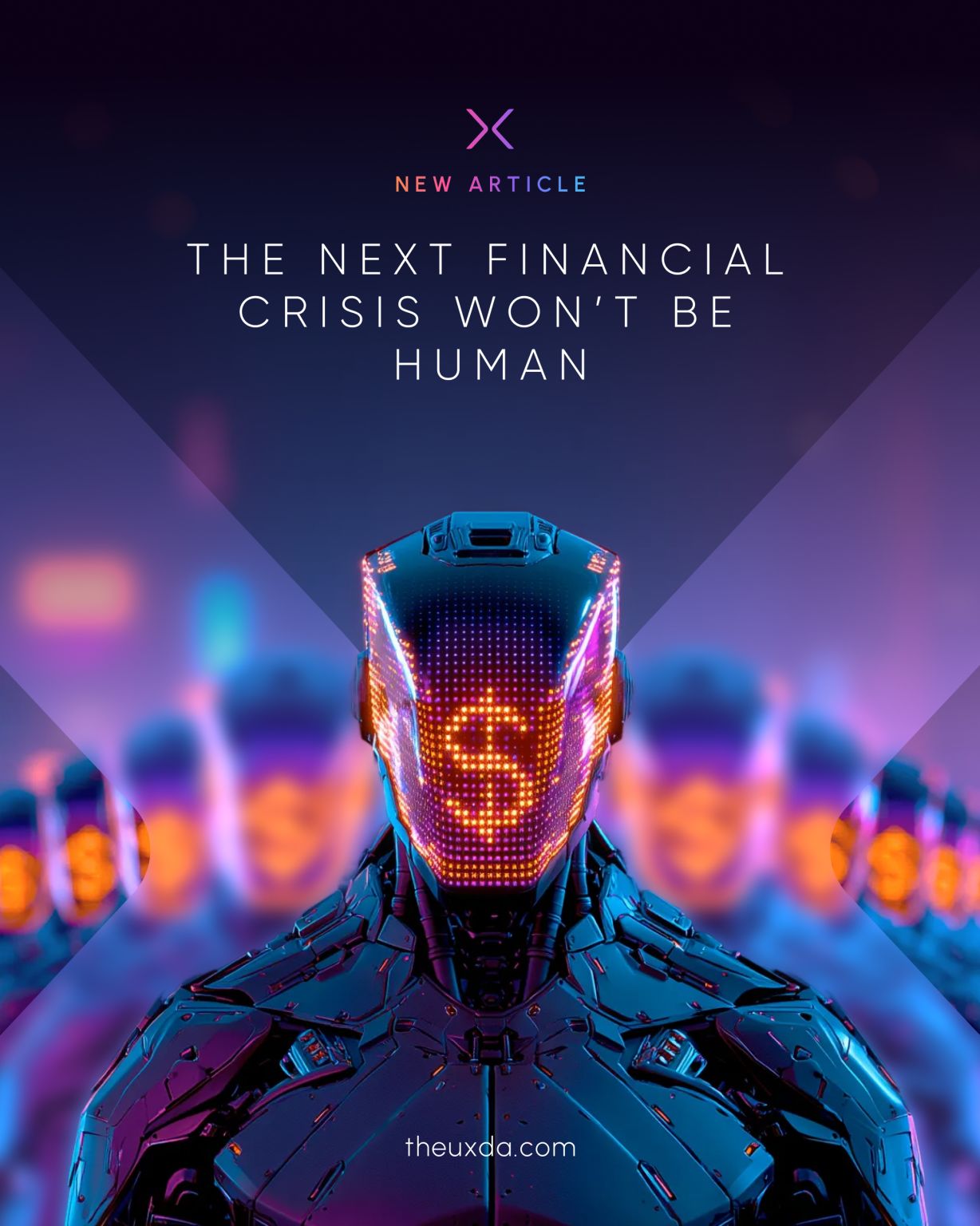
💣 What if the next financial crisis isn’t caused by human greed, but by perfectly rational #AI? For decades, finance has tried to remove human bias from decision-making: - Slower reactions. - Emotional choices. - Inconsistent risk tolerance. - Irrational behavior. But what if some of that “inefficiency” was actually protecting the system? As banks move from digital interfaces to agentic banking, autonomous AI agents will no longer just support decisions. They will make and execute them in real time: - reallocating portfolios, - tightening credit, - optimizing cash flow, - adjusting spending, - flagging risks, - reacting to market signals faster than any human ever could. At the level of one customer or one institution, this looks like progress. But at the level of the entire financial system, it may become a new kind of systemic risk. If millions of AI agents are trained on similar data, built on similar architectures and optimized toward similar goals, they may not diversify the market. They may synchronize it. And when intelligent systems all receive the same signal, interpret it in the same way and act within the same millisecond window, efficiency can turn into resonance. The problem is not that AI agents will make bad decisions. The problem is that they may all make the same “perfect” decision at once. That is why the future of financial UX cannot be only about frictionless journeys, fewer clicks and faster execution. In agentic banking, UX becomes behavioral infrastructure. In our new article, we explore why the real risk of agentic banking may not be AI making bad decisions, but millions of AI agents making the same “perfect” decision at the same time. 👉🏼 Read the full article here: https://lnkd.in/dYvD4n5h #AI #AgenticAI #Banking #Fintech #FinancialServices #DigitalBanking #FinancialUX #SystemUX #CustomerExperience #UXStrategy
- LINKEDIN · IMAGESince 6 May 2026
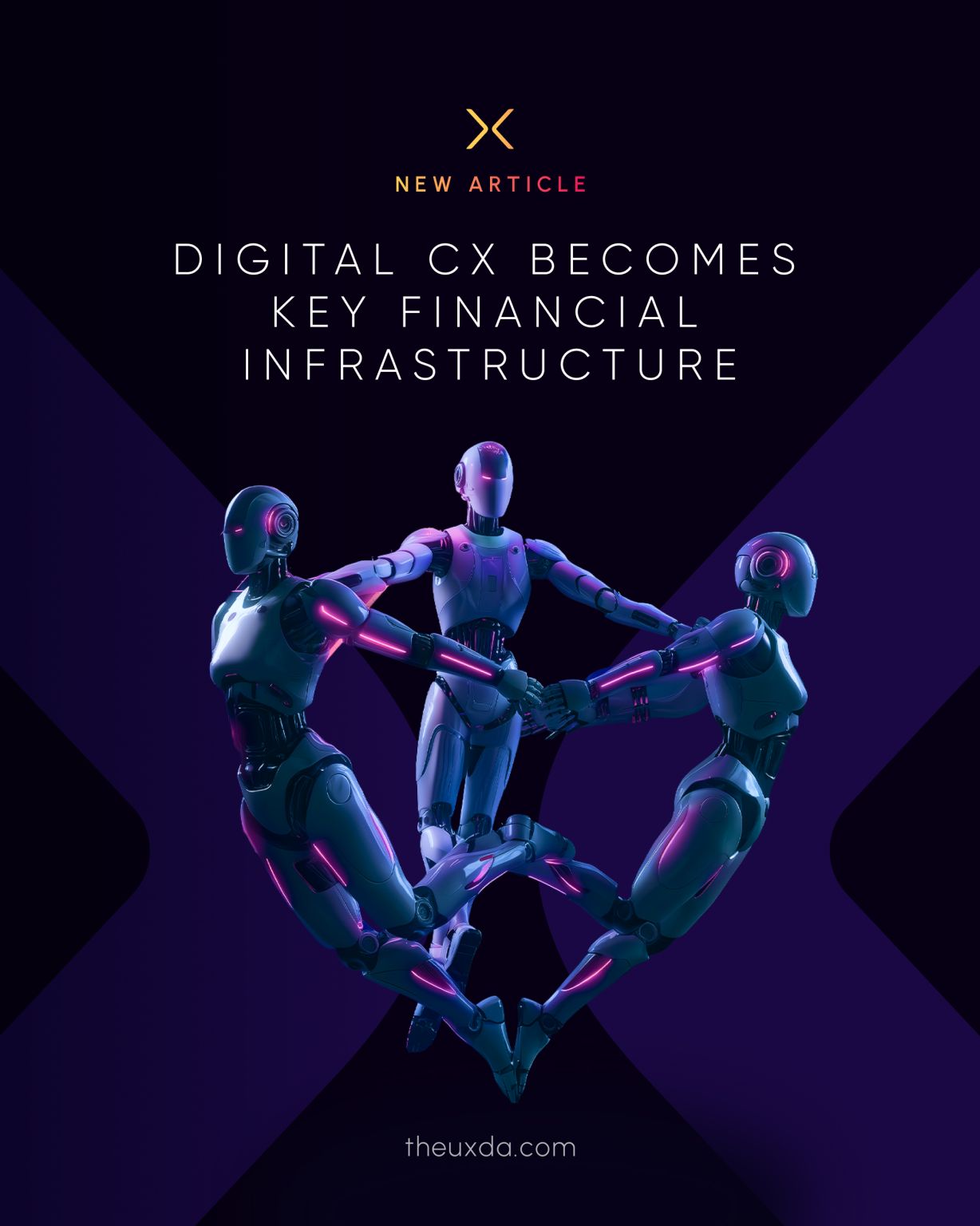
Most #banks are optimizing pixels…while silently losing millions in behavioral leakage. The real problem isn’t the interface. It’s the system behind it. Today, #digitalexperience in banking is no longer just a layer. It is the business. You can increase conversion and destroy long-term value at the same time. Every interaction shapes decisions. Every decision impacts trust. Every moment either creates value, or silently erodes it. And yet, most digital efforts remain fragmented: → Better flows, but weaker trust → Higher conversion, but lower retention → More features, but less clarity Because UX is still treated as a function, not as a system. In our latest article, we break down how to change that. We share 12 steps to turn digital banking UX into strategic infrastructure, shifting the focus from interfaces to behavior, from journeys to outcomes, and from short-term wins to long-term trust. Because in modern finance, the real question is no longer: “How do we design better interfaces?” but: “How do we design systems customers trust with their financial lives?” 👉 Read the full article here: https://lnkd.in/dzaTSdyU #UX #DigitalBanking #CustomerExperience #ProductDesign #Innovation #UXStrategy #Fintech #SystemUX
- LINKEDIN · IMAGESince 6 May 2026
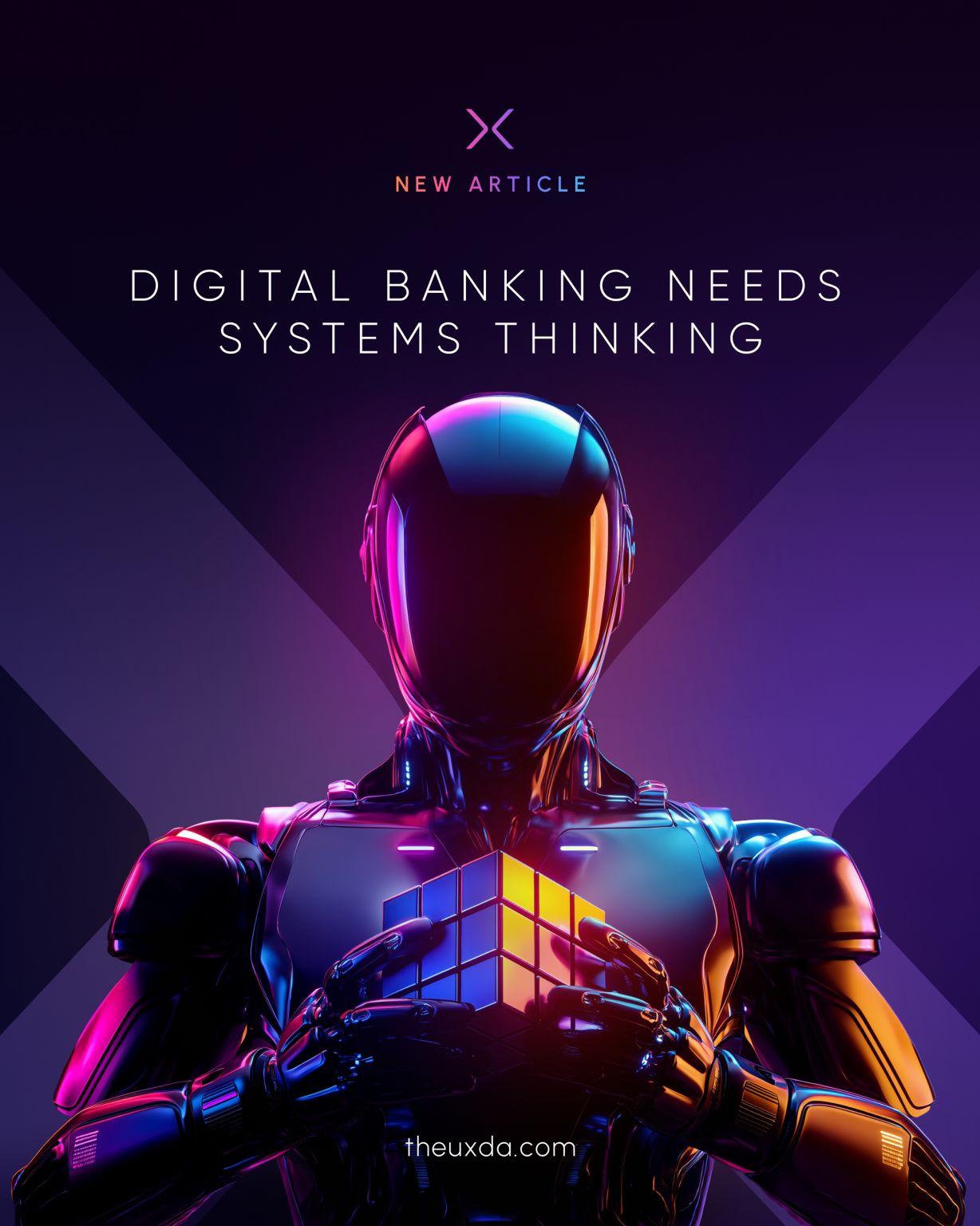
#AI is eliminating the “good enough UX” advantage in finance. Not designers. Not UX as a discipline. Soon, any team will be able to generate: • Clean onboarding • Logical user flows • Standard dashboards • “User-friendly” interfaces In hours. So where does the real advantage move? Higher. From execution → to systems From interfaces → to governance From design → to organizational capability This is the shift many financial institutions still underestimate. They keep asking: “How do we improve product design?” Instead of asking: “How do we govern experience across the entire organization?” AI can generate interfaces in seconds. But it cannot build an organization that consistently delivers meaningful financial experiences. That still requires: • Vision • Structure • Discipline • Systems thinking That is where the next competitive advantage will be built. 👉 UXDA has just published a new article exploring what this means for financial institutions: https://lnkd.in/dbeCz5-q #UX #DesignLeadership #FinancialServices #Banking #Fintech #CustomerExperience #CX #UXStrategy #DigitalTransformation #ExperienceGovernance
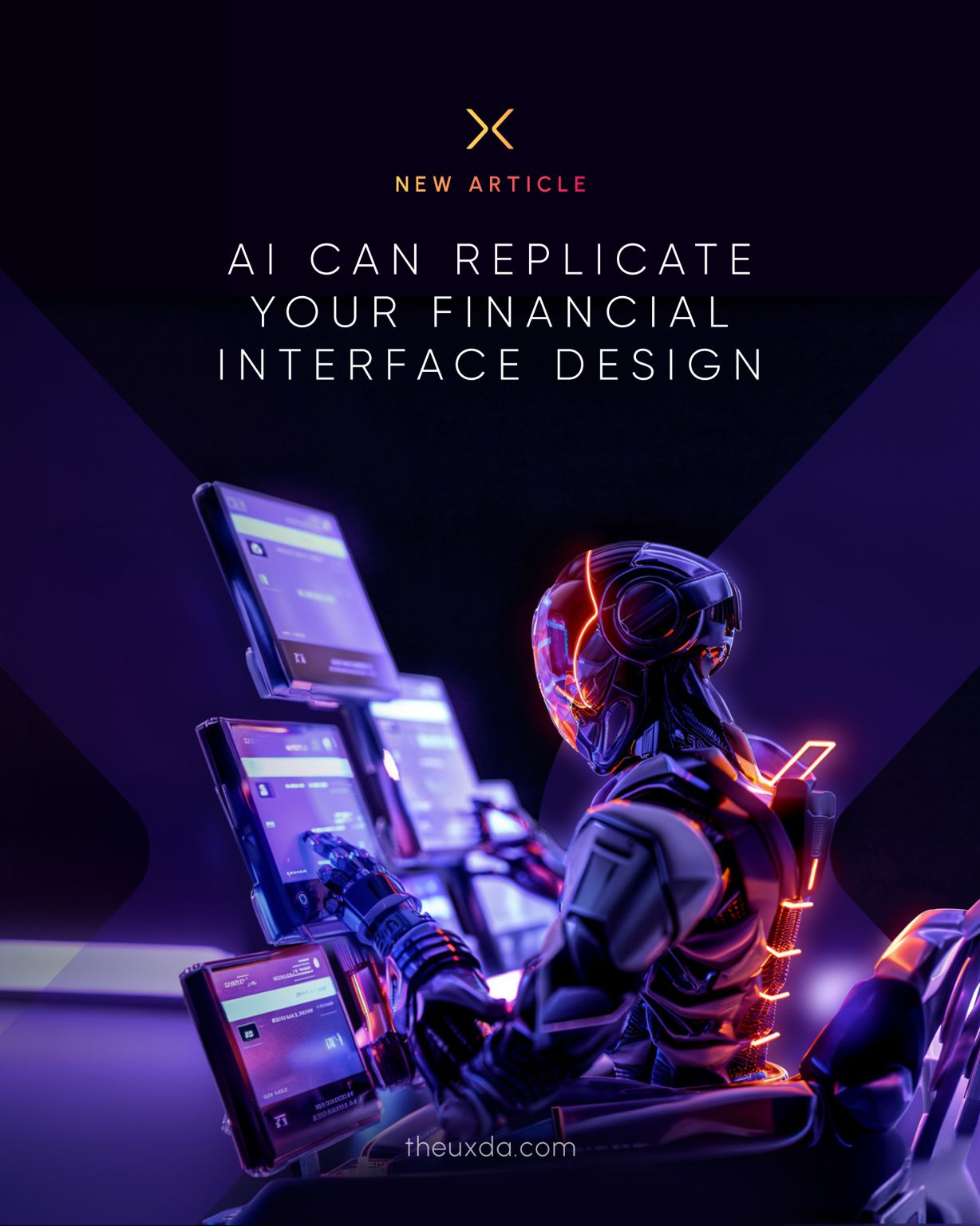
6 of 80+ adsSign up to see every UXDA | Strategic UX for Banks and Financial Institutions ad, filter by format and date, and get alerts on new ones.
See all 80+ adsQuestions about UXDA | Strategic UX for Banks and Financial Institutions’s ads
Does UXDA | Strategic UX for Banks and Financial Institutions have new LinkedIn ads?
We found no new LinkedIn ads for UXDA | Strategic UX for Banks and Financial Institutions in the 30 days to 12 Nov 2026.
How many LinkedIn ads has UXDA | Strategic UX for Banks and Financial Institutions run?
LinkedIn’s ad library lists 57 ads for UXDA | Strategic UX for Banks and Financial Institutions. We recorded 80 LinkedIn ads for UXDA | Strategic UX for Banks and Financial Institutions, first recorded on 3 Oct 2026 and last recorded on 3 Oct 2026.
Does UXDA | Strategic UX for Banks and Financial Institutions run Google ads?
We recorded no Google ads for the domain theuxda.com on 16 Oct 2026.
Which ad formats does UXDA | Strategic UX for Banks and Financial Institutions use?
The 6 LinkedIn ads on this page include 5 image ads and 1 video ad.
Watch the companies you care about.
Filter every ad by industry, country, format and network, and get alerts when a company you watch starts running new ads.