Not on air · 2 of 3 networks checked

UCL Shipping and Oceans Research Group ads
- shippingandoceans.com
- Research Services
- GB
- 14 employees
UCL Shipping and Oceans Research Group’s ads on LinkedIn, Meta and Google, recorded by adsrunning. Browse the latest here for free. Sign up free to see all 25. Watch UCL Shipping and Oceans Research Group on any plan to get each new one in your feed.
Watchlist included in every plan
What UCL Shipping and Oceans Research Group runs
- Single image · LinkedIn
- 3
| Network | Status | Live ads | Nov 2025LinkedIn activity · 52 weeksNov 2026 | Checked | Next step |
|---|---|---|---|---|---|
| None recorded | 0 | Checked 8 Nov 2026 | See all 25 ads → | ||
| Meta | Not checked | — | |||
| None recorded | 0 | No ads found on the Google Ads Transparency Center | Checked 13 Oct 2026 | Collect them with the API → |
UCL Shipping and Oceans Research Group has no live LinkedIn ads. We recorded no Google ads on 13 Oct 2026.
Latest ads
- LINKEDIN · ARTICLESince 10 Aug 2026
In June 2026, 4 MARPOL amendments were received and circulated by the IMO to member states. In theory these are the 4 options that could be adopted at MEPC 85. However there was one missing - the further evolution of a proposal made by Japan to MEPC 84. This has now appeared as a submission to MEPC 85 - some may wonder how that fits given the expectation that for a MARPOL amendment to be adopted it should be circulated at least 6 months prior to adoption (hence June circulations). Potential explanations are that a) it's really down to member states if they want to adopt something they can choose to override the 6 months prior circulation rule b) adoption at MEPC 85 isn't compulsory, it could be done later e.g. in 2027. Regardless of the viability of adoption, its now in the mix so many might be seeing what's on the table as 4 options (NZF as levy (Tuvalu), NZF as is (UK et al.), NZF softer then harder (Brazil), Fundamental redesign (Liberia)) + 1 (Japan). We have supported Institute of Marine Engineering, Science & Technology (IMarEST) to undertake a detailed analysis of the 4 options, which is submitted to ISWG-GHG 22 (22/2/2), and we will post on tomorrow. But given this late arrival, have added a standalone UCL analysis of this evolution of Japan's proposal. At this stage its only a qualitative analysis, and attempt to understand how it might work in practice, please see the article. Based on that analysis, and in comparison to NZF 'as is', our current estimation for 85/7/1, and the associated 'direct contribution' mechanism, is below: - Does not support ZNZ – by setting up competition between incremental projects and ZNZ projects, ZNZ projects will not be attractive prospects for direct contribution. - Does not support JET – in a search for a return on their direct contribution, why would any shipowner give money to a JET project, when they could give direct contributions in sector, or even to themselves or a sister company? - May support incremental investments related to energy transition (LNG, bioenergy...). If that succeeds, this in turn increases technology lock-in risk (increased dependence and build-out of short-term transient and dead-end solutions, delaying and making harder, investment in long-run solutions.) - More than likely is unable to support incremental investments with any cost-effectiveness, given inadequate and conflicted governance, combined with the risk of creating a market for inducements to secure receipt of ‘direct contribution’ - Adds complexity and opacity (a new market), increasing the risk of taking longer-term progressive steps and incentivising short-termist decision making This interpretation is predominantly derived from an analysis of how direct contributions might work. So very grateful for other's perspectives on this, and any corrections to our estimations of the behaviour that this design may incentivise.
- LINKEDIN · IMAGESince 6 Aug 2026
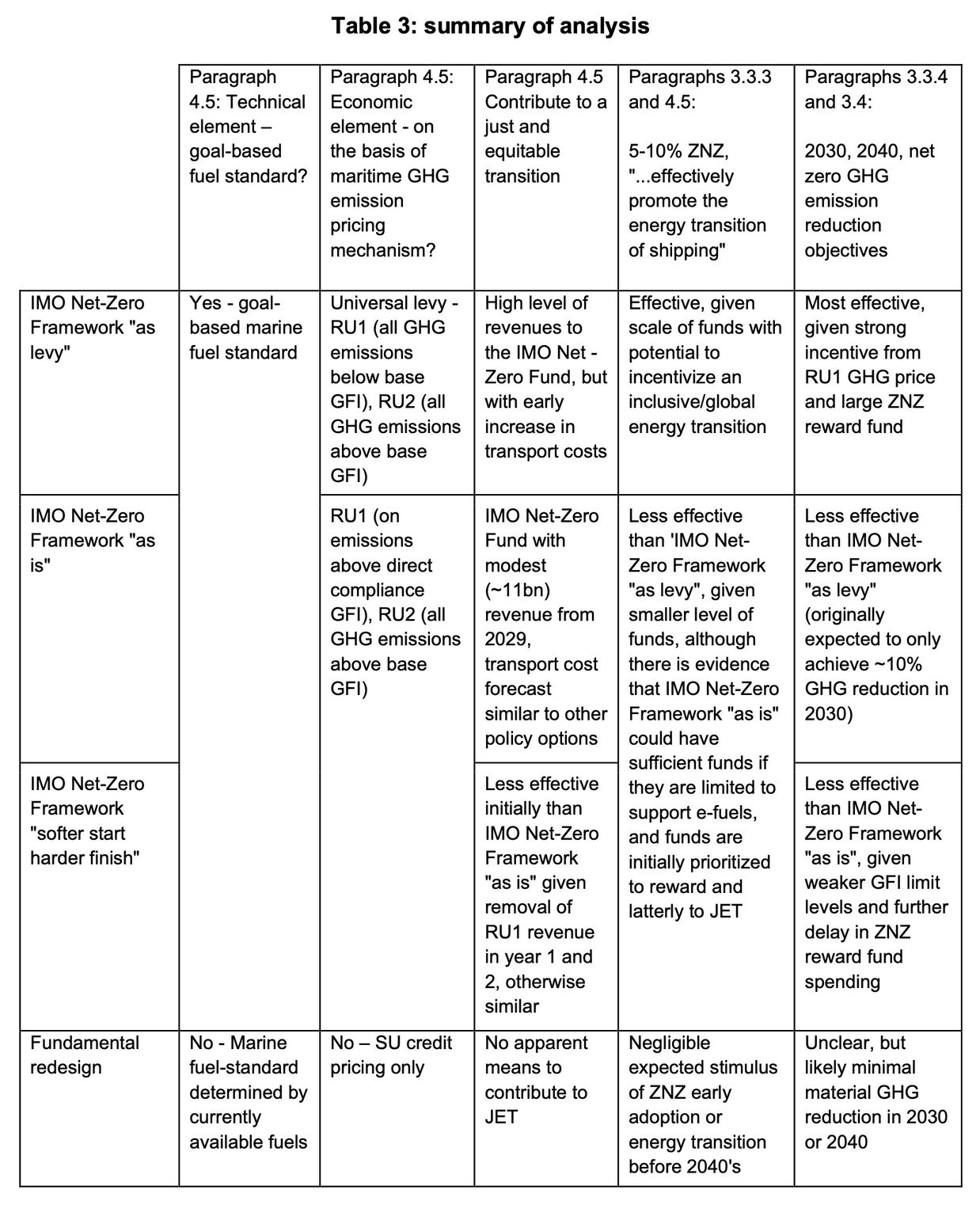
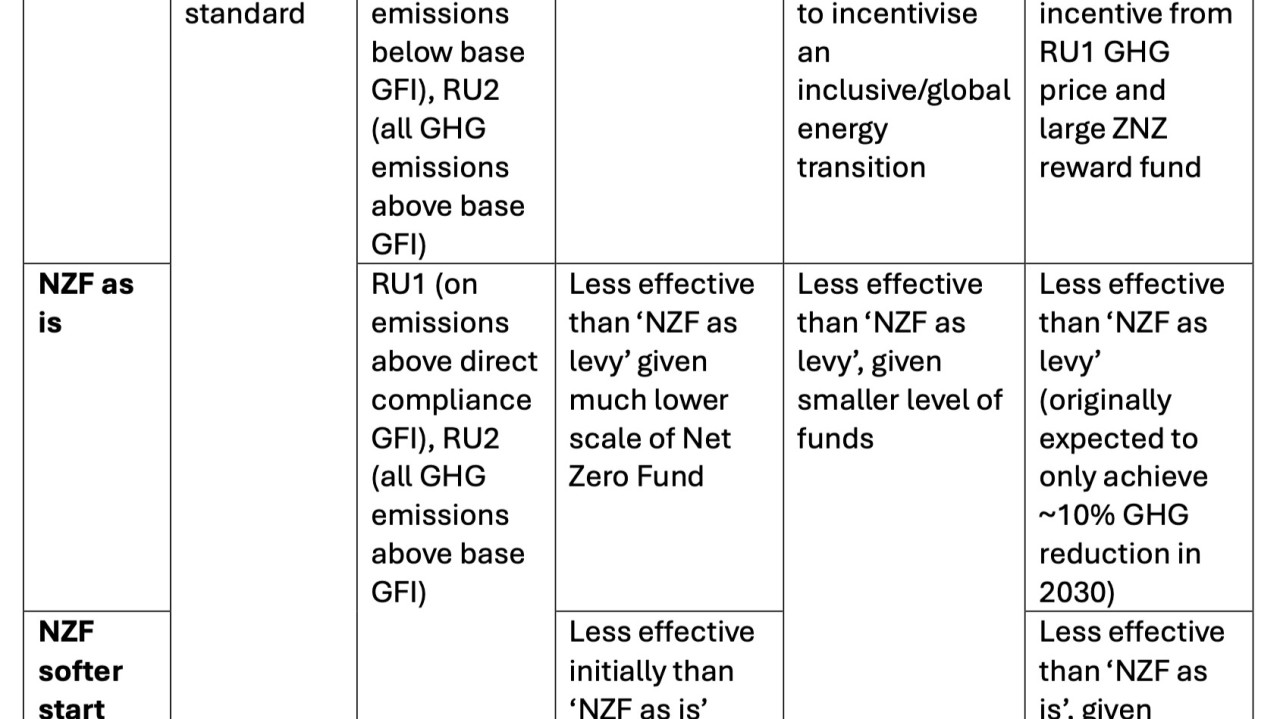
How might things resolve regarding the IMO’s NZF? We know from MEPC 84 that there will be a key debate on this at MEPC 85 coming up this December, with the resumption of the adjourned MEPC.ES2 session that has held NZF’s adoption decision in abeyance. The MEPC 84 session (full read out here: https://lnkd.in/e2gWuDmQ) agreed terms for further intersessional discussions in the run up to ‘85, including “to further consider how to address remaining concerns and issues with the draft amendments to MARPOL Annex VI on the IMO Net-Zero Framework in line with the IMO Strategy on the reduction of GHG emissions from ships…” In June this year, 4 draft MARPOL amendments, mostly building on submissions/discussions from MEPC 84, were circulated to member states (making them eligible for adoption at MEPC 85, should they receive sufficient support). UCL Shipping and Oceans Research Group undertook a quick initial qualitative assessment of these, before building a quantitative assessment built on state of the art modelling undertaken through a collaboration with Global Maritime Forum and RMI that we first trailed here: https://lnkd.in/d3aDvrWV. We are very grateful that Institute of Marine Engineering, Science & Technology (IMarEST) subsequently approved a write-up of that quantitative analysis of the 4 proposals, using that model, for submission to ISWG-GHG 22. Our aim here is, as ever, to make sure that the member states who will have to make the decision at MEPC 85, have access to transparent and robust analysis. But if you are trying to estimate what will happen for your own decision making, hopefully the results in combination with information we shared in our read-out on countries’ positions at MEPC 84, can also provide a useful data/info source. Given how much broader interest on NZF’s future, we are therefore pleased to be sharing this analysis more broadly today through Institute of Marine Engineering, Science & Technology (IMarEST) press release (https://lnkd.in/ePZqSRiA). Please do read the IMO submission for all the detail, but key findings are in Table 3 attached. Very much welcome reactions and thoughts on the results and our method/assumptions. Note, as of this week we are now in a 4+1 situation (4 circulars plus Japan’s submitted MARPOL amendment draft to MEPC 85, 85/7/1). At the point of our modelling we did not have their proposal’s specifics. So as before, UCL Shipping and Oceans Research Group have started with a qualitative analysis (https://lnkd.in/eyJmvyXs), and pending further work/discussions, will see if we can also undertake quantitative analysis. TBC.
- LINKEDIN · ARTICLESince 16 Jun 2026
The IMO has circulated four candidate MARPOL amendments, which can be briefly summarised as: - IMO NZF as levy - IMO NZF as is - IMO NZF softer start harder finish - LISCR concept These are the only four candidate MARPOL amendments that could be adopted at MEPC 85/MEPC.ES2, given the IMO's constraint that to be considered for adoption, an amendment must be circulated at least 6 months in advance. This presents a clear choice to IMO's member states: either adopt one of these four options, or reopen the negotiations to restart the design/development of a new proposal. The latter choice would be a process of uncertain outcome and duration. It would clarify to all that the IMO, after two opportunities to make an adoption decision, had failed twice. It would therefore send a clear legitimising signal for any sub-global measure efforts. Calling for anything other than adoption of these four proposals therefore looks inconsistent with also calling for the primacy of the IMO's regulation of international shipping's GHG emissions. To better understand the four amendments that have been put forwards, please see the attached article. This is our quick 'initial assessment', based on previous modelling and analysis that we and others have done. Given the significance of these amendment options and the decision, they deserve a lot more analysis, and we have ongoing efforts to produce quantitative analysis that we will share as soon as possible. Very much welcome views and feedback on this initial analysis and look forwards to continuing the conversations already in process.
- LINKEDIN · ARTICLESince 27 Apr 2026
Readout from UCL Shipping and Oceans Research Group The Bartlett School of Environment, Energy and Resources, UCL provides a detailed analysis of what happened at the Intersessional Working Group 21 and what that could mean for higher-level political discussions tabled next week at MEPC 84.
- LINKEDIN · IMAGESince 30 Mar 2026
Yesterday, we launched another report, this time not on regulation per se, but on the way transition risks may, or may not, cascade through the private sector value chain - whatever the regulation the sector gets next. There's been a bit of a deluge recently in reports, and will try a post shortly with a bit of a catalogue for easy reference, but all can be found here: https://lnkd.in/e_Urh-JK Our report with Strider Carbon's excellent Prasanna Colluru was to test an assumption that we have long had in our logic - that at some point, if current trends of ordering ships that are optimised for short-term competitiveness continues (conventional, LNG DF), there will be a correction in valuations as these specifications prove uncompetitive to ships able to operate on lower cost compliant fuel (e-fuel p.s. not e-lng its not very cheap or competitive). And then someone is going to have to take a haircut on their valuations. Banks provide a lot of shipping capital, so maybe this affects them. Spoiler - it turns out that maybe not at the asset level (senior debt, LTV's used), but that there could be a systemic risk if the haircuts all come at once (which is plausible). Maarten Biermans kindly endorsed our study here: https://lnkd.in/eHkHtR9q, and Per Barre challenged it as 'narrative risk dressed up as analysis'. I don't disagree with some points - capital doesn't disappear it reprices - which in itself is something shipping might need to reflect on (higher cost of capital through transition if we lose current structures). But I found this interesting: "banks survive cycles and shipowners take asset risk". The classic counter to that statement is Chase Manhattan bank, and an older oil crisis several decades ago that saw them essentially take ownership and control of a fleet that had defaulted. This didn't destroy the bank, but it's a ref case that seems to have been forgotten in the more recent era of crippling write downs and state bailouts on many billions of USD: - https://lnkd.in/em6_Xv6g reminder of the story of HSH Nordbank (2018) - https://lnkd.in/eeFxYikZ reminder of the story of RBS (2016) - https://lnkd.in/ehgdmzRm reminder of the story of Commerzbank (2012) If recent events tell us nothing, it's that we're not only in a climate crisis, but an omnicrisis. Climate risk doesn't hit markets in isolation but along with pandemics, global banking crises, oil&gas crises, trade wars, war etc. Whether climate risk is irrelevant, or could be the fuse or the accelerant that sparks or fuels the next bonfire of major financial institutions is not clear. Whether finance prices all these risks? All seems worth investigating. In light of that, I'm pleased to trail 'another' report on examples of asset stranding events in other sectors, and what these tell us about the plausibility of these risks in shipping. I look forwards to further discussion on that and any further comments. TBC.
- LINKEDIN · IMAGESince 30 Mar 2026
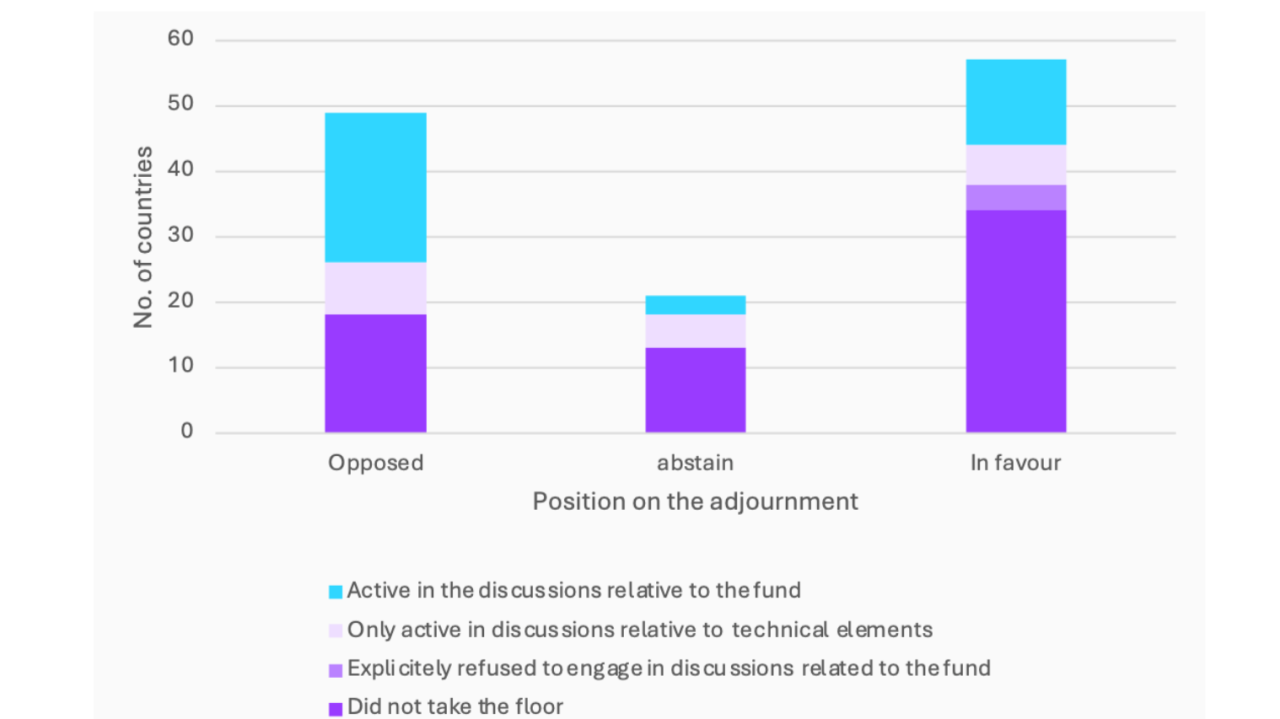
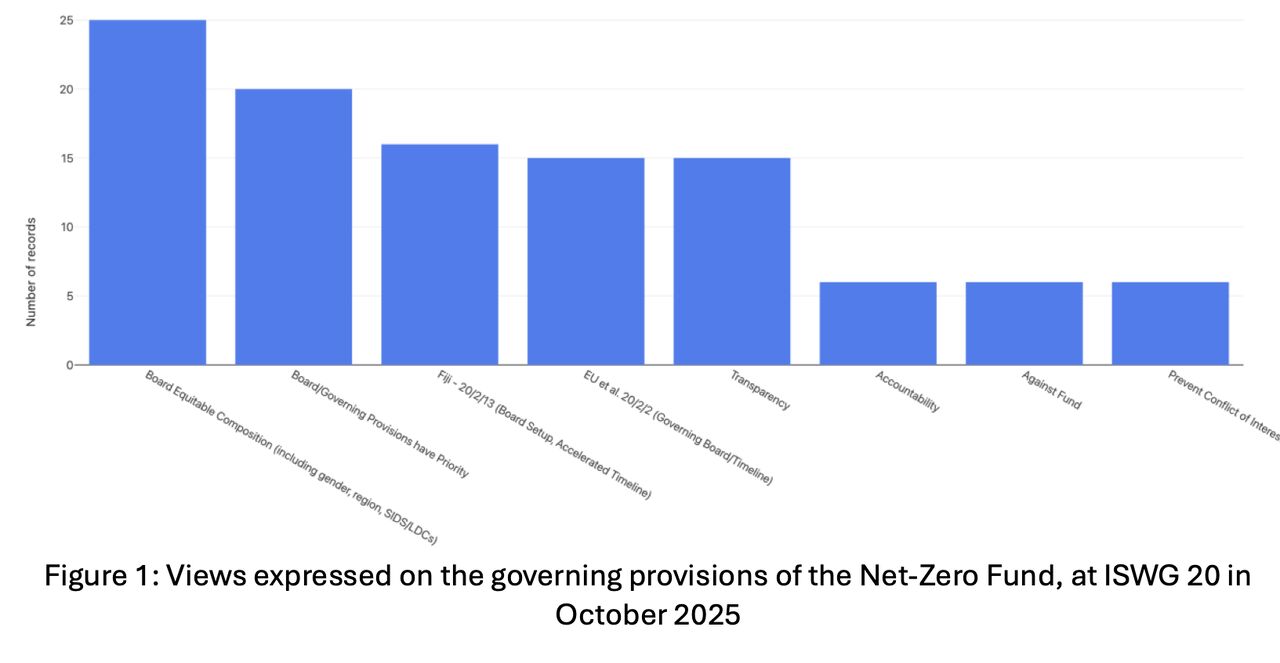
And now we can see IMO submissions to April’s ISWG-GHG 21 debate and I think there are more important signals in there – submissions from China, UK, Norway, Palau and Vanuatu on how to design the ZNZ rewards from the fund, and from Kenya on governing principles for the fund (similarly pro-fund as per DRC, Ghana and Togo's submission to MEPC 84). With the exception of major flag state Liberia, flipping from a pro-levy and pro-NZF stance in early 2025, to a leading voice on getting rid of GHG pricing, several further key African countries are steadfast on GHG pricing/fund. This is on top of the more explicitly pro NZF/fund/GHG price submissions to MEPC 84 from a range of others, developing (Brazil, Mexico) and SIDS and LDCs (Fiji et al.). Much media coverage and hyperbole has been attributed to the US submission to ’84. But the US submission just repeats their well-known 2025 position. Besides leveraging support from countries (Algeria et al.) who at MEPC 83 either abstained or voted no on NZF, the US stance is not evidenced to have wider resonance – at least in the submissions. You would be forgiven for thinking there was more evidence of broad political backing behind the US/PAN/LIB/ARG than this. The last 12 months has seen plenty of pronouncements from aligned industry. First we had maria angelicoussis et al., then American Bureau of Shipping (ABS) and DNV jumping on the anti-NZF bandwagon over summer 2025. I’m sure we’ll hear more from these organisations on why technical-only is the way forwards in coming days. A vested interest minority can make a lot of noise, but it may not be indicative of the politics of the IMO. None of this gamekeeper-poacher dynamic is unusual. What surprised many (including me) was how effective it was in October 2025 at disrupting NZF’s adoption. A key difference is the cover that the US state department provided on this occasion, and the shock and awe of the attack they and others unleashed on the IMO’s normally less eventful way of doing business. A tactic that many developing country member states, well aware of how US operated at MEPC.ES2, are now confronting. So what if the voices backing technical-only haven’t done their maths on the politics of IMO majorities? From this submissions evidence, those backing technical-only as a way forwards are quite likely calling for IMO’s GHG debates to enter stalemate. From which we can then expect a patchwork of regional measures (read Loic Brachet: https://lnkd.in/eCbwMVzK - exactly what most of the advocates of technical-only are also against). The key issue here is that a majority ‘for adjournment’ at MEPC.ES2 is not the same as a majority ‘against a fund’ at MEPC 84. Shipping’s transition is inevitable – the only question is what type of transition it is going to have: orderly or chaotic. What is worrying is how quiet shipping’s more moderate and progressive stakeholders are being in the face of the increased risk that it will be chaotic.

6 of 25 adsSign up to see every UCL Shipping and Oceans Research Group ad, filter by format and date, and get alerts on new ones.
See all 25 adsQuestions about UCL Shipping and Oceans Research Group’s ads
Is UCL Shipping and Oceans Research Group running LinkedIn ads?
We recorded no live LinkedIn ads for UCL Shipping and Oceans Research Group on 8 Nov 2026.
How many LinkedIn ads has UCL Shipping and Oceans Research Group run?
LinkedIn’s ad library lists 25 ads for UCL Shipping and Oceans Research Group. We recorded 25 LinkedIn ads for UCL Shipping and Oceans Research Group, first recorded on 2 Oct 2026 and last recorded on 2 Oct 2026.
Does UCL Shipping and Oceans Research Group run Google ads?
We recorded no Google ads for the domain shippingandoceans.com on 13 Oct 2026.
Which ad formats does UCL Shipping and Oceans Research Group use?
The 6 LinkedIn ads on this page include 3 image ads.
Watch the companies you care about.
Filter every ad by industry, country, format and network, and get alerts when a company you watch starts running new ads.