On air · 1 of 3 networks
TrustLayer
- trustlayer.io
- Insurance
- US
- 59 employees
TrustLayer’s ads on LinkedIn, Meta and Google, recorded by adsrunning. Browse the latest here for free. Sign up free to see all 256. Watch TrustLayer on any plan to get each new one in your feed.
Watchlist included in every plan
| Network | Status | Live ads | Nov 2025LinkedIn activity · 52 weeksNov 2026 | Checked | Next step |
|---|---|---|---|---|---|
| None recorded | 0 | Checked 3 Nov 2026 | See all 256 ads → | ||
| Meta | Running | 17 | Active ads on the Meta Ad Library, all countries | Checked 3 Nov 2026 | Collect them with the API → |
| Recently | 18 | Ads on the Google Ads Transparency Center | Checked 13 Oct 2026 | Collect them with the API → |
TrustLayer has no live LinkedIn ads. Its Facebook page had 17 active ads on 3 Nov 2026, and we recorded 18 Google ads on 13 Oct 2026.
Latest ads
- LINKEDIN · IMAGERecorded 2 Oct 2026
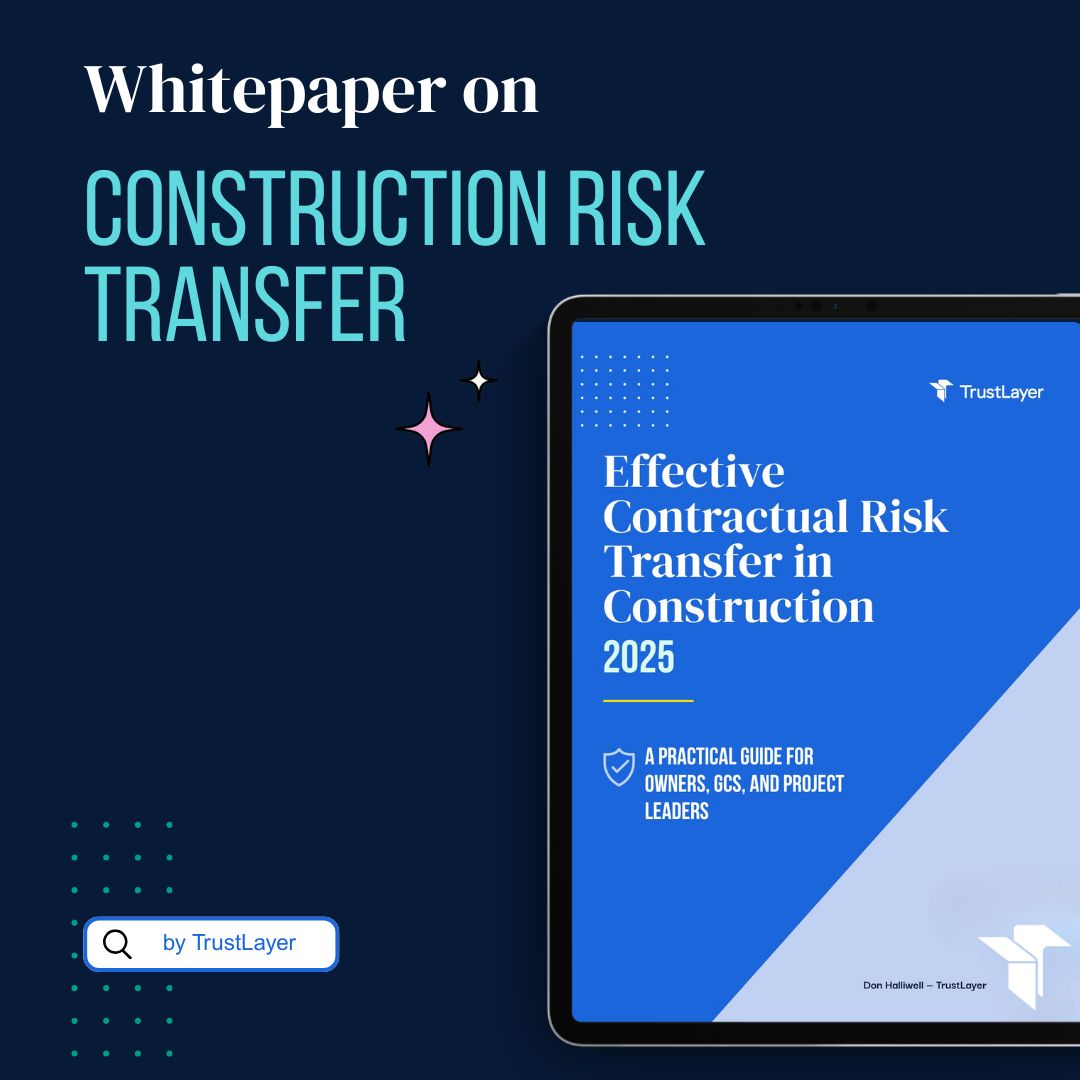
Contracts that courts enforce, insurance that responds, and verification that proves it. Learn the three pillars of Contractual Risk Transfer and how to run them. Download the guide. 👇
- LINKEDIN · IMAGERecorded 2 Oct 2026
When a sub’s policy lapses, you can end up paying defense and settlement costs for workplace injury claims. Learn how to avoid paper compliance and shift costs correctly. Get the guide. ⬇️
- LINKEDIN · IMAGERecorded 2 Oct 2026
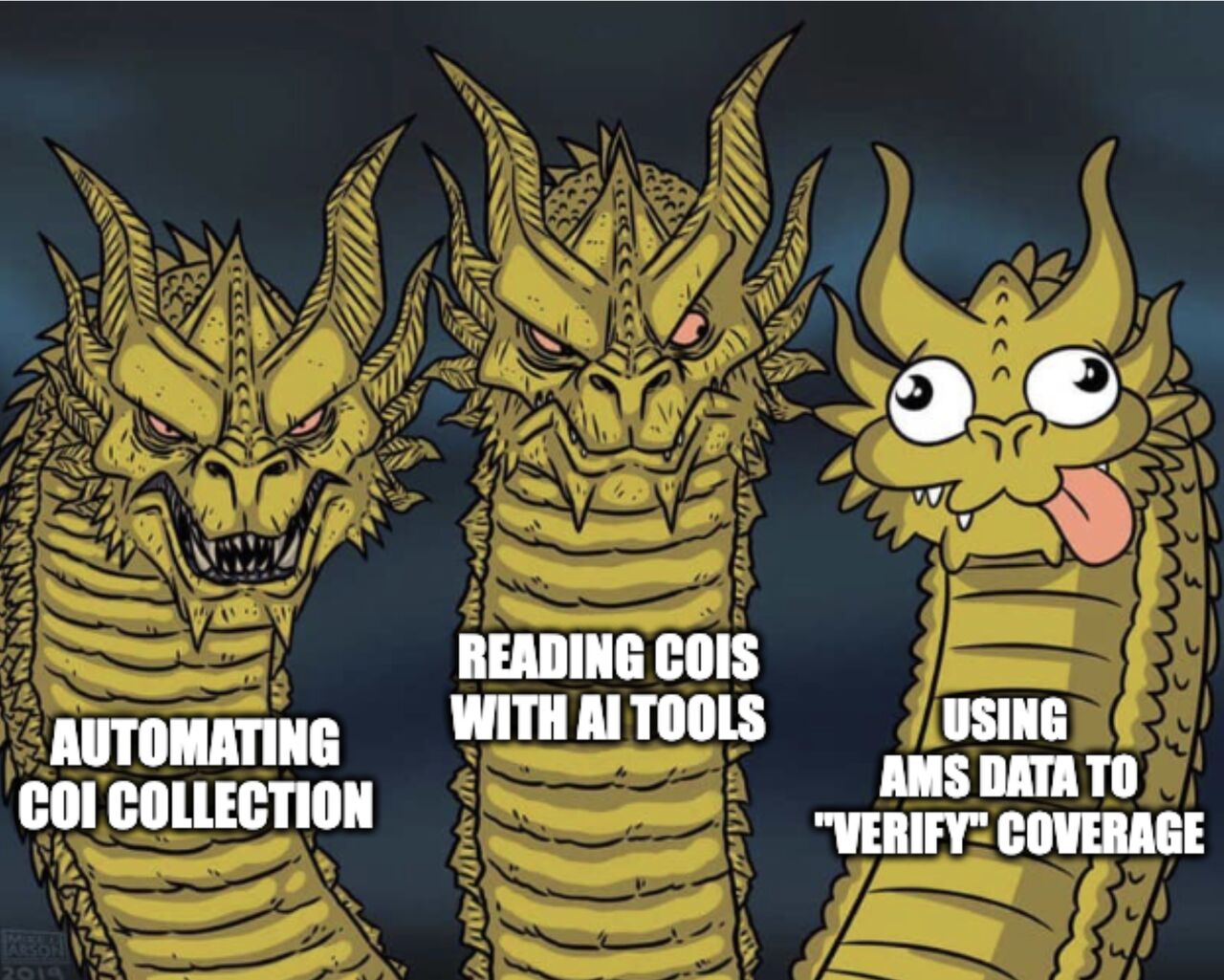
I'm not really a 'meme' guy, but this is so spot on. Say it with me: AMS data is unreliable. So if it's truth and trust, you're after... starting with bad data just doesn't cut it. Look. Great companies are automating COI collection. Some are even layering AI on top to read them. That’s smart. That’s progress. But here’s where things go sideways: They then try to “verify” those COIs against their broker’s AMS system. On paper, it sounds logical. In practice? It’s a dead end. I’ve talked to hundreds of brokers about this exact issue. And nearly every one of them says the same thing: “I wouldn’t trust my AMS data as far as I can throw it.” Think about that. The very system some are betting their compliance process on… is the same system brokers themselves openly distrust. So if your COI workflow is built on AMS data checks, you’re not verifying anything—you’re just moving bad data around. The real risk isn’t whether AI can read a certificate. It’s whether you’re anchoring your compliance to a data source that was never designed to serve as a source of truth. That’s why the smartest companies are asking tougher questions: What should verification actually look like? Where does the reliable data live? And how do we make sure our risk transfer process doesn’t fall apart the moment a broker admits their AMS is unreliable? Until those questions are answered, automation is just speed without direction. It's why I'm proud to work with a company that does the hard work necessary to get to the ground truth... going straight to carriers.
- LINKEDIN · IMAGERecorded 2 Oct 2026
Here’s my hot take: if you hire vendors and don’t have a COI management tool, you’re gambling your balance sheet on a $9 PDF. COIs (Certificates of Insurance) aren’t coverage—they’re receipts. And receipts expire, get faked, or go missing the second someone saves “Final_FINAL(3).pdf” to a desktop. Meanwhile work starts, a claim hits, and everyone suddenly discovers the most expensive workflow in the company: “Who owns insurance compliance?” (CFO thinks Legal. Legal thinks Ops. Ops thinks Procurement. Spoiler: no one owns the spreadsheet.) Why a COI tool is non-negotiable: • Real verification, not theater. Extract endorsements, confirm limits, flag gaps (additional insured, waiver of subrogation, primary & noncontributory). • Automated chase + renewals. Stop being the hall monitor; the system emails, texts, and portals for you. • Rules by risk. Different vendors, different coverage. Codify it once. Enforce forever. • Live status in your stack. Sync to ERP/Procurement/AP so non-compliant vendors can’t start,or get paid, until they’re green. • Audit trail you can actually hand to an auditor. Every action, timestamped. The reality: vendor onboarding and site access are GTM and Ops bottlenecks. A missing COI stalls projects, delays revenue, and invites liability. A modern COI platform turns “compliance chaos” into a simple pass/fail signal that protects cash flow and cleans up your vendor universe. A COI spreadsheet is like a smoke alarm in a drawer. You technically “have one,” but it won’t save you when it matters. If you’re still chasing PDFs, it’s time to get serious. I’ve got a practical checklist for evaluating COI tools—DM me and I’ll share. I dictated to my phone while enjoying a hot day and a root beer. Go fourth and solve problem LinkedIn fam.
- LINKEDIN · IMAGERecorded 2 Oct 2026
If you ask most CFOs one simple question, you’ll watch them squirm: “If we got sued tomorrow for something we sub-contracted out, what percentage of our subs would actually have insurance that covers us?” The truth is—nobody knows. Not the CFO. Not procurement. Not even risk management with 100% certainty. And that uncertainty? It’s expensive. Here’s the reality for risk managers who *actually care* (what I like to call the Captain Compliance types): -Non-compliance chaos: 70% of COIs have errors or gaps. Every one is a liability grenade. -Operational drag: Renewal season is Groundhog Day—weeks lost to chasing brokers, vendors, sub contractors, and fixing paperwork. -Visibility black holes: When leadership asks “Are we covered?” too often the answer is “Give me a few days.” This isn’t a knock on risk teams. It’s a broken system. We ask highly trained professionals to drown in PDFs instead of focusing on the strategic work that actually protects revenue. The fix isn’t more staff. It’s better tools. Automation can handle the noise, dashboards can light up the black holes, and exceptions can be escalated instead of dumped on someone’s desk. Risk managers shouldn’t be babysitting vendors—they should be advising leadership. And when they do, the whole organization wins. What pains you more right now—chaos, drag, or visibility? #riskmanagement #insurtech #compliance #thirdparty #trustlayer
- LINKEDIN · IMAGERecorded 2 Oct 2026
are you running a "just get it done" operation? Nobody gets into finance, operations, or admin work because they want to chase insurance certificates. But that’s exactly what happens. Whether you’re a two-person finance team or a 20-person risk department, COIs become the job nobody signed up for—but everyone gets stuck with. Here’s how it shows up: -Distraction: Every vendor email pulls you off higher-value work. -Time sink: One COI might take 15 minutes. Multiply that across hundreds or thousands of vendors, and you’re losing weeks. -Fear factor: Even if you’re not an insurance pro, you still carry the liability if something slips through. Small teams feel the drain. Large teams feel the opportunity cost. Either way, it’s wasted talent on low-value busywork. That’s why more organizations are outsourcing it. Software handles the automation. Managed services take on the vendor chase and document review. The result? You log in, see who’s compliant, and move on with your actual job. Because your smartest people shouldn’t be insurance clerks. What’s the bigger pain for your team—time lost or fear of missing something? #riskmanagement #compliance #operations #insurtech




6 of 256 adsSign up to see every TrustLayer ad, filter by format and date, and get alerts on new ones.
See all 256 adsWatch the companies you care about.
Filter every ad by industry, country, format and network, and get alerts when a company you watch starts running new ads.