Not on air · 2 of 3 networks checked

Treya Partners ads
- treyapartners.com
- Business Consulting
- US
- 36 employees
Treya Partners’s ads on LinkedIn, Meta and Google, recorded by adsrunning. Browse the latest here for free. Sign up free to see all 108. Watch Treya Partners on any plan to get each new one in your feed.
Watchlist included in every plan
What Treya Partners runs
- Single image · LinkedIn
- 6
| Network | Status | Live ads | Nov 2025LinkedIn activity · 52 weeksNov 2026 | Checked | Next step |
|---|---|---|---|---|---|
| None recorded | 0 | Checked 8 Nov 2026 | See all 108 ads → | ||
| Meta | Not checked | — | |||
| None recorded | 0 | No ads found on the Google Ads Transparency Center | Checked 13 Oct 2026 | Collect them with the API → |
Treya Partners has no live LinkedIn ads. We recorded no Google ads on 13 Oct 2026.
Latest ads
- LINKEDIN · IMAGERecorded 2 Oct 2026
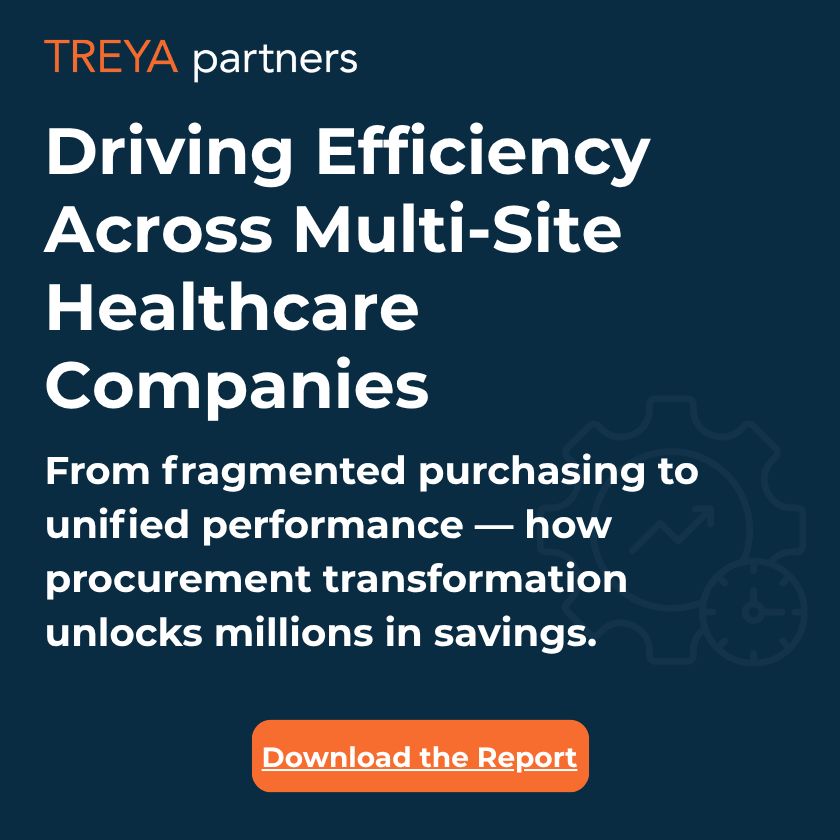
Learn how leading multi-site healthcare organizations cut costs and streamline procurement by unifying spend and vendor management.
- LINKEDIN · IMAGERecorded 2 Oct 2026
In our new white paper, “Key Trends Shaping Procurement in Healthcare,” we explore how shifting market pressures, rising regulatory demands, and accelerating digital adoption are remaking the procurement landscape. You’ll discover how forward-looking organizations are harnessing automation, data visibility, and strategic supplier partnerships to: • Build resilience in the face of supply chain disruptions • Ensure compliance in a complex regulatory environment • Enable value‑based care through smarter sourcing • Drive efficiencies via emerging technologies like AI and cloud platforms Whether you lead procurement, supply chain, finance, or operations, this report offers actionable insights and benchmarks to help your organization stay ahead.
- LINKEDIN · IMAGERecorded 2 Oct 2026
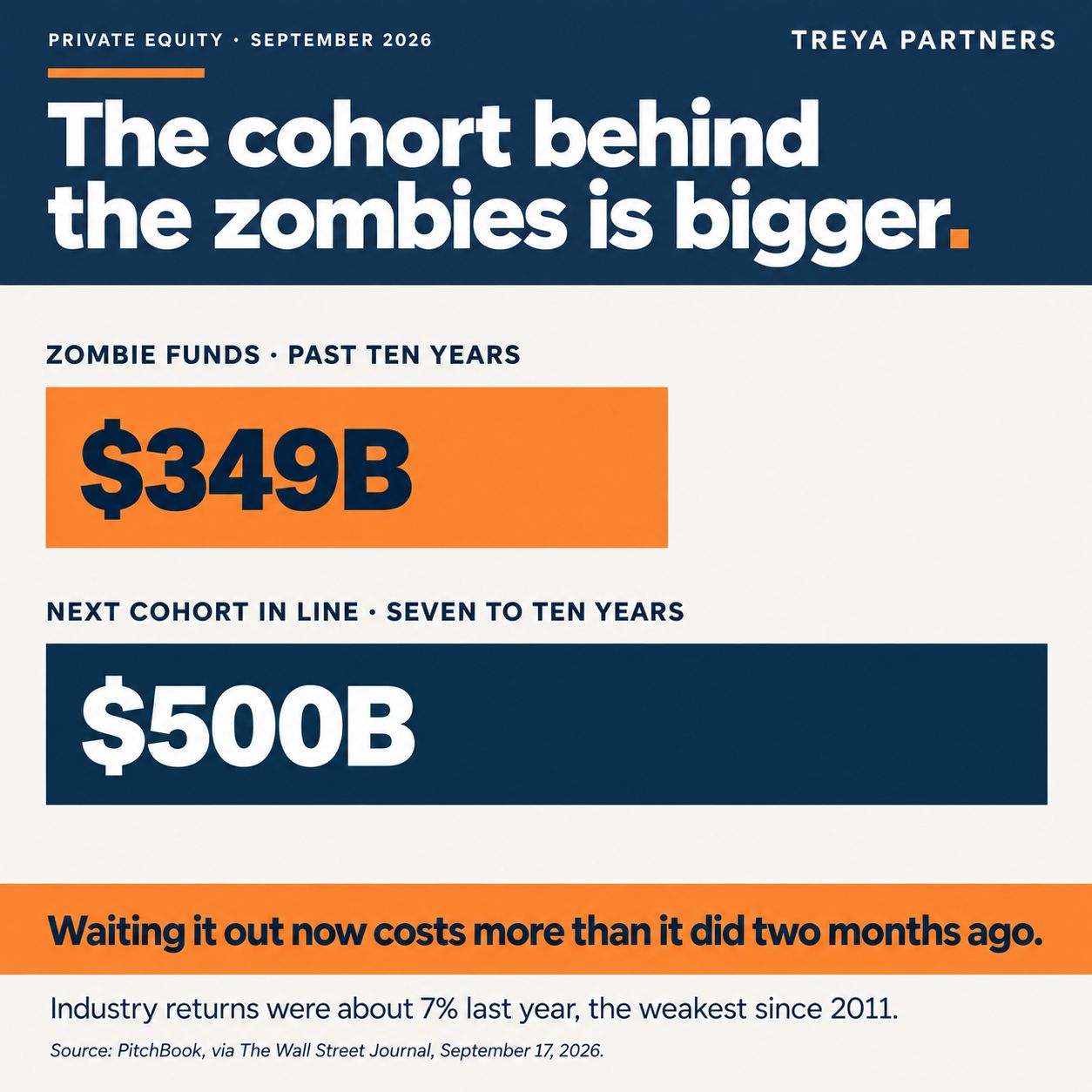
The Fed raised rates last week, and the funds it hurts most are the ones that already own everything they are going to own. I wrote in July about the Wall Street Journal's zombie-funds piece, the one that counted a record $349 billion sitting in U.S. private equity funds at least a decade old. The Journal came back to those funds after the hike. Exits get harder, because buyers borrowing at higher rates will not pay the price the fund needs. The roughly $500 billion in seven to ten year old funds, the cohort right behind the zombies, is now less likely to come back on time either. And the companies pay more on their debt, so cash that would have gone into the business goes to lenders. Mitchell Mansfield, a managing director at Kroll who restructures aging funds for a living, put it this way in the piece: "The longer these funds stay in existence, the more your return on capital as an investor plateaus, then declines." The same piece puts industry returns at about 7% last year, the weakest since 2011, and that was with the economy growing. Time is not neutral inside these vehicles. Every quarter a fund sits costs its LPs IRR they cannot get back, and ties up capital they would rather have working somewhere else. Most sponsors I talk to run their cost work in the first year or two and then stop. That fits the hold they underwrote. When the hold runs years past plan, the cost base is worth a second pass, and almost nobody gives it one. Revenue is still the bigger prize, but it depends on a market you do not control. A dollar out of the cost base pays twice: you collect it every year you still own the business, and the run rate is still there to be capitalized whenever the exit finally comes. In July the open question was whether sponsors would actually use the extra time. Waiting it out now costs even more than it did two months ago.
- LINKEDIN · IMAGERecorded 2 Oct 2026
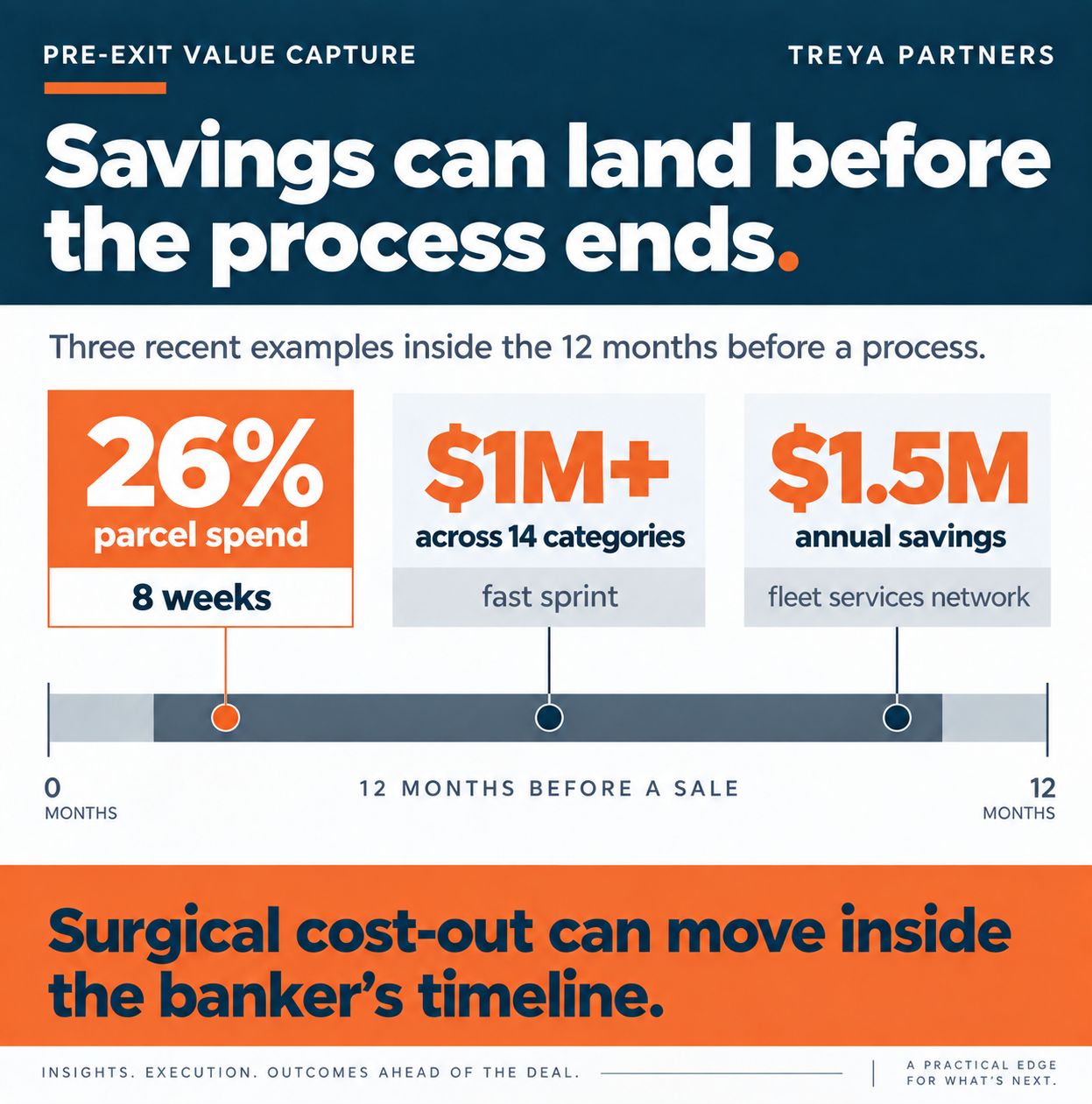
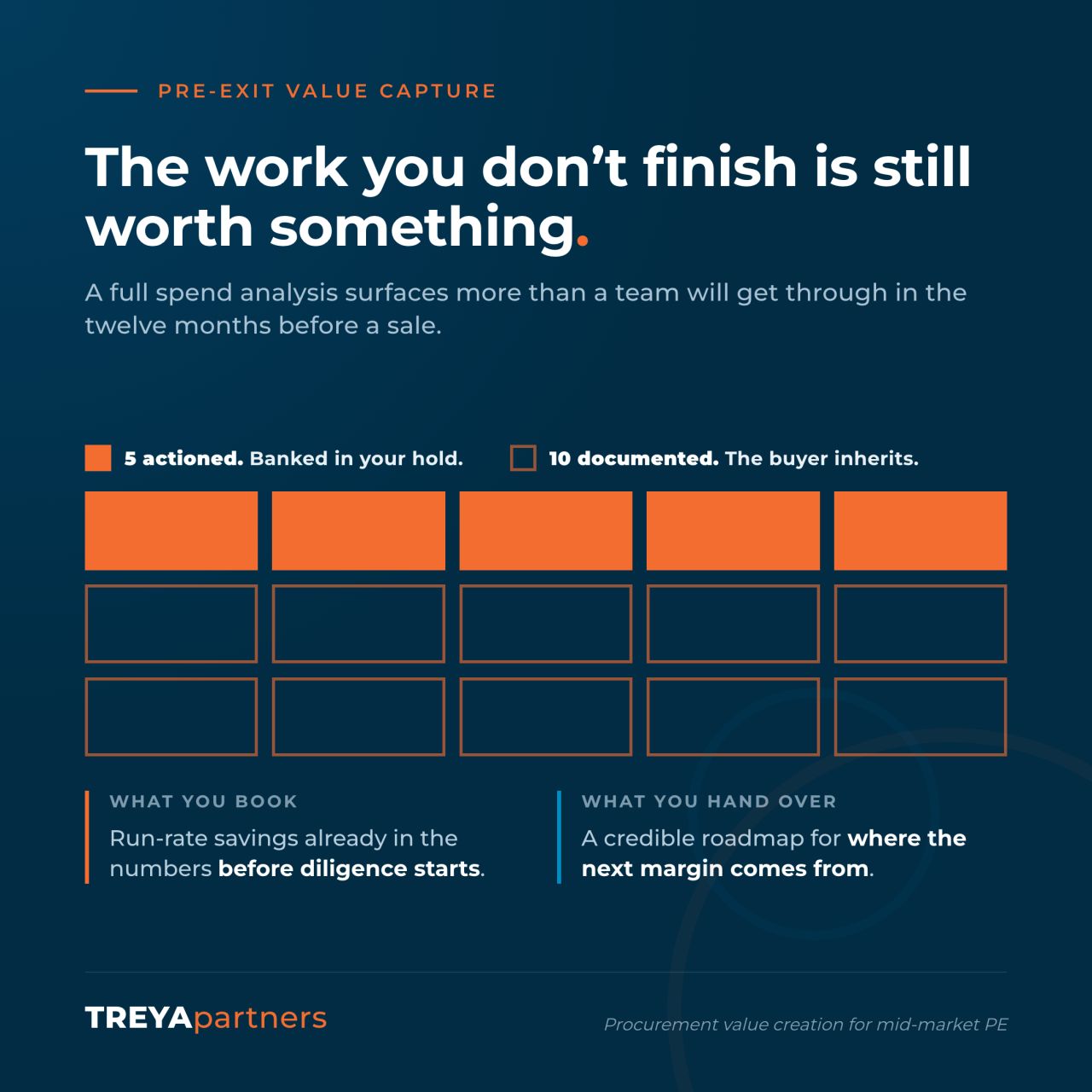
When a sponsor tells me they're heading into a sale process, the next sentence is usually some version of "so this isn't the time." The CEO is building the CIM, the CFO is living in the data room, and nobody wants a consultant asking for a two-hour workshop with the leadership team. For most consulting work, that instinct is right. A broad operating program started six months before a process launches will compete for the same people, and the process should win. Cost-out done surgically is a different kind of work. We run it category by category off AP data, invoices and contracts, with a few short supplier calls that our team handles. Management's job is to decide and sign. One client told us early on that they had no bandwidth for any supplier change whatsoever, and designing around that constraint has become the way we scope these engagements when a sale is coming. Here are three recent examples where we helped our clients pre-exit: - A medical equipment manufacturer with multiple sites took 26% out of its parcel spend in about eight weeks, on carrier benchmarking and renegotiated rates, without changing carriers. - A food co-packer took just over $1M out across fourteen categories in a fast sprint. - A fleet services network found $1.5M in annual savings, almost all of it by renegotiating with incumbents it already liked. Two of the three companies have since been sold. In all three we surfaced more than the company could close inside the window, and what stays open becomes a documented roadmap the next owner inherits. You won't book it as savings in your own hold. What it does is give a buyer a reason to believe there is more where that came from. That last part is why I think the "either/or" framing is wrong. A dollar of contracted run-rate savings is worth a multiple of that in enterprise value, and during a process it arrives at the exact moment the multiple is being applied. The same dollar found a year after close belongs to someone else. If you have a portco inside the twelve months before a process, the question worth putting to your team is how much of the cost base has actually been sourced, as opposed to renewed. If helpful, I can show you how this sits alongside the banker's timeline.
- LINKEDIN · IMAGERecorded 2 Oct 2026
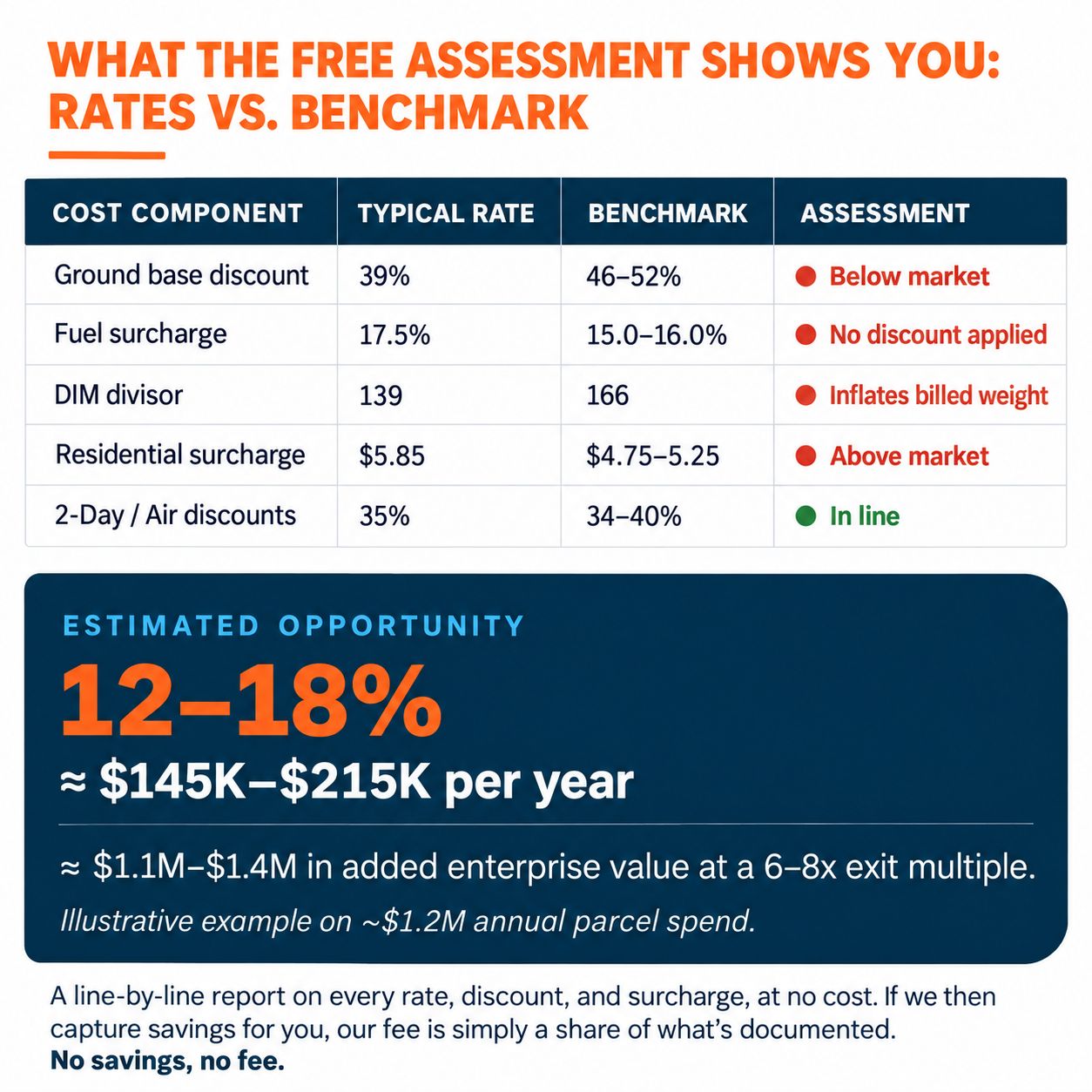
Like all of us, I'm inundated daily with geopolitical and domestic market 'doom' brought on by a severe and prolonged disruption of 25% of the world's oil transport capacity. I also have a shared, reoccurring reaction upon hearing the news, "this will raise prices". Naturally, I thought of how I as a consumer could effectively navigate a world of rising costs, as well as how my clients, leaders of PE-backed businesses, will manage. My thinking shifted to how those upstream are hedging against these headwinds, specifically the small parcel duopoly. Where do UPS and FedEx find margin in fixed contracts when the backbone of inflation, diesel (transport) cost, is climbing? They find profitability (and you find higher invoices) through weekly changes to fuel surcharges (without changing the underlying contract), frequent double-dipping through additional rises in per-pound fees, all resulting in a 25%+ increase in domestic surcharge rates during a two-week period in March. Excited to announce Treya Partners, through years of working through these very challenges with PE-sponsors and their portco's, are able to deliver more savings, faster. To ensure we're always maximizing time and value, we've created a quick calculator to provide clear benchmarks to your current small parcel expenditures through the link included. https://lnkd.in/gNdWVrBU
- LINKEDIN · IMAGERecorded 2 Oct 2026
Most of the procurement work in a portfolio happens in the first hundred days, and that is usually the right call. The window that often gets missed is the last year or two before a sale. The objection to doing it that late is real, and it has nothing to do with the money. A team heading into an exit process is already busy, and nobody wants a new workstream while they are getting the business ready to show. That is the most common reason it doesn't get prioritized in the late stages of the hold. What surprises people is how much easier the alignment gets once a team has been in the business a few years. Early in a hold, cost work is abstract to the people who have to do it. Twelve months out from a sale, a management team draws the line themselves: a dollar out of the cost base is worth a multiple of that in enterprise value, and some of that multiple lands in their own equity. Then there is the part almost nobody counts. A full spend analysis surfaces more than a team will get through in the twelve months before a sale. Say you execute five of fifteen line items. You bank those, and the other ten do not disappear. They become a documented roadmap the next owner inherits. You will not book it as savings in your own hold. What it does is give a buyer a reason to believe there is more where that came from. That is roughly how it went for a PE-backed fleet maintenance network we worked with. It had grown into eight business units through acquisitions, each one buying on its own, and the sponsor wanted the cost structure sorted out before an ownership transition. The work returned about $1.5 million in annual savings at roughly five times what it cost, most of that in the parts they buy every day rather than the back office. Most sponsors run this early in the hold and then stop, and the pre-exit window is the one I see left on the table most often.
6 of 108 adsSign up to see every Treya Partners ad, filter by format and date, and get alerts on new ones.
See all 108 adsQuestions about Treya Partners’s ads
Is Treya Partners running LinkedIn ads?
We recorded no live LinkedIn ads for Treya Partners on 9 Nov 2026.
How many LinkedIn ads has Treya Partners run?
LinkedIn’s ad library lists 108 ads for Treya Partners. We recorded 108 LinkedIn ads for Treya Partners, first recorded on 2 Oct 2026 and last recorded on 2 Oct 2026.
Does Treya Partners run Google ads?
We recorded no Google ads for the domain treyapartners.com on 13 Oct 2026.
Which ad formats does Treya Partners use?
The 6 LinkedIn ads on this page include 6 image ads.
Watch the companies you care about.
Filter every ad by industry, country, format and network, and get alerts when a company you watch starts running new ads.