Not on air · 3 of 3 networks checked

Transport Research Arena (TRA) ads
- traconference.eu
- Research Services
- HU
- 9 employees
Transport Research Arena (TRA)’s ads on LinkedIn, Meta and Google, recorded by adsrunning. Browse the latest here for free. Sign up free to see all 31. Watch Transport Research Arena (TRA) on any plan to get each new one in your feed.
Watchlist included in every plan
What Transport Research Arena (TRA) runs
- Single image · LinkedIn
- 6
- Google ads on 16 Oct 2026
- 6
| Network | Status | Live ads | Nov 2025LinkedIn activity · 52 weeksNov 2026 | Checked | Next step |
|---|---|---|---|---|---|
| None recorded | 0 | Checked 8 Nov 2026 | See all 31 ads → | ||
| Meta | None recorded | 0 | No active ads recorded on the Meta Ad Library | Checked 29 Oct 2026 | Collect them with the API → |
| Recently | 6 | Ads on the Google Ads Transparency Center | Checked 16 Oct 2026 | Collect them with the API → |
Transport Research Arena (TRA) has no live LinkedIn ads. Its Facebook page had no active ads on 29 Oct 2026, and we recorded 6 Google ads on 16 Oct 2026.
Latest ads
- LINKEDIN · IMAGESince 25 Apr 2026
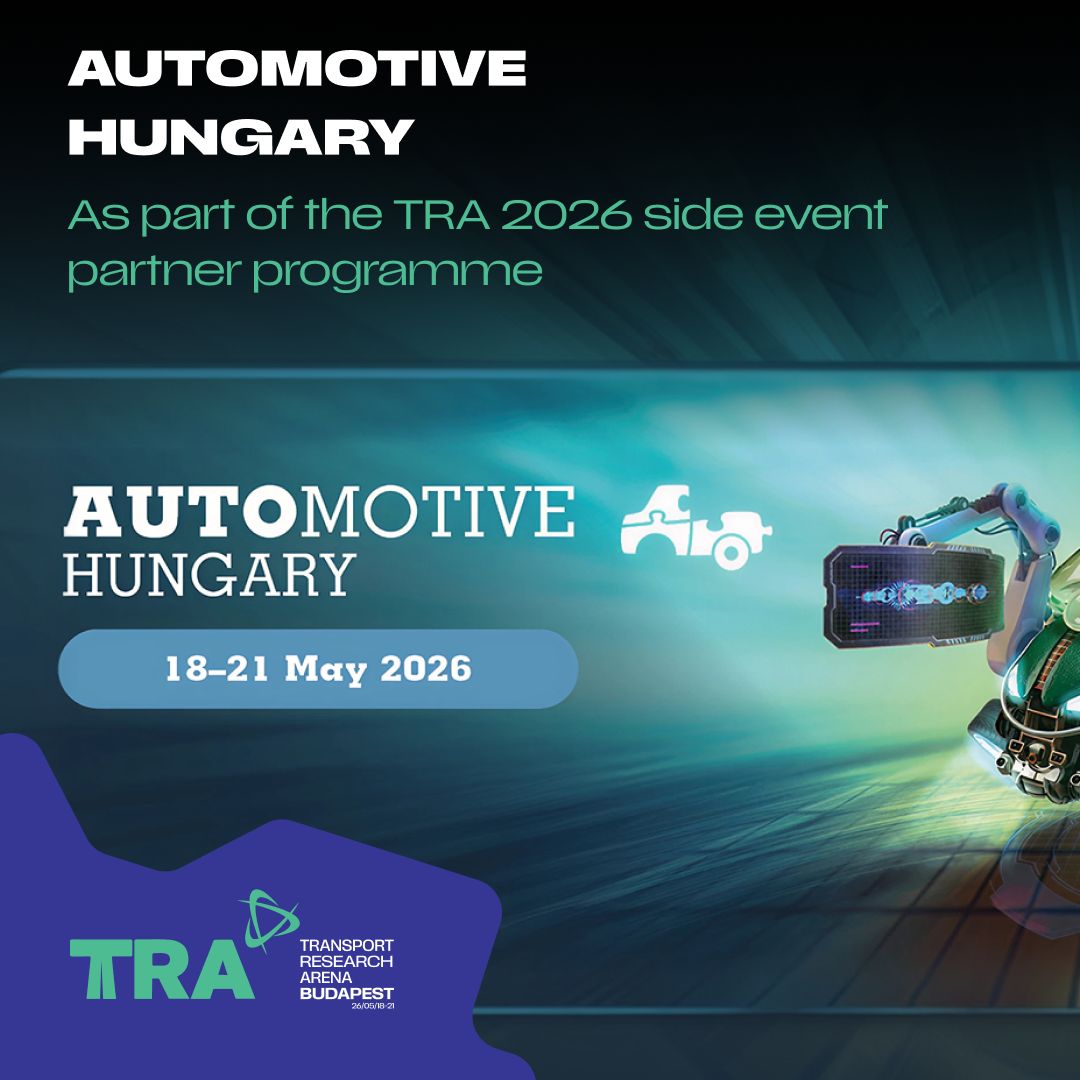
As part of the TRA 2026 side event partner programme, we are delighted to highlight AUTOMOTIVE HUNGARY International Trade Exhibition for Automotive Industry Suppliers. Organised by HUNGEXPO from 18 to 21 May 2026, AUTOMOTIVE HUNGARY provides a unique platform for domestic and international suppliers and service providers across the vehicle manufacturing industry. Bringing together key players from major car manufacturers to SMEs, the exhibition creates valuable opportunities for new business partnerships, knowledge exchange and stronger industry collaboration. With a strong focus on areas such as alternative drives, transportation, maintenance, component production and system integration, the event plays an important role in supporting innovation and competitiveness in the Hungarian automotive sector. Enriched by high-quality professional programmes and held alongside MACH-TECH and INDUSTRY DAYS, it adds even greater value to the wider TRA 2026 experience. More info: https://lnkd.in/eG9WFXgZ #tra2026 #trabudapest #regenerationintransport
- LINKEDIN · IMAGESince 25 Apr 2026
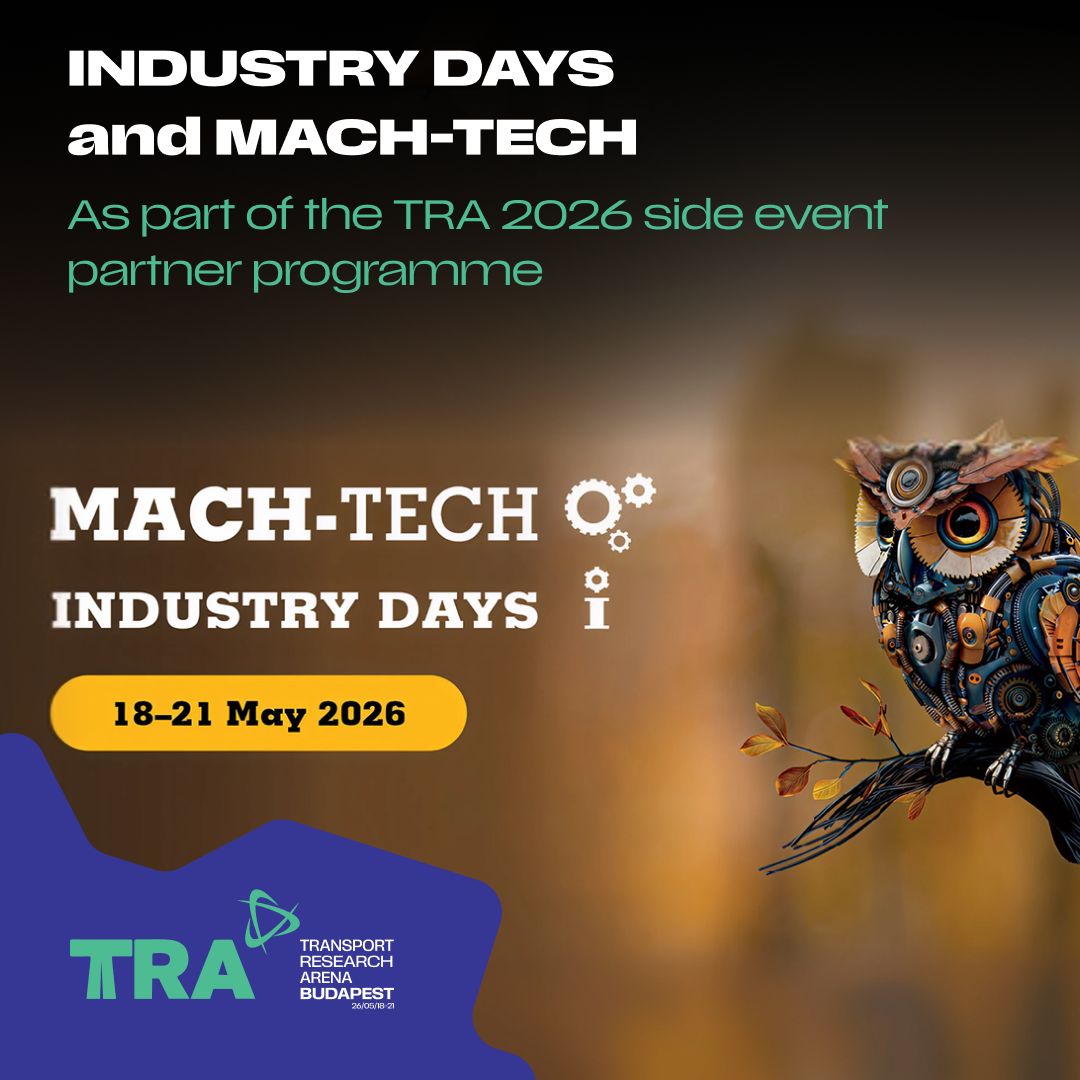
As part of the TRA 2026 side event partner programme, we are delighted to highlight INDUSTRY DAYS and MACH-TECH International Trade Exhibitions. Taking place from 18 to 21 May 2026 at HUNGEXPO Budapest Congress and Exhibition Center, this major industrial exhibition group brings together a wide range of players from across the industrial and economic landscape. From machine manufacturing and welding technology to automation, robotics, logistics, warehouse technology, industrial digitization and innovative manufacturing solutions, the event offers a comprehensive overview of the trends and technologies shaping the future of industry. More than a trade exhibition, INDUSTRY DAYS and MACH-TECH serve as a dynamic professional forum where companies can present their portfolios, build relationships, conclude business agreements and explore cost- and energy-efficient solutions to both strategic and everyday challenges. As a side event of TRA 2026, it creates a valuable meeting point between industrial innovation and the future of transport. More info: https://iparnapjai.hu/en/ #tra2026 #trabudapest #regenerationintransport
- LINKEDIN · IMAGESince 25 Apr 2026
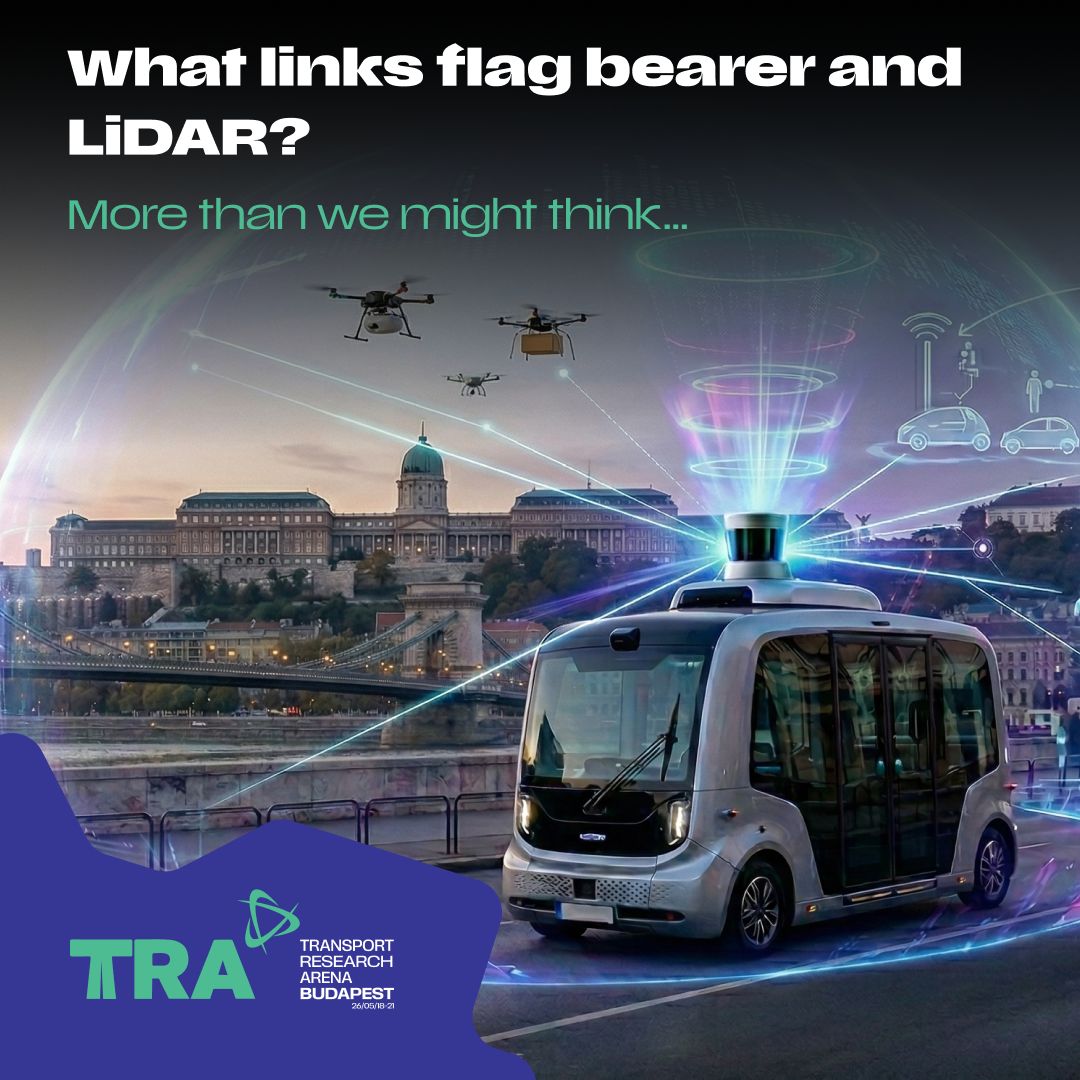
What do a 19th-century flag bearer and a modern LiDAR sensor have in common? More than we might think. In 1865, the United Kingdom passed the now-famous Locomotives Act, later remembered as the “Red Flag Act.” Under the law, any self-propelled road vehicle had to be preceded by a person on foot carrying a red flag at least 60 yards ahead, while speed was limited to just 2 mph in towns and 4 mph in the countryside. Today, the rule sounds almost absurd. But at the time, it was a serious attempt to make a new and unfamiliar technology coexist with pedestrians, horses, and horse-drawn traffic. In other words, it was not only about vehicles. It was about trust in mixed traffic. ([Legislation.gov.uk][1]) That is why the red flag matters even now. We no longer send a person walking in front of a vehicle to warn the world of danger. Instead, we rely on LiDAR, cameras, radar, AI-assisted perception, and increasingly connected systems such as V2X communication. The principle, however, is remarkably similar: society accepts innovation faster when the surrounding environment can “see,” interpret, and communicate risk before humans have to react to it themselves. The red-flag man was an early external safety interface. Today, sensors and intelligent systems play that role in milliseconds. This is how confidence is built around mobility transitions. And the next step is already clear. Europe’s Horizon Europe 2026–2027 work programme for Climate, Energy and Mobility includes a dedicated topic on improving the resilience and accuracy of Positioning, Navigation and Timing (PNT) systems and e-conspicuity solutions. That matters because the challenge is no longer just detecting obstacles. It is ensuring that automated and connected mobility remains safe even when signals are degraded, jammed, or spoofed. Trust in automation depends not only on intelligence, but on robustness. ([Research and innovation][3]) So perhaps the real story is this: in 1865, trust in mobility required a red flag. In 2026, it requires resilient sensing, positioning, communication, and invisible digital infrastructure. This is exactly why TRA 2026 in Budapest matters. From 18 to 21 May 2026, the conversation will not just be about faster transport, but about how to build systems people are ready to trust. Are we truly ready for a mobility experience where trust is created not by human intervention, but by intelligent systems working silently in the background? #tra2026 #trabudapest #regenerationintransport
- LINKEDIN · IMAGESince 25 Apr 2026
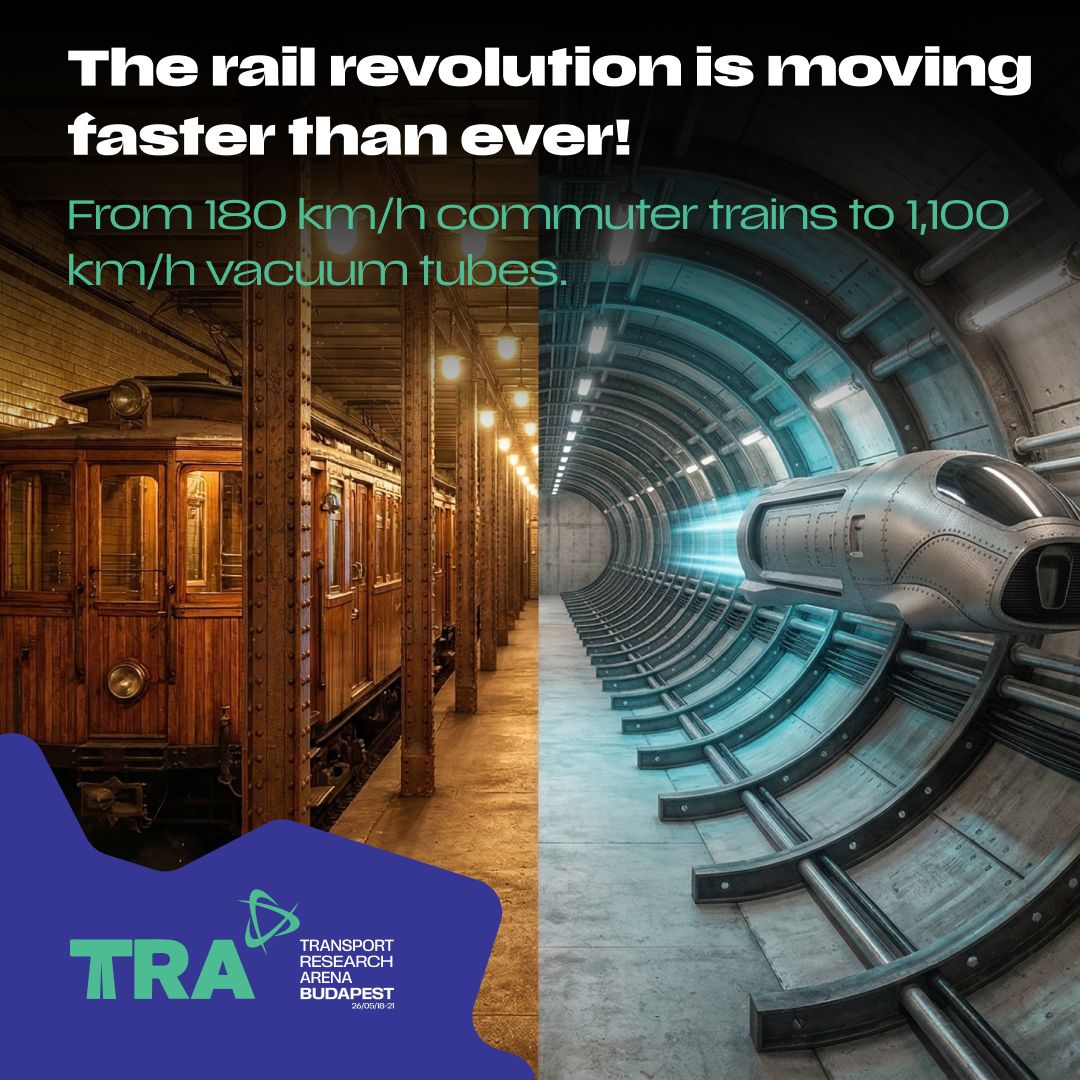
The future of mobility is not a single technology; it is a multi-layered ecosystem. As we look at the evolution of high-speed transit, a clear dual-track strategy is emerging: the solid expansion of modern rail and the radical vision of Hyperloop technology. Currently, modern high-speed and express rail systems are bridging the critical gap between urban metros and long-distance travel. Deep-level express systems like Seoul’s GTX-A (operating at 180 km/h) and London’s Elizabeth Line (145 km/h), alongside dedicated domestic high-speed routes like the UK's HS1 (225 km/h), are redefining regional commuting. These systems form the essential, high-capacity "backbone" of our infrastructure. However, the ambition for ultra-fast, intercity travel is pushing us toward vacuum-tube technology. The Hyperloop vision targets theoretical speeds exceeding 1,100 km/h, aiming to replace short-haul flights entirely. The newly opened European Hyperloop Center in the Netherlands is already working toward testing speeds of 700 km/h, moving this from science fiction to tangible engineering. There is a fascinating historical parallel here. Just as Budapest’s Millennium Underground Railway revolutionized urban transit in 1896 by pioneering electricity-powered sub-surface transport, today’s European Hyperloop initiatives are laying the groundwork for the next monumental leap in mobility. Hyperloop won't replace traditional rail; instead, modern high-speed trains will serve as the crucial connectors feeding passengers into these ultra-high-speed, continent-spanning hubs. How do you see the integration of 200 km/h regional rail with 1,000 km/h Hyperloop systems shaping the future of European logistics and travel? Let’s discuss. 👇 #tra2026 #trabudapest #regenerationintransport
- LINKEDIN · IMAGESince 25 Apr 2026
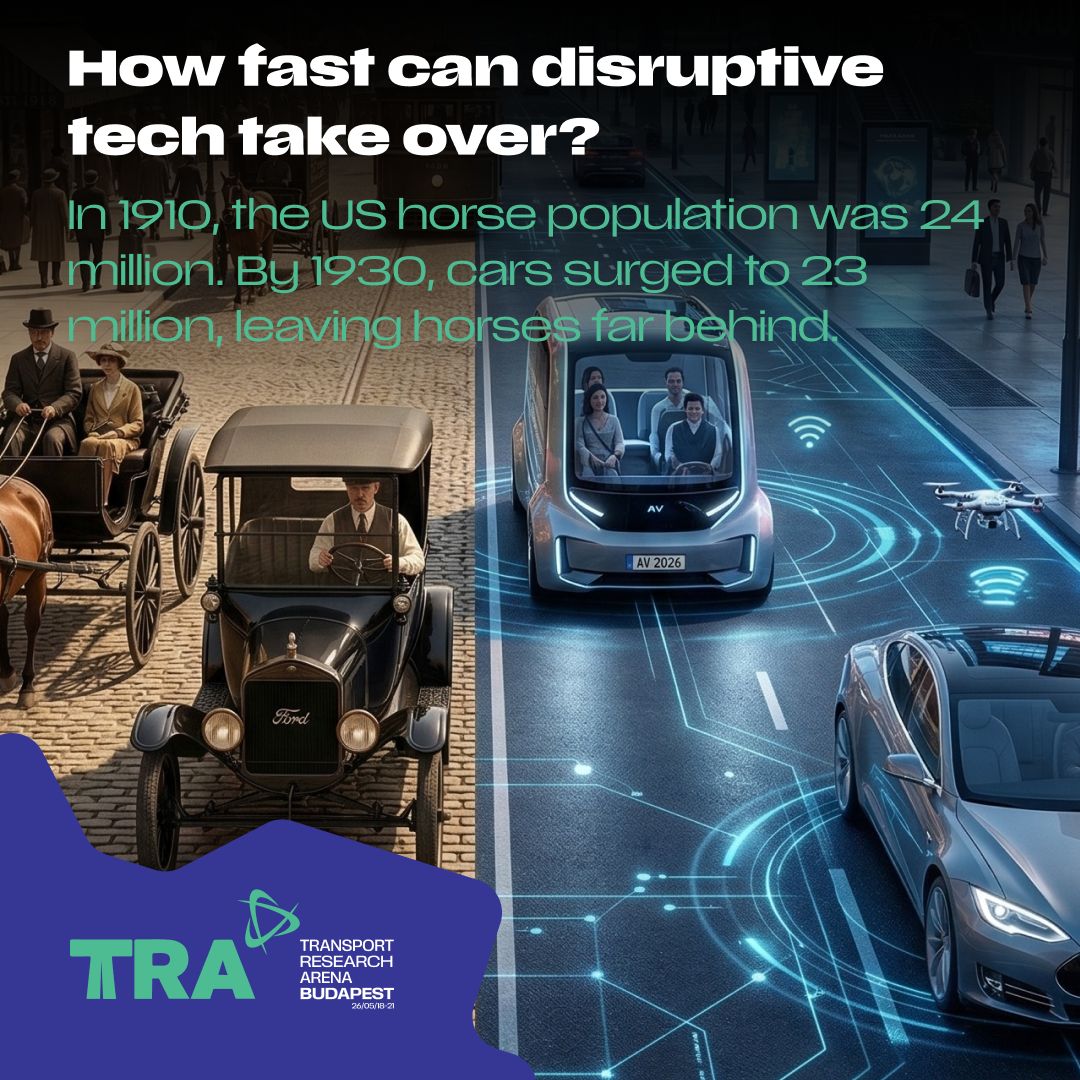
How fast can disruptive tech take over? 🐎 ➡️ 🚗 In 1910, the US horse population peaked at 24 million, while cars were just a luxury. By 1930, cars surged to 23 million, leaving horses far behind. Why the rapid shift? 1️⃣ The Ford Effect: The Model T became cheaper than buying and feeding a working horse. 2️⃣ Urban Hygiene: Horse manure created severe public health crises in cities. Ironically, early cars were seen as the "clean" alternative! 3️⃣ Mechanization: Affordable tractors quickly replaced farm horses. For us at #TRA2026, this history is a powerful mirror. The 20-year "mixed traffic" era of horses and early cars directly parallels today’s shift from internal combustion engines to autonomous vehicles (CCAM). Just as dirt roads paved the way for asphalt, our infrastructure is now evolving with 5G and smart sensors. Are we ready for the next massive leap in mobility? #tra2026 #trabudapest #regenerationintransport
- LINKEDIN · IMAGESince 25 Apr 2026
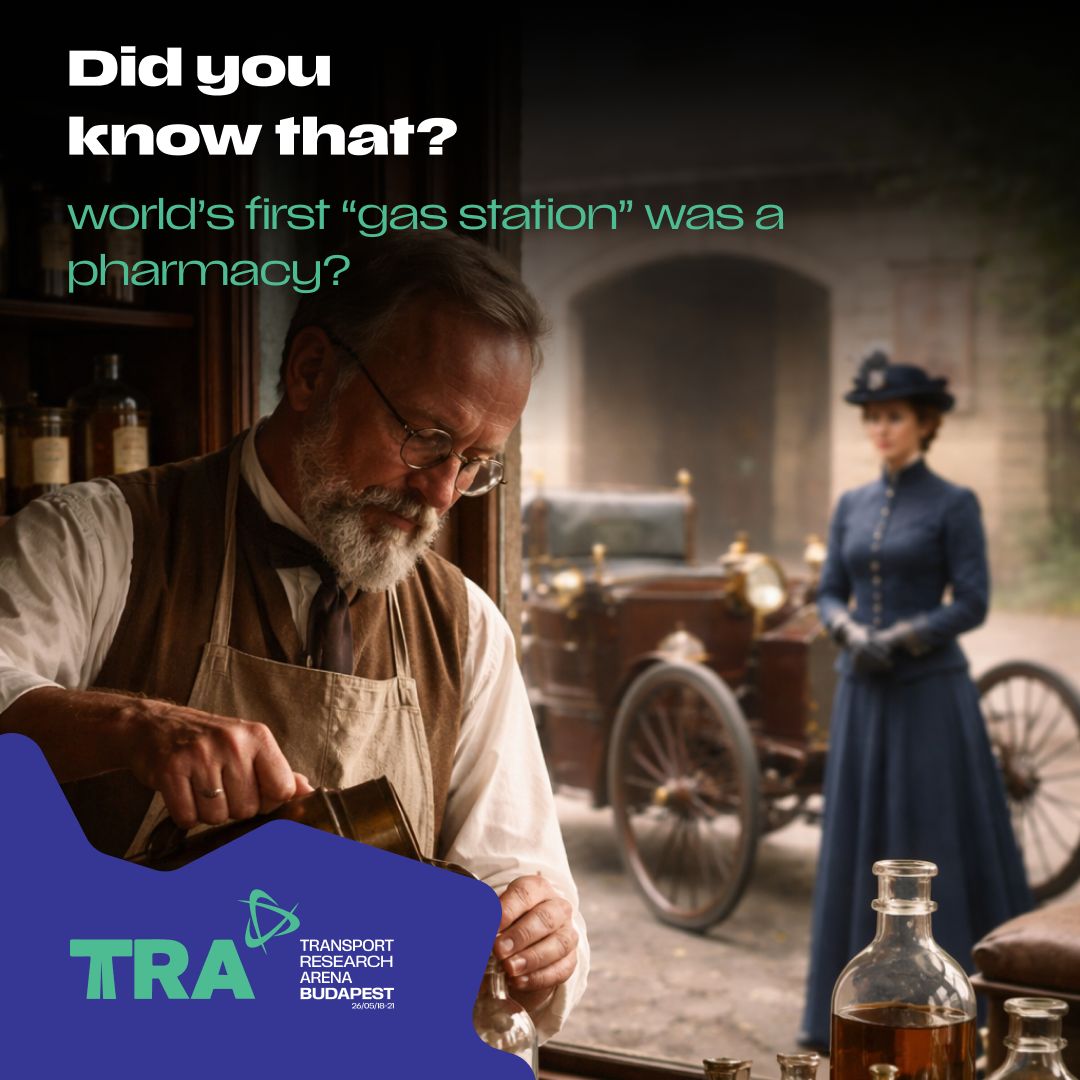
Did you know that the world’s first “gas station” was a pharmacy? On 5 August 1888, during her groundbreaking drive from Mannheim to Pforzheim, Bertha Benz stopped at the Stadt-Apotheke in Wiesloch to buy ligroin, a light petroleum distillate sold at the time in pharmacies. That small purchase is widely recognized as the first refuelling stop in automotive history. The deeper lesson is even more important: the automobile did not arrive into a ready-made system. There were no fuel networks, no roadside services, no driver regulations, and no road infrastructure designed around the needs of motor vehicles. () That is why new technologies often look weaker than the systems they eventually replace. Horses did not need refineries, pumps, mechanics, or asphalt. Early cars did. In the early motor age, roads were still largely dirt and gravel, easily turned to mud and ruts, and drivers stuck in that mess were often mocked with the now-famous taunt: “Get a horse!” In other words, the first automobiles were judged not only against the incumbent technology itself, but against the entire mature ecosystem that supported it. () We are hearing a strikingly similar argument today around range anxiety, charging times, grid capacity, hydrogen availability, and the economics of zero-emission transport. But the real question is not whether a new technology is perfect on day one. The real question is whether we are building the invisible infrastructure that allows it to become practical at scale. Yesterday, that meant fuel stations, paved roads, service networks, and standards. Today, it means power grids, charging networks, data layers, interoperable systems, digital trust, and resilient energy supply. The ecosystem is the technology. This is exactly why TRA 2026 in Budapest matters. From 18 to 21 May 2026, Europe’s flagship transport research and innovation conference will focus on “Re-Generation in Transport” and on the next generation of mobility solutions. The challenge before us is not simply to invent better vehicles. It is to build the conditions that make adoption inevitable. () So here is the real question: how much time do we actually have left before the next truly “horseless” transition becomes the norm? #tra2026 #trabudapest #regenerationintransport
6 of 31 adsSign up to see every Transport Research Arena (TRA) ad, filter by format and date, and get alerts on new ones.
See all 31 adsQuestions about Transport Research Arena (TRA)’s ads
Is Transport Research Arena (TRA) running LinkedIn ads?
We recorded no live LinkedIn ads for Transport Research Arena (TRA) on 10 Nov 2026.
How many LinkedIn ads has Transport Research Arena (TRA) run?
LinkedIn’s ad library lists 31 ads for Transport Research Arena (TRA). We recorded 31 LinkedIn ads for Transport Research Arena (TRA), first recorded on 3 Oct 2026 and last recorded on 3 Oct 2026.
Does Transport Research Arena (TRA) advertise on Facebook and Instagram?
Transport Research Arena (TRA)’s Facebook page had no active ads in Meta’s Ad Library, last recorded on 29 Oct 2026.
Does Transport Research Arena (TRA) run Google ads?
Yes. We recorded 6 Google ads for the domain traconference.eu on 16 Oct 2026.
Which ad formats does Transport Research Arena (TRA) use?
The 6 LinkedIn ads on this page include 6 image ads.
Watch the companies you care about.
Filter every ad by industry, country, format and network, and get alerts when a company you watch starts running new ads.