Not on air · 2 of 3 networks checked

Timbr.ai ads
- timbr.ai
- Software Development
- IL
- 11 employees
Timbr.ai’s ads on LinkedIn, Meta and Google, recorded by adsrunning. Browse the latest here for free. Sign up free to see all 30. Watch Timbr.ai on any plan to get each new one in your feed.
Watchlist included in every plan
What Timbr.ai runs
- Single image · LinkedIn
- 6
| Network | Status | Live ads | Nov 2025LinkedIn activity · 52 weeksNov 2026 | Checked | Next step |
|---|---|---|---|---|---|
| None recorded | 0 | Checked 8 Nov 2026 | See all 30 ads → | ||
| Meta | Not checked | — | |||
| None recorded | 0 | No ads found on the Google Ads Transparency Center | Checked 12 Oct 2026 | Collect them with the API → |
Timbr.ai has no live LinkedIn ads. We recorded no Google ads on 12 Oct 2026.
Latest ads
- LINKEDIN · IMAGESince 2 Nov 2026
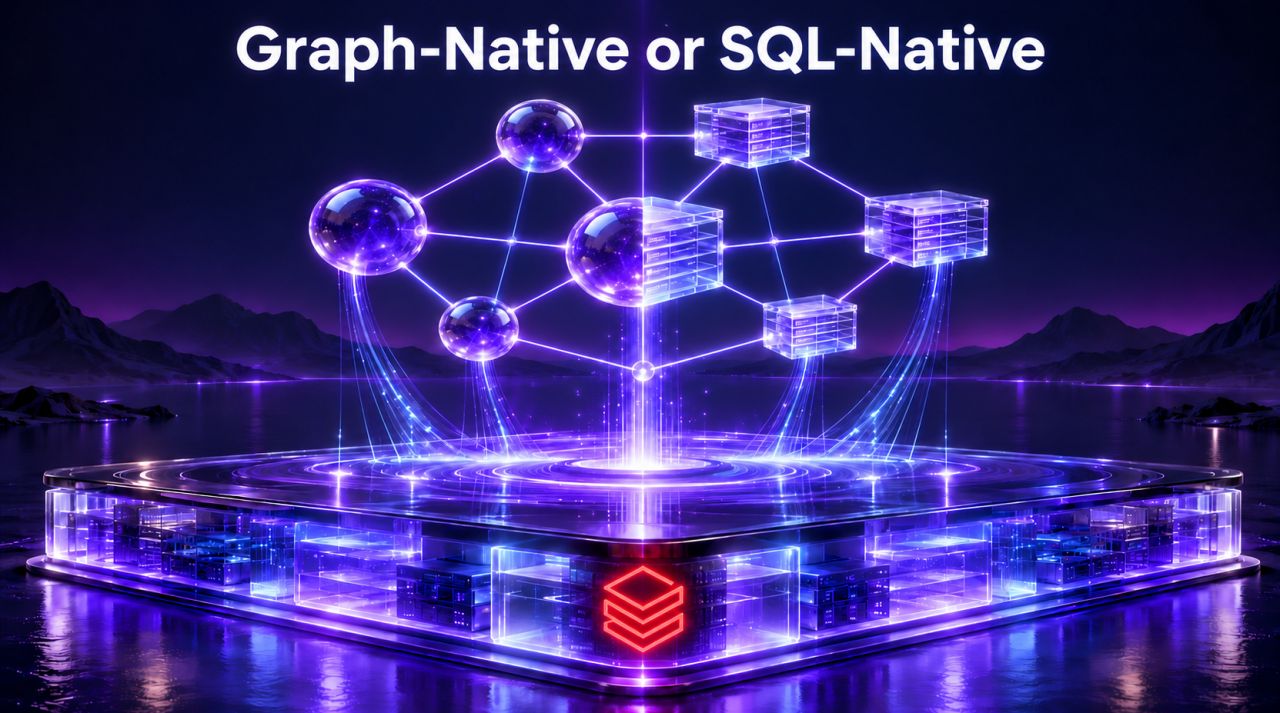
Graph semantics meet SQL access on Databricks. 🧠 Ontologies are gaining momentum in the Databricks ecosystem. With initiatives like Genie Ontology and OntoBricks bringing business semantics closer to enterprise data and AI, there is an important architectural question: How do you make rich business relationships accessible to the SQL tools, BI applications, and AI agents your teams already use? Graph semantics provide the foundation: 🟣 Business concepts and their meaning 🟣 Relationships across entities 🟣 Hierarchies and connected business context SQL-native access makes that knowledge usable: 🟣 Through existing SQL tools and BI applications 🟣 By AI agents without reconstructing relationship logic 🟣 Across enterprise data sources The real opportunity is bringing both together. That's where Timbr comes in. Timbr provides an ontology-based semantic platform that makes governed business context accessible through SQL and MCP. One enterprise ontology. Consistent business meaning. Multiple consumers. Our latest article explores graph-native and SQL-native ontology architectures on Databricks, and how enterprises can combine their strengths to serve analysts, BI applications, and AI agents consistently. Read the full analysis 👇 https://lnkd.in/ddmknWcm #Databricks #KnowledgeGraphs #Ontology #SemanticLayer #EnterpriseAI
- LINKEDIN · IMAGESince 29 Oct 2026
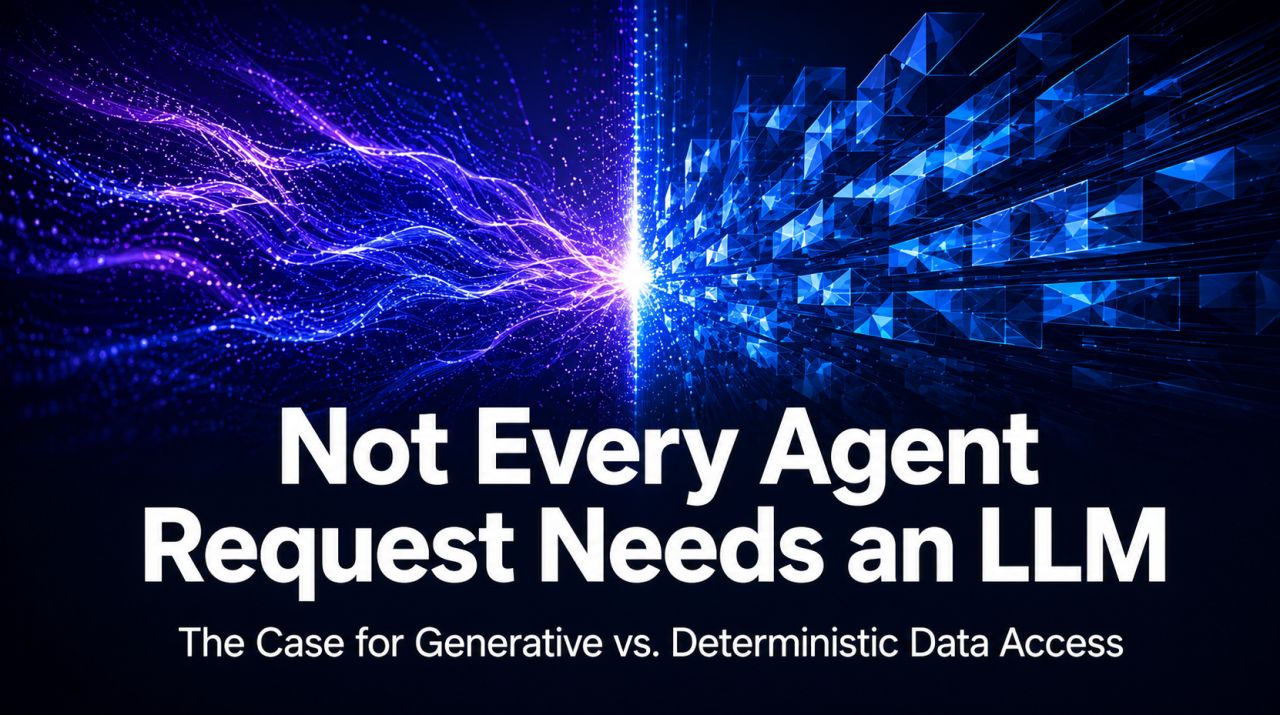
An agent that reasons about something it already knows isn't being smart. It's being slow. Most agent architectures ask an LLM to interpret every request and generate a query, even when the request looks the same as yesterday's. For open-ended questions, that's the right call. But consider a request like: All open orders for Customer 123, including product and supplier information. The agent doesn't need to interpret that. It needs to retrieve it over a relationship path that's already known. Asking an LLM to reason through it anyway adds token cost, latency, and non-determinism to a query the system already knows how to run. That's why production agents need two modes of data access: generative, for questions that still need discovering, and deterministic, for retrievals that are already defined, both resolving through the same governed semantic model. Stop reasoning about what's already known. Start retrieving it. 👇 Read the full article: https://lnkd.in/dhq7W6xR #EnterpriseAI #AIAgents #SemanticLayer #Ontology #DataAgents
- LINKEDIN · IMAGESince 28 Oct 2026
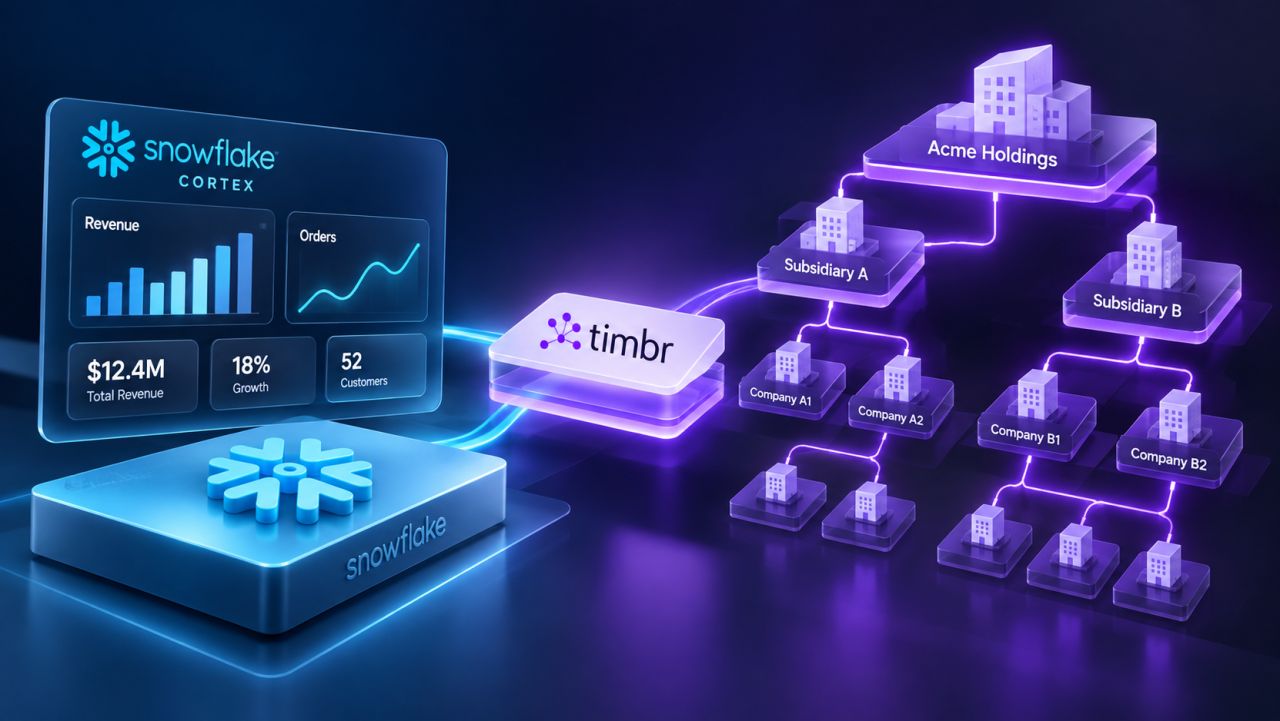
Snowflake Cortex handles the metrics. But who handles the relationships?❄️ Semantic Views give Cortex agents trusted metrics and consistent, governed answers. But two lines in Snowflake’s own docs stood out to us: → A table can’t reference itself, so hierarchies can’t be modeled. → Cortex Agents doesn’t join across separate semantic views. Now think about the questions enterprises actually ask: Revenue across Acme and every subsidiary beneath it. The full acquisition chain behind a company. Which suppliers sit behind your top customers. Those questions follow relationships. When the semantic model can’t express them, the agent falls back to rebuilding joins from scratch, paying in tokens and in errors. Here’s what Timbr adds: ▸ SQL-native ontology: named, reusable relationships agents follow without rebuilding joins ▸ Institutional Memory: approved business knowledge, reused within governed access controls ▸ Native to Cortex: available to Cortex agents through MCP In one benchmark run, Timbr’s agent traced acquisition chains 10 levels deep in a single query. Cortex reached four. Snowflake remains the data and AI platform. Timbr adds governed relationship context and memory on top. Data teams on Snowflake: what’s the hardest “how does this connect to that” question your agents get asked? Full breakdown in the first comment 👇 #Snowflake #AIAgents #SemanticLayer #Ontology #DataEngineering
- LINKEDIN · IMAGESince 27 Aug 2026
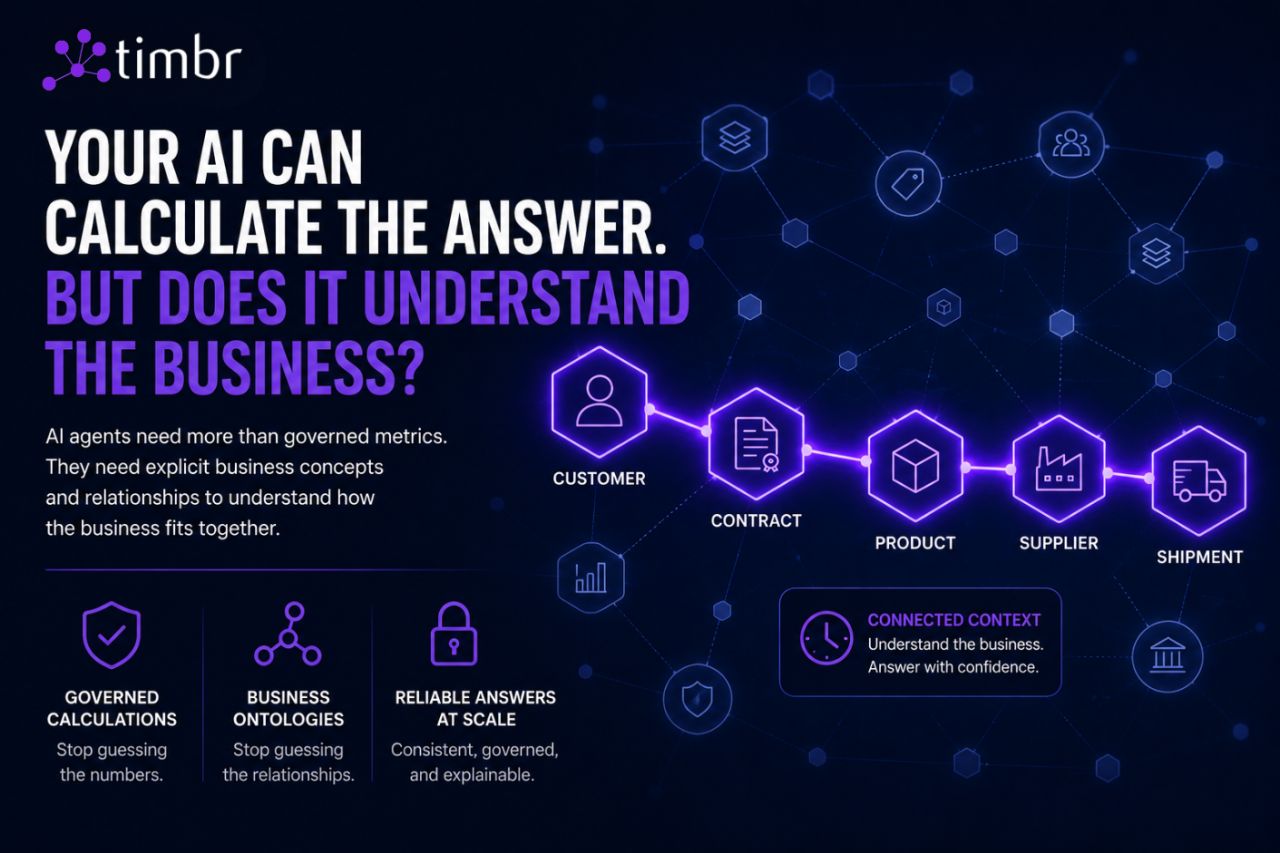
A governed metric is not the same as a governed business model. Semantic layers solve an important problem for AI: they stop agents from guessing how measures should be calculated. But enterprise questions often depend on something else first: Which business concepts are involved, and how are they connected? Consider a question like: Which premium customers with active contracts are affected by suppliers connected to delayed shipments? Before the agent calculates anything, it needs to understand the path between Customer, Contract, Product, Supplier, and Shipment. It also needs to know what “premium,” “active,” and “delayed” mean, and which relationships are valid to traverse. That is why governed calculations are only part of the semantic problem. Enterprise AI also needs a governed model of the business itself. In our latest article, we look at the difference between the execution path and the semantic path, and why enterprise AI needs both. Stop guessing the calculations. Stop guessing the relationships. 👇 Read the full article: https://lnkd.in/duKknn6q #EnterpriseAI #SemanticLayer #KnowledgeGraph #Ontology #DataAgents
- LINKEDIN · IMAGESince 26 Aug 2026
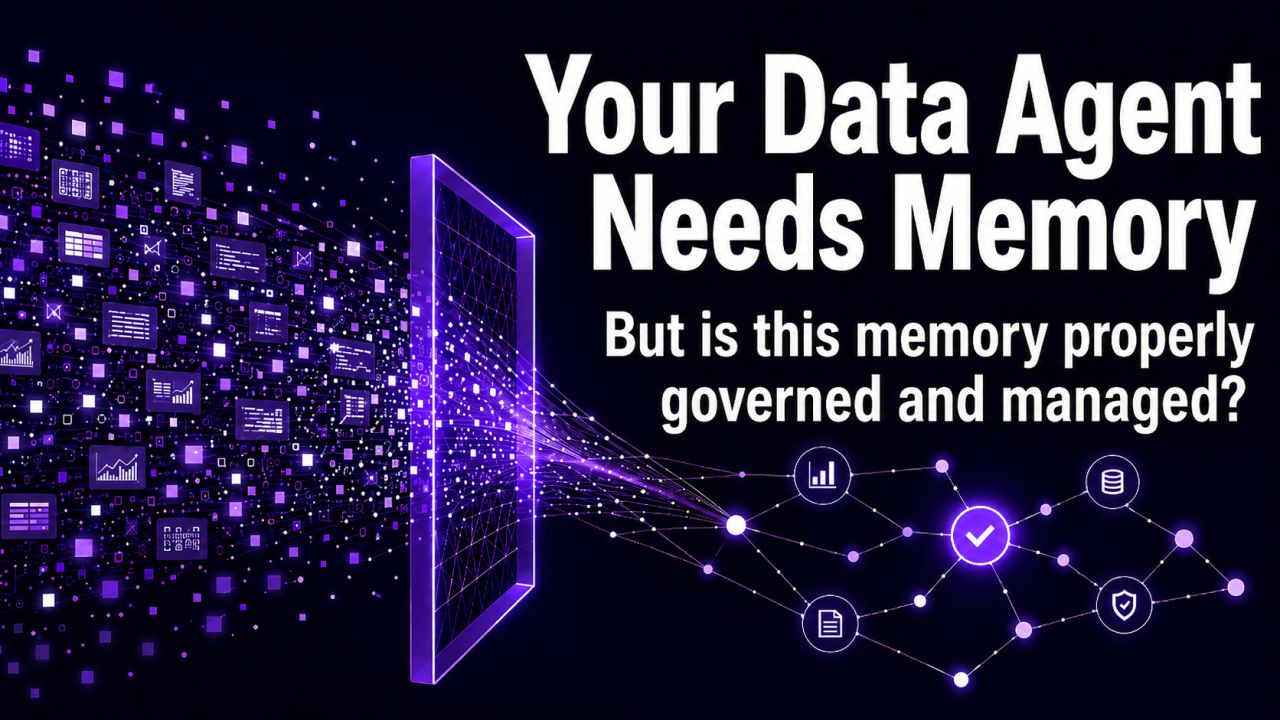
Your data agent needs memory. But is that memory properly governed and managed? Query history can show what people use most. Dashboards can reveal which definitions are popular. Past conversations and analyst corrections can provide useful context. But none of that automatically makes something correct. A query can run successfully and still use outdated logic. A dashboard can be widely used and still reflect one team’s definition. A correction can be valid for one report without being suitable as a company-wide rule. That is why enterprise agent memory needs more than retrieval. It needs review, ownership, scope, and approval. The goal is not an agent that remembers everything it has seen. It is an agent that can distinguish between what was used, what was useful, and what the organization has actually approved for reuse. That is the focus of our latest article: Your Data Agent Needs Memory. But Is This Memory Properly Governed and Managed? Read it here: https://lnkd.in/dnp5PS2p #DataAgents #EnterpriseAI #DataGovernance #KnowledgeBase #SemanticLayer #NL2SQL
- LINKEDIN · IMAGESince 30 Jul 2026
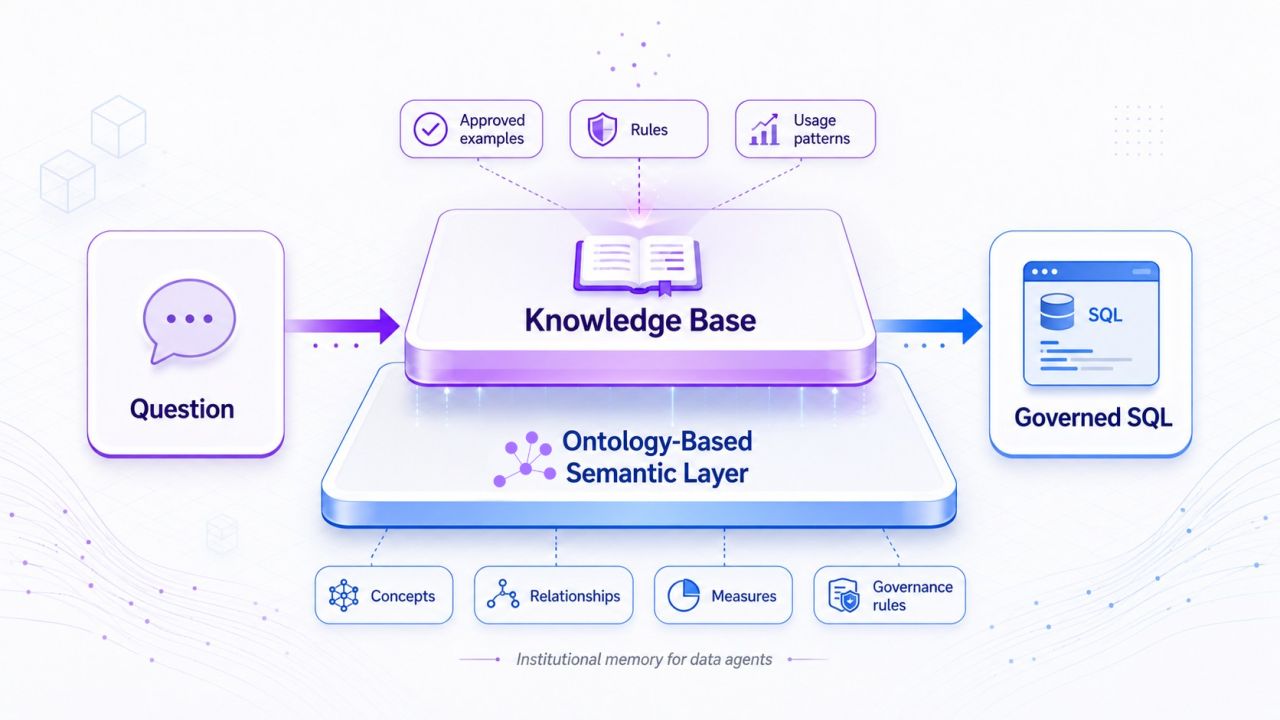
Introducing Knowledge Base for Data Agents. 🎉 A new Timbr capability that gives enterprise data agents governed memory over approved examples, business rules, query patterns, and analyst guidance. Most data agents can reason through a question, write SQL, and even self-correct. But when a similar question comes up later, the approved logic often doesn’t carry over. The agent starts from zero again, because it has nowhere governed to reuse what the organization already validated. Not anymore. The ontology already handles meaning: concepts, relationships, measures, and governance. The Knowledge Base now captures usage: approved examples, preferred query patterns, selection rules, definitions, and the guidance that usually only lives in Slack threads or someone’s head. So when someone asks “how did we perform in Q4?”, the agent isn’t guessing from raw tables or generic business terms. The Knowledge Base provides the approved example, the right definition, and the selection rule. For example: performance means completed-order revenue, and Q4 follows the company’s fiscal calendar. From there, the agent generates SQL through Timbr’s governed execution layer. The Knowledge Base suggests. The ontology decides. Timbr executes with governance. This is the memory layer enterprise data agents have been missing. Read the full announcement: https://lnkd.in/ddT_brBW #AgenticAI #DataGovernance #Ontology #EnterpriseAI #NL2SQL #DataAgents #SemanticLayer
6 of 30 adsSign up to see every Timbr.ai ad, filter by format and date, and get alerts on new ones.
See all 30 adsQuestions about Timbr.ai’s ads
Is Timbr.ai running LinkedIn ads?
We recorded no live LinkedIn ads for Timbr.ai on 10 Nov 2026.
How many LinkedIn ads has Timbr.ai run?
LinkedIn’s ad library lists 30 ads for Timbr.ai. We recorded 30 LinkedIn ads for Timbr.ai, first recorded on 2 Oct 2026 and last recorded on 8 Nov 2026.
Does Timbr.ai run Google ads?
We recorded no Google ads for the domain timbr.ai on 12 Oct 2026.
Which ad formats does Timbr.ai use?
The 6 LinkedIn ads on this page include 6 image ads.
Watch the companies you care about.
Filter every ad by industry, country, format and network, and get alerts when a company you watch starts running new ads.