Not on air · 2 of 3 networks checked
The Growth Syndicate
- thegrowthsyndicate.com
- Marketing Services
- NL
- 18 employees
The Growth Syndicate’s ads on LinkedIn, Meta and Google, recorded by adsrunning. Browse the latest here for free. Sign up free to see all 133. Watch The Growth Syndicate on any plan to get each new one in your feed.
Watchlist included in every plan
| Network | Status | Live ads | Nov 2025LinkedIn activity · 52 weeksNov 2026 | Checked | Next step |
|---|---|---|---|---|---|
| None recorded | 0 | Checked 1 Nov 2026 | See all 133 ads → | ||
| Meta | Not checked | — | |||
| Recently | 6 | Ads on the Google Ads Transparency Center | Checked 12 Oct 2026 | Collect them with the API → |
The Growth Syndicate has no live LinkedIn ads. We recorded 6 Google ads on 12 Oct 2026.
Latest ads
- LINKEDIN · IMAGESince 4 Jun 2026
I used to think manufacturing was boring. Then I joined 3D Hubs and spent years marketing CNC machining and 3D printing services to mechanical engineers alongside Ferdinand Goetzen. It turned out to be some of the most challenging marketing I've done. A single SEO article could take two weeks because 2 engineers outside the marketing team had to sign off on accuracy. The audience had zero tolerance for fluff. If your content was technically precise, they'd trust you. If it wasn't, you didn't exist. We put together a report on what makes marketing for manufacturing a fundamentally different discipline. We interviewed Tom Spencer, 17 years in industrial communications, and Steve Patti, 7x CMO or VP of marketing across manufacturing. Internally, we spoke to Ferdinand Goetzen and Tiago Costa brought the internal TGS perspective from their own years in the sector. I'm excited to announce that the Marketing for the Manufacturing Industry Report in 2026 is now live! Massive Kudos to Adrian Stefirta and team to put such great content together! https://lnkd.in/ebtaufvk
- LINKEDIN · IMAGESince 2 Jun 2026
B2B SaaS (and now AI) companies make all the noise. Meanwhile the really exciting stuff is often being made in complex industries like manufacturing. Some of my most formative years were spent marketing in the manufacturing industry, selling to mechanical engineers. It defied a lot of what I had learned and thought about marketing. It set the concept of playbooks on fire and took me back to the basics. Since then we've had the privilege of working with several companies including a YC-backed wood manufacturer, 2 heavily-backed distributed manufacturing platforms and a 150 year old German manufacturing institution. Marketing in manufacturing just 'hits different' (I believe that's what the kids say these days?). So we built a report around that idea. We interviewed Tom Spencer, 17 years in industrial communications, and Steve Patti, 7x CMO or VP of marketing across manufacturing. We also drew from internal experience at TGS, thanks to Clément Dumont, who spent years marketing in manufacturing, and Tiago Costa, an actual mechanical engineer turned sales specialist who brought the buyer's perspective into the room. The report is live now. It covers what makes manufacturing marketing a different discipline, not a simplified version of what we do in software. As always a big shout to Adrian Stefirta and the team for pulling off content we can be so proud of. https://lnkd.in/eep_Wyt5
- LINKEDIN · IMAGESince 2 Jun 2026
Manufacturing companies are exceptionally good at describing what their products do. The harder question, and the one most of the industry is still working through, is what the company stands for in one sentence. That gap between product-level messaging and company-level positioning is one of the most consistent patterns in manufacturing marketing. It seems like the budget is there. Gartner puts manufacturing marketing spend at 9.5% of revenue now. But the clarity often isn't. We spent months building a report around this and several other findings. We interviewed Tom Spencer, 17 years in industrial communications, and Steve Patti, seven times CMO or VP of marketing across manufacturing. Ferdinand Goetzen and Clément Dumont brought years of hands-on manufacturing marketing experience from inside the sector. Tiago Costa brought the engineer and sales perspective. Every conversation arrived at the same place independently. The biggest challenge in manufacturing marketing is not budget, channels, or content volume. It's the clarity of your communication and positioning. The report is now live 👇️ https://lnkd.in/eDuFdPEZ
- LINKEDIN · IMAGESince 18 Apr 2026
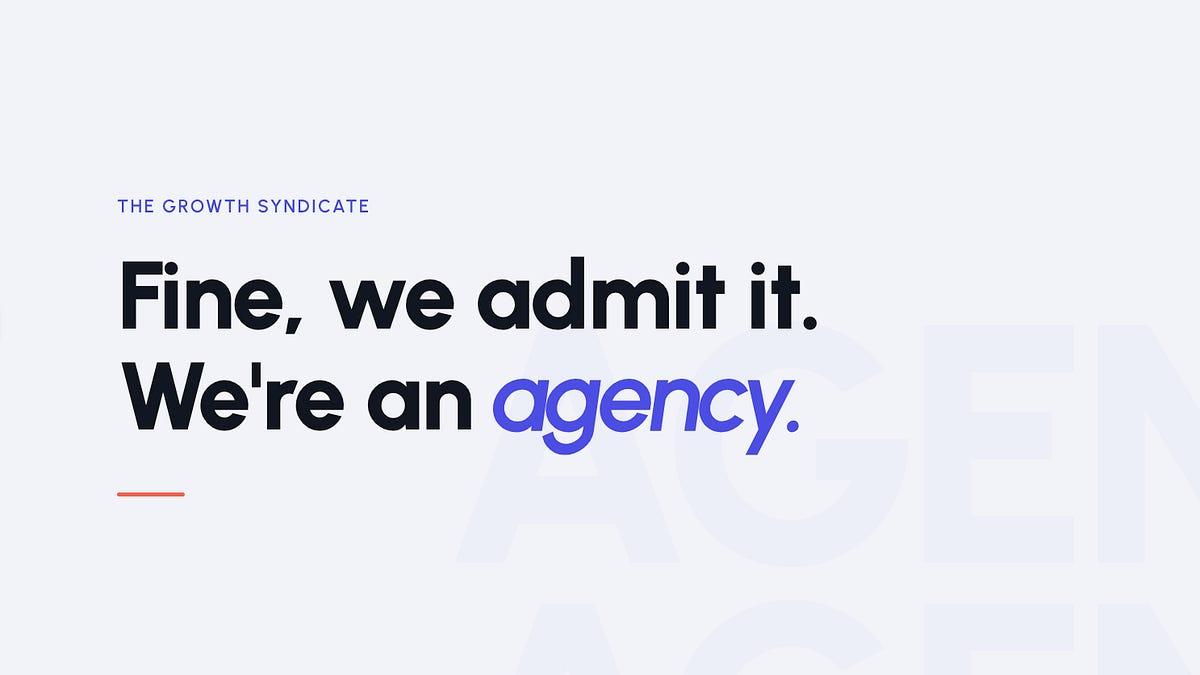
I have a confession to make. We're building a marketing agency. When we started The Growth Syndicate with Clément and Joliene we said from day 1 that we don't want to build a marketing agency. We avoided the term like the plague. Because we've met too many people who've been burned by bad agencies. We had been burned by bad agencies too any times too. In fact, our very first positioning exercise was essentially a list of "why people hate marketing agencies" and we incorporated the exact opposite into our service. Hate the retainers? Cancel any time! Hate outsourcing to juniors? No juniors, guaranteed! Hate having an account or project manager? Get an experienced Head of Growth! Hate then dependencies? We work with your tools and processes! These differentiators have been core to our success. But it turns out, you can call yourself whatever you want, it doesn't change what you actually are. By calling ourselves a 'fractional team' (or whatever other word we could come up with) we kept bumping into the same problem that we advise many of our clients against: Sometimes it's better to differentiate strongly in an existing category than to try to create a new category altogether. Over the past months we've almost doubled from 8 to 15 people. We've hired a top tier execution team to compliment our amazing heads of growth. So yes, we are building an agency. But not just any agency. We're building the best damn B2B agency out there. More here: https://lnkd.in/egThSMBj ✌️
- LINKEDIN · IMAGESince 7 Apr 2026
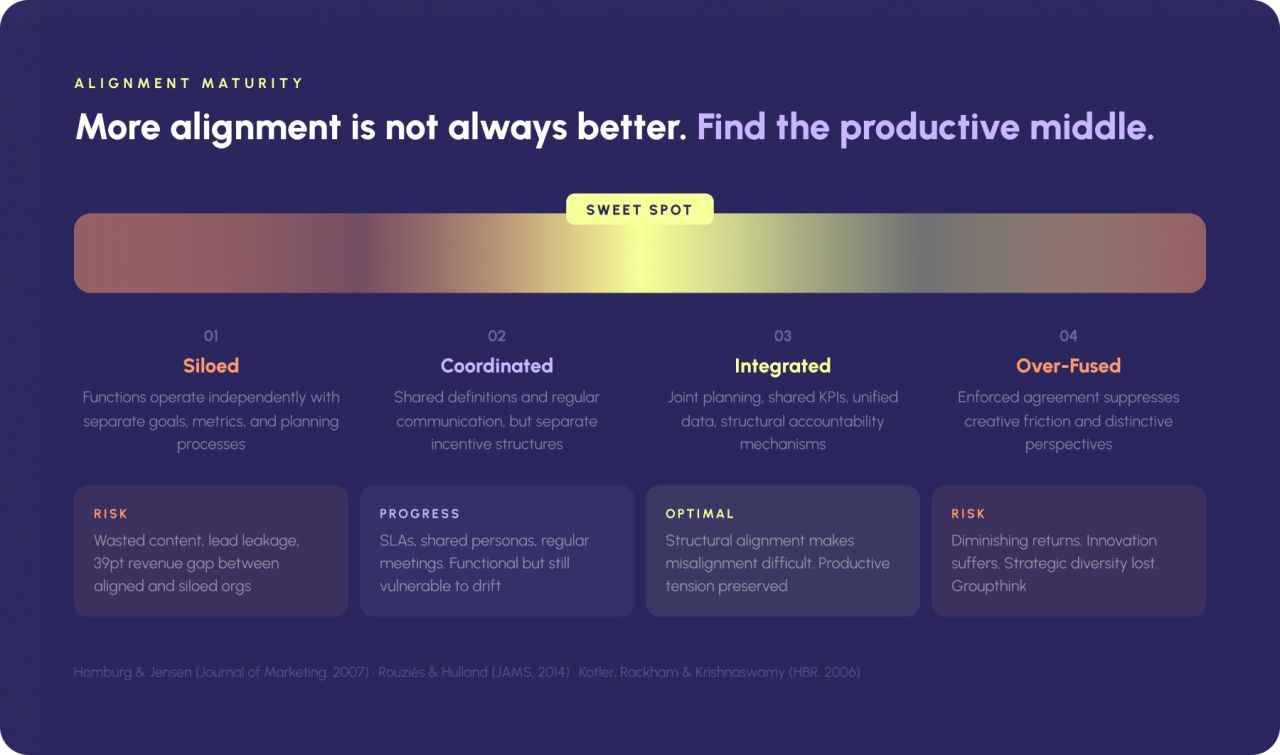
Marketing leaders who hit their MQL targets still get fired. Because MQLs aren't worth anything until you turn them into revenue. That's the whole point. But forcing sales and marketing to agree on absolutely everything is its own kind of failure. I know that's not what the alignment playbooks say. But the research is clear: over-integration kills the creative friction that keeps marketing strategies sharp. When everyone's in lockstep, nobody's questioning the assumptions. The goal isn't maximum alignment. You need to find a way to do it right. Sales advocating for customers. Marketing advocating for the market. Those two perspectives in productive tension, and that's where the good decisions come from. The problem is when one function thinks the other one is incompetent. That's the one difference that consistently damages outcomes. So before launching another alignment initiative, ask yourself this: are we misaligned, or are we just uncomfortable with disagreement? That's usually where the real work starts. We talked more about it here: https://lnkd.in/erZprMrU
- LINKEDIN · IMAGESince 7 Apr 2026
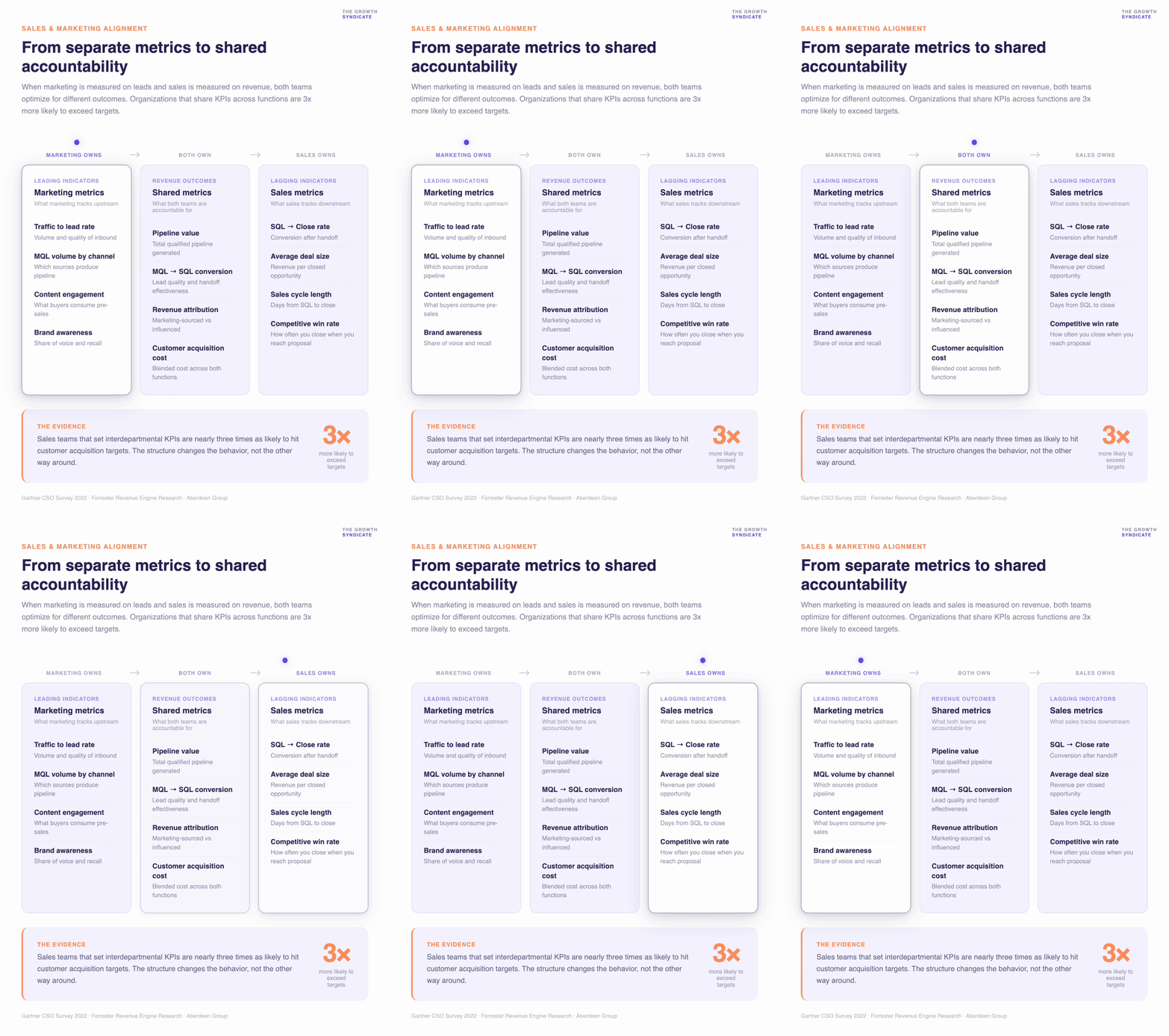
Sales and marketing meetings don’t crate alignment. Shared targets do! I know it, you know it. The data knows it, too: 82% of executives think their teams are aligned, while 65% of the people doing the work disagree. What's not a lie is that these two teams SHOULD be aligned. In the accounts I've worked across, the issues are almost identical. Leadership thinks alignment exists because there are joint meetings. The teams know it doesn't, because each function operates with a different pipeline definition, a different ICP, and a different view of what counts as progress. You can't align two functions measuring different things. The fix starts one level up: - What's the revenue target? - What customer profile actually gets you there? - What does a qualified lead for that profile look like, specifically? We run this exercise with clients: we ask sales and marketing leaders to write their MQL definition separately, then compare them. The definitions almost never match. But this single exercise reveals more about the root cause than most alignment programs ever surface. From there, we talk about: shared pipeline targets, agreed handoff criteria, closed-loop reporting. Less about getting people to collaborate and more about removing the conditions that make misalignment rational. We've shared more of our experience here: https://lnkd.in/ef6tRHnT



6 of 133 adsSign up to see every The Growth Syndicate ad, filter by format and date, and get alerts on new ones.
See all 133 adsWatch the companies you care about.
Filter every ad by industry, country, format and network, and get alerts when a company you watch starts running new ads.