Not on air · 2 of 3 networks checked
Sybill
- sybill.ai
- Software Development
- US
- 52 employees
Sybill’s ads on LinkedIn, Meta and Google, recorded by adsrunning. Browse the latest here for free. Sign up free to see all 282. Watch Sybill on any plan to get each new one in your feed.
Watchlist included in every plan
| Network | Status | Live ads | Nov 2025LinkedIn activity · 52 weeksNov 2026 | Checked | Next step |
|---|---|---|---|---|---|
| None recorded | 0 | Checked 3 Nov 2026 | See all 282 ads → | ||
| Meta | Not checked | — | |||
| Recently | 36 | Ads on the Google Ads Transparency Center | Checked 11 Oct 2026 | Collect them with the API → |
Sybill has no live LinkedIn ads. We recorded 36 Google ads on 11 Oct 2026.
Latest ads
- LINKEDIN · IMAGESince 29 May 2026
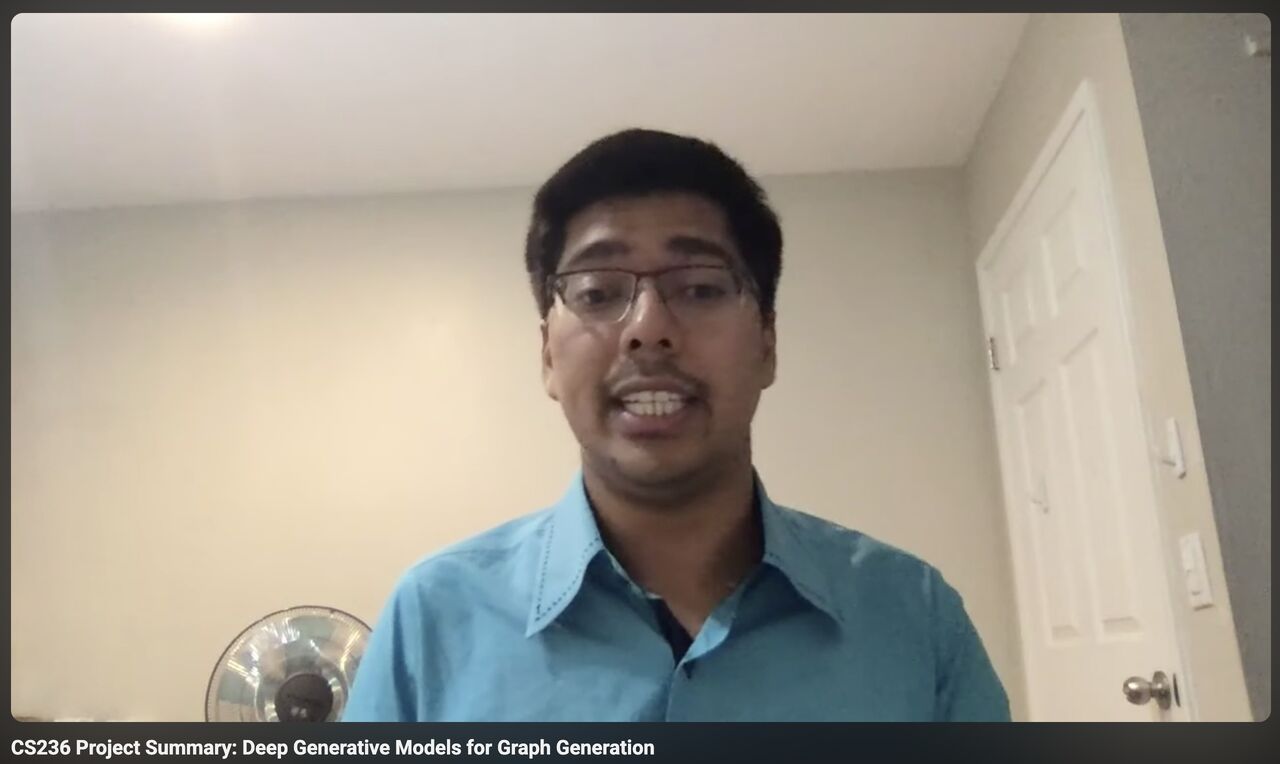
Most people don't know this, but Sybill started when I was lecturing on AI at Stanford. (Where my co-founder Nishit was doing AI research) Covid hit, and everything moved to Zoom. But it was impossible to tell if lectures were going well or not. I wanted something that could read the room and let me know whether students were actually engaged. So we built what later became Sybill. Since then, Sybill has evolved... a lot. But here's why a tool for Zoom lectures and a tool for B2B sales aren't as far apart as you think: In sales, so much of what matters most is never written down. The champion who went quiet. The competitor that came up three times but never made it into the CRM. It’s all stuff that lives in reps heads, and can’t be picked up on in a dashboard or by binge-ing a bunch of Gong recordings. And as many tools as there are out there, most of them can’t tell you the stuff that really matters, like how your now-quiet champion got bypassed by their CFO. They’ll just say flag the deal “at risk” and call it a day. 5 years and 750 GTM teams later, that initial instinct that Sybill started with (reading between the lines to know what’s really going on) is still the core of what Sybill does. Only now it’s applied to pipeline instead of a zoom lecture. So when you ask "why do we keep losing to competitor X?" or "my champion went dark, what do I do?"... it actually knows. That’s what we’re building and why we’re here. 💙 If you've ever asked "why do we keep losing to competitor X?" and wanted a real answer, that's what Sybill does now. https://lnkd.in/gDSGdM7P (Photo from a project of mine at Stanford)
- LINKEDIN · IMAGESince 26 May 2026
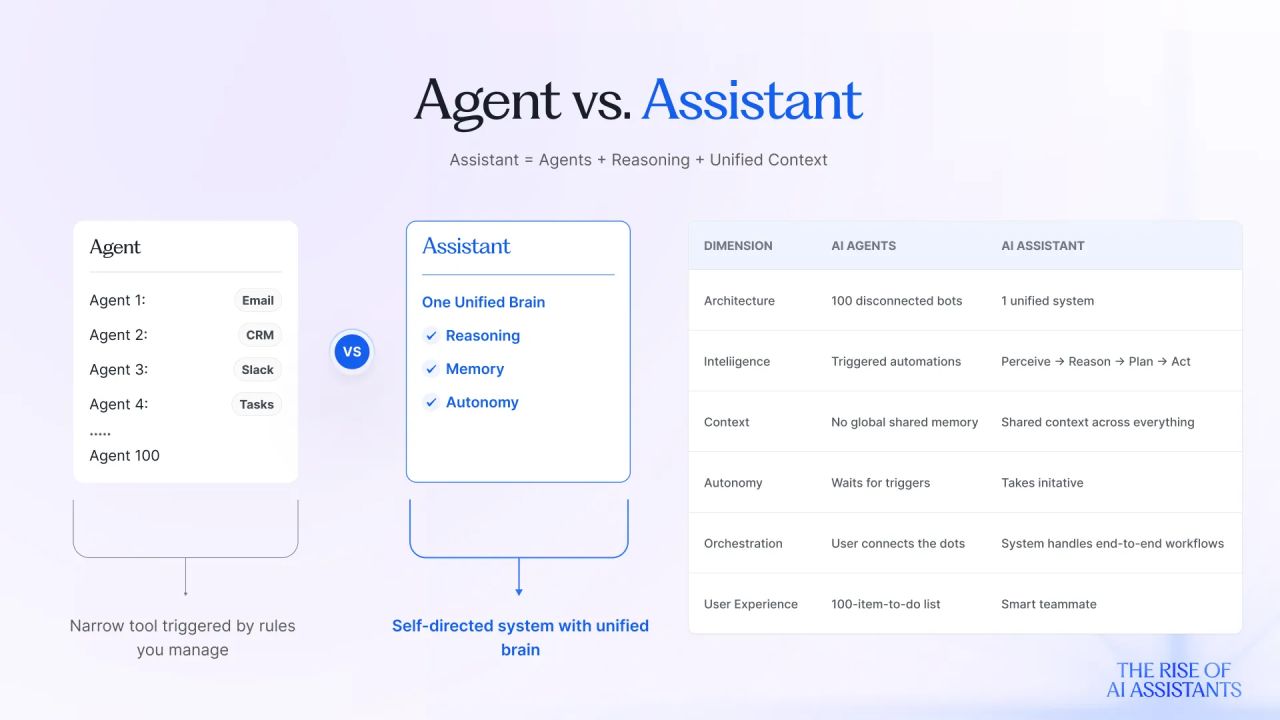
Sales teams don’t need 100 AI agents. Sorry. They need just ONE truly agentic AI assistant. There’s a growing trend in AI right now: everyone’s building “multi-agent architectures.” Sounds impressive. Like you get a whole team of AIs, each with their own specialty. But here’s what most people don’t realize: Agents ≠ Assistants. An AI agent is a narrow tool triggered by rules you manage. An AI assistant is one unified system that can perceive → reason → plan → act - with shared memory and context across everything it does. In practice? Most “multi-agent architectures” are just a bunch of glorified workflows passing half-understood context back and forth (like Zapier automations rebranded). Agent A pulls notes from a call. Agent B writes a follow-up. Agent C drafts a Slack update. Agent D updates the CRM. Except none of them share a global memory, so each one is working off a slightly different version of reality. Early on at Sybill, we had the same choice: build a multi-agent platform or a single-agent assistant. We tried multi-agent. It broke constantly. What we discovered was this: Multiple agents retrieve slightly different contexts. They reason independently. They have no unified brain. Every additional agent multiplies communication protocols, context handoffs, and error-handling headaches. The truth: most teams building this stuff are running distributed chaos, not distributed intelligence. So we do it differently now. Sybill is one agentic system - not a swarm. One reasoning brain with depth, not a collection of shallow task bots. One shared memory across deals, not 100 disconnected mini-brains. One autonomous assistant that takes initiative, not a stack of tools waiting for triggers. When it learns something new about a deal, it applies that understanding everywhere, from follow-ups to CRM updates to coaching recommendations. When we improve retrieval or reasoning, the entire system gets smarter overnight. The tradeoff? We give up the illusion of “more agents = more power” for something far more valuable: Coherence. Reliability. Compounding intelligence. Don’t buy the hype (or the headache). Most “AI agents” out there are marketing sizzle, not real agentic AI. Real agency isn’t about how many bots you have. It’s about how well one system can understand, reason, and act. That's the one we built. If you want to see what a single agentic assistant actually does on your team's calls, you can take a look here: https://lnkd.in/gpzcNaPX
- LINKEDIN · IMAGESince 26 May 2026
My goldfish has a 3-second memory. Most sales AI? 30 days. Congrats, we've built a slightly better goldfish. Seriously. Ask most sales AI "Why is pipeline slipping?" and you get a confident-sounding answer based on... your last 30 days of calls. That's it. That's the whole picture it's working from. Not six months of deal history. Not patterns across your entire pipeline. Not what actually predicts wins vs. losses. Just a compressed snapshot dressed up as insight. This is the quiet failure mode of most AI agents in sales. Not intelligence. Not prompts. Memory. Most sales AI only look smart because they're looking at very little. As soon as you ask a real question: - Compare this deal to similar ones - Find patterns across the pipeline - Tell me what actually matters They break. Why? Fixed context windows. They can't reason over large amounts of data without running out of memory, dropping information, or oversimplifying. So they cheat with aggressive summarization, truncated history, and "most recent only" logic. Looks fine in a demo. Collapses at scale. We built Sybill differently. When Sybill reasons across hundreds or thousands of deals, it doesn't shove everything into memory at once. It pages context intelligently, looking as far back as needed, pulling as much data as the question requires, reasoning step by step without losing signal. So when you ask "why is pipeline slipping?" you get an answer based on the full reality of your business. Not a guess from a compressed snapshot. This doesn't show up in a UI screenshot. But it's the difference between AI that sounds smart and AI you can actually trust with decisions. Memory isn't a feature. It's infrastructure. And if it doesn't scale, neither does good AI judgment. That's the part you can't screenshot, so we'd rather show you. See what Sybill does when you ask it a real question: https://lnkd.in/gxgmuBiB
- LINKEDIN · IMAGESince 26 May 2026
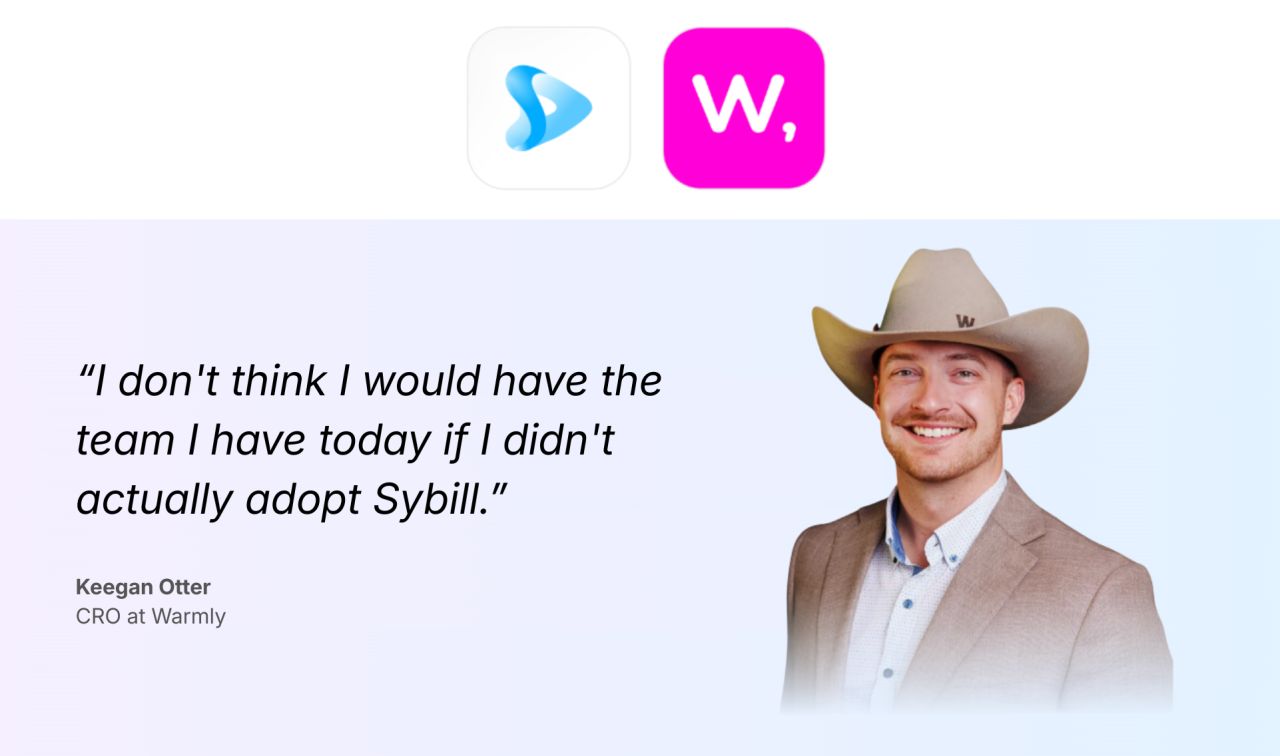
Unintended Sybill side effect: your best reps don’t quit. This is probably my favorite customer story ever. Keegan Otter (Software Cowboy 🤠) recently told us about how one of his top AEs got a competing offer. Better pay, greener grass, the works. He sat down with them and asked what it would take for them stay. Keegan made some big changes, and Sybill got to play a part in convincing that rep to stay. They went on to win Warmly's internal sales competition for most closed-won revenue (and a Tesla). Keegan told us: "I don't think I would have the team I have today if I didn't actually adopt Sybill." You can’t beat that. If you want Sybill to play that part on your team, you can take a look here: https://lnkd.in/gptQrFdg
- LINKEDIN · IMAGESince 26 May 2026
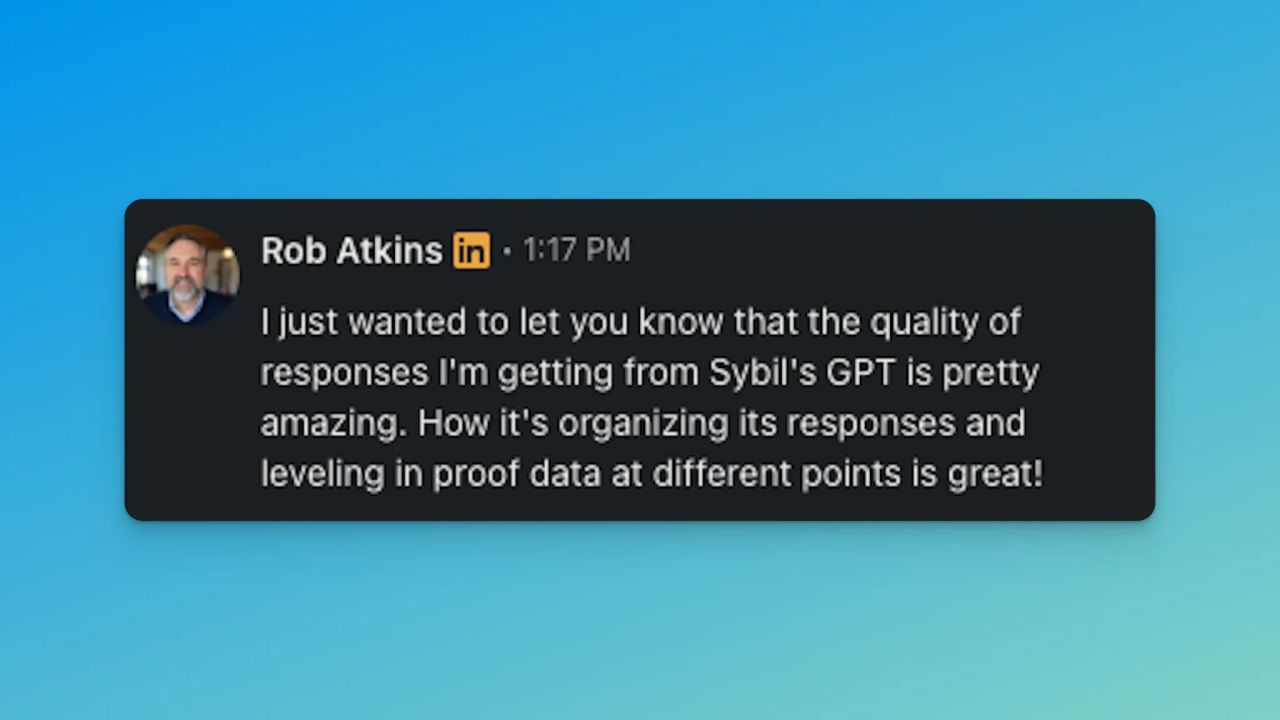
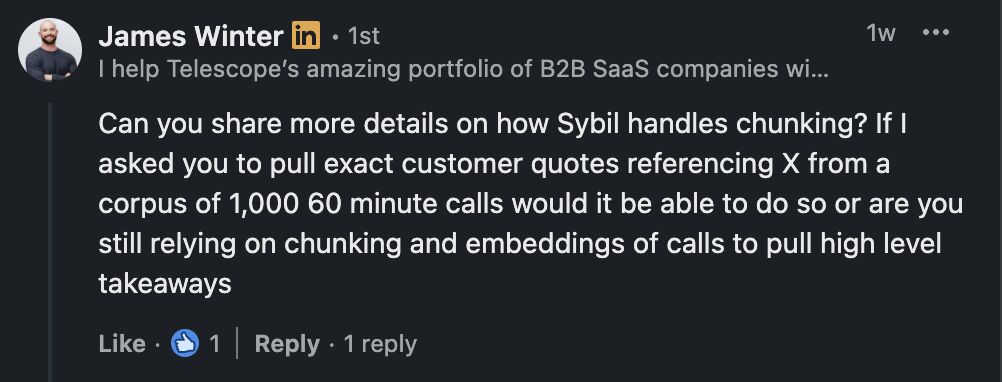
A lot of tools claim to let you ask questions across your customer data, but most of them can't actually look at 1,000 calls at once. And even if they can, they only summarize. They can't give you exact customer quotes (which makes them not very trustworthy). Here's how we handle it at Sybill. 👇 Short answer to James' question: Yes. Sybill can look across 1,000 calls and pull exact verbatim quotes. Longer answer (for my felllow AI/data nerds): We do both chunking and embeddings, not one or the other. On the chunking side: we don't just split transcripts into fixed blocks. We detect where the conversation naturally shifts topics and split there. So each chunk preserves a coherent thread of discussion. Those chunks get embedded and stored in a vector database along with the original transcript text and speaker names, all indexed at ingestion time. That way search stays fast no matter how many calls you have. When you ask a question, we run semantic search and keyword matching in parallel, then rerank for precision. So Sybill’s outputs include the actual verbatim words people said, attributed to the right speaker (not just paraphrased summaries.) TLDR: If you asked for exact customer quotes about topic X across 1,000 calls, we'd surface them. The high-level summaries are a separate layer generated on top of the verbatim quotes. Because your AI outputs mean nothing if you can't trace them back to what your customer actually said. That's the one we built. If you want to see Sybill pull exact quotes across your own calls, let’s talk: https://lnkd.in/g7hqT_8f
- LINKEDIN · IMAGESince 26 May 2026
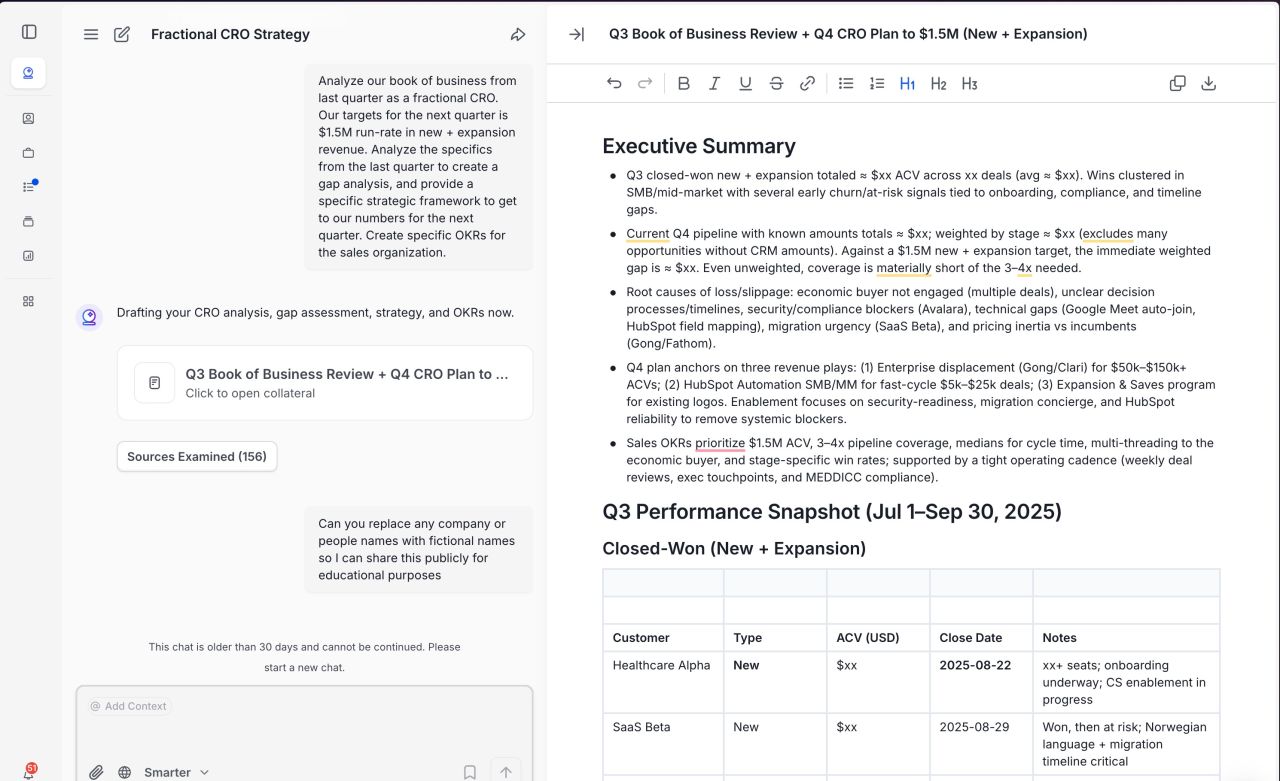
My use of ChatGPT and Claude dropped by 99% in one day. Sybill has been able to answer directly from our calls and deals for a while now, but last week we shipped document upload and web search. Now Sybill can search for answers in your calls, emails, and CRM, but if it can't find an answer, it will take to searching the web or working directly from a document I've uploaded. So I straight up don't need ChatGPT or Claude for almost anything anymore. It's wild. If your team's tired of copy+pasting transcripts from Gong into ChatGPT, see what replaces it: https://lnkd.in/g3pJsm4c Nishit Asnani (Hiring Founding AEs) Soumyarka Mondal Mehak Aggarwal
6 of 282 adsSign up to see every Sybill ad, filter by format and date, and get alerts on new ones.
See all 282 adsWatch the companies you care about.
Filter every ad by industry, country, format and network, and get alerts when a company you watch starts running new ads.