Not on air · 2 of 3 networks checked

StratoKey ads
- stratokey.com
- Software Development
- 4 employees
StratoKey’s ads on LinkedIn, Meta and Google, recorded by adsrunning. Browse the latest here for free. Sign up free to see all 92. Watch StratoKey on any plan to get each new one in your feed.
Watchlist included in every plan
What StratoKey runs
- Single image · LinkedIn
- 6
- Google ads on 19 Oct 2026
- 12
| Network | Status | Live ads | Nov 2025LinkedIn activity · 52 weeksNov 2026 | Checked | Next step |
|---|---|---|---|---|---|
| None recorded | 0 | Checked 7 Nov 2026 | See all 92 ads → | ||
| Meta | Not checked | — | |||
| Recently | 12 | Ads on the Google Ads Transparency Center | Checked 19 Oct 2026 | Collect them with the API → |
StratoKey has no live LinkedIn ads. We recorded 12 Google ads on 19 Oct 2026.
Latest ads
- LINKEDIN · IMAGESince 28 May 2026
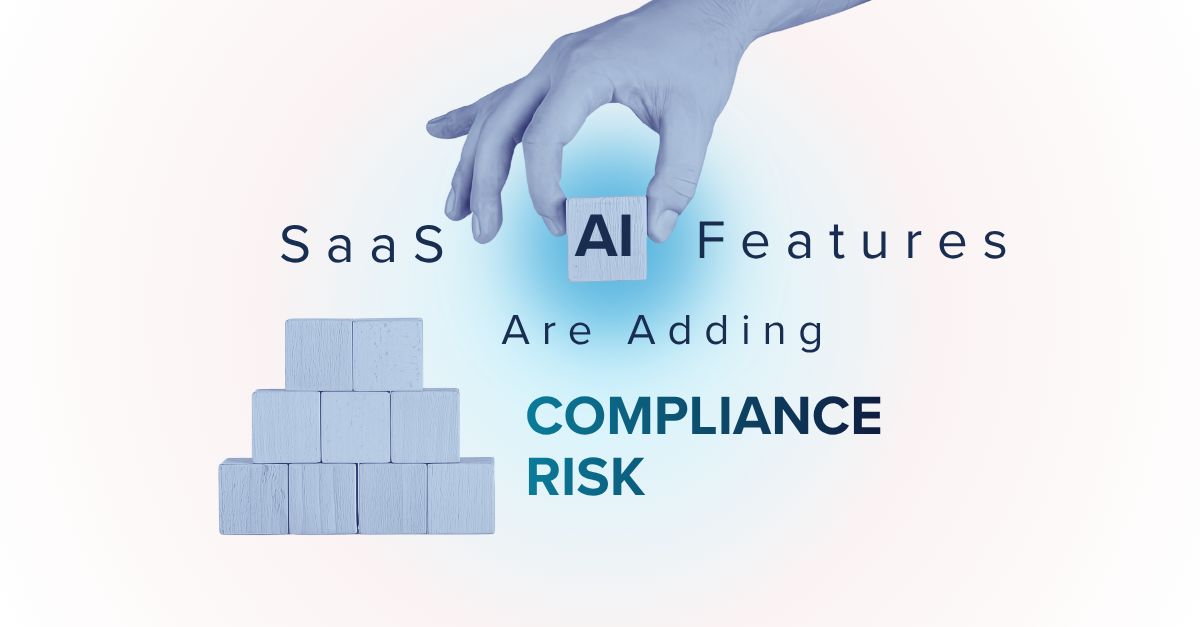
Organizations are often laser-focused on what #AI features can do for them. Fewer have had the chance to really assess what those features are doing with their data, and what that means for data privancy and compliance. Salesforce has been using customer data to train AI models since 2018. Most admins only found out this year when Salesforce added a toggle in Setup to make the setting visible and disableable. Atlassian starts collecting Jira and Confluence data for AI training in August - for entry tiers, metadata collection has no setting opt-out. Many of these companies have hard-to-find or non-existent opt-out settings. And that is just the training data issue. The deeper problem is the changeable nature of SaaS. SaaS vendors ship updates continuously. Defaults opt-ins change. New AI features get enabled, some without opt-ins. A compliance review for your SaaS done last quarter may not reflect what is active today. The only position that does not depend on staying current with every vendor's release notes is ensuring your most sensitive data never reaches the vendor in readable form in the first place. If the vendor only ever receives secured, unreadable data like tokens or ciphertext, their AI has no sensitive data to train on, nothing to expose, and nothing to pass to an upstream model provider or compromise your compliance position. #StratoKey can help solve just that. Read the latest article: Your SaaS is Adding AI Faster Than Compliance Can Keep Up https://lnkd.in/eYq5V8Sv
- LINKEDIN · IMAGESince 27 May 2026
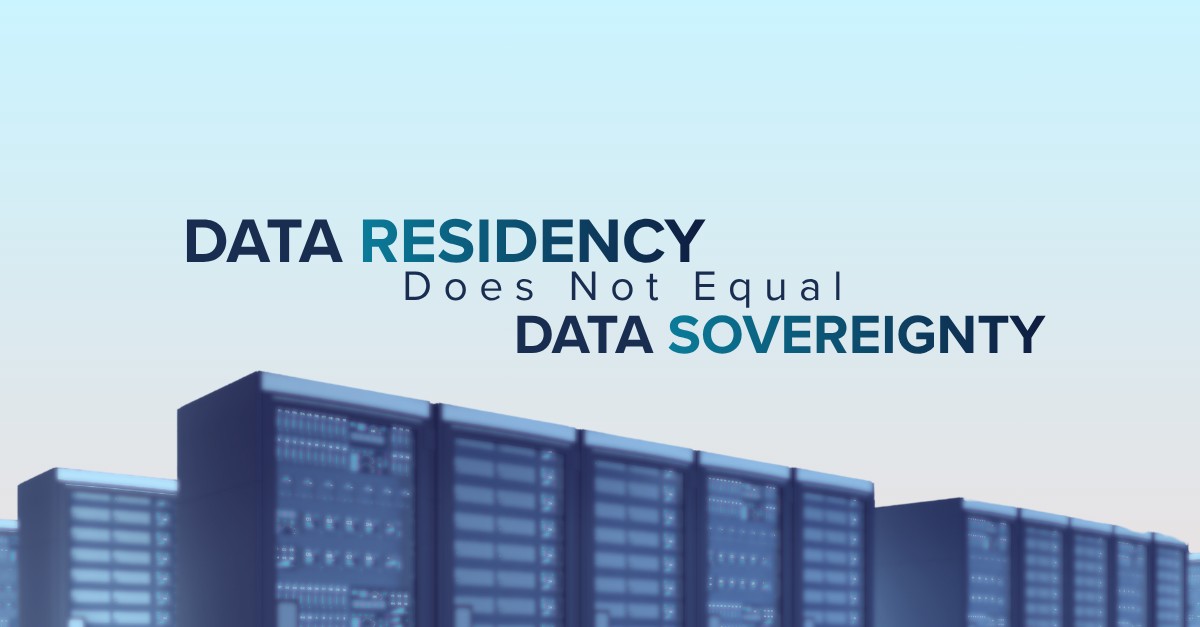
Do not mistake data residency for data sovereignty. Data residency is about where data is stored. Data sovereignty is about who governs it. Large cloud and SaaS providers have responded to growing data sovereignty regulation with product offerings including: in-country data center regions, and increasingly, "sovereign cloud" options. Both sound reassuring. Neither resolves the fundamental problem. The issue is jurisdiction. When a US-incorporated vendor offers a sovereign cloud product, the legal reach of US law still follows them. For example, the CLOUD Act requires US-based technology companies to produce data stored anywhere in the world when served with a lawful order. Microsoft, Google, Amazon, Salesforce, and Oracle are all US-incorporated. Selecting their local data center regions does not change that. AWS commited €7.8 billion to building its European Sovereign Cloud, with German legal entities and EU-resident managing directors. Microsoft completed its EU Data Boundary in February 2025. Both are serious engineering efforts and do create some operational separation. But when Microsoft's own legal director was asked under oath before the French Senate whether he could guarantee French citizens' data would never reach US authorities without French consent, his answer was: "No, I cannot guarantee that." A legal opinion commissioned by the German Federal Interior Ministry reached the same conclusion: physical location is irrelevant. Control follows the corporate chain to the American parent. Sovereign cloud addresses operational access. It does not address legal compulsion. And it is not without issues; the cost and effort to migrate and run these services are significant. One of the best controls is pre ingress cryptography: making sure sensitive data is encrypted or tokenized before it reaches the cloud vendor, with keys managed entirely outside their infrastructure. If the vendor never held plaintext, they have nothing to produce when compelled. This is the problem StratoKey is built to solve. 👉 Full blog: Why Data Residency Does Not Equal Data Sovereignty https://lnkd.in/ep3thsCk #DataSovereignty #CloudSecurity #Compliance #CMMC #CyberSecurity #Encryption #Tokenization #NIS2 #DataResidency
- LINKEDIN · IMAGESince 27 May 2026
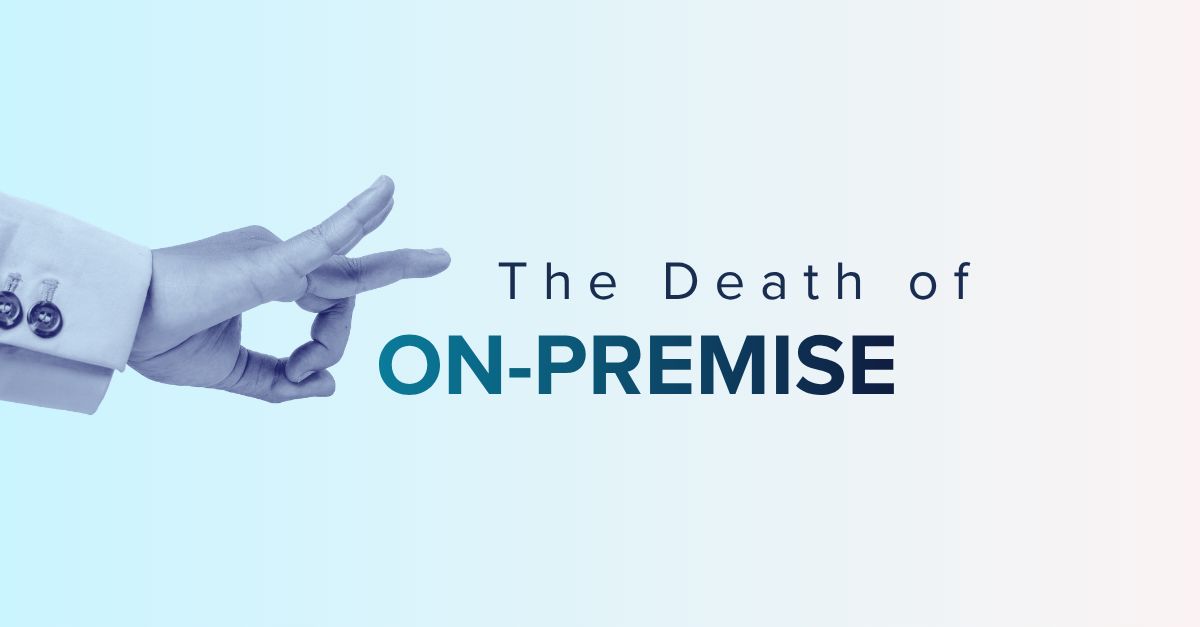
On-premise options are getting phased out. For organizations handling sensitive data, choosing the on-premise option was a deliberate compliance and security decision. The vendor had little to no access to your data. They could not be compelled to produce it. They had little visibility into how you used it. And, importantly, it was out of reach of their AI models. Cloud changes all of that by default. Atlassian retired Server in 2024 and is retiring Data Center. ServiceNow is sunsetting Edge Encryption, the one control that gave organizations cryptographic separation from ServiceNow's cloud. The list goes on, the death of on-premise is real. Vendors frame the move to cloud as a technology upgrade, and in many ways it is. But it also represents a transfer of control to a party subject to foreign laws, with access to your data, visibility into how you use their product, and strong commercial incentives to monetize both. The answer is not to avoid cloud. The answer is to try de-risk it. A practical step is to ensure your sensitive data never reaches the vendor in readable form. A solution like pre-ingress tokenization and encryption mean the vendor receives only tokens or ciphertext. They cannot be compelled to produce, train with, or expose what they never had. This is the model StratoKey is built on. Learn more: The Death of On-Premise and What it Means for Your Sensitive Data https://lnkd.in/evWb3tCw #DataSovereignty #CloudSecurity #OnPremise #Compliance #CMMC #Encryption #Tokenization #CyberSecurity
- LINKEDIN · IMAGESince 27 May 2026
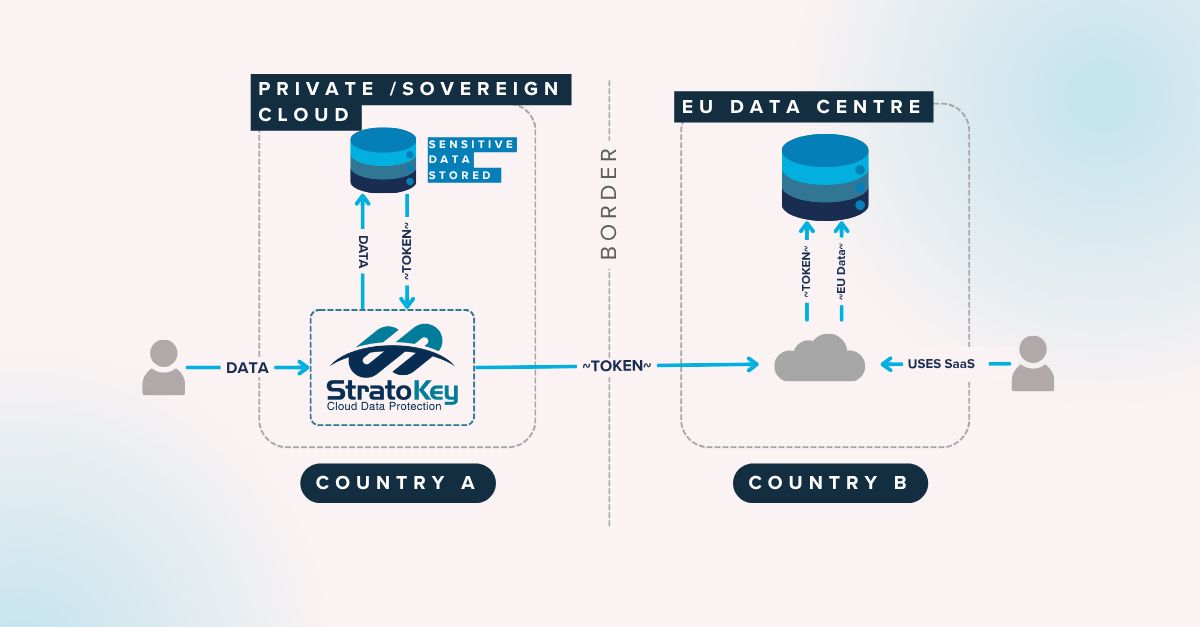
By 2025, global data generation was projected to hit 463 exabytes per day, and much of that data crosses borders every second. The question isn’t just where data is stored, but whose laws apply to it. Data residency defines the physical location of your data. Data sovereignty determines which nation’s laws govern it. Data localization dictates whether it can ever leave. Understanding the differences (and managing them correctly!) is now mission-critical for compliance, trust, and operational integrity. In StratoKey’s blog, we unpack: ✅ How residency, sovereignty, and localization interact ✅ Why cross-border data flows introduce compliance risk ✅ How tokenization and encryption keep sensitive data local and compliant ✅ Why SaaS-native encryption alone doesn’t satisfy residency laws Organizations that fail to manage data residency face fines, legal exposure, and loss of customer trust. Those that get it right build resilience and compliance-ready growth. Learn more: Data Residency, What Is It and Why It Is So Important for Global Data Compliance https://lnkd.in/ehXdjtBx
- LINKEDIN · IMAGESince 27 May 2026
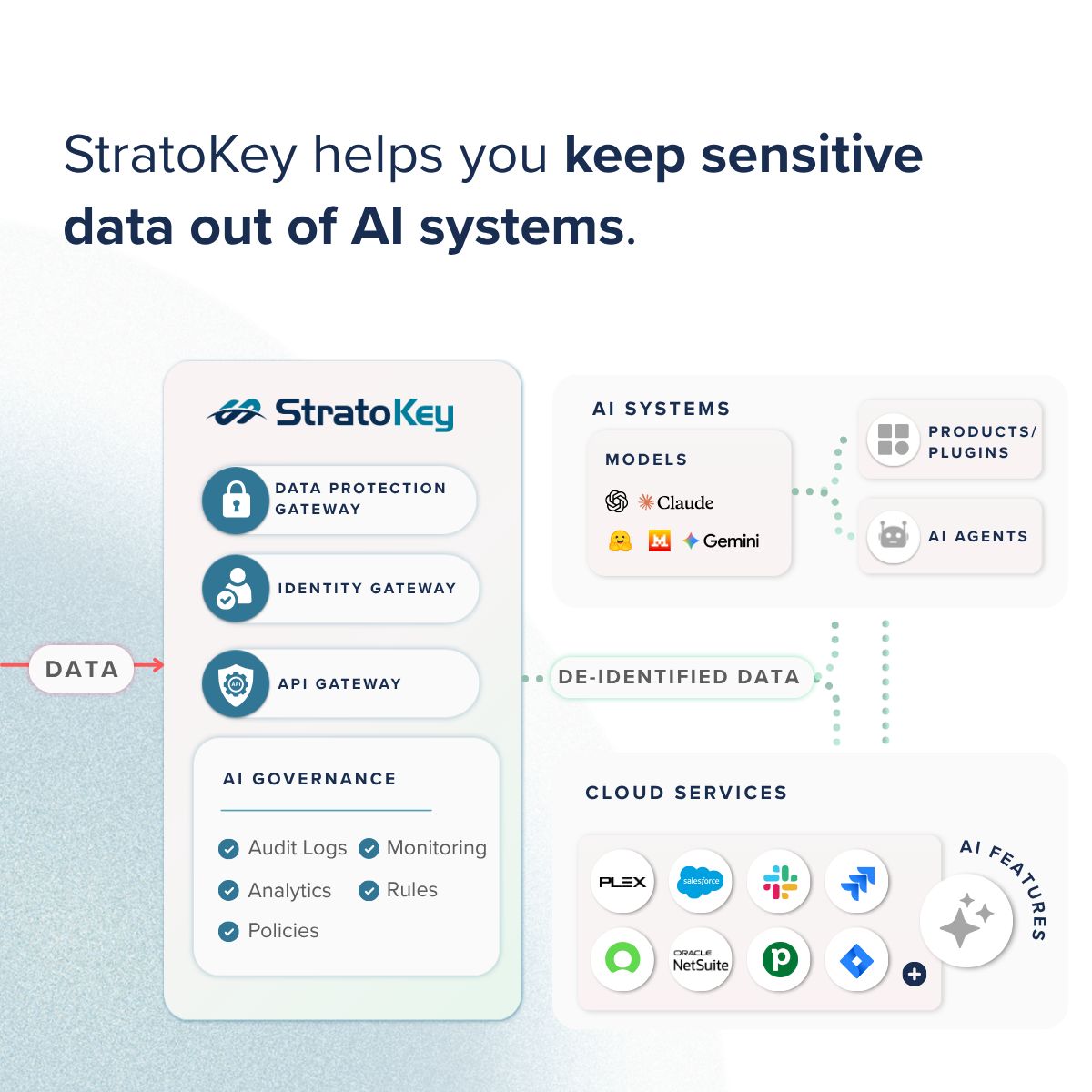
AI tools process whatever data they receive, which can include regulated data, PII, or intellectual property. Without controls, sensitive data enters AI systems in plain text. StratoKey fixes that by de-identifying data (encryption, tokenization, anonymization) before it reaches AI systems. The result is AI adoption that does not put compliance or data privacy at risk. Securing data across regulations, including: #HIPAA, #CMMC, #ITAR, #GDPR, #CPCSC and more. See how it works, check out StratoKey's AI Security Solutions https://lnkd.in/eK82J_tU #AIsecurity #DataPrivacy #AIcompliance #APIgateway #CDPplatform
- LINKEDIN · IMAGESince 27 May 2026
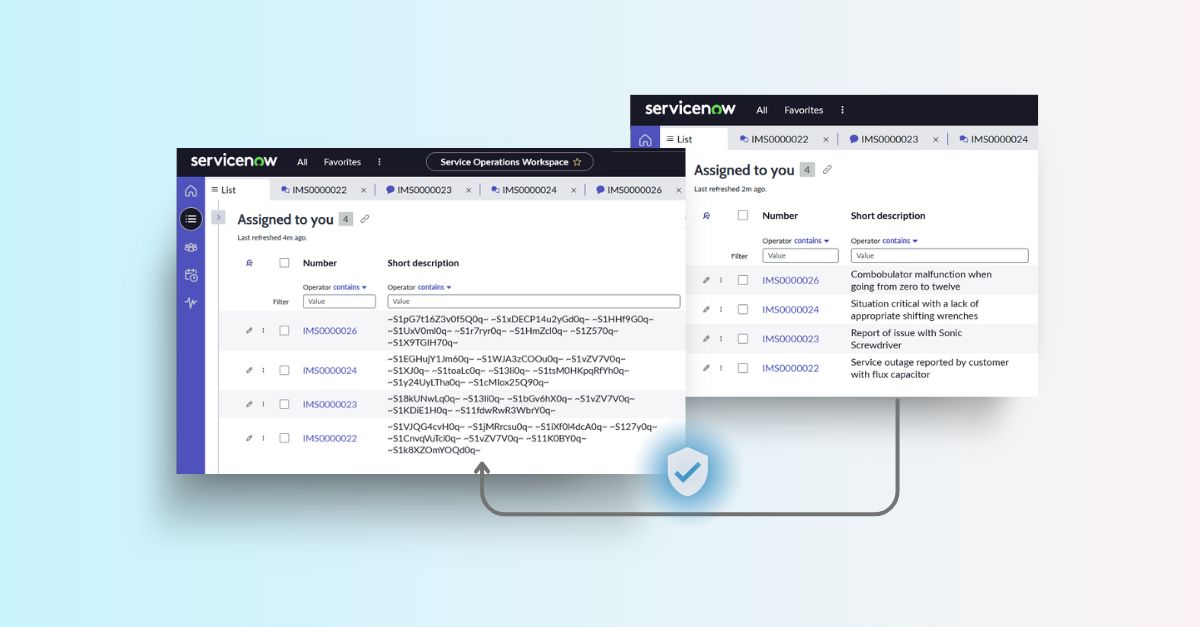
ServiceNow Edge Encryption entered “end-of-renewal” status with the Yokohama release earlier in 2025. This created a real decision point for organizations that handle regulated data with ServiceNow. ServiceNow recommended, Platform Encryption as a replacement. However, this provides field and database level protection inside the ServiceNow cloud. Which means data is only encrypted once it has already been exposed to ServiceNow. Why does that matter? Because some industries need to control and protect sensitive data before it ever enters a SaaS environment. Defense, aerospace, financial services, healthcare and other compliance driven sectors often require controlled access and strict data sovereignty rules that cannot truly be met once the data is already in a provider’s cloud. This is why many teams are now evaluating #encryption and #tokenization with a self hosted gateway. It secures sensitive data under customer governance before it is transmitted to SaaS, this reduces exposure to SaaS level breaches and aligns more closely with regulatory frameworks like #CMMC #ITAR #HIPAA and #GDPR. If you are planning your transition read our latest blog: The Best ServiceNow Edge Encryption Alternative https://lnkd.in/e8wmqm7v
6 of 92 adsSign up to see every StratoKey ad, filter by format and date, and get alerts on new ones.
See all 92 adsQuestions about StratoKey’s ads
Is StratoKey running LinkedIn ads?
We recorded no live LinkedIn ads for StratoKey on 10 Nov 2026.
How many LinkedIn ads has StratoKey run?
LinkedIn’s ad library lists 88 ads for StratoKey. We recorded 92 LinkedIn ads for StratoKey, first recorded on 16 Oct 2026 and last recorded on 16 Oct 2026.
Does StratoKey run Google ads?
Yes. We recorded 12 Google ads for the domain stratokey.com on 19 Oct 2026.
Which ad formats does StratoKey use?
The 6 LinkedIn ads on this page include 6 image ads.
Watch the companies you care about.
Filter every ad by industry, country, format and network, and get alerts when a company you watch starts running new ads.