0 new LinkedIn ads in 30 days · 2 of 3 networks checked

Speero ads
- speero.com
- Business Consulting
- US
- 45 employees
Speero’s ads on LinkedIn, Meta and Google, recorded by adsrunning. Browse the latest here for free. Sign up free to browse our full recording. Watch Speero on any plan to get each new one in your feed.
Watchlist included in every plan
What Speero runs
- Single image · LinkedIn
- 6
| Network | Status | Last 30 days | Total ads found | Ad activity | Checked | Next step |
|---|---|---|---|---|---|---|
| None recorded | 0 | 56+ | 11/11/2026 | View ads → | ||
| Meta | Not checked | — | — | View ads → | ||
| None recorded | — | — | 11/09/2026 | View ads → |
Speero has no new LinkedIn ads in the last 30 days. We recorded no Google ads on 9 Nov 2026.
Latest ads
- LINKEDIN · IMAGESince 16 Mar 2026
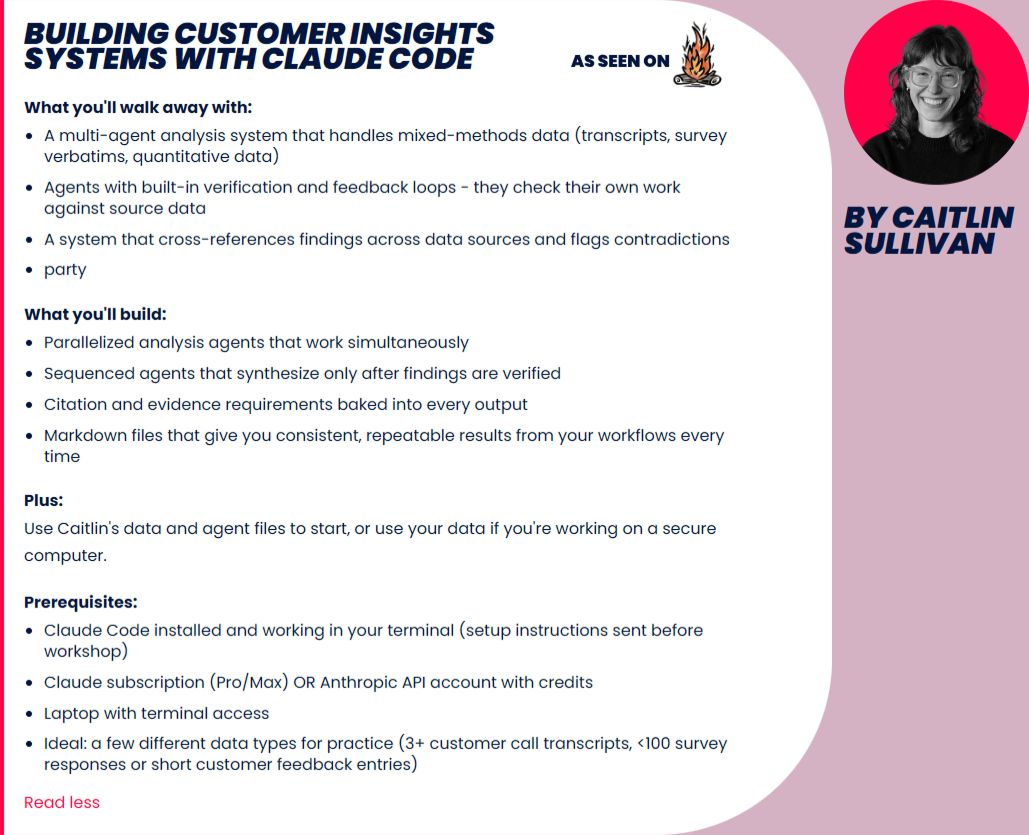
Most customer research dies in a Google Drive folder. 30 interview transcripts. 100’s of survey responses. The data is THERE. But combing manually takes so long, teams either do a surface-level pass or just... don't. You can't run high-quality experiments without deep customer insight, but the insight work is the bottleneck because nobody has time to properly analyse mixed-methods data at scale. THIS IS CHANGING: Cailtlin Sullivan has been building multi-agent AI systems using Claude Code that fundamentally change how customer insights are worked on. Not "paste a transcript into ChatGPT and ask for themes." That gives you garbage. We’re talking about purpose-built agent systems where multiple agents analyse data in parallel, another agent synthesises only AFTER findings are verified against the source data, every output has citations, and the system flags contradictions across data automatically. When you can spin up a system that processes all customer research in hours instead of weeks (with built-in rigour), you fundamentally change the quality of what goes into your testing pipeline. COME BUILD ONE: Caitlin Sullivan is running a hands-on workshop at Circus London (May 11-12) where you'll BUILD this system yourself. Open your terminal, use Claude Code, and walk out with a working multi-agent analysis system you can use the next day on your own data. Circus is the AI conference for experimentation leaders we've been building — workshops, talks, 100+ table sessions, Kings Cross, London. If you're sitting on customer data you know you're underutilising, this is a session for you. Circus London (May 11-12) - by Speero and Datadog. Link: https://lnkd.in/drU6qw62
- LINKEDIN · IMAGESince 16 Mar 2026
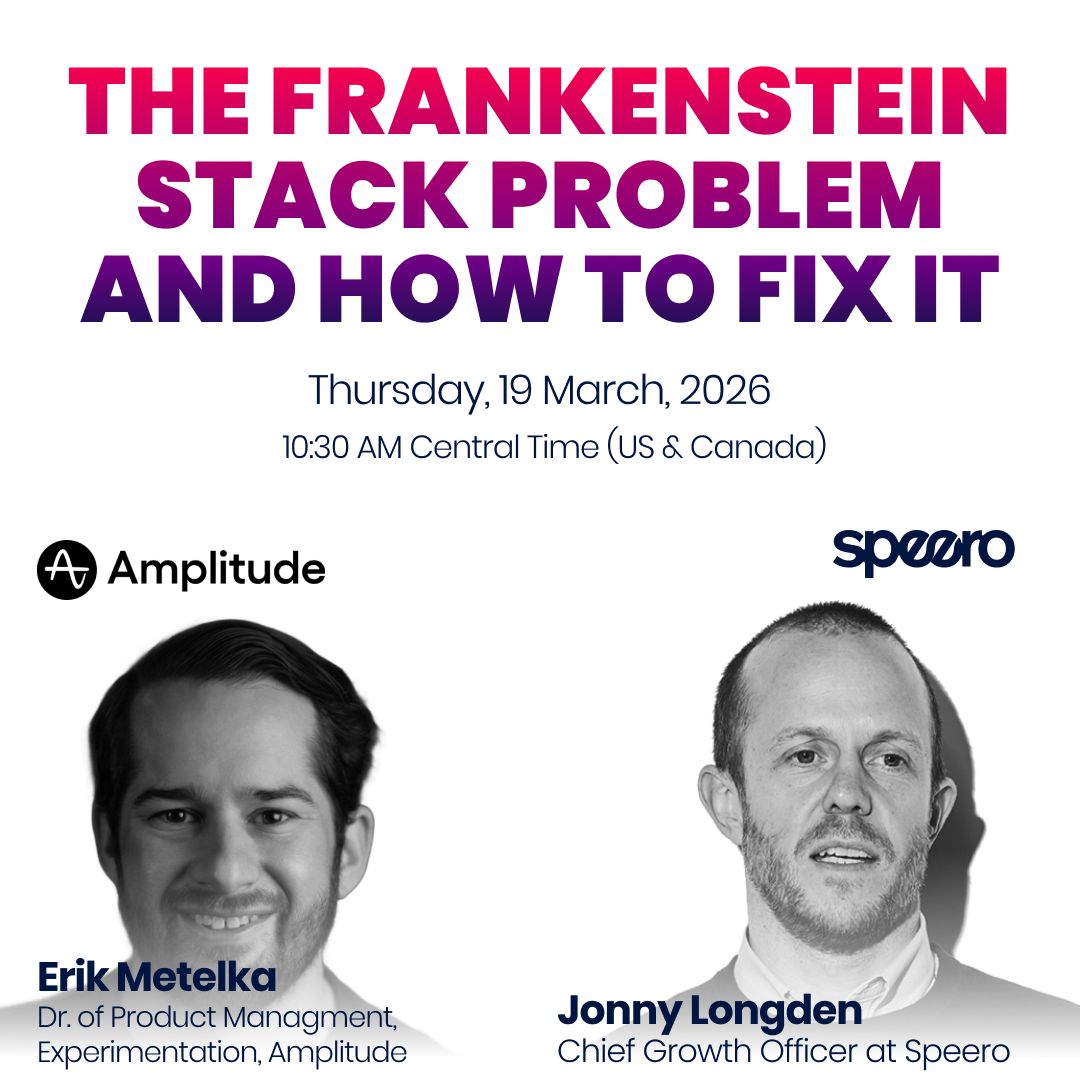
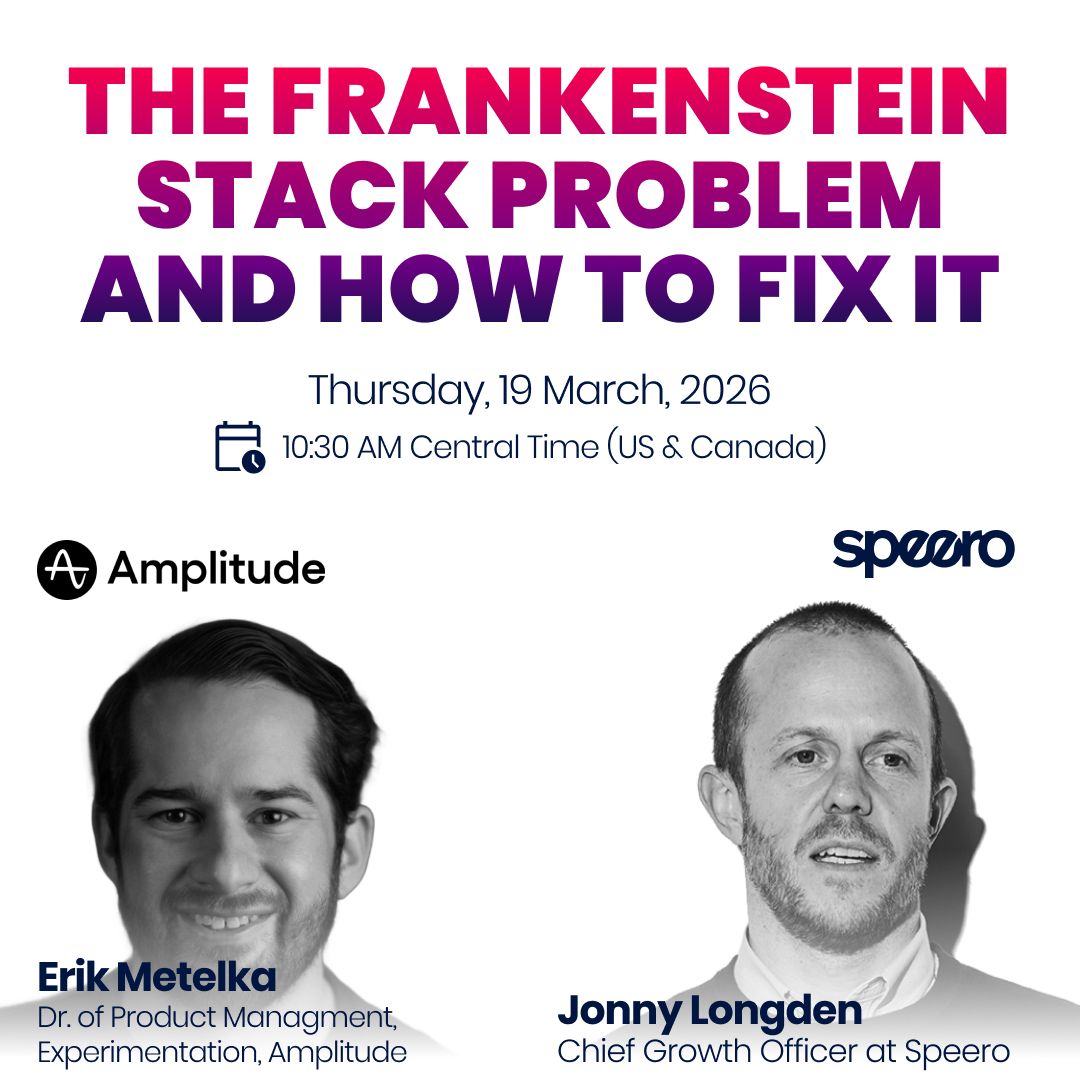
𝗟𝗜𝗩𝗘 𝗪𝗘𝗕𝗜𝗡𝗔𝗥! The shift towards warehouse-native tools and the general change in scope for experimentation is, alongside AI, 𝘁𝗵𝗲 𝗯𝗶𝗴𝗴𝗲𝘀𝘁 𝗰𝗵𝗮𝗻𝗴𝗲 𝘁𝗵𝗮𝘁 𝗵𝗮𝘀 𝗵𝗮𝗽𝗽𝗲𝗻𝗲𝗱 𝗶𝗻 𝗼𝘂𝗿 𝗶𝗻𝗱𝘂𝘀𝘁𝗿𝘆 𝗶𝗻 𝟭𝟬-𝟭𝟱 𝘆𝗲𝗮𝗿𝘀. For over a decade, growth teams have been forced to rely on the Frankenstein Stack - a fragile, cobbled-together mess of superficial testing engines bolted onto disconnected analytics platforms . It has severely limited what businesses can actually achieve and reduced experimentation to minor UX tweaking. That era is ending. The industry is moving away from isolated client-side tools and integrating experimentation directly into the data layer and core product architecture . This is the single biggest thing affecting experimentation teams right now, and it fundamentally changes the operating model. If you want to understand what this means for the future of your program, join me and Eric Metelka from Amplitude for a live, direct conversation about this shift . We will be breaking down the real-world implications of unified infrastructure and how to actually build an engine for continuous growth . Register for the webinar here: https://lnkd.in/dB6TrBv3 Stop optimizing the tool. Start optimizing the system. #experimentation #cro #productmanagement #growth #digitalexperience #experimentationledgrowth #elg #growthexperimentation
- LINKEDIN · IMAGESince 16 Mar 2026
90% of people using AI are doing it wrong. They prompt, get generic output, manually fix it for 30 minutes, and call that using AI. That's not a workflow. That's vibes. The fix isn't better prompts. It's building SYSTEMS that have persistent context about your business (your brand voice, ICP, strategic priorities) so every output starts from a foundation instead of starting from zero every time. THE DIFFERENCE: Vibes: "Write me a blog post about experimentation maturity." You get a basic SEO how-to. Workflow: You record a 5-minute voice memo on a walk. A system that already knows your brand guidelines, your audience, and your positioning turns that recording into a fully structured, on-brand blog post. Same AI. Completely different results. This applies to EVERYTHING: – Content creation – Experiment analysis – Stakeholder reporting Oren Greenberg built a system that takes raw experiment results and produces stakeholder narratives, next-test hypotheses, and a searchable learnings repository. He’s running a hands-on workshop at Circus London (May 11-12) where you'll build these systems yourself in Claude Code. You'll walk out with a knowledge base that ensures on-brand outputs, a voice-to-content workflow, and reusable patterns you can adapt to your own work. Circus London (by Speero and Datadog) is the AI conference for experimentation leaders. Workshops, talks, 100+ table sessions, Kings Cross, London. Link: https://lnkd.in/d3ew8-5X
- LINKEDIN · IMAGESince 16 Mar 2026
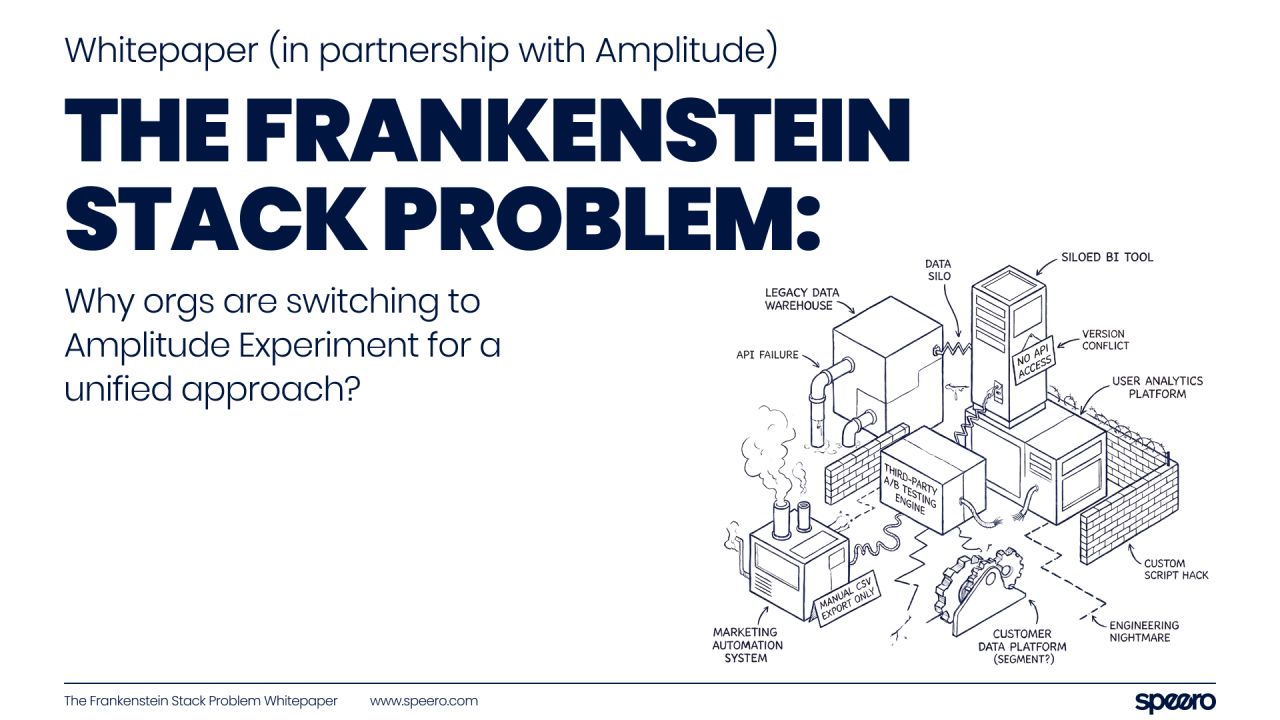
Your testing tool says you won. Your analytics says you lost. The data team says the sample was polluted. Now nobody knows what to do. Trust erodes. Stakeholders default to gut calls. Your experimentation program stalls. This isn't a people problem. It's a stack problem. When your A/B testing tool, analytics platform, and data warehouse all live in separate silos, you spend more time reconciling numbers than learning from experiments. Every test becomes a debate about data quality instead of a conversation about growth. The teams that break through this do one thing differently. They stop treating experimentation and analytics as separate disciplines. They unify them. When identity resolution, targeting, and measurement share the same foundation, the reconciliation problem disappears. One source of truth. No more conflicting dashboards. No more waiting on a data engineer to validate results. The payoff is real. Faster experiment velocity. Higher trust in results. Teams that actually want to check their data every morning. We just published a whitepaper breaking down how four organizations made this shift. Huckleberry Labs, Zwift, FanDuel, and BigCommerce each ditched their fragmented stack for a unified approach with Amplitude. Want to go deeper? Join Jonny Longden and Eric Metelka on March 19 for a live Sideshow session on this exact topic. Link: https://lnkd.in/e3RhZmFz
- LINKEDIN · IMAGESince 16 Mar 2026
Ben Labay, our CEO, just interviewed experimentation teams at FanDuel, Zwift, Huckleberry Labs, and BigCommerce. The biggest growth killer wasn't bad ideas. It wasn't a lack of budget. It was the fact that running a single experiment required touching 3+ tools and waiting on 2-3 different teams just to get a result you could trust. We keep seeing this pattern. The experimentation program looks healthy on paper — good hypotheses, executive buy-in, smart people. But the actual VELOCITY is brutal because the architecture forces a relay race between teams that should be sprinting independently. HERE'S WHAT THE RELAY RACE LOOKS LIKE: At Zwift, running an experiment meant implementing it on one platform, then manually compiling the data, then finding a data engineer to jump in and pull insights from yet another system. For a company running a live multiplayer game on C++ with users on everything from gaming PCs to budget tablets, every test had an engineering tax attached to it before anyone even saw a result. BigCommerce was running client-side tests in one tool, then trying to reconcile that data with Tableau AND Amplitude. Their website strategy team couldn't launch or iterate on experiments without handing things off to developers first. Every test was a ticket in someone else's backlog. This is the hidden cost nobody talks about. Your experimentation program doesn't need more ideas. It needs fewer handoffs. WHAT IF YOU REMOVE THE BOTTLENECKS? BigCommerce integrated experimentation directly into their visual builder. A PM or marketer could set up an experiment, run it, and publish winning changes without writing a single line of code or filing a dev ticket. Zwift got so confident in their setup that they now test in PRODUCTION. Their engineers hop on their bikes, log into the live game, and QA new features that are live but hidden from the public behind targeting rules they actually trust. TAKEAWAY: If you're running fewer than 2-3x the experiments you were running a year ago, the problem probably isn't your team's creativity. Look at how many people and tools need to be involved to get a single test from hypothesis to result. That's your real constraint. We're going deeper on this next Thursday (March 19, 10:30am ET) — Jonny Longden, our CGO, and Eric Metelka from Amplitude, live, will break down the research and what it actually takes to remove these bottlenecks from your experimentation program. Link to register: https://lnkd.in/e3RhZmFz
- LINKEDIN · IMAGESince 16 Mar 2026
Most experimentation teams have a dirty secret. Their "customer insights" are one person's vibes from skimming a few transcripts. You've got 30 call recordings, 200 survey responses, and a pile of support tickets. The RIGOROUS thing to do is cross-reference all of it, look for patterns, flag contradictions, and cite every finding back to the source. The realistic thing? Someone skims through 10 transcripts, pulls out quotes, and calls it "research." This is why most experimentation hypotheses are weak. The insight layer underneath them is shallow. WHAT IF THE ANALYSIS WAS ACTUALLY RIGOROUS AND FAST: Caitlin Sullivan has been building multi-agent systems in Claude Code that do this properly. Not one AI chat summarising a transcript. But multiple specialized agents analyzing different data types in parallel, with a separate agent that only synthesizes AFTER verifying findings against the source data. She’s running a hands-on workshop at Circus London (May 11-12) where you'll open your terminal and build this from scratch. Bring your own data or use hers. Circus is the AI conference for experimentation leaders we've been building — Kings Cross, London. If your team's hypothesis quality has plateaued, this is probably why. And this is the fix. Link: https://lnkd.in/dhGirBah


6 of 56+ adsSign up to see every Speero ad, filter by format and date, and get alerts on new ones.
See all 56+ adsQuestions about Speero’s ads
Does Speero have new LinkedIn ads?
We found no new LinkedIn ads for Speero in the 30 days to 11 Nov 2026.
How many LinkedIn ads has Speero run?
LinkedIn’s ad library lists 56 ads for Speero. We recorded 56 LinkedIn ads for Speero, first recorded on 1 Oct 2026 and last recorded on 1 Oct 2026.
Does Speero run Google ads?
We recorded no Google ads for the domain speero.com on 9 Nov 2026.
Which ad formats does Speero use?
The 6 LinkedIn ads on this page include 6 image ads.
Watch the companies you care about.
Filter every ad by industry, country, format and network, and get alerts when a company you watch starts running new ads.