On air · 1 of 3 networks
Seam AI
- clarify.ai
- Software Development
- US
- 15 employees
Seam AI’s ads on LinkedIn, Meta and Google, recorded by adsrunning. Browse the latest here for free. Sign up free to see all 282. Watch Seam AI on any plan to get each new one in your feed.
Watchlist included in every plan
| Network | Status | Live ads | Nov 2025LinkedIn activity · 52 weeksNov 2026 | Checked | Next step |
|---|---|---|---|---|---|
| None recorded | 0 | Checked 1 Nov 2026 | See all 282 ads → | ||
| Meta | Not checked | — | |||
| Running | 19 | Ads on the Google Ads Transparency Center | Checked 30 Oct 2026 | Collect them with the API → |
Seam AI has no live LinkedIn ads. We recorded 19 Google ads on 30 Oct 2026.
Latest ads
- LINKEDIN · IMAGERecorded 3 Oct 2026
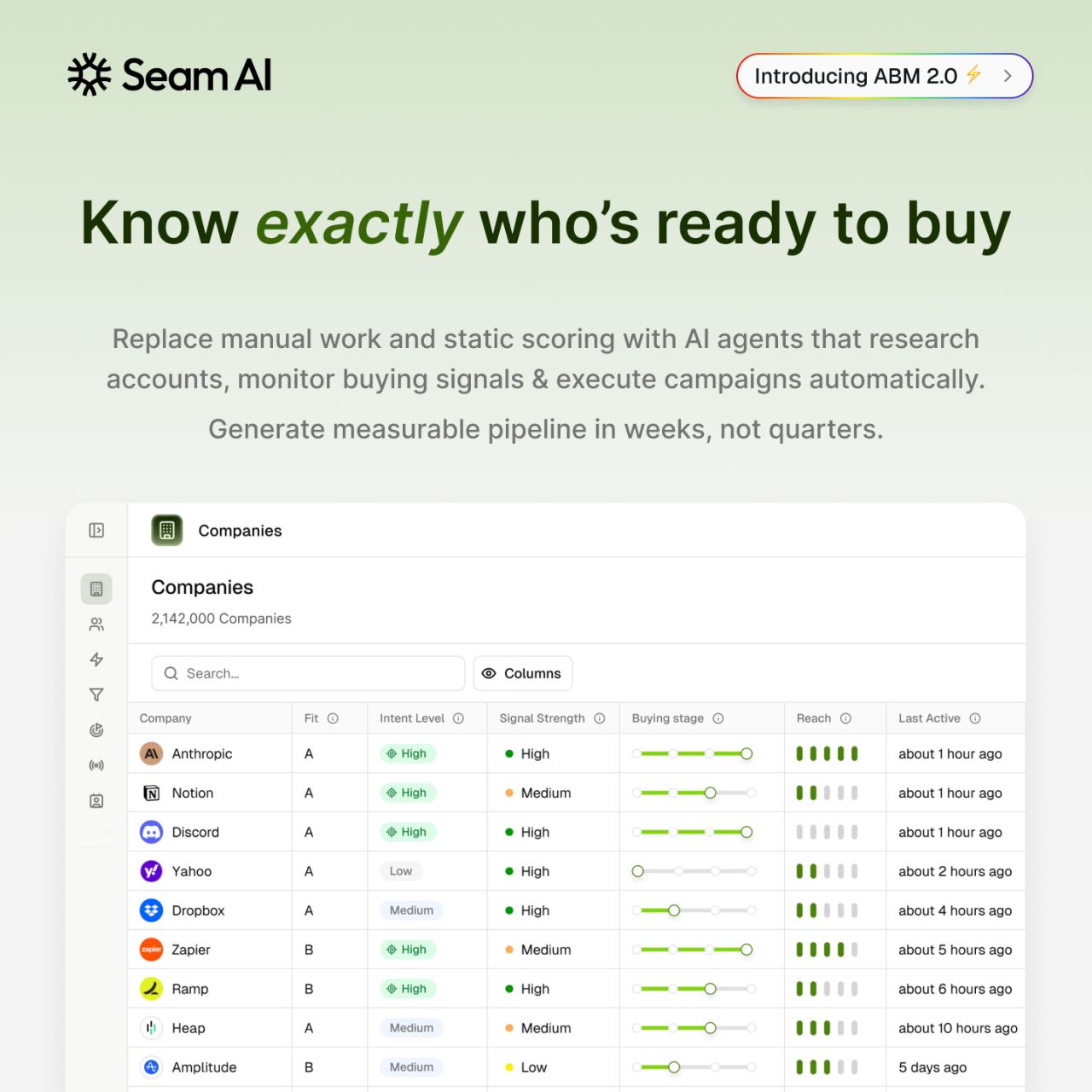
Legacy ABM platforms promised to revolutionize B2B marketing but delivered expensive dashboards, unclear ROI, and months of implementation. ABM 2.0 replaces manual processes and static intent scores with AI agents that research accounts, monitor buying signals, and execute campaigns automatically—generating measurable pipeline in weeks, not quarters.
- LINKEDIN · IMAGERecorded 3 Oct 2026
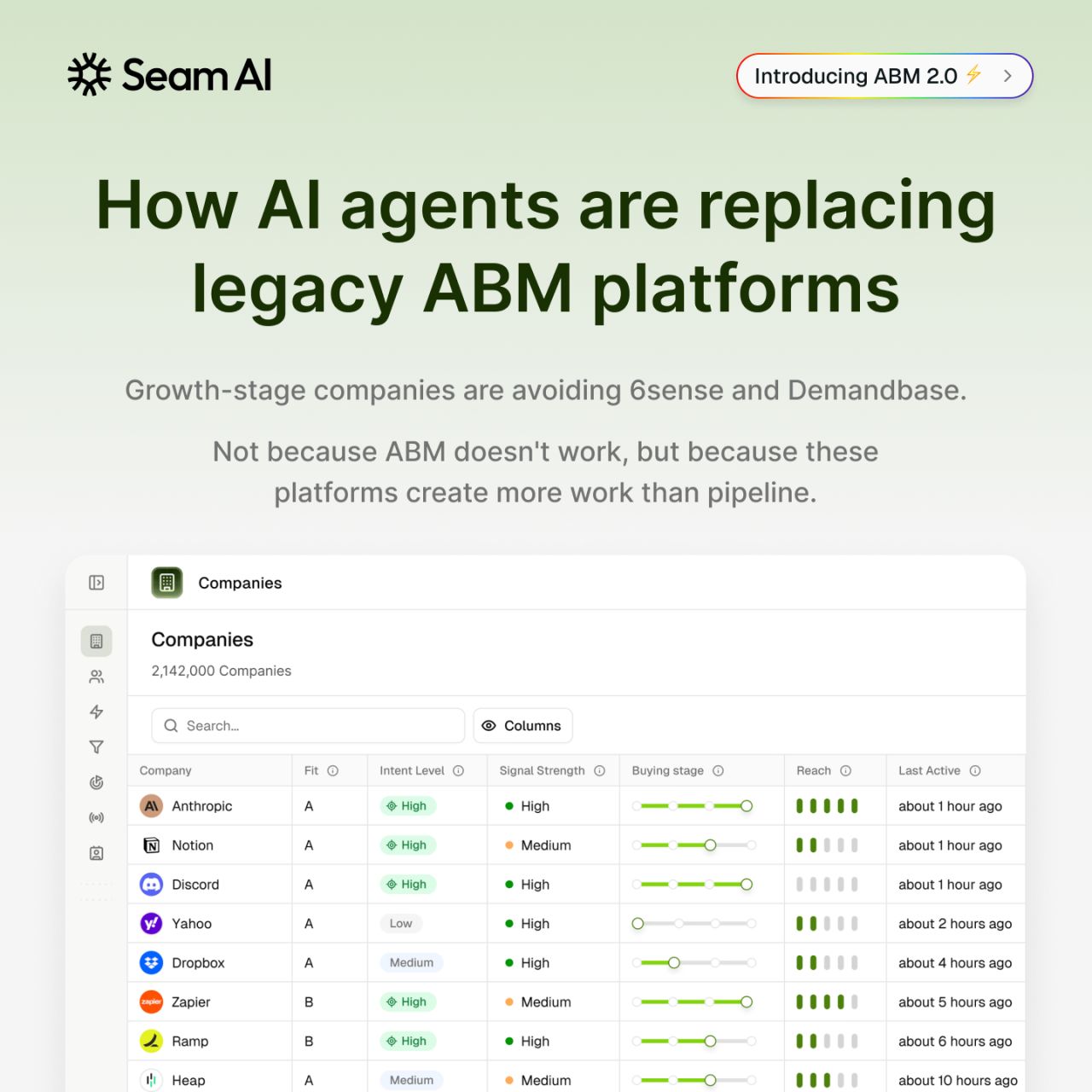
Growth marketers are rejecting category leaders like 6sense and Demandbase. Not because ABM doesn't work, but because these platforms create more work than pipeline. ABM 2.0 isn't about better dashboards or more intent data. It's about AI agents that act on signals in real-time, not humans reacting to dashboards days later. Here's what changes: 🤖 From static scoring to continuous research - Agents don't just score accounts—they actively research each one to validate ICP fit. They analyze firmographics, tech stack, team structure, funding, and buying signals to surface only accounts worth pursuing. 📶 From signals in dashboards to signals triggering action - The best signal is worthless if it requires manual follow-up. ABM 2.0 means agents monitor intent continuously and automatically deploy campaigns the moment buying signals spike—across email, ads, and SDR outreach. 🤑 From "influenced pipeline" to actual generated pipeline We track one thing: pipeline where Seam sourced the primary contact AND triggered the engagement. Not influenced. Not touched. Actually generated. And it lives in your CRM, not our dashboard. ⏩ From months of implementation to weeks No 6-month onboarding. No endless configuration. Agents are pre-trained on ABM workflows and start generating pipeline in weeks. This is the shift from intent platforms to action platforms. From dashboards to outcomes. From signals you react to, to agents that act for you. And we're calling it ABM 2.0.
- LINKEDIN · IMAGERecorded 3 Oct 2026
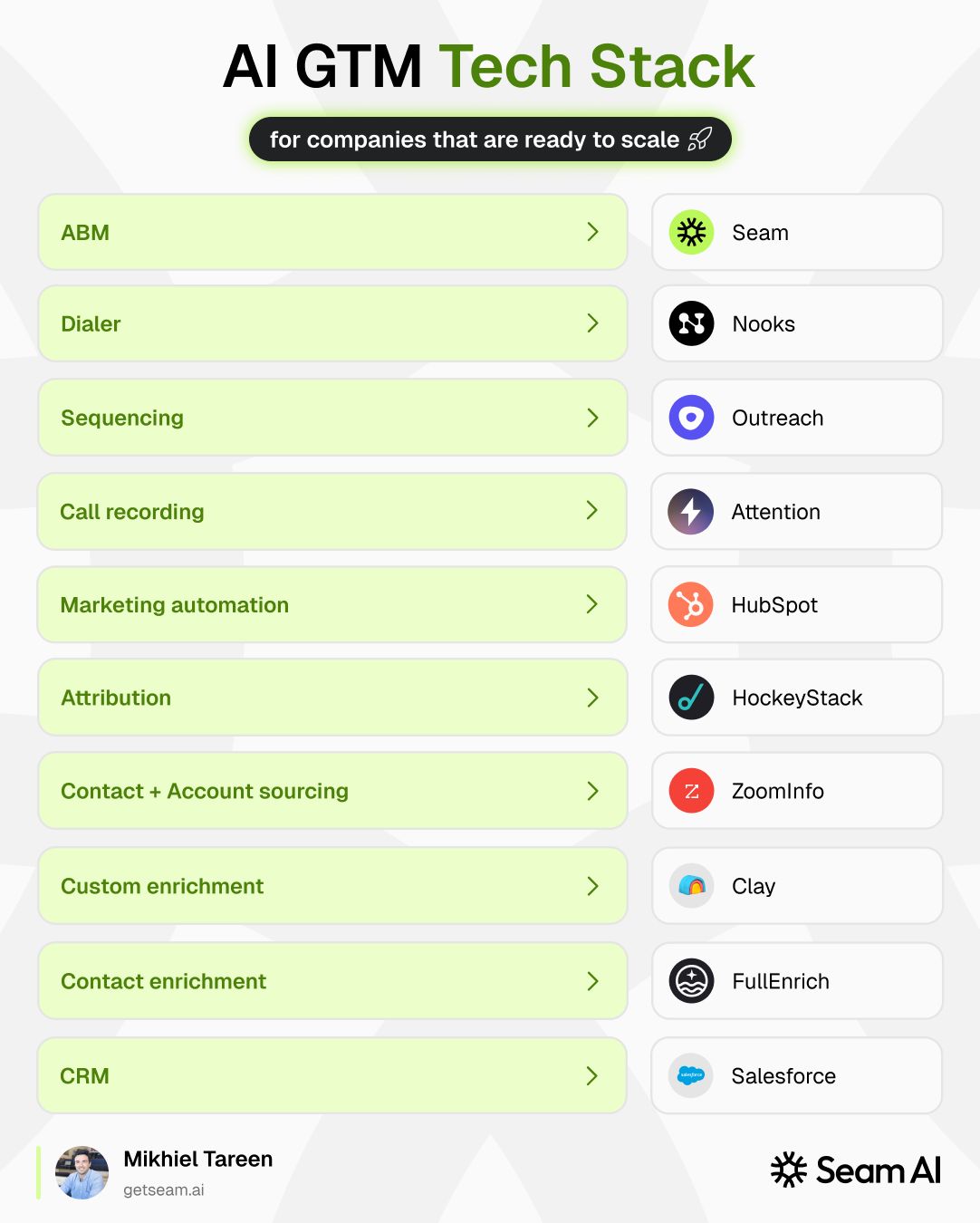
The CMO at a Series B company asked me what similar companies use in their GTM tech stack: The reality is 90% of new AI tools are built for startups and SMBs. Here's the tech stack for companies that have product market fit and are ready to scale: SYSTEM OF RECORD Salesforce - The undisputed king ABM Seam AI- account intelligence + campaign orchestration SALES EXECUTION Nooks - premier parallel dialer Outreach - Sequencing + enterprise analytics Attention - Call recording that syncs to Salesforce fields MARKETING HubSpot - MAP with easy AI features HockeyStack - Multi-touch attribution that you can defend to your CFO DATA ENRICHMENT ZoomInfo - TAM building FullEnrich - Contact enrichment Clay - Custom enrichment Build your stack for scale and you’ll only have to do it once!
- LINKEDIN · IMAGERecorded 3 Oct 2026
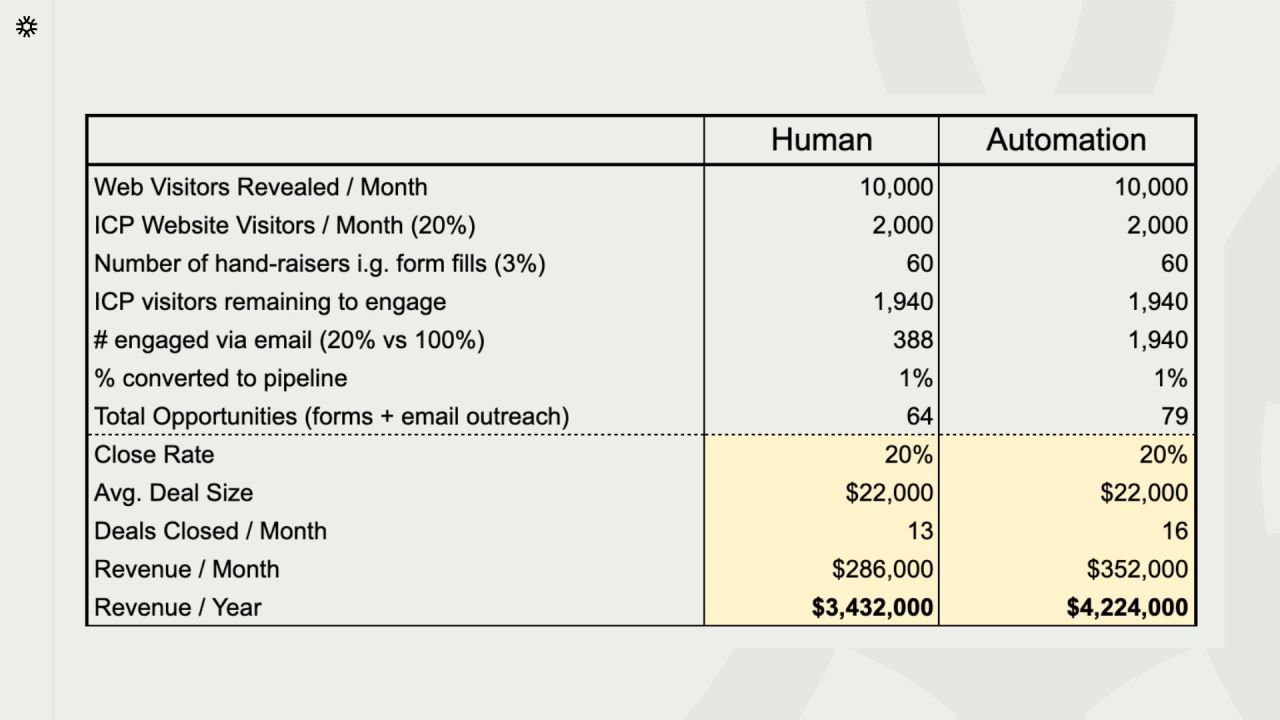
Maximizing website conversion: AI automation or human touch? Here’s what we found in the data. Demand Generation teams spend heavily to move buyers through the funnel, from awareness to interest to conversion. Most of this happens in the 'dark funnel' (pre-form fill) but one of the clearest late-funnel signals we can actually see is website activity, especially on high-intent pages like pricing. So the question is: can AI and automation convert more of these visitors into pipeline, or does human touch still perform better? We tested this with a B2B SaaS company that gets about 10,000 website visitors a month. Roughly 1% convert via form fill. The other 99% remain invisible unless acted upon. Human-led workflow: Each revealed visitor triggered a Slack alert to reps. They used LinkedIn, ZoomInfo, and Outreach to find contacts and send emails. This reached about 20% of ICP accounts. AI workflow: AI qualified ICP fit, sourced Director and VP-level titles (up to five per company), and placed them directly into a pre-written outbound sequence. This engaged nearly 100% of ICP accounts. The results: conversion rates held steady at 1%, but automation created more opportunities simply by increasing coverage. Humans generated 64 opportunities. Automation generated 79. With the same ACV and close rate applied, automation produced an additional $792K in closed revenue annually. What should marketers take away from this? 1) Speed to lead (or speed to signal) matters more than personalization here. Systems react faster and more consistently than people. 2) Website intent signals are among the most reliable triggers you have—capitalize on them to improve the return on your marketing spend. 3) While personalization is critical in other parts of the funnel, high-intent conversion is not one of them.
- LINKEDIN · IMAGERecorded 3 Oct 2026
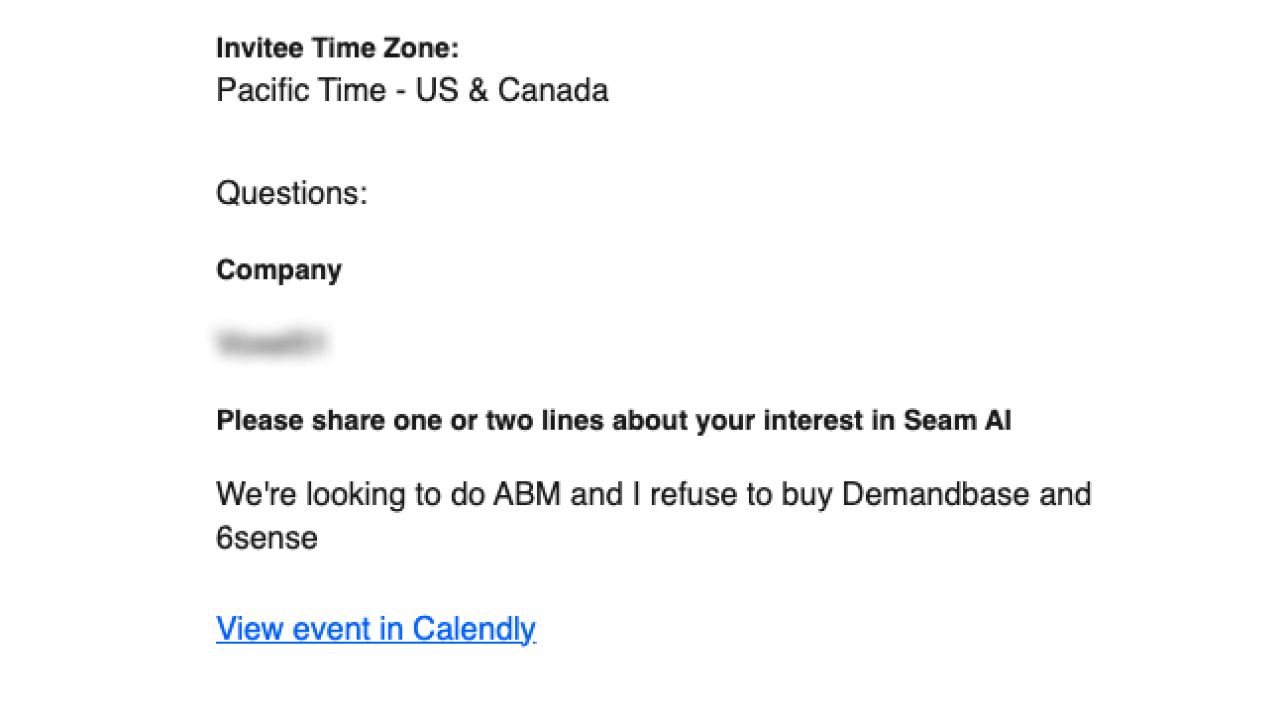
"We're looking to do ABM and I refuse to buy Demandbase or 6sense." That's a direct quote from an inbound lead we received. We are hearing this over and over from growth stage companies implementing ABM programs. Here's what marketers leaders say about legacy platforms: 1/ The price doesn't match the value. Six-figure contracts for intent scores that sales teams don't trust. 2/ Implementation is heavy - 6+ months to go live. By the time you're up and running, your market's moved on. 3/ ROI is impossible to measure. "We influenced 80% of your pipeline" means nothing when you can't tie it to actual revenue. 4/ It surfaces intelligence, not actions. You see that Coca-Cola visited your site. Great. Now find the right person among 70,000 employees and craft a message. Good luck. 5/ The scoring is a black box. No one can explain why Account A scored 98 and Account B scored 47. Sales reps get burned once, they never trust it again. People aren't rejecting ABM. They're rejecting platforms that create more work than pipeline. That's not a market problem. That's an opportunity. When buyers actively avoid the category leaders, you don't need to create a new category. You need to build something better in the one that already exists. The budget is there. The need is there. The old solutions just aren't.
- LINKEDIN · IMAGERecorded 3 Oct 2026
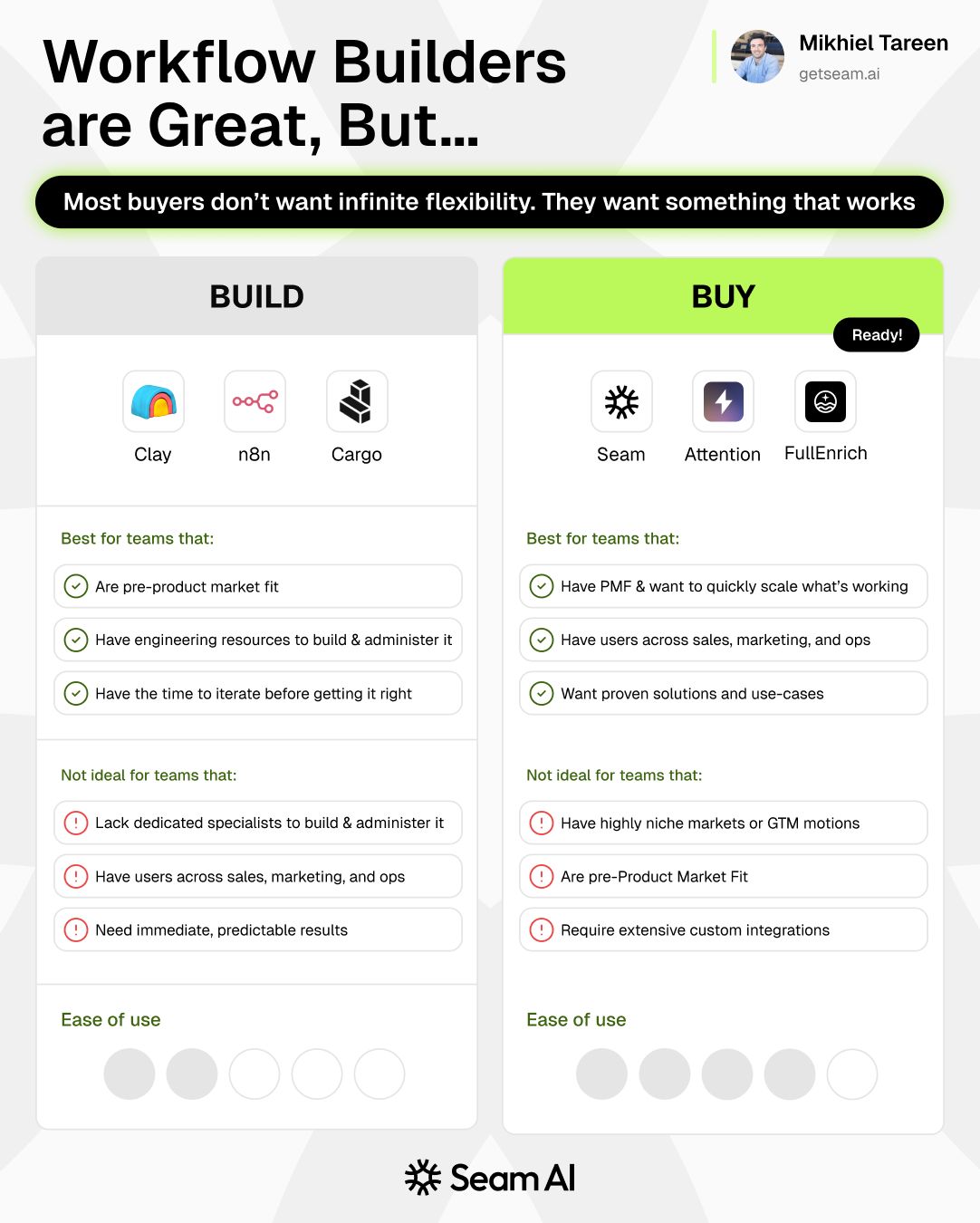
At Okta, we built our own custom growth engine. Took months. Required data engineers. Constant maintenance. But it worked. Here's what I learned: Most companies shouldn't do what we did. Some teams SHOULD build. If you: - Are pre-product market fit and have a small team - Have the engineering resources to build and administer it - Have the time to iterate before getting it right Examples: Clay, n8n, Cargo 🧱 Some teams SHOULD buy. If you: - Want proven solutions that have worked in the market - Have product market fit and want to quickly scale what’s working - Have users across sales, marketing, and ops Examples: Seam AI, Attention, FullEnrich Here are 3 great examples for each category 👇
6 of 282 adsSign up to see every Seam AI ad, filter by format and date, and get alerts on new ones.
See all 282 adsWatch the companies you care about.
Filter every ad by industry, country, format and network, and get alerts when a company you watch starts running new ads.