On air · 1 of 3 networks

Schaman ads
- schaman.com
- Software Development
- ES
- 49 employees
Schaman’s ads on LinkedIn, Meta and Google, recorded by adsrunning. Browse the latest here for free. Sign up free to see all 105. Watch Schaman on any plan to get each new one in your feed.
Watchlist included in every plan
What Schaman runs
- Single image · LinkedIn
- 6
- Google ads on 8 Nov 2026
- 4
| Network | Status | Live ads | Nov 2025LinkedIn activity · 52 weeksNov 2026 | Checked | Next step |
|---|---|---|---|---|---|
| None recorded | 0 | Checked 7 Nov 2026 | See all 105 ads → | ||
| Meta | Not checked | — | |||
| Running | 4 | Ads on the Google Ads Transparency Center | Checked 8 Nov 2026 | Collect them with the API → |
Schaman has no live LinkedIn ads. We recorded 4 Google ads on 8 Nov 2026.
Latest ads
- LINKEDIN · IMAGESince 9 Jun 2026
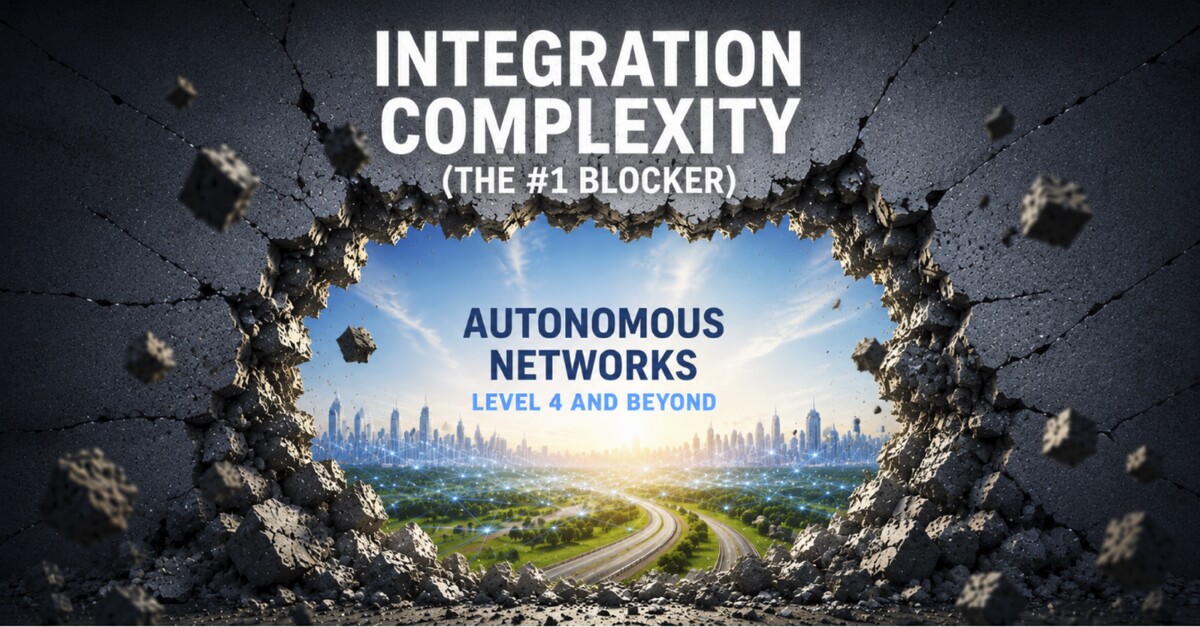
60% of CSPs say cross-domain integration complexity is their biggest blocker to deploying autonomous networks. That's the single highest-rated challenge in TM Forum's latest AN Benchmark. Higher than budget. Higher than skills. Higher than architecture clarity. Integration kills AN programs before they start. We've heard every version of it: "Our systems are too fragmented.""We're in the middle of a migration.""We don't have the APIs ready.""Someone would have to build the connectors first." These are real concerns. But they are also the reasons operators are still at Level 2–3 while the business case for Level 4 keeps growing. Here's what 7 years of building in real telco environments taught us: Integration is never the problem. The architecture around integration is.❗ Schaman separates two things that most platforms conflate: -The technical layer — how information is retrieved or modified from the operator's systems. APIs, SNMP, SQL, SSH, exports. Whatever exists today. -The business layer — what that information means and how it drives autonomous resolution. When systems change — and they always do — only the technical layer changes. Resolution logic, care channels, agent workflows: untouched. The results: 🏁 — A large European operator with 13+ subsidiaries and 75+ data sources fully integrated in under 10 weeks. Zero custom development. — A multi-brand operator migrated all ticketing systems overnight. Agents and digital channels never noticed. — A Middle East operator with doubts about their own data quality saw measurable KPI improvements in the first week of go-live. TM Forum's benchmark is clear: integration complexity is the wall most CSPs can't get over. We spent 7 years making that wall as low as possible — because integration doesn't generate value. What's on the other side does. ❌ Weeks to production. ❌ No stack replacement. ❌ No 12-month programmes. If you're at DTW and integration has been the reason your automation roadmap keeps getting delayed — that's exactly the conversation we want to have. #AutonomousNetworks #TelcoAI #TMForum #Integration #DTW
- LINKEDIN · IMAGESince 9 Jun 2026
The telecom industry just validated a shift that's been building for years. TM Forum's latest Autonomous Networks Benchmark (March 2026, 125 respondents, 80 companies worldwide) surfaces two numbers that tell the same story: 82% of CSPs rate service fault recovery duration as their #1 AN improvement metric. 86% cite improving customer experience as their #1 reason to implement autonomous networks. Not network efficiency. Not energy savings. Not RAN optimization. The customer❗ For years, autonomous network development has been built Inside-Out: detect from network alarms, propagate insight downward, eventually reach the customer. The logic made sense given where the technology was. But the destination was always wrong. If 86% of your motivation is CX and 82% of your measurement is service fault recovery — you are implicitly saying that the network exists to serve the customer, not the other way around. That's Outside-In. And it changes everything about how you build. Outside-In means: ➡️ Detecting degradation from customer signals before the network generates an alarm ➡️ Correlating what the customer is experiencing with what the network and BSS/OSS data shows ➡️ Resolving at the care layer, not just flagging at the operations layer ➡️ Turning unresolved cases into root cause discovery — because the customer's silence after a bad experience is data too This is not a new idea for us. It's the architecture Schaman was built on from day one. Outside-In detection, multi-layer RCA, governed autonomous resolution, and an NFF learning loop that converts every unresolved case into structured knowledge. We run in production at Vodafone, Orange, Movistar, Ooredoo and Entel. The metrics are auditable: 40% call reduction, -44% customer tickets, +76% self-service. The TM Forum benchmark confirms the direction the industry is moving. We've been building there for 7 years 🚀 If you're at DTW Ignite and this gap — between your AN network progress and your customer care layer — is a conversation worth having, come find us at booth #319. #AutonomousNetworks #TelcoAI #CustomerExperience #TMForum #DTW
- LINKEDIN · IMAGESince 26 May 2026
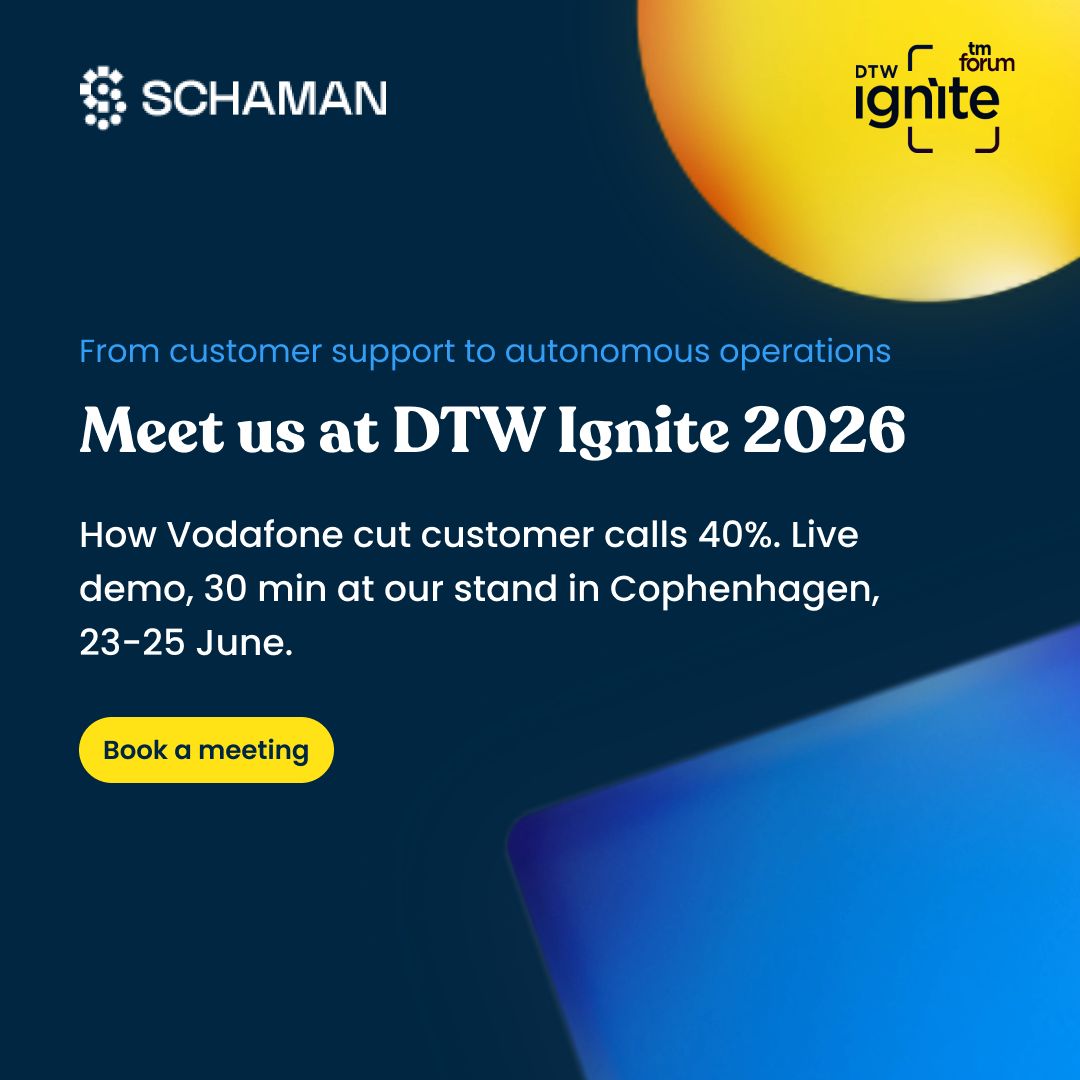
Customer support is usually where operational problems become visible. Repeated contacts, unresolved cases, avoidable escalations and contact peaks are rarely isolated incidents. They are operational signals. Schaman helps telcos detect, diagnose and resolve issues before they scale. If you’re exploring Autonomous Operations beyond the slideware, let’s meet at DTW Ignite 2026.
- LINKEDIN · IMAGESince 26 May 2026
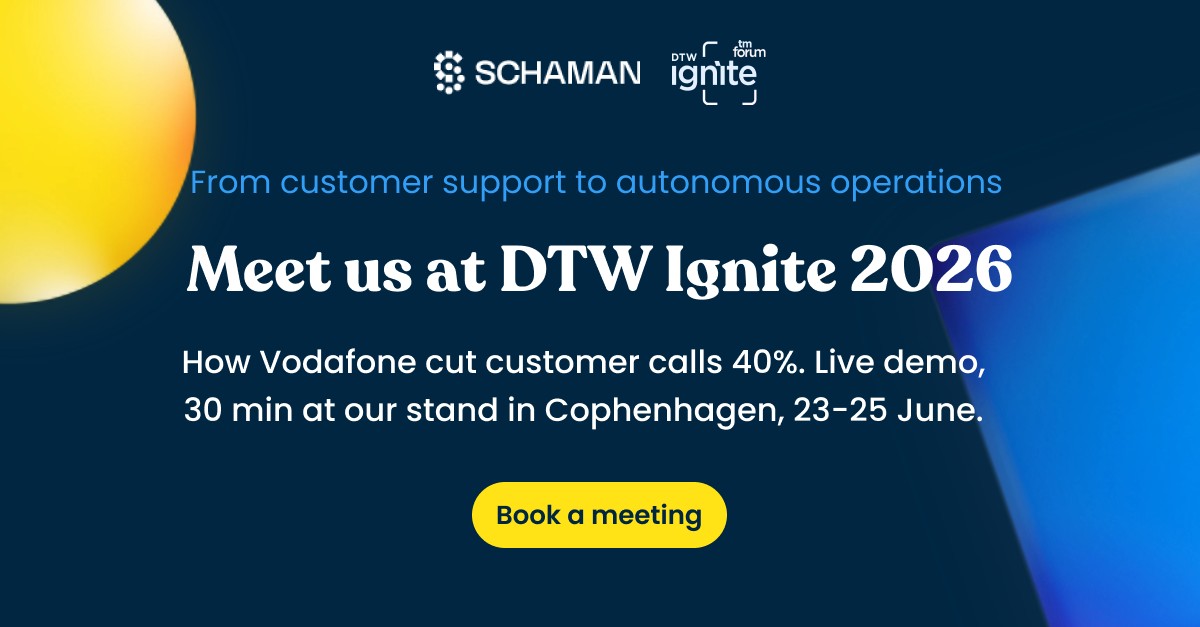
Most telcos already know the theory behind Autonomous Operations. The real question is what happens when you apply it to real customer operations. At Schaman, we help operators move from reactive support models to customer-driven operational resolution: detecting issues earlier, identifying root causes faster and reducing unnecessary customer contacts. Vodafone reduced customer calls by 40%. We’ll be showing how at DTW Ignite 2026 in Copenhagen. Book a meeting with our team before the event.
- LINKEDIN · IMAGESince 21 May 2026
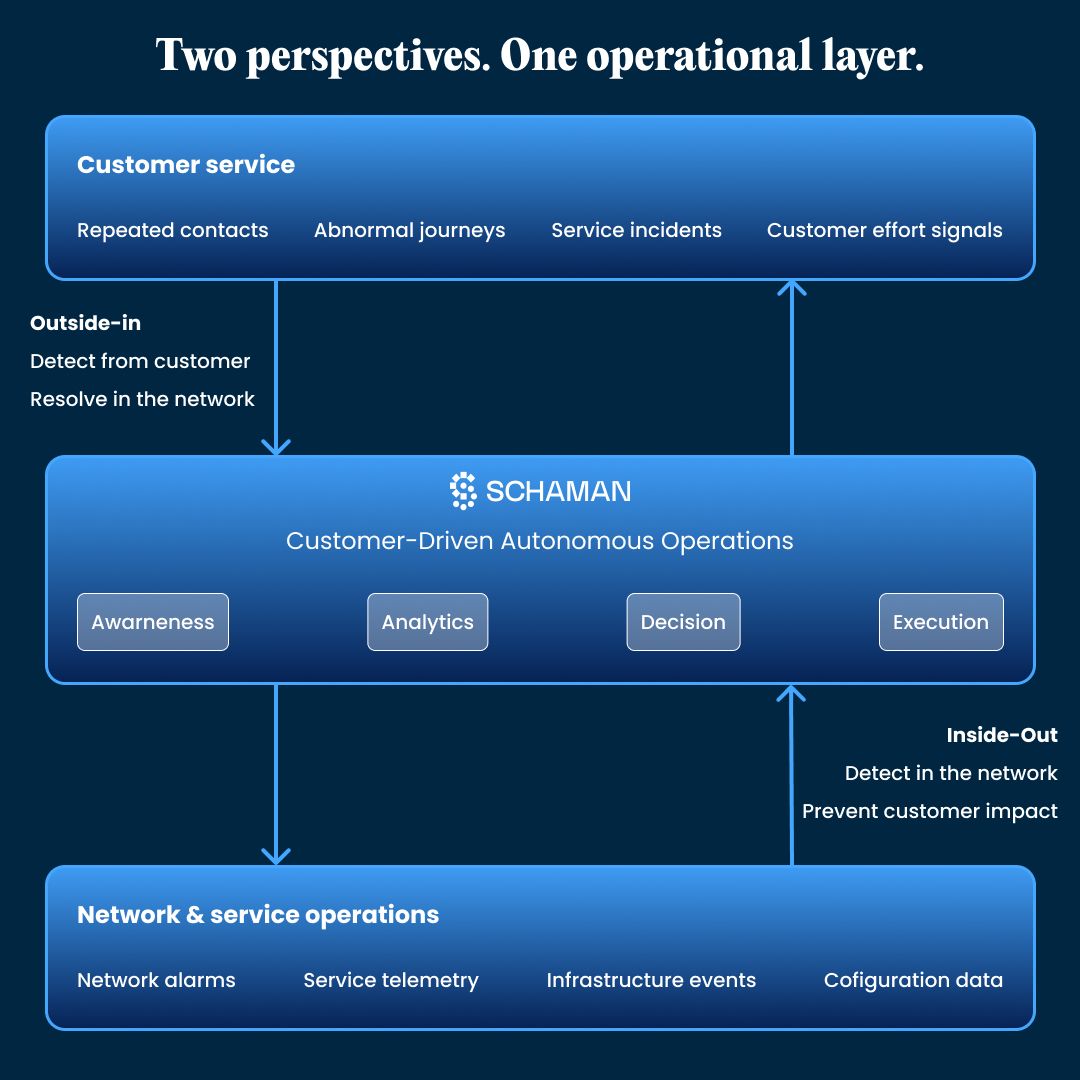
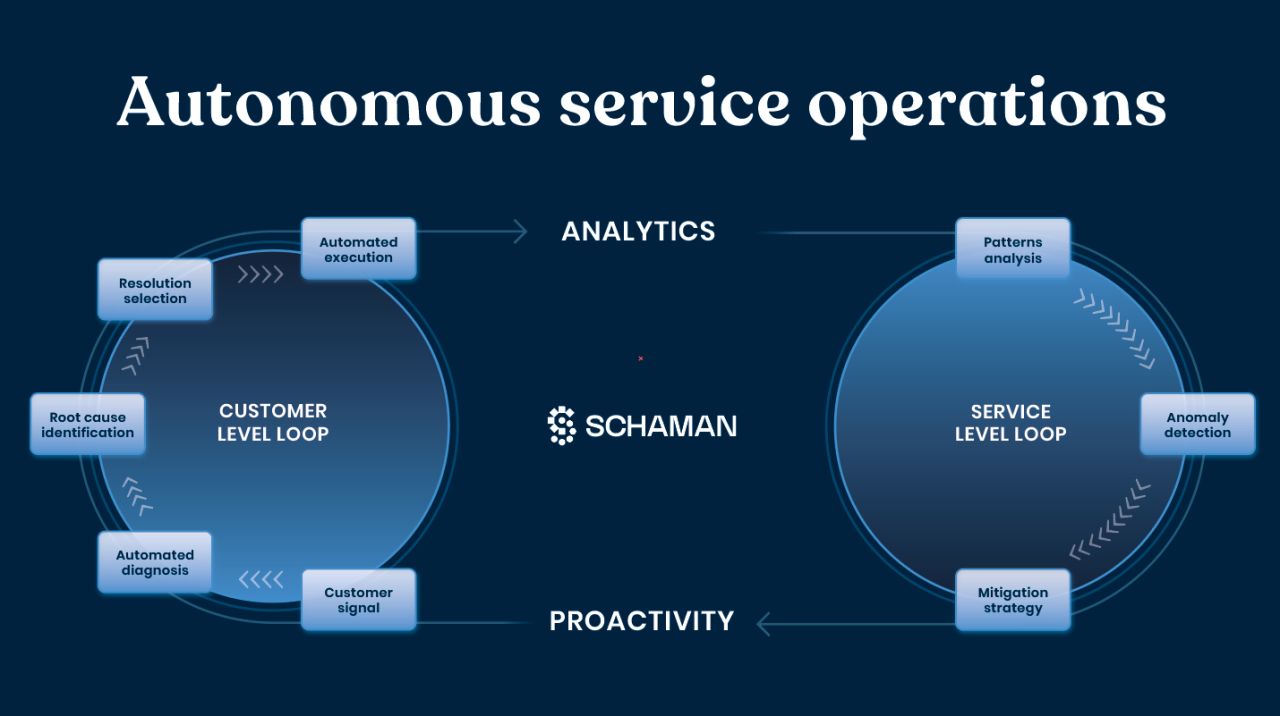
Autonomous Operations is becoming a shared language across the telecom industry. The TM Forum has done a clear job framing it: a continuous loop where systems detect, analyse, decide and execute, with progressively less human intervention. The framework is not really in dispute. What is shifting is where the loop starts. For decades, operations have been built from the inside out. Network alarms, telemetry and infrastructure events trigger the loop. Customer impact is something that gets assessed at the end, often after the user has already noticed. Alongside traditional inside-out operations, the loop can also start from customer signals. Repeated contacts, abnormal journeys, increased customer effort and unresolved interactions are all operational signals. Most of them never generate a network alarm, but they reliably indicate that something in the service is not working as expected. When the loop starts from there, the rest of the framework changes shape. Analytics looks for root causes connected to customer behaviour. Decisions get prioritized by real customer impact. Execution can target a single user or a group of affected customers. And every interaction becomes intelligence for the next one. This is where Schaman focuses: adding customer-level operational intelligence to the autonomous operations frameworks the industry already shares. We will be at DTW Ignite 2026 in Copenhagen. Let’s talk https://lnkd.in/eWYcC4kE #DTWIgnite2026, #Telecoms, #Schaman, #AgenticAI, #AIResolution, #CustomerServiceAI, #AutonomousNetworks, #CX
- LINKEDIN · IMAGESince 13 May 2026
Most conversations about Autonomous Operations describe one closed loop: awareness, analytics, decision, execution. In real telco operations, one loop is not enough. When a customer reports an issue, the priority is clear: resolve that specific case quickly. Diagnose what is happening, identify the root cause, choose the right corrective action and execute it. That is one operational loop. Focused on the individual. But individual cases are signals of something larger. The same root cause often affects many customers at once, hidden behind cases that look unconnected. Detecting those patterns, analyzing anomalies and triggering mitigation actions is a different loop. Focused on scale. Insights from individual cases feed pattern detection at the service level. Mitigations at the service level reduce the volume of individual cases that need to be resolved one by one. That is how Schaman is built: as the operational layer that runs both loops together, where the customer-level loop and the service-level loop reinforce each other continuously. For telcos, this is the difference between resolving more contacts and needing fewer of them. We'll be at DTW Ignite 2026 in Copenhagen. Let's talk https://lnkd.in/eYSSrfxz #DTW2026 #TMForum

6 of 105 adsSign up to see every Schaman ad, filter by format and date, and get alerts on new ones.
See all 105 adsQuestions about Schaman’s ads
Is Schaman running LinkedIn ads?
We recorded no live LinkedIn ads for Schaman on 9 Nov 2026.
How many LinkedIn ads has Schaman run?
LinkedIn’s ad library lists 102 ads for Schaman. We recorded 105 LinkedIn ads for Schaman, first recorded on 30 Sept 2026 and last recorded on 30 Sept 2026.
Does Schaman run Google ads?
Yes. We recorded 4 Google ads for the domain schaman.com on 8 Nov 2026.
Which ad formats does Schaman use?
The 6 LinkedIn ads on this page include 6 image ads.
Watch the companies you care about.
Filter every ad by industry, country, format and network, and get alerts when a company you watch starts running new ads.