Not on air · 2 of 3 networks checked

Roseman Labs ads
- rosemanlabs.com
- IT Services and IT Consulting
- NL
- 36 employees
Roseman Labs’s ads on LinkedIn, Meta and Google, recorded by adsrunning. Browse the latest here for free. Sign up free to see all 84. Watch Roseman Labs on any plan to get each new one in your feed.
Watchlist included in every plan
What Roseman Labs runs
- Single image · LinkedIn
- 6
| Network | Status | Live ads | Nov 2025LinkedIn activity · 52 weeksNov 2026 | Checked | Next step |
|---|---|---|---|---|---|
| None recorded | 0 | Checked 7 Nov 2026 | See all 84 ads → | ||
| Meta | Not checked | — | |||
| None recorded | 0 | No ads found on the Google Ads Transparency Center | Checked 7 Nov 2026 | Collect them with the API → |
Roseman Labs has no live LinkedIn ads. We recorded no Google ads on 7 Nov 2026.
Latest ads
- LINKEDIN · IMAGESince 2 Nov 2026
Wie wordt onze nieuwe collega? 👋 We zoeken een Office Manager & Executive Assistant voor ons kantoor in Utrecht. Je werkt direct samen met ons managementteam, houdt het kantoor draaiende en brengt het team samen: 35 collega’s met 6 nationaliteiten. 🌍 Je krijgt echt ruimte voor eigen ideeën en de rol groeit mee met je ambitie. Je werkt parttime of fulltime, wat jou het beste past. En je werk heeft betekenis: onze technologie helpt Europese banken in de strijd tegen financiële criminaliteit, en dit jaar wonnen we samen met onze partners voor de derde keer op rij de Dutch Privacy Award. 🏆 Ken jij iemand die hier perfect bij past? Tag of stuur door, dat helpt enorm! 👉 https://lnkd.in/e_V6xpQK **** Who’s going to be our new colleague? 👋 We’re looking for an Office Manager & Executive Assistant for our Utrecht office. You’ll work closely with our leadership team, keep the office running and bring the team together: 35 colleagues from 6 nationalities. 🌍 There’s real room for your own ideas, and the role grows with your ambitions. You choose what suits you best, anywhere between 25 to 40 hours a week. And your work matters: our technology helps European banks fight financial crime, and this year we won the Dutch Privacy Award together with our partners for the third year in a row. 🏆 Know someone who’d be a great fit? Tag them or share, it really helps! 👉 https://lnkd.in/e_V6xpQK
- LINKEDIN · IMAGESince 12 Oct 2026
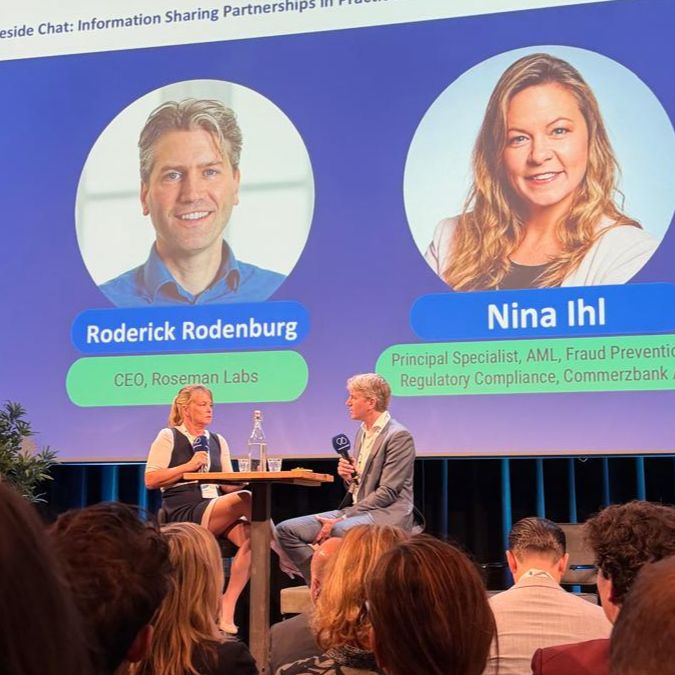
On October 1st, I had the privilege of interviewing Nina Ihl on stage at the Leaders in Finance Events to discuss Information sharing partnerships in practice in Germany. What I liked most about the event were the in-depth conversations, where regulators, banks and public authorities spoke openly about what works and what doesn't. A few themes kept coming back. 1. Effectiveness over more regulation. Oliver Bullough, author of "Everybody loves our dollars, how money laundering won", opened with a challenge: decades of legislation, and the system still isn't working as it should. So how do we fix it? Several speakers converged on the same answer: measure what works. Willem Schudel (DNB) asked how anyone actually knows whether our collective efforts are effective, arguing that the answer lies across the whole system, in alerts and information that lead to impact. AMLA's Rikke-Louise Ørum Petersen took it a step further: her agenda is to move from information to insight, to action and impact, and to stop doing what doesn't matter. 2. Collaboration is no longer optional. Criminal networks don't stop at an organisation's edge or a border, so our response can't either. Within the Netherlands, DNB pointed to the Financial Expertise Centre (FEC) and joint risk exercises, with one condition: each party acts within its own mandate. Across borders, AMLA stressed joint work between FIUs, which is now part of its legal remit. And collaboration only counts if it produces the information-to-impact chain from theme 1. 3. AI is only as good as the data behind it. If the goal is impact, AI is the obvious lever, but nobody has pulled it fully yet. Jaap van der Molen (ABN AMRO) said no bank is using AI at scale in this area yet. He sees LLMs helping with unstructured data and cutting manual work through the "industrialisation of prompts." Vinod Jaising (Rabobank) named the conditions: control, clear definitions, purposeful automation and, above all, data quality, which he said hardly anyone is talking about. It's the same lesson as before: you can't measure, share or automate your way to impact on data you don't trust. 4. Privacy and collaboration aren't opposites. This one encouraged me most. Esmé Bosma (Dutch DPA) framed public-private and international collaboration as something to enable, and said privacy is often a hurdle of perception. That was good to hear. One line from Yucel Olcer (ING) connected all four themes: "The objective is to protect clients and society. A key measure is how much the solution saves society as a whole. Asking clients to provide more data is not the solution; banks should unburden them by obtaining the right data from the right sources." Right data from the right sources is where information-sharing partnerships make the biggest difference. One institution sees one slice; together, we start to see the network. That's how we get ahead of financial crime instead of reacting to it.
- LINKEDIN · IMAGESince 16 Sept 2026
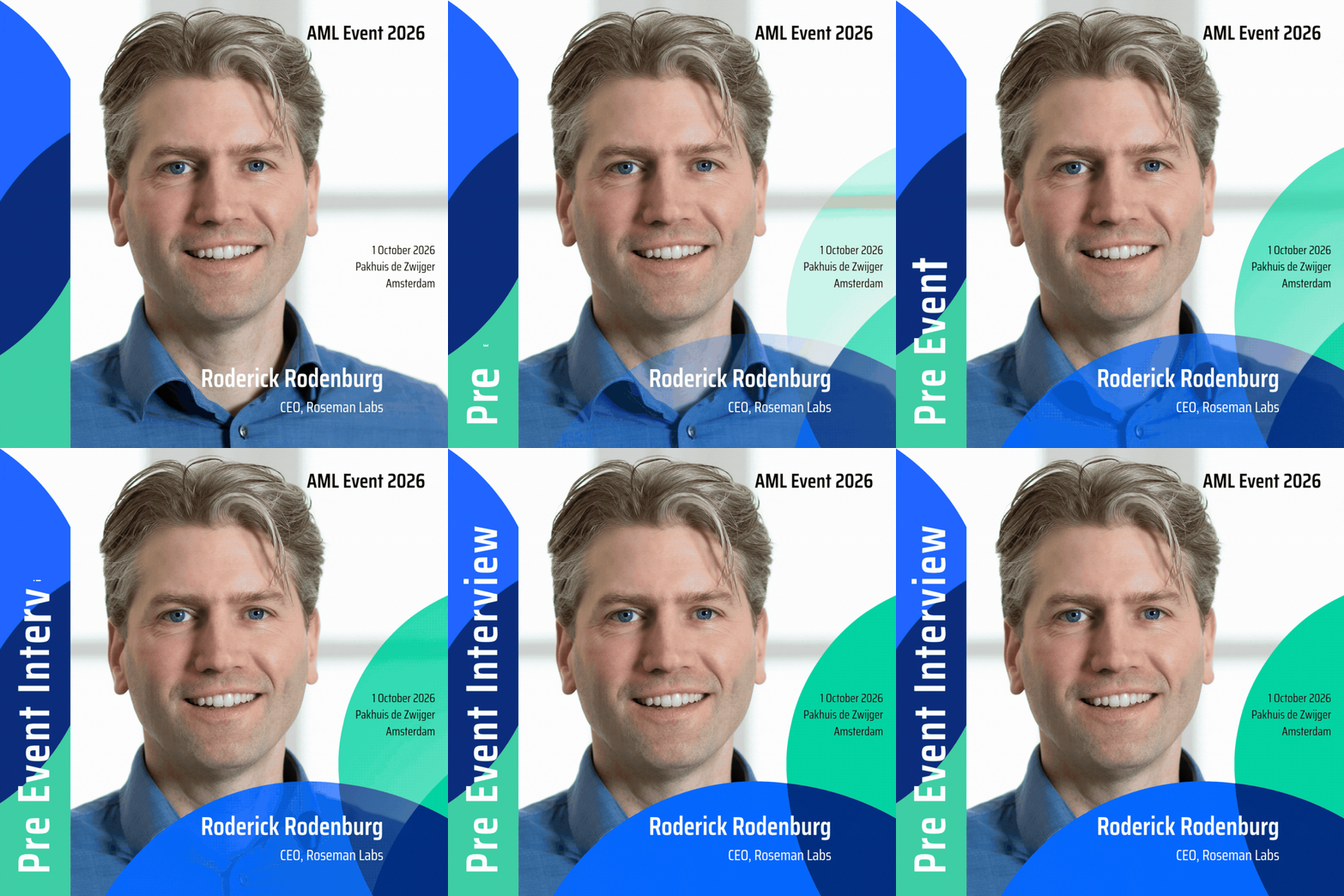
Financial crime doesn't know any borders. Until recently, detection did. In a pre-event interview with Leaders in Finance, I talked about the biggest opportunity for institutions that want to be more effective without simply adding more people: alert monitoring. The problem is the data you triage on; your own bank's data rarely tells the whole story. Connect the dots across institutions, and false positives fall away faster, so you can focus on taking the real threat away. That's also what I'm most looking forward to discussing on 1 October: how we build an open, interoperable cross-European network where every organisation can work with everybody else, instead of separate national islands. That's the conversation I'll be having when I host a Fireside Chat at the Leaders in Finance AML Event on information sharing partnerships in practice. More on who's joining me soon. Full interview: Pre-event interview Roderick Rodenburg - Leaders in Finance (https://hubs.li/Q04xwgNW0)
- LINKEDIN · IMAGESince 26 Aug 2026
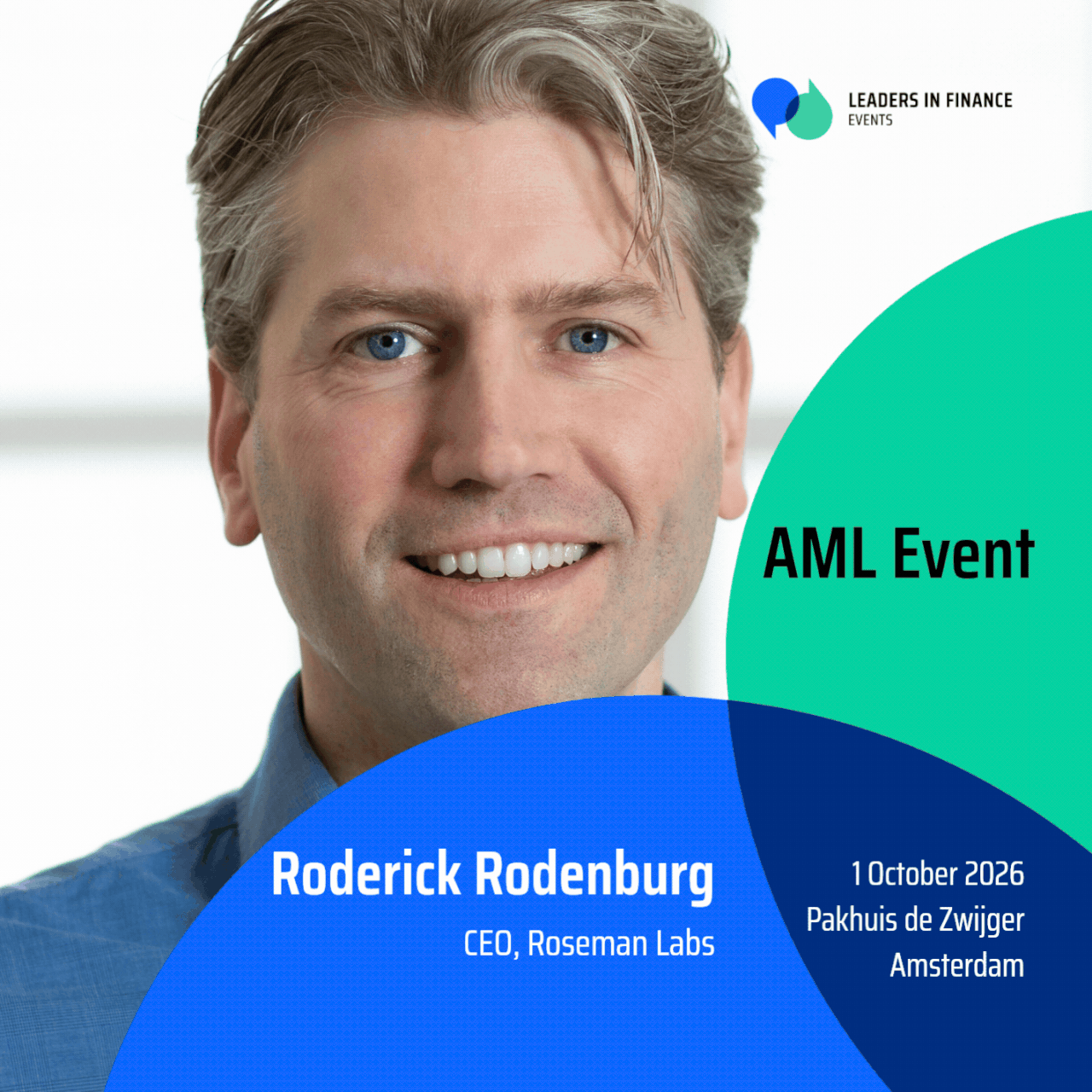
Roseman Labs is proud to support the Leaders in Finance Events 💪 Our CEO Roderick Rodenburg will join a fireside chat on 1 October, right after the Dutch DPA's session on AML and data protection. The topic: what happens once privacy stops being an excuse not to collaborate. We'll talk about the banks working together live on the Roseman Labs network, what worked in practice, and what challenges still need solving. 📅 Thursday 1 October 2026 📍 Pakhuis de Zwijger, Amsterdam 🌐 Website and registration: https://hubs.li/Q04tYVQf0
- LINKEDIN · IMAGESince 7 Aug 2026
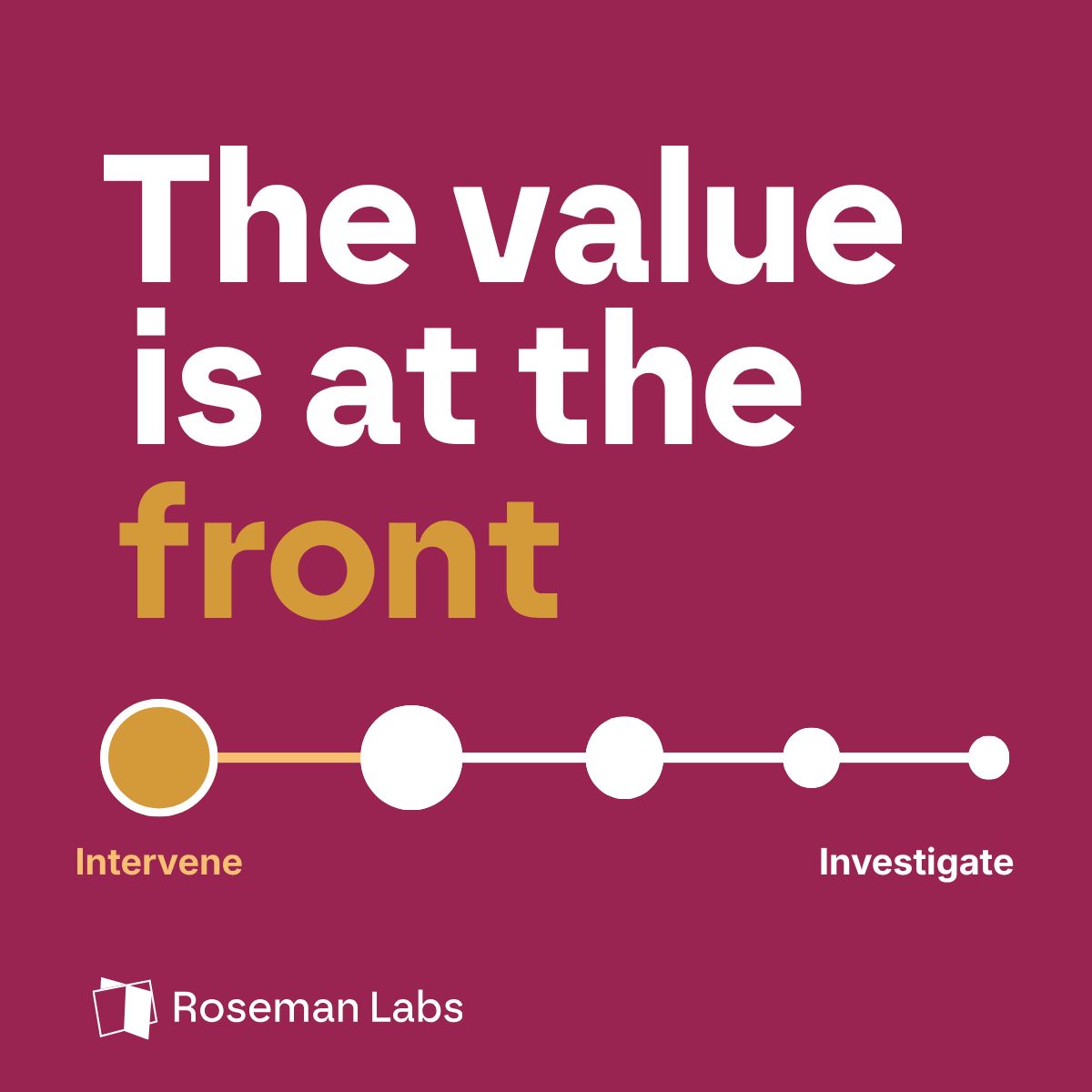
I want to share something that took me a while to see clearly. We spend a lot of time talking to anti-financial crime teams at banks. These teams are good. The monitoring they have built is sophisticated, and the people running it know exactly what they are doing. So, for a long time I assumed the answer to fincrime was simply better detection. I have come to think that is the wrong place to look. What we keep running into is not how well a bank detects; it is when it gets to act. Too often that is late, after the money has already moved, when all that is left is investigating the loss and trying to claw it back. By then the moment that mattered has passed. This is when we realized, the value is at the front. Stopping a mule account before it goes active is worth more than freezing funds mid-transfer, which is worth more than investigating a loss once the money is gone. So why do good systems still act late? Sitting with those teams, we realised it is rarely their models. It is the reach of their data. A mule account looks clean inside your bank because the evidence that would give it away is sitting at three others. It’s a gap, only made obvious when you look at it from a different perspective. That is the gap we care about closing. Not replacing what a bank has built but giving it signals it could never see on its own, drawn from across the network, without anyone's raw data ever being exposed. Same models, but sharper inputs, so the intervention finally moves earlier. I wrote down how we think about this, and why we believe the real value sits at the front of the chain, not the back. Supercharging Detection: Why the Real Value Sits at the Front of the Anti-Financial Crime Chain 🔗 to my blog here: https://hubs.li/Q04rWYtY0
- LINKEDIN · IMAGESince 2 Jul 2026
I keep hearing that GDPR is the reason banks can't fight fraud together. It really isn't. The law already settled whether you're allowed to collaborate. The second objective of GDPR is about the free movement of personal data. So, the real question is how you work on each other's data in a privacy preserving manner. And the moment you're dealing with personal data, names, accounts, behavioral signals, confirmed mule indicators, the options narrow to one. Anonymise the data and you lose what made it useful. Share it and it still lands, readable, in someone else's hands. Pseudonymise it and under GDPR it is still personal data. Secure multi-party computation is the only approach that lets banks compute a shared answer while each bank's raw data stays encrypted and invisible to everyone else. Privacy is not argued after the fact. It is built into the system. There are good solutions that achieve compliance by framing the data sharing carefully. They come in at the end of the chain, once the fraud is already detected. We keep GDPR intact across the whole chain, from account opening through to investigation, where the money can still be stopped. I wrote about why it has to be SMPC when the data is personal. Link to my blog below, where you will find a link to our webinar explaining how easy it is to get started. ⬇️ https://hubs.li/Q04nd2Bk0

6 of 84 adsSign up to see every Roseman Labs ad, filter by format and date, and get alerts on new ones.
See all 84 adsQuestions about Roseman Labs’s ads
Is Roseman Labs running LinkedIn ads?
We recorded no live LinkedIn ads for Roseman Labs on 9 Nov 2026.
How many LinkedIn ads has Roseman Labs run?
LinkedIn’s ad library lists 97 ads for Roseman Labs. We recorded 84 LinkedIn ads for Roseman Labs, first recorded on 30 Sept 2026 and last recorded on 7 Nov 2026.
Does Roseman Labs run Google ads?
We recorded no Google ads for the domain rosemanlabs.com on 7 Nov 2026.
Which ad formats does Roseman Labs use?
The 6 LinkedIn ads on this page include 6 image ads.
Watch the companies you care about.
Filter every ad by industry, country, format and network, and get alerts when a company you watch starts running new ads.