Not on air · 2 of 3 networks checked

RobotAIGeek ads
- robotaigeek.com
- IT Services and IT Consulting
- SG
- 4 employees
RobotAIGeek’s ads on LinkedIn, Meta and Google, recorded by adsrunning. Browse the latest here for free. Sign up free to see all 78. Watch RobotAIGeek on any plan to get each new one in your feed.
Watchlist included in every plan
What RobotAIGeek runs
- Single image · LinkedIn
- 6
- Google ads on 19 Oct 2026
- 2
| Network | Status | Live ads | Nov 2025LinkedIn activity · 52 weeksNov 2026 | Checked | Next step |
|---|---|---|---|---|---|
| None recorded | 0 | Checked 7 Nov 2026 | See all 78 ads → | ||
| Meta | Not checked | — | |||
| Recently | 2 | Ads on the Google Ads Transparency Center | Checked 19 Oct 2026 | Collect them with the API → |
RobotAIGeek has no live LinkedIn ads. We recorded 2 Google ads on 19 Oct 2026.
Latest ads
- LINKEDIN · IMAGERecorded 10 Nov 2026
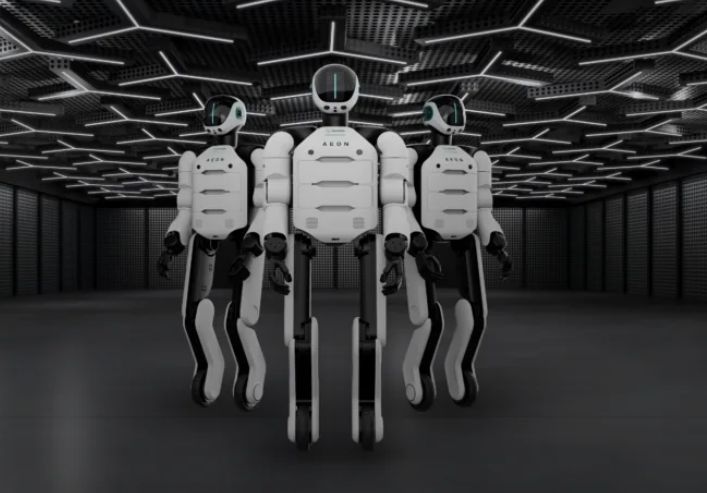
🤖Robot of the Week: AEON by Hexagon Robotics The humanoid robot that ditched walking legs for wheels — and rolled straight into BMW's factory. Most humanoid robots are designed to walk like humans. AEON took a different route. Developed by Switzerland-based Hexagon Robotics, this industrial humanoid combines a human-like upper body with a wheeled mobility system, allowing it to move quickly through factory environments while performing precision tasks. In 2026, AEON entered production testing at BMW's Leipzig plant in Germany, where it is being evaluated for battery assembly and component manufacturing. It may not walk like us, but it could soon work alongside us. 5 Facts About AEON 🚶♂️➡️ 1. A Humanoid Without the Walking Unlike traditional bipedal humanoids, AEON moves on wheels. It can travel in multiple directions and reach speeds of up to 2.4 metres per second (8.6 km/h). Its wheeled design prioritises mobility and efficiency in industrial environments. 🧍 2. Small Frame, Serious Strength Standing 165 cm tall and weighing just 60 kg, AEON is built to operate in human-oriented workspaces. It can carry up to 15 kg for short periods and maintain a continuous carrying load of 8 kg. 🙋♂️3. One Robot, Multiple Jobs AEON has 34 degrees of freedom and supports different interchangeable tools, including hands, grippers and scanning devices. This allows it to switch between manipulation, component inspection, reality capture and other industrial tasks without changing its entire robotic platform. 🔋 4. A Battery That Can Be Swapped AEON's battery system is designed for automatic swapping. Each battery provides up to four hours of operation, while automated battery exchange helps minimise downtime and supports continuous working cycles. 🚗 5. BMW Is Putting It to the Test AEON is being tested at BMW Group's Leipzig plant in Germany, focusing on high-voltage battery assembly and component manufacturing. The project explores how humanoid robots can integrate into existing automotive production rather than requiring factories to be completely redesigned around them. AEON by Hexagon Robotics | RobotAIGeek ✅ RobotAIGeek Verdict AEON challenges the idea that humanoid robots need to copy every aspect of human movement to be useful. By replacing legs with wheels, Hexagon has prioritised practical factory mobility while retaining a human-like upper body capable of handling different tools and tasks. Its collaboration with BMW is particularly interesting because the real challenge isn't building a robot that looks like a worker — it's making one that can actually contribute to production. AEON is still being evaluated, but it represents an important direction for industrial robotics: designing machines around the demands of the workplace, not simply around the appearance of humans. Read more at https://lnkd.in/ggd3ksDu #HexagonRobotics #AEON #BMW #HumanoidRobot #IndustrialRobotics #PhysicalAI #Manufacturing #Automation #Robotics #FutureOfWork
- LINKEDIN · IMAGERecorded 7 Nov 2026
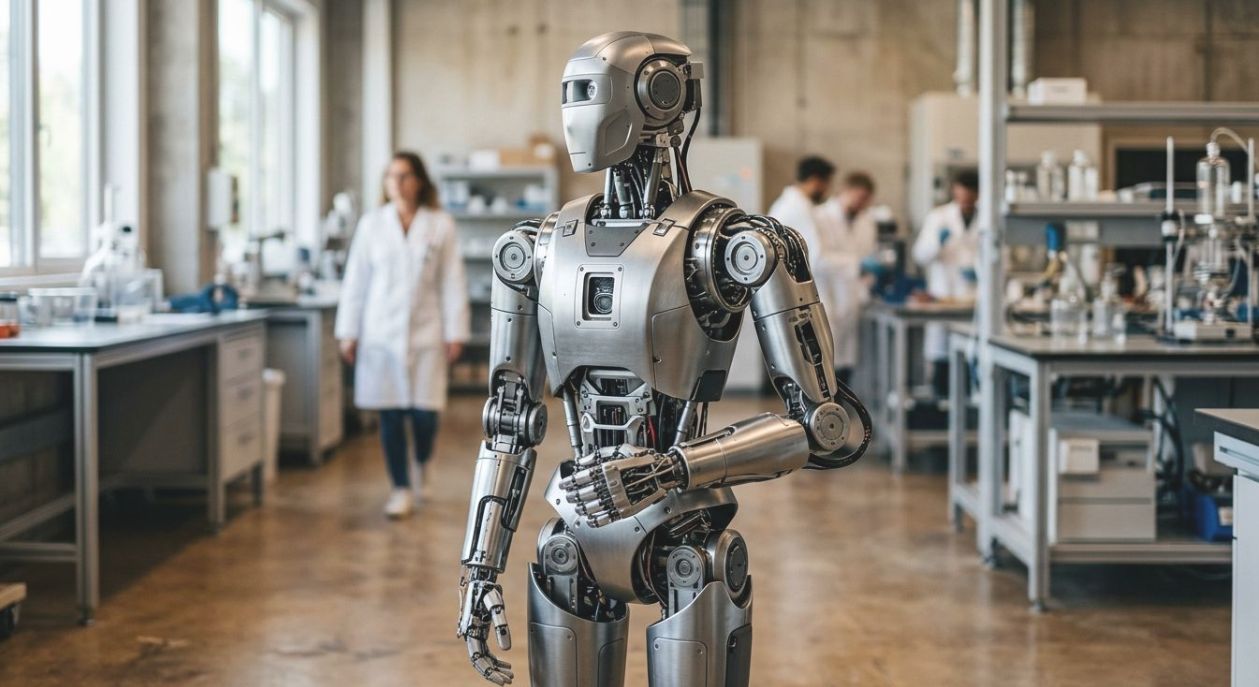
OpenAI Says It Will Build a Humanoid, With a Demo Target of 2027 OpenAI will build a humanoid robot, and its chief executive has put a demonstration on the calendar for 2027. That is a planning signal for buyers, not a product announcement. Sam Altman told Fortune that the company should be able to show a demonstration in 2027, and that robots would not be walking the streets for a few years after that. He has not said what the demonstration will include, what the machine will look like, or when anyone outside the company will see it. Procurement teams should read the date as a research milestone. A demonstration can be a controlled task in a lab. A machine that can be specified, insured, and put on a night shift is a different purchase. Altman has not given a commercial release date, a price, or a service model. Read full article at: https://lnkd.in/gsVKB6ak #OpenAI #Humanoidrobots #futureofwork #automation #USArobotics
- LINKEDIN · IMAGERecorded 7 Nov 2026
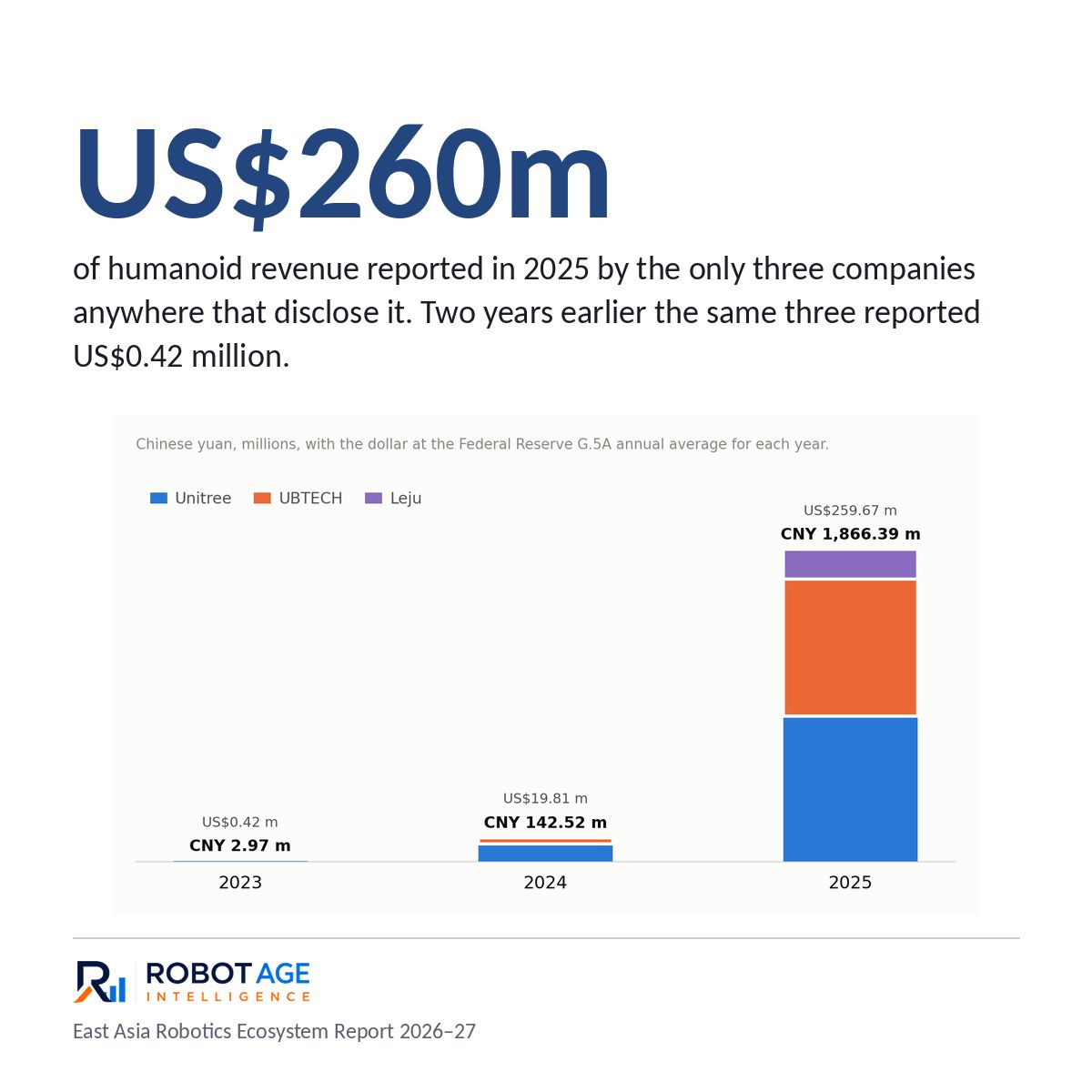
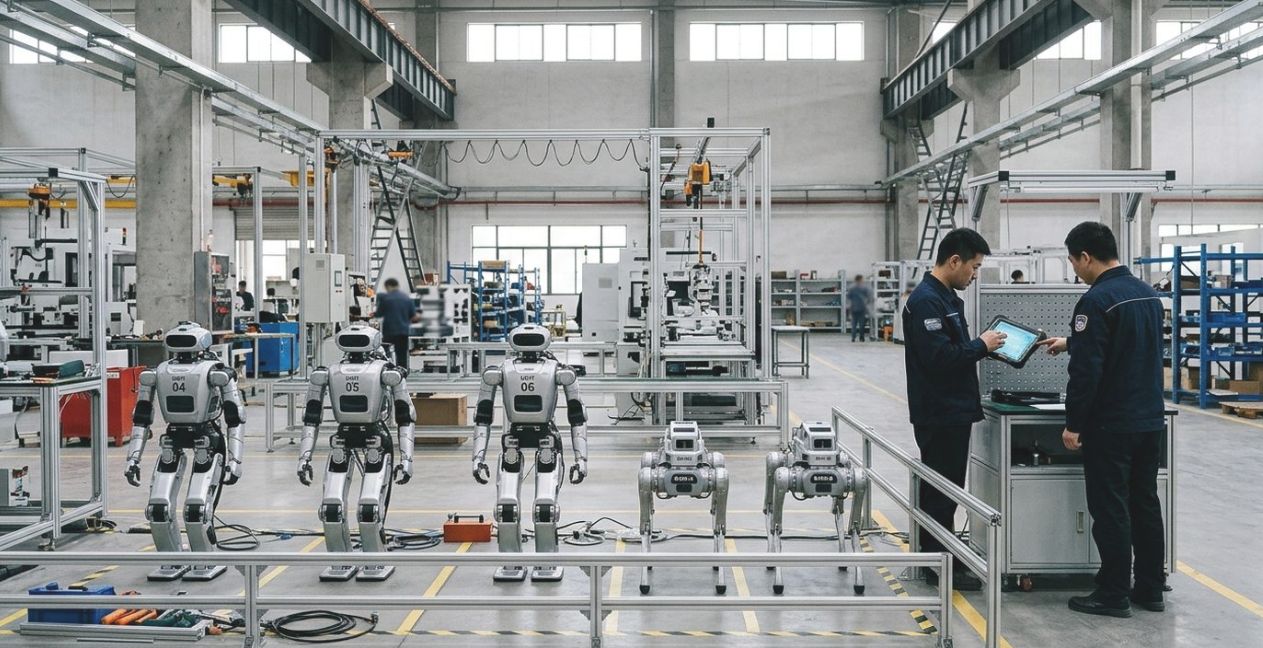
Three things happened in robotics last year that had never happened before. Humanoid robot production rose roughly tenfold in twelve months. The international federation that has tracked industrial robots since the 1980s counted humanoids for the first time in three decades. And three companies began reporting humanoid revenue as a line in their accounts. Between them, US$260 million of humanoid revenue in 2025 (CNY 1,866 million). For the first time, this category has observable economics instead of promises. Meanwhile the industry underneath it keeps compounding. 443,663 industrial robots installed in East Asia in a single year. China alone taking 59% of world installations. Service robots now worth 47% of the industrial market and on track to pass half within two years. The region on a path to US$17.5 billion by 2031. This is the part of the curve where positions get taken and where they are cheap. And here is the thing most coverage misses. Of everything built in 2025, around 10% reached a real application. Nine machines in ten went to a laboratory, a demonstration or a shelf. That is not a reason to look away. It is the single most useful number in the category, because it tells you what the constraint actually is — placement, not capacity — and therefore where the next few years of value will be created. The people who do well out of this will be the ones who can tell the difference between a machine being built and a machine doing work. The East Asia Robotics Ecosystem Report 2026–27 is where that difference is measured. Nine markets, 22 chapters, 26 company profiles, components through to integrators. A full update six months after launch and a year of East Asia industry news, so you are reading the industry as it moves rather than as it was. Two pages are free to read before you decide anything. Presale US$980 until 16 November. US$1,800 from 17 November. → https://lnkd.in/geDRCZ82
- LINKEDIN · IMAGERecorded 7 Nov 2026
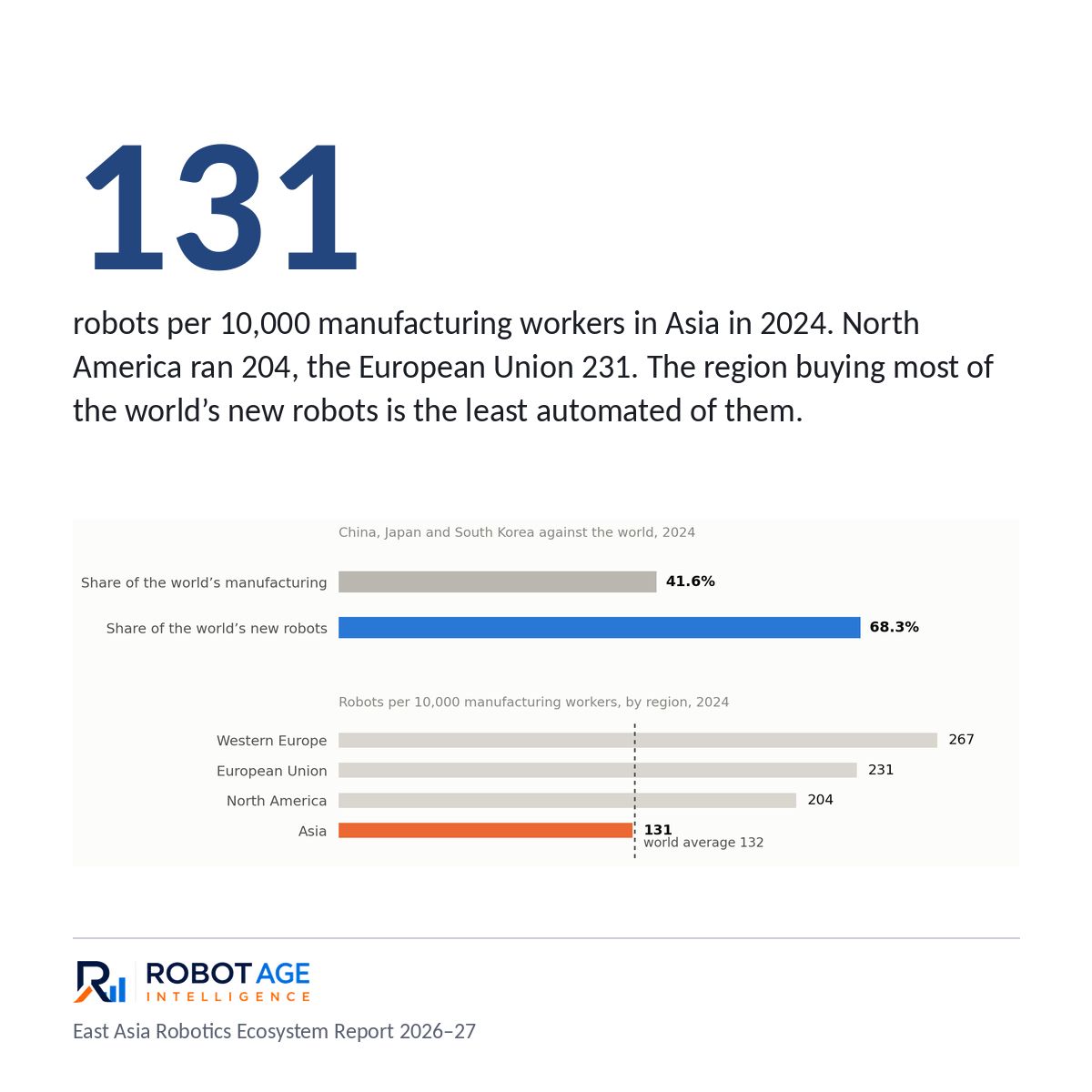
The region that buys three quarters of the world’s new robots is the least automated of the major regions. Asia runs 131 robots per ten thousand manufacturing workers. North America runs 204. The European Union runs 231. Both facts are true at once, and the reason is the thing most coverage skips: installations count machines added this year, density counts machines already in place. East Asia leads enormously on the first and sits at the world average on the second, because those machines are spread across a workforce several times the size. Inside the region the spread is wider still. Korea runs 1,220 robots per ten thousand workers in 2024. China ran 25 in 2013 and 166 in 2024. Which means the demand everyone is modelling off last year’s installations is the smaller story. The larger one is the gap between those two numbers, market by market, and how long it takes to close. That gap is where the next decade of robot spending comes from, and it is measured market by market in the East Asia Robotics Ecosystem Report 2026–27. Nine markets, 22 chapters, 26 company profiles, components through to integrators. Two pages are free to read before you decide anything. Presale US$980 until 16 November. US$1,800 from 17 November. → https://lnkd.in/geDRCZ82
- LINKEDIN · IMAGERecorded 3 Nov 2026
Unitree Q3 Revenue Rises 70% as Model Spend Jumps | RobotAIGeek Unitree Robotics, the Hangzhou humanoid and quadruped maker listed on Shanghai's STAR Market as 688836, posted third-quarter revenue of RMB 665.0 million (approximately US$93 million), up 69.93 percent from a year earlier. Profit did not follow. Net profit attributable to shareholders fell 17.37 percent to RMB 112.7 million (approximately US$16 million). The quarter is the first full public earnings print since Unitree completed its initial listing. Earlier RobotAIGeek coverage tracked the IPO path and first-quarter growth. This filing adds a different fact: sales are still expanding, but the cost of training embodied models is now large enough to pull quarterly profit down. Read Full article: https://lnkd.in/gvS5eUCS #unitree #chinarobotics #capitalmarkets #robotictrends
- LINKEDIN · IMAGERecorded 31 Oct 2026
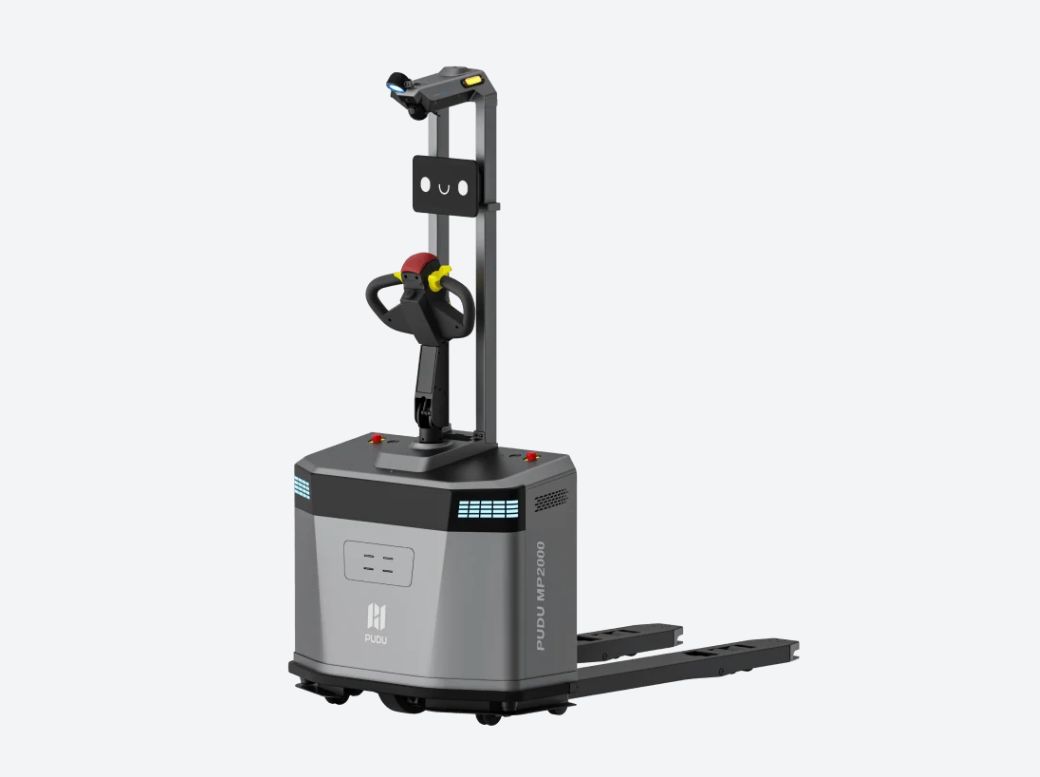
🤖 Robot of the Week: PUDU MP2000 by Pudu Robotics The robot that moves two tonnes of cargo without needing a human driver. Warehouses run on movement. Pallets arrive, materials cross factory floors and goods travel between storage and production lines. But moving heavy loads safely and efficiently is still a challenge. Enter the PUDU MP2000, an AI-native autonomous pallet-handling robot launched by Pudu Robotics in August 2026. Built to carry up to two tonnes, it combines intelligent pallet recognition, autonomous navigation and precision fork handling to move heavy loads through warehouses and manufacturing facilities. 5 Facts About PUDU MP2000 🏋♀️ 1. Two Tonnes? No Problem. The MP2000 can carry loads weighing up to 2,000 kg (4,409 lbs). It's designed to move palletised materials between warehouse storage, distribution areas and manufacturing production lines — taking on repetitive heavy-load transport. ⏩ 2. Forks In, Load Up — in 20 Seconds Pallet pickup is more complicated than simply driving underneath a load. The MP2000 can complete fork insertion in around 20 seconds, helping streamline the pickup process before transporting the pallet to its destination. 🧐 3. It Can Recognise More Than One Pallet Type Not every warehouse uses identical pallets. The MP2000 supports common pallet formats and can learn to recognise non-standard load carriers. It can also compensate for pallets positioned up to 15 cm off-centre or angled by up to 15 degrees, reducing the need for manual repositioning. 🏗️ 4. No Major Warehouse Renovation Required Using 3D LiDAR-SLAM and visual SLAM (VSLAM), the MP2000 navigates its surroundings while detecting obstacles and assessing available clearance. Pudu says its plug-and-play approach avoids the need for major site modifications or complex platform integration. It can also perform right-angle pallet pickup in aisles as narrow as approximately 2 metres, depending on the pallet format. 🔋 5. Built for Long Shifts The MP2000 offers up to 12 hours of runtime without a load, or around 6 hours at maximum load. Charging takes approximately 2 hours with a 200–240V supply, or 3.2 hours with a 100–120V supply. It also supports coordination between multiple robots, helping facilities manage material movement across larger operations. ✅ RobotAIGeek Verdict The MP2000 isn't designed to entertain a crowd or imitate a human. It has a simpler mission: move heavy things from one place to another, reliably and autonomously. Of course, real-world performance, safety and return on investment still need to be demonstrated in each facility. But industrial robotics doesn't always need to look futuristic to make a difference. Sometimes, the most valuable robot is the one that keeps the entire operation moving. Read more at: https://lnkd.in/g-2w-Bwx #PuduRobotics #PUDUMP2000 #WarehouseRobotics #IndustrialRobotics #Logistics #Automation #PhysicalAI #Robotics #Manufacturing #SupplyChain
6 of 78 adsSign up to see every RobotAIGeek ad, filter by format and date, and get alerts on new ones.
See all 78 adsQuestions about RobotAIGeek’s ads
Is RobotAIGeek running LinkedIn ads?
We recorded no live LinkedIn ads for RobotAIGeek on 10 Nov 2026.
How many LinkedIn ads has RobotAIGeek run?
LinkedIn’s ad library lists 77 ads for RobotAIGeek. We recorded 78 LinkedIn ads for RobotAIGeek, first recorded on 14 Oct 2026 and last recorded on 10 Nov 2026.
Does RobotAIGeek run Google ads?
Yes. We recorded 2 Google ads for the domain robotaigeek.com on 19 Oct 2026.
Which ad formats does RobotAIGeek use?
The 6 LinkedIn ads on this page include 6 image ads.
Watch the companies you care about.
Filter every ad by industry, country, format and network, and get alerts when a company you watch starts running new ads.