Not on air · 2 of 3 networks checked
Regrow Ag
- regrow.ag
- Software Development
- US
- 61 employees
Regrow Ag’s ads on LinkedIn, Meta and Google, recorded by adsrunning. Browse the latest here for free. Sign up free to see all 223. Watch Regrow Ag on any plan to get each new one in your feed.
Watchlist included in every plan
| Network | Status | Live ads | Nov 2025LinkedIn activity · 52 weeksNov 2026 | Checked | Next step |
|---|---|---|---|---|---|
| None recorded | 0 | Checked 3 Nov 2026 | See all 223 ads → | ||
| Meta | Not checked | — | |||
| None recorded | 0 | No ads found on the Google Ads Transparency Center | Checked 8 Oct 2026 | Collect them with the API → |
Regrow Ag has no live LinkedIn ads. We recorded no Google ads on 8 Oct 2026.
Latest ads
- LINKEDIN · IMAGESince 14 May 2026
SAI. LSRS. SBTi. TNFD. Your stakeholders all have different frameworks. Learn how to meet multiple regen ag standards with one data effort.
- LINKEDIN · IMAGESince 7 May 2026
The most compelling case for regenerative agriculture I heard last week didn't come from a sustainability team. It came from procurement. I was at FutureChain in London and several supply chain and procurement leaders were on stage. People who rarely speak about sustainability were making the case for resilience investment. Their message was clear: the job used to be to cut costs first, but assurance of supply is now a leading priority. That means investing in the landscapes and supply sheds that make procurement possible now and in the future. The regen ag business case is gaining traction beyond sustainability teams. I hosted a session where industry leaders mapped, stress tested, and prioritized action around supply chain risk. The conversation in the room reflected what procurement leaders were saying on stage - This is no longer only a values conversation, it's a supply assurance priority. A few other takeaways: Finance and insurance are moving. Major banks, insurers, and development finance organizations were in the room exploring how field-level data can unlock new financial instruments for farmers. Active pilots are underway. Pooled funding and blended finance are essential to getting this to scale. There is a growing challenge to the idea that sustainability should be a competitive differentiator. Healthy soil, water, and climate systems are shared infrastructure. Every brand depends on them whether they acknowledge it or not. What I heard at Future Chain was impatience with the old framing: outcomes over intentions, supply assurance over cost minimization, action over endless analysis. Nothing moves a C suite faster than standing in a field and seeing the difference between a farm transitioning to regenerative practices and one that hasn't. The soil, the water retention, the biodiversity coming back makes the case for itself The question is no longer whether to invest in resilience. The business case is crystalizing, the capital is circling, and procurement is at the table. The only thing that determines what happens next is how quickly people in a position to act and scale. If you're in procurement, finance, or supply chain, what are you seeing and what is it going to take to accelerate the transition?
- LINKEDIN · IMAGESince 31 Mar 2026
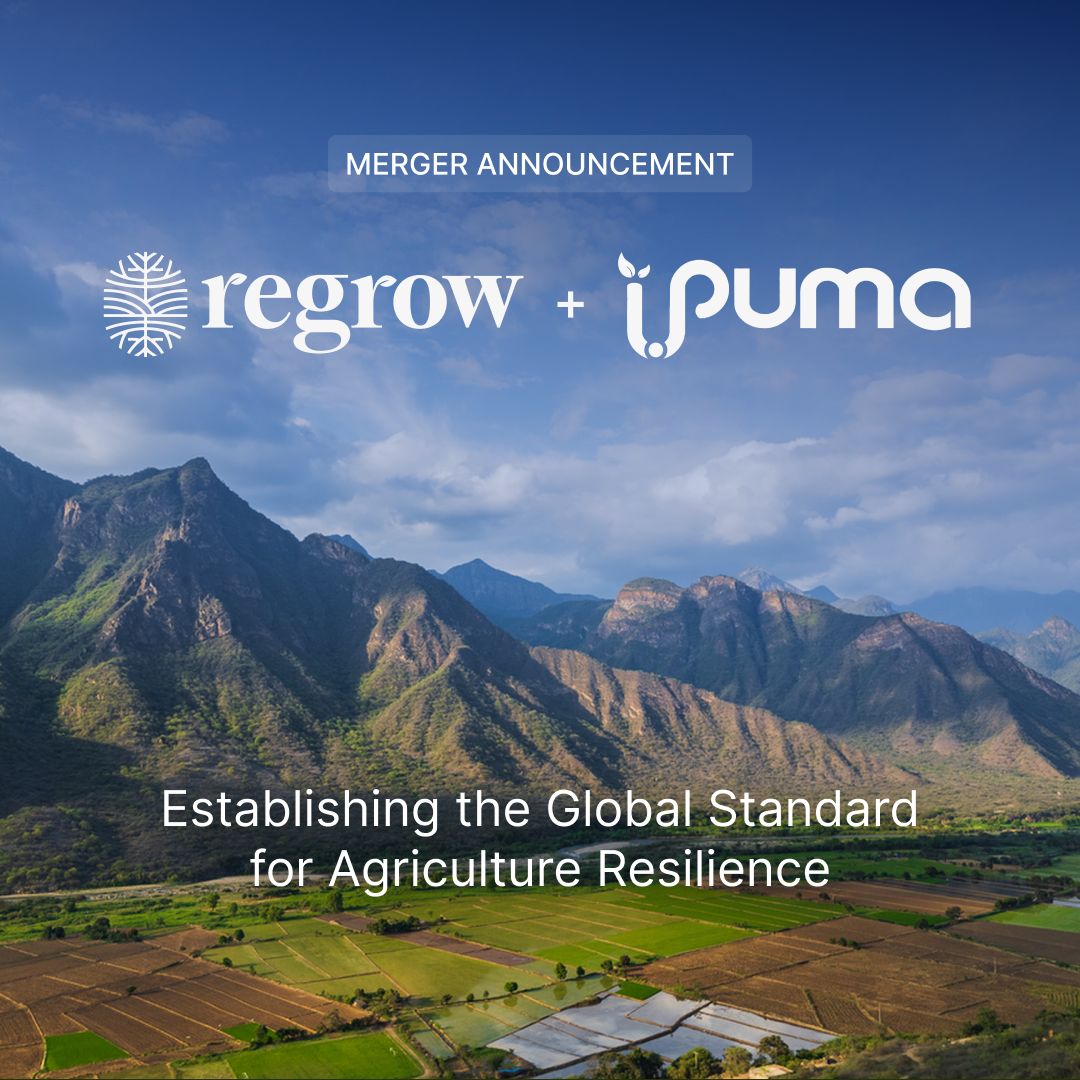
Today, Regrow Ag is welcoming Plataforma PUMA to its global family! Our goal together is clear: creating the global enterprise standard for agricultural supply chain sourcing and resilience. Global food and agriculture companies are managing increasingly complex agricultural supply chains. Climate volatility, regulatory pressure, and fragmented regional systems are making it harder to manage procurement, sustainability, and compliance across geographies. Most organizations still rely on disconnected tools. Different systems for traceability. Different methodologies for emissions reporting. Different workflows for compliance. The result is duplicated work, inconsistent data, and growing operational risk. Now, Regrow and PUMA (Plataforma Única de Monitoreo Ambiental) have joined forces to change that. By integrating Regrow’s science and data infrastructure with PUMA’s on-the-ground execution platform across Latin America, we are creating a unified enterprise system of record for agricultural supply chains. One platform connecting: • Field-level agricultural data • Enterprise procurement strategy • Sustainability performance and Scope 3 reporting • Regulatory compliance including EUDR, ISCC, and 2BSvs Across row crop and livestock supply chains worldwide. This unified platform enables companies to: • Establish and certify regenerative commodities • Generate audit-ready outcomes aligned with science-based targets • Manage Scope 3 reporting under ISO standards and the GHG Protocol • Reduce compliance and audit risk across global sourcing regions Together, we can move global food companies from fragmented regional tools to one system for managing agricultural supply chain resilience. Read the full announcement and stay tuned for more updates: https://lnkd.in/eKk2xtg3
- LINKEDIN · IMAGESince 19 Mar 2026
LSRS is final, but there are still unanswered questions. Greenhouse Gas Protocol (GHG Protocol)'s Land Sector and Removals Standard establishes a pathway for higher-integrity land sector accounting, but several details will be clarified through implementation guidance over the next year. In our latest blog, we highlight five questions that could shape how LSRS is implemented in practice: • Whether soil sampling will be required across project areas • How uncertainty will be quantified and reported • If intervention accounting outcomes will be accepted by target-setting bodies • How carbon stock changes should be handled in annual reporting • How monitoring, reversals, and buffer pools will be managed These decisions will influence the cost, scalability, and durability of LSRS-aligned programs. We’re tracking these developments closely as companies move from LSRS awareness to implementation. Read more: https://lnkd.in/gmgHHfdV
- LINKEDIN · IMAGESince 17 Mar 2026
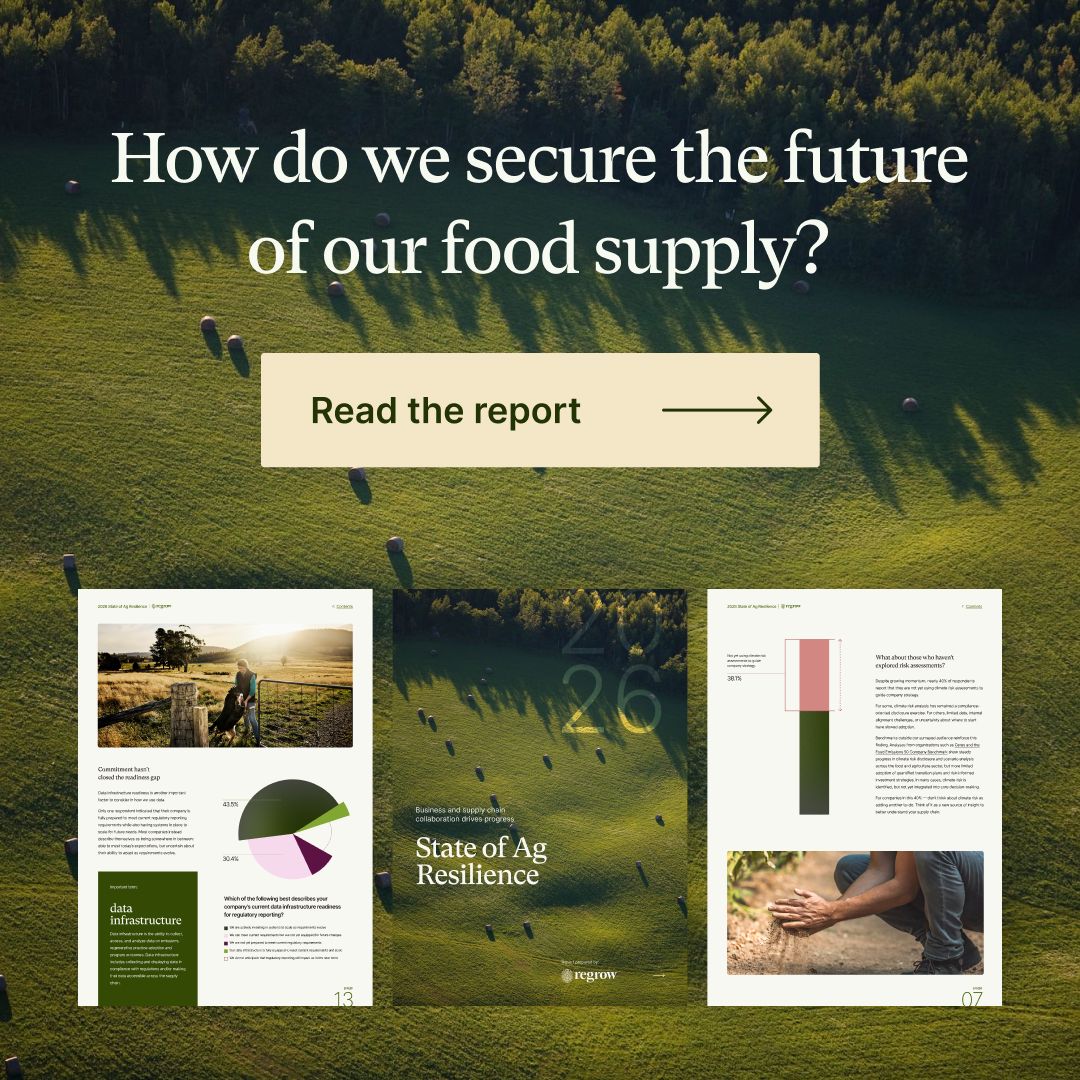
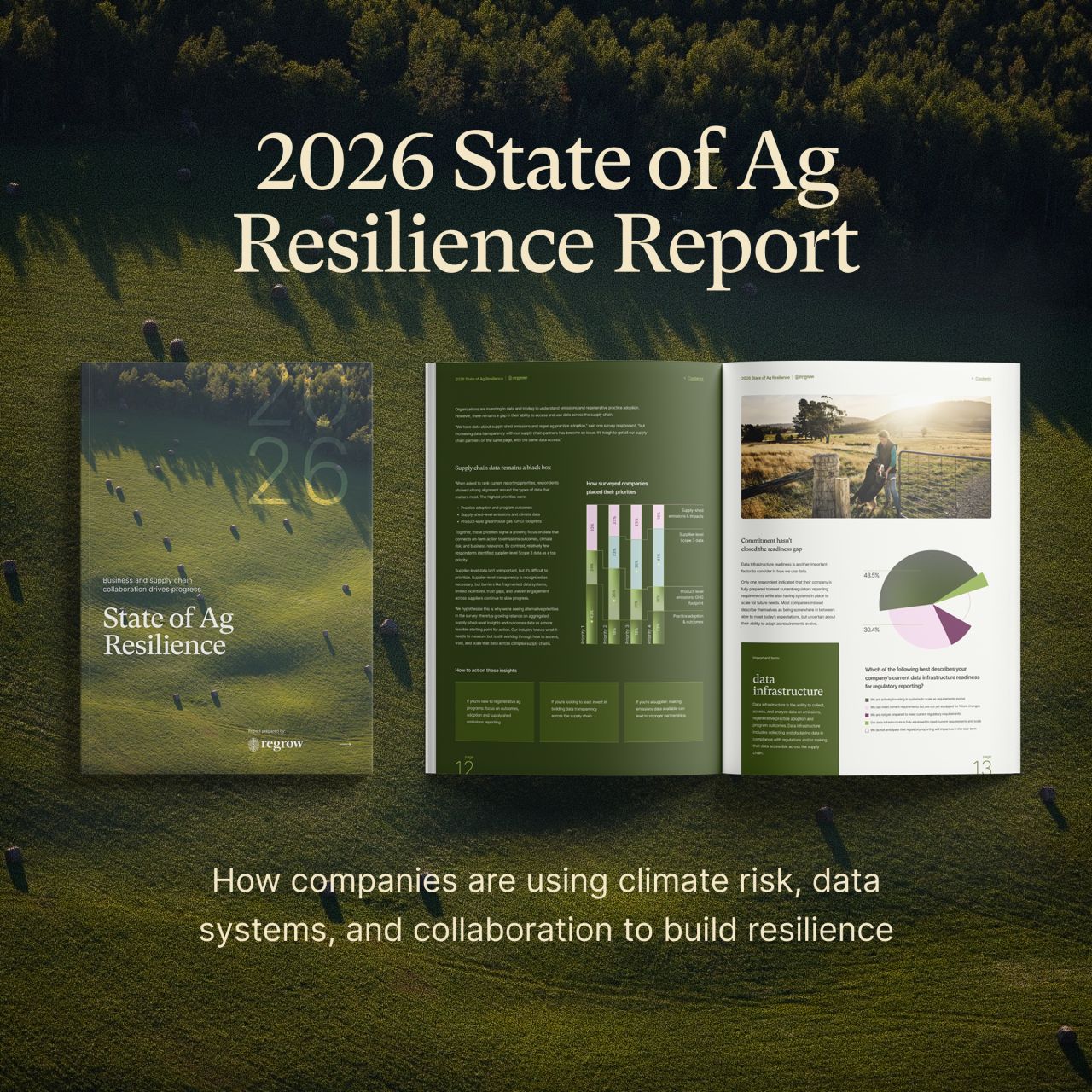
The 2026 State of Ag Resilience is here. See what signals market leaders say will define the year ahead from risk management to removals.
- LINKEDIN · IMAGESince 12 Mar 2026
Climate risk assessments are starting to shape major supply chain decisions. From our new 2026 State of Agriculture Resilience, 60% of leaders we surveyed are already using climate risk assessments to guide sourcing, procurement, or regenerative agriculture investment. A few years ago, most risk assessments were seen as disclosure exercises. Today they are increasingly helping determine which sourcing regions need attention and investment to ensure continued supply stability. This signals meaningful progress in how companies are using climate insight to guide sourcing strategy, but structural barriers to scaling remain. Nearly 40% of respondents are yet to integrate climate risk into strategic decision-making, most commonly because supply chain data is difficult to access. The question isn't what data to collect. It's how. The full 2026 State of Agriculture Resilience report explores how companies are navigating these challenges, from building fit-for-purpose data systems to designing partnerships that make regenerative programs easier to scale. You can read the new report here: https://lnkd.in/gFjxUyYP How closely do our findings match what you're seeing inside your own organization? Let us know in the comments!


6 of 223 adsSign up to see every Regrow Ag ad, filter by format and date, and get alerts on new ones.
See all 223 adsWatch the companies you care about.
Filter every ad by industry, country, format and network, and get alerts when a company you watch starts running new ads.