Not on air · 2 of 3 networks checked

Radyant ads
- radyant.io
- Technology, Information and Internet
- DE
- 22 employees
Radyant’s ads on LinkedIn, Meta and Google, recorded by adsrunning. Browse the latest here for free. Sign up free to see all 84. Watch Radyant on any plan to get each new one in your feed.
Watchlist included in every plan
What Radyant runs
- Single image · LinkedIn
- 6
| Network | Status | Live ads | Nov 2025LinkedIn activity · 52 weeksNov 2026 | Checked | Next step |
|---|---|---|---|---|---|
| None recorded | 0 | Checked 8 Nov 2026 | See all 84 ads → | ||
| Meta | Not checked | — | |||
| None recorded | 0 | No ads found on the Google Ads Transparency Center | Checked 16 Oct 2026 | Collect them with the API → |
Radyant has no live LinkedIn ads. We recorded no Google ads on 16 Oct 2026.
Latest ads
- LINKEDIN · IMAGESince 5 Feb 2026
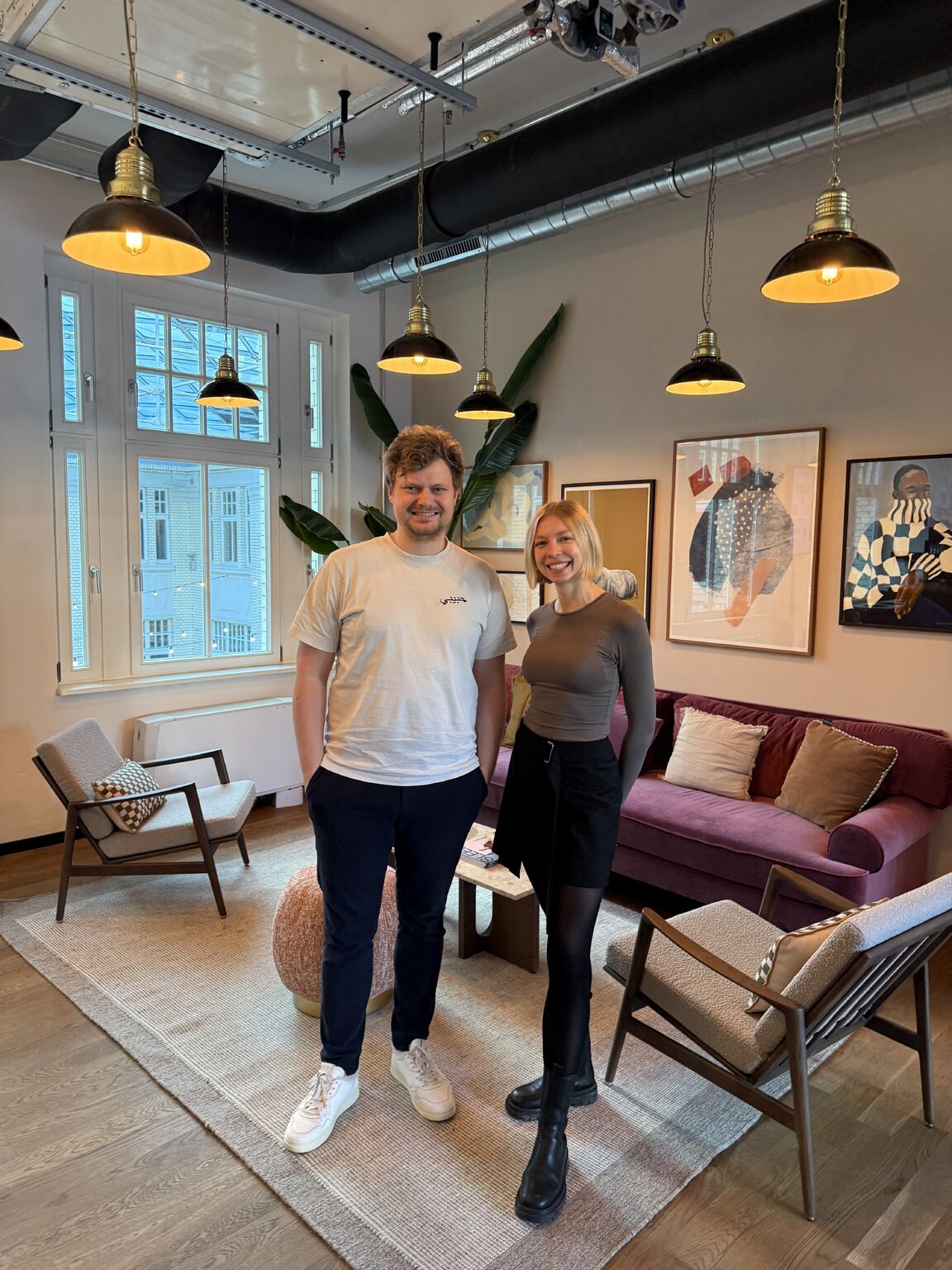
Since joining in November 2021, I've watched Jennifer handle some of our most challenging clients and deliver 10x organic lead growth. Now, we're ready for the next chapter and she becomes Chief Product Officer at Radyant. Let me tell you why. She's been at the core of every major evolution at Radyant. From just another SEO agency trying to serve everyone, to a growth partner at the forefront of organic growth and AI search. She helped shape that entire transformation. She's delivered some of our most incredible case studies. 10x organic lead growth for clients in highly competitive industries. Research-intensive, high-stakes products where the buyer journey is complex and every piece of content needs to earn its place. But here's what makes Jennifer really exceptional in my opinion: → She really gets the vision. How we help companies realize their full organic potential. Not just rankings or traffic, but qualified leads, pipeline, revenue. → Her mindset is "I might not know how we'll do it now, but we'll figure it out. So let's go." In four years, there hasn't been a single moment where she stopped our progress. Every new challenge, she's grown more professionally and personally. → She thinks in systems and standards, not one-off projects. That's exactly what we need as we build Radyant as a product organization. That's why we're creating the Chief Product Officer role. We don't think about our service as custom-tailored projects built from scratch for everyone. We think about it as a product organization with clear standards and a specific point of view. We serve a very specific set of companies: research-intensive products (mostly high price, high stakes) in sectors like B2B SaaS, health, climate tech, prop tech, fintech. We help them create omni-presence along the buyer's journey across Google and AI search platforms, and gradually move prospects down the funnel with content that converts. We want the best possible offering on the market. Not for everyone, but for the companies we're built to serve. Jennifer has been building this with me for four years. Now she's taking it to the next level. We have more cooking than ever before. New products, new standards, new ways of delivering even better results. And I couldn't think of anyone better to lead this than Jennifer. Let's go! 🫶
- LINKEDIN · IMAGESince 5 Feb 2026
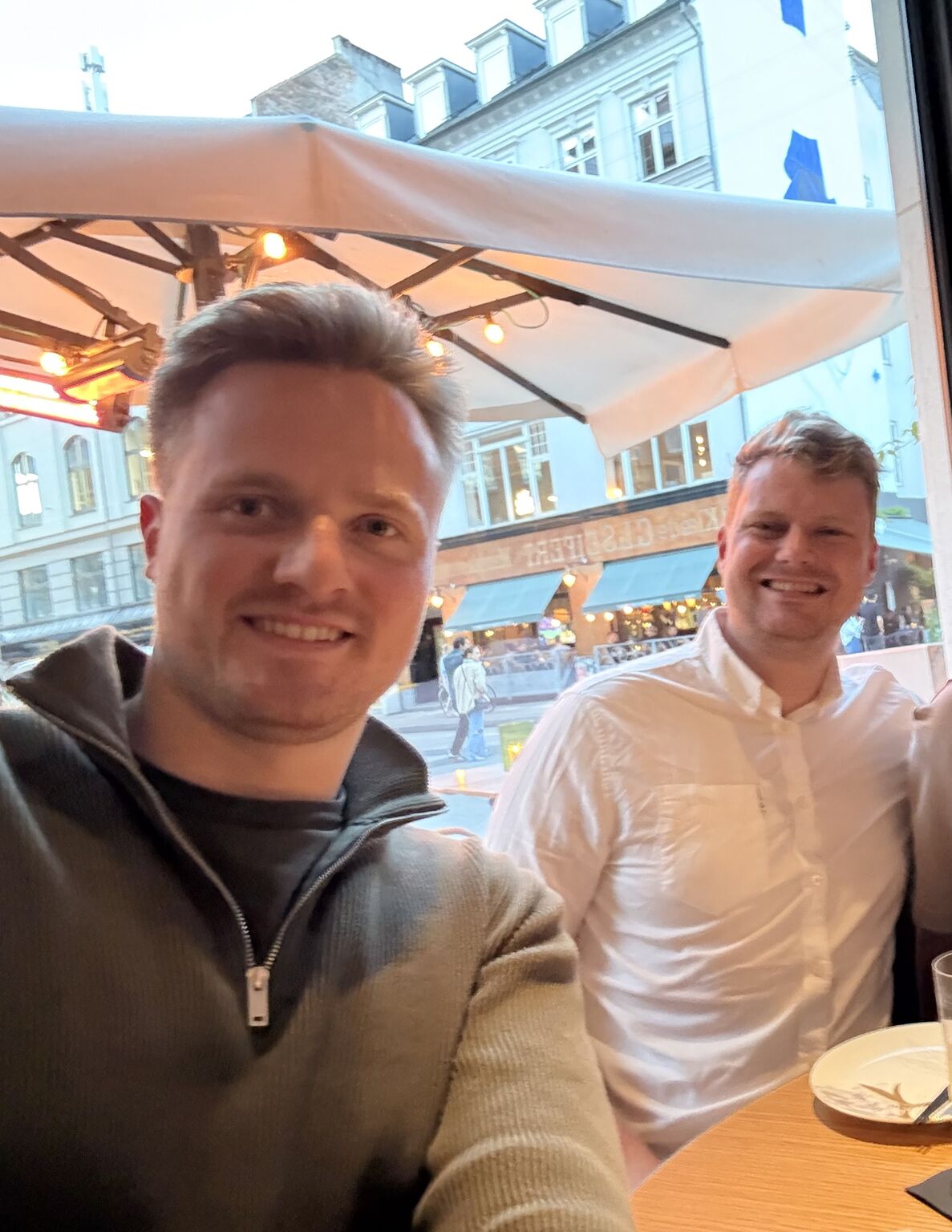
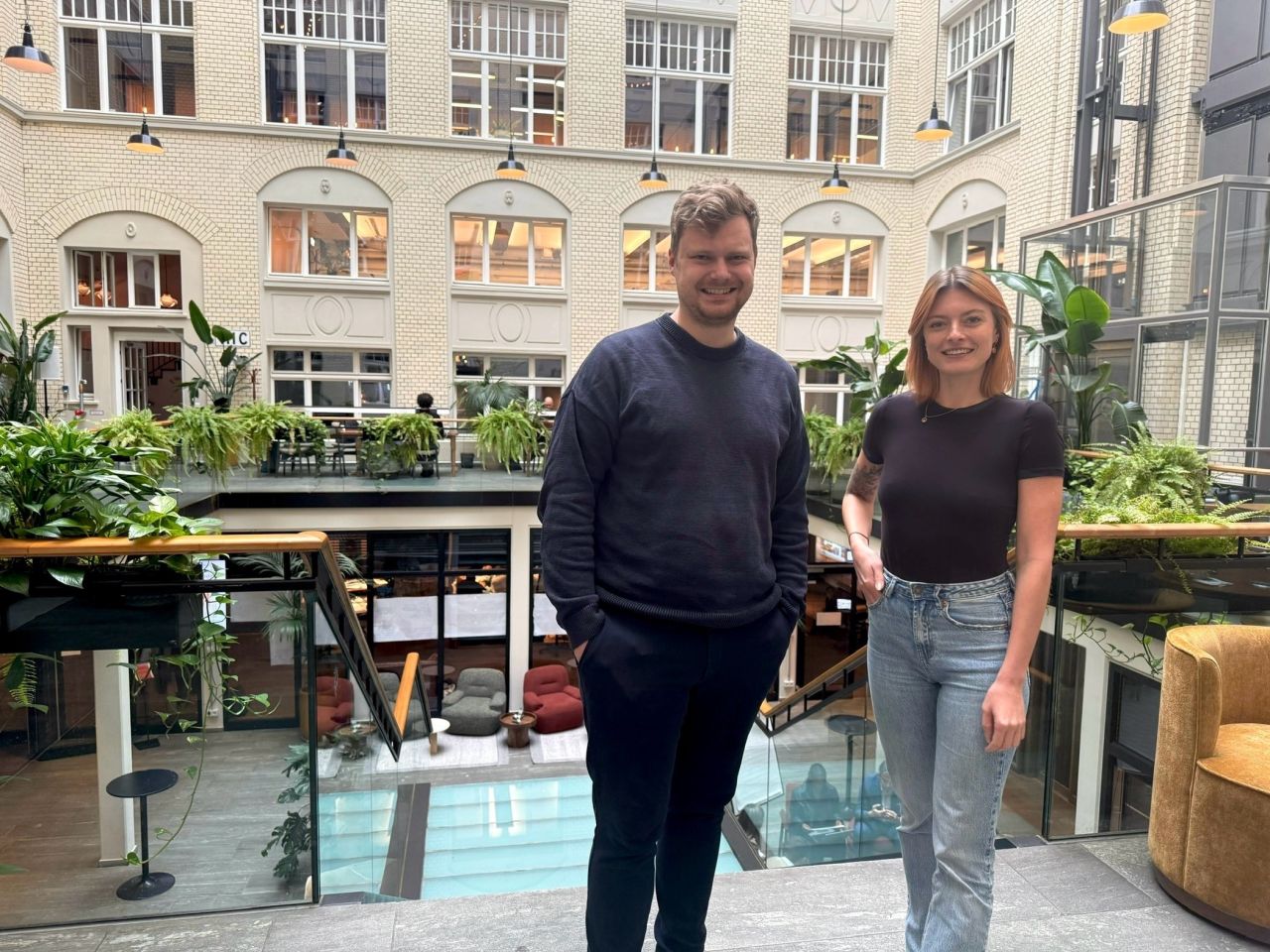
This guy walked away from a stable banking career at Sparkasse for a vision he couldn't see or touch. 4 years at Radyant later, he's my COO and experienced almost every company phase in fast-forward: naive optimism, first growth, near-insolvency, comeback, and breakthrough. This post is my public appreciation to him. Marius joined us on October 1st, 2021 as Account Manager. He left behind what most Germans consider the ultimate career security: Sparkasse. A clear path forward, predictable growth, stability you can count on. Instead, he chose something we could barely articulate. A vision that existed more in conversation than in reality. A bet on people and potential over guarantees. Neither of us could have imagined how wild this ride would be. In 4 years, Marius lived through what most companies experience over a decade. The naive optimism when everything feels possible. The first real growth where you think you've figured it out. The near-insolvency where you question everything. The slow, painful comeback where belief matters more than strategy. And now, the breakthrough where it all starts making sense. He stayed through all of it. When things got hard, he didn't update his LinkedIn profile or start taking calls from recruiters. He showed up, believed we could figure it out as a team, and proved himself right. Here's what I've learned about building teams from watching his journey: Most companies hire employees. They're looking for people to execute tasks, fill roles, clock hours. There's nothing wrong with that, but it builds a fundamentally different type of company. The companies that actually win find people who believe. People who see the vision even when it's unclear. People who stay when things get hard. People who grow because they're building something together, not just advancing their career. Marius could have had a comfortable career at Sparkasse. Predictable promotions, stable income, clear trajectory. Instead, he chose to build something from almost nothing, weather the storms, and become a foundational part of what Radyant is today. That's not an employee. That's a partner. Radyant is stronger than it's ever been right now. We're growing heavily. We're working with incredible clients. We're building things that didn't exist before. And a big reason we're here is because Marius made a bet on something invisible 4 years ago and then did the work to make it real. So this is my public appreciation: Thanks for believing in something you couldn't see, Marius. Thanks for staying when it got hard. Thanks for growing with us instead of just working for us. We're just getting started. Still day one! PS. Sorry Wolkan Yagar for cutting you out of the pic. 🫣 PPS. Marius, we gotta take more pictures together. 😅
- LINKEDIN · IMAGESince 5 Feb 2026
In my 6 years of building Radyant, I’ve learned to recognize exceptional talent when I see it. That’s why Jessica is our first ever Head of Growth. Jessica joined Radyant in 2024 as a strategist, working operationally with our clients on SEO and AI search. Starting in May 2025, she took over part our new business initiatives, which meant consulting with potential clients, running growth audits, and qualifying leads. I still remember our first strategy calls (the call where we show a lead how we see us helping them) together. We were still figuring out the format. Within 3 calls, we pivoted our entire process. Three times. That meant recreating a 40-page slide deck within 90 minutes before each call. Was it stressful? Absolutely. But Jessica never lost sight of what mattered: Making progress. While many people would’ve gotten frustrated or overwhelmed, she kept pushing forward. Always focused on improving the process for our clients. And the results speak for themselves: She’s already won 6-digit ARR for Radyant. While effectively only working in that function part-time. While still delivering for our clients operationally. So what’s next? Our vision is clear: Turn Radyant into THE go-to partner for Organic Growth from SEO and AI search for fast-growing companies. This means: → Making sure the great work we do for clients gets shared → Running events that bring together the right people → Creating content that provides real value to the market → Building systems so we go from lead to happy client seamlessly I’m excited about what we’ll build together. Keep being awesome Jessy! 🎉
- LINKEDIN · IMAGESince 2 Feb 2026
Most marketers can't justify SEO budgets to C-level without losing them in the first 10 minutes. But getting C-level buy-in is critical. The problem isn't their expertise, it's what they choose to talk about. I was in a call a while ago with a startup's Head of SEO and C-level. The Head of SEO was brilliant. Deep technical knowledge. Years of experience. Clear passion for the work. But within minutes, he was talking about translation workflows, regular expressions for tracking high-intent keywords, and hreflang config. The CEO's body language shifted. You could see the disconnect happening in real time. Not because the work wasn't valuable. But because it wasn't framed in a language management understands. Here's what most SEO people talk about in these conversations: → Technical implementations and site migrations → Tool configurations and tracking setups → Keyword ranking and visibility metrics → Content production workflows → Link building tactics → Domain authority Here's what C-level actually wants to hear: → How to measure success vs company goals → Which 10% of actions deliver 90% of impact → What business outcomes we drive toward → How it connects to pipeline and revenue → What the ROI looks like in their terms This isn't the fault of SEO professionals. The industry taught us to measure technical execution. To prove our value through rankings, traffic, and visibility scores. But management doesn't get promoted for traffic growth. They get promoted for revenue impact. We redirected the call with four simple questions: 1) "What's the key business goal here - is it qualified leads, pipeline, or non-brand revenue?" 2) "If we achieve visibility on high-volume terms that don't convert, does that still create value for you?" 3) "How do you currently distinguish between brand and non-brand performance?" 4) "What would success look like in six months that would make you say 'this is working'?" The conversation shifted from operational details to strategic outcomes. The best SEO professionals I know do amazing technical work. But the ones who consistently win budget and C-suite buy-in have learned to speak a different language: 1) They start with business outcomes and reverse engineer the work. 2) They identify the 10% of initiatives that connect to 90% of impact. 3) They translate technical excellence into revenue terms. The technical execution matters. Obviously. But if you can't connect it to what management cares about, your amazing work stays invisible at the decision-making level. What's been your experience presenting SEO work to C-level? PS. If you want to work with a team that has gotten buy-in for 6-figure yearly SEO budgets multiple times, let's talk → https://lnkd.in/ekh6Zxbi
- LINKEDIN · IMAGESince 2 Feb 2026
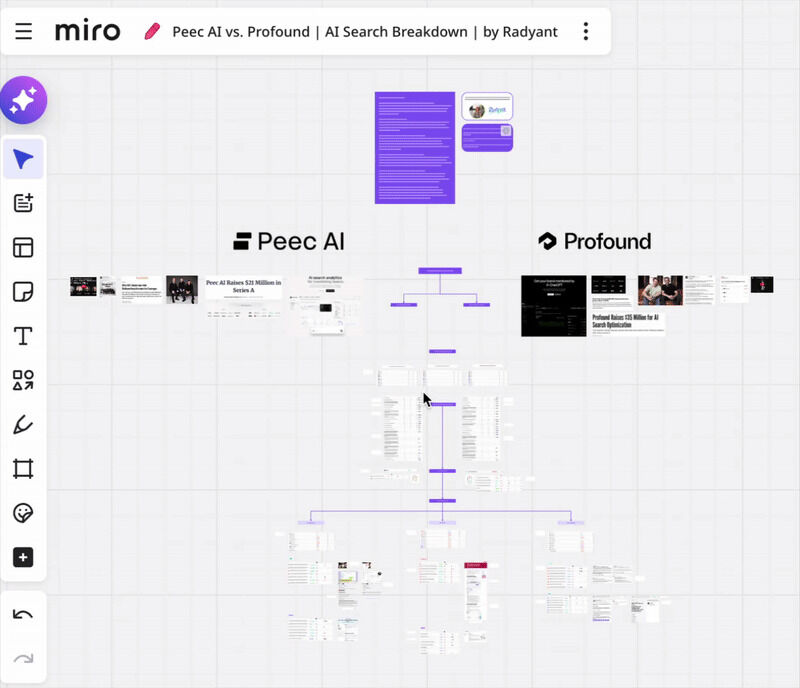
Peec AI raised a total of $29M, Profound $58.5M. Both are among the most talked about AI visibility tools right now. So I spent 10+ hours analyzing: how visible are these tools in AI search themselves? Here are my 6 key insights: → Similar overall visibility, different strengths. Peec AI leads on prompts related to agencies or marketing teams. Profound leads on competitor positioning like "alternatives" or "best tool for X." → There's a (huge) gap in owned content being used as sources. Profound ranks in the top 20 sources across ChatGPT, Perplexity, and Google AIO, driven by their how-to guides. Peec AI ranks #81, with mainly their homepage being referenced. Clear room to grow here. → 40% of prompts show zero visibility for Peec AI. 10 out of 25 prompts, including product visibility in ChatGPT or content optimization. Profound has fewer gaps (32%), but still misses on reporting or technical queries. → Earned sources drive visibility for both. Reddit, YouTube, and LinkedIn appear consistently as top sources. Profound shows up more in Reddit discussions. UGC creates reach that owned content alone doesn't achieve. → Product features ≠ AI visibility. Both have capabilities that don't surface in AI answers, like Peec AI's Looker Studio integration or Profound's ChatGPT Shopping. Strong product doesn't automatically mean discoverability. → Semrush and Ahrefs own the educational space. Their product-led content gets cited where both Peec AI and Profound show zero visibility. Note: This is a snapshot. AI visibility fluctuates. Tracking over time gives you the full picture. Full breakdown with prompt-level data and source mapping: Miro board link in the comments 👇 Who is winning for you: Peec AI or Profound?
- LINKEDIN · IMAGESince 2 Feb 2026
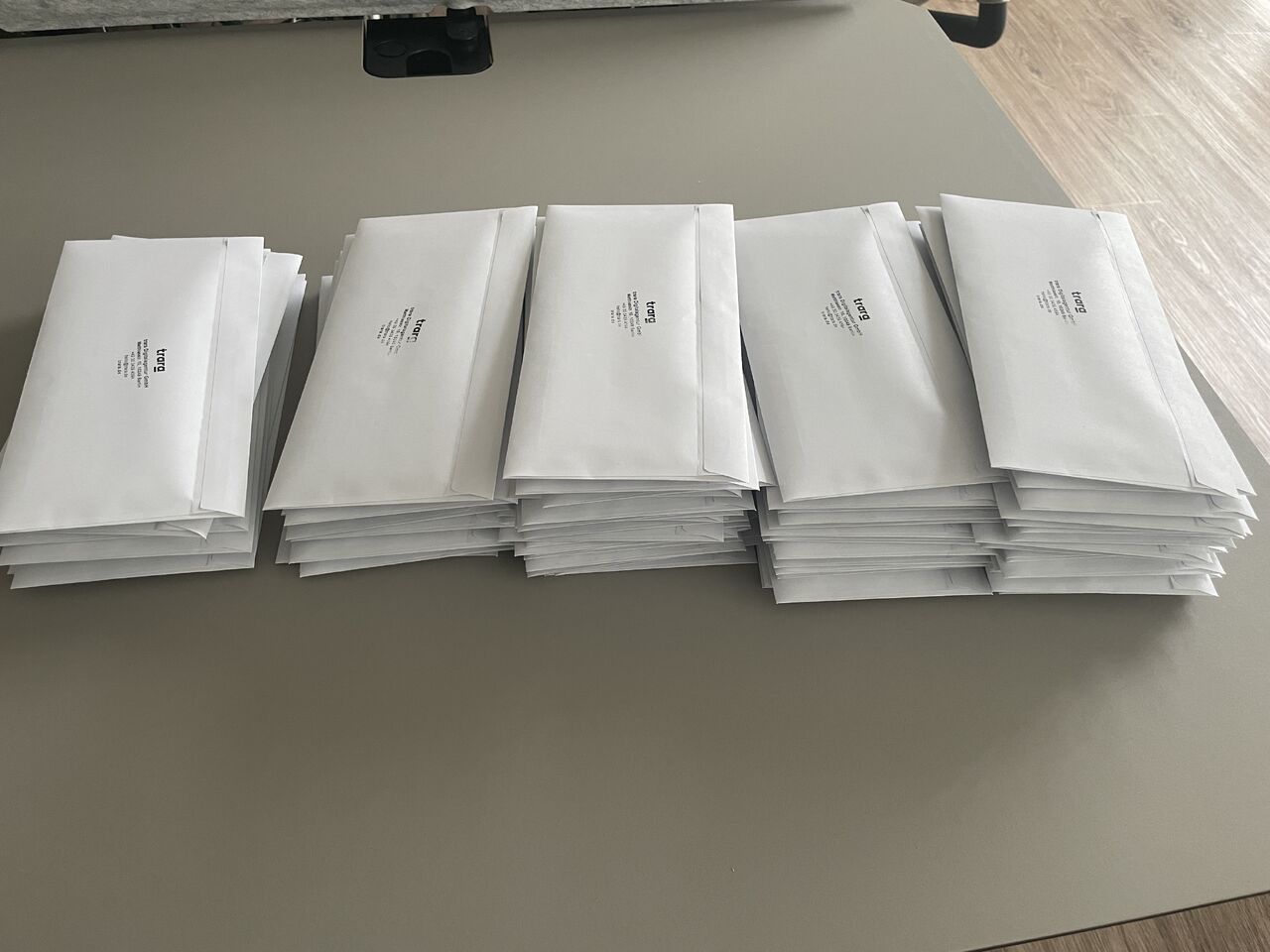
Three years ago I got a call from my bank while leaving the doctor with my newborn daughter. "You have 3 hours to transfer €3,000 or we're closing your account." That moment almost killed Radyant. In fact, it saved us. In 2023, we were doing everything for everyone. If a client wanted paid ads, we did it. Email marketing? Sure. Social media? Why not. We had convinced ourselves this was "full service". We were busy. Clients felt like we were doing something. But we weren't actually moving the needle for most of them. I remember stepping out of that doctor's appointment. My daughter was only a couple months old. The bank consultant explained that our credit card balance couldn't be charged because both accounts were maxed. Personal account: full overdraft. Business account: full overdraft. Three hours to transfer €3,000 or the account closes and we file for bankruptcy. I asked my girlfriend for a loan. We survived another day. But that evening, I made a decision: I will not accept failure as an option. The next morning I started mapping out what had to happen. Who we'd let go from the team. Which services we'd discontinue. Which clients we could keep. Who to focus on for new business. Then we got scrappy. We manually scraped hundreds of companies that fit what we thought could be good clients. We printed letters. I signed every single one by hand. We mailed them out. Then we called every person trying to get meetings. It felt desperate. But we closed 2 clients from that campaign. Every couple thousand euros felt absolutely huge. Over the next six months, we rebuilt everything: - We specialized and niched down - We rebuilt the team: small and sharp - We got brutally clear on what clients need: results We accepted that problems will always exist. The only thing that matters is how we react to them. By the end of 2023 we were out of the red zone. By the end of 2024, we hit six-figure profit. By the end of 2025, we did it again. None of this would exist without that phone call. That crisis forced me to answer one question: what actually matters? The answer wasn't more services. It wasn't being busy. It wasn't looking professional. It was radical focus. It was solving real problems. It was delivering outcomes that matter. This is why we operate how we operate today. Most companies die in these moments because they can't make the brutal decisions. They hold on too long. They hope things get better. They accept failure as inevitable. I didn't. If you're going through a hard time right now, I'll tell you what I learned: there's always a way out. The only question is whether you accept failure as an option. Sh*t will always hit the fan. Momentum breaks. Revenue drops. Teams fall apart. Clients leave. The difference between success and failure isn't avoiding these moments. It's refusing to let them define you. I hope this story is helpful to someone out there!
6 of 84 adsSign up to see every Radyant ad, filter by format and date, and get alerts on new ones.
See all 84 adsQuestions about Radyant’s ads
Is Radyant running LinkedIn ads?
We recorded no live LinkedIn ads for Radyant on 10 Nov 2026.
How many LinkedIn ads has Radyant run?
LinkedIn’s ad library lists 84 ads for Radyant. We recorded 84 LinkedIn ads for Radyant, first recorded on 3 Oct 2026 and last recorded on 3 Oct 2026.
Does Radyant run Google ads?
We recorded no Google ads for the domain radyant.io on 16 Oct 2026.
Which ad formats does Radyant use?
The 6 LinkedIn ads on this page include 6 image ads.
Watch the companies you care about.
Filter every ad by industry, country, format and network, and get alerts when a company you watch starts running new ads.