On air · 1 of 3 networks

PlasmidFactory GmbH - The Minicircle Company ads
- plasmidfactory.com
- Biotechnology Research
- DE
- 33 employees
PlasmidFactory GmbH - The Minicircle Company’s ads on LinkedIn, Meta and Google, recorded by adsrunning. Browse the latest here for free. Sign up free to see all 33. Watch PlasmidFactory GmbH - The Minicircle Company on any plan to get each new one in your feed.
Watchlist included in every plan
What PlasmidFactory GmbH - The Minicircle Company runs
- Single image · LinkedIn
- 6
- Google ads on 6 Nov 2026
- 11
| Network | Status | Live ads | Nov 2025LinkedIn activity · 52 weeksNov 2026 | Checked | Next step |
|---|---|---|---|---|---|
| None recorded | 0 | Checked 7 Nov 2026 | See all 33 ads → | ||
| Meta | Not checked | — | |||
| Running | 11 | Ads on the Google Ads Transparency Center | Checked 6 Nov 2026 | Collect them with the API → |
PlasmidFactory GmbH - The Minicircle Company has no live LinkedIn ads. We recorded 11 Google ads on 6 Nov 2026.
Latest ads
- LINKEDIN · IMAGESince 7 Oct 2026
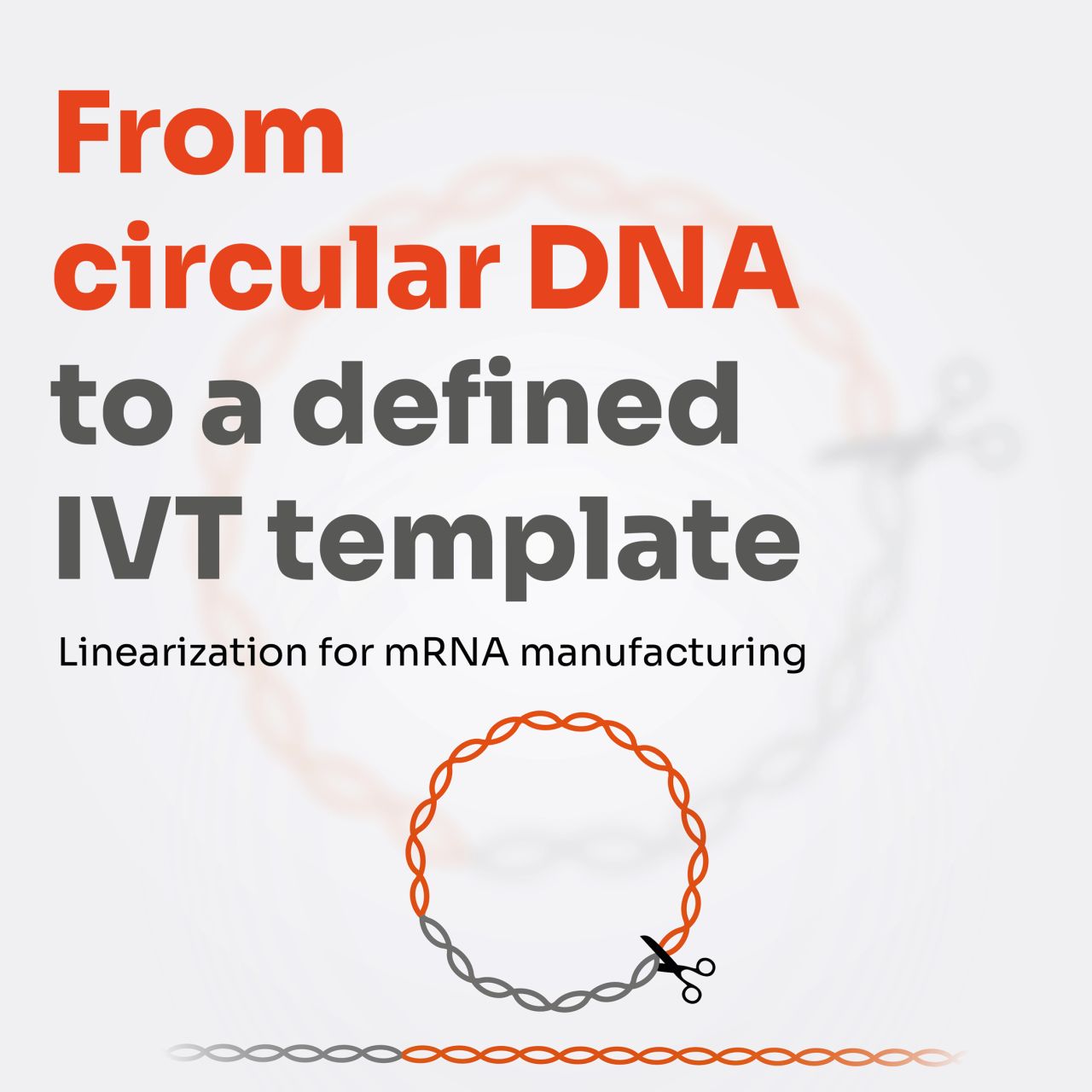
What does it take to generate a well-defined linear DNA template for IVT? For plasmid- or Minicircle-based mRNA manufacturing, the circular DNA format is typically converted into a linear IVT template by restriction digestion. Template quality depends on starting material, cleavage position, DNA-end structure, digestion efficiency and purity. Starting-template quality The topology and integrity of circular DNA affect linearization. A higher supercoiled fraction of the starting plasmid is associated with more homogeneous linear templates and can positively affect IVT yield and mRNA quality under the tested conditions (Piao et al., 2024). Restriction enzyme and cleavage site The restriction enzyme needs to fit the construct and generate the intended 3′ boundary. Conventional or Type IIS enzymes can be used depending on template design. Type IIS enzymes enable precise cleavage, for example directly downstream of a DNA-encoded poly(A) region, as they cleave outside their recognition sequence. The resulting DNA end is also relevant. Restriction digestion can generate blunt ends, 5′ overhangs or 3′ overhangs. For T7-based IVT, blunt ends or 5′ overhangs are generally preferred, while protruding 3′ ends can promote unintended RNA products through template switching. Complete digestion and template purity Residual circular or incompletely digested DNA introduces additional template species into IVT. Complete linearization therefore needs analytical verification followed by template purification. Martínez et al. found that more highly purified linearized plasmid templates are associated with reduced dsRNA formation under the conditions tested (Martínez et al., 2023). Minicircle technology for highly homogeneous IVT templates Minicircle DNA combines a very high supercoiled fraction with a small, monomeric and bacterial backbone-free format. This enables efficient linearization into a highly homogeneous, predominantly monomeric linear DNA template while minimizing heterogeneous or undesired DNA species and unnecessary bacterial backbone sequences. At PlasmidFactory, we combine these considerations in a construct-specific workflow. We use highly purified circular DNA with a high supercoiled fraction, select construct-specific enzymes, linearize it as a “ready-to-use” template and characterize the result for structural integrity, homogeneity and complete digestion. For CCC Grade and higher, our specification is ≥95% supercoiled DNA, often reaching around 98%. Linearized plasmid and Minicircle DNA can be provided RNase-free and at scales up to 10 g. The result is a well-characterized linear DNA template for the subsequent IVT process. Combined with our POLYARESCUE® approach, we can offer highly functional IVT templates, up to GMP grade, for vaccine development and beyond. 🔗 Learn more about our DNA linearization service: https://lnkd.in/eMSiRUCQ
- LINKEDIN · IMAGESince 24 Sept 2026
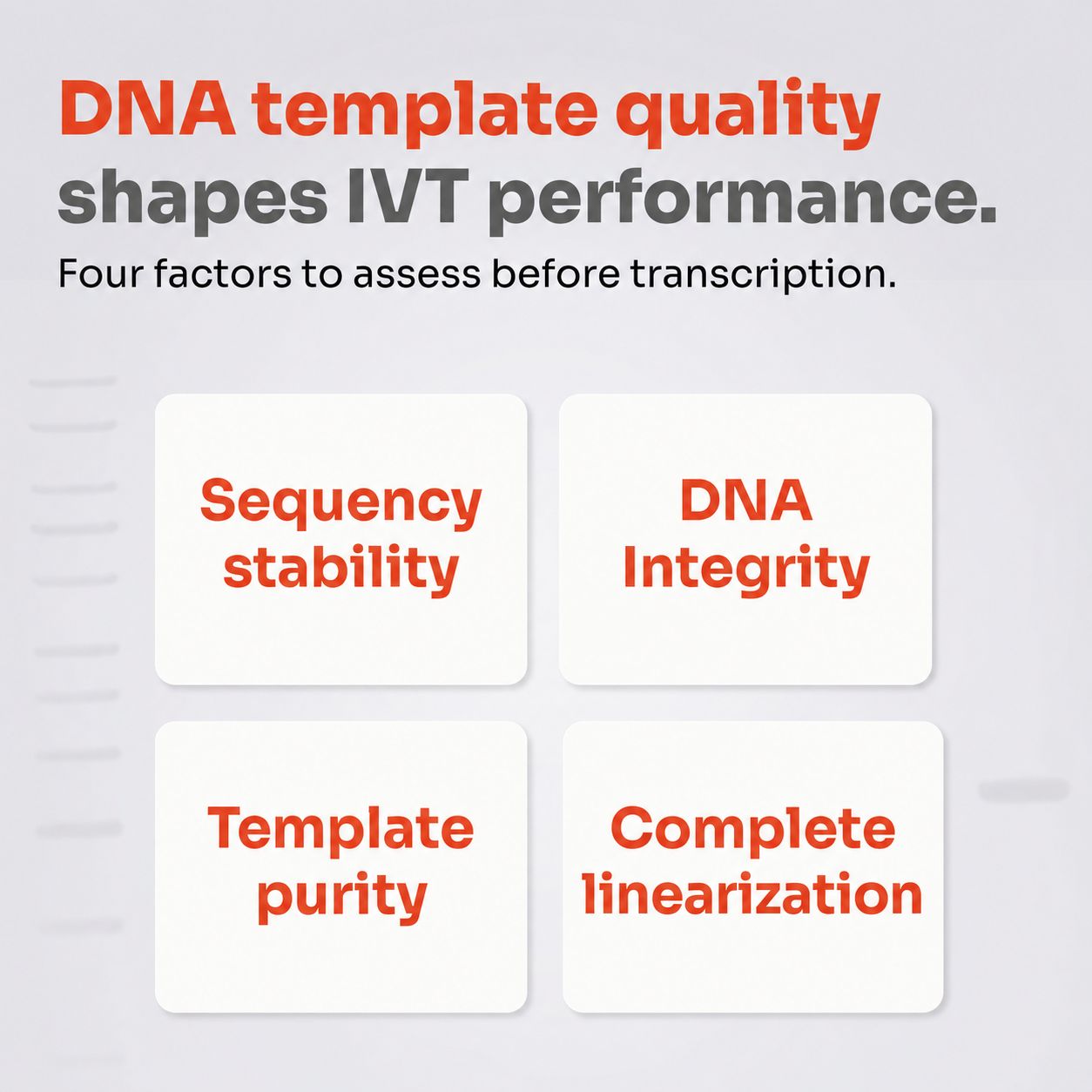
Four factors to assess before transcription. For plasmid-based mRNA manufacturing, IVT typically uses a linear DNA template. Four aspects are particularly relevant to template definition and IVT performance: sequence stability, DNA integrity, template purity and complete linearization. Sequence stability The DNA template must contain the intended transcription promoter, UTRs, coding sequence and, where template-encoded, the poly(A) region. Long repetitive poly(A) regions can become unstable during bacterial propagation, resulting in shortening or heterogeneous template material (Spiewla et al., 2026). For IVT, the intended sequence must remain stable during amplification and be retained in DNA entering linearization. DNA integrity Nicks can affect DNA integrity even when the intended sequence is present. A lower supercoiled fraction, associated with more nicked or open-circular DNA, can result in less homogeneous linear templates and, under the tested conditions, affect IVT yield and the proportion of intact, full-length mRNA (Piao et al., 2024). The integrity and topology of the circular starting material therefore influence the linear DNA template used for IVT. Template purity Impurities and heterogeneous DNA species carried into IVT can influence the RNA product. More highly purified linearized DNA templates were associated with reduced dsRNA formation during IVT (Martínez et al., 2023), indicating that template purity can influence dsRNA formation. Complete linearization In plasmid-based IVT workflows, circular plasmid or Minicircle DNA is linearized at a defined site before transcription. Incomplete linearization can leave residual circular or incompletely digested DNA in the preparation, which may contribute to read-through transcription or heterogeneous RNA products (Palm et al., 2024). A complete, site-specific digest therefore provides a more defined transcription template. In practice, these attributes should be considered together. Sequence confirmation alone does not show whether a DNA template has the structural integrity, purity and degree of linearization required for IVT. The properties of the circular DNA used for linearization are therefore particularly relevant. PlasmidFactory’s Minicircle DNA is free of the bacterial backbone and manufactured at exceptional purity, with a high covalently closed circular (CCC) fraction and very low levels of nicked or open-circular DNA. This provides a highly defined starting material for linearization and IVT. At PlasmidFactory, we manufacture plasmid DNA and bacterial-backbone-free Minicircle DNA across Quality Grades from Research to GMP and offer QC-characterized linearized templates for mRNA manufacturing. In the next posts, we will cover: → Linearization of DNA templates for IVT and our respective service → Stability of long poly(A) sequences and our proprietary POLYARESCUE® technology #mRNA #IVT #DNATemplate #PlasmidDNA #MinicircleDNA #Biomanufacturing
- LINKEDIN · IMAGESince 2 Sept 2026
𝗺𝗥𝗡𝗔 𝘃𝗮𝗰𝗰𝗶𝗻𝗲𝘀 𝗺𝗼𝘃𝗲𝗱 𝗳𝗮𝗿 𝗯𝗲𝘆𝗼𝗻𝗱 𝘁𝗵𝗲𝗶𝗿 𝗽𝗮𝗻𝗱𝗲𝗺𝗶𝗰 𝘀𝗽𝗼𝘁𝗹𝗶𝗴𝗵𝘁. The recent positive Phase III results reported by Moderna and Merck for their individualized mRNA-based neoantigen therapy in melanoma are another indication of how broadly mRNA technology is developing. What became widely visible through infectious disease vaccines is now advancing across therapeutic areas, including personalized oncology. At the same time, mRNA platforms are being explored for additional applications in human and animal health. For manufacturing, these developments also bring attention to an upstream component of every IVT-based mRNA workflow: the DNA template. Its sequence design, integrity, topology, quality grade and purity influence how well defined the starting point for in vitro transcription is and are relevant parameters as RNA programs move from research toward clinical manufacturing. At PlasmidFactory, we support RNA development programs with highly pure classical plasmid DNA as well as bacterial backbone-free Minicircle DNA for IVT templates, together with linearization services, analytical characterization and Quality Grades ranging from research to GMP. Over the next few weeks, we will take a closer look at some of the DNA template parameters behind reliable mRNA manufacturing: → Template quality and format → Linearization service, ready-to-use for IVT → Stable poly(A) sequences with POLYARESCUE® → DNA templates for mRNA applications in animal health #mRNA #IVT #DNATemplate #RNATherapeutics #Biomanufacturing #Minicircle #PlasmidFactory
- LINKEDIN · IMAGESince 13 Jul 2026
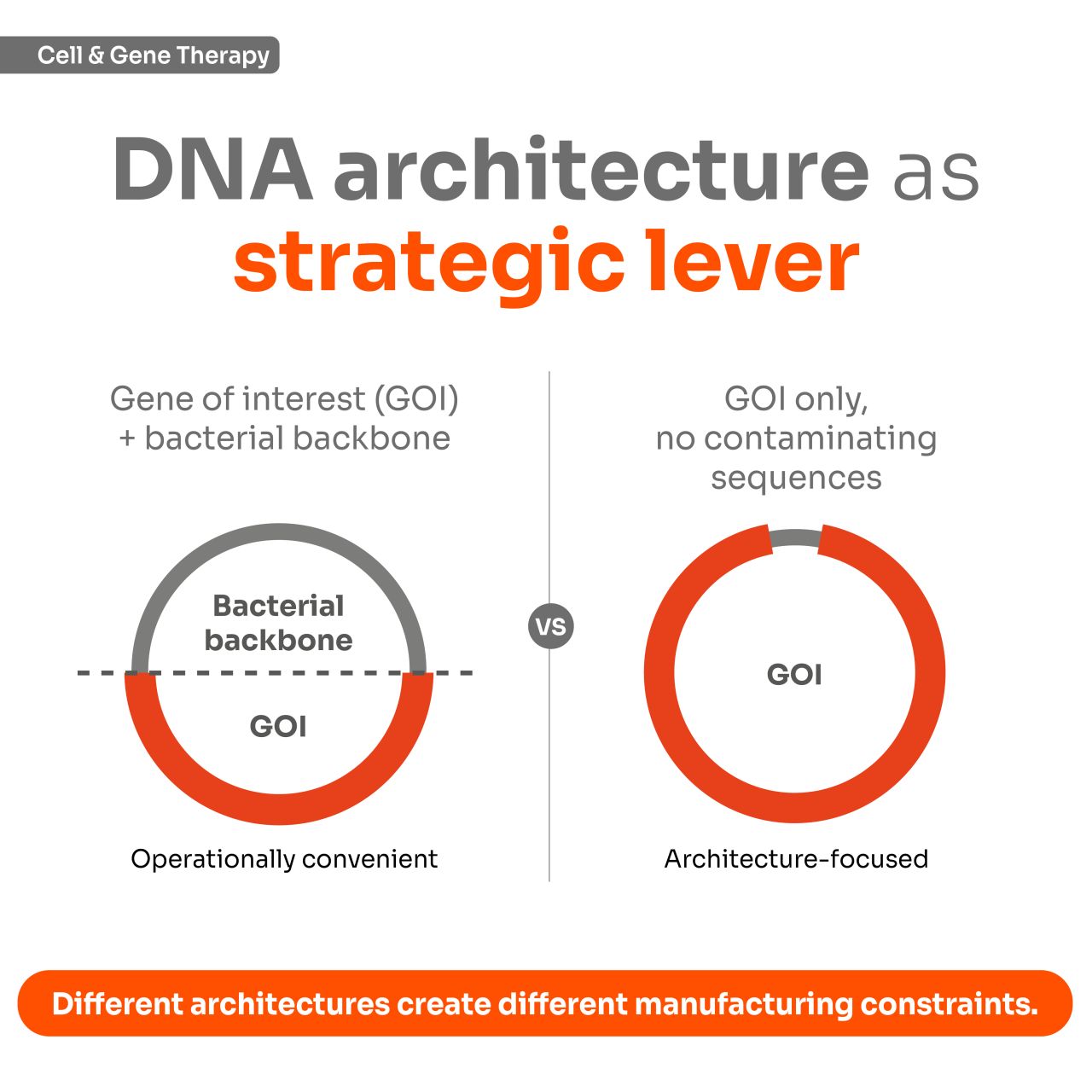
DNA architecture is not just a cloning detail. It is a strategic lever that shapes manufacturability, consistency, and translation. As cell and gene therapy moves toward more complex applications, DNA format selection is becoming more strategic. This applies across different CGT areas: AAV-based gene therapy, where transfer vector design and genome integrity matter. Non-viral cell engineering, where DNA cargo can influence transfection, toxicity, and expression. In vivo and ex vivo delivery systems, where LNPs, EVs, VLPs, Nanoblades, or related particles require well-defined cargo concepts. Allogeneic, iPSC-derived, CAR-NK, TCR-T, and next-generation CAR approaches, where early design choices can affect later development paths. The relevant question is no longer only: “Which DNA construct do we need for this experiment?” It is increasingly:“Which DNA architecture best supports the next stage of development?” That is where manufacturability starts. Follow PlasmidFactory for more CGT insights on DNA design, manufacturability, and translation.
- LINKEDIN · IMAGESince 6 Jul 2026
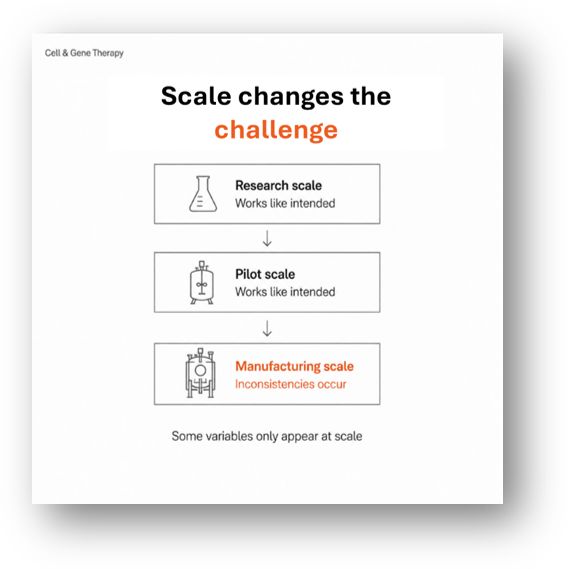
Some variables only become visible at scale. Many CGT workflows look robust at research scale. The biology works. The cells can be modified. The vector can be produced. The first analytical results look acceptable. But once a program moves toward larger batches, tighter specifications, comparability requirements, GMP documentation, and clinical timelines, hidden dependencies become more visible. This is why scalable CGT development depends not only on process design, but also on consistent, high-quality starting materials that can support the program from research-grade to GMP. Key questions about reproducibility, scalability and variability emerge early…and how can quality be maintained across development stages? In CGT, scale-up is not only a bigger version of the same experiment and research-scale success is not the same as manufacturing readiness. It is often a different challenge. Follow PlasmidFactory for more CGT insights on DNA design, manufacturability, and translation.
- LINKEDIN · IMAGESince 29 Jun 2026
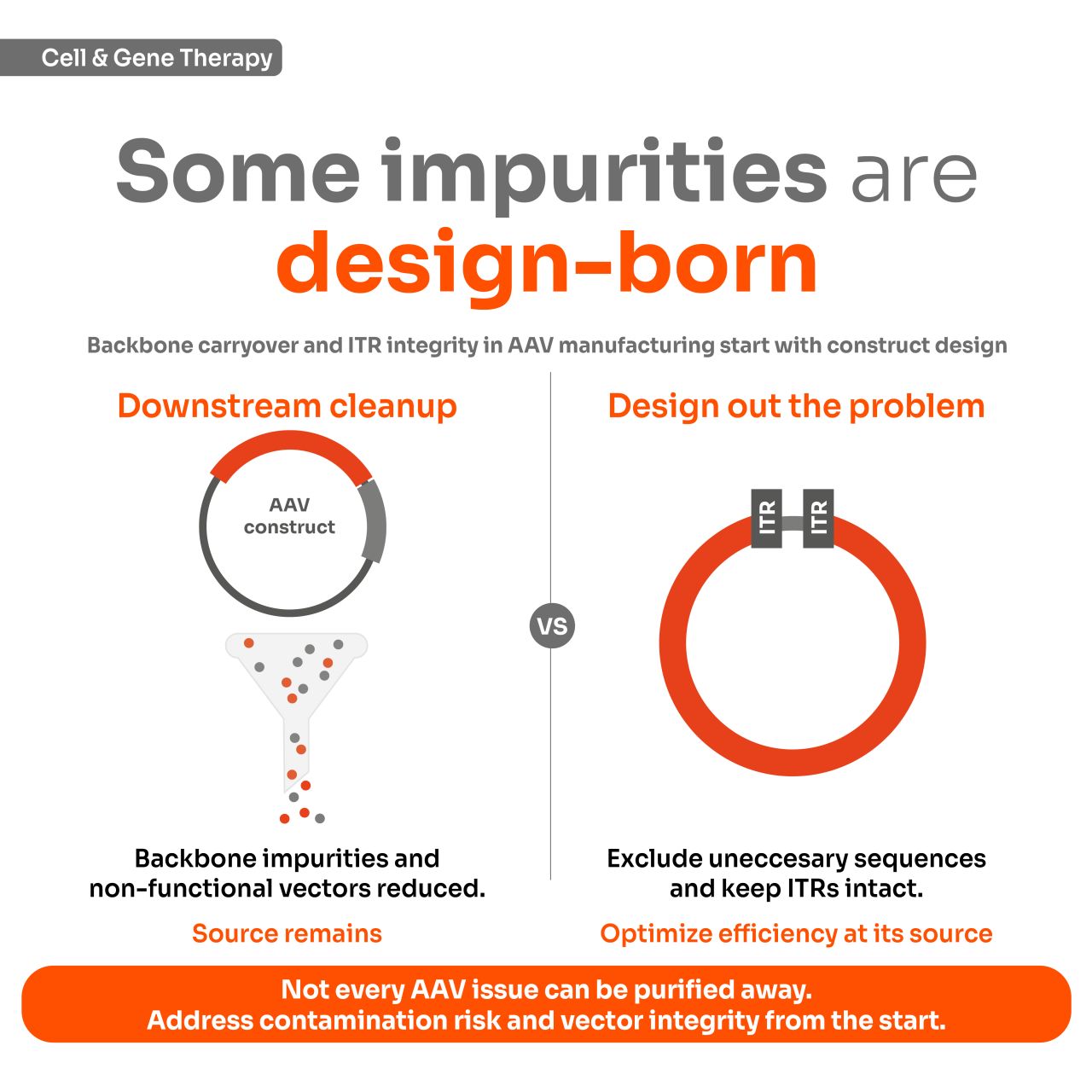
Not every AAV quality issue starts downstream. In AAV manufacturing, impurity discussions often focus on purification, analytics, and process optimization. But some risks originate earlier in the DNA architecture used to produce the vector. Plasmid backbone sequences, residual DNA, and compromised ITR integrity can affect more than process cleanliness. They may influence safety discussions, comparability, vector genome quality, and the risk profile of the final therapeutic product. This makes upstream design a critical part of AAV manufacturability. The question is not only how efficiently impurities can be removed later. It is how many avoidable sequence-related risks enter the system in the first place. Follow PlasmidFactory for more CGT insights on DNA design, manufacturability, and translation.

6 of 33 adsSign up to see every PlasmidFactory GmbH - The Minicircle Company ad, filter by format and date, and get alerts on new ones.
See all 33 adsQuestions about PlasmidFactory GmbH - The Minicircle Company’s ads
Is PlasmidFactory GmbH - The Minicircle Company running LinkedIn ads?
We recorded no live LinkedIn ads for PlasmidFactory GmbH - The Minicircle Company on 10 Nov 2026.
How many LinkedIn ads has PlasmidFactory GmbH - The Minicircle Company run?
LinkedIn’s ad library lists 30 ads for PlasmidFactory GmbH - The Minicircle Company. We recorded 33 LinkedIn ads for PlasmidFactory GmbH - The Minicircle Company, first recorded on 28 Sept 2026 and last recorded on 9 Oct 2026.
Does PlasmidFactory GmbH - The Minicircle Company run Google ads?
Yes. We recorded 11 Google ads for the domain plasmidfactory.com on 6 Nov 2026.
Which ad formats does PlasmidFactory GmbH - The Minicircle Company use?
The 6 LinkedIn ads on this page include 6 image ads.
Watch the companies you care about.
Filter every ad by industry, country, format and network, and get alerts when a company you watch starts running new ads.