Not on air · 3 of 3 networks checked

PFMD ads
- patientfocusedmedicine.org
- Non-profit Organizations
- BE
- 17 employees
PFMD’s ads on LinkedIn, Meta and Google, recorded by adsrunning. Browse the latest here for free. Sign up free to see all 122. Watch PFMD on any plan to get each new one in your feed.
Watchlist included in every plan
What PFMD runs
- Single image · LinkedIn
- 6
| Network | Status | Live ads | Nov 2025LinkedIn activity · 52 weeksNov 2026 | Checked | Next step |
|---|---|---|---|---|---|
| None recorded | 0 | Checked 7 Nov 2026 | See all 122 ads → | ||
| Meta | None recorded | 0 | No active ads recorded on the Meta Ad Library | Checked 24 Oct 2026 | Collect them with the API → |
| None recorded | 0 | No ads found on the Google Ads Transparency Center | Checked 5 Nov 2026 | Collect them with the API → |
PFMD has no live LinkedIn ads. Its Facebook page had no active ads on 24 Oct 2026, and we recorded no Google ads on 5 Nov 2026.
Latest ads
- LINKEDIN · IMAGESince 23 Oct 2026
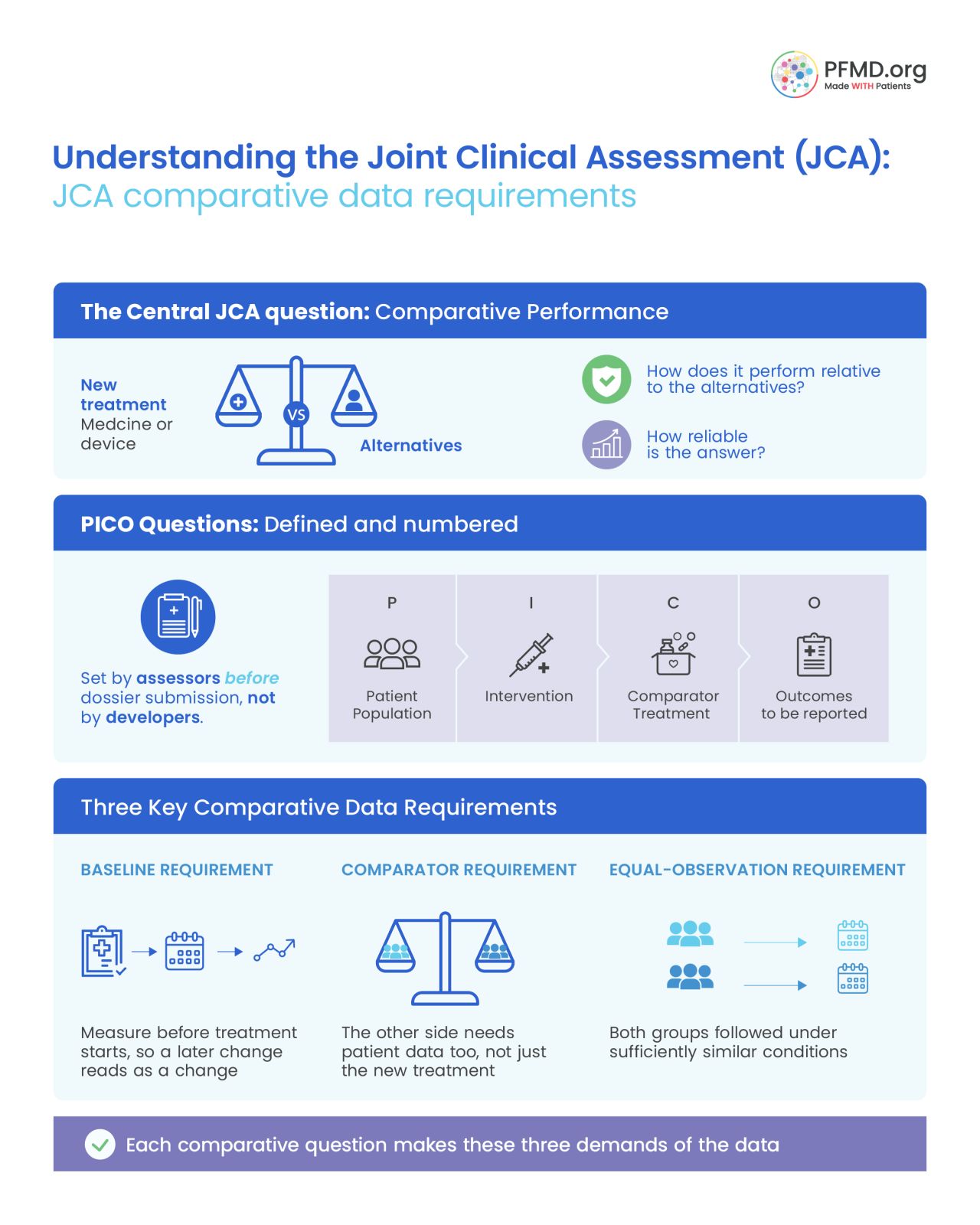
“Patients felt better.” But did they feel better than they did before treatment or better than they would have felt on an alternative treatment? A Joint Clinical Assessment (JCA) examines the second question: how a treatment performs relative to its alternatives, and how reliable that comparison is. Assessors frame this through PICO: Population, Intervention, Comparator and Outcomes, specifying whose outcomes are being compared, which treatments are involved and what effects matter. Answering that question requires more than recording patients’ experiences on the new treatment. The comparison needs three things from the data: Check the starting point → Examine both groups → Assess how reliably they were compared PFMD’s analysis shows why each of these elements matter. Without a baseline, change is difficult to interpret. Without comparator data, there is no equivalent result to compare. Uneven follow-up can make differences in observation look like differences between treatments. Together, these requirements help establish whether an apparent benefit reflects the treatment or how the data was collected. Explore the full PFMD analysis on Synapse: https://lnkd.in/eUQwzAZE #PatientExperience #JCA #HTA #PatientEngagement Neil Bertelsen | Giulia Pierini | Sofie Lyna | Andrew Knill | Ylenia Paleari | Clémentine Bizot | Angela Bilkhu | HTAi Patient & Citizen Involvement in HTA Interest Group | ISPOR—The Professional Society for Health Economics and Outcomes Research | HTA Secretariat
- LINKEDIN · IMAGESince 22 Oct 2026
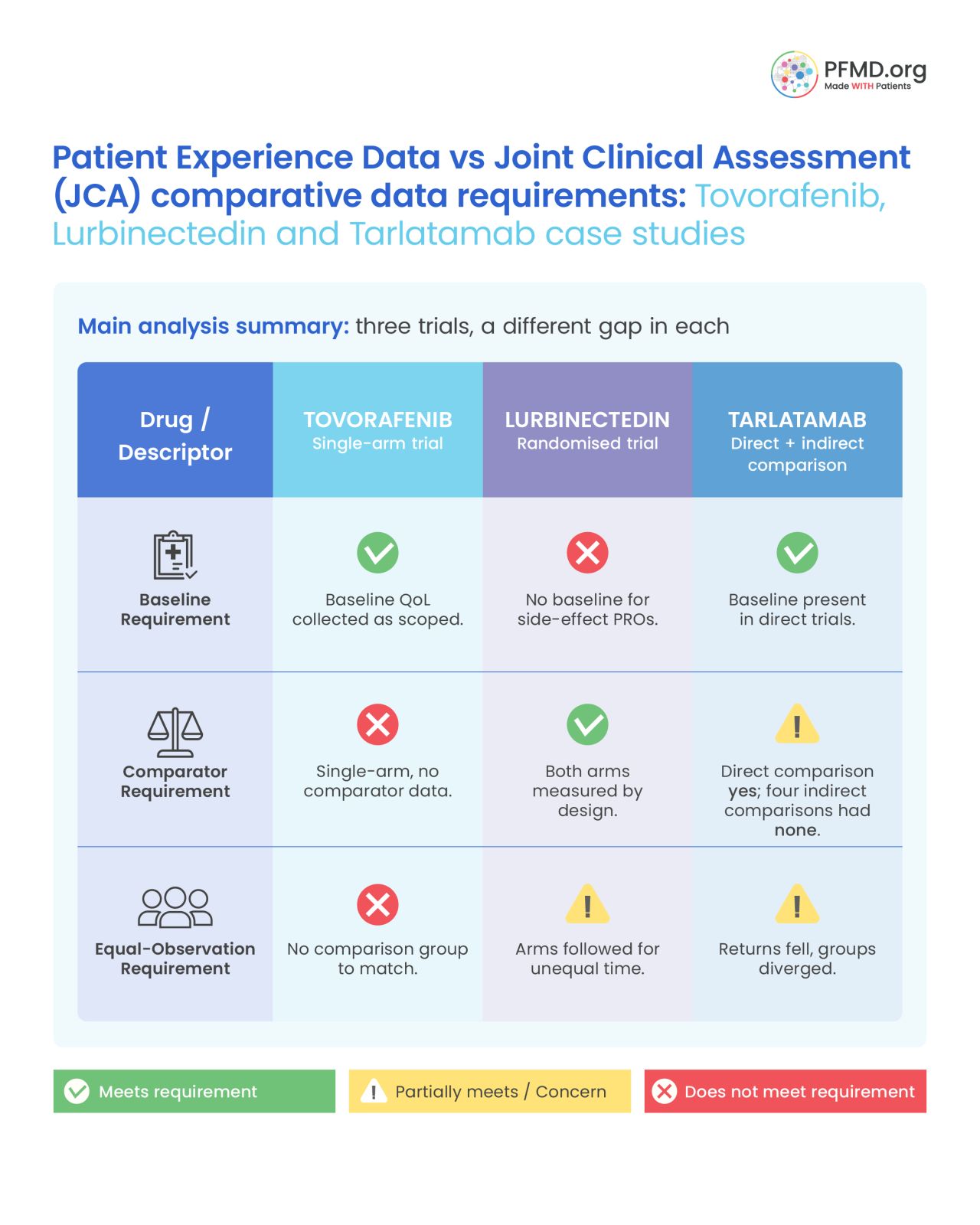
Why could patient experience data inform some treatment comparisons but leave others unanswered, even within the same assessment? PFMD’s analysis of the first three Joint Clinical Assessments (JCAs) shows how different gaps in the evidence shaped what assessors could conclude. - For tovorafenib, the gap was on the other side. Quality-of-life data was collected, but there was no comparison group to assess relative benefit. - For lurbinectedin, having two groups was not enough. Missing baselines for patient-reported side effects and unequal follow-up limited interpretation. - For tarlatamab, usefulness depended on the comparison. Direct comparisons faced declining questionnaire returns, while four indirect comparisons lacked patient-reported comparator data. These three cases highlight a key distinction: measuring patient experience does not guarantee usable comparative evidence. The data must answer the specific question and remain sufficiently complete and comparable over time. 🔎 Explore the full PFMD analysis on Synapse : https://lnkd.in/eMRvaXht #PatientExperienceData #PatientReportedOutcomes #JointClinicalAssessment #HealthTechnologyAssessment #EvidenceGeneration Neil Bertelsen | Giulia Pierini | Sofie Lyna | Andrew Knill | Ylenia Paleari | Clémentine Bizot | Angela Bilkhu | HTAi Patient & Citizen Involvement in HTA Interest Group | ISPOR—The Professional Society for Health Economics and Outcomes Research | HTA Secretariat
- LINKEDIN · IMAGESince 22 Oct 2026
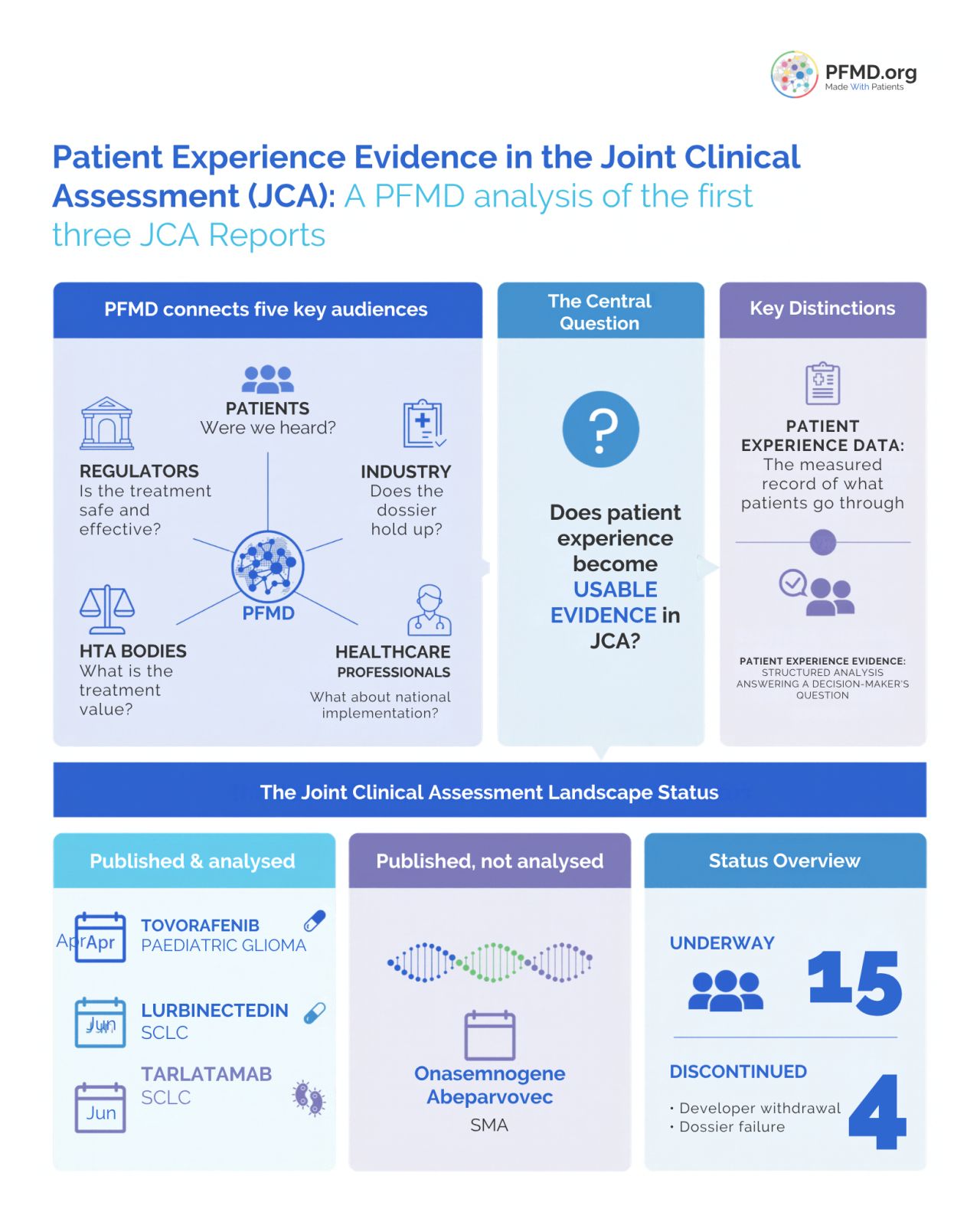
The same patient data can be valuable for one decision and leave another unanswered. Symptom and quality-of-life data collected in a trial show what patients experience on a treatment. An EU Joint Clinical Assessment (JCA) asks a second question, which is how that experience compares with the alternative. Data collected to answer the first does not automatically answer the second. That distinction matters when patients, regulators, industry, HTA bodies and healthcare professionals approach the same data with different responsibilities and priorities. Data that serves one purpose may need additional context or a different study design to serve another and become evidence. PFMD’s analysis of the first three EU Joint Clinical Assessment (JCA) reports explores this intersection. For teams collecting patient data, this means being clear from the start about - whose decision will it inform, - what will they need to understand - how will patient perspectives help shape that question These first reports offer an early opportunity to build that shared understanding as the JCA landscape develops. 👉 Explore the full analysis on Synapse : https://lnkd.in/ewgAyu4e #PatientEngagement #JointClinicalAssessment #HealthTechnologyAssessment #PatientExperience #EvidenceGeneration Neil Bertelsen | Giulia Pierini | Sofie Lyna | Andrew Knill | Ylenia Paleari | Clémentine Bizot | Angela Bilkhu | HTAi Patient & Citizen Involvement in HTA Interest Group | ISPOR—The Professional Society for Health Economics and Outcomes Research | HTA Secretariat
- LINKEDIN · IMAGESince 22 Oct 2026
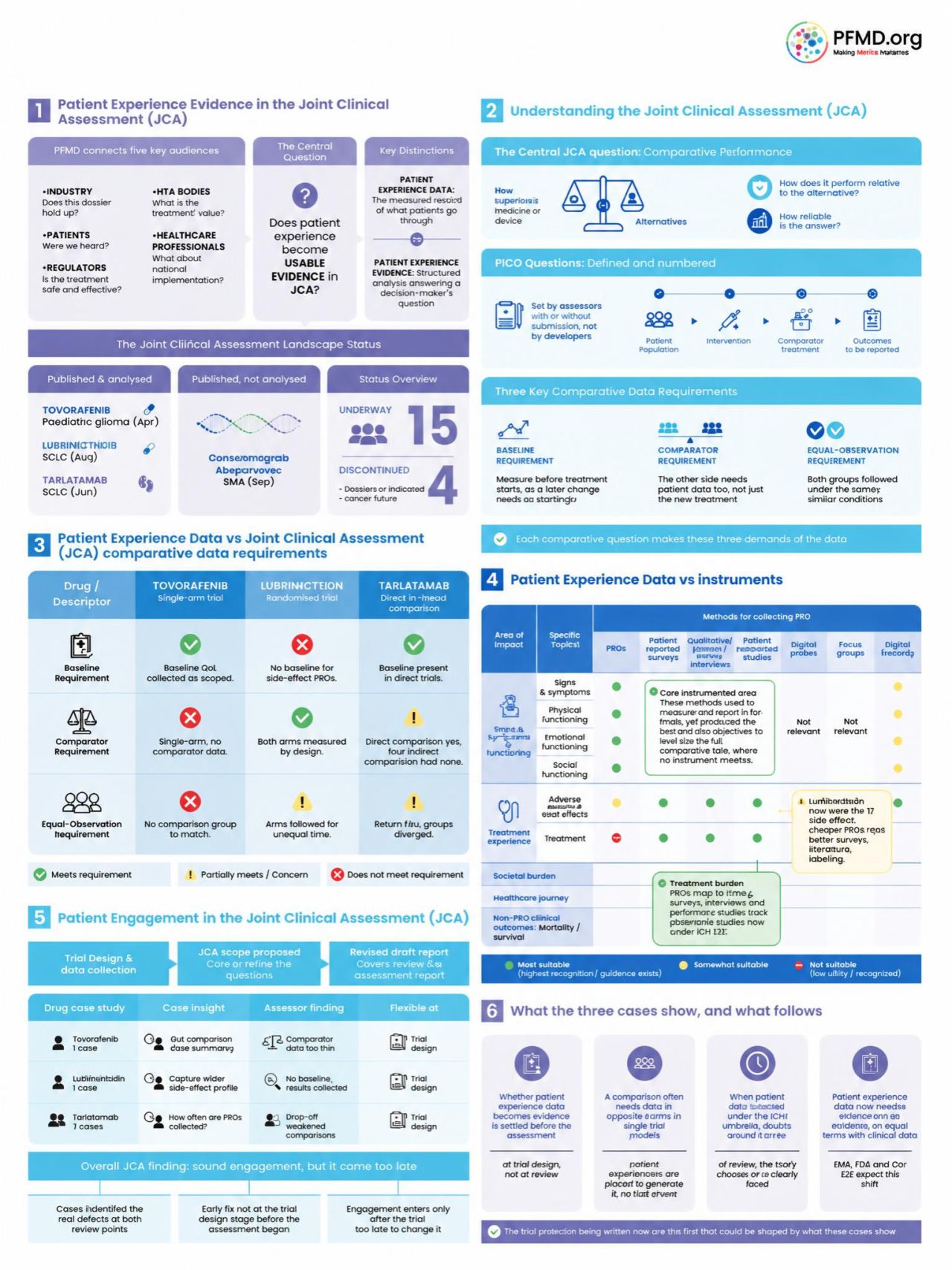
For patient experience evidence to inform an assessment, it needs to answer more than “what did patients experience?” It needs to help assessors understand what those experiences mean in the context of the treatment being assessed, and how they compare with alternatives. PFMD’s analysis of the first three EU Joint Clinical Assessment reports brings this distinction into focus. Patient experience data was available in every dossier, but its ability to inform treatment comparisons depended on decisions made much earlier in the evidence-generation process. Taken together, the analysis highlights several areas that need attention: ✓ The purpose of collection matters. Patient experience data needs to be generated with a clear understanding of the assessment questions it could help answer. ✓ A treatment’s impact needs context. Understanding how patients experience one treatment is only part of establishing how it compares with an alternative. ✓ Study design affects what we can conclude. Baseline measurements and consistent follow-up can help distinguish treatment effects from differences in how data was collected. ✓ Choosing a recognized tool is only the beginning. Teams also need to consider whether their methods capture the experiences and treatment burdens that matter to patients. ✓ Patient experience intelligence needs an opportunity to influence design. Carers raised concerns that overlapped with assessors’ findings, after the relevant data had already been collected. ✓ Today’s analysis can inform tomorrow’s protocols. These early assessments offer a starting point for closer collaboration while evidence-generation decisions are still open. Making patient contributions count starts with studies designed around both what matters to patients and what assessments need to understand. The time to make that connection is before the first patient’s data is collected. 👉 Explore the full analysis and infographic on Synapse to see what the first three JCAs can teach us about generating patient experience evidence that is more meaningful and usable in assessment. https://lnkd.in/eVYYwV9X #PatientEngagement #JointClinicalAssessment #PatientExperience #EvidenceGeneration #HTA Neil Bertelsen | Giulia Pierini | Sofie Lyna | Andrew Knill | Ylenia Paleari | Clémentine Bizot | Angela Bilkhu | HTAi Patient & Citizen Involvement in HTA Interest Group | ISPOR—The Professional Society for Health Economics and Outcomes Research | HTA Secretariat
- LINKEDIN · IMAGESince 11 Jun 2026
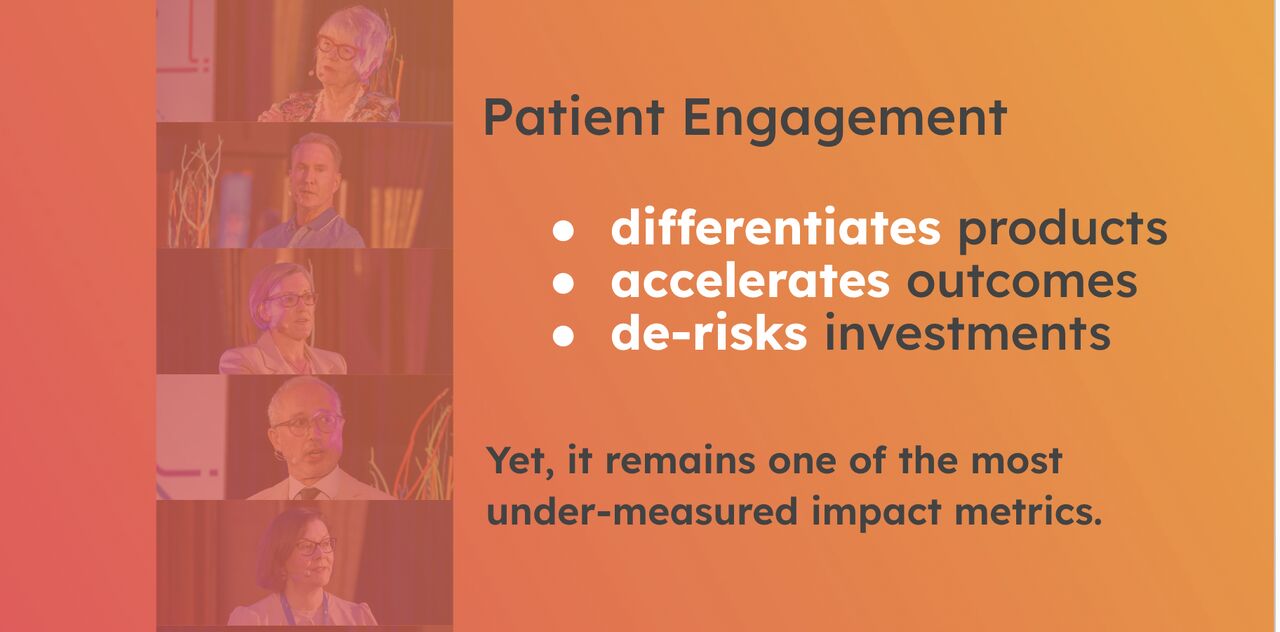
Over recent months, a clear theme has emerged across the investment calendar: investors are ready to move beyond the theory of patient engagement and toward a practical, decision-relevant methodology. One of the most encouraging signals is that leading firms are already collaborating with the patient community. For example, Gilde Healthcare incorporates patient perspectives directly through its Impact Council to inform strategy. They have also publicly released a pioneering Patient Engagement Framework specifically designed for investors. https://lnkd.in/eEMTCkue This reflects a broader, necessary shift: patient engagement is no longer just a "nice-to-have" moral principle - it is essential market intelligence. Across development and commercialization, the patient experience reveals critical signals regarding: 💡 Usability: Ensuring the product fits the user’s real-world environment. 💡 Adherence: Identifying and mitigating barriers to long-term treatment success. 💡 Adoption: Gauging true clinical and social demand before capital is deployed. 💡 Real-World Value: Defining the "Alpha" in social impact metrics. Too often, these signals only become visible late in the innovation cycle, well after significant capital has been committed. The goal of PFMD’s Investment, Sustainability & Impact (ISI) initiative is to surface these insights earlier, during due diligence and portfolio management, to mitigate unpriced volatility. The next step is defining a shared playbook. We are currently in the public consultation phase, partnering with Gilde Healthcare and other forward-thinking financial leaders to build a systematic approach for capturing and pricing these vital signals. If you are interested in shaping how we value innovation in 2026, and beyond, let's chat. https://lnkd.in/e-hBNVFN #HealthcareInvestment #PatientEngagement #ImpactInvesting #HealthEquity Joep Muijrers Dr. Stephanie Mooij Pommeline Korstanje Tristan Maguet Gunnar Esiason Marc Boutin Vincent Raske Samantha Roberts Elisa Petris Philipp von Gallwitz Robby Spring Nan Doyle, MS, MS, LCGC Fay Weston David Feldman Nikul Bakshi
- LINKEDIN · IMAGESince 8 Jun 2026
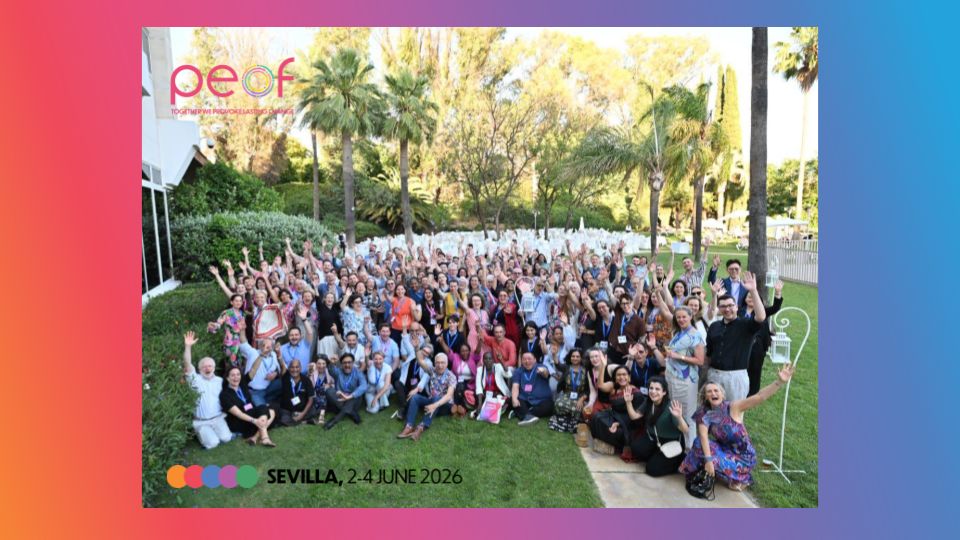
That’s a wrap on #PEOF2026, but a powerful new chapter is just beginning. ✨ What an incredible few days in Sevilla. 185 change-makers from 5 continents walked into the room, and today we leave recharged, connected, focused, and deeply inspired. We didn’t just discuss the WHY of patient engagement - we tackled the HOW. We built bridges across sectors, connected youth advocates with regulators, and proved that when investors, industry, clinicians, academia and patients share the same table, the future of healthcare shifts. As our Made With Patients Awards co-chairs Paula Wray and Lode Dewulf, along with our brilliant host Abigail Simon-Hart, reminded us on stage: the conversations started here are designed to ripple outward. The journey ahead is long and systemic change takes time, but the momentum we’ve built feels unstoppable. 🏆 Setting the Stage for Progress: The Made with Patients Awards A major highlight of this edition was celebrating the Made with Patients Awards. With 240+ nominations spanning 50 countries, the selection process was rigorous, deeply human, and fiercely competitive. These awards do more than celebrate excellence; they set the stage for the future of Patient Engagement. Every finalist and awardee gave the global community a concrete blueprint, proving that meaningful partnership isn't a hypothetical goal - it is happening right now and is here to stay. They leave us all asking: “We could try that, couldn’t we?” 🌱 Keep the Momentum Alive PEOF 2026 may be closing, but the partnership doesn’t stop when the lights go down. Let’s protect this spark and stay connected, not just with us, but with each other and beyond. Here is how to stay in the loop, share your progress, and keep driving the work forward: 👉 Follow us right here on LinkedIn for continuous updates, insights, and key takeaways. 👉 Join the conversation on Synapse to collaborate, network across borders, and make sure you never miss a beat: https://shorturl.at/AdVHl 👉 Step into the PEOF virtual community to keep collaborating with peers, sharing resources, and turning these ideas into real-world action all year round: https://lnkd.in/eUW353h5 Thank you to our phenomenal Program Committee, partners, speakers, and every single attendee who brought their energy, vulnerability, and expertise to Sevilla. WE CARRY THE MOVEMENT. AND TOGETHER, WE PROVOKE LASTING CHANGE. The forum is over, but the movement continues. Let’s get to work! 👋🌍 Emilie Luciani | Derick Mitchell | Hayley Chapman | Nicholas Brooke | Amanda Bok | Helena Harnik, MBA | EUPATI | European Patients' Forum #PEOF2026 #MadeWithPatients #PatientEngagement #PatientPartnership #HealthcareInnovation #PatientCentricity #HealthcareLeadership #GlobalHealth #Collaboration #PETogether
6 of 122 adsSign up to see every PFMD ad, filter by format and date, and get alerts on new ones.
See all 122 adsQuestions about PFMD’s ads
Is PFMD running LinkedIn ads?
We recorded no live LinkedIn ads for PFMD on 8 Nov 2026.
How many LinkedIn ads has PFMD run?
LinkedIn’s ad library lists 130 ads for PFMD. We recorded 122 LinkedIn ads for PFMD, first recorded on 28 Sept 2026 and last recorded on 25 Oct 2026.
Does PFMD advertise on Facebook and Instagram?
PFMD’s Facebook page had no active ads in Meta’s Ad Library, last recorded on 24 Oct 2026.
Does PFMD run Google ads?
We recorded no Google ads for the domain patientfocusedmedicine.org on 5 Nov 2026.
Which ad formats does PFMD use?
The 6 LinkedIn ads on this page include 6 image ads.
Watch the companies you care about.
Filter every ad by industry, country, format and network, and get alerts when a company you watch starts running new ads.