Not on air · 2 of 3 networks checked

Perennial ads
- perennial.earth
- Technology, Information and Internet
- US
- 47 employees
Perennial’s ads on LinkedIn, Meta and Google, recorded by adsrunning. Browse the latest here for free. Sign up free to see all 89. Watch Perennial on any plan to get each new one in your feed.
Watchlist included in every plan
What Perennial runs
- Single image · LinkedIn
- 6
| Network | Status | Live ads | Nov 2025LinkedIn activity · 52 weeksNov 2026 | Checked | Next step |
|---|---|---|---|---|---|
| None recorded | 0 | Checked 7 Nov 2026 | See all 89 ads → | ||
| Meta | Not checked | — | |||
| None recorded | 0 | No ads found on the Google Ads Transparency Center | Checked 5 Nov 2026 | Collect them with the API → |
Perennial has no live LinkedIn ads. We recorded no Google ads on 5 Nov 2026.
Latest ads
- LINKEDIN · IMAGESince 16 Oct 2026
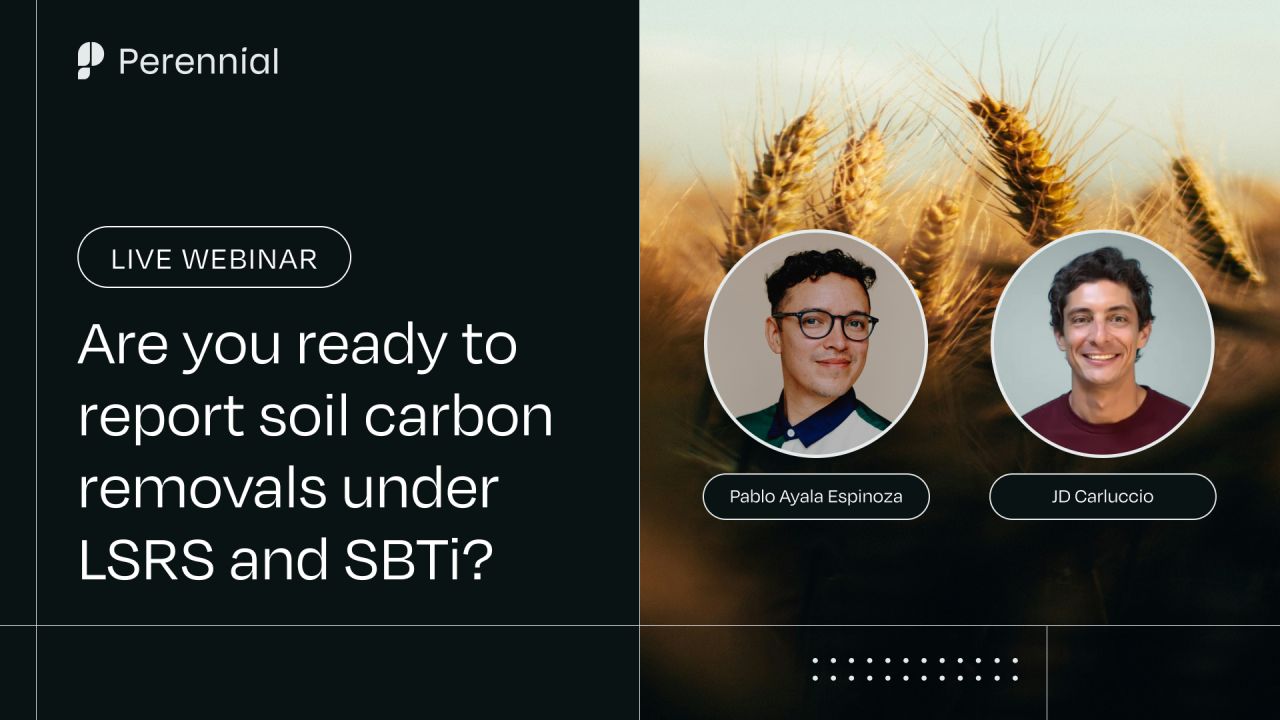
Earlier this year we sat down with a food company’s sustainability team and went through their soil carbon removal factors against LSRS, requirement by requirement. By the end they had a clear list of what was missing and what to collect next season. (And a lot more questions for us, which is always a good sign.) On 18 November we’re doing the same thing in public. Pablo Nicolas Ayala Espinoza and I will take an example company, open up its Scope 3 inventory and run the gap assessment live. Boundaries, carbon pools, data, uncertainty, double counting, monitoring. If something doesn’t hold up, you’ll see it. If your company has an SBTi FLAG target and plans to report removals, spend this hour with us before your next reporting cycle. 18 November, 8am PT / 11am ET / 5pm CET Register here: https://luma.com/v5xdlv1s
- LINKEDIN · IMAGESince 13 Oct 2026
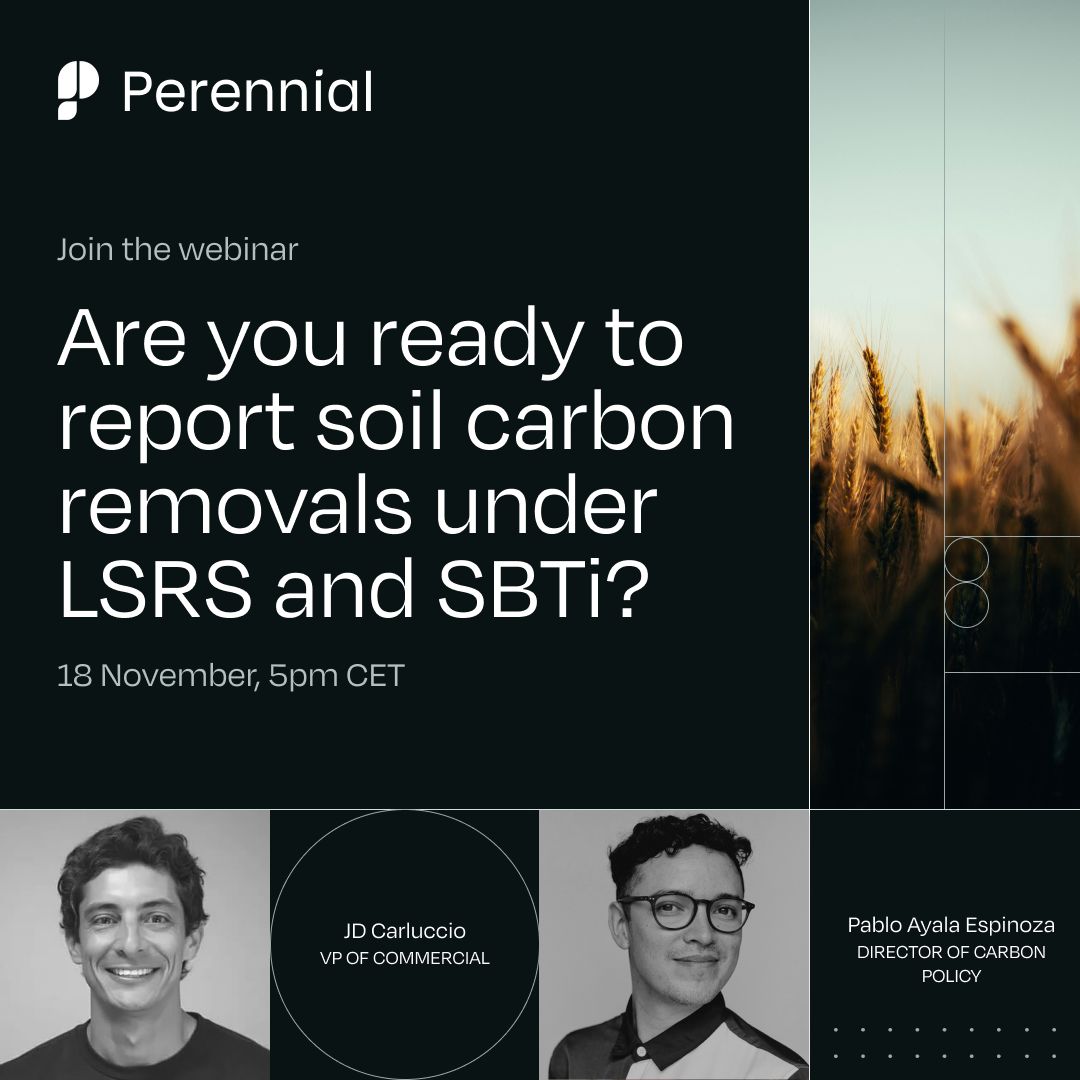
Can the soil carbon removals in your Scope 3 inventory be reported under the GHG Protocol’s Land Sector and Removals Standard (LSRS)? For food and agriculture companies relying on soil carbon removals to support their climate targets, including SBTi FLAG, this is becoming an increasingly important question. The LSR Standard takes effect on 1 January 2027. On 18 November, Juan Diego Carluccio and Pablo Nicolas Ayala Espinoza will run a live gap assessment using a representative company’s soil carbon removals accounting. It’s the same exercise we run with food and agriculture companies: • Start with the company’s Scope 3 inventory and existing soil carbon quantification data. • Assess the key LSR Standard requirements, including traceability, data quality, uncertainty and monitoring. • Identify gaps that could affect removals reporting and explain what evidence or improvements are needed to address them. JD is our VP of Commercial. Pablo is our Director of Carbon Policy and a former lead GHG auditor at SustainCERT. They’ll leave time for Q&A, so bring your questions. Wednesday 18 November, 8am PT / 11am ET / 5pm CET. https://luma.com/v5xdlv1s
- LINKEDIN · IMAGESince 20 Aug 2026
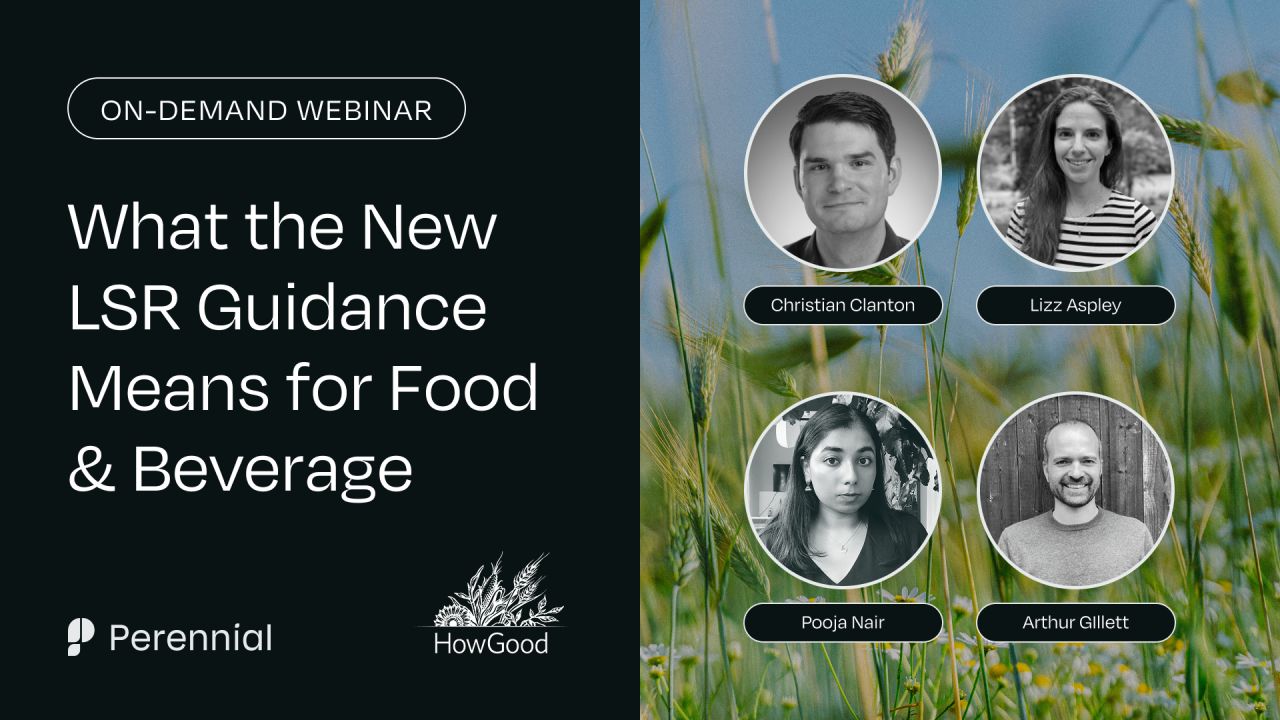
What does the Greenhouse Gas Protocol's new Land Sector and Removals Guidance mean for food and beverage companies and partners across their value chains? We co-hosted a webinar with HowGood to walk through: Key takeaways from the guidance and what it means for your GHG inventory • How to manage accounting and substantiation for removals • Different approaches to quantifying soil organic carbon • How to get started and steps to take as you advance • Requirements to consider now to ensure alignment Watch the on-demand recording to learn more.
- LINKEDIN · IMAGESince 13 Aug 2026
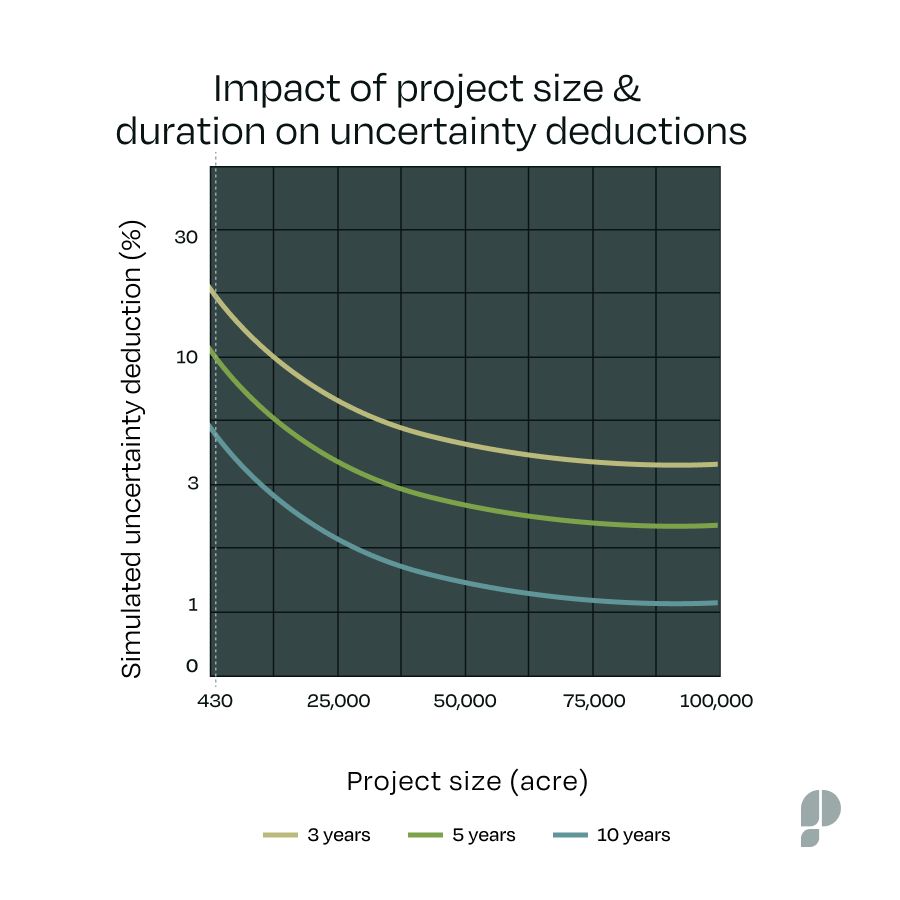
Uncertainty deductions below 5% for large, long-term soil carbon projects and below 10% for most projects over five years. Uncertainty that keeps decreasing as projects scale — without proportionally increasing sampling. That's what our team found in their latest peer-reviewed study on digital soil mapping for MRV in carbon markets. Earlier this year we shared a Bayer validation study, which showed we can achieve low uncertainty at a point in time with sparse sampling. A fair question came up: what about change over time? This paper addresses that. It presents our full end-to-end framework for quantifying SOC stock change, and simulates what uncertainty deductions would look like across different project sizes and durations. For developers, the implications are straightforward — lower uncertainty deductions mean more creditable tons and better project economics. It's the first peer-reviewed paper to apply the methods in Verra's VT0014 to assess change over time with digital soil mapping. And it makes Perennial, as far as we know, the only MMRV company whose digital soil mapping approach has been peer-reviewed. We decided early on to put our methods through peer review — this is the third paper our team has published on DSM. The process is slow, it invites criticism, and nobody's asking us to do it. But if your technology underpins carbon credits, I think the science should hold up to independent scrutiny. The study was led by Alexandre Wadoux at James Cook University alongside our Chief Scientist Jim Kellner. Grateful to them and the full team behind this work: Mitchell Donovan, Peng Fu, Nicholas Leach, Julia Maddalena, Rose Rustowicz, and David Schurman. https://lnkd.in/eAu2n9Xq
- LINKEDIN · IMAGESince 13 Aug 2026
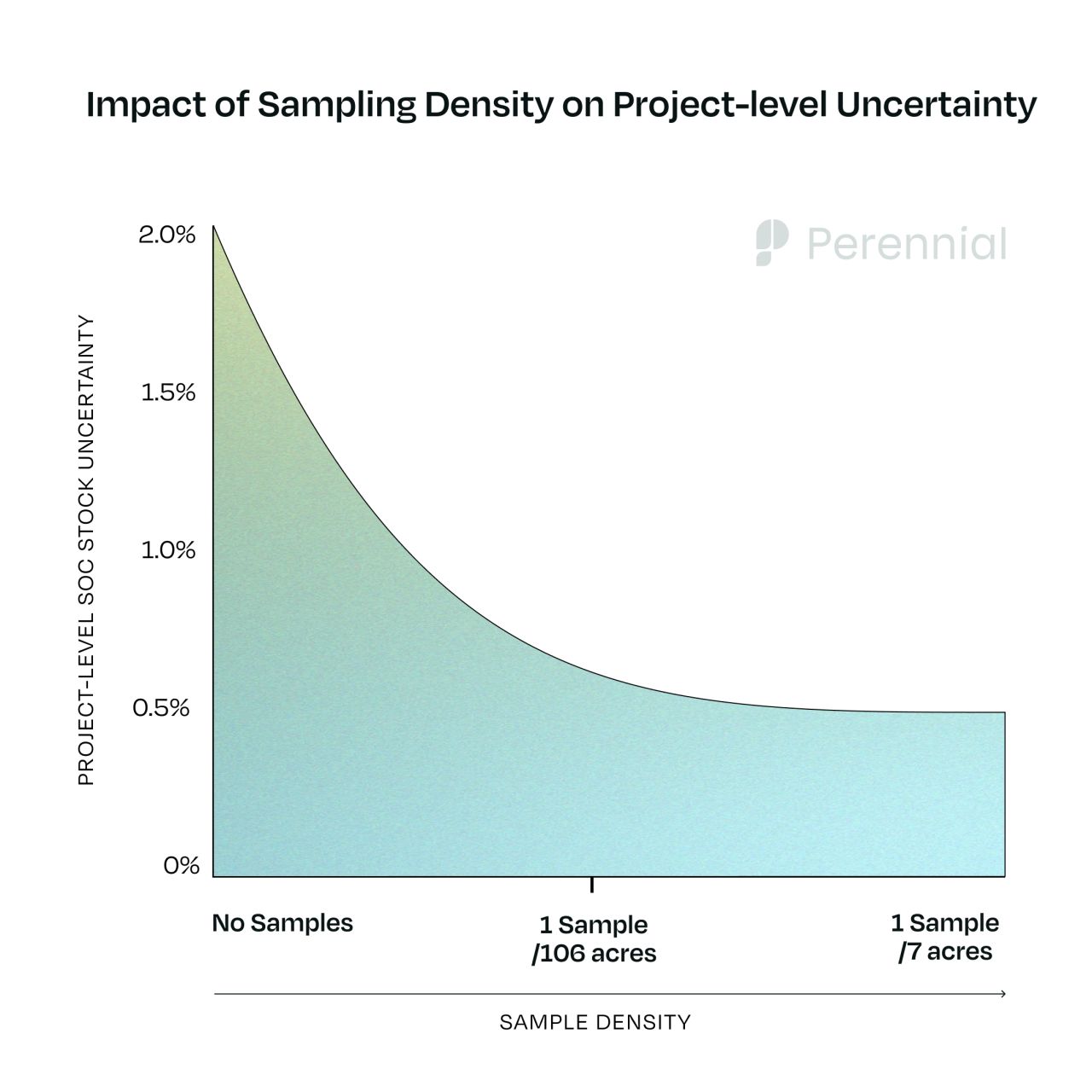
In validation studies with Bayer, we reduced uncertainty despite a 37x reduction in sampling density as we scaled from 700 to 53,000 acres. At the same scale with a 15x reduction in sampling density, uncertainty barely moved (just 0.03%). The takeaway: with our digital soil mapping model, beyond a certain threshold, additional samples yield diminishing returns. Scale is a far bigger lever. It's one thing to say you can reduce soil sampling while achieving low-uncertainty SOC quantification. It's another to put your model through years of validation with one of the world's largest agricultural companies — and share the results publicly. That's what we're doing today. (Link in comments.) The studies started in 2023 with blind validation — Bayer shared only field boundaries, holding back thousands of measured soil samples for comparison. Over time, they incrementally released subsets of that data, allowing us to fine-tune ATLAS-SOC, Perennial's digital soil mapping model, and observe how accuracy and uncertainty changed with each step. Across two phases — a 700-acre pilot and a 53,000-acre scale-up — Bayer compared ATLAS-SOC predictions against more than 10,000 measured soil samples. In the second phase, project-level uncertainty held near 0.5% (0.52%-0.55%) even as sampling density decreased from 1 sample every 7 acres to 1 sample every 106 acres. At 53,000 acres, uncertainty was half of what it was at 700 acres — with 37x lower sampling density. For project developers and sustainability teams, the implications directly impact project economics. If you're sampling densely, there's a path to reducing sampling — and by extension costs and complexity — while maintaining or even lowering uncertainty. If you're already sampling sparsely but facing high uncertainty, a strong digital soil mapping model can make the most of your existing samples, enabling you to lower uncertainty without increasing sampling. The studies shared today are from 2023 and 2024. Our model has continued to improve since, we're testing at lower sampling intensities now, and we look forward to sharing more in the future. Grateful to Cornelius Streit, Anna Bickel, Ross Bricklemyer, Felipe Schadeck Fiorentin, and the Bayer | Crop Science team for the scientific rigor and collaboration they brought to every phase. And proud of our science and engineering teams, whose work speaks for itself in studies like this.
- LINKEDIN · IMAGESince 3 Aug 2026
Improve Scope 3 data across your global sourcing portfolio with a single, scalable solution. Get IPCC Tier 3 data while minimizing soil sampling, costs, and disruptions to farmers.
6 of 89 adsSign up to see every Perennial ad, filter by format and date, and get alerts on new ones.
See all 89 adsQuestions about Perennial’s ads
Is Perennial running LinkedIn ads?
We recorded no live LinkedIn ads for Perennial on 10 Nov 2026.
How many LinkedIn ads has Perennial run?
LinkedIn’s ad library lists 90 ads for Perennial. We recorded 89 LinkedIn ads for Perennial, first recorded on 28 Sept 2026 and last recorded on 19 Oct 2026.
Does Perennial run Google ads?
We recorded no Google ads for the domain perennial.earth on 5 Nov 2026.
Which ad formats does Perennial use?
The 6 LinkedIn ads on this page include 6 image ads.
Watch the companies you care about.
Filter every ad by industry, country, format and network, and get alerts when a company you watch starts running new ads.