0 new LinkedIn ads in 30 days · 2 of 3 networks checked

OpenAirlines ads
- openairlines.com
- Software Development
- FR
- 133 employees
OpenAirlines’s ads on LinkedIn, Meta and Google, recorded by adsrunning. Browse the latest here for free. Sign up free to browse our full recording. Watch OpenAirlines on any plan to get each new one in your feed.
Watchlist included in every plan
What OpenAirlines runs
- Single image · LinkedIn
- 4
- Video · LinkedIn
- 2
- Google ads on 5 Nov 2026
- 6
| Network | Status | Last 30 days | Total ads found | Ad activity | Checked | Next step |
|---|---|---|---|---|---|---|
| None recorded | 0 | 36+ | Checked 7 Nov 2026 | View ads → | ||
| Meta | Not checked | — | — | View ads → | ||
| Ads recorded | — | 6 | Checked 5 Nov 2026 | View ads → |
OpenAirlines has no new LinkedIn ads in the last 30 days. We recorded 6 Google ads on 5 Nov 2026.
Latest ads
- LINKEDIN · VIDEOSince 1 Oct 2026
How does an airline group approach fuel optimization?🤔 Listen to Iberia's team talk about IAG's fuel-efficiency platform choice, their experience with it as a group, and the advice they'd give other airlines! Here's the full video 👇
- LINKEDIN · VIDEOSince 1 Oct 2026
📢 We’re incredibly proud to welcome IAG to the SkyBreathe Community. 👏 IAG is one of the world’s largest airline groups. With more than 600 aircraft, they needed a platform that could support the scale and complexity of their operations. With SkyBreathe, our AI-powered 🧠 platform, their airlines can now identify new fuel-saving opportunities faster, measure performance consistently, and share best practices across the Group. It’s a strong move toward a more unified, data-driven approach, one that helps strengthen both efficiency and resilience. We’re very proud to support IAG as they take this next step, and excited to see what we can achieve together. Welcome to the SkyBreathe Community , Aer Lingus, British Airways, Iberia, LEVEL Airlines, and Vueling Airlines! https://lnkd.in/eiFwwRzW
- LINKEDIN · IMAGESince 1 Sept 2026
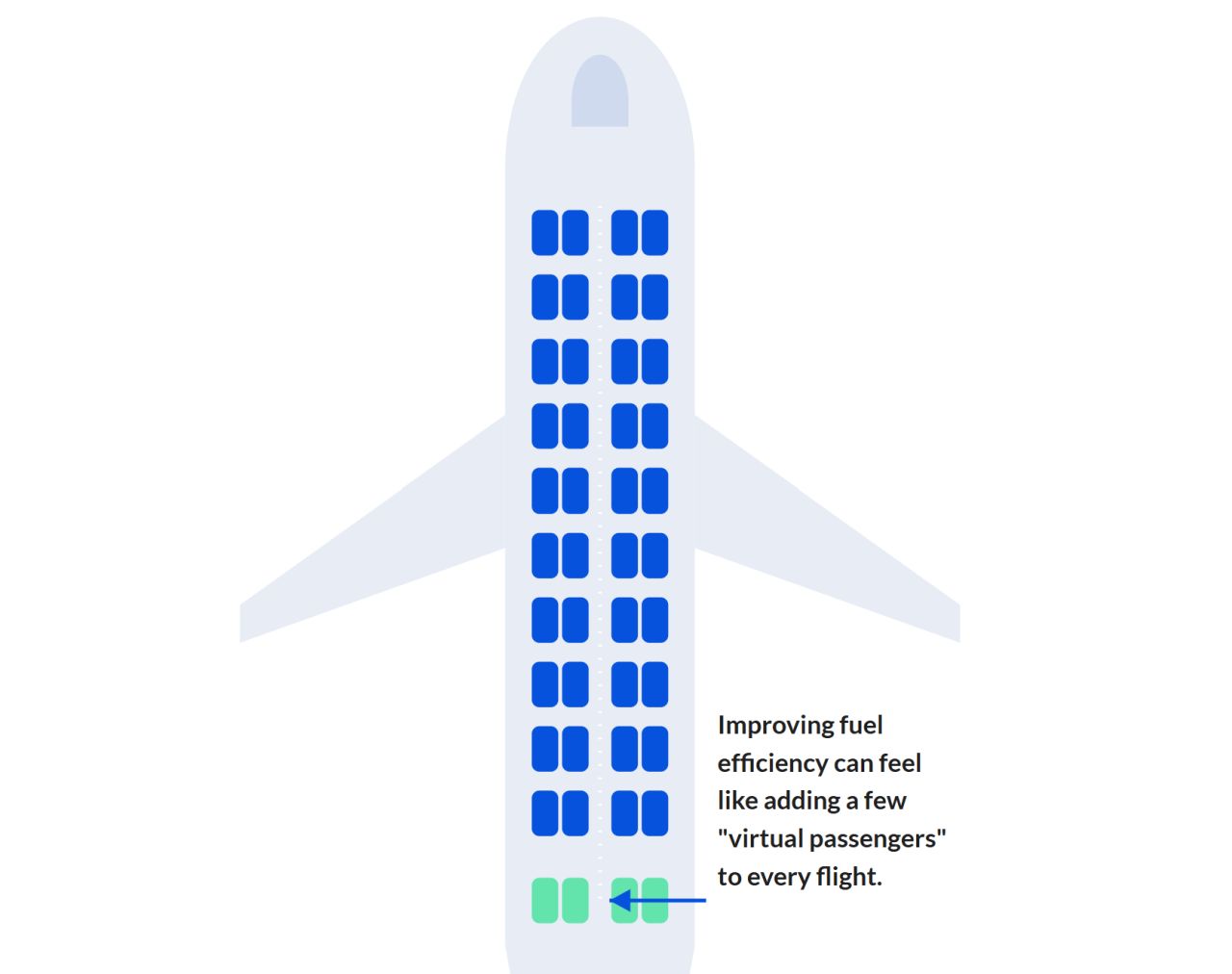
When I joined the airline industry over a decade ago, one number surprised me more than anything else: how thin airline margins really are. Depending on the region, average profit per passenger ranges from 30 USD down to as little as 3 USD in profitable years, and those margins are under severe pressure right now, according to IATA's Global Outlook for Air Transport (June 2026). Today, my work focuses on helping airlines improve fuel efficiency, and one way I like to explain its value is by translating fuel savings into something every decision-maker relates to: passenger revenue. Saving 10 or 20 kg of fuel on a flight might not sound like much. But from an airline's perspective, that's often equivalent to the profit generated by several additional passengers. ➡️ In other words, improving fuel efficiency can feel like adding a few "virtual passengers" to every flight, without touching the aircraft or its payload. This is especially relevant for low-cost carriers in Asia, where high load factors and thin margins make every kilogram count. Recent geopolitical tensions have pushed jet fuel prices up by roughly 70-80% for many airlines, so the value of every kilogram saved has grown right along with it. That's why even small operational wins matter more than ever. Optimizing the descent phase alone, for example, through the right idle factor setting, can save around 8 kg of fuel per flight. Framed differently: what if that saving was equivalent to adding an extra row of paying passengers on every flight? Sometimes changing the perspective is what makes the value click. Have you ever framed fuel efficiency savings this way at your airline? Curious how others see it.
- LINKEDIN · IMAGESince 1 Sept 2026
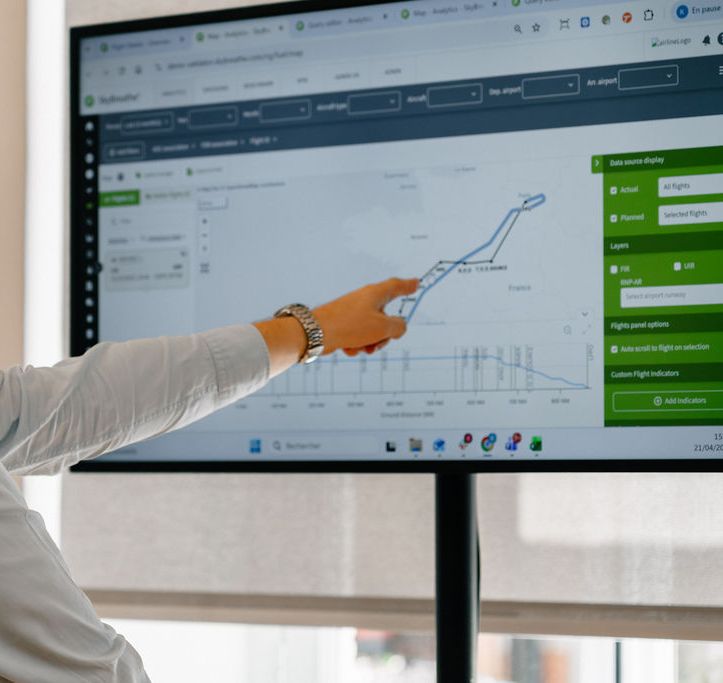
Operational changes are the only realistic lever airlines can use to cut fuel costs over the next 5 years. That's the conclusion of my recent discussions with airline executives in the Americas. At the IATA Annual General Meeting in Rio in June 2026, airline leaders pointed the finger squarely at engine and aircraft manufacturers. United Airlines CEO Scott Kirby called the lack of engines the "biggest constraint" for at least the next five years, as supply chain disruptions have added $11bn in costs for airlines. I've seen it firsthand, visiting dozens of airlines dealing with the same engine issues and grounding brand-new aircraft because of it. On the fuel efficiency side, that means leasing older, degraded aircraft, operating less-efficient engines, delaying fleet replacement, and managing faster performance degradation. This is exactly why operational efficiency has become the go-to for airline leaders. With net-zero targets approaching fast, the industry is realizing new aircraft technology won't move fast enough to help. Until this year, C-level execs kept talking to me about SAF and fleet renewal. But despite surging fuel prices, SAF is still 3.5 times more expensive than jet fuel, as Allegiant Travel's John Pepper put it. Among our customers, very few can afford even a fraction of the SAF they had planned to buy this year. That leaves operational levers as the fastest, most accessible path to real savings: ▪️ RNP-AR approaches alone can cut fuel consumption by up to 14% compared to traditional approaches. ▪️ Continuous Descent Approach saves 30 to 70 kg of fuel per flight on single-aisle aircraft, more on larger ones. ▪️ Add single-engine operations and tighter maintenance planning on the most degraded aircraft, and airlines have a real, fast-acting toolkit while they wait out the engine shortage. If any of this sounds familiar, I'd be glad to put you in touch with other airlines tackling the same challenges.
- LINKEDIN · IMAGESince 1 Sept 2026
"Launching a fuel efficiency program is a big project." "We don't have time; it's not our priority today." "Our focus is punctuality, not fuel efficiency." These are the three comments I hear most when I bring up fuel efficiency with airlines across the Americas, and in 2026 all three are outdated. 𝐋𝐞𝐭'𝐬 𝐬𝐭𝐚𝐫𝐭 𝐰𝐢𝐭𝐡 𝐞𝐟𝐟𝐨𝐫𝐭. The old journey was heavier: pull raw flight data, hand it to a data science team, build dashboards, and wait months for a first answer. That's what kept airlines on the fence. But now it has changed. Modern AI does the digging now, scanning the whole operation and surfacing the savings that matter. You ask questions in plain language. No coding, no analysts to hire, just a small team to steer it. 💰 And the payback is fast. Fuel is a quarter to a third of operating costs, so even a modest reduction hits the bottom line directly, with measurable savings in months, not years. Take JetBlue, they reached a positive ROI in 3 months! Now, 𝐚𝐛𝐨𝐮𝐭 𝐩𝐮𝐧𝐜𝐭𝐮𝐚𝐥𝐢𝐭𝐲. Fuel and on-time performance aren't rivals; they're the same operational picture. A fuel efficiency program gives you visibility you don't have today: where your burn is avoidable, which initiatives actually move the needle, and what ATC inefficiency is costing you in both dollars and minutes. 𝐓𝐡𝐞 𝐬𝐭𝐫𝐚𝐭𝐞𝐠𝐢𝐜 𝐩𝐚𝐫𝐭: airlines that start now aren't just saving today, they're building resilience. When the next fuel price spike hits, they already know their levers. For airlines still waiting for the "right time" to start on fuel efficiency: what's actually holding you back? I'd be curious to discuss this with you in the comments.
- LINKEDIN · IMAGESince 1 Sept 2026
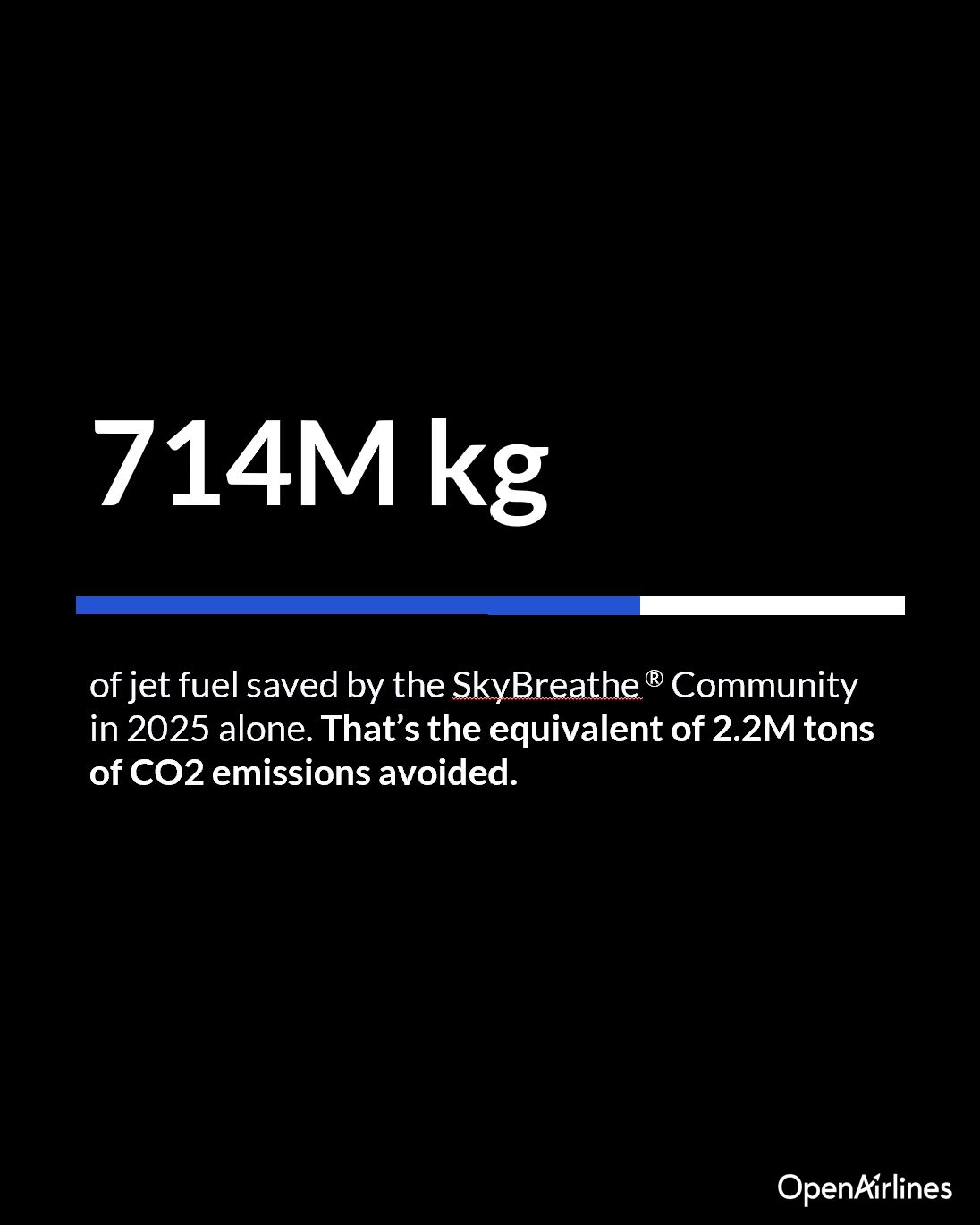
𝟳𝟭𝟰 𝗺𝗶𝗹𝗹𝗶𝗼𝗻 𝗸𝗴 𝗼𝗳 𝗳𝘂𝗲𝗹 𝘀𝗮𝘃𝗲𝗱 𝗶𝗻 𝟮𝟬𝟮𝟱. What does that actually tell us about where airline fuel efficiency is heading? Looking at data from 80+ airlines and 15+ million flights in the SkyBreathe® Community, a few trends stand out. ✈️ 𝗢𝗽𝗲𝗿𝗮𝘁𝗶𝗼𝗻𝗮𝗹 𝗲𝗳𝗳𝗶𝗰𝗶𝗲𝗻𝗰𝘆 𝘀𝘁𝗶𝗹𝗹 𝗵𝗮𝘀 𝘀𝗶𝗴𝗻𝗶𝗳𝗶𝗰𝗮𝗻𝘁 𝘂𝗻𝘁𝗮𝗽𝗽𝗲𝗱 𝗽𝗼𝘁𝗲𝗻𝘁𝗶𝗮𝗹. Initiatives such as Reduced Acceleration Altitude, Continuous Descent Approaches and Engine-Out Taxi-In remain among the strongest contributors to fuel savings. ✈️ 𝗧𝗵𝗲 𝗱𝗶𝗳𝗳𝗲𝗿𝗲𝗻𝗰𝗲 𝗯𝗲𝘁𝘄𝗲𝗲𝗻 𝗮𝗶𝗿𝗹𝗶𝗻𝗲𝘀 𝗶𝘀 𝗼𝗳𝘁𝗲𝗻 𝗶𝗻 𝗲𝘅𝗲𝗰𝘂𝘁𝗶𝗼𝗻, 𝗻𝗼𝘁 𝗶𝗻 𝘁𝗵𝗲 𝗶𝗻𝗶𝘁𝗶𝗮𝘁𝗶𝘃𝗲𝘀 𝘁𝗵𝗲𝗺𝘀𝗲𝗹𝘃𝗲𝘀. Many airlines have access to the same fuel-saving opportunities. What sets the best performers apart is their ability to identify the right opportunities, turn them into operational actions, and consistently implement them across their network. ✈️ 𝗧𝗲𝗰𝗵𝗻𝗼𝗹𝗼𝗴𝘆 𝗮𝗻𝗱 𝗶𝗻𝗳𝗿𝗮𝘀𝘁𝗿𝘂𝗰𝘁𝘂𝗿𝗲 𝗮𝗿𝗲 𝗶𝗻𝗰𝗿𝗲𝗮𝘀𝗶𝗻𝗴𝗹𝘆 𝗽𝗮𝗿𝘁 𝗼𝗳 𝘁𝗵𝗲 𝗲𝗾𝘂𝗮𝘁𝗶𝗼𝗻. Free Route Airspace, RNP-AR, electric taxiing and better flight planning can unlock additional savings, particularly as fuel and carbon costs remain under pressure. ✈️ 𝗪𝗲𝗶𝗴𝗵𝘁 𝗮𝗻𝗱 𝗳𝗹𝗲𝗲𝘁 𝗱𝗲𝗰𝗶𝘀𝗶𝗼𝗻𝘀 𝗺𝗮𝘁𝘁𝗲𝗿 𝘁𝗼𝗼. Fuel efficiency is not only about what happens during the flight - aircraft configuration, weight reduction and fleet modernization can have a structural impact on fuel burn. The takeaway for me: there is no single “silver bullet” for fuel efficiency. The biggest gains come from systematically identifying, prioritizing and scaling the opportunities that are relevant to each operation. We’ve put the key trends and data together in our latest report. 𝗪𝗵𝗮𝘁 𝗱𝗼 𝘆𝗼𝘂 𝘀𝗲𝗲 𝗮𝘀 𝘁𝗵𝗲 𝗯𝗶𝗴𝗴𝗲𝘀𝘁 𝗿𝗲𝗺𝗮𝗶𝗻𝗶𝗻𝗴 𝗼𝗽𝗽𝗼𝗿𝘁𝘂𝗻𝗶𝘁𝘆 𝗳𝗼𝗿 𝗮𝗶𝗿𝗹𝗶𝗻𝗲 𝗳𝘂𝗲𝗹 𝗲𝗳𝗳𝗶𝗰𝗶𝗲𝗻𝗰𝘆? 👇 𝗥𝗲𝗽𝗼𝗿𝘁 𝗶𝗻 𝘁𝗵𝗲 𝗰𝗼𝗺𝗺𝗲𝗻𝘁𝘀.

6 of 36+ adsSign up to see every OpenAirlines ad, filter by format and date, and get alerts on new ones.
See all 36+ adsQuestions about OpenAirlines’s ads
Does OpenAirlines have new LinkedIn ads?
We found no new LinkedIn ads for OpenAirlines in the 30 days to 11 Nov 2026.
How many LinkedIn ads has OpenAirlines run?
LinkedIn’s ad library lists 36 ads for OpenAirlines. We recorded 33 LinkedIn ads for OpenAirlines, first recorded on 28 Sept 2026 and last recorded on 9 Oct 2026.
Does OpenAirlines run Google ads?
Yes. We recorded 6 Google ads for the domain openairlines.com on 5 Nov 2026.
Which ad formats does OpenAirlines use?
The 6 LinkedIn ads on this page include 4 image ads and 2 video ads.
Watch the companies you care about.
Filter every ad by industry, country, format and network, and get alerts when a company you watch starts running new ads.