1 new LinkedIn ad in 30 days · 3 of 3 networks checked

Omniconvert ads
- omniconvert.com
- Technology, Information and Internet
- US
- 41 employees
Omniconvert’s ads on LinkedIn, Meta and Google, recorded by adsrunning. Browse the latest here for free. Sign up free to browse our full recording. Watch Omniconvert on any plan to get each new one in your feed.
Watchlist included in every plan
What Omniconvert runs
- Single image · LinkedIn
- 4
- Video · LinkedIn
- 2
- Google ads on 5 Nov 2026
- 16
| Network | Status | Last 30 days | Total ads found | Ad activity | Checked | Next step |
|---|---|---|---|---|---|---|
| Ads recorded | 1 | 47+ | 11/10/2026 | View ads → | ||
| Meta | None recorded | — | — | 10/24/2026 | View ads → | |
| Ads recorded | — | — | 11/05/2026 | View ads → |
Omniconvert has 1 new LinkedIn ad in the last 30 days. Its Facebook page had no active ads on 24 Oct 2026, and we recorded 16 Google ads on 5 Nov 2026.
Latest ads
- LINKEDIN · IMAGESince 20 Oct 2026
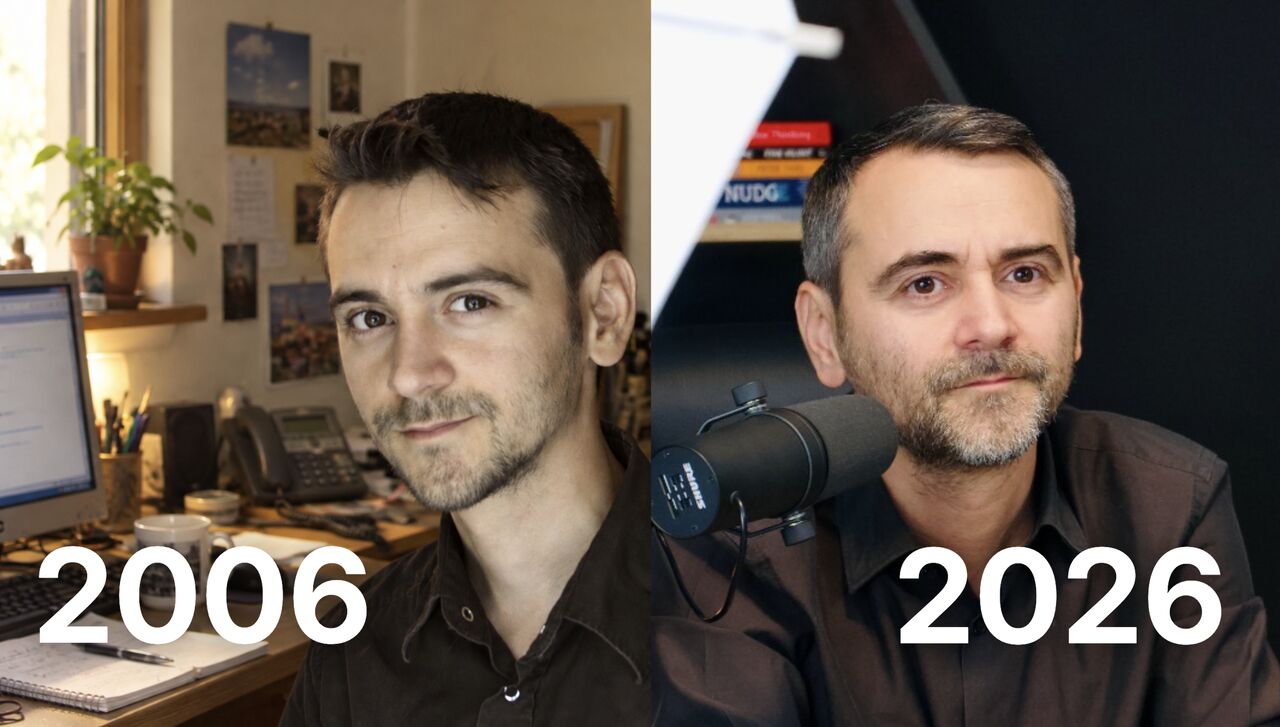
I started my e-commerce journey at 26 with no experience and $700 invested by my partner. The only thing I knew was how to waste money on Google Ads. So I started there: spending, learning, and eventually understanding the unit economics behind the clicks. A few years later, I was spending $2 million a year on Google Ads and another $200k on what used to be called Facebook ads. I exited when that company made $14 million in turnover. That’s when I became obsessed with a different question: What happens when you improve conversion? Since then, I’ve worked with companies like Patagonia, Decathlon, Avon, Wonderskin, Tempur, Max Mara, and many others. I’ve learned how to apply data science to eCommerce growth on an amazing playground: the data from >20k websites (out of which ±4k Shopify stores) that ran >90k experiments. Then, in February this year, I saw how big a shift AI will bring to e-commerce. So we got to work. For the past seven months, 12 of us have been building 12 hours a day. I’ve spoken with 170 e-commerce owners, agencies, Shopify agencies, and performance agencies. Their feedback gave us the confidence to invest 40% of our revenue in the new product that we’re about to launch. It brings together the data e-commerce teams usually have scattered across tools: → Competitor ads → Meta & G ads from the past 12 months → Google Analytics → Shopify products & customers → Product reviews → Customer behaviour data → Customer support tickets & surveys Then it applies what we’ve learned from years of studying e-commerce growth to surface the 10 most important things your store should do next. And it doesn’t stop at recommendations: It turns those opportunities into complete campaigns, with a landing page for each ad, built to work together, and learning what to optimize next. We’re officially launching it next Tuesday.
- LINKEDIN · VIDEOSince 14 Aug 2026
A $1 billion deal makes people pay attention. A celebrity founder, fast revenue growth, strong customer economics, and a polished investor deck make the story even harder to question. But decks are built to guide your eyes. They show you where the business looks strongest. They rarely spend much time on the numbers that make the story uncomfortable. So I took the IM8 deck apart and rebuilt the analysis from the raw data. I compared customer groups at the same stage. I looked at what happened when the subscription plans changed. I checked whether ad spend and revenue were still moving together. And I looked for the retention data the entire model depends on. The result is a useful lesson for anyone running or investing in an ecommerce business. A metric can be accurate and still lead you to the wrong conclusion. I explain the four traps in the video. When you review a growth story, which number do you check first?
- LINKEDIN · IMAGESince 14 Aug 2026
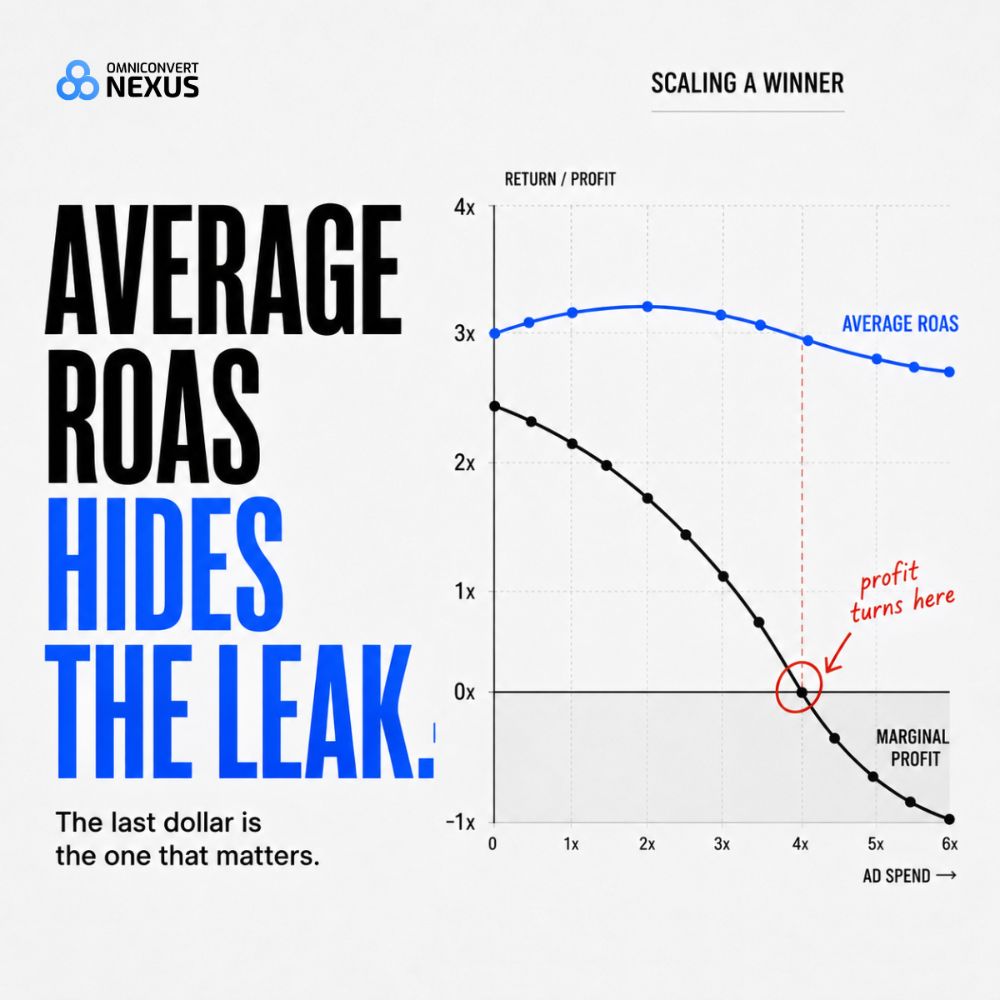
A brand I know found the best-performing ad they'd run in years. A clean 4x return, steady for weeks. So they did the thing everyone tells you to do with a winner. They gave it more money. Two weeks later the ad was still winning in the dashboard, and the business was making less money than before they scaled it. This confuses people, because it sounds like a contradiction. The ad is good. More budget into a good ad should mean more profit. It doesn't, and the reason is something the dashboard is built to hide from you. Your winning ad didn't win because it was a great ad in some absolute sense. It won because, at a small budget, it was reaching the cheapest, most in-market slice of your audience. The people already halfway to buying. That slice is small, and it runs out. When you pour budget in, you exhaust it. To spend the extra money, the platform goes and finds more people, and the next people are colder, less ready, more expensive to convince. Every additional dollar buys a worse customer than the one before it. The ad is doing exactly what it did on day one. The audience it's being pushed into is the part that was never cheap. Think of a well. The first buckets come up fast and easy. Keep drawing and you go deeper for each one, until you're spending more effort to lift a bucket than the water in it is worth. Nothing wrong with the well. You just drank the easy part. The dangerous part is the number you watch while this happens. ROAS is an average. It blends the profitable early spend with the unprofitable spend at the edge, and it stays healthy long after your last dollar has gone underwater. You manage to the average. You get paid at the margin. The distance between those two is where your profit leaks out, and nothing on the screen points at it. So "scale your winners" isn't wrong. It's incomplete in a way that costs real money. A winner is only a winner at a certain size. Push past that size and you're not scaling a good ad, you're funding an expensive one and calling it the same thing. Before you scale the next one: do you know what your last dollar is earning, or only your average one? Valentin
- LINKEDIN · VIDEOSince 14 Aug 2026
Ranking #1 on Google is an obsolete metric. Not because Google is dying. Because the consumer isn't scrolling to the blue links anymore. They're asking ChatGPT, Perplexity, and Gemini, and getting one confident answer, with no links, no choices, no browsing. In 2026, the only metric that matters is whether an AI assistant cites your brand as the definitive answer. Not whether you rank. Whether you get cited. Those are not the same game, and most brands are still training for the wrong one. The full video (link in comments) breaks down exactly how AI models decide which brand to cite, and what that means for your traffic.
- LINKEDIN · IMAGESince 14 Aug 2026
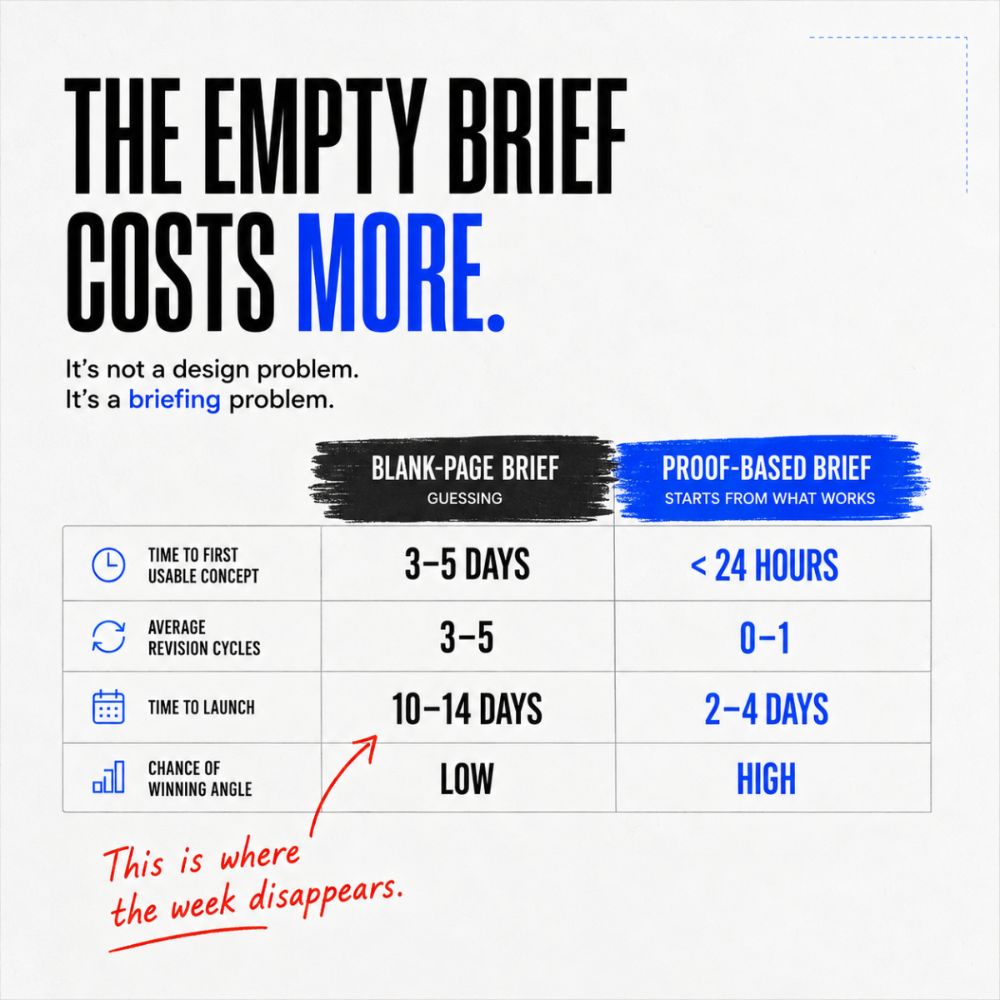
Your creative bottleneck isn't the designer. Every media buyer I talk to has the same complaint: always waiting on creative. The next ad is "almost ready," and it's been almost ready for a week. So teams hire another designer, buy the faster editing tool, spin up a Slack channel for requests. Output stays exactly the same. The designer was never the slow part. Look at what actually reaches them. You feel the pressure to launch something new. You open a doc, and you don't really know what the next ad should say. So you write "let's try a UGC angle, maybe something punchy about the ingredients," and you send it. Your designer isn't a mind reader. They build the most literal version of that vague sentence, it comes back wrong, you leave notes, it comes back wrong again. Two weeks, gone. None of it was a design failure. The instructions were empty before anyone opened Figma. 13 years watching this taught me one thing about briefs. A good one doesn't describe how the ad should look. It hands the designer a decision you already made for them. Three things separate a brief that ships from one that loops for a week. Start from proof, not a blank page. The blank page is where the guessing lives, and guessing is you betting budget on a hunch. Walk in already knowing the concept works, and there's nothing left to gamble on. Give them the mechanism, not the format. "Make it a UGC video" says nothing about why it should work. "Hit the objection everyone has in the first two seconds, then resolve it" tells them exactly why someone stops scrolling. Borrow the hook instead of inventing one. This is where teams burn the most hours, trying to write something clever from nothing. The hooks that work in your category are already running, right now, on other people's accounts. You don't have to invent anything. You have to pay attention. So pay attention to what survives. A competitor's ad account works like a garden: most of what they plant dies inside a week, tested and quietly pulled. A handful keep running though. 30 days, 60, 90. Nobody keeps watering a plant that won't grow. Whatever's still live has already been validated for you, in public, for free. Hand that to your designer. Not "let's try something," but "this concept survived 60 days in our exact category, here's the hook and the structure, build ours." The notes get shorter. The revisions collapse. The ad ships faster, and the designer never changed. You just stopped handing them a blank page. Stop asking your team to invent. Show them what's already surviving. Valentin P.S. That's the whole reason we built ecommercebenchmark.ai. Run an audit and for your category you'll see the ads that have stayed live longest, the hooks and formats holding them up, and where your own creative sits against what's still surviving.
- LINKEDIN · IMAGESince 14 Aug 2026
A fashion account I reviewed had 269 customer reviews and an average rating of 3.0. The audit flagged it as below the trust level shoppers and AI engines tend to look for before recommending or buying from a brand. And these are recent reviews. The issue is happening now. A few weeks ago, I looked at a food and drink account with almost no review momentum. Fixing a review-request flow is mainly a process problem. A 3.0 rating points somewhere else. It means customers are unhappy with the product, delivery, support, sizing, returns, or another part of the experience. This gap is harder to fix because more review requests will not solve it. It also hits late in the journey. The ad already earned the click. The product got the shopper interested. Then the rating gives them a reason to pause before buying. Run your website and ads audit at ecommercebenchmark.ai to see where trust is breaking, what needs attention first, and how your store compares with named competitors.

6 of 47+ adsSign up to see every Omniconvert ad, filter by format and date, and get alerts on new ones.
See all 47+ adsQuestions about Omniconvert’s ads
Does Omniconvert have new LinkedIn ads?
Yes. We found 1 new LinkedIn ad for Omniconvert in the 30 days to 12 Nov 2026.
How many LinkedIn ads has Omniconvert run?
LinkedIn’s ad library lists 47 ads for Omniconvert. We recorded 47 LinkedIn ads for Omniconvert, first recorded on 27 Sept 2026 and last recorded on 22 Oct 2026.
Does Omniconvert advertise on Facebook and Instagram?
Omniconvert’s Facebook page had no active ads in Meta’s Ad Library, last recorded on 24 Oct 2026.
Does Omniconvert run Google ads?
Yes. We recorded 16 Google ads for the domain omniconvert.com on 5 Nov 2026.
Which ad formats does Omniconvert use?
The 6 LinkedIn ads on this page include 4 image ads and 2 video ads.
Watch the companies you care about.
Filter every ad by industry, country, format and network, and get alerts when a company you watch starts running new ads.